Tag Archives: oceania

Elderly woman hit by truck while crossing the road in Sydney's west

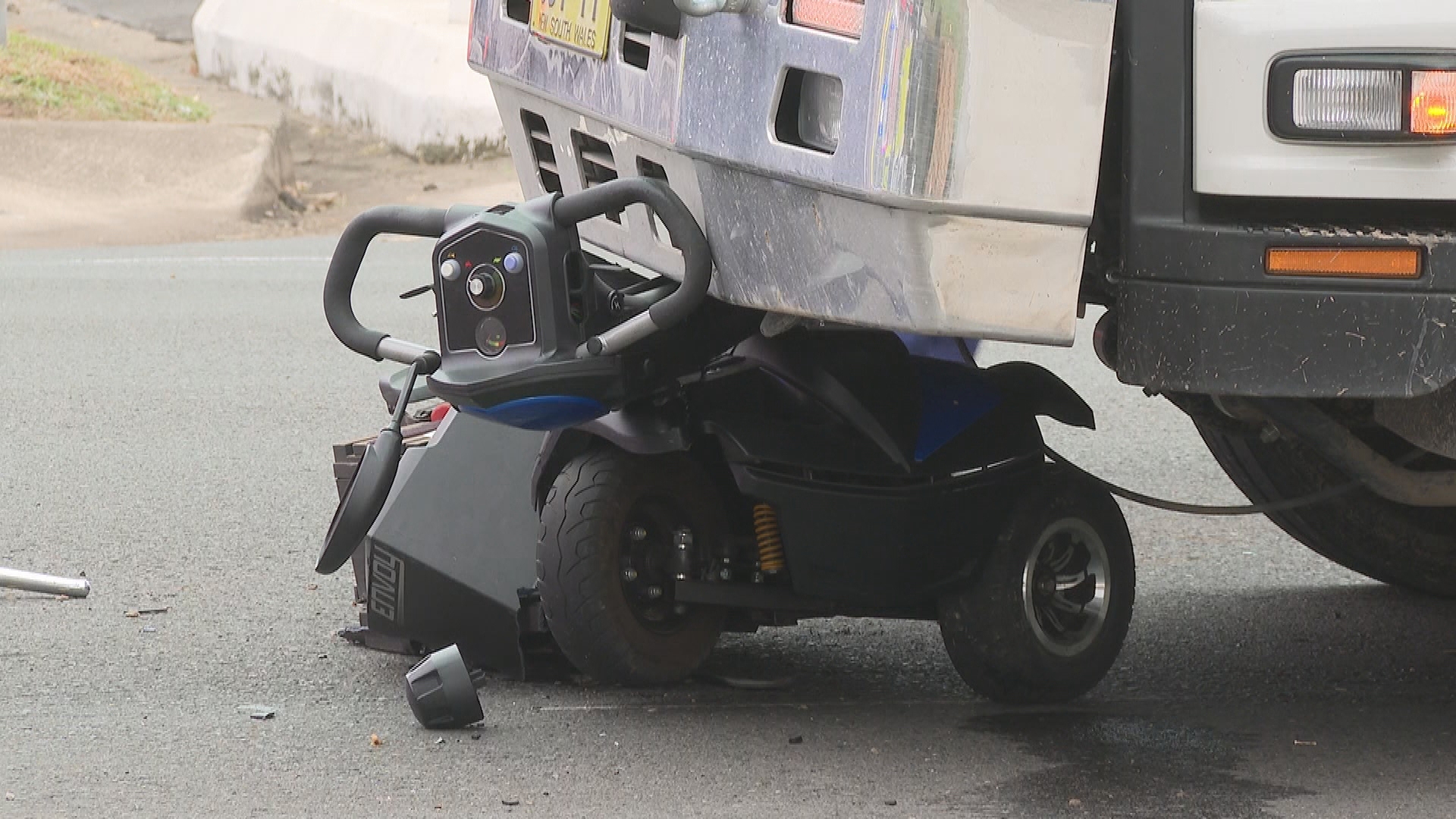
An elderly woman has been hit by a truck in Sydney's west while trying to cross the road using a mobility scooter this morning.

The woman, believed to be in her 70s, was struck by a truck on Fairford Road, in Guildford West at 10:50am.

She was treated by New South Wales paramedics before being taken to Westmead Hospital in a serious but stable condition.

READ MORE: Woman dead following hit-and-run in Adelaide

An elderly woman has been hit by a truck in Sydney's west trying to cross the road this morning.

The truck driver was taken to hospital for mandatory testing. 

Police said they are now investigating how the crash happened. 

Sign up here to receive our daily newsletters and breaking news alerts, sent straight to your inbox.

New NSW election results confirm minority government for Labor

Premier Chris Minns and his newly elected Labor government only have a minority to work with in the lower house of parliament, the latest New South Wales election results have confirmed.

On election night, it seemed as if Labor would win enough seats to form a majority government in its own right, however a number of seats have since swung out of their grasp.

On Saturday, both Holsworthy and Terrigal were called for the Liberal party, taking the Coalition up to 35 seats.

READ MORE: Albanese tempers expectations as he campaigns for Aston by-election

NSW Premier-designate Chris Minns the morning after Labors historic win in Kogarah.

The results leave Labor two seats shy of the 47 required for a majority with just one – Ryde – left to call.

While ALP candidate Lyndal Howison had appeared to be in a good position to take that last electorate, the latest data as of 3pm has Liberal Jordan Lane ahead in the two-party race by about 200 votes, with 85 per cent of ballots counted.

Ryde was previously held by the former Liberal MP and Customer Services Minister Victor Dominello, who announced his retirement from politics before the election.

Working in minority may make it more difficult for Minns and Labor to pass their election commitments through parliament.

However, they had already reached an agreement with members of the crossbench – which will be composed of nine independents and three Greens members this term – to guarantee supply for the government.

Sign up here to receive our daily newsletters and breaking news alerts, sent straight to your inbox.

Polls close in Aston by-election as Liberals seek to retain seat

Polls have closed in the federal seat of Aston in a by-election that is expected to lead to the opposition retaining the seat.

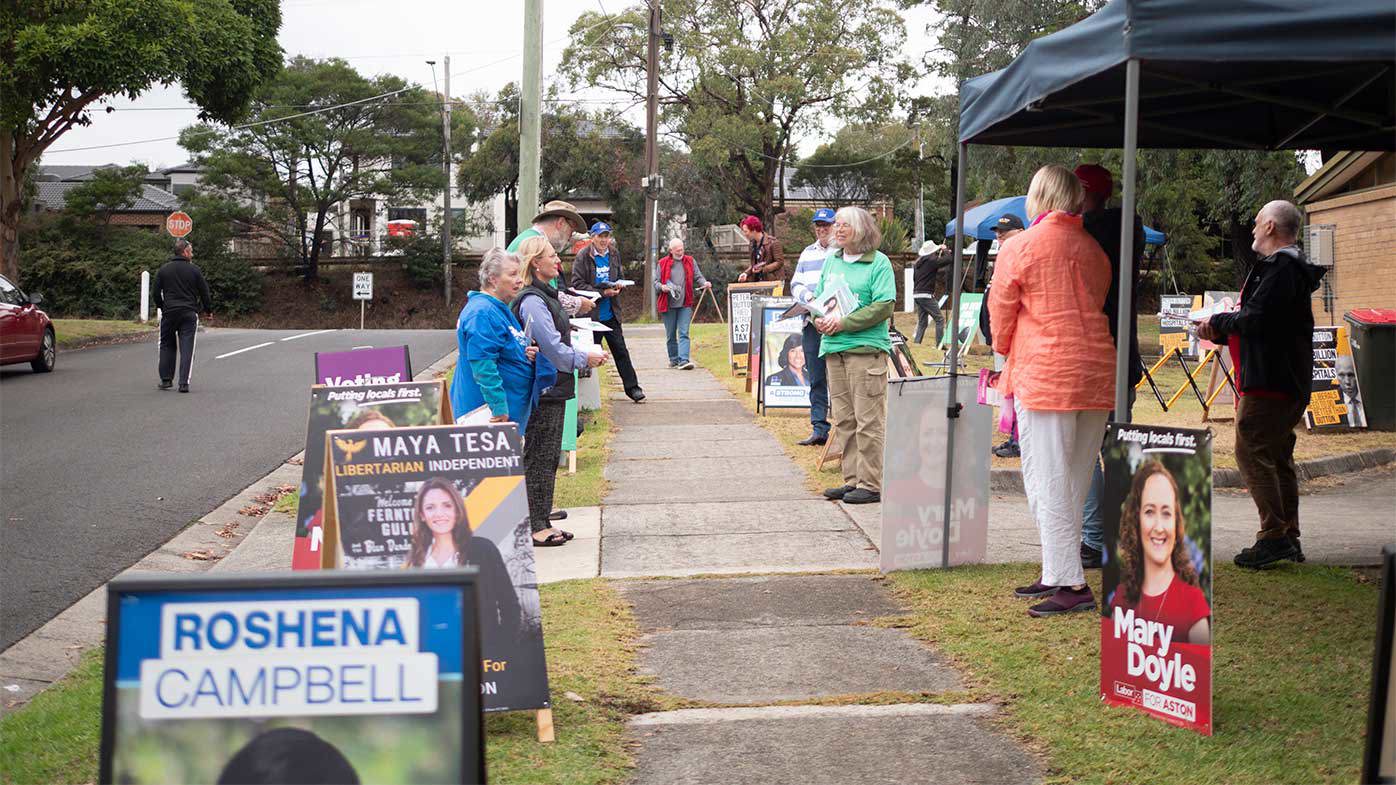
Anthony Albanese was on the ground earlier on Saturday in suburban Melbourne hoping to wrest the seat away from the Liberal party.

The prime minister was campaigning for Labor candidate Mary Doyle, who is up against Liberal Roshena Campbell, a City of Melbourne councillor and barrister.

READ MORE: New NSW election results confirm minority government for Labor

The Aston by-election will be a crucial test on Peter Dutton's leadership.

The seat was left vacant after the resignation of former minister Alan Tudge, who quit parliament after the Morrison government lost power, but is not considered likely to swing to the Labor party.

The seat in Melbourne's outer south-east has been held by the Liberals since 1990, but its 53-47 per cent two-party preferred margin in last year's election has Labor hopeful of a pickup.

However, Albanese himself dampened expectations in a press conference this morning.

READ MORE: Families, workers in the lurch following collapse of construction giants

"We are taking this campaign seriously. But history tells us that the Coalition, the Liberal Party, should be in a very strong position," he said.

"That is just what history says."

He took a swing at the Liberal party leadership at the press conference.

"They block and say no to absolutely everything in the parliament," he said.

"They are very negative in the way that they approach everything. And I think Australians deserve better."

https://twitter.com/AlboMP/status/1641951451219136512

The Labor campaign has made much of the unpopularity of Opposition Leader Peter Dutton.

An internal Labor poll showed that while the Liberals were ahead in the seat, only 21 per cent of Aston voters approved of Dutton.

The opposition leader, for his part, said the by-election was a chance to send the federal government a message.

"Cost of living pressures are real for families," he said.

"The opportunity in the election today is to send a very clear message to Labor that they shouldn't be cutting local road funding, and they shouldn't be abandoning this community."

READ MORE: COVID-19 cases increase for seventh-straight week, deaths on rise

Sign up here to receive our daily newsletters and breaking news alerts, sent straight to your inbox.

Chinese cities are so broke they're cutting senior medical benefits

China's government, strapped for cash after years of enforcing a costly zero-COVID policy, is cutting medical benefits and planning to raise the retirement age, in deeply unpopular moves that are fueling widespread public anger.

Thousands of elderly people have been taking to the streets since January to protest big cuts to monthly medical benefit payments. They've gathered in four major cities across the country, demanding local officials reverse the decisions.

The changes are part of a national overhaul mainly intended to cover deficits in public medical insurance funds, according to analysts, which have been drained after paying for mass testing, mandatory quarantine and other pandemic controls over the past three years.

READ MORE: Three months, three missing radioactive items. Here's what you need to know
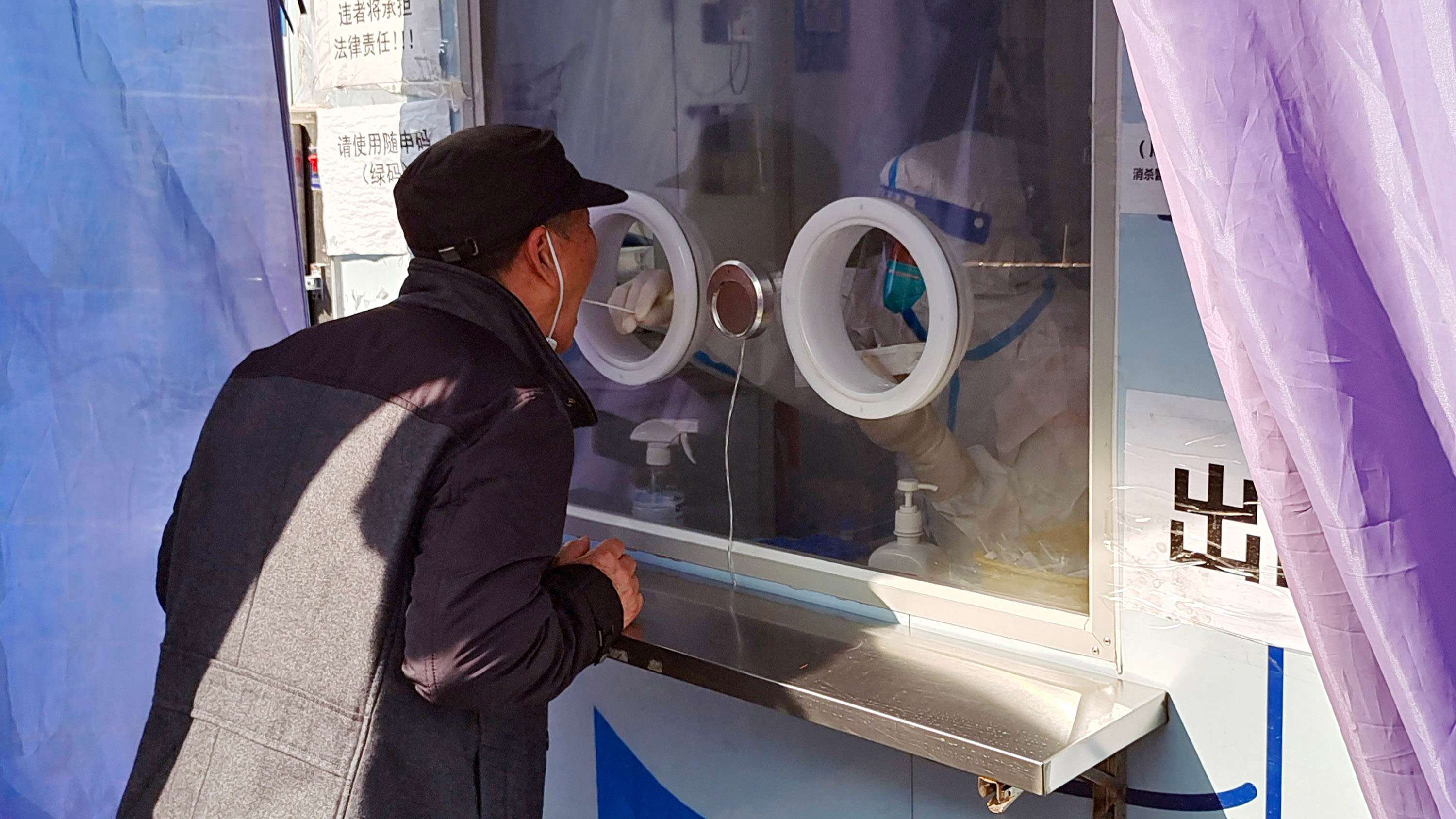
A man undergoes a COVID-19 test in Shanghai

The demonstrations, dubbed by Chinese media as a "gray hair movement," are another rare rebuke for authorities after widespread protests gripped the country in November against COVID-19 lockdowns.

The anger could further undermine trust in the Communist Party already damaged by COVID-19 lockdowns, banking scandals and a real estate crisis.

"Chinese pensioners view these latest reforms as yet another broken party promise, one that could profoundly impact their quality of life in the face of China's looming demographic crisis," said Craig Singleton, senior fellow at the Washington-based Foundation for Defense of Democracies.

Chinese officials appear to be worried that these protests could spread further.

Censors removed hashtags for "Wuhan health insurance" from Weibo's hot topics section after the demonstrations began in January. They also censored photos and videos of the protests from social media.

Fueling the anger is a new drive by Beijing to push back the retirement age for all workers.

READ MORE: Child in Western Australia dies of 'very rare' Murray Valley encephalitis
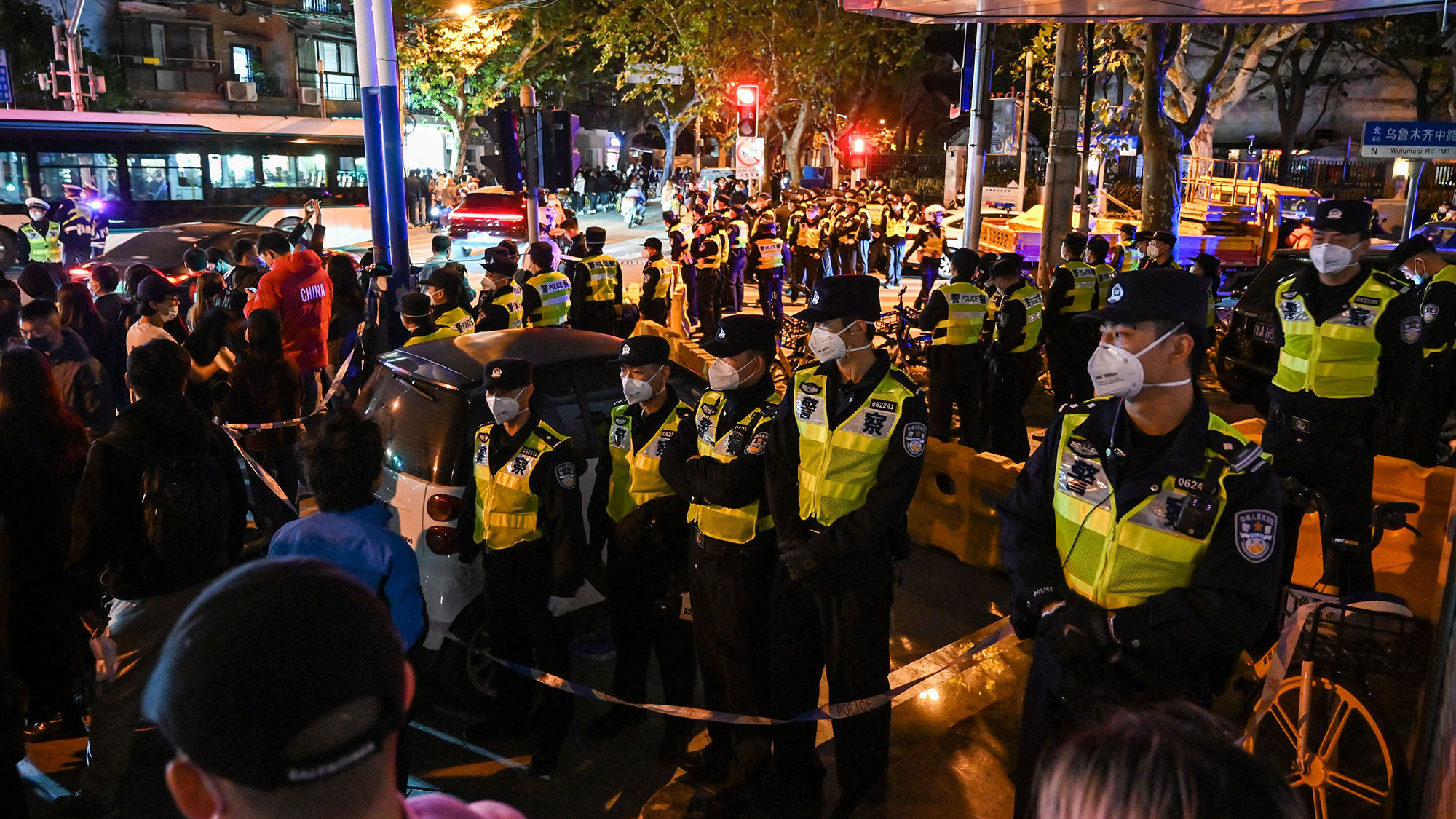
Police officers block Wulumuqi street in Shanghai on November 27.

Dire finances

For nearly three years, local governments bore the brunt of enforcing the now-defunct pandemic controls, resulting in soaring expenditures even as their income from revenue sources such as land sales slumped.

The concerns were sparked after Guangdong province and the city of Dalian announced in 2022 that they would tap public medical insurance funds to pay for mass COVID-19 testing.

The issue was exacerbated when, shortly after, the National Healthcare Security Administration (NHSA) said the money shouldn't be used in this way and that local governments should fund the testing with their own budgets.

State media reported at the time that some other regions had already spent public money on mass testing. The reports triggered fears about the future sustainability of the already underfunded health insurance system.

It's unclear exactly how much China has spent in total on maintaining its ultra-strict zero-COVID policy, or where that money came from. But at least 17 of the country's 31 provinces have revealed the enormous sums they've spent on fighting the pandemic.

Guangdong, the richest province in China, was the biggest spender. It spent 711 billion yuan ($10.3 billion) in 2022 on measures such as vaccination, testing and emergency benefits for medical workers, an increase of more than 50 per cent from the year before.

READ MORE: Andrew Tate's detention replaced with house arrest: Romania
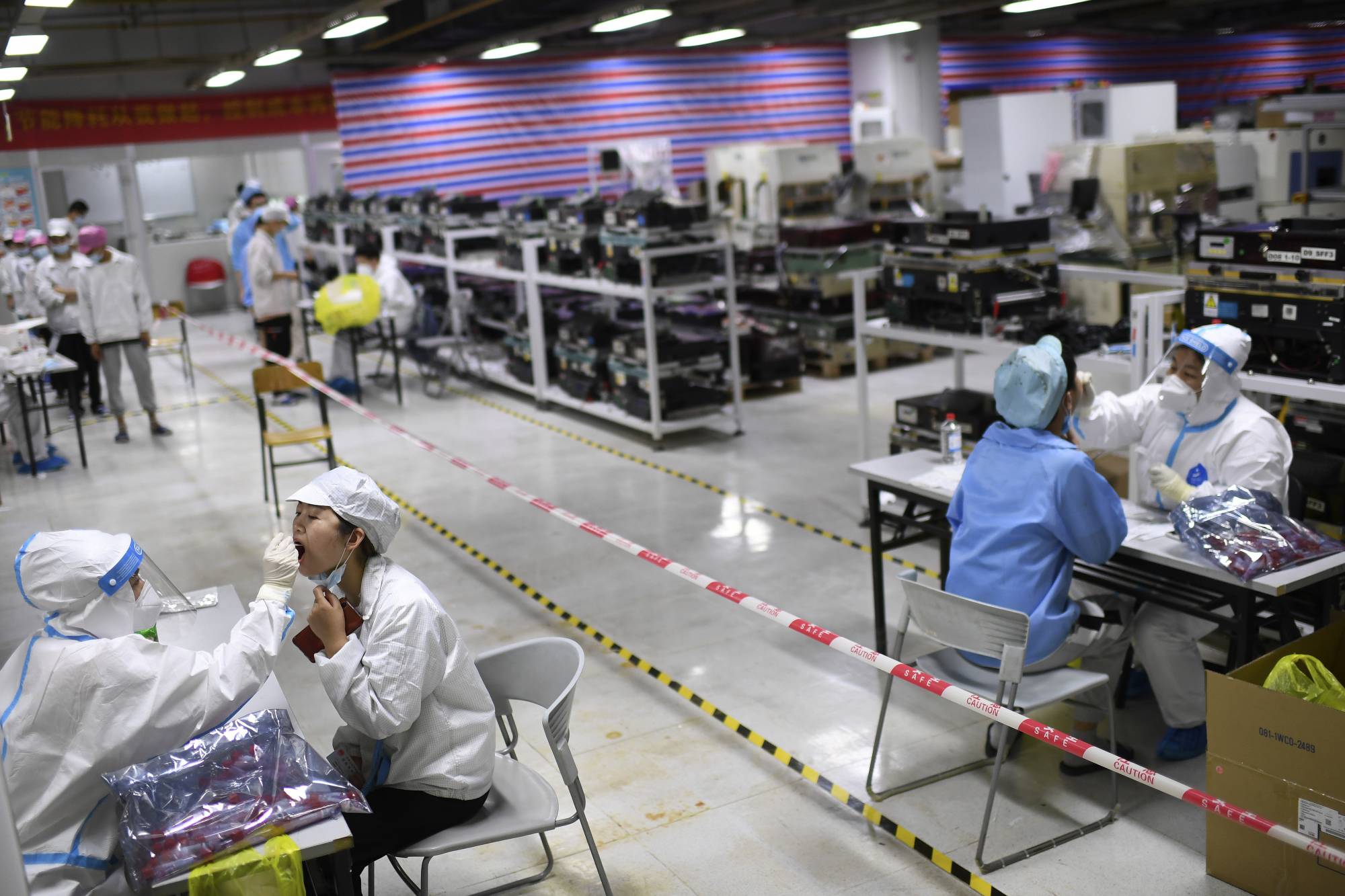
COVID-19 testing in Wuhan, China

Zhejiang and Beijing spent 43.5 billion yuan and 30 billion yuan respectively.

"Local governments are running short of money, or in some cases, out of money," said George Magnus, an associate at the China Centre at Oxford University.

"Funding zero-COVID was the most proximate cause for the crunch, but local finances are deteriorating for other reasons too, notably the rising burden of expenses associated with age-related spending."

Interest costs on trillions of dollars of debt and falling revenues from land sales have also worsened government finances, he said.

China's outstanding government debts might have surpassed 123 trillion yuan ($18 trillion) last year, of which nearly $10 trillion is so-called "hidden debt," according to Chinese analysts. The debt problem has gotten so extreme that some cities are unable to provide basic services, such as heating homes.

Covering the shortfall

China's health insurance scheme is a key part of its limited social safety net. It covers a portion of medical costs for current and retired workers in urban areas.

It consists of individual accounts, funded by mandatory payments from workers and their employers, and a pool of funds made up of employer contributions. The personal account is used to pay for medicines and outpatient costs, while the collective account is used to pay for hospital visits.

Retirees don't need to contribute and receive a monthly payment into their personal accounts from the collective pool.

After the reforms, which were introduced starting in January, payments to all personal accounts were reduced.

The elderly, who tend to have more medical needs, are more sensitive to the changes. In the central city of Wuhan, retirees saw monthly cutbacks of as much as 70 per cent.

READ MORE: The murky, uncertain origins of April Fools
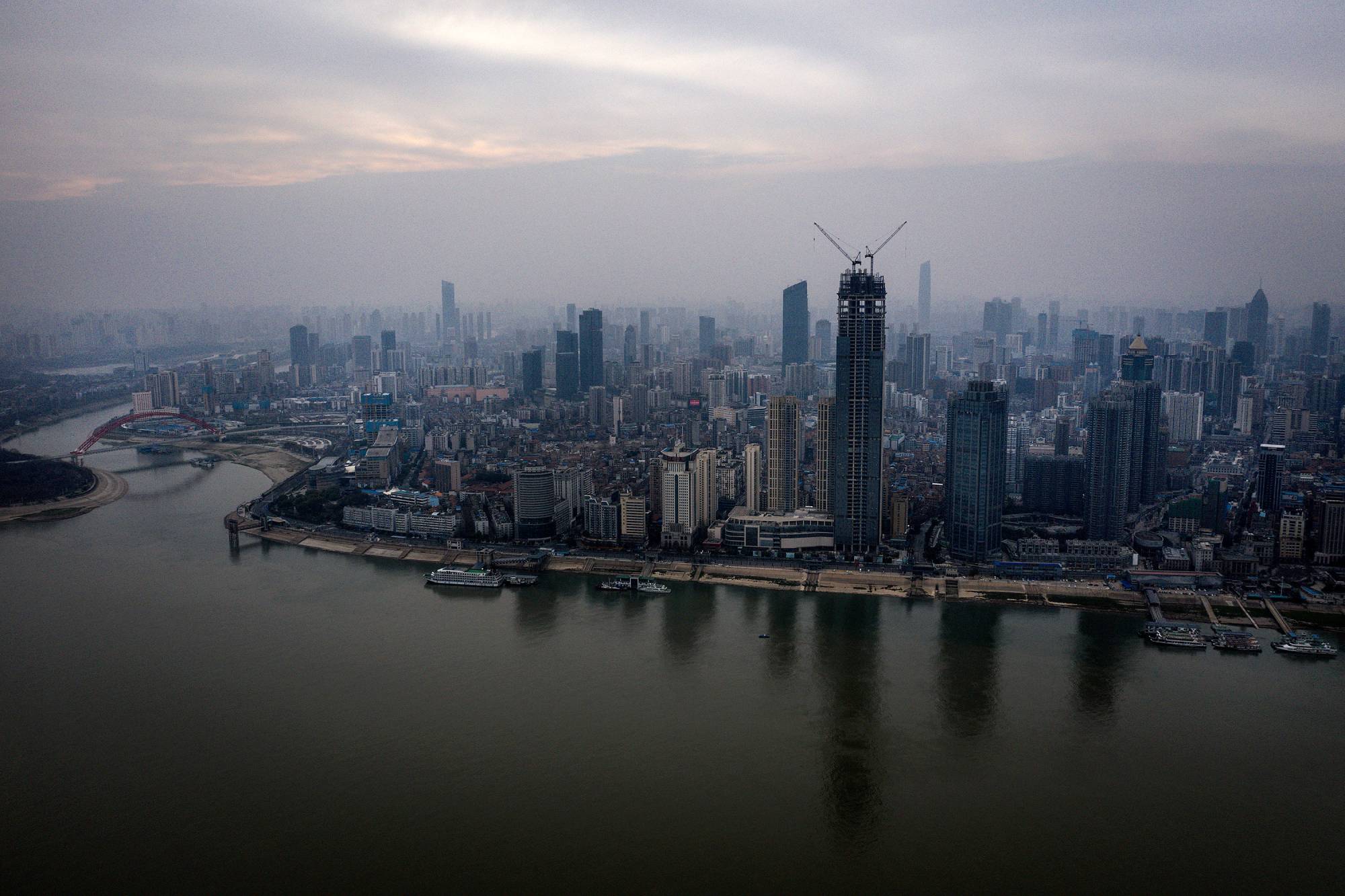
View of the Yangtse river in Wuhan, China on March 4, 2020

Soon after the protests in Wuhan and the northeastern port city of Dalian, the NHSA issued a statement defending the policy, saying even though people would have less money in their personal accounts, there would be more funds flowing into the collective account as a result.

To protesters, however, it looked like local governments were dipping into their individual accounts to cover the shortfalls of the collective pool.

"The notion of robbing pensioners to pay back the party for the costs associated with compulsory COVID testing and other expensive pandemic measures was never going to sit well with the general populace," Singleton said.

Sign up here to receive our daily newsletters and breaking news alerts, sent straight to your inbox.

An aging society

In the longer term, the "grey hair movement" is indicative of a fundamental issue facing the Chinese government: how to care for a rapidly aging society where 400 million people, or 30 per cent of the population, will be 60 or older by 2035.

China's public health care system and other public services have come under increasing financial strain as the number of retirees outpaces the number of young people entering the workforce.

A leading government think tank forecast in 2019 that the state pension fund could run dry by 2035 due to a dwindling workforce.

"[The] crunch affecting health insurance is only a stone's throw away from the larger one affecting pensions, and workers could edgily become agitated over poor pension and health care security," Magnus said.

"It's possible protests by elderly citizens will spread."

To address the challenge, the government is making a new push to raise the retirement age.

Li Qiang, the country's new premier, said in March that the government would conduct rigorous studies and analysis to roll out a policy prudently "at an appropriate time."

READ MORE: Oscar Pistorius denied early release by South Africa's parole board
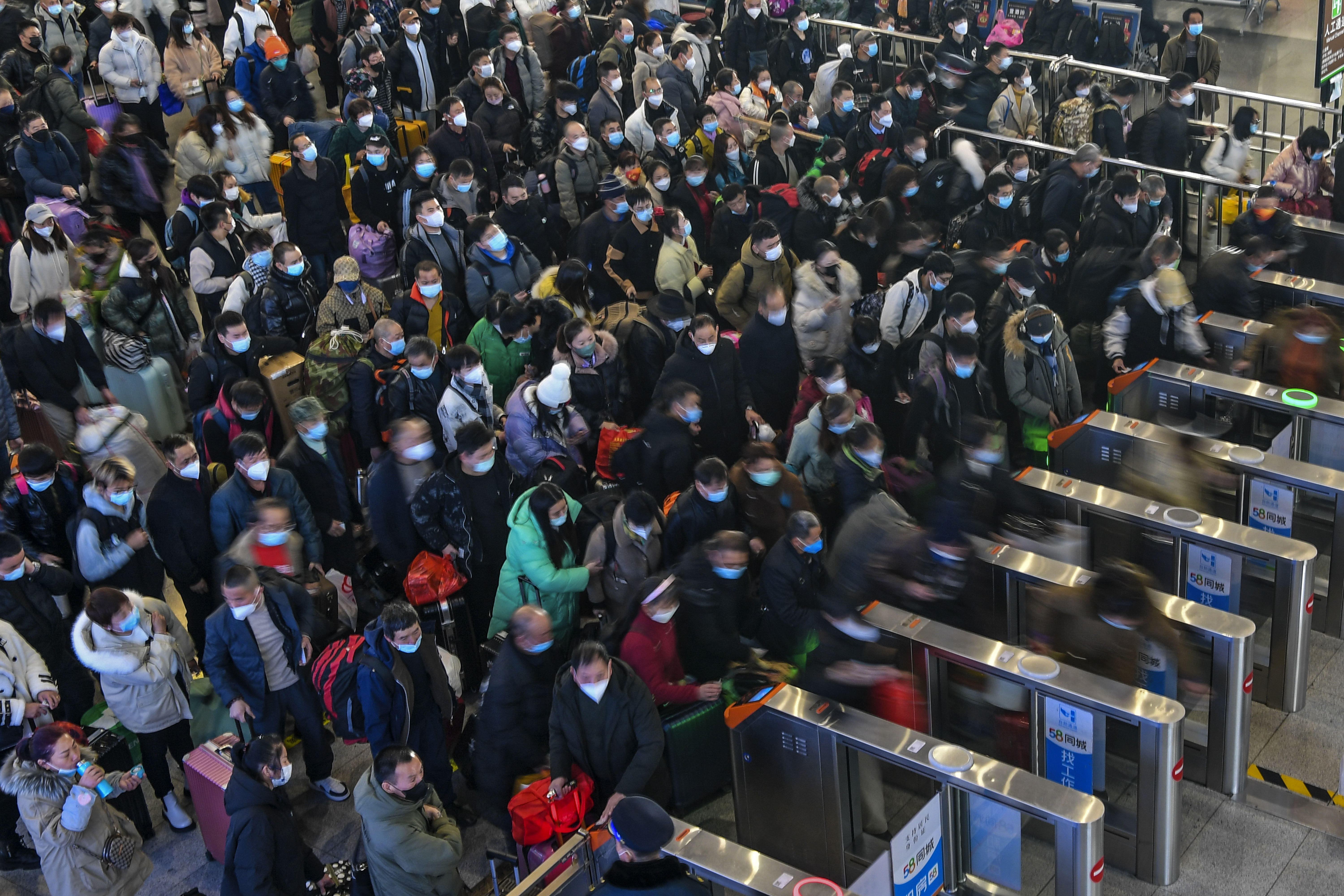
The news has already sparked a fierce backlash on social media, with tens of thousands of angry responses.

Leading the complaints were people close to retiring, who expressed anger over the prospect of delayed access to their pensions. Younger people argued that they would have fewer jobs because of greater competition.

"There has to be some resolution of the financial capacity of local governments to meet current, and prospective, age-related costs," Magnus said.

"Otherwise, there could be rolling crises, layoffs, and reduced provision of public goods and services which could lead to political trouble."

From health care to public infrastructure, local governments have many bills to pay. But they are facing an acute shortfall of cash, as three years of strict pandemic controls and a real estate crash have drained their coffers.

While some regional governments may roll back the health insurance changes after witnessing the uproar, "some may have to do it no matter what, as they really run out of money and can't find other sources of income," said Frank Xie, a professor in business at University of South Carolina Aiken.

Three months, three missing radioactive items. Here's what you need to know

What do a capsule in Australia, a cylinder in Thailand and a camera in the US have in common?

All three contained radioactive material and went missing over the past three months, in what experts say is a hugely rare coincidence that nonetheless raises safety questions about what are a fascinating – and incredibly useful – set of substances.

What are radioactive isotopes?

A radioactive isotope, also known as a radioisotope, is an unstable form of a chemical element that breaks down over time in the form of radiation.

These chemicals can be found naturally but many are created artificially.

READ MORE: Woman reunited with photos 13 years after dropping camera in river

The radiation these elements emit come in the form of alpha, beta and gamma rays which, depending on their concentration, can be dangerous.

But their unique properties also make them useful for a host of applications, from killing cancerous cells to making incredibly precise measurements.

What are these radioactive sources used for?

Radioactive sources are more prevalent than most people might realize.

"Hundreds of thousands" of these sources are "used and transported without issue every day", Lauren Steen, general manager of Radiation Services WA, a consultancy that writes about radiation management plans in Australia, told CNN.

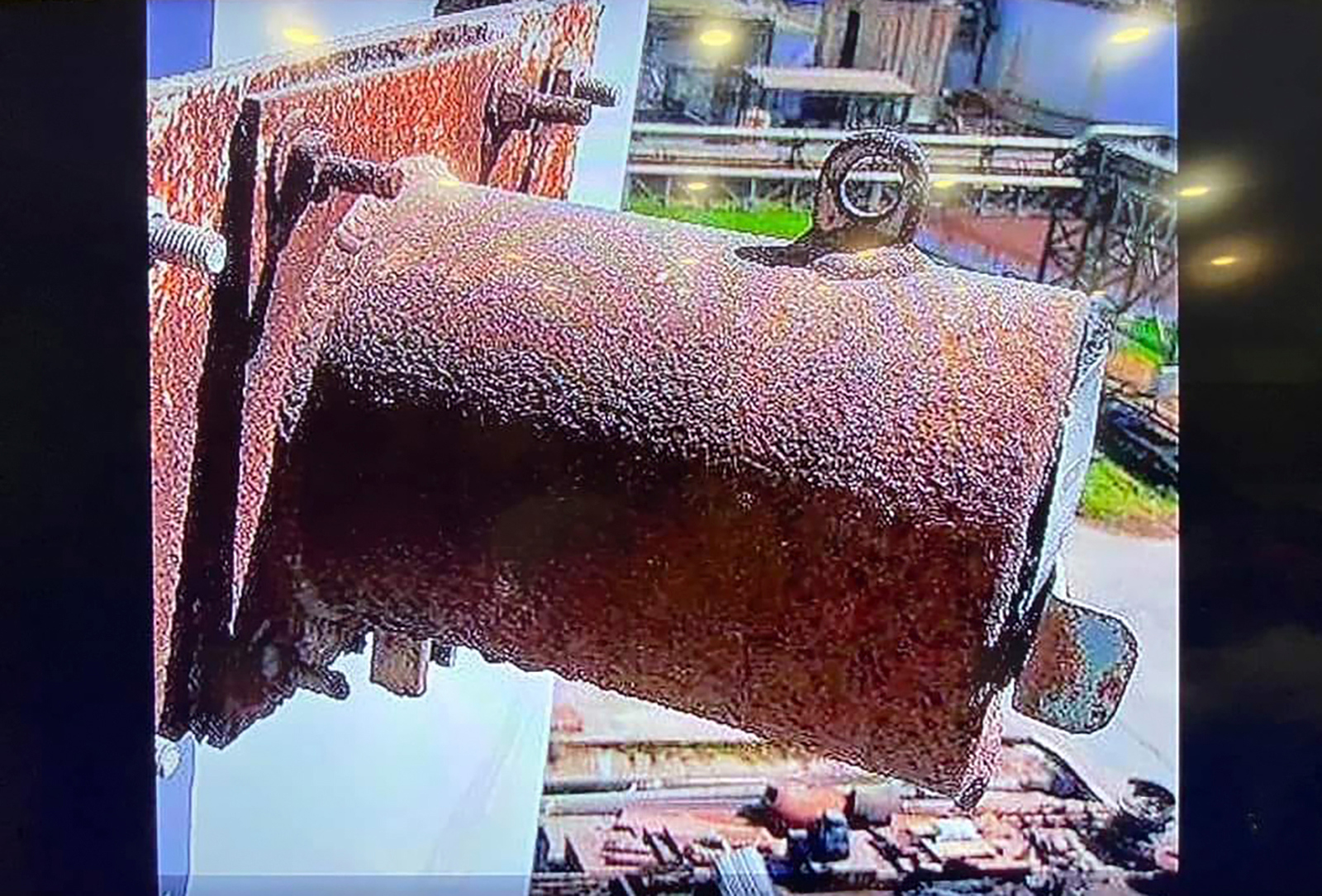
Radioactive materials have a variety of industrial uses, like the cylinder that went missing in Thailand which measured ash at a coal power plant.

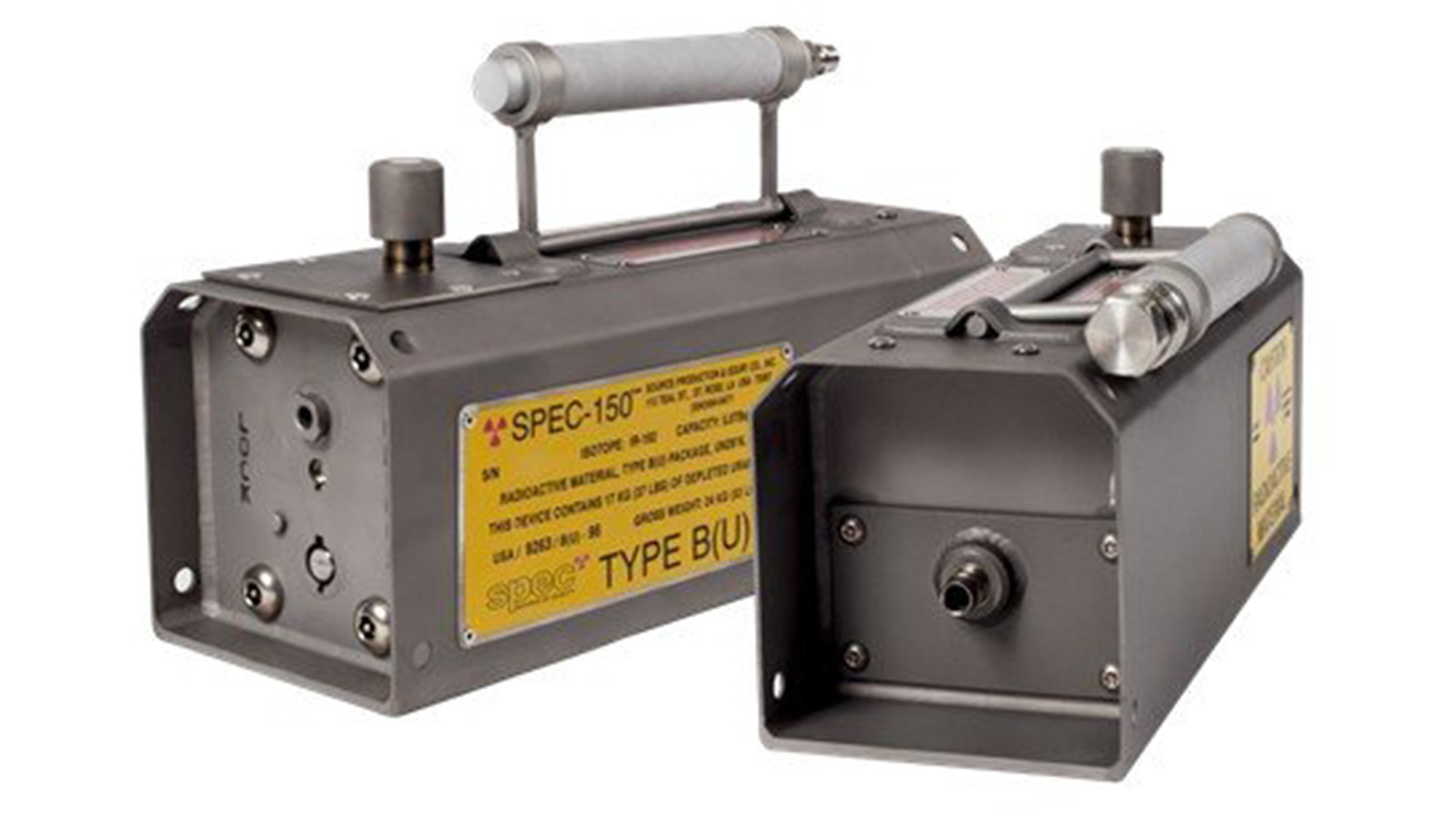
In construction, radiographic cameras, like the one that went missing in the US, can be used to inspect the integrity of ships, pipes and other small spaces, according to the National Nuclear Security Administration.

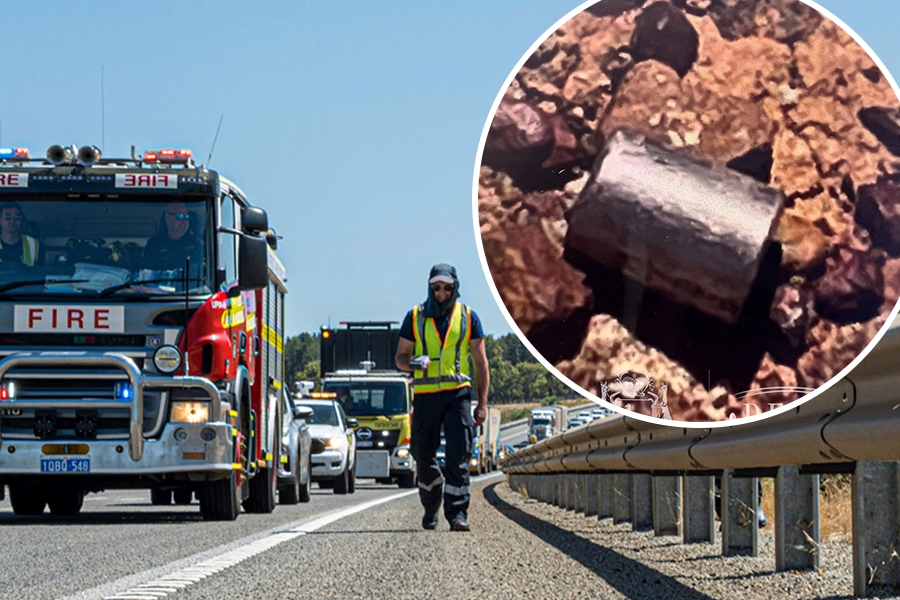
Radioactive substances can also be found in gauges that test soil. The capsule that went missing in Australia, for example, was used in a density gauge by the mining company Rio Tinto.

Additionally, radioactive substances are used in hospitals to diagnose and treat various cancers or to sanitise blood for transfusions, according to David McIntyre, a public affairs officers for the US Nuclear Regulatory Commission.

How dangerous are the missing radioactive items?

Much depends on the type of radioactive isotope within a device and whether it is contained within shielding or open to the elements.

The risk of radiation exposure from the camera that went missing in Texas is "very low" especially because the radioactive material is encapsulated by multiple layers of protection, officials said.

This Texas radiographic camera's radioactive material is sealed inside a capsule, which is in turn sealed inside the camera with protective shielding and other safety features.

But the capsule in Australia and the cylinder in Thailand contained Caesium-137, a highly radioactive substance that's potentially lethal.

Experts warn that Caesium-137 can create serious health problems for people who come into contact with it: skin burns from close exposure, radiation sickness and potentially deadly cancer risks, especially for those exposed unknowingly for long periods of time.

Caesium-137 has a half-life of about 30 years, which means it could pose a risk to the population for decades to come, if not found.

The risk of radioactive material being present in an unknown area for an indefinite period of time was a particular concern in the Australia case because the radioactive capsule went missing along a vast stretch of highway in the desert and was not contained within protective housing.

The missing radioactive cylinder in Thailand was a steel tube, 30 cm  long with a diameter of 13 cm.

It was found after a challenging search likened to trying to find a needle in a haystack, assuaging fears that people could have been exposed to radiation unknowingly.

"If general people (come into) contact unknowingly, the health effects will depend on the level of the (radiation) intensity. If it's high, the first thing we will see is skin irritation," Pennapa Kanchana, Deputy Secretary General for Office of Atoms for Peace (OAP), a government regulator for radioactive and nuclear research in Thailand, told CNN.

The intensity of the radiation for the missing cylinder in Thailand should be slightly hampered by the protective casing surrounding the radioactive source, experts suggest.

"It appears to be 100% in the housing which is lead lined so it's a bit safer than just a source lying on the size of the road," Steen told CNN. "The only risk becomes if the caesium source is separated from the housing."

But that concern may now have become a reality.

Days after the cylinder was reported missing from a coal power plant in Thailand, authorities detected caesium-137 radiation from iron dust in a smelter at an iron melting factory around 6 miles (10 km) from the plant. They are still investigating whether the missing cylinder was taken to this factory and whether the caesium detected came from the missing cylinder.

It is not the first time something like this has happened in Thailand.

In 2000, according to a Congressional Research Service report, canisters containing another radioactive isotope, cobalt-60, were bought by two scrap collectors, who took it to a junkyard where it was cut open.

Some workers suffered burn-like injuries, and eventually three people died and seven others suffered radiation injuries, the report said. Nearly 2,000 others who lived nearby were exposed to radiation.

But Pennapa said the canister that is currently missing is far less radioactive than the one that caused the incident in 2000.

How often do radioactive materials go missing?

Three radioactive items going missing within such a short period of time has sparked concerns but experts say the frequency of the recent incidents is atypical.

"I just think it seems to be massive coincidence," Steen said.

In 15 years of working in radiation management, Steen told CNN she had never heard of a radioactive source "going missing" until this year.

"To be honest, I'm shocked," Steen said. "In all my years of practicing radiation safety, I'd never come across these situations before."

Transportation of radioactive capsules like the gauge in Australia is "not an uncommon practice" but "loss of a source is a rare occurrence," Steen added.

US Nuclear Regulatory Commission press officer McIntyre said the recent incidents should be perceived as the exception, not the rule, when it comes to radioactive material, and shouldn't overshadow their valuable uses.

"While devices with radioactive sources do go missing from time to time, I would caution against concluding that there is a lot of unsecured radioactive material out there," McIntyre said.

Sign up here to receive our daily newsletters and breaking news alerts, sent straight to your inbox.

Recall issued because 'gluten-free spread' has gluten in it

A recall has been issued for a popular gluten-free spread because it turns out it has gluten in it.

OzEmite Yeast Spread Gluten Free has been recalled "due to the presence of an undeclared allergen".

READ MORE: The reason why you pay so much more for gluten-free products

The gluten-free spread actually has gluten in it.

175g jars of the spread sold in South Australian and Western Australian Woolworths, as well as Drakes and independent retailers in South Australia, should not be consumed by those who have a gluten intolerance.

Jars with a best before date of 28/4/25 are affected.

Consumers who have a gluten intolerance or allergy can return the product to the place of purchase for a full refund.

The spread is manufactured by Spring Gully Foods, which issued an apology.

"We are truly sorry for any effect this recall may cause our customers. We thank you for your continued support, understanding and patience," a statement from the company read.

"The safety of our customers is our top priority."

The company said it has "a long history of producing safe, quality products for the Australian market".

READ MORE: WA child dies of 'very rare' virus

Sign up here to receive our daily newsletters and breaking news alerts, sent straight to your inbox.