Tag Archives: oceania

Melbourne mum claims her smartwatch saved her life

When Ricki-lee Wynne turned 40, her husband gave her a Samsung smartwatch for her birthday.

The Melbourne mum-of-four believes that without that gift, she would not be here today.

"There's no doubt that my smartwatch saved my life," she told 9news.com.au.

READ MORE: Aussie families save on groceries by foraging for food
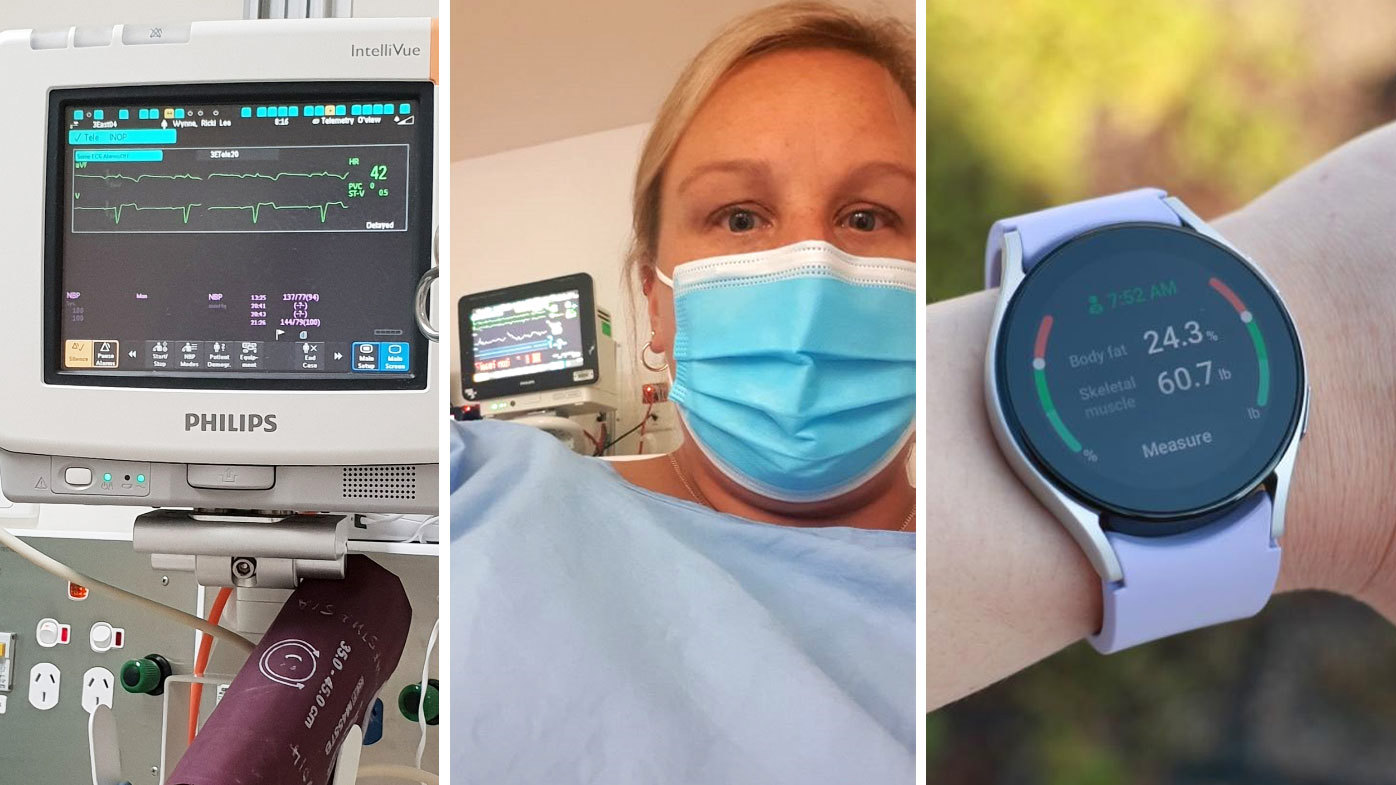
Ricki-lee Wynne's heart rate had plummeted to 29 beats per minute and was not being detected by her smart watch.

Wynne had been having some strange health problems in the months before she was given the watch.

"I was getting a pain over my shoulder blades and it hurt each time I breathed in," Wynne said.

Doctors were puzzled and Wynne was in and out of hospital having X-rays, scans and blood tests in a bid to get to the bottom of what was wrong.

Wynne also had an echocardiogram at the time, to test the functioning of her heart – all appeared normal.

"The doctors were not sure what it was. They thought it could be a low-grade blood cancer," she said. 

The pain went away for a few months, but – in February 2021 – Wynne's breathing problems returned.

"I woke up one day and I couldn't breathe properly. I was just walking into work and I was thinking, 'Gosh, I can't get enough air into my lungs,'" Wynne said.

"I couldn't walk from one side of the room to the other without being short of breath.

"I went to my GP and had an x-ray done, but nothing showed up."

READ MORE: TikTok ban looms for Australian government phones
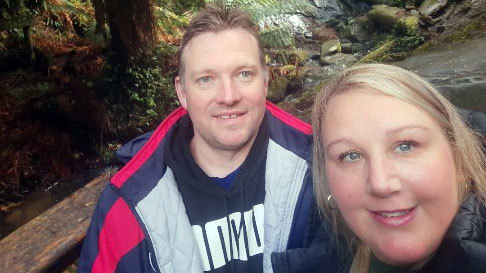
Ricki-lee Wynne, pictured with her husband, says the smart watch he gave her saved her life.

That's when Wynne noticed her smartwatch was playing up.

"I'd been struggling with my watch for days to try and get the heart rate to show up," she said. 

Wynne previously had no problems getting the watch to read her heart rate – but now it just wasn't picking it up.

"It was saying you need to change the position to measure a pulse," she said.

"My chest was also feeling kind of wobbly for a couple of nights when I went to bed."

Wynne said she went back to see her GP and told him she was worried something was really wrong, even though her X-ray was clear.

"I just said to him, 'Even my heart rate isn't right, look at my watch,' and I showed it to him."

Wynne's GP ordered an electrocardiogram (ECG), which showed that her heart rate had dropped to an alarming 29 beats per minute.

"As soon as I had the ECG, I had the doctor call me back and say you need to go straight to Box Hill Hospital," Wynne said.

"I was told at the hospital that if I hadn't come in I would have just died in my sleep.

"I would not have woken up and my heart would have stopped."

Wynne was fitted with an emergency pacemaker and eventually diagnosed with a rare auto-immune condition called sarcoidosis.

Sarcoidosis causes inflammation in different parts of the body, most commonly the lungs.

During flare-ups, the inflammation can spread from one organ to another.

Doctors believe Wynne's sarcoidosis moved from her lungs to her heart, causing her to become dangerously ill.

Wynne still has the pacemaker in, and the device – combined with medication – has allowed her health to improve significantly.

'Fitbits are saving women's lives'

Smartwatches have become ubiquitous and stories like Wynne's – of the devices picking up undiagnosed health problems – are becoming more common as the heath technology on offer improves.
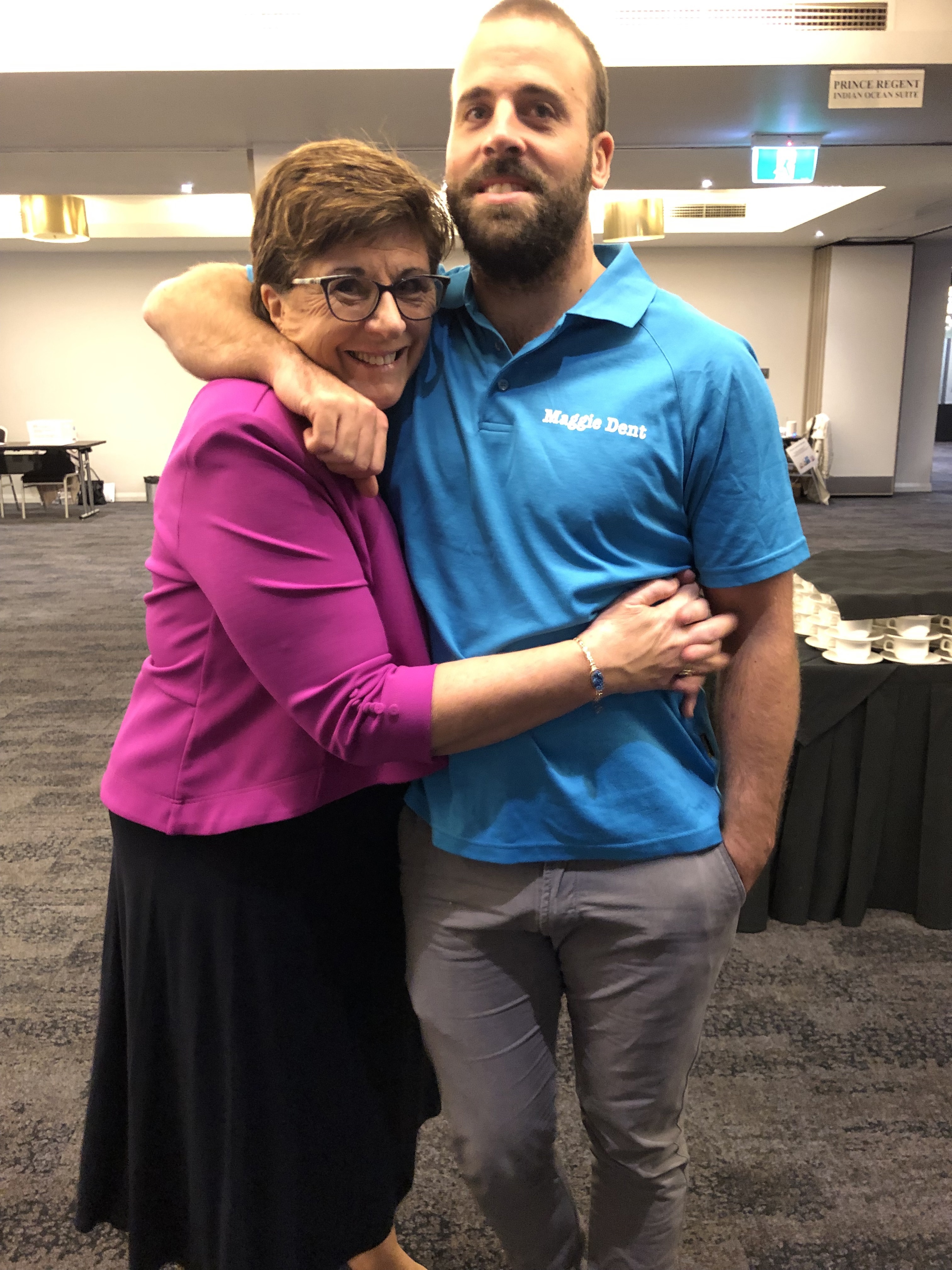
Maggie Dent and son Dr James Dent

Earlier this month, Australian parenting expert and commentator Maggie Dent shared her experience of ending up in an emergency department after her heart rate – shown on her Fitbit – shot up from 64 to 145 beats per minute.

"When I noticed my Fitbit showed my heart rate I thought it must be malfunctioning," Dent wrote on Facebook.

Dent was diagnosed with a heart flutter, which can increase the risk of stroke or heart failure, and said the data provided by her Fitbit had helped with developing her treatment plan.

"It seems I may have saved my life. One emergency nurse told me that Fitbits are saving women's lives as they often have no symptoms like me," Dent wrote.

Smartwatch-led diagnoses pose new challenges

Victor Chang Cardiac Research Institute executive director Professor Jason Kovacic said patients were coming to him with potential heart problems picked up on smartwatches.

"I definitely have had a few patients come to me, or be referred to me, with abnormal findings on a smartwatch, and then we go on to try to validate or verify that using various techniques," Kovacic, who is a cardiologist at Sydney's St Vincent's Hospital, said.

But while health technologies offered by smartwatches were exciting and improving rapidly, the reality was that undetected heart problems in the general population were relatively rare, Kovacic added.
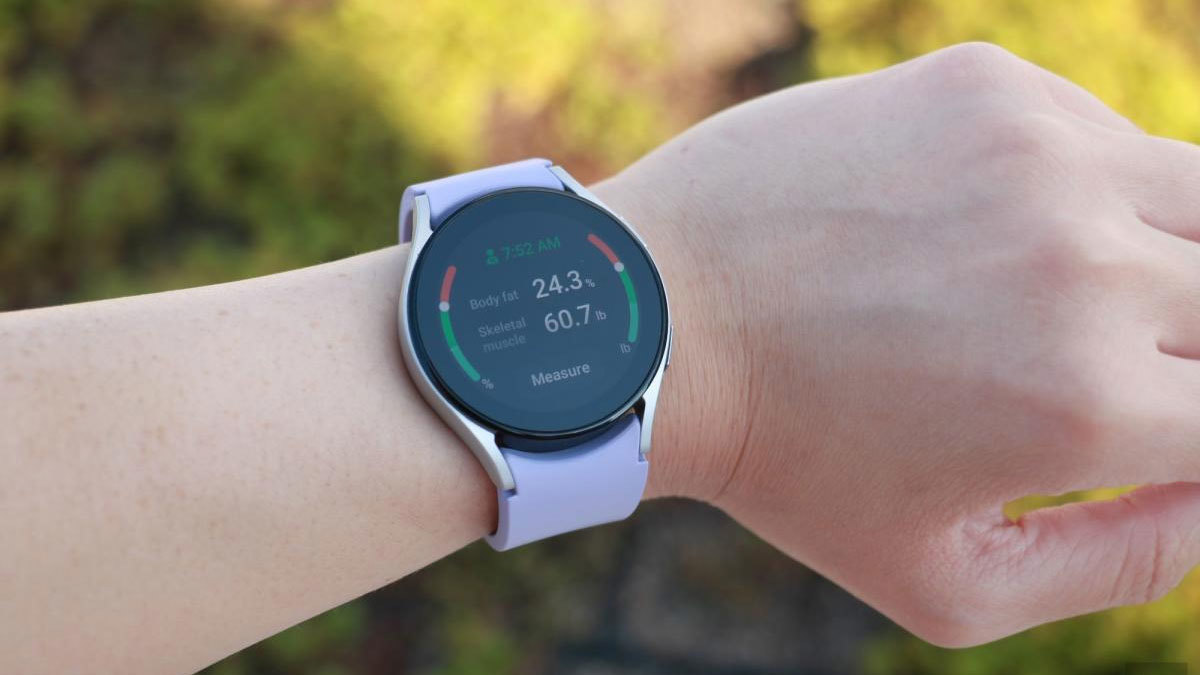
Recent studies suggest that, while rare, smart watches can pick up undiagnosed heart problems, such as atrial fibrillation.

A recent study published in the American Heart Association Journal in September last year tracked more than 455,000 participants, who each wore a Fitbit watch for a week.

An irregular heart rhythm was detected in about 1 per cent of participants.

A follow-up ECG confirmed a diagnosis of an irregular heart rhythm in about a third of those cases.

A similar 2019 study using an Apple Watch, published in the New England Journal of Medicine, detected an abnormal heart rhythm in 0.5 per cent of more than 400,000 participants.  

Like the Fitbit study, follow-up ECGs confirmed atrial fibrillation in around a third of cases.

Contact reporter Emily McPherson at Sign up here to receive our daily newsletters and breaking news alerts, sent straight to your inbox.


Russia scrambles fighter jet as US bombers flew towards border

Russia scrambled a Su-35 fighter jet over the Baltic Sea after two US strategic bombers flew in the direction of the Russian border, Moscow said.

The incident on Monday followed the downing of a US military drone last Tuesday after it was intercepted by Russian warplanes. It was the first known direct military encounter between Russia and the US since Russia invaded Ukraine last year.

Russia's defence ministry said the fighter jet involved in Monday's intercept returned to base after the US bombers turned away, the Reuters news agency reports.

READ MORE: Why a Donald Trump indictment would have huge implications

"On March 20, radar facilities of the air defence forces of the Western military district on duty over the Baltic Sea detected two air targets flying in the direction of the Russian Federation's state border," the ministry said on the Telegram messaging app.

It said the targets were US Air Force B52H strategic bombers.

Russian officials said a Su-35 fighter was scrambled to prevent a border violation, and added, "after the foreign military aircraft moved away from the Russian Federation state border, the Russian fighter returned to its base airfield."

The Russian defence ministry said the Su-35's flight was in strict accordance with international regulations about airspace.

"No violation of the state border of the Russian Federation was permitted," it said.

READ MORE: Vladimir Putin welcomes China's Xi Jinping to Kremlin

Meanwhile, Russian President Vladimir Putin has welcomed Chinese leader Xi Jinping to the Kremlin in a visit that sent a powerful message to Western leaders allied with Ukraine that their efforts to isolate Moscow have fallen short.

Xi's trip — his first abroad since his re-election earlier this month — showed off Beijing's new diplomatic swagger and gave a political lift to Putin just days after an international arrest warrant was issued for the Kremlin leader on war crimes charges related to Ukraine.

The two major powers have described Xi's three-day trip as an opportunity to deepen their "no-limits friendship". China looks to Russia as a source of oil and gas for its energy-hungry economy, and as a partner in standing up to what both see as US domination of global affairs.

Kremlin spokesman Dmitry Peskov said that over dinner on Monday, Putin and Xi would touch on issues related to Ukraine, adding that Russia's president will likely offer a "detailed explanation" of Moscow's view on the current situation.

Broader talks involving officials from both countries on a range of subjects are scheduled for Tuesday, according to Peskov.

Sign up here to receive our daily newsletters and breaking news alerts, sent straight to your inbox.
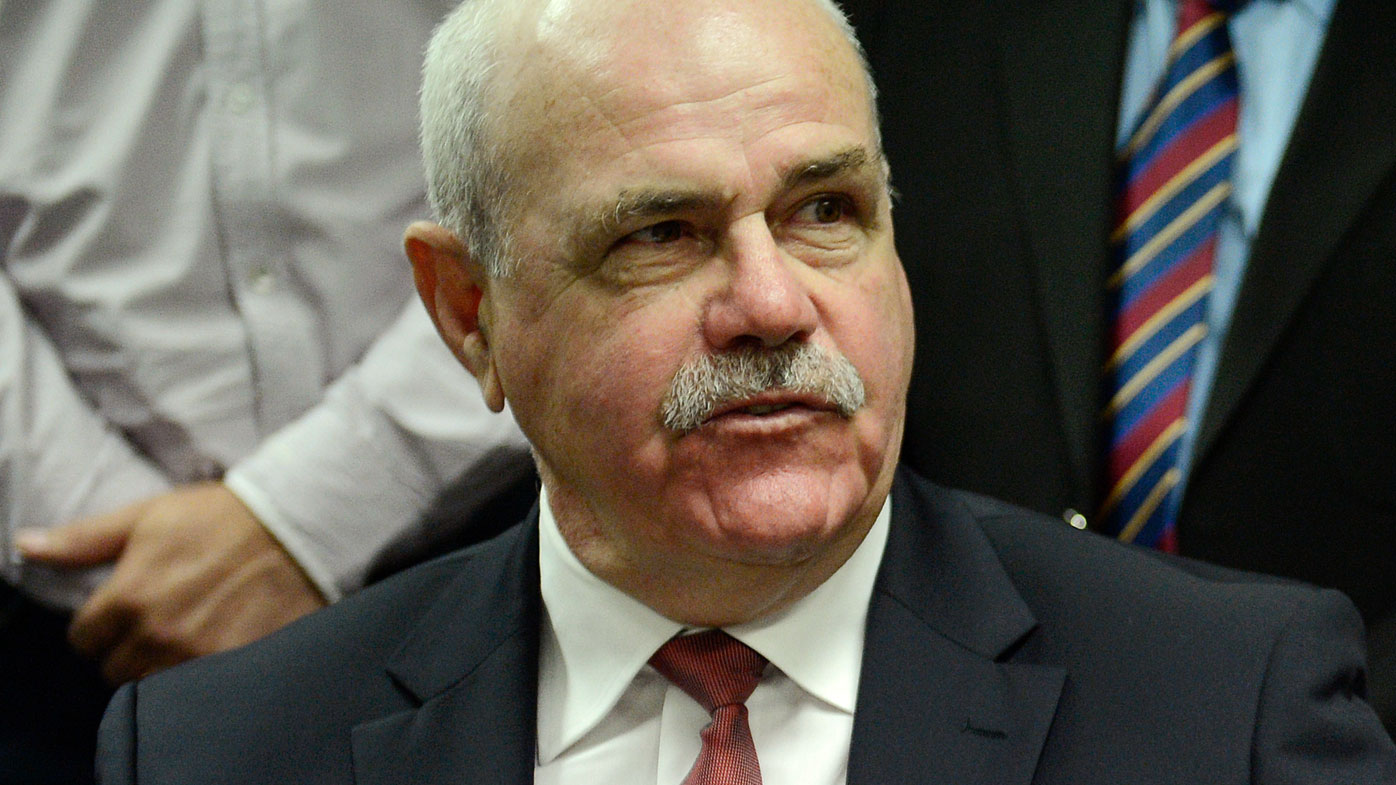
'Football as the enemy': Leigh Matthews on life outside AFL

Former AFL great Leigh Matthews says he still feels "guilt" for not spending more time with his family during the early days of his career.

Speaking on the Neil Mitchell Asks Why podcast, Matthews says "I look back on it with some regret."

"My two daughters, who are both 50 years old now … They're not really into football in a big way. They would've almost regarded football as the enemy," he said.

READ MORE: Australia must 'step up to the plate' on TikTok ban, expert says

https://omny.fm/shows/neil-mitchell-asks-why/neil-mitchell-asks-leigh-matthews/embed

"That was the thing that took their dad away from them."

Matthews claimed four Premiership flags during his 16-year playing career with Hawthorn, and another four as coach at Collingwood and the Brisbane Lions.

But Matthews says it came at a cost.

"I often think about our family … I was a very young father. I was a teenage father," he said.

READ MORE: Legend's impassioned defence of thumping Kaufusi hit

"But I was so focused on my success and my career that you … look back on it, and you just didn't spend enough quality time or quality concentration on your family."

Reflecting on his career, Matthew's describes himself as a "callously brutal" player, saying he would've rather kicked "eight goals in the losing side" over zero goals in a winning side.

"I would say not in finals, but in normal games … Wanting to be the best player on the ground is one of the driving factors for a lot of players once you get to a certain level."

READ MORE: More arrests made over murder of Adelaide father

But he says he's "a very different person now in my 70's than I was in my 20's."

Matthews was inducted to the AFL Hall of Fame in 1965, and is widely recognised as one of the best players of the 20th Century.

He is now an AFL commentator.

Sign up here to receive our daily newsletters and breaking news alerts, sent straight to your inbox.

'Do not say it is your government's problem': Climate message to all

The latest report outlining just how critical action on climate change has become is full of dire warnings and urgent pleas to governments and policy makers.

The head of the UN warned the "climate time-bomb is ticking" and "humanity is on thin ice" while experts alerted "there is a rapidly closing window of opportunity to secure a liveable and sustainable future for all".

But amid the essential calls for broad action, one researcher had a direct message for every inhabitant of the rapidly-warming earth.

READ MORE: TikTok ban looms for Australian government phones

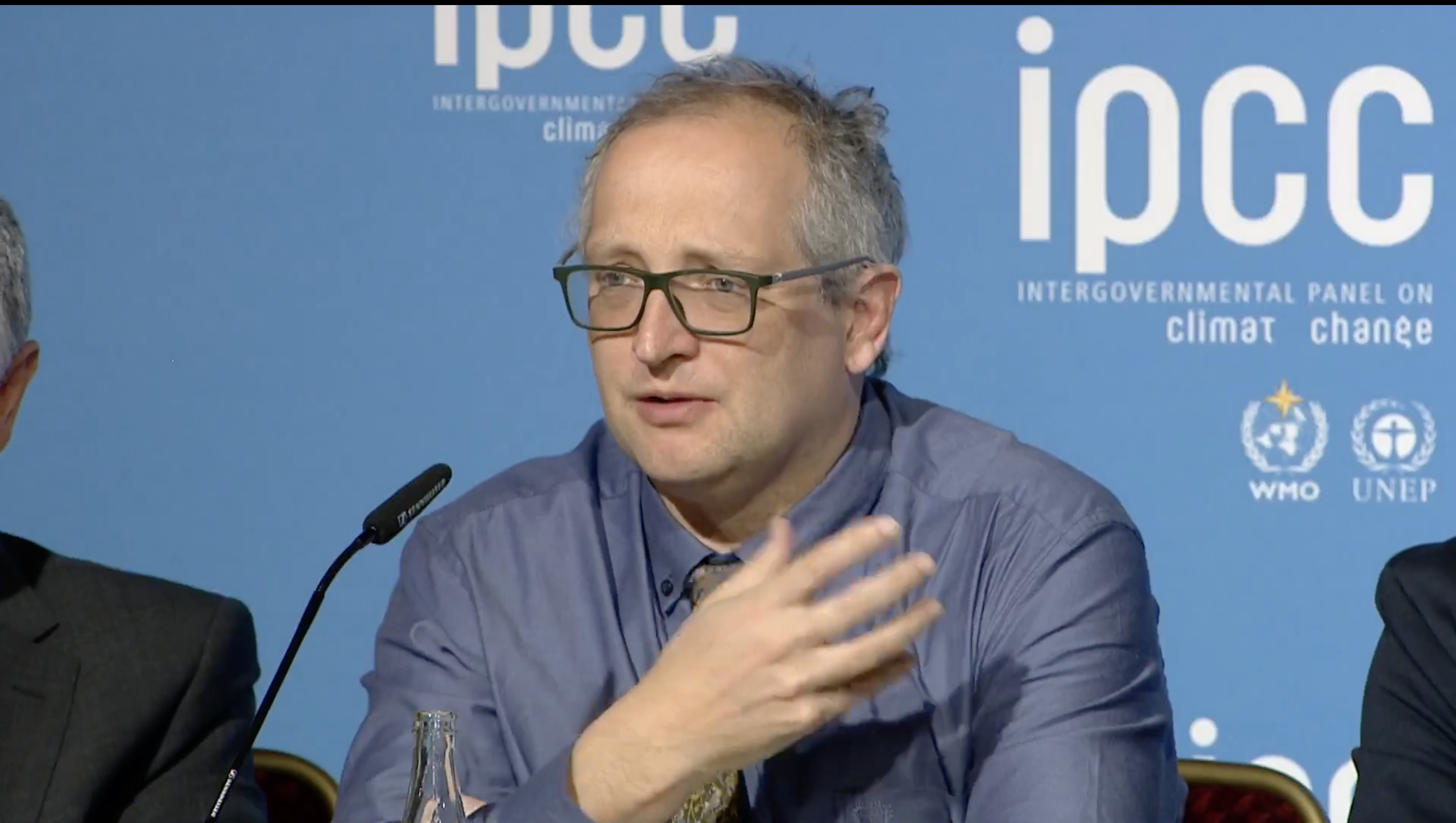
Professor Peter Thorne, one of dozens of authors on Intergovernmental Panel on Climate Change's synthesis report, said the world had run out of time to think of climate change as "somebody else's problem". 

"The reality is, we at all levels, governments, communities, individuals have made climate change somebody else's problem," he said at an IPCC panel press conference following the release of the report. 

"We have to stop that. We have to act now. It is action across all scales. 

"Do not say it is your government's problem, your community's problem. 

"It is your problem as part of that community as part of that country to make the difference at this point for the resilient future we need that is resilient to the climate change we currently have and avoids as much additional climate change as humanly possible."

His comments were in no way designed to take the heat off governments, which the authors said were critical in the essential push to slash carbon pollution and fossil fuel use by nearly two-thirds by 2035.

READ MORE: China President Xi Jinping lands in Moscow to meet with Vladimir Putin 

"The choices and actions implemented in this decade will have impacts for thousands of years," the report said, calling climate change "a threat to human well-being and planetary health".

But amid warnings current policies make it "likely" the world will exceed the 1.5-degree rise in temperatures beyond which experts say the effects of climate change worsen significantly, the IPCC panel also spoke of "opportunities".

It mentioned the benefits more individual actions such as walking, cycling and switching to a low-carbon diet based on plants could have beyond just emissions reductions.

"It's ultimately true that emissions are the result of our individual actions. We are the ultimate consumers," Thorne said when asked if this language was a response to governments' repeated failures to do enough.

READ MORE: 'Just want a home for my boys': Regional NSW in the grips of worsening housing crisis

"We are the ultimate people driving or cycling or walking, etc. 

"We need to be enabled by governments but action is needed at all levels, from intergovernmental, through governments, through communities to individuals."

With the world only a few tenths of a degree away from the globally accepted goal of limiting warming to 1.5 degrees since pre-industrial times, scientists stressed a sense of urgency. The goal was adopted as part of the 2015 Paris climate agreement and the world has already warmed 1.1 degrees.

This is likely the last warning the Nobel Peace Prize-winning collection of scientists will be able to make about the 1.5 mark because their next set of reports will likely come after Earth has either breached the mark or locked into exceeding it soon, several scientists, including report authors, told The Associated Press.

UN chief Antonio Guterres called for an end to new fossil fuel exploration and rich countries quitting coal, oil and gas by 2040.

Sign up here to receive our daily newsletters and breaking news alerts, sent straight to your inbox.
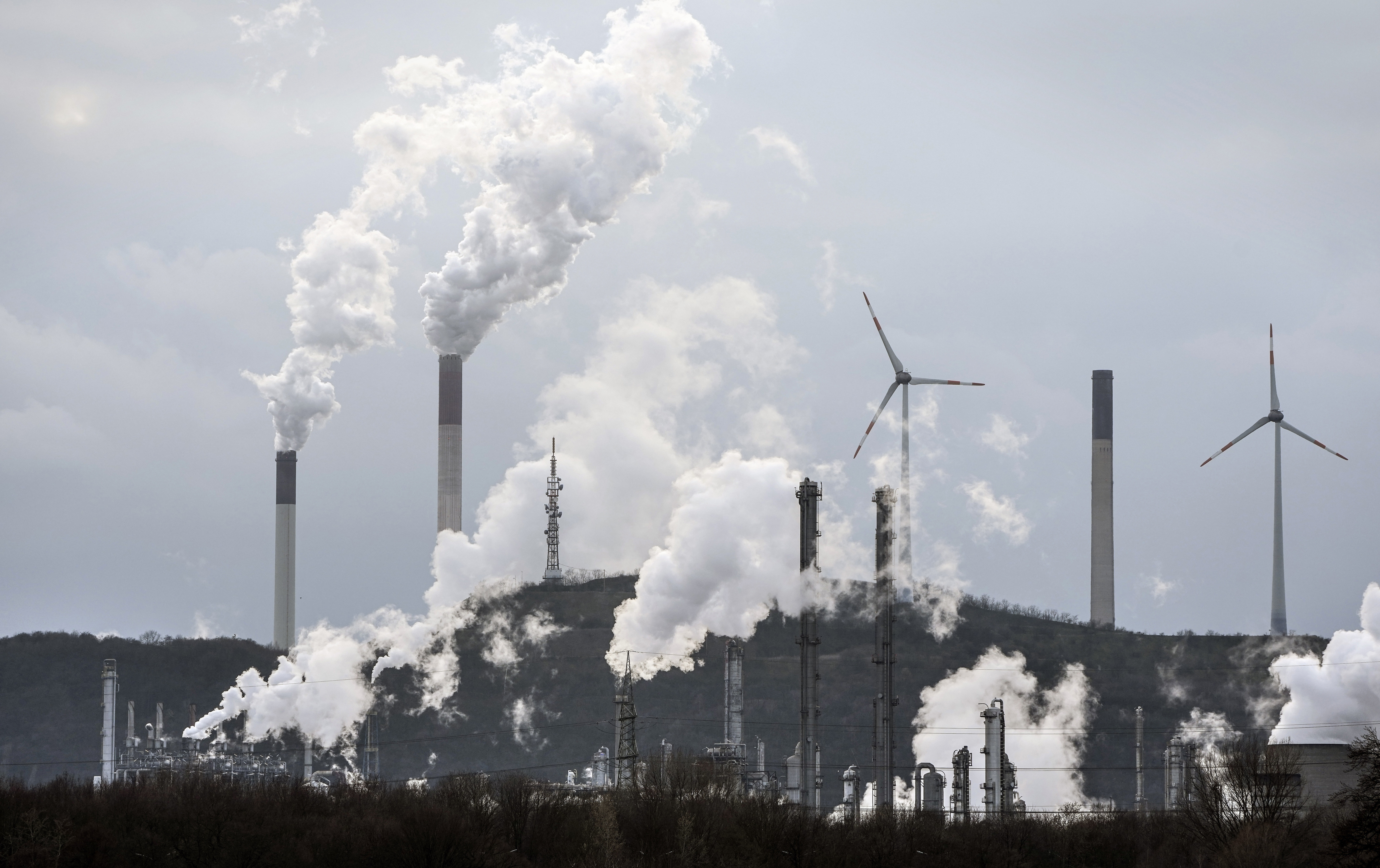
And the UN science panel calculated and reported that to stay under the warming limit set in the Paris agreement the world needs to cut 60 per cent of its greenhouse gas emissions by 2035.

That's compared with 2019, adding a new target not previously mentioned in the six reports issued since 2018.

– With Associated Press

Families saving on groceries by foraging their food

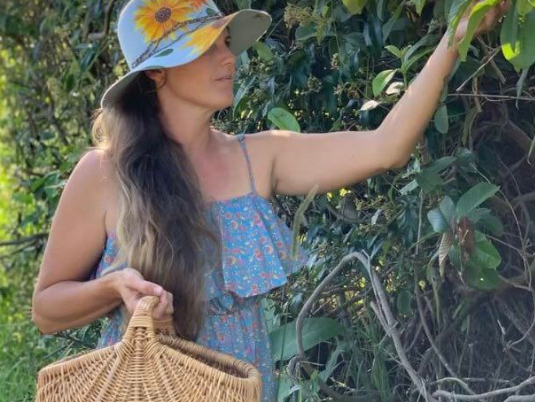
Mum-of-four Kylie Elsley reckons she could gather enough food to make an entire meal for her family – for free.

The 40-year-old from Coomera on Queensland's Gold Coast told 9news.com.au she saves up to $150 a week simply by foraging.

That means she gathers food from her garden, the side of the roads, parks – and even near local beaches.

READ MORE: Here's what Aussies are buying less of as cost-of-living crisis bites

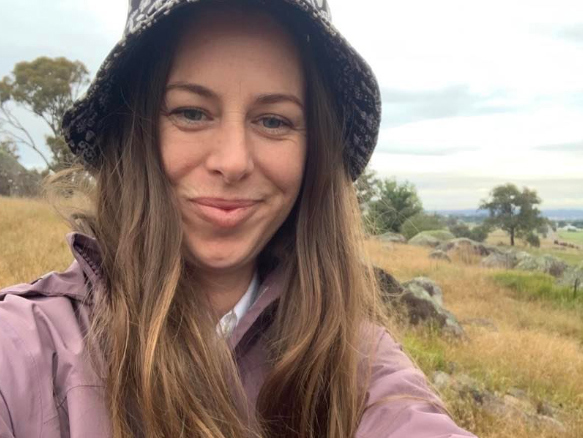
Kylie said she saves money by foraging for food.

Indigenous communities have relied on "bush tucker" for centuries, and now more families are tapping into the free food source on their doorsteps. 

Experts think this could be in part to COVID-19 lockdown shortages and the family budget being pushed by the rising cost of living.

The resourceful Queenslander said she saved "a couple of thousand dollars" by replacing store-bought Christmas gifts with foraged and homemade items such as jam and cordial from guavas found on the side of the road.

The family has even made flour from sunflower stems and bulrushes, a tall plant found in wetlands.

They've also used wattle to make pancakes and cookies.

Elsley discovered foraging on a community Facebook page and said she's found the practice quite "addictive".

"It would definitely save us money," she said.

"I haven't bought jam in a couple of years. That was one of the first things I attempted, from guavas and lilly pilly.

READ MORE: Credit card spending reaches record high levels amid cost-of-living crisis

https://www.instagram.com/p/Cp4ueOFyYa_/?utm_source=ig_embed&amp

"We don't buy cordial and instead of buying soda use fermented flowers.

"I've cut down on flour by a third. I don't buy herbal tea anymore."

Elsley even uses plant leaves and paperbark for cooking and packaging her kids' lunches, instead of foil or cling wrap.

"I would encourage everyone out there to give it a go," she said.

Designer saves more than $1500 a year foraging

Graphic designer and illustrator Belinda Suzette's interest in foraging was sparked during COVID-19 lockdowns.

She joined a foraging Facebook group and started taking a basket with her on her regular country walks.

She saves up to $30 a week on groceries by using foraged items from local paddocks and the roadside for meal additions.

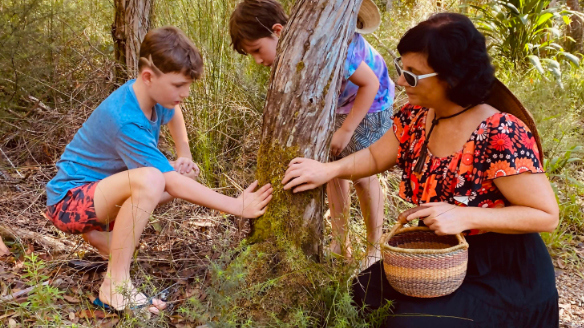
Belinda said she saves money by foraging for food.

"There's a fair bit of concern about the price of things, especially since COVID when we found things were in short supply," Suzette, from the Tweedshire town of Piggabeen told 9news.com.au.

"All of a sudden we didn't have everything at our fingertips.

"I've started to dedicate a significant portion of my groceries as being foraged or created.

"I made a raspberry tart from my raspberries.

"I did an edible flower workshop and started using them in baking and salads.

READ MORE: The government cost-of-living payments everyone needs to know about

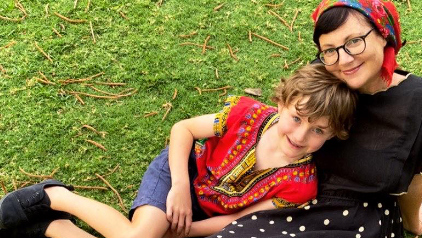
Belinda said she saves money by foraging for food.

"I think the standout for me was the dandelion.

"I make a lot of frittatas and use the dandelion leaves chopped up, then I put the flower on top."

Her son Charlie, nine, is also a keen forager.

READ MORE: World on 'thin ice' as UN climate report gives stark warning

Urban Aussies can forage too

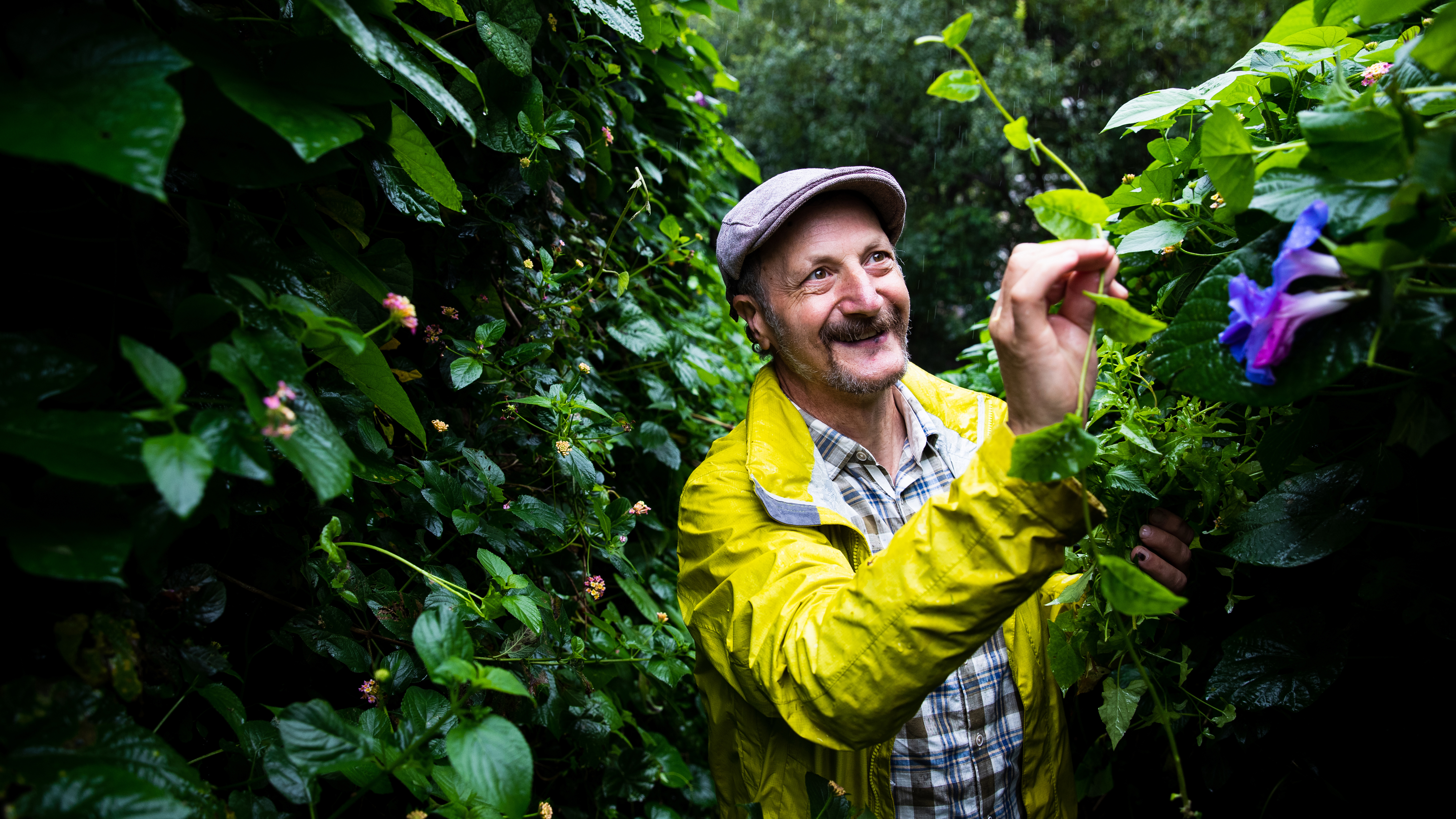
Diego Bonetto is one of Australia's best-known foragers.

He's even written a book about the practice called Eat Weeds.

Bonetto said you don't need to live in the country to be able to forage for food.

"There is an incredible amount of food available everywhere," Bonetto said.

"Whether you would like to take advantage or not it's just a matter of perceptions, a matter of learning a few tricks – how to cook, what to harvest and when.

Diego Bonetto is one of Australia's best-know foragers, and has written a book called, Eat Weeds.

"Probably some of the most striking missed opportunities for people in the cities is seaweed."

Rules vary between states as to how much you can collect.

Bonetto said the only danger with cooking and eating seaweed is it might not taste the best if you get the wrong variety.

However, foraging for mushrooms, as well as a few other plants, can be lethal if you don't know what you're doing.

Hospitalisations and deaths have been reported with officials in the ACT even telling people in the past few years not to pick any mushrooms at all.

Bonetto advised people to take a foraging course – there are many across the nation – and only venture out with people who know their stuff.

READ MORE: Cold change hits after heatwave sees March records tumble

Even using online plant ID apps can be risky, he said.

"Please just for the first time go out with someone who knows what they're looking for rather than downloading an app from the internet. That is the safest way," he said.

'Cut down your family food bill' with new lifestyle

Chanterelle Foggin runs courses to teach people how to forage, and is the administrator of the Facebook page Forage and Grow NSW.

She said it's not just a way of finding food, but a lifestyle.

"For me, foraging isn't so much a place you go to do it, it's more a way of life," she told 9news.com.au.

Chanterelle Foggin runs a foraging group on Facebook.

"When you find food in the wild you get this amazing reward in your brain."

She said the best place to start for newcomers is with edible weeds, like dandelions.

"That can cut down your family food bill – no more baby spinach," she said.

READ MORE: Millions to receive cash boost today

Forging rules

Forgers must consider the legalities, which vary between states and territories.

Foraging in a National Park anywhere in Australia isn't allowed.

In ACT National Parks the maximum penalty is over $400,000 or two years in prison.

Related fines in South Australian National Parks are up to $1000.

In Queensland related penalties are a maximum $431,250.

People of Indigenous heritage can remove plants for domestic use, however.

You can forage in urban parks and roadsides, along with private land if you have the owner's permission.

What are some good plants to forage?

Dandelion

"All parts of the plant are edible and highly nutritious," Foggin said.

"Look for smooth serrated leaves and hollow flower stems that only have one flowering head.

"The flowers are lovely in salads and quiche. Leaves can be eaten raw or cooked."

Lilly pilly

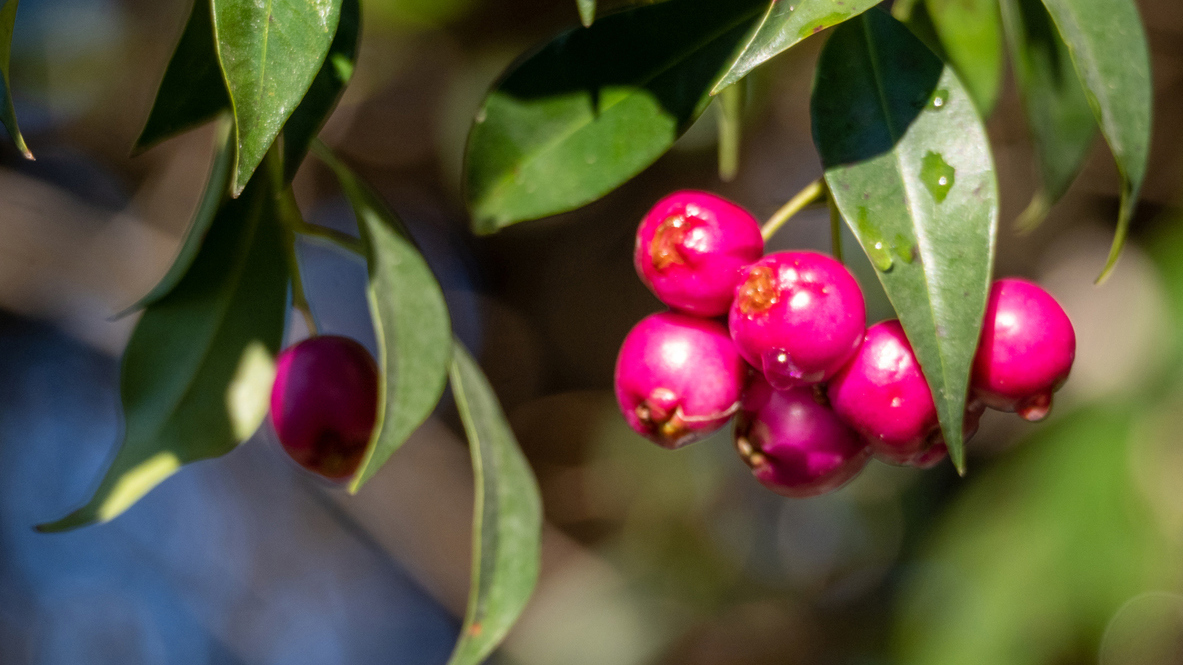
"A common edible amongst urban streets and council plantings, all lilly pilly are edible and make awesome jams, cordials, syrups, or jellies," Foggin said.

Lilly pilly berries are edible.

Warrigal greens

A succulent tasty alternative to baby spinach, find the triangular leaves growing along waterways at beaches and foreshore areas," Foggin said.

"Blanch in salted boiling water for a few minutes drain and add to soups, stews, bakes, pasta and make pesto."

Sign up here to receive our daily newsletters and breaking news alerts, sent straight to your inbox.
Abducted US aid worker freed after six years in captivity

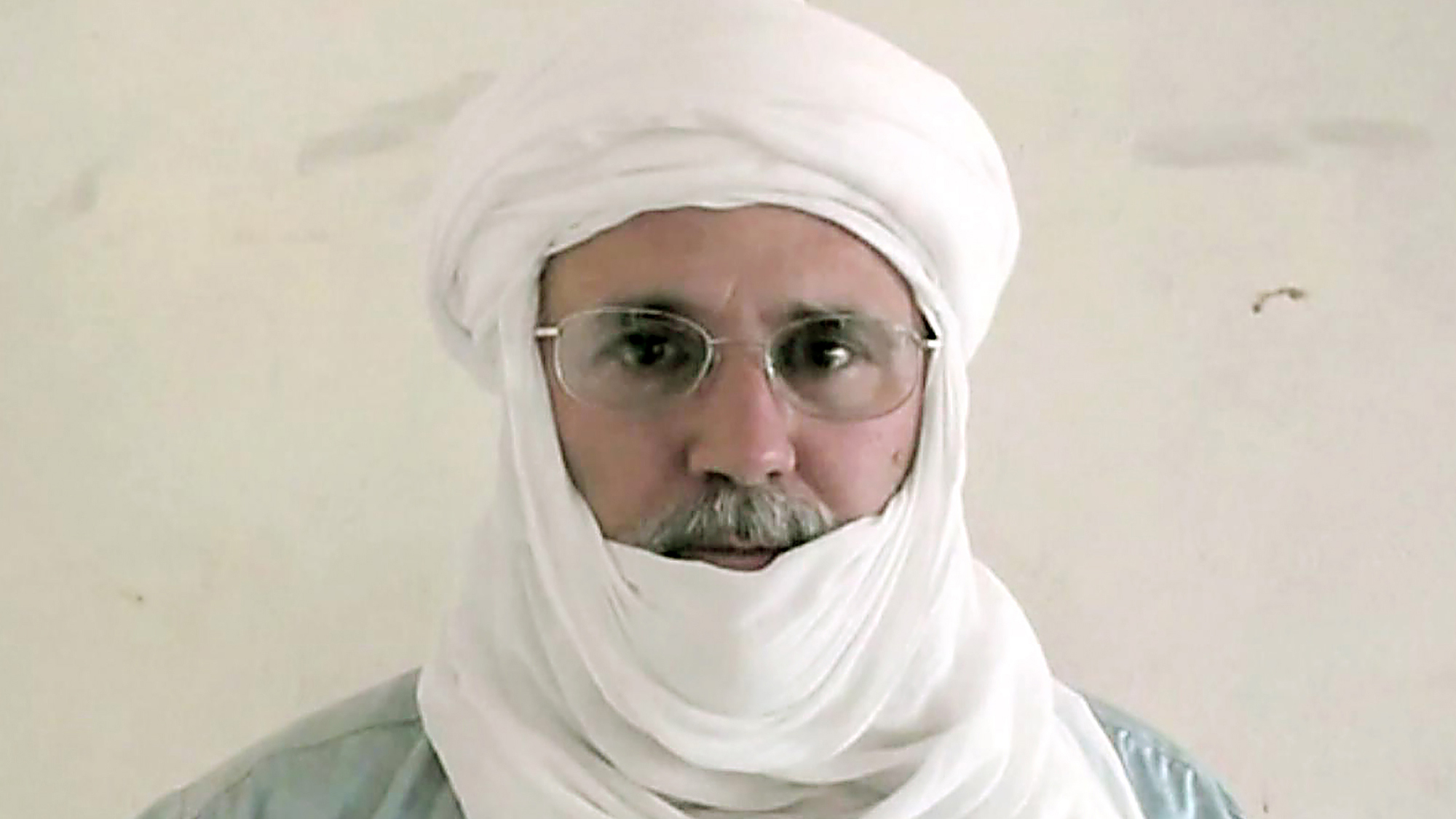
An American aid worker held by Islamic extremists in West Africa for more than six years and a French journalist abducted almost two years ago have both been freed, authorities say.

US officials said no ransom had been paid for aid worker Jeffery Woodke, praising Niger's government for helping his release. The French government did not comment on how journalist Olivier Dubois' freedom was won.

Officials in Niger unexpectedly announced Monday morning (Monday evening AEDT) that the two men had taken a special flight to to the country's capital but provided no details.

READ MORE: World on 'thin ice' as UN climate report gives stark warning

US officials said that the American hostage was not freed in Niger but in the surrounding region that includes Mali, where Dubois was abducted in 2021.

The press organisation Reporters Without Borders, which had long pushed for Dubois' release, said "we feel joy and immense relief" and thanked French authorities.

"I'm gratified and relieved to see the release of US hostage Jeff Woodke after over six years in captivity," tweeted Biden administration national security adviser Jake Sullivan.

"The US thanks Niger for its help in bringing him home to all who miss and love him. I thank so many across our government who've worked tirelessly toward securing his freedom."

https://twitter.com/JakeSullivan46/status/1637815029272571906

Woodke had been kidnapped from his home in Abalak, Niger, in October 2016 by men who ambushed and killed his guards and forced him at gunpoint into their truck, where he was driven north toward Mali's border.

The two men were the highest-profile foreigners known to be held in the region, and their release was the largest since a French woman and two Italian men were all freed together in Mali back in October 2020.

Groups have long abducted hostages for ransom in the Sahel, the vast, semi-arid expanse below the Sahara Desert. Previously released captives have described being moved frequently from site to site in harrowing conditions amid sweltering temperatures. The extremists aim to use millions in ransom to fund their jihadi operations, though not all countries engage in payment negotiations.

READ MORE: China President Xi Jinping lands in Moscow to meet with Vladimir Putin

Woodke's wife, Els Woodke, said at a 2021 news conference in Washington that her husband's captors had made a multimillion-dollar ransom demand for his release. She said at the time that she believed her husband was in the custody of a West African affiliate of al-Qaeda known as JNIM and, at the news conference, pleaded with the group's leader to release him.

In a statement released on Monday through a family spokesman, Els Woodke said she had not yet had the chance to speak with her husband but had been told he was in good condition.

"She praises God for answering the prayers of Christians everywhere who have prayed for this outcome," Woodke said.

The Biden administration official did not identify the specific group believed responsible for keeping Woodke in captivity, saying a number of overlapping networks in operated in that part of West Africa.

At least 25 foreigners and untold numbers of locals have been kidnapped in the Sahel since 2015, according to the Armed Conflict Location & Event Data Project. In 2020, Swiss authorities said Christian missionary Beatrice Stoeckli was killed by her militant captors.

Militants with links to al-Qaeda and the Islamic State group are believed to still be holding a number of captives, including a German priest. The Rev. Hans-Joachim Lohre was preparing to celebrate Mass in Mali's capital when he was abducted last November.

Last year an Italian couple and their child were abducted with a household employee in southern Mali.

Hundreds of small sharks caught on camera in Gold Coast waters

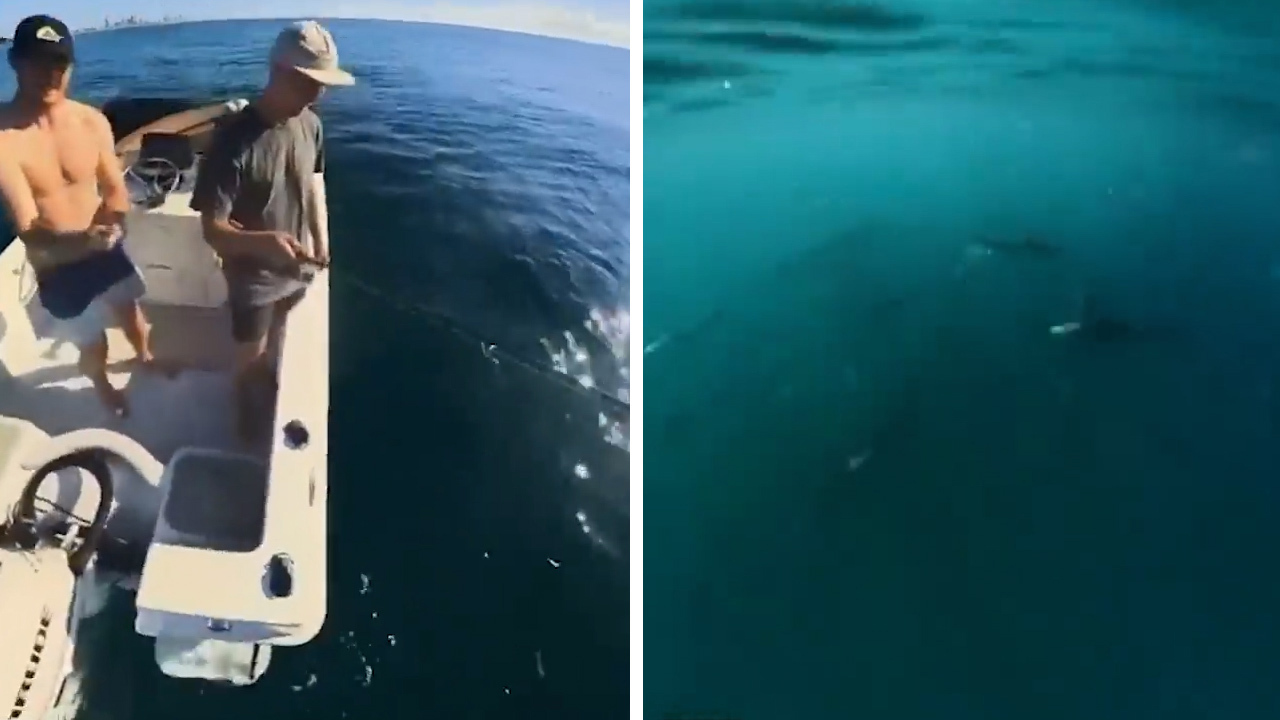
When two former AFL players took their boat out over the weekend, they weren't expecting what they would encounter.

Dropping a line into the serene waters off Burleigh Heads, about 200 bronze whalers were swarming.

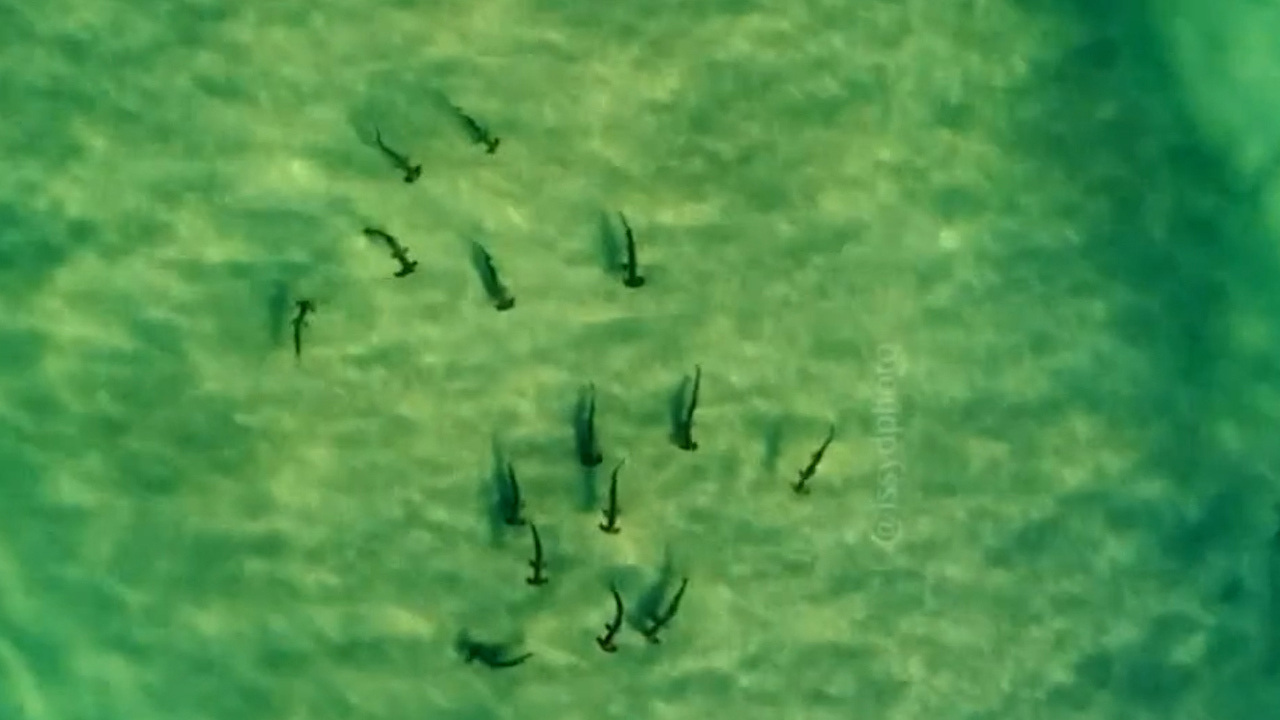
The hundreds of sharks captured encircling the dinghy were just one of a number of encounters captured off Queensland's coast at the weekend, with crystal waters providing the perfect window into the abundant underwater world.

READ MORE: Bottle shop worker's final text to dad after being fatally stabbed

Former Gold Coast Suns players Ryan Davis and Matt Shaw snapped up the incredible vision and posted it to social media.

Locals were stunned by the sight.

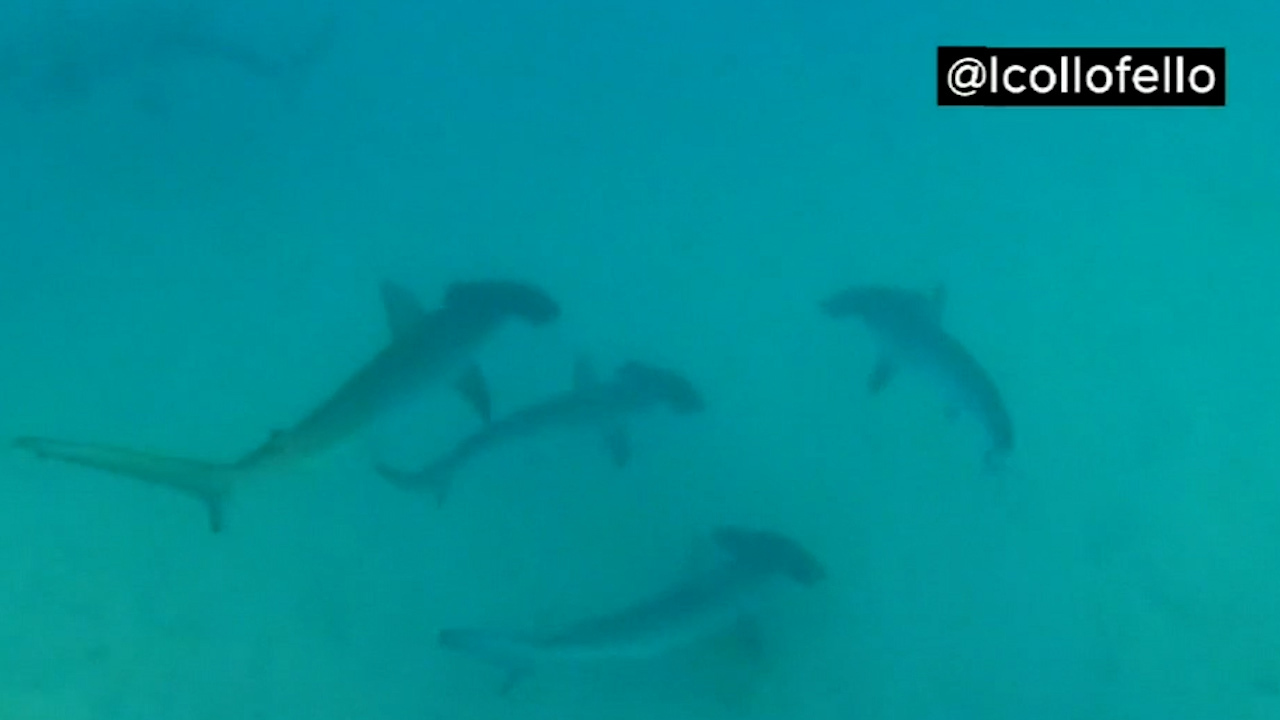
"I've never seen anything like this before," paddl-boarder Lauren Collofello said.

"You'd be lucky to see one shark let alone such a big group of sharks and a critically endangered and vulnerable hammerhead shark.

"It's quite extraordinary."

Collofello and her partner Justin also filmed about 20 scalloped hammerheads off Burleigh.

READ MORE: Body found in search for dad who vanished while canyoning in Blue Mountains

From GoPros to drones, ocean lovers captured the extraordinary vision from every angle.

"I did see some drone footage later of some large bull sharks of that morning so I'm glad I didn't see those," Collofello said.

Sea World Shark Bay supervisor Siobhan Houlihan said the swarms were nothing to be worried about.

"I don't believe there's any reason anyone should be concerned," she said.

"It's always important that we're shark smart around sharks but I personally would love to have seen some of this footage for myself."

It is not uncommon to see small shark species in Gold Coast waters throughout the summer months

The CSIRO is currently calling on citizen scientists to help record shark egg cases by downloading the Shark Trust app.

"You can navigate to the great egg case hunt project and that's where you can take a photo of your egg case you can look through identification keys and log your findings," Helen O'Neill from the CSIRO said.

Sign up here to receive our daily newsletters and breaking news alerts, sent straight to your inbox.