Tag Archives: oceania

Why we’re seeing the rise of pet parents across Australian suburbs

Many Australians are rethinking traditional family life due to rising costs, changes in rental laws, and a desire for independence.

And that is resulting in the number of dogs per household overtaking the number of kids in a cluster of suburbs, new research shows.

For pet parents, factoring animals into daily plans is nothing new.

But local government data and business trends indicate that caring for pets now occupies a greater share of their owners' lives.

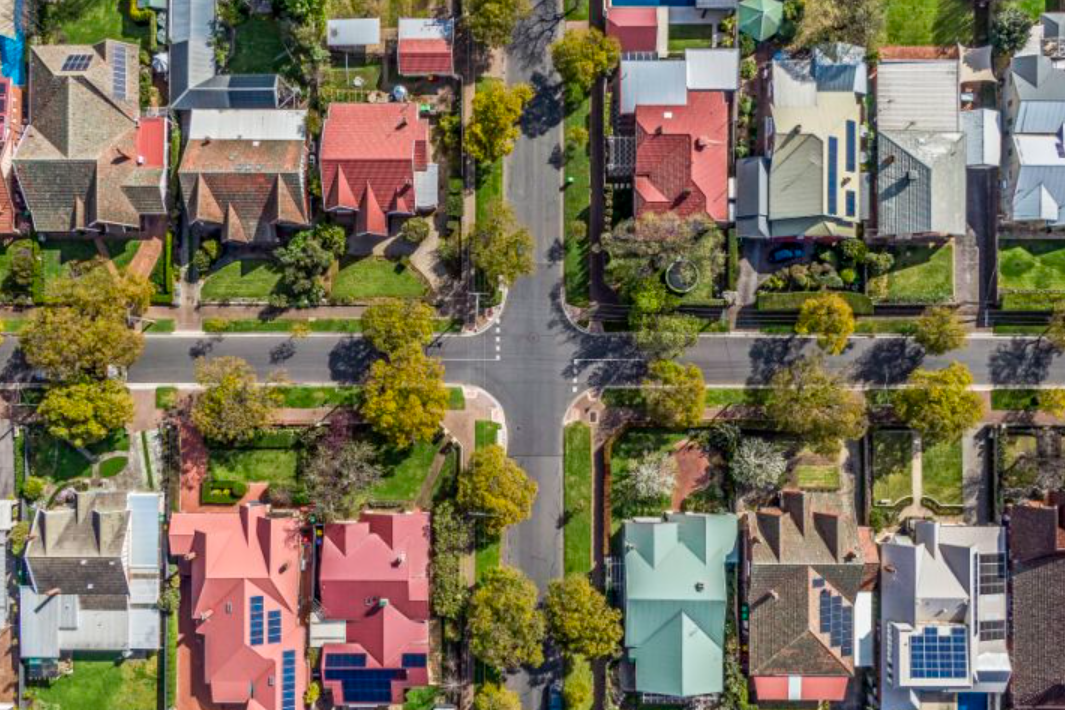
If you want a sense of just how much things have changed, look no further than Sydney's Inner West – where the average household now boasts more dogs than children.

Close to 50,000 dogs are microchipped across the local government area, up from about 43,200 in 2023 following a pandemic-era lift.

Marrickville leads with around 4300, followed by Leichhardt and Balmain.

To keep pace with surging demand, Marrickville daycare centre Kip Happy Stays has rolled out additional services.

One of their trainers, Mandi Wright, said this is driven by a growing number of residents treating dogs "as part of the family."

"While we've traditionally offered boarding at our larger facilities in Lake Macquarie and the Hunter Valley, this expansion makes it much easier for Inner West pet owners to access high-quality care locally."

dog

Demand for off-leash space is also high – Inner West Council maintains 44 such areas, among the most in Sydney, with more in the pipeline.

To support the growing pet population, a council spokesperson revealed that a dedicated team has been introduced to handle requests for microchipping, registrations, complaints, and park patrols.

Meanwhile, changes to rental laws have lowered barriers to pet ownership for many – a pattern of note in the Inner West, where over 40 per cent of residents rent.

Australian Shepherd dog

The pet parent conversation is not confined to a single neighbourhood.

In Peakhurst, 62-year-old Rosie finds her days filled with "unconditional affection" from her kelpie, Roxy, rather than children.

"Having a pet allows me to nurture and care for another being while still maintaining independence in my personal, career, and lifestyle choices. It felt like the right balance for where I am in life."

While having a pet isn't cheap, Rosie noted that the costs are often more predictable than those of raising children.

Still, this doesn't mean that one subset of parents is financially better off.

One Inner West local spends close to $10,000 a year on daycare alone to work full-time at her office job.

The woman, who asked to remain anonymous, adopted her French bulldog, Trunks, during the pandemic.

She told nine.com.au that, remarkably, it’s often parents themselves who are the most supportive of her decision to be kid-free.

"Overall, I do believe attitudes are becoming more accepting of having pets instead of children," she said.

How we can best look after our pets without breaking the bank

Trunks' mum said that although day-to-day costs affect everyone, she sees them as just one part of a broader equation when deciding whether to have kids.

"I think more people would have children if homes weren't 10 times their salary, if childcare were completely free or more heavily subsidised, and if there was easy, uncapped and free access to specialised services pre and post birth."

Ultimately, deciding who makes up your family (child or canine) comes down to the individual, Rosie believes.

"There's no one-size-fits-all answer – both paths come with rewards and trade-offs. What matters most is choosing a lifestyle that aligns with your priorities, values, and vision for your future."

NEVER MISS A STORY: Get your breaking news and exclusive stories first by following us across all platforms.

Teen charged after armed thieves scope out suburbs in stolen Mustang

A teenager has been charged after a group armed with a large knife were allegedly spotted casing out cars and homes across Queensland's south-east in a stolen Mustang.

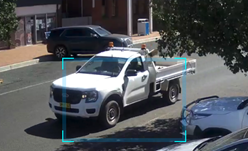
CCTV shows a hooded thief with a large knife getting out of the blue Mustang and trying to start an unlocked car in the driveway of a home on the Gold Coast yesterday morning.

Police allege that was one of several unsuccessful attempted car thefts during a 20-hour spree.

READ MORE: Terrified patrons caught up in drive-by shooting at popular bar

CCTV shows a hooded thief with a large knife getting out of the blue Mustang and trying to start an unlocked car in the driveway of a home on the Gold Coast yesterday morning.CCTV shows a hooded thief with a large knife getting out of the blue Mustang and trying to start an unlocked car in the driveway of a home on the Gold Coast yesterday morning.

The car was also allegedly sighted in a number of suburbs from Mango Hill, north of Brisbane, down to Ormeau Hill, Pacific Pines and Southport on the Gold Coast.

The Mustang was stolen from a home in Minyama, on the Sunshine Coast, about 11pm on Friday, after the keys to the car were stolen from inside the home, police allege.

The car made its way back up to Logan from the Gold Coast yesterday afternoon, where PolAir spotted it travelling from the Gateway Motorway to the Logan Motorway about 5.30pm yesterday.

READ MORE: 'Too much work': Trump calls off sending envoys to Pakistan for peace talks with Iran

Police laid out stop sticks in Underwood around 7.05pm and the Mustang was abandoned in a nearby carpark off Kingston Road.

Police laid out stop sticks in Underwood about 7.05pm and the Mustang was abandoned in a nearby carpark off Kingston Road.

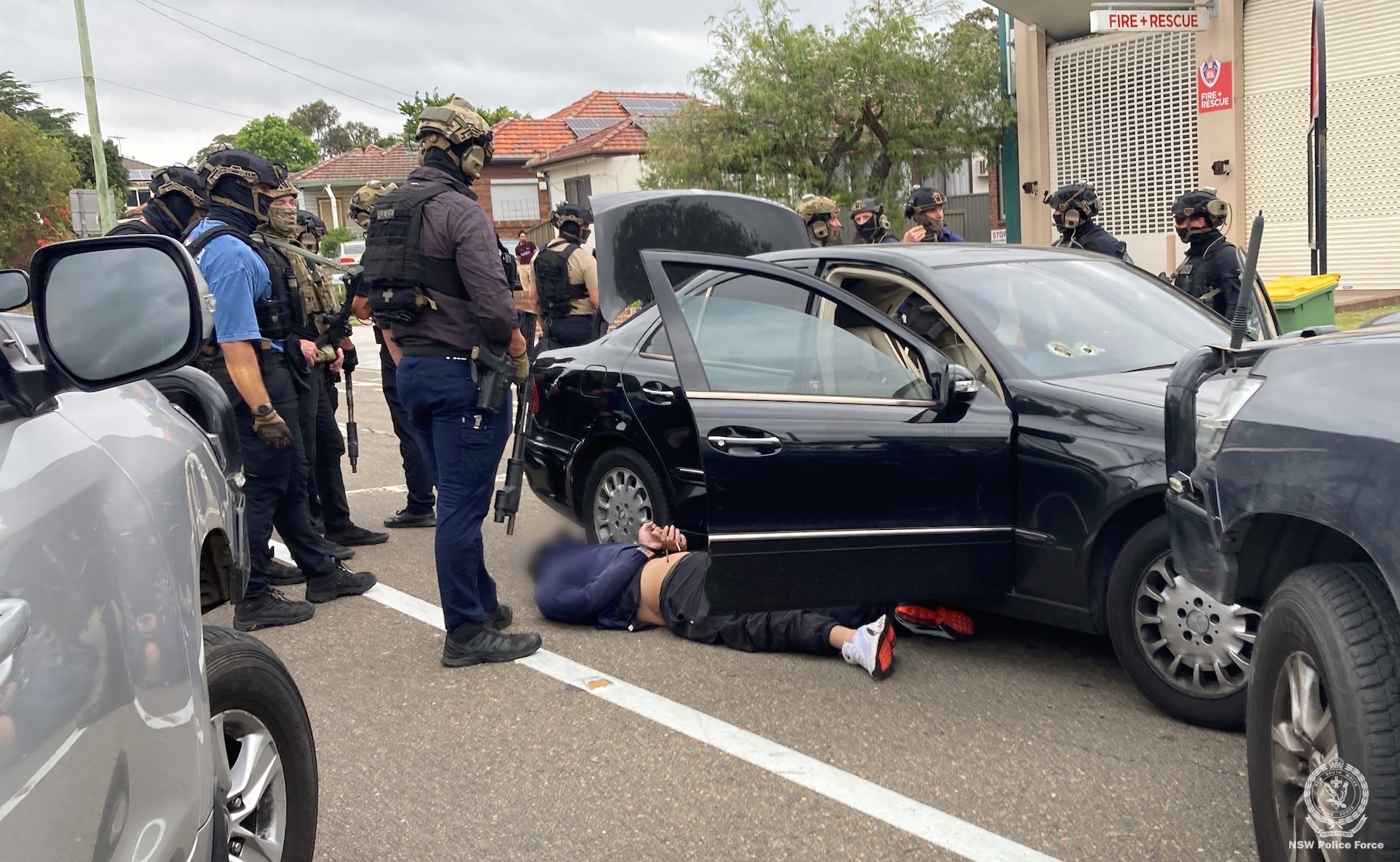
A 15-year-old boy was arrested a short time later at a home in Woodridge.

He has been charged with unlawful use of a motor vehicle and will appear before the Beenleigh Childrens Court tomorrow.

Nobody else has been arrested in relation to the incident. Investigations are ongoing.

If you have information for police, contact Policelink by providing information using the online suspicious activity form 24hrs per day at www.police.qld.gov.au/reporting.

Report crime information anonymously via Crime Stoppers. Call 1800 333 000 or report online at www.crimestoppersqld.com.au.

NEVER MISS A STORY: Get your breaking news and exclusive stories first by following us across all platforms.

US says it’s hunting for explosive mines in latest push to open the Strait of Hormuz

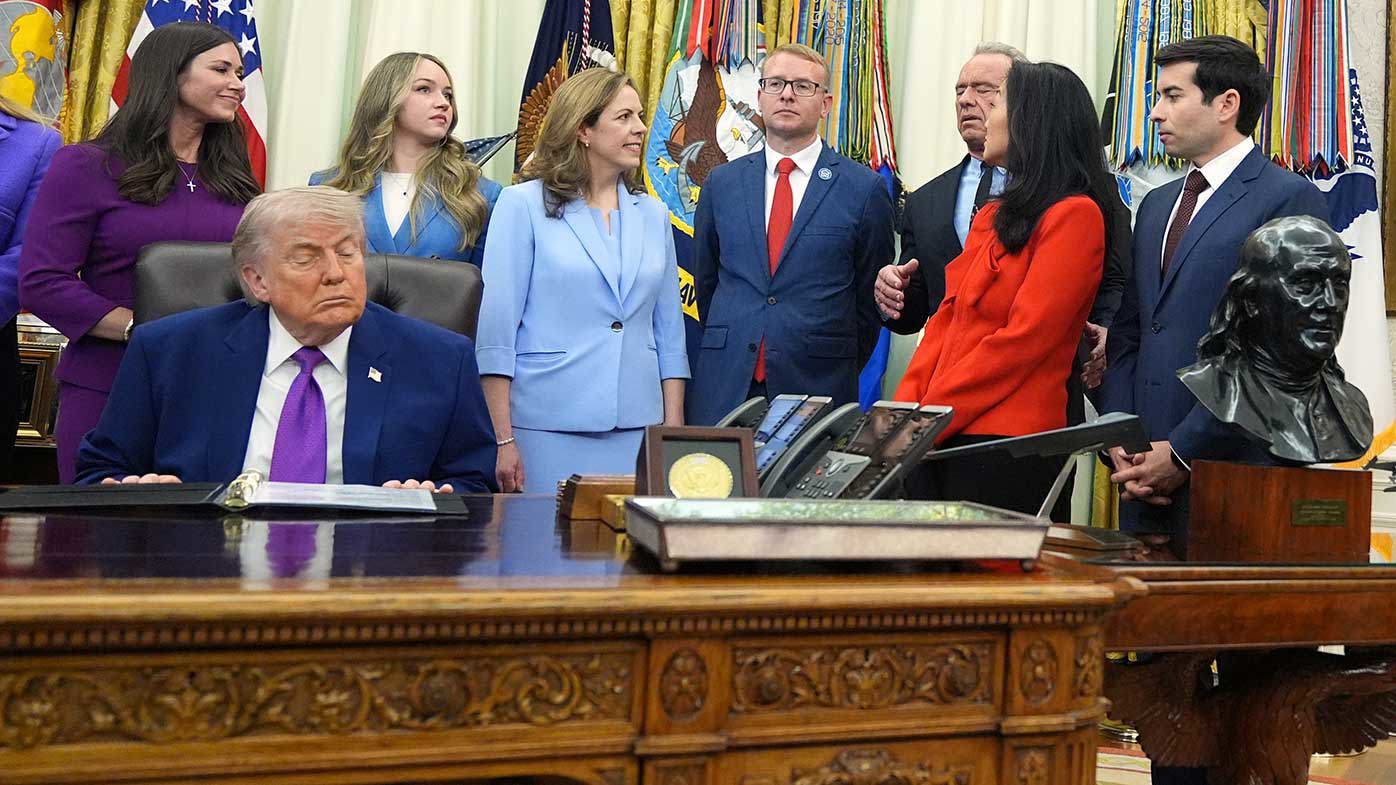
President Donald Trump says the US Navy is clearing Iranian mines from the Strait of Hormuz, a vital sea route for oil shipments whose disruption is increasingly threatening the global economy.

Sweeping for underwater explosives could take months despite a tenuous ceasefire between the United States and Iran in the weekslong war, experts say.

Any future claims that the US cleared the waterway where 20 per cent of the world's oil typically passes might fail to convince commercial freighters and their insurers that it is finally safe.

READ MORE: 'Too much work': Trump calls off sending envoys to Pakistan for peace talks with Iran

“You don’t even have to have laid mines — you just have to make people believe that you’ve laid mines," Foreign Policy Research Institute’s National Security Program scholar Emma Salisbury said.

“And even if the US sweeps the strait and says everything’s clear, all the Iranians have to do is say, ‘Well, actually, you haven’t found them all yet,’” said Salisbury, who is also a fellow at the Royal Navy Strategic Studies Centre.

“There's only so much the US can do to give that confidence back to commercial shipping.”

Seeking out mines is one of the latest tactics announced by the Trump administration to get traffic moving again through the strait as rising energy prices and wider economic effects pose a political risk.

The US also has blockaded Iran's ports and seized ships tied to Tehran, but the president said Saturday he had instructed his envoys not to travel to Pakistan for the latest ceasefire talks after Iran's top diplomat left Islamabad.

Hegseth doesn't deny that mine-clearing could take six months

Pentagon officials told lawmakers it would likely take six months to clear the mines that Iran has set in the strait, according a person familiar with the situation who spoke on condition of anonymity to discuss the sensitive information.

The information was delivered during a classified briefing at the House Armed Services Committee on Tuesday.

When asked about the estimate, Defense Secretary Pete Hegseth told reporters Friday that the military would not speculate on a timeline, but he did not deny it.

“Allegedly that was something that was said,” Hegseth said at a Pentagon news conference. “But we feel confident in our ability, in the correct period of time, to clear any mines that we identify.”

READ MORE: US millionaire trophy hunter killed by herd of elephants

Trump said he has ordered the Navy to attack any boat laying mines in the strait.

“Additionally, our mine ‘sweepers’ are clearing the Strait right now,” the president said on social media Thursday. “I am hereby ordering that activity to continue, but at a tripled up level!”

Adm. Brad Cooper, the top US commander in the Middle East, recently told reporters that the military would be working to clear mines from the strait. He did not offer details.

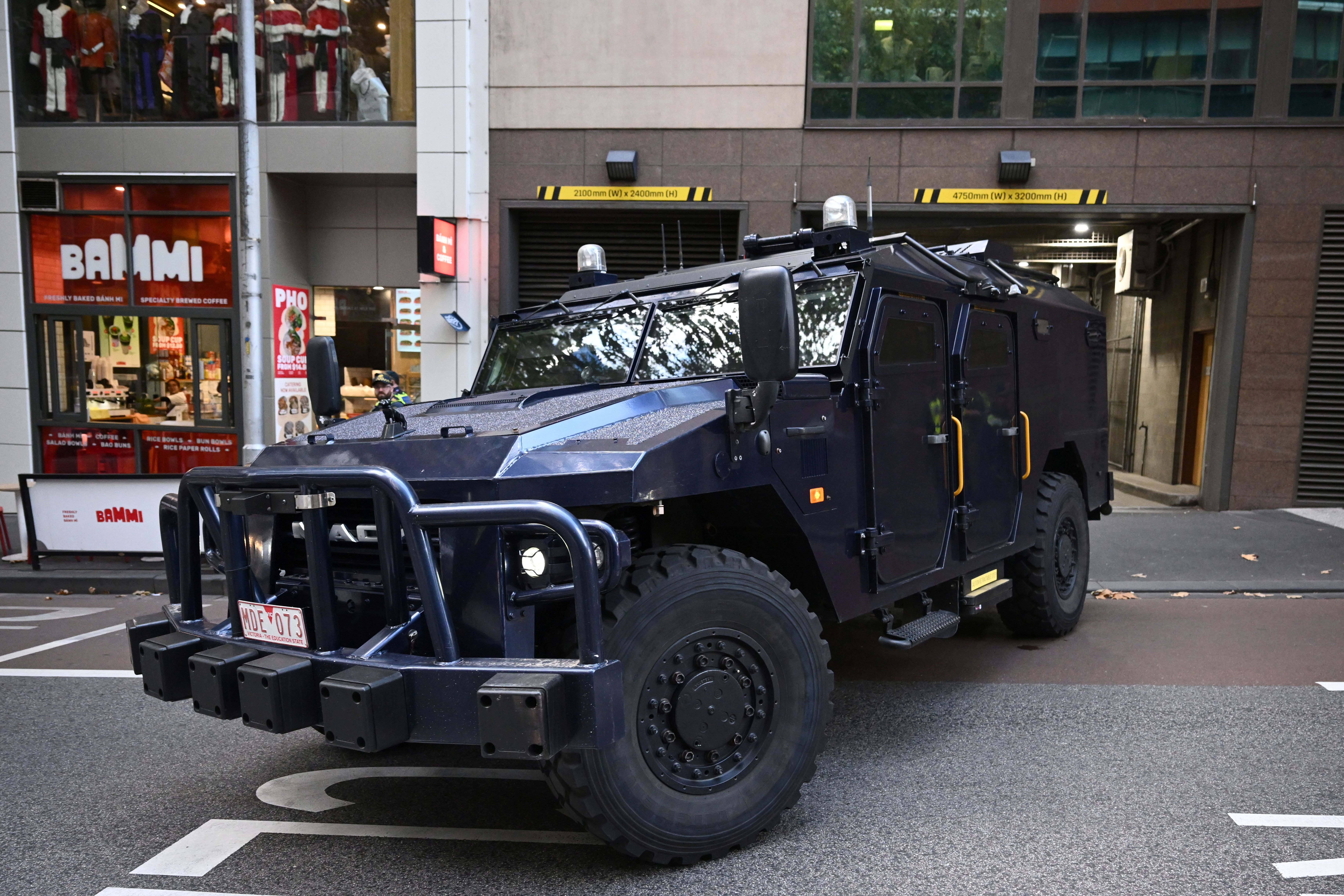
There is no indication that the US military is using warships, its most visible mine-clearing assets, in the strait now.

But the Navy also has divers and small teams of explosive ordnance disposal technicians in the region that are capable of clearing mines. They are a less obvious target than a large warship.

Experts also say some mine-clearing equipment could be moved off ships and deployed from land.

It's easier for Iran to lay mines than it is to find them, expert says

It is unclear whether a single mine has been deployed. Iran has mentioned only the “likelihood” of mines in the strait’s pre-war routes.

Estimates of Iran’s mine stockpiles are in the low thousands, said Salisbury, of the Foreign Policy Research Institute. Most of its underwater explosives are believed to be older Soviet models. Some of its newer ones may be from China or made domestically.

“Minelaying is a lot easier than minesweeping, so you can literally push these things off the back of a speedboat,” Salisbury said, though she noted the US could likely see that.

READ MORE: Australian women and children leave Syrian camp hoping to return home

Iran also has small submarines that can lay mines and are much harder to detect, Salisbury added. She said she has not seen indications that they have been destroyed in the war.

If Iran has set mines in the strait, they are not the spiky balls floating on the surface seen in the movies, Salisbury said.

The explosives are likely sitting on the seabed or moored to it by a cable and floating under the surface. They can be triggered by the water pressure changing when a ship passes or by the sound of its engine.

How the US can sweep for mines in the strait

The US Navy now has two littoral combat ships in the Middle East that are capable of sweeping for mines, said a defence official, who spoke on condition of anonymity to discuss sensitive military movements.

Two US Avenger-class minesweepers based in Japan also have departed for the Middle East but were in the Pacific Ocean as of Friday, the official said.

Steven Wills, a retired lieutenant commander who served on an Avenger-class ship, said the Navy is likely looking for sea explosives in order to create a safe channel through the strait.

Minesweeping is a slower process that usually occurs after a conflict.

READ MORE: Landmark bar attacked by arsonists

“Minehunting is walking through your yard pulling individual weeds and dandelions so that you can walk safely from one side to the other. Minesweeping is more like mowing the grass,” said Wills, an expert at the Center for Maritime Strategy at the Navy League of the United States.

Scott Savitz, a researcher with the RAND Corp. who focuses on naval operations and mine clearing, said the Navy does not necessarily have to remove every last mine.

“There’s still areas that have not been cleared from World War II — and in some cases, World War I — just because it is so resource intensive and it takes a lot of time," he said.

Teams on the Navy's littoral combat ships can deploy remotely operated, uncrewed vehicles that use sonar and other technology to find mines, Wills said. They also carry charges to destroy the explosives.

US Navy ships may also have explosive ordnance disposal teams, including divers, that can hunt for and destroy mines, Wills said. Helicopters can search for mines using lasers.

Shipping companies are weighing the risks

Eventually, shipping companies will be willing to take some risks to travel through the strait “particularly given how lucrative it is,” Savitz said.

Under Iran's approval procedure for vessels wanting to transit the strait, ships must take a different route than before the war — to the north, near Iran's coastline.

Insurers are adding a clause that requires ship owners to contact Iranian authorities to ensure safe passage, said Dylan Mortimer, U.K. marine war leader for insurance broker Marsh.

That certification does not mention mines specifically and is intended to protect against the entire spectrum of threats, including missile and drone attacks or seizures, Mortimer said.

But mines do, at the very least, play a psychological role, a phenomenon Mortimer called the “spectre of threat.”

“That plays in the Iranians' favour, because whether there are mines there or not, people think there’s mines there and they will operate accordingly,” Mortimer said.

Those fears could mean it takes longer to restore confidence that the strait is safe even after the war.