Tag Archives: oceania

With one email, Matilda saved $2300 a year

With the reserve bank continuing to ratchet up interest rates, more and more households are finding themselves in financial stress.

But there's one simple thing mortgage holders can do to save thousands of dollars a year, experts say.

Put simply, if you want a cheaper home loan, in many cases all you have to do is ask.

READ MORE: RBA delivers 10th consecutive interest rate hike as cost of living bites

The reply email Matilda Van Dycke sent to her bank, asking for a better home loan interest rate.

This was the case for Western Australian mum and former real estate agent, Matilda Van Dycke, from Bunbury, when she got an email out of the blue from her home loan provider, Bank of Queensland, in November last year.

Rather unusually, a lending assistant had reached out to Van Dycke and her partner to ask if all was going well with their home loan.

With a second baby on the way, and maternity leave meaning she would be away from work for a year, Van Dycke took the email as an opportunity to ask if there was any way they could get a discount on their variable home loan rate.

Within 24 hours, the bank came back with an offer, emailing to say they could reduce their rate by 0.7 percent, taking it from 5.04 percent to 4.34 percent.

With a mortgage of $330,000, the discount meant the couple would be saving $2300 a year.

Van Dycke told 9news.com.au she had heard of other people getting discounts on their loans after asking, but was surprised with how easy it was.

"I had asked my partner to call the bank, but he hadn't got around to it," she said.

"So when they emailed me to check in a year after we refinanced I replied and asked them myself."

Melbourne financial advisor Billy Norman, from Link Wealth Group, said people were often taken aback by how easy it was to get a discount on their home loan interest rate.

Norman said he knew of some clients who had been able to negotiate an interest rate reduction of a full percentage point, all by making just one phone call to their bank.

"The average home loan is roughly $600,000 to $650,000," Norman said, "So on a $650,000 loan, a 1 percent reduction is $6500 bucks a year. That's a very profitable phone call."

Norman said everyone with a home loan should be checking at least once a year to make sure they were on a competitive interest rate, as the difference between rates offered to new and existing customers tended to grow over time.

"I usually say it should be once a year, but, at the moment, people might want to do it even more often because rates are changing every single month," Norman said.

"It's a really simple thing, but loads of people don't know, or they just need to be reminded to do it again."

What to do before you call the bank

Preparation is key and it is always best to do some quick research on the cheapest loans out on the market before picking up the phone or sending an email.

"When you're talking to the bank, you should use a live example of the best interest rate that you have found online," Norman said.

"You can use that as bargaining chip to say, 'If you can't match it, then maybe I'll just take my loan elsewhere.'"

One of the cheapest home loans currently on offer was a variable home loan from Westpac at 4.99 percent, Norman said, adding that it was often better to quote a rival rate from one of the major banks when trying to negotiate with one of the big four lenders.

"Westpac is offering 4.99 percent. So, if your rate is well above 4.99 percent then maybe you're not on the best rate," he said.

Another aspect to consider is loan-to-value ratio (LVR) on a home loan, which measures how much is owed in relation to the value of a property.

"If your LVR is less than 80 percent, then you're in a strong position to get the best interest rate," Norman said. 

"When you shop around and find the best interest rates, those rates are only on offer to people with an LVR of less than 80 percent."

What if your bank won't play ball?

Even if a bank refused to match a particular interest rate, they might offer a significant discount, Norman said.

"Usually they can apply the discount immediately, so it can reduce your payments straight away," Norman said.

If the offer wasn't good enough, there was always the option to leave and refinance with a new bank, he added.

READ MORE: Two states brace for heatwave bringing fire risk not seen in years

Many banks are currently offering cashbacks of up to $4000 in a bid to offset the inconvenience of refinancing and sweeten the deal.

Another option was to consider going to a mortgage broker, Norman said.

"It can be very helpful having a good mortgage broker. They can do the negotiating for you, and they can often get better rates than you can get yourself by calling the bank. 

"Most mortgage brokers don't charge fees, they just get paid commission, so they can very quickly tell you if they can get you a better rate."

A good broker should also be willing to negotiate with your current bank for you, Norman said.

The information provided on this website is general in nature only and does not constitute personal financial advice. The information has been prepared without taking into account your personal objectives, financial situation or needs. Before acting on any information on this website you should consider the appropriateness of the information having regard to your objectives, financial situation and needs.

Sign up here to receive our daily newsletters and breaking news alerts, sent straight to your inbox.

'Like a war zone': NZ extends state of emergency after cyclone

An Australian woman who just returned from New Zealand has described the "apocalyptic" scenes in parts of the North Island hit by Cyclone Gabrielle.

Stella Mountain, from Sydney, was in the Hawke's Bay region of the North Island helping her Kiwi boyfriend and his relatives recover from the disaster after the cyclone hit nearly three weeks ago.

Cyclone Gabrielle left at least 11 people dead across New Zealand and destroyed or damaged homes, businesses, farms and infrastructure, including kilometres of roads.

READ MORE: State warned of worst weather conditions since 2019

Residents in Taradale, New Zealand clean up silt following Cyclone Gabrielle

This week New Zealand extended the state of national emergency for a further seven days for the Tairāwhiti and Hawke's Bay areas.

Mountain filmed scenes of the damage as she drove in areas around the coastal city of Napier in Hawke's Bay.

Her footage showed upturned vehicles, wrecked homes and large trees uprooted.

"It felt like I was driving through a war zone, they were apocalyptic scenes," she told 9News.com.au.

Mountain said the region faces a long road to recovery and struck on the eve of the apple and grape harvest, a big blow for growers and wineries.

"The vineyards and orchards were covered in mud and had to be removed by hand," she said.

New Zealand authorities have launched a huge recovery operation over the past weeks aiming to rebuild vital infrastructure and restore essential services.

READ MORE: Woman diagnosed with breast cancer at 25 shares urgent message

A Defence Force Hercules lands at Hawke's Bay airport in Napier, bringing further supplies as personnel and volunteers continue work clearing debris from Cyclone Gabrielle across the region.

New Zealand's Minister for Emergency Management Kieran McAnulty said thousands of residents continue to be affected by the disaster.

"The impact of Cyclone Gabrielle continues to be deeply felt by many communities in the North Island," he said.

"In the the Tairāwhiti and Hawke's Bay regions, thousands of people are still unable to return to their homes due to flood damage."

The Cyclone Gabrielle disaster is the third national state of emergency after the 2011 Christchurch earthquake and COVID-19 pandemic in 2020,

Sign up here to receive our daily newsletters and breaking news alerts, sent straight to your inbox.


'It's a man's job': Tradies breaking barriers still face everyday sexism

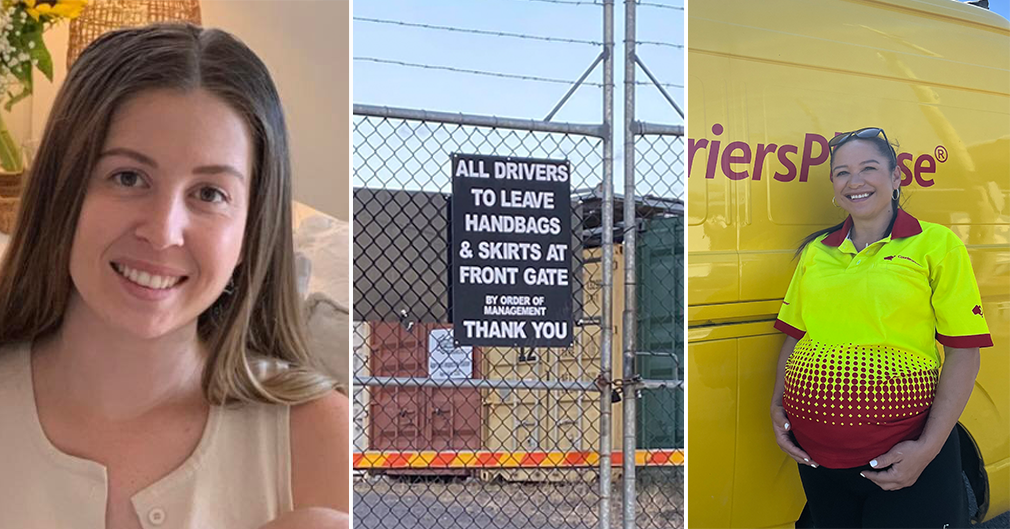
Shannon has been delivering parcels for 18 years, but she still has customers telling her she shouldn't be doing it because "it's a man's job".

Tayla had people tell her "girls shouldn't be on work sites" when she was working as a roofer right up until she had her daughter last year.

Teagan says she has experienced "every sexist joke under the sun" from customers while working at a mechanic shop.

The three women work in different industries around Australia. They say they are massively supported by their employers but they still see attitudes of sexism in the greater community, perpetuated through old-fashioned stereotypes of what constitutes "a woman's job".

READ MORE: The superannuation figure Australia has forgotten

'Girls on the job, something will go wrong'

Shannon Menzies, 40, told 9news.com.au that her employer of nearly two decades, Couriers Please, had been great at supporting her as a woman and a mother.

The Brisbane woman, who runs a Couriers Please franchise, said the company had been very understanding of her need to juggle work and caring for her children, allowing her flexibility with her schedule.

"Especially because for a period there was a single mum, so they knew my children needed me."

But she said she still often delivers to customers who express surprise that she's not a man.

"They say, 'You shouldn't be doing this for a job. This is a man's job'," Menzies said.

She said she also regularly has people ask her, "How do you carry that?"

The comments have become much more frequent since she fell pregnant with her third child.

Have you got a story? Contact Serena at Sign up here to receive our daily newsletters and breaking news alerts, sent straight to your inbox.
Pilot didn't hear radio call before deadly Sea World chopper crash

The pilot of a helicopter coming into land did not see a second helicopter or hear a radio call before the tragic mid-air collision on the Gold Coast, a preliminary report has found. 

The horror crash unfolded on January 2 when two helicopters collided near the Sea World theme park, killing pilot Ash Jenkinson, British newlyweds Diane and Ron Hughes, and Sydney woman Vanessa Tadros.

Multiple people were also injured in the horrific crash, including Melbourne mother Winnie De Silva, her nine-year-old son Leon and Tadros' son Nicholas, 10.

READ MORE: Australia 'facing threat of war with China within three years'

Australian Transport Safety Bureau (ATSB) Chief Commissioner Angus Mitchell today detailed the agency's preliminary findings into the incident.

The two helicopters – operated by Sea World Helicopters, a separate corporate entity to the theme park – took off from separate helipads more than 200m apart.

The aircraft were meant to follow the same counter-clockwise orbit before landing at the opposite helipad from where they took off.

"The two helicopters collided at an altitude of about 130 feet, 23 seconds into the departing helicopter's flight," Mitchell said.

"The helicopters were operating in a non-controlled or class G space where pilots use a common traffic advisory frequency to make radio calls to announce their positions and intentions and where necessary to arrange separation."

The flight paths of the two helicopters involved in the Gold Coast Sea World chopper crash.The flight paths of the two helicopters involved in the Gold Coast Sea World chopper crash.

READ MORE: Woman diagnosed with breast cancer at 25 shares urgent message

Mitchell said the pilot of the first helicopter saw passengers boarding the second chopper and believed it would pass behind them after take off.

The pilot of the already airborne helicopter said he didn't recall a taxi call being made to announce the other aircraft's intentions to depart.

"This does not necessarily mean that a taxi call was not made," he said.

"The pilot of the arriving helicopter did not see the other helicopter actually depart the helipad."

READ MORE: Calls for Reserve Bank to slow rate rises amid mental health spike

Ash Jenkinson Seaworld chopper crash pilotATSB chief commissioner Agus Mitchell.

Mitchell said although video showed the helicopters in the air at the same time, it did not mean they were visible to the respective pilots.

"This investigation will look closely at the issues both pilots potentially faced in seeing the other helicopter," he said.

The agency has created a 3D model of what the pilots could have seen to figure out the "impediments" to seeing each other's helicopter.

Mitchell said investigators will look at the procedures of operating helicopters in the Sea World area, the regulatory surveillance of the operator and the use of the traffic collision avoidance system.

READ MORE: State warned of worst weather conditions since 2019

He stressed it was a preliminary report but more analysis of what led to the tragedy would continue and any safety reforms are yet to be determined.

"I am acutely aware that those who lost a loved one in this accident and the survivors who are still recovering from significant physical and mental injuries and their families want only to understand how the tragedy unfolded but equally and most importantly why had occurred," he said.

"And why did the safety equipment processes and procedures that are designed to prevent an accident like this not work on this occasion."

Sign up here to receive our daily newsletters and breaking news alerts, sent straight to your inbox.

'Nightmare' exchange with Qantas over refund after husband's death

Exclusive: A Brisbane widow has described a "nightmare" experience trying to get thousands of dollars refunded from Qantas after her husband's death.

After booking flights, Pam Thomas then had a change of heart and decided she wasn't up to travelling to Rome for her son's wedding because she was still grieving the tragic death of her husband.

On December 9 she cancelled her return flights that were booked from Perth to Rome in June and July 2023, expecting to be given a $3500 refund.

READ MORE: Angela has been in her job for 38 years. She has never met another woman in the same profession

But it emerged the flights had been bought on her credit card, for which her husband had been the primary card holder, and the card had been cancelled by their bank since his death.

Thomas then got herself a new bank card and a Statutory Declaration from her bank so Qantas would process the refund to the new card.

She provided Qantas with the Statutory Declaration in January, as confirmed by Qantas.

But as of March 3, she was still waiting for her money, despite being in contact with Qantas many times and having been told the refund had been processed on February 16.

"I've rung them and rung them and rung them," she told 9news.com.au.

"They say they will call me back and they never do. It's causing me a lot of grief while I'm also grieving for my husband."

Thomas said when she had managed to speak to someone they were unable to give her answers about where the money was and passed her on to someone else.

"It is a nightmare," she said.

"It's definitely not adequate customer service."

After 9news.com.au reached out to Qantas on March 3, Thomas said she was finally contacted by the company and told she will be issued the refund.

A Qantas spokesperson has told the refund was paid into Thomas' husband's account by mistake and that the company has now fixed the error.

"The refund was paid into Ms Thomas husband's account on 16 February, three weeks after all the necessary paperwork was provided. We have since learnt this was not the correct account and the refund has now reprocessed."

"We thank Ms Thomas for her patience."

The spokesperson told 9news.com.au that Qantas is rolling out new technology that will allow it to direct customer requests to more experienced staff so that issues can be resolved more quickly.

Sign up here to receive our daily newsletters and breaking news alerts, sent straight to your inbox.

The food we eat is ramping up global warming, study warns

Unless humans rapidly change mass food production systems, including eating less beef and dairy, emissions from the sector could add nearly 1 degree to global temperatures by 2100, a study has warned.

If that modelling is accurate, the 1.5 degrees target in the Paris Agreement which called for countries to take concerted action to reduce greenhouse gas emissions is in peril.

Global food consumption alone could boost warming by almost 1 degree by the end of this century, researchers from Columbia University in the US said.

READ MORE: Is Australia headed for recession? Possibly – as interest rates rise

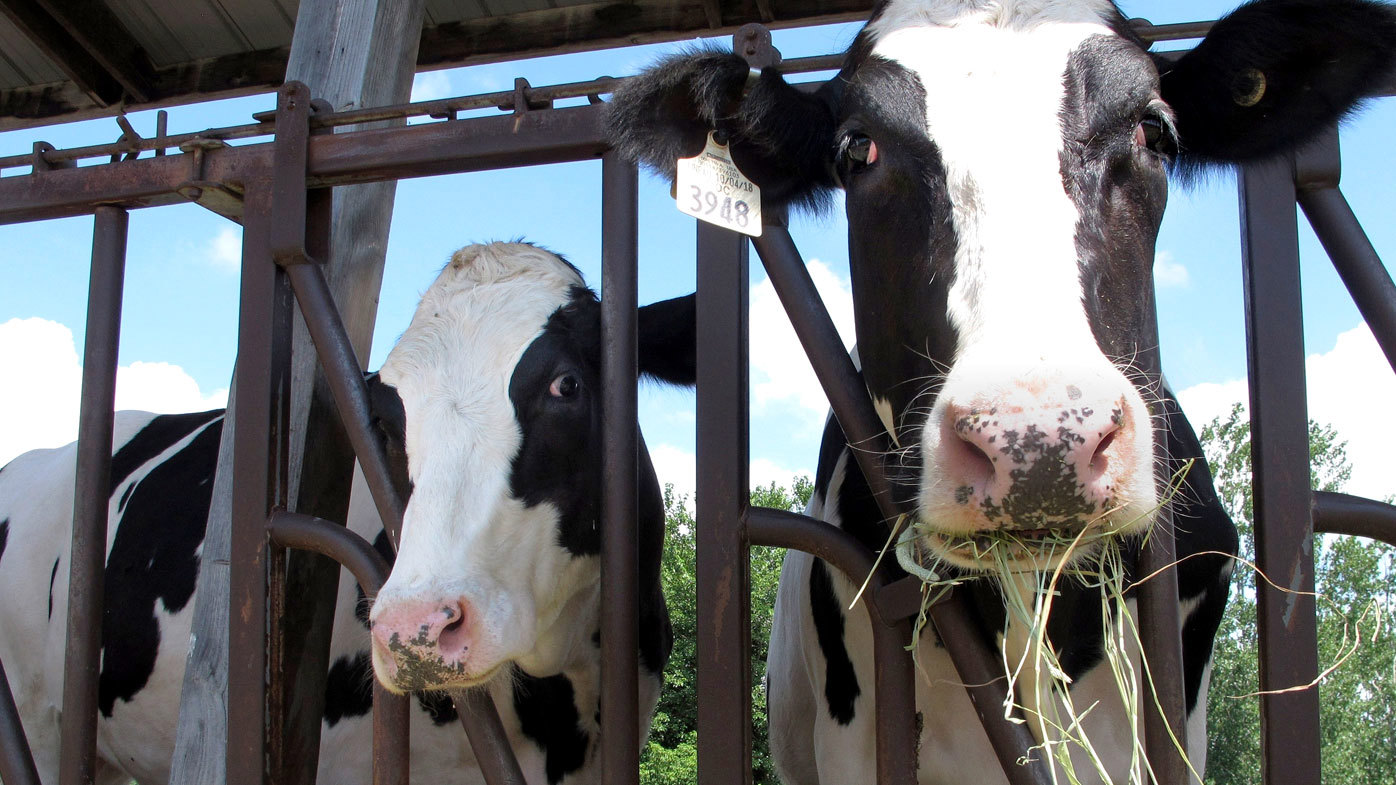
Cows at a dairy farm eat hay.

The researchers found that methane, a chief culprit in the climate change debate, accounted for nearly 60 per cent of warming associated with the food system.

Carbon dioxide and nitrous oxide made up around 20 per cent each.

The peer-reviewed study, published today in Nature Climate Change, showed 75 per cent of warming is driven by meat, dairy and rice – foods with high sources of methane.

Researchers claimed improving production practices of those foods could avoid nearly a quarter of the predicted warming by 2100.

And over 55 per cent of anticipated warming can be avoided from simultaneous improvements to production practices, researchers said, largely reducing dietary protein content in some countries, such as the US and Spain.

The study said a medically recommended diet across the globe could help counter imbalances, along with cutting waste by consumers and retailers.

Recent rises in annual methane emissions are gathering pace.

READ MORE: Australia 'facing threat of war with China within three years'

About 40 per cent of human-caused methane emissions come from leaks from fossil fuel exploration, production and transport, according to UN data.

A 2022 UN report investigating global methane showed those leaks rose by almost 50 per cent between 2000 and 2019.

Another 40 per cent of methane comes from agriculture, dominated by burping cattle.

This year is already forecast to be hotter than 2022, which global datasets ranked as the fifth or sixth hottest year on record.

Sign up here to receive our daily newsletters and breaking news alerts, sent straight to your inbox.

Woman diagnosed with breast cancer at 25 shares urgent message

Exclusive: Bianca Hinton, 25, was on a cruise with her family when she felt a lump in her breast while getting dried after a shower.

She thought it was probably a cyst but headed to her GP as soon as she could.

Just a few weeks later she was starting chemotherapy for breast cancer.

READ MORE:  Strange sign which saw super-fit mum's 'world cave in'

Bianca Hinton, 25, was on a cruise with her family when she felt a lump in her breast while getting dried after a shower.She thought it was probably a cyst, but headed to her GP as soon as she could.Just a few weeks later, she was starting chemotherapy for breast cancer.

Now Hinton is using her background as a videographer to share the message that young women can get breast cancer too.

She posted a candid video across her social media telling women to take the time to check their breasts.

She told 9news.com.au she just wants to remind young women like her to check their breasts and bear in mind there a small chance they could develop cancer.

"It obviously came as such a shock to me, I never thought I'd be in that position. I wanted other people, young women to be aware," she said.

Life put on hold by cancer

Hinton, from Queensland's Gold Coast, was running her company producing videos, working with bands such as Aussie group Shepherd and country music singer Casey Barnes and about to head to Los Angeles to explore working opportunities there.

But instead she is making weekly trips to Tweed Hospital from her home in Tallai for chemotherapy.

She was told she had cancer on January 9 after going to her GP about her lump which she estimates was one to two centimetres.

"They said that it was triple negative breast cancer which is apparently rare but a lot of young people seem to get it, " she said.

READ MORE: Superfit mum-of-four Carly ran 10km a day before a strange symptom 'saw her world cave in'

READ MORE: Rebecca told she's 'too young' to have deadly cancer

Bianca Hinton, 25, was on a cruise with her family when she felt a lump in her breast while getting dried after a shower.She thought it was probably a cyst, but headed to her GP as soon as she could.
Just a few weeks later, she was starting chemotherapy for breast cancer.Bianca Hinton, 25, was on a cruise with her family when she felt a lump in her breast while getting dried after a shower.She thought it was probably a cyst, but headed to her GP as soon as she could.Just a few weeks later, she was starting chemotherapy for breast cancer.

"He told me I'd have to have chemotherapy, which was shocking.

"It was good to find out what it was. It was definitely unexpected.

Sign up here to receive our daily newsletters and breaking news alerts, sent straight to your inbox.

"We thought it would be a cyst. All of a sudden it was, like 'oh this is serious,"

Bianca Hinton, 25, was on a cruise with her family when she felt a lump in her breast while getting dried after a shower.She thought it was probably a cyst, but headed to her GP as soon as she could.
Just a few weeks later, she was starting chemotherapy for breast cancer.

While Hinton explored the option of freezing her eggs, as chemo can affect fertility, there wasn't time as the cancer had spread to the lymph nodes in her breast so she wanted to start the treatment as soon as possible.

READ MORE: Parents diagnosed with cancer within hours of each other

She has to have 20 weeks of chemotherapy, and doctors will then asses if she needs surgery or radiotherapy.

She has also seen her hair fall out, which in her case was dyed a colourful blue.

"My hair meant a lot to me so obviously losing it was a shock," she said.

"When it started happening I came to accept it.

READ MORE: Plan to tackle 'leading cause of death' in Indigenous Australians

"You've got to think of it in a positive light – this means the treatment is working."

However she said she's feeling positive otherwise.

"If anything it makes you see life through a different pair of eyes," she said.

Bianca Hinton, 25, was on a cruise with her family when she felt a lump in her breast while getting dried after a shower.She thought it was probably a cyst, but headed to her GP as soon as she could.
Just a few weeks later, she was starting chemotherapy for breast cancer.

Breast cancer rare in young women but rises with age

Just eight women in 100,000 were diagnosed aged 15-29 with breast cancer according to 2017 data from the NCCI.

That's 80 women in a million. But the risk rises with age.

Statistics from Cancer Australia show it is still the most commonly diagnosed cancer in women aged 20–39.

This year, about 1000 Australian women aged between 20 and 39 are expected to be diagnosed. Breast Cancer also affects a small number of men.

Overall breast cancer is the second most common cancer in Australia, after prostate cancer.

The most common age to be diagnosed is 70 to 74.

A total of 58 people a day were diagnosed on average in 2022

However it has one of the highest survival rates, with 92 per cent of patients still alive after five years.

Do you have a story? Contact journalist Sarah Swain on ss****@******om.au

Ex-bikie 'only had to show licence' to buy $27k in gold from mint

The lawyer for a notorious bikie who bought $27,000 in gold from Perth Mint says his client only had to show a driver licence to make the purchase.

Dayne Brajkovich has one of Western Australia's most recognisable faces but the former Hells Angels sergeant-at-arms didn't appear to raise any alarms when he used a Visa debit card to buy $27,000 worth of gold in June last year.

Financial crimes expert Nathan Lynch said someone linked to an outlaw motorcycle gang "would absolutely come up as a red flag" on the mint's systems.

He told the ABC's Four Corners that under anti-money laundering laws, staff should have investigated how the former bikie sourced the money.

But Brajkovich's lawyer told 9News his client was only asked for a driver licence to link his name to a bank account.

"The mint had an obligation to make sure that it wasn't criminal funds," Lynch told 9News.

"And if it was, it needed to tell that to AUSTRAC, the federal financial intelligence unit."

The unit launched an investigation into the mint last year when it suspected the state-owned refinery failed to report up to 5000 transactions, breaching its obligations under federal law.

"Failing to actually comply with that is itself a breach of serious criminal responsibility," state Opposition Leader Shane Love said.

Premier and Treasurer Mark McGowan, who was responsible for the mint before it was shifted into Mines Minister Bill Johnston's portfolio, labelled the failures as an administration bungle. 

The Perth Mint is the only gold and silver refinery in the world owned by the government, meaning taxpayers would foot the bill for any fines, which could reach into the hundreds of millions of dollars.

An AUSTRAC audit will be handed down in the coming months but it's unlikely the findings will be made public.

Mum remembers teen who died while swimming with mates

The mother of Ivan Korolev, the teenager who drowned at Freshwater beach on Sydney's Northern beaches on Saturday night, has remembered her son as humble.

Anna Kolotukhina and her family thanked the search teams who found the 18-year-old and the local community for surrounding them following his death.

Kolotukhina described her son as humble and shy, saying he achieved everything he put his mind to.

READ MORE: Former PM Malcolm Turnbull tells inquiry he did not consider the legality of robodebt

"I had a deep and meaningful relationship and understanding so apart from being my son he was my close friend," she told 9News.

Ivan was about to start his studies at the Australian Catholic University to become a physiotherapist.

"The sheer happiness he went through in the last few weeks was just unbelievable," his mum said.

He was highly skilled at parkour, rock-climbing and martial arts – hobbies which drove his passion for fitness and health.

READ MORE: Possible food supply delays after major trucking company collapses

Mystery still surrounds exactly how the teenager drowned while he was swimming with his friends.

"I was told he swam within a short distance of his friends … they were chatting … having fun and his last words were 'I'm so relaxed now I'm ready to fall asleep'."

A GoFundMe page has been set up by a family friend to help with funeral and tribute costs.

Pair discover rare bronze Buddha figurine in WA beach dunes

A bronze infant Buddha figurine discovered on the Western Australian coast has been confirmed to be a rare Ming dynasty relic.

The pair who discovered the treasure will auction it for around $100,000, after the UK's Antiques Roadshow revealed its value.

Leon Dechamps and Shayne Thomson said they came across the bronze infant Buddha in 2018 in the dunes of a WA beach with a metal detector.

READ MORE: Drivers could be slugged with a congestion tax

Retired WA Museum fellow and respected corrosion expert Dr Ian McLeod confirmed he believed the figure was real.

"It was absolutely a genuine historic object that had been in the sand in Shark Bay for over 100 to 120 years," McLeod said.

The Ming dynasty stretched from 1368–1644.

A Ming dynasty Chinese treasure expedition, not previously thought to have visited Australia, is just one theory for why the object turned up on WA shores.

This could mean the Chinese visited the region almost 200 years before the Dutch ever set sail.

Sign up here to receive our daily newsletters and breaking news alerts, sent straight to your inbox.