Tag Archives: oceania

How are planes still flying through the Middle East?

The war in the Middle East has caused significant disruption to air travel around the world, including Australia.

With hubs such as Doha, Abu Dhabi and Dubai being used by countless Aussie travellers to get to Europe, thousands were left stranded when conflict began earlier this month.

Despite the threat of drone strikes and missiles in the area, thousands of Australians have been safely evacuated on repatriation flights offered by multiple airlines, but how are they able to do it, and what alternative flight routes should Aussies use if they want to get to Europe or other parts of the world?

READ MORE: Major law change could block millions from obtaining powerful passport

MANCHESTER, UNITED KINGDOM - AUG 07, 2015: Qatar Airways Airbus A330 tail livery at Manchester Airport Aug 07 2015.

Has Middle East airspace opened?

This question is hard to answer because it changes frequently.

For example, on Tuesday morning AEDT, the UAE announced it had closed all of its airspace as "an exceptional precautionary measure."

They announced they had lifted the closure just a couple of hours later, meaning major airlines Emirates and Etihad were able to resume operations.

READ MORE: 'Fuel added to the fire': Aussies braced for cost-of-living triple whammy

Much of Middle Eastern airspace remains closed, including Iran, Iraq, Kuwait, Syria and Bahrain; Israel, Qatar, Saudi Arabia and Oman still have their airspaces open, but with restrictions in place that limit where exactly planes can fly over.

As it stands, most flights that traditionally fly through the Middle East are having to either fly over Afghanistan, Turkmenistan and Armenia through to Turkey, passing over the Middle East region.

However, Afghanistan's current conflict with Pakistan could also dissuade airlines from using this route.

Does Qantas fly to the Middle East?

Australia's national airline Qantas does not currently fly to the Middle East.

For a time during the 2010s it used Dubai International Airport as a hub to connect itself to European destinations such as London, but this changed in 2017 when it shifted its focus to Singapore.

The Middle East conflict has forced it to change the way it flies, however, with its usual non-stop flight from Perth to London Heathrow Airport having to go via Singapore.

This is because a fuel stop is now required due to "adjustments required on flight paths", the company said on its website last week.

What airlines fly to the Middle East?

Several airlines fly to the Middle East, departing from multiple airports within Australia.

Sydney, Brisbane, Melbourne and Perth have daily flights to Dubai and Abu Dhabi with Emirates and Qatar Airways respectively, with the latter also flying out of Adelaide.

Qatar Airways also flies to Canberra, but the flights travel via Melbourne.

Etihad Airways also has daily flights departing from Sydney and Melbourne to their main hub of Abu Dhabi in the UAE.

READ MORE: Government's grim admission about petrol as war drags on

Emirates passenger plane

What are the alternative flight routes avoiding the Middle East?

Travellers who would normally travel through the Middle East to reach destinations in Europe or Africa can still do so via several hubs in Asia.

Singapore, with connections to many major cities around the world and relatively close to Australia, could be considered the best option for Australia travellers, as it flies out of multiple Australian cities.

Kuala Lumpur, Bangkok and Tokyo also serve as hubs that connect to several major destinations in different continents that Aussies would normally use the Middle East as their connection point.

However, the cost of flights in these regions are now beginning to soar due to increased demand.

LIVE UPDATES: Authorities scramble after drone strike on hotel

Former winner Singapore Airlines came in second place this year.

Is travel time longer for flights that avoid the Middle East?

Flights that connect to Europe through Singapore and other Asian destinations are actually a little bit shorter in time than those which would go through the Middle East.

If Aussies are travelling to Europe via the Middle East, like through Dubai or Doha, it can take around 24-26 hours due to having to be re-routed around restricted airspace, and due to congestion problems that can occur at the busy airports.

Flying through Asia, for example thorough Singapore or even Hong Kong and Tokyo, can take between 22 and 24 hours depending on the specific flight.

This is because flights through Asia, particularly in the northern regions, avoid the restricted airspace in and around the Middle East, allowing them to fly a more direct route to Europe.

NEVER MISS A STORY: Get your breaking news and exclusive stories first by following us across all platforms.

Why South Australia’s state election favourite isn’t a sure thing

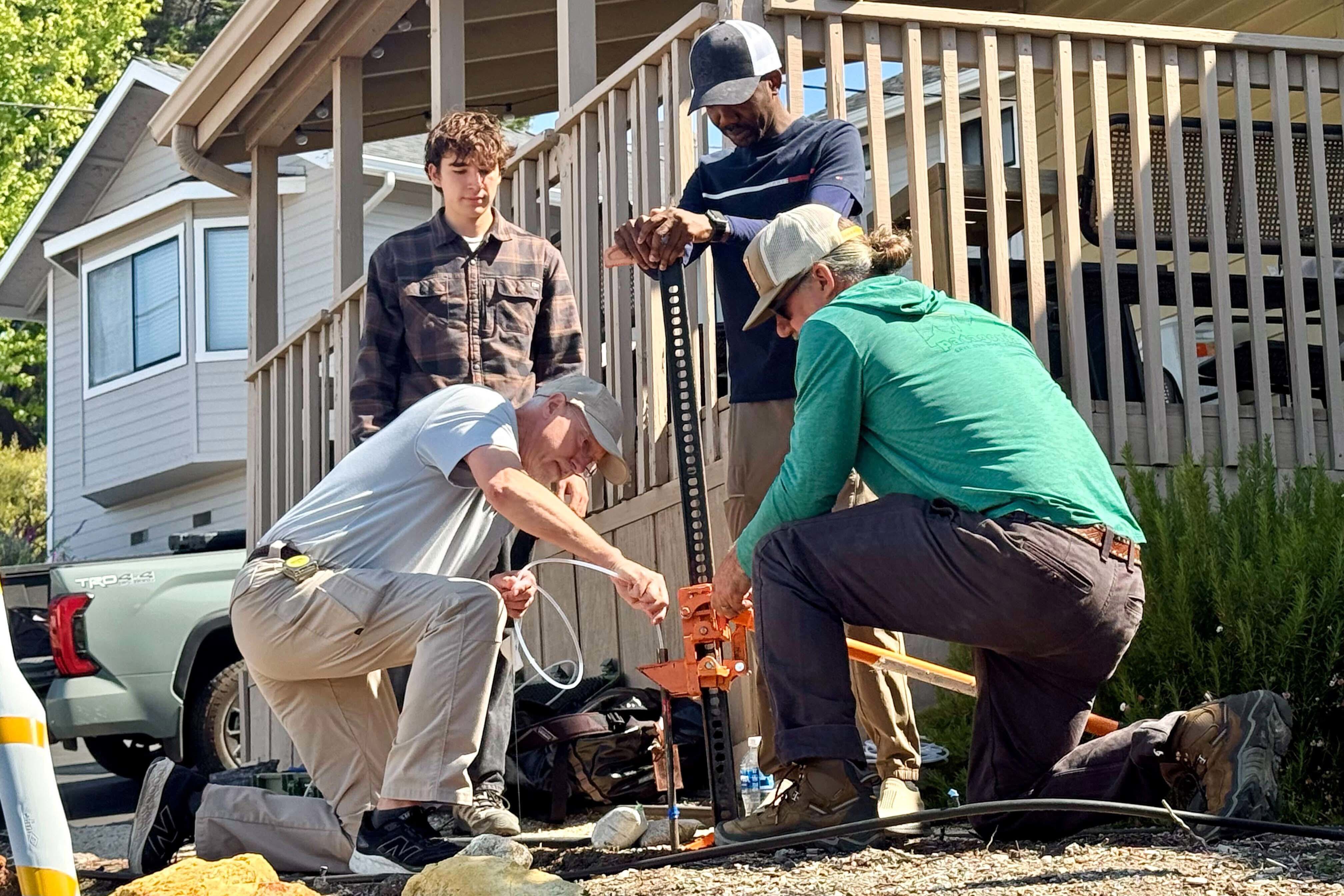
ANALYSIS: If the opinion polls are to be believed, today's South Australian election will be a lay-down misère for Peter Malinauskas and the Labor Party. But is it that simple?

Labor claim to have had a successful four years. Malinauskas has put the state on the map with international events now calling South Australia home. LIV Golf, Moto GP, the Supercars grand final and Gather Round all now Adelaide-owned events. 

The government successfully intervened to save the struggling Whyalla Steelworks and the Port Pirie lead smelter. Labor saved disability employer Bedford as it faced financial oblivion and has increased its majority in the lower house by winning two by-elections.

READ MORE: SA One Nation candidate dumped as alleged sexual assault charges revealed

Premier of South Australia Peter Malinauskas.

However, they've been plagued by their 2022 election commitment, to fix the ramping crisis. Malinauskas himself has said he would have liked to have achieved "a far better result" even after promoting the message, to vote like your life depends on it. 

Ramping hours have more than doubled since they took the reins of the health system, even after more than $1 billion of spending.

The government has also faced criticism over the wasting of more than $300 million on a hydrogen power plant which was scrapped during their term of government.

But a generous characterisation of their opponents would be substandard. 

The South Australian Liberals have had four leaders in four years. Two stepped away from politics and one is now a convicted drug supplier. That man, David Speirs was revealed exclusively by 9News to be recontesting this election as an independent.

Ashton Hurn has been named as the new South Australian opposition leader after being voted in unanimously by her colleagues.

In 2023, the Liberals lost Mackillop MP Nick McBride to the cross bench, he is now recontesting the election with an ankle bracelet, facing domestic violence charges.

Another Liberal-turned-independent Troy Bell was sent to jail just last year, and former party member and now crossbench member Fraser Ellis is appealing a guilty finding of deception.

The Liberals have been unable to escape accusations of ill-discipline and with three former members going through the court system over the last term, they've been incapable of justifying a "tough on crime" stance.

Their third leader Vincent Tarzia stepped down following unpopular polling, leaving first term MP Ashton Hurn just over 100 days to lead the party to Saturday's election.

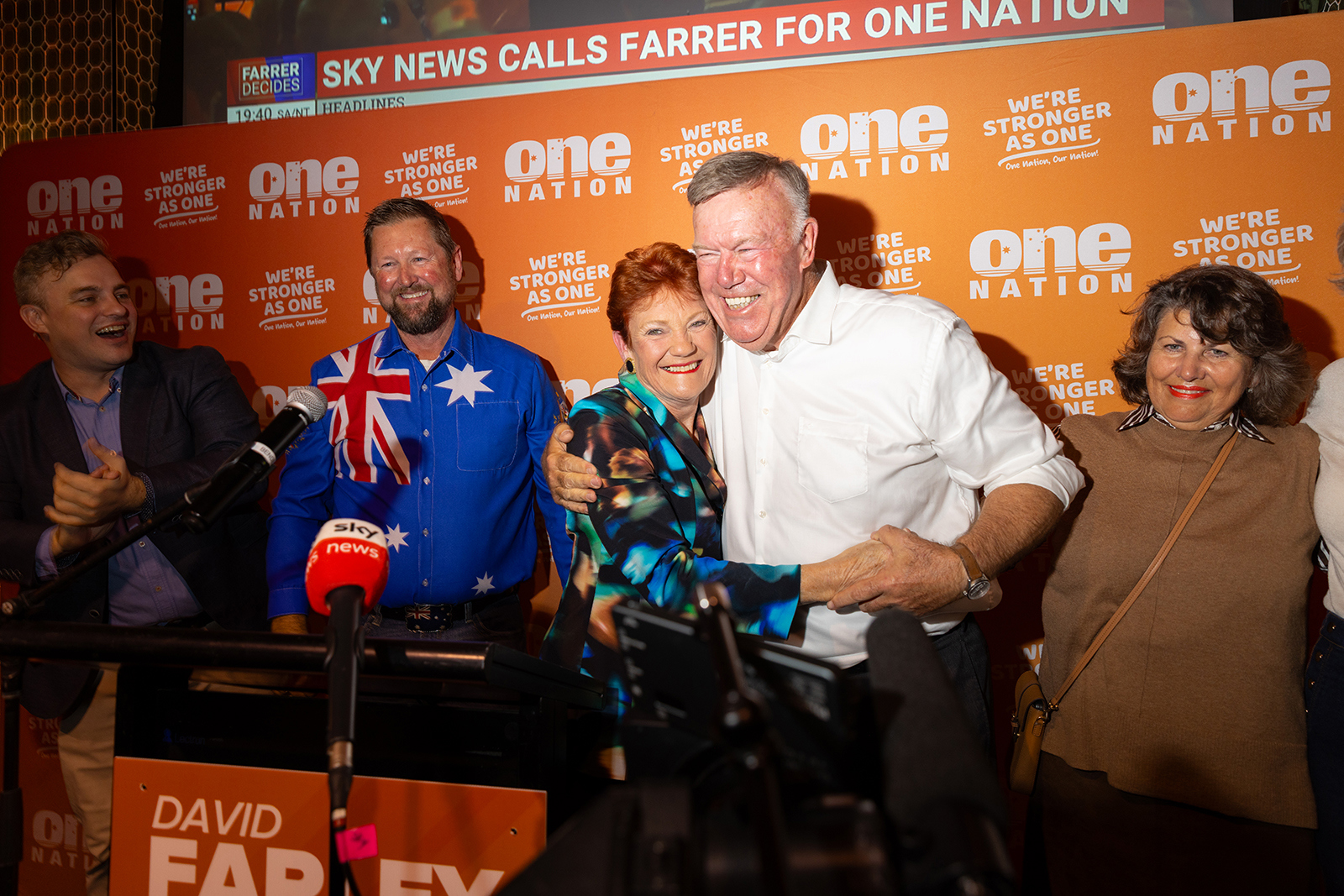
Cue the rise of One Nation. Polling now shows that Pauline Hanson's party is the second most popular in South Australia. Their profile aided by the announcement of a star candidate, former Liberal senator and television host Cory Bernardi.

The rise of One Nation threatens to split the conservative vote, forcing the Liberals into a fight for their political survival. But there are also signs the party is making inroads into Labor's traditional base, particularly among blue-collar voters in Adelaide's northern suburbs.

Whether that support translates into votes remains to be seen. But one thing is clear: while the result may look predictable on paper, the dynamics shaping this election are anything but simple, and given the potential impact of One Nation's rise on upcoming elections across the country, it's certain Australia will be watching.

NEVER MISS A STORY: Get your breaking news and exclusive stories first by following us across all platforms.
Iran threatens world tourism sites

Iran threatened recreational and tourist sites worldwide, insisted it was still building missiles and its supreme leader issued another defiant statement on Friday.

The United States was deploying more warships and another 2500 Marines three weeks into the war it launched alongside Israel.

Iran fired on Israel and energy sites in neighbouring Gulf Arab states as many in the region marked one of the holiest days on the Muslim calendar.

READ MORE: Who holds the reins of power in Iran since the country's top leaders were killed

Iranians were also celebrating the Persian New Year, known as Nowruz, a normally festive holiday that is more subdued this year.

With little information coming out of Iran, it was not clear how much damage its arms, nuclear or energy facilities have sustained in the punishing US and Israeli strikes that began February 28 — or even who was truly in charge of the country.

But Iran's attacks are still choking off oil supplies and denting the global economy, raising food and fuel prices far beyond the Middle East.

The US and Israel have offered shifting rationales for the war, from hoping to foment an uprising that topples Iran's leadership to eliminating its nuclear and missile programs.

There have been no public signs of any such uprising and no end in sight to the war.

Khamenei defiant as Iran's military threatens tourist sites

Iranian Supreme Leader Ayatollah Mojtaba Khamenei praised Iranians' steadfastness in the face of war in a written statement read on Iranian television to mark the Persian New Year, Nowruz.

Khamenei said the US and Israeli attacks were based on an illusion that killing Iran's top leaders could cause the overthrow of the government. He commended Iranians for "building a nationwide defensive front" and "delivering such a bewildering blow that the enemy fell into contradictions and irrational statements."

Khamenei has not been seen in public since he became supreme leader following the assassination of his father, Ayatollah Ali Khamenei, in Israeli strikes at the start of the war. US and Israeli officials suspect the younger Khamenei was wounded.

Iran's top military spokesman, Gen. Abolfazl Shekarchi, warned on Friday that "parks, recreational areas and tourist destinations" worldwide won't be safe for Tehran's enemies. The threat renewed concerns that Iran may revert to using militant attacks beyond the Middle East as a pressure tactic.

US bolstering its firepower in the Mideast

The US is deploying three more warships and roughly 2500 additional Marines to the Middle East, a US official told The Associated Press.

Two other US officials confirmed that ships were deploying, without saying where they were headed. All three spoke on condition of anonymity to discuss sensitive military operations.

A White House official said US President Donald Trump has said he has "no plans" to send troops into Iran, but retains all options. The official wasn't authorised to speak to the media and spoke on condition of anonymity.

US and Israeli leaders say weeks of strikes have decimated Iran's military. In addition to Iran's supreme leader, airstrikes have also killed the head of its Supreme National Security Council and a raft of other top-ranking military and political leaders.

Gen. Ali Mohammad Naeini, a spokesman for Iran's paramilitary Revolutionary Guard, was quoted by a state-run newspaper on Friday saying Iran continues to manufacture missiles despite Israel's claim that it had destroyed Iran's production capabilities.

Iranian state television later said that Naeini was killed in an airstrike.

NATO pulls mission from Iraq after attacks

NATO's top commander, Gen. Alexus Grynkewich, confirmed Friday that the alliance has pulled several hundred personnel out of Iraq and relocated them to Europe.

They were part of NATO's security advisory mission established in 2018 to advise Iraqi defence and security officials.

The move came after a string of Iranian attacks on other troops at British, French and Italian bases in the country.

Iran has stepped up its attacks on energy sites in Gulf Arab states after Israel bombed Iran's massive South Pars offshore natural gas field earlier in the week.

Two waves of Iranian drones attacked a Kuwaiti oil refinery early on Friday, sparking a fire. The Mina Al-Ahmadi refinery, which can process some 730,000 barrels of oil per day, is one of the largest in the Middle East.

Bahrain said a fire broke out after shrapnel from an intercepted projectile landed on a warehouse, and Saudi Arabia reported shooting down multiple drones targeting its oil-rich Eastern Province.

Iran's attacks on energy infrastructure in the Gulf combined with its stranglehold on shipping in the Strait of Hormuz, a strategic waterway through which a fifth of the world's oil and other critical goods are transported, has raised concerns of a global energy crisis.

Brent crude oil, the international standard, has soared during the fighting and was around $US108 ($154) per barrel on Friday, up from roughly $US70 ($99.50) per barrel before the war began.

Mideast marks the end of Ramadan, Persian New Year

Heavy explosions shook Dubai as air defences intercepted incoming fire over the city, where many were observing Eid al-Fitr, the end of the Muslim fasting month of Ramadan.

In Iran, meanwhile, many were marking Nowruz, the Persian New Year, as Israel said it had launched new strikes and explosions were heard over Tehran.

First responders inspect damage where an Iranian missile fragment landed  in the Old City of Jerusalem.

Loud explosions could also be heard in Jerusalem after the Israeli army warned of incoming Iranian missiles.

The Israeli military said missile fragments struck the edge of Jerusalem's Old City, home to sites sacred to Jews, Christians and Muslims.

More than 1300 people have been killed in Iran during the war. Israeli strikes targeting Iran-backed Hezbollah militants in Lebanon have displaced more than 1 million people, according to the Lebanese government, which says more than 1000 people have been killed.

In Israel, 15 people have been killed by Iranian missiles and four others have died in the occupied West Bank. At least 13 US military members have been killed.

First responders inspect damage where an Iranian missile fragment landed  in the Old City of Jerusalem.

On Friday, Israel broadened its attacks to Syria, saying it hit infrastructure there in response to what it described as attacks on the Druze minority. Syria's foreign ministry said Israel had acted under "flimsy pretexts and fabricated excuses."

NEVER MISS A STORY: Get your breaking news and exclusive stories first by following us across all platforms.
Who holds the reins of power in Iran since the country’s top leaders were killed

One after another, Israel has taken out Iran's top leaders.

First it was Supreme Leader Ayatollah Ali Khamenei, killed in the opening shots of the war.

Now Ali Larijani, the secretary of Iran's Supreme National Security Council who was considered one of the most powerful figures in the country, has also been killed. As have a raft of other top-ranking military and political leaders.

READ MORE: Israel hits Tehran with airstrikes on Persian New Year

Supreme Leader Ayatollah Ali Khamene

With so many top leadership figures taken out, who is now running Iran? Here is a look at the country's power structure, what is known — and what is not.

Khamenei's successor

Ultimate authority in Iran rests with the country's supreme leader, who has sat at the apex of power since the creation of the Islamic Republic in 1979 after the revolution that overthrew the shah.

After Khamenei was killed, his son, 56-year-old Mojtaba Khamenei, was quickly named to replace him as Iran's new supreme leader. A secretive figure, the younger Khamenei has not been seen in public since the airstrike killed his 86-year-old father.

Ayatollah Mojtaba Khamenei poster

The cleric had long been considered a contender for the post, despite never having been elected or appointed to a government position. The younger Khamenei maintains close ties to the country's powerful paramilitary Revolutionary Guard.

His views are believed to be even more hard-line than those of his father. Officially, he is now in charge of Iran's armed forces, and any decision regarding the country's nuclear program rests with him.

But is he truly running Iran?

Israel says Iran's leadership is in disarray

"I'm not sure who's running Iran right now," Israeli Prime Minister Benjamin Netanyahu said during a news conference on Thursday night.

"Mojtaba, the replacement ayatollah, has not shown his face. Have you seen him? We haven't, and we can't vouch for what exactly is happening there."

Mojtaba Khamenei's wife, Zahra Haddad Adel, was also killed in the Israeli strike that killed his father. US and Israeli officials have suggested he was wounded in the same attack.

"Iran's command and control structure is in utter chaos," Netanyahu said.

Benjamin Netanyahu

Burcu Ozcelik, senior research fellow for Middle East security at the Royal United Services Institute, a United Kingdom-based defence and security think tank, said the elimination of so many of Iran's top leaders will alter its theocracy — but that the change could be a gradual one.

"Leadership matters, and the loss of key decision-makers spanning politics, intelligence, internal security and (the) army will have transformative consequences," Ozcelik said.

"The fixation on the terminology of 'regime collapse' is obscuring the fact that the regime is already changing" due to the strikes against the country and the killing of high-level leaders. But the full impact of the war on the country could take time to emerge, Ozcelik explained.

"We need to be prepared for change that may take years, not weeks or months."

The Revolutionary Guard

For many analysts, true power now rests with Iran's feared paramilitary Islamic Revolutionary Guard.

"The Revolutionary Guard is the state now," said Ali Vaez, Iran project director at the International Crisis Group. Before the war, the country's civilian leadership was "subservient entirely" to the supreme leader, he explained, while the Guard was the second-most powerful force in the country.

But now, with the elder Khamenei gone and his son not enjoying the same authority as his father, "it is really the Revolutionary Guards who are running the country."

The Guard rose out of Iran's 1979 Islamic Revolution as a force meant to protect the country's Shiite cleric-overseen government. It later became enshrined in its constitution and operated parallel to Iran's regular armed forces.

The Guard's expeditionary Quds Force was key in creating what Iran describes as its "Axis of Resistance" against Israel and the United States.

It backed Syria's former President Bashar Assad, the Lebanese militant group Hezbollah, Yemen's Houthi rebels and other armed groups in the region.

An independent military

Early on in the war, Iranian Foreign Minister Abbas Araghchi suggested the country's military units were acting independently from central government control.

"Our … military units are now in fact independent and somehow isolated and they are acting based on instructions — you know, general instructions — given to them in advance," Araghchi had said on Al Jazeera on March 1.

Ali Larijani

Pressed about Tehran's attacks on other Gulf nations — such as Oman, which had acted as an intermediary for Iran in recent nuclear talks with the US — he said: "What happened in Oman was not our choice. We have already told our … army, armed forces to be careful about the targets that they choose."

"Multiple layers of leadership"

The possibility of an Israeli or a US attack on Iran had long been in the cards. It was something the Islamic Republic had factored into its planning, setting up multiple contingency plans, Vaez said.

"I think the mistake in the US and in Israel is that they ended up believing their own rhetoric that Iran is akin to a terrorist organisation, that decapitating the regime or removing one or two layers of political elite would result in paralysis and collapse," Vaez said.

"Whereas this is a state, … it has multiple layers of leadership."

Even if all top generals are eliminated, he said, others lower down the ranks can pick up where their superiors left off.

"The expectation that this regime will … implode by removing a few dozen senior leaders, I think is nothing but an illusion."

NEVER MISS A STORY: Get your breaking news and exclusive stories first by following us across all platforms.
Murderer gets life for stabbing and burning girlfriend

A man who brutally stabbed his partner to death and burned her body after an argument over drugs, money and another woman will serve at least 24 years behind bars.

Luke Hanif Sekkouah pleaded guilty in the WA Supreme Court to Erica Hay's murder in Perth's southern suburbs in April 2024.

The 37-year-old was sentenced on Friday to life imprisonment, with a non-parole period of 24 years.

READ MORE: NT braces for Cyclone Narelle as Far North Queensland starts recovery

Luke Hanif Sekkouah, Erica Hay

Sekkouah stabbed Hay in the head, neck and body, piercing her heart, liver and lungs, in a "sustained, relentless and brutal" attack, Justice Natalie Whitby said.

"She could not defend herself against your rage and you were armed with a deadly weapon," she said.

One of Hay's daughters was in the home during the attack and might have seen her dead mother lying on the floor, the court was told.

"After you repeatedly stabbed her and she had fallen and hit her head, you continued to stab her," Justice Whitby said.

"Erica was defenceless against your violence.

"Erica's injuries were horrific."

Erica Hay's family outside the WA Supreme Court

Sekkouah, a methylamphetamine user, left the house and bought a six-pack of beer from a nearby liquor store.

He then stole a bottle of turpentine from an IGA supermarket and returned to the home.

In the early hours of the next morning, he poured it on Hay and some furniture and ignited it.

"Your intention to incinerate Erica's body after you had killed her was a vile and degrading act," Justice Whitby said.

"This attempt to cover up was deliberate and planned.

"Your offending is the most extreme form of domestic violence."

Sekkouah, who was covered in tattoos and sat motionless in court, then scooped up Hay's daughter and ran from the house to a neighbour's home and asked them to call emergency services.

Firefighters found Hay's partially burned body lying in a hallway.

Erica Hay

Sekkouah, a mechanical fitter, told police he was sleeping in the house when it filled with smoke and he ran out after grabbing Hay's daughter.

Detectives became suspicious when they learned Sekkouah had not suffered from smoke inhalation and saw Hay's 23 injuries.

Hay was a mother, daughter, sister and a friend, Justice Whitby said.

"No term of imprisonment can measure the value of her life," she said.

"She had so much life ahead of her."

Sekkouah initially fought the murder charge, pleading guilty on the first day of a trial.

Luke Hanif Sekkouah, Erica Hay

He then disputed the facts, triggering a multi-day hearing to resolve the issues.

Justice Whitby was scathing of Sekkouah's apology letter, saying his "sustained and deceptive conduct demonstrated a lack of remorse".

The court heard Sekkouah suffered Post Traumatic Stress Disorder and lacked the skills to manage relationships. He drank alcohol and used cannabis daily.

Outside of court, Hay's childhood friend, Amanda Broad, said she hoped Sekkouah "rots in hell" and he should not have been given a non-parole period.

"I just want my friend back and I'm never going to get her back," she said, crying.

"He gets to sit pretty in prison … my friend doesn't, my friend is gone."

Support is available from the National Sexual Assault, Domestic and Family Violence Counselling Service at 1800RESPECT (1800 737 732)

NEVER MISS A STORY: Get your breaking news and exclusive stories first by following us across all platforms.
NT braces for Cyclone Narelle as Far North Queensland starts recovery amid flooding

Tropical Cyclone Narelle barrelled onto the Queensland coast as a category 4 system Friday morning, bringing destructive winds and a torrent of rain along its path.

The system made landfall north east of Coen around 8am (9am AEDT) and began tracking west across the Cape York Peninsula.

The system was expected to be downgraded to a category 2 Friday afternoon, before passing through the communities of Weipa and Aurukun, and then sweeping into the Gulf of Carpenteria.

AS IT HAPPENED: Narelle leaves trail of destruction as it moves across Cape York Peninsula

Communities in the Northern Territory were on alert for the storm to intensify over water before it makes landfall there late Saturday.

Affected towns have received more than 100mm of rain in 24 hours, some copping up to four times that, as the cyclone dumped intense rain.

The Bureau of Meteorology's flood watch for North Queensland on Friday covered the entire peninsula from the Herbert River up through the rivers, creeks and streams across the Cape.

READ MORE: Hammer blow for Aussies as oil crisis to send cost of flying domestic sky high

There were no reports of fatalities or serious injury, according to the Queensland Ambulance Service.

Hundreds of homes were without power, particularly in Coen and Lockhart River, where authorities warned of fallen powerlines.

A strong storm surge pushed waves onto paths and coastal roads as far south as Cairns, dragging trees, paths and benches into the ocean.

Emergency crews took to the streets as soon as it was safe to begin the clean up, but many roads have been cut by floodwater and fallen trees.

Northern Territory next in firing line

The Bureau predicts the cyclone will reach the east coast of the top end of the Northern Territory, north of Groote Island as a category 3 tropical cyclone on Saturday.

The potential for flooding across the Northern Territory will be greatest on Sunday, when the cyclone further downgrades to an eventual low pressure system.

Meteorologist Angus Hines said this means more heavy rain for areas already impacted by significant flooding in recent weeks.

"We could see rainfall in excess of 100 to 200mm along the path of that tropical cyclone, stretching from Alyangula on the east coast to the Katherine area, and out to Wadeye on the western side of the Top End," Hines said.

"These rainfall numbers are significant, with isolated values above that during Sunday and into early Monday morning, and are likely to lead to renewed river rises across the top end, including the potential for renewed major flooding around Katherine and Beswick, and prolonged major flooding around the Daly River."

Heavy rain and strong winds will then reach the northern Kimberley, Kalumburu and areas north of Kununurra early next week.

NEVER MISS A STORY: Get your breaking news and exclusive stories first by following us across all platforms.
Second teen in a week injured in train surfing stunt

A young boy is fighting for life after falling from a moving train in Sydney's south in the second train surfing accident this week.

The 13-year-old fell from inside the train and landed on the tracks near Engadine, sustaining serious head injuries and being taken to hospital in a critical condition.

Emergency services were called to the scene at the Princes Highway near Heathcote Road about 8.20pm.

LIVE UPDATES: Iran pledges to hit back over gas field attack

A teenager is fighting for life and another is recovering in hospital after two separate train surfing incidents.Engadine train station.

The incident comes after a 13-year-old boy was taken to hospital after a fall while train surfing near Woollahra.

He was among nine other train surfers when he fell and landed on an unused platform.

Sydney Trains chief executive Matthew Longland urged parents to step in before tragedy strikes.

"One slip, they're on the tracks and can tragically lose their lives," he said.

"Please talk to your children, let them know how dangerous this behaviour is."

READ MORE: Cheese pulled from shelves at Coles, IGA over undeclared allergen

Sydney Trains Chief Executive Matthew LonglandA boy is fighting for life after falling from a train at Engadine in Sydney's south.

NSW Police Minister Yasmin Catley urged young people to think twice before train surfing for a social media post.

"The message is loud and clear, stop this foolish behaviour," Catley said.

"For a post and boast, it's not worth your life."

NEVER MISS A STORY: Get your breaking news and exclusive stories first by following us across all platforms.