Tag Archives: oceania

States, commonwealth agree to look at ban on engineered stone

The commonwealth, state and territory governments have come to an agreement to consider banning the domestic use of engineered stone as pressure mounts on authorities to address the cause of the deadly silicosis disease.

Speaking on Tuesday afternoon, Workplace Relations Minister Tony Burke said the various governments had reached a unanimous decision to ask Safe Work Australia to look at what a ban on the product would look like.

"We have now tasked Safe Work Australia to do the work to scope out what regulation is required for all workplaces where you deal with silica dust," he said.

READ MORE: The war of words over superannuation explained

Tony Burke in the House of Representatives

"And to also scope out specifically, with respect to engineered stone and engineered stone bench tops, to do the work starting now on what a ban would look like.

"And then to also scope out how you can have a nationally consistent licensing system for whatever remains as being viewed as safe to be on the market."

The agreement comes after a meeting when Burke urged his state and territory counterparts to fast-track a ban on the use of engineered stone, which is a high-silica product commonly used to make kitchen benchtops.

Without a ban, unions estimate 100,000 workers could contract deadly lung diseases, such as silicosis, which occurs when silica dust is inhaled.

READ MORE: Police shoot dead man they say threatened officers with knife

When engineered stone is cut or drilled, silica dust particles enters the lungs of workers.

Engineered stone is a manufactured material commonly used for kitchen benchtops that contains high levels of silica crystals. It is significantly cheaper than materials like marble.

When the stone is cut, it can produce dust with those crystals which can cause the deadly lung disease silicosis.

While dry cutting the stone has recently been banned in Queensland, Victoria and New South Wales, the material itself is still legal.

Burke said the steps agreed to by the states, territories and commonwealth were done to provide the "simplest of protections" to tradespeople.

"There are products when they're in high levels of concentration create unacceptable levels of risk," he said.

"There's been an understandable focus therefore on kitchen benchtops, even though that's not the whole story with respect to risk of silica.

"Kitchen benchtops can be in the order of 97 per cent, 98 per cent silica."

READ MORE: The secret toll of our escalating natural disasters

Burke also said that while existing engineered stone products remain safe, they become dangerous as soon as they are moved, such as during rennovations.

"No one should be worried in terms of what they currently have in their home and think suddenly that's a dangerous item to have," he said.

"But the moment it's adjusted, the moment it's moved, the risk is real and we do not currently have the rules in place to make sure that it's safe."

The ministers will meet again in around six months, but agreed to meet earlier if Safe Work's report is complete in a shorter timeframe. 

Today's meeting comes after a joint investigation by a joint investigation by 60 Minutes, The Sydney Morning Herald and The Age on workers exposed to silica dust.

Unions and campaigners have called engineered stone the "asbestos" of this decade.

Every state and territory has its own workplace safety laws.

Any ban they agree to won't be necessarily on all products but those with high levels of silica.

Sign up here to receive our daily newsletters and breaking news alerts, sent straight to your inbox.

X-ray goggles can see through wood to find missing items

A form of 'X-ray' vision has been harnessed by a team of researchers, who have created a headset that can see through objects using augmented reality.

A team of scientists from the Massachusetts Institute of Technology (MIT) have developed a headset called the X-AR, which uses radio frequency signals to locate objects through cardboard boxes, wood and plastic.

The goggles are synched to labels that send radio waves to the headset. The labels are then placed on an object sending the object's location to the wearer, even when the item is hidden.

READ MORE: Man shot dead by officers at western Sydney police station launched 'frenzied' attack

X-ray vision made possible with goggles from MIT

The augmented reality aspect of the goggles shows the object as a sphere to the person wearing the goggles and even directs the wearer through the room to the object.

Once the object has been found, the headset can verify to the wearer that they picked up the correct one.

"Our whole goal with this project was to build an augmented reality system that allows you to see things that are invisible – things that are in boxes or around corners," Fadel Adib, associate professor in the Department of Electrical Engineering and Computer Science said.

"Because there isn't anything like this today, we had to figure out how to build a completely new type of system from beginning to end, he said.

"In reality, what we've come up with is a framework. There are many technical contributions, but it is also a blueprint for how you would design an AR headset with X-ray vision in the future."

READ MORE: Jetstar passengers delayed in Ho Chi Minh City after door fault

X-ray vision made possible with goggles from MIT

The X-AR can identify the location of the object with a 9.8cm error allowance, meaning the item is always less than 10cm away from where the headset directs the user.

X-AR identifies items at 96 per cent accuracy. 

Fishermen find remains of missing man inside shark

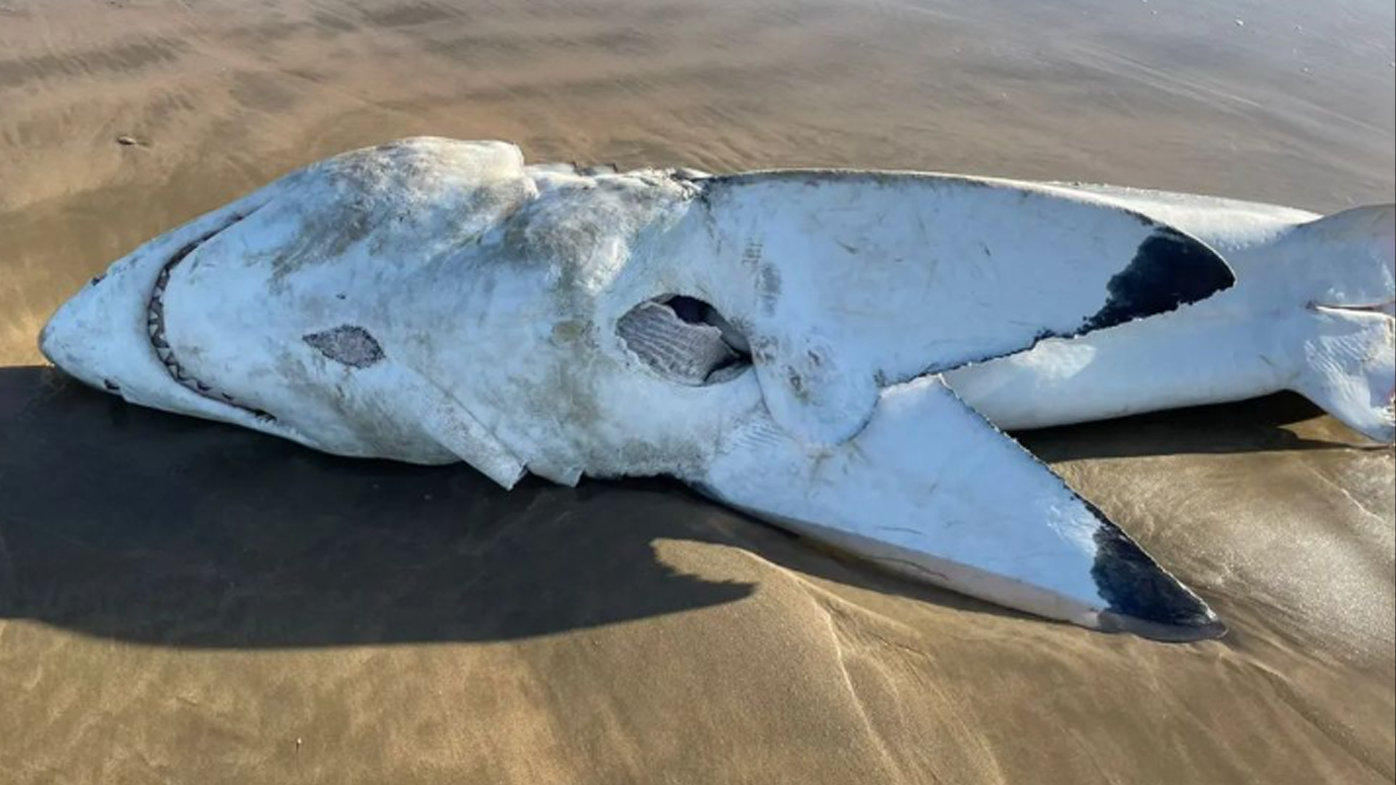
The remains of a man who had disappeared in southern Argentina earlier this month appear to have been found inside a school shark that was captured by local fishermen.

The family of Diego Barría, 32, recognised his remains due to a tattoo that was visible, Daniela Millatruz, the law enforcement officer who was in charge of the search, told local news media.

Barría had last been seen near the coast in the southern Chubut province riding his all-terrain vehicle late on February 18.

READ MORE: Super tax rate doubled for 80,000 Australians

Diego Barría was a lover of 4x4s and fishing. He used to visit the area where his quad was found.

The damaged ATV was located on February 20 on a beach near Rocas Coloradas, but there was no sign on Barría and an intense search began to try to locate the father of three.

Early Sunday morning, two fishermen went to the coastguard to report that they had fished three school sharks close to where Barría’s ATV was located “and when they were cleaning them they found human remains in one of them,” Millatruz said.

Family members recognised Barría “due to a tattoo that appeared in one of those remains,” she added.

READ MORE: A year's worth of rain forecast within just five days

Diego Barría, 32, had been missing since Saturday, February 18.

Officials are continuing to investigate what exactly happened to Barría.

“We presume Diego had an accident,” Millatruz said, “and we’re investigating if there was a vehicle involved".

The remains will also undergo DNA testing to officially confirm that they belong to Barría, Cristian Ansaldo, who heads up the police department in the city of Comodoro Rivadavia, said in an interview with local media.

The school shark in which the human remains were found measured around 1.5 metres, Ansaldo said.

The most likely hypothesis that investigators are currently working with is that Barría “had an accident and was dragged,” Ansaldo said, noting there had been a strong tidal surge the weekend when he disappeared.

“My heart went with you! I love you forever,” Virginia Brugger, who was identified as Barría’s partner and had been posting updates on the search on social media, wrote on Facebook Sunday.

Sign up here to receive our daily newsletters and breaking news alerts, sent straight to your inbox.

Don't be fooled, this is one of Australia's most venomous snakes

As summer wanes snake catchers are seeing a surge in hatchlings, warning venomous eastern brown babies are out in force – and easy to misidentify.

Stuart McKenzie, owner of Sunshine Coast Snake Catchers, was given a run around this week by a juvenile snake that was eventually identified as the highly venomous eastern brown.

He revealed it was in the "last place we looked"; the cupboard.

READ MORE: Super tax rate doubled for 80,000 Australians

This baby eastern brown snake sparked a long search at a Queensland home.

McKenzie told 9news.com.au juveniles can look vastly different from their adult counterparts, and urged residents to take extra caution.

"They can have different colour variations but brown is usually the most predominate, usually," he said.

"They can have stripes, black banding around the head.

"The hardest thing, is there are four to five snakes just on the Sunshine Coast that look very similar.

"When you see a snake five to six centimeters long, the trouble is you don't know if they are venomous or harmless."

READ MORE: Infamous 'serial killer' orcas have made biggest kill to date

McKenzie said just today he had four hatchling-related callouts, including red-bellied black snakes.

He implored residents not to try and catch any juvenile snakes and to leave the handling to trained professionals.

The sentiment is echoed by Darling Downs snake catcher, Gunter Glasser, who had an encounter with a feisty, and tiny, eastern brown at a rural school earlier this week.

Video clearly shows the small snake's black head markings; the banding was made visible when the reptile tried to bite Glasser's finger.

READ MORE: Challenges milking Australia's most venomous snakes and spiders

Gunter Glasser had a run-in with this baby eastern brown removed from a rural Queensland school.

Eastern brown snakes are found only in Australia and are the world's second most venomous snake.

The species is believed responsible for the majority of Australian fatalities.

Glasser said despite their small size, baby eastern brown snakes are still capable of a fatal bite.

READ MORE: Why Australia's deadliest snake is so lethal

"They have enough venom to kill you, but their venom glands are smaller and again, being smaller, their fangs are tinier, so they have trouble punching through the skin," he told 9news.com.au.

Glasser said baby snakes are easy to miss when they first emerge.

"They're about 150 mm when they hatch, so if you get them at 200 mm they are already a few weeks old.

"Everybody is catching a few, I've had at least about three this month," he added.

And it's not just Queensland that's seeing the influx.

READ MORE: What to do if you encounter a deadly snake, spider or jellyfish

This baby eastern brown caught in Adelaide has orange banding.

Jarrad Waye from Adelaide Snake and Rodent Control estimates he's removed about 20 "hatchies" since the start of the month.

He said homeowners can expect to see a surge in numbers at the end of February and start of March.

"Keep your distance, don't interfere and try catching or killing them," Waye told 9news.com.au.

"Always call a professional snake catcher.

"They are native, and play an important part in the ecosystem catching rodents and the like."

Sign up here to receive our daily newsletters and breaking news alerts, sent straight to your inbox.

Infamous 'serial killer' orcas have made biggest kill to date

The rotten remains of shark corpses are becoming a familiar site on a stretch of South African coastline, after a pair of "infamous" shark-hunting orcas made their biggest killing spree to date.

WARNING: Images below may disturb some readers

From February 3 to February 22, 17 dead shark carcasses have washed ashore the Gansbaai coast, east of Cape Town.

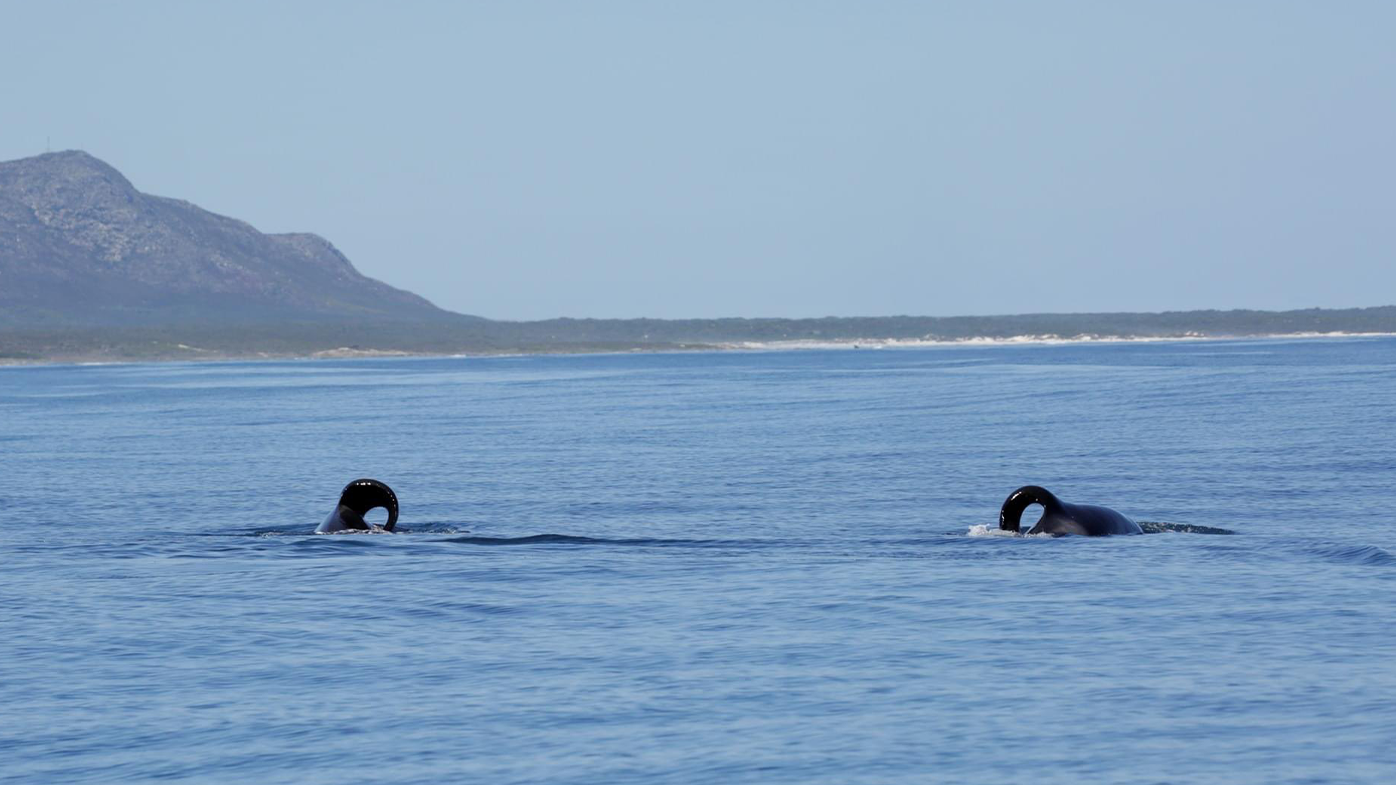
Each shark is a victim of two male orcas, or killer whales, called Port and Starboard.

READ MORE: Collapse of Australian trucking giant puts 1500 jobs at risk

The two orcas, Port and Starboard, have been hunting sharks off the Gansbaai coast, east of Cape Town.

Sign up here to receive our daily newsletters and breaking news alerts, sent straight to your inbox.

The pair are known to feast on several shark species, including great white sharks, and were witnessed "repeatedly diving" in the area on Sunday, February 21 – two days before 11 dead sharks washed ashore.

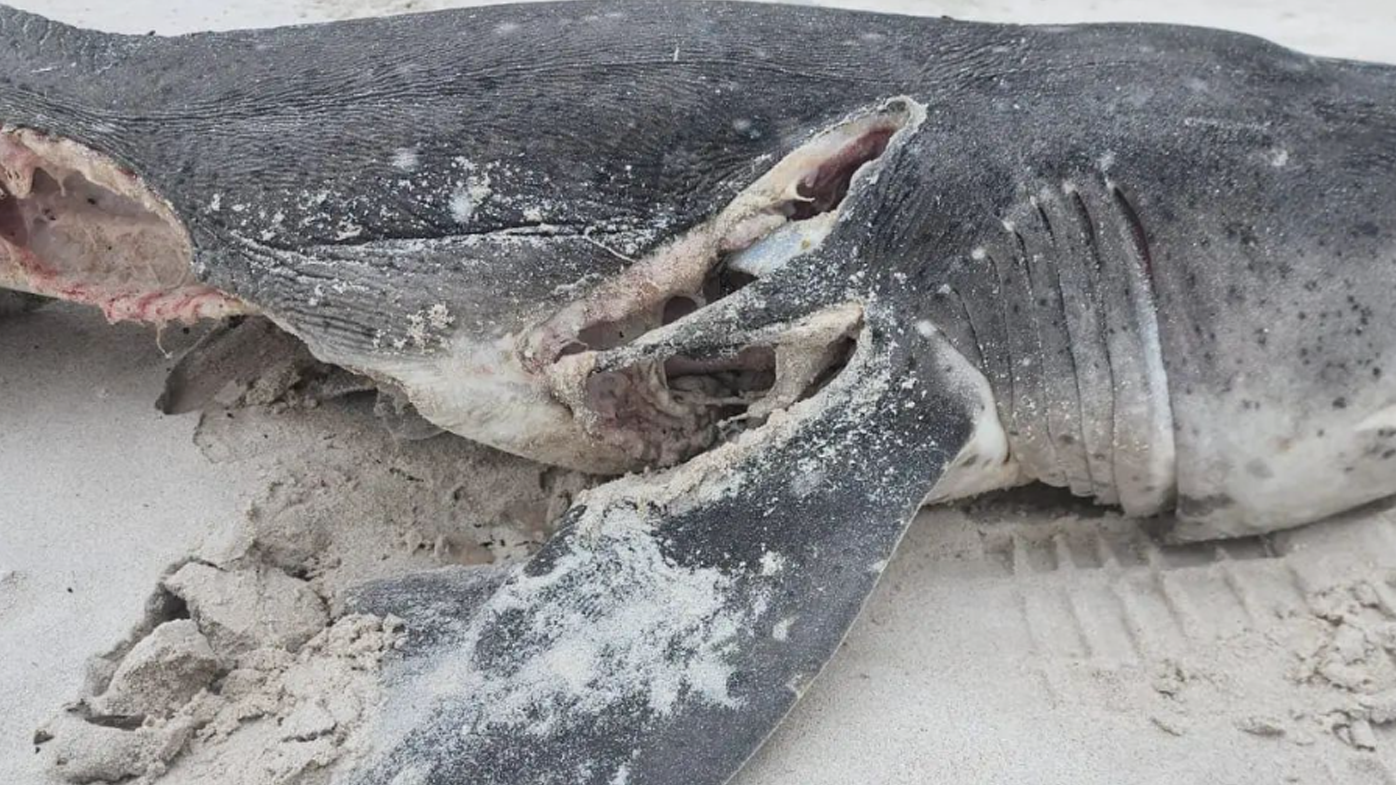
Of the 17 victims, 16 were sevengill sharks, and the other, a spotted gully shark.

Each sported similar gruesome injuries. 

READ MORE: Man shot dead inside police station in Sydney

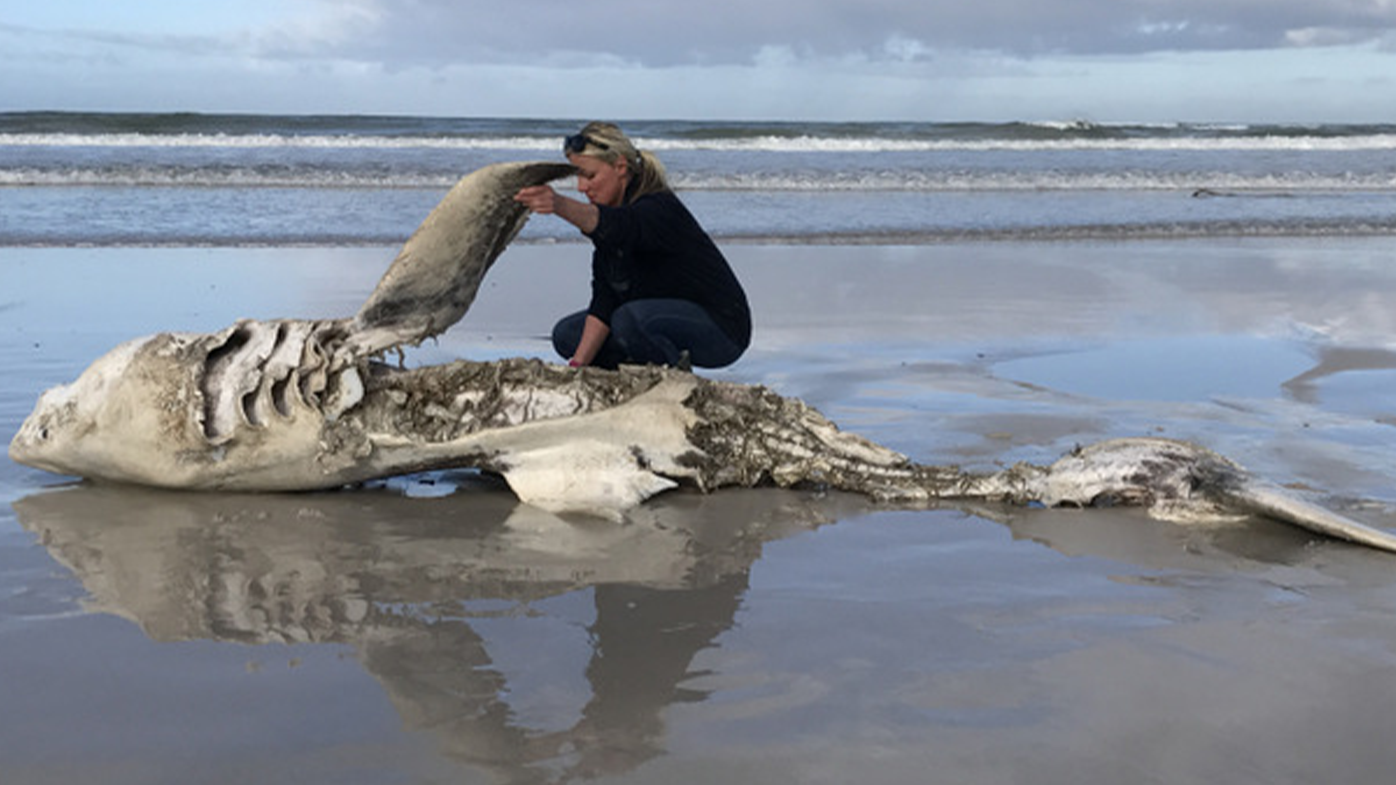
Alison Towner said at least 17 sharks were killed in the latest spree.

Alison Towner, senior white shark biologist at the Dyer Island Conservation Trust and lead researcher into the orcas, performed the shark necropsies alongside Ralph Watson of Marine Dynamics Academy.

"Each sevengill shark was torn open and missing its liver, they were all females measuring between 1.6-2.3 meters and had similar injuries to those killed in False Bay by the same orca pair," she said.

"This is the largest amount of sharks these orcas have killed in this area, in one sitting.

"There could well be more that didn't wash out yet".

The recent kill of eleven came after seven other shark corpses were discovered on February 3, at the same location.

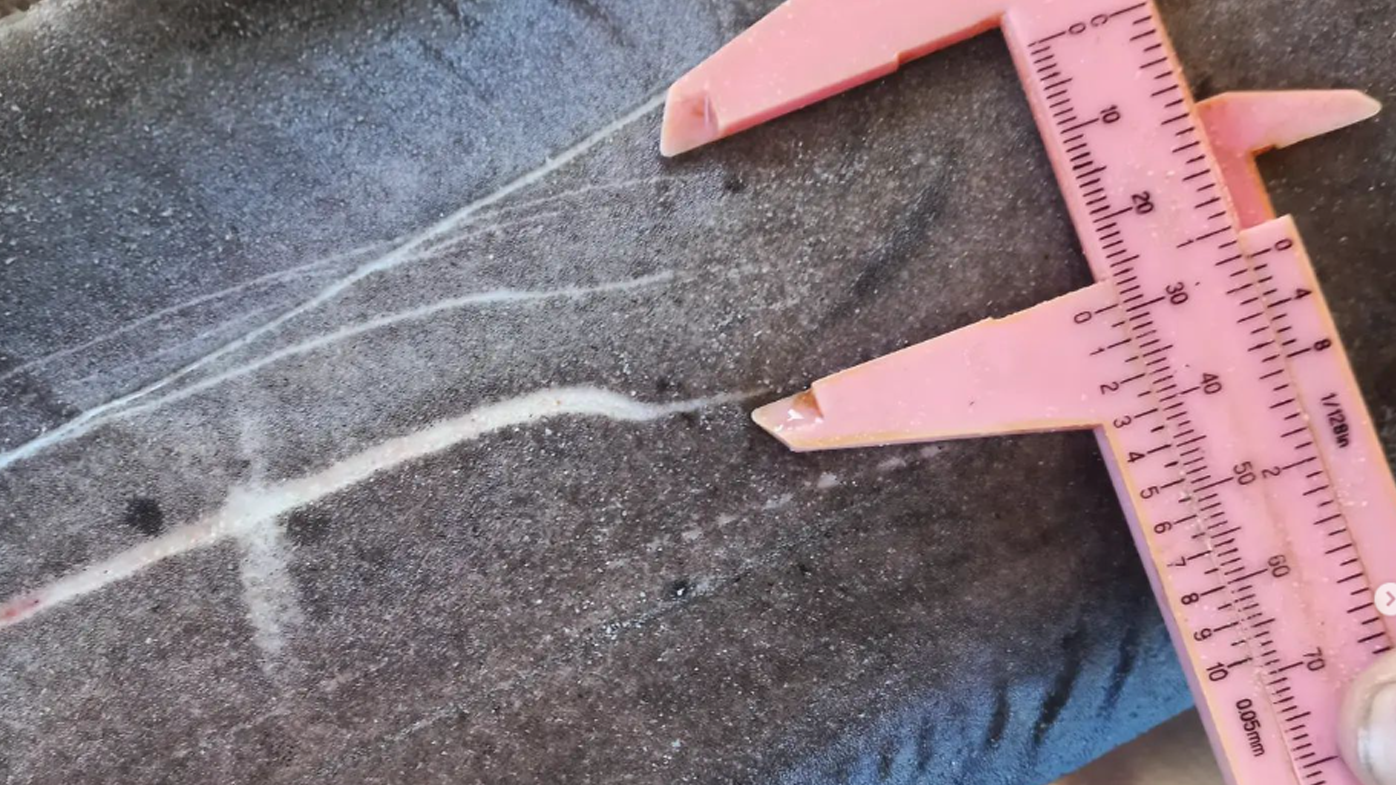
She added that each of the sevengills had "rake marks", scratches on the skin left by the orcas' conical-shaped teeth.

READ MORE: Dad's Christmas Day stabbing caught on CCTV

Each of the sevengill sharks had distinct "rake marks" left by the orcas teeth.

It is believed the orcas are targeting shark livers as they are "packed with nutrition".

While the latest killing spree has broken records, it's certainly not the first for Port and Starboard.

A 2022 paper, published in African Journal of Marine Science, found great white sharks had fled parts of the same coast after being terrorised by the orcas.

Since 2017 eight dead great whites have washed up on the Gansbaai coast.

At the time the paper was published, eight dead great whites had washed ashore since 2017.

Of these, seven of them had their livers removed, while some had their hearts removed too.

In August 2022, the body of another great white washed up on Hartenbos, in Mossel Bay.

The body of the sub-adult female white shark sported 'precise' wounds.

The orcas are believed to be members of a rare shark-eating morphotype.

Months after the paper was published, rare drone video was released showing a small pod of orcas launch a targeted attack on a great white shark.

Towner was unware the behaviour she had been studying had been captured on film.

"(It's) one of the most incredible pieces of natural history ever captured on film," she said.

'Dropping to his knees': CCTV shows Dad's Christmas Day stabbing

A dad who was stabbed on his front lawn on Christmas Day has spoken out with his family on the knife crime plaguing Queensland.

Ben Clarke said it had been a "normal" Christmas before a teenager came to the house uninvited that evening, where his son was having a gathering.

He told Today that the gatecrasher had "obviously had a large day", and that he had calmed the teenager down and had him driven home.

READ MORE: Collapse of trucking giant puts 1500 jobs at risk

Ben Clarke was stabbed outside his Queensland home on Christmas Day.

But the teenager returned about half an hour later, and Ben said he had "concealed a knife" in the car.

He said there had been "a bit of a confrontation".

"I was concerned for the child because he was extremely heightened and out of control," he said.

"I just tried to settle him down. He was screaming and yelling about what he was going to do. I didn't see any knife in his hand or anything."

READ MORE: Police shoot dead man they say threatened officers with knife

Ben Clarke was stabbed outside his Queensland home on Christmas Day.

CCTV footage shows Ben and another figure approaching the boy, then trying to restrain him, before Ben steps back.

"He just stabbed me," Ben is heard saying on camera, before the 46-year-old collapsed.

Ben's oldest son runs out to take his shirt off and hold it tight to his father's wound.

"I will never forget my husband dropping to his knees and clutching his chest and my other two sons running in to help him," Ben's wife Cresta said.

"I thought that he was going to die on the grass that day."

READ MORE: The secret toll of our escalating natural disasters

Ben Clarke was stabbed outside his Queensland home on Christmas Day.

Ben was left with a 17-cen stab wound to his torso, narrowly missing his heart.

He was taken to hospital for emergency surgery, and has since returned home.

A teenager has been arrested and charged over the stabbing, but has been granted bail.

"The laws need to change," Cresta said.

Ben said the problem could only be traced back to the leadership in the state.

"I don't understand how this has been normalised?" he said.

Queensland knife crime has spiked 33 per cent since 2016.

The state government has returned to bringing back breach of bail laws for youths, in a bid to stymie the ongoing violence.

Sign up here to receive our daily newsletters and breaking news alerts, sent straight to your inbox.

'The most massive violations of human rights' in the world today

Russia's full-scale invasion of Ukraine has triggered "the most massive violations of human rights" in the world today, the head of the United Nations says.

His comments on Monday came as the war pushed further into its second year with no end in sight and tens of thousands dead.

The Russian invasion "has unleashed widespread death, destruction and displacement" UN Secretary-General António Guterres said in a speech to the UN-backed Human Rights Council in Geneva.

READ MORE: Slain Hong Kong model's in-laws, ex-husband detained

After failing to capture Kyiv in the opening weeks of the invasion on February 24 last year and suffering a series of humiliating setbacks during the fall, Russia has stabilised the front and is concentrating its efforts on capturing four provinces that Moscow illegally annexed in September — Donetsk, Kherson, Luhansk, and Zaporizhzhia.

Ukraine, meanwhile, hopes to use battle tanks and other new weapons pledged by the West to launch new counteroffensives and reclaim more of the occupied territory.

Guterres said "attacks on civilians and civilian infrastructure have caused many casualties and terrible suffering".

The intense fighting for territory in eastern Ukraine was in sharp focus on Sunday at a Ukrainian field hospital treating wounded from the intense battle for the city of Bakhmut, which is devastated. A constant flow of battered and exhausted soldiers came in on stretchers.

Anatoliy, the chief of the medical service, said his team treats dozens of soldiers every day and barely has time to eat.

"My medics work practically non-stop. Before the full-scale invasion we had 50-60 wounded in a nine-month rotation, and now sometimes we have more (than that) in one day," he told The Associated Press, providing only one name for security reasons.

READ MORE: UK and EU reach Northern Ireland post-Brexit trade deal 

Guterres' remarks came as the Ukrainian military said Russia launched attacks with exploding drones on several regions of the country from late Sunday until Monday morning, killing two people.

Meanwhile, Belarusian opposition activists claimed a military air base outside Belarus's capital that hosts Russian warplanes came under attack Sunday by Belarusian guerrillas.

BYPOL, an online messaging app channel run by the activists, and several other online resources operated by the Belarusian opposition, said an A-50 early warning and control aircraft was seriously damaged in the attack at the Machulishchy base near Minsk.

The activists provided no evidence to support the claims, which couldn't be independently verified. Belarusian and Russian officials made no comment, but Belarusia's President Alexander Lukashenko urged top military and security officials on Monday to tighten discipline.

Russia used the territory of its ally Belarus to invade Ukraine a year ago. Belarus continues to host Russian troops, warplanes and other weapons.

Guterres, in his Geneva speech, cited cases of sexual violence, enforced disappearances, arbitrary detention and violations of the rights of prisoners of war documented by the UN human rights office.

READ MORE: Jeweller held at gunpoint in daylight armed robbery at his home

He decried how the Universal Declaration of Human Rights, now 75 years old, has been "too often misused and abused".

"It is exploited for political gain and it is ignored, often, by the very same people," Guterres said.

"Some governments chip away at it. Others use a wrecking ball."

"This is a moment to stand on the right side of history," he told the council, the UN's top human rights body.

Russia withdrew from its seat last year amid a surge in international pressure over the war in Ukraine.

Dozens of high-level envoys at the Geneva meeting — many from Western countries — lashed out at Russia over its conduct of the war.

At the simultaneous Conference on Disarmament, another UN-backed body, delegates criticised Putin's decision to suspend Russia's participation in the New START agreement with the United States, the last nuclear arms control agreement between Moscow and Washington.

READ MORE: Parents of girl who died waiting for hospital treatment demand resignation

Russia was not represented at the council, and its top envoy to the session wasn't expected to speak until Thursday.

Russian officials have shown little sign they may be reconsidering their attack on their neighbour, however.

"We aren't seeing any conditions for a peaceful settlement now," Kremlin spokesman Dmitry Peskov said on Monday.

Dmitry Medvedev, the deputy head of Russia's Security Council that is chaired by President Vladimir Putin, went a step further, once again raising the spectre of nuclear war and a nightmare outcome to Europe's biggest and deadliest conflict since World War II.

He chided the US and its allies for providing Ukraine with military and other support to help push back the Kremlin's forces. Their longer-term aim, he claimed, is to break up Russia.

Putin has also framed the war in those terms, saying it's an existential risk to Russia.

In the Sunday-Monday attacks, Ukraine's General Staff said Kyiv's forces shot down 11 out of 14 Iranian-made Shahed drones.

Ukraine's presidential office said Monday that at least two civilians were killed and nine others wounded by Russian attacks over the previous 24 hours.