Tag Archives: oceania

Heinz wants to buy sailor new boat after ketchup helped him survive at sea

A US sailor who spent weeks lost at sea in January, surviving largely off of ketchup, could have a new, state-of-the-art boat coming to him.

And the handsome gift would be thanks to Ketchup giant Heinz, which is trying to locate Elvis Francois.

The company posted a callout to social media on February 14, hoping to track down the elusive Dominica sailor.

READ MORE: Behaviour of Mardi Gras attendees praised as Albanese makes history

US sailor Elvis Francois, who spent weeks lost at sea in January surviving largely off of ketchup, could have a new boat coming to him.

According to Heinz's social media, they've already reached out to the government of Dominica, the island nation where Francois is from, as well as the Colombian navy, which rescued him northwest of Colombia's Puerto Bolívar.

But so far, none of the attempts to find Francois have panned out, says Heinz.

So the ketchup retailer is now "asking the general public to try and help with the hunt," according to a statement shared with CNN over email.

READ MORE: Girl awarded for saving brothers after horror Christmas Day crash

"We're also asking for any credible leads to contact Elvis so we can help cover a new boat equipped with full navigational technology to avoid another disaster in the future," added the company.

Heinz also suggested fans use the hashtag #FindTheKetchupBoatGuy to amplify their search.

Francois, 47, was repairing his boat near the Dutch part of the island of Saint Martin in December when his boat was pulled out to sea.

He told Colombian authorities that he lacked the navigational knowledge to return to shore and spent 24 days at sea.

He survived off a bottle of ketchup, garlic powder, and Maggi stock cubes, which he mixed with water.

He was rescued after a plane spotted his sailboat with "help" engraved into the hull, according to Colombian authorities.

Sign up here to receive our daily newsletters and breaking news alerts, sent straight to your inbox.

Magnitude 6.2 quake strikes Papua New Guinea

A magnitude 6.2 earthquake has struck the New Britain province in Papua New Guinea (PNG), Australia's closest neighbour.

The quake hit at 7.24am (AEDT) at a depth of 57 kilometers, according to Geoscience Australia.

The United States Geological Survey, says the earthquake was around 47 kilometers from Kimbe, the capital of the province.

READ MORE: Behaviour of Mardi Gras attendees praised as Albanese makes history

https://twitter.com/BOM_au/status/1629598841736671234

The Bureau of Meteorology has confirmed there is no tsunami threat to Australia.

There are currently no reports of serious damage or injuries.

Papua New Guinea is vulnerable to earthquakes because it lies along the "Ring of Fire" in the Pacific Ocean.

Along the ring shifting tectonic plates push against each other, which causes tremors.

The "ring" stretches along a 40,000km arc from the boundary of the Pacific Plate, to smaller plates such as the Philippine Sea plate, to the Cocos and Nazca Plates that line the edge of the Pacific Ocean.

The Ring of Fire is also home to the world's most active volcanoes.

A massive 7.6 earthquake was felt across the Pacific country in September last year.

Three people were killed, others were injured and infrastructure was damaged following the powerful quake.

Sign up here to receive our daily newsletters and breaking news alerts, sent straight to your inbox.

Sydney glitters as Anthony Albanese makes history

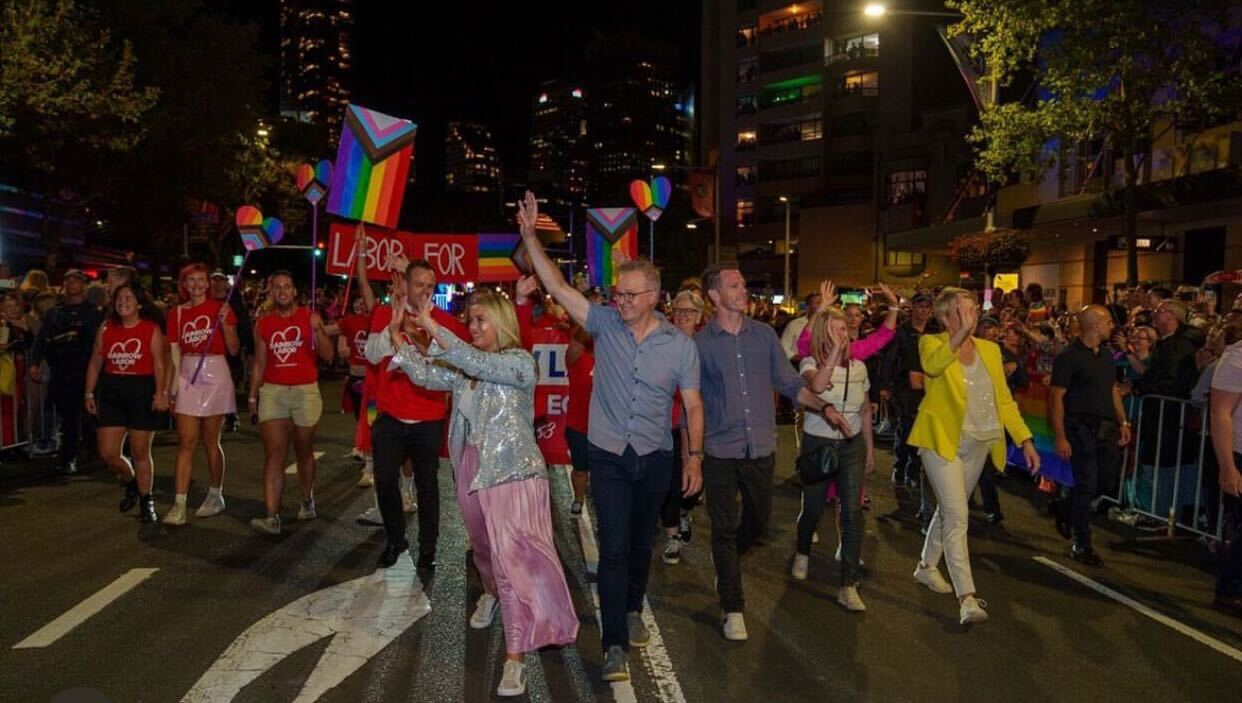
Anthony Albanese has made history, becoming the first ever sitting prime minister to march in the Sydney Gay and Lesbian Mardi Gras parade.

It was the first time the parade had returned to the streets of Sydney, since the beginning of the pandemic.

Police have praised the behaviour of the more than 12,000 people who marched, walked and danced their way down a packed Oxford Street last night.

READ MORE: How violent clash triggered Australia's biggest ever queer movement

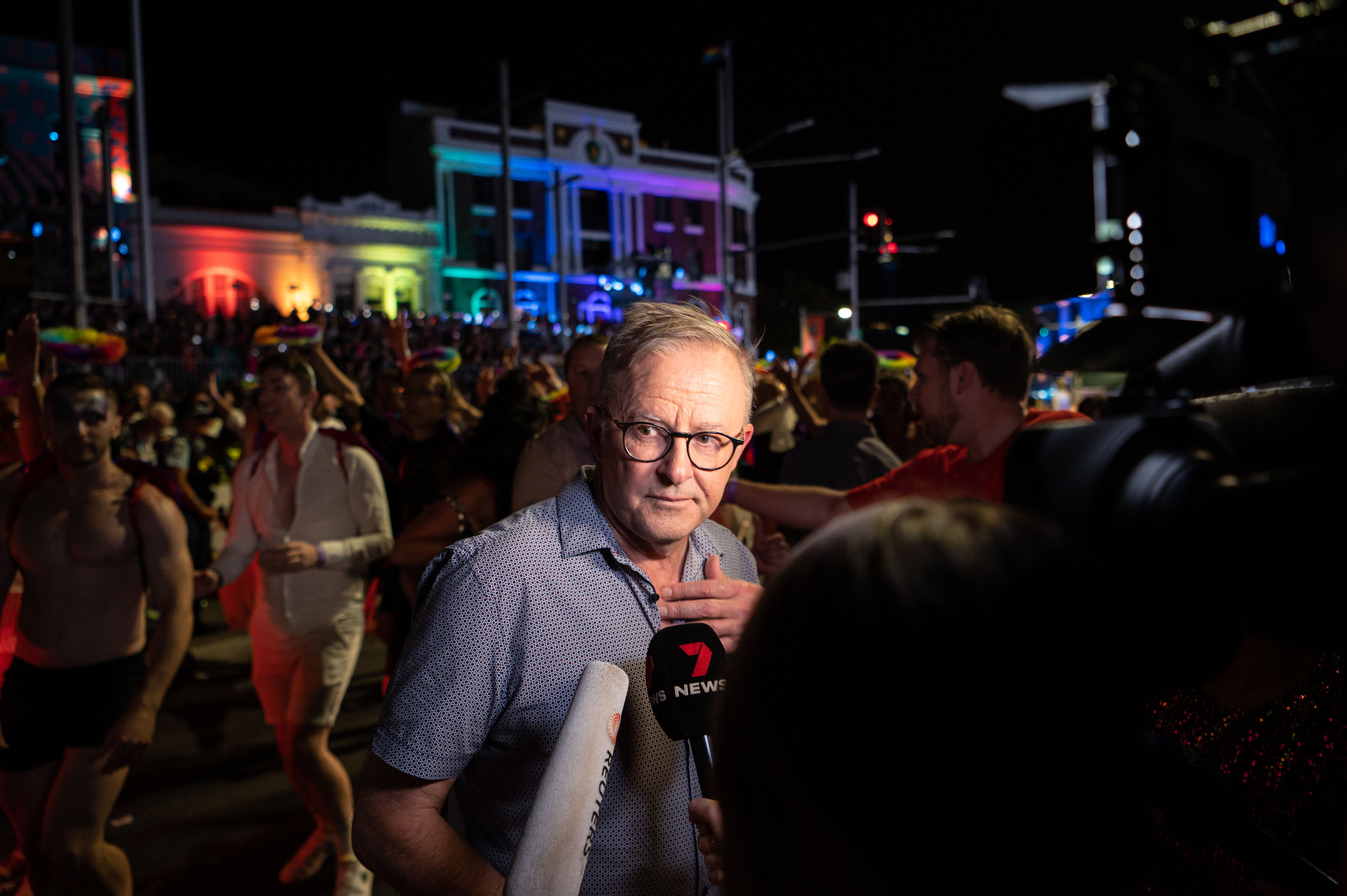
Prime Minister Anthony Albanese takes part in the 45th annual Gay and Lesbian Mardi Gras parade in Sydney, March 25, 2023. PM Anthony Albanese speaks to the media during the 45th annual Gay and Lesbian Mardi Gras parade in Sydney, March 25, 2023.

"It's unfortunate that I am the first but this is a celebration of modern Australia, we're a diverse and inclusive Australia and that's a good thing," Albanese said on the ABC telecast.

"We need to be a country that respects everyone for who they are."

READ MORE: All the best free, family-friendly and ticketed events this WorldPride

Anthony Albanese has become the first ever sitting prime minister to march in the Sydney Gay and Lesbian Mardi Gras paradeParticipants take part in the 45th annual Gay and Lesbian Mardi Gras parade in Sydney, March 25, 2023.

On Twitter, Albanese said he was proud to be a supporter of the parade.

"I've been proudly marching in Mardi Gras since the 80s. This year I'm honoured to be the first Prime Minister to join the march," he said.

"When the first Mardi Gras march was held in 1978, you could still be arrested for being gay. In the decades since, people dedicated their lives toward the campaign for equality.

READ MORE: Lismore residents grapple with daunting journey ahead, one year on

https://twitter.com/AlboMP/status/1629439369613553666

Minister for the Environment and Water Tanya Plibersek also joined Albanese for the 45th anniversary of the event.

This year also marked the first time a defence minister has marched in the parade.

Both Defence Minister Matt Keogh and Assistant Defence Minister Matt Thistlethwaite attended.

They were there to celebrate 10 years since armed forces personnel were first allowed to march in uniform at the world famous parade.

Ahead of the NSW state election, opposition leader Chris Minns was also seen among the Labor Party contingent in the parade.

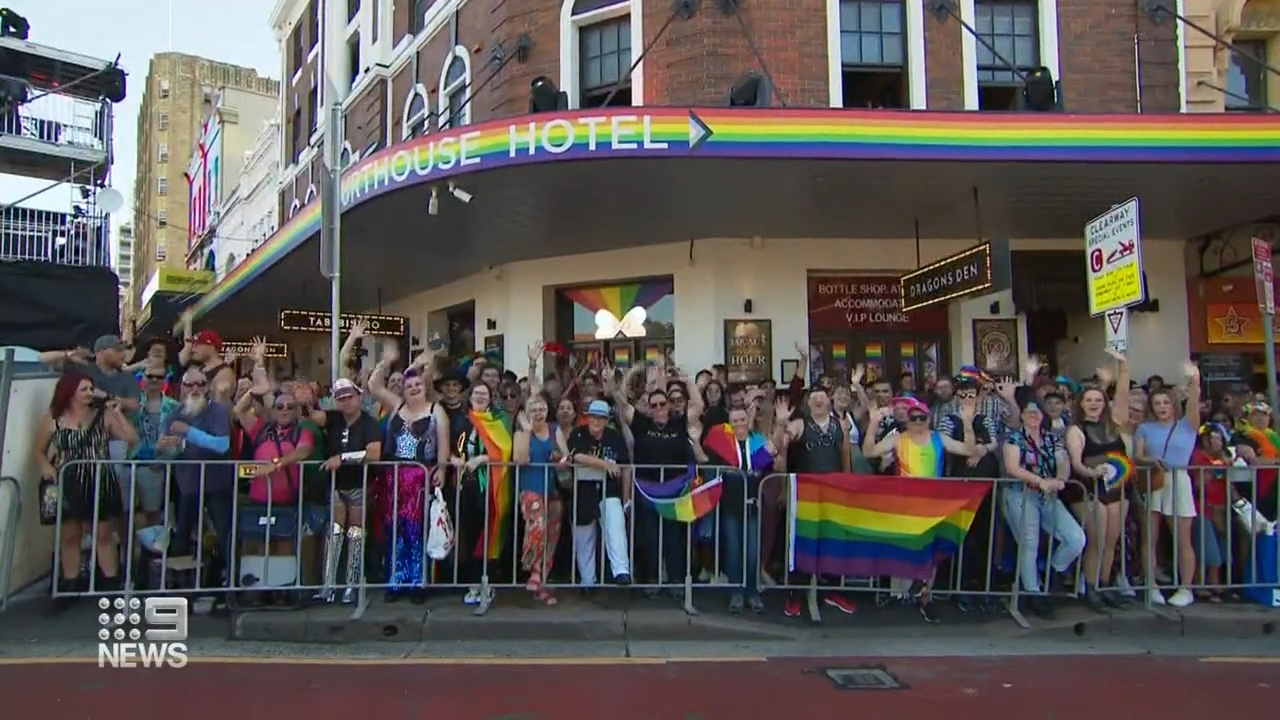
Revellers packed the streets to watch the 45th Mardi Gras Parade, which returned for the first time since the pandemic.

Celebrations kicked off around 6pm last night with a sea of rainbow flags, glitter, sequins and feathers taking over the streets of Sydney.

Although, the politicians weren't among those in the extravagant ensembles, with Albanese opting for a short-sleeve shirt and black jeans with trainers.

Police pleased with behaviour

This year's parade comes as Sydney hosts WorldPride 2023, the first time the event has been held in the southern hemisphere.

NSW Police Assistant Commissioner Anthony Cooke said the crowd was well-behaved, and police were pleased with the behaviour of majority of revellers. 

Party-goers line oxford street waiting in nervous anticipation for the parade to begin

However, one police officer suffered a suspected broken nose during an arrest in Oxford Street while a second officer suffered grazes and a black eye after being assaulted while travelling to Moore Park.

Police arrested four people for offences including the assault police.

"After delivering the world-class Parade through the Pandemic over the past two years, we are thrilled to see the community unite once more on Oxford Street," Sydney Mardi Gras chief executive Albert Kruger said.

"With over 200 floats representing all corners of our communities, this is the perfect celebration as the world descends on Sydney for the first WorldPride in the Southern Hemisphere and we commemorate the 45th anniversary of the first Sydney Mardi Gras."

Notably absent from the parade were NSW Premier Dominic Perrottet and Liberal Party leader Peter Dutton.

Parade goers prepare ahead of the Sydney Gay & Lesbian Mardi Gras Parade as part of Sydney WorldPride on February 25, 2023 in Sydney, Australia

While it was Albanese's 35th time marching in the parade, the historic moment wasn't a first on the world stage.

Canadian Prime Minister Justin Trudeau, and former New Zealand Prime Minister, Jacinda Ardern, have both walked in pride parades while in the top job.

Sign up here to receive our daily newsletters and breaking news alerts, sent straight to your inbox.

Why two little letters have come to signify so much for an Aussie town

NSW Northern Rivers local Kathryn McIntyre has a special pair of shoes. 

They might not look like much, just an old pair of sheepskin boots, but their significance can be explained with just two letters – "BF".

It's a shorthand reference everyone in the region immediately understands.

The boots are "before flood", saved by accident in the footwell of McIntyre's car as she frantically threw in blankets, pillows, electronics and passports belonging to her family of five.

READ MORE: Flood limbo pushes Lismore family to the brink
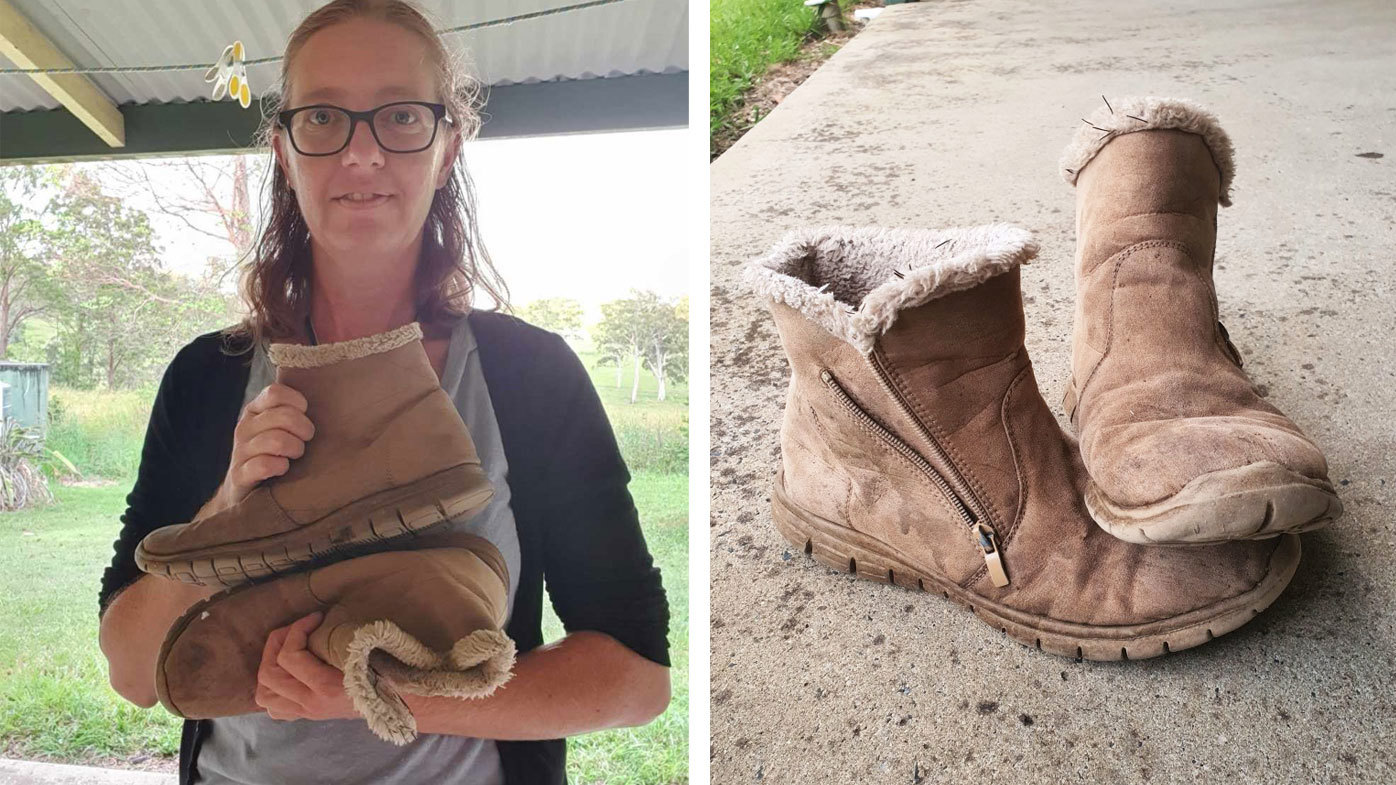
Kathryn McIntyre pictured with her 'BF' shoes.

As the floodwaters rose to the eaves on their rented home in Woodburn, south of Lismore, on February 28 last year, her humble shoes were unexpectedly vaulted into the hallowed ranks of her few remaining possessions.

"They're my BF shoes, so they're really special to me – I'm looking after them," McIntyre said with a laugh. 

Next week, the region will mark a year since the floodwaters rose to an unprecedented 14.4 metres, taking multiple lives, destroying roughly 5000 homes and causing billions of dollars worth of damage.

For those still living in the Northern Rivers and grappling with post-flood trauma, as well as the stress and heartache of trying to slowly rebuild their lives, everything is delineated by those two terms – BF and AF.

READ MORE: Battle lines drawn as Dutton goes on the attack over super
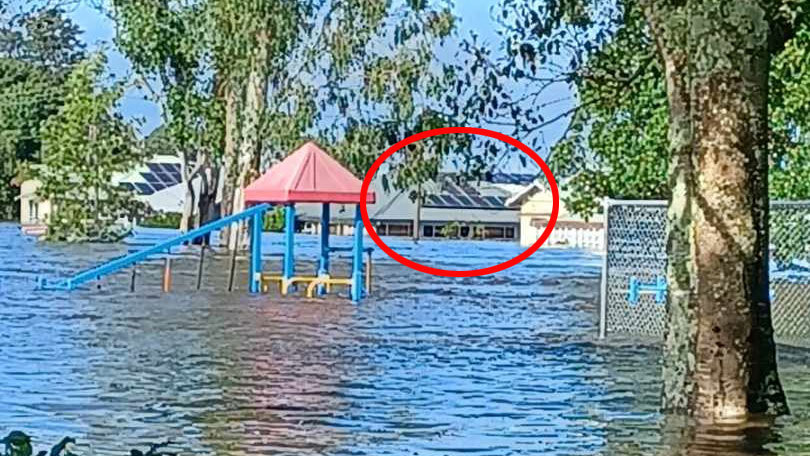
Kathryn McIntre's rental home in Woodburn, shown from her evacuation point at a school across the road.

"I used to love floods," McIntyre said. 

"I went to Richmond River High School. So, whenever we had a flood it just meant I didn't have to go to school."

Now the sound of rain falling on the roof is all it takes to ratchet up the anxiety levels.

Echoes of trauma

It's a familiar feeling of dread that many can attest to, including Lismore musician Jenna Breeze, whose home in the town's south was also destroyed in the floods.

"I think so many people have PTSD (post traumatic stress disorder). Just hearing the rain on the roof is incredibly triggering," she said.

"If it starts to torrential rain for more than an hour I get … almost like a panic attack. My anxiety goes through the roof." 
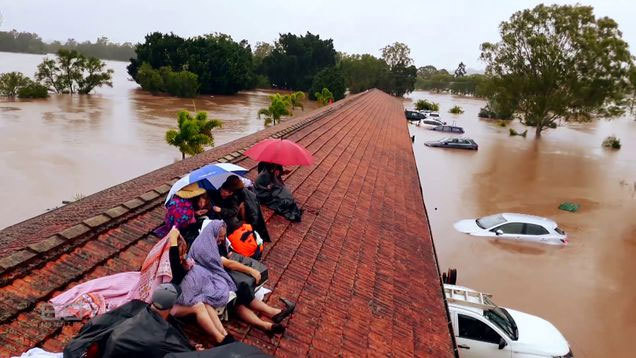
The sound of rain on the rooftops is still "deeply triggering" for some Lismore residents.

While Breeze and her daughter, now aged 6, managed to escape their home before the floodwaters started rising at a pace no-one – including the Bureau of Meteorology – foresaw, her husband had to be rescued in a tinny from the roof of their property.

"He stood for hours in the rain waiting to be rescued, he could feel the whole house swaying under his feet," Breeze said.

After the floodwaters receded, it felt and looked "like a warzone" in Lismore, Breeze says, and in a way it was, with army officers having to escort the family back to their home to see what little they could salvage.

Twelve months on from the floods, Breeze and her family are living in a caravan in their backyard.

Life in limbo

Immediately after the floods, the family moved to emergency accommodation in Casino, a half-hour drive from Lismore. 

In September, they jumped at the chance to move back to Lismore – where Breeze's daughter was attending school – with the NSW government's emergency At-Home Caravan Program.

The six-metre long caravan Breeze and her family have been living in for the past five months has a kitchen, toilet and shower. There is a double bed for Breeze and her husband, and a bunk bed for their daughter. 
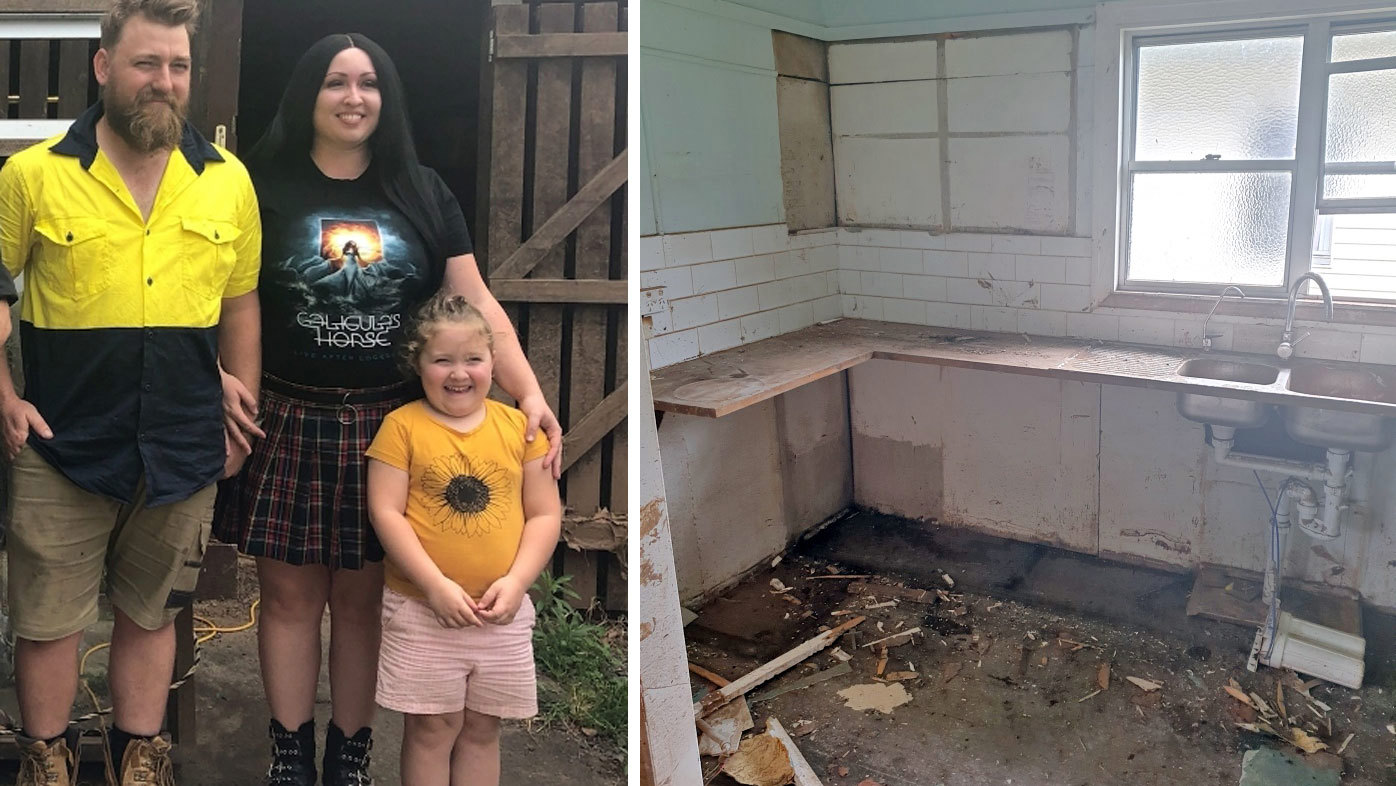
Jenna Breeze, pictured with her husband Shannon and their daughter. Their home (right) is still gutted and empty 12 months on from the floods.

"I'm grateful for the van, obviously. There's still other people who are living in sheds. I know of a family that's living in a garage, and they've got a six-month-old baby," Breeze said.

However, living in limbo in a tiny space was taking its toll, she said.

Like so many in the area, Breeze's home was not insured for flood, as they could not afford the exorbitant premiums.
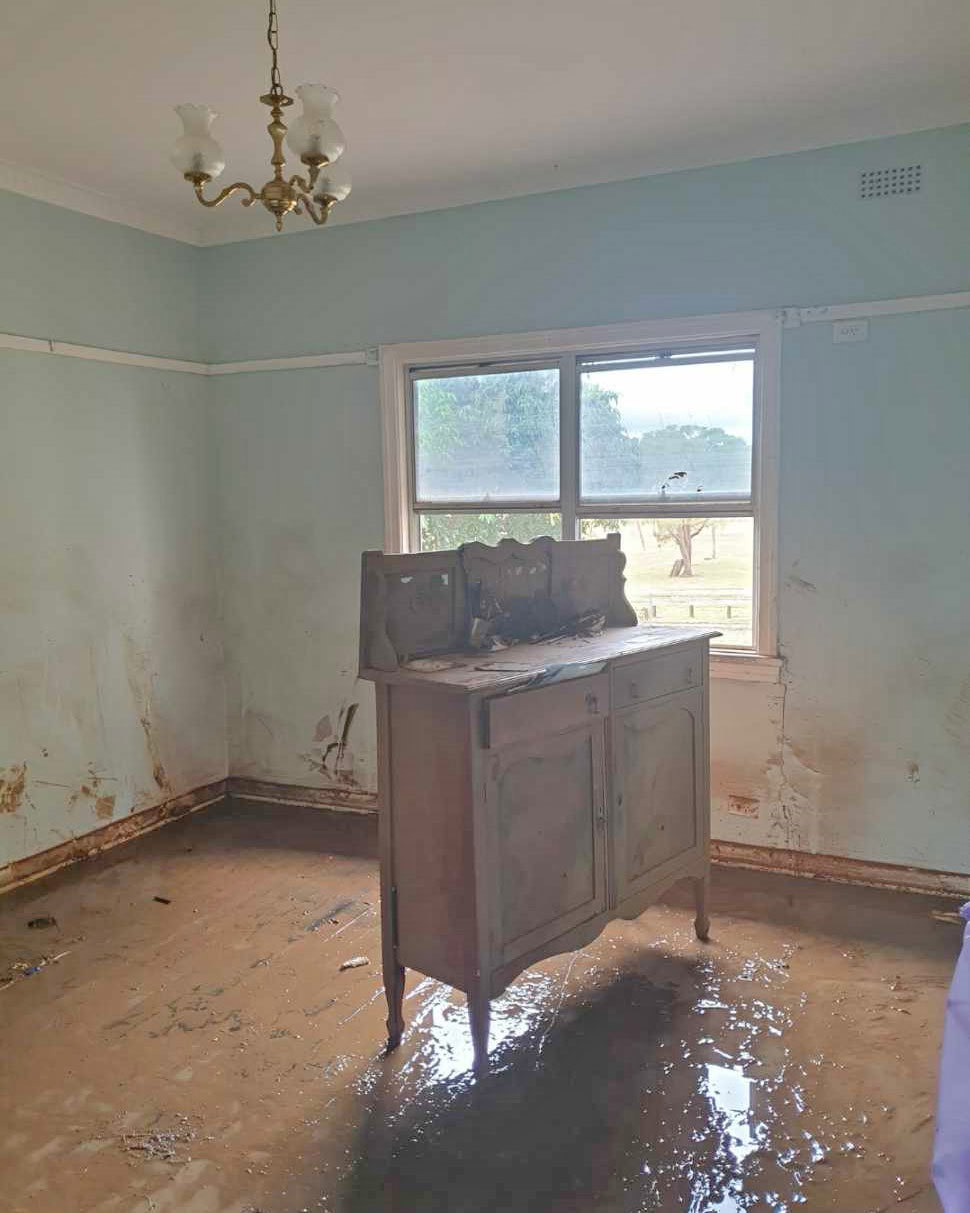
The water rose almost to the eaves of Jenna Breeze's two-storey home in South Lismore.

Breeze's family is one of more than 6000 households waiting to see what the government will offer them under a massive Resilient Homes Program to buy back houses and land or retrofit, repair and raise existing properties in flood-prone areas.

In the meantime, Breeze's gutted home sits empty.

"We have done nothing to our house other than strip it out," she said.

"There's no walls, we've put some cardboard up on one wall because there were pigeons that came in, but that's it – there's no bathroom or kitchen.

"We have heard nothing from the government," she said.

"I'm struggling. I don't know how much longer we can keep holding out – living in a van and having to face this every day – it's the not knowing that's the worst part."
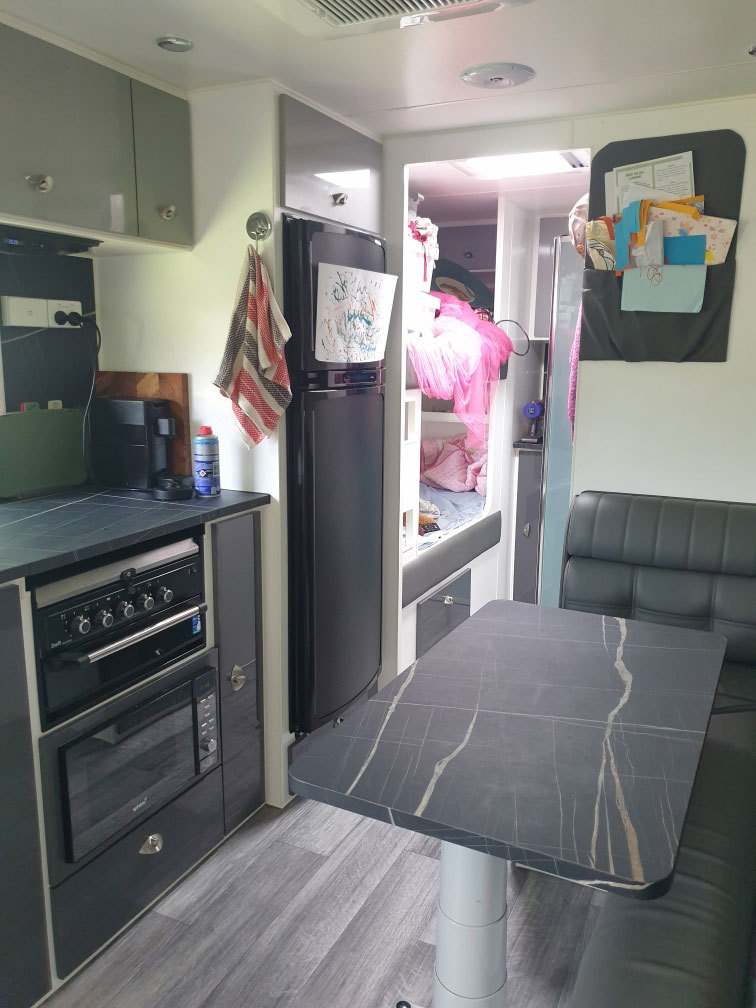
Jenna Breeze said she and her family were grateful for their caravan but longed for certainty about their future as they wait for news of the government's buyback scheme.

About $800 million in federal and state government funds have been committed to the first stage of the $1.5 billion Resilient Homes Fund.

A spokesperson for the Northern Rivers Reconstruction Corporation said homes in the highest flood risk areas were being prioritised.

"This early phase involves more than 130 homeowners with the program to ramp up across the region this month," a spokesperson for the corporation said in a statement.

Breeze said she understood the process was a slow one, but her family and others needed answers so they could plan their future.

"A year has passed and we have hardly moved an inch," she said.

"I just feel like shouting from the rooftops, 'We're here and and we're far from okay, even a year on'."

Mayor 'preaches patience'

Lismore Mayor Steve Krieg said he understood the frustration over the time it was taking to offer packages under the scheme.

"There's no question that housing is our biggest challenge, it has been post-disaster and still will be for many years to come," he said.

"It's frustrating and it's developing a bit of anger in the community.

"I agree it is taking a long time but we are literally writing a lot of these policies on the go. Queensland had a system in place because of their experience through the floods in Grantham in 2011. 

"This is the first time that New South Wales has tackled an issue like this and this is the first time in the country that we're looking at such a big relocation of a population.

"We're coming up to 12 months post flood, and I guess I'm preaching patience at the moment."
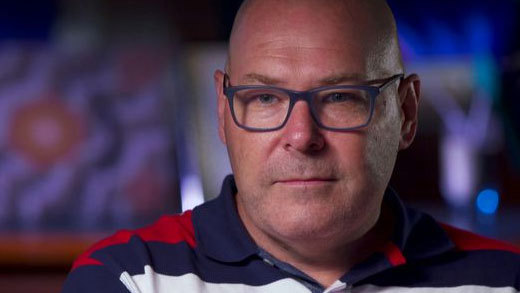
Lismore Mayor Steve Krieg said he could understand the frustration in the community over delays in the land buyback scheme.

Krieg said he understood about 1200-1500 houses in the municipality had been earmarked for relocation or buyback.

"They're really big numbers and they have to get it right to make sure the taxpayers' money's going where it needs to go," he said.

Despite being born and raised in Lismore, Breeze said she and her family will not hesitate to take the buyback if it's offered.

"It feels like there's just a big stain on the town now – of trauma," she said.

"It's so fresh in our memories – we remember that day. Living here is not the same as it used to be and I'd be happy to move away, out of this town, to be honest – and onto higher ground."

Looking at Lismore's long-term future, Krieg said the only feasible solution was to move residents living on the floodplains away from their homes.

"It's not a sustainable proposition to keep residents on the floodplains," he said. 

"It's a basic human right in a first-world country like Australia that you should feel safe in your home, and I think that I can speak for the majority of people that live down in South and North Lismore and other parts that got so badly damaged – like in the outlying villages of Coraki and Woodburn – that they don't feel safe in their homes. 

"I think we owe it to our residents to do everything that we can to get them off the floodplain."

The challenge would be finding land or homes for residents taking up the buyback packages to relocate to, he said.

"The reason people buy on the floodplain is the affordability factor, so finding a new home if people do accept a buy back will be hard for some."

Recovery still years away

Looking ahead, Lismore Council is still facing the gargantuan task of rebuilding $100 million worth of local infrastructure destroyed in the floods, a project which Krieg estimates could take more than five years.

"We've got 900 kilometres of damaged road network in our Lismore Shire alone," he said.

"We don't have a city hall, we don't have our library; all of these things that you just take for granted, we're still working out how and when we're going to rebuild those assets.

"We have just lived through a hot, dry summer with no town pool." 
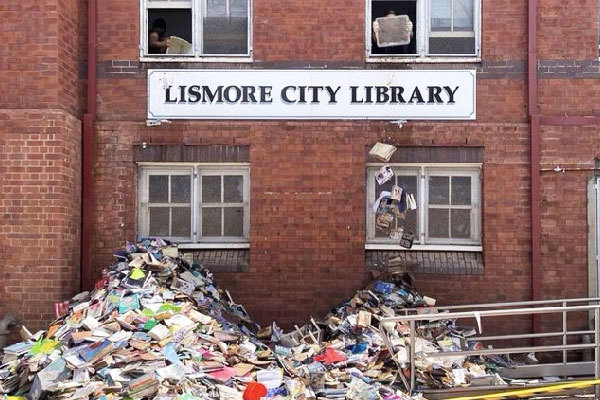
A photo of Lismore library where thousands of books were destroyed in the floods.

A recent council survey found 60 per cent of local businesses in operation before the floods are now back up and running.

But with no cinema, bowling alley or skate park, it's the lack of infrastructure for teenagers and young people in Lismore that has parents worried.

"I look at my little girl and she's just turned nine. There's nothing in town for children,"  Lismore local and social advocate Ella Buckland, who is a campaign manager for Australian Parents for Climate Action, said.

"What can I do with her? And when she's a teenager, what's she going to do? 

"Go into the abandoned, flood-ravaged old school that's never going to be repaired and smoke a bong? That's what I worry about. I don't want her growing up here now."

'The kids are struggling'

Buckland said the full impact of the floods on the children who lost their homes and saw their schools washed away was yet to be known.

"What I am hearing as someone who works in that industry, and then someone who lives in this town, is that the kids are really struggling, even 12 months on," Buckland said.

"Of the 25 kids at my daughter's school who lost their homes, 24 were rescued off roofs. 
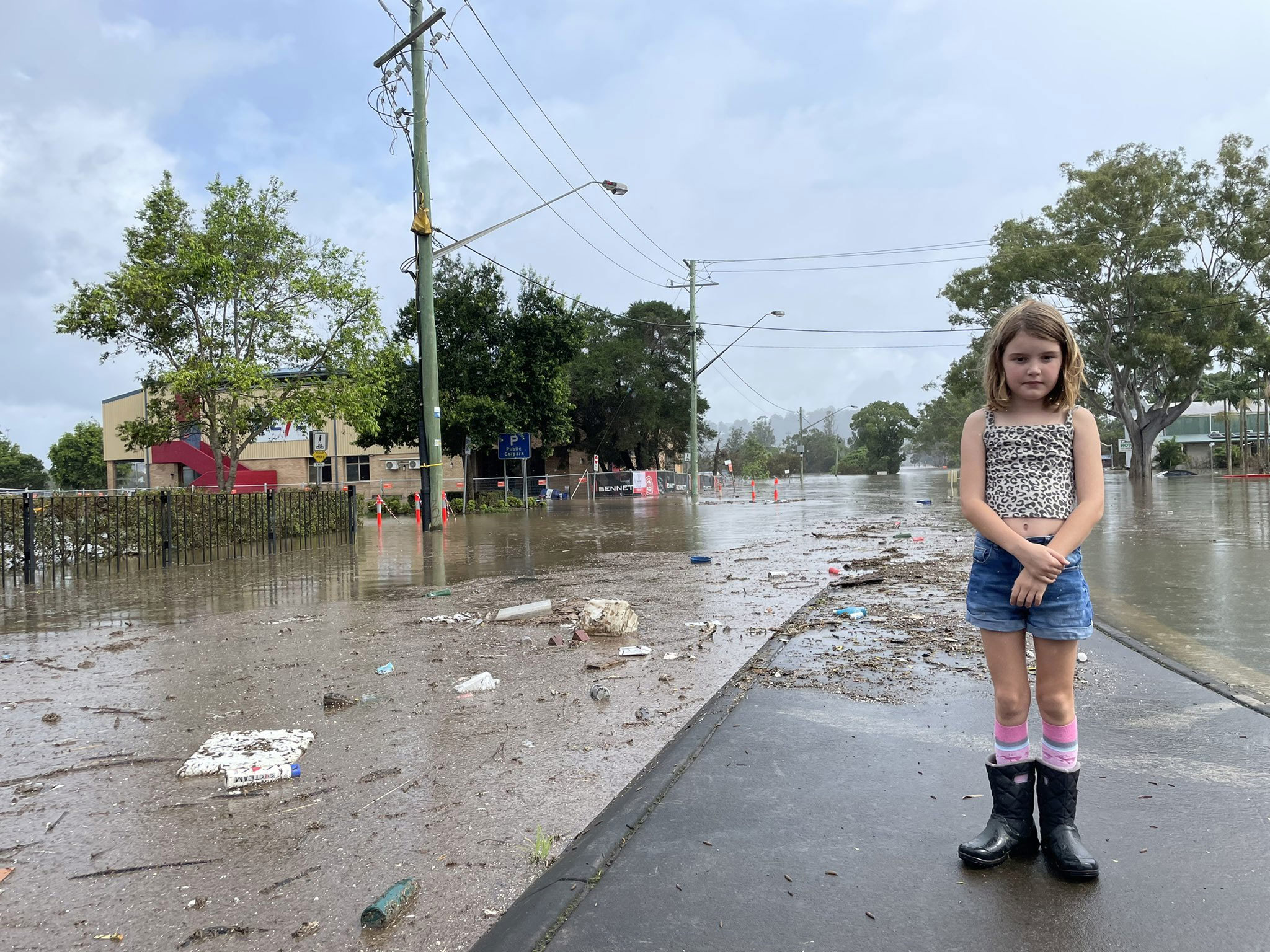
Ella Buckland's daughter stands on a flooded street in Lismore.

"It's been really hard for the children who have not had anywhere stable to live – you go from a tent to a caravan to a house with no walls."

While Buckland's home was badly damaged in the floods, she was insured and received a payout.

"We were lucky, but my neighbours on either side are struggling," she said. 

"The ones on the left are in a caravan in the driveway. The ones on the right are in the house with four kids, plus the parents – but they don't have any walls."

https://twitter.com/ellaNbuckland/status/1623167739677540354?ref_src=twsrc%5Etfw

Buckland's 81-year-old mother has Parkinson's. The roof of her home and its stumps were damaged in the flood and she is still waiting for her insurance claim to be sorted.

Even families such as her own, who were fortunate enough to be insured and have their claim accepted, soon found out there was no-one available to do the work, Buckland said.

"You can't get anyone to come and do anything on your house, we did it almost all ourselves," Buckland said.

"We put in the bathroom floor that washed away. We had to figure out what material to get, how to cut it, lay it, join it and waterproof it. 

"It's been exhausting."

Buckland said many in the community were now feeling worn out after going through "a whole range of emotions" in the last 12 months. 

"What I'm seeing now is that people have reached this level of clarity where they can see what's happened.

"They've gone through the worst of the initial trauma. 

"They've gone through the first stage … where there was adrenaline and moments of joy and hope with communities pulling together.

"Now, everyone is just exhausted and so over it and kind of thinking – is it ever going be the same again?"

Contact reporter Emily McPherson at em********@******om.au.
Woman crushed in alleged hit-run in Victoria

A woman has been rushed to hospital after she was crushed between her car and another, in an alleged hit-run in Melbourne's east.

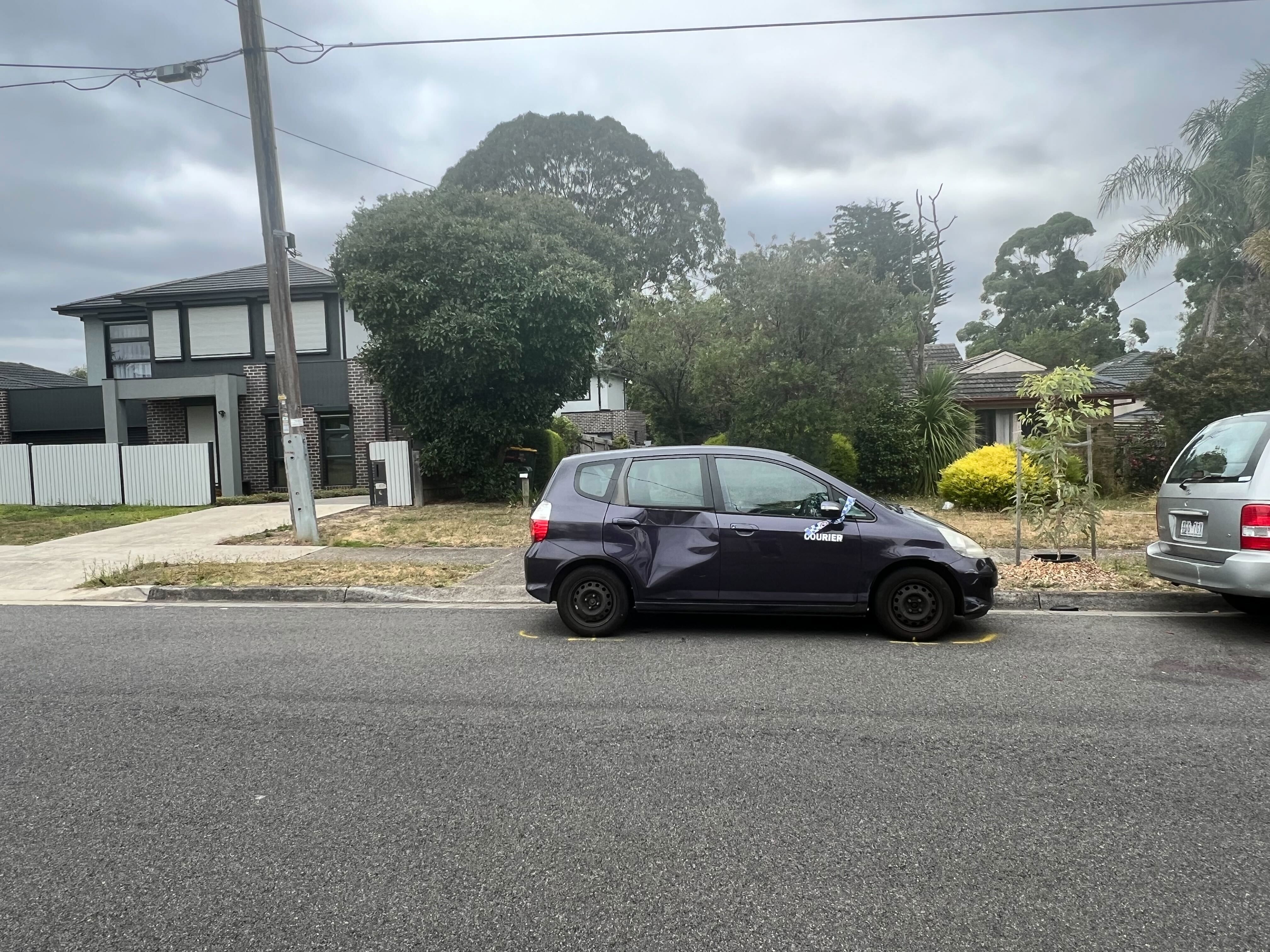
Police said the woman was getting items out of her parked car on Tunstall Road in Donvale about 10pm last night.

It is believed a red Mazda CX-5 drove passed the woman and crushed her between the Mazda and her car.

READ MORE: Behaviour of Mardi Gras attendees praised as Albanese makes history

The 50-year-old woman from Box Hill, was taken to hospital with lacerations to her head.

Police said the driver of the Mazda failed to stop at the scene.

Investigators believe the car involved will be missing a left side mirror and may have damage to front and rear lights.

Sign up here to receive our daily newsletters and breaking news alerts, sent straight to your inbox.

Qantas customers have over $800 million in unused flight credits

Over $800 million in Qantas flight credits, given out instead of refunds when COVID-19 forced all international and domestic travel to stop, have gone unused by customers the company says.

The credits were given to any customers who had cancelled flights or changed travel plans due to the pandemic, until the end of October 2021.

These are due to expire on December 31, 2023.

READ MORE: Man charged with woman's murder over alleged DV incident in Sydney

Over $800 million in covid credits have gone unused by Qantas customers, who were given flight credits instead of refunds when Covid-19 forced all international and domestic travel to stop

Consumer group Choice has asked the Australian Competition and Consumer Commission (ACCC) for a formal investigation into the matter.

However, the airline argues they've been reminding customers to use their points and it's down to them.

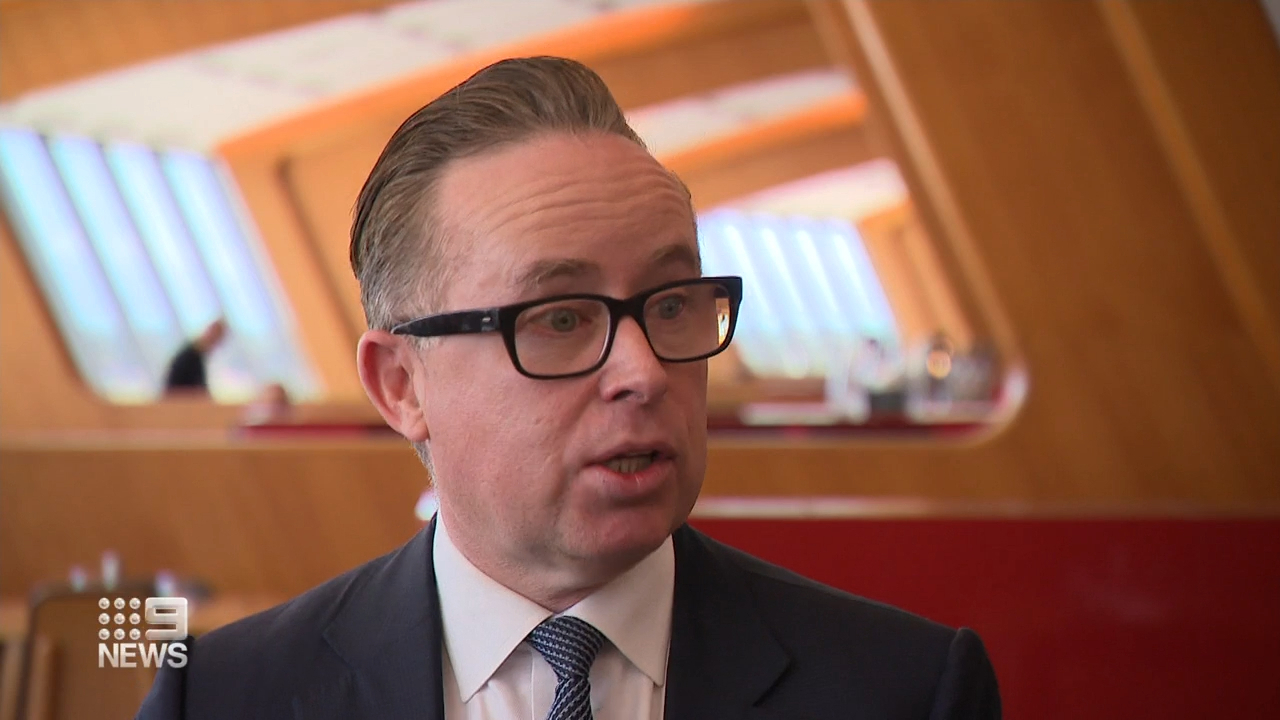
"We are sending an email every month to remind you you have a credit," Qantas CEO Alan Joyce said.

Qantas CEO Alan Joyce says they've been reminding customers to use their points

"We also are going to be launching a website like 'find your super' that says 'find your credit'."

Dean Long from the Australian Federation of Travel Agents says the issue is not customers forgetting to use their points.

"The increase in airfares is making it harder for Australians to use those credits he said."

"People have significantly less buying power with the same amount of money that they used before the pandemic"

"It would be a really great PR move for Qantas to be able to issue refunds"

This week, Qantas reported a $1.4 billion gross income for the first half of the financial year, following a $7 billion loss over the pandemic.

Sign up here to receive our daily newsletters and breaking news alerts, sent straight to your inbox.

Queensland boy to get transplant after tissue left at US airport

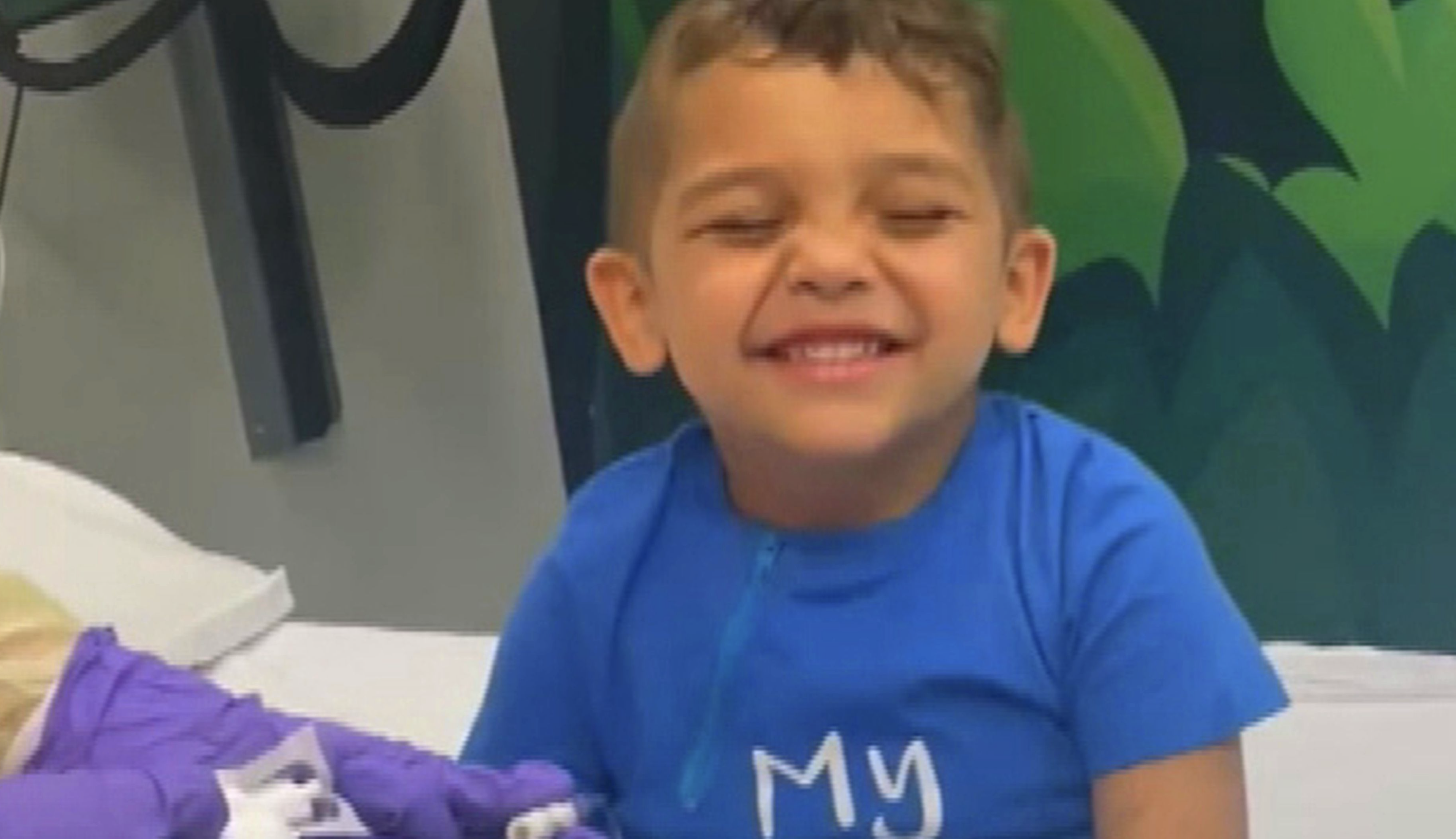
A six-year-old Queensland boy will get his critical bone marrow transplant after the tissue was left on the tarmac at a US airport.

Mateoh Eggleton had been waiting months for the marrow, leaving his mother Shalyn "really frustrated" as she tried to get the bottom of how such an unfathomable mistake could happen. 

The cells have now arrived in Brisbane after his mother fought to get Mateoh's lifesaving treatment to Australian shores.

READ MORE: Soft plastics recycling facilities inundated after REDcycle collapse

A sick Queensland boy will get a critical transplant after it was stuck at a US airport.

The marrow has been tested and is deemed viable meaning the transplant for Mateoh has been scheduled for early March.

Mateoh suffers from chronic granulomatous disease, a genetic disorder which means his white blood cells are unable to fight off certain types of infections.

He has an additional syndrome that causes his red blood cells to attack his body.

READ MORE: Fire crews investigate what caused massive Sydney petrol station fire

This week Shalyn Eggleton questioned how the critical medical tissue could be left behind at an airport.

"He's fought three and a half years…and for someone to be so neglectful and just naive when it comes to such a thing like this.

"Like, this is what he's been waiting for and someone's just left it behind," Eggleton said.

READ MORE: The stories behind the most interesting mugshots of the 1920s Sydney underworld

She said they had trialled nine different treatments throughout the last 18 months.

"We were told at the end of last year I have to make the decision whether to do the transplant or not, knowing that it's our last option.

"And looking how well he is (there was) no way I could stop treatment.

Shalyn said Mateoh is still on chemotherapy to "keep him going" while they wait for the transplant.

Sign up here to receive our daily newsletters and breaking news alerts, sent straight to your inbox.

Queensland introduces pill testing at music festivals

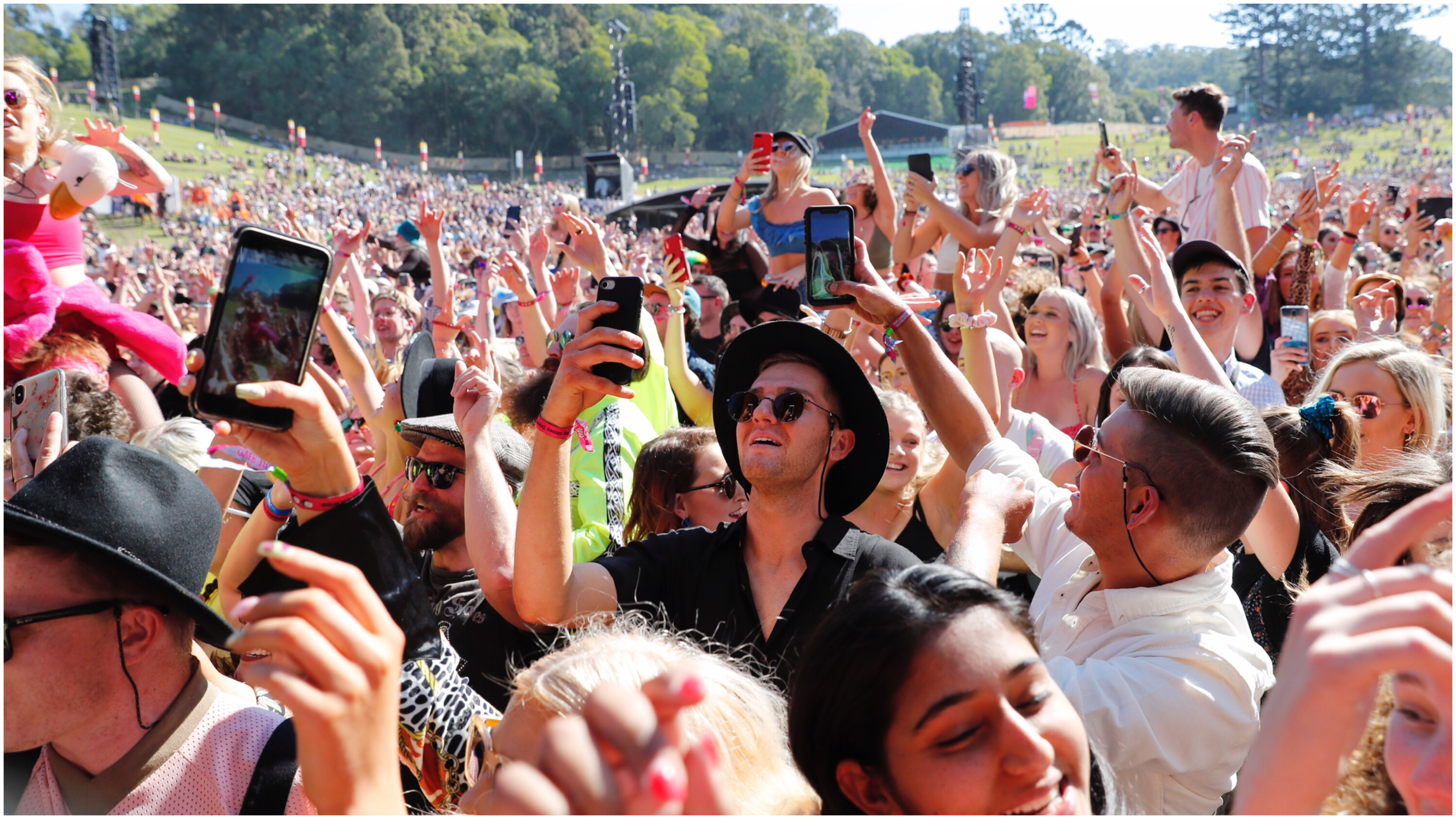
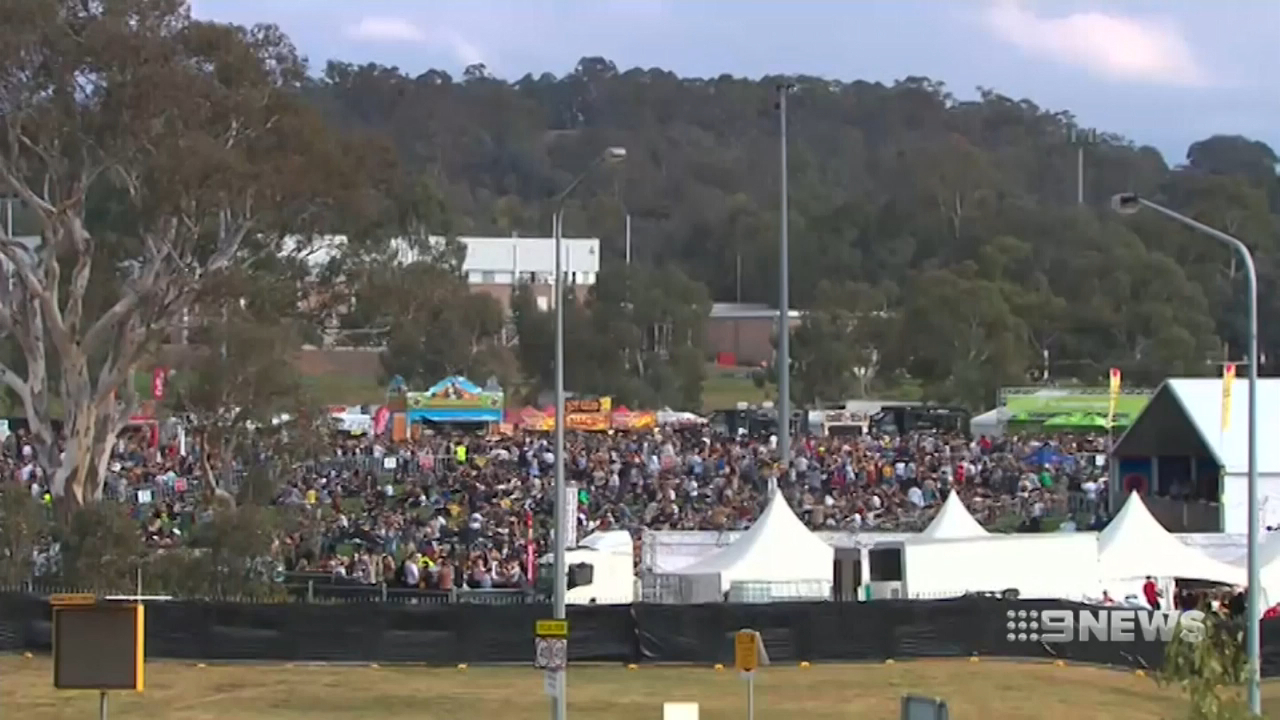
Queensland will become the first Australian state to introduce pill testing at music festivals in an effort to reduce the risk of taking drugs and change user behaviour.

The services will either be at fixed or mobile sites in Brisbane to chemically test illicit drugs to check for the presence of potentially dangerous substances and chemical compounds.

The Australian Capital Territory ran mobile sites in 2018 and 2019 then opened up the country's first fixed site late last year, but no state has followed its lead, with Victoria and New South Wales refusing calls, including from some coroners, to introduce pill testing. 

READ MORE: What Australia's pill testing service found in its first month

The coroner in charge of the music festival drug deaths is at Splendour in the Grass this weekend to oversee a pill-testing trial.

The Queensland government will develop protocols based on Canberra's trials and fixed site.

Queensland Health Minister Yvette D'Ath said the move was about harm minimisation.

"We don't want people ending up in our emergency departments or worse losing their life," D'Ath said.

READ MORE: Soft plastics recycling facilities inundated after REDcycle collapse

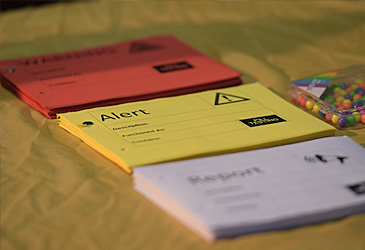
Pill testing labels (AAP)

"Pill testing services will inform people what chemical substances are in their drugs.

"We know people make better decisions when they are equipped with unbiased information."

She said testing was more likely to lead a person to dispose of their substances, decrease their intake, or tell their peers or seek help.

"The other benefit to pill testing is it provides critical information to law enforcement and health services about high-risk substances in the community or drug trends."

READ MORE: Queensland boy to get transplant after critical bone marrow left at US airport

pill testing trial results prompt calls for expansion

The testing will not take away from police powers related to drug possession, supply and trafficking.

Queensland Network of Alcohol and other Drug Agencies CEO Rebecca Lang said it was an effective way to reduce the potential for drug-related harm.

"Drug checking services have been available in Europe for over 20 years and have contributed to significant reductions in drug-related harms, particularly harms related to adulterated drug supply or high purity drugs," Lang said.

READ MORE: The stories behind the most interesting mugshots of the 1920s Sydney underworld

"Drug checking services have been proven to engage people who use drugs who may never have spoken with a health professional about their drug use before and provide an opportunity to provide a brief intervention that can protect the health and wellbeing of people who access the service."

The move is backed by evidence-based research and has the support of key stakeholders and government agencies.

Sign up here to receive our daily newsletters and breaking news alerts, sent straight to your inbox.