Tag Archives: oceania

Aussies choosing between meds and food amid cost of living crisis

Exclusive: The extent of the cost-of-living crisis means a growing number of Australians are faced with an impossible choice between essential items like food or fuel, according to a 9news.com.au reader survey.

The budget pressures are showing no sign of slowing as inflation hit 7.8 per cent which filters down to the everyday Australian who is forced to stretch their dollars to new levels.

9news.com.au readers also told us that they were having to miss medications and feared they would not be able to meet mortgage payments.

Of the respondents, 55 per cent also said they were very concerned about being able to pay their bills over the next six months.

We asked our 9news.com.au audience what their biggest cost of living concerns are as numerous pressures bear down on budgets.

Here is what they said.

Forgoing healthcare and choosing between food and medication

Maria from Toowoomba in Queensland says she is unable to afford the health care she needs and is concerned this won't just impact her budget but her lifespan.

"As prices go up, I will be able to afford even less care and my ability to eat a healthy diet and look after myself that way will be affected even more," she told 9news.com.au.

"My health will only worsen, leaving me even less able to look after myself. It's a downward spiral and I really fear for my future.

"I believe this will shorten my life."

Maria has given up going to dental appointments, physiotherapy, visiting friends and has put caps on the number of cups of tea a day she can have due to the price increases.

Similarly, Karlene from Homebush in NSW is making the impossible choice between healthcare and essential items like food.

"I have to decide between buying essential items and medication," she said.

READ MORE: Business owner gives workers 20 per cent pay rise to help them with the rising cost of living

She has been forced to give up most of her medical needs due to a lack of money in the budget during this cost of living crisis.

Doctor and healthcare appointments have taken the back burner for Australian households due to the costs becoming unmanageable and not making the cut in the budget.

"I'm not seeing my doctor as often because it costs $55 out of pocket for a 15-minute appointment," Roland from Melbourne said.

"I have forgone urgent dental work and doctors appointments," Nicole from Brisbane said.

It was a common thread in the responses where the 9news.com.au audience is skipping everything from general practitioners to dentists and other health specialists due to the price.

Groceries: Cans and frozen to meet the budget

Nerida from Nowra in NSW is worried she'll be unable to feed and clothe her son as inflation bites the weekly budget.

"We have skipped things like birthday cakes, Christmas lunch was cancelled, my son is missing out on school excursions," she said.

In her shopping trolley when it once may have been fresh foods, she now only buys canned, store brands and frozen fruit and vegetables where possible amid shortages.

"We are eating less proteins due to them being out of budget," Nerida said.

READ MORE: Best and worst energy providers in Australia revealed

It comes as Woolworths and Coles both recently revealed their everyday grocery prices have risen by more than 7 per cent in the last six months – and these price rise pressures are evident in the 9news.com.au audience responses.

What does a 7 per cent increase look like for a loaf of bread? Well if it started at $3 it would rise to $3.21.

It might not seem like much but the dollars add up over time.

Deb from Brisbane said she has no money left in the kitty after paying bills, food, rates and her mortgage so her shopping trolley contents have changed as a result.

"The constant increases in interest rates on mortgage loans in making it almost impossible to survive," she said.

Rentals and mortgages out of reach

The central bank has lifted interest rates nine consecutive times in an attempt to control growing inflation with the cash rate now sitting at 3.35 per cent.

But in dollar terms for a mortgage holder, this can mean thousands of dollars more in a year.

READ MORE: 'Full effect' of interest rate rises yet to be seen, RBA boss warns

For Keira from Heathcote in NSW her mortgage has increased by $1000 a month.

"We used to be able to take the kids out for a treat, now we spend every weekend at home because we are living pay cheque to pay cheque," she said.

"I am juggling money from our home loan to buy basic necessities and then scheduling my pay to pay our home loan back.

"All our money is going on our mortgage, insurances and bills, lots of bills!"

READ MORE: Is Australia headed for a recession in 2023? Possibly – as interest rates continue rising

It's not just mortgage holders either as renters are slugged with increases in the hundreds of dollars.

Ryan from Wolli Creek in NSW hopes to one day buy a home, but the rental increases are dipping into this dream.

"I can't save money for a deposit," he said after being slugged with a $200 per week increase.

Note: These reader polls are not scientific and reflect the opinion only of visitors who have chosen to participate.

Sign up here to receive our daily newsletters and breaking news alerts, sent straight to your inbox.

One year on, Ukrainians lament 'broken lives' but hope for freedom

"The day broke our lives … destroyed our plans and dreams."

Ukrainian refugee Antonina Tkachuck was among millions of people from her country plunged into a desperate fight for survival and forced to rebuild her life when Russia invaded Ukraine on February 24, 2022.

She and her daughter Iryna later found sanctuary in Australia, and now live in Sydney.

READ MORE: Biden issues a rallying cry: 'Ukraine will never be a victory for Russia'

Antonina, speaking through the Ukraine Council of New South Wales, told 9news.com.au, about her memories of the invasion and how the conflict impacted her family.

'How can this happen?'

Antonina who lived in the city of Berezan, about 90km east of Kyiv, remembers the lives of her family as "measured, calm and happy" before the invasion.

"Each of us had our own home, favourite job, plans and dreams," she said.

"I worked as an adviser to mayor of Berezan City Council on education, culture and religion.

"But that day broke our lives … destroyed our plans and dreams.

"Russia's attack was not just a surprise, it was a shock and despair."

READ MORE: Russia has committed crimes against humanity in Ukraine, US declares

The invasion, described as a "special military operation" by the country's President Vladimir Putin, had been feared for weeks in early 2022, but still took Ukrainians and much of the world by surprise.

"On February 24 at 5am, we were woken up by explosions at the Boryspil airport," Antonina said.

"There was no panic but there was fear, tears and shaking hands … a sense of how can this happen in the 21st century?"

She said most Ukrainians did not believe Russia would attack the country although she, like many others, had felt the pain of the Kremlin's occupation of the Donbas region in eastern Ukraine in 2014.

"Our soldiers died from the weapons of the occupiers," Antonina said.

"I knew mothers who buried their sons.

"I saw the pain of losing a loved one … the pain is unbearable."

The Russian attacks also cruelled what should have been a period of family celebrations, after Iryna married her fiance Grigoriy on February 22, 2022.

"Russia took a year of a happy family life from her. It trampled her smile … separated her from her lover for a whole year," Antonina said.

Instead of married life, Grigoriy joined Ukraine's war effort with the country's national guard, while Antonina's son Igor serves in the Ukrainian armed forces.

READ MORE: Death rate of Russian soldiers 'highest since first week of Ukraine invasion'

'Danger loomed more and more'

Antonina recalled the war creeping closer to her family during late February 2022.

When the Russian army failed to take Kyiv, it began an offensive from the north, and civilians found themselves the target of missile strikes.

"A rocket landed about 10km away," she said.

"At the moment of impact, the earth trembled and froze.

"The danger loomed more and more every day."

During the air strikes, she and eight others, including a heavily pregnant relative, huddled in a corridor, following government regulations about keeping two walls between themselves and the street for protection.

But in early March 2022, amid rising danger, the family decided to drive 500km west to the relative safety of Antonina's mother's home near the city of Zbarazh.

READ MORE: Putin gambling on new offensive to save hold on power

"Everyone had only a backpack with documents, their favourite animals in their arms," Antonina said.

"We left nearly everything – no apartments, no cars … nothing was a pity.

"I just wanted to live."

Despite finding a measure of personal safety after the family left Berezan, danger loomed constantly.

Antonina's son Igor was stationed at a Ukrainian military training centre in the Lviv region in early March 2022 when it was hit by a Russian missile strike, leaving 37 soldiers dead.

"My son did not contact me all day, I called all authorities … I don't understand how I survived that day," she recalled.

"Finally he called and said: 'Mum I'm alive'."

Safe haven

Later in 2022, Antonina and Iryna arrived in Sydney, joining about 4000 Ukrainians who have made Australia their new home.

"We arrived with two small backpacks. Our only relatives abroad are my sister's family, who live here in Sydney.

"We did not consider other countries. There was neither time nor energy.

"We were looking for safety."

She is grateful for the sanctuary offered by Australians but insists she is determined to one day return to a Ukraine liberated from Russian threats.

"This is a country that welcomed thousands of Ukrainians with comprehensive support and assistance," she said.

"Support came from everywhere, from the government, the embassy, the Ukrainian community, Settlement Services International (community group), youth organisations, churches, activists, Australian philanthropists."

But while she is safe in Australia, her yearning for a return to a free Ukraine burns stronger than ever.

"We are Ukrainians," Antonina said.

"We are strong in spirit … we clearly know that we are a freedom-loving people, so Russian shackles are not for us."

The Australian Ukrainian community and supporters of Ukraine will today be holding events to commemorate the one-year anniversary of the war.

Sign up here to receive our daily newsletters and breaking news alerts, sent straight to your inbox.

'Single biggest leap': PM hits back at AUKUS critics

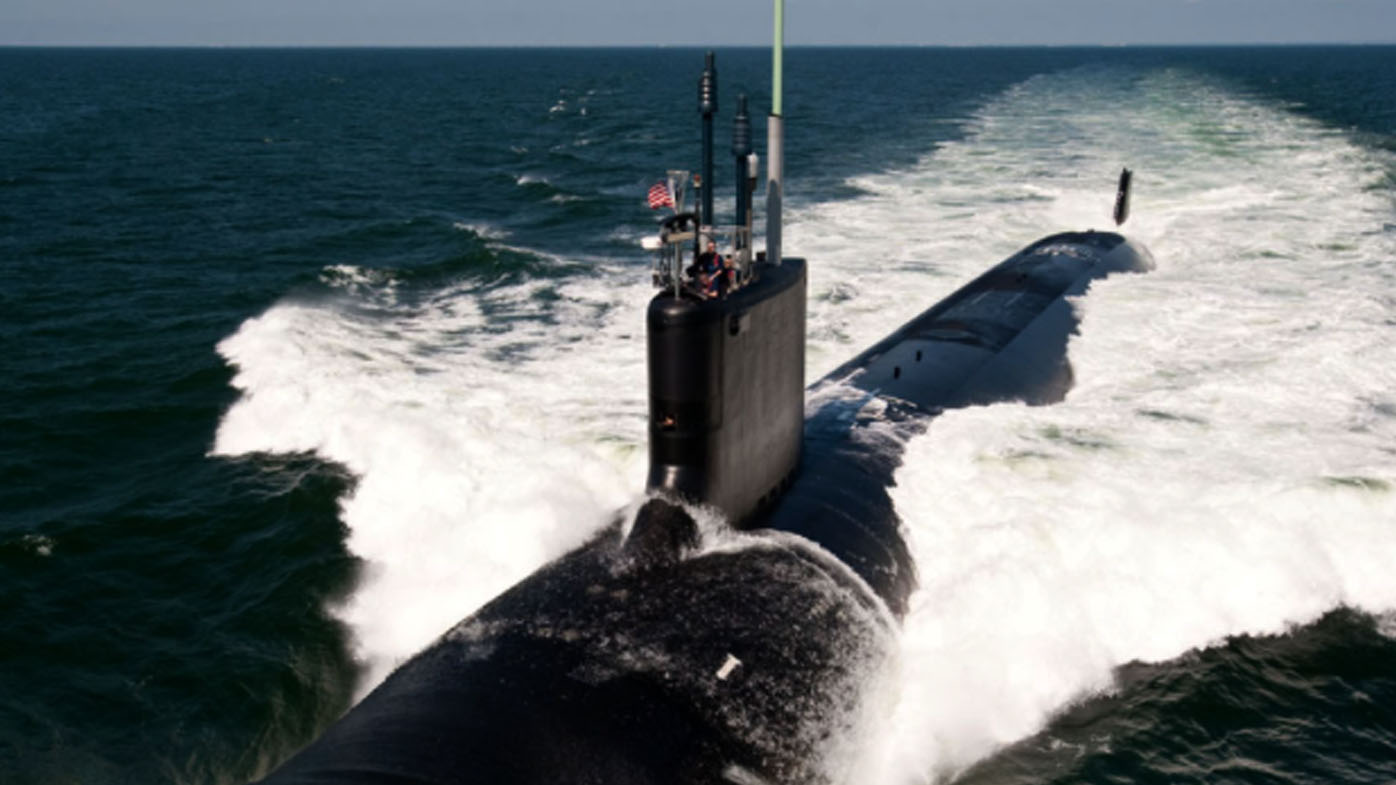
Prime Minister Anthony Albanese has today reaffirmed the federal government's commitment to the AUKUS agreement on nuclear-powered submarines, describing it as "the single biggest leap in our defence capability".

Under the military pact with the US and Britain, the Royal Australian Navy will acquire eight nuclear-powered submarines at an estimated cost of $100 billion.

Albanese told the National Press Club in Canberra today that AUKUS is crucial for Australia's security amid a period of uncertainty in the Asia Pacific region.

READ MORE: ASIO boss details unprecedented espionage danger

"AUKUS is about much more than nuclear submarines, or even technological interoperability. AUKUS is about the future.

"It further formalises the common values and the shared interests that our three nations have in preserving peace and upholding the rules and institutions that secure our region and our world."

Albanese also pledged to encourage more local defence manufacturing capabilities to avoid dependence on overseas allies for advanced military equipment.

"Australia has long understood that partnerships and alliances are key to our security. And that's still true today," he said.

"But we recognise that pursuing and defending our sovereign interests and contributing to regional stability requires us to build our sovereign defence capability, including advanced manufacturing."

The PM linked the federal government's reengagement with China and Australia's Pacific neighbours with national security policy.

READ MORE: Australian armed forces set for overhaul after defence review

"Our government has worked hard to stabilise our relationship with China, our major trading partner, recognising the value of direct dialogue, seeking to cooperate where we can, while being prepared to disagree where we must. And always acting in the national interest and in support of regional stability," he said.

"In the best tradition of outward looking engaged Labor governments, we're seeking to build security in the Indo-Pacific – not from it."

Albanese also stressed addressing the challenge of climate change was crucial in improving ties with Australia's neighbours through forums such as APEC, ASEAN and the East Asia Summit.

"The entry ticket, the threshold credibility test for so many of these conversations is our commitment to act on climate change," he said.

"Upgrading our national emissions reduction target to 43 per cent by 2030 sent a message to the world about Australia returning to the ranks of responsible nations."

Australia expected to sign a security agreement with Papua New Guinea and ratify a new security pact with Vanuatu, Albanese said.

In recent years Vanuatu and Fiji have become host to vast Chinese infrastructure projects that many locals believe are not only unaffordable but unnecessary. Picture: 60 Minutes

The PM's speech today came ahead of next month's announcement about the type of nuclear-propelled submarine technology Australia will obtain.

He is expected to visit Washington for a possible joint press conference with US President Joe Biden and UK Prime Minister Rishi Sunak.

The former Coalition government launched AUKUS in September 2021.

The AUKUS alliance drew criticism from former Labor prime minister Paul Keating, who said Australia would give up its control of the nation's armed forces under the deal.

Early this year, former Coalition PM Malcolm Turnbull said an Australian nuclear-powered submarine fleet could only operate and be maintained with the help of US experts.

The federal government is still examining the Defence Strategic Review, which it was handed last week.

An unclassified version will be released publicly before the May budget, Albanese will announce today.

Sign up here to receive our daily newsletters and breaking news alerts, sent straight to your inbox.
Warning after man reels huge 2.5m shark at popular swimming spot

A Queensland fisherman has issued a warning to families to "watch your dogs and kids in the water" after he reeled in a huge, two metre bull shark at a popular Sunshine Coast beach.

Peter Hassett posted to Instagram showing off the "big girl" he caught – which measured in at 2.5 metres in total – while he was fishing along the Noosa River earlier in the week.

Hassett told Brisbane's 4BC that he hooked the shark on the western side of Noosa Sound, about 150 metres from the rock wall.

READ MORE: Hundreds without power as Sydney braces for more rain

The waterway is a popular swimming spot among locals and tourists alike, especially for children, who are known to jump from the pier.

"We were in a plastic little boat, it was only about three metres long… we had already lost a heap of these fish to these sharks," he said.

"So we were really, really curious. A lot of them had been bitten in half.

"We thought we'd have a look to see how big these sharks were.

"Just unbelievable… it was tug-of-war."

READ MORE: Fears grow over North Korea's growing nuclear arsenal

Calm waters

Hassett said the shark was dragged to shore where they snapped a photo and unhooked the beast before letting it go.

"I would say they're in plague proportion at the moment," Hassett said.

https://omny.fm/shows/4bc-breakfast-with-neil-breen/noosa-fisherman-reels-in-huge-bull-shark-warns-swi/embed

"Watch your dogs and kids in the water, these guys don't discriminate.

"She swam off into the night after a good cuddle."

Sign up here to receive our daily newsletters and breaking news alerts, sent straight to your inbox.

'Fastest man on water' dies aged 83

Australian powerboating great and world record holder Ken Warby has died aged 83 after a recent health decline.

Warby is most noted for being the "fastest man on water" after he designed and built his boat Spirit of Australia in his backyard, and set the world speed record of 463km/h on Blowering Dam in southern NSW, in 1977.

He returned the next year to set another record, reaching 511km/h.

READ MORE: Hundreds without power as Sydney braces for more rain

That 1978 effort is still the Unlimited World Water Speed Record as of today.

Warby remains the only person to ever design, build, and drive a boat to an unlimited water speed record, and was the first Australian to hold an unlimited speed record.

He was made a Member of the Order of the British Empire (MBE) in 1978 for his service to powerboating, and was one of the first 200 inductees into the Sport Australia Hall of Fame.

READ MORE: Fears grow over North Korea's growing nuclear arsenal

Warby also raced in dragsters, cars and trucks on tracks in Australia and the US.

Most recently, he was building a new boat, Spirit of Australia II, alongside his son David.

"Ken will be greatly missed by his family and Team Warby Motorsport," a representative said in a statement.

"His knowledge and Australian sense of humour can never be replaced."

Sign up here to receive our daily newsletters and breaking news alerts, sent straight to your inbox.

'We need to brace ourselves' for horror bushfire season

A former fire chief has issued a stark warning about the upcoming bushfire season, saying everything could "explode" after three years of wet weather.

Australia has been hit by three consecutive La Nina systems, which prompt extra rain and cool weather, and is now cycling into a hotter, drier El Nino.

Former NSW Fire and Rescue commissioner Greg Mullins said history showed that after three years of wet weather, "everything just explodes".

READ MORE: Hundreds without power as Sydney braces for more rain

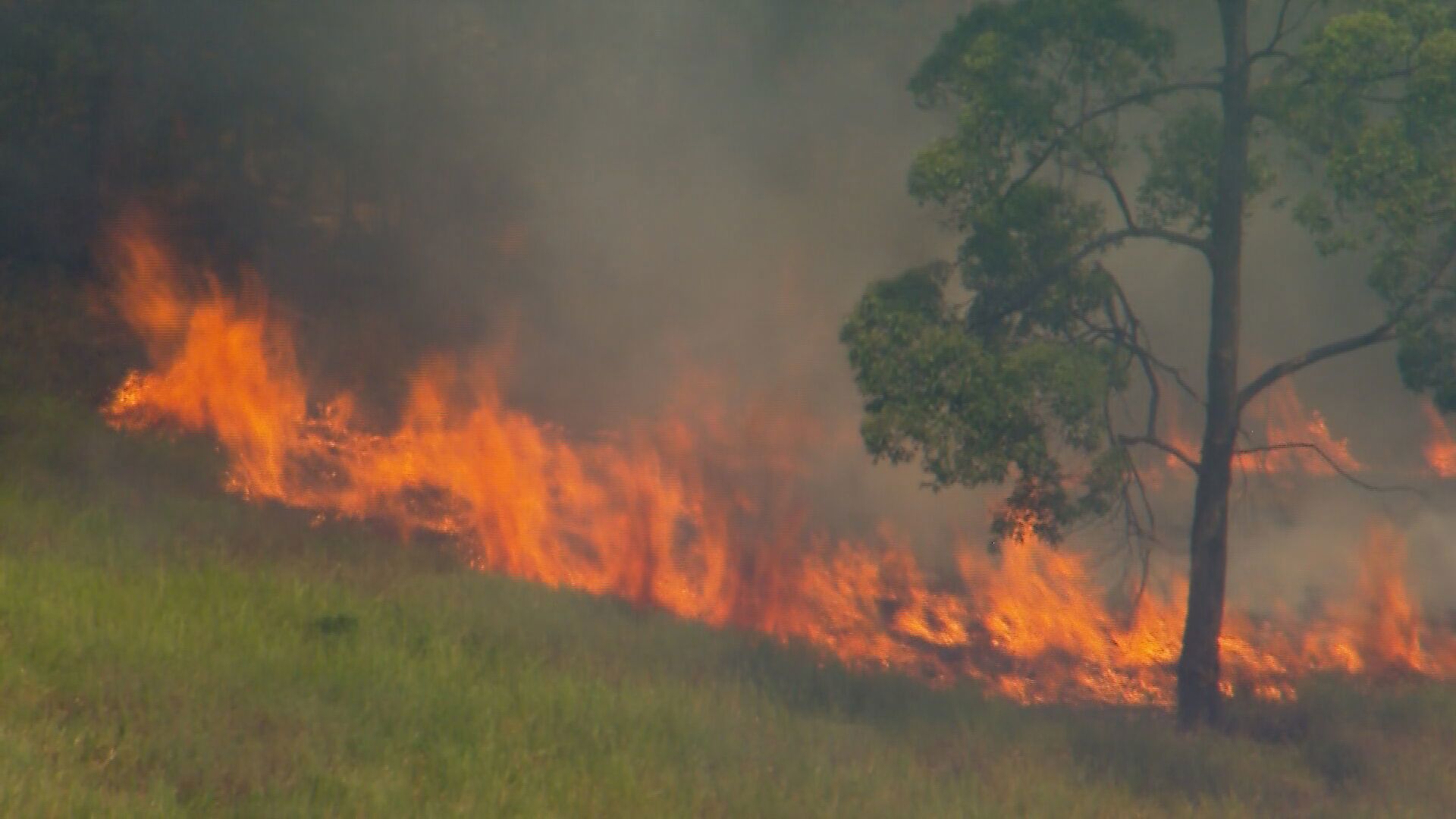
Bushfire burning in Queensland.

"The growth – grass, particularly grass west of the Great Dividing Range, but also forest," he told Today.

"Then it swings back to hot and dry, and we always have fires.

"There is no reason that it won't happen again. There is more growth than in previous years."

READ MORE: Fears grow over North Korea's growing nuclear arsenal

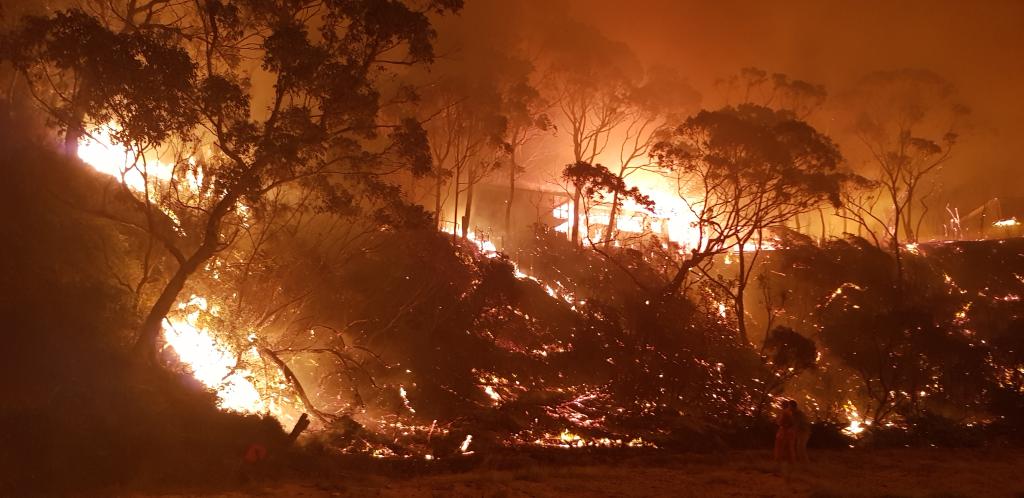
NSW 2019-20 Bushfire Inquiry Images

Mullins said in 1974-1975, following a series of La Nina events, 117 million hectares – or 15 per cent of the country – was burnt, but there hadn't been much wind.

"(If) we get weather like 2019, there is a real worry there," he said.

Mullins said back-burning and burn-offs to reduce the fuel load was important – but it had been too wet to carry out so far.

"We are way behind with our hazard reduction programs, and it is no fault of anybody," he said.

READ MORE: Rent surge warning for Australians

"Everything has been ready to do it, but we just can't."

He said there would be "a bit of a window" for burn-offs, which would be concentrated around properties and towns.

"We need to brace ourselves," Mullins said.

"People need to listen to the messaging under the new fire rating system, and tell the government they want more action on climate change."

READ MORE: Too late to leave as out-of-control fire burns north-east of Melbourne

Sign up here to receive our daily newsletters and breaking news alerts, sent straight to your inbox.

Boss gives workers 20 per cent pay rise to aid with cost of living

While many are scrambling to cut back their expenses amid the rising cost-of-living, Avi Efrat has decided to significantly increase his.

He has given all his 45 workers a 20 per cent pay rise and has introduced a new incentive scheme, offering them the chance to earn regular cash bonuses.

The 41-year-old, who owns and runs a picture framing business, said he felt he was in a position to help his workers compete with rising financial pressure by working "smarter".

READ MORE: 'Happening all over Sydney': Renter's fury after 'shocking' rent rise

Have you got a story? Contact Serena at Sign up here to receive our daily newsletters and breaking news alerts, sent straight to your inbox.
Rent surge warning for Australians

Renters could face a hike of over 11 per cent this year, new analysis suggests.

St George economists have forecast that renters might have to make up an extra $10 billion in payments to landlords around the country, due to the Reserve Bank of Australia's ongoing interest rate rises, the Sydney Morning Herald

Pat Bustamante and Jameson Coombs from St George have suggested rents could lift up to 11.5 per cent this year – on top of a 10 per cent jump last year.

READ MORE: Too late to leave as out-of-control fire burns north-east of Melbourne

"This is on top of the $5 billion increase in households' 2022 rent bill. This is significant," they said.

"A $10 billion increase in the rent bill of households is equivalent to an average 20 per cent increase in housing costs."

They said people would likely have to pull back on spending to meet higher rental costs – which could slow down the economy.

READ MORE: More rain coming for Sydney after major storm

Bustamante and Coombs said household consumption could end up dropping by one per cent.

RBA boss Philip Lowe has previously warned mortgage-holders and borrowers that the "full impact" of the repeated interest rate rises – which are meant to slow inflation – had yet to be felt.

It was also revealed yesterday that the RBA this month considered lifting the cash rate by up to 0.5 per cent – instead settling for 0.25 per cent.

READ MORE: Sydney renter calls for rent rise caps after weekly rent jumps hundreds of dollars

Sign up here to receive our daily newsletters and breaking news alerts, sent straight to your inbox.

Just how serious is the Ohio train crash environmental disaster?

Sore throats, rashes, headaches and nausea are just some of the medical symptoms residents of East Palestine, Ohio, have reported after a massive train derailment on February 3.

US authorities have said testing shows there is no medical risk to people in the area, but some have been advised to drink bottled water. Thousands of fish washed up dead in streams and the Ohio River, and there have been reports of pets and livestock getting sick or dying.

So how has the Ohio train derailment turned into such an environmental concern, and just how serious is it?

READ MORE: Health problems near a toxic train wreck pile up

What happened in Ohio?

On February 3, a large freight train derailed near the town of East Palestine. About 50 railcars came off the track, sparking a huge fire.

Operator Norfolk Southern said 20 of the more than 100 cars on the train contained hazardous materials. In an effort to avoid another uncontrolled blaze or explosion, five of the derailed carriages were opened to allow vinyl chloride to escape, and it was funnelled into a ditch and burnt off, sending huge plumes of black smoke into the air.

Vinyl chloride has been shown to cause liver cancer as well as a nonmalignant liver disease known as TASH, or toxicant-associated steatohepatitis – although that kind of damage typically requires relatively high levels of vinyl chloride exposure, higher than what has been measured at East Palestine.

READ MORE: The top-secret operation to get the US president into a warzone

A black plume and fireball rise over East Palestine, Ohio, as a result of a controlled detonation of a portion of the derailed Norfolk Southern trains Monday, Feb. 6, 2023. (AP Photo/Gene J. Puskar)

However, exposures to lower environmental concentrations are still a concern, in part because little is known about the impact low-level exposure might have on liver health.

Other chemicals like ethylhexyl acrylate and butyl acrylate were also present.

Residents were evacuated from East Palestine during the controlled burn but allowed to return on February 8. Those who use private wells were told to drink bottled water until they could undergo testing.

READ MORE: Ominous odour leaves residents living near site of toxic train crash anxious

FILE - A black plume rises over East Palestine, Ohio, as a result of a controlled detonation of a portion of the derailed Norfolk Southern trains, Feb. 6, 2023. West Virginia's water utility says it's taking precautionary steps following the derailment of a train hauling chemicals that later sent up a toxic plume in Ohio. The utility said in a statement on Sunday, Feb. 16, 2023 that it has enhanced its treatment processes even though there hasnt been a change in raw water at its Ohio River intak

Is there a risk to residents in the area?

Since the derailment and subsequent burn-off, residents have reported a number of health issues even as state and federal authorities issued assurances that air and water quality testing showed there were no health threats to humans.

"Why are people getting sick if there's nothing in the air or in the water," one resident yelled during a town hall meeting on February 15.

There are a number of unknowns about the situation, according to Dr Andrew J Whelton, an environmental engineer who investigates chemical risks during disasters.

READ MORE: Why China's stand on Russia and Ukraine is raising concerns

A man raises his hand with a question for East Palestine, Ohio Mayor Trent Conaway, center, during a town hall meeting at East Palestine High School in East Palestine, Ohio, Wednesday, Feb. 15, 2023. The meeting was held to answer questions about the ongoing cleanup from the derailment on Feb, 3, of a Norfolk Southern freight train carrying hazardous material. (AP Photo/Gene J. Puskar)

"These chemicals have varying levels of toxicity and different fates in soil and groundwater," he said to The Conversation.

"Officials have detected some of those chemicals in the nearby waterway and particulate matter in the air from the fire. But so far, the fate of many of the chemicals is not known.

"A variety of other materials were also released, but discussion about those chemicals has been limited.

"Long term, the greatest risk is closest to the derailment location. And again, there's limited information about what chemicals are present – or were created through chemical reactions during the fire."

Sil Caggiano, a hazmat technician with more than 20 years experience, was far blunter when speaking to local TV station WKBN.

"We basically nuked a town with chemicals so we could get a railroad open," he said.

That's a claim denied by authorities. EPA Administrator Michael Regan said officials are "testing for everything that was on that train", while White House Press Secretary Karine Jean-Pierre has defended the administration's reaction.

"When these incidents happen, you need to let the emergency response take place,'' she said on February 17.

"We did take action and folks were on the ground."

READ MORE: Everything you need to know about Marburg virus

A chemical sheen on the surface of Sulphur Run downstream from the derailment site in East Palestine, OH on Monday, February 20, 2023. Cleanup continues in the small town of East Palestine in northeastern Ohio, the site of a train derailment that occurred on February 4, 2023.

Could East Palestine turn into a long-term environmental disaster?

There are no indications East Palestine is going to turn into a disaster on the scale of, say, Chernobyl or Flint, Michigan – comparisons that have been thrown around following the derailment.

Two people died immediately during the Chernobyl disaster, and about a further 30 died within the following month from radiation-related illness. The disaster at East Palestine is not radioactive and no one has died.

However, it is clearly serious, and Whelton said significant early action was required.

"The long-term impact in Ohio will depend in part on how fast – and thoroughly – cleanup occurs," he said.

"If the heavily contaminated soils and liquids are excavated and removed, the long-term impacts can be reduced. But the longer removal takes, the farther the contamination can spread.

"It's in everyone's best interest to clean this up as soon as possible and before the region gets rain."

He added that cleaning apparatus like booms and air-stripping devices have been deployed, and contaminated soil at the derailment is being removed.

READ MORE: Health heavyweights demand vaping ban

Equipment at the derailment site in East Palestine, OH on Monday, 20, 2023.Cleanup continues in the small town of East Palestine in northeastern Ohio, the site of a train derailment that occurred on February 4, 2023.

One of the issues with the response has been the lack of communication and transparency from those in charge of the clean-up. Residents who attended the town hall meeting said officials danced around questions, while Norfolk Southern didn't even attend, citing safety concerns for its staff.

"Why are they being hush-hush?" resident Kathy Dyke said of the railroad.

"They're not out here supporting, they're not out here answering questions. For three days we didn't even know what was on the train.

"I have three grandbabies.

"Are they going to grow up here in five years and have cancer? So those are all factors that play on my mind."

READ MORE: La Niña and El Niño: Will we switch from one to the other in 2023?

Ohio EPA officials, including director Anne Vogel, left, took a tour of the damage in East Palestine, Ohio on Thursday, Feb. 16, 2023. Residents of the Ohio village upended by a freight train derailment are demanding to know if they're safe from the toxic chemicals that spilled or were burned off to avoid an even bigger disaster. (Lucy Schaly/Pittsburgh Post-Gazette via AP)

That communication needs to improve, Whelton said.

"People in the community have reported headaches, which can be caused by volatile organic compounds and other chemicals. They're understandably concerned," he said.

"Ohio and federal officials need to better communicate what they're doing, why, and what they plan to do. It's unclear what questions they are trying to answer. For a disaster this serious, little testing information has been shared.

"In the absence of this transparency, misinformation is filling that void. From a homeowner's perspective, it's hard to understand the true risk if the data is not shared."

– With AP, CNN and The Conversation

Russia suspends only remaining major nuclear treaty with US

Russian President Vladimir Putin declared Tuesday that Moscow was suspending its participation in the New START treaty — the last remaining nuclear arms control pact with the United States — sharply upping the ante amid tensions with Washington over the fighting in Ukraine.

Speaking in his state-of-the-nation address, Putin also said that Russia should stand ready to resume nuclear weapons tests if the US does so, a move that would end a global ban on nuclear weapons tests in place since Cold War times.

Explaining his decision to suspend Russia's obligations under New START, Putin accused the US and its NATO allies of openly declaring the goal of Russia's defeat in Ukraine.

READ MORE: Waterspout forms off Sydney coast as city gets drenched in evening downpour

Russian President Vladimir Putin gestures as he gives his annual state of the nation address in Moscow, Russia, Tuesday, Feb. 21, 2023

"They want to inflict a 'strategic defeat' on us and try to get to our nuclear facilities at the same time," he said.

During his speech, Putin accused Western countries of igniting and sustaining the war in Ukraine, dismissing any blame for Moscow almost a year after the Kremlin's unprovoked invasion of its neighbour that has killed tens of thousands of people.

READ MORE: Woman drowns in Sydney river while swimming with friends

Putin argued that while the US has pushed for the resumption of inspections of Russian nuclear facilities under the treaty, NATO allies had helped Ukraine mount drone attacks on Russian air bases hosting nuclear-capable strategic bombers.

"The drones used for it were equipped and modernised with NATO's expert assistance," Putin said.

"And now they want to inspect our defence facilities? In the conditions of today's confrontation, it sounds like sheer nonsense."

Putin emphasised that Russia is suspending its involvement in New START and not entirely withdrawing from the pact yet.

Russian President Vladimir Putin arrives to give his annual state of the nation address in Moscow, Russia, Tuesday, Feb. 21, 2023

The New START treaty, signed in 2010 by US President Barack Obama and Russian President Dmitry Medvedev, limits each country to no more than 1,550 deployed nuclear warheads and 700 deployed missiles and bombers. The agreement envisages sweeping on-site inspections to verify compliance.

Just days before the treaty was due to expire in February 2021, Russia and the United States agreed to extend it for another five years.

Russia and the US have suspended mutual inspections under New START since the start of the COVID-19 pandemic, but Moscow last fall refused to allow their resumption, raising uncertainty about the pact's future. Russia also indefinitely postponed a planned round of consultations under the treaty.

Insists Russia and Ukraine are victims of Western double-dealing

In his long-delayed state-of-the-nation address, Putin cast his country — and Ukraine — as victims of Western double-dealing and said it was Russia, not Ukraine, fighting for its very existence.

"We aren't fighting the Ukrainian people," Putin said in a speech days before the war's first anniversary on Friday.

Ukraine "has become hostage of the Kyiv regime and its Western masters, which have effectively occupied the country."

The speech reiterated a litany of grievances that the Russian leader has frequently offered as justification for the widely condemned war while vowing no military let-up in Ukrainian territories he has illegally annexed, apparently rejecting any peace overtures in a conflict that has reawakened fears of a new Cold War.

Russia invaded on February 24, 2022, and made a dash toward Kyiv, apparently expecting to quickly overrun the capital.

But stiff resistance from Ukrainian forces — backed by Western weapons — turned back Moscow's troops. While Ukraine has reclaimed many areas initially seized by Russia, the two sides have become bogged down in tit-for-tat battles in others.

The war has revived the old Russia-West divide, reinvigorated the NATO alliance, and created the biggest threat to Putin's more than two-decade rule.

US President Joe Biden, fresh off a surprise visit to Kyiv, was in Poland on Tuesday on a mission to solidify that Western unity — and planned his own speech.

Observers were expected to scour Putin's address for any signs of how the Russian leader sees the conflict, where he might take it and how it might end. While the Constitution mandates that the president deliver the speech annually, Putin never gave one in 2022, as his troops rolled into Ukraine and suffered repeated setbacks.

Much of the speech covered old ground — though Putin did sharply up the ante in tensions with Washington by declaring that Moscow would suspend its participation in the last remaining nuclear arms control pact with the United States.

In the speech, Putin offered his own version of recent history, which discounted arguments by the Ukrainian government that it needed Western help to thwart a Russian military takeover.

READ MORE: Terminally ill great grandfather sues Melbourne nursing home over wife's death

"Western elites aren't trying to conceal their goals, to inflict a 'strategic defeat' to Russia," Putin said in the speech broadcast by all state TV channels.

"They intend to transform the local conflict into a global confrontation."

He added that Russia was prepared to respond since "it will be a matter of our country's existence." He has repeatedly depicted NATO's expansion to include countries close to Russia as an existential threat to his country.

Putin denied any wrongdoing, even as the Kremlin's forces in Ukraine strike civilian targets, including hospitals, and are widely accused of war crimes.

On the ground in Ukraine on Tuesday, grinding battles and shelling attacks continued in the east and the south of the country.

At least six people were killed and seven more sustained injuries over the past 24 hours, Ukraine's presidential office reported in the morning.

"The life of civilians in the region has been turned into hell — they're surviving under constant Russian fire without water and electricity," Ukrainian governor of the partially occupied Donetsk region, Pavlo Kyrylenko, said.

Many observers predicted Putin's speech would address Moscow's fallout with the West — and Putin began with strong words for those countries that have provided Kyiv with crucial military support.

"It's they who have started the war. And we are using force to end it," Putin said before an audience of lawmakers, state officials and soldiers who have fought in Ukraine.

Putin also accused the West of taking aim at Russian culture, religion and values because it is aware that "it is impossible to defeat Russia on the battlefield."

Likewise, he said Western sanctions would have no effect, saying they hadn't "achieved anything and will not achieve anything."

Underscoring the anticipation ahead of the speech, some state TV channels put out a countdown for the event starting Monday.

The Kremlin this year barred media from "unfriendly" countries, the list of which includes the US, the UK and those in the EU. Peskov said journalists from those nations will be able to cover the speech by watching the broadcast.

He previously told reporters that the speech's delay had to do with Putin's "work schedule," but Russian media reports linked it to the setbacks of Russian forces. The Russian president postponed the state-of-the-nation address before, in 2017.

Last year, the Kremlin also canceled two other big annual events — Putin's press conference and a highly scripted phone-in marathon where people ask the president questions.

Analysts expected Putin's speech would be tough in the wake of Biden's visit to Kyiv on Monday.

In his his own speech later Tuesday, Biden is expected to highlight the commitment of the central European country and other allies to Ukraine over the past year.

White House national security adviser Jake Sullivan said that Biden's address would not be "some kind of head to head" with Putin's.

"This is not a rhetorical contest with anyone else," said.

Sign up here to receive our daily newsletters and breaking news alerts, sent straight to your inbox.