Make the most out of the settled weather, says meteorologist
Tag Archives: oceania
Sacked while on maternity leave, restaurant manager wins $23k for unfair dismissal
The young mother pleaded with her boss, saying she would put her baby in daycare.
Tale of two extremes in 2022, wetter and warmer than average conditions
It will come as no surprise to many Australians that the weather in 2022 was wetter and warmer than average after unprecedented floods throughout most of the year.
The Bureau of Meteorology said 2022 was the 22nd warmest year on record since 1910 so certainly was not a record breaker however it was the ninth wettest year on record.
"National mean temperature was 0.50C warmer than the 1961–1990 average," the bureau said.
READ MORE: Baby rescued from rubble after mother gives birth while trapped

"National rainfall was 25 per cent above the 1961–1990 annual average."
Meanwhile, the south-east of Australia copped the brunt of the rainfall leading to significant and persistent flooding in multiple months of the year.
This has also led to a high level of water in the dams for most of Australia except for central Queensland, western Tasmania and western Victoria.
"Rainfall was below average for western Tasmania, much of the north of the Northern Territory, and the far south-west of Western Australia," the bureau said.

The annual maximum temperatures were above average for most of northern Australia, Tasmania and parts of the west coast.
But NSW, southern Queensland and parts of South Australia saw below-average temperatures after months of persistent rain.
READ MORE: DFAT confirms 'small number' of Australians caught in deadly earthquake

The bureau said the wet but warm conditions in 2022 were symptomatic of a La Nina weather event as well as the negative Indian Ocean Dipole.
"The 2022–23 La Niña has been the third in a row. It is only the fourth time three successive La Niña events in a row have been observed in the Bureau record since 1900," the bureau said.
Here is a state-by-state breakdown of the 2022 year in weather.
New South Wales
An average of 863mm of rain fell across the state in 2022 which is 55 per cent above the decades-long average.

It was the second wettest year on record only after 1950 when 916mm of rain fell.
"2022 was Sydney's wettest year on record (since 1858) with 2530 mm rainfall, 121 per cent above average. The previous record was 2110.5 mm in 1860," the bureau said.
Victoria
Similarly to NSW, there was a lot of rain in Victoria in 2022 with an average of 873mm across the state – 32 per cent above average.
"It was the fifth-wettest year on record and the state's highest rainfall since 1974," the bureau said.
READ MORE: Aussie billionaire gives away millions in birthday raffle

Queensland
Queensland had an overall average of 778mm of rainfall but the state's highest rainfall total remains in 2011 when devastating floods crippled the region.
It was Brisbane's fifth wettest year on record since 1840.
South Australia
South Australia saw an average of 310mm of rainfall and was the coolest year on record since 2010.
Tasmania
Tasmania overall has 1321mm of rainfall which is 3 per cent below average.
READ MORE: Horror as unlikely animal 'pops out' of venomous snake's mouth
Western Australia
Western Australia felt the impact of climate change after the average temperature rose by 0.5C.
The state saw an average of 417mm of rain in 2022.
Northern Territory
Temperatures well and truly rose in the top end as the average temperature rose by 0.69C.
Darwin had 1972mm of rain which is only 8 per cent above average but the wettest year since 2017.
Sign up here to receive our daily newsletters and breaking news alerts, sent straight to your inbox.
'A pivotal moment': Single protest sparks one of Australia's biggest movements
It was a freezing winter's night in Sydney, 1978, when hundreds of Australians gathered at Darlinghurst's Taylor Square to champion queer acceptance and equality.
Police had given the group – dressed in frocks, quirky hats and glam makeup – permission to gather, but it didn't take long for their tolerance to run out.
By the night's end, 53 people would end up behind bars and dozens more brutally bashed at the hands of officers. This was Sydney's first Mardi Gras.
READ MORE: Sydney WorldPride 2023 – Key events, tickets, performers and everything else you need to know

The following morning, one of the city's most widely read newspapers, The Sydney Morning Herald, published the names, addresses and occupations of those arrested.
As a result, many involved in the march were immediately fired, kicked out of home or had their tenancy agreements terminated.
Others, unable to overcome the avalanche of hate pedalled toward them by the media and community, died by suicide shortly after.
It was a time when there were no openly LGBTQ+ people in the Australian spotlight and sex between men carried a penalty of 14 years and a whipping in New South Wales.
The penalty for rape was just seven.
Do you have a story? Contact reporter Joe Attanasio on Sign up here to receive our daily newsletters and breaking news alerts, sent straight to your inbox.
Family trip turns to 'horrific accident' after holiday home collapses
Australian tourists on a family holiday have a long recovery ahead after the holiday home they were staying in collapsed in a landslide caused by Auckland's floods.
Cheryl Gilroy, her elderly mother and her husband Darren were injured while staying in a bach in Orua Bay, Manukau Heads on February 1.
The trio had only been at the bach (a holiday home in New Zealand) for one night when a cliff landslide pulled the house down on them, dragging them 15m onto the beach.
READ MORE: Baby rescued from rubble after mother gives birth while trapped

Gilroy's mother, who is in her 80s, was trapped amongst the rubble for a couple of hours while rescuers worked to free her. She was seriously injured.
Darren Gilroy was also seriously injured and remains in Auckland City Hospital.
Gilroy has since been discharged from hospital.
A friend of Gilroy's, Sabine Doroudgar, has set up an online fundraiser for the family.
She said what was meant to be a "lovely family holiday" had turned into "a horrific accident" which resulted in long-term recovery.
"Not to mention the emotional scars that have created great emotional trauma," Dorudgar said.
"The ongoing medical costs and time away from their business is going to take a major toll on Cheryl and Darren."
It was not yet known when the couple would be able to return to Australia and their business and bills were starting to mount up, Dorudgar said.
READ MORE: DFAT confirms 'small number' of Australians caught in deadly earthquake

Dave Palmer, who owns a bach a few properties down, said he heard an "almighty crash" and rushed onto the beach.
"I heard another noise and saw this little orange car come flying off the bridge – then the house came off behind it."
The landslip was one of many across Auckland following the Auckland Anniversary flooding, which began on January 27.
Four people lost their lives in the floods and many houses, especially those on clifftops, had to be evacuated.
This story has been reproduced with permission from Stuff.co.nz.
'So much shock': Father of Sydney toddler killed inside hot car speaks
The father of a toddler who was killed after he was forgotten inside a hot car on scorching Sydney summer's day has spoken out in the hopes of preventing similar deaths.
A distraught Newaz Hasan said it was a morning like any other when he accidentally drove straight to work, forgetting to drop three-year-old Arikh at daycare, leaving him strapped to his car seat for six hours in temperatures above 35C.
Hasan had taken the same trip every day for 18 months and said that day shouldn't have been any different.
READ MORE: Baby rescued from rubble after mother gives birth while trapped

"I would normally talk to my son on the way to daycare, you know, we would chat…but because he was asleep this day, the car was silent," Hasan told The Daily Telegraph.
"I think that silence just made me forget he was there."
Hasan said if he "can help other parents be more alert" so the tragedy doesn't occur again, then at least "something positive" could come from the tragedy.
The father, from Sydney's western suburbs, loaded up his Toyota Carola with his two children – aged three and six – on the morning of January 1, and dropped his oldest off to Glenfield Primary School before heading off to work.
Hasan said Arikh had slept poorly the previous night, which might have led to him being more quiet than normal.
He then worked for six hours from his home office in Glenfield, got back in the car at around 3pm to pick up his older son from school but still didn't realise Arikh was in the back.
READ MORE: Aussie billionaire gives away millions in birthday raffle

It wasn't until he went to open the door to let the schoolboy back in the car that he realised Arikh had been inside the entire day.
Hasan snatched an unconscious Arikh from the seat and desperately ran him to a nearby store where CPR was performed until medics arrived, but he couldn't saved.
When the gravity of the situation sunk in, Hasan punched his car window, badly damaging his hand.
READ MORE: DFAT confirms 'small number' of Australians caught in earthquake

Recalling the tragic events of that day, Hasan said he still doesn't know what happened.
"There was nothing on my mind, I wasn't distracted, nothing…I just forgot," Hasan said.
He made an impassioned plea to parents of young children to always "be 120 per cent" aware where their children are at all times.
NSW Police have confirmed an investigation into Arikh's death is ongoing, but Hasan has not been charged with any offences.
Sign up here to receive our daily newsletters and breaking news alerts, sent straight to your inbox.
The fungal threat to human health is growing in a warmer, wetter, sicker world
In the HBO show The Last of Us, characters identify zombies among them by the fungi that bursts from their bodies, and fungal parasites manipulate the humans to infect the communities around them.
In real life, the fungal species that inspired the story, Ophiocordyceps, infects insects and does not cause problems for people.
However, the threat from fungal pathogens is increasing, experts say, and may grow much worse in a warmer, wetter and sicker world.
READ MORE: Baby rescued from rubble after mother gives birth while trapped

"We're always surrounded by fungal spores," said Dr Matthew Fisher, a professor of medicine in the School of Public Health at Imperial College London whose research focuses on emerging pathogenic fungi.
"We've lived with them ever since we made beds in the Savanna 500,000 years ago, before we even evolved into modern humans.
"And we've had to adapt this exquisite immune system that we have to defend against spores, because many of them are potentially pathogenic.
"Fungi are just seeking sources of food, and in the eyes of many saprotropic fungi, we are just food."
Saprotrophic describes an organism that feeds on dead organic matter.
Many millions of fungi are good for the environment, but a few hundred can cause disease in humans.
Millions of infections each year
Scientists are finding new fungi all the time – they found four just last year – but not all of them are a threat to humans.
Of the four million or so diverse fungal species, scientists have identified only 300 as human pathogens that can cause disease.
In any given year, more than a billion people have what the Microbiology Society considers "superficial" fungal infections.
Athlete's foot, a scaly rash that can cause itching or stinging; thrush, white lesions that develop on the tongue or inner cheek; and even dandruff are largely caused by one of these superficial fungal infections.
They are irritating, but fortunately, treatments still work on them.

Some infections can be much more serious, even life-threatening.
Globally, about 1.5 million people die from them each year, with few working treatments available, if any, according to the Microbiology Society.
Last year, the World Health Organisation said that it considers fungal pathogens a "major threat" to public health and, for the first time, released its prioritised list of the 19 kinds the world should watch out for.
One of the four on WHO's list of the most critical species is cryptococcus neoformans, a pathogenic yeast that lives in the soil.
People can inhale fungal cells, and most don't get sick. But in those with a suppressed immune system, it can affect the lungs and spread to the nervous system and blood.
Over the years, this fungus has become resistant to some treatments.
READ MORE: DFAT confirms 'small number' of Australians caught in deadly earthquake
Another is Candida auris, a yeast that can linger on surfaces and medical equipment and can spread quickly from one person to another.
It has caused a growing number of hospital outbreaks around the world, a threat that grew larger still during the COVID-19 pandemic.
The CDC says that may in part be due to changes in routine infection-control practices.
Infection can affect the heart, central nervous system, eyes, bones and internal organs.
It is resistant to many classes of antifungal treatments but can sometimes be treated with antifungal medicines called echinocandins.
Apergillus fumigatus, a mould that can be found just about everywhere, may cause pulmonary disease in people with weakened immune systems.
It could also cause allergic reactions or lung infections that might become serious and move to other organs.
It has showed growing antifungal resistance, WHO says, thanks to widespread use of azole fungicides to prevent its spread in crops.
The fourth pathogen, Candida albicans, is another yeast that typically is a part of a healthy human microbiome.
It lives in the mouth, intestines and skin.
Bacteria in your body keep it in check, but if the system is off-balance, the yeast will overgrow and turn into a vaginal yeast infection, diaper rash, thrush or another condition.
It can also become a severe infection that targets the blood, heart, central nervous system, eyes, bones and internal organs.
There are no vaccines for any of the four fungal infections on the critical list.
Who's at highest risk?
Fisher said our bodies are generally pretty good at protecting against fungal infections, but "chinks open up in our immune system."
"Then we can have fatal consequences," he said.

People who are most at risk of a serious fungal infection are those with underlying conditions like HIV, cancer or diabetes and those with compromised immune systems because of their age, a disease or the drugs they take.
Others are vulnerable to the more severe consequences of fungal infections because they don't have access to medicines more commonly available in the West.
For instance, cryptococcal meningitis is a leading cause of death for people living with HIV in sub-Saharan Africa because they don't have access to treatments, studies have found.
Why fungal threats are growing
The number of serious fungal infections has increased partly because of the growing number of immune-suppressed people, studies show.
"What's changing is that more people that are exposed have those high-risk factors," Fisher said.
"We have aging populations, and we were using a lot of chemicals in the environment which are forcing fungi to adapt, and our clinical antifungals are being degraded by antimicrobial resistance."
There have also been more opportunistic fungal infections during the COVID-19 pandemic, just like there have been after flu epidemics, Dr Matthew Kasson, a mycologist at West Virginia University, said.
READ MORE: Aussie billionaire gives away millions in birthday raffle
"Viruses have this way of suppressing the immune response, and some of the drugs we're using to combat the viruses are also having an effect where they're making it easier for fungi to invade," he said.
A black fungus killed thousands of people in India in 2021, and 85 per cent of them were COVID-19 patients.
Fisher said some fungi also seem to "appear out of nowhere" and "are quite quietly spreading around the world, causing silent pandemics," such as Candida auris.
Additionally, the climate crisis has exacerbated the spread of fungal infections.
"The world is becoming warmer and wetter. That's just going to mean that there's a higher burden of mould spores," Fisher said.
What needs to be done
WHO encourages countries to improve their diagnostic capacity for fungal infections and to increase surveillance.
It also recommends more money put into research, medicine and tests for these infections.
Currently, fungal infections receive less than 1.5 per cent of all infectious disease research funding, WHO said.
It's difficult to develop antifungal treatments because, in the words of Dr Matt Nelsen, a researcher from Chicago's Field Museum, "animals and fungi are each other's closest relatives".
"We share a lot of biochemical similarities, and so when we are trying to kill off the fungus, we need to be careful that we're not also killing ourselves," he said.
One of the best defences against fungal infections is to keep your immune system strong.
Fisher advises parents to let children play outside a lot so they will get exposed to a good range of fungi to help develop a healthy immune system.
Homes should also be well-ventilated and moisture-free.
Kasson said he thinks the attention from The Last of Us and other programs means "fungi are having a moment," yet he hopes it is not going to be overblown.
When the movie Jaws came out, it led to an increase in shark hunting.
In fact, sharks were almost hunted to extinction.
Millions of fungi are good, Kasson points out.
They break down wood, and they can be used in food and in human medicine.
"Fungal infections, yes, are a serious concern, and I think it's going to get worse unless we start to really appreciate those connections between how we manage crops, how we manage human disease, how we manage wildlife disease. They're all interconnected," he said.
"The sooner we realise that, I think, the sooner we can come up with solutions that help all involved."
HBO, like CNN, is a unit of Warner Bros. Discovery.
Nine, the publisher of this website, owns streaming service Stan.
Sign up here to receive our daily newsletters and breaking news alerts, sent straight to your inbox.
Brittany Higgins 'willing to testify' in Bruce Lehrmann's defamation case
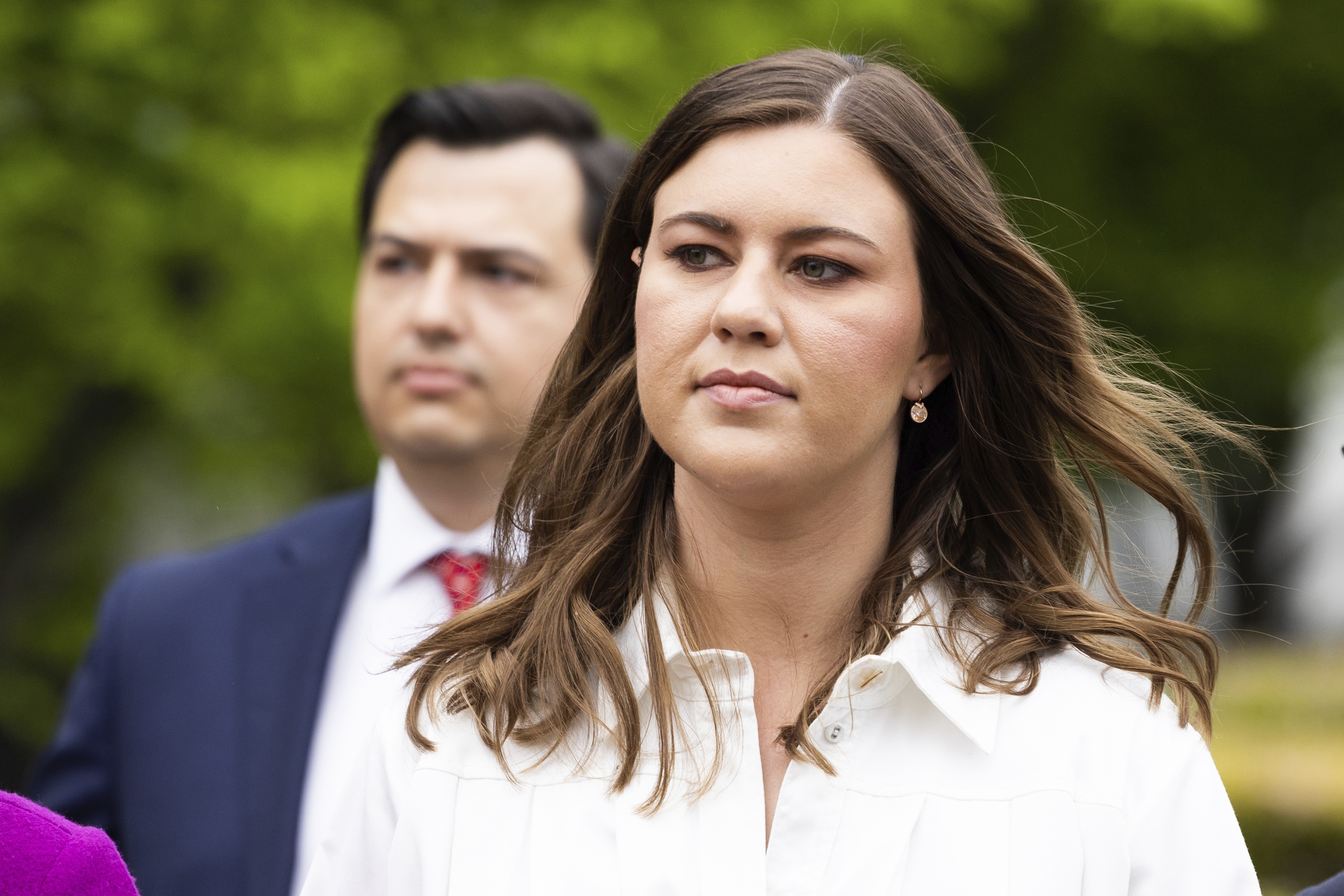
Brittany Higgins says she is committed to appearing before civil proceedings brought by former colleague Bruce Lehrmann.
Lehrmann has launched defamation action against Network Ten and News Life Media, the News Corp Australia company behind News.com.au, over their coverage of rape allegations made by Higgins.
His lawyers filed statements of claim in the Federal Court on Tuesday afternoon, with the two outlets named as respondents in the applications.
READ MORE: Baby rescued from rubble after mother gives birth while trapped

Higgins accused Lehrmann of raping her inside the Parliament House office of then-minister Linda Reynolds, who they both worked for, in 2019.
He denied the allegation and maintained the pair never had any sexual interaction.
"Following recent developments, I feel the need to make it clear if required I am willing to defend the truth as a witness in any potential civil cases brought about by Mr Lehrmann," Higgins reposted on Twitter on Tuesday evening.
https://twitter.com/BrittHiggins_/status/1623038017253539840
Lehrmann's criminal trial in the ACT Supreme Court was derailed in October due to juror misconduct and the prosecutor later dropped the charges due to the impacts a second trial would have on Higgins' mental health.
READ MORE: DFAT confirms 'small number' of Australians caught in deadly earthquake
Sydney law firm Mark O'Brien Legal is representing Lehrmann in the defamation proceedings.
The ACT government has launched an independent inquiry into the handling of Higgins' rape allegations by police, prosecutors and a victims' support service.
Sign up here to receive our daily newsletters and breaking news alerts, sent straight to your inbox.
Crisis support is available from Lifeline on 13 11 14.
Support is available from the National Sexual Assault, Domestic Family Violence Counselling Service at 1800RESPECT (1800 737 732).
Aussie rescue worker on 10th floor describes 'petrifying' quake hit
An Australian emergency specialist on the ground near the Turkey-Syria border says she hasn't slept for two days since the devastating earthquakes that killed thousands and left many more wounded and stranded.
Australian authorities are "urgently" trying to help families track down relatives who were in Turkey and neighbouring nations when the quakes struck, as the death toll tops 7200.
Melinda Young was on the 10th floor of a hotel in the Turkish city of Gaziantep when the earthquake struck.
READ MORE: Football star found alive in Turkey earthquake rubble

"It was absolutely petrifying. The earthquake seemed to go on forever," she told Today.
"There were people and children screaming in the corridors, trying to get clothes on as soon as possible, and down the stairs and outside."
She said people had been "hypervigilant" since the series of quakes.
"People have been refusing to go back into buildings, because they are just too scared," she said.
READ MORE: Baby rescued from the rubble after mother gives birth while trapped

Young is working with UNICEF's cross-border response between Turkey and Syria.
She said conditions were "very difficult".
"Fortunately I'm in an office that has got power. We have 120 staff and families camped out here in the hallway," she said.
"I haven't washed for two days and haven't slept for two days.
"We are using snow to try to flush the toilet because of the lack of water."
READ MORE: How you can help earthquake survivors

However, she said, in Syria things were "so much worse", with the earthquake further devastating a region that had been wracked by years of war, disease, and an oncoming drought.
A Department of Foreign Affairs and Trade spokesman said there were "a small number" of Australians in the affected areas and it was looking for help from local authorities "including rescue teams".
"Our missions in Ankara, Istanbul, and Beirut are monitoring the situation closely," a DFAT spokesperson said.
READ MORE: Survivors 'screaming' under rubble as earthquake kills thousands


Search teams and emergency aid from around the world poured into Turkey and Syria on Tuesday as rescuers working in freezing temperatures dug — sometimes with their bare hands — through the remains of buildings flattened by a powerful earthquake.
The death toll has soared above 7100 and was still expected to rise.
The United Nations has released US$25 million ($35.98 million) from its emergency fund to help kick-start the humanitarian response to the earthquake in southern Turkey and northern Syria.
"As the people in the region deal with the devastating consequences of this tragedy, we want to tell them that they are not alone," UN humanitarian chief and emergency relief coordinator Martin Griffiths said.
"The humanitarian community will support them in every step of the way out of this crisis."
READ MORE: Australia pledges $10 million in humanitarian aid to Turkey and Syria

The United Arab Emirates says it will provide $143.9 million in earthquake relief to Syria and Turkey.
The state-run WAM news agency reported the donation overnight. It said the decision came from Emirati leader Sheikh Mohammed bin Zayed Al Nahyan and that the money would be split evenly between the two countries.
But with the damage spread over a wide area, the massive relief operation often struggled to reach devastated towns, and voices that had been crying out from the rubble fell silent.
"We could hear their voices, they were calling for help," said Ali Silo, whose two relatives could not be saved in the Turkish town of Nurdagi.
In the end, it was left to Silo, a Syrian who arrived from Hama a decade ago, and other residents to recover the bodies and those of two other victims.
Monday's magnitude 7.8 quake and a cascade of strong aftershocks cut a swath of destruction that stretched hundreds of kilometers across southeastern Turkey and neighboring Syria, toppling thousands of buildings and heaping more misery on a region shaped by Syria's 12-year civil war and refugee crisis.
One temblor that followed the first registered at magnitude 7.5, powerful in its own right.


Unstable tangled piles of metal and concrete made the search efforts perilous, while freezing temperatures made them ever more urgent, as worries grew about how long those trapped could survive in the cold.
The scale of the suffering — and the accompanying rescue effort — were staggering.
More than 8000 people have been pulled from the debris in Turkey alone, and some 380,000 have taken refuge in government shelters or hotels, said Turkish Vice President Fuat Oktay.
They huddled in shopping malls, stadiums, mosques and community centers, while others spent the night outside in blankets gathering around fires.
Many took to social media to plead for assistance for loved ones believed to be trapped under the rubble — and Turkey's state-run Anadolu Agency quoted Interior Ministry officials as saying all calls were being "collected meticulously" and the information relayed to search teams.
READ MORE: What to know about the big quake that hit Turkey and Syria

According to the BBC, who spoke to a Turkish journalist, people are sending him and other journalists videos, voice notes and their live locations from under the rubble.
Turkish President Recep Tayyip Erdogan said 13 million of the country's 85 million were affected in some way — and declared a state of emergency in 10 provinces in order to manage the response.
For the entire quake-hit area, that number could be as high as 23 million people, according to Adelheid Marschang, a senior emergencies officer with the World Health Organization.
"This is a crisis on top of multiple crises in the affected region," Marschang said in Geneva.

Turkey is home to millions of refugees from the Syrian civil war.
The affected area in Syria is divided between government-controlled territory and the country's last opposition-held enclave, where millions live in extreme poverty and rely on humanitarian aid to survive.
The Palestinian Authority said that 57 Palestinian refugees were among the dead — 14 in Turkey and 43 in Syria, a country that for decades has hosted nearly a half-million Palestinians in large refugee camps.
International aid floods in
A Melbourne butcher is amassing donations for the displaced.
Sultan Butcher in Campbellfield is calling for people who are able to donate unused tents and sleeping bags for people who are being left to sleep in the cold.
They've already amassed a large amount and are opening for extended hours from 9am-9pm today to cater to donors.
"There are literally millions of people sleeping out in the cold. If you can spare anything, please, please, it is going to go a long way," a representative said.
They are calling on Australian airlines to help them move the donations to the earthquake-hit regions.
Already they've filled up one shipping container and are expecting two semi-trailers and another container from Sydney today to continue stockpiling donations.
It's a small-scale local example of the aid flooding into the disaster-hit regions from around the world.
Teams from nearly 30 countries have headed for Turkey or Syria.
As promises of help flooded in, Turkey said it would only allow vehicles carrying aid to enter the worst-hit provinces of Kahramanmaras, Adiyaman and Hatay in order to speed the effort.

The United Nations said it was "exploring all avenues" to get supplies to rebel-held northwestern Syria.
Sebastien Gay, the head of mission in the country for Doctors Without Borders, said health facilities were overwhelmed with medical personnel were working around "around the clock to respond to the huge numbers of wounded."
Nurgul Atay told The Associated Press she could hear her mother's voice beneath the rubble of a collapsed building in the Turkish city of Antakya, the capital of Hatay province, but that her and others' efforts to get into the ruins had been futile without any heavy equipment to help.
"If only we could lift the concrete slab we'd be able to reach her," she said. "My mother is 70 years old, she won't be able to withstand this for long."
But help did reach some.
In the northwestern Syrian town of Jinderis, a young girl called Nour was pulled alive from the wreckage of a collapsed building on Monday.
A rescuer cradled her head in his hands and tenderly wiped dust from around her eyes as she lay amid crushed concrete and twisted metal before being pulled out and passed to another man.
READ MORE: Ninth consecutive interest rate hike looms for mortgage holders
In the city of Aleppo, a Maronite Christian convent opened its doors to hundreds of residents who fled their shaking homes.
"Based on our principles and ideas of receiving the most needy, we wanted to make sure that everybody who was scared or lost their house or was on the streets could find shelter here," said Brother George Sabah.
"We opened every part of the convent. There isn't a space in the convent that isn't being used by people, including the elderly, children, men, women."
Turkey has large numbers of troops in the border region with Syria and has tasked the military to aid in the rescue efforts, including setting up tents for the homeless and a field hospital in Hatay province.

READ MORE: Family shocked to find snake on 'bread rolls'
READ MORE: Woman charged with murder after toddler's body found
A navy ship docked on Tuesday at the province's port of Iskenderun, where a hospital collapsed, to transport survivors in need of medical care to a nearby city.
Thick, black smoke rose from another area of the port, where firefighters have not yet been able to douse a fire that broke out among shipping containers toppled by the earthquake.
Turkey's emergency management agency said the total number of deaths in the country had passed 4500, with some 26,000 people injured.
The death toll in government-held areas of Syria climbed over 800, with some 1400 injured, according to the Health Ministry.
At least 900 people have died in the rebel-held northwest, according to the White Helmets, the emergency organization leading rescue operations, with more than 2300 injured.
The region sits on top of major fault lines and is frequently shaken by earthquakes.


Some 18,000 were killed in similarly powerful earthquakes that hit northwest Turkey in 1999.
The US Geological Survey measured Monday's quake at 7.8, with a depth of 18 kilometers.
Hours later, another quake, likely triggered by the first, struck more than 100 kilometres away with 7.5 magnitude.
READ MORE: Over 40 countries send help to Turkey, Syria
Australians in need of emergency consular assistance should contact the Australian Government 24-hour Consular Emergency Centre on 1300 555 135 in Australia or +61 2 6261 3305 outside Australia.
Most trusted brands in the country revealed, as voted by Aussies
Australians are a trusting bunch but one crisis or scandal can be enough to burn that trust for good.