Tag Archives: oceania

Coroner finds Indigenous woman's death in custody was preventable

WARNING: Aboriginal and Torres Strait Islander readers are warned the following article contains images of deceased persons.

An Aboriginal woman who died inside a Victorian prison begged for help 49 times in 36 hours before her death.

The Gunditjmara, Dja Dja Wurrung, Wiradjuri and Yorta Yorta woman, Veronica Nelson, 37, had been transferred to a regular cell after two days suffering severe opioid withdrawal on a medical ward.

But her repeated pleas were knocked back by prison guards and healthcare staff.

READ MORE: Man charged after father fatally hit by ute at Victorian farm

Coroner Simon McGregor on Monday declared Nelson's death in January 2020 was preventable and called for bail law reform citing the adverse affects it had on First Nations people.

His highly anticipated finding follows a five-week inquest, which ended in May last year.

Victoria's bail laws are widely considered to be among the toughest in the country.

The state government made changes to the Bail Act in 2018 under expert advice in response to the 2017 Bourke Street massacre.

READ MORE: The global movement giving pre-loved items a new life

Sign up here to receive our daily newsletters and breaking news alerts, sent straight to your inbox.

"The Bail Act has a discriminatory impact on First Nations people, resulting in grossly disproportionate rates remanded in custody, the most egregious of which affects alleged offenders who are Aboriginal and Torres Strait Islander women," McGregor said.

He said prior to those changes Aboriginal and Torres Strait Islander people made up 8.2 per cent of the state's prison population, and First Nations women were 10 per cent of female inmates.

But he number of Aboriginal women nearly doubled after the 2018 changes, McGregor said.

Of those, 61 per cent of unsentenced women were held on charges that did not involve violence.

McGregor also found that Victoria Police failed to consider Nelson's Aboriginality and vulnerability, and violated her human rights.

Police argued she was an unacceptable risk to re-offend on bail and should not be granted bail.

McGregor said the remand summary was riddled with mistakes and was misleading.

READ MORE: Ashes stolen during burglary at home in Melbourne's south-east

Without legal representation for her bail application, Nelson did not challenge those claims, nor was she aware of her rights, the coroner said.

"Her journey through the criminal justice system occurred without her speaking to a single Aboriginal person employed in these roles," he said.

He called for urgent bail reform, stating the "reverse onus regime incompatible with human rights".

Nelson was arrested on December 30, 2019, on warrants for breaching bail and suspicion of shoplifting.

Following her 49 calls for help, Nelson was found dead in her cell at Dame Phyllis Frost Centre on January 2.

READ MORE: Ashes stolen during burglary at home in Melbourne's south-east

She died from complications of Wilkie's syndrome, in a setting of withdrawal from heroin.

The coroner found corrections had failed to provide her with adequate healthcare.

After pressure from Nelson's family and legal advocates, Attorney-General Jaclyn Symes last week confirmed changes to the laws were being discussed.

Nelson's mother, Aunty Donna Nelson, sat in the front row of the court wearing a possum skin cloak and wiped away tears throughout the hearing.

The court room is filled with family and supporters, many from Shepparton and Narrandera in NSW, wearing "Justice for Veronica Marie Nelson" T-shirts and others wearing traditional face paint.

For 24/7 crisis support run by Aboriginal and Torres Strait Islander people, contact 13YARN (13 92 76).

Is 'Toadzilla' a sign of enormous cane toads to come?

This month, the world met "Toadzilla", a cane toad the size of a football and six times larger than average.

The rangers who found her – female toads are bigger than male – were stunned.

Weighing in at 2.7 kilograms, Toadzilla may be the largest cane toad ever recorded.

READ MORE: 'This could be a new record': 'Toadzilla' found in Queensland weighs more than a brick

The giant cane toad was discovered by ranger Kylee Gray at Cape Conway National Park in Queensland and promptly euthanised.

Is this a sign Australia's cane toads are getting bigger? Not necessarily.

Like all other "cold-blooded" or ectothermic animals, cane toads don't have a limit to their body size like mammals and birds do.

They can keep growing their entire lives. Researchers have found toads at the front of the invasion wave get bigger quicker due to more prey.

But there's another possibility too.

Sign up here to receive our daily newsletters and breaking news alerts, sent straight to your inbox.

The mammoth creature weighed almost 3kg - almost as much as a brick.

Last year, we found toads in urban areas have smaller parotid (toxin) glands than those in rural areas.

That might be because bush toads experience higher predation, selecting for more toxins.

In nature, an easy way to select for larger toxin glands is to make the whole animal bigger.

Given many native animals, reptiles and birds have now figured out how to eat these toads, we may possibly see more Toadzilla contenders in future.

READ MORE: Novak explains curious below belt celebration

Wait, cane toads have predators in Australia?

When you think of cane toads in Australia, you might think of an unstoppable army hopping across the countryside, killing endangered animals, such as quolls, with their poison.

There's some truth to this – a large cane toad would appear to be a delectable package of protein for everything from freshwater crocodiles to goannas to birds of prey.

To survive, they have evolved large poison glands on their shoulders.

When attacked, toads can pump out lethal bufotoxin.

READ MORE: Man dies, others injured as fire tears through Brisbane unit

Australia's answer to the otter, the rakali, has been clever enough to figure out how to eat cane toads without getting poisoned.

Worse, the eggs, tadpoles and toadlets are all poisonous as well.

In the South American savannas where they evolved, cane toads have many predators, which can consume them in spite of the poison.

While Australia has no native toads, we have frogs with poisonous skins and glands, for example red-crowned toadlets and corroboree frogs, so the concept of a toxic amphibian is not entirely new to our fauna.

Not only that, but many of our birds' ancestors may have originated in Asia, where they were exposed to other poisonous amphibians.

Our native rats, too, have some tolerance of these toxins from their more recent overseas ancestry.

And colubrid snakes such as keelbacks can also eat cane toads.

Some species susceptible to the toxin have figured out ways to defeat it. Our famous "bin chickens" – the white ibis – have figured out how to eat cane toads, by flicking them about to make them produce their toxin and then washing them at a nearby creek.

Rakali – the large water rat known as Australia's otter – learned how to eat cane toads. They flip them over and eat their organs, avoiding the glands.

Overall, though, cane toads are bad news for many native species.

Even with predator pressure, their populations keep growing and they keep moving into new areas.

How do water-loving toads thrive in dry Australia?

The difference between a toad and a frog isn't whether they can live out of water. Australia has dozens of native treefrog species which have far better ways of holding onto their water than do cane toads.

Desert tree frogs, for instance, can live in semi-arid regions, while burrowing frogs can live in true deserts.

(The real difference is more obscure – toads have sternums in two cartilaginous parts instead of one, possibly an adaptation to walking or jumping).

So how did they become one of Australia's most notorious introduced species? One answer: they were introduced purposely and vigorously, with thousands of toads bred up and introduced in many locations.

The plan was for the toads to eat native cane beetles plaguing Queensland's sugarcane plantations.

READ MORE: Painting found in shed covered in bird droppings sells for millions

Cane toads are remarkably good at finding water sources in inhospitable regions.

Before the 1935 introduction, the fantastically named entomologist Walter Froggatt pleaded with authorities not to release them.

"This great toad, immune from enemies, omnivorous in its habits, and breeding all year round, may become as great a pest as the rabbit or cactus," he wrote.

But farmers won, the toads arrived, the beetles proved too hard to catch and the toads began eating everything else.

Soon, they began to spread.

Each female can lay 20,000 eggs a year.

(Cane beetles were brought under control only a few years later, when an effective pesticide was discovered).

Another reason these toads now number in the hundreds of millions is their sheer adaptability.

READ MORE: Veronica begged for help before dying in a cell

Toadzilla may be the largest cane toad ever recorded.

They are incredibly good at finding hidden sources of water, even in semi-arid parts of the country.

During the dry season, toads tend to stay very close to water.

When the wet season comes and soaks the ground, they begin to move.

You might have come across research suggesting toads at the front of the invading wave are evolving longer legs.

This isn't natural selection – it's spatial selection, where longer-legged toads naturally get to the front and breed with other longer-legged toads.

But we are seeing signs cane toads may be adapting to local conditions by getting better at retaining water.

And, remarkably, they've become cannibals.

Are cane toads unstoppable?

They're formidable opponents, but cane toads have limits.

These toads eat everything they can catch – even if it has a sting or bite.

They eat giant centipedes up to 16cm long.

Beekeepers hate them because they'll sit in front of hives and eat bee after bee.

Despite their poison glands, fecundity and adaptability, there's one thing they can't beat.

Toadzilla was spotted by rangers in Conway National Park, near Airlie Beach.

Most amphibians can't live in very arid conditions.

That means toads will probably never infiltrate central Australia's deserts.

Modelling has shown they're unlikely to get past the arid middle coastline of Western Australia, and we think they'll never make it to Melbourne because it's too cold.

Researchers have suggested protecting southern Western Australia from toads by converting cattle dams to tanks.

But Sydney will have to get used to cane toads before too long.

They've already arrived several times, carried in on garden waste or in a pair of boots and establishing little populations before being eradicated.

They have made it very clear they're here to stay in Australia.

Reducing numbers or protecting vulnerable areas is the best protection we've got.

By Lin Schwarzkopf, Professor in Zoology, James Cook University

This article is republished from The Conversation under a Creative Commons licence. Read the original article.

Aussies are lying on home loan applications amid affordability crisis

Thousands of Aussie homebuyers have likely lied on their loan application by embellishing their income and omitting debts, new research has found.

A Finder survey of 1114 Australian homebuyers, including 310 who already have a mortgage, found one in eight lied on their home loan application.

The lies included inflating their income and fibbing about how much debt they had.

READ MORE: Veronica begged for help before dying in a cell

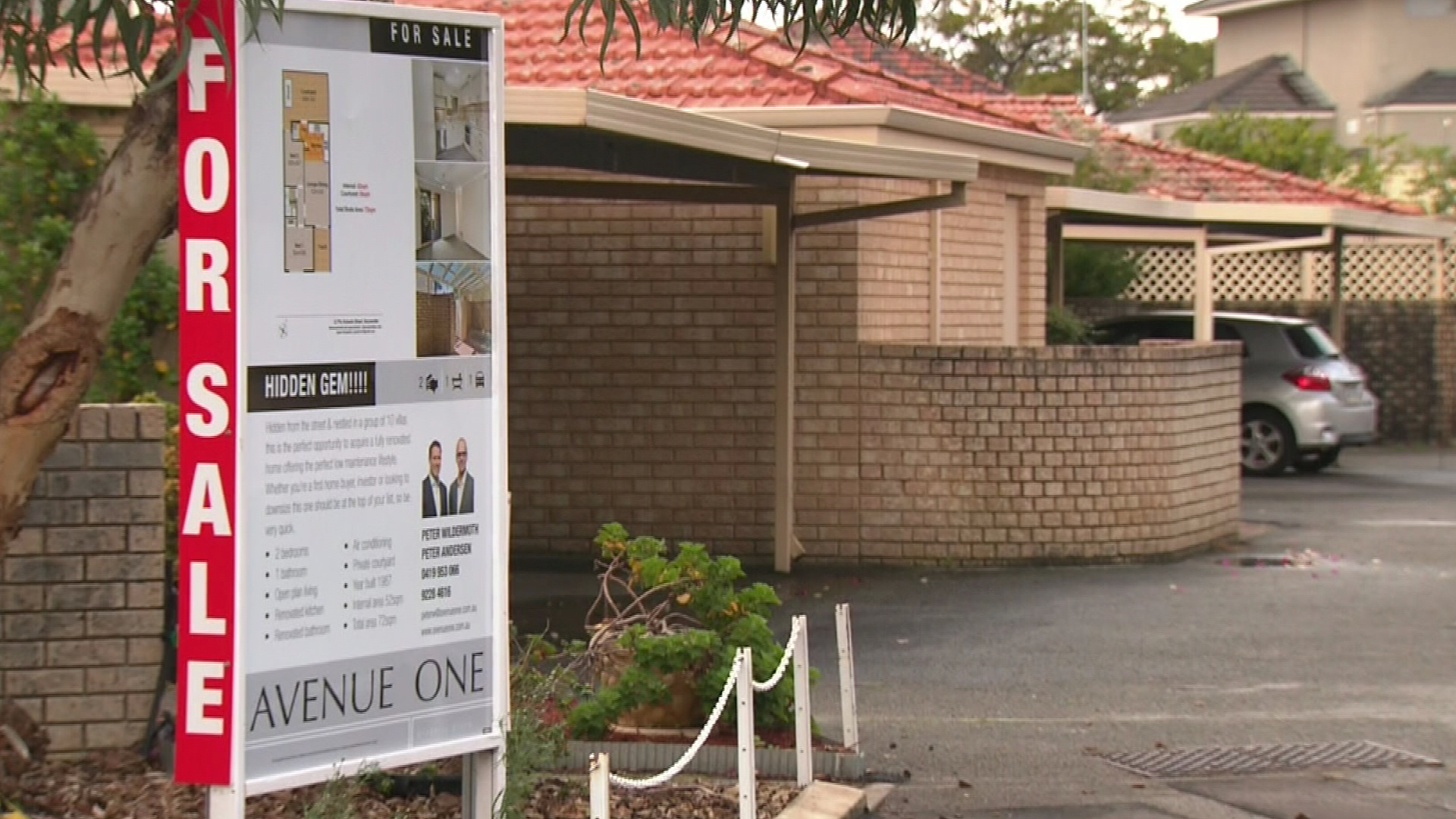
For sale sign at house

Home loan expert Richard Whitten said lying during the home buying process is a "recipe for disaster".

"Falsifying information on a mortgage application can have serious consequences," he said.

"Not only could it potentially qualify as fraud, it could also lead to the loss of your home in a worst case scenario."

But while the lies can have serious implications like fraud, Whitten said in the current economic environment borrowers could be finding themselves in deep financial water.

"While the lies might go unnoticed – the financial burden of an unaffordable loan could create a lot of stress," Whitten said.

"You're putting yourself in a risky position if you lie on your application and borrow more than you can afford."

READ MORE: Novak explains curious below belt celebration

Australia's property market is expected to hit a sharp downturn as interest rates increase.

As interest rates soar and inflation remains sky-high Whitten said it is no surprise Aussies are lying on their application to secure a property.

Interest rates hit a 10-year high in December at 3.10 per cent and the next hike in February is expected to deliver another blow to homebuyers.

"Aussies are scared of being rejected and missing out on getting on the property ladder," he said.

"While small inaccuracies may not be the end of the world, if a lender finds a big discrepancy in the figures you've given them or you've outright lied about your financial position, the consequences could be severe."

READ MORE: Painting found in shed covered in bird droppings sells for millions

Home loan applications typically have conditions around providing correct information while inserting misleading or incorrect details may legally mean the lender could enter a default event and sell the property from underneath you.

"Lenders cross-check everything and applicants who intentionally provide incorrect information could potentially receive a black mark on their credit score and in severe cases applicants could have their loan called in, meaning they have to repay the loan in a hurry," Whitten said.

Aussies are urged not to inflate their income figures or neglect to pop in their current loans or credit card debts when applying for a home loan.

Sign up here to receive our daily newsletters and breaking news alerts, sent straight to your inbox.

The information provided on this website is general in nature only and does not constitute personal financial advice. The information has been prepared without taking into account your personal objectives, financial situation or needs. Before acting on any information on this website you should consider the appropriateness of the information having regard to your objectives, financial situation and needs.

Painting found in farm shed covered in bird droppings sells for $4m

Once abandoned in a farm shed, a rediscovered Anthony van Dyck painting has sold for over $US3 million ($4.2 million) at auction.

The piece is a study for a later painting produced by the Flemish master called St Jerome. The final painting is currently held by the Museum Boijmans van Beuningen in Rotterdam.

The study, which portrays a nude older man sitting on a stool, is unique for a few reasons, according to the Sotheby's listing.

READ MORE: Needle-in-a-haystack search for lost radioactive capsule continues

It's one of only two large studies that van Dyck crafted from live models. It was likely painted between 1615 and 1618, according to Sotheby's, while van Dyck was a young artist working alongside Peter Paul Rubens in Antwerp. And the oil painting also has an unexpected provenance.

The study was only recently identified as a work of van Dyck, said Sotheby's in a statement shared with CNN.

The piece was discovered in the late 20th century in a farm shed in Kinderhook, New York.

READ MORE: NRL star's uncle drowned trying to save others from rip at Sydney beach

"The person who found it, Albert B Roberts, was a passionate collector of 'lost' pieces, describing his collection as 'an orphanage for lost art that had suffered from neglect'," said the auction house.

Roberts bought the derelict painting for just $US600 ($845), according to Sotheby's.

Shortly after, art historian Susan J Barnes published an article in which she recognised the piece as a "surprisingly well preserved" work by van Dyck.

The painting sold for $US3.1 million ($4.4 million) on Thursday.

It was offered to Sotheby's by Roberts' estate. A portion of proceeds will benefit the Albert B Roberts Foundation, which provides financial support to artists and other charities, according to the auction house.

The study was sold as part of Sotheby's Thursday Master Paintings Part I sale, which also included works by Agnolo Bronzino, Titian and Melchior de Hondecoeter.

NSW town cops 40mm in half an hour as weather warnings remain

The heat and humidity that's clutched much of Australia in recent days could be set to break, with thunderstorm warnings issued for parts of NSW and Queensland.

Earlier predictions of widespread storms across the NSW Mid North Coast, Hunter, Northern Tablelands, Central Tablelands, Newcastle and North West Slopes and Plains appeared to be moderating tonight.

But a warm and very humid airmass was still generating storms around Taree on the Mid North Coast and almost as far west as Tamworth about 7pm.

READ MORE: Olympic movement mourns legend

Maroota, north-west of Sydney, copped 41 millimetres in just half an hour and almost as much feel at Tangory Mountain in an hour.

The bureau said the storms could continue to produce damaging winds and heavy rainfall that may lead to flash flooding but said the weather had calmed in the Central Tablelands and greater Newcastle.

It was a similar story in Queensland's Northern Goldfields , North West, Central West and Channel Country areas, where the bureau was warning about localised heavy falls from thunderstorms.

READ MORE: Pair charged after man found dead, woman 'kidnapped'

https://twitter.com/BOM_NSW/status/1619533724290355203?ref_src=twsrc%5Etfw

Sign up here to receive our daily newsletters and breaking news alerts, sent straight to your inbox.

Winton and Richmond were among the towns in the firing line but earlier warnings in south-east Queensland had been cancelled by 6pm.

Earlier, severe thunderstorms were detected on the weather radar near Bilpin and other parts of the Blue Mountains, the Bureau of Meteorology said.

The severe weather came as sweltering heat gripped the country over the weekend.

READ MORE: Bag of cash left scattered over Perth highway after falling from car

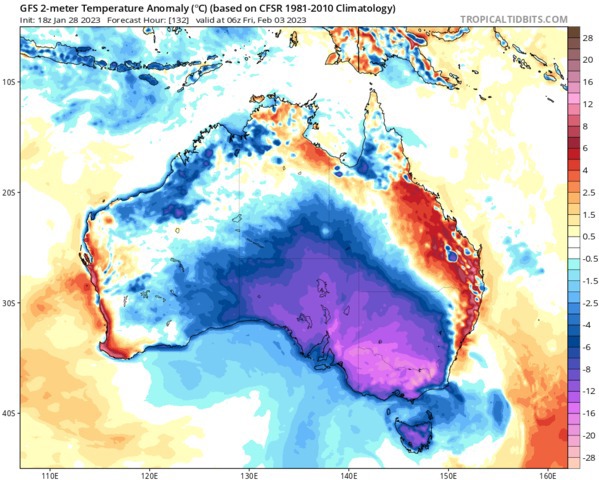
Weatherzone reported the main culprit was a trough pushing through south-east Australia, drawing warm, moist north-easterly winds as it pushed eastward.

High humidity levels have added to the sultry conditions – but for the south-east at least, it's set to change this week.

Weatherzone said Melbourne wouldn't see a day top 25 degrees next week and would fall below 20 on Friday, after cracking 34 degrees yesterday.

'Not random': Pair charged after man found dead, woman 'kidnapped'

Two people will face court after the body of a man was found and a woman was allegedly kidnapped on New South Wales Central Coast.

At about 4.30pm AEDT yesterday, emergency services were called to Levitt Street, Wyong, following reports a woman had escaped a nearby unit after allegedly being kidnapped.

The 44-year-old woman told police she had allegedly been there since Thursday.

READ MORE: Flights delayed, diverted at Sydney Airport after evacuation

She was treated at the scene before being taken to Gosford Hospital in a stable condition for treatment of multiple injuries including burns.

Police arrested a 30-year-old man at the unit in connection to the alleged kidnapping.

While speaking with detectives later, the woman raised concerns for the welfare of a man who she believed was also at the unit, claiming there had been a serious altercation.

Soon after, police found the body of 52-year-old man Sean Froggatt was found inside.

READ MORE: Hometown heroes win 'fairytale' Australian Open

A 33-year-old woman was then arrested at about 10pm.

She was charged in connection with alleged murder and kidnap offences, while the man was charged in relation to concealing a serious offence.

They will face Wyong local court tomorrow.

Anybody with information is urged to contact Crime Stoppers on 1800 333 000.

Sign up here to receive our daily newsletters and breaking news alerts, sent straight to your inbox.

Qantas flight turned back to Sydney over 'potential landing gear issue'

A Qantas flight to Coffs Harbour has been forced to turn back to Sydney over a potential landing gear issue.

QantasLink flight QF2104 took off from Sydney Airport just before 4pm today but turned back before making it past the northern beaches, according to flight tracking websites.

The airline said a fault indicator on the Dash-8 Q400 showed a "potential landing gear issue".

READ MORE: NRL star's uncle drowned trying to save others from rip at Sydney beach

"The pilots followed standard procedures and the aircraft has landed safely in Sydney," it said, in a statement.

Qantas said passengers would be placed on a different plane to complete their journey.

It's the latest in a string of incidents for the airline that reclaimed its title as the safest in the world, website Airline Ratings, earlier this month.

READ MORE: Mum's frantic search after landslip in New Zealand flood emergency

The first major incident of the year came on January 18 when a flight from New Zealand was forced to land in Sydney on one engine having initially issued a mayday call.

In the following days, two Qantas flights were turned back to Melbourne over mechanical issues, one was sent back to Fiji over a report of cabin fumes, another plane returned to Adelaide due to a paperwork issue and technical issues triggered the turnback of a flight to Kalgoorlie. 

Qantas international and domestic CEO Andrew David last week defended the airline, saying the turnbacks were unrelated and insisted they were less common on Qantas than other airlines.

"There are absolutely no issues at Qantas," he told 2GB's Ben Fordham.

"The global aviation industry has about 10,000 diversions or turnbacks per year. We average about 60 per year."

Swimmer gets close to curious shark at Western Australian beach

A beachgoer in Western Australia has captured a curious shark's venture among swimmers.

The shark, believed to be a bronze whaler, came in close to shore at Hamelin Beach in the Margaret River region, south of Perth.

Shona Frame said she had gone down to the beach to look at the stingrays that flocked there, when the unexpected visitor popped up near a snorkeller.

READ MORE: Pair charged after man found dead, woman 'kidnapped'

USE THESE

"We're all screaming at (the snorkeller) to get out of the water," she said.

However, she said, the swimmer seemed quite unperturbed – even as his wife is calling for him to "get out".

The videoframe shot showed the shark swimming by as the snorkeller idled in the water.

READ MORE: Severe storm warnings across multiple states

USE THESE

"Apparently it was a bronze whaler," Frame said.

"I'm from Scotland, so it's the first time I've seen a shark."

Other swimmers also appeared sanguine about the possibility of a close encounter, despite being warned by beach-goers.

Bronze whalers aren't considered to be particularly aggressive or dangerous.

And Frame said the encounter had "definitely" not put her off enjoying the beach.