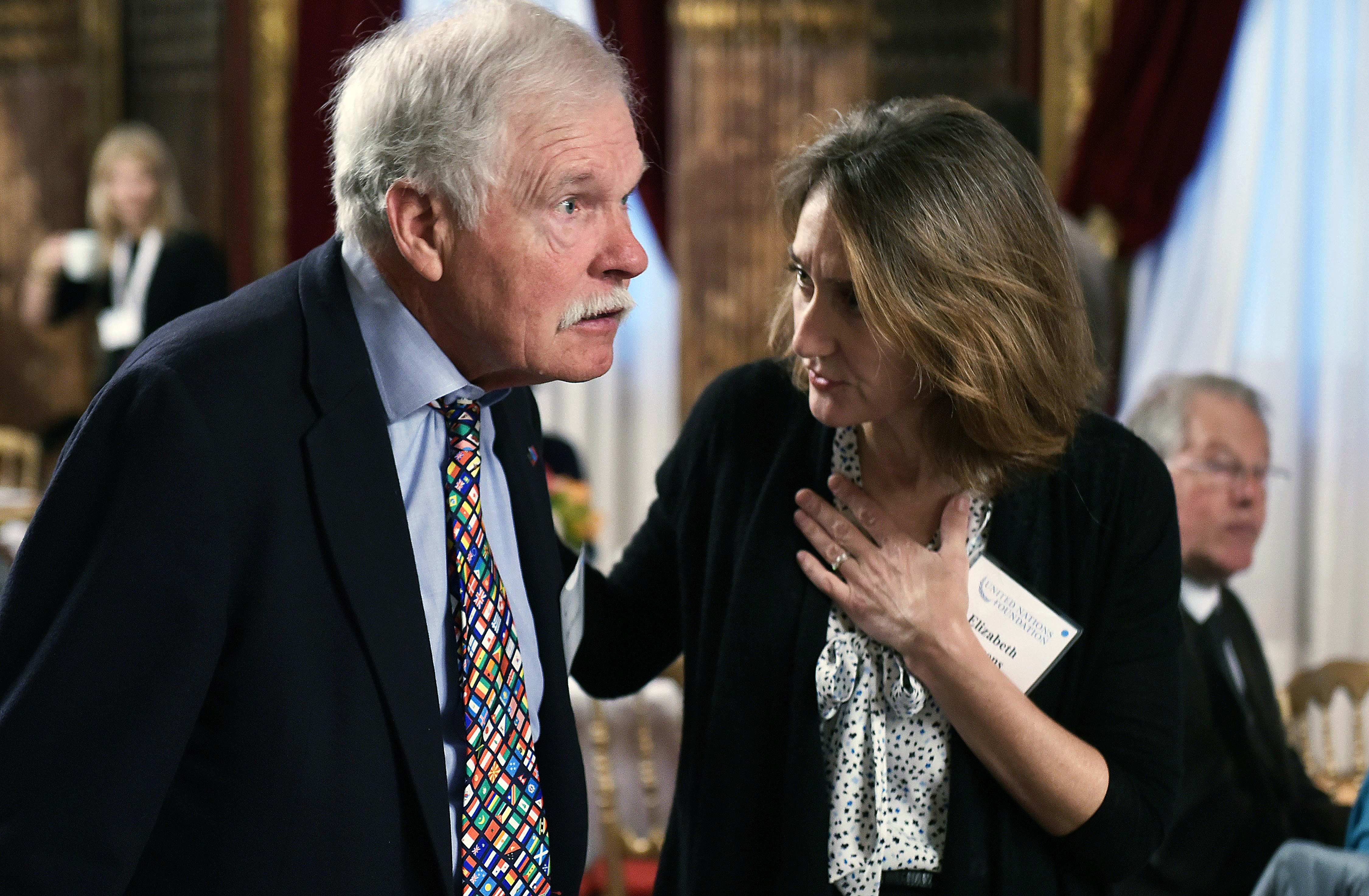
Chris Hipkins says he considered resigning after his ex-wife’s online claims.
Tag Archives: oceania
Dire warning about war’s impact in Australia
Think petrol prices are bad now? It's entirely possible you ain't seen nothing yet, if a worse-(but not worst)-case scenario plays out in the war in Iran.
Westpac has updated its modelling on the economic impacts brought about by the conflict, particularly on energy costs.
The big four bank's baseline – the scenario it thinks is most likely to play out – is the war lasts about a month, but that shipping through the Strait of Hormuz takes a further month to normalise.
PETROL PRICES: Rideshare giant increases fuel surcharge as petrol prices bite
If that does play out, the bank forecasts oil prices will hit $US110 a barrel but average out at $US90 between April and June, with flow-on effects to hit Australian motorists, and economic growth to take a 0.1 of a percentage point hit.
"Petrol and diesel prices are likely to rise by more than the direct pass-through from higher crude oil prices alone," said Sian Fenner, Westpac's head of business and industry economics.
"As a result, we expect retail petrol and diesel prices to average around $2.02/litre and $2.50/litre respectively.
"Fertiliser prices such as urea are also up sharply and some airlines have already announced price increases due to the rise in jet fuel."
Considering Australian petrol and diesel prices already averaged 219.5 and 245.6 cents a litre last week, and Brent crude is currently sitting above $US100 a barrel, that appears to be a relatively sedate impact on the economy for what the International Energy Agency has labelled the worst oil supply shock in global history.
READ MORE: 'I don't accept it': Kyle reveals contract terminated by ARN
However, there is significant uncertainty about how long the war will last, with US President Donald Trump's erratic statements about a timeframe, and his boasting that the conflict is won while demanding help from allies to open the Strait of Hormuz, doing nothing to quell market volatility.
Fenner said there "remains a material risk of a more extensive and prolonged disruption", and Westpac's alternative scenario now has the conflict lasting three months.
In such a case, the economic impact would be far worse.
Oil prices would average $US130 a barrel in the second quarter of the year, and at their peak would hit $US200.
READ MORE: With one sentence, treasurer drops major hint on $22 billion tax overhaul
Given Australian petrol prices rise about 1 cent per litre for every dollar oil increases by, drivers could end up being slugged more than $3 a litre in the coming months.
Underlying inflation would also remain above the Reserve Bank's target until well into 2027, and half a percentage point would be lopped off Australia's overall economic growth.
In a sobering end to her research note, Fenner said the turmoil could be even worse if energy infrastructure suffers permanent damage.
"This (alternative) scenario assumes no significant damage to oil and LNG production and freight facilities," she wrote.
"A permanent loss of supply would prolong the cost to the real economy.
"It would also add to the risk of a sell-off in financial markets that would not only amplify the negative shock to the global economy but complicate the policy response."
NEVER MISS A STORY: Get your breaking news and exclusive stories first by following us across all platforms.

- Download the 9NEWS App here via Apple and Google Play
- Make 9News your preferred source on Google by ticking this box here
- Sign up to our breaking newsletter here
The information provided on this website is general in nature only and does not constitute personal financial advice. The information has been prepared without taking into account your personal objectives, financial situation or needs. Before acting on any information on this website you should consider the appropriateness of the information having regard to your objectives, financial situation and needs.
NSW government paid $700 to get serial killer out of home with foster children
The NSW government paid $700 for accommodation to remove a convicted serial killer from a home in Sydney's west where she had been living with two foster children.
Regina Arthurell, who was jailed under the name Reginald Kenneth Arthurell, had been living under the same roof as the 12-year-old and 14-year-old until the NSW Minister for Communities and Families discovered the living arrangement through a Sydney radio station.
A whistleblower raised the alarm with 2GB after she contacted multiple government departments.
LIVE UPDATES: Global travel industry losing $844 million a day over Iran war
READ MORE: 'I don't accept it': Kyle reveals contract terminated by ARN
The NSW Department of Communities and Justice (DCJ) paid for three nights of accommodation to remove Arthurell from the home.
The Daily Telegraph reported Arthurell spent the three nights at the Rydges Hotel in Armidale in the NSW northern tablelands.
Once dubbed the "cowboy killer", Arthurell served almost 24 years behind bars for bludgeoning fiancee Venet Mulhall to death at Coonabarabran in 1995 while on parole.
She had earlier killed her stepfather in the 1970s and a sailor in the 1980s.
She was granted parole in 2020.
Last week, NSW Communities and Families Minister Kate Washington said the situation uncovered by the radio station was "shocking".
"It is entirely unacceptable for a vulnerable child in the care of the state to be living with a triple murderer," Washington said.
"It should've never happened and I'm deeply apologetic for what has happened."
WEATHER: Cyclone barrelling towards Queensland coastline
PETROL PRICES: Rideshare giant increases fuel surcharge as petrol prices bite
Washington faced questions over the situation in NSW Parliament yesterday.
She did not directly respond to questions about how much the NSW taxpayer paid for Arthurell's accommodation but a NSW government spokesperson later confirmed the $700 figure.
Since the story aired on 2GB, Washington said she had personally apologised to the family.
"I have been clear that there have been multiple failures in this case," she said.
"We want to be as open and transparent as possible to ensure it does not happen again.
"When I became aware of this incident last week, I immediately took action and the person was removed from the house."
The department has launched a review into the incident.
"The secretary of DCJ has confirmed that two staff members have been suspended based on initial investigations underway as part of that review," she said.
"Because of the significant sensitivities involved, there are young children in care in this case, we do not intend on conducting a review through the media, but we acknowledge that serious issues have been identified and we are acting to address them."
NEVER MISS A STORY: Get your breaking news and exclusive stories first by following us across all platforms.

- Download the 9NEWS App here via Apple and Google Play
- Make 9News your preferred source on Google by ticking this box here
- Sign up to our breaking newsletter here
Top tip to save on fuel in Australia’s fuel crisis
Aussies all over the country are being hit by rising petrol prices at the pump as the cost of oil skyrockets due to the war in the Middle East.
The average price of petrol across Australia reached an average of $2.19 a litre at the end of last week, with the price of diesel shooting up to above $2.40 a litre.
With petrol needed to keep many Australians moving, here are five tips we can all follow to save money at the bowser next time you fill up.
LIVE UPDATES: Trump berates allies as he finds himself alone on Iran war
1. Change your driving style
Experts agree a great and simple way to save on fuel every time you drive is to keep a close eye on your driving style.
If you are constantly speeding up and then having to slow down due to changing speed limits or traffic conditions, you burn more fuel as you have to break more often, and then get back up to speed.
"Heavy throttle use and excessive acceleration are a guaranteed way of using fuel or range," RACV's Andrea Matthews said.
She also suggested using cruise control if your car has it, as this helps maintain a consistent speed without using the brakes or accelerator too much.
The NRMA also suggests carefully planning your route to try and avoid peak periods if possible or roads where traffic will be higher, causing you to be stuck in a pattern of stop-start driving, as well as sitting idle, which burns more fuel.
READ MORE: Australia's most valuable company names new CEO
2. Make sure your tyres are inflated and properly aligned
Not only is having your tyres properly inflated and maintained a good safety measure, it also saves on the amount of petrol you use.
Tyres that are under-inflated increase rolling resistance, and can increase fuel consumption by two per cent, according to the NRMA.
That doesn't sound like a lot, but it can add up over time.
"Underinflated tyres will wear earlier on the edges," Matthews said, "contributing to engine wear and higher fuel consumption."
To ensure your tyres last longer, she also recommends making sure your car has a wheel alignment.
"Getting a regular wheel alignment check will ensure your tyres last as long as possible," she said, saying a poor wheel alignment can produce more wear on the tyres and on other parts of the car, reducing its fuel efficiency.
The NRMA also recommends getting a wheel alignment once a year, as it reduces drag and rolling resistance.
READ MORE: Australian couple face $800 headache at the bowser as petrol prices hit caravan owners hard
3. Reduce weight by removing roof racks and other heavy items
Science dictates it takes more fuel to move a heavier car, so reducing the luggage and items in your car can help your car remain more efficient.
While there are times you will need to have lots of things in the boot, make sure you do a regular clean out of your car, for example, every time you wash it, to make sure any heavy items that aren't necessary or used often don't take up space and add weight.
According to figures from the NRMA, a car that is loaded to its maximum weight can increase fuel consumption by 24 per cent.
Experts also recommend removing roof racks from your car if they are not being used.
This is because they increase weight, but more importantly, increase drag, making your car less aerodynamic and causing it to use more fuel.
READ MORE: 'I don't accept it': Kyle Sandilands reveals contract terminated by ARN
4. Use your air conditioner less
It may be a big sacrifice to make, especially in a country like Australia where the weather can be extreme, but experts say reducing your air conditioner use in your car is an important way to save on petrol.
The NRMA recommends, when practical, to roll down your windows instead when driving at lower speeds as a way to cool down your car without having to put the air conditioner on, though it warns doing this at higher speeds may have the opposite effect, as it increases drag and resistance.
If you feel the need to use the air conditioner, Matthews recommends these settings.
"Turn the A/C on to recirculate, as a way of reducing fuel consumption," she said.
"That way, you're cooling the same air from inside repeatedly for less money, instead of drawing in hot air from outside."
5. Drive less
While this is not an option for people in all parts of Australia, being more selective on when or how you drive is a useful strategy to save on petrol, especially amid the current crisis.
If possible, carpool with others when driving to work or other events to share the burden of having to drive and use petrol.
READ MORE: Rideshare fares increase as drivers grapple with soaring fuel prices
If carpooling is not possible and you are able to, use alternative means to get to work or to where you need to go.
Try walking or using a bicycle, or use public transport if you are near a bus stop or train station.
NEVER MISS A STORY: Get your breaking news and exclusive stories first by following us across all platforms.
- Download the 9NEWS App here via Apple and Google Play
- Make 9News your preferred source on Google by ticking this box here
- Sign up to our breaking newsletter here
Couple’s $800 headache at the bowser as price hikes hurt caravan owners
The prohibitive price of fuel is forcing Australian caravan owners to delay their plans or face paying up to $100 more for every tank of petrol.
Everyday motorists are feeling the pinch at the bowser, but travellers driving long distances around the country are paying even more to fill up.
Full-time travellers Kirsty and James are about to make the 37-hour, 3750-kilometre drive from Melbourne to Darwin towing their new van.
READ MORE: Rideshare fares increase as drivers grapple with soaring fuel prices
LIVE UPDATES: Trump lashes out at Australia, allies over lack of help
The couple's long trip will far more costly than their original estimation.
A tank of 98 octane fuel around the country is now over $100 more than it was before the conflict in the Middle East began.
"We have a long range tank, 164 litres, so before the prices went up it was around $300 give or take," Kirsty told Nine.com.au.
"This was based on the average we were getting of around $1.89/l, but now using the Petrol Spy app 98 is $2.53 in Sunbury, so approximately $412 to fill up, which we anticipate will be even more once we are more remote."
Regional petrol stations are drying up as panic-buying in metro areas restricts the flow of liquid fuel to rural areas.
Higher prices at regional bowsers along the way could drive up Kirsty's already-stretched fuel budget.
READ MORE: What are the best ways to save fuel? Five tips to help Aussies save money on petrol
Kirsty said their car's mileage is around 500 kilometres per tank.
The added weight and strain on the engine while towing a caravan can impact fuel efficiency.
The couple will need to fill up close to eight times before reaching their destination, adding more than $800 to the price of their journey.
"That's provided it is pretty decent driving conditions and fuel prices don't change too drastically between now and the next two weeks when we are planning to leave," Kirsty added.
But it's not an option to wait until prices start to dip.
Kirsty and James need to start work in Darwin to earn some money after over 12 months on the road.
"We really need to hit the road as we have work lined up in Darwin," she added.
READ MORE: Kyle Sandilands reveals contract terminated by ARN
The outlook is also "pretty grim" for other travellers too.
Anyone hoping to stay put to preserve fuel may find it tough as peak Easter season approaches, Kirsty warned.
"A lot of caravan parks are booked out or those that are available almost double in price," she said.
Fellow travellers Brad and Karen regularly fill up their Ford Everest, which tows their caravan, for their adventures around the country too.
The couple recently spent $70 to make the 180-kilometre trip from Albury in Victoria to Gundagai in NSW.
"Fuel prices are killing caravan travel," the couple said.
READ MORE: How to Choose 9News as your preferred source in Google's Top Stories
Another caravan owner Noel said he was "mothballing" his vehicle because of soaring prices.
"As a result of the extreme cost of fuel we have mothballed our caravan for an indefinite period, no holidays or weekend trips anymore," Noel said in post on Facebook.
Average prices for petrol have ballooned from around $1.80 a litre before the war in Iran and the blockade of the Strait of Hormuz to around $2.20 now.
The price of diesel has jumped even higher, currently sitting at around $2.45.
Australia's consumer watchdog insists it will keep a close eye on fuel companies in the coming weeks to guard against price gouging at the petrol pump.
NEVER MISS A STORY: Get your breaking news and exclusive stories first by following us across all platforms.
- Download the 9NEWS App here via Apple and Google Play
- Make 9News your preferred source on Google by ticking this box here
- Sign up to our breaking newsletter here
CCTV captures the moment man shot outside Melbourne cafe
CCTV has captured the moment a large group of men ran for cover as one of them was shot outside a cafe in Melbourne's south-west overnight.
Police say the shooting, outside a cafe on Borrack Square in Altona North about 11.30pm yesterday, could be connected to an illegal tobacco trade.
A large group of people were sitting outside the Cafe Squared eatery when a white Toyota Hilux drove up and shots were fired into the crowd.
READ MORE: New images released over kidnapping and murder of Sydney grandfather
CCTV shows the moments the shots were fired and the men run into the building for cover.
A 49-year-old man, who was shot twice in the arm, and was taken to hospital with non-life-threatening injuries.
Those involved fled the scene in a car.
Hours later, about 2.50am, the offenders torched the car and left it burning at the intersection of McArthurs and Chambers roads – around 800 metres from where the shooting took place.
Police believe the incident was targeted and said they will investigate any potential links to any other incidents.
A crime scene has been established and the investigation into the circumstances of the incident is ongoing, Victoria Police said.
Anyone with information is urged to contact Crime Stoppers on 1800 333 000 or submit an online confidential report at www.crimestoppersvic.com.au.
NEVER MISS A STORY: Get your breaking news and exclusive stories first by following us across all platforms.
- Download the 9NEWS App here via Apple and Google Play
- Make 9News your preferred source on Google by ticking this box here
- Sign up to our breaking newsletter here
Trump berates allies as he finds himself alone on Iran war
For the last 80 years, every American military action has come with the backing of many of its allies – including Australia.
That includes expensive and bloody conflicts which lasted for years in Korea, Vietnam, Iraq and Afghanistan.
But as Donald Trump reaches out for military support for his war in Iran, he has found himself largely alone.
READ MORE: Donald Trump says he'll be 'taking Cuba' in latest escalation
Yesterday he was asked what countries were offering their support in order to reopen the Strait of Hormuz.
"We have some that are really enthusiastic. They're coming already," Trump said.
"They've already started to."
And today, the president berated allies, including Australia, for not offering warships.
"Because of the fact that we have had such Military Success, we no longer 'need,' or desire, the NATO Countries' assistance — WE NEVER DID! Likewise, Japan, Australia, or South Korea," he wrote on Truth Social.
"In fact, speaking as President of the United States of America, by far the Most Powerful Country Anywhere in the World, WE DO NOT NEED THE HELP OF ANYONE!"
Speaking to the ABC this morning, Treasurer Jim Chalmers said the Australian government was not formally asked for support.
"There wasn't a formal request to send ships to the strait," he said.
"It's not something that we've been considering in the almost daily National Security Committee meetings that have been taking place over the course of the last couple of weeks."
READ MORE: The four-letter acronym that could pull Trump out of Iran
Overnight Trump took a swipe at the president of Ireland after she said his war with Iran was "an attack on international law".
But Trump appeared unaware that Irish President Catherine Connolly was a woman.
"He's lucky I exist," Trump said of Connolly.
"If you're gonna allow countries that are sick and demented – and they are demented – to have nuclear weapons– everybody in the whole world should be very thankful."
He was sitting beside Irish Prime Minister Micheal Martin as he made his remarks.
So far, the only countries to have involved themselves in offensive operations against Iran are the US and Israel.
It now appears ships connected with countries friendlier to Iran are being cleared for safe exit from the Strait of Hormuz.
That includes several ships from India transporting oil and gas from the region.
READ MORE: 'Dead by June': Trump announces congressman's private diagnosis
NEVER MISS A STORY: Get your breaking news and exclusive stories first by following us across all platforms.
- Download the 9NEWS App here via Apple and Google Play
- Make 9News your preferred source on Google by ticking this box here
- Sign up to our breaking newsletter here
‘Global recession risk’: The danger on the flipside of the RBA’s rate hike
Inflation may have driven the decision but the Reserve Bank's second consecutive rate hike has also put talk of a recession back on the agenda.
Governor Michele Bullock didn't rule out the possibility yesterday afternoon, although she stressed that wasn't her goal.
While she highlighted the likelihood the war in the Middle East would drive up prices due to fuel supply issues, a former RBA assistant governor flagged the escalating conflict as a "global recession risk".
AS IT HAPPENED: RBA pulls trigger amid escalating conflict in the Middle East and high rate of inflation
In the monetary board's statement after narrowly voting to lift the cash rate by 25 basis points to 4.1 per cent, it noted the war "poses substantial risks in both directions".
The board said it could drive up energy prices, pushing up inflation but those higher prices combined with "prolonged uncertainty" could eventually hit growth in Australia and its biggest trading partners.
"The best contribution we can make to full employment and in fact to things like investment and productivity and so on, is to have low and stable inflation," Bullock said yesterday.
"So we do need to keep our eye focused on that ball.
"We don't want to have a recession, but if it's hard to get inflation down, then, you know, we're going to have to deal with that possibly."
Westpac Group chief economist Luci Ellis, who served as RBA assistant governor from 2016 to 2023, said the central bank's comments after hiking the cash rate focused on how an "extended period of high energy prices" could reduce supply and drive up inflation.
READ MORE: Average Aussie household almost $75 a week worse off than six weeks ago
"Most other observers would see that scenario as a global recession risk with rather different policy implications," she said.
"At the least, we struggle to imagine a scenario where the Strait of Hormuz remains closed for many months without sentiment and financial markets weakening considerably.
"The consequences for global growth in that scenario would be far from trivial, and not solely on the supply side.
"It is possible that the RBA's assessment of the implications of the Middle East conflict will evolve once it has done modelling of the impact."
Bullock said yesterday that the bank and probably the Treasury was looking into more advanced modelling of the conflict.
"We've done some modelling on sort of just very first-round pass-throughs of petrol price rises to inflation and – but we haven't done any modelling on potential impacts if the war goes on."
READ MORE: Two more top Iranian officials killed, Israel says
Oxford Economics modelling suggested the war had already added 0.3 percentage points to inflation in the first quarter of the year and could add another 0.75 percentage points in the next if oil stayed above $US100 ($141) a barrel.
"Against that backdrop, the RBA had little choice but to move again," head of economic research and global trade Harry Murphy Cruise said.
"Oil price shocks are a central bank's worst nightmare. The only thing that will bring oil prices down is more supply flowing through the Strait of Hormuz – and no amount of interest-rate hikes will convince Iran to reopen that passage.
"Instead, the RBA must manage inflation (and inflation expectations) by slowing the rest of the economy.
"That means dissuading spending on other goods to offset the inflationary impulse from higher fuel costs."
READ MORE: Police hunt more men after two charged over fatal shooting in Sydney's west
Commonwealth Bank of Australia head of Australian economics Belinda Allen praised the bank for hiking rates, saying the only question was "when, not if" to do so and predicting another hike in May.
But she also sounded a note of caution on growth.
"We expect the war to be months, not weeks long, and also expect energy prices to rise from here," she said.
"But so too could growth concerns, and the governor highlighted those risks several times in her press conference."
Chartered Accountants ANZ chief economist Professor Richard Holden said the board's decision to move now was both understandable and unsurprising.
"With global and domestic inflation moving up, but economic growth moving down, the RBA is in a bind," he said.
READ MORE: Crown Melbourne to cut 200 jobs amid 'challenging economic conditions'
"To fight inflation, it needs to raise rates. To counter the challenges to economic growth, it needs to cut them. That sounds spookily like 1970s-style stagflation."
"It's true that the RBA and other central banks try to 'look through' temporary shocks to inflation. But this shock is potentially so big and long-lasting that it is hard to do that."
None of this is welcome news for Treasurer Jim Chalmers, who continues to list fighting inflation in his government's top three economic goals while attempting to ease the pain for voters with cost-of-living measures ahead of the May budget.
He was at pains to stress the RBA didn't point to government spending directly as an inflation driver but Bullock did say subsidies for costs such as energy prices could affect headline inflation, depending on their size.
Chalmers on last night told ABC's 7.30 that a recession was "not something that we're anticipating or forecasting or expecting".
"Inflation has moderated significantly from its peak, but it is higher than we would like, and conflict overseas has put upward pressure on global fuel prices," he said in a statement released earlier in the day.
"The duration of the conflict will be the primary determinant of how much pressure it adds to global inflation and how much it is a hit to growth."
READ MORE: Man sentenced after murdering lawyer in hotel with champagne bottle
9News chief political editor Charles Croucher said the four-five split on the RBA board would give the treasurer and borrowers hope of avoiding another rate rise in May.
"Donald Trump and the ruthless regime in Iran probably hold the key, and unfortunately, they won't be losing any sleep over Sydney mortgage holders tonight," he said yesterday.
"The government cannot control what's happening in the Middle East but the Reserve Bank noted that inflation was already too high before the war broke out.
"That means the government must instead look to the budget. Jim Chalmers has nearly two months to publicly or privately or subtly or subliminally show the Reserve Bank that restraint will be the order of his budget."
NEVER MISS A STORY: Get your breaking news and exclusive stories first by following us across all platforms.

- Download the 9NEWS App here via Apple and Google Play
- Make 9News your preferred source on Google by ticking this box here
- Sign up to our breaking newsletter here
Average Aussie household almost $75 a week worse off than six weeks ago
The average Australian household with a mortgage and at least one car is almost $75 per week worse off than they were six weeks ago, in a sudden hit to the hip pocket that experts warn is unlikely to improve anytime soon.
A surprise jump in inflation in January further fuelled by the widening conflict in the Middle East has prompted the Reserve Bank of Australia (RBA) to implement two consecutive interest rate hikes.
The cash rate now sits at 4.10 per cent, just 0.25 per cent below 2024 highs.
READ MORE: Major banks move to pass on rate hikes to mortgage holders
That equates to hundreds more in monthly repayments for mortgage holders, while rising inflation and skyrocketing fuel prices risk rolling into wider price hikes at the checkout.
Treasurer Jim Chalmers has warned already-high inflation may climb towards five per cent, should the Iran war and blockade on the Strait of Hormuz drag on.
Here is how the latest cost spikes stack up for the average household – and what could be still to come in 2026.
Mortgage repayments
Based on the last two interest rate hikes, a family with the average national mortgage of $700,000 with 25 years remaining will have to find an extra $211 each month for their repayments, according to Canstar data.
That equates to $49 each week going straight to the bank.
Moreover, the RBA isn't ruling out further rate hikes, with some major banks predicting a further two hikes this year.
Should that eventuate, Australian mortgage holders will have to cough up a total of $98 a week more for their mortgage than they did at the start of the year.
Fuel prices
In further hip pocket pain, fuel prices have surged amid Iran's blockade of the Strait of Hormuz and widespread fears of a fuel shortage that has seen some stockpiling fuel.
In the last quarter of 2025, households were spending an average of $93.81 on fuel each week, according to Australian Automobile Association data.
At the time, the average national fuel price averaged 180.4c/L.
With unleaded fuel in Sydney currently averaging 229c/L, the same amount of petrol is now costing a family $119.60 a week – $25.80 more.
In addition to the $49 extra in average mortgage repayments, this means families are $74.80 a week worse off on average than at the start of February.
READ MORE: Emergency meeting with fuel companies as petrol crisis continues
Energy Minister Chris Bowen has warned fuel prices will remain high for the "foreseeable" future, meaning Australian households will have to factor this extra cost into their weekly budgets.
Grocery prices
While the full impact of the Iran war on the cost of groceries has yet to play out, farmers are warning of price hikes amid a double-whammy of fuel and fertiliser price hikes.
The Middle East, known for being one of the world's most dominant suppliers of oil, also supplies up to 45 per cent of the world's urea – a common fertiliser.
Australia relies almost entirely on imports, which have all but halted since the shut down of the Strait of Hormuz.
Adding to farmers' woes, soaring petrol prices and diesel supply chain issues have seen some regional communities run dry.
In Victoria, farmers have gone so far as to advise city dwellers to commute to work instead of drive, to free up petrol supplies for regional areas after a number of regional communities ran completely dry in recent days.
Victorian Farmers Federation (VFF) president Brett Hosking has warned supermarket shelves could soon start to empty if fuel supply isn't secured.
With fuelling farming equipment and moving freight an unavoidable price for Australian agriculture, it seems almost inevitable that those price hikes will see us paying more for our food.
READ MORE: Federal government's grim admission about fuel as war drags on
NEVER MISS A STORY: Get your breaking news and exclusive stories first by following us across all platforms.

- Download the 9NEWS App here via Apple and Google Play
- Make 9News your preferred source on Google by ticking this box here
- Sign up to our breaking newsletter here
Cyclone Narelle declared, set to hit Queensland as category 4 storm
Cyclone Narelle has been declared and is expected to hit Far North Queensland as a category 4 storm on Friday, the Bureau of Meteorology says.
The bureau said tonight that the low pressure system had built into a tropical cyclone in the northern Coral Sea and was steadily moving west towards the Queensland coast.
It was earlier expected it would make landfall as a category 3 storm.
READ MORE: Government won't rule out fuel rationing as war drags on
At 4pm (AEST), Narelle was a category 1 storm with winds at its centre of 85km/h and gusts up to 120km/h.
"Narelle is expected to move steadily to the west and approach the far north-east Queensland coast between Lockhart River and Port Douglas. A severe impact is likely late in the week," the bureau said.
The region is on alert for heavy rainfall, flash flooding and high tides.
The bad weather should stay offshore until at least Thursday, meteorologist Dean Narramore said earlier.
"As the tropical low and developing cyclone approach far northern Queensland through Thursday and Friday, those winds will begin to turn more east-south-easterly.
"That will allow rainfall and winds to increase, particularly north of around Townsville and especially along parts of the north tropical coast from Thursday night into Friday.
https://x.com/BOM_au/status/2033805410281365877
"In terms of rainfall, many coastal areas are unlikely to see much over the next couple of days while the system remains further away.
"But as it approaches the coast on Thursday and Friday, heavy rainfall will begin to develop across parts of the north tropical coast."
Once the system crosses the Queensland coast, it is expected to move out into the Gulf of Carpentaria over the weekend and possibly over towards the Top End.
People in the region are advised to stay up to date as the intensity and forecast track map of the system is still unclear.
Flood watches are in place for many areas of far northern Queensland and more widespread heavy rainfall is expected.
NEVER MISS A STORY: Get your breaking news and exclusive stories first by following us across all platforms.

- Download the 9NEWS App here via Apple and Google Play
- Make 9News your preferred source on Google by ticking this box here
- Sign up to our breaking newsletter here