Police are yet to formally identify the body.
Tag Archives: oceania
Water-related death in Takapuna, Auckland amid horror week on water
Nine are dead in nine days after a string water-related tragedies.
Thailand holds suspect in $100 million deli case
A suspect wanted in in connection with an alleged stock manipulation scheme that led a small New Jersey delicatessen to be listed as a public company worth $100 million has agreed to his voluntary extradition to the United States after being arrested last week on the resort island of Phuket, a Thai legal official said Friday.
Peter Coker Junior is sought by US authorities on charges of fraud and shares manipulation in connection with two companies, Hometown International and E-Waste Corp, that had been traded over the counter.
Two other men indicted on the same charges, Peter Coker Senior, and James Patten, were arrested in the United States last year.
READ MORE: Queensland cop killers' daughter speaks for the first time

A warrant was issued for the arrest of Coker Junior, a partner at a financial services company in Hong Kong.
The Bangkok law firm representing Coker Junior did not immediately respond to phoned requests for comment about the case.
The alleged illegal activities came to light in 2021, when media reports surfaced that Hometown International, whose sole asset was a delicatessen in Paulsboro, New Jersey, had a valuation of about $100 million.
READ MORE: Rugby union player Kurtley Beale granted bail
The anomaly was initially publicised by David Einhorn, a hedge fund manager, who joked in a letter cautioning his clients about the company that “the pastrami must be amazing".
The three indicted men were accused of trading shares of Hometown International and E-Waste Corp back and forth among a small group of investors to pump up the price.
The US District Court in New Jersey indictment alleges that they intended to merge with a private company in order to draw the attention of public investors and sell off their own stock at the inflated prices.
Thai police said US officials informed them of the 54-year-old Coker Junior’s possible entry into Thailand in December last year, and he was tracked to his residence near a popular tourist spot of Surin beach in Phuket, for which he signed a one year lease.
READ MORE: Victorian man charged over 'Hi Mum' scam texts
He was arrested January 11.
The police statement said he had entered Thailand several years ago with a passport from the eastern Caribbean island of St. Kitts and Nevis, which is one of many nations that sells citizenship in exchange for investment.
Teerat Limpayaraya, a prosecutor in Thailand’s Attorney General’s office, said Coker Junior is being held in a Bangkok jail pending extradition.
“Mr. Coker Junior voluntarily consented to be extradited to the US, which has simplified the court’s legal process.
We have to complete a 30-day waiting period as required by Thai law before sending him back,” said Teerat.
Sign up here to receive our daily newsletters and breaking news alerts, sent straight to your inbox.
“He was visibly frail when he was taken in and told us that he needs medical treatment for his liver disease. We believe that he entered Thailand with a possible plan to settle here.”
A video released by the police showed Coker Junior sitting in a chair wearing a T-shirt and shorts in his seaside residence as Thai police read out details of search and arrest warrants to him.
Later, as he was escorted to a police vehicle, he appeared to need assistance walking.
Chinese billionaire loses 90 per cent of his fortune
The past few years have not been great for the super-rich in China, particularly those who built their fortune in the country's once red-hot property market.
The net worth of Hui Ka Yan, chairman of real estate developer China Evergrande, has plunged nearly 93 per cent, according to the Bloomberg Billionaires Index.
Once the second-richest person in Asia, Hui's wealth has fallen from $60 billion at its peak in 2017 to about $4 billion, Bloomberg said.
READ MORE: Kurtley Beale granted bail over alleged sexual assault

Evergrande is China's most indebted developer with $400 billion in liabilities, and has been at the heart of the country's real estate troubles since 2021.
Hui, also known as Xu Jiayin in Mandarin, used his personal wealth to prop up his embattled company, selling his houses and private jets.
But that was far from enough and Evergrande defaulted on its US dollar bonds in December 2021 after scrambling for months to raise cash to repay creditors, suppliers and investors.
Last year, the firm failed to deliver its preliminary debt restructuring plan, leading to further concerns about its future.
READ MORE: China's population has shrunk for the first time in 60 years

Evergrande is massive: It has about 200,000 employees, raked in more than $150 billion in sales in 2020 and owns more than 1300 developments in more than 280 cities.
Analysts have long been concerned that a collapse of Evergrande could trigger wider risks for China's property market, hurting homeowners and the broader financial system. Real estate and related industries account for as much as 30 per cent of GDP.
But Hui isn't the only one who has seen massive wealth destruction lately. Elon Musk, the CEO of Tesla, SpaceX and Twitter, has become the first person ever to lose US$200 billion (A$287 billion) in wealth, according to Bloomberg last month.
The bulk of Musk's wealth is tied up in Tesla, which saw its stock plunge 65 per cent in 2022.
READ MORE: Lunar New Year celebrations for 2023 mark the Year of the Rabbit

Sign up here to receive our daily newsletters and breaking news alerts, sent straight to your inbox.
Victorian man charged over 'Hi Mum' scam texts
A Victorian man has been charged in relation to obtaining a "substantial amount of money" through a "Hi Mum" text scam.
The mobile phone scam involves criminals sending a text message from an unknown mobile phone number to a person on a messaging application claiming to be their son or daughter.
The scammers build a relationship with the victim through lies and then ask to borrow money or to have a payment made on their behalf.
READ MORE: Queensland cop killers' daughter speaks for the first time
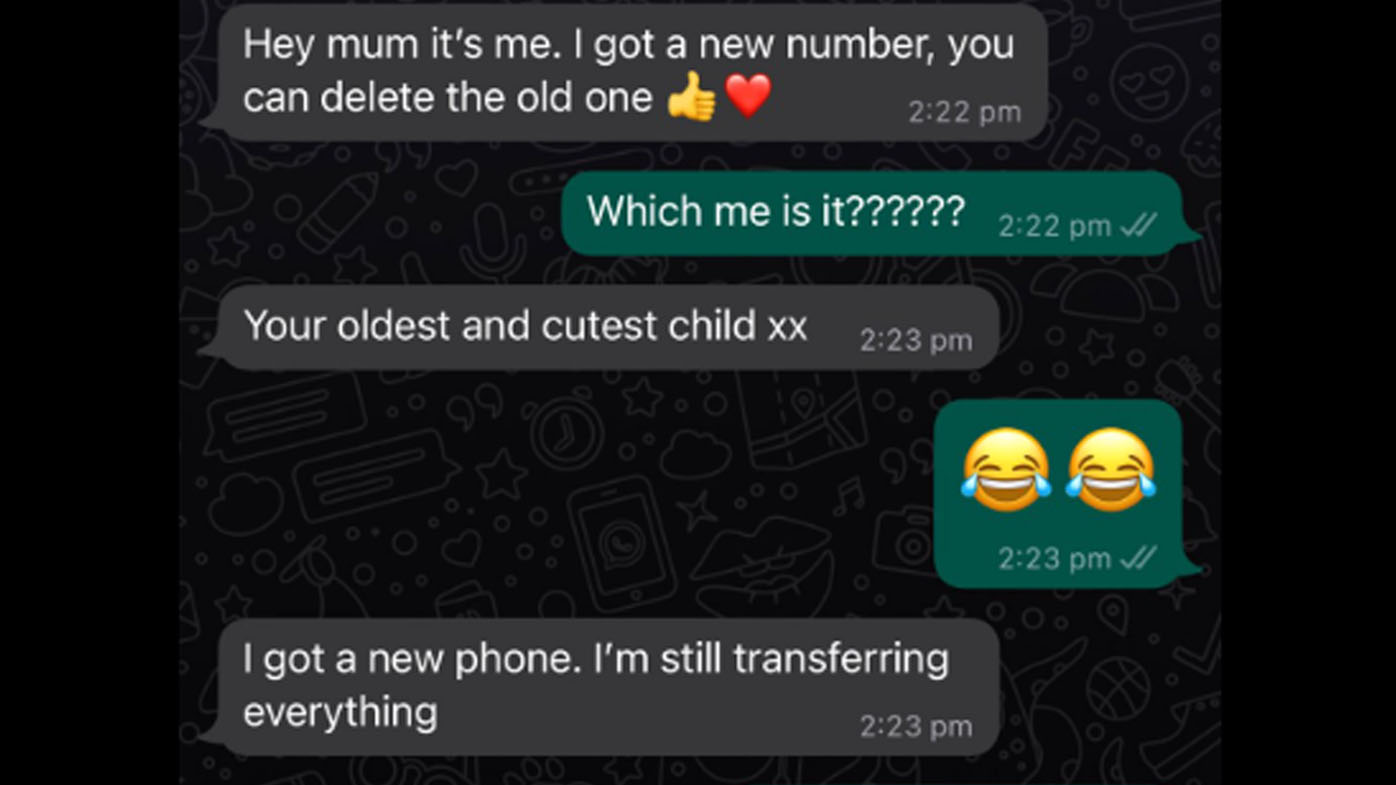
Victoria Police said they arrested and charged a 21-year-old man following alleged online scam incidents yesterday.
"It's alleged electronic goods were obtained in person using false documents and a substantial amount of money was obtained under the 'Hi Mum' scam via SMS," police said.
"The incidents relate to alleged fraudulent transactions having occurred over online marketplaces between December 3 to 7 in Ringwood, Narre Warren, Mill Park, Mitcham and Doncaster East."
READ MORE: Swimmers cleared after dolphin mauled by shark in Sydney's northern beaches

The Templestowe man was charged with five counts of obtain property by deception.
He has been bailed to appear at Ringwood Magistrates Court
In August, police cybercrime experts said more than $2 million had been stolen under "Hi Mum" scams.
Up to date information on current and emerging scams can be found on the Australian Competition and Consumer Commission's (ACCC) scam watch website here.
Pictures of the week: Ritual bonfire 'purifies' horses
The traditional ritual is in honour of San Antonio Abad (Saint Anthony the Abbot), patron saint of domestic animals.
Australians with unusual professions you'd think would be consigned to history
They're jobs you might think have been consigned to history having been made obsolete by technology.
But there are still Aussies quietly making a living from unusual professions which you'd be forgiven for thinking had died out.
Like Sydney chimney sweep Mark Steuerwald, 57.
Because if you want to burn a real fire, it's essential to maintain your chimney.
READ MORE: Fastest growing jobs in Australia revealed

And it's not just owners of older homes who book his company, London Chimney Sweeps.
He said many architect-designed modern homes also have real fires and so need his expertise.
"The main reason for getting a chimney cleaned is to remove the soot that's built up," Steuerwald told 9news.com.au.
"It's a fire hazard."
READ MORE: Female keeper of 300-year-old lighthouse prepares to farewell job
Keeping city's fires burning
Steuerwald learned the business from his uncle who emigrated from Cornwall in England, starting as a Saturday boy from age 12.
After pursuing a job in accounting, he took over the firm in 1988.
And anybody who imagines the profession as being a little like that portrayed in movie Mary Poppins would be correct. "Except we don't dance," he quipped.
And while huge brushes to clean out the chimney are still a staple of his kit, modern tech like cameras and drones have made the job easier – and safer.

Industrial vacuum cleaners also make it a clearer task than it used to be.
The job also allows Steuerwald a glimpse into some incredible homes.
"I do a lot of heritage places and have done some jobs for some famous people, actors and TV personalities," he said.
"I love it."
Sometimes he finds items in the chimneys that shouldn't be there.
"One place where I found a cash box in the chimney with a lot of jewellery in it," he said.
"The owners got that.
"Unfortunately, the main thing we get out of chimneys is dead birds and possums.
"We do get live ones out as well and probably some of the most frustrating things is trying to evict possums out of chimneys.
"They just don't want to leave."
"The other thing would probably be really old chimneys that have never been maintained, so you get 100 years of gunk in them."
He reckons there are around 50 chimney sweeps left in Australia.
A call-out costs from $295 to $395.
Lamp makers bring warm glow of light
The warm glow of a kerosene lamp is still in demand, according to Anne MacLeish, 66.
She runs lamp house TW Sands and Co with her ex-husband Bernard Holmes.
The shop, now based in Huntingdale in Melbourne's south-east, is one of the few stores of its type left in the world, and has customers as far away as the UK and USA.
"Even those who actually do have electricity sometimes like to switch the light off and enjoy them," she said.
"It's a bit like going back in time.
"It's an ambience you get with an oil lamp you don't get with electricity."

Sign up here to receive our daily newsletters and breaking news alerts, sent straight to your inbox.
Holmes bought the firm, established in 1918 by Thomas William Sands in the 1970s.
They can also make bespoke lamps.
"It goes from really simple things, not much more than a candle though to very ornate lamps," she said.
"We send stuff all around the country and people send items to use that they can't repair themselves."

They don't just supply lamps, but help with devices like fridges which run off kerosene too, and are popular with those living off the grid either by choice or necessity.
Lamps start from $40 to around $800.
They've supplied TV shows and movies, including romance film South Solitary, and reality show Outback House as well as bars that want to create a unique atmosphere.
READ MORE: French chateau cost the same as a Sydney apartment
Printing out memories
During COVID-19 lockdowns, when people were stuck at home, Paul Maietta, 52, saw a surge in business at his professional photography shop, Fitzgerald Photo Imaging in North Perth.
"It went ballistic," he said.
"We had people coming in with cases of old photos and negatives and crates of slides they wanted to digitise."
READ MORE: Rebecca told she's 'too young' to have deadly cancer

As well as converting people's old photos to digital files and working for professional photographers, Maietta has seen a revival in developing film for customers.
That's despite most people owning a mobile phone capable of taking sharp photos.
"The film has gained popularity in the younger kids," he said.
"In about the past eight years, it has been getting busier and busier.
"I think it's that trend towards analogue – similar to vinyl records.
"People are seeing a fascination of what was old."
It costs $21 to develop and print a film roll, compared with around $10 in the heyday of shooting on film.

The company which was started by his parents, Frank and Rosanna in 1967.
The best part of his job is helping customers "relive history", he said.
"On a weekly basis, we'll have someone come in and say, 'I've found some films in my dad's drawer, he's passed away can we process it?'
"Often it's the only image they have of a grandparent or a grandparent they have when they were young.
"Unfortunately if the film's not been well looked after nothing turns out but sometimes, there is something faint."
READ MORE: What it's like for Aussies living the American dream after 'lottery' win
Do you have a story? Contact journalist Sarah Swain on ss****@******om.au
They say we know more about the Moon than the deep sea. They're wrong
We know more about the Moon than the deep sea.
This idea has been repeated for decades by scientists and science communicators, including Sir David Attenborough in the 2001 documentary series The Blue Planet. More recently, in Blue Planet II (2017) and other sources, the Moon is replaced with Mars.
As deep-sea scientists, we investigated this supposed "fact" and found it has no scientific basis. It is not true in any quantifiable way.
So where does this curious idea come from?
READ MORE: 'Quite alarming': Why our oceans could soon look very different

Mapping the deep
The earliest written record is in a 1954 article in the Journal of Navigation, in which oceanographer and chemist George Deacon refers to a claim by geophysicist Edward Bullard.
A 1957 paper published in the Journal of the Royal Society of Arts states: "the deep oceans cover over two-thirds of the surface of the world, and yet more is known about the shape of the surface of the moon than is known about that of the bottom of the ocean".
This refers specifically to the scant amount of data available on the topography of the sea floor and predates both the first crewed descent to the deepest part of the ocean, the Mariana Trench (1960), and the first Moon landing (1969).
READ MORE: Not killing a venomous spider you find could save you and someone else. Here's why

This quote also predates the practice of using ship-mounted echo sounders to map the sea floor from acoustic data, known as swathe bathymetry.
Almost a quarter of the world's sea floor (23.4 per cent, to be precise) has been mapped to a high resolution. This amounts to about 120 million square kilometres, or about three times the Moon's total surface area. This may be why the comparison has shifted to Mars, which has a surface area of 145 million square kilometres.
What's more, high-resolution maps do not constitute the total sum of knowledge. The deep ocean must be considered in three dimensions – and, unlike the Moon, it is a diverse and dynamic ecosystem.
READ MORE: Perth scuba diver claims hunters are using disturbing method to catch sharks
The deep sea has had a surprising number of visitors
Another related and incorrect comparison is that more people have set foot on the Moon than have visited the deepest place on Earth.
This statement is difficult to substantiate. "The deepest place on Earth" could refer to the Mariana Trench, or just the deepest part of it (the Challenger Deep, named for the British survey ship HMS Challenger).
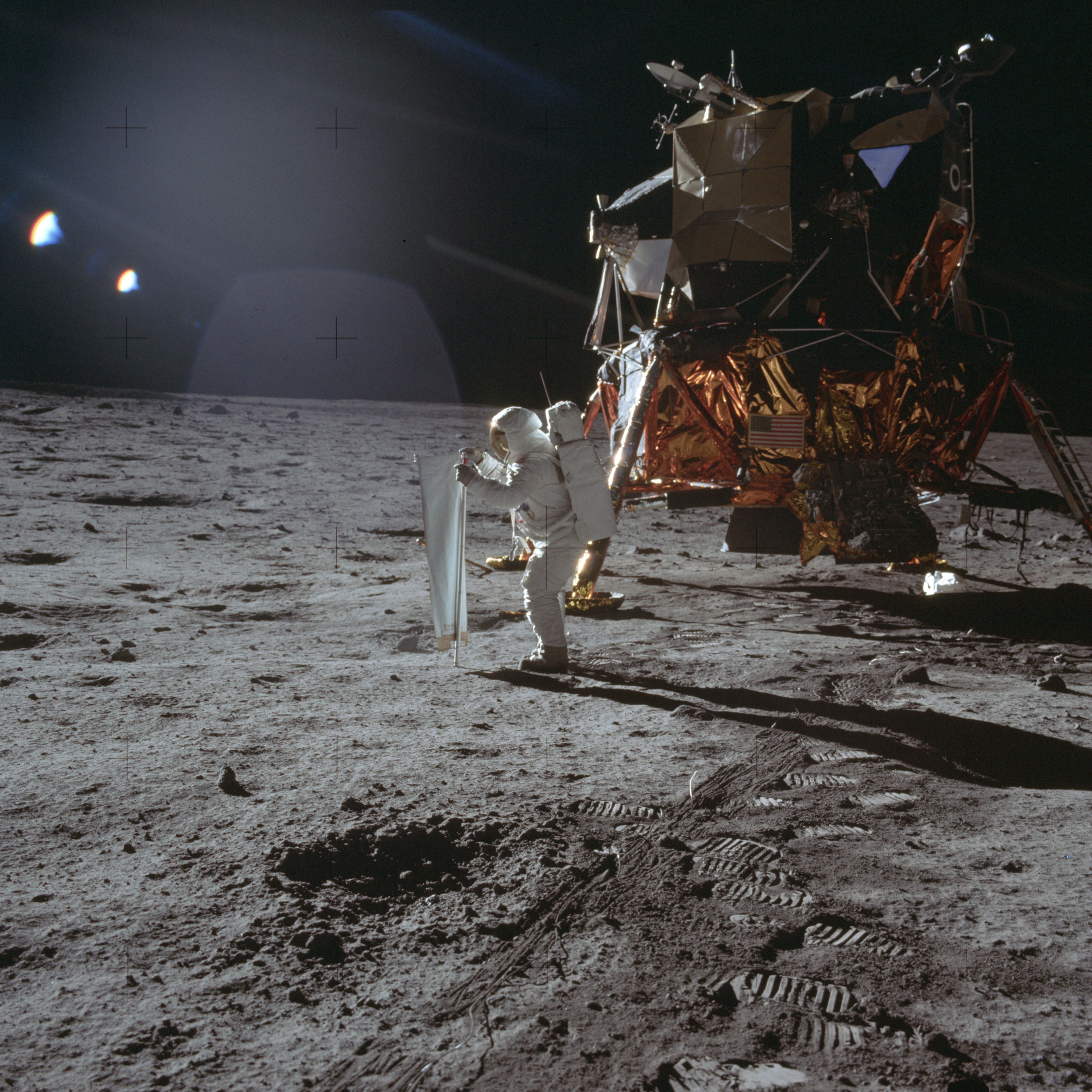
Nevertheless, at least 27 and as many as 40 or more people have visited the Challenger Deep as of early 2023. On the other hand, only 12 people have "set foot" on the Moon and 24 people have visited it.
READ MORE: What is a mayday signal, who uses it, and how was it invented?
So why does the misinformation continue?
So why do people keep saying we know more about the Moon or Mars than the deep sea?
It feels natural to compare the deep sea to space. Both are dark, scary and far away.
But we can see the Moon very easily by simply looking up. By being able to see it, we accept an apparently glowing rock hanging in the sky more easily than parts of the ocean that are very deep. We can see the Moon wax and wane and we can experience the push and pull of the tides.
It feels like we know more about the Moon than the deep sea because we are forced to accept its presence. It intrudes on our lives in a tangible way that the deep sea does not.
We don't think much about the deep sea unless we're watching a documentary or horror film, or perhaps reading about some "horrific alien-like monster" dredged up by a deep-sea trawler.
READ MORE: Why do doctors want to crack down on vaping laws?

More than half a century out of date
Because the deep sea is so physically inaccessible, comparing it to space may offer a useful analogy for an otherwise difficult-to-imagine ecosystem. But some deep-sea scientists argue that the persistent estrangement of the deep sea minimises the vast amount of research about it that has emerged in recent decades.
Deep-sea biology is relentlessly referred to as a discipline that knows less about its own field of study than a relatively small, barren rock devoid of atmosphere, water and life.
And yet this self-deprecating line is repeated by scientists themselves, who may find that highlighting the deficit of knowledge about the deep sea helps to promote the need for ocean research.
Ultimately, the idea we know more about the Moon than the deep sea is at best about 70 years out of date. We know much more about the deep sea – but there is even more left to be known.
This article is republished from The Conversation under a Creative Commons licence. Read the original article.
Father lucky to be alive after car smashes into bedroom
A father has narrowly escaped death after a car lost control and slammed into his bedroom wall in Aveley, Perth last night.
Neighbours say the car launched through the air before crashing into the side of Eddie Flynn's rental home.
"The whole room just exploded into dust and debris," he said.
READ MORE: School staff unable to save mother, baby attacked by polar bear


"A car just decided to come through the wall and join me in bed.
"Definitely lucky (to be alive) I'm going out to get a lottery ticket as soon as I can find my wallet."
Flynn and his son Josh were relatively unharmed despite Flynn being caught under the rubble from the accident. The 21-year-old driver was badly injured and taken to hospital.
"The light went on inside I remember that then the radio came on, I heard him whaling… that was when I told Josh to call 000."

READ MORE: The real reason ATMs are being phased out
The family are grateful to be alive, but now face housing issues as the home has been rendered completely unlivable by the collision.
"Just concerned about where we're going to go from here, we've gotta find someplace to live now"
Flynn says that all his belongings were destroyed in the crash, but "it's just stuff" and he is grateful to be left with is life.
The world gears up for Lunar New Year
The Lunar New Year 2023 begins on Sunday, January 22. Here's a look at how millions of people across the world will be celebrating the Year of the Rabbit.