A 17-year-old male has been charged with murder.
Tag Archives: oceania
Sandringham dairy killing: Slain worker’s family thanks community for enormous support
Over $100,000 was raised for Janak Patel’s family through a Givealittle page.
Former Mongrel Mob leader’s body found in burned-out car
Chad Puru, 55, was found dead in North Canterbury on Tuesday.
Renowned heritage architect Jeremy Salmond dies at 79
Jeremy Salmond’s legacy to live on through his impressive portfolio of work.
Weather: Wild, havoc-wreaking weather to continue across the country after popular holiday destination warned
The holiday hotspot is bearing the brunt of a subtropical storm, with communities cut off.
Moving tribute for 'first-class pilot' killed in horror chopper crash
"We have lost a first-class pilot, a first-class man and a wonderful father, partner and friend."
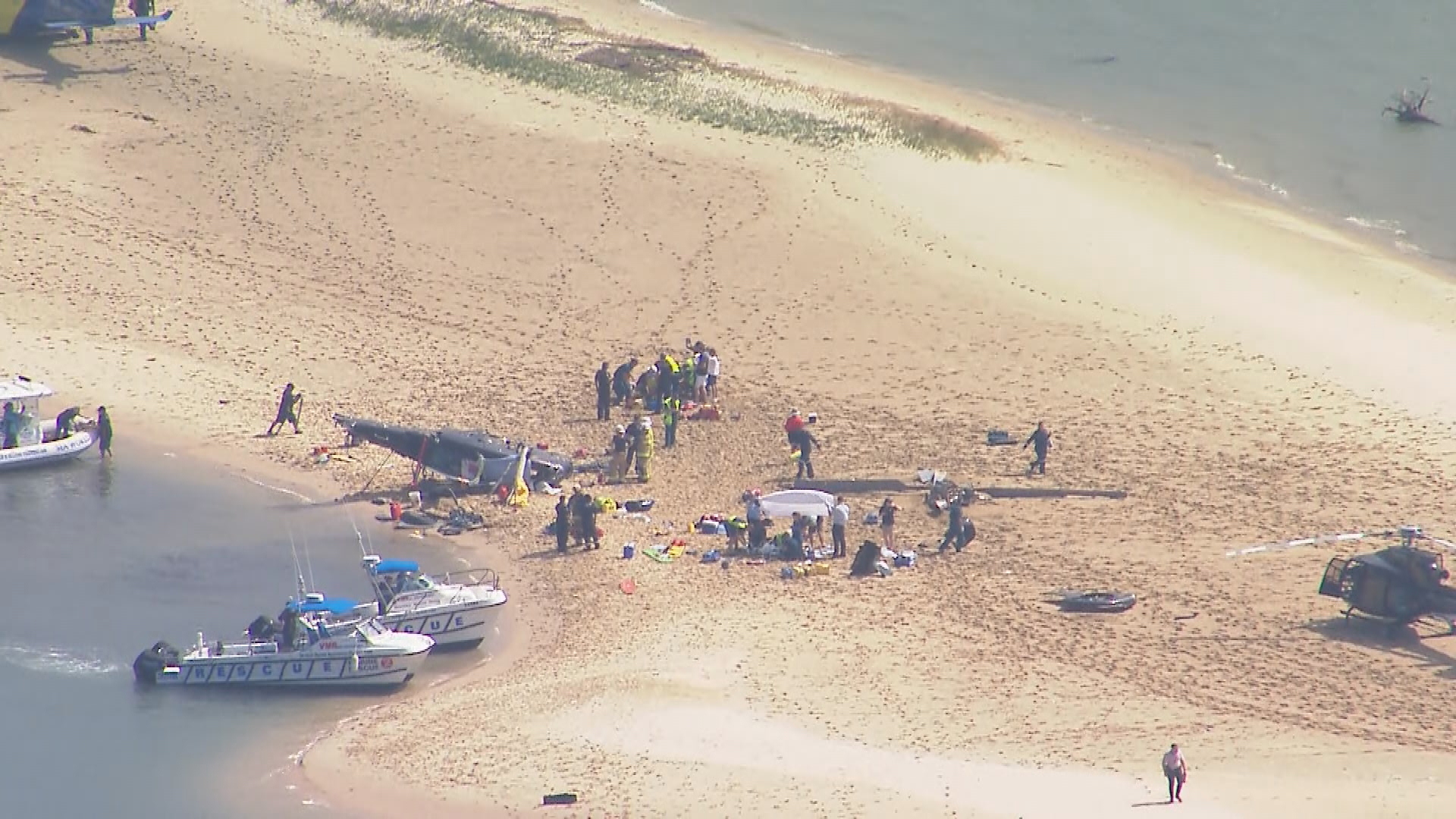
That is the tribute from director and owner of Sea World Helicopters John Orr-Campbell to the pilot killed in the horror Gold Coast crash which also claimed the lives of three others.
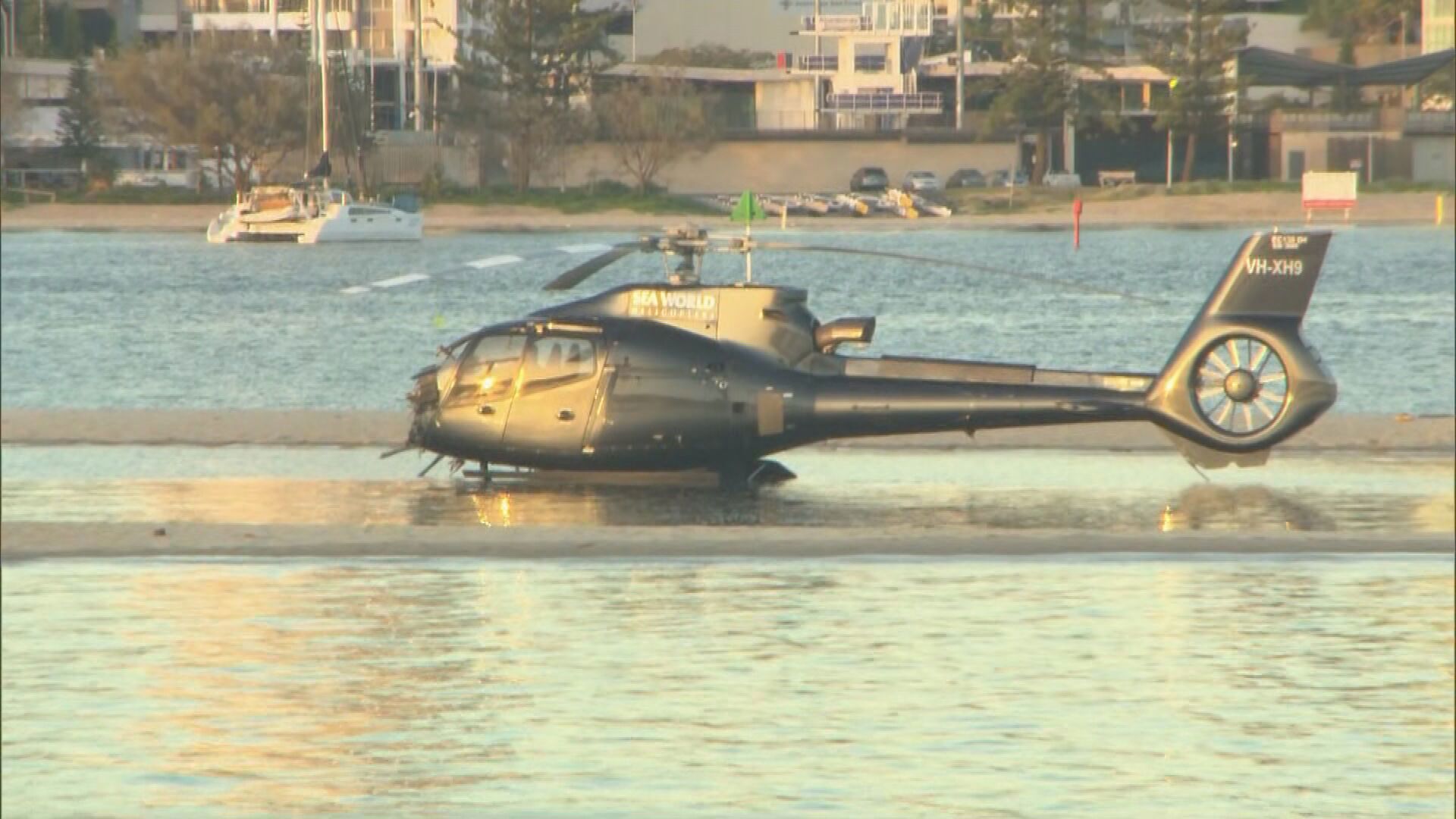
Ash Jenkinson, 40, was the pilot of one of the helicopters which collided with another chopper, snapping off its rotor blade and plummeting from the air on Tuesday afternoon at the Gold Coast Broadwater.
READ MORE: Heartbreaking final photo moments before deadly helicopter flight

Orr-Campbell said Jenkinson was an experienced pilot and was well-known to many in the aviation industry, including himself with their friendship spanning over nine years.
"To lose a man and pilot of Ash's calibre is shocking in every sense of the word," he said.
"I along with all the staff at Sea World Helicopters are gutted to the core."
Orr-Campbell also paid tribute to the passengers killed in the crash, Sydney woman Vanessa Tadros and British nationals Ron and Diane Hughes.
"We also mourn the loss of his passengers and cannot imagine the terrible sadness their families and loved one must be feeling," Orr-Campbell said.
READ MORE: Rotor blade on crashed helicopter torn off in Gold Coast collision


Jenkinson has more than 6210 hours of flying to his name and performed his first flight in 2007, which sparked a love of the air.
"His love for flying took him to the Northern Territory where he ran scenic flights until the end of September 2011," Orr-Campbell said.
The love of flying combined with his "professional, bright, warm and welcoming personality" saw him quickly rise through the ranks becoming Northern Territory Base Manager, training fellow pilots, working with traditional land owners, and firefighting operations.
"Ash showed his love and commitment to community – he was involved in multiple search and rescue flights in the area," Orr-Campbell said.
After travelling across Australia, Orr-Campbell said, Jenkinson found his home as chief pilot of Sea World Helicopters in 2019 – overseeing all aspects of safety and flight operations – where three years later his lost his life.
"RIP Ash, you will forever be in our hearts," Orr-Campbell said.
The survivors, Winnie De Silva and her nine-year-old son Leon, as well as Tadros' son Nicholas, remain in hospital.
READ MORE: Deadly Gold Coast chopper crash brought parkland to standstill, witness says
The 52-year-old Queensland pilot of the other helicopter, Michael James, managed to land safely on the sandbar and all six passengers onboard escaped major injury.
Orr-Campbell commended James' efforts to "heroically" land the helicopter after the crash and wished him well in his recovery.

Also on board the second helicopter were two New Zealand couples who said the fun five-minute joy ride turned into a nightmare and their "hearts are so heavy" for those who lost their lives.
The tragic crash is continuing to have reverberations around the Gold Coast community as residents come to terms with the shocking event.
Hundreds of bouquets of flowers have been laid at the crash site as family and friends make effusive tributes to those who lost their lives and were injured.

Gold Coast resident Ron Drevlak shared what happened in the moments after disaster struck when he saw the helicopters collide and rushed to help.
"I could see the passengers still strapped into their seats – there was a lot of shouting, a lot of noise, a lot of heat and the smell of aviation fuel was really overwhelming," Drevlak told Today.
Drevlak rushed to help passengers, freeing some before emergency services arrived.
READ MORE: Race against the tide to retrieve chopper wreckage after deadly Gold Coast crash
The accident now remains a raw memory in his mind.
"Particularly the point where the chopper came apart and hit the ground," he said.
"That noise, every time I lay down to sleep, it just keeps playing over and over in my head – it's not a pleasant thing to see."
Investigators are still trying to figure out what caused the two Sea World Helicopters aircraft to collide
Couple’s wedding day plans up in the air as wild weather wreaks havoc across Coromandel Peninsula
The couple have been engaged since 2015 and were finally due to wed this weekend.
Aussie property lurching towards a 'September dip' in 2023
After a stratospheric boom in prices, Australia's property market rapidly applied the brakes in 2022.
Eight straight rate hikes, a cost of living crisis and a lack of real wage growth saw many buyers that were ready to take the plunge in 2021 retreat from ever-growing mortgage repayments and vendors with dollar signs in their eyes.
While many dubbed 2022's value plunge – up to 20 per cent in some blue-chip suburbs – as a crash, for many it was a correction from the FOMO-fuelled historically low interest rates of 0.1 per cent.
READ MORE: Regional properties lose lockdown steam

But that now leaves many wondering what will happen in 2023, and it seems that the end may be in sight.
Dr Shane Oliver, chief economist at AMP Capital, is now forecasting prices to fall up to 20 per cent with the bottom of the market occurring in the September quarter.
"Australian home prices are likely to fall further as rate hikes continue to impact, resulting in a top to bottom fall of 15-20 per cent, but with prices expected to bottom around the September quarter, ahead of gains late in the year as the RBA moves toward rate cuts," Oliver forecasts.
"Unlisted commercial property and infrastructure are expected to see slower returns, reflecting the lagged impact of weaker share markets and higher bond yields (on valuations)."
READ MORE: Eight consecutive interest rate rises see property sales plummet

Many in the US are predicting the world's largest economy will be teetering on the edge of a recession, but Oliver believes Australia will avoid the worst of it in domestic markets.
"It seems everyone is talking about recession for 2023, such that it's a consensus call. The risk is very high (probably over 50 per cent in the US and Europe) and this will likely keep markets volatile given the threat to earnings," he predicts.
"But it may not turn out to be as bad as feared.
"Australian growth is likely to slow but avoid recession, reflecting the less aggressive RBA, the pipeline of home building work yet to be completed and the strong business investment outlook."
READ MORE: Inside Australia's top 10 most expensive property sales of 2022
Peter Munckton, chief economist at the Bank of Queensland Group, believes that Australia's housing market is yet to see the real impact of the RBA's eight-straight rate hikes.
He argues that the "lag" of these increases will continue to weigh on the property market through 2023, with only modest gains in some areas.
"While the economy may still do ok for the next couple of quarters a period of below-par economic growth thereafter is a near certainty. The impact of the rise in interest rates will increasingly be felt next year," Munckton forecasts.
"Historically the maximum impact of higher interest rates has been 1-2 years after the change in the cash rate.
"With the first rate hike in May that suggests that the full impact of higher rates will not start to be felt until mid-next year.
"This is particularly the case in the current economic cycle with the bulk of the fixed-rate home loans rolling off next year."
The information provided on this website is general in nature only and does not constitute personal financial or legal advice. The information has been prepared without taking into account your personal objectives, financial situation or needs. Before acting on any information on this website you should consider the appropriateness of the information having regard to your objectives, financial situation and needs.
It's on our beaches and in our blood – but our consumption is still rising
We see it on our beaches, in our rivers and parks. We know it's killing our sea birds and turtles.
It's in our blood. In our breastmilk. In our babies. And we don't fully understand what it could be doing to us.
Australians remain the biggest consumers of single-use plastics per capita in the world, behind Singapore, according to data by the Minderoo Foundation.
In the past 20 years our plastic consumption has doubled – and it's still rising.
READ MORE: We consume a credit card's worth of plastic every week

About one third of the plastic we consume is single-use – used for minutes or hours and then discarded – mostly into landfill.
But according to a survey commissioned by WWF and the Plastic Free Foundation, we are overwhelmingly (79 per cent) in favour of banning unnecessary single-use plastics and those that can't be easily recycled or are made from virgin plastic (78 per cent).
The collapse of REDcycle shows the nature of our problem.
Aussies were so relieved to have what appeared to be a simple and tangible solution to this massively complex issue, we took up the scheme with such gusto that it collapsed under the sheer weight of the tonnes of plastic collected.
'Clean up our own backyard'
Australia has a rapidly closing window of opportunity to help shape the global response to the plastics crisis, but we must clean up our own backyard first, according to WWF Australia.
In November, Australia joined the High Ambition Coalition to End Plastic Pollution, a collection of nations working towards a global plastic pollution treaty.
The two-year treaty process represents a huge opportunity for Australia, according to WWF Australia No Plastics in Nature policy manager Kate Noble.
READ MORE: We consume a credit card's worth of plastic every week

But we're not even close to reaching our own 2025 plastic reduction targets of 100 per cent reusable, recyclable or compostable packaging, 70 per cent plastic packaging being recycled or composted, 50 per cent of average recycled content included in packaging and the phase-out of problematic and unnecessary single-use plastics packaging.
"For all intents and purposes it seems like we're just happy to continue consuming more and more plastic with really nothing to deal with it at the end of its life so this is a massive problem," Noble told 9news.com.au.
"We have got a huge amount of public engagement and support for reducing the role of plastic in our lives and making sure we use it responsibly and as little as possible.
"We've got many governments in Australia that are taking action on this and have signalled their intent to take it even more seriously which they absolutely need to do.
"We've even got companies who are saying… we need a clear path forward and a clear policy framework to make this easier for businesses.
"All of the acknowledgement and agreement that we need to do something really big is there."
The treaty process, she said, provides a once-in-a-lifetime opportunity to tackle the problem at a global level but it won't solve the plastics crisis without real leadership and decisive actions from governments.
We cannot recycle our way out of this
REDcycle was never a "complete or long-term solution" and could never have addressed our massive use of soft plastics, Noble said.
The federal government, however, is keen to see it reinstated.
A spokesperson for the Department of Climate Change, Energy, the Environment and Water said the suspension of REDcycle and the collection of soft plastic packaging and recycling was "unfortunate but… temporary".
"The government wants to see collections on foot again and restore the access for everyday Australians to do their part and drop off their soft plastics for recycling," the spokesperson said.

Chemical recycling, which breaks down plastic into its constituent properties so it can be converted back into plastic, or into oil, is being overhyped by companies and governments, according to Noble.
"(Plastics recycling) is not, in our view, the solution because it locks in these really high levels of plastic consumption which are not sustainable," Noble said.
"Reduction is absolutely the way forward and it is happening a bit but it's not really happening at scale."
While consumers absolutely have a part to play in the choices they make at the checkout, it's producers and retailers that must be made to do more of the heavy lifting, she said.
"It's hugely important for us to make whatever changes we can while we also keep this issue on the public agenda and also demand that the companies that make the products that we need are doing so in a much more sustainable way.
"What kills me is when I check the price of loose carrots compared to bagged carrots and the bagged carrots are cheaper."

Regulation can and should address that, she said.
In France, there are now thresholds regulating the packaging of certain fruit and vegetables in plastic according to weight range.
"You just wouldn't have to make that choice when you were in the supermarket because there would be one way of buying carrots and it wouldn't be in plastic," she said.
Other regulatory solutions include taxes on virgin plastics in packaging that make them less financially viable and motivate industry to innovate.
The elimination of unnecessary single-use plastics from closed-loop systems like planes and airports could also make an impact.
"Australia has had a long-standing commitment to industry-led regulation and it's time for us to recognise that this has not worked," Noble said.
"(While) it's great to see the states and territories and Australian government talking about stronger regulation… I would like the Australian government to take really strong leadership on this and drive forward a national circular economy plastic reduction and pollution agenda right from the start of next year.
"It will start to deal with a lot of the problems that we have at home but it will also have a knock-on effect internationally as this treaty process plays out."

The government said it is taking action to manage plastic pollution domestically through the National Waste Policy Action Plan and National Plastics Plan
"While industry continues to make progress towards the voluntary National Packaging Targets, Australian environment ministers have agreed to reform packaging regulation by 2025," the spokesperson said.
"This will see all packaging designed to be recovered, reused, recycled, and reprocessed safely in line with circular economy principles."
It says it is "actively engaging in negotiations" on the global treaty, the full content of which is to be agreed by UN members by the end of 2024.
Minister for the Environment Tanya Plibersek said her vision is for a "plastic-free Pacific in our lifetime".
During the two-year negotiation period alone, the total amount of plastic pollution in the ocean is tipped to increase by 15 per cent.
'They are afraid of us': How billionaires prep for the apocalypse
If society collapses and the apocalypse begins, there's a lot to worry about.
For ordinary people, the question will be if they have enough food, enough water, a sufficient enough shelter to survive a nuclear winter or an extreme weather disaster.
Prepping, or preparing for an apocalyptic event, is an obsession for a growing number of people around the world.
READ MORE: Demand for underground bunkers soars

That includes stocking up on food, digging underground bunkers and stocking up on shotguns.
But for the billionaires in the world, there's a much greater fear – us.
And some of the world's wealthiest people are now preparing for the possibility that when everything goes south, everybody else will come for them.
That's why a small group of the incredibly wealthy invited media theorist Douglas Rushkoff to speak to them.
Rushkoff was expecting to give a lecture to a larger group, but instead five billionaires or multi-millionaires arrived to pepper him with questions.
Rushkoff was asked all sorts of questions about how to survive the collapse of civilisation.
Where should they build their bunker? Should they start a new settlement in the middle of the ocean? Should they be investing more in cryptocurrency?
But in the end, their greatest fear was of the average person.
READ MORE: Doomsday real estate being snapped up by tech millionaires
"They are afraid of us. You and me and everyone else realising that these dudes are responsible, and coming after them," Rushkoff said.
"They all believe they can use technology to keep out the pollution or radiation or viruses. What they're worried about are the masses. The refugees. Humanity.
"To them, we are like a zombie invasion."
But for Rushkoff, the isolationist approach at the end of the world is a recipe for disaster.
"The more they act like we are in a catastrophe, the more resources they hoard, the more energy they use to build their private nations, and the more damage they do to the rest of the climate and society," he said.
"Any real prepper understands this is a terrible strategy.
"The first thing a legitimate prepper does is educate their neighbours. You can't go it alone. You need friends and neighbours.
"One does farming, another does healthcare, another does defence, another takes care of the kids.
"You don't want to be the only one on your block who has prepared for a disaster, or you will simply have everyone outside your house begging for food. Or doing worse than begging."
READ MORE: The best and worst Australian cities for a zombie apocalypse revealed

But as the billionaires Rushkoff was speaking to began to despair, Rushkoff couldn't help but laugh.
"Here were the wealthiest, most powerful people I had ever met. Yet they felt utterly powerless to influence the future," Rushkoff said.
"I'd ask them if they thought about how to pay their security guards once the world was over and their money was worthless, and they'd open up their little Moleskin notepads and write 'figure out how to pay security guards after money is worthless'."
And for some of these billionaires, the path to survival lies in uploading their consciousness to the internet.

"They want to do this whether or not there's an apocalypse. They want to become machine consciousness as a way of avoiding death, but also as a way of avoiding people and intimacy.
"An apocalyptic event is just the excuse for them to retreat to the ultimate video game. But they are hoping to go there, anyway."
For the rest of us, a room in a network of underground bunkers in South Dakota can be bought for less than $200,000.
Prepper entrepreneur Robert Vicino said his bunkers are supplied to live in for a year, including underground wells, air purifiers and 20,000 sheets of toilet paper per person.