Tag Archives: oceania

Melbourne Cup-winning trainer pleads guilty to animal cruelty

Melbourne Cup-winning horse trainer Darren Weir has admitted to three charges of animal cruelty.

He faced Warrnambool Magistrates Court on Wednesday alongside his fellow trainer and former assistant Jarrod McLean.

McLean and stablehand Tyson Kermond have also pleaded guilty to three animal cruelty charges.

READ MORE: Officers 'fired upon' almost immediately after arriving at Queensland property

Charges initially filed by prosecutors referred to the torture of animals, but lawyers for the trio made it clear they admitted the charge on the grounds of abuse only.

Weir, who is represented by Ian Hill KC, is also pleading guilty to a firearms charge.

McLean has admitted to possession of cocaine.

READ MORE: A $1 million reward offered over 'suspicious disappearance' of Cherie Westall

Darren Weir

A number of other charges have been withdrawn.

A pre-sentence hearing is continuing for the men who have all appeared in court in person.

Beach vanished in NZ earthquake, tsunami pushed debris 40m inland

More than 680 aftershocks, 30 landslides and a beach that vanished into the depths are among the early notes from scientists who have been analysing the effects of the 5.7-magnitude quake that hit New Zealand's Lake Taupō late last month.

GNS Science has released its latest update on the quake, upgrading its magnitude from 5.6 to 5.7 after a more thorough data analysis.

Experts have been busy collecting and analysing data to help understand exactly what happened during and following the M5.7 earthquake that struck at 11.47pm on November 30, 15km south-west of Taupō.

READ MORE: Officers 'fired upon' almost immediately after arriving at property

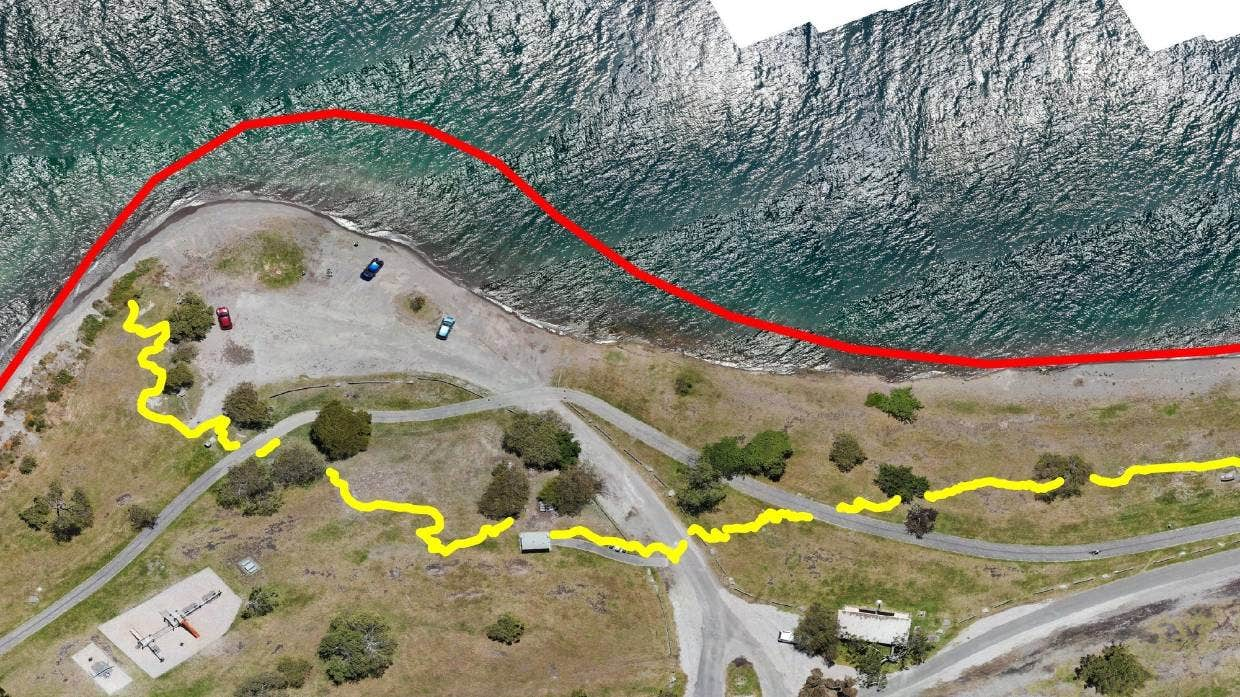
GNS Science says a possible underwater landslide occurred at Wharewaka Point, causing 170m of the shoreline to subside into the lake, with a maximum retreat of up to 20m.

The magnitude and rate of aftershocks has started to decline but is expected to continue for several weeks, GNS said.

Up until Wednesday, GNS had recorded more than 680 aftershocks, with the most recent being a magnitude-3.4 on December 12.

"Within the next 30 days, there is an estimated 11 per cent chance (very unlikely) that there will be an earthquake of magnitude 5 or above in the Taupō area.

"In addition to the shaking of the ground during the earthquake, our sensitive GNSS (Global Navigation Satellite System – commonly referred to as GPS) instruments in and around Lake Taupō measured ground movement.

"Our instrument at Horomatangi reef moved 18cm upwards during the earthquake and 25cm to the southeast, which is the largest ever recorded ground movement at this location."

A small tsunami was also generated in Lake Taupō on the night of the earthquake.

"The waves travelled across the lake and surged a few metres across many beaches, leaving behind some strands of pumice, sticks and sand.

"The larger surge at Wharewaka Point, where the beach is known to have retreated by some 20m, may be associated with a possible underwater landslide."

READ MORE: Reward offered over 'suspicious disappearance' of Cherie Westall

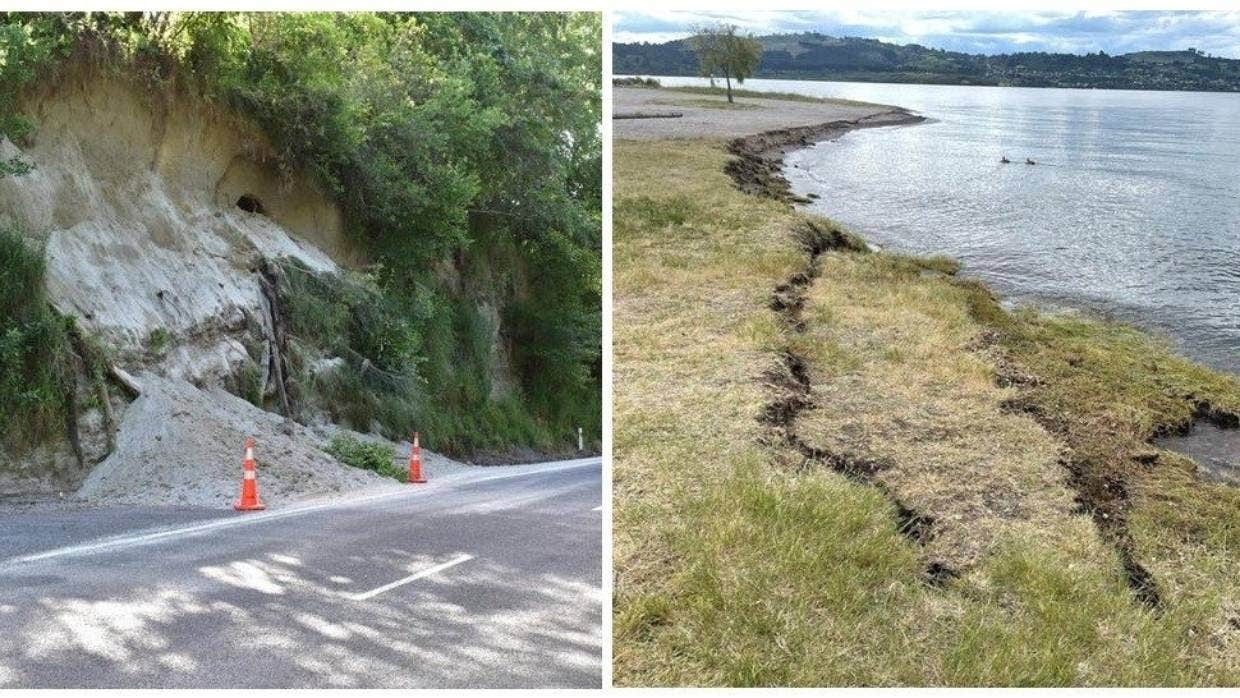
Small landslides (left) and ground movement at local beaches were found after the quake.

GNS said in some places the lakeshore had been undercut by waves and small areas had collapsed a metre or so back.

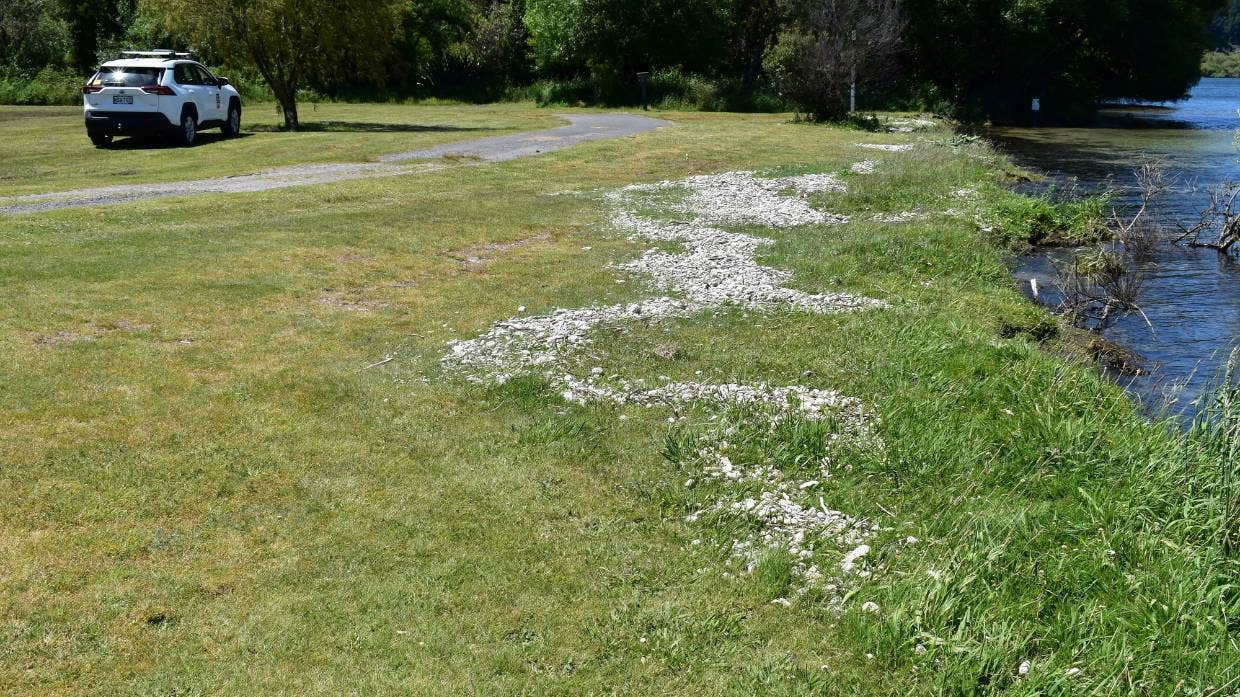
"However, major changes happened at Wharewaka point near Taupō, with substantial washout of the foreshore and beach, and pumice debris stranded to a maximum of about 40m inland from the lake.

"We are running computer models of the tsunami to understand how it might have been generated and spread across the lake. We are also investigating the specific cause of the effects at Wharewaka Point."

READ MORE: Brittany Higgins settles compensation claim

Debris was pushed over the foreshore at Lake Taupō by a suspected tsunami.

GNS said more than 30 landslide events were triggered by the 5.7 earthquake.

"This is not unexpected, given the severity of the shaking, and the timing of the earthquake, which followed several weeks of particularly wet weather."

Most landslides were small slips on steep cut slopes close to roads, while larger rockfalls were identified closer to the epicentre in the vicinity of Hatepe.

On the White Cliffs along the eastern lake shore north of Hatepe, a several-hundred-metre-long section of the cliffs collapsed into the lake, generating a large white plume of sediment that could be seen stretching north along the coastline several days after the earthquake.

"The most notable single earthquake-triggered land movement was located over 15km north of the epicentre, at Wharewaka Point.

READ MORE: The explosive truth about 'supervolcanoes'

"It is possible an underwater landslide occurred at the location of the popular swimming beach, causing 170m of the shoreline to subside into the lake, with a maximum retreat of up to 20m.

"Whilst still under investigation it is possible that the collapse of the beach into the lake drew water in behind it, generating the local tsunami that washed up onto the picnic area behind it."

Underwater landslides are known to be some of the largest landslides on earth and can trigger tsunamis, however, there is currently no evidence to suggest the Wharewaka Point landslide generated the larger lake-wide tsunami observed following this earthquake.

Minor volcanic unrest has been ongoing at Taupō Volcano since May 2022, and the Volcanic Activity Level was raised to 1 in September 2022.

This story originally appeared on Stuff and has been reproduced with permission.

What is fusion and why it could be a clean-energy breakthrough

The major advance in fusion research announced in Washington overnight was decades in coming, with scientists for the first time able to engineer a reaction that produced more power than was used to ignite it.

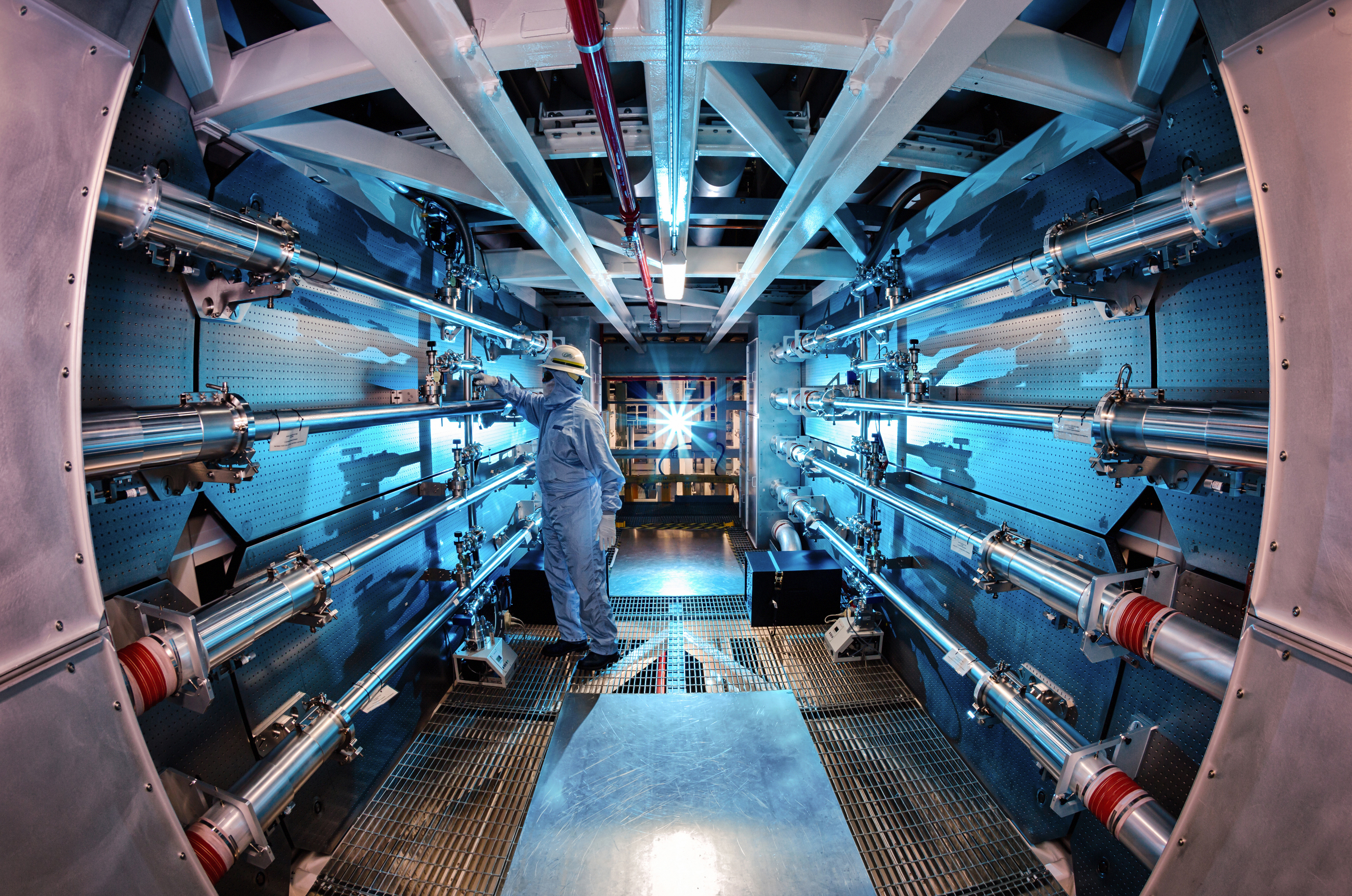
Using powerful lasers to focus enormous energy on a miniature capsule half the size of a BB, scientists at the Lawrence Livermore National Laboratory in California started a reaction that produced about 1.5 times more energy than was contained in the light used to produce it.

There are decades more to wait before fusion could one day — maybe — be used to produce electricity in the real world.

READ MORE: Officers 'fired upon' almost immediately after arriving at Queensland property
But the promise of fusion is enticing. If harnessed, it could produce nearly limitless, carbon-free energy to supply humanity's electricity needs without raising global temperatures and worsening climate change.

At the press conference in Washington, the scientists celebrated.

"So, this is pretty cool," Marvin "Marv" Adams, the National Nuclear Security Administration deputy administrator for defence programs, said.

"Fusion fuel in the capsule got squeezed, fusion reactions started. This had all happened before – 100 times before – but last week for the first time they designed this experiment so that the fusion fuel stayed hot enough, dense enough and round enough for long enough that it ignited," Adams said.

"And it produced more energy than the lasers had deposited."

Here's a look at exactly what nuclear fusion is, and some of the difficulties in turning it into the cheap and carbon-free energy source that scientists hope it can be.

What is nuclear fusion?

It's happening right above you — nuclear fusion reactions power the sun and other stars.

The reaction happens when two light nuclei merge to form a single heavier nucleus.

Because the total mass of that single nucleus is less than the mass of the two original nuclei, the leftover mass is energy that is released in the process, according to the Department of Energy.

READ MORE: A $1 million reward offered over 'suspicious disappearance' of Cherie Westall

In the case of the sun, its intense heat — millions of degrees Celsius — and the pressure exerted by its gravity allow atoms that would otherwise repel each other to fuse.

Scientists have long understood how nuclear fusion has worked and have been trying to duplicate the process on Earth as far back as the 1930s.

Current efforts focus on fusing a pair of hydrogen isotopes — deuterium and tritium — according to the Department of Energy, which says that particular combination releases "much more energy than most fusion reactions" and requires less heat to do so.

How valuable could this be?

Daniel Kammen, a professor of energy and society at the University of California at Berkeley, said nuclear fusion offers the possibility of "basically unlimited" fuel if the technology can be made commercially viable.

The elements needed are available in seawater.

It's also a process that doesn't produce the radioactive waste of nuclear fission, Kammen said.

Crossing the line of net energy gain marks a major achievement, Carolyn Kuranz, a University of Michigan professor and experimental plasma physicist, said.

READ MORE: Brittany Higgins settles compensation claim
"Of course, now people are thinking, well, how do we go to 10 times more or 100 times more? There's always some next step," Kuranz said.

"But I think that's a clear line of, yes, we have achieved ignition in the laboratory."

How are scientists trying to do this?

One way scientists have tried to recreate nuclear fusion involves what's called a tokamak — a doughnut-shaped vacuum chamber that uses powerful magnets to turn fuel into a superheated plasma (between 150 million and 300 million degrees Celsius) where fusion may occur.

The Livermore lab uses a different technique, with researchers firing a 192-beam laser at a small capsule filled with deuterium-tritium fuel.

The lab reported that an August 2021 test produced 1.35 megajoules of fusion energy — about 70 per cent of the energy fired at the target.

The lab said several subsequent experiments showed declining results, but researchers believed they had identified ways to improve the quality of the fuel capsule and the lasers' symmetry.

Why is fusion so hard?

It takes more than extreme heat and pressure. It also takes precision.

The energy from the lasers must be applied precisely to counteract the outward force of the fusion fuel, according to Stephanie Diem, an engineering physics professor at the University of Wisconsin–Madison.

And that's just to prove net energy gain is possible. It's even harder to produce electricity in a power plant.

For example, the lab's lasers can only fire a few times a day.

To viably produce energy, they would need to fire rapidly and capsules would need to be inserted multiple times a minute, or even faster, Kuranz said.

Another challenge is to increase efficiency, said Jeremy Chittenden, a professor at Imperial College in London specializing in plasma physics.

The lasers used at Livermore require a lot of electrical energy, and researchers need to figure out a way to reproduce their results in a much more cost-effective way, he said.

Bodycams spotted across Woolies stores in Australia

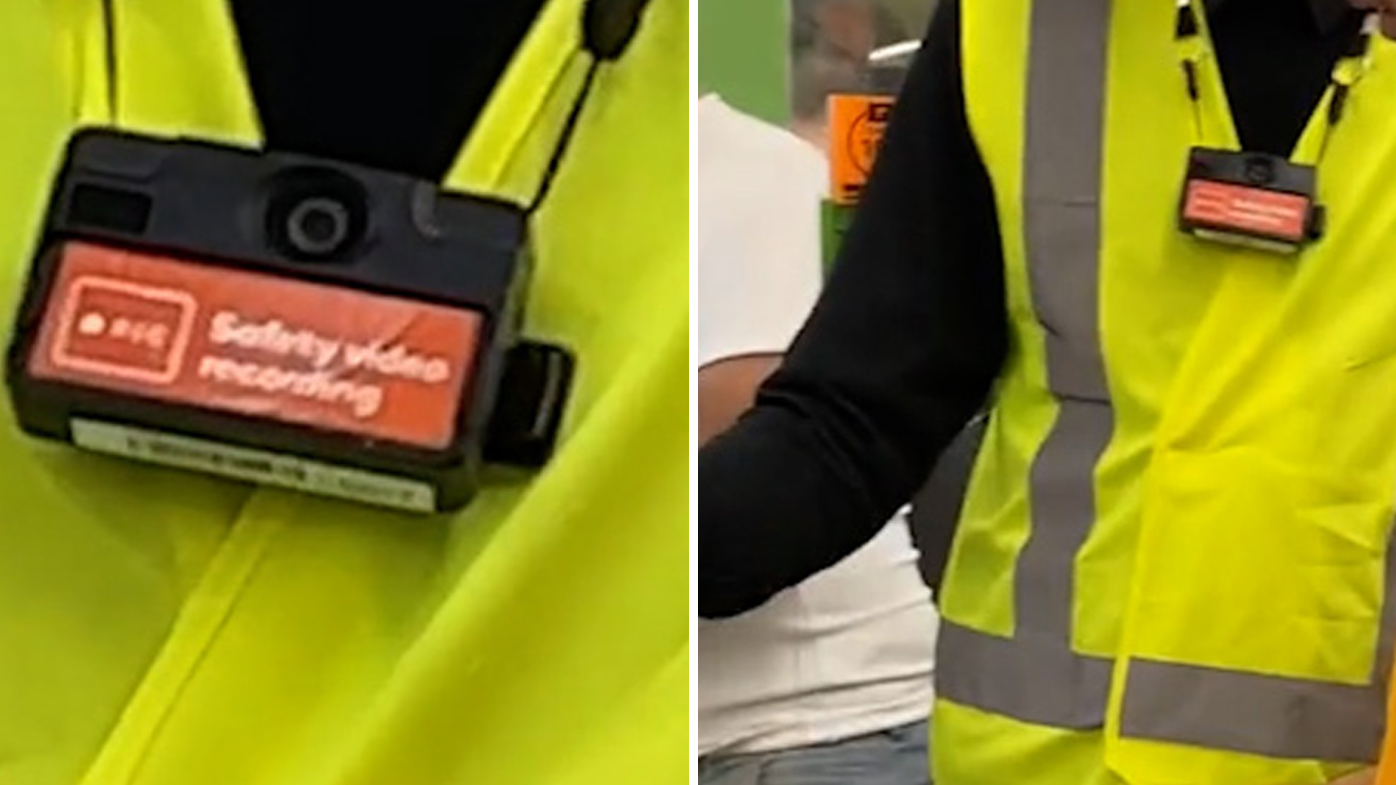
Months after the trial period was intended to end, staff bodycams are still being worn at some Woolworths stores in Australia.

A year after the initiative was first rolled out in April 2021 – in a bid to combat in-store violence, sexual and verbal assault – keen-eyed Aussies have spotted the cameras still very much in use at a number of stores.

While many have praised the protocol online for protecting staff from aggressive customers, some have said the move highlights how poorly retail staff are treated.

READ MORE: Officers 'fired upon' immediately after arriving at Queensland property

"Since April last year, we've been trialling team safety cameras in a small number of stores to see if they can help prevent assaults and abuse of our team members," a Woolworths spokesperson said.

"Nobody deserves to be abused at work, so it's important we look at new measures to help keep our team members safe.

"These cameras are used widely in retail across the US and UK and have been effective in reducing the rate of reported incidents."

READ MORE: Brittany Higgins settles compensation claim

The spokesperson said cameras will "only be turned on as a last resort" if a supervisor is concerned about a threat to team safety.

Throughout the height of the pandemic, Woolworths and most other major supermarket chains and retail stores reported a sharp spike in in-store violence and abuse.

In particular, people took issues with COVID-19 protocols like mask-wearing, social distancing and limits on products.

READ MORE: A $1 million reward over 'suspicious disappearance' of Cherie Westall

Both Coles and Woolies employed full-time security in certain stores, while police also patrolled aisles around the country to monitor customer behaviour. 

The bodycams have remained in some stores as a precaution.

They do need to be turned on to capture footage and audio is only recorded if a trained store supervisor deems it necessary.

Recordings are stored securely on Australian servers, with access to the footage limited to a small team of Woolworths security experts and law enforcement agencies.

Australian facing charges over training Chinese military pilots

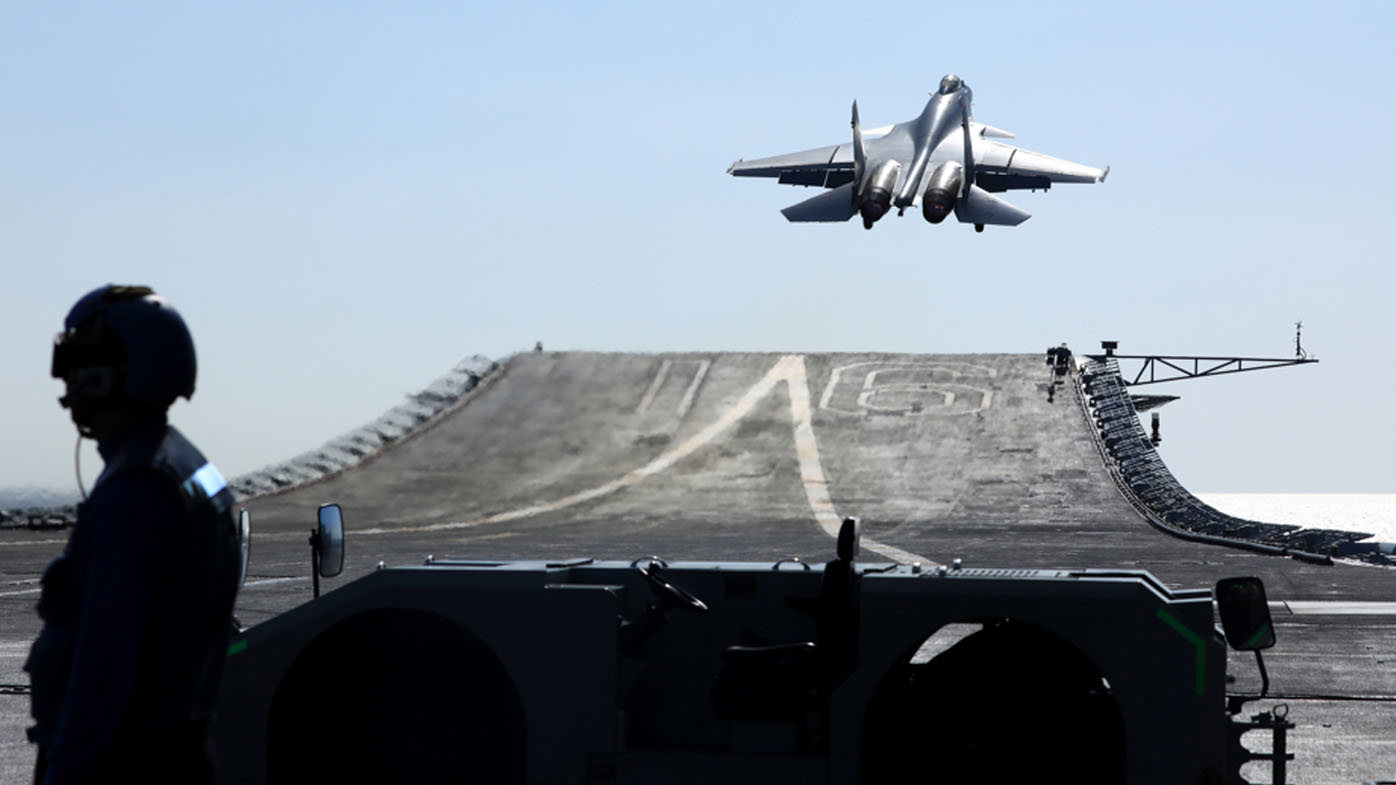
Australian citizen and former US Marine pilot Daniel Duggan, who was arrested earlier this year in New South Wales, is accused of breaking American arms control law by training Chinese military pilots to land on aircraft carriers, according to an indictment unsealed by a US court.

The 2017 indictment, released last Friday by the District of Columbia court, said "Duggan provided military training to PRC People's Republic of China) pilots" through a South African flight school on three occasions in 2010 and 2012.

It lists unnamed co-conspirators including one South African and one British national who were executives of "a test flying academy based in South Africa with a presence in the PRC," and a Chinese national who acquired military information for the Chinese military.

READ MORE: Officers 'fired upon' almost immediately after arriving at Queensland property

Defence Minister Richard Marles announced last month an urgent inquiry to stop former ADF personnel from being headhunted by China.

Britain also said it was cracking down on its former military pilots working to train Chinese military fliers.

Australian police provisionally arrested Duggan in the regional city of Orange in NSW at the request of the US government in October, pending a likely extradition request by the US.

Duggan's lawyer, Dennis Miralis of Australian law firm Nyman Gibson Miralis, did not immediately respond to a Reuters request for comment on the indictment.

He has previously said Duggan denies breaching any law and is an Australian citizen who had renounced his US citizenship.

The court also unsealed a US warrant for Duggan on Friday.

READ MORE: Australian air force 'needs $30 billion stealth bombers to deter China'

Duggan faces four charges, including conspiracy to defraud the US by conspiracy to unlawfully export defence services to China, conspiracy to launder money, and two counts of violating the arms export control act and international traffic in arms regulations.

He is now being held in custody in Sydney, and his case will return to a Sydney court this week.

The US must lodge an extradition request for Duggan by Tuesday, December 20 under a bilateral treaty.

Training foreign forces

The indictment said Duggan was allegedly contracted directly by the unnamed Chinese national to provide services to a Chinese state-owned company, including evaluations of Chinese military pilot trainees, testing of naval aviation-related equipment and instruction on tactics related to landing aircraft on aircraft carriers.

Duggan did not seek authorisation from the US government to provide military training to China, although the US State Department had informed him by email in 2008 this was required to train a foreign air force, it said.

The indictment alleges he travelled frequently between Australia, the US, China and South Africa between 2009 and 2012, when he was a US citizen and Australian citizen.

READ MORE: Brittany Higgins settles compensation claim

Duggan's alleged violation of an arms embargo imposed on China by the US also included providing aviation services in China in 2010, and providing an assessment of China's aircraft carrier training, it said.

The indictment alleges the Chinese national brokered a deal between the South African flight school and a Chinese state-owned enterprise to provide aircraft carrier landing training to Chinese military pilots in South Africa and China.

A T-2 Buckeye aircraft was purchased from a US aircraft dealer for this training, by providing false information that resulted in the US government issuing an export licence, it said.

Duggan moved to Australia in 2002 after a decade in the US Marines, later moving to Beijing in 2014 where he worked as an aviation consultant.

He returned to Australia from China weeks before he was arrested, according to his lawyer.

Reuters previously reported that in 2014 Duggan shared a Beijing address with a Chinese businessman, Su Bin, who was arrested in Canada in July 2014 and sentenced to prison in the US two years later after pleading guilty in a high-profile hacking case involving the theft of US military aircraft designs.