Tag Archives: oceania

Decoding ancient hurricanes traces – and it's not good news

If you look back at the history of Atlantic hurricanes since the late 1800s, it might seem hurricane frequency is on the rise.

The year 2020 had the most tropical cyclones in the Atlantic, with 31, and 2021 had the third-highest, after 2005.

The past decade saw five of the six most destructive Atlantic hurricanes in modern history.
Then a year like 2022 comes along, with no major hurricane landfalls until Fiona and Ian struck in late September.

The Atlantic hurricane season, which ended on November 30, had eight hurricanes and 14 named storms.

It's a reminder that small sample sizes can be misleading when assessing trends in hurricane behaviour.

There is so much natural variability in hurricane behaviour year to year and even decade to decade that we need to look much further back in time for the real trends to come clear.
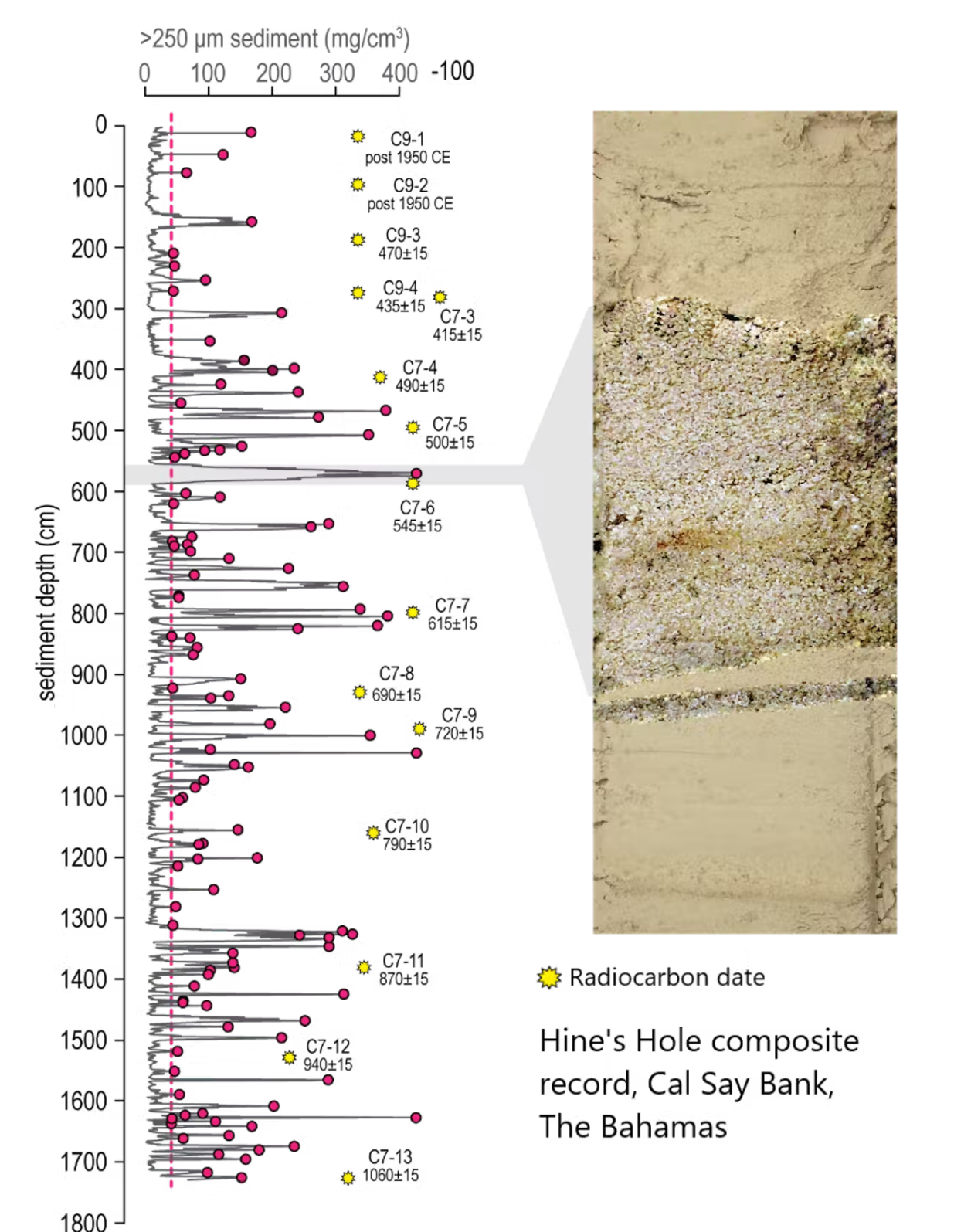
Fortunately, hurricanes leave behind telltale evidence that goes back millennia.

Two thousand years of this evidence indicates that the Atlantic has experienced even stormier periods in the past than we've seen in recent years.

That's not good news.

It tells coastal oceanographers like me that we may be significantly underestimating the threat hurricanes pose to Caribbean islands and the North American coast in the future.

The natural records hurricanes leave behind

When a hurricane nears land, its winds whip up powerful waves and currents that can sweep coarse sands and gravel into marshes and deep coastal ponds, sinkholes and lagoons.

Under normal conditions, fine sand and organic matter like leaves and seeds fall into these areas and settle to the bottom.

So when coarse sand and gravel wash in, a distinct layer is left behind.

Imagine cutting through a layer cake – you can see each layer of frosting.

Scientists can see the same effect by plunging a long tube into the bottom of these coastal marshes and ponds and pulling up several meters of sediment in what's known as a sediment core.

By studying the layers in sediment, we can see when coarse sand appeared, suggesting an extreme coastal flood from a hurricane.

With these sediment cores, we have been able to document evidence of Atlantic hurricane activity over thousands of years.

We now have dozens of chronologies of hurricane activity at different locations – including New England, the Florida Gulf Coast, the Florida Keys and Belize – that reveal decade- to century-scale patterns in hurricane frequency.

Others, including from Atlantic Canada, North Carolina, northwestern Florida, Mississippi and Puerto Rico, are lower-resolution, meaning it is nearly impossible to discern individual hurricane layers deposited within decades of one another.

But they can be highly informative for determining the timing of the most intense hurricanes, which can have significant impacts on coastal ecosystems.

It's the records from the Bahamas, however, with nearly annual resolution, that are crucial for seeing the long-term picture for the Atlantic Basin.

Why the Bahamas are so important

The Bahamas are exceptionally vulnerable to the impacts of major hurricanes because of their geographic location.

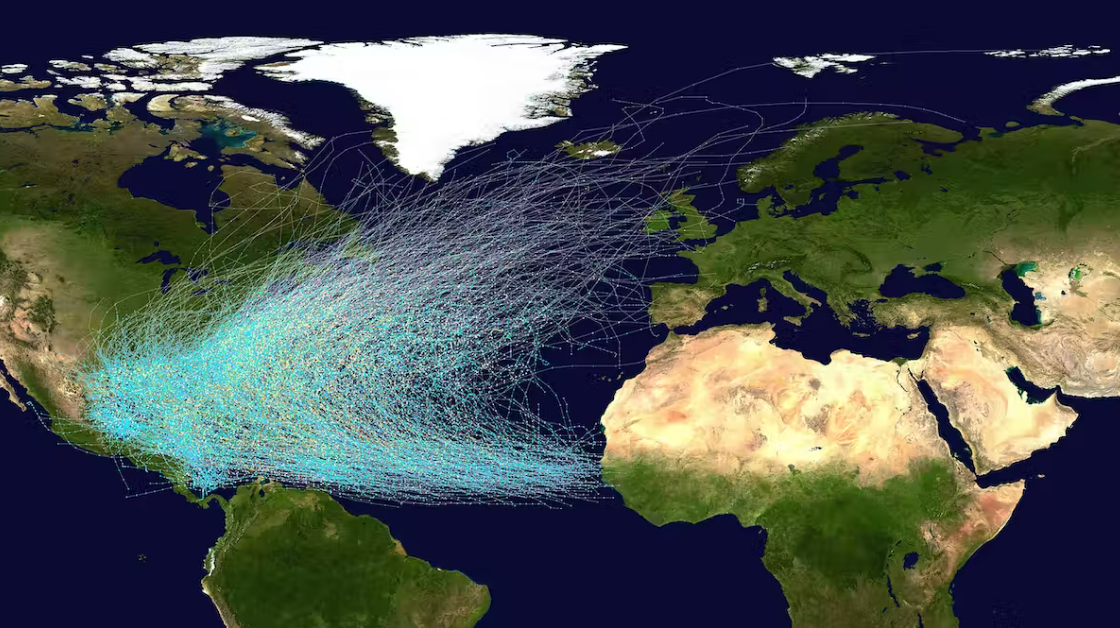
In the North Atlantic, 85 per cent of all major hurricanes form in what is known as the Main Development Region, off western Africa.

Looking just at observed hurricane tracks from the past 170 years, my analysis shows that about 86 per cent of major hurricanes that affect the Bahamas also form in that region, suggesting the frequency variability in the Bahamas may be representative of the basin.

A substantial percentage of North Atlantic storms also pass over or near these islands, so these records appear to reflect changes in overall North Atlantic hurricane frequency through time.
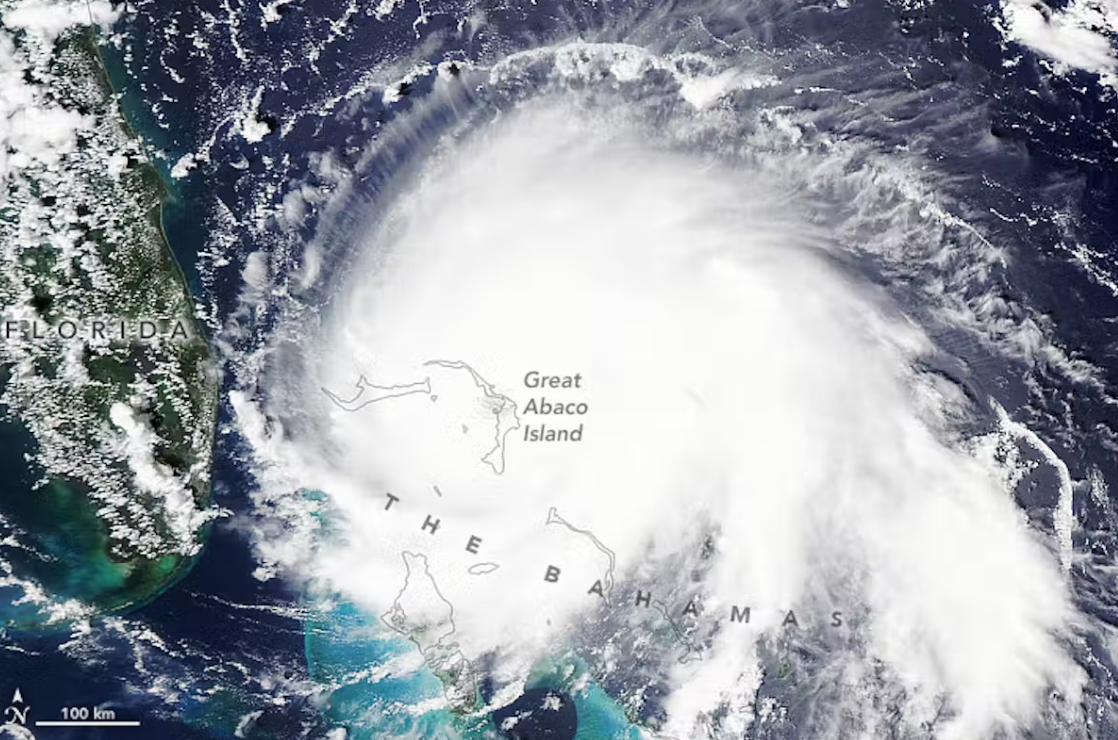
By coupling coastal sediment records from the Bahamas with records from sites farther north, we can explore how changes in ocean surface temperatures, ocean currents, global-scale wind patterns and atmospheric pressure gradients affect regional hurricane frequency.

As sea surface temperatures rise, warmer water provides more energy that can fuel more powerful and destructive hurricanes. However, the frequency of hurricanes – how often they form – isn't necessarily affected in the same way.

The secrets hidden in blue holes

Some of the best locations for studying past hurricane activity are large, near-shore sinkholes known as blue holes.

Blue holes get their name from their deep blue colour.

They formed when carbonate rock dissolved to form underwater caves.

Eventually, the ceilings collapsed, leaving behind sinkholes.

The Bahamas has thousands of blue holes, some as wide as a third of a mile and as deep as a 60-storey building.

They tend to have deep vertical walls that can trap sediments – including sand transported by strong hurricanes.

Fortuitously, deep blue holes often have little oxygen at the bottom, which slows decay, helping to preserve organic matter in the sediment through time.

Cracking open a sediment core

When we bring up a sediment core, the coarse sand layers are often evident to the naked eye.

But closer examination can tell us much more about these hurricanes of the past.

I use X-rays to measure changes in the density of sediment, X-ray fluorescence to examine elemental changes that can reveal if sediment came from land or sea, and sediment textural analysis that examines the grain size.

To figure out the age of each layer, we typically use radiocarbon dating. By measuring the amount of carbon-14, a radioactive isotope, in shells or other organic material found at various points in the core, I can create a statistical model that predicts the age of sediments throughout the core.

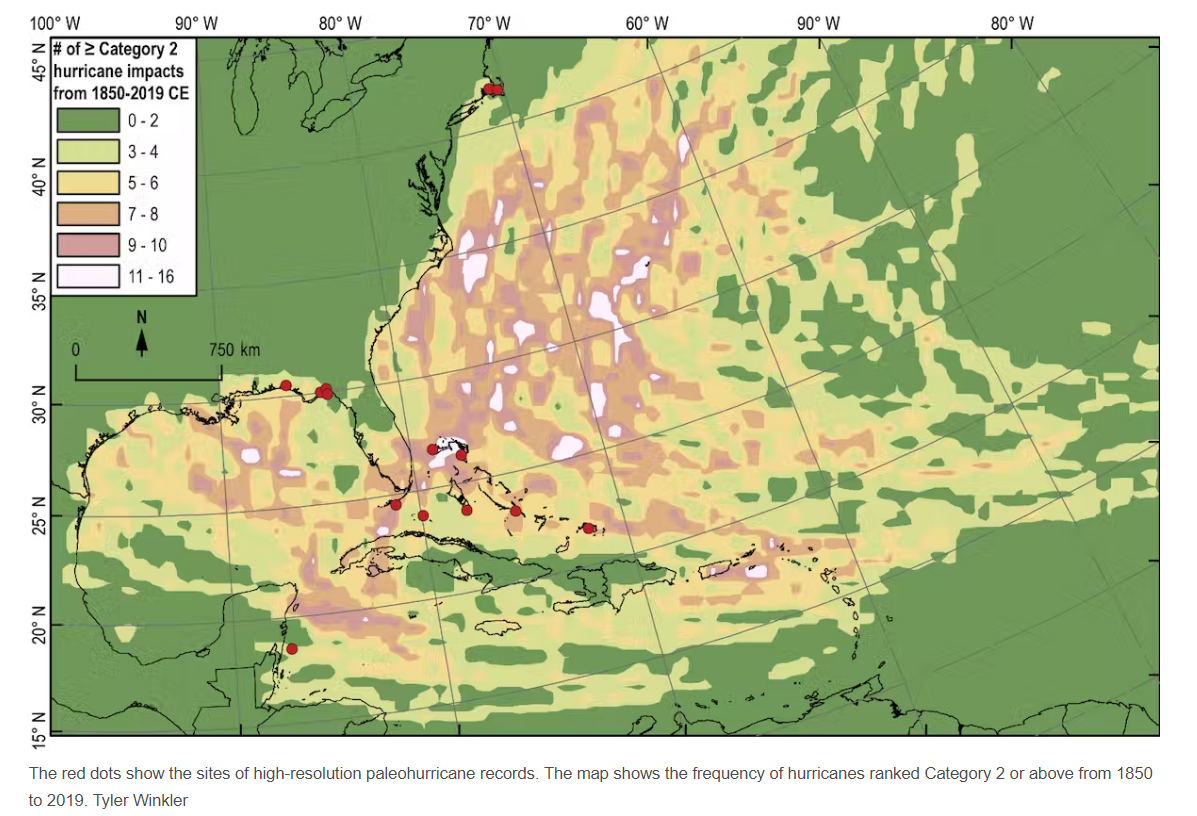
So far, my colleagues and I have published five paleohurricane records with nearly annual detail from blue holes on islands across the Bahamas.

Each record shows periods of significant increase in storm frequency lasting decades and sometimes centuries.

The records vary, showing that a single location might not reflect broader regional trends.

For example, Thatchpoint Blue Hole on Great Abaco Island in the northern Bahamas includes evidence of at least 13 hurricanes per century that were Category 2 or above between the years 1500 and 1670.

That significantly exceeds the rate of nine per century documented since 1850.

During the same period, 1500 to 1670, blue holes at Andros Island, just 300 kilometres south of Abaco, documented the lowest levels of local hurricane activity observed in this region during the past 1500 years.

Spotting patterns across the Atlantic Basin

Together, however, these records offer a glimpse of broad regional patterns.

They're also giving us new insight into the ways ocean and atmospheric changes can influence hurricane frequency.

While rising sea surface temperatures provide more energy that can fuel more powerful and destructive hurricanes, their frequency – how often they form – isn't necessarily affected in the same way.

Some studies have predicted the total number of hurricanes will actually decrease in the future.

The compiled Bahamian records document substantially higher hurricane frequency in the northern Caribbean during the Little Ice Age, around 1300 to 1850, than in the past 100 years.
That was a time when North Atlantic surface ocean temperatures were generally cooler than they are today.

But it also coincided with an intensified West African monsoon.

The monsoon could have produced more thunderstorms off the western coast of Africa, which act as low-pressure seeds for hurricanes.

Steering winds and vertical wind shear likely also affect a region's hurricane frequency over time.

The Little Ice Age active interval observed in most Bahamian records coincides with increased hurricane strikes along the US Eastern Seaboard from 1500 to 1670, but at the same time it was a quieter period in the Gulf of Mexico, central Bahamas and southern Caribbean.

Records from sites farther north tell us more about the climate.

That's because changes in ocean temperature and climate conditions are likely far more important to controlling regional impacts in such areas as the Northeastern US and Atlantic Canada, where cooler climate conditions are often unfavourable for storms.

A warning for the islands

I am currently developing records of coastal storminess in locations including Newfoundland and Mexico.

With those records, we can better anticipate the impacts of future climate change on storm activity and coastal flooding.

In the Bahamas, meanwhile, sea level rise is putting the islands at increasing risk, so even weaker hurricanes can produce damaging flooding.

Given that storms are expected to be more intense, any increase in storm frequency could have devastating impacts.

This story originally appeared on the Conversation and has been reproduced under a Creative Commons licence.
Stowaway attempts that didn't end in tragedy

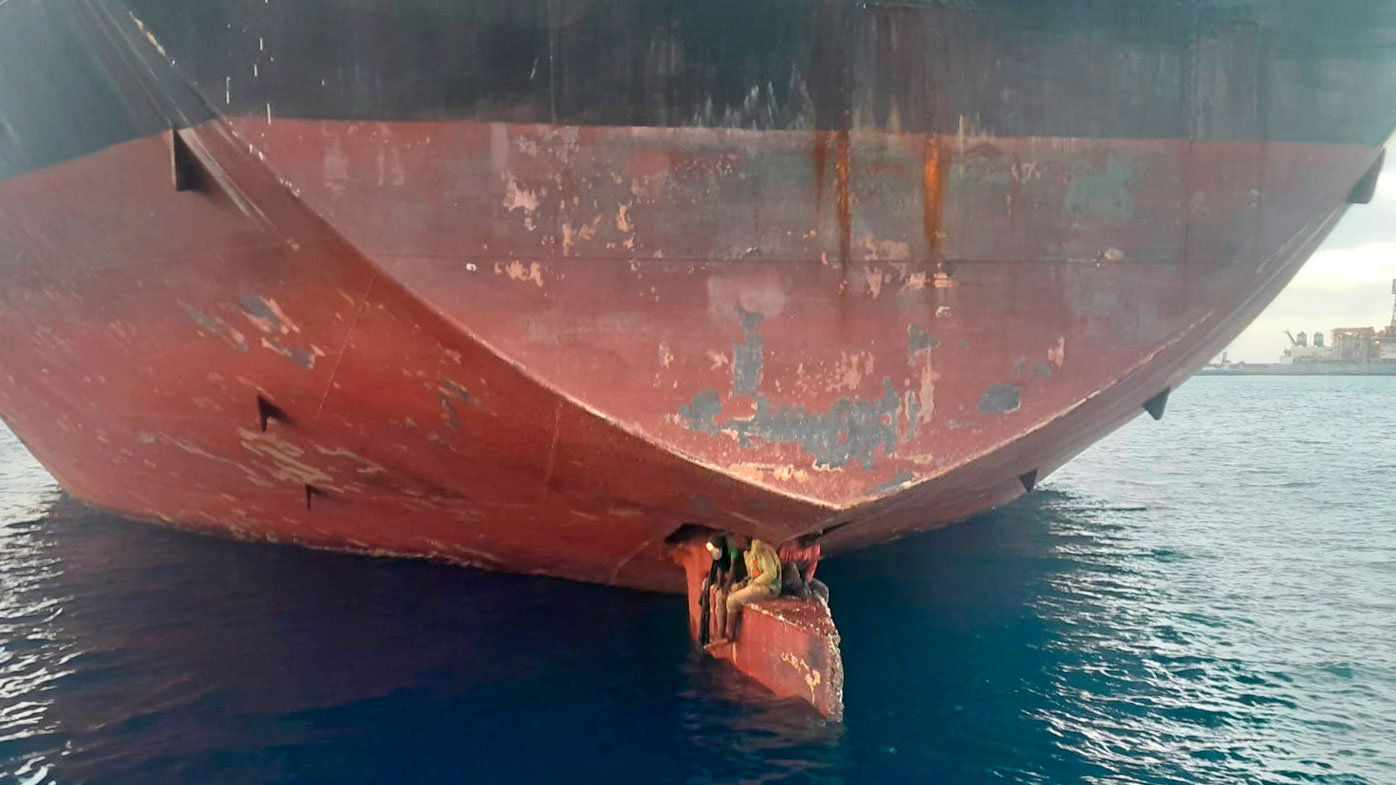
News that three stowaways survived an 11-day voyage on a ship's rudder from Nigeria to the Canary Islands has shocked and impressed the world.

The men found on the Alithini II oil tanker at the Las Palmas port this week appeared to have symptoms of dehydration and hypothermia and were transferred to hospitals on the island for medical attention after their 4600km journey.

Their incredible survival story made headlines around the world, but tragically people who stow away on planes, ships and other modes of transport for long and hazardous journeys rarely live to tell the tale.

READ MORE: Stowaways survive 11 days on oil tanker's rudder

Three men were rescued from the rudder of an oil tanker after spending 11 days crossing the Atlantic Ocean.

But survival has happened – here are some of the more notable examples of the last century.

We've expanded the Australian Oxford Dictionary definition of "stowaway" from a "person who hides in a ship or plane before it leaves, in order to travel without paying or being seen", to include some who did not directly hide, but secretly boarded planes.

Hates shopping, prefers Rome

In 2012, 11-year-old Liam Corcoran, from Manchester in the UK, went to extreme measures to escape a shopping trip with his mother.

Having given her the slip in a shopping centre, Corcoran headed for Manchester Airport where, without a passport, ticket or boarding pass, he evaded security checks, metal detectors and gate control to board a Jet2 flight bound for Rome.

He was only noticed halfway through the flight and was returned home when the plane flew back to the UK.

Dublin to New York, courtesy of the gab

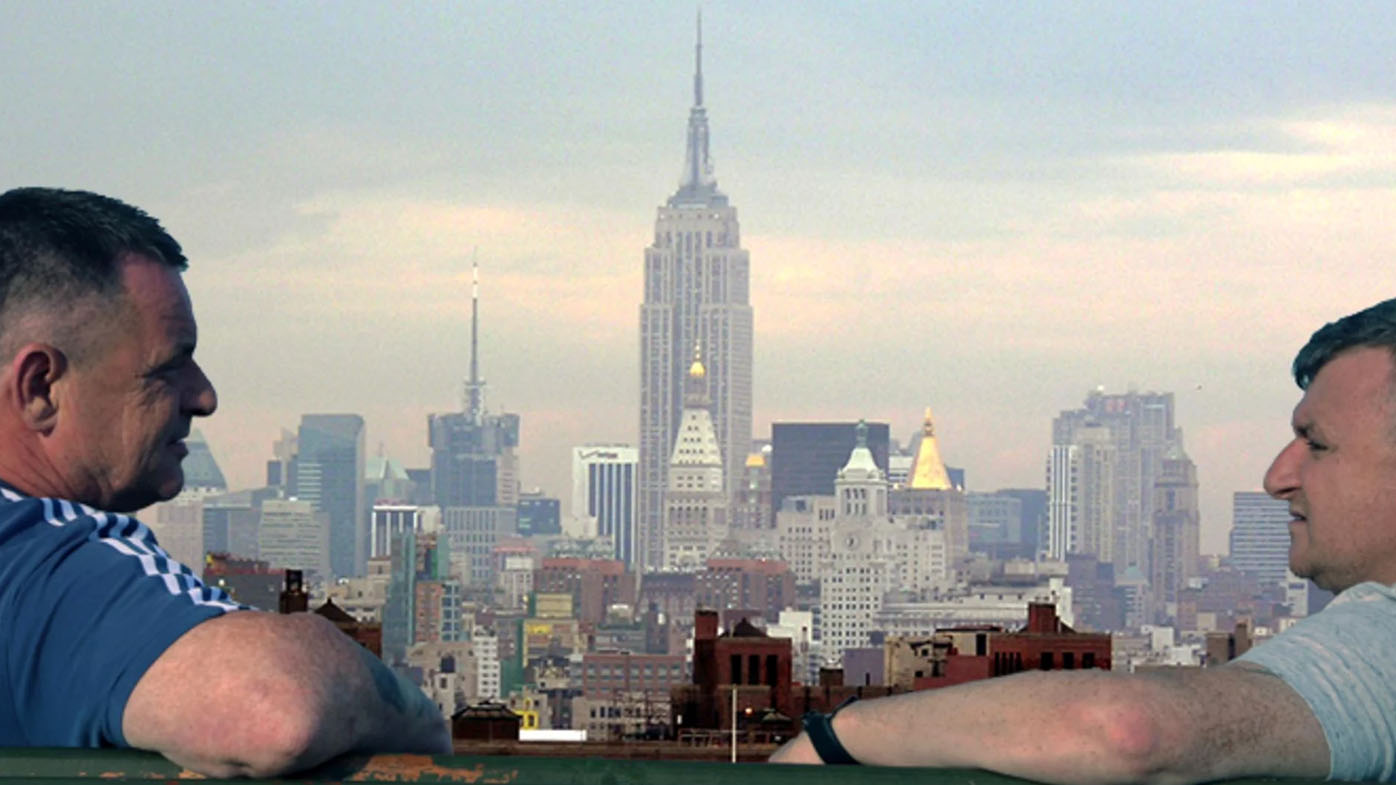
In 1985, two young boys from Dublin, Ireland, nearly pulled off the runaway of the century.

Keith Byrne, 10, and Noel Murray, 13, ran away from their homes in north Dublin and stowed away or hitchhiked on a boat, a bus, a train and a car to get to Heathrow Airport, nearly 600km away in London.

READ MORE: Stowaway survives flight from South Africa to Europe

And that was just the start.

At Heathrow, they evaded security and passport checks to board an Air India flight bound for New York.

They were only caught when a wily police officer at JFK International Airport spotted them looking lost and dishevelled on a pavement.

They eventually confessed and were put on a return flight to Dublin, having spent a free night in a hotel, again courtesy of Air India.

World's first aerial stowaway

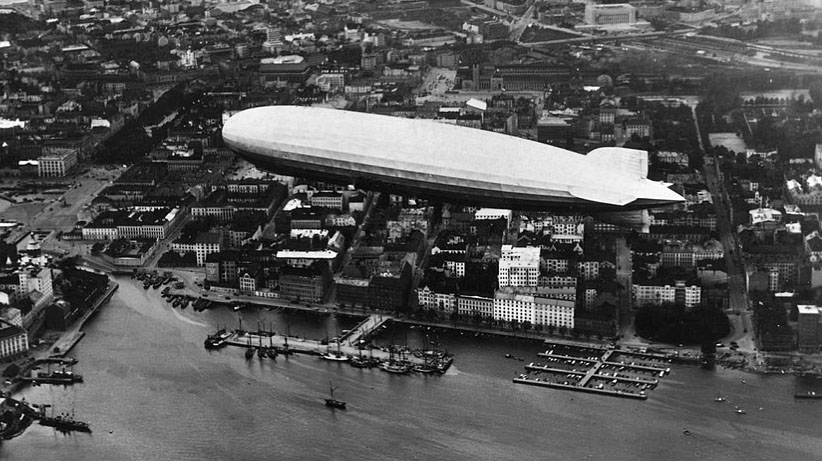
In 1928, 19-year-old Clarence Terhune became a sensation in Germany, after stowing away on the return leg of the maiden flight of the Graf Zeppelin airship, flying from Lakehurst, New Jersey to Friedrichshafen, Germany.

Terhune, a golf caddy from St Louis, Missouri, who had already established a habit of stowing away on trains and ships and of crashing major sports events, made a bet with his brother-in-law that he could trump all previous stowaways with the Zeppelin.

And he did.

READ MORE: X-ray reveals stowaway cat in luggage at New York airport

He snuck aboard while the dirigible was in its hangar and made his big reveal once over the Atlantic Ocean.

Though made to work in the kitchen for the remainder of the journey and arrested on landing, he was hailed as a hero by the German people, sent telegrams, invited to dinners and was even offered a job, it was reported.

Miracle survivor

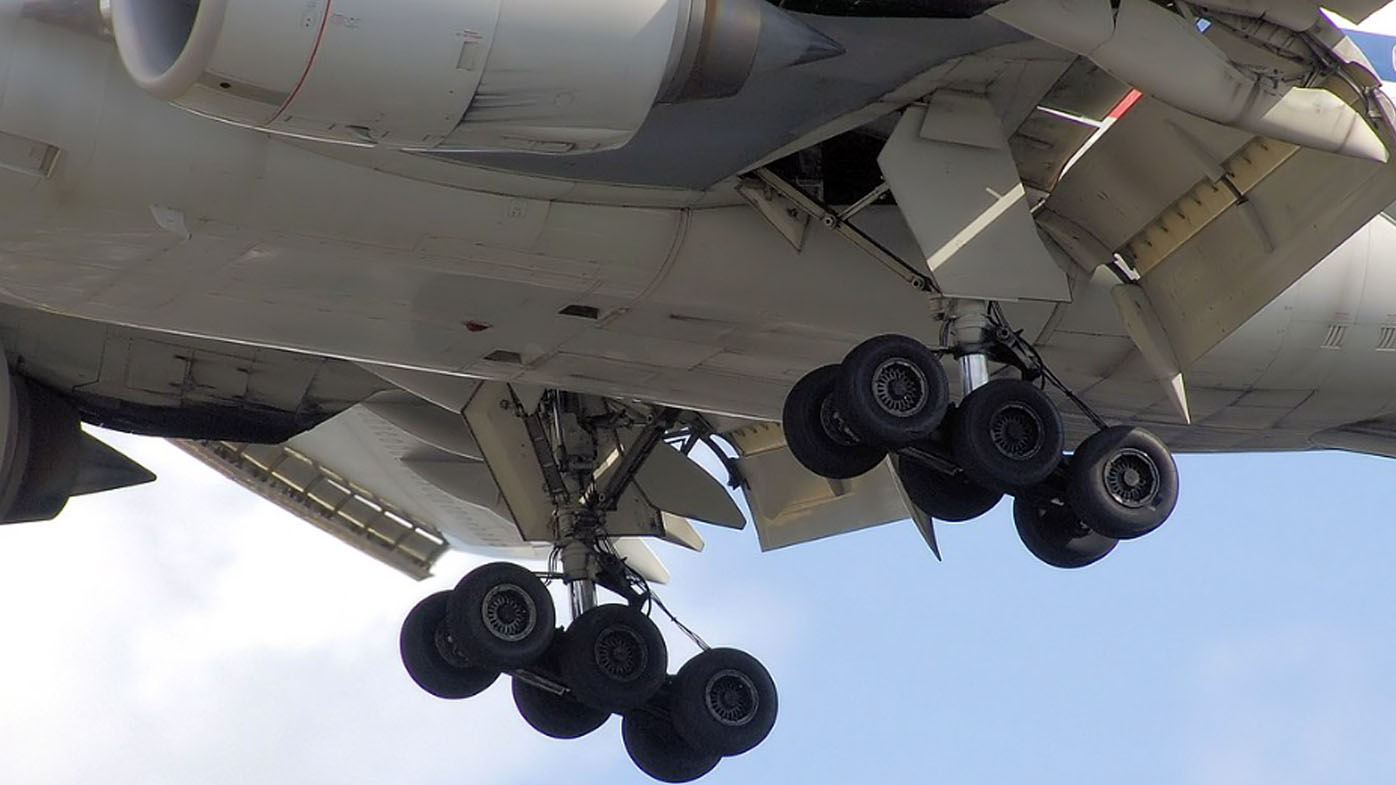
In 1996, 23-year-old Pardeep Saini survived a 10-hour flight from New Delhi to London Heathrow in the wheel well of a British Airways Boeing 747.

Saini's 19-year-old brother Vijay died on the same attempt, exposed to temperatures of -60 degrees.

Saini's survival was likely the result of hypoxia combined with hypothermia, essentially putting him into a state of suspended animation, doctors said.

Found wandering the tarmac at Heathrow, Saini said he and his brother had fled India after being accused of having links to Sikh militants.

His application for asylum was refused.

Cuba to Paris – and a nasty nosebleed

In 2000, 24-year-old Roberto Viza Egües survived 14 hours as a stowaway inside a cargo container on an Air France flight from Havana, Cuba to Paris.

He was exposed to freezing temperatures and low oxygen levels and a few hours in suffered an extreme nosebleed.

When two Parisian grocers to whom the container had been sent discovered him, he was covered in blood.

He'd fled Cuba after fearing his membership of a dissident group was likely to cause him and his family problems.

His request for asylum was denied the same year and he was returned to Cuba.

– Reported with CNN

Cruise ship passenger who fell overboard finally speaks

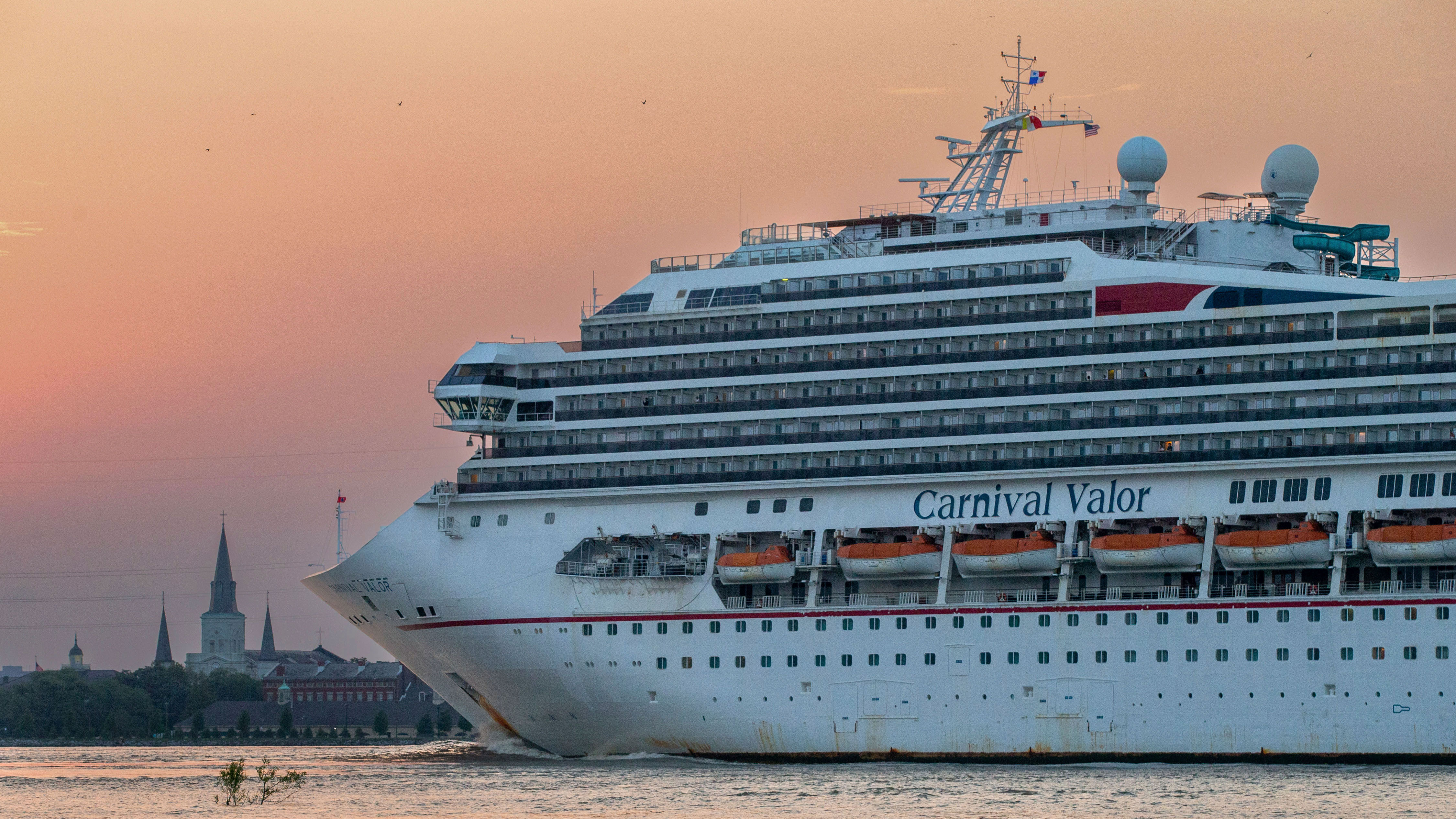
When James Michael Grimes fell overboard from a Carnival cruise ship in the Gulf of Mexico, he said the sheer will to live, along with strength from God, kept him alive as he miraculously swam for what he believes was more than 15 hours.

Grimes, 28, who described himself as an "average guy" who likes hunting, fishing and being outdoors, was rescued last weekend and told CNN he is "blessed to be here."

The Alabama native was onboard the Carnival Valor with 18 members of his family for the week of the Thanksgiving holiday.

It was the night before Thanksgiving when Grimes, who was at an onboard bar with his sister, went to use a restroom around 11 pm, his sister recalled, according to a Carnival statement to CNN.

READ MORE: Brittany Higgins makes first public statement since retrial aborted

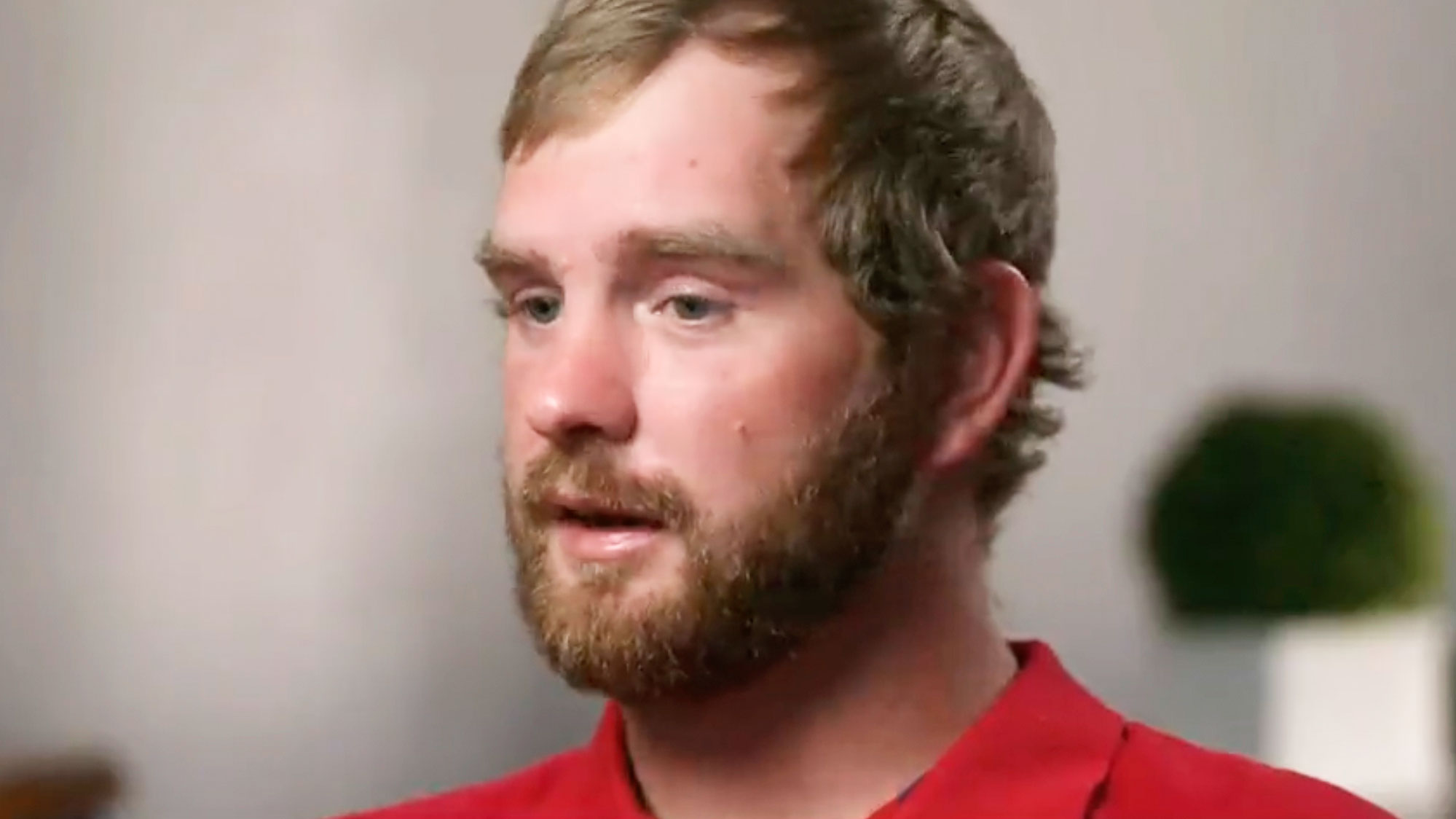
A screenshot of James Michael Grimes appearing on ABC News.

The last thing he remembers before regaining consciousness in the water was going to listen to live music aboard the ship with family, he said, and he doesn't remember where, or how, he fell off the ship.

He'd had drinks on the Valor, but says he was not inebriated, Grimes told ABC earlier.

"I was trying to stay as positive as I could from the moment I came to, and regain consciousness, I can just remember right then thinking, 'wow, it's a miracle that I'm not already dead,' " Grimes said.

Grimes said he is not capable of floating, and credited his survival to his faith and positive attitude, adding he even created songs to keep his spirits up.

He swam through two schools of jellyfish and watched the sun rise during his time in the water, and said he lost almost nine kilograms during the experience.

"The lord gave me the will to live. It's a miracle," he told CNN.

"I wasn't going to give up at any point in time just say, this is it, this is the end.

"It never came to that. I was determined to swim until my arms and legs could not hold my body up anymore."

"It was like a 20-hour baptism," he added.

READ MORE: Cops receive thousands of tips about slain University of Idaho students

James Michael Grimes was travelling on the Carnival Valor cruise ship when he fell overboard.

He also battled confusion, fatigue, and some sort of creature below.

"It came up on me really quick. And I went under, and I could see it. And it wasn't a shark, I don't believe.

"But it had more like a flat mouth, and it came up and bumped one of my legs, and I kicked it with the other leg. It scared me, not knowing what it was … all I could see was a fin," he told ABC earlier.

At another point, Grimes grabbed a floating stick, which he said "looked like bamboo," and started chewing it.

"It gave some type of flavor in my mouth other than saltwater," he told ABC.

Grimes also said he had conversations with God during his time in the Gulf.

"'Lord, my worst fear is drowning. I don't know why you put me out here in this trial, but I know you're going to get me through it,' " he recalled saying.

"It wasn't a matter of if I get saved or if they find me, it was just a matter of when, and I just got to keep swimming until they do."

Grimes' family had reported him missing at noon on Thanksgiving.

He eventually saw lights from a tanker ship, and swam toward it, he had told ABC.

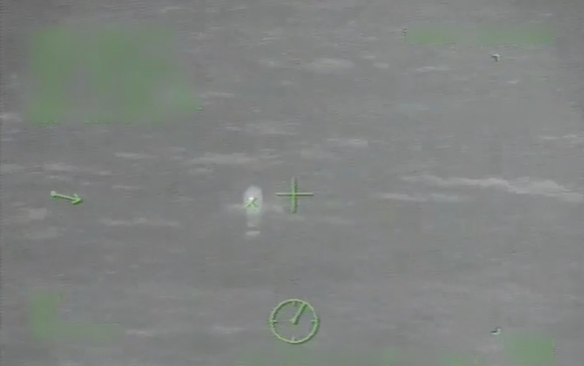
The ship's crew spotted him around 8.25 pm and alerted the Coast Guard, which sent a helicopter crew to hoist him out of the water, the service said.

READ MORE: Australia's first 45 degree day of the season is imminent

A man has been rescued after falling overboard a cruise ship.

The Coast Guard member who rescued him looked like a guardian angel coming down from the helicopter, Grimes told CNN.

Lt. Seth Gross, a search and rescue coordinator for the USCG told CNN if Grimes was in the water for 15 hours, it's "the absolute longest that I've heard about, and just one of those Thanksgiving miracles."

"The fact that he was able to keep himself afloat and above the surface of the water for such an extended period of time, it's just something you can't take for granted and certainly something that'll stick with me forever," Gross said, adding the case showed how much "the will to live is something that you need to account for in every search-and-rescue case."

Grimes is now planning a trip to New Orleans to meet the Coast Guard crew who rescued him and added he wouldn't rule out another cruise in the future.

"If that's the worst thing I ever have to go through again, I think I'll be okay," Grimes said. "Being the Alabama fan that I am, I was out there just rolling with the tide."

Brittany Higgins makes first public statement since retrial aborted

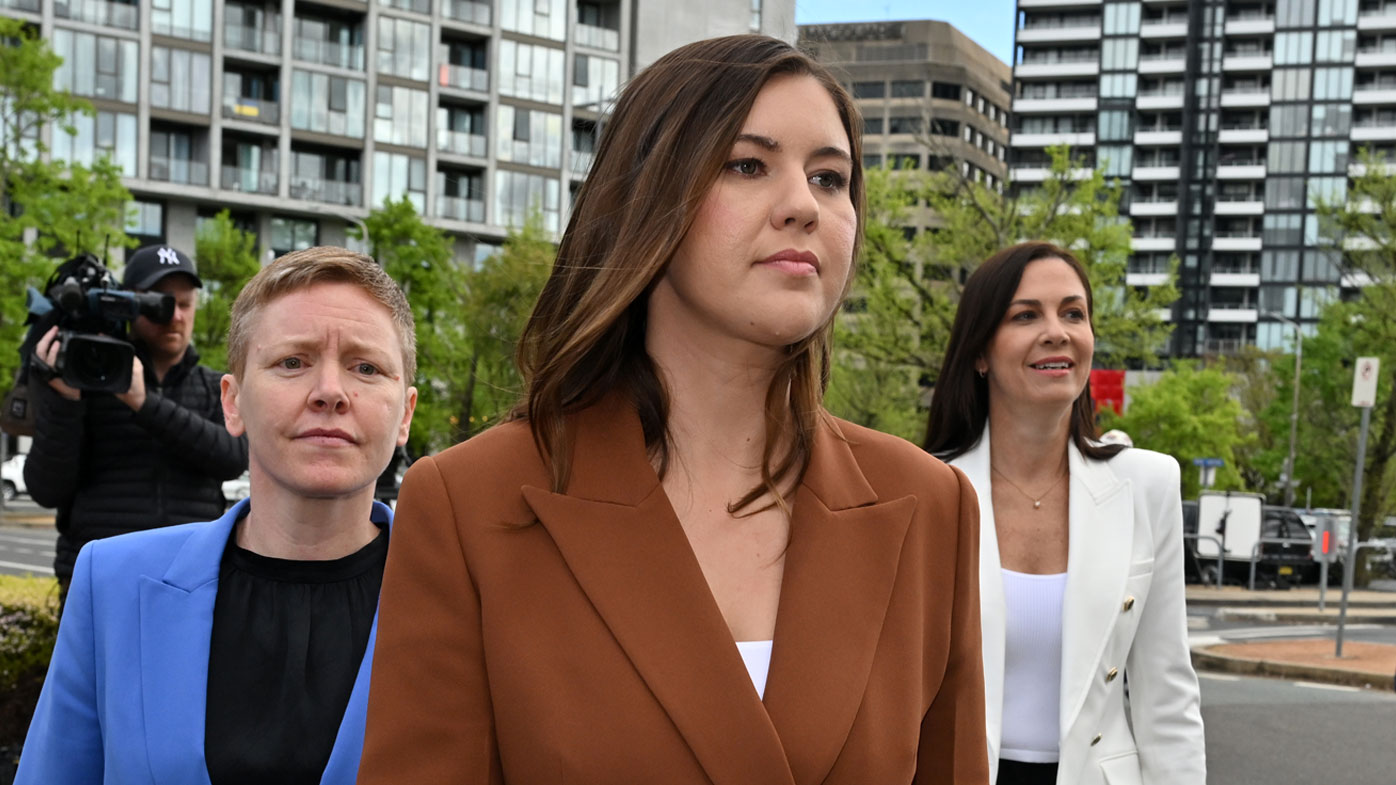
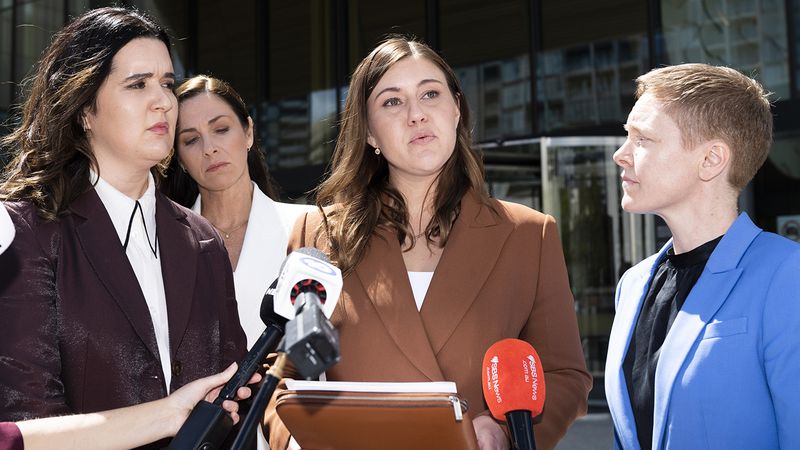
Brittany Higgins has released a statement addressing the justice system, days after it was confirmed there would no longer be a retrial of the man she accused of raping her, Bruce Lehrmann.

It comes after ACT's Director of Public Prosecutions said Friday he would not pursue a retrial of Lehrmann, citing the wellbeing and health of alleged victim Higgins.

Shane Drumgold confirmed he had filed a notice Friday morning, bringing the prosecution to an end.

READ MORE: Keeper's unthinkable 'mistake' costs Socceroos

Lehrmann pleaded not guilty to raping former Liberal staffer Brittany Higgins.

"I have recently received compelling evidence from two independent medical experts that the ongoing trauma associated with this prosecution presents a significant and unacceptable risk to the life of the complainant," he said on Friday.

Higgins accused Lehrmann of sexually assaulting her in the office of then-Defence Minister Linda Reynolds in Parliament in March 2019.

He has denied the accusation and denied having sex with Higgins.

READ MORE: 'We will not let that happen': Pentagon boss issues China warning

Brittany Higgins speaks after Bruce Lehrmann's initial trial was aborted over juror misconduct.

He pleaded not guilty in his initial trial.

The jury in Lehrmann's initial trial was discharged over juror misconduct after several days of being unable to reach a verdict.

The retrial date had been set for February 20 next year.

READ MORE: Push for national reforms in rape cases

Higgins criticised the "asymmetrical criminal justice system" in her statement, saying she was "required to tell the truth under oath, while he was afforded the choice of staying silent".

"I was required to tell the truth under oath over a week on the witness stand and was cross examined at length. He was afforded the choice of staying silent in court," Higgins said.

"My life was publicly scrutinised, open for the world to see. He was not."

READ MORE: Lehrmann rape trial abandoned, charges dropped due to Higgins health concerns

If you or someone you know is impacted by sexual assault, domestic or family violence, call 1800RESPECT on 1800 737 732 or visit 1800RESPECT.org.au. In an emergency, call 000.

Cops receive thousands of tips about slain University of Idaho students

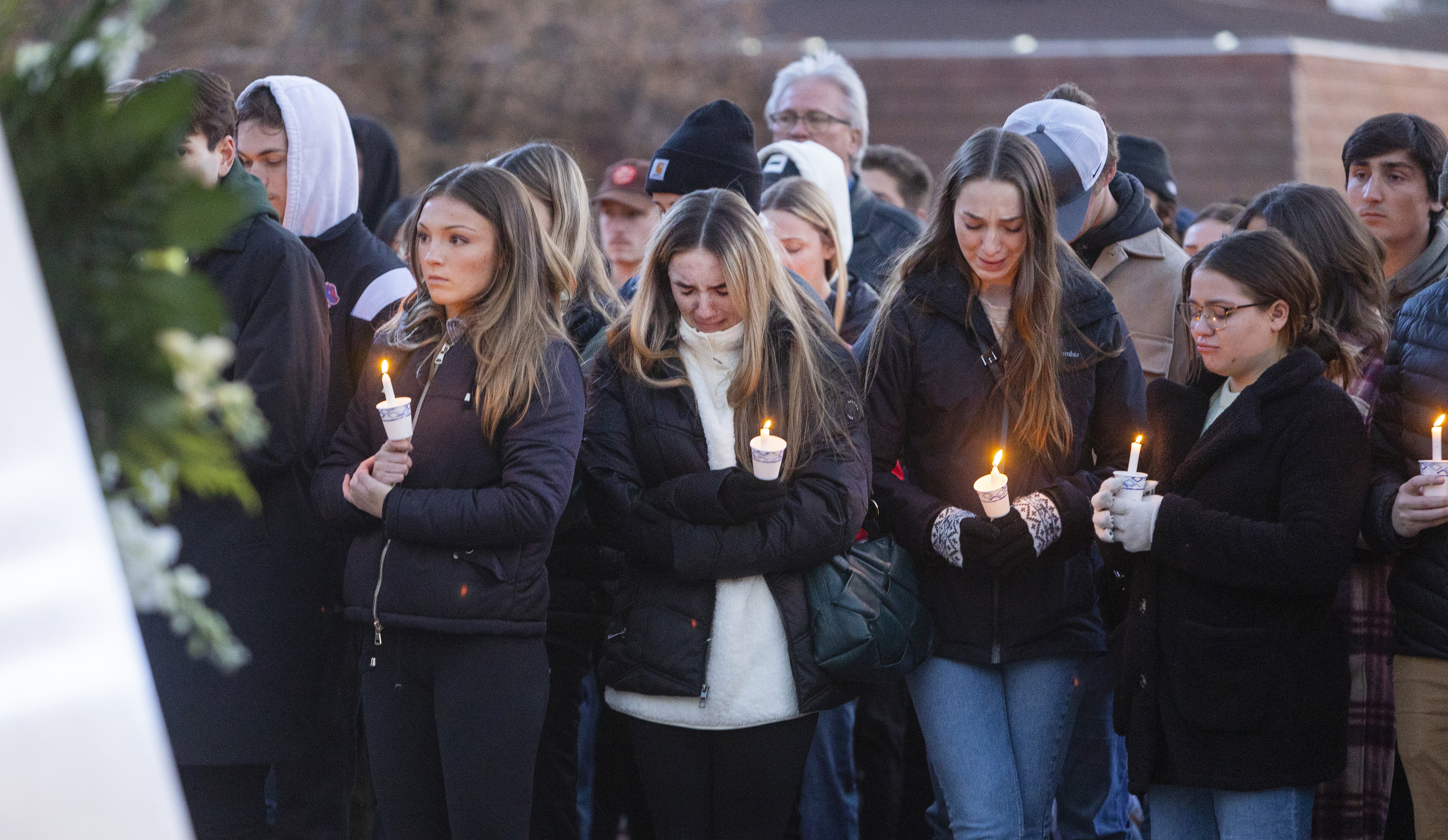
Authorities investigating the killings of four University of Idaho students who were found stabbed to death last month say they have received thousands of tips from the public.

In a Saturday update, the Moscow Police Department said it has received more than 2640 emails to a tip web address, more than 2770 phone tips and more than 1000 submissions to an FBI link.

Investigators have collected more than 110 pieces of physical evidence and roughly 4000 crime scene photos.

READ MORE: Brave Socceroos fall just short in epic clash

But the case remains unsolved.

Police have not located the murder weapon nor identified a suspect.

"To assist with the ongoing investigation, any odd or out-of-the-ordinary events that took place should be reported," Moscow police said on Saturday.

"Your information, whether you believe it is significant or not, might be the piece of the puzzle that helps investigators solve these murders."

Kaylee Goncalves, 21; Madison Mogen, 21; Xana Kernodle, 20; and Kernolde's boyfriend, Ethan Chapin, 20, were likely stabbed multiple times in their sleep just days before Thanksgiving break, police said.

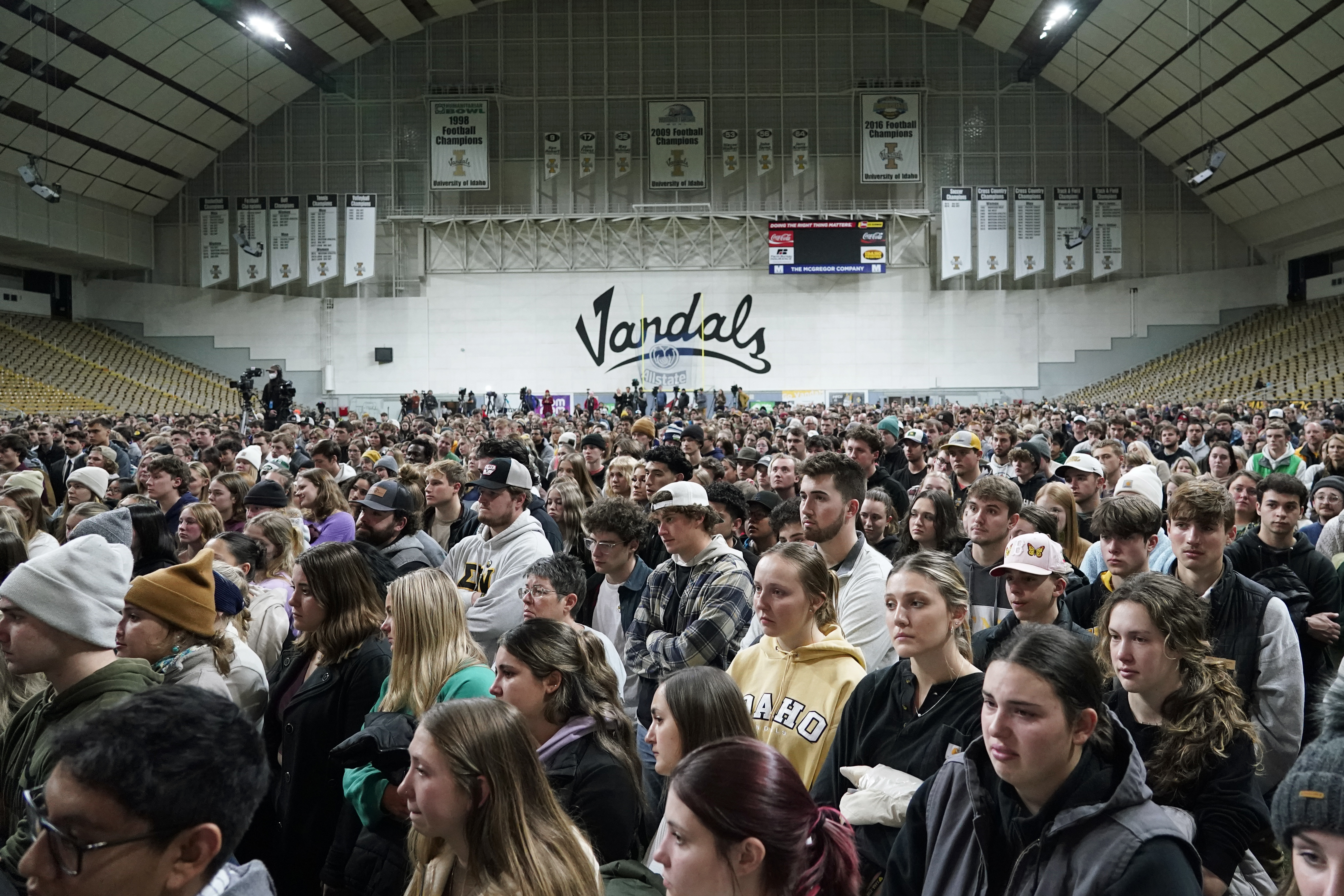
Their horrific deaths have since rattled Moscow, a college town of some 25,000 people which hasn't recorded a single murder since 2015, and the nation.

READ MORE: Man charged over death of people on Sydney's Anzac Bridge

Authorities debunk falsehoods

In an attempt to clear up false information that's been spreading about the case, Moscow police this week debunked several theories.

"There is speculation, without factual backing, stoking community fears and spreading false facts," the Moscow Police Department said in a news release on Friday.

None of the victims in the quadruple homicide were tied and gagged, refuting online reports.

A report of a "skinned" dog weeks before the killings is not connected to the case, according to police, and deceased animals left on a resident's property elsewhere were determined to be wildlife activity.

READ MORE: Australia's first 45 degree day of the season is imminent

Additionally, police noted the students' killings are not related to two other stabbing incidents in neighbouring states Washington and Oregon in 1999 and 2021, respectively.

The cases may "share similarities," but "there does not appear to be any evidence to support the cases are related," according to the release.

Police also reassured the public that a September incident which involved an argument between a group of people walking on the University of Idaho bike path and a cyclist, who displayed a folding knife, is not connected to the students' killings.

"The individual involved turned himself in, and charges were referred to the Moscow City Attorney's Office," police said.

And although police have said they don't know who carried out the killings, they have released information eliminating some people as suspects, most recently a person listed on the lease of the residence where the killings happened, police said Friday.

"They have spoken to this individual and confirmed they moved out prior to the start of the school year and was not present at the time of the incident. Detectives do not believe this person has any involvement in the murders," Moscow police said.

Police also ruled out the two surviving roommates who were in house at the time of the killings and other people inside the house when the 911 call was made.

The person who made the 911 call alerting authorities to the home after the killings has not been identified.

Goncalves and Mogen, two of the victims, were driven home by someone after the pair purchased food from a truck hours before they were killed, authorities have ruled out the driver as a suspect.

Additionally, a man seen in surveillance video from a food truck visited by Goncalves and Mogen, and another man the pair called "numerous times" in the hours before their deaths, were also ruled out as suspects by police.

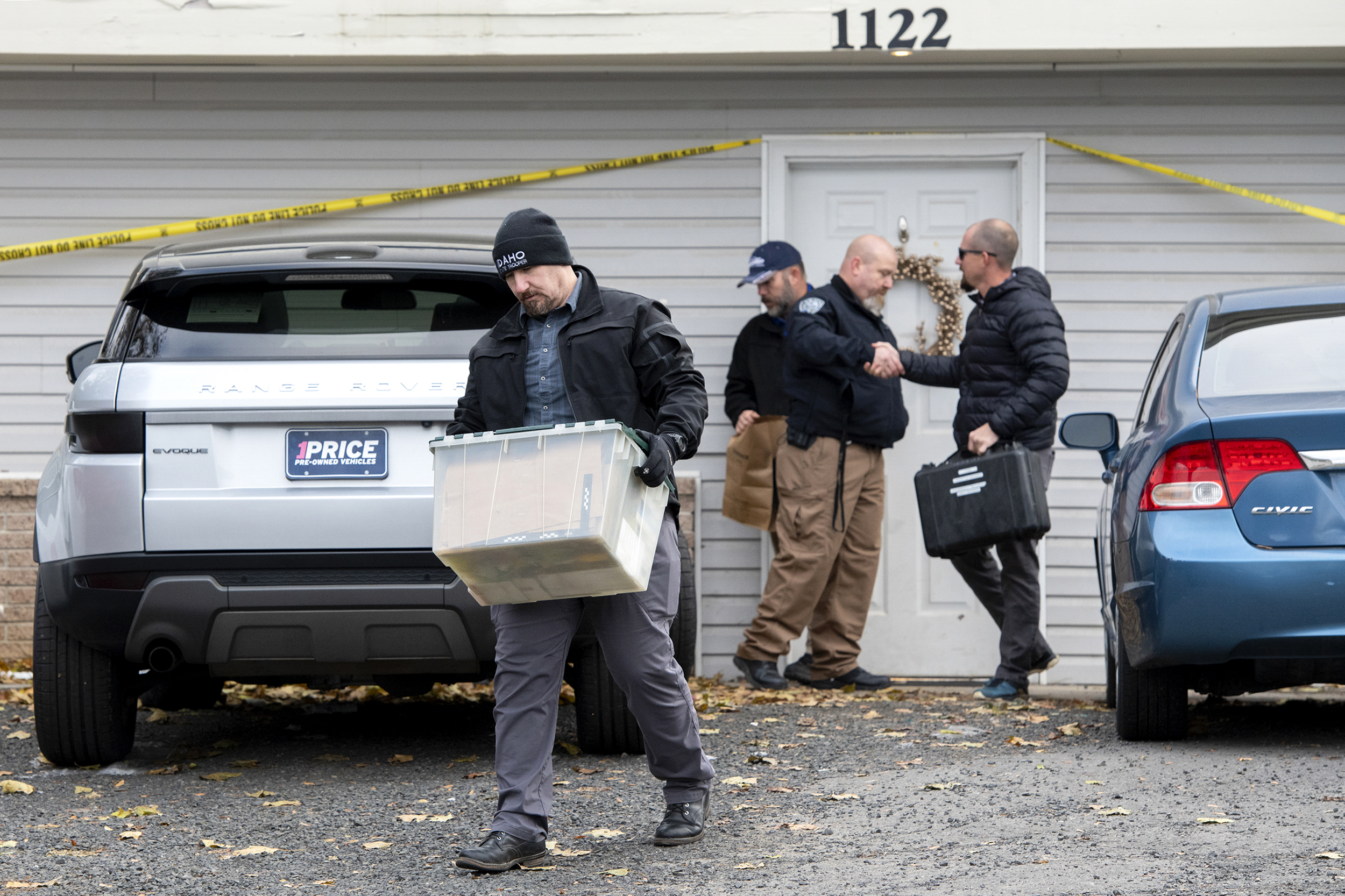
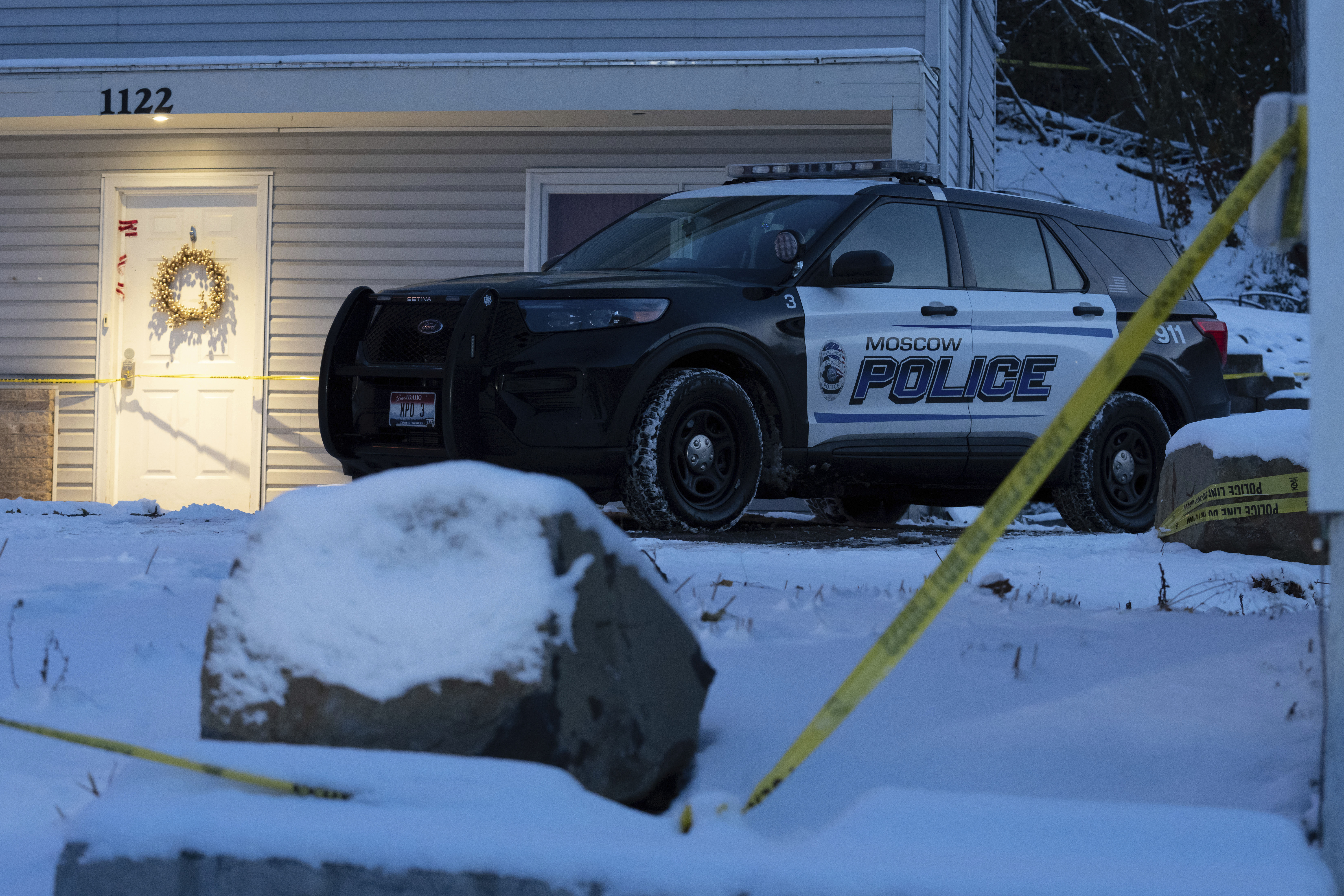
Officers investigate the deaths of four University of Idaho students at an apartment complex south of campus on Monday, November 14, 2022, in Moscow, Idaho.

Conflicting information

It remains unclear how close authorities are to releasing information about a potential suspect or suspects.

"Only vetted information that does not hinder the investigation will be released to the public," Moscow police noted on Friday.

But some details released by authorities since the start of the investigation have required further clarification.

This week, Moscow police noted and backtracked comments from the Latah County prosecutor that said, "the suspect(s) specifically looked at this residence" and "that one or more of the occupants were undoubtedly targeted."

Moscow police called that a "miscommunication," and added "detectives do not currently know if the residence or any occupants were specifically targeted."

On Thursday, Moscow police attempted to clarify the key conflicting information, once and for all.

"We remain consistent in our belief that this was a targeted attack, but investigators have not concluded if the target was the residence or if it was the occupants," police said.

Authorities have also needed to clarify other information, including initially saying on November 15 that detectives believed the attacks were "isolated" and "targeted" and that the community was not under imminent threat.

The following day, Moscow Police Chief James Fry said police were not definitive in concluding the public was not at risk.

Where the investigation stands now

Detectives have received testing and analysis of the crime scene evidence from Idaho State Police Forensic Services, and they will continue to receive the results of additional tests, according to police.

"To protect the investigation's integrity, specific results will not be released," police said.

Detectives also collected the contents of three dumpsters on the street where the house is located and seized five nearby vehicles to be processed for evidence, according to police.

As for the murder weapon, believed to be a fixed-blade knife, detectives contacted local businesses regarding knife purchases in the days leading up to the killings.

Multiple agencies and law enforcement personnel are investigating the homicides.

More than 30 employees including detectives, patrol officers and support staff from the Moscow Police Department are working on the case, police said Friday in the news release.

The FBI has devoted 22 investigators in Moscow, 20 agents through the country and two investigators from the agency's Behavior Analysis Unit, police said.

Plus, there are 20 Idaho State Police investigators assigned to Moscow, and an additional 15 uniformed troopers are patrolling the community.

Forensic services and a mobile crime scene team from the state police are also working the case.

Type 2 diabetes risk linked to troubled sleep in new Australian study

We all know how terrible we feel after a bad night's sleep, but a new Australian study has provided yet another reason why we should try to get as much quality sleep as we can.

The study, conducted by University of South Australia researchers, has shown troubled sleep could be a possible increased risk factor for type 2 diabetes.

In a peer reviewed study of 1000 Australians, researchers found participants with trouble sleeping were on average more likely to have indicators of poor cardiometabolic health – inflammatory markers, cholesterol and body weight – which can contribute to type 2 diabetes.

READ MORE: Australia's first 45 degree day of the season is imminent

Diabetes mellitus refers to a group of diseases that affect how the body uses blood sugar (glucose).

The number of people with type 2 diabetes has been increasing in Australia and around the world. 

There are now almost one million adults in Australia with type 2 diabetes, according to the Australian Institute of Health and Welfare. Worldwide, type 2 diabetes affects more than 422 million people.

University of South Australia researcher, Dr Lisa Matricciani, said it was not just the length of sleep we get each night that is important when it comes to this new potential risk.

READ MORE: Scientists have some terrible news for people who love napping

bad sleep tired

"Everyone knows that sleep is important. But when we think about sleep, we mainly focus on how many hours of sleep we get, when we should also be looking at our sleep experience as a whole," Dr Matricciani says.

"How soundly we sleep, when we go to bed and get up, and how regular our sleep habits are, may be just as important as sleep duration."

"In this study, we examined the association of different aspects of sleep, and risk factors for diabetes, and found a connection between those who had troubled sleep and those who were at risk of type 2 diabetes."

The study assessed more than 1000 Australian adults with a median age of 44.8 years. Most of the participants – 87 per cent – were mothers.

About half of the participants reported that they never had troubled sleep.

"People who reported having trouble sleeping were also more likely to have a higher body mass index, as well as blood markers of cholesterol and inflammation," Matricciani said.

"When it comes down to the crunch, we know we must prioritise our sleep to help stay in good health. More research is needed, but as this study shows, it's important to think about sleep as a whole, not just as one aspect."

Australia's first 45 degree day of the season is imminent

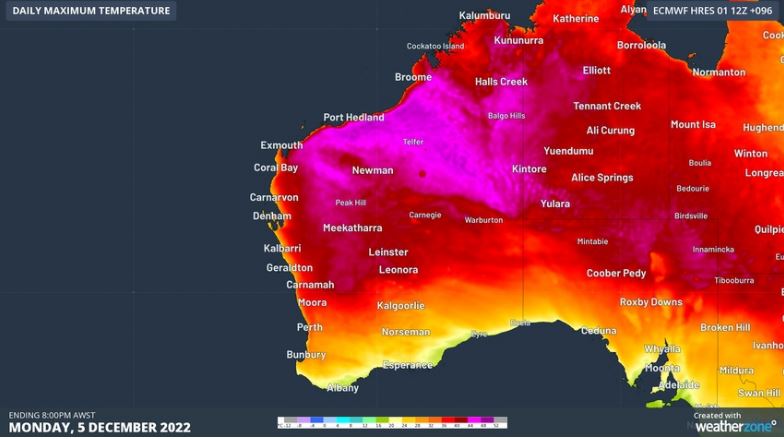
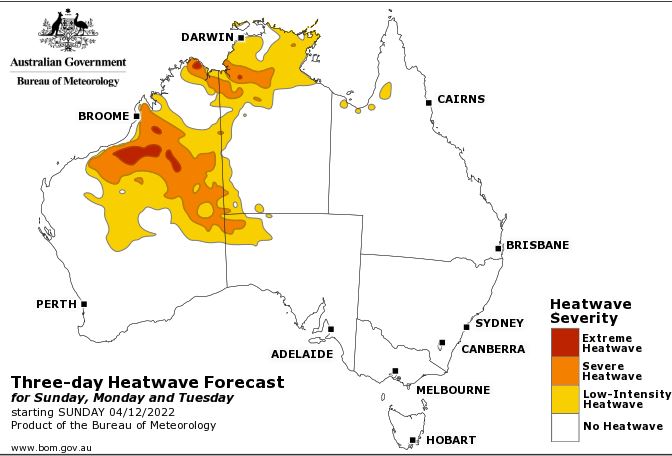
Western Australia is set to experience the first 45 degree day of the season next week as Victoria finally turns up the heat on the first weekend of summer.

Temperatures are about to soar over north-western Australia as a broad and stagnant area of low pressure will allow hot air to build and intensify over the next several days.

Forecast models suggest that temperatures will climb into the low-to-mid forties from this weekend, before possibly exceeding 45 degrees on most days next week.

READ MORE: Brave Socceroos fall just short in epic clash

The impending heat has prompted a Severe to Extreme heatwave warning for parts of WA's north and interior.

Meanwhile temperatures are expected to hit a top of 34C in Melbourne and a top of 35C in Adelaide today.

However the warm weather will be short-lived for Victoria as a trough will move over Victoria early next week and bring cooler temperatures, as well as showers and thunderstorms in the south.

The coldest weather is expected to hit next Thursday with a top of 16C. 

READ MORE: Man charged over death of people on Sydney's Anzac Bridge

South Australia will also say goodbye the 30C weather, with the state to stay in the low-mid 20s for the week. 

It comes after Victoria recorded its coldest spring for 30 years, with a mean maximum temperature the sixth-lowest since 1910.

Man charged over death of people on Sydney's Anzac Bridge

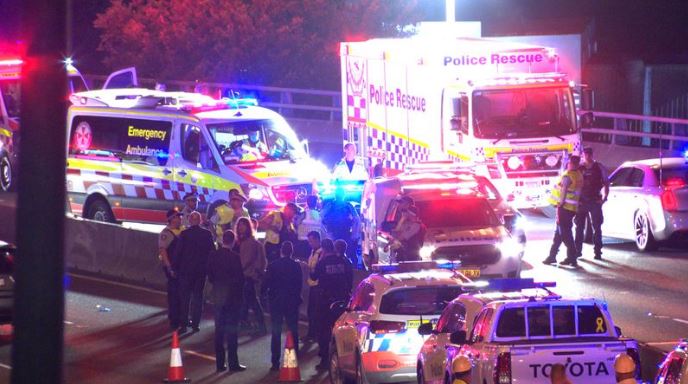
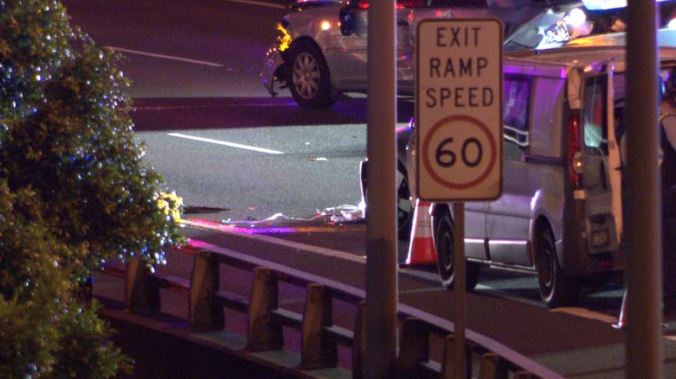
A man has been charged over the deaths of two people on Sydney's Anzac Bridge on Friday night.

A 25-year-old woman and 38-year-old man were exchanging details after their minor crash on the bridge, when they were allegedly hit by a Holden Commodore just after 11.50pm.

The pair suffered critical injuries and died at the scene after the car they were standing near was allegedly struck by the Commodore.

READ MORE: Brave Socceroos fall just short in epic clash

A passing taxi, being driven by a 24-year-old man was struck by one of the vehicles when it was pushed into the third lane by the force of the impact.

The driver of the Commodore was taken to hospital for treatment of minor injuries and mandatory testing, before being released.

READ MORE: Russia rejects $88-a-barrel cap on its oil, warns of cutoffs which could impact Australia

Police arrested the 41-year-old man at his home in Burwood about 7.30pm yesterday.

He has since been charged with two counts of dangerous driving occasioning death – drive manner dangerous, and negligent driving occasioning death.

He's been refused bail to appear in Parramatta Bail Court later today.

Lava flow from 'world's largest active volcano' nears highway

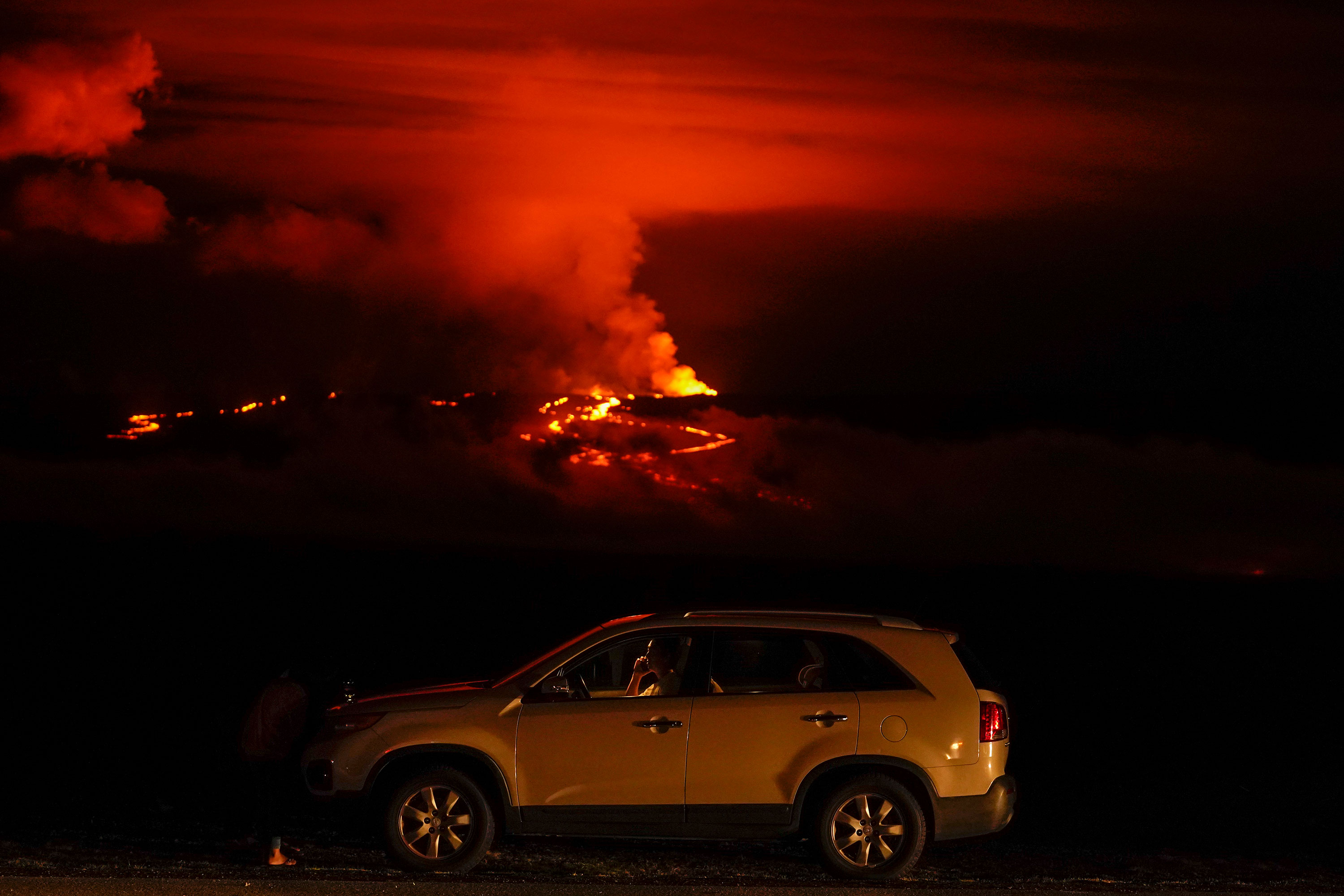
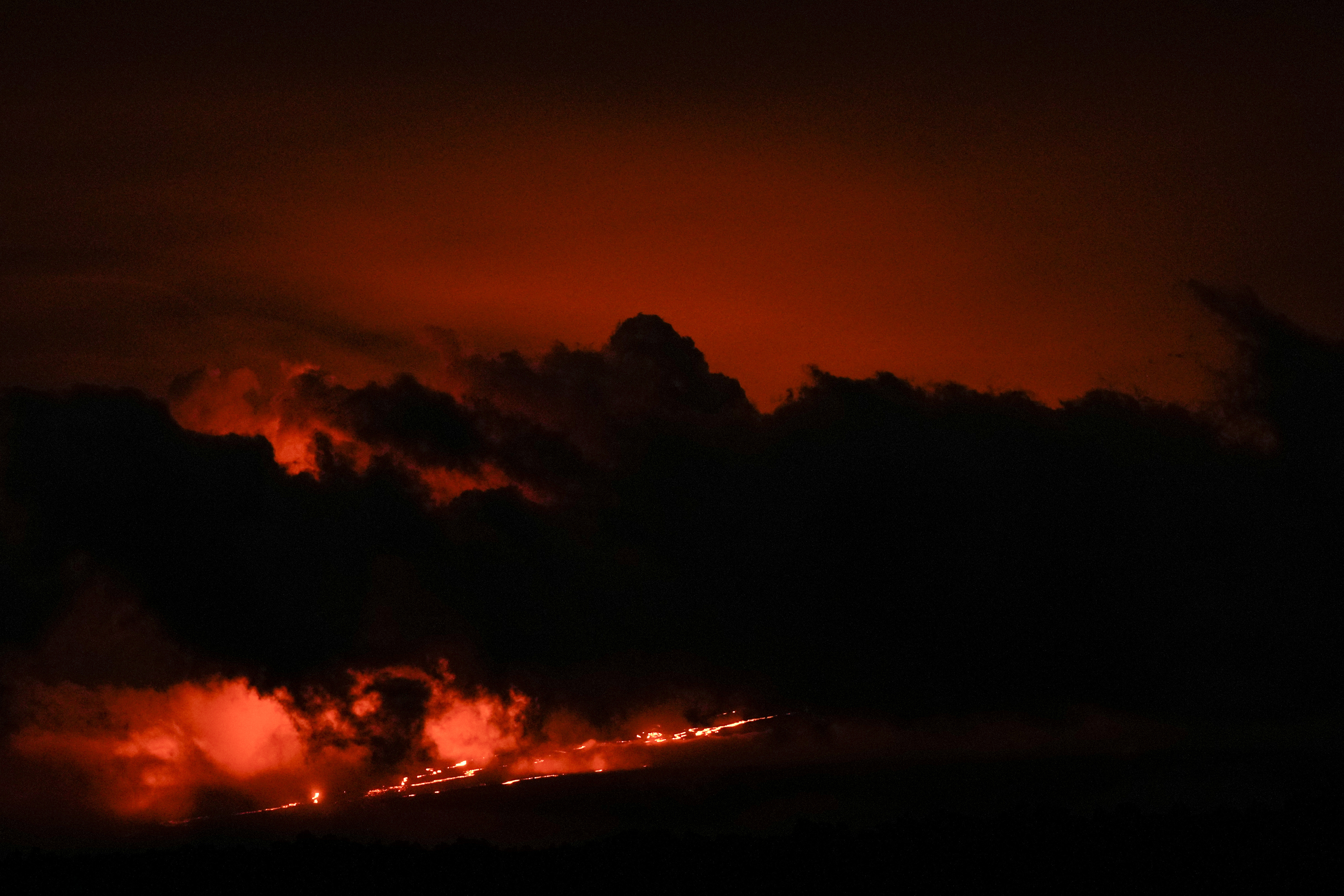
As the world's largest active volcano oozes molten rock on Hawaii's Big Island, a blend of concern and awe has emerged among visitors.

People were pulling over in their cars throughout the night to get a glimpse of the striking scene – a blazing river cutting through the darkened horizon.

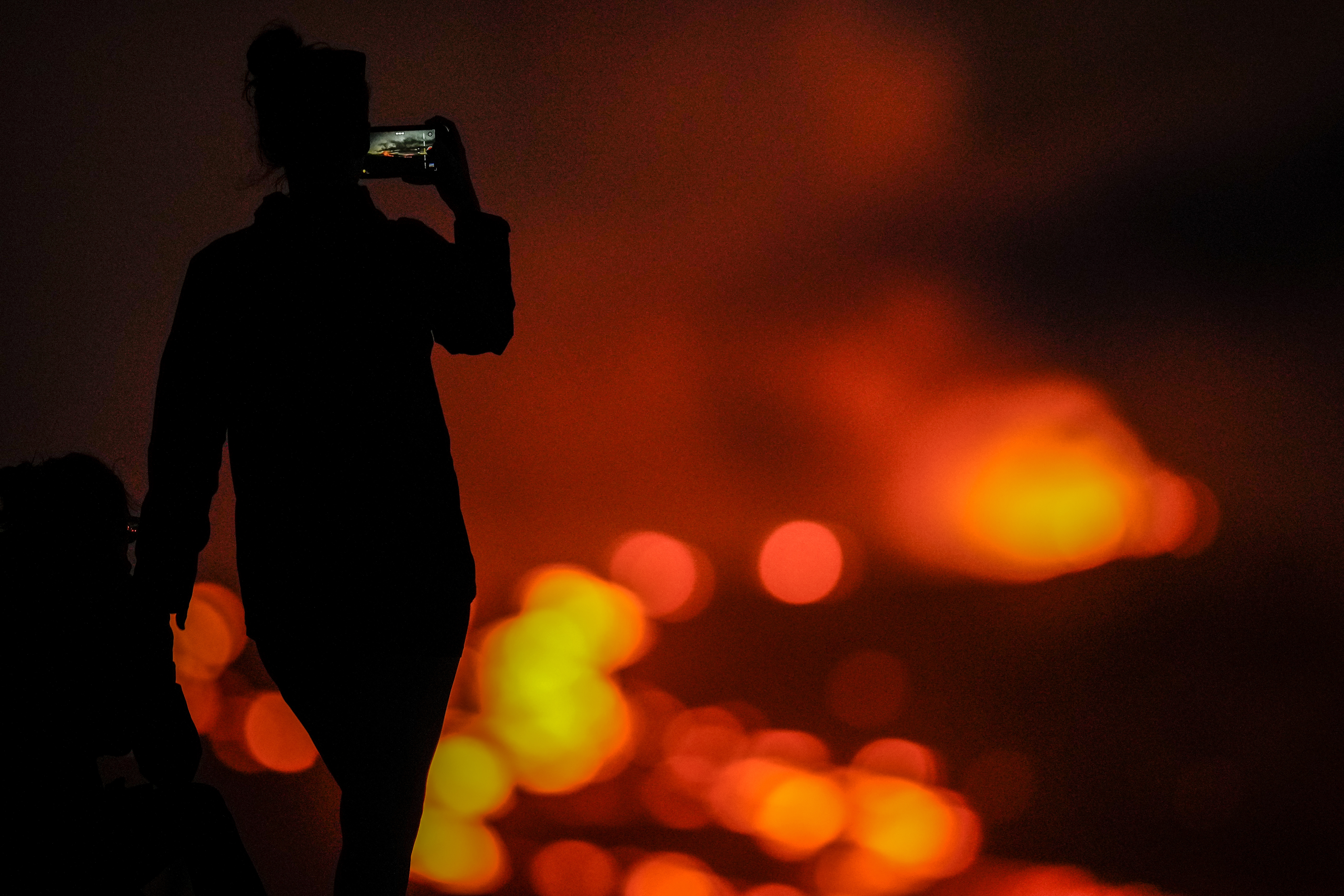
They took photos and videos, stood in silence, and even urged others to turn off their car lights for a better, and more reverential, view.

LIVE COVERAGE: 'Wicked' strike keeps Socceroos in hunt

A man talks on a phone in his car alongside Saddle Road as the Mauna Loa volcano erupts Wednesday, Nov. 30, 2022, near Hilo, Hawaii. Hundreds of people in their cars lined Saddle Road, which connects the east and west sides of the island, as lava flowed down the side of Mauna Loa and could be seen fountaining into the air on Wednesday. Motorists make their way along as people search for a vantage point of the erupting Mauna Loa volcano, Friday, Dec. 2, 2022, near Hilo, Hawaii.

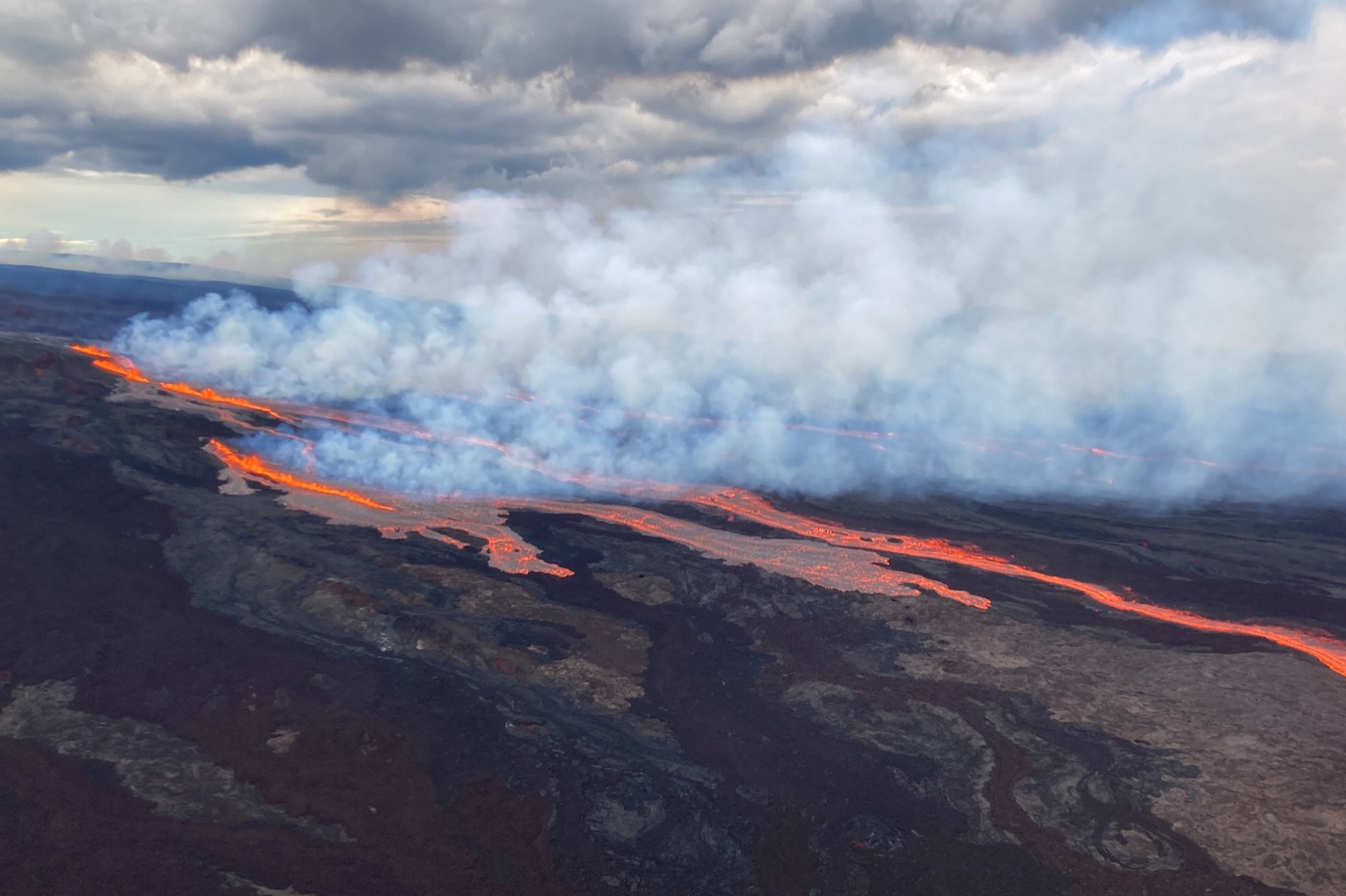
Mauna Loa has been erupting or days, with lava shooting to heights of up to 45 metres on Tuesday.

"We weren't sure which way it was going to flow, you know which way Pele was going to decide to do it. So this was the best scenario for everybody because nobody's in danger… So you just have to be thankful," Deborah Westbrook, who had come to see the volcano during the day, said on Friday.

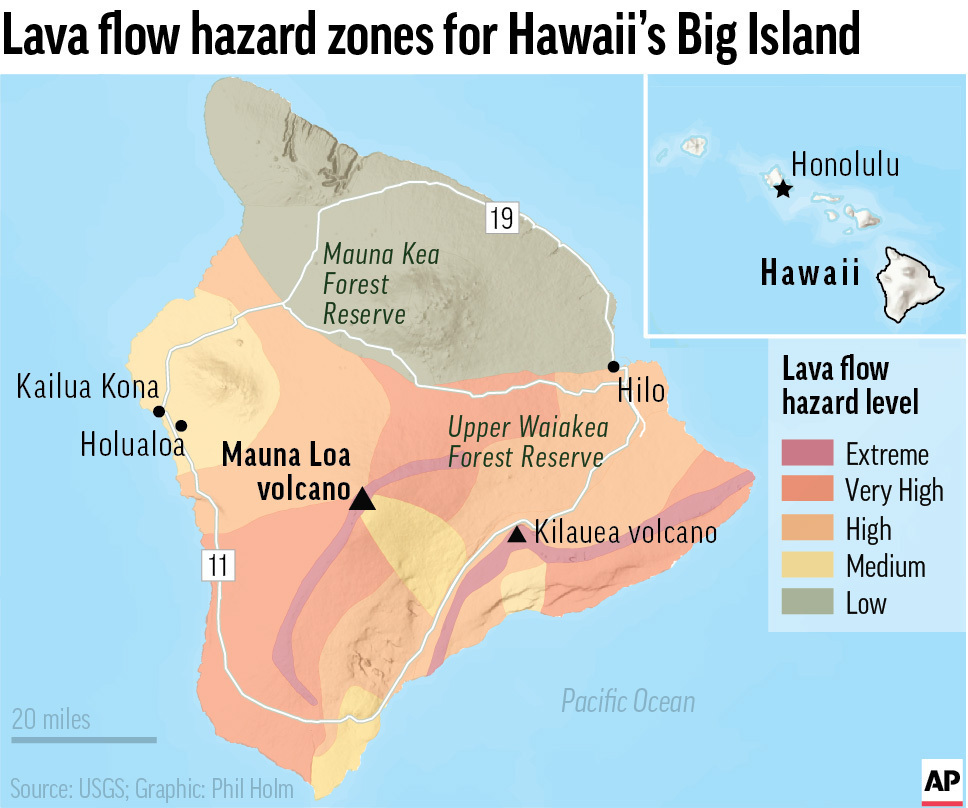
But, the lava flow from the Mauna Loa is gradually moving closer to the Daniel K. Inouye Highway.

As of Saturday morning, the lava flow had showed little change from a day prior and was about four kilometres from the highway, according to an update from the United States Geological Survey.

"During the past 24 hours, the lava flow advanced at an average rate of about 40 feet (12 metres) per hour," the USGS said.

"Though the advance rate has slowed over the past 24 hours, the lava flow remains active. "

One active fissure is feeding that lava flow, the USGS added.

READ MORE: Decoding ancient hurricane traces on the sea floor

A woman records with her phone as lava erupts from the Mauna Loa volcano Thursday, December 1, 2022, near Hilo, Hawaii.

The highway remains open in both directions, but the speed limit was reduced to 35 miles per hour in the Mauna Kea Access Road area, according to the HawaiI County Civil Defense Agency.

A traffic hazard safety route is now accessible through Saddle Road, also known as Daniel K. Inouye Highway, according to the Hawaii County Civil Defense Agency.

The one-way route "will provide safe viewing of lava flows," the agency said Thursday, declaring that parking on the highway was putting motorists at risk of traffic citations and vehicles towed.

Among those gathered early Friday to marvel at the bright orange lava was Ku'ulei Vickery, a native Hawaiian and a teacher at a nearby public school.

She performed a traditional Hawaiian chant and left rosemary grown in her backyard as an offering.

"As a native, I'm acknowledging the space that I am in. I'm acknowledging the goddess Pele and the people who have come before me, my ancestors," she said.

"You don't go to anyone's house empty-handed. So, this is what I brought."

Lava flow is unpredictable but slow

Mauna Loa's eruption earlier this week for the first time since 1984 has led to concerns related not only to the lava's impact on the island's main highway but also health hazards stemming from possible toxic gases being released into the air.

Mauna Loa's lava was just about five kilometres away from Saddle Road, the fastest route linking the west and east coasts of Big Island, according to the US Geological Survey.

It's unpredictable in direction and impact.

READ MORE: FedEx driver charged with kidnapping, killing girl

Lava flows from the Mauna Loa volcano Friday, December 2, 2022, near Hilo, Hawaii.

But officials say it's moving so slowly that they'll have plenty of time to warn people of any potential danger.

"Advance rates may be highly variable over the coming days and weeks due to the way lava is emplaced on flat ground," the geological survey said in an update Thursday.

Still, the simultaneous eruptions of Mauna Loa and neighboring volcano Kilauea, which has been erupting for more than a year, could possibly put people at risk of inhaling air that's been compromised, state health officials have warned.

Residents and visitors can expect "vog conditions, ash in the air, and levels of sulfur dioxide to increase and fluctuate in various areas of the state," the Hawaii health department said.

Plus, a combination of volcanic gas, fine ash and Pele's Hair — which are strands of volcanic glass – could be carried downwind, the geological survey said.

And the plumes of dark clouds billowing out of the volcanoes are not smoke — they're "volcanic gases, which are acid gases. You don't want to breathe them in," said volcanologist Jess Phoenix.

"You're talking hydrogen fluoride, hydrogen sulfide, carbon dioxide. These are all gases that are really not fun for average folks to breathe in, let alone if you have any sort of respiratory issue," Phoenix said.

Ashlyn Nadeau, left, stands next to her husband, Casey Nadeau, second from left; Jessica Doyle, second from right, and Justin Potter, right, as they take a picture below the Mauna Loa volcano as it erupts Friday, December 2, 2022, near Hilo, Hawaii.

In fact, children, the elderly and those with respiratory conditions should reduce outdoor activities that cause heavy breathing and reduce exposure by staying indoors and closing windows and doors if vog conditions develop, the health department said.

While evacuation orders have not been issued, Hawaii Gov. David Ige said he signed an emergency proclamation as a "proactive" measure.

The governor acknowledged Wednesday the potential for air hazards and said officials are tracking air quality monitors across the island.

"The concern is about dangerous gases from the fissures. And the most dangerous is sulfur dioxide," Ige said. "Observing the volcano should occur at a distance. It's not safe to get up close."

Highway's closure would cause major traffic headaches

It could take at least a week until Mauna Loa's lava reaches Saddle Road due to significant reduction in the lava's flow speed.

"Advance of the largest flow slowed over the past 24 hours to a rate of about 0.025 miles per hour," the geological survey said Thursday.

"However, there are many variables at play and both the direction and timing of flow advance are fluid and are expected to change over periods of hours to days."

The state's transportation department and local officials have been working on a plan to shut down the highway if the lava gets close enough to become dangerous, said Adam Weintraub, communication director for the Hawaii Emergency Management Agency.

But even with those plans in place, some drivers will still feel the burden of much longer commute.

Emmanuel Carrasco Escalante, a landscape worker, said he would then have to decide between the north side or south side coastal roadways to get from Hilo to Kona.

"It's a hassle to drive all the way around the island," he told CNN. "If the road closes, that would add almost two hours, more gas, and more miles so hopefully it (lava) doesn't cross that road."

The transportation department shared a preliminary plan for the possibility of closure. The department can provide a six-hour notice of the road's closure, Weintraub said.

"And the staff at the Hawaiian Volcano Observatory say that they can provide at least 24-48 hours advance warning if the lava appears to be threatening the roadway," he said.

And if emergencies arise during a possible highway closure, there are hospitals and first responders on each side of the island, Weintraub said.