Tag Archives: oceania

Sydney teen killed while walking with friends

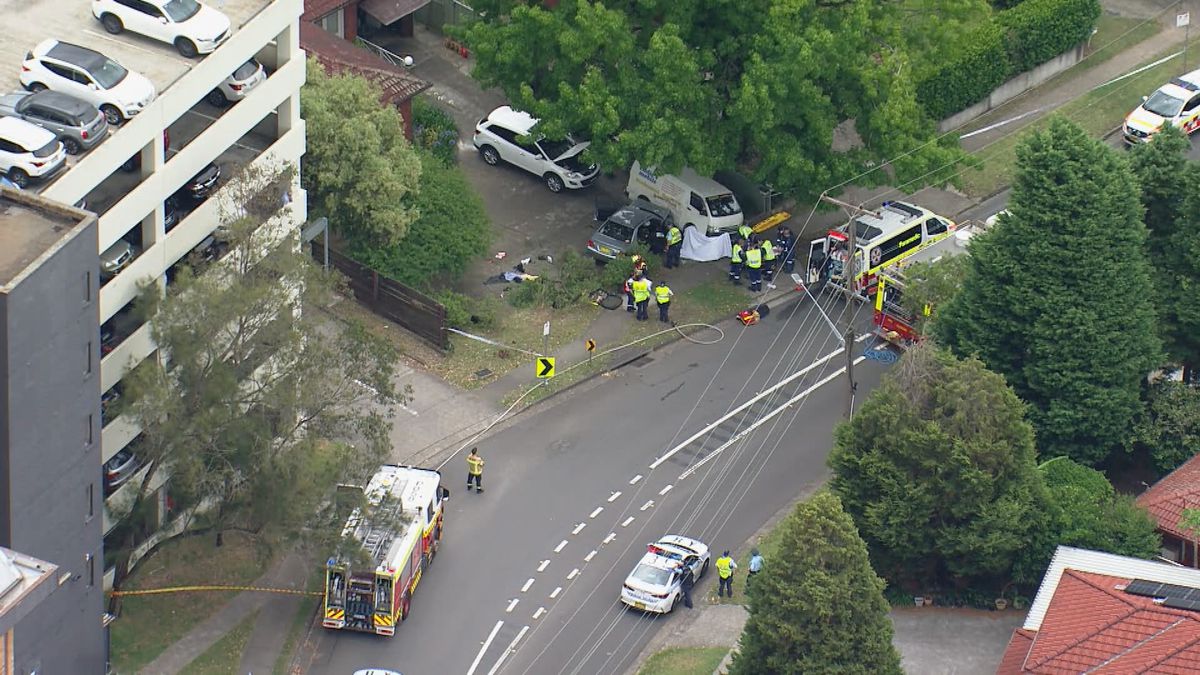
A 17-year-old boy was walking with a group of friends near a shopping centre he was struck and killed by a car in Sydney's north-west.

9News understands the boys were walking behind Carlingford Village shopping centre when a car veered off the road and pinned him into a parked van.

Friends, family and teachers from Carlington High School went to the scene to console the remaining boys at Rembrandt Street about 11.20am today.

READ MORE: CCTV of lions escaping from Taronga Zoo enclosure released

NSW Ambulance paramedics treated the teenager when they arrived but he died at the scene.

Another 17-year-old boy was injured and is at Westmead Hospital.

The driver, a 90-year-old woman, was also taken to Westmead Hospital for mandatory testing.

READ MORE: 'Angel on the ledge' saved climber's life after horror 24m fall

Police have not yet been able to contact the boy's family.

He is yet to be formally identified.

Former William Tyrrell suspect wins lawsuit against police

Washing machine repairman Bill Spedding will receive almost $1.5 million in compensation after suing NSW Police over their investigation into William Tyrrell's disappearance.

On Thursday, Justice Ian Harrison ordered the State of NSW to pay $1.48 million plus interest after police charged the 71-year-old with historical child sex allegations while searching for the three-year-old after he vanished in September 2014.

The judge found the accusations brought against Spedding in 2015 were "concocted and false and could not be supported" and were brought against him for the collateral purpose of furthering the investigation into William's location.

READ MORE: Massive trove of Medibank data released online

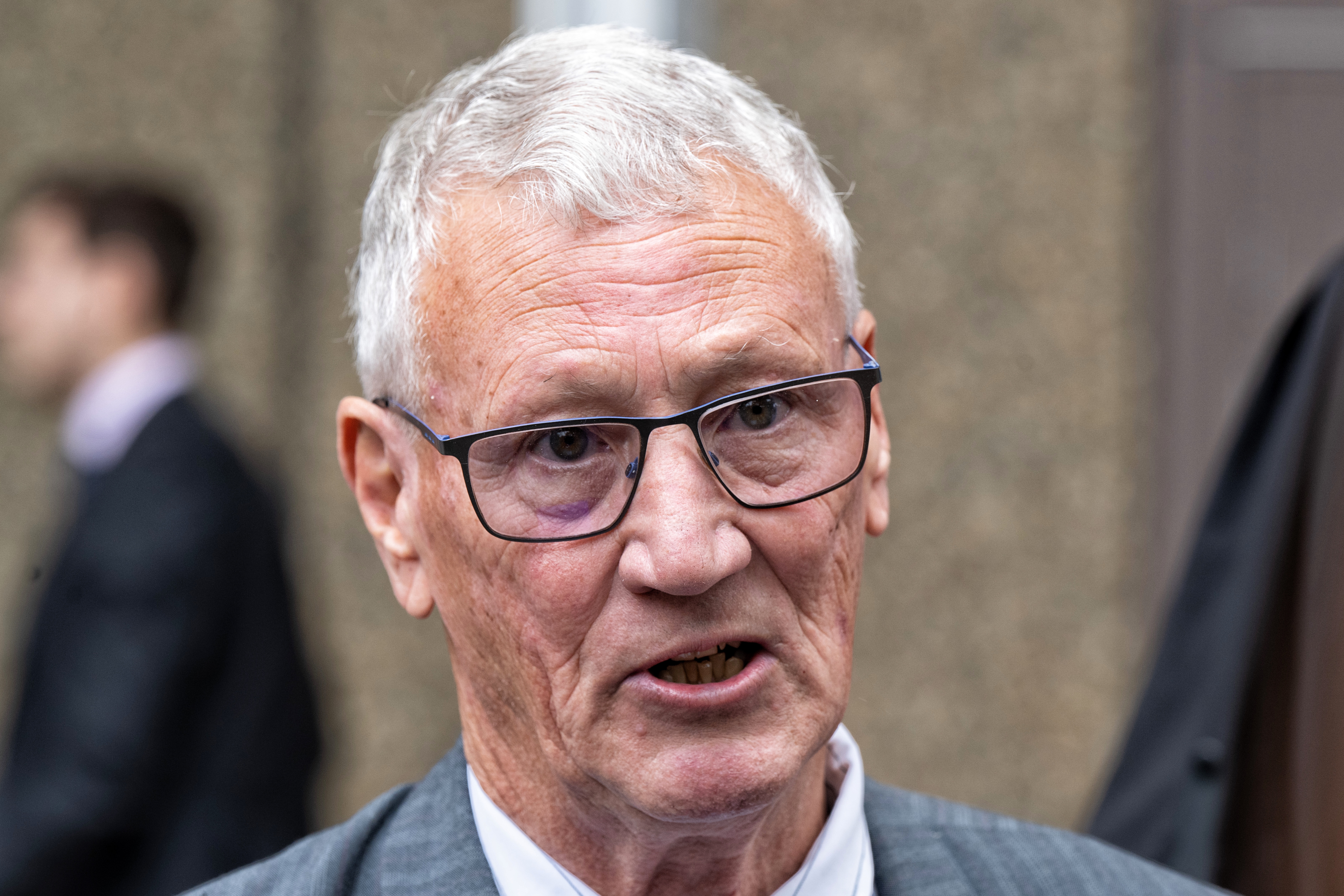
Bill  Spedding leaves the Queens Square Supreme Court after successfully suing the NSW POLICE for wrongful arrest related to the William Tyrrell case. Photo Nick Moir 1 Dec 2022

"I am satisfied that the institution and maintenance of the criminal prosecution was malicious," Harrison said.

"It was borne of malice directed to Mr Spedding and unrelated to the proper pursuit of the criminal law."

As former detective inspector Gary Jubelin later said in his book I Catch Killers, he hoped the pressure of the additional charges would be "enough to crack (Mr Spedding) open".

In a statement on Thursday, Spedding said he hoped the case would deter the police from taking such steps again.

"No sum of money will restore the life I enjoyed before this terrible nightmare," he said.

"I brought this case to show that police decisions to prosecute must not be taken lightly and, more importantly, must not be taken to achieve some ulterior purpose."

The tradesman was an early high-profile suspect in the disappearance of three-year-old William from a home on the NSW Mid North Coast.

Police searched Spedding's Bonny Hills home and drained his septic tank in January 2015 but found no evidence linking him to William.

Bill  Spedding leaves the Queens Square Supreme Court after successfully suing the NSW POLICE for wrongful arrest related to the William Tyrrell case. Photo Nick Moir 1 Dec 2022

Before being categorically ruled out in both investigations, the tradesman was charged in April 2015 over the historical child abuse claims, spending 56 days in custody and then being released on strict bail conditions.

Clear evidence emerged that the complainants had been coached by another person to make the allegations and another person's evidence undermined the case.

In March 2018, Spedding was found not guilty.

Spedding said he was charged for crimes he did not commit, all to further the police prosecution of him as a suspect in William's disappearance.

"The criminal charges brought maliciously against me by police destroyed me and publicly portrayed me as a paedophile," Spedding said on Thursday. 

"My reputation was severely and permanently damaged. My family life was torn apart.

"Our grandkids were taken from us, and their lives have also changed forever."

Harrison awarded Spedding $550,000 for non-economic loss, $300,000 for reputational damage, $200,000 for aggravated damages as further compensation, $300,000 in exemplary damages to punish the NSW government, and $25,000 in future treatment expenses.

"Mr Spedding was subjected to a long and painful ordeal. It never should have occurred. The allegations for which he was prosecuted were old and discredited. They were frail and notoriously so," the judge said. 

"Notwithstanding those facts, Mr Spedding's experience left him distressed, confused, wrongly imprisoned and separated from his family. 

"His release from custody, which I find to have been extremely distressing and painful, did not restore to him the family from which he had been so improperly removed.

"Nor has it recovered even now."

READ MORE: Socceroos stun Denmark to reach World Cup knockout stage

The judge also ordered NSW to pay almost $110,000 in Spedding's legal costs.

On Thursday, solicitor Peter O'Brien said his client had to deal with wrongful imprisonment as well as the "febrile condemnation" of the community, which included harassment, intimidation and threats.

"The impact on Mr Spedding and his family is enormous. Mr Spedding faced charges of the most serious nature which caused him tremendous humiliation, embarrassment, and anxiety," he said.

A spokesperson from NSW Police said it would be reviewing the judgment.

"As that review is underway, it would be inappropriate to comment further," they said.

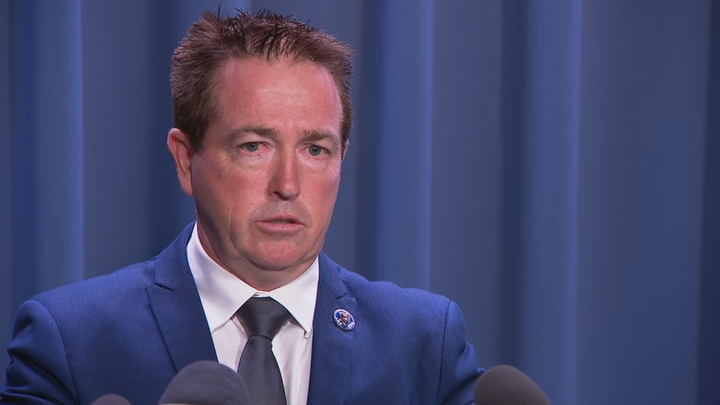
AAP has contacted Police Minister Paul Toole for comment.

Man charged over alleged murder of Sydney grandfather

A man has been charged over the alleged murder of a Sydney grandfather found dead in an alley earlier this year.

Vincenzo Leonello was found unresponsive, with bruises to his face and forearms, on Hardie Avenue in Summer Hill on February 7.

A police strike force was launched to investigate the death and today a 56-year-old man was arrested in the same suburb where Leonello died.

WATCH: CCTV of lions escaping from Taronga Zoo enclosure released

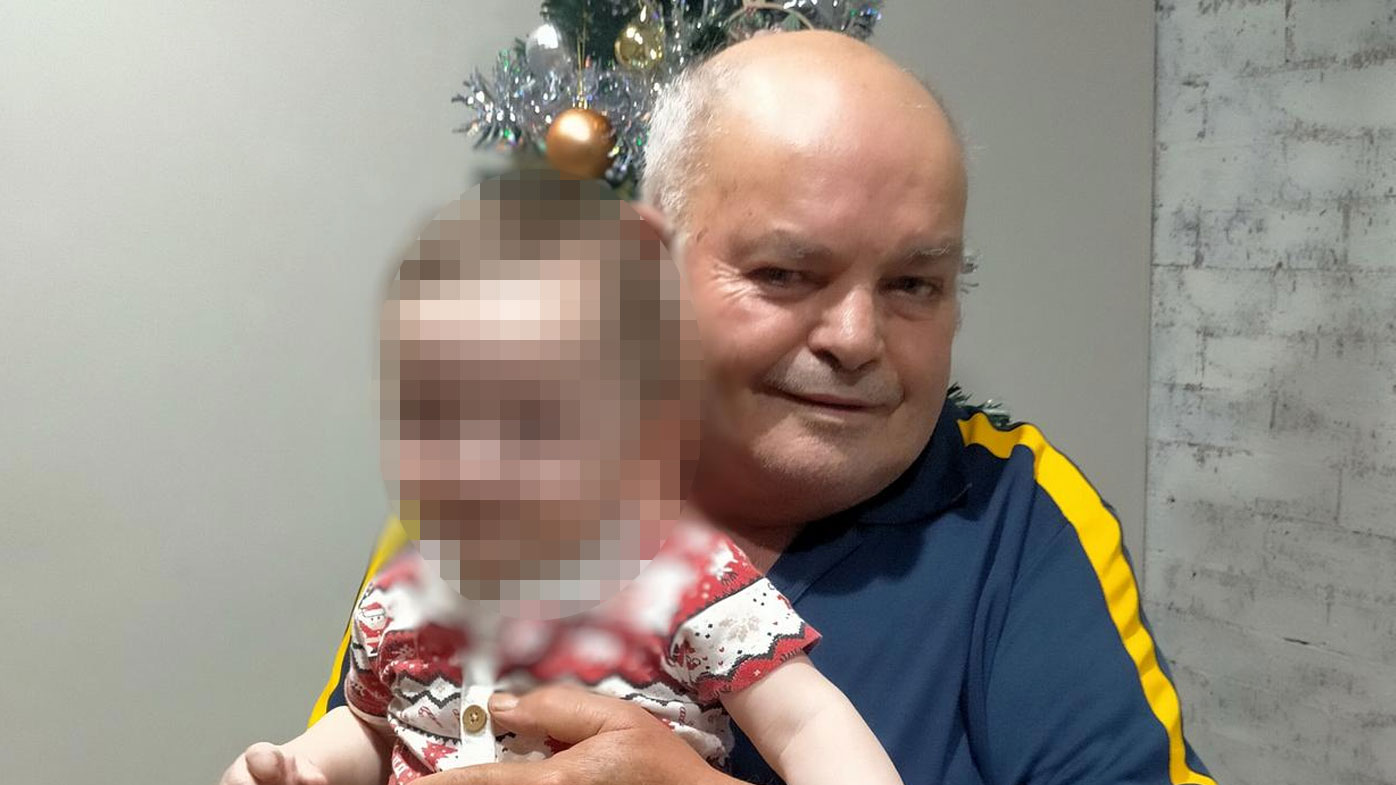
Vincenzo Leonello was found dead in Summer Hill in February.

He was taken to Burwood Police Station, where he was charged with murder.

It comes after Leonello's son made a public plea for information about his father's death, describing it as a shock.

"Dad was a much-loved family man, he would have never hurt a fly," Chris Leonello said in late October.

"He loved spending time with us and watching his grandson grow.

"Barbecues in the backyard were one of his most enjoyed times."

READ MORE: Son pleads for help in solving beloved father's 'suspicious' death

Leonello was homeless at the time of the alleged attack.

The 56-year-old was refused bail to appear in court today.

NSW Police Minister Paul Toole's brother granted bail on drug charges

A judge has granted bail to NSW Police Minister Paul Toole's brother because he is being kept in "unacceptable" confinement due to his sibling's public status while facing drug charges.

The high-profile nature of 39-year-old Joshua Toole's older brother, who is also the deputy premier, meant he was being kept in segregation for 23 hours a day since being charged in October, the NSW Supreme Court heard on Thursday.

Justice Julia Lonergan said the condition of his confinement was "utterly unacceptable".

WATCH: CCTV of lions escaping from Taronga Zoo enclosure released

Joshua Toole has been released on bail with more than 20 "stringent conditions".

"If they can't come up with something better than 23 hours a day keeping someone in a cell then really it's a problem," she said.

"This to my mind is entirely unsatisfactory no matter what the reasons considered to be a proper basis for that detention."

The judge rejected a police statement from a witness served to Toole's legal team about an hour before the hearing, noting it didn't directly strengthen the case against Toole and the Crown had plenty of time to gather evidence and respond to the application to release him, which was made three weeks earlier.

Crown prosecutor Katharine Jeffreys argued it further established the pseudonym "Smiley" that Toole allegedly used while organising drug deals using encrypted messaging platforms.

"This is significant material and the appropriate remedy for the lateness is an adjournment," she said.

READ MORE: 'Angel on the ledge' saved climber's life after horror 24m fall

Deputy Premier of New South Wales Paul Toole said the state government will crack down on protesters who disrupt traffic.

Philip Strickland SC, representing Toole, said the late service of the statement was a legal tactic to make up for the Crown's circumstantial case.

"It was a deliberate strategy to disadvantage (Toole) … the proposed remedy is contrary to the interests of justice," Strickland said.

The Crown's case relied on coincidences, with vision of Toole using his phone being linked to encrypted messages attributed to him, Strickland argued.

Jeffreys said it was built on patterns, not coincidences, and "some distinct turns of phrase" attributed to Toole.

Strickland said some of the wording was actually quite common.

"Many people, particularly of a certain age or character, use the word 'bro'," he said.

"'Bro', 'my brother', 'cool', 'easy', 'mad', they're all very commonly used words."

Toole's confinement was not up for review until mid-January, and Lonergan gave weight to his claim that he "feels like a caged animal" and is becoming "an emotional wreck".

Strickland said the length of time before trial and his isolation was a powerful reason for Toole's release.

"Undoubtedly," Lonergan said.

READ MORE: Four-day work week trial a huge success and here's why

Toole was charged in October with supplying a large commercial quantity of a prohibited drug, participating in and directing the activities of a criminal group and contributing to criminal activity as well as supplying prohibited drugs on an ongoing basis.

The court heard he is accused of supplying more than 1.8 kilograms of methylamphetamine.

Lonergan released Toole on bail with more than 20 "stringent conditions" including a house being put up as assurance that he will return to court.

He also can't own a smartphone, has to abide by a curfew, abstain from drugs, undergo testing and report to police daily.

Toole's case will return to Newcastle's Belmont Local Court on December 7.

The deputy premier has been contacted for comment.

Reacting to the initial news of his brother's arrest in October, he said his family was "devastated" but no one was above the law.

"We are not the first family to have to deal with this and unfortunately we won't be the last," he said.

Second man charged over alleged gangland murder

Homicide detectives have charged a second man over the alleged murder of Rami Iskander.

Iskander, the nephew of slain underworld figure Mahmoud "Brownie" Ahmad, was shot dead in the early hours of May 14, just two weeks after his uncle.

The 23-year-old was found in his driveway in Belmore with gunshot wounds and despite being treated by paramedics, he died at the scene.

READ MORE: Man arrested over alleged connection to death of Rami Iskander

A man was arrested in Sydney yesterday morning and has since been charged with being an accessory after the fact to murder and concealing a serious indictable offence.

Police will allege in court the 29-year-old provided direct assistance to persons involved in the incident following the murder of Iskander.

He was refused bail to appear at Downing Centre Local Court today.

Last month, a 42-year-old man was arrested and charged over his alleged involvement in the deadly shooting.

READ MORE: Slain gangland figure's nephew shot dead in Sydney's west

He was charged with a number of offences, including being an accessory to murder, knowingly dealing with proceeds of crime, participating in a criminal group and contributing to criminal group activity.

He remains before the courts.

Iskander's death was initially investigated by the State Crime Command's Homicide Squad but was taken over by Taskforce Erebus, which looks at several fatal shootings and criminal activities by organised crime networks across Sydney.

Investigations under Taskforce Erebus continue.

How Taronga Zoo's lions escaped from their enclosure

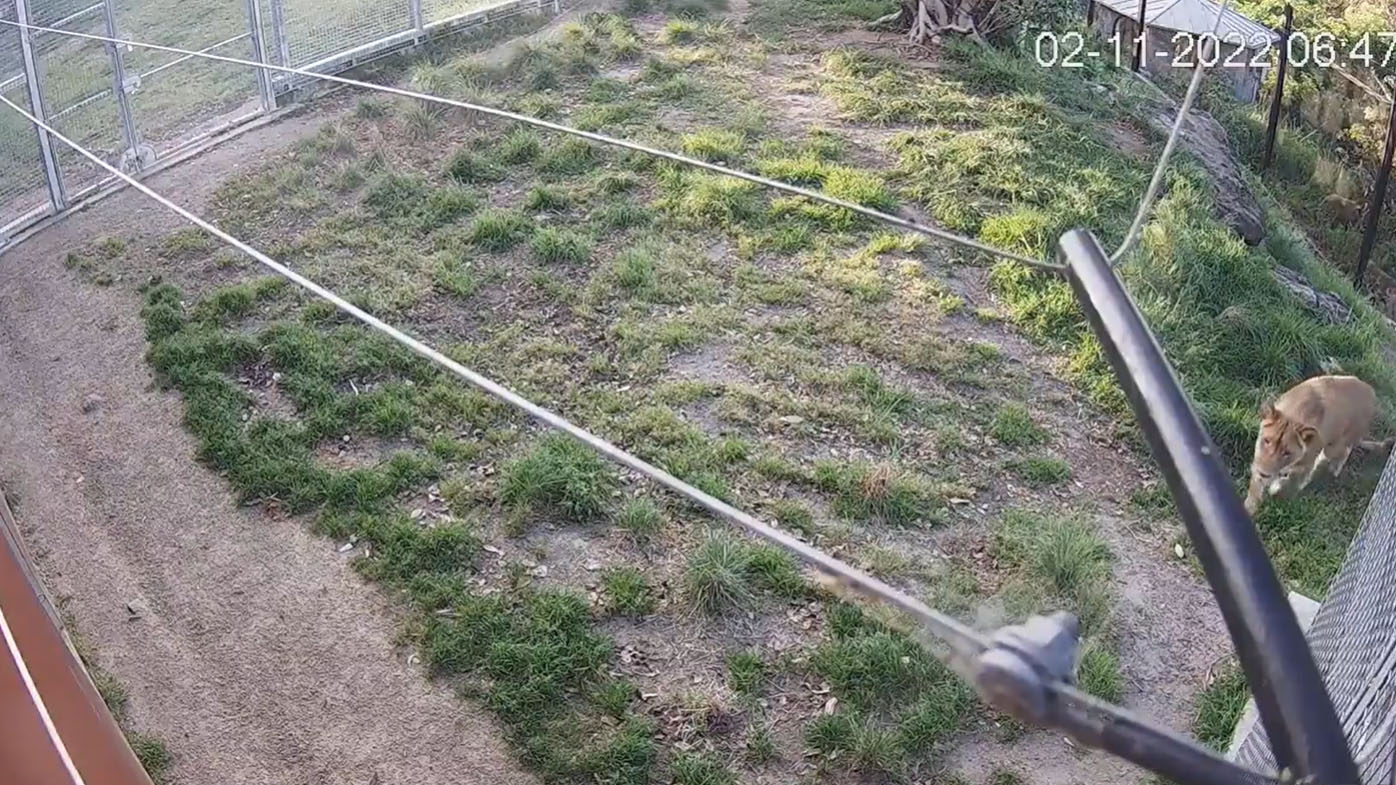
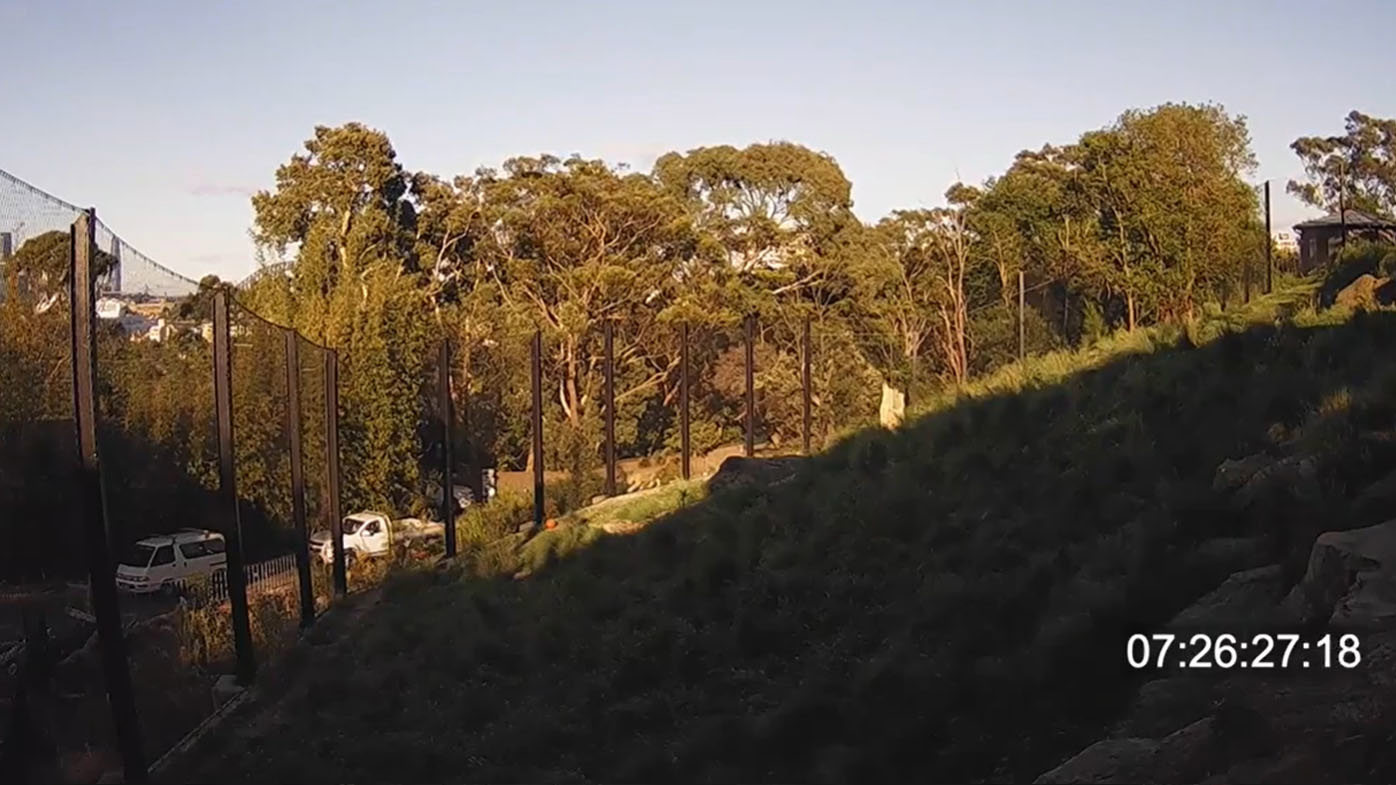
Exactly how five lions escaped from their enclosure at Taronga Zoo is now a little clearer after CCTV of the event was released.

New vision shows the four cubs – Luzuko, Zuri, Khari and Malika – and adult male Ato investigating at the edge of the fence on the morning of Wednesday, November 2.

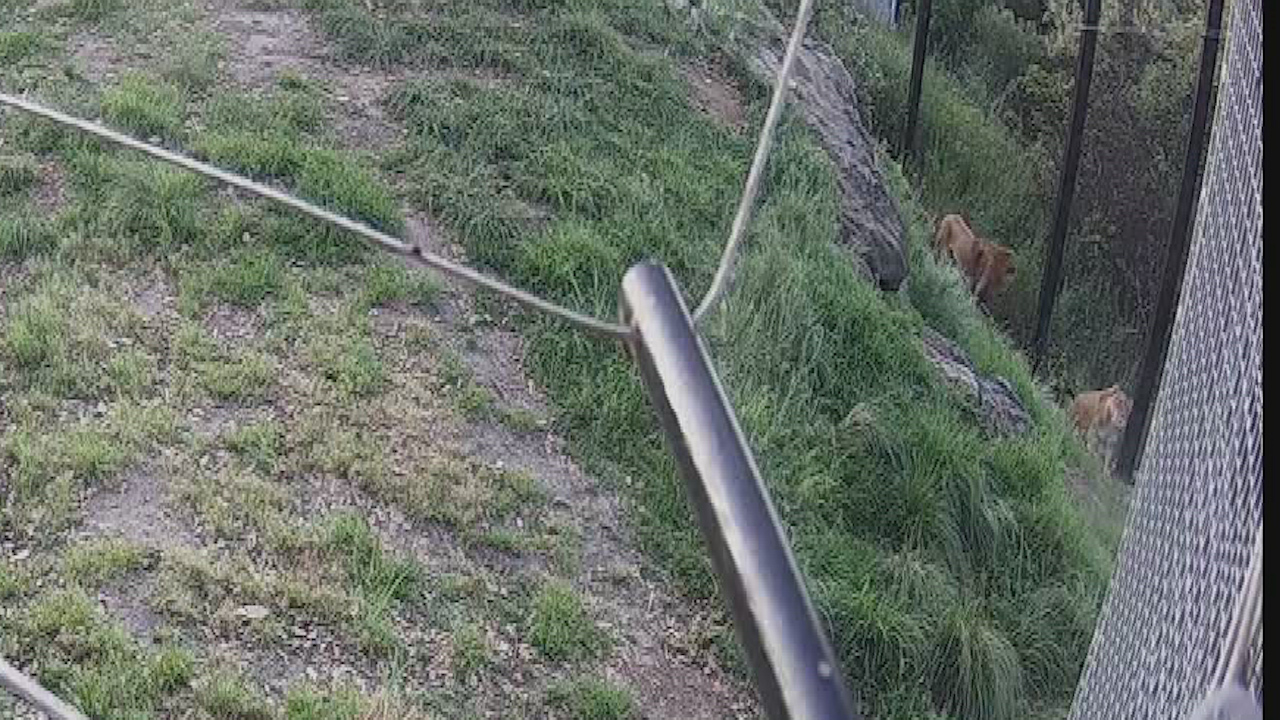
One was able to squeeze under the fence and was then followed by the others, with Ato bringing up the rear.

READ MORE: Guests told to 'run' after five lions break free at Taronga Zoo

The zoo said the group "calmly investigated" and stayed "within metres" of their enclosure before trying to get back in.

Lioness Maya and the zookeepers then started calling for them, and the lions tried to squeeze back under the fence.

Luzuko was the first to do so, and he was followed shortly after by female cub Zuri and male cub Khari.

The CCTV shows the lions investigating the fence before squeezing under it.

Female cub Malika was tranquilised by the zoo's emergency response team and later taken back to the dens.

Ato was the last to re-enter the enclosure.

Taronga Zoo said its review into the great escape is ongoing, "and an independent, specialist forensic engineer is still conducting detailed investigations on the failure and the complex mesh fencing system".

The lions will remain in an outdoor, back-of-house habitat pending findings of the review, and are unlikely to be back in their main exhibit before Christmas. 

On the day of the escape guests staying at the zoo in tents as part of the "Roar and Snore" experience were told to "run" when it emerged the animals were on the run.

"They came running into the tent area saying, 'This is a code one, get out of your tent and run, come now and leave your belongings,'" Magnus Perri said on the day.

"We had to run about 50 to 70 metres before they opened the door, everyone got in, they counted us and they locked the door and we stayed inside the building."

Four-day work week trial a huge success and here's why

The verdict is in: A four-day work week is good for business.

After six months, most of the 33 companies and 903 workers trialling the schedule, with no reduction in pay, are unlikely ever to go back to a standard working week, according to the organisers of the global pilot program.

None of the 27 participating companies who responded to a survey by 4 Day Week Global said they were leaning towards or planning on returning to their former five-day routine. About 97 per cent of the 495 employees who responded said they wanted to continue with a four-day week.

READ MORE: Massive trove of Medibank data released online

The majority of companies taking part in the trial were based in the United States and Ireland. Those responding to the survey rated their overall experience nine out of 10, based on productivity and performance.

Workers were equally positive about the trial, reporting lower levels of stress, fatigue, insomnia and burnout, and improvements in physical and mental health.

The trial was also good for company earnings. Average revenue rose 38 per cent when compared to the same period last year, according to the survey.

READ MORE: Royal official quits after asking charity boss where she was 'really from'

4 Day Week Global, a nonprofit organization, collaborated with researchers at Boston College, University College Dublin and Cambridge University for the trial. It was split into two cohorts, beginning in February and April this year.

Juliet Schor, professor of sociology at Boston College and the trial's lead researcher, said that employees did not report an increase in the intensity of their work.

"This suggests that the work reorganisation strategy succeeded and performance was not achieved via [speeding up], which is neither sustainable nor desirable," she said.

'Win-win'

Jon Leland, chief strategy officer for Kickstarter, a crowdfunding site participating in the trial, described the schedule as a "true win-win."

"The four-day week has been transformative for our business and our people. Staff are more focused, more engaged and more dedicated, helping us hit our goals better than before," he said in a statement.

READ MORE: Socceroos stun Denmark to reach World Cup knockout stage

A separate six-month trial in the United Kingdom, also run by 4 Day Week Global, and which included 70 companies and 3,300 workers, wrapped up this month. The results from that trial — the world's biggest to date — are due in February.

Earlier this year, workers in the UK trial described to CNN Business how the extra day off had changed their lives for the better, giving them more time to run errands, take up hobbies, and simply recharge.

Calls to shorten the working week have gathered steam in recent years.

As millions of employees switched to remote work during the pandemic — cutting onerous commuting time and costs — those calls have only grown louder.

WATCH: CCTV of lions escaping from Taronga Zoo enclosure released

Toyah Cordingley alleged murder suspect appears in Indian court

A man of accused of murdering 24-year-old Toyah Cordingley on a Queensland beach four years ago has made a brief court appearance in New Delhi as the formal legal process to extradite him to face trial in Australia got underway.

Thirty-eight-year-old Rajwinder Singh, an Australian of Indian origin, will appear in court next on December 17 for a further hearing on Australia's extradition request.

"It was the earliest date we could get," Ajay Digpaul, the public prosecutor representing the Indian government, told reporters outside the magistrate's court.

READ MORE: Massive trove of Medibank data released online

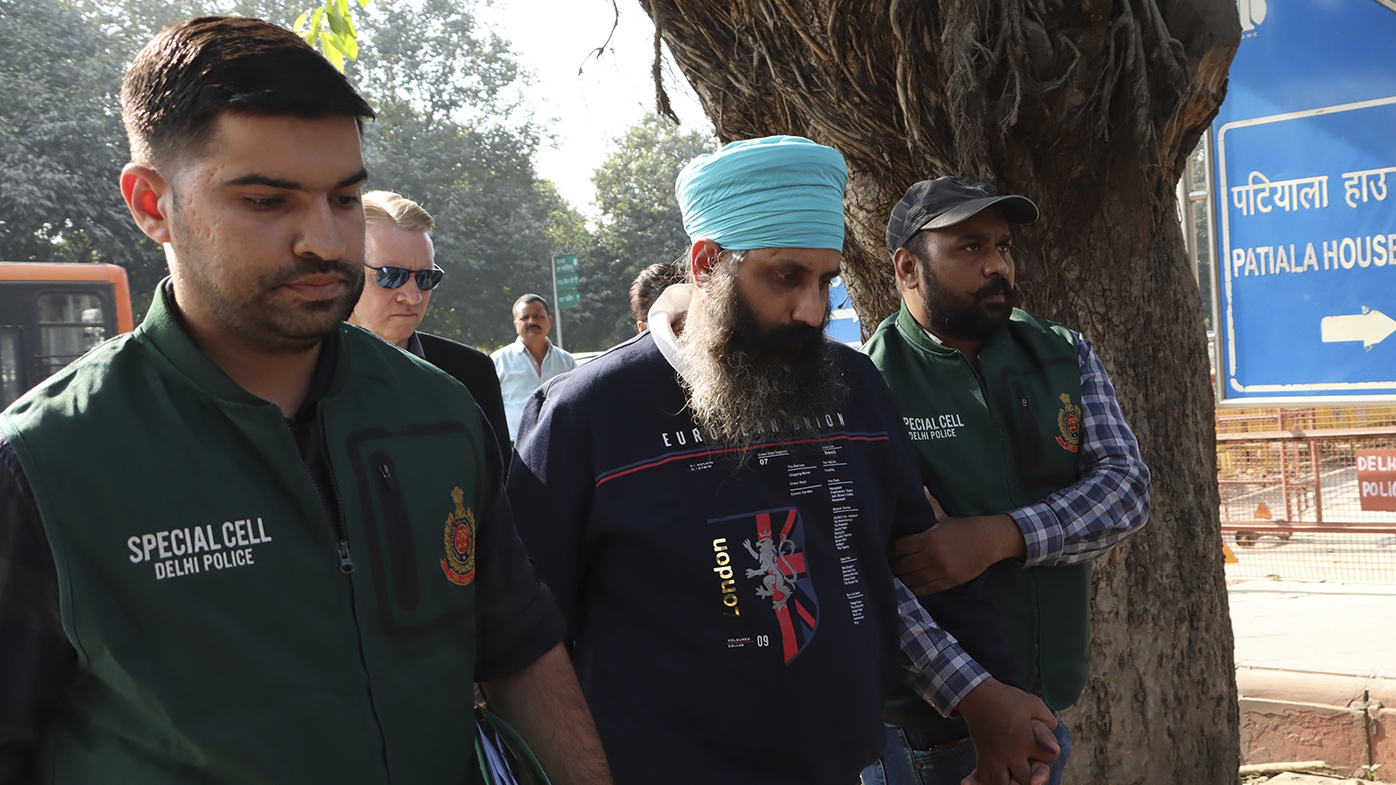
Policemen escort Rajwinder Singh, 38, after he was arrested in New Delhi on November 25.

Singh arrived at the central Delhi courthouse clad in a light winter jacket and the same navy T-shirt and blue turban he was wearing when police arrested him last Friday.

The capture ended a four-year hunt for Singh, who boarded a flight to India just after Cordingley was reported missing.

Singh, who worked as a nurse in Australia, gazed downward and displayed no emotion in the courtroom.

Singh's counsel claimed at the hearing the accused had not received the documents supporting Australia's extradition bid.

Digpaul told the court Singh's lawyers had been supplied with all the papers.

"Australia has made a complete investigation and we are using their documents in support of the extradition," Digpaul said.

Toyah Cordingley

READ MORE: Pregnant mum unlikely to survive after car park attack in Perth

The Indian government has given its provisional consent to Australia's extradition request.

But the magistrate's court must hear the evidence compiled by Australian investigators and approve Singh's extradition before the government can give the final green light for him to be returned to Australia.

Indian media has reported Singh allegedly told local investigators he stabbed Cordingley on Wangetti Beach, north of Cairns, after an argument over her dog barking at him.

Digpaul, who described Cordingley's killing as a "heinous offence," said the prosecution wants to move "with maximum speed" to extradite Singh.

But he noted that Singh "has the right to appeal" any court decision to send him back to Australia.

Singh, who has a wife and three children in Australia, will remain in Delhi's Tihar Jail, South Asia's largest prison, "until and unless he is granted bail," Digpaul said.

The prosecutor said Singh can seek bail but he will oppose any application for his release.

"He can move an application for bail. But the allegations are serious so there's much less possibility of him getting bail. Also, he was absconding so he's a flight risk," Digpaul told AAP.

Singh, who was clean-shaven in Australia, disguised himself in India by growing a long beard and donning a turban and evaded arrest by continually shifting locations.

He was arrested after the Queensland government posted a record $1 million reward earlier in November for information leading to his capture.

Australian police said the reward resulted in a flurry of tips about Singh's whereabouts.

Rajwinder Singh left Australia on October 23, 2018.

READ MORE: Royal official quits after asking charity boss where she was 'really from'

However, extradition proceedings in India can be extremely drawn out.

The country has a logjam of millions of pending cases that makes justice extremely slow-moving.

Concern about how long it may take to return Singh to Australia has been fuelled by the extradition case of hit-and-run drunk driver Puneet Puneet, who killed Queensland teenager Dean Hoftsee in 2008.

After pleading guilty to culpable driving causing death, Puneet fled to India in 2009 and was in hiding until his 2013 arrest.

Puneet has been fighting extradition since then, arguing he "will face discrimination" and "be tortured" in Australia, assertions rejected by the Indian prosecutor in the case as "hogwash".

In July, Puneet was released on bail to look after his ailing parents, dealing a further blow to the efforts to extradite him.

Digpaul said there was nothing to suggest Singh's extradition case might be similarly protracted.

"The facts are different in each case. How each case proceeds all depends on the particular set of facts in the case," he said to AAP.

'Angel on the ledge' saved climber's life after horror 24m fall

In August, 9news.com.au reported on Kiwi climber Anna Parsons' horror 24-metre fall off a famous route in Yosemite. The accident broke nearly every bone in her body and her left leg was amputated because it was so severely injured. We caught up with Parsons to see how her rehab was going.

Her catastrophic fall, when it happened, seemed to unfold in dreamlike slow motion.

Anna Parsons, 21, had just executed "a really gnarly" pitch across a very hairy section of Snake Dike, a famous Yosemite climbing route but one that offers climbers little protection because of the sparse number of bolts in the wall.

READ MORE: Stowaways survive 11 days on oil tanker's rudder
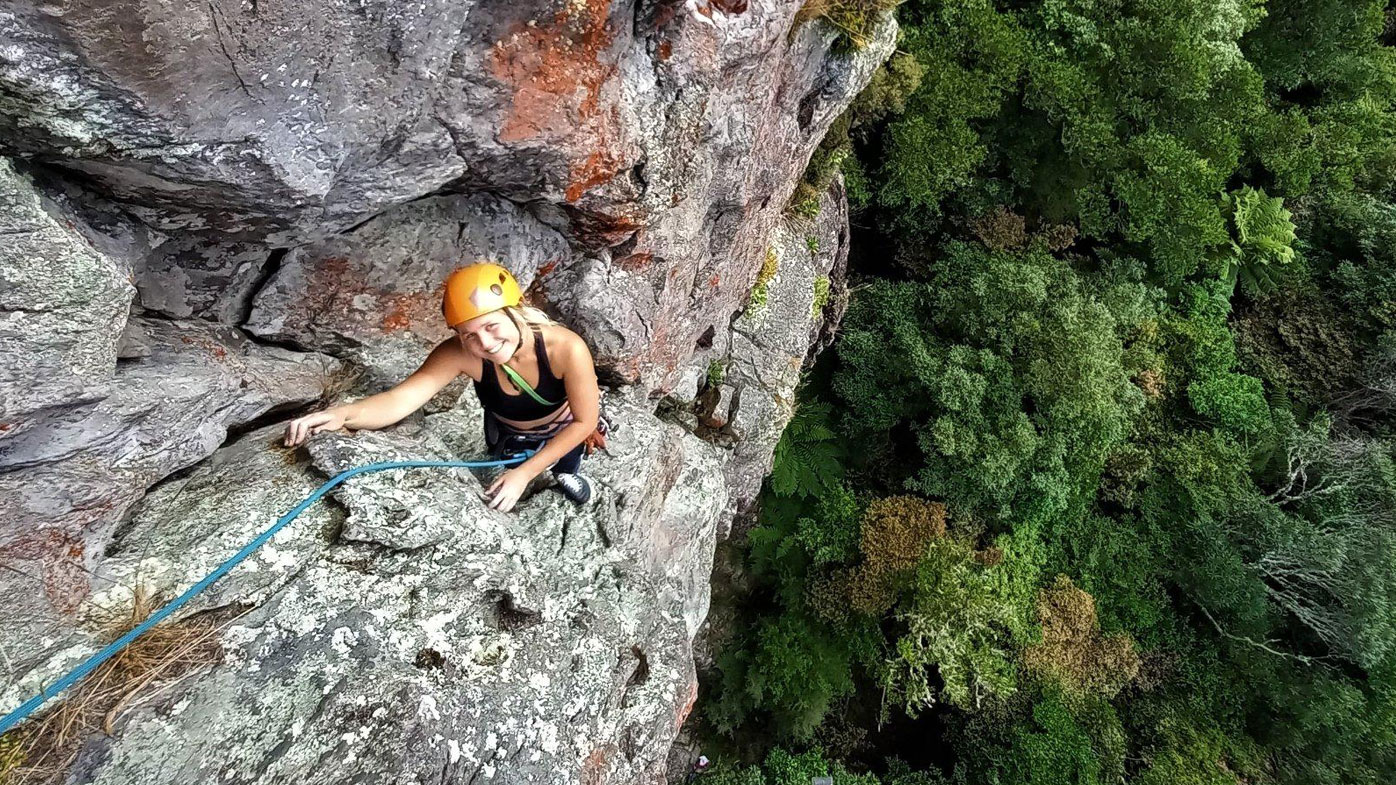
Kiwi climber Anna Parsons hangs on a rock face.

Long periods of climbing in between bolts – which climbers call a runout – mean a long fall is certain if a mistake is made.

"I'd just done the hard bit," the 21-year-old remembers.

"I wasn't stressed out that I was so runout, because I've got that weird ballsy attitude.

"That's why we do these sports."

She felt "ecstatic", and had even yelled out to her Kiwi climbing partner below, Jack Evans, that she was doing fine.

"I was very focused, my breathing was excellent and I was so stoked that I had remained calm."

Then disaster struck.

"I kind of just slipped," Parsons said.

"It was like, 'I have no hands, my foot's sliding.'"

There was disbelief, followed by an awful realisation: she was falling.

A rope which pulled tight an instant before she hit a rock ledge 24 metres below helped mitigate the intensity of the violent collision that followed, and probably saved her life.

"If I had hit that ledge at full speed … there is no way I would have survived," she says.

"It was like there was an angel lying on the ledge saying, 'We'll just slow her down a little bit so she can survive.'"

It was a fortuitous escape, but Parsons was left severely injured.

Both feet, her pelvis, spine and neck were broken.

Her busted ribs had punctured both lungs.

The talus bone in her left ankle, on which the foot hinges and pivots, was "obliterated".

Parsons' left leg was so brutalised it had to be amputated under the knee.

After six weeks in a US hospital, Parsons made it home to New Zealand, courtesy of an online fundraiser which helped offset medical bills which had ticked over $1 million.

Speaking to 9news.com.au from a spinal unit in Christchurch, her home for the past two months, the last of Parsons major cuts have only just healed.

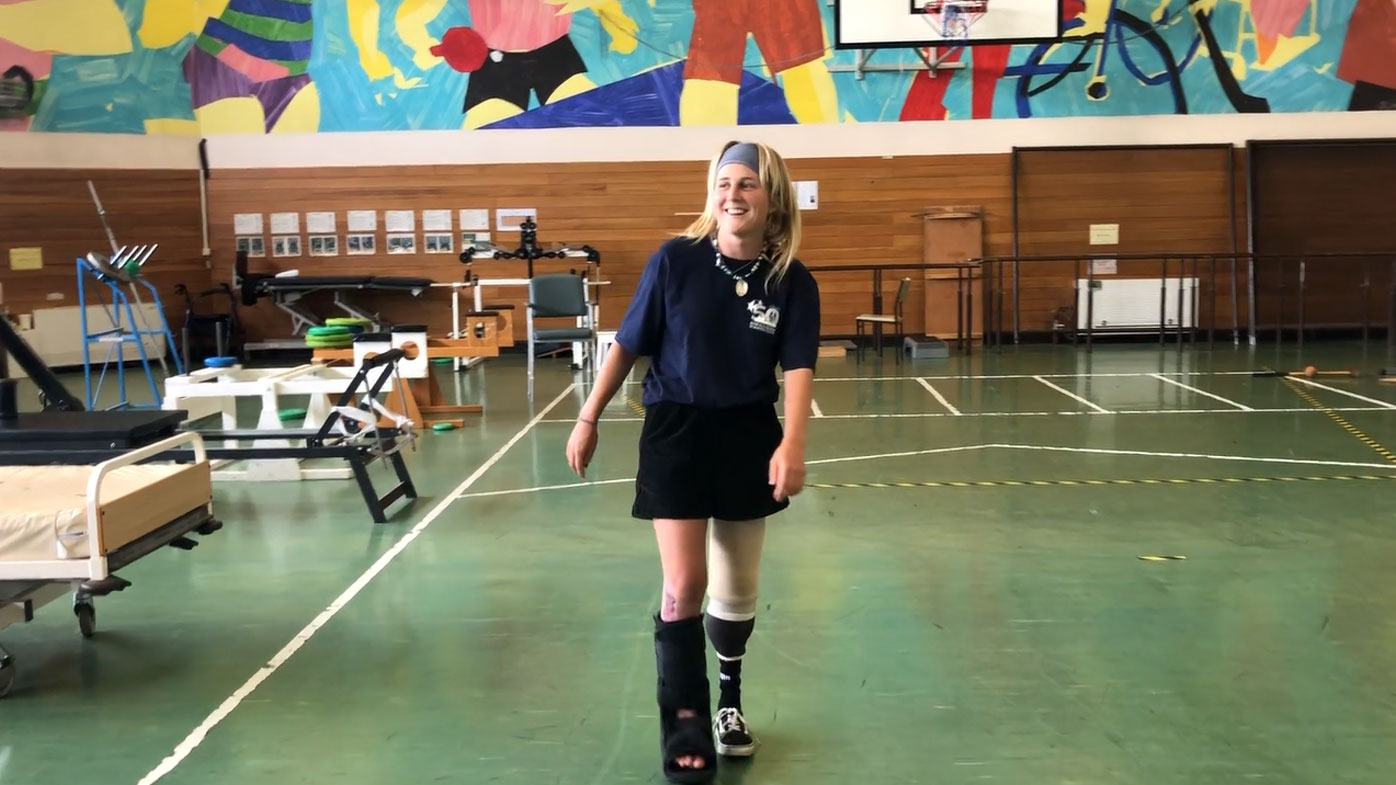
There's no self-pity in her voice, only an infectious, optimistic energy as the keen climber, hiker and surfer talks about coming to terms with the loss of her leg, and her goals and plans for 2023, of which there are many.

"I love it," Parsons replies, when asked how her rehab is progressing.

"I like working hard. I enjoy exercise."

Four weeks ago she made her first steps on her prosthetic leg, an "awesome" milestone.

"It's just the most natural thing," she says.

"Your body just remembers."

READ MORE: Climber's frostbitten fingers to be cut off after scaling 8000m peak
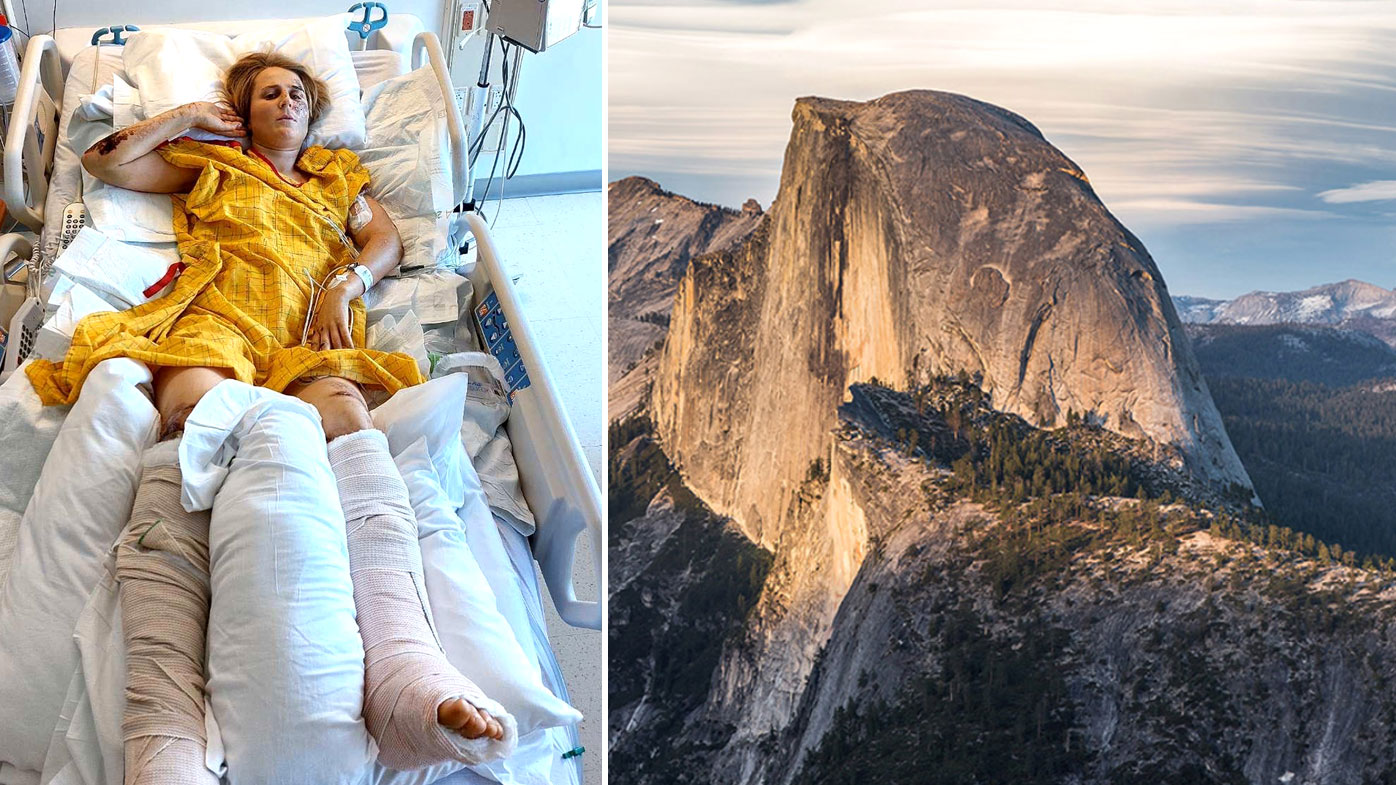
NZ climber Anna Parsons lies in a hospital bed in California, after falling from a rock face in Yosemite National Park.Anna Parsons is already walking again with her new prosthetic.

She's already back swimming in the ocean and has designs on sea kayaking; taking off her prosthetic and hopping down the beach is tricky, but the water is her "happy place".

Prayer and meditative breathing has helped her heal too, she says.

Will she dare climb again? Of course.

Parsons is "craving to go" back to Yosemite again.

As if to prove her love affair with the mountains remains strong, she laughs while describing a special prosthetic leg she is getting 3D-printed for her brother's wedding in Australia next year; spread across it will be a picture of Yosemite's fabled granite walls.

"I pretty much want to be an athlete when I come out of this."

She views rebuilding physical strength as essential to embracing a new way of life.

Next month she's scheduled to leave the unit, a blessing but also a step away from the camaraderie and close friendships she's forged with other patients inside.

A return to tramping and scuba diving is on her agenda.

There'll be yoga too, "but it's going to be different".

She admits to "mourning" the completeness of her body as it once was, and the sense of total "connectedness" found in the yoga practice.

"I miss that mobility," she says, "and the look of two legs, as well as how they function."

READ MORE: Indian climber reaches top of Everest, six years after faking it
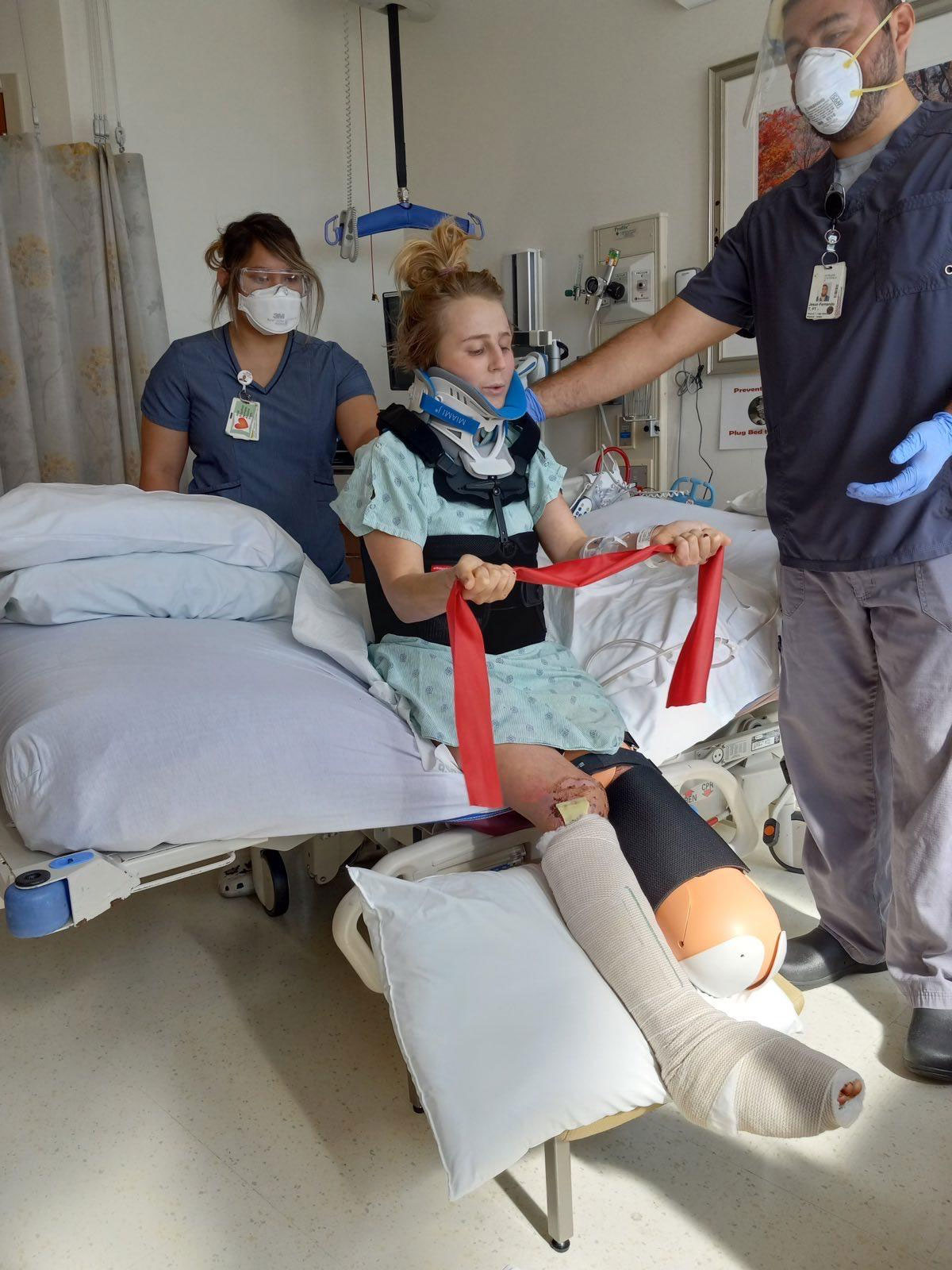
Anna Parsons with medical staff in hospital.

READ MORE: Burden of pushing man off cliff drove prodigy to impossible heights

But her main goal by September next year is to get up to Vancouver Island in Canada to finish the final year of her marine biology degree at Bamfield Marine Sciences Centre. 

That's where Parsons was headed before she stopped in at Yosemite to mountain bike and climb some of the park's world-famous routes.

"These are the things that sort of keep me going and moving," she says.

"It gives you hope and a purpose."