Mairangi Bay resident Carmen Thorton was cooking in the home kitchen when she heard a loud bang.She rushed out to see a vehicle had crashed into a neighbouring property and was on fire.A black ute collided with a power transformer…
Tag Archives: oceania
Beer prices to soar before Christmas
The price of beer is set to soar ahead of Christmas after repeated floods throughout the year in Australia's prime cropping regions.
The multiple inundations of farmland on Australia's east coast have affected food supply already, but it's now been reported that the barley harvest has been severely impacted.
Not only have crops gone under, but roads have been blocked and harvest machinery waterlogged.
READ MORE: Man charged after allegedly crashing into police car while drunk

Increased costs to breweries are likely to be passed on to consumers as a result, with imminent price spikes expected.
Milk and vegetable prices are also set to soar, making for a pricey Christmas shopping list.
However, increased supplies from interstate will hopefully blunt some of the costs in coming weeks.
READ MORE: Socceroos win thrilling World Cup game against Tunisia 1-0
NSW Farmers Association president Xavier Martin recently warned a full recovery was a long way off for the flood-hit regions.
"The rains have stopped for now but the flood water will continue to affect farms and communities for some time," Martin said.
He said many farmers had individual repair bills in excess of $100,000, on top of the losses from destroyed crops and lost livestock.
Ongoing concerns about major road closures for post-flood repairs could also significantly affect freight, particularly grain transport.
The explosive truth about 'supervolcanoes'
In this explainer series, 9news.com.au is examining the concerns and fears around natural disasters, examining potential impacts on Australia.
Around the world, there are eight known volcanoes capable of supereruptions – with one of the most active sitting right on Australia's doorstep.
Lake Taupō, in New Zealand, recently had its threat level upgraded to level one, the first time in history alert system GeoNet has done this.
It has entered a period of "volcanic unrest", with the number of earthquakes doubling from 10-12 per week in October to 20 events per week in November.
READ MORE Explained: Where have all the Christmas beetles gone?

So is it likely to erupt?
Here we break down what we know about "supervolcanoes", with the help of an expert.
What is a supervolcano?
Dr Simon Barker – senior research fellow with Victoria University of Wellington's School of Geography, Environment and Earth Sciences – said the term supervolcano is actually a misnomer.
"It's a little bit of a meaningless term," he said.
"A supervolcano is essentially a volcano that has hosted a supereruption."
"Those types of volcanoes don't always produce supereruptions."
READ MORE: Could we really have a volcanic eruption in Australia?

How many supervolcanoes, or supereruptions, have happened?
A paper Barker helped co-author in Nature described supereruptions as "cataclysmic events" that typically result in caldera collapse.
"A supereruption is the highest magnitude of explosive volcanic eruption," Barker said.
"It's any eruption that produces more than 1000 cubic kilometres of pumice and ash.
"Now, that's a lot of material – enough to cover the entire North Island of New Zealand in pumice and ash.
"If you think of the January eruption of Tonga, if that went on for days and weeks, that would be a supereruption.
"They are very, very big – just mind-blowing – you can't even imagine it."
READ MORE: What to do if you encounter a deadly snake, spider or jellyfish
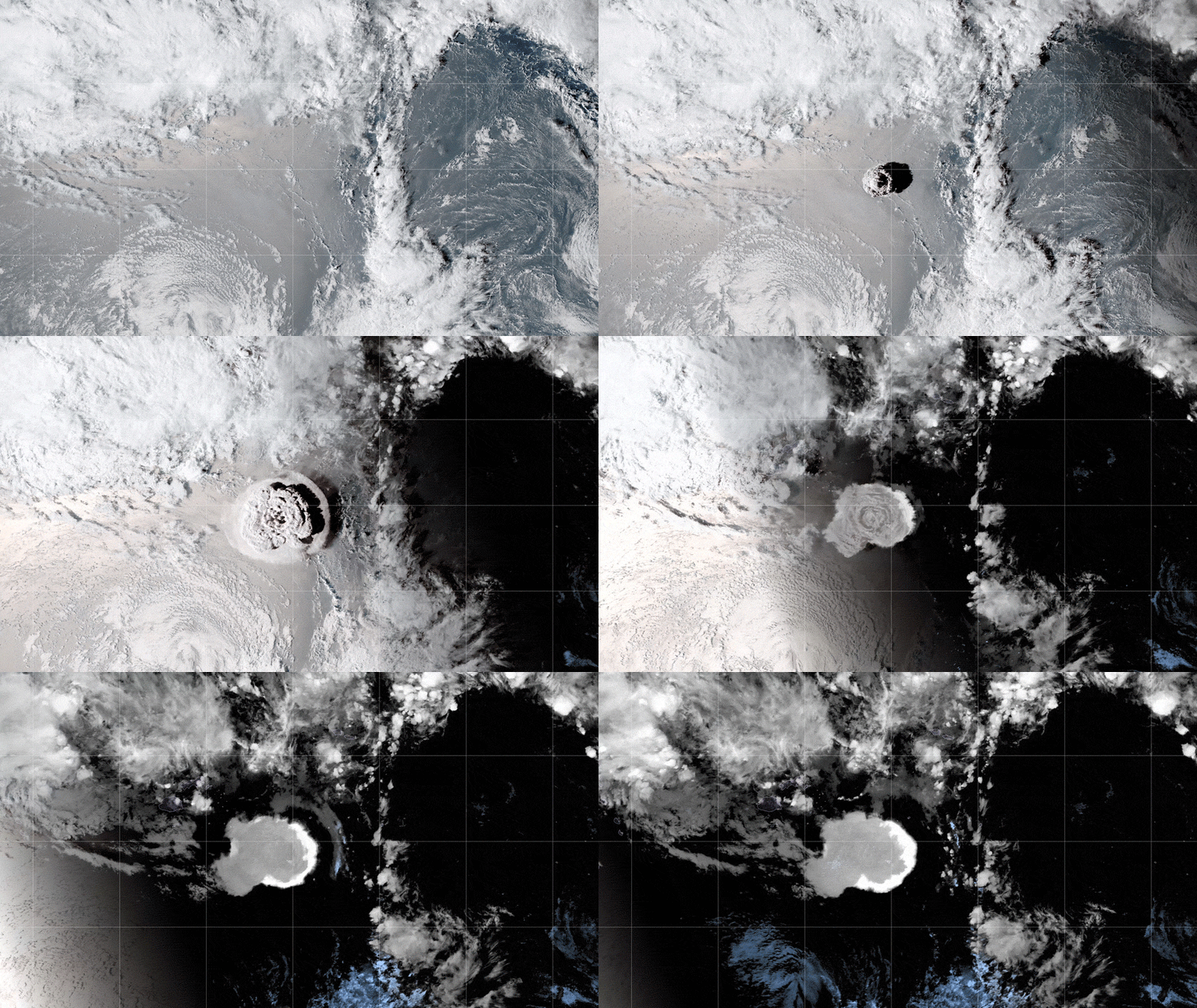
Barker said scientists have honed in on more than a dozen supereruptions, looking closely at geological records.
"Over the past 2.5 million years, there's been about 13 supereruptions that we know of," Barker said.
"(But) there is a possibility of eruptions that are no longer preserved – especially if it was under the ocean."
READ MORE: Australia's fourth COVID-19 wave: What you need to know

Where did these supereruptions happen?
The 13 known supereruptions are scattered across six countries.
There's Yellowstone, Long Valley and Valles – all in the US – Cerro Galán in Argentina, Atitlan in Guatemala, Toba in Indonesia, Mount Aso in Japan.

And of course Lake Taupō, on New Zealand's North Island.
All of these calderas are still active today.
The last known supervolcanic eruption was in New Zealand around 25,500 years ago
Is Taupō a supervolcano?
Yes, Lake Taupō is widely referred to as a supervolcano, stemming from the fact it has hosted four of the known 13 supereruptions.
The caldera sits over a massive pocket of sticky magma, at least 250 cubic kilometres in volume.

Will it erupt and what will happen?
While Lake Taupō has entered a period of "volcanic unrest", Barker was clear: it does not mean an eruption, super or otherwise, is due any time soon.
"You're almost guaranteed not to see a supereruption at Taupō in your lifetime," he said.
"It's an active volcano and it's changing all the time, and we can now detect very minor changes," he said, adding these periods of unrest happen every ten years or so.
"There's just signals that things are moving around slightly.
"There's not necessarily an increased risk of a really big eruption.
"The volcano has produced a lot of small eruptions – about one every 500 years.
"The volcano will probably erupt in the future but most likely the next eruption will be small."
When is the next supervolcano eruption due?
Supereruptions are rare, with analysis determining they occur at a rate of roughly one per 100,000 years.
And they're not likely to suddenly blow.

Barker said a looming supereruption would show obvious signs well ahead of time.
"You'd expect to have tens-of-metres of ground swelling, massive changes in the geothermal systems," Barker said.
"There's no identified areas we think could host a big supereruption tomorrow.
"We think quite a sequence of events has to happen – probably in terms of decades, or centuries – leading up to it."
Can a 'supervolcano' end the world?
Scientists from space agency NASA previously said supervolcanic eruptions pose a greater threat to human life, and global climate, than any asteroid threat.
Boiling pyroclastic flows, towering tsunamis, nuclear winters resulting in widespread famine – all could result from such an eruption.
"We just don't know what these eruptions would do on a global scale," Barker said.
"Part of the problem is they don't happen very often, so there's not many records of them.
"The reason we can look at them in New Zealand is we've had so many."
Barker does have some good news.
"Depending on where it is, there would be a lot of ash and big changes in temperature but it's not necessarily the end of the world," he said.
"We are studying the past eruptions to find out if there's a really big one, what happens to global climate, in the years, decades, centuries after.
"Yes, they have big impacts on climate but that's probably quite short-lived.
"It's not likely to have an onset of another glacial period.
"The impact would probably only be for a few years and then everything makes its way back."
Futuristic city built for Qatar World Cup appears looks desolate
Less than a month before it is set to host the World Cup final, Qatar's Lusail City is oddly quiet.
Push to preserve legendary explorer's ship beneath frozen continent
Ernest Shackleton's vessel Endurance was at the centre of an epic survival feat.
'Real hell': Civilians flee recaptured Kherson amid Russian strikes
Fleeing shelling, civilians have streamed out of the southern Ukrainian city whose recapture they had celebrated just weeks earlier as the country remembered a Stalin-era famine and sought to ensure that Russia's war in Ukraine doesn't deprive others worldwide of its vital food exports.
A line of trucks, vans and cars, some towing trailers or ferrying out pets and other belongings, stretched a kilometer or more on the outskirts of the city of Kherson.
Days of intensive shelling by Russian forces prompted a bittersweet exodus: Many civilians were happy that their city had been won back, but lamented that they couldn't stay.
READ MORE: Taiwan president resigns as party leader after election loss

"It is sad that we are leaving our home," said Yevhen Yankov, as a van he was in inched forward.
"Now we are free, but we have to leave, because there is shelling, and there are dead among the population."
Poking her head out from the back, Svitlana Romanivna added: "We went through real hell. Our neighborhood was burning, it was a nightmare. Everything was in flames."
Emilie Fourrey, emergency project coordinator for aid group Doctors Without Borders in Ukraine, said an evacuation of 400 patients of Kherson's psychiatric hospital, which is situated near both an electrical plant and the frontline, had begun on Thursday and was set to continue in the coming days.
Kherson was one of many cities in recent days to face a blistering onslaught of Russian artillery fire and drone attacks, with the shelling especially intense there.
READ MORE: Socceroos win thrilling World Cup game against Tunisia 1-0

Elsewhere, the barrage largely targeted infrastructure, though civilian casualties were reported. Repair crews across the country were scrambling Saturday to restore heat, electricity and water services that were blasted into disrepair.
Russia has ratcheted up its attacks on critical infrastructure after suffering battlefield setbacks. A prominent Russian nationalist said Saturday the Russian military doesn't have enough doctors, in what was a rare public admission of problems within the military.
In the capital Kyiv, Ukrainian President Volodymyr Zelenskyy oversaw a busy day of diplomacy, welcoming several European Union leaders for meetings and hosting an "International Summit on Food Security" to discuss food security and agricultural exports from the country.
The prime ministers of Belgium, Poland and Lithuania and the president of Hungary were on hand, and many others participated by video.
READ MORE: 'Hope always defeats hate': Andrews wins third term as premier

Ukrainian Prime Minister Denys Shmyhal said Ukraine — despite its own financial straits — has allocated 900 million hryvna ($35.55 million) to purchase corn for countries including Yemen, Sudan, Kenya and Nigeria.
Zelenskyy said Ukraine was working to get its grain on ships and to countries that need it.
"Our goal is ambitious and specific – to save at least five million people from hunger," Zelenskyy said.
The reminder about food supplies was timely: Ukrainians were marking the 90th anniversary of the start of the "Holodomor," or Great Famine, which killed more than three million people over two years as the Soviet government under dictator Josef Stalin confiscated food and grain supplies and deported many Ukrainians.
German Chancellor Olaf Scholz marked the commemoration by drawing parallels with the impact of the war on Ukraine on world markets. Exports from Ukraine have resumed under a UN-brokered deal but have still been far short of pre-war levels, driving up global prices.
"Today, we stand united in stating that hunger must never again be used as a weapon," Scholz said in a video message.
"That is why we cannot tolerate what we are witnessing: The worst global food crisis in years with abhorrent consequences for millions of people – from Afghanistan to Madagascar, from the Sahel to the Horn of Africa."
He said Germany, with the UN's World Food Program, will provide an additional 15 million euros ($23.14 million) for further grain shipments from Ukraine.
Scholz spokes as a cross-party group of lawmakers in Germany are seeking to pass a parliamentary resolution next week that would recognize the 1930s famine as "genocide."
Last year Ukraine and Russia provided around 30 per cent of the world's exported wheat and barley, 20 per cent of its corn, and over 50 per cent of its sunflower oil, the UN has said.
In a post on the Telegram social network on Saturday, Kyiv Mayor Vitali Klitschko said more than 3000 specialists for a local utility continued to work "around the clock" and had succeeded in restoring heat to more than more than 90 per cent of residential buildings. While about one-quarter of Kyiv residents remained without electricity, he said water serviced had been returned to all in the city.
The scramble to restore power came as Belgian Prime Minister Alexander De Croo met Saturday with Zelenskyy in Kyiv.
"This might be a difficult winter," he said, alluding to Belgium's contributions of generators, and support for schools and hospitals in Ukraine, as well as military aid such as "fuel, machine guns, propelled artillery and so on."
"And by standing here, we hope that we provide you hope and resilience in fighting through this difficult period."
First seats called in Victorian election
The numbers are starting to drop and first wins projected with early indications suggesting a big battle in key seats.
Melbourne-born IS fighter to return to Australia, face terror charges
The Melbourne-born Islamic State fighter once dubbed Australia's most dangerous man is set to be returned to the country to face terrorism charges.
Neil Prakash has been detained in Turkey for the past six years but it is believed he will soon be extradited to stand trial in Australia.
The 31-year-old Jihadist appeared in several videos trying to recruit fellow Australians to the ISIS fight, as well as fighting himself for the terrorist organisation overseas.
READ MORE: Reward leads to Toyah Cordingley's alleged murder suspect arrest

The former government tried to have Prakash's Australian citizenship cancelled, but that was effectively overturned by the High Court.
While the federal government won't comment on Prakash's expected extradition, the opposition has welcomed the move.
"Neil Prakash's extradition back to Australia and a trial will see justice served, and we welcome that," shadow defence minister Andrew Hastie said.
If Prakash is extradited, he will be charged with a string of offences, and will likely face court in his home state of Victoria.
Thousands strip off at Bondi Beach for renowned photographer
For the first time in its history, Bondi was today transformed into a nudist beach.
Thousands of people lined the shore on Saturday morning and stripped off for a photoshop with renowned American photographer Spencer Tunick to raise awareness of skin cancer.
The photographer, who is famous for capturing naked bodies, teamed up with charity Skin Check Champions CEO Scott Maggs for his latest work.
READ MORE: Bondi Beach declared a nude beach for the first time in history for art installation

"We're trying to use skin to save skin," Maggs said.
The more than 2500 participants represented the number of lives lost to skin cancer every year in Australia.
"It's an average of one person every five hours," Maggs said.
"It's bigger than the road toll and it's something that's likely to affect two in three of us before we're 75."
READ MORE: Two dead, one injured after house fire in Melbourne

Bron Graham had an aggressive melanoma cut out of her arm 15 years ago, when a routine skin check proved to be life-saving.
"Everybody knows somebody who's been affected by this and it's really important that we keep getting the message out there," Graham said.
"There's just one rule here this morning… if you're prepared to get your kit off… you need to be prepared to go straight from being snapped to under the microscope."
READ MORE: Police seize seven weapons during knife crackdown at Schoolies

Funds raised during today's shoot will go towards developing a national skin check program.
Skin Check Champions ambassador Tim Dewhurst said any effort to even help save one person's life "is worth it".
"To stand there proud in our skin, knowing that we can be the generation that ends this thing," Dewhurst said.
Victorians go to to the polls
Millions of Victorian have headed to schools, churches and town halls to vote in the Victorian election. And it wouldn't be election day without volunteers cooking up democracy sausages.