Tag Archives: oceania

Man who inspired 'The Terminal' dies at Paris airport

An Iranian man who lived for 18 years in Paris’ Charles de Gaulle Airport and whose saga loosely inspired the Steven Spielberg film “The Terminal” died on Saturday in the airport that he long called home, officials said.

Mehran Karimi Nasseri died after a heart attack in the airport’s Terminal 2F around midday, according an official with the Paris airport authority.

Police and a medical team treated him but were not able to save him, the official said. The official was not authorised to be publicly named.

Nasseri lived in the airport’s Terminal 1 from 1988 until 2006, first in legal limbo because he lacked residency papers and later by apparent choice.

READ MORE: The sneaky way food companies are passing on cost increases to you

Mehran Karimi Nasseri

Year in and year out, he slept on a red plastic bench, making friends with airport workers, showering in staff facilities, writing in his diary, reading magazines and surveying passing travelers.

Staff nicknamed him Lord Alfred, and he became a mini-celebrity among passengers.

“Eventually, I will leave the airport,” he told The Associated Press in 1999, smoking a pipe on his bench, looking frail with long thin hair, sunken eyes and hollow cheeks. “But I am still waiting for a passport or transit visa.”

Nasseri was born in 1945 in Soleiman, a part of Iran then under British jurisdiction, to an Iranian father and a British mother. He left Iran to study in England in 1974. When he returned, he said, he was imprisoned for protesting against the shah and expelled without a passport.

He applied for political asylum in several countries in Europe. The UNHCR in Belgium gave him refugee credentials, but he said his briefcase containing the refugee certificate was stolen in a Paris train station.

French police later arrested him, but couldn't deport him anywhere because he had no official documents. He ended up at Charles de Gaulle in August 1988 and stayed.

READ MORE: Family speaks after boy dies after being trapped by garage door

Tom Hanks

Further bureaucratic bungling and increasingly strict European immigration laws kept him in a legal no-man's land for years.

When he finally received refugee papers, he described his surprise, and his insecurity, about leaving the airport. He reportedly refused to sign them, and ended up staying there several more years until he was hospitalised in 2006, and later lived in a Paris shelter.

Those who befriended him in the airport said the years of living in the windowless space took a toll on his mental state. The airport doctor in the 1990s worried about his physical and mental health, and described him as “fossilised here.” A ticket agent friend compared him to a prisoner incapable of “living on the outside."

In the weeks before his death, Nasseri had been again living at Charles de Gaulle, the airport official said.

Nasseri's mind-boggling tale loosely inspired 2004's “The Terminal” starring Tom Hanks, as well as a French film, “Lost in Transit,” and an opera called “Flight.”

In “The Terminal,” Hanks plays Viktor Navorski, a man who arrives at JFK airport in New York from the fictional Eastern European country of Krakozhia and discovers that an overnight political revolution has invalidated all his traveling papers.

Viktor is dumped into the airport’s international lounge and told he must stay there until his status is sorted out, which drags on as unrest in Krakozhia continues.

No information was immediately available about survivors.

The sneaky way food companies are passing on cost increases to you

Say the word "inflation" and most Australians are likely to think of increased grocery prices and bills.

But there's another way it impacts the cost of living: shrinkflation.

The term has been popularised in recent years, used to describe when real consumer costs increase despite the retail price of products remaining stable.

So what exactly is shrinkflation, and how exactly is it making your grocery shop more expensive?

READ MORE: Skyrocketing gas prices sending the price of chips up

Woolworths rolls out quick delivery service via app

What is shrinkflation?

Shrinkflation is a term for when the price of a product remains the same, but the amount of product you receive goes down.

So, for example, if a block of $3 chocolate used to contain 200 grams but is later changed to include just 180 grams, this would be a case of shrinkflation.

How is shrinkflation related to inflation?

Shrinkflation isn't separate from inflation, it's actually a specific part of it.

When the Australian Bureau of Statistics calculates the consumer price index (CPI) – the measure used to reflect the rate of inflation – it does so by looking at the cost of what it calls a "fixed basket" of goods and services.

That basket isn't actually fixed though.

It's updated in a number of ways, including to account for "quality change" – where the contents of a product change, even if the price doesn't.

It's under this quality change umbrella that shrinkflation is reflected in the CPI.

READ MORE: Most Aussies share deep-seated fear about cash-strapped retirement

Melbourne, Australia

"The use of transactions 'scanner' data in the Australian CPI, which provides detailed item information, enables the ABS to identify and adjust for quality change arising from shrinkflation," the bureau says.

The example it uses is a bottle of drink which costs $3 but falls in volume from 750ml to 675ml.

While the price of the product remains the same, the ABS calculates a price increase of 10 per cent, which is then used in the CPI. 

You can read more about how the ABS handles quality change in the CPI on their website.

What are some examples of shrinkflation?

Shrinkflation, according to the ABS, is often found in grocery products, so it's most commonly seen on supermarket shelves.

One example of this is value packs of Weet-Bix, which have dropped in weight first from 1.5kg to 1.2kg before going down again to 1.12kg.

Similar shrinks have happened with some other Aussie staples: a block of Cadbury Dairy Milk chocolate used to give you 250g before dropping to 180g; Mars bars have dropped from 53g to 47g; and cans of Pringles now contain 134g of the chips, when they used to fit in 160g.

ShrinkflationThe teen ate Pringles, hot chips and ham, but little else.

Why does shrinkflation happen?

Shrinkflation is the result of rising costs for manufacturers; it costs them more to produce the product, and so the amount of product they can sell for the same price decreases.

"It's hard to get angry at the companies themselves for this, because the price of raw commodities that go into food has been going up with everything else as inflation does," 9News finance reporter Chris Kohler explained last month.

"Wheat, dairy, cocoa, it's all been going up, and the companies have a choice: do we jack up the price, or do we make the items smaller?

"Some… have both been getting smaller and been going up in price."

https://twitter.com/9NewsAUS/status/1579357916536090624

READ MORE: Experts offer tips for trimming your power bill over summer

Does it only apply to groceries?

No. While we typically associate shrinkflation with groceries, it can happen in a range of products.

ABS data released in June showed it was actually happening in Australia's property market; the size of newly approved houses shrunk by 13 per cent from 2012 to 2021, even as property prices increased.

More broadly, the ABS makes quality change adjustments to about two or three per cent of products in its fixed basket for the CPI each quarter.

Most of those changes actually occur in sectors like clothing and furniture, both of which account for more than four per cent of the adjustments made each quarter, while food products make up just over one per cent.

Who coined the term 'shrinkflation'?

British economist Pippa Malmgren is widely credited with coming up with the term shrinkflation.

On Twitter in 2015, she wrote she "thought" she was the one who coined it.

"I never learned it, but I use it a lot," she said.

https://twitter.com/DrPippaM/status/555495692672974849

Father's grief as nine-year-old boy is killed by 'heavy' garage door

The heartbroken father of a young Melbourne boy who died after he got trapped by a garage door has spoken of his immense loss.

Nine-year-old Abdul Razack Tarawaley was playing with friends in the downstairs garage of a Newport property when the tragedy occurred about 7.30pm last night.

He was treated by paramedics but died at the scene, while his 12-year-old friend was taken to hospital with serious injuries.

Tarawaley's father, who goes by the same name as his young son told 9News his son was a "cute and sweet" boy, who had dreams of being a doctor.

"He touched our life," he said.

"I miss him so much. Even in school, he was the smartest. He loved to play soccer. He was the only son I have."

The grieving father said his son was only two weeks away from celebrating his 10th birthday.

"We have to accept it and do our best," Tarawaley said.

"It's really hard. The grief is real, my only child, we have nobody else."

Police said the incident was not being treated as suspicious.

Tarawaley's family granted permission for the nine-year-old's photo to be shared.

Soft plastics were meant to be on the way out. What went wrong?

The collapse of Australia's largest soft plastic recycling scheme last week amid revelations of secret stockpiling has revealed serious shortcomings in recycling supply chains and dented customers' confidence in such schemes.

But it also brings a wider issue into focus: Australia's unabating appetite for single-use plastics, which appears to have only grown in recent years in spite of a wave of new laws clamping down on their use.

In fact, the demand is apparently now so great that established recycling initiatives can no longer keep up.

READ MORE: Customers 'devastated' as soft plastics recycling scheme collapses

While the troubled REDcycle scheme has faced multiple issues limiting its ability to process soft plastics – a Melbourne factory fire in June among them – it has also seen volumes increase by 350 per cent in just three years, according to CEO Liz Kasell

The Australian government has called on supermarket giants Coles and Woolworths to come up with an alternative soft plastics recycling scheme.

But environmental scientist and conservationist Dr Paul Harvey says a much bigger shift is needed, where recycling becomes "the last line of thinking" in tackling plastic waste.

A resource-intensive process, recycling of soft plastics is also complicated by impurities introduced along the way – such as food scraps left inside plastic bags.

"The primary thought process should be: how can I avoid this in the first place?" Harvey told 9news.com.au.

Just last week, a new law came into effect in New South Wales banning from sale a raft of single-use plastics including utensils, plates, straws, cotton buds and microbeads.

It comes after NSW became the last Australian jurisdiction to ban single-use shopping bags on June 1, four years after supermarket giants Coles and Woolworths voluntarily phased out their use nationwide.

READ MORE: Everything you need to know about NSW's new plastics ban

The single use plastics banned in NSW from November 1.

Yet Australia's total plastic consumption remains shockingly high.

In fact, per head of population, we consume more plastics than any other nation – almost 60kg a year – according to data from the Minderoo Foundation.

This is several kilograms ahead of the next offender – the US – and almost four times the global average.

Recent initiatives by governments and retailers such as single-use bag bans have yet to see any measurable impact on these figures.

According to the National Plastics Plan released by the Australian government just last year, Australians get through 70 billion pieces of soft, "scrunchable" plastics such as plastic bags and food wrappers annually.

READ MORE: 'Global catastrophe': Rich nations slammed for lack of action on climate

That equates to roughly 2700 soft plastic items per person.

Despite the growing popularity of recycling schemes such as that run by REDcycle, in 2020 just 12 per cent of Australia's overall plastic waste was recycled.

The bulk was sent to landfill, where it can take up to 1000 years to decompose, leaching potentially toxic substances into the soil and water.

A further 130,000 tonnes leaches into waterways every year – equivalent in weight to around 130 cargo ships.

The effects on sea life are devastating.

Globally, it's estimated plastic waste kills up to one million sea birds, 100,000 marine mammals, turtles and countless fish each year.

READ MORE: Australia to bid to host climate change conference COP 31

North Korean-flagged cargo ship Chong Chon Gang after it was caught in Panama carrying weapons in 2014. (AAP)

So just where did we go so wrong? 

Harvey blames loopholes in current legislation, a lack of enforcement of the new rules and, in recent years, fears of contamination associated with COVID-19 for Australia's slow progress in tamping down on its plastic waste.

The first wave of the coronavirus pandemic in 2020 brought with it a suspension of many reuse and recycling initiatives amid lockdowns and heightened fears around surface contamination.

Cafes stopped accepting reusable coffee cups, Woolworths ended its "crate to bench" service which avoided the need for shopping bags in home deliveries and many loose fresh produce items disappeared from supermarket shelves, replaced with plastic-wrapped alternatives.

While new research has demonstrated that COVID-19 infection via surface contact remains extremely rare, it's a trend that has been slow to turn around.

So have government bans on single-use plastic bags and other single-use plastics actually achieved their desired intent?

Harvey says the benefits of a plastic bag ban remain "questionable", as long as their heavyweight plastic alternatives remain permitted.

Currently, plastic bags over 35 microns thick are exempt from the ban in every state except for Western Australia.

Yet these bags closely resemble their lightweight counterparts and are handed out for free at many retailers and takeaway stores.

"It's a bit of green-washing in a sense – this notion of changing from lightweight to heavyweight plastic bags," Harvey said.

He notes that, bag for bag, the heavyweight bags are actually considerably worse for the environment.

"They are heavier, they're thicker so there's more material," he said.

"They're still made from fossil fuel-derived materials to make the polymer.

"And the thicker the product, the longer it lasts."

Previously among the largest producers of single-use plastic bags, Woolworths and Coles say their bag bans have taken 3 billion and 1.6 billion plastic bags out of circulation annually since they were introduced in 2018.

But these figures fail to take into account new plastic waste introduced in the form of heavyweight plastic bags on sale for 15 cents.

Woolworths says it puts 9000 tonnes of these bags into circulation annually – offsetting a substantial proportion of the estimated 15,000 to 18,000 tonnes its single-use plastic bags weighed.

However, the supermarket chain now plans to phase out its plastic bags altogether by June next year, telling 9news.com.au they were never intended as a final solution.

"Our reusable plastic bags were introduced to help customers adjust to the removal of single-use plastic bags from our stores," a Woolworths spokesperson said.

READ MORE: Woolworths axes its 15 cent reusable plastic shopping bags

Coles has so far declined to announce any similar plans, instead focusing on a trial removal of single-use fresh produce bags currently underway in its ACT stores, which it says will save 11 tonnes of plastic going to landfill each year.

Yet despite moves by major retailers, state governments remain reticent to back these up with stricter legislative measures.

Western Australia became the first state to ban heavyweight plastic bags in July, and Queensland and South Australia will follow suit in 2023 and 2024 respectively.

But Australia's two largest states, NSW and Victoria, currently have no plans to do the same.

The NSW Environmental Protection Agency told 9news.com.au that while it was "pleasing" that Woolworths had elected to phase out heavyweight bags, it would only "review" any such move in 2024 "to determine whether phasing out is appropriate at that time".

"The EPA will monitor the success of this action before determining whether a future mandatory phase-out is needed," a spokesperson said.

Harvey believes the reticence comes down to fears around dampening retail sales, as well as resistance from oil and gas companies who supply the raw materials used in plastics.

READ MORE: Australia among the worst rich nations on 'fair share' of climate funding

REDcycle has temporartly stopped taking soft plastics dropped into bins in Coles and Woolworths, saying customers have become so keen to recycle they needed to be emptied 15 times a day rather than just the normal once.

In 2019, a ministerial report submitted to the Department of Treasury contained numerous reports from businesses and industry groups expressing fears around weakening sales if consumers were left unable to carry large volumes of shopping.

However, Harvey remains optimistic about newer plastics legislation targeting items like microbeads and polystrene containers.

"With the majority of the single-use plastics now being banned, there are currently no other single-use plastics on the market that can take their place," he notes.

"So fast food outlets will have to switch to cardboard or bamboo products."

With the future of soft plastic recycling in Australia now so uncertain, the true extent of our single-use plastic consumption will be more evident than ever.

Massive 3000 km rainband sweeps across country

It will be "concerning" 24 hours for residents living in Victoria and New South Wales as a massive rain band measuring more than 3000 kilometers sweeps across the country.

The Bureau of Meteorology's (BoM) Steve Berlusconi said weather conditions would intensify over NSW today and into Monday, extending all the way to the coastline and the Sydney metropolitan area.

The warning comes as a "massive re-supply mission", the size of Switzerland, commences to get supplies back into NSW's flood-affected communities.

READ MORE: Young boy dies after being trapped by garage door in Melbourne

24hr rainfall to Sun 13th 11pm AEDT with ECMWF.

Already the east coast has seen more than 300,000 lightning strikes until 8:30 this morning.

Weatherzone said that's about "an average of 10 strikes each second", warning "that is just the start of a potentially dangerous day for thunderstorms across eastern Australia."

Berlusconi said the extreme conditions are being driven by a low pressure system that's sweeping across the east.

Overnight intense storms lashed South Australia, leaving thousands without power, and now the system is moving east.

"We do expect widespread rainfall to occur around about 38 and 40mm across much of the state, and a very high chance of severe thunderstorms, with intense rain, damaging winds, and the potential of hail," Berlusconi said.

"The greatest risk for today around that and early into Monday is around flash flooding, and that is rain falling in intense bursts at short periods of time, which affects creeks and streams and local areas."

New South Wales Emergency Services Minister Steph Cooke warned the landscape was already saturated and flooding was likely.

READ MORE: Health authorities issue mosquito warning as flesh-eating ulcer spreads

Pre-dawn satellite image with radar and lightning strikes in the last hour for NSW and northern Victoria.

She asked for all impacted residents and volunteers to work together.

"I know that you are flood weary," she said.

"Our volunteers are also fatigued and wary at this time. I am asking everybody to continue working together. We have developed incredibly close relationships with communities right across New South Wales this year.

"It has been a very difficult year and we are not through it yet. As long as we continue to work together we will do everything that is possible to make sure our communities are safe and that people's lives are protected."

READ MORE: Five taken to hospital after bus slams into ditch in Lake Macquarie

A resupply operation the "size of Switzerland" is currently underway for residents in flood-hit towns.

"It spans an area more than 40,000 square kilometres of NSW," Cooke said.

"To put it into context, that is the size of Switzerland. In these communities, we are resupplying food, medicines, we are resupplying animals with fodder, it is ongoing around the clock."

There is a strong wind warning is in place for the Byron Cost, Coffs Coast, Macquarie Coast, Hunter Coast, Sydney Coast, Illawarra Coast, Batemans Coast and Eden Coast.

There is currently 89 flood warnings in place across NSW, 11 of those are emergency warnings.

Several flood warnings are also in place for Queensland and Tasmania.

READ MORE: 'Crisis to catastrophe': Housing a key issue ahead of Victorian Election

The system is threatening to drop heavy rain over parts of the east coast.

Victoria on high alert 

Thunderstorms are likely for much of Victoria today, which could bring between 10 to 20mm of rain.

There is a severe weather warning for heavy rainfall which may lead to flash flooding for parts of Victoria's north.

People living in the North East and parts of East Gippsland, Northern Country, North Central, Central and West and South Gippsland Forecast Districts are in the firing line.

https://twitter.com/MelbournePollen/status/1591521768149090304

There is also a minor to major flood warning for the Murray and Edward Rivers. 

Some Victorians have been warned of a potentially dangerous thunderstorm asthma event today.

There is a high risk alert of epidemic thunderstorm asthma for residents living in the North Central and Northern Country.

Health authorities issue alert as flesh-eating ulcer spreads in Victoria

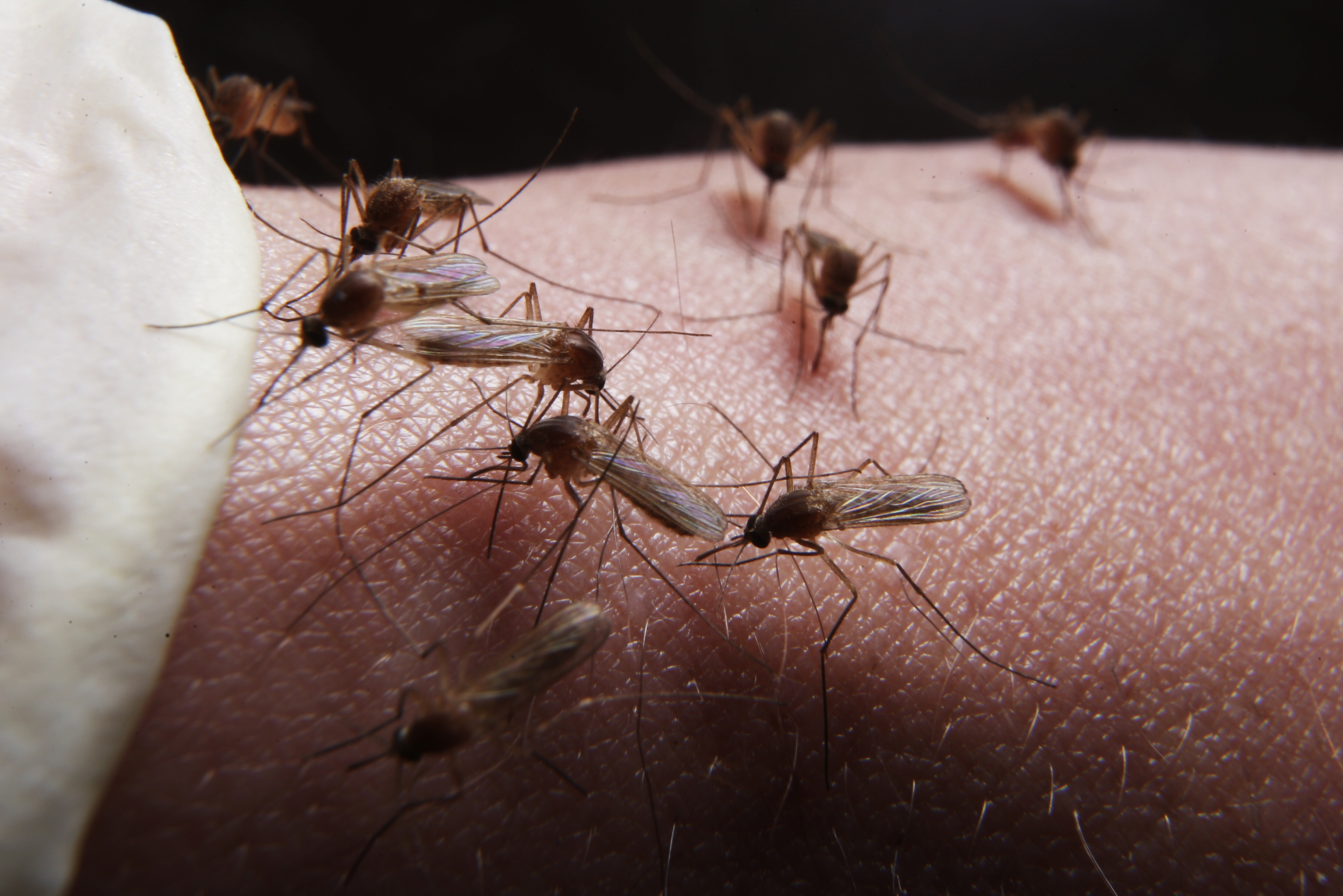
Health authorities have issued a fresh alert for a flesh-eating ulcer in Victoria, with one doctor warning soaring mosquito numbers could play into the number of infections increasing.

At least 266 cases of Buruli ulcer have been reported across the state so far this year.

But with Australia's east coast bracing for a "bumper" mosquito season amid recent heavy rain and floods, there are fears that number could increase.

Dr Brad McKay, a leading GP, told Weekend Today both possums and the blood sucking insects carry the bacterium that causes the Buruli ulcer.

READ MORE: Young boy dies after being trapped by garage door in Melbourne

The Buruli ulcer is a serious condition that needs to be treated early.

"We have seen a link between this particular bacteria being in ring- tail possums, also seen in mosquitoes," he said, explaining authorities are particularly worried about an increase in cases detected throughout Geelong.

When the bacterium gets under the skin, it secretes a toxin that that kills the skin, McKay warned.

"People just see it as being a bit of a mosquito bite that doesn't heal, often the red patch just gets slightly bigger over time," he said.

"Often it's painless and then the breaks down into an ulcer, crusts over and keeps on growing.

"You have to be really vigilant about it because if you don't see your doctor then – and don't do anything about it – if you're not put on antibiotics and not having a proper diagnosis it can eat away at your flesh and create big holes that need massive dressings or even plastic surgery."

READ MORE: Thousands across SA wake up without power after intense storms

Experts are tipping an increase in mosquito numbers caused by heavy rainfall.

People are being urged to cover their body while working outside, reduce areas where water can pool and wash and cover scratches received while working outside.

"We need to be aware of it and with more mosquitoes around with the wet weather, this is going to be a major problem," McKay said.