Tag Archives: oceania

Alleged arcade machine thief arrested at shopping centre

It was game over on Friday for a suspect allegedly caught red handed at Parabanks Shopping Centre in Adelaide, accused of stealing an arcade machine.

Police allege thief was caught on CCTV, disguised in maintenance gear, brazenly unplugging a skill tester amusement machine before sliding it towards the exit, ready to load it into a van.

As a 42-year-old man returned, SA Police were there.

READ MORE: Barnacle-encrusted old Nokia washes up on Gold Coast beach

The man was arrested by policed outside Parabanks shopping centre in Adelaide on Friday A 42-year-old man was seen on CCTV unplugging and moving an arcade machine from Parabanks shopping centre in Adelaide on Friday, accused of stealing an arcade machine.

Police allege the getaway van was also stolen and the number plates were handwritten with marker pen.

Arcade operators Nigel and Terry have had at least 11 machines swiped from shopping centres across Adelaide over the past few weeks.

They've been monitoring stores desperate to catch those responsible.

"We sort of waited around for the offender to come back," Nigel told 9News.

A 42-year-old man was seen on CCTV unplugging and moving an arcade machine from Parabanks shopping centre in Adelaide on Friday, accused of stealing an arcade machine.

In total, six shopping centres in the northern suburbs have been hit recently – two machines were stolen from Parafield Plaza last Friday and three from the Churchill Centre on Wednesday night.

Thieves also targeted Springbank, Hollywood Plaza and Sefton Park, with police investigating if they're linked to Friday's arrest at Parabanks.

"It's been a worry over the last two weeks of how much is going to go and how many machines are we going to lose," Nigel told 9News.

"The eighth and ninth were taken today so we're in excess of $50,000 with machine value and stock," Terry said.

The man was arrested by policed outside Parabanks shopping centre in Adelaide on Friday

"That's the next step, is to get our equipment back and get it out running for Christmas and hopefully there's not too much damage," Nigel added.

SA Police raided a home in Parafield Gardens and said they located 10 machines.

The 42-year-old man was charged with theft and refused bail. He's set to front court next week.

Melbourne woman jailed for 13 years for killing young family in house fire

A Victorian woman who lit a deadly fire, killing a young couple and their 19-day-old baby, will spend at least eight years behind bars.

Jenny Hayes, 48, faced the Supreme Court in Melbourne on Friday, where she learned her fate after pleading guilty to three counts of arson causing death over the December 2020 fire.

Abbey Forrest, 19, her partner Inderpal Sohal, 28, and their baby daughter Ivy died from carbon monoxide poisoning in the blaze, which Hayes lit in retribution after a man wronged her.

READ MORE: The Suburban Rail Loop: Will it be built and do Victorians want it to be?

Jenny Hayes is accused of killing a family of three in their Point Cook home.

Sohal had allowed one of his friends to use a downstairs bedroom of their Point Cook home.

The friend hired Hayes, a sex worker, and she provided services which were paid for but there was a dispute and the man left.

Hayes claimed he raped her and stole cash from her, then sent him a series of angry texts, including telling him she would set fire to his house.

After waiting in her car for four minutes, she stormed back into the downstairs bedroom and set fire to the mattress.

The young family were asleep in an upstairs bedroom when their home became engulfed by flames.

Hayes sent the man who wronged her photos of the burning house, and took more photos as she drove away.

READ MORE: Soggy weekend ahead for four states

Justice Elizabeth Hollingworth handed Hayes a 13-year jail term and she must serve a minimum of eight years before she will be eligible for parole.

"Three innocent people lost their lives as a result of your actions," she told Hayes in court.

"Ivy was the most vulnerable of all."

Hayes is the fifth person in Victoria to be sentenced for arson causing death.

She has already served almost two years of her prison term.

Barnacle-encrusted old Nokia washes up on Gold Coast beach

For a certain generation, there was nothing hardier than a Nokia mobile phone.

Now an intact Nokia from 1999 has washed ashore on a Gold Coast beach, covered in barnacles but in one piece.

A local mum stumbled across the 3210 while walking on Palm Beach this morning.

READ MORE: Terrifying near-misses across Queensland rail network

The barnacle-encrusted Nokia 3210 found on a Gold Coast beach.

Her daughter then took it to school for show and tell.

The 3210 was a smash hit when it was released, in part because it could withstand a lot of hits.

The phone was pre-loaded with the game Snake, and had enough memory to store 250 names in its phonebook.

It was also the first phone where users could compose their own monotone ringtones.

READ MORE: Diver attacked by invisible threat on Aussie beaches

A Nokia 3210 in better condition back in 1999.

More than 160 million units were sold when it was released.

The success of the 3210 made the Finnish company the leading phonemaker of the early 2000s.

READ MORE: A guide for parents on buying the best 'first phone' for the kids

Fears Russian troops leaving 'city of death' as they retreat

Russia has said it began withdrawing troops from a strategic Ukrainian city, creating a potential turning point in the grinding war, while a Ukrainian official warned that Russian land mines could render Kherson a "city of death."

Ukrainian officials acknowledged Moscow's forces had no choice but to flee Kherson, yet they remained cautious, fearing an ambush. With Ukrainian officials tight-lipped with their assessments, reporters not present and spotty communications, it was difficult to know what was happening in the port city, where the residents who remained after tens of thousands fled were afraid to leave their homes.

A forced pullout from Kherson — the only provincial capital Moscow captured after invading Ukraine in February — would mark one of Russia's worst war setbacks. Recapturing the city, whose pre-war population was 280,000, could provide Ukraine a launching pad for supplies and troops to try to win back other lost territory in the south, including Crimea, which Moscow seized in 2014.

READ MORE: Russian President Vladimir Putin won't attend G20 summit in Bali

Ukrainian forces seem to be scoring more battlefield successes elsewhere in the Kherson region and closing in on the city. President Volodymyr Zelenskky said on Thursday the pace has increased so much that residents "are now checking almost every hour where our units have reached and where else our national flag was raised."

The armed forces commander-in-chief, General Valeriy Zaluzhny, said Kyiv's forces have advanced 36.5km and retaken 41 villages and towns since October 1 in the province, which the Kremlin has illegally annexed. That included 12 settlements on Wednesday alone.

Ukrainian presidential adviser Mykhailo Podolyak said Russian troops laid mines throughout Kherson as they withdrew to turn it into a "city of death" and predicted they would shell it after relocating across the Dnieper River.

From these new positions, the Kremlin could try to escalate the war, which U.S. assessments showed may already have killed or wounded tens of thousands of civilians and hundreds of thousands of soldiers.

READ MORE: US observed Russian navy preparing for possible test of nuclear-powered torpedo

Arkadiy Dovzhenko, who fled Kherson in June, said his grandparents still living there told him on Thursday that "the Russians were bringing a lot of equipment into the town and also mining every inch of it."

Zelenskyy said his forces were racing to remove land mines from 170,000 square metres nationwide, and planned also to do so in Kherson.

A spokeswoman for Ukraine's southern military, Natalia Humeniuk, said on Ukrainian television that resistance forces working behind enemy lines "carefully collect information" about critical infrastructure threatened by mines.

Russian Defence Minister Sergei Shoigu ordered a troop withdrawal from Kherson and nearby areas on Wednesday after his top general in Ukraine reported that a loss of supply routes during Ukraine's southern counteroffensive made a defence "futile."

READ MORE: Medibank hacker 'enjoying the notoriety', CEO says after new data dump

Russian President Vladimir Putin, who just over a month ago celebrated the annexation of Kherson and three other Ukrainian regions and vowed to defend them by any means, has not commented on the withdrawal.

Kherson remains without power, heating and internet service, gas stations in the city are closed, and there is no fuel, she said. The city also has run out of medications for cancer and diabetes patients. Ukrainian news reports said the Russians blew up the local television center, some of the cellphone towers and energy infrastructure.

READ MORE: How to know if you're being digitally tracked and what to do about it

Uber driver 'has no regrets' after being attacked while protecting passenger

A Melbourne Uber driver who was viciously attacked while trying to protect one of his passengers has said he has no regrets.

Leo Rosenthal, 59, was knocked unconscious and had to spend the night in hospital after he took a job in Safety Beach in Victoria's Mornington Peninsula just before 8.30pm yesterday.

Rosenthal has said he knew something was wrong as soon as he arrived at the Safety Beach home.

READ MORE: World-first male contraceptive trial underway in Melbourne

His female passenger had piles of her possessions packed up and a shirtless man began running towards her as she was about to get into the Uber.

"She jumps in and says 'drive, drive', so I got out of there as fast as I could," Rosenthal has recalled.

But the man jumped in a black Holden Commodore and went on to follow the Uber for 30 kilometres.

Rosenthal said the man tailgated him along the East Link freeway and allegedly reached speeds of 140km/h.

Rosenthal thought he had lost the man when he arrived at a Langwarrin storage facility, where he helped the woman unload her possessions behind a locked gate. 

But the man arrived shortly afterwards and began threatening the woman and Rosenthal.

The man jumped the locked gate and then punched Rosenthal three times in the face, knocking him unconscious.

READ MORE: The Suburban Rail Loop: Will it be built and do Victorians want it to be?

When Rosenthal woke up, the man had disappeared.

The woman was still there, and he continued to help her unpack her boxes until her mother arrived.

He drove himself to a police station then to hospital, where he spent the night getting stitches.

Rosenthal has said he does not regret sticking by the woman.

"If somebody needs help, you protect them," he said,

"The last thing I wanted was for her to get hurt."

Police went to the Safety Beach property this morning.

No arrests have been made but police are still investigating the incident.

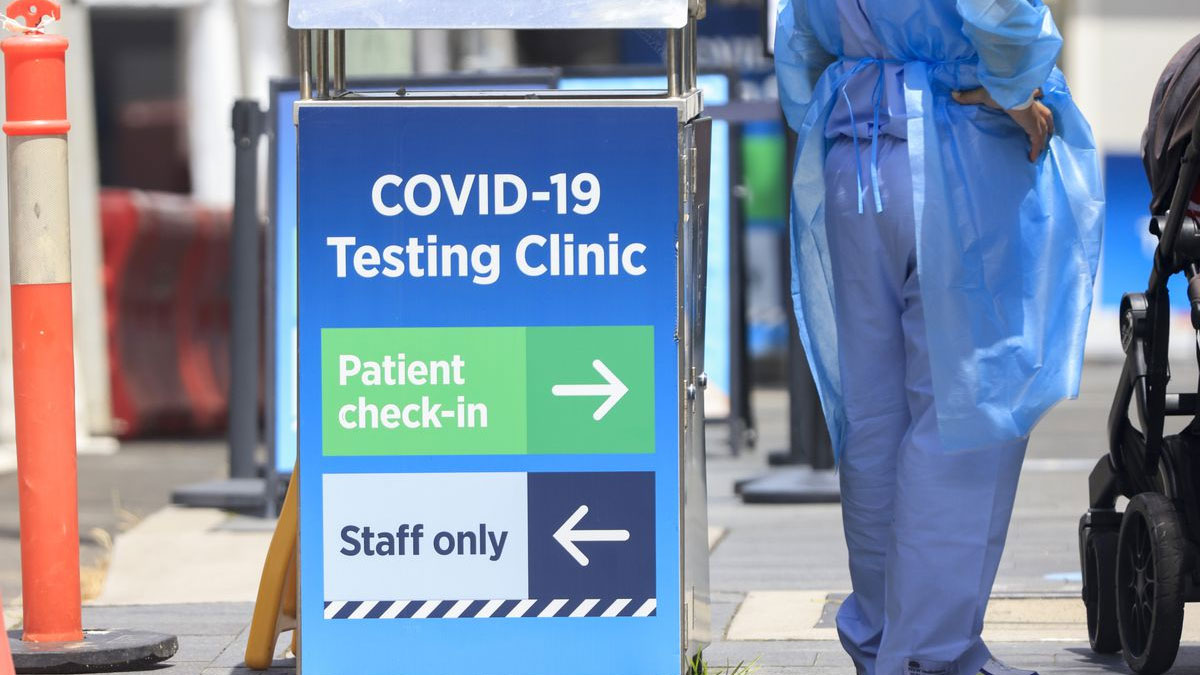
COVID-19 cases nearly double in a week in some states

COVID-19 cases are jumping by up to 80 per cent in some states across Australia as a fourth wave hits the nation's shores.

The sharp rise in cases across most of Australia is due to a fourth wave of the virus, according to health authorities.

Not only are cases rising, but so are hospitalisations. Here is how numbers have increased over the past two weeks across Australia.

EXPLAINED: Australia's fourth COVID-19 wave: What you need to know

COVID-19 seen under the microscope.

New South Wales

Last week, there were 12,450 COVID-19 cases reported in NSW while this week there were 19,800.

This is an increase of 59 per cent week on week.

In terms of hospitalisations, there was a 20 per cent increase between the two weeks.

Chief Health Officer Kerry Chant has previously warned that case numbers will rise over the coming weeks and her prediction is proving accurate.

https://twitter.com/NSWHealth/status/1590870407183470594

Victoria

Victoria has seen a sharp increase in case numbers as last week there were 10,226 infections while this week there were 16,636, an increase of 63 per cent.

Chief Health Officer Brett Sutton said there has been an 18 per increase in hospitalisations.

https://twitter.com/VicGovDH/status/1590827687048024065

"Hospitalisation rates are likely increasing due to waning immunity from past vaccination and the ability of these new subvariants to escape immunity from past infection," Sutton said.

Sutton added most of the cases were Omicron subvariants and infections increased across all age groups.

South Australia

South Australia recorded the starkest increase in case numbers. Last week, there were 3797 but this week there were 6867.

This is an increase of 80 per cent.

There has also been a 56 per cent increase in COVID-19-related hospitalisations in the state.

READ MORE: Medibank hackers drop third wave of private data

Premier Peter Malinauskas claims this is an anticipated "substantial" increase.

"That should be a cause for South Australians to remember that the pandemic isn't over, we are in a different phase," he said.

"When we see those numbers go up, we know there is more pressure on the hospital system on its way thus far the increase in number is largely in line with what we expected to occur at this time of the year."

Australian Capital Territory

The ACT has seen a 31 per cent increase in COVID-19 cases week to week, from 910 to 1194.

Hospitalisations have also spiked by 40 per cent.

Queensland

Queensland has also recorded a 31 per cent increase in virus cases from 4427 last week to 5828 this week.

Hospitalisations have also doubled.

It comes as the state moved from "green" to "amber" on its traffic light system to reflect an escalating number of patients in hospital and new virus transmissions.

READ MORE: Radical change to state's 'worst tax'

A COVID-19 drive-through testing station.

Northern Territory

In the country's top end, there were 265 COVID-19 cases reported last week and this week there were 369.

This is an increase of 39 per cent.

Western Australia

Western Australia has seen an 11 per cent increase in reported COVID-19 cases from 4387 last week to 4906 this week.

There has also been a 23 per cent increase in hospitalisations.

https://twitter.com/MarkMcGowanMP/status/1590917272025300992

Tasmania

Tasmania reported 187 COVID-19 cases last week and that has risen to 304 this week.

This is a spike of 62 per cent.

Australia Post given all-clear to increase cost of sending letters

Australia Post is set to hike the price of sending letters by 9.1 per cent after the Australian Competition and Consumer Commission (ACCC) gave its approval of the increase.

The postal service earlier revealed a proposal to hike the basic postage rate on small letters from $1.10 to $1.20.

The organisation also wants to increase the price on large letters up to 125 grams by 20 cents and large letters over 25 grams by 30 cents.

READ MORE: Radical change to state's 'worst tax'

Australia Post has been given the all-clear to increase the cost of sending letters.

ACCC Commissioner Anna Brakey said the regulator was satisfied the proposed price increase was unlikely to result in Australia Post recovering more than the cost of providing the letter services.

"The combination of declining letter volumes and an increasing number of delivery points around the country has increased the cost of delivering letters," Brakey said.

"The ACCC acknowledges the current inflationary environment and cost-of-living pressures faced by Australian consumers, and we have considered the affordability impacts of the proposed price increase on consumers and small businesses."

Brakey added the average Aussie sends 15 letters a year, meaning this price hike would cost about $1.50 annually.

Medibank hackers are Russian cybercriminals, AFP claims

The hackers behind the devastating and interminable Medibank cyber attack are Russian cybercriminals, the Australian Federal Police claim.

AFP Commissioner Reece Kershaw announced the "malicious" hack on the health insurer, which has seen private health information leaked on the dark web, is being carried out by individuals in Russia.

"Our intelligence points to a group of loosely affiliated cybercriminals who are likely responsible for past significant breaches in countries across the world," he said.

READ MORE: Medibank hackers drop third wave of private data

He said the cybercriminals are operating like a business with affiliates and associates supporting them.

Kershaw added other individuals involved in the "business" are based in other countries.

"We believe we know, which individuals are responsible but I will not be naming them," he said.

Australian authorities will be holding talks with Russian law enforcement about the individuals responsible for the cyberattack to bring them to face the country's justice system.

"It is important to note that Russia benefits from the intelligence sharing and data shared through Interpol and that comes with responsibilities and accountabilities," he said.

Kershaw also issued a stark warning to the criminals responsible: "We know who you are and the AFP has some significant runs on the scoreboard when it comes to bringing overseas offenders back to Australia to face the justice system."

'We know who is responsible': PM

The AFP's announcement comes after the prime minister earlier confirmed that authorities know who is behind the cyberattack.

"We know where they're coming from, we know who is responsible, and we say that they should be held to account," Anthony Albanese said.

Prime Minister Anthony Albanese reveals authorities know who is behind Medibank hack.

He also claimed the nation where the alleged attacker is from, which has since been revealed as Russia, should be "held accountable".

"The fact is, the nation, where these attacks are coming from should also be held accountable for the disgusting attacks and the release of information including very private and personal information," he said.

Albanese condemned the hackers who today released more private health records of Australians onto the dark web.

"I am disgusted by the perpetrators of this criminal act," he said.

READ MORE: How to handle the stress of having your data exposed in a hack

As one of Australia's biggest health insurance providers, Medibank holds information that includes intimate medical records

It is the third time in the same number of days that the cyber attackers have exposed private health information on a dark web forum, with today's instance allegedly revealing medical diagnoses related to alcohol.

Medibank CEO claims hackers 'enjoying notoriety'

Medibank CEO David Koczkar said the criminals are "enjoying the notoriety" of releasing the data leaks and expects the crimes to continue over coming days.

"We expect the criminal to continue to release stolen customer data each day," he said.

"The relentless nature of this tactic being used by the criminal is designed to cause distress and harm.

"These are real people behind this data and the misuse of their data is deplorable and may discourage them from seeking medical care."

EXPLAINED: What to do if you have been hacked

It follows the release the night before of highly sensitive information regarding customers' facing the termination of non-viable pregnancies.

Koczkar said customers whose data has been released onto the dark web will be contacted and the health insurer continues to provide support services to those impacted by the attack.

If you need support around any of the information contained in this article you can find help at Beyond Blue. Visit the website here or call 1300 22 4636

A police shooting, racist texts and a heartbroken community

WARNING: Aboriginal and Torres Strait Islander readers are advised that this article contains an image of a person who has died, which has been used with the permission of his family. 

For two months, the shooting death of Aboriginal teenager Kumanjayi Walker has been the subject of a coronial inquest in Alice Springs.

Inside a small courtroom, in one of the most remote regions of Australia, witnesses have given evidence that has sent shockwaves across the country. 

Zachary Rolfe has been found not guilty of the murder of Aboriginal teenager Kumanjayi Walker.

EXPLAINED: What you need to know about Australia's fourth COVID-19 wave

The inquest has exposed the overwhelming intricacies of a situation reaching far beyond the night of Walker's death. 

What began as an arrest gone wrong has now morphed into a complex storyline spanning decades. 

Much has happened and there's still a long way to go. 

Here's everything you need to know. 

How did we get here? 

On the night of November 9, 2019, four police officers were tasked with arresting 19-year-old Kumanjayi Walker in the remote community of Yuendumu, roughly 300km from Alice Springs. 

In a struggle during the arrest, Walker stabbed Constable Zachary Rolfe in the shoulder with a pair of surgical scissors.

Rolfe shot Walker once in the back and twice more in the side. 

Walker was taken to Yuendumu police station. He died soon after on the floor of a cell. 

That day, health staff had been evacuated following a series of break-ins to their homes. 

The nearest nurses were more than an hour away. 

Family and community members gathered outside the police station, begging for answers. 

Rolfe was later charged with murder – a charge to which he pleaded not guilty. 

Following a six-week trial earlier this year, Rolfe was acquitted on all charges. 

Now, there's an inquest to better understand how and why Walker died. 

Why have an inquest when there's already been a trial?

There's a distinct difference between a coronial inquest and a trial. 

An inquest is focused on understanding all reasons why a death has occured with the aim of avoiding similar tragedies in the future.

Unlike a trial, an inquest isn't about deciding whether a person is guilty of an offence. 

There is no jury and different rules of evidence apply, meaning the scope of what can be introduced in court is much wider. 

There are some similarities – there are lawyers who represent the different parties, witnesses are called to give evidence and then cross-examined. 

READ MORE: Medibank hackers drop third wave of private data

The scissors Constable Zachary Rolfe was stabbed with.Constable Zachary Rolfe was stabbed in the shoulder before he shot Kumanjayi Walker.

Who is involved? 

Kumanjayi Walker: A 19-year-old Warlpiri man who was killed while police attempted to arrest him on November 9, 2019. He had a history of criminal behaviour, alcohol abuse and domestic violence. 

Constable Zachary Rolfe: Rolfe is one of four police officers from the Immediate Response Team (IRT) who attempted to arrest Walker on the night he died. Rolfe was responsible for firing his gun three times, killing Walker. He was acquitted of criminal charges over the incident. He remains an active member of the Northern Territory Police Force and will appear as a witness during the inquest. 

Elisabeth Armitage: The coroner. It's her job to ensure proceedings are conducted fairly, listen to the evidence and make findings and recommendations at the end of the inquest. 

Constable Zachary Rolfe has been charged with murder.Senior Yuendumu Elders responded to the verdict outside court today. Zachary Rolfe Kumanjai Walker

What's happened so far?

September 5: The inquest begins in Alice Springs. 

September 7: Walker's cousin, Samara Fernandez Brown, is the first person to give evidence at the inquest. 

September 8: Walker's uncle and former Aboriginal community police officer, Derek Williams, gives evidence. He tells the court he feels "betrayed" by his fellow police colleagues for not allowing him into the police station while his nephew lay dying on the floor. 

September 9: The inquest is halted after Rolfe's lawyers raise objections to evidence – a series of texts downloaded from his phone following his arrest in 2019. 

September 14: Explosive texts are read aloud for the first time. The texts show Rolfe texting a number of unnamed officers referring to Aboriginal people as "c—s" and "Neanderthals who drink too much alcohol". The messages also include offensive terms referring to bush cops. The current sergeant in charge at Yuendumu police station Anne Jolley appears as a witness. She tells the court the messages are "disgusting" and "hurtful" and do not reflect the attitudes of the police force as a whole. 

September 21: The sergeant in charge of Yuendumu police station on the night Walker was killed, Julie Frost, apologises to the community about the handling of the incident. She denies any knowledge of the text messages or the use of racist language by officers in Yuendumu.

October 10: One of the nurses who fled Yuendumu on the night of the shooting says she was "very concerned" about the decision to evacuate health staff. 

October 18: Two officers involved in the racist text exchange are named. The first is a high-ranking sergeant within the IRT, Sergeant Lee Bauwens. In one message, Bauwens refers to Indigenous community members as "bush c–ns". The acting senior sergeant of police, Paul Kirkby, is also identified as one of the previously unnamed officers involved in the texting. 

October 26: Police body-worn video is played to the court showing the moment Walker's family are told about his death. The officer behind the camera can be told telling the family the reason the officer did what he did was "because he thought he was going to die".

October 28: Rolfe's ex-fiancée, Claudia Campagnaro, fronts the inquest in an explosive day of evidence. She tells the court her ex-lover frequently failed to turn on his body-worn camera while on duty and used racist language to talk about Aboriginal people. She also alleges Rolfe told her a female officer scratched his face so that he could justify his use of force during an arrest which led to a man receiving 13 stitches to the head. During cross-examination, Rolfe's lawyers accuse Campagnaro of lying. 

November 4: It's revealed Rolfe failed to disclose a prior military theft charge during the NT Police application process. The coroner formally accepts an invitation from Warlpiri elders to attend Yuendumu and speak with community members. The inquest is adjourned and due to recommence in Yuendumu on November 14. 

Zachary Rolfe trial Kumanjayi Walker

What's the reaction been? 

Mixed. 

Much of the evidence, in particular allegations about racism within the Alice Springs police station, have generated significant scrutiny around policing in the Northern Territory. 

Senior figures within the NT Police Force, including Police Minister Kate Worden, have publicly denied any suggestion of systemic racism within the force. 

Meanwhile, members of Walker's family and groups such as Justice for Walker have expressed dismay and anger over the revelations, calling for reform within remote policing. 

In particular, community representatives have urged the coroner to consider recommendations surrounding the use of guns in remote communities and more thorough cultural training for police.

What happens next?

Next week, the inquest will spend two days in Yuendumu visiting key sites including the house where Walker was shot. 

They will speak with family and community members about their experiences post-2019 and hear their concerns about policing going forward. 

Once the inquest resumes in Alice Springs, Rolfe is due to appear as a witness. 

His evidence is expected to go for three days where he will face questions over his involvement in the text scandal and his use of force on the job. 

The inquest is expected to wrap up in early December. 

The coroner will then review the evidence and formulate a report including findings and recommendations. 

Recommendations are often directed to the government although they can also be directed to non-government agencies including the police force. 

It's then up to those agencies to respond or implement changes.