Tag Archives: oceania

'Enigma of the deep': Ultra-rare whale washes up on NSW beach

Wildlife teams have been left stunned by an incredibly rare 700 kilogram find at a popular northern New South Wales beach

Crews from NPWS Marine Wildlife said they were in "the right place at the right time" when they stumbled upon the carcass of a beaked whale at Lennox Head last month.

The "enigmas of the deep" are hardly ever seen alive and spend most of their life "way out in the open ocean", feeding in deep water around ocean canyons and mounts.

READ MORE: Medibank hackers drop third wave of private data

"A morning surf before work turned into 'right place, right time' for NPWS Marine Wildlife team members Duane and Adam on Tuesday…as they were getting out of the water at Lennox Head, they noticed a whale carcass on the rocks," NSW National Parks said on social media.

"Recognising it as a rare beaked whale, they contacted NSW Parks colleagues and a coordinated response operation began.

"Ballina Shire Council removed the 760kg whale (a young sub-adult male) from the rocks through a difficult winching operation."

NSW Parks said the elusive creatures typically avoid boats and human interactions at all costs.

They said that while the discovery was sad, it also presents a very rare opportunity for scientific investigation. 

EXPLAINED: What you need to know about Australia's fourth COVID-19 wave

READ MORE: Radical change to state's 'worst tax'

"Little is known about these enigmas of the deep," NSW Parks said.

"We rarely see beaked whales because they generally live way out in the open ocean…diving up to 2,000m, and spending almost their entire lives out of view underwater.

"Duane donned his marine veterinarian cap to undertake a necropsy to investigate possible cause of death, health and condition prior to death, plus collect a range of samples for further investigation."

Samples for pathology and toxicology were collected, and the Australian Museum's genomics lab will use DNA techniques to help confirm the species.

There are currently there are roughly 24 known species of beaked whale that scientists say are all extremely difficult to tell apart.

Many of the species have never been seen alive, only from stranded dead specimens.

The whale was spotted just before 8am and safely removed around midday, "showcasing effective cross-organisational collaboration".

Jali Local Aboriginal Land Council was consulted on cultural safety and final burial.

READ MORE: Dead alligator found swallowed whole inside massive python in US

Medibank hacker 'enjoying the notoriety'

Medibank CEO David Koczkar has accused the hacker behind the ongoing Medibank data leaks of "enjoying the notoriety" their crimes are bringing.

In the early hours of this morning the person or group claiming to be the Medibank hackers released more information from the breach onto the dark web along with a claim that they are in fact "true" to their word.

It is the third release in three days from the hackers, this time revealing the private health records of 241 Australian on an online ransomware forum.

EXPLAINED: How to handle the stress of having your data exposed in a hack

The data file in this instance targets a particular medical diagnosis related to alcohol, and the victims are from all across Australia.

When releasing this new data, the hackers also posted an update to their message which appears to respond to the strong language used by Federal Cyber Security Minister Claire O'Neil in Parliament yesterday, saying "You telling that is disgusting (woof-woof), that we published some data. But we warned you, we always keep our word.

"If we wouldn't receive a ransom – we should post this data, because nobody will believe us in the future. Same about our words, regarding we wouldn't post any data in the future, if we receive a ransom payments."

"We never lies – it doesn't make any sense, if we lie to somebody – nobody will thread u as a serious business side.

"Imagine what scam wave would your customers get after that, how many would you invest to cover damages."

READ MORE: Prime Minister Anthony Albanese confirms authorities know who is behind the Medibank cyber hack

Koczkar said he offered an "unreserved" apology to customers.

"The continued release of this stolen data on the dark web is disgraceful," he said.

"Unfortunately, we expect the criminal to continue to release stolen customer data each day.

"The relentless nature of this tactic being used by the criminal is designed to cause distress and harm.

"It's obvious the criminal is enjoying the notoriety. Our single focus is the health and wellbeing and care of our customers."

It follows the release the night before of highly sensitive information regarding customers' facing the termination of non-viable pregnancies.

Medibank has continued to follow expert and government advice, which has been to not pay the ransom.

READ MORE: US stocks surge towards best trading day in years

Home Affairs Minister Clare O'Neil answers questions about Medibank hack during parliament's Question Time.

The hacker forum contains a large amount of previous leaks, and the hackers' words today indicate they are co-ordinated in their attacks with the previously-demanded $15 million ransom payment being their end goal.

Today's release of data takes the total number of personal healthcare details released to 741, out of the estimated 480,000 Medibank say have been accessed by the hackers.

The remaining 9.2 million victims have had their names, addresses and personal contact details and Medibank numbers exposed – but no health records.

Cyber Security Minister Clare O'Neil said yesterday she had called Medibank's CEO, David Koczkar, and made clear the community expectations around what support the insurer should be providing.

Medibank has repeatedly apologised to customers and condemned the posting of information.

It is offering multiple support services, including identity protection, counselling, and a support hotline for people left "uniquely" vulnerable by the hack.

"We remain committed to fully and transparently communicating with customers and we will be contacting customers whose data has been released on the dark web," Koczkar said this morning.

READ MORE: Putin bails on G20 summit in Bali as Russia suffers Ukraine setbacks

O'Neil also issued a warning to the hackers.

"What has occurred here is morally reprehensible and it is criminal," she said.

"I want the scumbags behind this attack to know that the smartest and toughest people in this country are coming after you."

It was also revealed yesterday that the hack may have exposed the Virgin Frequent Flyer numbers of thousands of members, who have been temporarily blocked from accessing their accounts or redeeming travel points while the airline generates new numbers for them.

This latest development comes as Optus reveals its data breach will cost at least $140 million, including costs for replacing hacked identity documents.

New hotspot for 'mysterious', near-invisible animal emerges

Eric Crossley plunged into the calm ocean off Broome, Western Australia when he felt a sting on his neck.

The waters are an emerging "hotspot" for a "mysterious", highly-venomous animal that's near invisible to the naked eye. 

The British national and professional diver was working for Clipper Pearls when a tiny, and potentially deadly, Irukandji jellyfish slipped past his loose diving hood on March 2018, about six kilometres off Quondong Beach.

Crossley told 9news.com.au for the next 10 hours his body would be locked in an excruciating battle against pain.

READ MORE: Nurse thought she had asthma, the reality was far worse

British national Eric Crossley was working for a pearl company when he was stung by a highly venomous Irukandji jellyfish.

The then 30-year-old made his way back to the boat to sit in the galley as the crew mobilised around him.

'The first 10-20 minutes it's kind of nothing, but it becomes very apparent quite quickly something significant is happening," Crossley said, explaining the pain comes in "waves"'

"It feels like someone has turned on a switch which has activated every single nerve in your entire body, like you're on fire without being on fire.

"I got hot and cold waves, started puking. You feel nerve sensations in parts of your body you haven't.

"The closest thing I could probably compare it too would be incredibly severe food poisoning. Your body is twisting and cramping and clamping in order to push out whatever toxin it is.

"My body was just tensing up, it has no idea what to do."

READ MORE: Apex predators sink boat off Portugal, as 'scary' encounters continue

Irukandji jellyfish are found in tropical waters, stretching from Bundaberg in Queensland to Geraldton in Western Australia.

As Crossley was stung in a remote location, it took about three hours for him to reach a hospital.

The last hour included a "horrible and bumpy" four-wheel-drive.

When he finally did make it, another challenge emerged – finding painkillers strong enough to take the edge off the agonising sting.

"They gave me 150 mcg of fentanyl and an hour-and-a half later they had to give me another 150 mcg," Crossley said.

"They were asking me if it had done anything and it hadn't even touched the sides.

"Fentanyl is a strong opiate and as far as I'm aware that was a pretty high dose.

"I was in these spasmodic waves of pain.

"Another hour-and-a half later they gave me 20mg of morphine.

"That was enough to knock me out."

READ MORE: Map reveals areas most at risk of mosquito-borne virus

Despite the extreme pain they cause Irukandji stings leave relatively delicate marks.

Crossley was discharged the next day.

Four years later he has no adverse effects from the Irukandji sting, and is working as a diver in Canada.

Highly venomous animals remain 'a mystery' to science

The venom from Irukandji, and its larger cousin the box jellyfish, can cause Irukandji syndrome; a painful, potentially lethal condition associated with a sense of "impending doom".

There have been two confirmed Irukandji deaths in Australia. However, the mysterious deaths of several tourists on the Great Barrier Reef are believed to be linked to the stingers.

Cebrina Nolan, a PhD student studying Irukandji and box jellyfish at the University of Queensland, told 9news.com.au the animals, and their powerful venom, remain a mystery to science.

READ MORE: Australia's own snake island, where 'giant' reptiles slither

The irukandji jellyfish.

"No one really knows how the venom works, we just know the symptoms and what to expect," Nolan said.

"That's what we're now trying to figure out at the University of Queensland.

"The reason why no-one knows, is they're so small and clear they're hard to see. They're only found in certain locations, and their venom is quite unstable."

Nolan explained the methods used to study the venom of terrestrial animals – such as snakes and spiders – doesn't work in Irukandji.

"You can't use them for jellyfish as they're sensitive to organic solvents, which is what we use to purify toxins," she said.

"Plus they're also heat sensitive so they start to fall apart."

James Cook University marine stinger expert, Dr Jamie Seymour with a irukandji jellyfish.

Nolan said she's investigating several theories about the venom, explaining it's believed to attack the human nervous system or the immune system – or both.

"We have evidence to suggest that the venom of an irukandji jellyfish, Carukai barnesi, has arthropod-specific toxins that paralyse and kill both crustaceans and insects while the vertebrate specific toxins in its venom allow it to prey, or defend itself, against fish or other animals that may try to eat it," she said.

Irukandji jellyfish are found in Australia's tropical waters, stretching from Bundaberg in Queensland to Geraldton in WA.

Eleven Irukandji species and their believed distribution in Australia.

National 'hotspots' for stings

While Irukandji are considered relatively rare in Broome, a spate of sightings and stings in recent years has prompted the Shire of Broome to issue messages of caution to oceangoers.

In early 2021 a young boy was lucky to survive a sting in the area, and in November 2019, three beaches in Broome were closed to swimmers following a confirmed Irukandji jellyfish sting.

While stings are most commonly recorded from November - April, they have been recorded at all months in the year.

Parks and Wildlife Service say there are two species of Irukandji that roam the waters along the Ningaloo Coast and Exmouth Gulf.

The first is the Keesingia gigas, which range between 20 to 40 cm in length and are distinguished by a "elongated, cube-shaped bells".

The second is the tiny Malo bella; the species Crossley most likely encountered.

Keesingia gigas, a species of Irukandji jellyfish, has an elongated conical shape. Malo bella Irukandji are about the size of a fingernail.

These animals are about the size of a fingernail and "have an elongated tentacle trailing from each of the four corners".

Shire of Broome president Harold Tracey said swimmers need to take adequate precautions when entering northern waters – especially between November and April.

"We encourage everyone to always be cautious when swimming, fishing and launching boats, especially in wet season," he said.

"When there is a beach closure please abide by the no swimming rule and look for and follow all beach signage.

"Please don't become complacent around waterways. Irukandji, crocodiles and sharks are most definitely there, and we need to be vigilant."

Swimmers are advised to wear stinger suits and to always carry vinegar.

There are no records for stings around Broome as most occur during the wet season when beaches are unpatrolled.

However the state's Parks and Wildlife Service at the Department of Biodiversity, Conservation and Attractions (DBCA) does monitor the protected waters around Ningaloo Marine Park and Exmouth, further south.

"So far in 2022, there have been seven stings recorded. The last recorded sting was in July 2022, in the northern part of Ningaloo Marine Park," a DBCA spokesperson said.

"For the Ningaloo Coast, the Irukandji season runs approximately February to July, although stings can occur all year round.

"On the coastline near Broome, stings also occur all year round but can be more prevalent in the wet season, as water temperature increases."

Biden and Xi set to rekindle world's most important relationship

US President Joe Biden will meet Chinese leader Xi Jinping face-to-face on Monday, their first in-person encounter since Biden took office and one that will offer a clarifying opportunity for the world's most important bilateral relationship.

"The leaders will discuss efforts to maintain and deepen lines of communication between the United States and the PRC, responsibly manage competition, and work together where our interests align, especially on transnational challenges that affect the international community," White House press secretary Karine Jean-Pierre said in a statement.

"The two leaders will also discuss a range of regional and global issues."

READ MORE: Russian President Vladimir Putin won't attend upcoming G20 summit in Bali

Australian Prime Minister Anthony Albanese has also expressed interest in meeting with Xi at G20, although nothing has been announced.

US officials are entering the sit-down on the sidelines of the G20 summit in Bali without expectations for major deliverables or even the hope that tensions will be significantly eased.

But they do hope Biden can "build the floor" of a functional relationship that doesn't tip over into conflict and even allows for productive cooperation in areas like climate and North Korea.

"I don't in any way think that the two leaders are going to sit down and be able to solve all their differences or problems," a senior administration official said.

"But I do think that we believe that some of these steps could be important along the way."

Instead of any significant takeaways, US officials hope the two leaders can at least come to a mutual understanding about where they see the relationship between the world's largest economies. The official said the talks would be "in depth" and "substantive".

READ MORE: Mother on maternity leave 'devastated' to lose $10,000 in hack

Xi Jinping has replaced several people viewed as potential threats to his leadership.

"One of the main objectives is really about deepening their understanding of one another's priorities and intentions, where possible, with the goal of reducing misunderstandings and misperceptions," the official said.

Up for discussion will be a sharing of each leaders' respective views of the US-China relationship, which has deteriorated in recent months after Beijing reacted with fury at House Speaker Nancy Pelosi's visit to self-governing Taiwan.

China cut off most official channels of communication with the United States afterward, though there were sufficient enough contacts to arrange the meeting between Biden and Xi. In those talks, US and Chinese officials discussed the reestablishment of communications.

Biden and Xi have spoken by phone five times since the president entered the White House. They travelled extensively together, both in China and the United States, when both were serving as their country's vice president.

Both enter Monday's meeting on the back of significant political events. Biden fared better than expected in US midterm elections and Xi was elevated to an unprecedented third term by the Chinese Communist Party.

READ MORE: Australia's fourth COVID-19 wave: What you need to know

US officials declined to speculate on how the two leaders' political situations might affect the dynamic of their meeting. Instead, they laid out areas they expected to be on the table.

That includes the issue of Taiwan, which Beijing claims. Biden has vowed in the past to use US military force to defend the island from a Chinese invasion. The issue is among the most contentious between Biden and Xi.

Biden will also raise human rights concerns, the official said. The US accuses China of committing genocide against the Muslim minority population in the western Xinjiang province.

Biden will also raise what the US views as China's harmful economic practices. It's unclear whether the issue of US tariffs on Chinese goods would arise in the talks.

The president also plans to discuss areas where the two countries can cooperate, including on climate change.

READ MORE: Kybong light plane crash victim identified as local glider Christopher 'Bob' Turner 

And he will raise the matter of Russia's war in Ukraine and North Korea's ongoing provocations — two areas the US is looking for China to assert its influence to prevent further conflict.

The official did not specify what Biden's message would be on North Korea, saying they didn't want China to know Biden's talking points ahead of time

Australia's fourth COVID-19 wave: What you need to know

Australians are being warned to brace for a fourth COVID-19 wave as multiple states report sharp increases in case numbers following months of relative stability.

On Thursday morning, Queensland Premier Annastacia Palaszczuk announced the state's traffic light system would move from "green" to "amber"as of tomorrow, to reflect an escalating number of patients in hospital and new virus transmissions.

Last week, New South Wales Chief Health Officer Dr Kerry Chant said residents should prepare for case numbers to rise in the coming weeks.

READ MORE: Trump blames wife, everyone else for loss

The sentiment has been echoed by other health officials across the country, where rising case numbers have been similarly reported.

But, how worried should we be? Are we in for another COVID-19 Christmas?

Here's everything you need to know, as told by the experts. 

Are there new COVID-19 variants/strains?

Yes. The short answer is that there are many new COVID-19 strains circulating in the community that you may or may not have heard about.

Professor Adrian Esterman, Chair of Biostatistics at the University of South Australia, said that not only are there several "new" variants, they're also becoming better at "getting around our immune systems".

"Australia is now in its fourth wave of Omicron infections. However, unlike the previous waves caused by Omicron BA.1, BA.2, and BA.4/5, this wave has several causes," he said.

"The first is waning immunity. Many people have had their last dose of vaccine over six months ago, and by now have comparatively little protection against symptomatic disease. At the same time, we have little or no public health measures in place to put a brake on transmission.

"These new subvariants are more transmissible than BA.5. They include BA.2.75, BQ.1 and XBB."

How many variants of COVID-19 are there in Australia?

Currently, the Omicron BA.1, BA.2, BA.4, BA.5, BA.2.75, BQ.1, BR.2 and XBB are all circulating around the country, with some more transmissible than others.

Experts have branded the new line of strains a "variant soup" and "the grandchildren of Omicron".

READ MORE: Tracker helps golfer find his needle in a haystack in travel nightmare

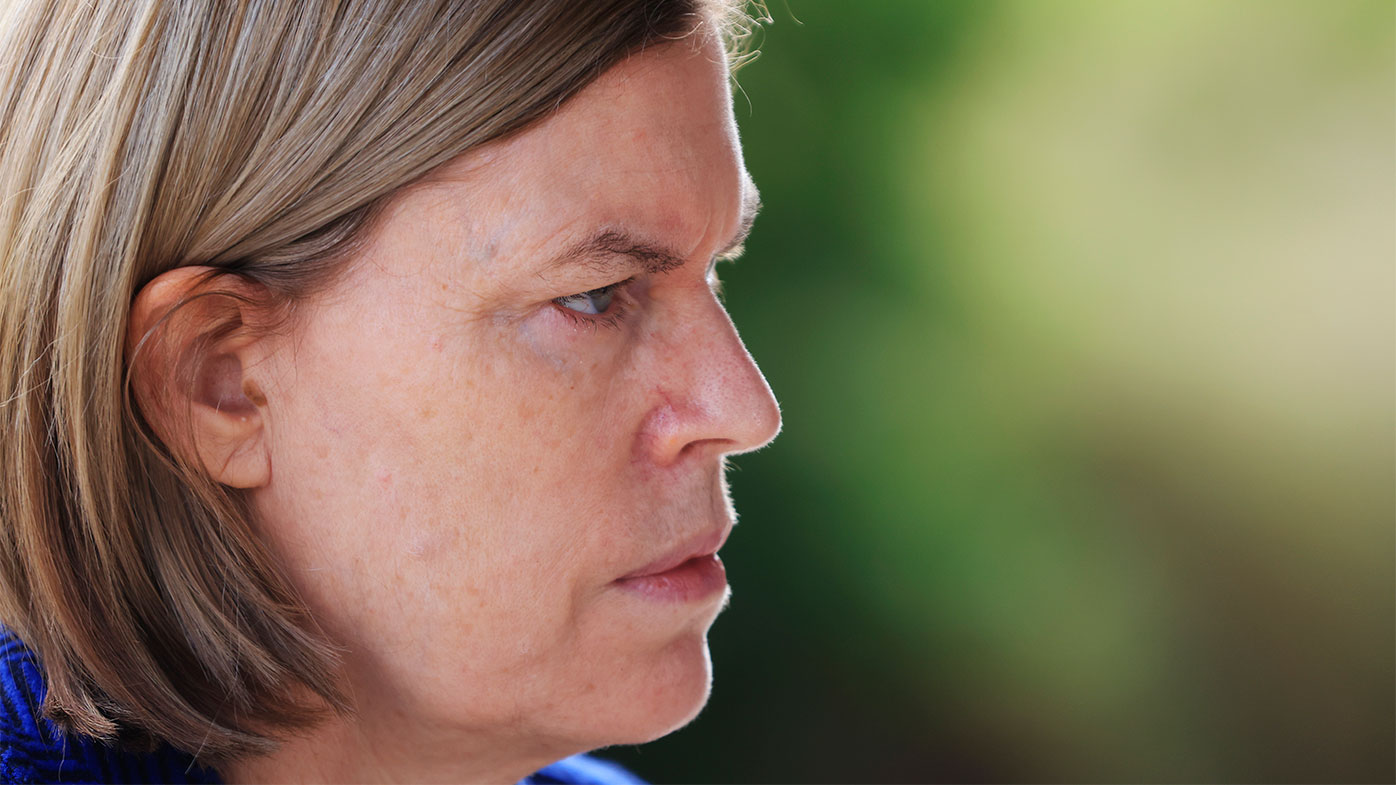
Dr Kerry Chant.

"A fourth wave of COVID-19 started in Australia towards the end of October, driven by a 'variant soup' of new lineages of SARS-CoV-2," UNSW's Associate Professor James Wood said.

"Instead of a single variant driving this, we have many lineages with similar properties causing this rise, although the XBB, BQ.1.1 and BR.2 lineages are likely to be most prominent in Australia."

When will the wave peak?

According to Professor Wood, Australia's fourth COVID-19 wave will be short and sharp, similar to what has recently been reported in Singapore.

"I expect that we will see a short sharp wave, similar to the recent one in Singapore with a peak by the end of November," Wood said.

"I also expect this to be smaller than the BA.5 wave but that we will see a considerable rise in hospitalisations and deaths, particularly in people over 65."

What does the COVID-19 traffic light system mean?

The traffic light system is specific to Queensland and reflects the level of caution residents should practice throughout their day-to-day life.

The amber setting means there are "moderate rates of community transmission" and Queensland is "coming off a wave or may be entering a new wave" according to the government's website.

No other state has a specific traffic light system, but health authorities in different states have issued their own similar warnings. 

Will restrictions return?

It's not likely right now.

Professor Booy from the University of Sydney said that conditions should be able to be managed relatively easily without the return of harsh restrictions.

"The new COVID wave is a concern," Booy said. "It's due to the grandchildren of Omicron, a variant which has been with us now for a whole year.

"This tells us that the virus is running out of ways to mutate so as to evade our immunity.

"There will undoubtedly be an upsurge in cases but the new wave, I think, will be easily body-surfed by most sensible people.

READ MORE: Deluge looms for multiple states with one warned of potential tornado

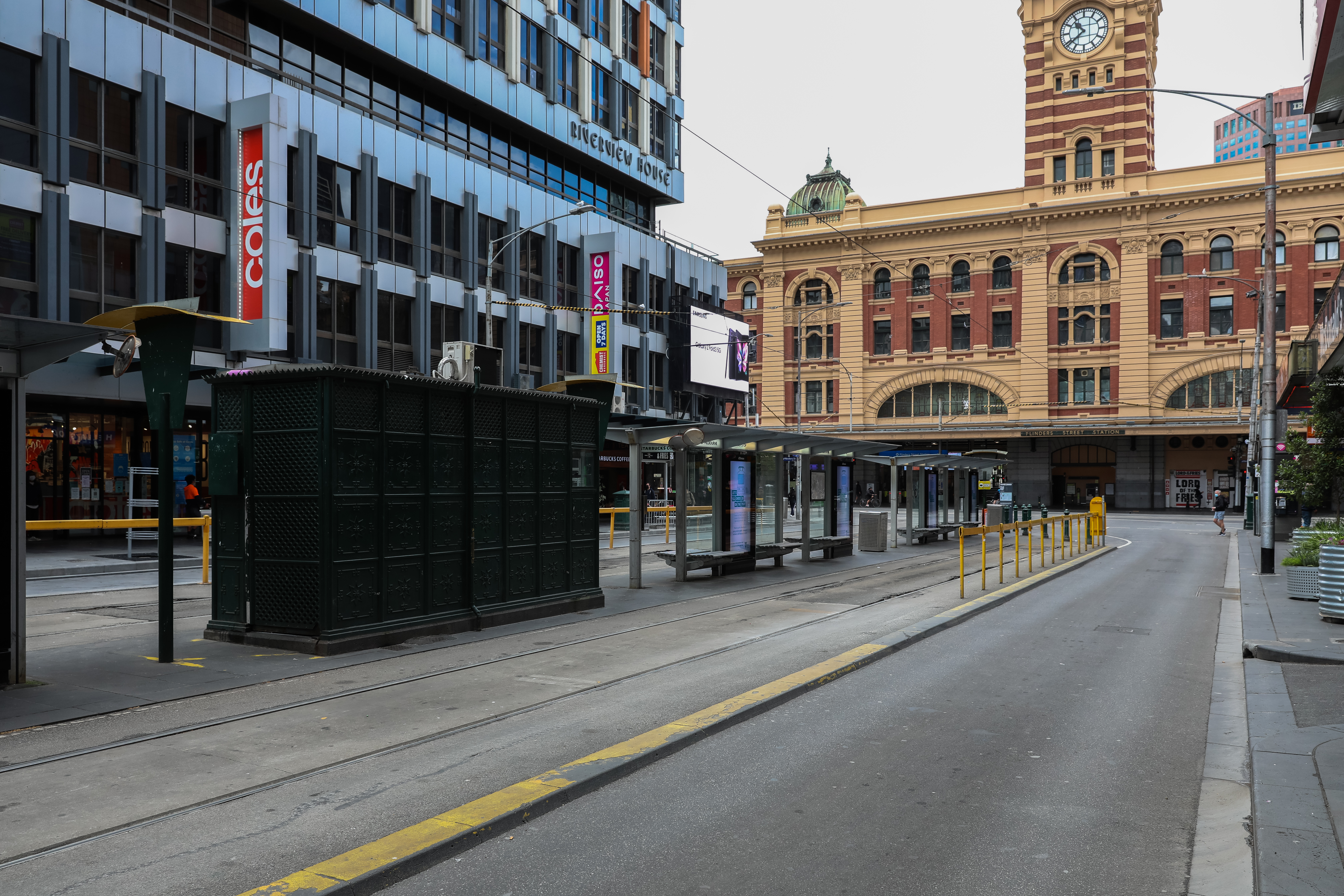
MELBOURNE, AUSTRALIA - SEPTEMBER 18: A deserted Elizabeth Street tram stop near Flinders Street station on September 18, 2021 in Melbourne, Australia. Anti-lockdown protests have been planned in Melbourne despite current COVID-19 restrictions prohibiting large outdoor gatherings. Victoria police are shutting down the public transport network in the CBD in a bid to discourage protestors. Metropolitan Melbourne is currently subject to lockdown restrictions as health authorities work to contain the

"Taking those common-sense cautions like vaccination, social distancing, masking in public places, especially if vulnerable; and if infected and also vulnerable due to age or disease, consulting your GP rapidly for potential use of antivirals – these measures will together make a real difference and get those body surfers safely back to shore."

Health officials around the country have yet to officially announce the return of any major restrictions, but many have ruled out future lockdowns and tough protocols seen in 2020 and 2021.

Should I be worried about the fourth COVID-19 wave?

Like many viruses, COVID-19 has the potential to be very unpleasant if you contract it, and is potentially deadly to vulnerable Aussies.

But experts say that new variants aren't "increasing in severity".

"We have seen no evidence of increased severity in international settings," Wood said.

"But age remains a key risk factor and there are many Australians still eligible for third or fourth doses who could benefit from a booster dose at this time."

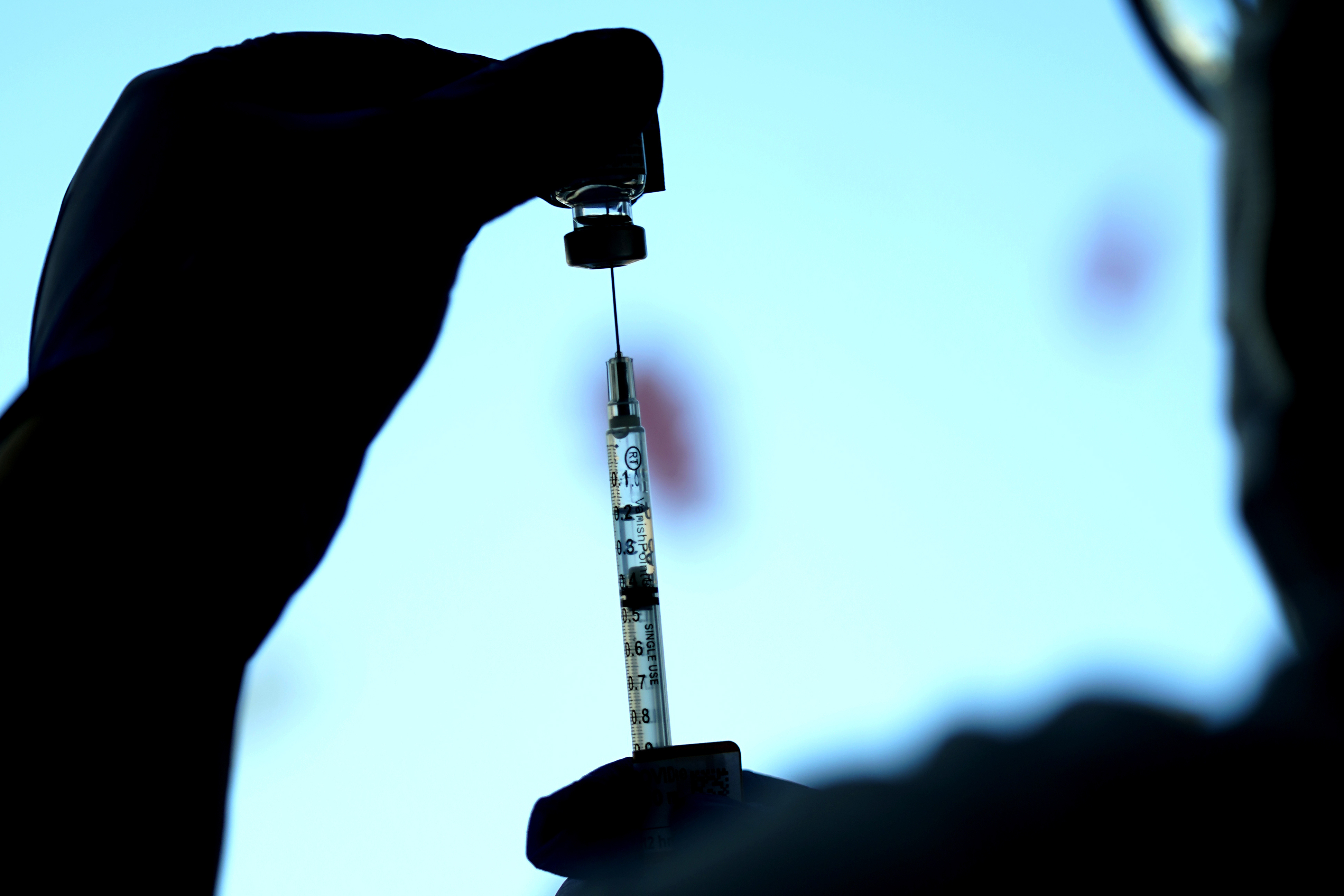
A dose of a Pfizer COVID-19 vaccine is prepared at Lurie Children's hospital, Nov. 5, 2021, in Chicago.

Associate Professor James Trauer said there's "no need to panic" just yet.

"Overseas, several countries have passed through waves with these newer offshoots of BA.2 and other variants, usually with mild to moderate strain on their healthcare systems," he said.

"So there's no need to panic and it's unlikely we'll need any population-wide restrictions. However, the elderly and at-risk groups should ensure they have had all the vaccine doses they're eligible for."

Should I get a fourth booster?

If you are eligible, experts say yes.

Authorities all collectively agree that where possible, vaccinate.

Vaccines are responsible for saving lives, reducing the severity of illness and hospitalisations and reduce the impact of COVID-19 in the community.

If it has been over six months since your last jab, your protection will now be have been dramatically reduced.

Aussies have been advised to speak to their health practitioner if they think they might be at risk.