National leader Christopher Luxon is on the fence about whether National will continue to index tax brackets to inflation beyond the one-off adjustment his party has promised.Former leader and finance spokesman Simon Bridges promised…
Tag Archives: oceania
Revealed: Australia's worst hotspots for car crashes
Most crashes are accidents and can be unpredictable, but there are some recurring themes – including spots that are particularly prone to danger. Here's where they are.
Jacinda Ardern says she will give mosque gunman 'nothing' on news of appeal
Prime Minister Jacinda Ardern said she will give the Christchurch mosque gunman “nothing” after news broke that he will be appealing against his conviction and sentence.The Court of Appeal in Wellington this morning confirmed to…
Local Focus: Migrants prepare for multicultural pōwhiri
Last year, the Bay of Plenty hosted its first ever migrant pōwhiri at Whareroa Marae.Hundreds of migrants from across the region attended the event, which was organised by Multicultural Tauranga after it was challenged to do…
Greens and Labour clean up in Wellington mayor's committee appointments
Green and Labour councillors have cleaned up in Wellington mayor Tory Whanau’s new committee appointments. Whanau has also effectively created a super committee to deal with the city’s infrastructure crisis and housing shortage….
'Crazy moment': Huge shark leaps on board fishing boat
A fisherman who captured a video of a huge shark leapt out of the water onto the front of his boat, coming face to face with those on board, described it as "a crazy moment".
Skipper Ryan Churches, owner of Churchy's Charters in Whitianga in the Coromandel, New Zealand recorded a mako shark propelling itself onto the front of his fishing vessel which he uses to take up to five people on fishing trips from Whitianga wharf to catch kingfish, snapper and blue nose.
Those on board got a bigger catch than they were expecting when the mako shark caught them by surprise and jumped right in front of their eyes onto the front of the boat, thrashing around on the front hood.
READ MORE: Medibank hackers threaten to release data within 24 hours

Mako sharks are world-renowned jumpers, are nicknamed "blue dynamite", and have been known to leap up to six metres out of the water.
The sharks, which are abundant in New Zealand coastal waters, can grow up to four metres long.
The 2.5 metre shark remained on the Whitianga boat for several minutes before returning to its home in the ocean.
While they reacted with shouts of "whoa…" and "holy", one shouted to "get a picture".
Churches said he was driving the boat taking five customers fishing for kingfish when the big catch landed itself.
"The shark got caught on the bait and then suddenly leapt out of the water right onto the boat," he said.

"We were all shocked but everyone reacted better than I imagined – we were safe as we were protected by the windshield at the front.
"Lucky that the shark didn't leap on the back of the boat as that is where everyone was fishing from so that would have been a different story – really dangerous.
"It was crazy – this has never happened before – I've never seen anything like it in all my years of being on the water. He estimated it weighed 150 kilograms.
"It was on the boat for more than two minutes but then it lowered itself back in the water safely – it wasn't hurt so it was a happy outcome for everyone.
"My heart was racing – I had to sit down for a bit. Everyone was stunned. Then we took a few minutes, and then we just got back into fishing."

READ MORE: 'Putin's chef' admits to US election meddling
When Church posted the video, hundreds reacted, saying it must have been "scary".
One poster noted in the video that the crew had the toilet roll at the ready.
"Lucky that they have the toilet paper handy on the dash!"
The 7.7m boat, called Church, is equipped with safety glass windows, and five square metres of deck.
The fishing is done from the back of the boat.
An influx of sharks is expected in the Bay of Plenty and Coromandel waters, predicted experts who have launched a study into why there has been an increase of great white sharks in the region in the last two summers.

The University of Waikato's marine ecologist Phil Ross is spearheading the new research team in collaboration with locals, and according to the marine biologist, more sharks encounters are highly likely this summer.
The study will attempt to address community concern about growing shark numbers after members of the region's surfing and fishing communities became increasingly fearful for their safety on the water.
Waihī Beach in the Western Bay of Plenty was the scene of the last fatal shark attack in New Zealand in January 2021, when Hamilton woman Kaelah Marlow died after being mauled in the ocean by a great white shark
This was the first fatal shark attack in the region since 1976, when a spear fisherman was killed by a bronze whaler shark at Te Kaha – a small beach town near Ōpōtiki in the Eastern Bay of Plenty.
Since the attack at Waihī Beach there have been a number of great white shark sightings over the past year, with videos posted online of sharks circling fishing boats and chasing fish.

In December 2021, two great white sharks washed up on Bowentown beach in the Coromandel, near the scene of the fatal attack a month later.
Since then, encounters have increased in the Coromandel and Bay of Plenty waters.
Earlier this year, Mount surfer Vaughan Wilson had a near miss with a "3.5-metre monster" just off Matakana Island.
READ MORE: How to watch tonight's blood moon
Wilson told Stuff that the shark was in hunting mode and "out to kill" as it leapt out of the water with "jaws wide open", narrowly missing a 14-year-old boy who was surfing with his father and Wilson nearby.
This story first appeared in Stuff.co.nz and was republished with permission.
Map reveals which areas are most at risk of mosquito-borne virus
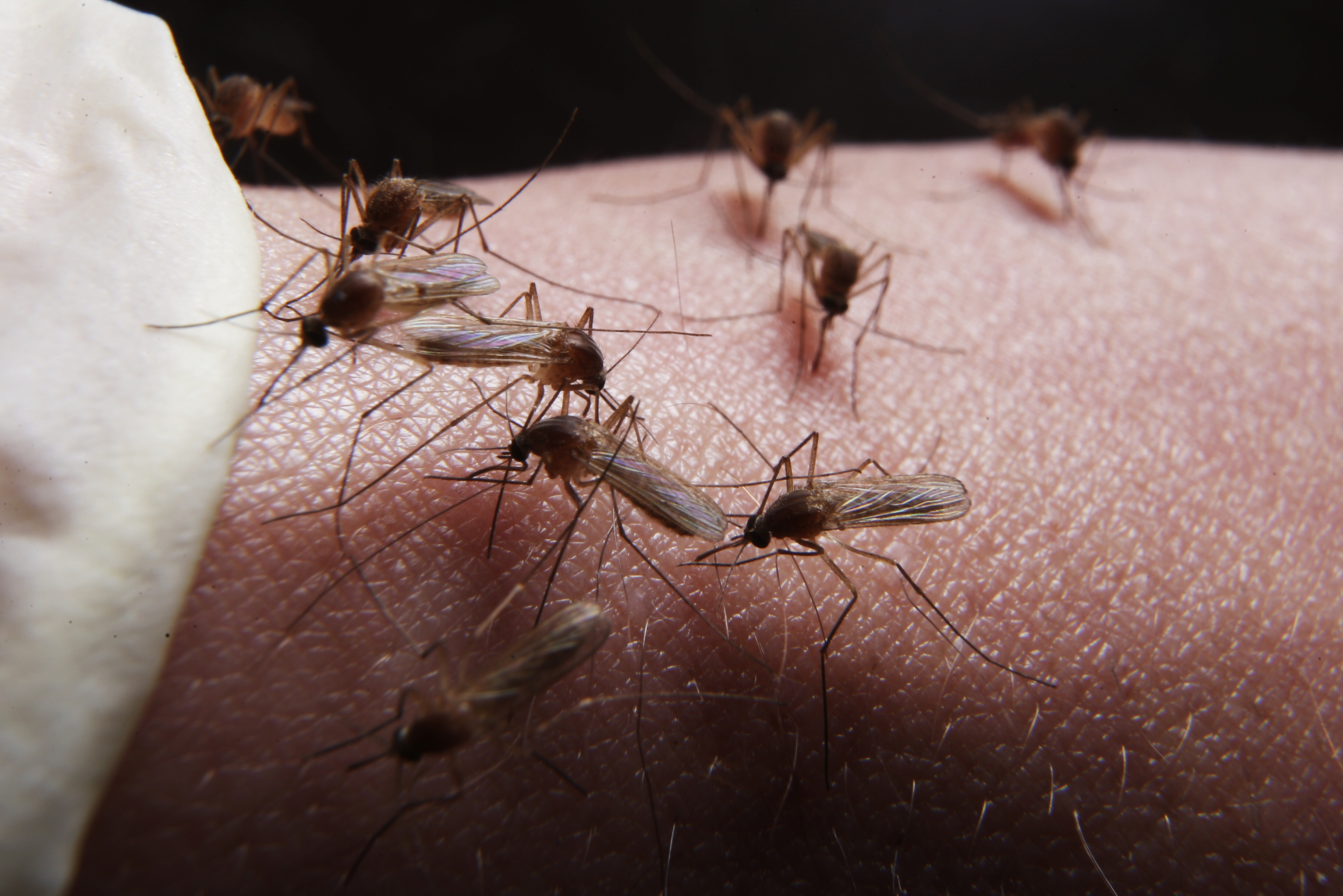
New South Wales health authorities have published a list of the areas most at risk of the mosquito-borne virus Japanese encephalitis (JEV), warning this summer will be "high risk" for infections.
After months of flooding rains the state is in the firing line with experts warning of a mosquito boom when the weather warms up.
The state's Australian Medical Association (AMA) has called for eligible residents to get vaccinated against JEV; a potentially fatal disease that can cause severe neurological illness with headaches, convulsions and reduced consciousness.
READ MORE: Medibank hackers threaten to release data within 24 hours
AMA (NSW) President, Dr Michael Bonning said "anyone west of Dubbo" should start investigating whether they can get the jab.
"(They) should check if they are in a local government area (LGA) of high Japanese encephalitis virus concern," he said, before listing other risk factors.
"If you spend more than four hours a day outdoors, or live in temporary or flood-damaged accommodation, or have been involved in prolonged flood recovery efforts, then you may be eligible for a free vaccine.
"Ask your GP."
READ MORE: 'Putin's chef' admits to US election meddling

The JEV vaccine is deemed safe and effective for people two months or older.
It's currently recommended for anyone in NSW who works, lives, or is visiting a piggery or pork abattoir or rendering plant, as well as people who work closely with the blood-sucking insects.
Eligible or not, Bonning said all residents should take precautions to prevent bites.
"Cover up, wear insect repellent, keep windows and doors closed or install flyscreens, and remove stagnant water from buckets or watering cans," he said.
READ MORE: How to watch tonight's blood moon
Full list of LGAs of high JEV concern
- Albury
- Balranald
- Berrigan
- Bland
- Bogan
- Bourke
- Brewarrina
- Broken Hill
- Carrathool
- Central Darling
- Cobar
- Coolamon
- Coonamble
- Dubbo Regional
- Edward River
- Federation
- Forbes
- Gilgandra
- Goulburn Mulwaree
- Greater Hume
- Griffith
- Hay
- Junee
- Lachlan
- Leeton
- Lockhart
- Moree Plains
- Murray River
- Murrumbidgee
- Narrabri
- Narrandera
- Narromine
- Parkes
- Temora
- Unincorporated Far West Area
- Wagga Wagga
- Walgett
- Warren
- Warrumbungle
- Weddin
- Wentworth
Local Focus: QE Health's last hurrah for a new beginning
QE Hospital has taken a different approach to health and wellbeing from day one, when it was established by Dr Wilfred Stanley Wallis. Chief executive Dr Aaron Randell said Dr Wallis’ idea back in 1942 was “pretty groundbreaking”….
Australia falling billions short on 'fair share' of climate funding
The United States, Canada and Australia are the worst offenders among rich countries skimping on their "fair share" of tens of billions of dollars pledged to help developing nations fight climate change, according to a new analysis.
The calculations emerged as the Albanese government made an otherwise positive start in its attempt to rehabilitate the country's climate image on the world stage.
Wealthy countries have pledged $US100 billion ($155 billion) in climate finance each year, starting in 2020, to help poorer nations adapt to climate change and mitigate its effects, but are still billions of dollars short of that goal.
READ MORE: 'Cooperate or perish': UN chief's urgent warning to world on 'highway to climate hell'
In a report released on Monday, respected UK climate change publisher Carbon Brief found the US alone had fallen short of its "fair share" by $US32 billion ($49 billion).
The calculations were based on comparing each country's funding with its historical carbon emissions.
According to that metric, the US should have been spending $US40 billion ($61 billion) a year.
Canada was the second-worst offender, falling $US3.3 billion ($5 billion) short, while Australia was third, with a $US1.7 billion ($2.6 billion) shortfall.
Germany, France and Japan were also all billions of dollars in surplus.
Accusations of Australia's failure to pay its way have already been highlighted as a potential impediment to its push to jointly host the UN climate conference with Pacific nations in 2026.
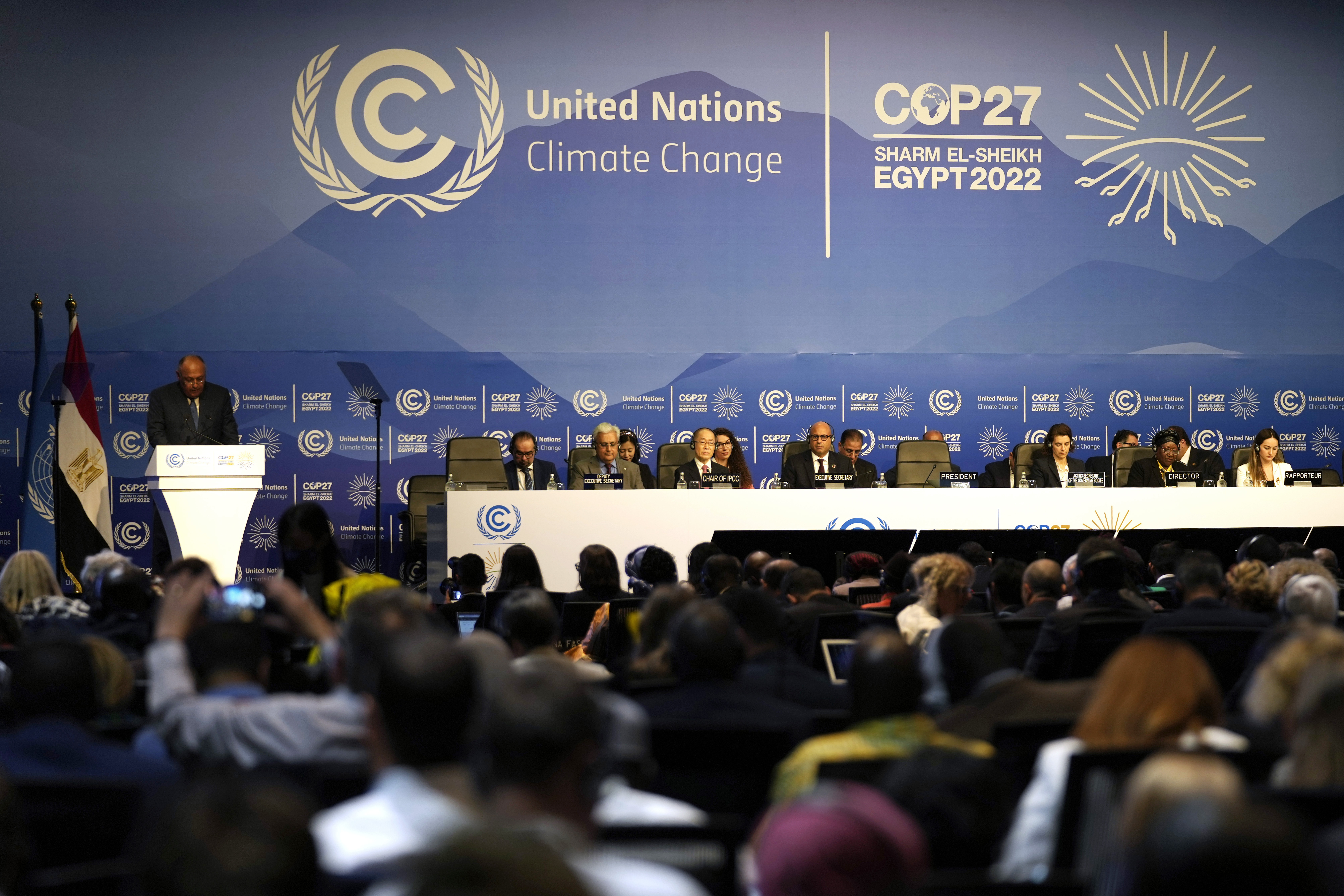
And the push for the US and China to pay their fair share in helping smaller countries mitigate and adapt to climate change is shaping to form a major part of the COP27 UN Climate Conference taking part in Egypt this week.
UN chief Antonio Guterres on Monday called on leaders to "cooperate or perish" in a stark warning to a world he said was "on a highway to climate hell".
READ MORE: Woman pays tribute to husband killed in fight outside WA pub
https://twitter.com/DrSimEvans/status/1589528982881730560
It's the first such conference since Labor ousted the Coalition earlier this year in an election that focused heavily on climate change and also ushered in a wave of Greens and climate-focused independents.
The government, which immediately signed Australia up to stronger carbon emissions reduction targets following international criticism of the country's approach under the Coalition, wants to use the conference to show Australia has returned as a progressive force on climate.
Even with Prime Minister Anthony Albanese skipping the trip to Africa, that mission appears to have got off to a positive start, although those watching the talks note the proof will come in how Australia's representatives act around the negotiating table.
Just days after COP26 last year, former US vice president and environmentalist Al Gore said he was "disappointed" Australia had failed to increase its emissions targets.
This year, in an impassioned speech urging leaders to choose "choose life over death" by ending the use of fossil fuels, this year, he praised Australians, Brazilians and Americans for their recent moves to elect leaders who promised to do more on climate change.
READ MORE: Man who attacked cleaner in Gold Coast nightclub sentenced
Gareth Redmond-King from the UK's not-for-profit Energy and Climate Intelligence Unit said it was too early to say how Australia would be seen at the conference but he suspected its negotiators to be "constructive and engaging in a way that they haven't for some time".
"They're going to feel the warmth of the welcome, but they're also going to feel the heat of the pressure," he told 9news.com.au.
"That you know, you have to kind of live up to the rhetoric, you have to deliver on targets and you have to take seriously the scale of fossil fuel production and exports, for example, in Australia's case."
Pacific Islands Forum secretary-general Henry Puna echoed the positivity after a bilateral meeting on Monday with Australian Pacific Minister Pat Conroy, who's leading the delegation in Albanese's absence.
"There's always difficult conversations, but between family members, between friends, nothing is impossible, but it's just sitting down and talking through those difficult issues," Puna said, when asked about financing.
"But already Australia has shown that they are serious about what they have said that they will do.
"And for us, that's very good. That's excellent."
READ MORE: Bail rejected after Sri Lankan international cricketer charged with sexual assault
https://twitter.com/PatConroy1/status/1589563779335221249
On the same subject, Conroy said Australian negotiators had been among those pushing to include the discussion of "loss and damage" from climate change to be included on the agenda for the first time, describing this as a "stark contrast" with previous governments.
"What you see from the new Australian government is respectful discussions with not just the Pacific family, but everyone who has an interest in climate change," he said.
"We will not shut down debate about climate change, we will not block discussions on climate change.
"We will fight for the right for the Pacific to be represented and for the Pacific voice to be heard."
"Loss and damage" refers to the economic and physical costs developing countries face from climate change.
It's been a long-standing point of negotiation and will be front and centre in Egypt after a lack of progress in COP26 at Glasgow, according to Bethany Tietjen of Tufts University.
"Many of the world's most climate-vulnerable countries have done little to cause climate change, yet they are experiencing extreme heat waves, floods and other climate-related disasters," she wrote in The Conversation.
"They want wealthier nations – historically the biggest sources of greenhouse gas emissions – to pay for the harm."
Mia Mottley, the prime minister of Barbados whose powerful previous COP speeches have cut through to the general public, argued for a fund that also taxes big fossil fuel companies and the introduction of pandemic and natural disaster clauses for developing countries' debts.
"I don't need to repeat the horror and the devastation wreaked upon this earth over the course of the last 12 months since we met in Glasgow," she said.
"Whether the apocalyptic floods in Pakistan or the heat waves from Europe to China, or indeed, in the last few days in my own region, the devastation caused in Belize by tropical storm Lisa, following torrential floods a few days ago in St Lucia."
Napier Shakespeare Rd crash: Father in bedside vigil beside sedated son
A father conducting a bedside vigil beside his unconscious son after a horror Hawke’s Bay crash says the experience is “why we need to hold our kids tight”.Elijah Watene, 19, is sedated and seriously injured in a Wellington Hospital…