For Dwight Fraser and Finley McLuckie, art is a form of escapism, and it is also a craft that has brought the father and daughter closer together.Their first art exhibition together opened yesterday at Cover Yours in Paraparaumu…
Tag Archives: oceania
Independent Māori Statutory Board appointments under review
Just one day after announcing the reappointment of David Taipari as the Chair and Tau Henare deputy, the Herald can reveal the appointment process and selection of Independent Māori Statutory Board members will be challenged…
Ex-customer 'horrified' after Optus letter bungle
Exclusive: When John Healy went to Optus in 2017 he hoped they'd solve a problem.
It was a decision that would come back to haunt him years later.
The South Australian had always been a loyal Telstra customer.
READ MORE: Why Islamic State are 'more dangerous then ever before'
But after he landed a new job in Roxby Downs, 500km north of Adelaide, Healy decided to switch to Optus.
At the time, he said, there was no Telstra coverage at the remote mining town.
After visiting his local Optus store, Healy left with a new phone and a 24-month contract.
Just four weeks later, Healy had terminated the contract, citing a variety of problems.
And that was the end of that, or so he thought.
This month, five years after he'd walked away from Optus, Healy was shocked to find that he'd been caught up in the cyberattack on the telecommunications giant.
The 71-year-old was not alone.
Healy was just one of four million former Optus customers whose identification and personal information was stolen by criminals, despite some not having had anything to do with the company for years.
That group of four million people sits on top of 5.8 million current customers of Optus who were also victims of the data breach.
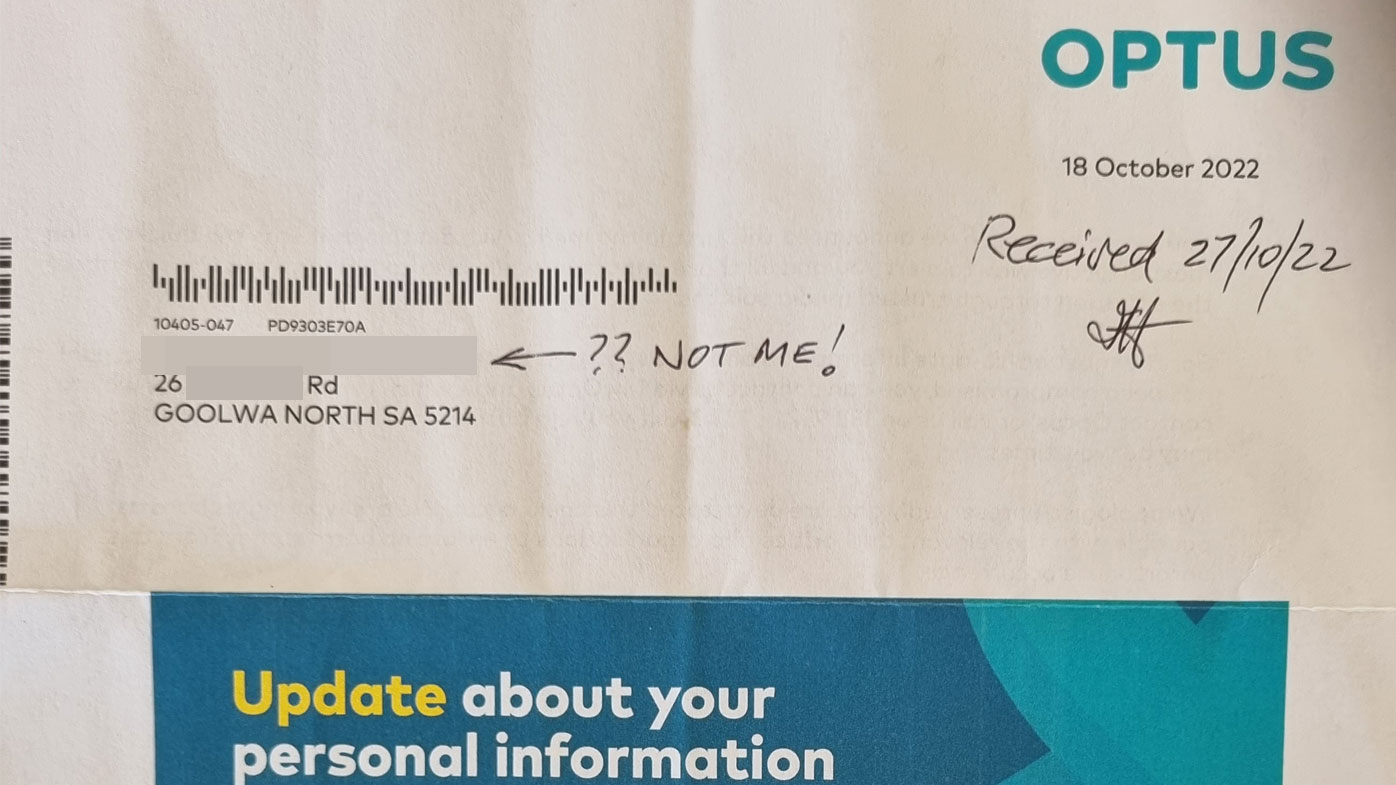
Healy contacted 9news.com.au after he received a letter from Optus last week which contained several alarming mistakes.
The letter, advising that he was a victim of the massive cyberattack, was sent to his house in Goolwa North but it was addressed to a total stranger.
"I was horrified, really, that they've managed to stuff up their own database to mix up my address with somebody else's name," Healy said.
"Considering the care and attention they should be taking at the moment to rectify a serious data breach, I'm sort of disgusted they got such a basic item wrong."
The letter also incorrectly said none of Healy's ID document details or numbers had been taken, when in fact his driver's license number and Medicare details were hoovered up in the breach.
READ MORE: Lions break out of enclosure at Sydney's Taronga Zoo
READ MORE: Why Islamic State are 'more dangerous then ever before'
A string of other customers also got letters addressed to somebody else, and have vented their frustration on social media.
Healy is angry that Optus held his data for so long after he quit his contract.
He called it "unethical and totally unnecessary", even though by the letter of the law Optus have not done anything wrong.
"A lot of people, myself included, feel very insecure," Healy said.
"The fact that this information is being bandied around, who knows where it has ended up?"
Dr Brendan Walker-Munro, a University of Queensland privacy and identity crime expert, said it appeared Optus had engaged in "hyper collection", a worrying corporate trend where companies take more data than they need and then keep it for an unreasonable period of time.
Walker-Munro said the current legislation meant to keep companies in check is outdated and a major grey area.
The federal government must move to tighten it up, he said, so companies are forced to wipe data after clear and specific timelines.
At the moment, under the Privacy Act, companies like Optus can essentially hold on to data for as long as they need it.
https://twitter.com/Roger_J_Penman/status/1586016508362493952?ref_src=twsrc%5Etfwhttps://twitter.com/nakajimayuwuto/status/1585901145670569985?ref_src=twsrc%5Etfw
"I don't think we can fault Optus for complying with what is essentially a legal obligation, which is 'get rid of it when you're no longer using it,'" Walker-Munro said.
"But do I think that there are some legitimate questions about why they kept things like Medicare numbers and passport numbers for such a long period of time? Absolutely."
Walker-Munro hoped an investigation launched by the Information Commissioner and the Australian Communications and Media Authority into the Optus breach "will get to the bottom" of "those unanswered questions".
"Why did Optus have all of this information in the first place?" he asked.
Have you been badly affected by the Optus hack? Email ms**********@******om.au
An Optus spokesperson told 9news.com.au it was "required under laws to keep records for certain periods of time due to our obligations with the Privacy, Telco and Corporations Acts".
Under the Telecommunications Consumer Protections Code, companies must hold billing information for up to six years.
But a customer's name, address and account reference number should be all it needs to comply with that, Walker-Munro said, without holding passports, driver's licences or Medicare details.
READ MORE: Why interest rates are going to keep rising

EXPLAINED: What to do if you have been hacked
The Telecommunications (Interception and Access) Act 1979 requires identification information and metadata is kept for two years, in case it is needed by law enforcement and intelligence agencies.
Walker-Munro said oceans of data held by the likes of Optus and Medibank would always be a "goldfield" for hackers, so the minimum should be taken and retained.
"Identity crime is huge business," he said, worth up to $30 billion annually.
"There's a huge financial incentive for criminals to do this kind of activity."
Conversations about digital privacy and cyber security being had now, after the Optus and Medibank hacks, were coming 10 years too late, he said.
"It's starting to come back to haunt us."
Have you been badly affected by the Optus hack? Email ms**********@******om.au
MBIE chips in on $4m bailout for Ruapehu Alpine Lifts
By RNZ Embattled skifield operator Ruapehu Alpine Lifts has received a $4 million rescue package – partly with help from the Government – as it tries to make it to the next ski season. The voluntary administrators who took over…
Why interest rates are going to keep rising
The Reserve Bank of Australia won't hesitate to push through even bigger interest rate hikes if they're needed to to fight the "scourge of inflation", its governor has foreshadowed.
While painting a rosy picture of Australia's place in the world compared to the majority of other countries, RBA governor Philip Lowe said the cash rate would likely keep climbing, and put on the table the possibility of more rises double that seen yesterday.
"The board's base case remains that interest rates will need to go higher still to bring inflation back to target and our forecasts have been prepared on that basis," he told the RBA board dinner in Hobart last night.
READ MORE: RBA 'consulting' with government about whether King Charles will be on $5 note
"We are not on a pre-set path, though. If we need to step up to larger increases again to secure the return of inflation to target, we will do that. Similarly, if the situation requires us to hold steady for a while, we will do that."
The comments were broadly similar to Lowe's statement yesterday afternoon after hiking interest rates by 25 basis points to 2.85 per cent, the highest since April 2013.
But he went further in describing the board's willingness to return to the major half-percentage-point hikes seen for four months earlier this year, while the RBA rapidly pushed the cash rate up from historic lows.
Lowe also stressed board members were conscious of the strain constant rate rises were putting on households already battling with high petrol prices and ballooning grocery bills.
READ MORE: Russia gets hands on chilling new weapon
"This morning, we also discussed the consequences of not raising interest rates, and allowing high inflation to persist and become entrenched in expectations," he said.
"If this were to happen, the evil of inflation would be with us for longer and the eventual increase in interest rates needed to bring it down would be greater.
"This would increase the risk of a severe recession and a sharp rise in unemployment. It would be much better to avoid such a costly outcome and so we have acted strongly to avoid it."
EXPLAINED: What is inflation? And how does it make life more expensive?
With rates now at more "normal" levels, Lowe said the board was currently happy to move more slowly as it waited to assess the rate rises' lagging effects on the economy.
He repeatedly stressed the "narrow path" the bank was on to force inflation back down to 2-3 per cent while keeping the economy on an "even keel".
"It is still possible to do this, but there is a lot of uncertainty and we could be knocked off that narrow path, not least because of developments elsewhere in the world," the governor said, noting the east coast floods were driving up costs and predicted 50 per cent energy bill increases in 2023 would do likewise.
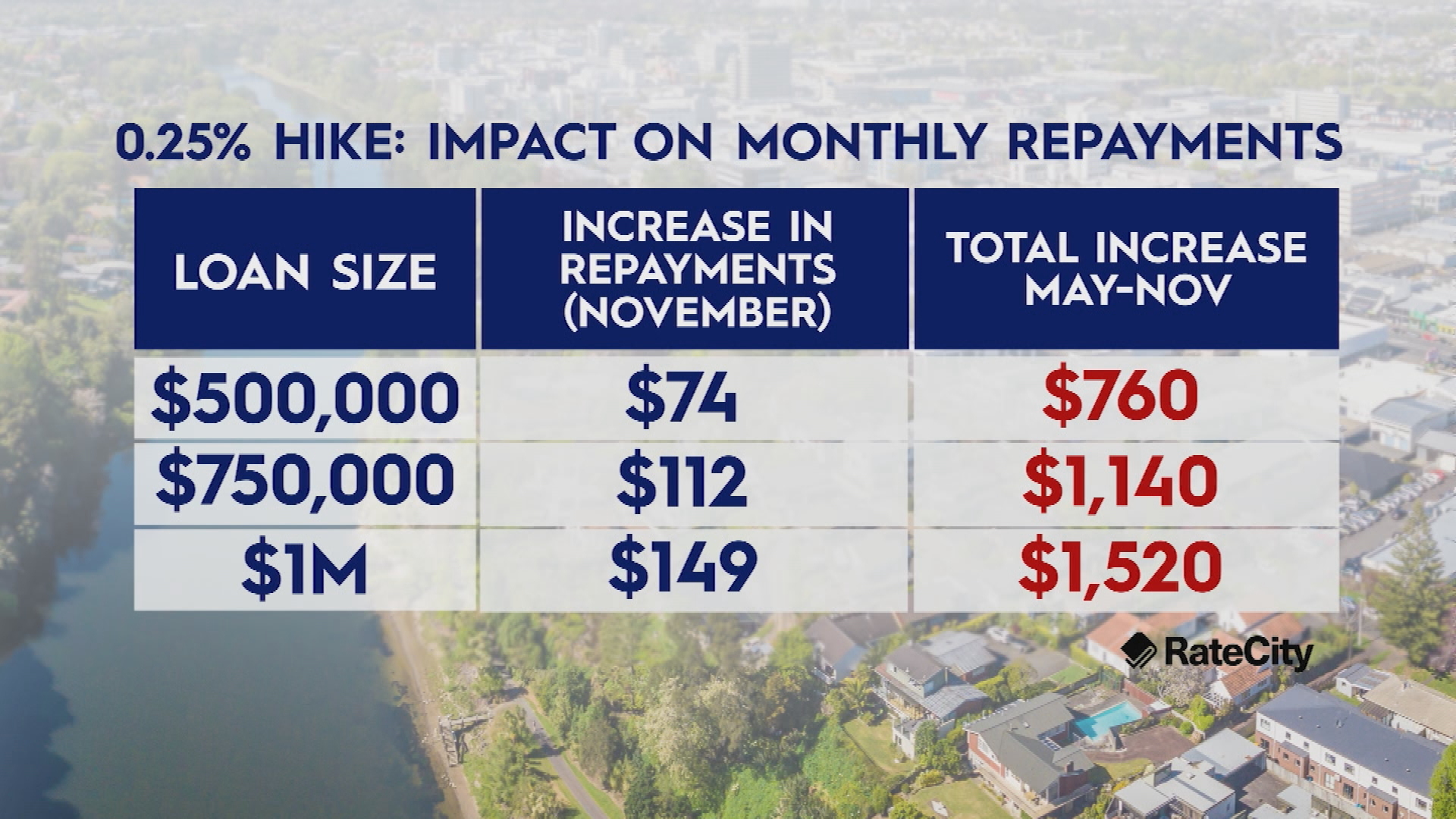
Yesterday's hike adds about $74 a month to the average Australian's $500,000 mortgage, or $760 a month compared to the rate in May this year.
Million-dollar borrowers should be paying roughly $1500 more on their monthly repayments than before rates began rising.
The RBA expects inflation to peak at 8 per cent by the end of the year – higher than the Federal Budget forecast of 7.75 per cent.
READ MORE: Why are Australia's interest rates still rising?
The information provided on this website is general in nature only and does not constitute personal financial advice. The information has been prepared without taking into account your personal objectives, financial situation or needs. Before acting on any information on this website you should consider the appropriateness of the information having regard to your objectives, financial situation and needs.
Roller skating: The retro pastime is back in fashion
Roller skating has seen major growth since the Covid-19 pandemic hit. Rosalie Willis talks to Kāpiti’s Seaside Skates about how people young and old are taking up the retro pastime. Wheeling around with confidence and class,…
Revealed: The top 15 highest-paying careers in Australia
The highest-paid jobs in Australia might come as no surprise to some, with doctors, CEOs and legal professionals featuring prominently on the list. But, there are some entrants that might have people surprised.
Sharks fitted with cameras help uncover ocean secret
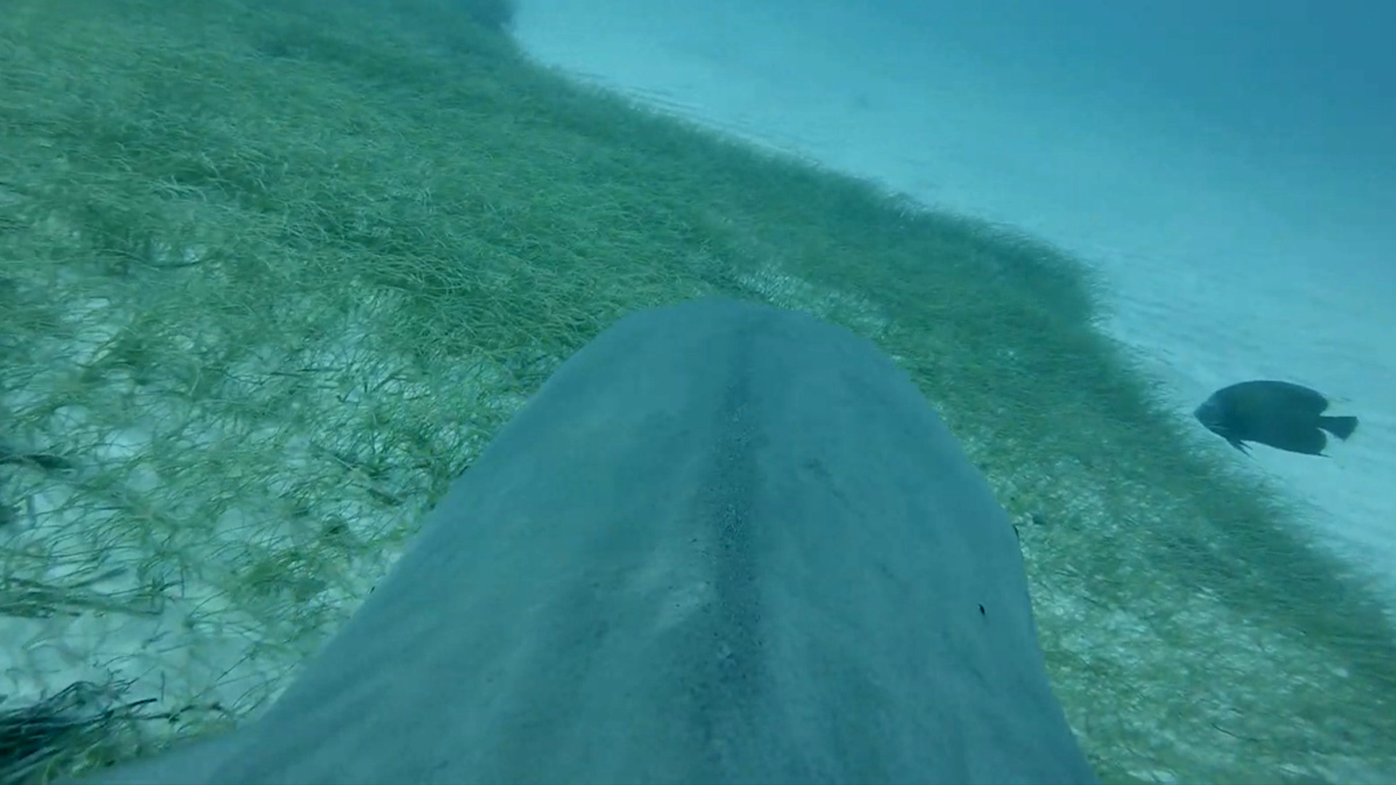
Gliding through the clear waters of the Bahamas the tiger shark spots a large tropical fish hovering above a patch of green seagrass.
The shark makes its way over to potential prey before it turns, continuing its journey through the swaying vegetation.
The shark, filmed in incredible detail, is one of seven mature tiger sharks involved in a ground-breaking marine study, today published in Nature Communications.
Researchers mounted revolutionary 360-degree cameras on the apex predators and in "partnership" with the creatures mapped what's believed to be the world's largest seagrass system in Bahama Banks.
EXPLAINED: NSW to phase out more single-use plastics
Dr Oliver Shipley, a senior research scientist with Beneath the Waves, told 9news.com.au the study could change how the ocean is surveyed.
He forecasted that other species could soon be used to map the mysteries of the deep.
"Over the next five to 10 years we will see a real kind of uptake in partnering with animals to uncover their secret lives, and survey and explore parts of the ocean we couldn't," Shipley said.
"People are using turtles, they are another great animal … and we are actively working with ocean sunfish, or mola mola, which is another animal we know little about, but moves expansive distances in the ocean."
The cameras are mounted using biodegradable zip ties that break down, allowing the package to rise to the surface.
"Nothing remains on the animal once the tag comes off," he said.
READ MORE: Man's close encounter with one of world's most venomous reptiles
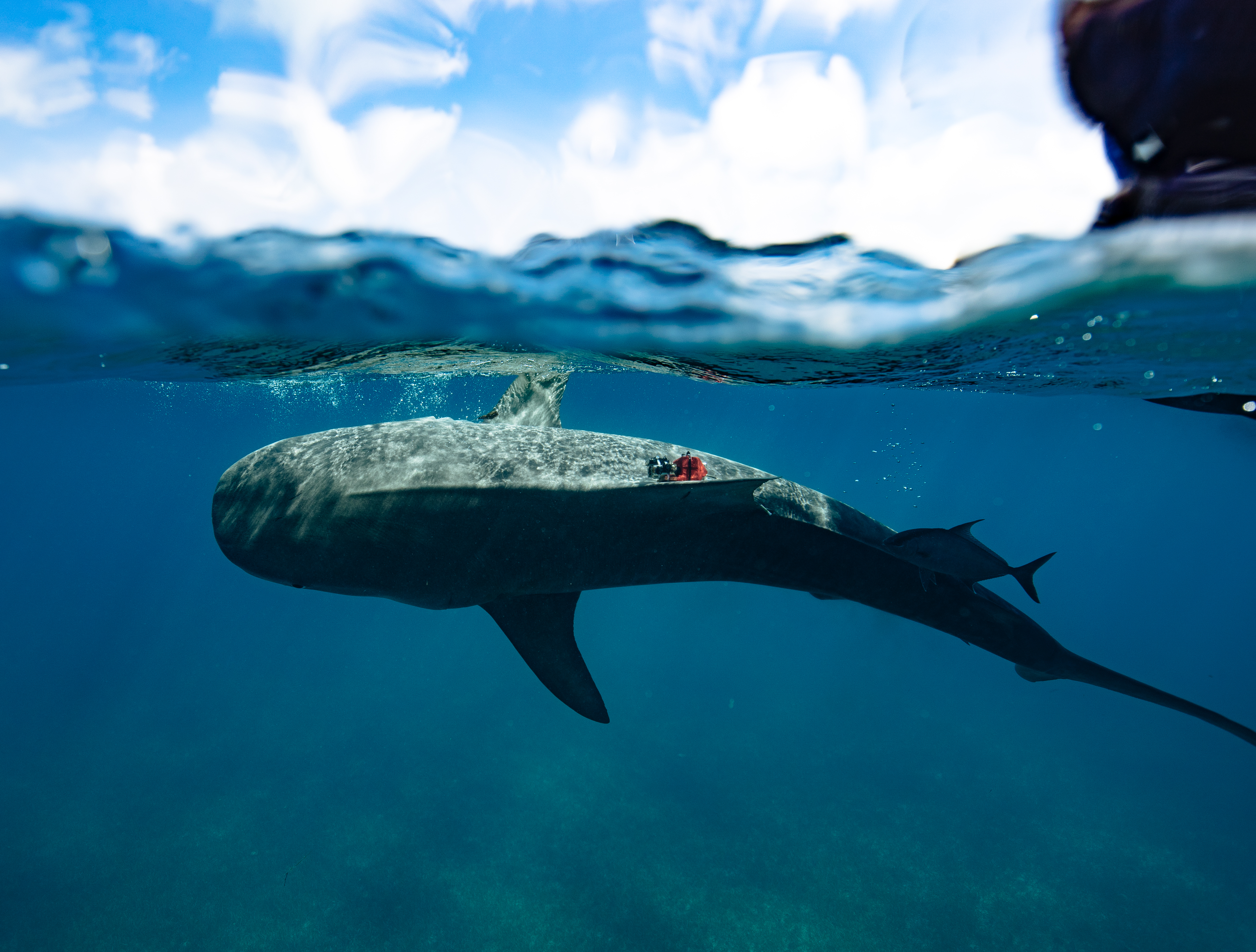
Shipley said the ideal animal candidate should spend a lot of time towards the bottom of the ocean.
This is one of the factors that makes tiger sharks ideal surveyors.
"They also move considerable distances – up to dozens of kilometres each day," Shipley said.
"We 'partnered' with the sharks to perform one of the largest and robust seagrass surveys to date."
The seagrass mapped by the sharks covers 66,000 square kilometres, potentially up to 92,000.
If this assessment proves correct it would make it the biggest seagrass system in the world; larger than the 40,000 square kilometre system off the coast of Queensland, and representing an increase in the global seagrass estimate by up to 41 per cent.
READ MORE: Tougher penalties for reckless e-scooter riders in Queensland

Shipley said "there's a couple of important implications" behind the discovery, explaining seagrass helps to mitigate the impacts of climate change.
"If you have a large seagrass system off the coast of a low-lying country like the Bahamas it actually helps buffer some of the storms," he said.
"They also absorb an awful lot of CO2 (carbon dioxide).
"When we think about trying to find natural solutions to mitigate the effects of climate change, a seagrass ecosystem is about as good as you can get."
Te Arawa Lakes Trust wins the 2022 New Zealand Biosecurity Māori award
The 2022 New Zealand Biosecurity Māori trophy has been awarded to Te Arawa Lakes Trust for its work protecting tipuna roto (ancestral lakes) of their rohe.”Biosecurity issues continue to have major impacts on the lakes of Te…
Psychological assessment ordered for burglar with more than 200 convictions
A recidivist burglar with more than 200 convictions has been sent back to prison after using a grinder to access a Napier business during the night. Glen Anthony Billington, 49, first went to prison at a young age and has never…