This Covid-19 wave might not peak until the end of this year, or it could come much sooner – and higher. Why can’t modelling tell us for sure? Science reporter Jamie Morton explains. What are we looking at right now? Not so much…
Tag Archives: oceania
One injured in crash, SH1 near Bryderwyn, Kaipara closed
One person is injured in a crash that has closed State Highway 1 near Bryderwyn in Kaipara.Police were called to the crash around 7.30am today.Emergency services responded to the incident, which involved a single vehicle.One…
South-east Australia set to be hit by spring snowfall
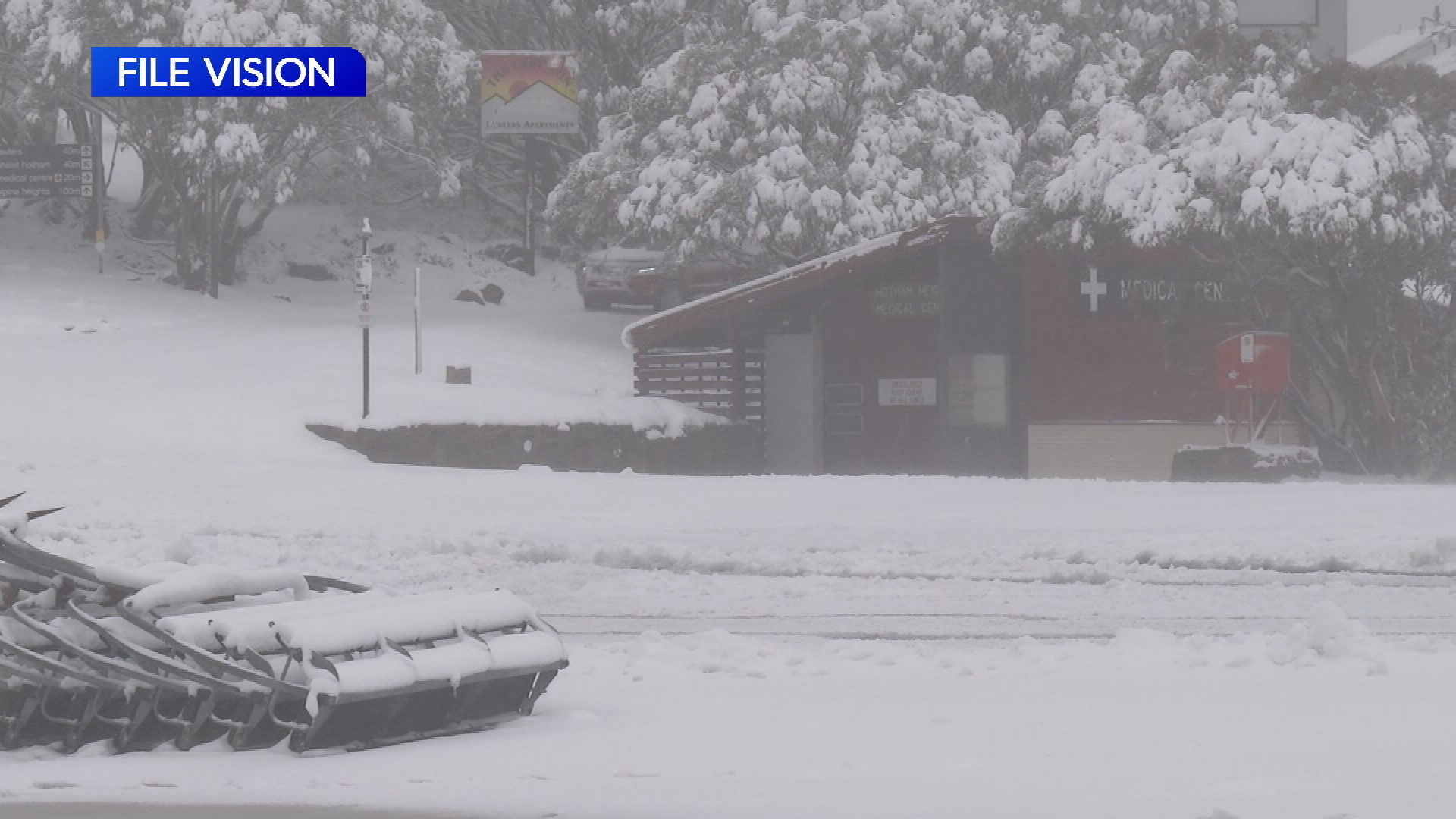
Parts of south-east Australia are set to be hit by an unusual spring cold snap that is expected to bring a dusting of snow to the country.
Unseasonable snow is expected in both Victoria and New South Wales, while Melbourne is set to experience its coldest Melbourne Cup day in decades.
Bureau of Meteorology (BoM) senior meteorologist Jonathan How told Weekend Today the unseasonable chill was a result of antarctic winds.
READ MORE: At least 146 killed during incident at Halloween festivities in Seoul

"We will see some very cold air move up and cross Victoria, New South Wales and South Australia," he said.
How said unseasonable snowfall is expected in the Central Tablelands in New South Wales and along the Great Dividing Range in Victoria.
"These are some very cold conditions coming up. It's a good idea to rug up and stay warm in the week," he said.
Melburnians heading to the Melbourne Cup on Tuesday have been warned to dress warmly, when a maximum of 14 degrees is expected.
It's set to be the coldest cup day since 1995.
"We are expecting on-and-off showers and local rain and thunder. Bring your jacket and umbrella because it will be chilly," How said.
READ MORE: Can an election cure Victoria's health system?
Elsewhere, a developing cold front and low-pressure system will bring damaging winds and severe storms to much of South Australia today.
By Monday, the cold front will move to south-eastern Queensland, eastern NSW and Victoria and Tasmania, bringing widespread rain and storms.
Government cracks down on alcohol industry, councils get more powers over sale, opening hours
Councils will be given more power to set alcohol rules in their own areas under reforms announced by the Government today. Further reforms are also being considered, including measures addressing the pricing and marketing of alcohol….
'I was looking for a rational explanation – haven't found it yet'
For paranormal researcher and ghost tour guide Alison Oborn, it all goes back to the dark.
"The age-old fear of the dark is deep in all of us," she told nine.com.au.
"We all have that deep-down interest in what happens after death."
Oborn founded and runs Adelaide's Haunted Horizons, which offers ghost and "dark history" tours around the South Australian capital.
READ MORE: At least 146 killed during South Korean Halloween festivities

She's been a paranormal researcher since 1988, the same year she moved to Australia with her husband, but her own acquaintance with hauntings goes back much further.
Oborn said she lived in a haunted house growing up in England – not some grand gothic mansion, but "your everyday terrace house".
"It terrified us," she said.
"I was still sleeping with the lights on until met my husband in my mid-20s."
Oborn admitted that these childhood experiences meant she was a "moth to the flame" when she started to undertake paranormal research as an adult.
READ MORE: How a medieval prince inspired the world's most iconic monster

"I was always happy to keep a rational head," she said.
"I was looking for a rational explanation for what happened, but – haven't found it yet."
What she did find was a passion and a career, one which she said is nothing like how it's portrayed in films or on "ghost hunter" TV shows.
"Wherever you go there's people, you'll find hauntings," she said.
But the practice of declaring one building or another "the most haunted" is generally just "good marketing".
READ MORE: New tech unravels mystery of where eels come from

"If something is haunted, it's haunted," she said.
"Saying something's more haunted than somewhere else – how do you quantify that?"
And while her youthful fear has "mostly" transmuted into excitement, that "age-old" fear can still rear up
She said she had just returned from a trip to the US with a friend, where they had rented some famously haunted places to spend some time there.
"There were definitely moments there, when we were back-to-back, when we were holding on to each other," she said.
"That fear of the dark, it's just built into people."
Her line of work and her field of research being what they are, Oborn naturally has a familiarity with skeptics – and it's an attitude she encourages, noting she's been looking for an "explanation" for ghosts for 30 years or more.
But instant dismissal, she said, is less easy to justify.
"I'm in these places seven days a week, basically," she said.
"If you're there every day, and there's activity to be seen, you'll see it."
A ghost tour guide since 2004, she said all manner of people came along, and there was "no rhyme or reason" to who – if anybody – would end up having a paranormal encounter.
READ MORE: New insight into devastating radioactive storms which hit earth

"We used to take bets, looking around at the group," she said.
"We've seen skeptics spend the tour trying to justify or work out why something has happened to them, but they still leave not knowing."
And then, she said, the "screaming young girls" who might seem primed for the paranormal, could go an entire tour without bumping into something in the dark.
"Science depends on an experiment being repeatable," Oborn said.
"The paranormal is not repeatable. Believe me, I've been trying for 30 years."
Ghost stories go back to the beginning of humanity, she said, when people would sit around campfires and tell stories in the dark.
They span cultures, have outlasted civilisations, and find new forms in every age.
In a scientific age, of quantum physics finding new ways to understand the universe, Oborn said it's always possible an elusive explanation for hauntings will be found.
"But do we really want science to explain it all? Don't we love the mystery, a little bit?" she said.
"There's definitely something going on."
How a medieval prince inspired the world's most iconic monster
Dracula made his debut in the 1897 novel of the same name, written by Irish author Bram Stoker, and he's been with us ever since.
The book and its titular villain were both hits, and soon found a second home in the burgeoning world of the movies, with licensed and unlicensed adaptations piling up from as early as 1921.
It's an astonishing legacy for the character, and a seeming immortality for the bloody-handed historical figure often agreed to have inspired the evil Count – Vlad III of Wallachia, or Vlad the Impaler.
READ MORE: At least 146 killed during South Korean Halloween festivities

Vlad III was the voivode (ruler) of Wallachia – now part of Romania – three times between 1448 and 1477.
His reputation, largely built after his death, is centred on acts of cruelty, including civilian massacres and his preference for execution by impalement.
But during his life, he was also hailed as a defender (at times) of both Wallachia and Christianity, and today many in Romania consider him a national hero.
Why was he called "Dracula"?
Vlad the Impaler was known as "Dracula" even in his own lifetime, signing correspondence with that name.
It means "Son of the Dragon", but the only thing Vlad III had to do to earn it was be born.
His father was called Vlad II Dracul, the Dragon, after his membership of an order of knighthood called the Order of the Dragon, founded to defend the Holy Roman Empire against the Ottoman Empire.
The other cognomen commonly attached to Vlad III, Tepes, simply translates as "Impaler".
READ MORE: How trees reveal Earth's history of unexplained 'radiation storms'

So – why "Impaler"?
Vlad III's most infamous atrocity was carried out during the period of his second rule.
In 1462, he invaded the Ottoman Empire, provoking a furious response from the sultan, Mehmed II – in whose court Vlad III had spent much time as a hostage in his youth, and who claimed Vlad III's fealty.
Mehmed raised an army – supposedly numbering 150,000 – forcing Vlad to retreat, destroying supplies and resources behind him.

In June, from his stronghold of Targoviste, Vlad attacked the sultan's camp at midnight, hoping to capture or kill his rival monarch, but he missed his chance and had to retreat.
He retreated entirely from Targoviste as well, leaving the city to the Ottomans.
It was utterly deserted except for what a horrified chronicler described as a "forest of the impaled" – including men, women and children – laid out to discourage and deter any pursuit.
Vlad was also said to have impaled foreign diplomats, and Saxons in his provinces who did not support his rule – again, not restricting the horrific method of mass murder to enemy soldiers.
I can see why people thought he was a vampire
Actually, Vlad III wasn't linked with vampire myths during his life or for centuries after his death.
Legends of blood-drinking undead humans have a home in eastern Europe, but they were typically presented as being of foul corpselike appearance and driven only by a need to consume blood.
The suggestion is that Stoker came across the name Dracula during his reading of Romanian history, as part of his research for the novel, and attached it to his villain, who had until that point been named Count Wampyr.
In the book, Dracula speaks of his ancestors who fought "the Turk", including one who "crossed the Danube" but was betrayed by his brother – just as Vlad III's younger brother Radu became the Ottoman candidate for the Wallachian throne.
And another character speculates that Dracula is indeed the same person as the ancestor he boasts of.
READ MORE: New tech unravels mystery of where eels come from

Later adaptations of the character into film and literature make the connection more explicit, including in Luke Evans' portrayal in the 2014 film Dracula Untold.
But some scholars say it's unlikely Stoker was directly "inspired" by the history of Vlad III, and simply took advantage of the name.
That said, there is a little coda that makes it tempting to believe otherwise – especially so close to Halloween.
Tradition held that Vlad III was buried in the Monastery of Snagov, which was excavated by one Dinu Rosetti in 1933.
He found no tomb and no human bones beneath the Impaler's supposed gravestone, meaning the exact location of Vlad III's resting place remains unknown.
That's assuming he needs one. Sleep tight!
New tech unravels mystery of where eels come from
It's the question that baffled scientists for hundreds of years: where on Earth do eels come from?
Aristotle's best guess was that they spontaneously generated. Danish biologist Johannes Schmidt was pretty sure they spawned in the Sargasso Sea – right near the Bermuda Triangle, for a little extra mystery. His extensive biological surveys over 100 years ago found lots of young eels in this area, leading him to conclude they must hatch somewhere nearby.
But eggs or adult eels breeding were never seen anywhere nearby. So the question remained unanswered … until now.
READ MORE: Anger over feral animal shooting pause in NSW parks
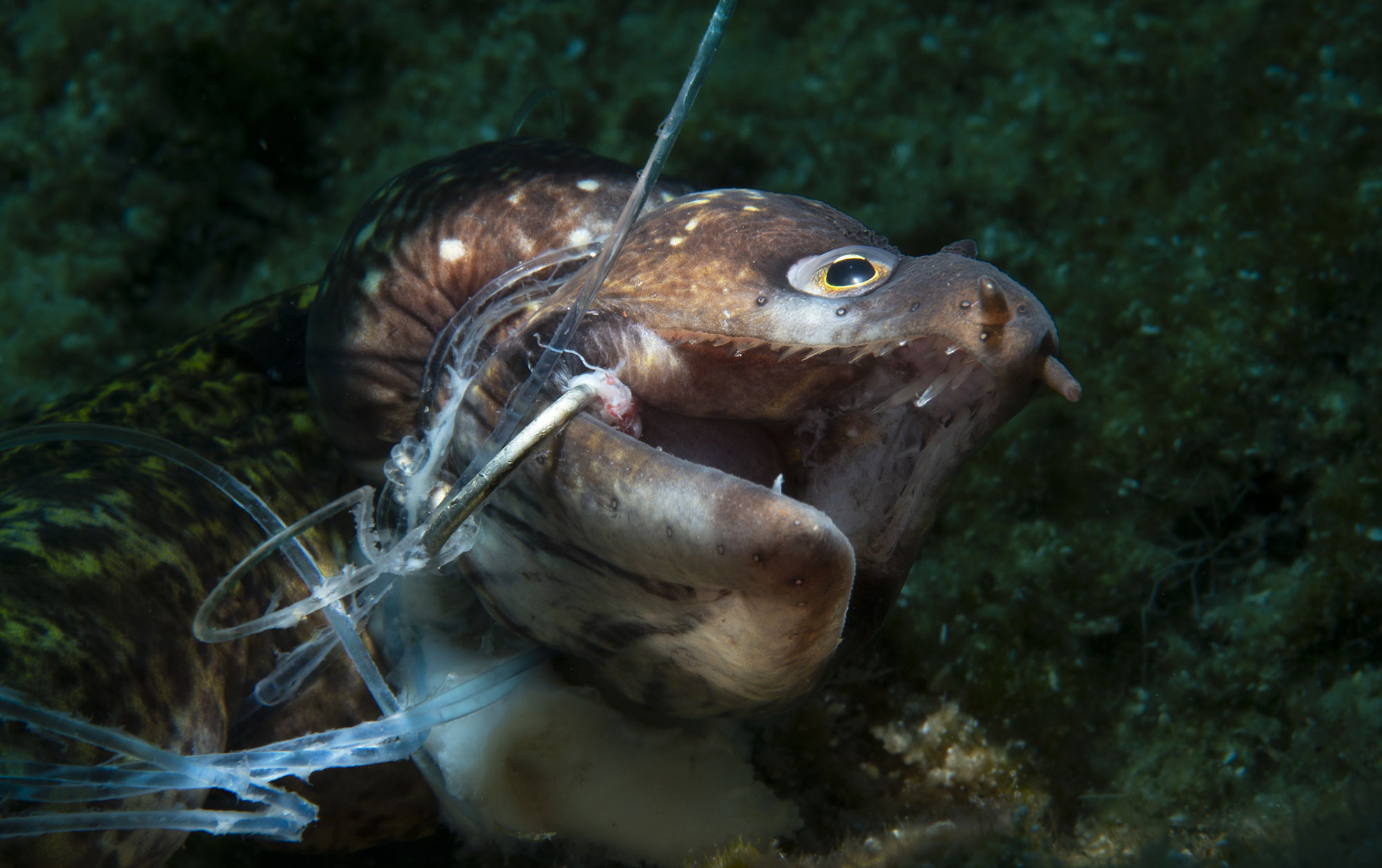
Last week, a team of researchers were able to confirm that yes, the one-metre-long European eel people knew from their local river really did come from a sub-tropical sea up to 10,000 kilometres away. This team had something history's biggest thinkers didn't: cool tech.
Pop-up satellite archival tags are a relatively new type of tracking device that allows scientists to map the movements of marine creatures in a way that simply wasn't possible before.
The tags record where the animals travel, how fast they move, and even how deep they dive. Then, the tags detach and float to the surface where they can transmit data back into the hands of eager scientists.
The European eel's migration is impressive, but they are still shrouded in mystery. All the eels on the mainland come from the same spawning place – yes, even the eels in backyard ponds, which can slither along land to the sea after only a little rain. Eels can even climb up enormous dam walls! But how do they know where to go? How do they decide when?
Australia, too, has its own illustrious eels. They generally keep to themselves, so much so that most of us wouldn't even know they're there. But with all this rain and flooding, there's a chance you might stumble across one soon.
So I thought this was a good time to share five things you might not know about eels, including in Australia.
READ MORE: Victoria's 'thriving' little penguins colony breaks record again

1. We have our own marvellous migration story in Australia
While not quite as long as the European eel's journey, Australia's short-finned eels undertake a massive migration.
In research published last year, researchers from the Arthur Rylah Institute and Gunditj Mirring Traditional Owner Aboriginal Corporation used satellite tracking tags to map the path of 16 eels from Port Phillip Bay off Melbourne, to the Coral Sea outside the Great Barrier Reef. Some travelled almost 3000km in just five months.
It's an arduous journey. The tags showed some eels dive to depths of almost 1000 metres below the ocean surface, taking advantage of currents and dodging predators. Not all were successful though – at least five of the tracked eels were eaten by sharks or whales.
2. Eels are obstacle course masters
When you stop to think about it, there are more than a few obstacles between inland fresh waters and the ocean. Many of the swamps and wetlands that would traditionally have offered safe passage have been filled in, replaced by farms, dams and cities.
And yet, eels find a way. One key feature is their ability to breathe through their skin, meaning even the shallowest drain or puddle-soaked lawn is enough water for them to move through.
According to urban legends, eels have been seen slithering through urban gutters, sports ovals, or over university campus fountains, following ancient pathways back out to sea.
READ MORE: How do fish scratch their itches? It turns out sharks are involved

3. Eels are expert transformers
Imagine if you had to go through puberty four or five times, with each bodily change more dramatic than the last. Then you'd have a pretty good understanding of what it's like to be an eel.
Migrating eels have to go from being a saltwater fish to a freshwater fish and back again, which means they have incredible life cycles. They start out as tiny larvae out in the ocean in the Sargasso or Coral Sea where they spawn, before morphing into translucent "glass eels".
After that, they shape-shift into darker "elvers" at about one year old as they make their way back to fresh water, where they eventually mature into the adult eels that live in our rivers, lakes and dams.
When the time comes, they make their final transformation into lean, mean, migrating machines – known as silver eels.
Their eyes grow larger and their heads become pointed and streamlined. They also stop eating, as their stomachs shrink to make way for bigger gonads (all the better to spawn with).
4. Sigmund Freud was an eel fan, too
Speaking of gonads, Sigmund Freud (yes, that Freud) spent the early years of his research career trying to understand the sexual anatomy of eels.
Unfortunately for Freud, and the eels, the only way to tell if an eel is male or female is to dissect it to observe its internal reproductive organs.
Despite performing hundreds of dissections, Freud rarely found male eels. Turns out, this is because eels don't develop reproductive parts until later in life – usually not until they're at least ten years old.
5. Eels can live very long lives
Yes, these long fish have long lives, with some eels living to be more than 50 years old.
One man in Sweden claimed his backyard eel lived to 155, while another eel reportedly lived to 85 in a Swedish aquarium.
Eels spend the first few years of life getting from their spawning grounds back to fresh water, and the last few making the return journey out to sea. They only make this spawning once – after that, they die.
READ MORE: Why Aussie waters have become ideal hunting ground for great whites

Why is this kind of research important?
There's still so much we don't understand about eels around the world. But satellite research such as that published this week takes us a step closer to pulling all the pieces together.
This has real implications for how we look after eel populations. The European eel (Anguilla anguilla) is critically endangered, with the species experiencing declines of up to 95 per cent in the last 50 years.
We don't really know how well Australian eels are tracking. If we understand where animals breed and how they get there, it means we can find ways to help, rather than hinder their journey, and protect the places that are important.
This article is republished from The Conversation under a Creative Commons licence. Read the original article.
How trees reveal Earth's history of unexplained 'radiation storms'
In searching for planets and studying their stars, I've had the privilege to use some of the world's great telescopes. However, our team has recently turned to an even larger system to study the cosmos: Earth's forests.
We analysed radioactive signatures left in tree rings around the world to study mysterious "radiation storms" that have swept over Earth half a dozen times in the past 10,000 years or so.
Our results, published earlier this week in Proceedings of the Royal Society A, rule out "solar superflares" as the culprit – but the true cause remains unknown.
READ MORE: Search for planets 'hospitable to living things' just got harder

A history written in tree rings
When high-energy radiation strikes the upper atmosphere it turns nitrogen atoms into radioactive carbon-14, or radiocarbon. The radiocarbon then filters through the air and the oceans, into sediments and bogs, into you and me, into animals and plants – including hardwoods with their yearly tree rings.
To archaeologists, radiocarbon is a godsend. After it is created, carbon-14 slowly and steadily decays back into nitrogen – which means it can be used as a clock to measure the age of organic samples, in what is called radiocarbon dating.
To astronomers, this is equally valuable. Tree rings give a year-by-year record of high-energy particles called "cosmic rays" going back millennia.
The magnetic fields of Earth and the Sun shield us from cosmic rays shooting through the Galaxy. More cosmic rays reach Earth when these magnetic fields are weaker, and fewer when the fields are stronger.
This means the rise and fall of carbon-14 levels in tree rings encodes a history of the 11-year cycle of the solar dynamo (which creates the Sun's magnetic field) and the reversals of Earth's magnetic field.
READ MORE: 'Incompatible with humanity': The AI danger researchers must avoid

Miyake events
But tree rings also record events we cannot presently explain. In 2012, Japanese physicist Fusa Miyake discovered a spike in the radiocarbon content of tree rings from 774 AD. It was so big that several ordinary years' worth of cosmic rays must have arrived all at once.
As more teams have joined the search, tree ring evidence has been uncovered of further "Miyake events": from 993 AD and 663 BC, and prehistoric events in 5259 BC, 5410 BC, and 7176 BC.
These have already led to a revolution in archaeology. Finding one of these short, sharp spikes in an ancient sample pins its date down to a single year, instead of the decades or centuries of uncertainty from ordinary radiocarbon dating.
Among other things, our colleagues have used the 993 AD event to reveal the exact year of the first European settlement in the Americas, the Viking village at L'Anse aux Meadows in Newfoundland: 1021 AD.
READ MORE: NASA's hidden graveyard lurking at the bottom of the Pacific Ocean

Could huge radiation pulses happen again?
In physics and astronomy, these Miyake events remain a mystery.
How do you get such a huge pulse of radiation? A flurry of papers have blamed supernovae, gamma-ray bursts, explosions from magnetised neutron stars, and even comets.
However, the most widely accepted explanation is that Miyake events are "solar superflares". These hypothetical eruptions from the Sun would be perhaps 50–100 times more energetic than the biggest recorded in the modern era, the Carrington Event of 1859.
If an event like this occurred today, it would devastate power grids, telecommunications, and satellites. If these occur randomly, around once every thousand years, that is a one per cent chance per decade – a serious risk.

READ MORE: A disease from 700 years ago is still affecting our immune systems
Noisy data
Our team at UQ set out to sift through all the available tree ring data and pull out the intensity, timing, and duration of Miyake events.
To do this we had to develop software to solve a system of equations that model how radiocarbon filters through the entire global carbon cycle, to work out what fraction ends up in trees in what years, as opposed to the oceans, bogs, or you and me.
Working with archaeologists, we have just released the first reproducible, systematic study of all 98 trees of published data on Miyake events. We have also released open-source modelling software as a platform for future work.
READ MORE: NASA announces expert UFO investigation team
Storms of solar flares
Our results confirm each event delivers between one and four ordinary years' worth of radiation in one go. Earlier research suggested trees closer to Earth's poles recorded a bigger spike – which is what we would expect if solar superflares are responsible – but our work, looking at a larger sample of trees, shows this is not the case.
We also found these events can arrive at any point in the Sun's 11-year activity cycle. Solar flares, on the other hand, tend to happen around the peak of the cycle.
Most puzzling, a couple of the spikes seem to take longer than can be explained by the slow creep of new radiocarbon through the carbon cycle. This suggests that either the events can sometimes take longer than a year, which is not expected for a giant solar flare, or the growing seasons of the trees are not as even as previously thought.
For my money, the Sun is still the most likely culprit for Miyake events. However, our results suggest we're seeing something more like a storm of solar flares rather than one huge superflare.
To pin down what exactly happens in these events, we will need more data to give us a better picture of the events we already know about. To obtain this data, we will need more tree rings – and also other sources such as ice cores from the Arctic and Antarctic.
This is truly interdisciplinary science. Normally I think about beautifully clean, precise telescopes: it is much harder to understand the complex, interconnected Earth.
This article is republished from The Conversation under a Creative Commons licence. Read the original article.
Local Focus: Fabulous Flaxmere Night Market is back with spot prizes
Great kai, pleasant karaoke, a friendly vibe, and exciting prizes – the fabulous Flaxmere Night Market was back on Thursday.With a fresh start, hundreds of happy people enjoyed the wonderful sunset time in Flaxmere Park.Flaxmere…
One dead, five seriously injured in Napier crash
One person has died and five are seriously injured following a single car crash on Shakespeare Road in Napier last night.A police spokeswoman said police and Emergency services were called to the crash at 11.50pm on Saturday, October…