Tag Archives: oceania

Elon Musk took over Twitter. Then some users began testing chaos

Shortly after Elon Musk took control of Twitter, some conservative personalities wasted no time to jump on the platform and recirculate long-debunked conspiracy theories in a tongue-in-cheek attempt to “test” whether Twitter’s policies on misinformation were still being enforced.

Twitter has made no announcements of any immediate policy changes and in a tweet posted on Friday afternoon, Musk said Twitter will be forming a “content moderation council with widely diverse viewpoints,” and “no major content decisions or account reinstatements will happen before that council convenes.”

But that didn’t stop users from cheering — or criticising — what they expected to be a quick embrace of Musk’s previous pledges to cut back on moderation in the name of promoting free speech. Some were all too eager to see what they could get away with under the new regime.

READ MORE: Elon Musk immediately fires Twitter CEO, executives after purchase

Elon Musk has gloated over the sacking of Twitter executives on the social media platform.

Popular right-wing pundits tweeted buzzwords such as “ivermectin,” and “Trump won” to see whether they’d be penalized for content they suggested would previously have been flagged. Ivermectin, a cheap drug that kills parasites in humans and animals, has been promoted by some Republican lawmakers and conservative talk show hosts as an effective way to treat COVID-19. But health experts have been pushing back, warning there’s scant evidence to support the belief that it works.

“Ok, @elonmusk, is this thing on..?” Steve Cortes, a former commentator for the conservative TV network Newsmax and adviser to former President Donald Trump wrote in a tweet, where he included a microphone emoji. “THERE ARE TWO SEXES TRUMP WON IVERMECTIN ROCKS.”

In a letter aimed to soothe the fears of advertisers, Musk vowed Thursday that Twitter won’t be a “free-for-all hellscape, where anything can be said with no consequences.”

But the jury is still out on what will become of the social media platform — and what it will tolerate. Observers are eyeing who stays, who goes and who might potentially come back from the list of people the platform has banned over the years. They range from Trump, to conspiracy theorist Alex Jones and former Ku Klux Klan leader David Duke — none of whom have returned to the platform so far.

The Associated Press checked at least a dozen other Twitter accounts that were suspended by the platform — including those used by right-wing activist James O’Keefe and MyPillow Chief Executive Mike Lindell — and each turned up an “account suspended” message as of Friday afternoon.

READ MORE: Elon Musk 'plans to cut 75 per cent of Twitter workforce'

The musician formerly known as Kanye West, now Ye, at fashion event (Getty)

At least one still found a way to get his message out.

“I am very happy that Twitter is now in sane hands, and will no longer be run by Radical Left Lunatics and Maniacs that truly hate our country,” Trump said Friday morning in a post on his social media platform Truth Social, leaving no indication of whether he'd return to the platform or not even though Musk has said he would allow it.

“I LOVE TRUTH!,” he said, adding Twitter will be “better” if it works to get rid of bots and fake accounts “that have hurt it so badly.”

Earlier in the day, news outlets reported Kanye West, the rapper legally known as Ye, appeared to be back on Twitter after being locked out of his account earlier this month over his anti-Semitic posts on the social media platform.

https://twitter.com/elonmusk/status/1585841080431321088

But there was no evidence to suggest the status of his account had changed or that Musk played a role, and there was no sign of recent activity. Twitter did not immediately reply to a request for comment on whether Ye was back on the platform. The rapper and fashion designer had also been suspended from Instagram, where his account there was recently reinstated.

Meanwhile, dozens of extremist profiles — some newly created — circulated racial slurs and Nazi imagery while expressing gratitude to Musk for his new leadership. One such post shared a breaking news update about Musk taking over the company, tweeting a racial slur and the message, “thank you Elon.” Another anonymous account tweeted, “Elon now controls Twitter, unleash the racial slurs,” along with several derogatory comments.

READ MORE: Elon Musk posts video of his entry into Twitter HQ – carrying a sink

Elon Musk is the richest man in the world.

“His acquisition of Twitter has opened Pandora’s box,” the advocacy group Ultraviolet said in a prepared statement on Friday, while also urging Musk, Twitter executives and the company's board of directors to continue to enforce the ban on Trump "as well as violent right-wing extremists and white supremacists.”

Some users reacted to the news by threatening to quit, and others made fun of them for doing so. The terms “Elon,” and “deleting,” appeared in Twitter’s top trends Friday as users discussed the fallout. Speculation also permeated the platform. Some worried the number of their Twitter followers was plunging, theorizing that Twitter may be cleaning up bots. Other users posted unverified reports that their “like” counts were dwindling.

“Elon Musk bought a platform, he didn’t buy people,” said Jennifer Grygiel, a social media expert and professor at Syracuse University. “And we still have a choice in how we get our news, our information and how we communicate.”

READ MORE: Kanye West to buy right-wing social media platform Parler

Elon Musk carries a sink into Twitter headquarters.

Grygiel said there will be a flight to quality if Twitter descends into further chaos under Musk, and maybe that isn’t a bad thing as the platform has increasingly come to serve corporate and state media interests.

And as always, users were quick to crack jokes — aiming to cut through the disorder in more comical ways.

“In honor of Elon now owning this site, I’d like to start utter chaos,” CNN commentator Bakari Sellers wrote in a Tweet on Friday morning. “Which is better Popeyes or Bojangles and why?”

Experts not concerned about new XBB COVID-19 variant

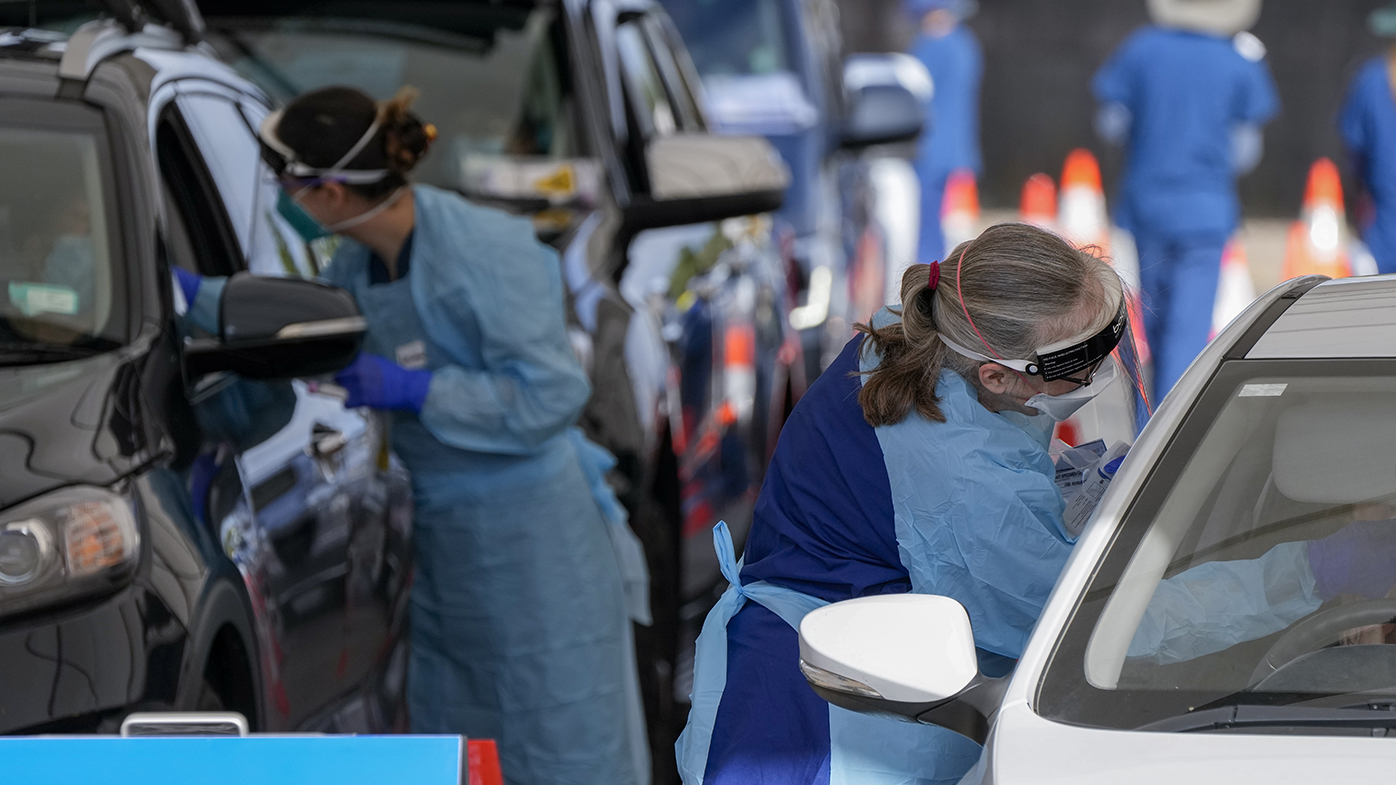
Experts are not concerned about a new COVID-19 variant, which has recently arrived in Australia, based on early evidence.

The XBB strain emerged in Singapore last week, with transmission currently at low levels across New South Wales and Victoria.

NSW Health said the BA.4 and BA.5 Omicron variants continued to be the most common strains but their dominance was declining.

READ MORE: Sydney woman allegedly caught drink driving twice in seven hours

Pedestrians outside Sydney's Queen Victoria Building.

"We will be closely monitoring the emergence of variants and other international and local data over the next seven to 14 days to assess growth potential of the new variants in the context of the NSW population immunity profile," a statement from NSW Health read.

COVID-19 hospitalisations and PCR testing has decreased slightly in the last week.

The World Health Organisation (WHO) met two days ago to discuss the emergence of the XBB variant.

READ MORE: Intruder beat US speaker's husband with hammer in their home

WHO said it did not believe XBB and BQ.1, the other new variant, warranted public health concern as the stains did not "diverge sufficiently from each other or from other Omicron linages".

However there was early evidence of a higher reinfection risk of those who were infected in the pre-Omicron period, WHO said.

So far XBB has been detected in 35 countries and it has not been associated with an increase in new infections.

Can an election cure Victoria's health system?

It is now under a month until Victorians hit the polls ahead of the state election and so far Labor and the Coalition have pledged billions to upgrade and revitalise the healthsystem.

But what does this mean for a healthcare workforce that is already stretched?

Although any funding for health services is "greatly welcomed", a peak medical body has warned of the need for immediate practical funding for primary health care instead of pouring billions into hospital infrastructure.

READ MORE: Victorian State Election: Everything you need to know about the upcoming election

"The current government has prioritised billions of dollars of new spending on health in the coming years This does not improve the critical situation healthcare workers face on the ground right now, whether in public hospitals or in general practice," Australian Medical Association Victoria (AMAV) President Dr Roderick McRae said in the AMAV election statement.

"This crisis has built up over decades, across multiple administrations, due, in no small part, to now past lack of sophisticated, coordinated, long-term planning failing to recognise increasing demand and capacity constraints as systems stretched to cope."

Dr McRae said to ensure there was sustainability in the Victorian healthcare system, conditions for general practice needed to improve.

"The plight of general practice, indeed its business viability, remains dire," he said.

"General practice shoulders over 90 per cent of the healthcare burden in Victoria, yet receives the least attention from the state government."

READ MORE: What impact will the 'teal' candidates have on the Victorian election?

'The hospital sector can only flourish, if GPs can flourish alongside it'

One of the "inherent flaws in the health system is that there is far too much funding" into hospital medicine, Royal Australian College of General Practitioners (RACGP) Victorian chair Dr Anita Munoz told 9news.com.au.

"It's the most expensive way to deliver care and which emphasises illnesses at the most severe end, which means that the opportunity for disease prevention and control is lost by not emphasising care in the community," she said.

Dr Munoz is calling for greater investment in growing the number of general practitioners (GP), which in return would provide greater support for the health system as a whole.

"It is important to recognise that the hospital sector can only flourish, if GPs can flourish alongside it," she said.

READ MORE: Surgeon who provided critical care for Daniel Andrews slams state government for lack of hospital funding

"Otherwise, we will have expanded hospital networks treating patients that would be usually treated in the community, if the proper services existed.

"We know if a good GP care is funded properly, patients who are discharged from hospital and see their GP within seven days have lower chances to returning to hospital for unplanned conditions.

"But having a good GP means funding."

Dr Munoz believes the next government needs to create equal access to healthcare outside metropolitan Melbourne.

"The government can support GPs to move into remote and rural communities, providing a package of support to relocate themselves outside metropolitan areas, which includes support for partners and family," she said.

READ MORE: Controversial former Liberal MP Geoff Shaw to run for United Australia Party in Victorian election

"We want equal access for GPs to be located in every postcode in Victoria.

"There is a lot that can be done from a GP perspective to manage patients that are transitioning outside hospital care and into the community."

The health system is far greater than just hospitals, Rob Moodie, a professor in public health at the University of Melbourne's School of Population and Global Health said.

"We do need hospitals but it's the not the only thing that we need," he told 9news.com.au.

"We will not be able to keep up with the costs of tertiary care, it's impossible.

READ MORE: Victorian premier pledges $35 million children's cancer research boost if re-elected

Prof. Moodie said it was important to focus on keeping Victorians out of hospitals.

He said investing in community health, primary care and positive health promotion needed to expand.

"The more we can work on preventing people from getting into hospital, the more better it will be for the system as a whole," he said.

"Currently we are focused in treatment and we need to be re-focused to prevention."

READ MORE: Cheap public transport fares under Victorian opposition pledge ahead of state election

Hospitals plead for funding

However, hospital infrastructure is also needed and just last week, a regional health service took to social mediato plead with the government for funding upgrades.

Western District Health Service (WDHS), which oversees Hamilton Base Hospital, launched the one-minute video begging the Andrews government for more funding.

"It's absolutely horrendous," WDHS chief executive Rohan Fitzgerald told 9News.

"In terms of the clinical care provided, it's wonderful. But if you look at the physical infrastructure there is no privacy at all.

"Our staff have to move mountains to provide care in third-world conditions in what are completely inadequate conditions."

READ MORE: Andrews government promises specialist paramedic positions if re-elected

The hospital wants the state government to commit $17m dollars to help fund a $32m upgrade of its emergency department and intensive care unit.

Meanwhile, Professor Mark Fitzgerald, the Alfred Hospital's Director of Trauma Service labelled the conditions at the hospital "inadequate" and dangerous.

"It's just not fit for purpose, we can't get people through the operating theatre fast enough," he said.

'All over me': Man's close encounter with highly-venomous reptiles

Swimming through the clear and remote waters of Fiji's Great Sea Reef, a photographer spied something that would bring most to a grinding halt.

Juergen Freund, from Far North Queensland, was sharing the ocean with dozens of highly-venomous sea snakes.

Rather than fearing the banded sea kraits, he felt elation and started heading toward them.

They "arrived from every direction, swimming all over" him, which allowed him to capture a stunning portrait.

READ MORE: Why sea snakes are so much more deadly than land-based counterparts

The only escape for many kilometres from the falling tide for these aquatic banded sea kraits (Laticauda colubrina) is this lone mangrove tree in the middle of the sea in the Great Sea Reef.

Banded sea kraits are one of the most venomous reptiles in the world, but Freund said they are beautiful to witness up close.

"Sea kraits are very curious about just about anything," he told 9news.com.au.

"They are generally found swimming through the reef hunting small fish in holes and coral crevices where they constantly stick their heads into.

"I had worked with this species of sea krait on many occasions and knew that they are not aggressive – but you never know."

EXPLAINED: NSW to phase out more single-use plastics on November 1

In this file photo, a banded sea krait is seen swimming  in the shallows in the Solomon Islands.

As precaution Freund had his wife watch out for any inquisitive snakes as he approached the tree, which was being used as a shelter as the tide receded.

"These are wild animals and do belong to the most venomous creatures on Earth," he said.

"In case of a bite, there would most likely be no antivenom available anywhere nearby as we were in a very remote area.

"I was wearing a full-body neoprene suit with a hood and my wife Stella would tell me about any snake swimming up from behind me."

"I was not really worried. But I treat them with the utmost respect."

Freund's risk paid off.

Earlier this month it was announced his photo was "Highly Commended" in this year's Wildlife Photographer of the Year Competition, across the Behaviour: Amphibians and Reptiles category.

READ MORE: Why Aussie waters are ideal hunting grounds for shark bites

Juergen Freund and his wife Stella had the chance to attend the celebration at the Natural History Museum in London and "dressed up to the nines".

"It excites me to still be in the world's best 100 chosen images," he said, adding that in the future he'd love to photograph whales.

"Aside from being beautiful, there is communication and interaction involved.

"Other than that my fascination with nature goes way beyond a bucket list, tick off or must shoot species.

"I get as excited photographing or filming some interesting insect behaviour as I would with an elephant or jaguar, which I have never documented."

How to live on the beach for 'free'

There's a handful of people able to live with waterfront views of some of Australia's best beaches, and they don't have to fork over a huge mortgage or rent.

Zac Cracknell is one of few live-in caretakers left at surf clubs around New South Wales.

The 32-year-old trades his work for accommodation at Bilgola Surf Lifesaving Club on Sydney's Northern Beaches, which means he gets to live right there at the club.

READ MORE: Why some Aussie families are choosing a life at sea

Zac Cracknell is one of few live-in caretakers left at surf clubs around New South Wales.

"There is a rental agreement and I have to perform the chores up to that value in order to keep the caretaker's position," Cracknell told 9news.com.au.

"Being right along the beachfront is the amazing part, the thing is, it's a job.

"You've got to be there, you've got to withstand the functions that are on, and the members are the important ones.

"It's a great place to live but it's not about the money."

He said there is a downside to living on the sand of one of Sydney's most upmarket locations.

"We can't go away for the weekend as there's so much to do," he said.

"When there's a function or a wedding or an event you've got to be there at midnight to make sure everything's cleared up."

Then there's the noise from those parties, which can interrupt his and his girlfriend's latest TV show binge-viewing, he joked.

Bilgola Surf Lifesaving Club on Sydney's Northern Beaches.

Do you have a story? Contact journalist Sarah Swain: ss****@******om.au

His tasks include everything from being on call for emergencies including volunteering to help in the NSW floods crisis, cleaning the club and even pulling pints in the bar.

In return, he gets the apartment within the club he describes as "comfortable".

"It's not a big accommodation, but it has a queen size bed with a bathroom, a small laundry, a kitchenette and a living space, and a balcony you can sit on," he said.

The 32-year-old admits it's a pretty amazing deal.

"You've got to pinch yourself," he said.

There's so few sales in Bilgola Beach that there's little data to compare the apartment's worth, but the average house price in Bilgola Plateau is just under $3 million, according to Domain.

A four-bedroom house close to the surf club just sold for more than $8m.

Celebrity landscape gardener Jamie Durie and high-profile couple actor Richard Roxburgh and chef Silvia Colloca have also called the area home.

Cracknell was living locally and was in the surf life-saving club when the position was advertised in the newsletter.

"I didn't get it the first time. Members couldn't actually be caretakers at the time," he said.

"They gave another caretaker a go but they moved on. I found out it was coming up again and said, 'guys, give me another shot. I'm keen'."

Cracknell has a day job in the water industry, which he does from home.

Remarkably, he's not a surfer but he does swim in the rock pool when he can.

"I can't stand up on a board," he admitted.

Grandfather Barry Osbourne, 61, reckons he's carried out around 50 rescues since he became caretaker at Sydney's South Maroubra Surf Life Saving club.

Grandfather Barry Osbourne, 61, reckons he's carried out around 50 rescue since he became caretaker at Sydney's South Maroubra Surf Life Saving club.

READ MORE: 'Dangerous' hybrid cyclone set to form off the coast

On one occasion he was even winched up into a helicopter with the surfer he'd helped when he lost his board in big swell.

For any kind of beach emergency, he's always on hand.

"I get plenty of surfers coming up with cuts and kids getting stung by blue bottles," he said.

"I'll come out and go to the first aid room and get the ice, make sure they're okay."

Osbourne lives with partner Lesley Chidac, 67, in the surf clubs' small studio and juggles his club responsibilities with his day job as a pool attendant at Maroubra Seals Club.

His only major living expense is his Foxtel bill, with his work offsetting any rent.

Osbourne, who has been there for 12 years, said it's not as lavish a life as people might think.

"The club's really busy. Everyone thinks I've got this life of Riley living on the beach," he said.

South Maroubra Surf Life Saving club.

"It takes a certain type of person to live in a place like this."

He has a long list of responsibilities such as closing up the gym nightly at 9pm, and acting as security for the club, calling the police should any suspicious types be spotted.

"It's pretty quiet so you do get people wandering around the club at all hours, surfers come early in the morning, you see some interesting scenarios," he said.

With the nation's biggest Nippers club gathering on the sand outside, there's little chance of a weekend sleep-in either.

Every Sunday at 7.30am hundreds of noisy kids turn up, and he's only too happy to tidy up after them.

"It's so gratifying – I've seen so many kids come through from Nippers and then they're on patrols and then they start drinking in the club bar," he said.

During summer he's also around to help the members on patrol.

"They're always knocking on the door, 'Barry have you got the key to this room?'"

He has no plans to leave his unique living situation for now, in the suburb where the median one-bedroom unit price is $741,000.

"It's a fantastic lifestyle. I can just walk outside and have a swim," he said.

Barry and his family at South Maroubra Surf Lifesaving Club, where he lives.

Surf Life Saving NSW said live-in caretakers, who are mainly there for security reasons, used to be a lot more common.

"Over time with technology and security systems, CCTV etc their role is becoming essential and often when a long terms caretaker looks to move on, they aren't replaced," a spokesperson said.

"Aside from the security aspect, they would also undertake roles such as cleaning, lawn mowing and maintenance for the club.

"Each club is different and some charge a reduced rent for the roles the caretaker undertakes and in some instances it's a 'quid pro quo'."

Victoria also has a small number of live-in caretakers at surf clubs, but they're a thing of the past in Queensland.

What's driving up the price of milk?

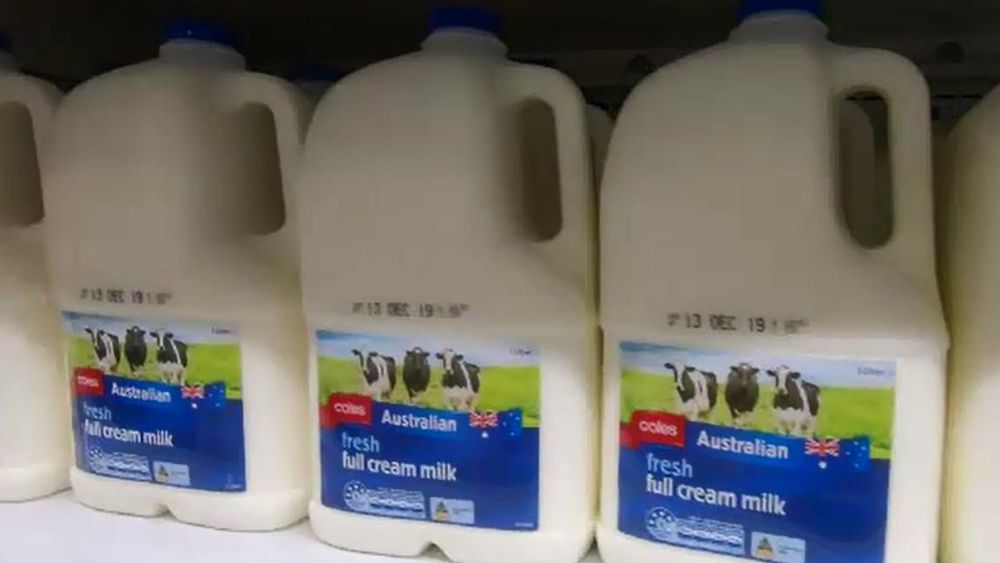
At the end of 2021, the cost of a litre of home-brand milk in an Australian supermarket was about $1.30. It's now about $1.60.

What will it cost at the end of 2022? That depends on the continued effect of flooding on prime dairy-production regions in New South Wales, Victoria and Tasmania, as well as on global economic conditions.

The Australian Bureau of Agricultural and Resource Economics and Science (ABARES) has projected a 28 per cent increase in the farm-gate milk price in 2022-23 – to 72.5 cents per litre, a record high.

READ MORE: The Aussies set to benefit the most from the federal budget

Floods, pandemics, wars and market forces: what's driving up the price of milk

With less milk being produced, it could be even more.

It's a case of higher demand and lower supply.

Production has been declining since 2014.

In the first half of 2022, ABARES said milk production was about 7 per cent lower than the same period in 2021.

This was driven by extreme weather events like a drier-than-average start of the year in southern Victoria and northwest Tasmania and flooding in regions of Queensland and northern New South Wales.

Also, with export prices for Australian dairy products increasing substantially at the start of 2022, less milk was available to the domestic market.

Obviously, things aren't all rosy.

Some dairy farmers face the devastation of natural disasters.

All face the same post-COVID challenges as other primary producers. Russia's war on Ukraine has helped drive up costs of inputs, from fertilisers to feed. Labour is hard to find.

But for all that, the record-high farm-gate price is good news for an industry where the number of farmers has declined by a quarter in the past decade (from about 7,500 in 2011 to about 5,700 now).

Deregulation stirs the pot

Until 2000, farm-gate milk prices were regulated.

State and territory governments set minimum farm-gate prices that maintained farmer income.

This was abandoned in July 2000.

With deregulation, farmers, processors and supermarkets were set free to negotiate prices.

READ MORE: Aussie city where homes have plunged $117,000

In economic theory, free trade works fine when you have a large number of buyers and sellers, all with the same amount of information about what is happening in the market.

But in the milk industry, thousands of producers sell to a handful of milk processors, who then sell to even fewer retailers.

The major supermarkets control almost 60 per cent of total milk sales.

This is not always such a problem.

It is not often you hear fresh producers screaming at supermarkets, in what is a very similar arrangement.

But with the dairy industry, as noted in a 2021 report from the Department of Agriculture, Waters and the Environment, there is a "perceived market failure".

Why? It has to do with how supermarkets have used their power.

Waging the milk price war

To give time for the market to find an equilibrium, the Howard government introduced a "Dairy Adjustment Levy" of 11 cents per litre to support farmers through deregulation.

This levy remained in place until 2008, when it was abolished by the Rudd government.

READ MORE: Glittering rock found in gemfields turns out to be rare 'monster' gem

Then, in 2011, the "milk war" broke out. Coles had the idea of luring shoppers from Woolworths by selling milk at $1 a litre.

Woolworths responded. Aldi joined the move. And the war kept prices artificially low for almost a decade.

Floods, pandemics, wars and market forces: what's driving up the price of milk

Supermarkets put the squeeze on processors, who had little option but to accept what was offered for crucial supermarket contracts.

Processors then put the squeeze on farmers.

Many decided the effort was not worth it, and quit farming.

Milk production peaked in 2014 then declined.

Supermarkets finally abandoned $1/litre milk in 2019, under considerable public and political pressure to acknowledge that, after eight years with no increase, some rebalancing was needed.

During this time, overseas demand for dairy products has also been increasing, especially in Asia.

Now about 32 per cent of Australian dairy production is exported – not as fresh milk, but as cheese, butter and other dairy products. (It takes about 10 litres of milk to make one kilogram of cheese, and 20 litres to make one kilogram of butter.)

On top of that, lately US and European dairy farmers have had a hard time with drought, increasing international prices.

The United Nations' Food and Agriculture Organisation's Dairy Price Index increased by more than 17 from 2020 to 2021, and is expected to rise another 15 per cent by the end of this year.

The projected 28 per cent rise in farm-gate milk prices in 2022-23 will bring the value of the Australian dairy production to a record $6.2 billion.

Which is good news for the long-term sustainability of dairy farming in Australia.

You might not appreciate it, but to keep dairy farmers in business, a fair price must be paied for your fresh milk.

This article uses contributions republished from The Conversation under a Creative Commons licence. Read the original article.