King Charles is planning to visit New Zealand as part of the royal family’s biggest-ever series of tours around the world to commence his reign.The trips will involve two years of international travel aimed at “extending a hand…
Tag Archives: oceania
Multiple evacuation orders for NSW and Victoria as floodwaters rise
Residents in northern New South Wales and along the Victorian border are seeing the impacts of the dangerous weather system bearing down on Australia's east coast as rivers break their banks.
Multiple evacuation orders are in place across the two states but fears for Echuca in northern Victoria, Moama in southern NSW, and Moree in northern NSW are at a high.
Around 4000 people have been told to leave their homes in Moree.
READ MORE: Weekend forecast: Widespread rain and thunderstorms for four states

The NSW SES said major flood levels have been reached on the Mehi and Gwydir rivers.
NSW Emergency Minister Steph Cooke warned the floods inundating Moree will be record-breaking.
"In Moree, a second peak will come through the community and will come very close to the February 1955 level and even if it doesn't it will be significant flooding through that region," she said.
"Moree has two flood peaks, the first is there now and the level is higher than the March 2021 level and the second flood peak is expected to be higher again, somewhere between last year and the levels seen in 1955 which is the highest we have on record," meteorologist Jane Golding said.
Evacuation centres have been set up at the Moree PCYC on Boston Street.

NSW Northern Rivers receive renewed flood warning
Cooke has delivered devastating news for flood-weary residents in northern NSW as Lismore is expected to see rising floodwaters again.
"The Bureau of Meteorology is predicting potentially major flooding at Lismore," she said.
Golding said the low-pressure system off the coast of south-east Queensland will bring heavy rainfall to the Northern Rivers.
"We are expecting a significant rain event to effect the Northern Rivers tomorrow and flooding following tomorrow and Monday," she said.

Golding warned there will be rainfall totals of above 150mm which will bring life-threatening flash flooding over the coming days.
Cooke said there isn't a "single part" of NSW that emergency services aren't concerned about.
Floodwaters finally hit NSW-Victoria border towns
Meanwhile on the NSW and Victoria border, an evacuation order has been issued for Echuca as the Murray River finally breaks its banks.
"The Murray River is at 94.77 metres AHD as it continues to rise and is expected to reach 95 to 95.2 metres AHD Sunday into Monday," VICSES Chief Operations Officer Tim Wiebusch said.
"If you don't wish to be isolated our strongest message is evacuate now," Wiebusch said.
Barmah near Echuca has also been told it is too late to leave as days of flood warnings come to fruition for exhausted residents.
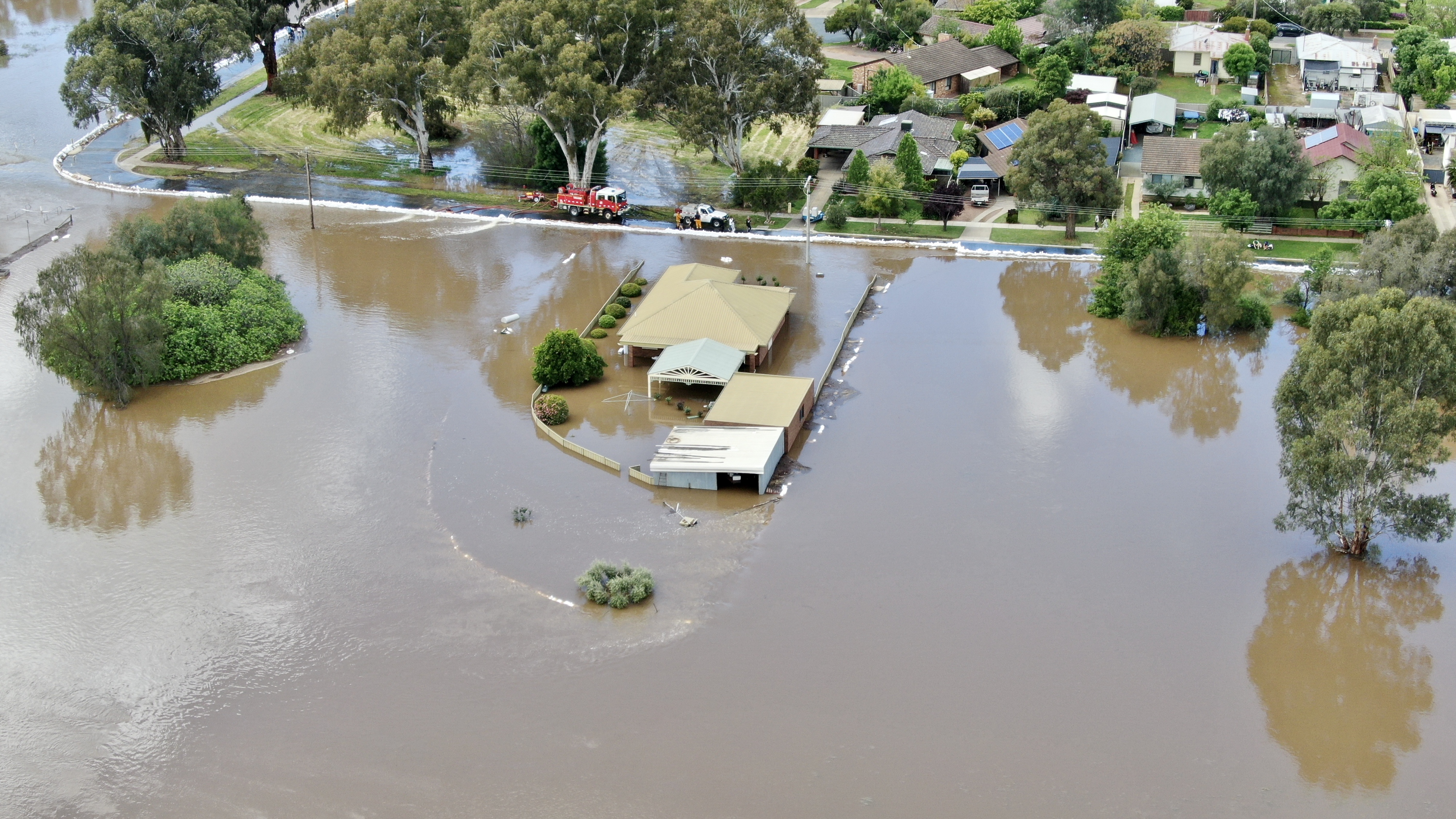
At Moama on the NSW side of the border, Cooke warned floodwaters will peak on Tuesday.
"The latest and best advice is the river will peak on Tuesday and is likely to see exceed 1993 levels," Cooke said.
The Murray River Council mayor Chris Bilkey said earlier the region is hoping the river doesn't rise much more.
"The river has come up three, four or five inches overnight but we're confident the levee bank around the town is going to survive," Bilkey said.
"We're buckling down for another week of really high water here."
There are concerns for towns downstream along the Murray River in the coming days as floodwaters continue to plague the two states.
"We will see those waters flow downstream in the coming days where we will see major flooding," Wiebusch said.

Kerang, in northern Victoria, has been told it's too late to leave as floodwaters inundate the town.
Wiebusch said the Loddon River is currently at 74 metres AHD and is expected to peak today at 78 metres AHD.
"Kerang is largely isolated at the moment with one road out, it is expected to close as we reach the peak today," he said.
READ MORE: Medibank CEO apologises for cyber attack
https://twitter.com/vicemergency/status/1583624895313117184
In NSW, more than 400 calls for help were received overnight while 21 flood rescues were carried out.
While in Victoria, there were 70 calls for help overnight and several flood rescues.
Residents are advised to keep across BoM's warnings as the system bears down. NSW warnings can be viewed here, Victoria here, and Queensland here.
Companies face 'millions of dollars' in fines for serious data breaches
Australia's biggest companies could be slammed with massive fines if they are subject to a major cyber attack or repeatedly hacked under proposed federal government legislation.
The Albanese government is set to introduce new legislation which would slap companies $50 million for multiple breaches of the Privacy Act, meaning if the company is hit by several serious data breaches.
Penalties could be even larger depending on company turnover and the estimated value of the stolen data.
READ MORE: Medibank CEO apologises for cyber attack

It comes after multiple companies have been hit by major hacks in recent weeks, including 2.1 million Australians having their data exposed in the Optus cyber attack and the unfolding Medibank incident where private medical information is being held to ransom.
Attorney-general Mark Dreyfus warned companies could be subject to "hundreds and millions of dollars" in penalties if there are serious or repeated hacks.
Dreyfus said serious data breaches are determined by "how many people are affected, how serious the information leaked is, what the consequence of the breach are, how reckless the company was".
https://twitter.com/MarkDreyfusKCMP/status/1583563025490972672
He said Australia needs better laws to protect citizens who hand over large amounts of personal data to companies and trust it will be kept safe.
"When Australians are asked to hand over their personal data they have a right to expect it will be protected," he said.
"Unfortunately, significant privacy breaches in recent weeks have shown existing safeguards are inadequate. It's not enough for a penalty for a major data breach to be seen as the cost of doing business.
"We need better laws to regulate how companies manage the huge amount of data they collect, and bigger penalties to incentivise better behaviour."
READ MORE: Evacuate now order for major flooding in North Moree

Dreyfus added the new legislation is designed to make big companies think about data protection and act on cyber security.
"It's designed to make companies think, it's designed to be a deterrent so companies do protect the data of Australians," he said.
The maximum current penalty is $2.22 million for multiple serious data breaches.
The bill will be presented to parliament next week.
Dreyfus also flagged further reforms to the Privacy Act after a review into the legislation which is due by the end of the year.
"I look forward to support from across the Parliament for this Bill, which is an essential part of the Government's agenda to ensure Australia's privacy framework is able to respond to new challenges in the digital era," he said.
Deadly drug metonitazene more potent than opioid fentanyl found in NZ for first time
A highly potent and potentially deadly opioid drug called metonitazene has been found in yellow powder believed to come from crushed tablets in circulation in New Zealand. This is the first time metonitazene has been detected in…
Tuakau Pizza store burglary caught on security camera
Security cameras have captured the moment thieves smashed through a Waikato pizza shop’s glass entrance before hunting around for cash.The thieves also struck two neighbouring takeaway stores, making off with cash and soft drinks.Tuakau…
Fire at new $110m Auckland City Mission shuts down major CBD street
A fire at the recently redeveloped $110 million Auckland City Mission has drawn a large emergency service response and closed down a major central city street this morning.Fire and Emergency and police are currently attending the…
National to reverse RNZ-TVNZ merger if voted in, spokeswoman says
National will reverse the Government’s proposed TVNZ and RNZ mega-merger into a new public media outlet because it doesn’t have widespread support and could create trust issues.That’s according to the Opposition’s Broadcasting spokeswoman…
Man charged for allegedly making death threats to Pauline Hanson
A Melbourne man has been charged after he allegedly made death threats towards One Nation leader Pauline Hanson on social media.
The 27-year-old Brunswick West man was arrested by federal police at his home on Friday morning and has been charged with two counts of using a carriage service to make a threat to kill and using a carriage service to menace, harass or cause offence.
He was released on bail and will reappear in court in December.
READ MORE: Companies face $50m fines for multiple serious data breaches

While police only identified the victim as a senator, 9News has confirmed the alleged target of the threats was Hanson.
Police allege he made "serious online threats", including death threats, towards the senator over the past two months.
His laptop and desktop computer were seized by police.
The maximum penalty for the offences he has been charged with include 10 years' imprisonment.
AFP Acting Commander Anita van Hilst said there was no tolerance of politicians being threatened online.
"This arrest should send a strong message that the AFP and its partners are working tirelessly to identify and prosecute anyone who breaks the law by harassing, menacing or threatening politicians, including those who work alongside them," she said.
"The AFP supports the political expression and freedom of speech, however when it leads to criminal behaviour, including threats and harassment, even online, it will not be tolerated."
A spokesperson for Senator Hanson has declined to comment.
Calls to crackdown on vaping after spike in young people smoking
Experts are calling for harsher vaping laws in Australia as warnings emerge the nation is watching a "slow-moving train wreck" after an alarming spike in young people taking up the toxic habit.
Researchers found there has been a record spike in Victorians taking up vaping with 18 to 30-year-olds making up half of vape users in the state.
A Victorian Smoking and Health Survey revealed the number of young women, aged between 18 and 24, using e-cigarettes has spiked from 2.8 per cent in 2018 to 19 to 15.2 per cent in 2022.
READ MORE: Companies face $50m fines for multiple serious data breaches
VicHealth CEO Dr Sandro Demaio said a strengthening of borders around the nation is needed to "protect young people".
"What we've seen over the last few years is a flooding of the market of these cheap imported and highly addictive products which young people are breathing deep into their lungs, contain 200 plus chemicals, many of which are banned under current law," he said.
"Most of them contain nicotine but simply they don't put it on the packet.
"We've seen a huge increase. In four years, a doubling among adults in Victoria and a five-fold increase in the use among young women."
Demaio said manufacturers are flooding the market with colourful and flavoured vapes which are attractive to young people.
"They're using colours and flavours to lure young people in, flavours like fruit loops and milk," he said.
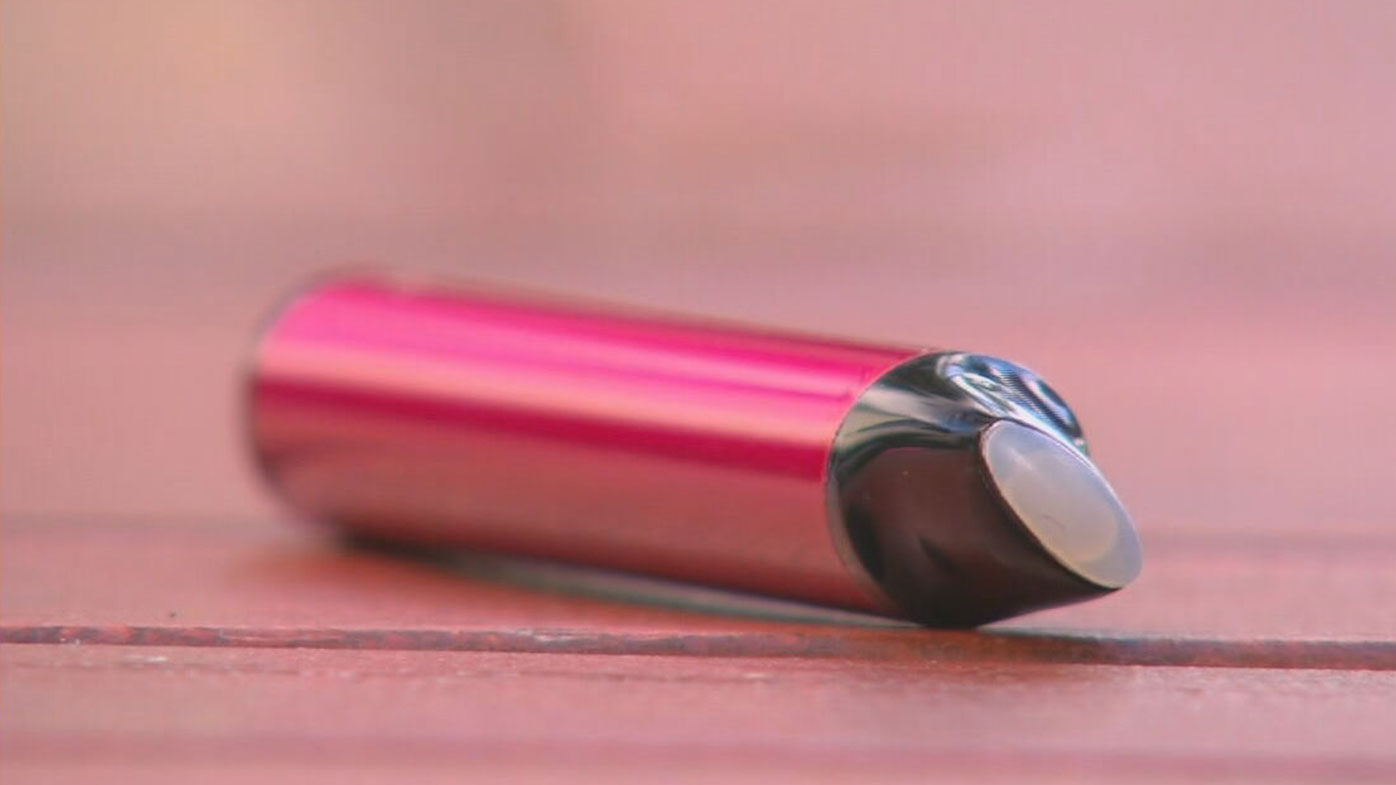
"They come in the shape of highlighters, of hoodie toggles so you can smuggle them into school and make it difficult for parents and teachers to find them."
READ MORE: Why some Aussie families are choosing a life at sea

Demaio said the federal government needs to urgently step in and tighten the borders to stop the uptick in people using vapes.
Additionally, Demaio said Victoria needs to introduce a licencing scheme to know who is selling the vapes and to crackdown on the growing illegal market.
Current laws dictate Australians need a prescription to access e-cigarettes containing nicotine.
It is also illegal to import and sell nicotine vapes in Australia.
Brendan and his family sold up everything to buy a boat and set sail
When Queensland couple Brendan and Sarah Ovens first announced their plans to sell up everything, buy a boat and set sail on an indefinite adventure with their two kids, they were met with stunned disbelief from friends and family.
"So many people were just looking at us like we were crazy. They would be saying, 'Are you seriously going to sell your house and do this?'" Brendan says.
There was, Brendan admits, a bit of a wobbly moment when it came time to put their signatures down on the sale contract for their house.
READ MORE: Electricity bills to jump by 35 per cent, power company boss warns

"We had this wave of emotion or anxiety that just overcame both of us," he says.
"We looked at each other and went, 'Holy shit, this is just insane.'"
But underpinning all of this was an irrevocable thirst for change.
"We just got to a point where we felt like we were missing out," Brendan – a former airline pilot who has also spent time in the military – says.
"We weren't spending much time with our kids.
"Society dictated to us that you have to have the mortgage and the nice cars."
After struggling for years to buy a big, beautiful house in Redcliffe overlooking the water, Brendan says they realised they were no happier than when they were broke.
"I think we were honestly more stressed and almost miserable – but we had everything that society said we should have," he says.
"It was just so hard. You had to keep it up. It was exhausting."
READ MORE: The real numbers of inflation hitting Aussies

The couple, along with their son Brodie, 13, and daughter Charlize, 11, first tested the waters and their skills by sailing up the Queensland coast in a small monohull.
In January 2021, they took the big plunge, buying a luxury five-bedroom, four-bathroom catamaran – mortgage-free thanks to the sale of their home.
"Once we settled into the boat and we started sailing and moving, honestly it's been the best decision we've ever made," Brendan says.
Turtles, humpbacks and the 'green flash'
After spending a few months in Scarborough marina, the family set sail north, travelling up the Queensland coast, past Lizard Island and out to the Ribbon Reefs in the Coral Sea.
For the past three months, they've been cruising around the Raja Ampat islands in northern Indonesia.
Along the way they'd seen some jaw-dropping sights.

"We've seen turtles mating and enormous humpbacks," Brendan says.
"The odd thing about humpbacks is they'll actually come up to have a look at you. You can see their eye literally looking into your soul.
"We've been out in the Coral Sea in the middle of a low pressure system where there is no wind and the ocean becomes a mirror – you can see every single star in the sky reflected on the water."
Brendan says he always thought the "green flash" – an optical illusion featured in the Pirates of the Caribbean movie franchise – was just a fairy tale, until he witnessed it while on the water at sunset in real life.
'High highs and very low lows'
As idyllic as it sounds, however, life aboard a boat isn't always smooth sailing, Brendan says.
"This is one of the big problems with YouTube and Instagram. You sort of get the picture that it's all beer and Skittles, you're just snorkelling on these beautiful reefs all day. It's not the case at all.
"This is probably one of the more challenging lifestyles we've ever had a crack at, and that's saying a lot considering I'm ex-military."

Despite skilling up as much as possible before setting sail, the weather had provided some intense challenges, Brendan says.
"We've had some really terrifying moments, particularly at the start of this year when the weather was horrendous in Queensland.
"We spent months and months just trying to escape floods and massive thunderstorms and huge seas.
"It's not always sunbathing on a beautiful beach. We've learned pretty quickly that in sailing it's incredibly high highs and very low lows."

Aside from the weather, another scary moment for the family came after departing for Indonesia when his son Brodie was bitten by a stowaway snake from Australia, Brendan says.
"We were in the middle of the ocean, 24 hours out from Australia and 30 hours or so south of Indonesia.
"Brodie went to the toilet and we just heard this terrifying scream and I ran down and he was standing up on his toilet.
"He had actually been bitten by the snake twice on the leg."
Brendan caught the snake and applied first aid, but with no-one answering their distress call, it was an anxious 24 hours before the snake was identified as a non-venomous slatey grey.
The practical stuff
While the Ovens family were able to buy their boat mortgage-free, they've also taken many steps to make sure they will be able to afford to live aboard for many years to come.
Wife Sarah still works remotely with her job in construction tendering, ensuring the family has some income, while also being in charge of home-schooling the kids.
The family's biggest bills come from fuel and groceries.
Strong winds helped keep their fuel bill relatively low in Australia, but these costs would rise to about $2000-$4000 a year in Indonesia, Brendan says.

Every few months, the family does a big grocery shop.
"This was costing thousands of dollars in Australia. When you add the rising cost of fuel, it just wasn't sustainable for us," Brendan says.
"Here in Indonesia, our typical grocery shop will be a couple of hundred dollars, if that."
The catamaran is so well equipped – with solar power, its own diesel generator and desalination plant – the family are able to live completely off-grid.
'We've got a washing machine, which is just the same sort of washing machine you have in your house," Brendan said.
"The grey water goes straight out (into the ocean). It's not really a problem. All the detergents that we use are eco-friendly.
"The forward bathrooms have big black water tanks for sewerage.
"The legal requirement is two miles offshore but we wait until we're 20 miles out in the ocean and that's when you let it go out there."
Family life on the high seas
On the opposite side of Australia, the Willems are another family that have traded the suburbs for a life on the water.
The Willems have spent six years living on a boat and sailing up and down the coast of Western Australia.
Sheree and Paul Willems' three children were aged four, nine and 12 when they first set sail in their 18m-long monohull.
"Our youngest daughter, Cielle, can't remember having a home on land, her only memories are based on pictures," Sheree says.

Sheree says it was always a dream of her and her husband's to set sail and live at sea one day.
"We actually got married at a yacht club and it sort of planted a seed. We'd always say we'd like to try sailing," she says.
"Then I read a book on a holiday about a couple who took a one-year sabbatical from their city office life to sail in the Caribbean and Bahamas.
"That grew the seed from there."
Like the Ovenses, Sheree and her family sold up everything to buy their boat without a mortgage.
Sheree, who is a bookkeeper, says she at first had reservations about whether this was a financially sound idea.

"I said to my husband, 'How can we buy a depreciating asset?'
"But then I realised that the cost of the boat maintenance and the depreciation on our boat is less than the interest we were paying on a mortgage.
"As long as we save some of the money that we would be paying off our mortgage, we're not going to come out worse off.
"We're going to come out about the same as long as we're diligently saving and not spending everything we've got."
While the couple spent years saving for their boat, a big fancy vessel was still out of reach, Sheree says.
"We're normal people with normal jobs. We went with a 58-foot (18-metre) Bruce Roberts. It's a well-known cruising vessel that's about 26 years old now, so most of the depreciation has already happened."
Being able to work remotely on the boat had been the key to making it work for them, Sheree says.
Sheree works part-time on the boat as a bookkeeper, while her husband Paul also does some remote work as a software engineer.
The family's biggest costs are insurance and boat maintenance, followed by food and activities.
As a rule of thumb, at least 10 per cent of the boat's value should be set aside for maintenance costs, Sheree says.
Most families living in a similar way onboard a boat could expect to spend around $30,000-$50,000 a year, she estimates.
But making sure their liveaboard lifestyle was financially viable wasn't the steepest learning curve the family had to face.
Starting out with no sailing knowledge meant Sheree and her family had to learn everything from scratch, which was why the family had spent so long sailing up and down the west coast, Sheree says.

The family's ultimate goal, which they have plans to embark on soon, is to circumnavigate the globe.
"We've built our skill set up and are now comfortable that we could cross an ocean and circumnavigate, but it's taken us a long time to get to that stage.
"We've had to learn everything to do with boat maintenance – from 12-volt electrics to diesel mechanics and fibreglassing.
"Anything that could break on the boat, we need to be able to fix it."
Cruising the humpback highway
The liveaboard lifestyle had offered incredible experiences her family would never forget, Sheree says.
One such moment came for Sheree when she was sailing in Shark Bay, near Monkey Mia off Western Australia's mid coast, and came across an enormous pod of humpback whales.
"I was hand-steering around humpback after humpback after humpback, they were in groups of two or three. They were just breaching everywhere and my mouth was on the floor, " Sheree says.
"It was nine o'clock in the morning. I was thinking, 'Everyone is on their way to work and I'm having to steer around breaching whales. What is going on? This is amazing.'"
More families choosing life at sea
With the number of families choosing to live a life on the high seas increasing, so too are the networks available.
Sheree says her family is connected to an international online community of about 7000 sailing families and a group of 700 families in Australia, both of which provide much-needed social interaction for kids and parents alike.

"We all spot each other on a shared map and can connect in different ports," she says.
"One thing my kids have learned, and we have learned, is to make our time spent in locations and our relationships really count.
"So we actually do have friends now made from all over the world."
Home-schooling her three children of different ages – which she does through distance education – was one of the biggest challenges she'd faced over the years, Sheree says.
"Some people find it really easy, and some people find it really challenging and I think it's really important to say honestly, that it is my least favourite part of being off-grid."
But one advantage of learning at sea was the opportunity to experience topics in a much more hands-on way, she says.
"Instead of learning about shipwrecks, our kids can see them with their own eyes. We got to sail past the sunken Batavia, which was pretty incredible."
"The best part is no morning traffic, the kids working when they want to, and all of us waking up when we want to.
"There is so much flexibility in the day. All those hours that you're not commuting to and from work, or even to school events, they are really precious hours you can get back and reinvest in your children."
Retiring to a floating home
It's not just cruising in the ocean that is becoming a popular lifestyle choice.
When Suzi Penley, 72, and her husband Les, 77, were planning their retirement in South Australia, they realised a houseboat on the River Murray would provide a pleasant lifestyle at an affordable price.

"We'd always had boat holidays in the past, so we liked that sort of relaxation," Suzi says.
"My husband also grew up in the country and I think we both realised that retiring in the city probably wasn't what we wanted to do."
The couple sold their home and bought their 1981 houseboat almost 12 years ago, taking advantage of a drought at the time to get a cheap deal.
They also bought a berth at Mannum Waters, giving them a safe and secure place to permanently dock, alongside a tight-knit community of other houseboaters living aboard.

"We love the lifestyle," Suzi says.
"We're surrounded by wetlands and we have direct access to the river.
"We've got the birdlife ducks and all the things you'd expect to have in the wetland. It's like living in a national park, except on water.
"It's very, very peaceful. The serenity is quite amazing.
"There's just no noise unless it's the lapping of the water when you're going to sleep at night."

The couple's two-bedroom houseboat has all the modern conveniences you would expect in a home.
"We have a full kitchen and bathroom with a shower," Suzi says.
"The beauty of our boat is that we've also got a proper toilet.
"A lot of people have marine toilets. We also have a dryer and washing machine that sit inside the bathroom."
With carpets on the floor and pictures hanging on the walls, Suzi says people are often surprised by how similar their boat is to a home on land.
"It's just like a unit really, but on water," she says.
Contact reporter Emily McPherson at em********@******om.au.