Tag Archives: oceania

Bunnings recalls LED light over fears it could ignite

Bunnings is recalling a popular LED light over fears it could catch on fire.

The Brilliant Lighting Lagos 90w LED slim batten 1200mm lighting fixture's defect means the light could overheat and cause the casing to "distort, melt or ignite".

If the light does ignite, it could cause serious injury, death or property damage.

READ MORE: Rental properties gone in just 19 days as crisis worsens, report warns

Staff are seen working in the timber yard of the Bunnings Altona warehouse on December 17, 2014 in Melbourne, Australia.

The Australian Competition and Consumer Commission (ACCC) is warning customers to stop using the light fitting immediately.

READ MORE: Putin monitors practice launches by Russia's nuclear forces

If the product is hardwired, it will require an electrician to remove it.

Customers can return the product to their nearest Bunnings store for a refund.

'I did drop her off': Queensland man denies murdering pregnant teen

The moment Rodney Wayne Williams tells police that he has lied about the day he last saw a missing pregnant teen has been shown in a Brisbane court.

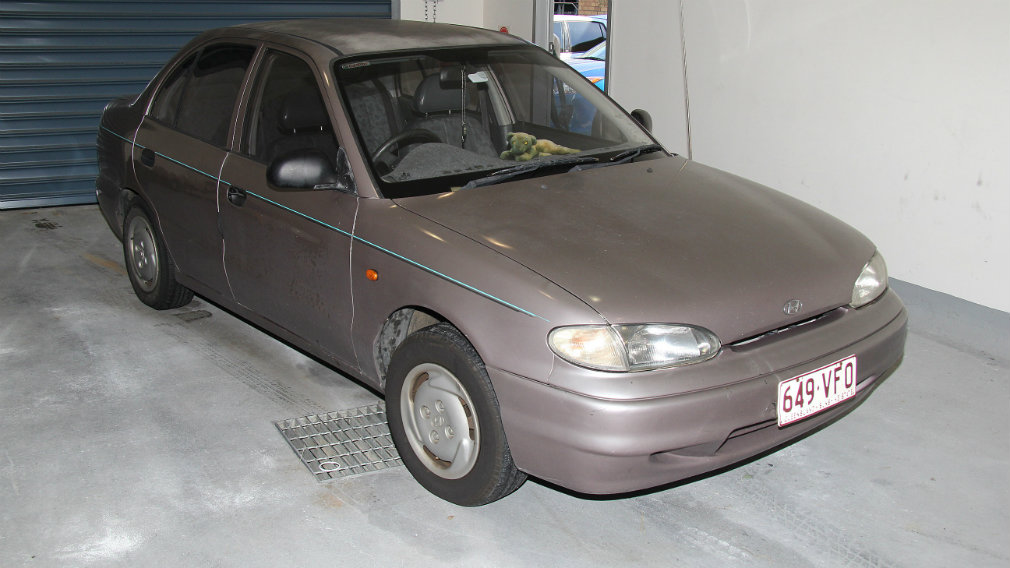
Williams has pleaded not guilty in Brisbane Supreme Court to murdering 16-year-old Tiffany Taylor after she left a motel south of Brisbane in July 2015.

The Crown alleges Williams and Tiffany arranged to meet that day for her to provide sexual services for money after they connected on a dating website.

READ MORE: Rental properties gone in just 19 days as crisis worsens, report warns

Rodney Wayne Williams (left) is accused of murdering Tiffany Taylor (right).

Video of an August 2015 police interview was shown to the jury on Wednesday in which Williams agrees with officers that he has not been honest in his evidence.

Williams told police he didn't have enough money to pay for sex but Tiffany agreed to meet him anyway at Logan because he "sounded interesting" in his dating profile.

He said he dropped Tiffany off at an intersection in Redbank Plains and returned home.

Williams is told by police in the video interview that evidence showed he drove with Tiffany to an industrial area and parked for 22 minutes.

Asked what they were doing there, Williams said: "Talking.

"I was just trying to find out how old she was … that was it.

READ MORE: Who is new British PM Rishi Sunak's wealthy wife?
Tiffany Taylor murder

"She kept saying she was 23 … I said 'look if you don't tell me (your age) I am just going to go and leave you here' … that was about it."

Williams told police he was also asking why Tiffany was selling herself for money and told her she "shouldn't be doing this".

He said he dropped her off and never saw her again.

When told by police that there is no footage of Tiffany being dropped off where he indicated, Williams said: "I did drop her off … you are not going to get me upset".

Asked later by police if he would agree that he had not been honest, Williams said: "Yeah but I have told you exactly what has happened now though".

He told police after dropping off Tiffany he stopped at a truck stop off the Warrego Highway and then went home.

Williams is told by police that phone tracking data shows he travelled beyond that location and into the Fernvale area, about 100km northwest of Logan.

Asked if he had told them "another lie", Williams tells police: "Yeah, it is".

After agreeing he drove to Fernvale, police tell Williams phone data showed his device and Tiffany's mobile consistently tracked at exactly the same locations and times all the way to the region.

Asked to explain that, Williams tells police: "I can't, I don't know where she is … she wasn't in the car."

He later tells police that he dropped Tiffany off at the truck stop.

Asked why Tiffany's blood had been found inside his car, Williams said her nose had been bleeding and she "must have touched something".

Williams is later told that there are no records of a phone call and text exchange with Tiffany he claims took place after he dropped her off.

"It did. If you are going to charge me, charge me with something … she was dropped off, and that was the last I saw of her," he tells police.

The trial before Justice Peter Applegarth continues.

Swarming honeybees can produce as much electricity as a thunderstorm

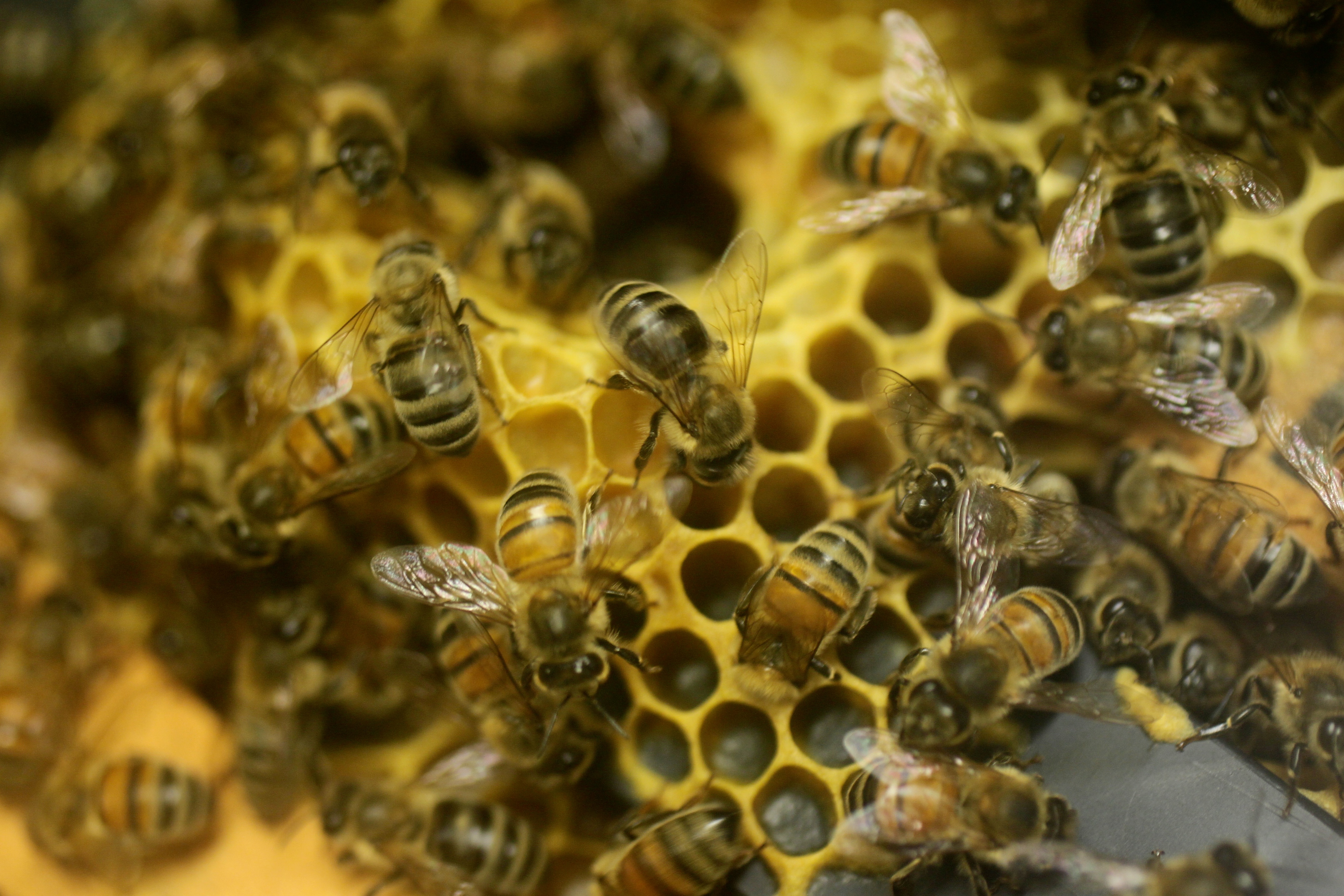
Swarms of honeybees can generate as much electrical charge as a thunderstorm, new research shows.

In a study published in the journal iScience on Monday, researchers from the University of Bristol in the United Kingdom discovered this phenomenon by chance.

Biologist Ellard Hunting, first author on the study, told CNN that the Bristol team was studying how different organisms use the static electric fields that are everywhere in the environment.

READ MORE: Rental properties gone in just 19 days as crisis worsens, report warns

Atmospheric electricity has a variety of functions, mainly in shaping weather events and helping organisms, for example in finding food.

"For instance, flowers have an electric field and bees can sense these fields. And these electric fields of flowers can change when it has been visited by a bee, and other bees can use that information to see whether a flower has been visited," Hunting explained.

Having set up equipment to measure atmospheric electric fields at the university's field station, which features several honeybee hives, Hunting and his team noticed that whenever the bees swarmed, there was "a profound effect on atmospheric electric fields," even though the weather hadn't changed.

READ MORE: Putin monitors practice launches by Russia's nuclear forces

All insects create a charge during flight as a result of friction in the air, with the size of the charge varying between species. Individual bees carry a charge that is small enough to be overlooked by researchers, so "this effect (in swarming bees) came as a surprise," Hunting said.

The researchers observed the hives on the field station, using a camera to record and electric field monitors to measure currents during the honeybee swarms. Swarms can occur when a hive becomes overcrowded, with the queen bee leaving with around 12,000 worker bees, researchers wrote in the study.

READ MORE: Who is new British PM Rishi Sunak's wealthy wife?

The monitors measured the currents for approximately three minutes at a time as the swarms passed over them, and captured charges ranging from 100 to 1,000 volts per metre.

Hunting and his colleagues noticed that the electric field was greater when the swarm was thicker – more densely packed with bees.

They found that, depending on the swarm density, the atmospheric charge could be similar to that of a storm cloud, thunderstorm or electrified dust storm.

Using the model developed with the honeybees, the team predicted the influence of other insect species – such as locusts – that swarm on a "biblical scale," and theorised that they have the potential to change their local electrical environment with a "magnitude comparable with meteorological events," the study says.

Hunting said he believes the team's findings open up new avenues of research, especially in the relationship between the natural world and atmospheric electricity.