Police have released new video footage of a man alleged to have attempted to kidnap a woman in the leafy Christchurch suburb of Fendalton last week.The footage shows the man walking along Middleton Rd on the corner of Suva St in…
Tag Archives: oceania
'Scary': Mayor claims Hawke's Bay farms threatened by emissions scheme
Wairoa Mayor Craig Little says the Government’s farm emissions scheme is a “nail in the coffin” for farmers and potentially his district.Little also believes it will likely lead to more Hawke’s Bay farmland being sold to forestry…
The jobs where staff work more hours than the rest of the country
Does it ever feel that you're working more than your peers? As it turns out, you might actually be. According to data from the 2021 Census there are some jobs that work longer hours than others. Here's the full list.
Rugby World Cup tournament director and cricket boss open up about journey to success
Two leaders in the sporting world have opened up about their journeys to success and the challenges they’ve faced as women in the industry. Speaking at the OnBeingBold Dreaming Big event, Rugby World Cup tournament director Michelle…
Te ao Māori features in New Zealand film to help Kiwi organisations reconnect globally
New Zealand Story has launched a new film to help promote our unique national values to global audiences and expand perceptions of New Zealand.The three-minute high impact film encapsulates the uniquely New Zealand perspective our…
The Wai 262 Claim established a foundation that allowed Treaty claims to follow and flourish
Public Interest Journalism funded through NZ On Air When Ngahiwi Tomoana, along with other claimant whānau, took over the Wai 262 claim from Māori legal academic guru Moana Jackson, he had no idea this piece of legal Māori…
Nine new community cases of monkeypox
The Ministry of Health has today confirmed nine new community cases of monkeypox, bringing the total confirmed cases to 20.Seven of the new cases are in Tāmaki Makaurau and two are in the Wellington region.The Health Ministry…
As light rain falls and doves fly, Bali bombing victims remembered
Several hundred make the walk up a winding footpath to a picturesque headland at the northern end of Coogee beach in Sydney.
There are mothers, fathers, wives and husbands, family, friends and team mates, and also strangers who just want to remember the 88 Australians senselessly killed in the Bali bombings, 20 years ago today.
With light rain falling from overcast skies, they meet at Dolphins Point, renamed in the aftermath of the bombings to commemorate the six members of the Coogee Dolphins rugby league club who died in the twin blasts.
READ MORE: Australian survivors, rescuers reflect on Bali Bombings 20 years on
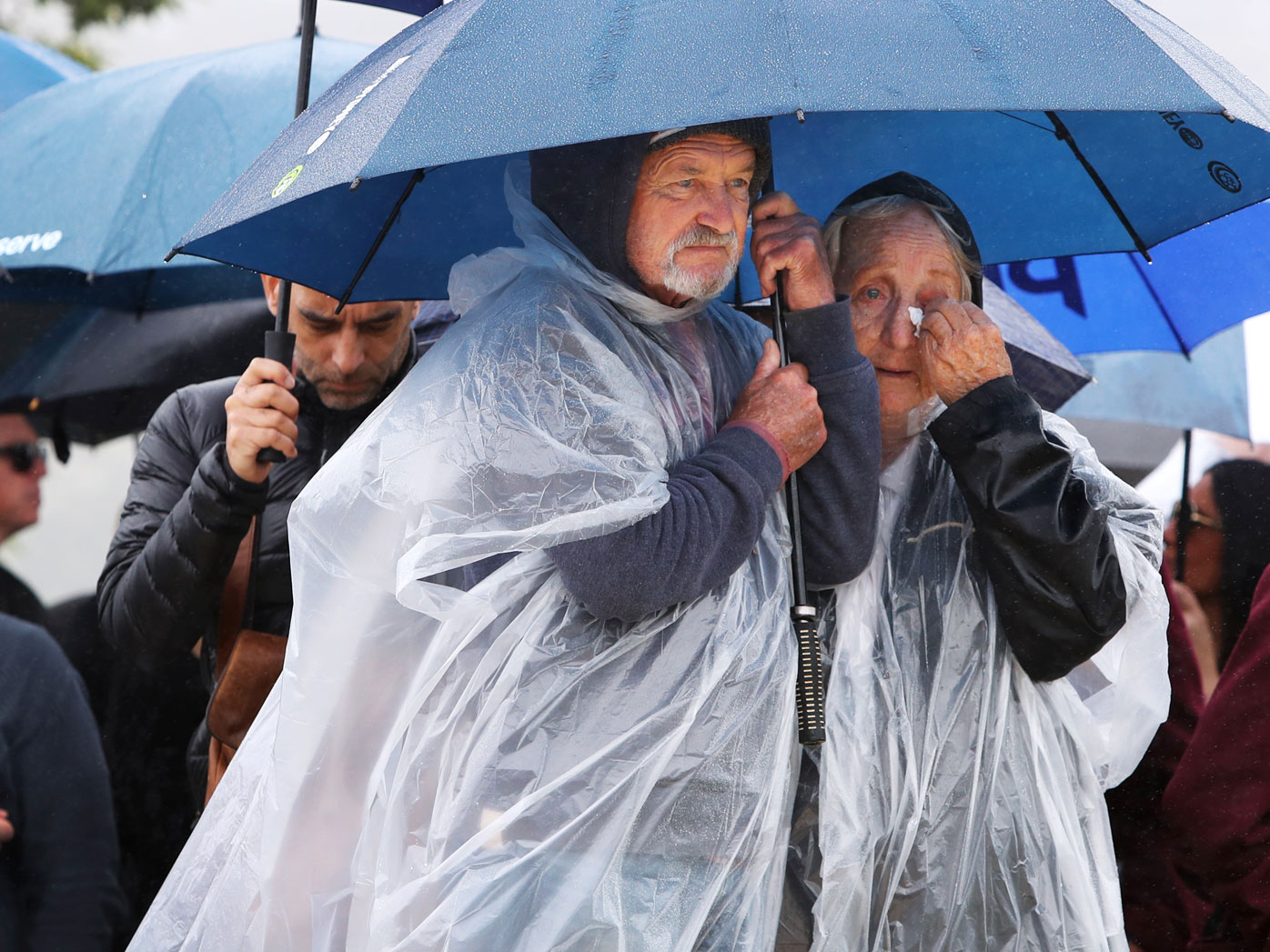
It's a spectacular location, with commanding views out to the Pacific and down to Coogee's golden sands below.
Dean Hardman flew in today on a 5am flight from Brisbane to be there.
This 20-year milestone gives the day a slightly different feel, Hardman says.
He should know.
Every year, on October 12, he comes to Dolphins Point to mourn the death of his friend Shane Foley.
Foley was only 34 and he never made it home from Bali.
"It's making me thinking of how hard it was, 20 years ago," Hardman says.
Kurt Bahram from Maroubra, a few kilometres down the coast, tells a similar story.
He's there to honour old school friend Tom Singer, who at 17 was taken way too soon.
There's a tight-knit fabric to these coastal hamlets in Sydney's east, and Bahram has other connections which also bring him here.
"There's a few girls I know from Malabar whose mums got killed," he says.
It's a reminder of how interconnected we all are.
Young and old, they wander up the hill for a ceremony which lasts 90 minutes.
READ MORE: Man dies in floodwaters as towns warned of 72 hours of isolation
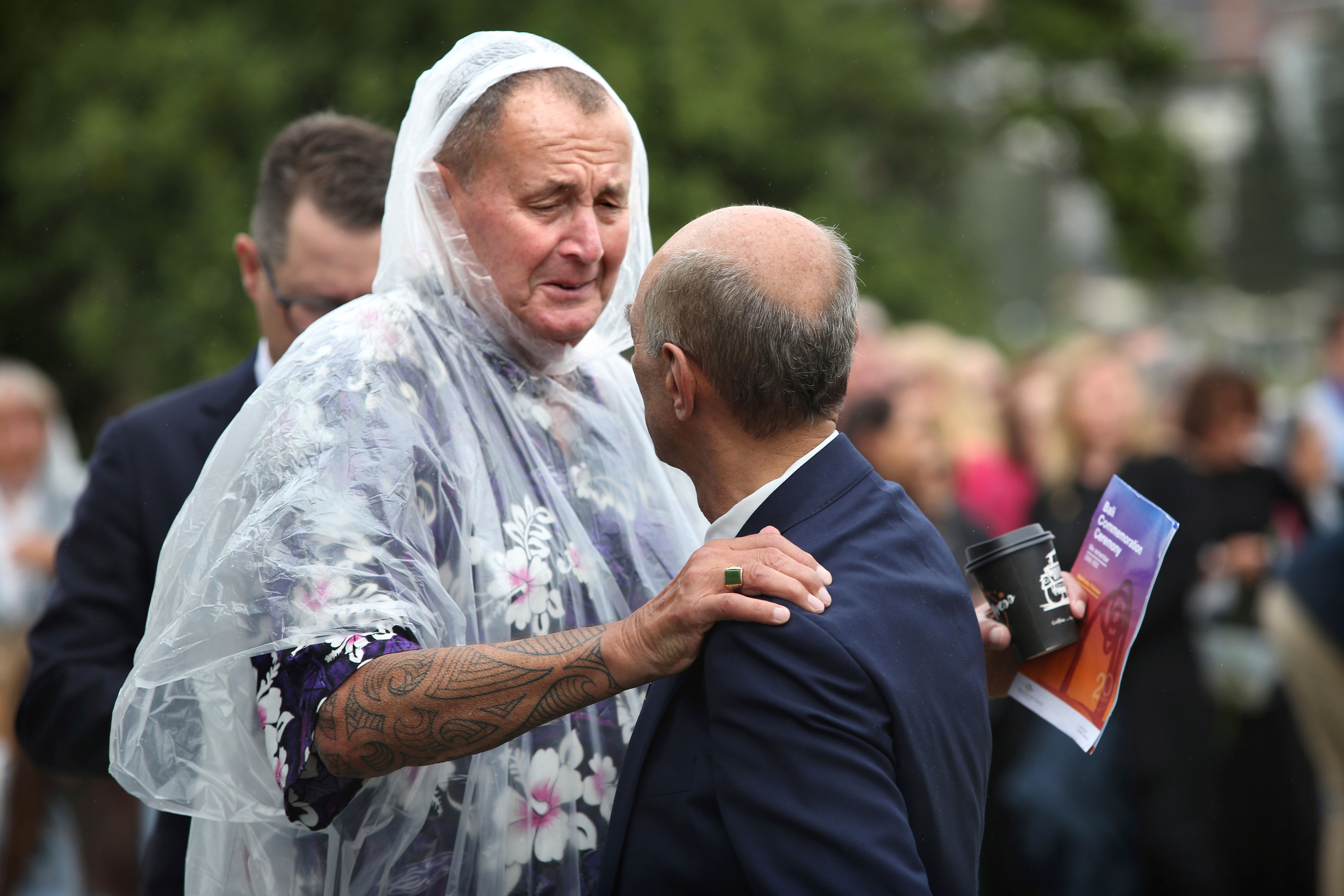
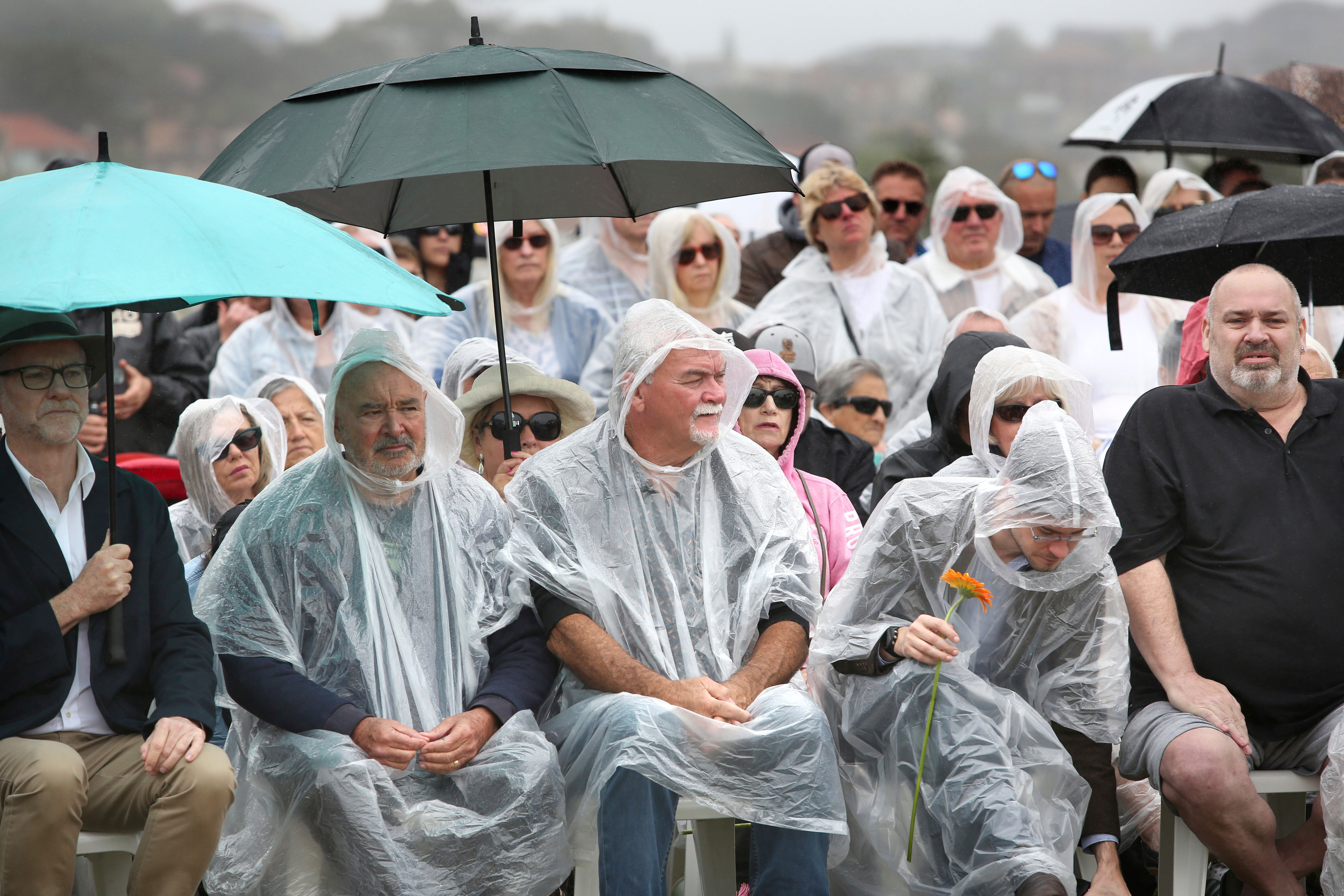
Mums and dads push babies in prams, a new generation who its hoped in the future will continue to mark this day and the 43 victims from New South Wales.
There's a police presence, albeit light, and officers dressed in formal wear also mill around.
It's clear there's a strong and loyal attendance from the Coogee Dolphins club.
Some proudly wear their club polos.
Many people hold a single, striking gerbera flower – coloured orange, red or yellow.
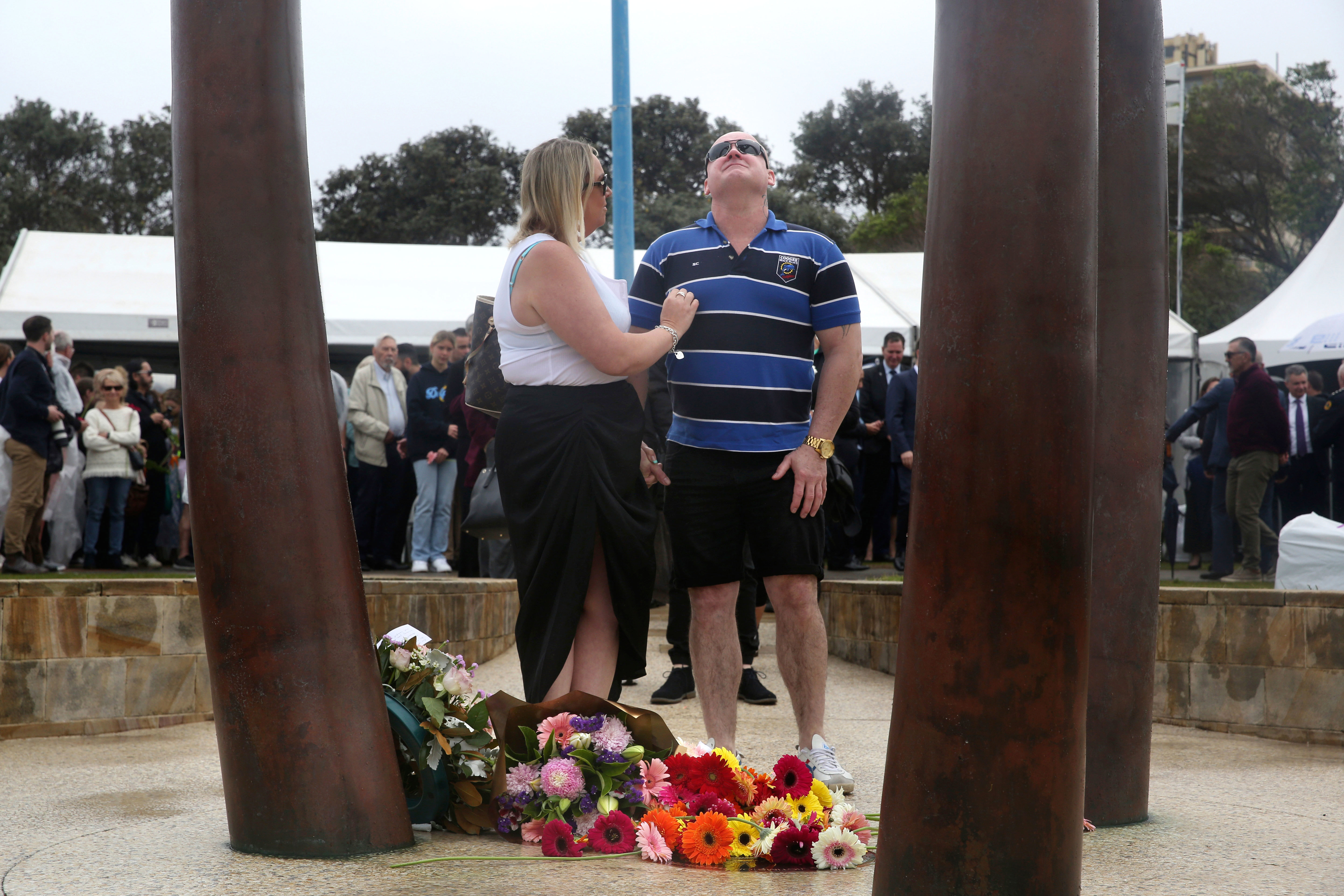
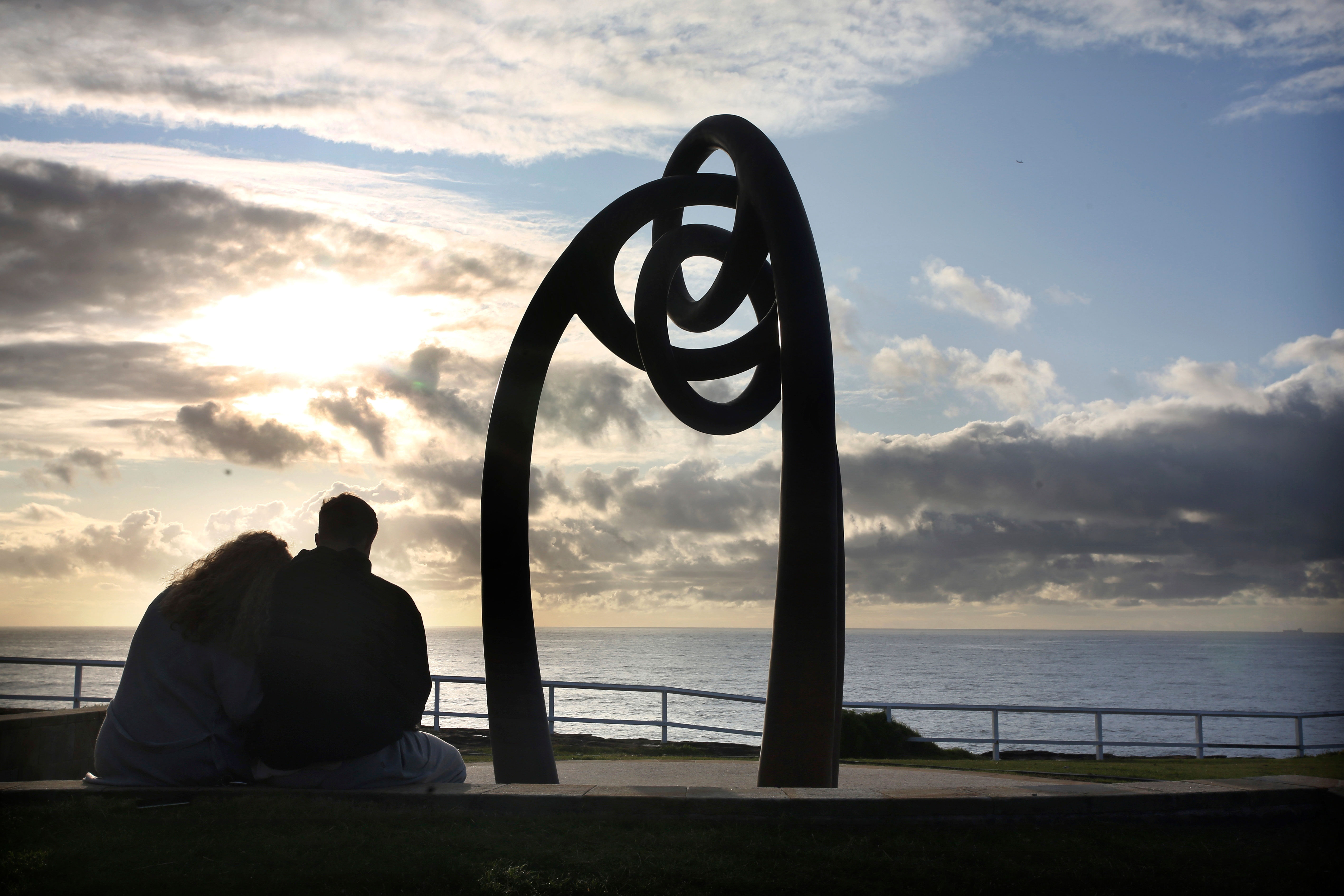
Later, the flowers will be laid inside a towering bronze sculpture on the point which twists up into the sky.
Before the ceremony starts, old friends reunite and embrace.
Faces light up as people recognise one another.
It might have been one year, for some longer.
READ MORE: Five minutes of evil: How Bali bombings horror unfolded
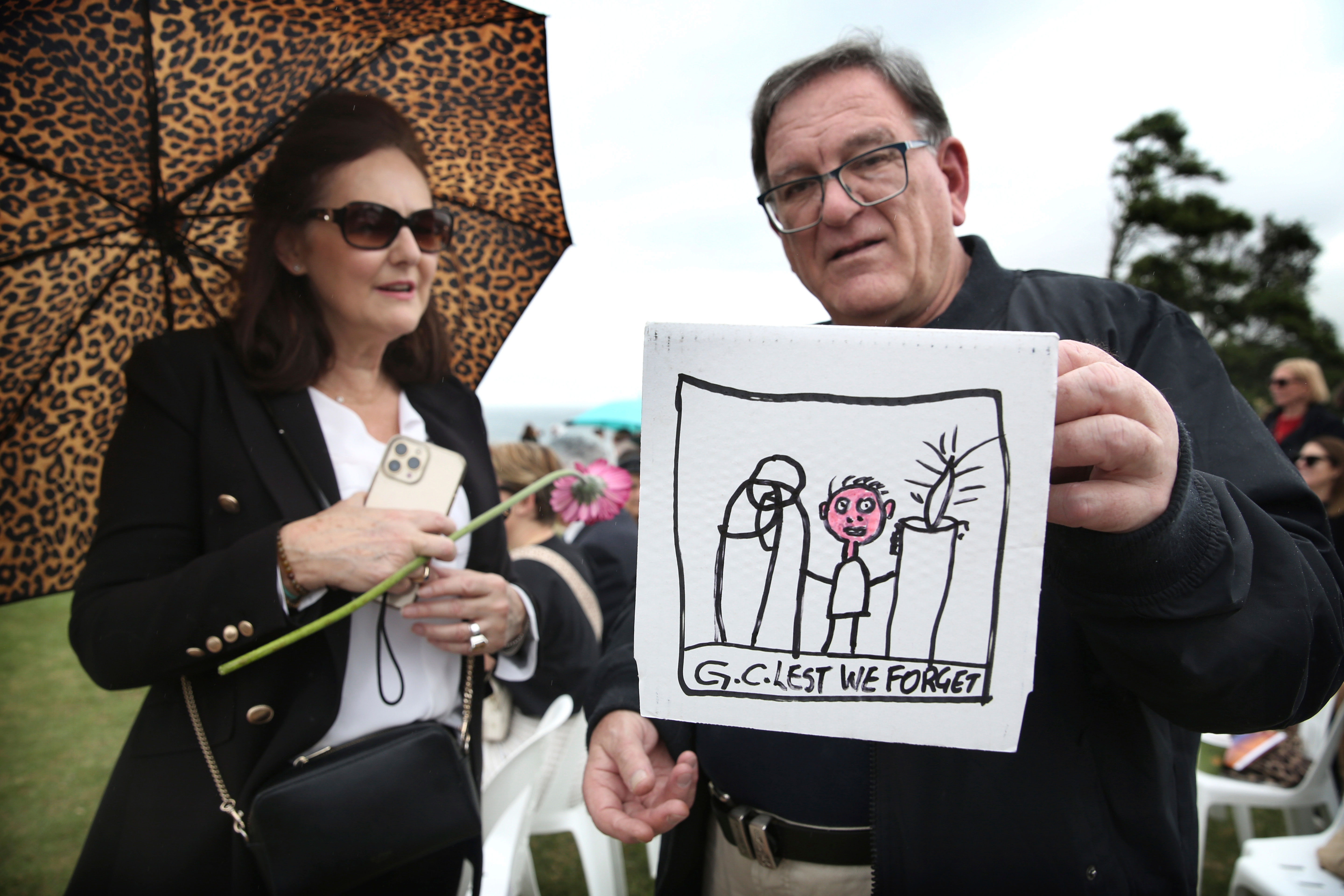
Powderfinger's These Days plays discreetly on a speaker system; people talk about catching up later for a quiet beer at iconic pubs around the beach.
Amongst the sadness, the sense of coming together is strong. A worker on-site whispers to her colleague there's a lot more people today than other years.
Local, state and federal politicians show up.
Prime Minister Anthony Albanese and NSW Premier Dominic Perrottet give brief speeches.
Albanese talks about that horrible night in Kuta, where "a sudden terrible light was followed by a sudden terrible darkness".
Opposition leader Peter Dutton doesn't make a speech, but he's there in solidarity, sat next to Albanese and Perrottet.
Representatives from the Indonesian consulate sit one row back.
The morning gets emotional when some surviving family members get up to speak.
There's still a rawness to their stories, their reality.
They share memories of searching for missing loved ones, and the dreaded call home to reveal that the situation looks bleak.
But there is also hope and learning in the words of those who have lost.
A mother describes how she manages unimaginable grief.
It's the simple things, she says, like warm hugs, walking her dog, sewing, singing and swimming.
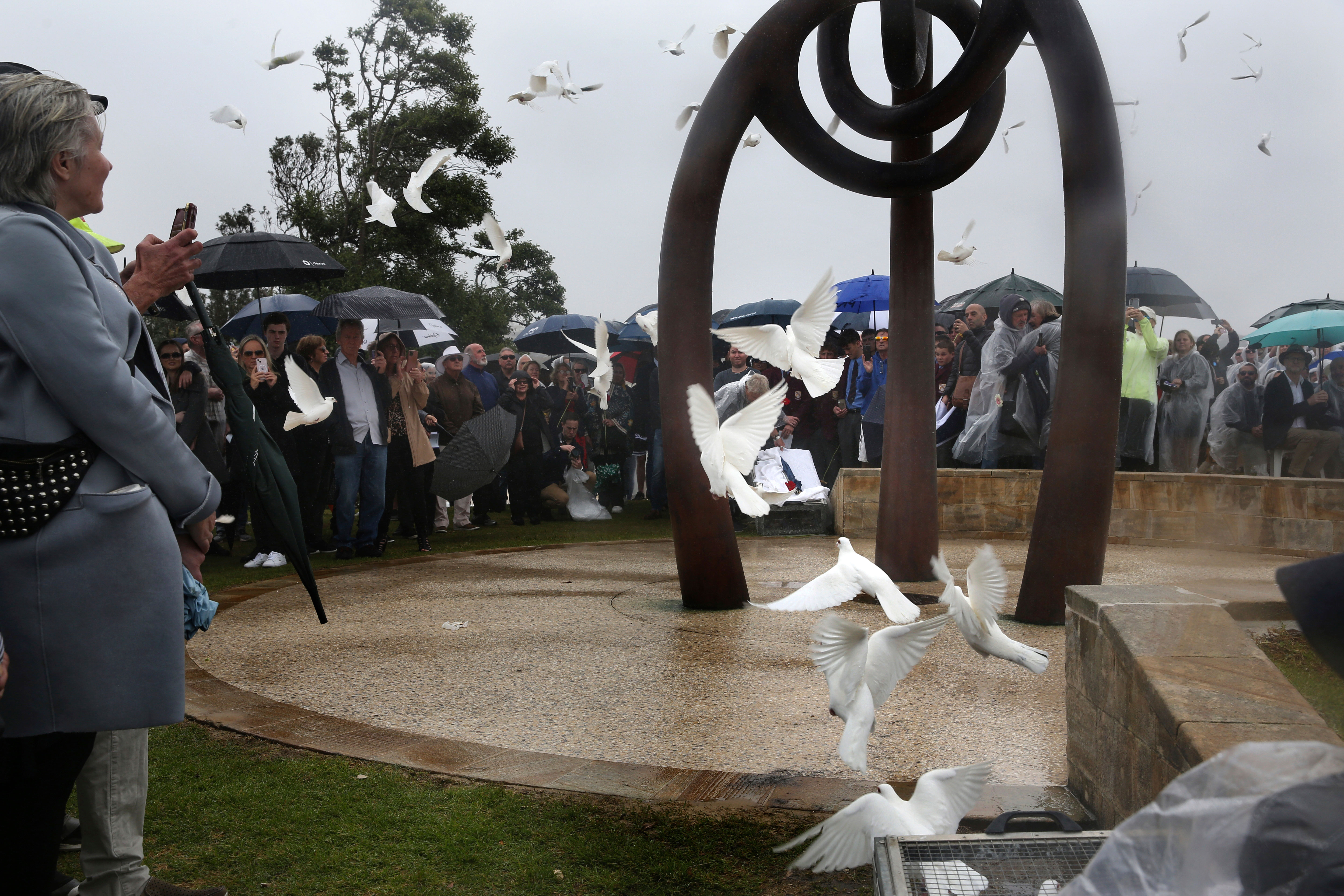
Near the end, the names of those killed are solemnly read out.
When that's done, there is a one-minute silence. Some cry quietly.
The flapping wings of 88 white doves, who soar into grey skies, breaks the silence.
Then, perhaps, the most intimate moments of the morning.
People line up to lay their single gerbera flower under the bronze sculpture.
Flower laid, there's a pause.
Some look to the sky, others reach out to touch or hold the sculpture.
Sometimes there are tears and hugs underneath the winding bronze sculpture, which represents three linked figures; family, friends and community.
Entwined, the figures support and protect each other.
On its own, each figure would topple. Together, they are strong.
Government immigration announcement sees skilled migrant, parent categories reopen
The Government is opening up two more categories for migrants to become residents as it seeks to reconnect with the world after the pandemic and fill major workforce shortages. Immigration Minister Michael Wood has announced today…
Experts sound alarm over native animals as flooding crisis endures
Wildlife rescuers are urging motorists in flood-affected areas to take care on the roads as displaced, disoriented native animals flee their homes.
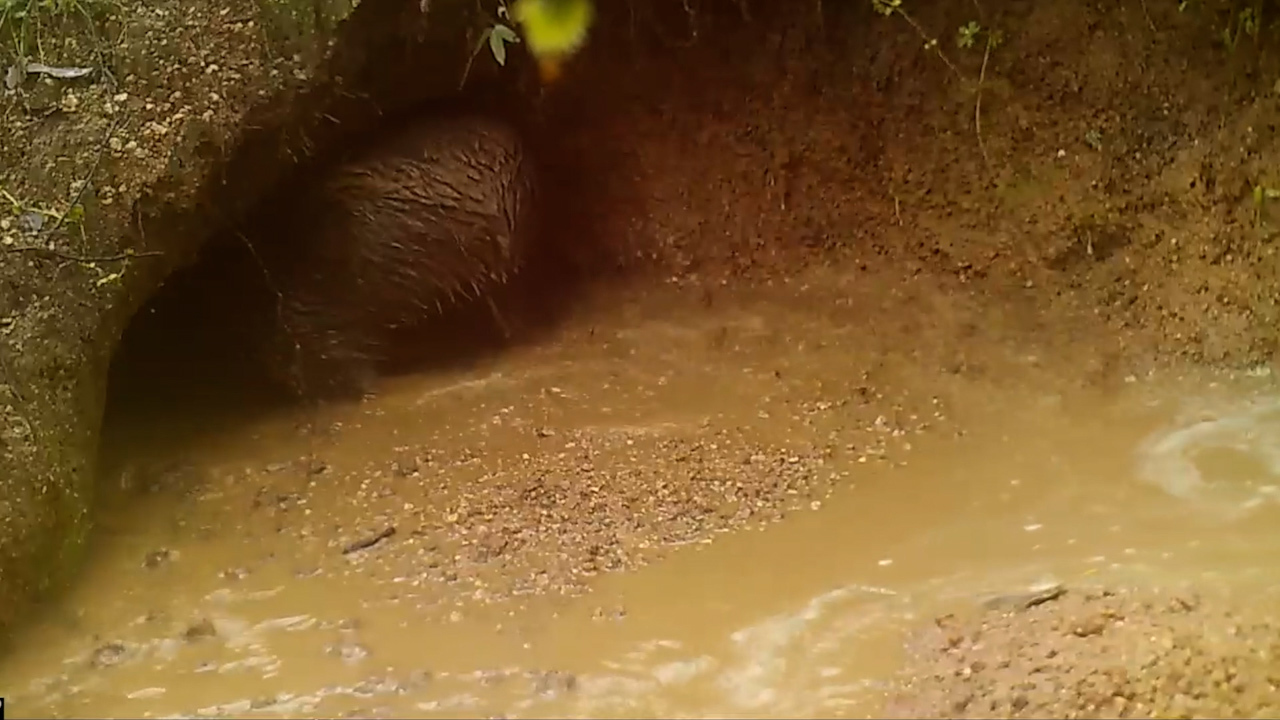
It comes as vision, shot last week, shows a wombat desperately trying to dig its way into a flooded burrow, as a monster storm system bore down on NSW.
This week Victoria and Tasmania are in the firing line as yet another low pressure system looms.
WIRES said burrowing animals such as wombats, snakes and echidnas are amongst the worst affected when the heavens open.
READ MORE: Survivors, rescuers and victims' loved ones reflect on Bali Bombings
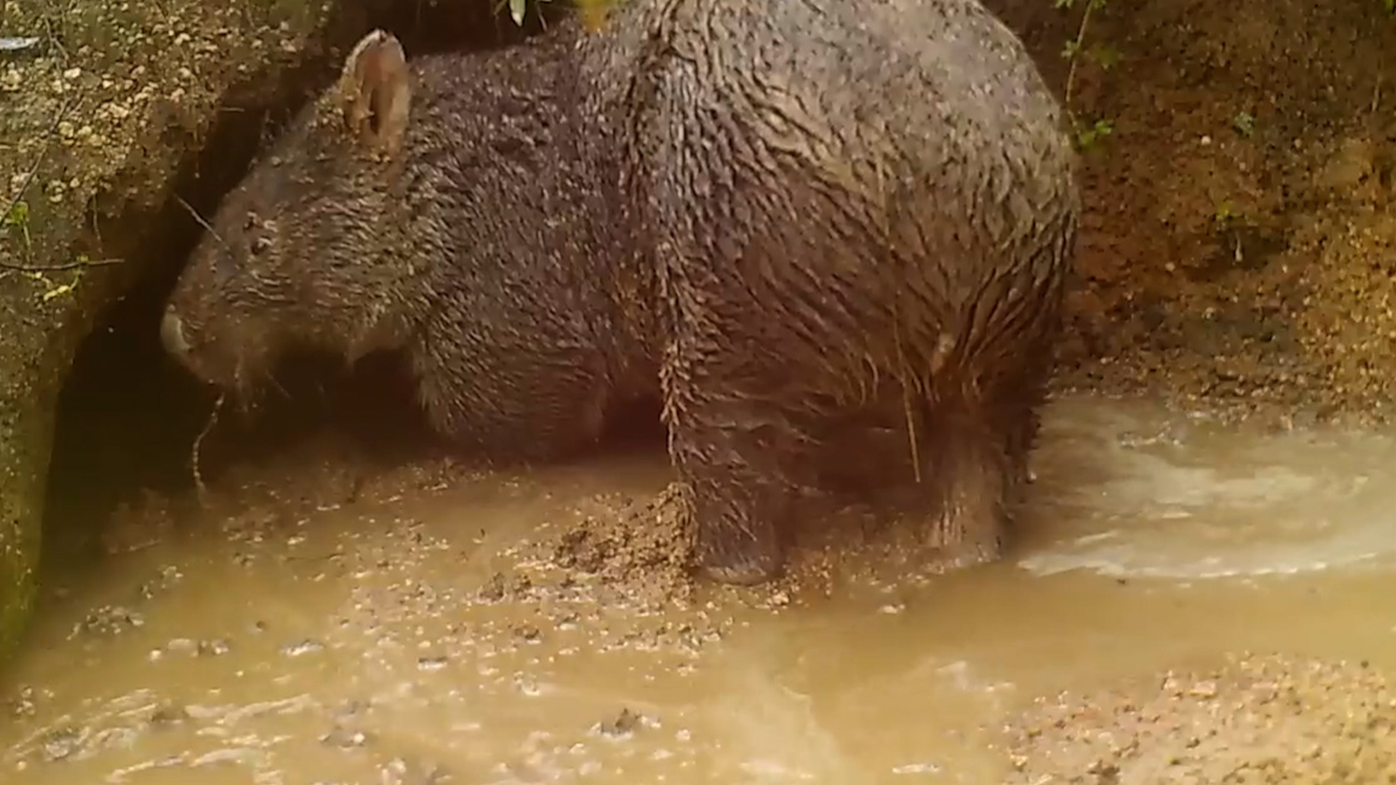
"(They) become disoriented when seeking higher ground and so very susceptible to car strikes along with other marsupials and reptiles escaping rising flood waters," a spokesperson said.
"WIRES asks motorists to please be extra careful about wildlife on the roads in flood areas and between dusk and dawn when nocturnal native wildlife is most active."
The wildlife rescue organization added that it's impossible to estimate how many native animals have died or been displaced by the floods as the wet weather has not let up for months.
But one species in particular is having an extremely rough go of it.
A fatal combination of diseases such as mange, floods, habitat loss, and the Black Summer bushfires have taken a toll on wombat numbers nationwide.
READ MORE: Man dies in floodwaters as towns warned of 72 hours of isolation
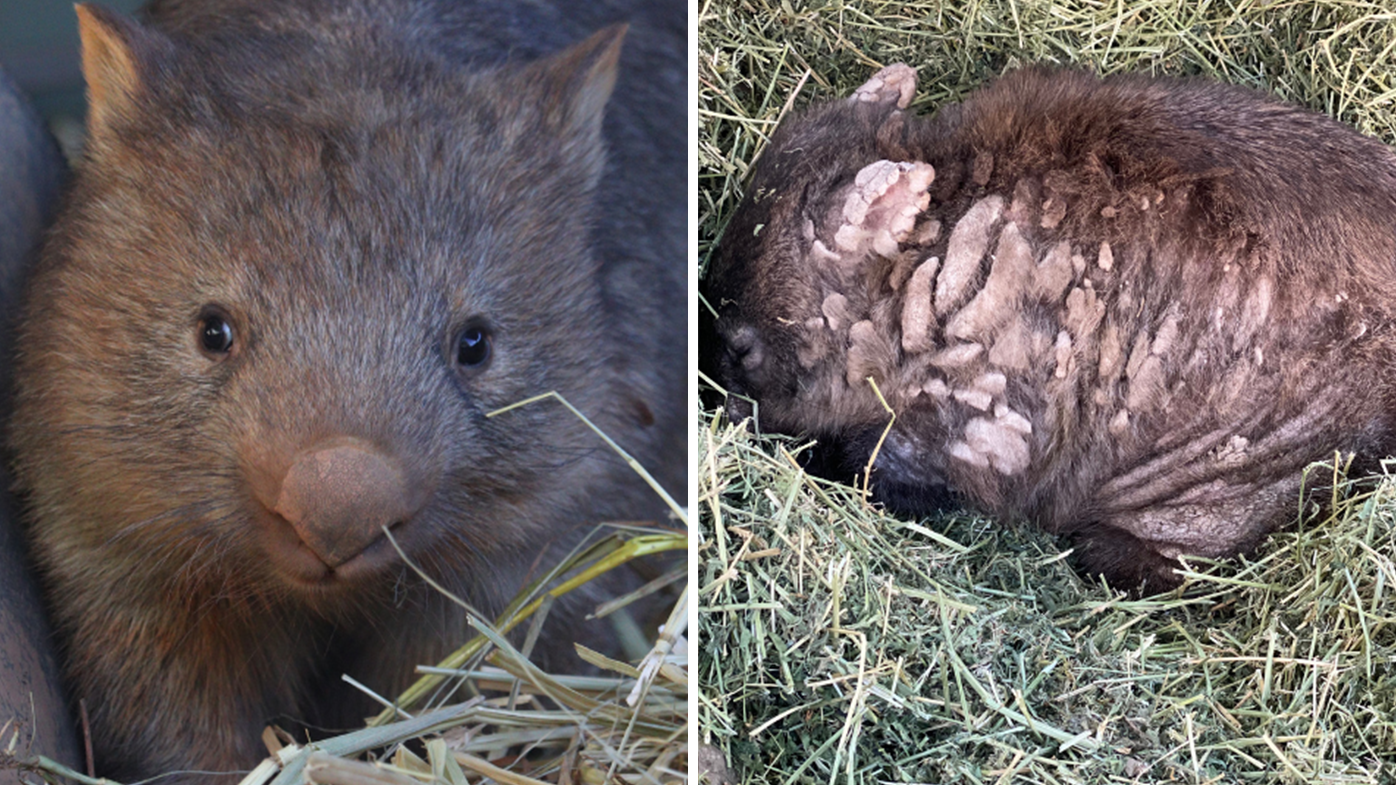
The appeal to motorists comes as WIRES attempts to tackle the spread of the deadly disease mange, which is believed to affect 90 per cent of the population.
This highly contagious skin condition is caused by mites and causes itchy sores over a wombat's body, leading to fur loss and eventual blindness.
"Those suffering from more severe cases of mange may often be seen out during the day due to crusty skin around the eyes impairing their vision," a spokesperson explained, adding this leads to more encounters along roadways.
There are two ways to treat the disease, the first sees a topical treatment directly poured onto a wombat. The second involves placing specially designed treatment releasing devices over burrows and tracks.
Australia has three species of wombat and WIRES claims all are "disappearing".
READ MORE: Five minutes of evil: How Bali bombings horror unfolded
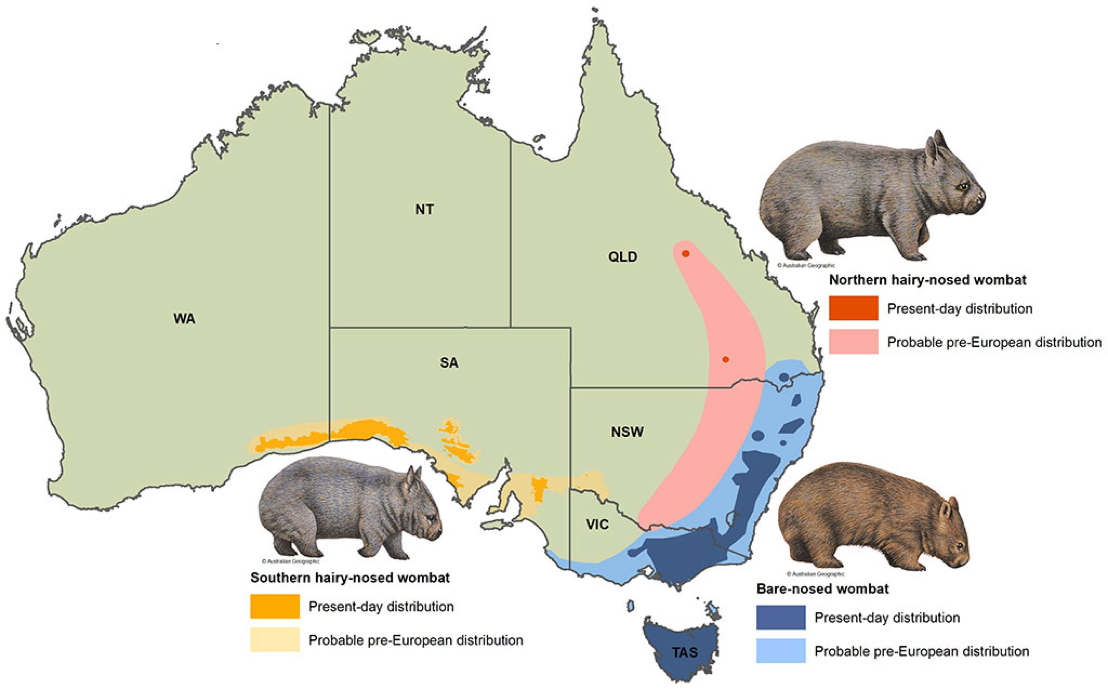
The rarest, the Northern Hairy-nosed wombat, is deemed Critically Endangered by the International Union for the Conservation of Nature (IUCN) red-list of Threatened Species.
It is presumed extinct in NSW.
READ MORE: Actress Angela Lansbury dies aged 96
The Southern Hairy-nosed wombat is endangered in NSW and as such is deemed Near Threatened.
And the Bare-nosed wombat, also known as the Common wombat, is becoming less common due to habitat shrinkage.