OPINION: The Labour Government has now spent over $1.2 billion on housing people in motels and emergency facilities. This is an indictment on a government that refuses to build enough state houses for vulnerable people who are the…
Tag Archives: oceania
Teenager says alleged rapist threatened to hurt her if she told anybody
WARNING: This story details sexual violence. A teenager who alleges she was raped by a gang member described the pain to a social worker a month after the attack, saying it hurt and was like having her period.The 13-year-old girl…
Gang crackdown: Wellington police seize cars, motorbikes and a boat
Wellington police have seized nearly 20 vehicles from gang members and associates including cars, motorbikes and a boat. The two-day operation targeted people with outstanding court fines and warrants.Detective senior sergeant…
Driver stopped for talking on cellphone found with bags of weed and cash
A convicted drug dealer stopped by police for talking on his cellphone while driving, was also found with “more weed than he needed”.Despite arguments from his lawyer the 172 grams of cannabis in four snap-lock bags was for his…
Petrol prices are about to jump up. Here's why
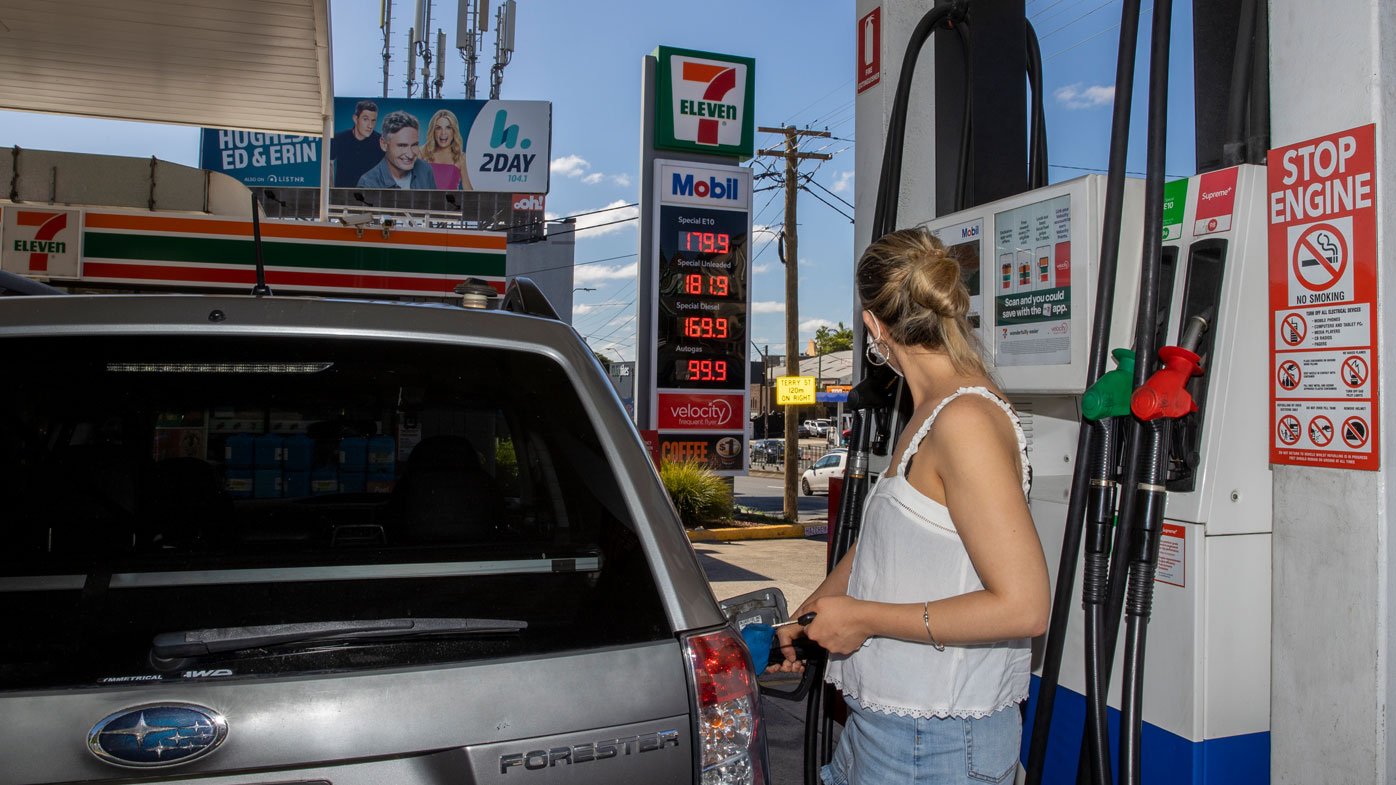
It's best you fill up before the start of next month, because petrol prices are about to jump suddenly.
The cost at the bowser is going to climb for two reasons, one domestic and one from overseas.
The Morrison government's pre-election budget sweetener of temporarily slashing the fuel excise on every litre of fuel is due to expire on October 1.
READ MORE: Homeowners bracing for new interest rates rise
And the Organisation of Petroleum Exporting Countries (OPEC) has agreed to cut production by 100,000 barrels a day.
Both of these decisions are going to cause petrol prices to shoot up.
Why is the petrol excise cut expiring?
The reason for the petrol excise going back to its regular price is simple – money.
The federal government draws in a substantial amount of money from the excise (which is another name for a tax), which is usually 44 cents a litre. But since March 30, the government has been collecting half that.
And while it sucks to pay an extra 25 cents a litre in October than you did in September, the reality is the petrol excise is a big part of the federal budget.
If you weren't paying the petrol excise, odds are the federal government would be collecting that money from you from somewhere else, like a rise in income taxes or the GST.
The money from the excise goes into the general kitty for the federal budget, rather than funding something in particular.
READ MORE: Faulty heater sends three to hospital with carbon monoxide poisoning
When does the petrol excise cut expire?
The petrol excise will go back to its full price on September 29 this year.
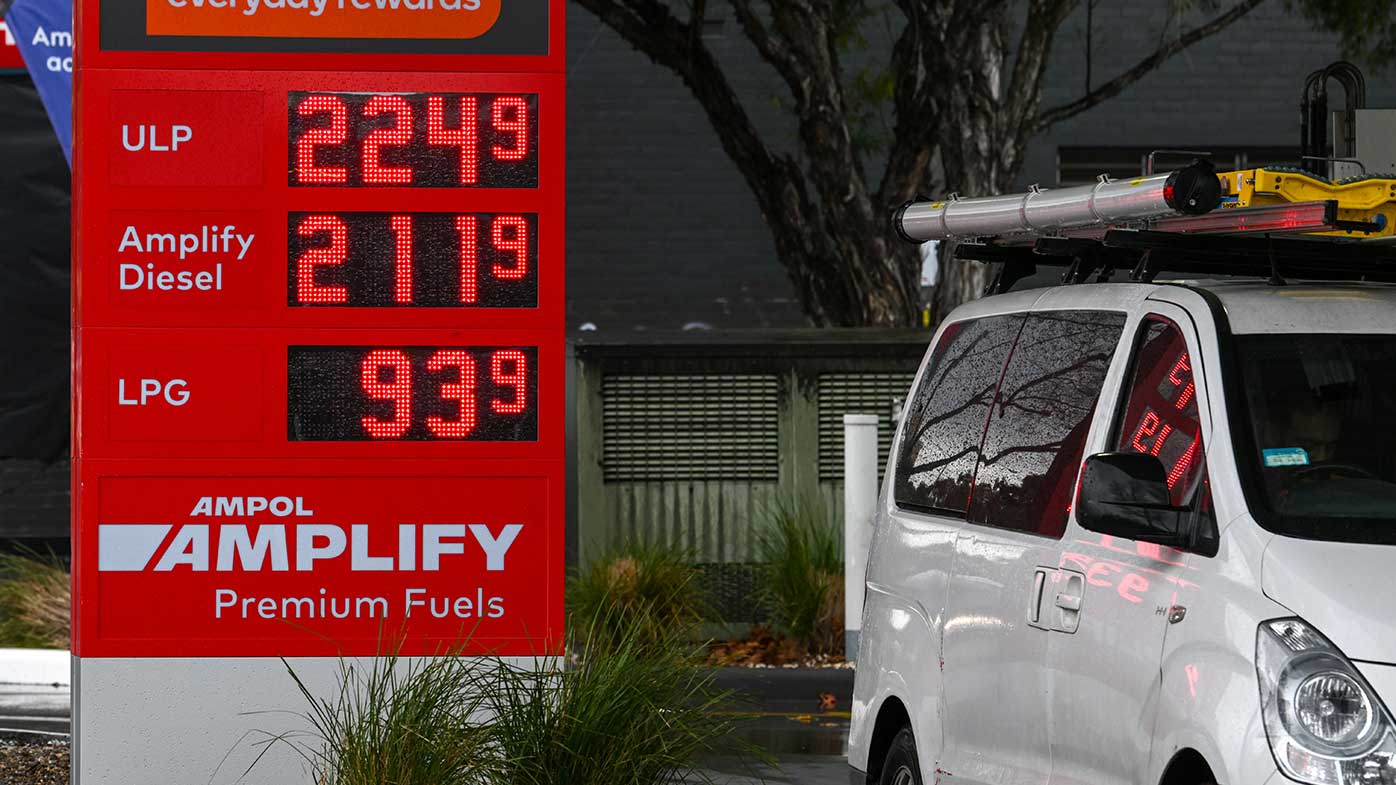
Which means all other things being equal, prices will jump 25.3 cents overnight.
This means the price is slightly more than doubling – the excise rises twice a year based on movements in the consumer price index.
Why is OPEC cutting production?
OPEC is cutting production for the same simple reason – money.
By reducing the amount of oil they pump out, they will cause the price to go up.
The 100,000 barrels a day they won't be drilling is not a substantial amount, just 0.1 per cent.
But they are hoping the cut to supply will halt the decline of oil prices which has been going on for a few months now.
This comes despite the pleas of the United States, who had begged OPEC to boost production to lower prices.
But the higher the prices, the more OPEC makes.
Who is OPEC?
OPEC is an intergovernmental organisation of 13 member countries that account for 81 per cent of "proven" oil reserves.
Because of their control of supply, OPEC can operate a cartel with impunity.
And unfortunately, most of the countries in OPEC are ones that don't have great relationships with Australia.
The countries in OPEC are Algeria, Angola, Equatorial Guinea, Gabon, Iran, Iraq, Kuwait, Libya, Nigeria, the Republic of the Congo, Saudi Arabia, the United Arab Emirates and Venezuela.
The associated oil producing nations of Azerbaijan, Bahrain, Brunei Darussalam, Kazakhstan, Malaysia, Mexico, Oman, Philippines, Russia, Sudan and South Sudan will also cut production in line with OPEC's decision.
LIVE UPDATES: Household spending increases once again

Why can't non-OPEC countries drill more oil?
There's nothing stopping countries that aren't in OPEC from drilling more oil.
But for many of the non-OPEC nations, governments can't instruct the oil companies to produce more.
And when prices of oil go up, there's not much incentive for Shell or BP to drill so much the prices go down again.
READ MORE: The NSW government's new first home buyer scheme explained
Judge tells Kokako Lodge upcoming kids camp is a no-go during 1080 bait drop
An Auckland lodge that describes itself as New Zealand’s “best outdoor education facility” has lost a bid to keep youth activities running during an upcoming poisonous bait drop.Kōkako Lodge owners took Auckland Council and…
Te Wiki te reo Māori a 'time of great reflection' – educator Hemi Kelly
Public Interest Journalism funded through NZ On Air. While much next week’s focus will be on the 50th anniversary of the Māori Language Petition delivered to Parliament in 1972, te reo Māori teacher, author and online…
Tributes to Australian medic killed in Ukraine
Tributes are pouring in today for a Queensland man killed by Russian forces on the frontline in Ukraine last month.
Jed William Danahay, from Nanango in Queensland's south Burnett region, and aged in his mid twenties, was killed in eastern Ukraine on August 24, the Department of Foreign Affairs and Trade (DFAT) said.
He was providing medical treatment to frontline Ukrainian soldiers, but the medical vehicle that he was driving was hit by Russian artillery fire and he died.
READ MORE: Homeowners bracing for new interest rates rise as cost of living crisis bites

The Danahay family has issued a statement through DFAT and praised him for his work in Ukraine.
They said he died doing what he believed in – helping people who needed it.
"Jed lived his life trying to help other people, in his short time on this earth Jed did more things than most of us will ever do in a lifetime
"Jed died doing what he believed in, helping people who needed it. He was at his heart an optimist and always believed that things should be better."
READ MORE: Liz Truss wins leadership race to become new UK prime minister

The statement described his sense of adventure, fun and love of travel.
Australia's Ukrainian community issued a statement passing on its deepest sympathies to Danahay's family.
"Our community feels pain and sorrow that a good, decent young man has lost his life in this way," Australian Federation of Ukrainian Organisations co-chair Stefan Romaniw said.
"We pay respect to the bravery and courage of Mr Danahay, who was helping to provide medical support to Ukrainian soldiers on the frontline. We salute him as a hero and honour his selflessness and respect for human life."
"Our community also extends its deepest sympathies to the family of Mr Danahay," Peter Bongiorni, the Ukrainian Community of Queensland president, said.
"We are deeply sorry for their loss, and offer our condolences and prayers at this difficult and tragic time."
READ MORE: Melbourne mural criticised as 'utterly offensive' to Ukrainians
"May Mr Danahay rest in peace. In Ukrainian, we wish him Вічная пам'ять (Eternal Memory).
"We also wish the Danahay family peace and comfort as they grieve."
DFAT has confirmed it is providing consular assistance to his family.
In May, Tasmanian aid worker Michael O'Neill became the first known Australian to die in the Ukraine conflict.
Spring soaking underway with all of Australia under a cloud
The first full week of spring will bring rain to every state and territory across Australia, with possible floods to follow.
Weatherzone has reported that a low pressure system and a cold front both meeting tropical moisture will build up a north-west cloud-band to pass over Australia this week.
Western Australia is set to cop the brunt of it early on, with the front passing over the state by the end of today.
READ MORE: Government settles lawsuit with former Coalition staffer for $650,000
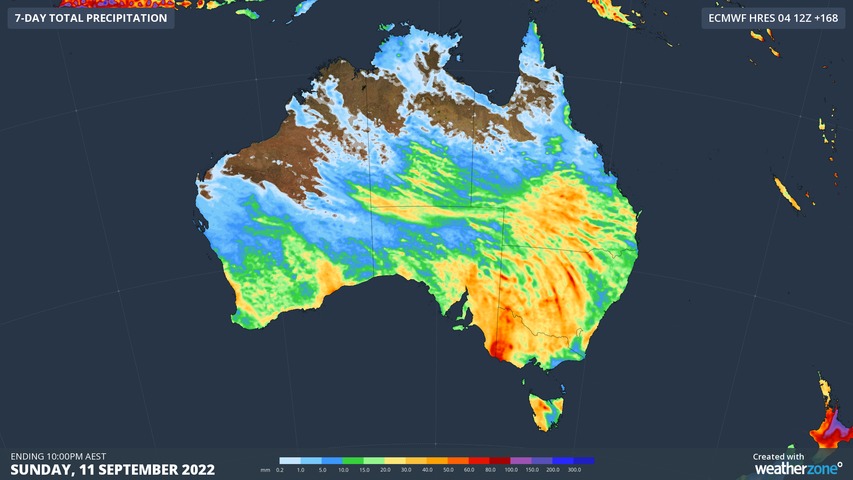
Then it will be the Northern Territory and South Australia in the firing line, with rain set to fall today and tomorrow.
Thursday and Friday will see the south east and east of the country drenched once more.
That won't be the end of it though; Weatherzone said "follow-up" rain would fall over central and south-eastern Australia from another cloud band and cold front.
There are particular concerns for flooding in the Murray Darling Basin, the entirety of which is set to cop a soaking.
READ MORE: Tributes to Australian medic killed in Ukraine
The basin recorded its wettest August since 1985 last month, and its water storage levels are at 97 per cent.
Thunderstorms are also forecast, mostly over central Australia, northern New South Wales, and Queensland.
People are urged to stay up to date on flood and weather warnings at the Bureau of Meteorology website.
'Doomsday glacier' holding on by its fingernails, scientists say
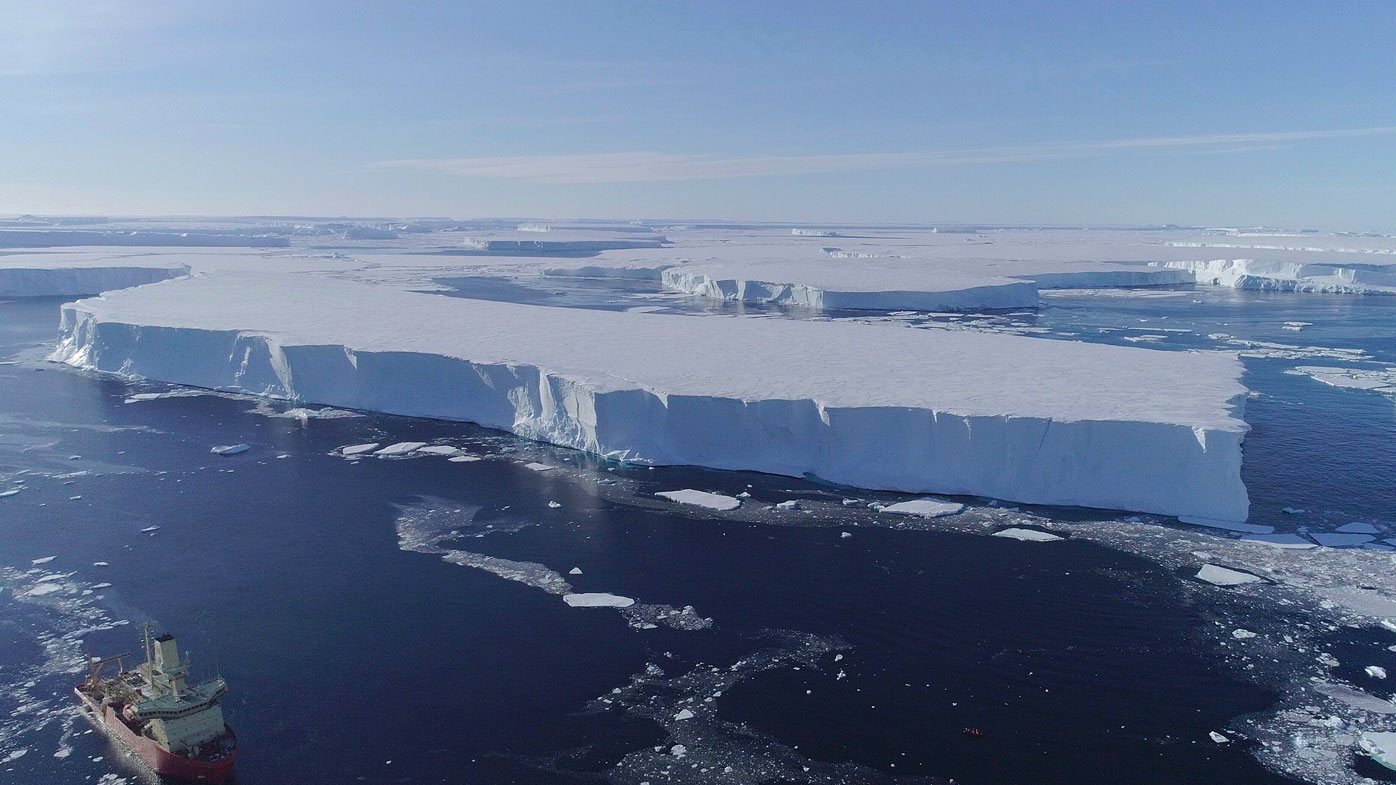
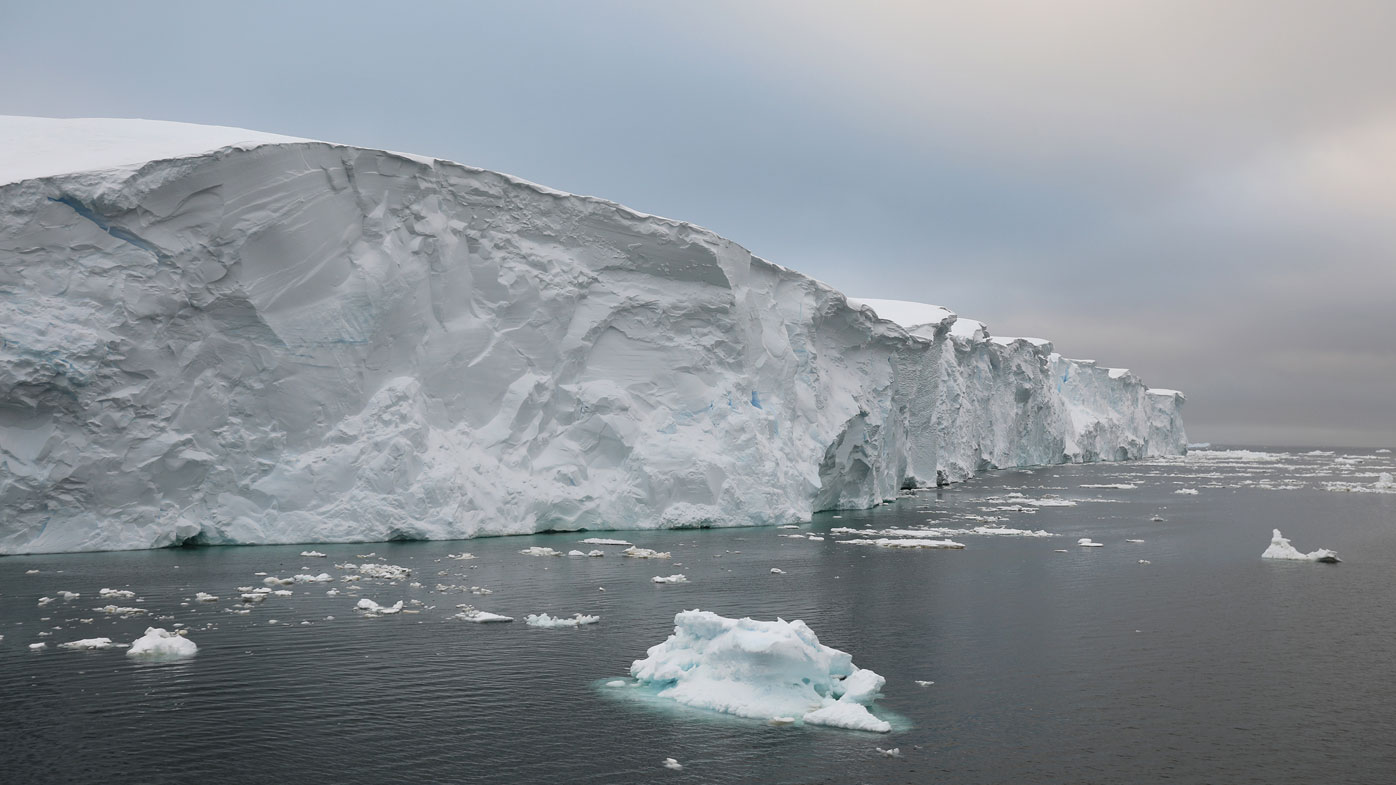
Antarctica's so-called "doomsday glacier" – nicknamed because of its high risk of collapse and threat to global sea level – has the potential to rapidly retreat in the coming years, scientists say, amplifying concerns over the extreme sea level rise that would accompany its potential demise.
The Thwaites Glacier, capable of raising sea level by 60cm, is eroding along its underwater base as the planet warms.
In a study published today in Nature Geoscience, scientists mapped the glacier's historical retreat, hoping to learn from its past what the glacier will likely do in the future.
READ MORE: One Canada stabbing suspect found dead, brother remains on the rain
They found that at some point in the past two centuries, the base of the glacier dislodged from the seabed and retreated at a rate of 2.1km per year.
That's twice the rate that scientists have observed in the past decade or so.
That swift disintegration possibly occurred "as recently as the mid-20th century," Alastair Graham, the study's lead author and a marine geophysicist at the University of South Florida, said.
It suggests the Thwaites has the capability to undergo a rapid retreat in the near future, once it recedes past a seabed ridge that is helping to keep it in check.
"Thwaites is really holding on today by its fingernails, and we should expect to see big changes over small timescales in the future – even from one year to the next – once the glacier retreats beyond a shallow ridge in its bed," Robert Larter, a marine geophysicist and one of the study's co-authors from the British Antarctic Survey, said.
The Thwaites Glacier, located in West Antarctica, is one of the widest on Earth and is larger than the state of Florida.
But it's just a faction of the West Antarctic ice sheet, which holds enough ice to raise sea level by almost five metres, according to NASA.
As the climate crisis has accelerated, this region has been closely monitored because of its rapid melting and its capacity for widespread coastal destruction.
READ MORE: Homeowners bracing for new interest rates rise
READ MORE: Tributes pour for Aussie medic killed in Ukraine
The Thwaites Glacier itself has concerned scientists for decades.
As early as 1973, researchers questioned whether it was at high risk of collapse.
Nearly a decade later, they found that – because the glacier is grounded to a seabed, rather than to dry land – warm ocean currents could melt the glacier from underneath, causing it to destabilise from below.
It was because of that research that scientists began calling the region around the Thwaites the "weak underbelly of the West Antarctic ice sheet."
In the 21st century, researchers began documenting the Thwaites' rapid retreat in an alarming series of studies.
In 2001, satellite data showed the grounding line was receding by around 1km each year.
In 2020, scientists found evidence that warm water was indeed flowing across the base of the glacier, melting it from underneath.
And then in 2021, a study showed the Thwaites Ice Shelf, which helps to stabilise the glacier and hold the ice back from flowing freely into the ocean, could shatter within five years.
"From the satellite data, we're seeing these big fractures spreading across the ice shelf surface, essentially weakening the fabric of the ice; kind of a bit like a windscreen crack," Peter Davis, an oceanographer, told CNN in 2021.
"It's slowly spreading across the ice shelf and eventually it's going to fracture into lots of different pieces."
READ MORE: Six killed after massive glacier chunk crashes down Italian mountain
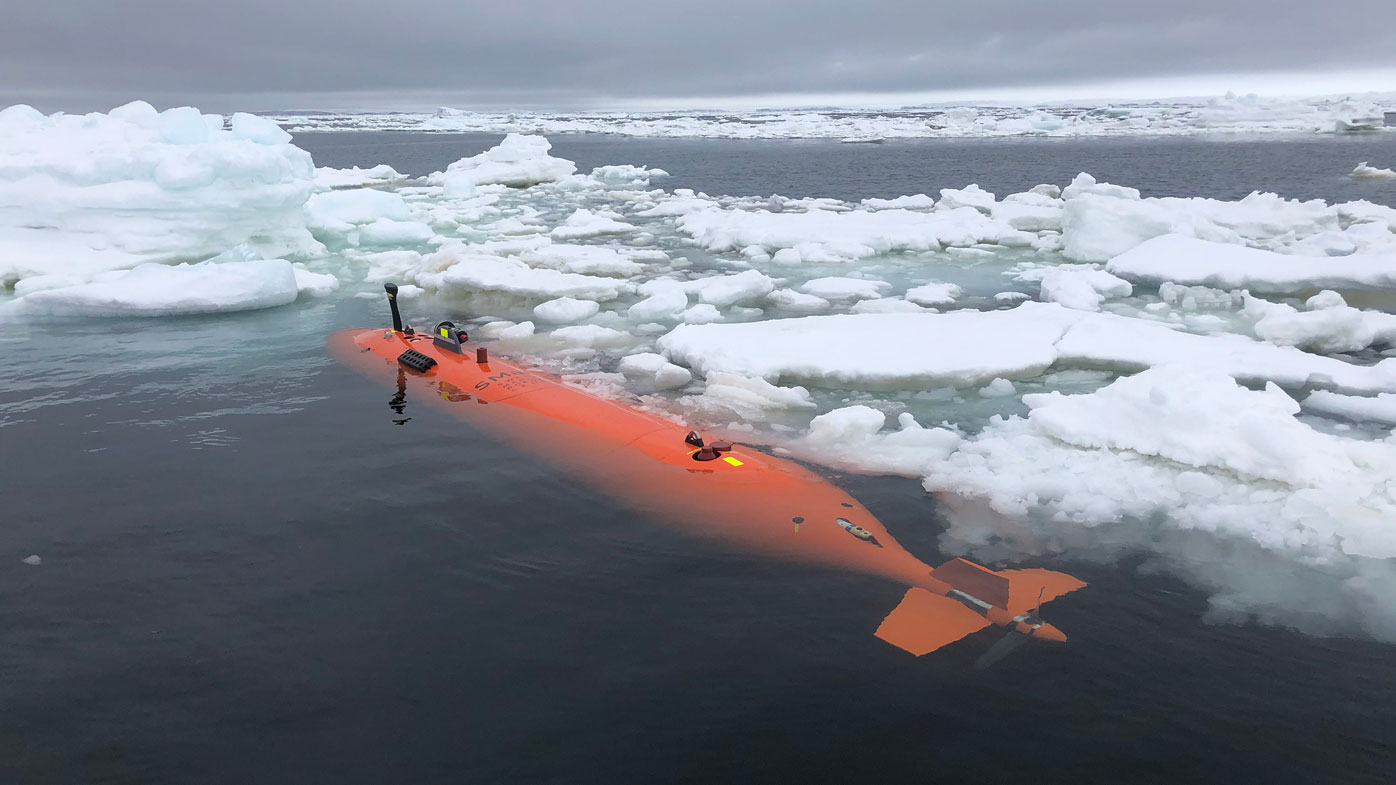
Today's findings, which suggest the Thwaites is capable of receding at a much faster pace than recently thought, were documented on a 20-hour mission in extreme conditions that mapped an underwater area the size of Houston.
Graham said that this research "was truly a once in a lifetime mission," but that the team hopes to return soon to gather samples from the seabed so they can determine when the previous rapid retreats occurred.
That could help scientists predict future changes to the "doomsday glacier," which scientists had previously assumed would be slow to undergo change – something Graham said this study disproves.
"Just a small kick to the Thwaites could lead to a big response," he said.