Over nearly two years face masks have become part of our pandemic experience – but now Kiwis increasingly appear to be leaving them at home. What place should they have here in future? Jamie Morton reports. With cases down, should…
Tag Archives: oceania
Australia's interest rate hits seven-year high
Australia's interest rates have hit a seven-year high after the nation's central bank decided to increase the cash rate for the fifth consecutive month in a row.
The Reserve Bank of Australia (RBA) today decided to lift the cash rate target by 50 basis points from 1.85 per cent to 2.35 per cent.
The last time Australia's cash rate was higher was in December 2014, when it sat at 2.50.
READ MORE: The RBA cash rate that would plunge 'majority' into mortgage stress
Today's decision means a borrower with a $500,000 loan would have repayments increase by $144, while a borrower with a $1 million loan would have monthly repayments increase by $288.
Since May – when the cash rate was a now long-forgotten 0.1 per cent – that represents an increase of more than $600 a month for those with $500,000 loans and an eye-watering five-month increase of more than $1,200 for those with more than a million dollars owing on their mortgage.
Worse yet is that more rate hikes are tipped to come.
Big Four bank Westpac is currently predicting the cash rate will hit 3.35 per cent by February next year, which if realised pushes the average variable rate close to five per cent.
READ MORE: ANZ predicts massive drop in housing prices through 2023

"While we're likely to be well over the half-way mark, the RBA has at least two, but potentially as many as five, rate hikes still in its sights," RateCity.com.au research director Sally Tindall said.
"The average borrower could see their variable rate rise to over 6 per cent in a matter of months, unless they take action.
"People on a variable rate might feel powerless right now, but that doesn't have to be the case.
"Refinancing to a more competitive rate will help mitigate future RBA hikes."
READ MORE: The Aussie neighbourhoods worst hit by mortgage stress

Federal Treasurer Jim Chalmers addressed the Reserve Bank's interest rates rise during question time, saying the decision will put more pressure on families.
"The fact that we knew it was coming doesn't make it any easier for people," he told parliament.
"This is tough. This will tighten the screws on family budgets. This will put more pressure on a lot of Australians who are already stretched enough."
Chalmers also outlined how much the rate hike will cost mortgage holders.
"Average homeowners owing $330,000 will have to find about $95 more for repayments," he said.
"For Australians with a typical $500,000 mortgage it's about an extra $145 a month in addition to the extra $475 they've had to find since rates started raising before the election in May.
"So interest rate rises do mean that Australians will have to make more hard decisions about how to make ends meet."
READ MORE: Landlord's dilemma, his tenant's pain: The double face of rate rises
Graham Cooke, head of consumer research at Finder, said today's hike was another expense heaped upon a general public that was already enduring high petrol, grocery and housing costs.
"This fifth rate rise since May piles on the pressure for Aussie homeowners, who will have almost $10,000 less to spend on groceries, clothing and holidays compared to only six months ago," he said.
Cooke believes many borrowers who fixed their loans during the period of record-low rates might suffer from bill shock when those fixed terms expire.
"Fixed loan holders are in for a big shock once that rate expires and their payments spike," he said.
"Our figures show the average fixed-rate homeowner will be paying $600 extra per month come December.
"If you're on a fixed rate, check now to see how much your repayments are likely to jump."
The information provided on this website is general in nature only and does not constitute personal financial or legal advice. The information has been prepared without taking into account your personal objectives, financial situation or needs. Before acting on any information on this website you should consider the appropriateness of the information having regard to your objectives, financial situation and needs.
Bryce Edwards: Labour's motel housing shame
OPINION: The Labour Government has now spent over $1.2 billion on housing people in motels and emergency facilities. This is an indictment on a government that refuses to build enough state houses for vulnerable people who are the…
Teenager says alleged rapist threatened to hurt her if she told anybody
WARNING: This story details sexual violence. A teenager who alleges she was raped by a gang member described the pain to a social worker a month after the attack, saying it hurt and was like having her period.The 13-year-old girl…
Gang crackdown: Wellington police seize cars, motorbikes and a boat
Wellington police have seized nearly 20 vehicles from gang members and associates including cars, motorbikes and a boat. The two-day operation targeted people with outstanding court fines and warrants.Detective senior sergeant…
Driver stopped for talking on cellphone found with bags of weed and cash
A convicted drug dealer stopped by police for talking on his cellphone while driving, was also found with “more weed than he needed”.Despite arguments from his lawyer the 172 grams of cannabis in four snap-lock bags was for his…
Petrol prices are about to jump up. Here's why
It's best you fill up before the start of next month, because petrol prices are about to jump suddenly.
The cost at the bowser is going to climb for two reasons, one domestic and one from overseas.
The Morrison government's pre-election budget sweetener of temporarily slashing the fuel excise on every litre of fuel is due to expire on October 1.
READ MORE: Homeowners bracing for new interest rates rise
And the Organisation of Petroleum Exporting Countries (OPEC) has agreed to cut production by 100,000 barrels a day.
Both of these decisions are going to cause petrol prices to shoot up.
Why is the petrol excise cut expiring?
The reason for the petrol excise going back to its regular price is simple – money.
The federal government draws in a substantial amount of money from the excise (which is another name for a tax), which is usually 44 cents a litre. But since March 30, the government has been collecting half that.
And while it sucks to pay an extra 25 cents a litre in October than you did in September, the reality is the petrol excise is a big part of the federal budget.
If you weren't paying the petrol excise, odds are the federal government would be collecting that money from you from somewhere else, like a rise in income taxes or the GST.
The money from the excise goes into the general kitty for the federal budget, rather than funding something in particular.
READ MORE: Faulty heater sends three to hospital with carbon monoxide poisoning
When does the petrol excise cut expire?
The petrol excise will go back to its full price on September 29 this year.
Which means all other things being equal, prices will jump 25.3 cents overnight.
This means the price is slightly more than doubling – the excise rises twice a year based on movements in the consumer price index.
Why is OPEC cutting production?
OPEC is cutting production for the same simple reason – money.
By reducing the amount of oil they pump out, they will cause the price to go up.
The 100,000 barrels a day they won't be drilling is not a substantial amount, just 0.1 per cent.
But they are hoping the cut to supply will halt the decline of oil prices which has been going on for a few months now.
This comes despite the pleas of the United States, who had begged OPEC to boost production to lower prices.
But the higher the prices, the more OPEC makes.
Who is OPEC?
OPEC is an intergovernmental organisation of 13 member countries that account for 81 per cent of "proven" oil reserves.
Because of their control of supply, OPEC can operate a cartel with impunity.
And unfortunately, most of the countries in OPEC are ones that don't have great relationships with Australia.
The countries in OPEC are Algeria, Angola, Equatorial Guinea, Gabon, Iran, Iraq, Kuwait, Libya, Nigeria, the Republic of the Congo, Saudi Arabia, the United Arab Emirates and Venezuela.
The associated oil producing nations of Azerbaijan, Bahrain, Brunei Darussalam, Kazakhstan, Malaysia, Mexico, Oman, Philippines, Russia, Sudan and South Sudan will also cut production in line with OPEC's decision.
LIVE UPDATES: Household spending increases once again
Why can't non-OPEC countries drill more oil?
There's nothing stopping countries that aren't in OPEC from drilling more oil.
But for many of the non-OPEC nations, governments can't instruct the oil companies to produce more.
And when prices of oil go up, there's not much incentive for Shell or BP to drill so much the prices go down again.
READ MORE: The NSW government's new first home buyer scheme explained
Judge tells Kokako Lodge upcoming kids camp is a no-go during 1080 bait drop
An Auckland lodge that describes itself as New Zealand’s “best outdoor education facility” has lost a bid to keep youth activities running during an upcoming poisonous bait drop.Kōkako Lodge owners took Auckland Council and…
Te Wiki te reo Māori a 'time of great reflection' – educator Hemi Kelly
Public Interest Journalism funded through NZ On Air. While much next week’s focus will be on the 50th anniversary of the Māori Language Petition delivered to Parliament in 1972, te reo Māori teacher, author and online…
Tributes to Australian medic killed in Ukraine
Tributes are pouring in today for a Queensland man killed by Russian forces on the frontline in Ukraine last month.
Jed William Danahay, from Nanango in Queensland's south Burnett region, and aged in his mid twenties, was killed in eastern Ukraine on August 24, the Department of Foreign Affairs and Trade (DFAT) said.
He was providing medical treatment to frontline Ukrainian soldiers, but the medical vehicle that he was driving was hit by Russian artillery fire and he died.
READ MORE: Homeowners bracing for new interest rates rise as cost of living crisis bites

The Danahay family has issued a statement through DFAT and praised him for his work in Ukraine.
They said he died doing what he believed in – helping people who needed it.
"Jed lived his life trying to help other people, in his short time on this earth Jed did more things than most of us will ever do in a lifetime
"Jed died doing what he believed in, helping people who needed it. He was at his heart an optimist and always believed that things should be better."
READ MORE: Liz Truss wins leadership race to become new UK prime minister
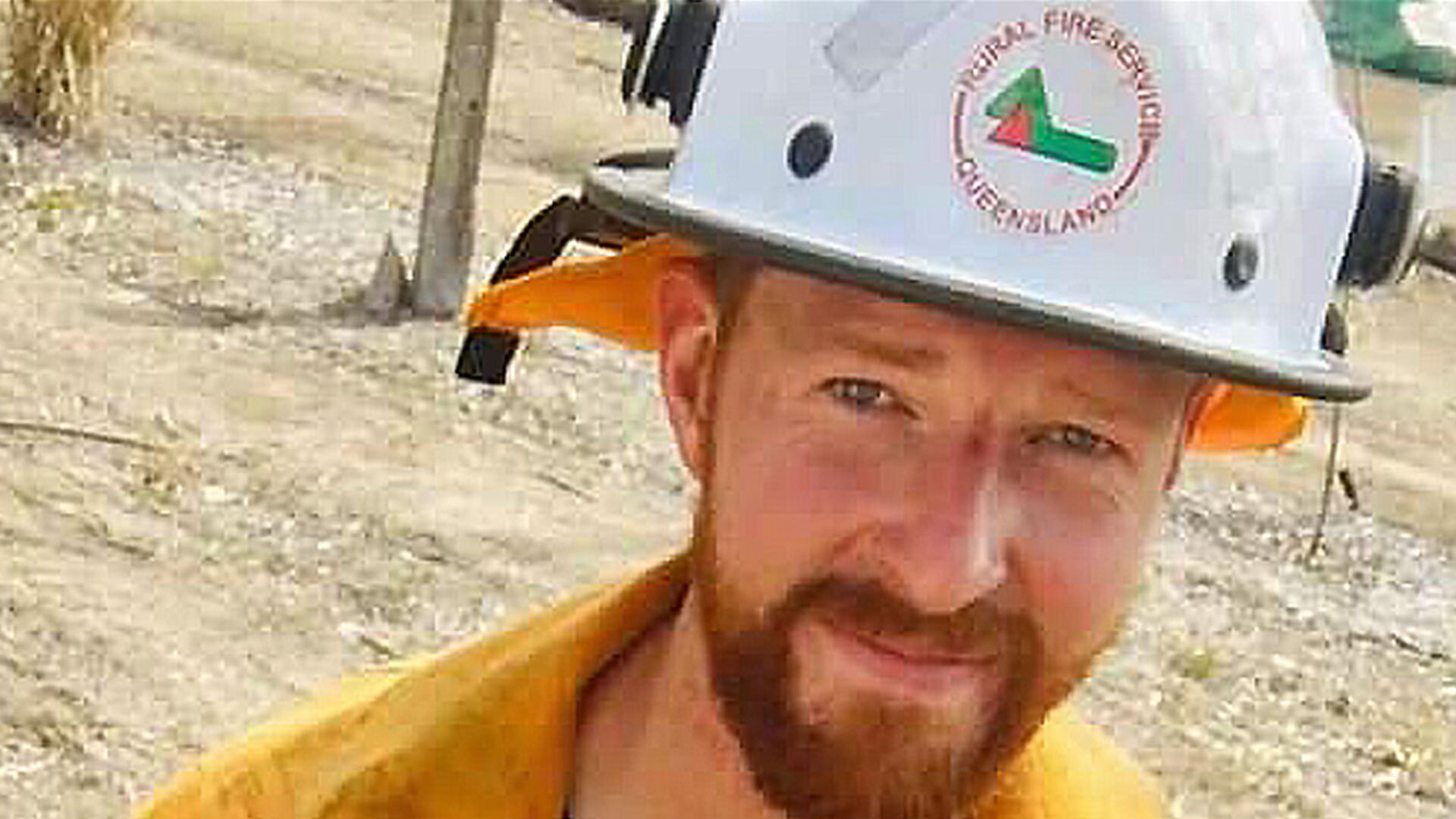
The statement described his sense of adventure, fun and love of travel.
Australia's Ukrainian community issued a statement passing on its deepest sympathies to Danahay's family.
"Our community feels pain and sorrow that a good, decent young man has lost his life in this way," Australian Federation of Ukrainian Organisations co-chair Stefan Romaniw said.
"We pay respect to the bravery and courage of Mr Danahay, who was helping to provide medical support to Ukrainian soldiers on the frontline. We salute him as a hero and honour his selflessness and respect for human life."
"Our community also extends its deepest sympathies to the family of Mr Danahay," Peter Bongiorni, the Ukrainian Community of Queensland president, said.
"We are deeply sorry for their loss, and offer our condolences and prayers at this difficult and tragic time."
READ MORE: Melbourne mural criticised as 'utterly offensive' to Ukrainians
"May Mr Danahay rest in peace. In Ukrainian, we wish him Вічная пам'ять (Eternal Memory).
"We also wish the Danahay family peace and comfort as they grieve."
DFAT has confirmed it is providing consular assistance to his family.
In May, Tasmanian aid worker Michael O'Neill became the first known Australian to die in the Ukraine conflict.