Brendon McMahon, Local Democracy Reporter Westport hospital facilities 100km from the nearest alternate facility on the West Coast are at a point where no emergency doctor cover for the facility is “99 per cent done” and people…
Tag Archives: oceania
Trump search inventory reveals new details from FBI seizure
Along with highly classified government documents, the FBI agents who searched former President Donald Trump’s Florida estate found dozens of empty folders marked classified but with nothing inside and no explanation of what might have been there, according to a more detailed inventory of the seized material made public on Friday.
The agents also found more than 10,000 other government documents kept by Trump with no classification marked.
The inventory compiled by the Justice Department reveals in general terms the contents of 33 boxes and containers taken from Trump’s office and a storage room at Mar-a-Lago during the August 8 search.
READ MORE: Australia's east coast battered by rain during first weekend of spring

Though the inventory does not describe the content of the documents, it shows the extent to which classified information – including material at the top-secret level – was stashed in boxes at the home and mixed among newspapers, magazines, clothing and other personal items.
And the empty folders raise the question of whether the government has recovered all of the classified papers that Trump kept after leaving the White House.
The inventory makes clear for the first time the volume of unclassified government documents at the home even though presidential records were to have been turned over to the National Archives and Records Administration.

The Archives had tried unsuccessfully for months to secure their return from Trump and then contacted the FBI after locating classified information in a batch of 15 boxes it received in January.
The Justice Department has said there was no secure space at Mar-a-Lago for sensitive government secrets and has opened a criminal investigation focused on their retention there and on what it says were efforts in the past several months to obstruct the probe.
It is also investigating potential violations of a law that criminalises the mutilation or concealment of government records, classified or not.
READ MORE: How the Chris Dawson murder trial unfolded

Lawyers for Trump did not immediately return an email seeking comment Friday. Trump spokesman Taylor Budowich asserted that the FBI search was a “SMASH AND GRAB” – though the Justice Department had received court-authorised permission to search specific locations in the home.
The inventory was released as the Justice Department undertakes its criminal investigation, as intelligence agencies assess any risk to national security caused by mishandling of classified information and as a judge weighs whether to appoint a special master – essentially an outside legal expert – to review the records.
The inventory had been filed earlier under seal, but the Justice Department had said that given the “extraordinary circumstances,” it did not object to making it public. Trump himself has previously called for the disclosure of documents related to the search. US District Judge Aileen Cannon said on Thursday that she planned to unseal the inventory and did so on Friday.
All told, the inventory shows, the FBI seized more than 100 documents with classification markings in August, including 18 marked top secret, 54 secret and 31 confidential. The FBI had identified 184 documents marked as classified in 15 boxes recovered by the Archives in January, and received additional classified documents in a single Redweld envelope during a June visit to Mar-a-Lago.
The Justice Department has said that it searched the property in August after developing evidence that documents were likely “concealed and removed” from the storage room as part of an effort to obstruct its probe.
READ MORE: Victorians warned to prepare for thunderstorm asthma now

The court filings have not offered an explanation for why Trump had kept the classified documents, and why he and his representatives did not return them when requested.
The inventory shows that 48 empty folders with classified banners were taken either from the storage room or office, along with additional empty folders labelled as “Return to Staff Secretary” or military aide.
It is not clear from the inventory list what might have happened to any of the documents that apparently had been inside.
Separately Friday, the Justice Department said in a court filing that it had reviewed the records seized during the recent search and had segregated those with classified markings to ensure that they were being stored according to proper protocol and procedure.

“The seized materials will continue to be used to further the government’s investigation, and the investigative team will continue to use and evaluate the seized materials as it takes further investigative steps, such as through additional witness interviews and grand jury practice,” the department said.
It added that “additional evidence pertaining to the seized items,” including the manner in which they were stored, “will inform the government’s investigation.”
Australia's east coast battered by rain during first weekend of spring
Australia's east coast is set for a drenching despite hopes for warmer and drier weather in the first weekend of spring.
Queensland and New South Wales will experience the wettest conditions today however the rainfall is expected to clear by tomorrow.
Rainfall between 40 and 50mm in southern Queensland and north-east NSW is predicted in the coming hours.
READ MORE: How the Chris Dawson murder trial unfolded
Showers set to clear for Brisbane's Riverfire
Weatherzone said a trough in the east is triggering rain in Queensland which could lead to flooding.
"We have seen widespread falls of 15 to 30mm and isolated falls up to 50mm," meteorologist Dean Narramore said.
This may seem like bad news for festival-goers at Brisbane's iconic Riverfire set to go ahead tonight with record crowds after the COVID-19 pandemic.
But Narramore said there should only be one or two showers in Brisbane tonight so spectators won't have their parade rained on.
"The good news is as we head into the nighttime for the all-important Riverfire in Brisbane it looks like we will have one or two showers around," Narramore said.
"We should be okay for the big event this evening."
READ MORE: Victorians warned to prepare for thunderstorm asthma now

NSW in the firing line of a downpour
Meanwhile, northern NSW is in the firing line with isolated rainfall of up to 100mm expected today.
"Widespread falls probably around 40 to 50mm with isolated falls in excess of 100mm. I have already seen around 20 or 30mm," Narramore warned.
"The rain should continue right through today and ease later tonight and will be all gone by tomorrow morning."
This rainfall has sparked renewed flood warnings for rivers in the north of the state.
"This may cause riverine flooding in some areas, with a flood watch issued on Friday afternoon for the Orara, Bellinger and Hastings Rivers," Weatherzone said.
What about other states?
Victoria's south will resemble most of the east coast with wet and drizzly conditions while the state's north will be mostly sunny.
Showers are expected to clear in South Australia, Tasmania and the central interior.
In Western Australia, flood warnings are in place for the state's north-west with a trough and low generating rain and thunderstorms.
READ MORE: Rail union vows to continue industrial action despite government threat

The low-pressure system currently hitting Western Australia is expected to move across the country next week bringing widespread rainfall.
"We could see widespread 20 to 40mm across much of the country with isolated heavier falls in parts of Victoria and NSW particularly on and west of the ranges in western NSW and northern eastern Victoria," Narramore said.
He also warned of flash flooding next week as rivers and catchments are saturated by constant rainfall in past months.
Ngongotahā: Police seek witnesses to knifepoint robbery
Police are seeking witnesses to an alleged knifepoint robbery at a Ngongotahā bar.A man with a knife entered the Kalah Bar at the Ngongotaha Tavern on Hall Rd about 11.10am on Friday.The man put the money in a red shopping…
Victorians warned to prepare for thunderstorm asthma now
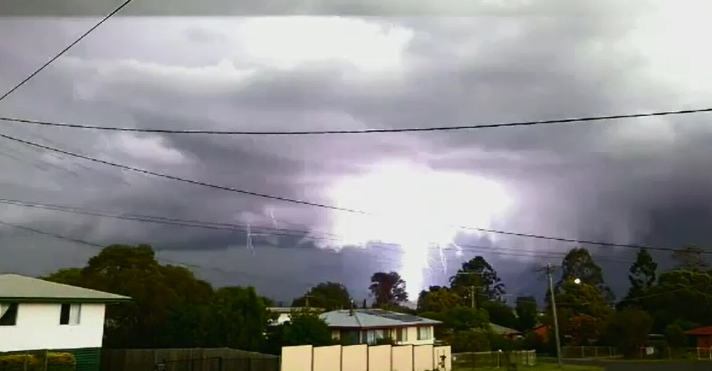
Victorians are being warned to start preparing for thunderstorm asthma now as the grass and pollen season is set to ramp up in the coming weeks.
Health authorities are warning residents with asthma or hay fever to check in with their GP and make a plan prior to the season beginning.
"If you have current, past or undiagnosed asthma or seasonal hay fever you are at increased risk of thunderstorm asthma," Victoria Health said.
READ MORE: Rail union vows to continue industrial action despite government threat
"So be prepared to manage any symptoms and stay out of hospital."
From October 1, people can check the daily risk rating on the VicEmergency app or website.
What is thunderstorm asthma?
Thunderstorm asthma is believed to be a result of high amounts of grass pollen in the air and a certain type of thunderstorm.
For people who have asthma or hay fever, this can trigger severe asthma symptoms.
When a large number of people develop asthma symptoms in a short period of time, this is known as epidemic thunderstorm asthma.
How do I protect myself?
Health authorities urge anyone who suffers from asthma or hay fever to monitor the forecast on the VicEmergency app.
Avoid being outside during a storm and especially during the winds prior to the storm.
Take preventative medication as directed by your GP even if you're symptom-free.
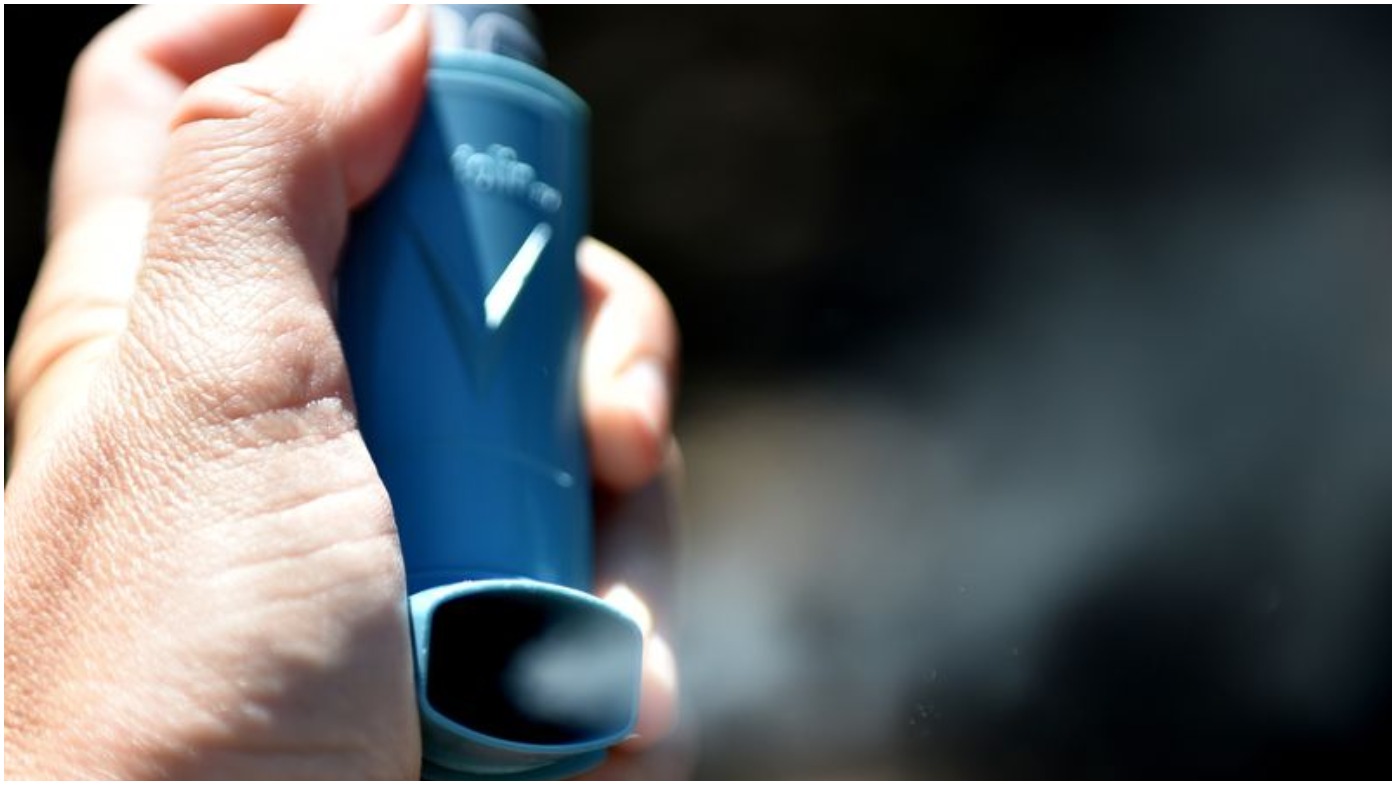
Always carry your reliever and be aware of how to manage your asthma attack, your GP can help you with this.
READ MORE: $10 million in bushfire funding yet to reach firefighter's families
How dangerous is thunderstorm asthma?
Thunderstorm asthma can be very dangerous for asthma and hay fever sufferers if they're not aware of the forecast or don't have a plan.
In 2016, ten people died in Melbourne from thunderstorm asthma.
Residents are urged to check in with their GP now prior to the season starting.
How the Chris Dawson murder trial unfolded
During the Chris Dawson murder trial, his twin brother Paul staunchly defended him, Lynette's heartbroken family begged for answers, and his second wife was accused of wanting revenge.
Possible sightings of the missing mother-of-two were recounted, there were claims of bruising on Lyn's throat, and allegations of a hitman for hire – but these were all dismissed.
Justice Ian Harrison spent nearly five hours outlining in meticulous detail the reason for his decision, picking apart the last 40 years.
Ultimately the judge ruled Dawson murdered Lyn in January 1982 so he could pursue a relationship with the teenage family babysitter, JC.
Here is how the murder trial unfolded:
READ MORE: Chris Dawson found guilty of murdering his first wife Lynette in 1982

The teenage babysitter
Ultimately, much of Justice Harrison's decision hinged on the testimony of JC, the Dawson family's babysitter.
Just a teenager in the 1980s, she was a student at Cromer High School on Sydney's Northern Beaches, where Dawson worked at the time.
During the trial she testified Dawson once drove her to Western Sydney and told her he was hiring a hitman to kill Lyn.
Justice Harrison declared this "one of the most contentious" claims in the trial and ruled it unlikely but said JC's testimony was otherwise "truthful and reliable".
The judge also said her evidence was "not corrupted" by her separation from Dawson.
JC would go onto be Dawson's second wife, after he moved her into the family home days after Lyn's murder.
During the trial she shed light on what was going through her head as she stood next to Dawson on their wedding day, wearing a ring made from his first wife's engagement and eternity bands.
"Oh my god, what am I doing here… I think I resigned myself that I was not going to get away from him… I don't feel as though I had a choice", she said.
JC also claimed she was instructed to move into the house because Lyn "wasn't coming home", and Dawson needed help looking after the children he shared with his first wife.
TIMELINE: Key events that lead to Chris Dawson's guilty murder verdict

The twin brother
Chris Dawson's twin Paul testified from a police station in Tweed in northern NSW, and described his brother as the "least violent man he's ever met".
A secret phone tap from 1999, recorded after Paul had been grilled by detectives over Lyn's disappearance, was played to the Supreme Court.
In it, Paul suggested Chris' second wife, JC, would be the one with any sort of motive to kill Lyn.
"He (the detective) implied that something has happened to Lyn and that you had the motive," Paul said in the phone call.
"They think something has happened to Lyn and I had the motive and they are going to search the property and do sorts of things. Oh well, good luck to them," Chris replied.
"If anyone had the motive, (JC) had more motive," Paul said.

The dogged detectives
Damian Loone handled the Chris Dawson investigation for nearly two decades.
After taking over the case in 1998, he read transcripts of an old police interview with Chris Dawson and immediately suspected something grave had happened to Lyn, who had vanished 16 years earlier.
During the trial Loone admitted he approached it from a homicide from the beginning, and conceded he failed to take statements from critical witnesses.
These include Lyn's mother Helena Simms and others from the Northbridge Baths who said they remembered Dawson receiving a phone call, which he claimed was his wife saying she needed a few days away.
Loone also acknowledged nothing was formalised after talking to Bayview residents Peter and Jillian Breeze, who reported seeing the missing nurse at Rock Castle Hospital in 1984, two years after she had disappeared.
However yesterday Justice Harrison ruled the baths phone call "a lie" and dismissed any sightings – saying Lyn was murdered on or around January 8, 1982.
Also called to give evidence was John Pendergast, a police officer on Sydney's Northern Beaches for more than three decades before his retirement.
In the late 1990s he offered his help in a renewed appeal in the Lyn Dawson case, but was accused of tunnel vision and ignoring evidence that supported her husband's account.
Pendergast visited Chris' twin Paul and tapped their phones, which he admitted was in the hope of finding something incriminating.
The defence argued the police relied too heavily on JC's story, to which the now-retired detective sergeant said: "She did have a motive, but there's no evidence to suggest at all she was involved in Lynette Dawson's disappearance."
LYNETTE DAWSON FAMILY REACTION: 'We still need to bring her home'

Lynette's childcare colleagues
Sue Strath never gave up on Lyn.
On the day she was called to give evidence at the murder trial she said: "I am here to see justice done… so let's hope that happens."
The pair worked together at a childcare centre inside the Warriewood shops on Sydney's Northern Beaches on what would be Lyn's last shift before she disappeared in January 1982.
Strath said Lyn confided in her about issues at home, including the troubled teenage babysitter moving in and being caught naked in the backyard pool.
She also claimed Lyn told her about Dawson leaving the family over Christmas in 1981 before reappearing a few days later.
Strath told the court she believed things had turned around after seeing the couple walk hand-in-hand following marriage counselling.
"'I asked how did it go?' and Lyn said, 'Oh it was really good, really positive and I am hoping we can move forward and work together'," Strath told the court in May.
The day after this conversation, Dawson alleges Lyn ran away.
Three years after Lyn vanished, Strath said she lodged a formal complaint with the NSW Ombudsman as she was concerned police had failed to investigate what she thought to be suspicious circumstances.

"I was never interviewed, no one ever came looking for her," Strath said outside court.
"I just said what's happened, what have the police done to look for my friend?"
Annette Leary also worked with Lyn at Warriewood Children's Centre in the 1980s, and said they would have "snippets" of conversations throughout their shifts.
She told the NSW Supreme Court she once asked her colleague about bruises on her throat after Lyn and Chris had attended counselling together.
"She said that Chris had grabbed her throat and shook her a little and said 'if this doesn't work, I'm getting rid of you … I am only doing it once'," Leary said.
Justice Harrison said this incident was "unreliable" and it was "unlikely" bruises would have formed that quickly.
The court also heard from centre director Barbara Cruise, who said Chris had called her to say "Lyn had gone away, she needed some time out and he didn't know when she was coming back".
Cruise told the judge she had doubts about whether Lyn had disappeared of her own free will and once searched for Lyn's mother's name in the phone book, before calling her to raise her concerns.

Phone calls a 'lie'
Justice Ian Harrison said Chris Dawson's claim he received a phone call from Lyn at the Northbridge Baths on January 9, 1982 is "a lie".
"The only evidence that Mr Dawson received a call from Lyn is from Mr Dawson," he said.
"No one apart from Mr Dawson has ever received a phone call from Lyn Dawson since she was last spoken to on Friday January 8, 1982."
Justice Harrison said within the context of an emotional and stressful marriage breakdown he "cannot accept that Lynette Dawson would merely have telephoned Mr Dawson to say that she needed more time".
He said it is "fanciful" in his view to suggest such conversations "lacking in detail" ever occurred.
"It seems remarkable that a woman that was troubled enough to call… Did not feel the need to inform her husband when her final decision was reached."
Justice Harrison said it was concerning to him that Lyn never contacted anybody else besides Dawson.
Possible sightings dismissed
Supposed sightings of Lyn at a bus stop, during a royal visit and a hospital were all ruled false by Justice Harrison.
In a 2019 police interview, Dawson's brother-in-law Ross Hutcheon claimed he saw Lyn waiting for a bus opposite Gladesville Hospital around six months after she went missing.
Hutcheon died in early 2022 before he could testify, so his interview was played at the trial.
"She looked just like the Lyn I knew… same colour hair, same hairstyle, no sunglasses, no obvious attempt to disguise herself or anything like that," Hutcheon told the detectives.
Hutcheon said he told his wife about the possible sighting that same night and two officers later in 1999 but notes from the meeting show no record of that information.
"No mention of Gladesville?" Hutcheon asked the officer after reading the police notes.
The police officer responded: "No."
"Wrong, wrong," Hutcheon said.
"Are you certain you told them about it?" the police officer asked Hutcheon.

"Certain, that is wrong," Hutcheon responded as he handed back the papers.
The sighting was raised again in 2018 after Dawson was charged with murder.
Dawson's sister, whose name is also Lynette, was grilled by the prosecutor about why she didn't discuss the sighting with her family for 36 years.
She told the judge she always assumed her sister-in-law had upped and left and never imagined it would be treated as a murder.
An elderly family friend Elva McBay claimed she saw Lyn run across the road in front of Prince Charles an Diana's motorcade in 1983.
Neighbours Peter and Jillian Breese testified they saw a woman who looked like Lyn working at Rockcastle Hospital two years after she vanished.
None of the reported sightings were ever confirmed, some were properly investigated, and all turned out to be impossible.
The hit podcast
It's impossible to tell the story of the Dawson murder trial without mentioning The Teacher's Pet, a hit podcast by The Australian Newspaper.
The show's creator – journalist Hedley Thomas – was called as a witness and defended accusations he led a campaign against Dawson, but conceded he did think he was guilty of murdering his wife.
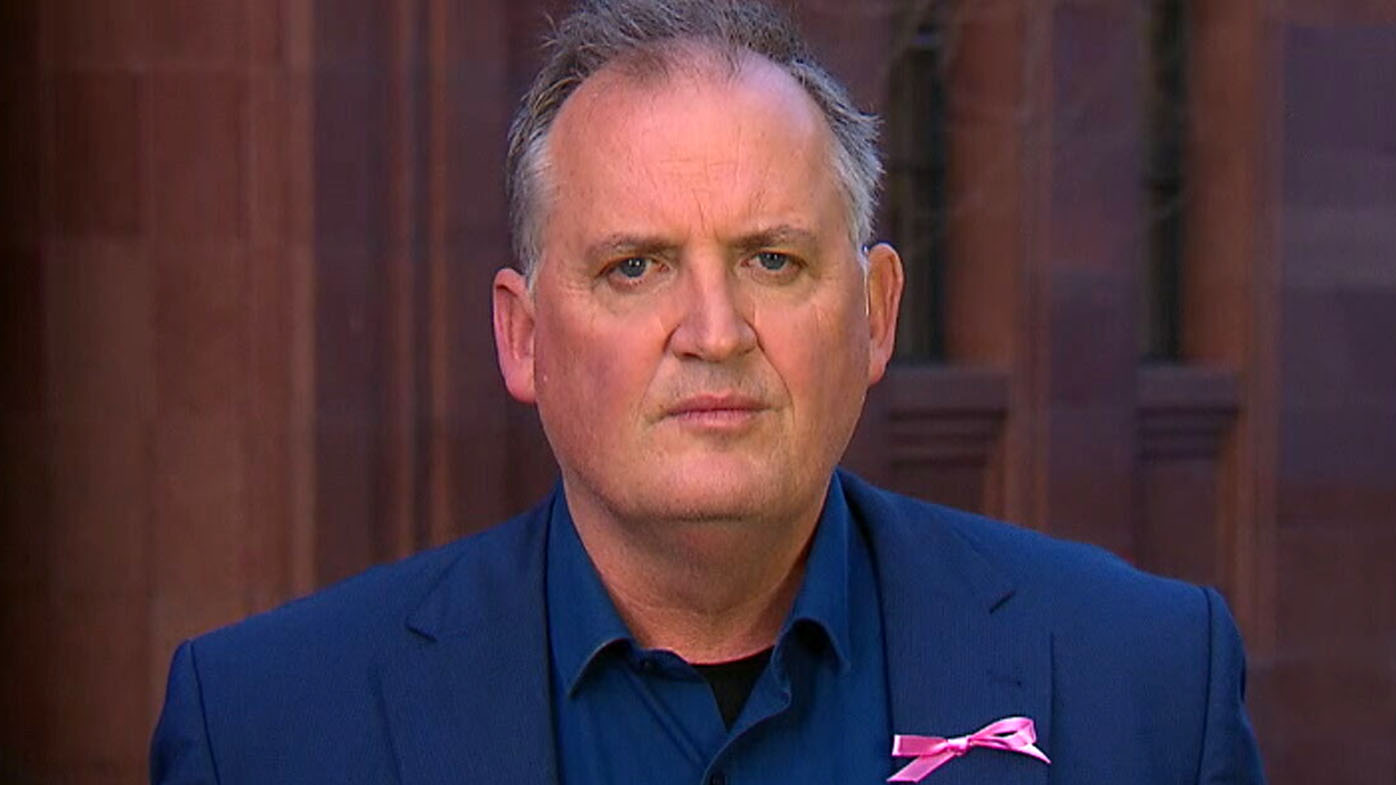
"I thought he was likely to have, but I still had an open mind about it. I wanted to learn more about it. I became more sure as time went on," Thomas told the Supreme Court.
The award-winning 16-episode series was released in 2018 and has since been downloaded 60 million times across the globe.
The same year the podcast took off, detectives from NSW Police announced a dig at the Dawson couple's former home in Bayview on Sydney's Northern Beaches.
The veteran reporter rejected suggestions he was out to condemn Dawson.
"I had a view about him, which I felt was very suspicious and the view strengthened as I read more and spoke to more people," Thomas said.
NASA aims for Saturday launch of new moon rocket after fixes
NASA is set to aim for a Saturday launch of its new moon rocket after fixing fuel leaks and working around a bad engine sensor that foiled the first try.
The inaugural flight of the 98-metre rocket – the most powerful ever built by NASA – was delayed late in the countdown on Monday.
The Kennedy Space Centre clocks started ticking again as managers expressed confidence in their plan and forecasters gave favourable weather odds.
READ MORE: Rail union vows to continue industrial action despite government threat

Atop the rocket is a crew capsule with three test dummies that will fly around the moon and back over the course of six weeks – NASA's first such attempt since the Apollo program 50 years ago. NASA wants to wring out the spacecraft before strapping in astronauts on the next planned flight in two years.
NASA Administrator Bill Nelson said he's more confident going into this second launch attempt, given everything engineers learned from the first try.
So is astronaut Jessica Meir, who's on NASA's short list for one of the initial moon crews.
“We're all excited for this to go, but the most important thing is that we go when we're ready and we get it right, because the next missions will have humans on board. Maybe me, maybe my friends," Meir told The Associated Press on Friday.
The engineers in charge of the Space Launch System rocket insisted Thursday evening that all four of the rocket's main engines were good and that a faulty temperature sensor caused one of them to appear as though it were too warm Monday.
The engines need to match the minus-250C of the liquid hydrogen fuel at liftoff, otherwise they could be damaged and shut down in flight.
“We have convinced ourselves without a shadow of a doubt that we have good-quality liquid hydrogen going through the engines,” John Honeycutt, the rocket's program manager, said.
READ MORE: Coded new 50c coin solved by Tasmanian teen an hour after its release

Once fueling begins Saturday morning, the launch team will perform another engine test – this time earlier in the countdown. Even if that suspect sensor indicates the one engine is too warm, other sensors can be relied on to ensure everything is working correctly and to halt the countdown if there’s a problem, Honeycutt told reporters.
NASA could not perform that kind of engine test during dress rehearsals earlier this year because of leaking fuel. More fuel leaks cropped up Monday; technicians found some loose connections and tightened them.
The engine-temperature situation adds to the flight's risk, as does another problem that cropped up Monday: cracks in the foam insulation of the rocket. If any foam pieces break off at liftoff, they could strike the strap-on boosters and damage them.
READ MORE: $10 million in bushfire funding yet to reach firefighter's families

Engineers consider the likelihood of that happening low and have accepted these slight additional risks.
“This is an extremely complicated machine and system. Millions of parts,” NASA's chief, Nelson, told the AP.
“There are, in fact, risks. But are those risks acceptable? I leave that to the experts. My role is to remind them you don’t take any chances that are not acceptable risk.”
The $4.1 billion test flight is NASA's first step in sending astronauts around the moon in 2024 and landing them on the surface in 2025. Astronauts last walked on the moon in 1972.
Dramatic arrests made at Bunnings carpark over 'drug syndicate'
Seven men alleged to be involved in a drug syndicate will face court today after a dramatic arrest in a Bunnings carpark in south-west Sydney.
Police went to the Bunnings carpark on Camden Valley Way, Casula, around 11am on Friday where officers arrested eight people.
Officers allege the men are involved in the supply of illicit drugs and cigarettes across NSW.
READ MORE: Rail union vows to continue industrial action despite government threat


Almost $1 million in cash was also seized during the arrests.
Seven men, aged between 31 and 49, were taken to Campbelltown Police Station.
The men are facing various charges including drug supply, participating in a criminal group and knowingly dealing with proceeds of crime.
All seven have been refused bail to face Parramatta Local Court today.
New video game is 'like Tony Hawk meets John Wick'
If you're into action sports and shooting video games, look no further than Rollerdrome.
At first glance it's an awkward mashup of some of the greatest video games of the past few decades, but what's been served up is a total hit.
It's the latest video game developed by Roll7, who are just off the back of Olli Olli World, another skating adventure game.
READ MORE: Skating game OlliOlli World is an addictive workout

Graphics and story
Rollerdrome is a deadly game set in the not-too-distant future (the year 2030), where roller skaters must arm themselves and take on an arena filled with bad guys.
Think Jet Set Radio crossed with Tony Hawk Pro Skater — oh, and add guns.
The art style is a little old school with cell shading effects, but it adds to the comic book feel.
You play as newcomer Kara Hassan, who must prove herself in the arena before heading to the championships.
Following a very thorough, quick and informative tutorial, Hassan is allowed entry.
This is where the fun begins.
Gameplay

Spinning, flipping, grinding and shooting your way through a deadly skatepark — it's quite the rush.
You can't fall down on your skates. Your skills at skating make you immune to falling, which makes all the trick landing that little bit more satisfying.
But you aren't immune to bullets.
Combat is very action-packed and fast-paced — timing is everything.
There were moments when multiple laser targets were on my back, a dozen incoming missiles were heading directly for me, and all I wanted to do was pull off the perfect backflip.
Coming in to land that dream trick and pulling down on the aim trigger will activate Rollerdrome's "bullet time" feature, allowing you to slow down time, precisely aim and shoot down enemies in style.

In the same style as Tony Hawk Pro Skater, players have certain challenges to complete across the map, and ticking them off allows you to progress through the game.
Bad guys get bigger and tougher the further you progress, but the maps tend to repeat after a while.
When you think shooting game, you think violence. But I found myself concentrating more on the challenges and tricks than the gore.
When I say gore, I don't mean heads exploding and blood and guts. There are some bloody particle effects, but Rollerdrome's comic-like design takes away from the "killing".
READ MORE: Upcoming video game defines 'horror engineering'
When not in the arena you can navigate the change rooms, among other areas, in first-person — walking around and exploring your environment.
An odd feature at first, but little titbits in the environment help grow the story. And while it's quite restrictive, it certainly helps break up any repetitiveness found in the arena battles.

Should you buy it?
Rollerdrome is a fast-paced, action-packed and intense skater-shooter with stylish graphics and rewarding gameplay.
If you like skating, slow-mo action, shooting guns and feeling like a total badarse then this game's for you.
PlayStation and PC owners can pick up Rollerdrome now for around $45.
Coded new 50c coin solved by Tasmanian teen in 'just over an hour'
It was meant to be the coin with a secret message that was tough to decode.
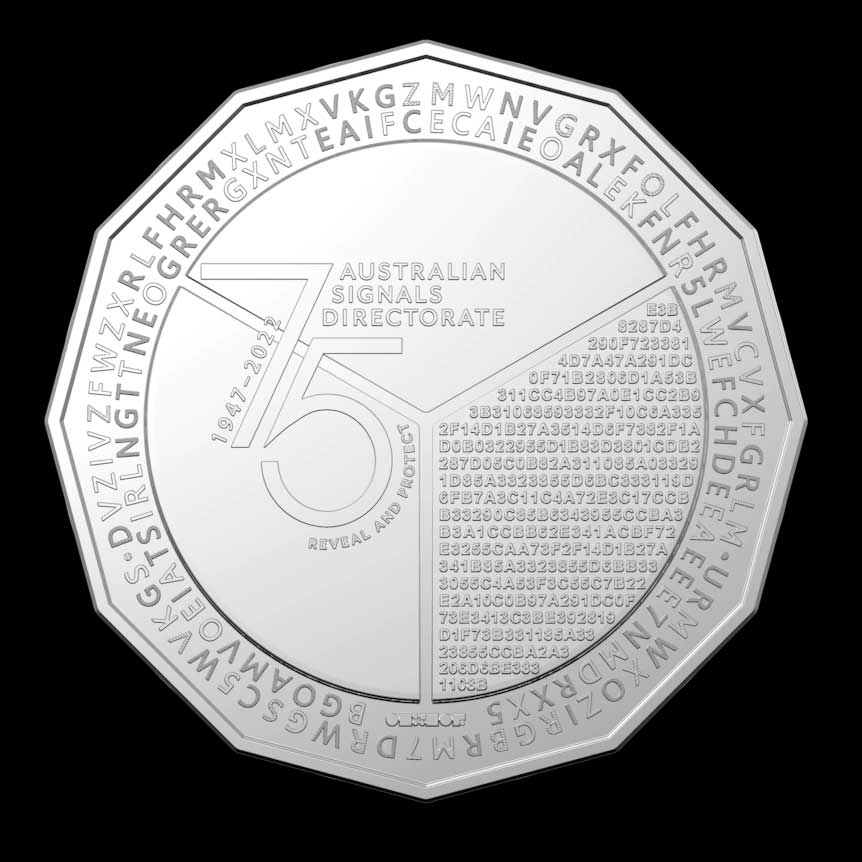
The commemorative 50c piece, to mark the Australian Signals Directorate's 75th anniversary, features four unique layers of encryption which contain special messages about the intelligence agency.
However, just an hour after its release yesterday, a 14-year-old boy from Tasmania became the first to correctly crack the code, which features a combination of coding dating back thousands of years and more modern binary code.
READ MORE: Retirees' trip of a lifetime goes wrong

During a Lowy Institute Q&A, ASD Director-General Rachel Noble insinuated the message had been figured out much quicker than they expected, and joked that they were hoping to recruit the youngster.
"At 8.45 in the morning we put up our web forum and said, 'hey, if you think you've got the answers, fill in the form'," Noble said.
"And believe it or not, a boy, 14 years old, in Tasmania was the first person in just over an hour to get all four right — it's unbelievable."
In response to a quip from the audience, Noble responded: "I know — can you imagine being his mum."
READ MORE: Royal Adelaide Show to make anticipated return

Her comment prompted laughs, as did the notion the teen could become the next member of the spy agency.
"So, we're hoping to meet him soon," she said, adding under her breath "and recruit him".
However, Noble also announced there was a fifth level of encryption contained in the coin, meaning there's one more message left for the teenager to decode.
The ASD is responsible for signals intelligence, cyber warfare and cyber security.
The agency functions as Australia's chief codebreaking unit, and seeks to intercept messages sent by adversaries and decrypt them.
The ASD plays a powerful role within the Five Eyes intelligence network.