The threat of nuclear calamity has hung for months over Russia's war in Ukraine.
Those fears were renewed last week after shelling intensified around the massive Zaporizhzhia nuclear power plant, Europe's largest, which has been under Russian control since March.
Attacks at the complex, which have ramped up as fighting flares in Ukraine's south, have sparked concerns about the spectre of nuclear disaster, leading the United Nation's watchdog and world leaders to demand that a mission be allowed to visit the site and assess the damage.
READ MORE: Prime Minister to make 'diplomatic representations' over release of Bali bomb maker
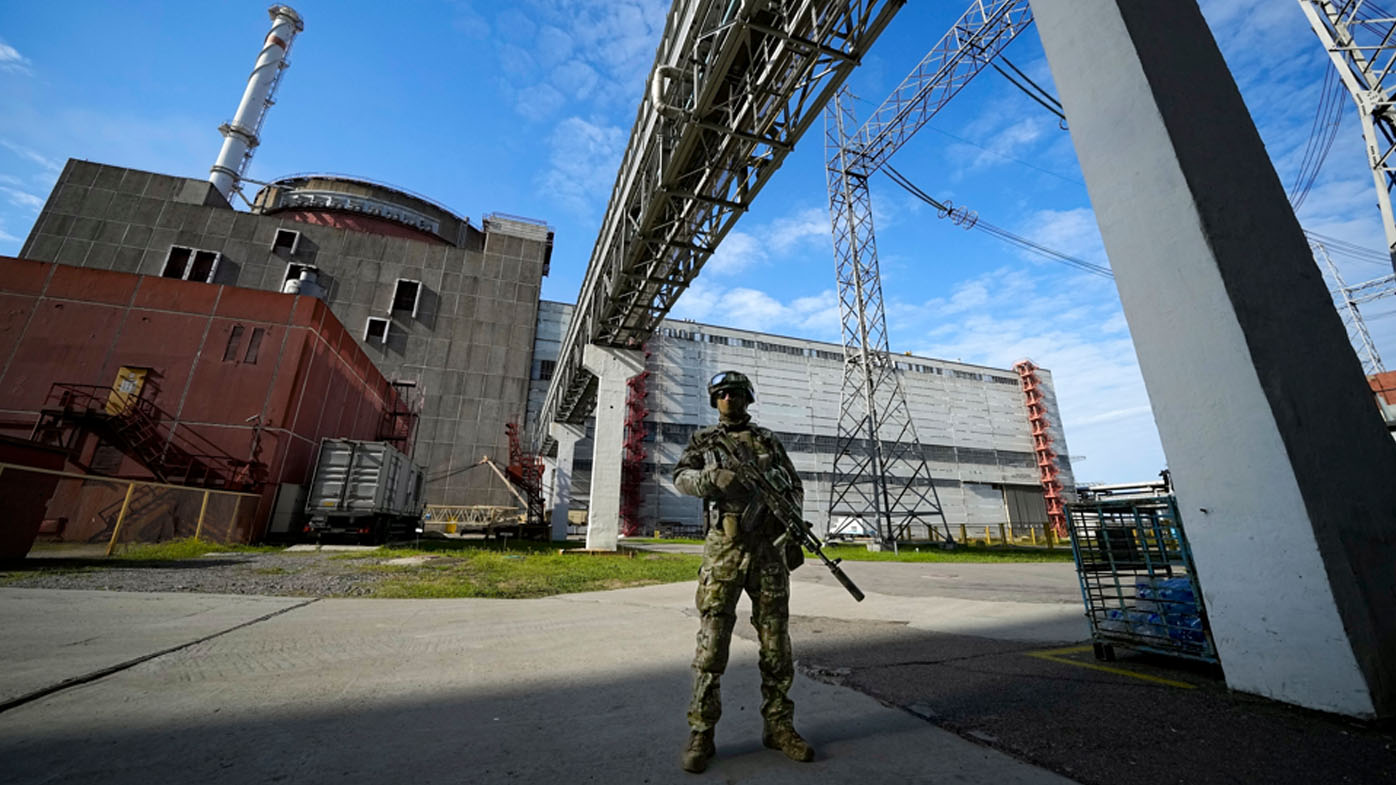
So just how real is the risk that the fighting poses?
Nuclear experts are keen to defuse some of the more alarmist warnings, explaining that the main threat is closest to the plant itself and doesn't justify Europe-wide alerts. Experts are particularly wary of any comparisons to the Chernobyl disaster, a repeat of which is incredibly unlikely, they said.
"It's not very likely that this plant will be damaged," Leon Cizelj, president of the European Nuclear Society, told CNN.
"In the very unlikely case that it is, the radioactive problem would mostly affect Ukrainians that live nearby," rather than spreading throughout eastern Europe as was the case with Chernobyl, he said.
"If we used past experience, Fukushima could be a comparison of the worst-case scenario," Cizelj added, referring to the serious but more localised meltdown at the Japanese plant in 2011. The most pressing dangers would be faced by Ukrainians living in the vicinity of the plant, which is on the banks of the Dnipro River, south of Zaporizhzhia city, and by the Ukrainian staff who are still working there.
Malcolm Davis, a senior analyst at the Australian Strategic Policy Institute, said Russia could be using control of the nuclear plant as a means of coercion during the conflict, by threatening to escalate the fighting
Here's what you need to know about the clashes at Zaporizhzhia nuclear plant, and what their implications could be.
READ MORE: Finnish PM denies drug intake during 'wild' dance party

What's happening at the Zaporizhzhia plant?
Shellfire at the Zaporizhzhia plant in recent weeks has damaged a dry storage facility – where casks of spent nuclear fuel are kept at the plant – as well as radiation monitoring detectors, according to Energoatom, Ukraine's state-run nuclear power company.
On August 5, several explosions near the electrical switchboard caused a power shutdown and one reactor was disconnected from the electrical grid, the United Nations' International Atomic Energy Agency (IAEA) chief said. Rafael Mariano Grossi told the UN Security Council that the situation had deteriorated "to the point of being very alarming."
Kyiv has repeatedly accused Russian forces of storing heavy weaponry inside the complex and using it as cover to launch attacks, knowing that Ukraine can't return fire without risking hitting one of the plant's six reactors. Moscow, meanwhile, has claimed Ukrainian troops are targeting the site. Both sides have tried to point the finger at the other for threatening nuclear terrorism.
Calls are growing for an IAEA mission to be allowed to visit the complex. But fighting has continued despite the concern.
On Tuesday, Ukrainian authorities said the town of Nikopol, across the Dnipro River from the plant, had again come under rocket fire again.
"The shelling has threatened the safety of operators working on the site, and there have been reports that a worker was hit by shrapnel and taken to hospital," Henry Preston, a communications manager at the London-based World Nuclear Association, told CNN.
He called the workers' professionalism under occupation "remarkable" and the use of an operational power plant for military activities "unconscionable."
READ MORE: How 'audacious' Ukrainian attacks in Crimea threaten Putin war goals
How secure are the plant's nuclear reactors?
Modern nuclear power plants are extremely well reinforced to prevent damage from all kinds of attacks, such as earthquakes, and Zaporizhzhia is no exception.
"Like all nuclear power plants, Zaporizhzhia contains various redundant safety systems, which under normal circumstances are highly effective," James Acton, the co‑director of the Nuclear Policy Program at the Carnegie Endowment for International Peace, told CNN.
"The problem is that nuclear power plants are not designed for war zones and, under plausible circumstances, all these systems could fail," he added.
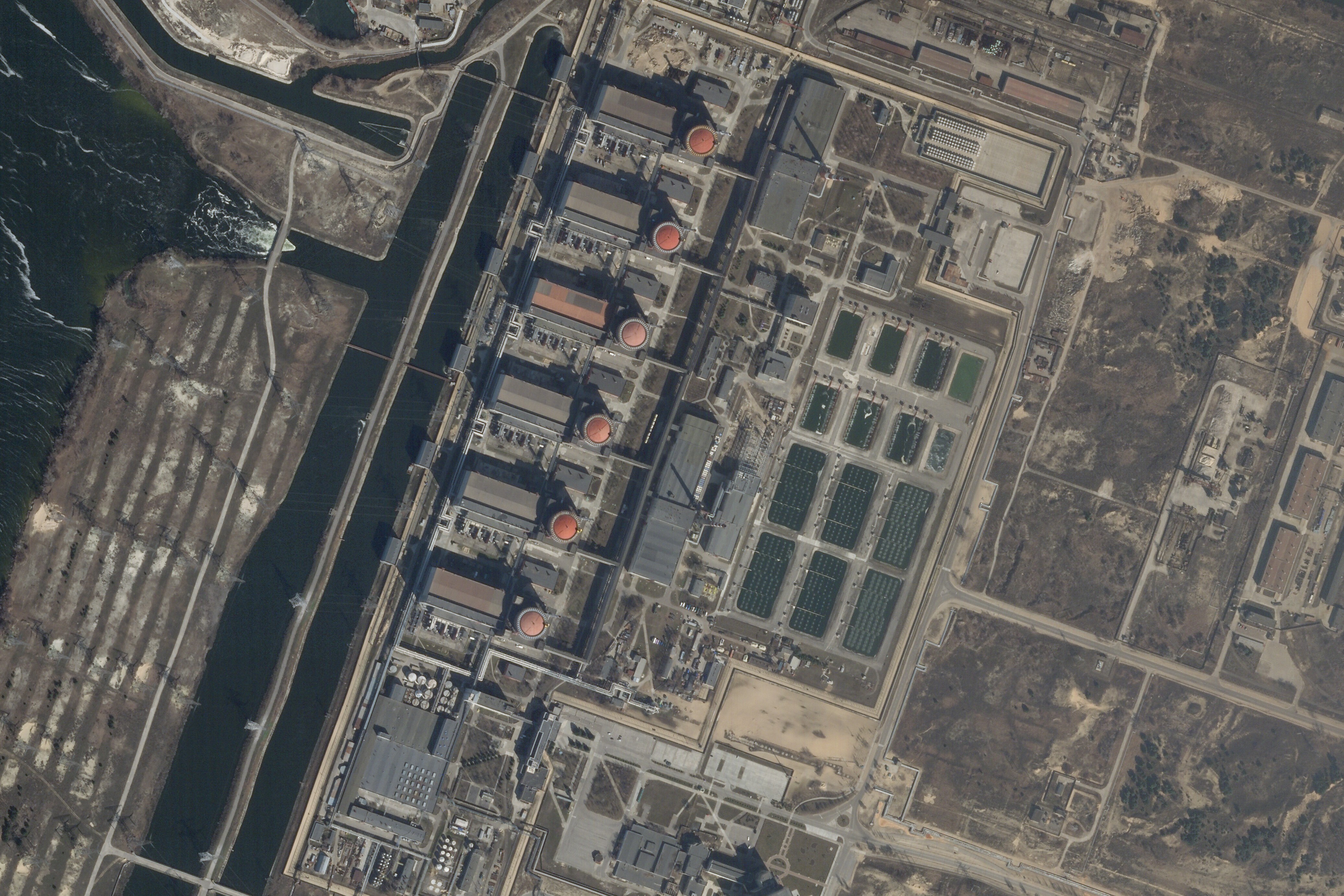
The plant's six reactors – only two of which are currently functioning – are protected by steel and metres-thick concrete casing.
"Random shelling cannot really destroy this, it would be really improbable," Cizelj said.
Were the reactors to come under attack by deliberate, targeted shelling, the risk would increase – but even that would require a "very, very skilled" operation, he said.
While Ukraine is not a member of the European Union, Cizelj told CNN that he expected Zaporizhzhia's precautions to be "comparable" to that of EU countries, where plants must adhere to strict nuclear safety rules.
READ MORE: Starbucks imitator takes over chain's old stores in Russia

What is the worst-case scenario?
Nuclear plants use a number of auxiliary safety systems, such as diesel generators and external grid connections, to keep reactors cool.
Zaporizhzhia also uses a spray pond, a reservoir in which hot water from inside the plant is cooled. If those systems failed, then the nuclear reactor would heat up swiftly, triggering a nuclear meltdown. That would be the worst case scenario, experts said.
But, while it would be disastrous at a local level, they explained it wouldn't have a major impact on Europe more widely.
"The main danger here is damage to the systems needed to keep the fuel in the reactor cool – external power lines, emergency diesel generators, equipment to dissipate heat from the reactor core," Acton said.
"In a war, repairing this equipment or implementing countermeasures could be impossible. In the worst case, the fuel could melt and spread large amounts of radioactivity into the environment."
An attack on structures used to store spent nuclear fuel – fuel which is removed after use in a reactor – also poses a risk, with the potential to release radioactive material into the surrounding area. But, experts said, it wouldn't travel far.
The head of Energoatom, Petro Kotin, said one strike earlier in August was close to the processed fuel storage area. "This is very dangerous, because the rockets hit 10 to 20 meters away from the storage, but if they had hit the containers with the processed fuel, it would be a radiation accident," Kotin said on Ukrainian television.
If one container is hit, "it will be a local accident on the territory of the plant and nearby territory. If it's two to three containers, the affected area will increase," he added.

How is Zaporizhzhia different to Chernobyl?
Shelling around Zaporizhzhia has triggered warnings of another "Chernobyl" — the world's worst-ever nuclear disaster.
But there are numerous differences between the two Ukrainian power plants and experts insist that a repeat of the 1986 cataclysm is essentially impossible.
The Chernobyl plant used Soviet-era, graphite-moderated RBMK reactors, which lacked a modern containment structure – a concrete and steel dome designed to prevent any release of radiation.
In contrast, each of the six reactors at the Zaporizhzhia facility are pressurised water reactors encased in a massive steel vessel, housed in a concrete containment building. The design is called VVER, the Russian acronym for water-water-energetic reactor.
"The brakes on these kinds of reactors are much much better," Cizelj said. "If there would be damage to these reactors, it would be much easier to shut it down."
The scale of a hypothetical nuclear meltdown would also be far smaller than that of Chernobyl, experts said. After the 1986 meltdown, radioactive fallout scattered across much of the northern hemisphere, while some 150,000 square kilometres in Belarus, Russia and Ukraine were contaminated, according to the IAEA. That contamination spread as far as 500km north of the site.

Experts instead suggest that the feasible worst-case would look more like another, more recent disaster.
"Fukushima is a better analogy than Chernobyl," Acton said. "In this event, evacuations may be required for tens of kilometres around the plant, especially downwind. In the middle of a war those would be exceptionally dangerous."
Any radioactive fallout would spread around 10km or 20km from Zaporizhzhia before it would cease to pose serious health risks, experts suggest.
"If somebody was able to cause the meltdown of the reactors, (gases) could escape in the atmosphere and the would travel with the wind until they are washed out of the atmosphere," Cizelj said. "With distance, dilution happens – so very soon, the dilution becomes sufficient that the impact becomes not very serious for the environment and for people's health."
But for people living in war-torn southern Ukraine, a nuclear disaster is not the most immediate danger. "If you compare it to the other risks they are facing, this risk is not very large," he added.


