Tag Archives: oceania

Long talked about NSW fast rail plans finally receive funding

The New South Wales government has announced $500 million toward constructing a fast rail line between Newcastle, the Central Coast, and Sydney in the upcoming budget.

The plans for fast rail lines have long been touted by the state government to decrease travel times between Sydney and regional areas like Newcastle and Wollongong.

However, Premier Dominic Perrottet said the difference in today's announcement is funding.

READ MORE: Tears as Nadesalingam family arrives home to Biloela

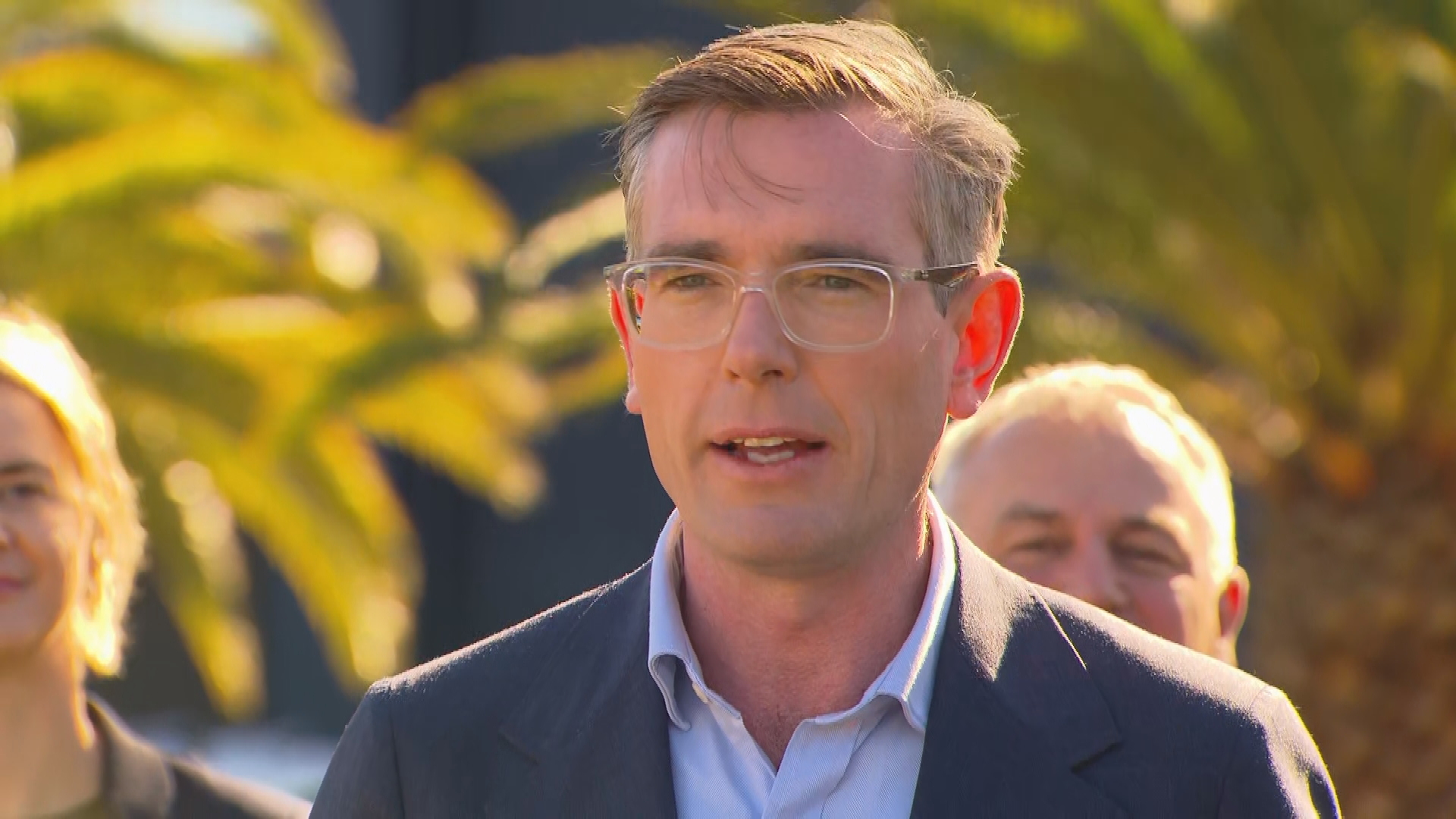
Premier Dominic Perrottet announces funding for fast rail project.

"It's been talked about for a long time but no one has brought money to the table," Perrottet said.

"You can't set up a vision for your state if you don't come with the funding that's required."

The $500 million investment means planning for upgrading the rail lines between Sydney and the Central Coast later this year.

Perrottet did not confirm when the fast rail would be completed.

He did however say the funding would go towards new electrified rail tracks on the Central Coast, platform and station upgrades at Wyong and Tuggerah and "starting" fast rail connections between Sydney, Newcastle and the Central Coast.

"The commencement of construction of ancillary infrastructure will make sure faster rail can become a reality," he said.

READ MORE: Sydney barista left shaken after customer throws hot coffee at him

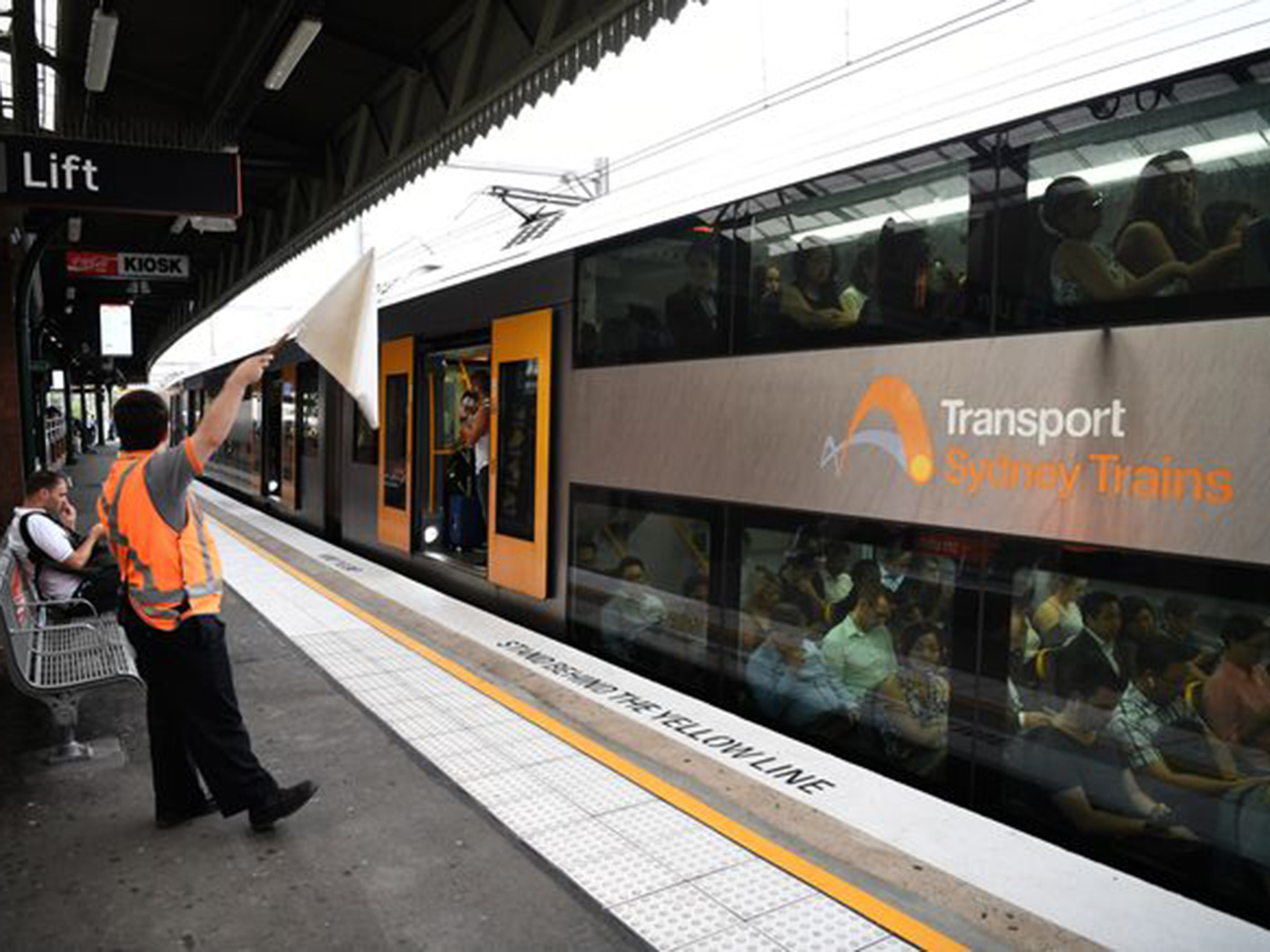
A busy Sydney train

Fast rail promises travel time between Newcastle and Sydney to be cut from two hours to an hour, between the Central Coast and Sydney in just 25 minutes and between Wollongong and Sydney in 45 minutes.

Minister for Planning Rob Stokes added the investment in fast rail will "transform accessibility" to the Central Coast.

Committee's CEO Gabriel Metcalf said the long-talked about plans for faster rail are beginning to pick up speed and welcomed the state government's funding.

"Better connections across this region, south to Wollongong, north to the Central Coast and Newcastle, and linking into Sydney's west, means we will effectively work like a bigger global city, with more economic gravitational pull," Metcalf said.

READ MORE: Is it legal for a shop to charge a surcharge for card transactions?

"It will give people more choice about where they work, where they live, and how they get around."

The federal government will match the state government investment in fast rail meaning the total funding for fast rail will be $1 billion.

Albanese announces $830m settlement over axed French submarine deal

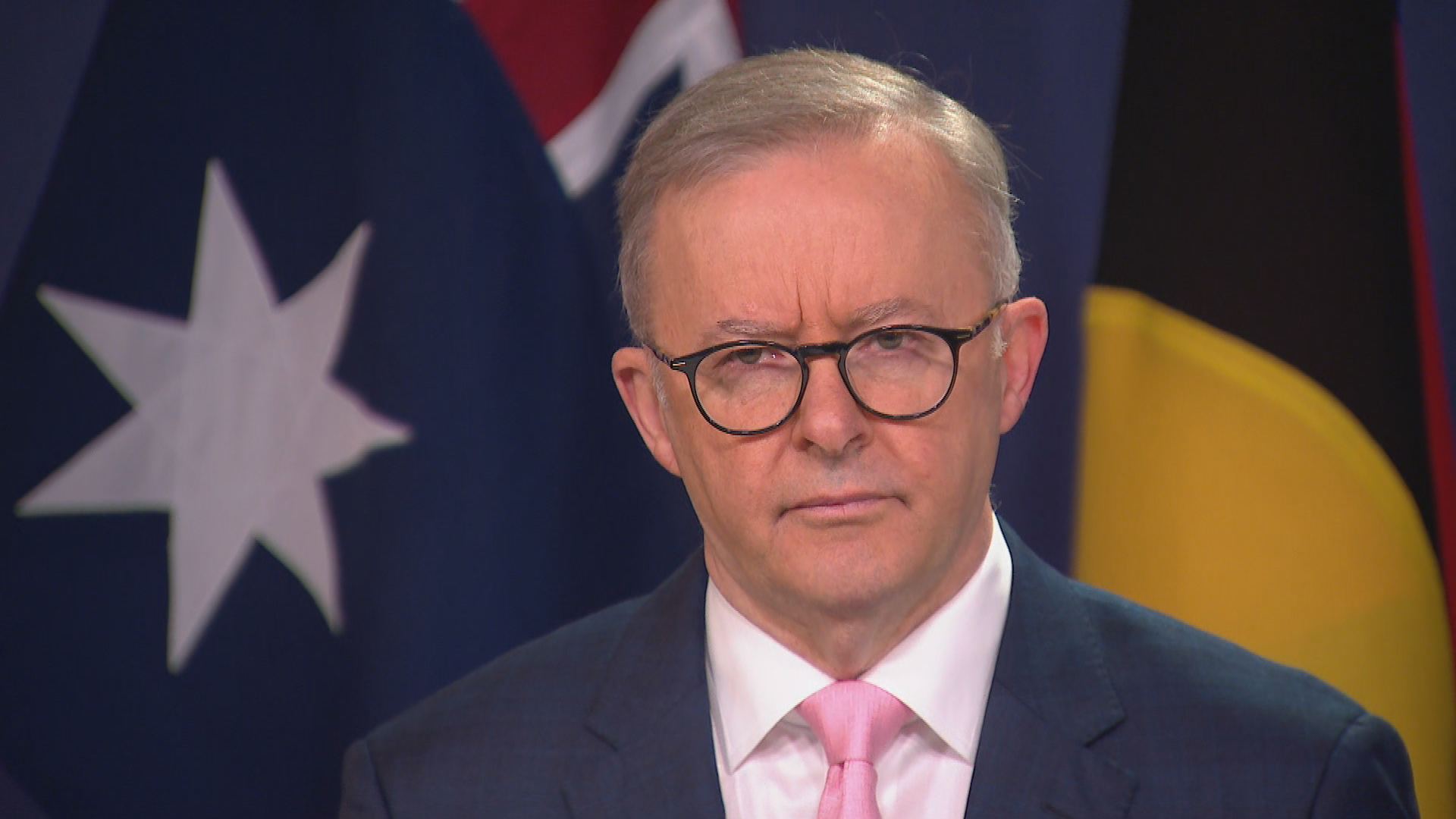
Prime Minister Anthony Albanese has announced an $830 million compensation settlement with the Naval Group in a bid to re-set relations in France.

It comes after the previous government axed its submarine deal with France.

"This is a fair and an equitable settlement which has been reached," Albanese said.

READ MORE: Bizarre message left by Russian soldiers after smashing up school

Prime Minister Anthony Albanese has been invited to France to meet with President Macron as the two nations repair their relationship.

"It follows discussions that I've had with President Macron and I thank him for those discussions and the cordial way in which we are re-establishing a better relationship between Australia and France."

Fury erupted in September last year when Australia scrapped its contract with the Naval Group in favour of American nuclear-powered submarines as part of the AUKUS pact.

Albanese said the settlement now brings the total cost of the former government's axed policy to $3.4 billion.

"This is a saving from the $5.5 billion that Senate estimates was told would result from that program," he said.

"But it still represents an extraordinary waste from a government that was always big on announcement but not good on delivery.

READ MORE: Icy gusts of wind to ravage south-east coast of Australia

"From a government that will be remembered as the most wasteful government in Australia's history since federation."

Albanese said the rekindling of the French-Australian relationship is an opportunity to draw a line and move forward.

"Importantly though, now we can move forward with our relationship with France," he said.

"I intend to have an honest relationship with France and one that is based upon integrity and mutual respect."

Albanese said he has accepted an invitation to meet with French President Emmanuel Macron in France "in the foreseeable future".

"I think it is appropriate that that announcement be made simultaneously in France as in Australia about that timing and those details."

"That's the way that I'll conduct diplomatic affairs on behalf of Australia."

Icy gusts of wind to ravage south-east coast of Australia

A cold front is moving northwards through Victoria and New South Wales today and is expected to deliver strong winds to the east coast.

The damaging southwesterly gusts of up to 90 kilometres per hour are expected to hit the NSW south coast and last well into the weekend.

Coastal parts of the Illawarra could see wind blow around 100 kilometres per hour.

READ MORE: Petrol prices through the roof and unlikely to come down soon

Victoria's East Gippsland, Wilsons Promontory, and Alpine areas will also feel the pressure system as the front moves eastwards into the Tasman Sea.

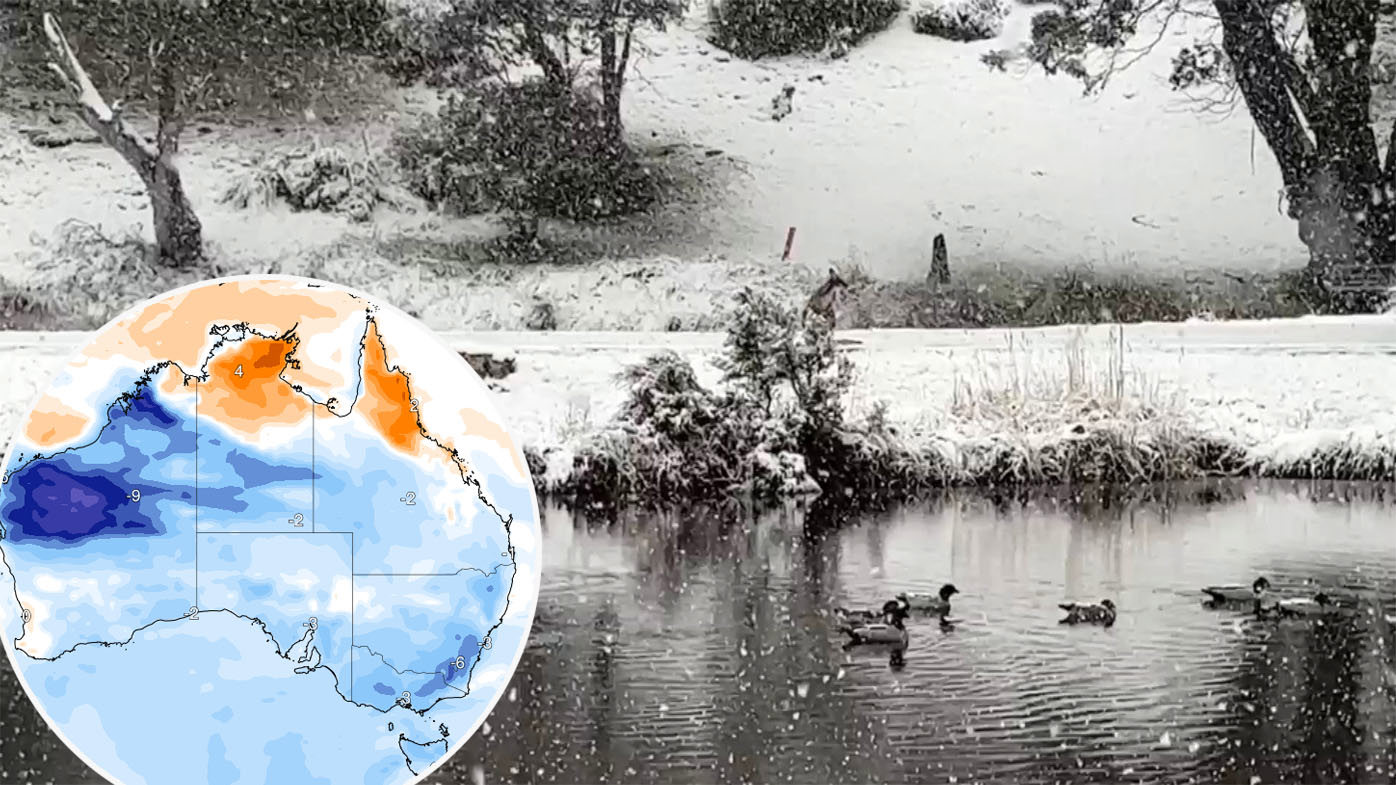
The blast of cold air is set to see Tasmania shiver through colder than average temperatures, with the possibility of snowfall around parts of Hobart.

It comes as the current La Niña event which started in September 2020 is expected to now last until at least August, and perhaps continue into 2023.

The La Nina event is exacerbating the nation's icy start to winter, according to the World Meteorological Organisation (WMO).

READ MORE: Missing daughter of murdered couple found alive after decades

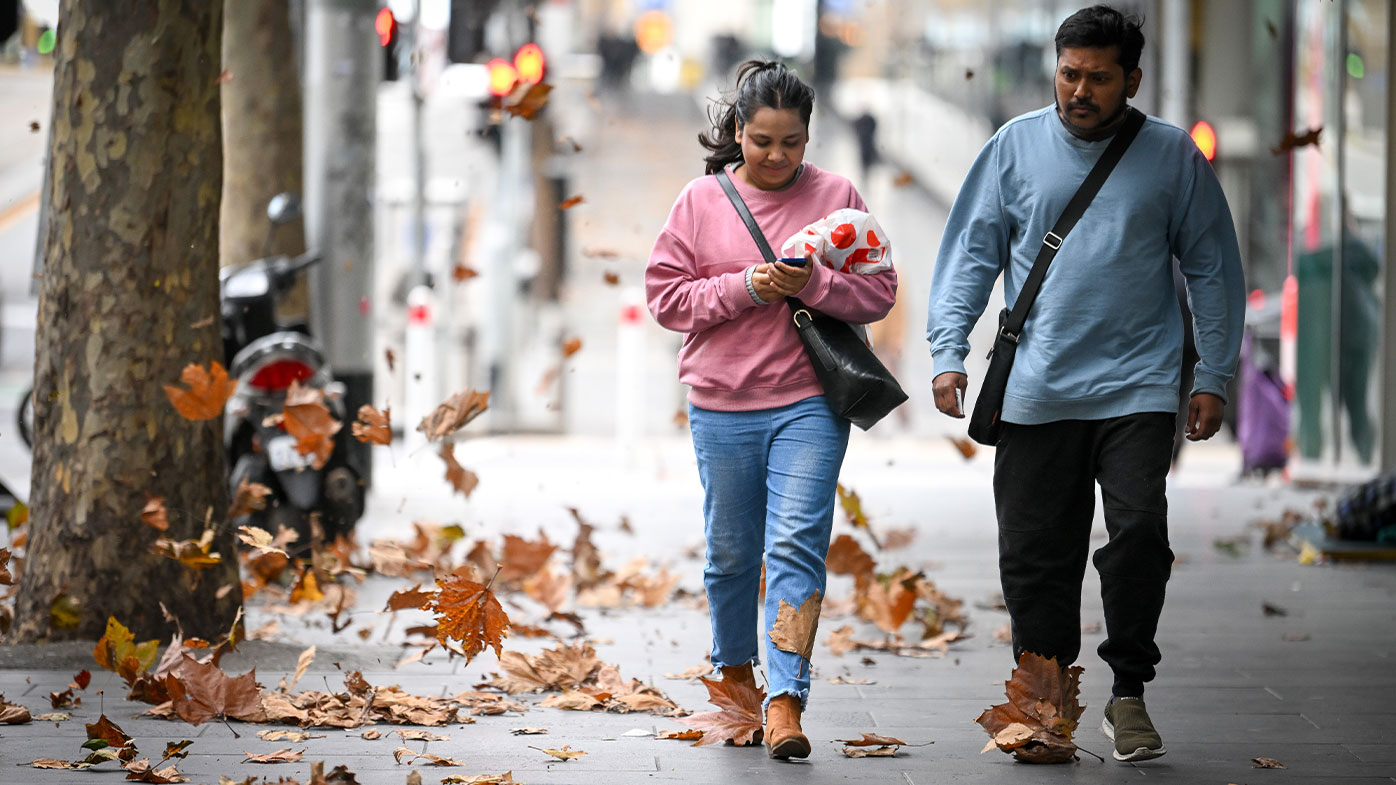
Cold weather and damaging winds hit Melbourne's Docklands.

WMO Secretary-General Prof. Petteri Taalas said human induced climate change amplifies the impacts of naturally occurring events like La Niña.

"It is increasingly influencing our weather patterns, in particular through more intense heat and drought and the associated risk of wildfires – as well as record-breaking deluges of rainfall and flooding," he said.

WMO predictions suggest a "triple-dip-La Nina", where three consecutive winters have been impacted by the event for the first time since 1950.

La Niña refers to the the mass cooling of the ocean's surface temperature in the Pacific Ocean, as well as changes felt in the tropics such as stronger wind and rainfall.

It usually opposes El Niño, which is known as the warm phase.

Australian IVF clinics can't keep up with the demand for donor sperm

A sperm donor shortage exacerbated by the pandemic is continuing to hit the IVF industry with one major Victorian clinic reporting demand is outstripping supply by a factor of three to one.

Dr Genia Rozen, a fertility specialist at Melbourne IVF, said while sperm donations dropped during lockdowns, demand from single women and same sex couples just kept growing.

Melbourne IVF currently had three potential sperm donor recipients lined up for every donor allocation, she said.

READ MORE: Cash back announcement for NSW women undergoing IVF

Sarah Phillips' son Noah was conceived with the help of donated sperm.

For the first time in years, the clinic introduced a waitlist during the pandemic. 

"The last year or two we've had a waiting list, which varies according to some factors, such as type of treatment and desired donor profile," Rozen said. 

The time needed for donors to undergo medical checks, and a quarantine period while donor sperm was retested for infectious diseases, meant the effects of the pandemic on supply were still lingering, she added.

According to the Victorian Assisted Reproductive Treatment Authority 2021 report, single women are the largest group using donor sperm (53 per cent), followed by women in same-sex relationships (34 per cent) — compared to people in heterosexual relationships (17 per cent).

About 3,000 single Australian women have a baby using donor sperm every year.

'I pinch myself on a daily basis'

Having always wanted to be a mum, Melbourne primary school teacher Sarah Phillips made a pact with herself – if she was still single at 36 she would began investigating her options to do it solo.
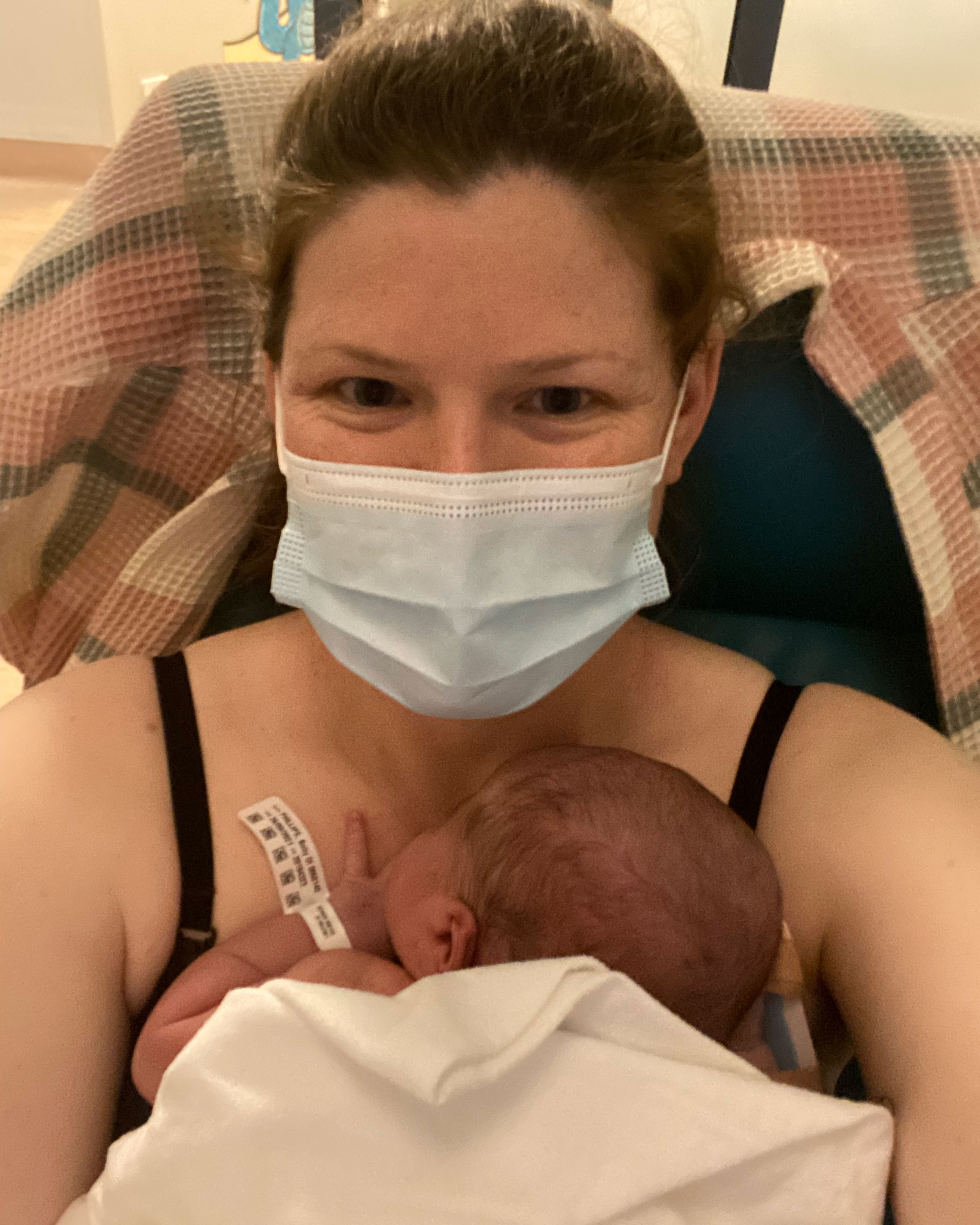
Noah was born in September last year, just as Victoria was slowly emerging from its last lockdown.

The now 39-year-old began fertility treatment using donor sperm at Melbourne IVF in January 2020, just before the pandemic hit.

After an emotionally gruelling journey of more than 18 months, which was interrupted briefly by a pause in IVF treatments during Melbourne's lockdown, baby Noah was born in September last year.

Phillips used sperm from three different donors during her fertility treatment.

She underwent two unsuccessful intrauterine inseminations – where the sperm is placed into the uterus via a small tube just prior to ovulation – with one donor and then five cycles of IVF using two more different donors.

While Phillips knew there was a donor sperm shortage because many clinics had waiting lists, she said it was eye-opening to see the number of sperm donors available drop off during a 12-month period.

"The list got shorter and shorter each time – from when I was choosing my original donor compared to when I chose my third donor, the one that was successful for me," she said. 
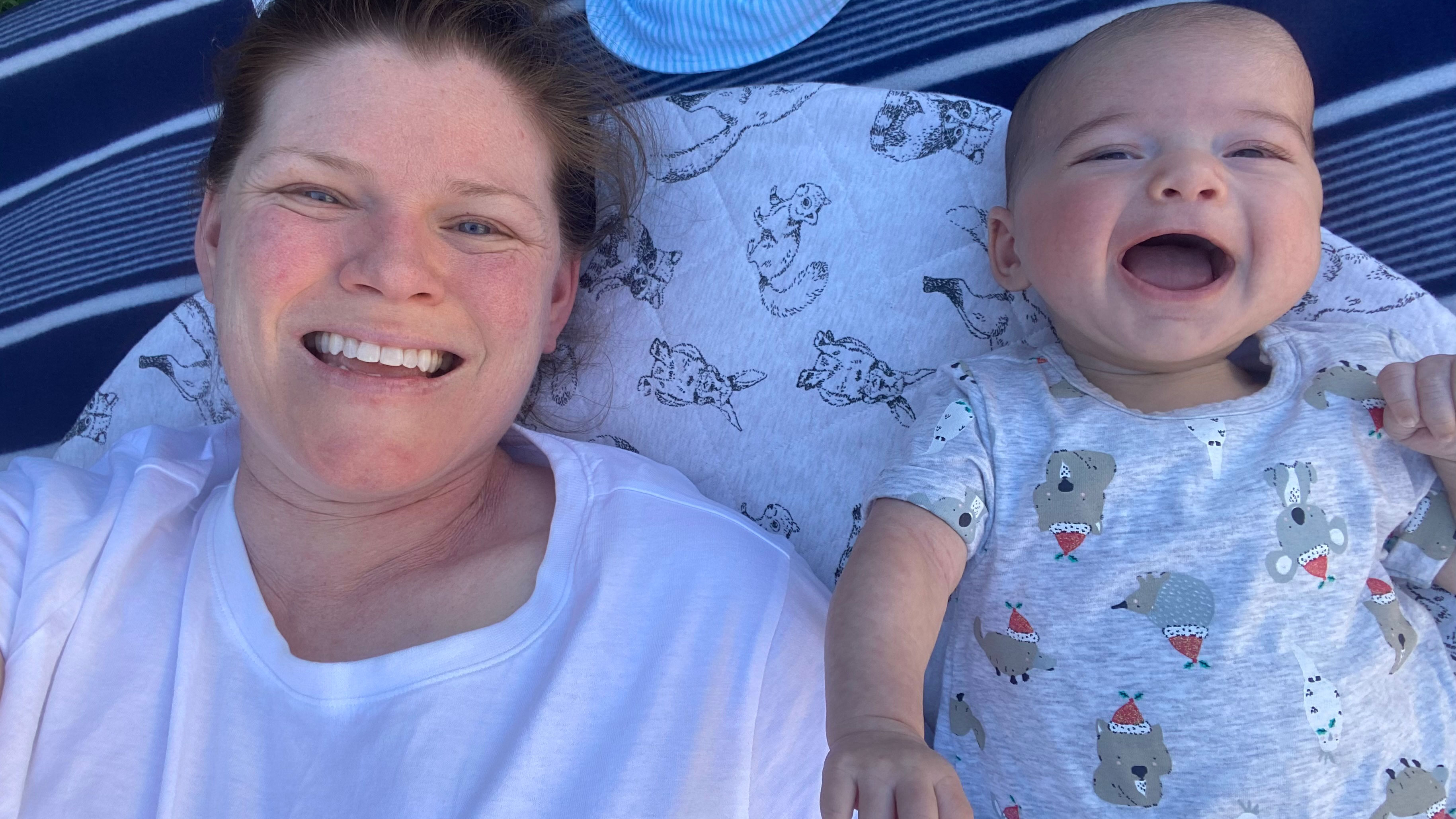
The escalating shortage of donor sperm during her fertility treatments was eye-opening, Phillips said.

"The first time I was looking for a donor I'd say there were about 40 (donors) to choose from," she said.

"The second time I looked it had gone down to 25 or so, and then when I came to pick my final one it was much shorter, probably 10 to 15."

Phillips said the past eight months since Noah's birth had been the best of her whole life.
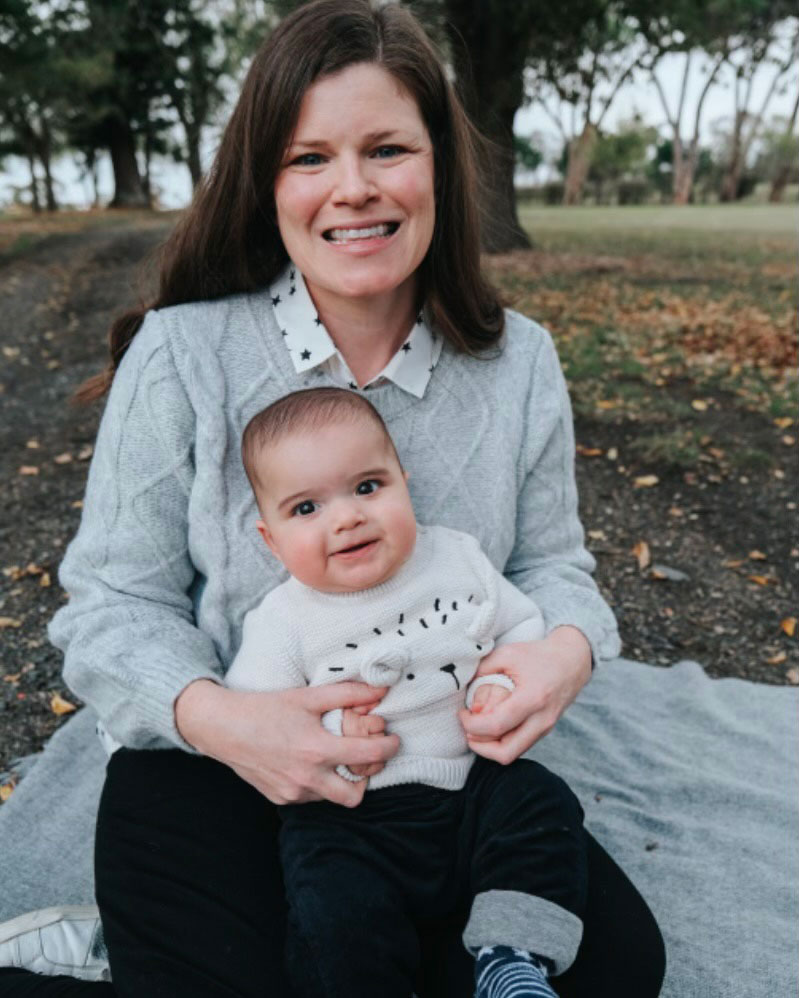
Phillips says she will be eternally grateful to the donor who helped her become a mum.

"To be honest, there's no words to actually tell you how good it is," she said. 

"I pinch myself on a daily basis. I look at him and I think 'how did I get that lucky that he's mine'."

"I'm just so grateful and so happy I did it."

Sperm donation is altruistic in Australia, meaning donors cannot be paid other than to compensate for their medical expenses.

Phillips said the donor who helped her conceive Noah had her "eternal gratitude".

"It's just unbelievable that someone could be so kind and generous to someone that they've never met," she said.

Phillips said she would be open to Noah making contact with him in the future, if he wished.

Under a law introduced in Victoria in 2016, donor-conceived children have the right to know the identity of their donor when they turn 18.

National call out for more donors

Last month, Australia's largest IVF provider, Virtus Health, launched a campaign aimed at tackling Australia's sperm and egg shortage amid escalating donor waitlists across the country.

Rozen said Melbourne IFV, which is owned by Virtus Health, had been participating in the campaign, called 'Life. Pass it on.'.

"It's basically aiming to rally the country and encourage people to donate by generating awareness that a lot of people are in possession of eggs and sperm which could literally change someone's life by helping create a family," she said.

Rozen said because there was no financial incentive to donate sperm in Australia it was often people who had a direct experience with fertility issues who chose to donate.
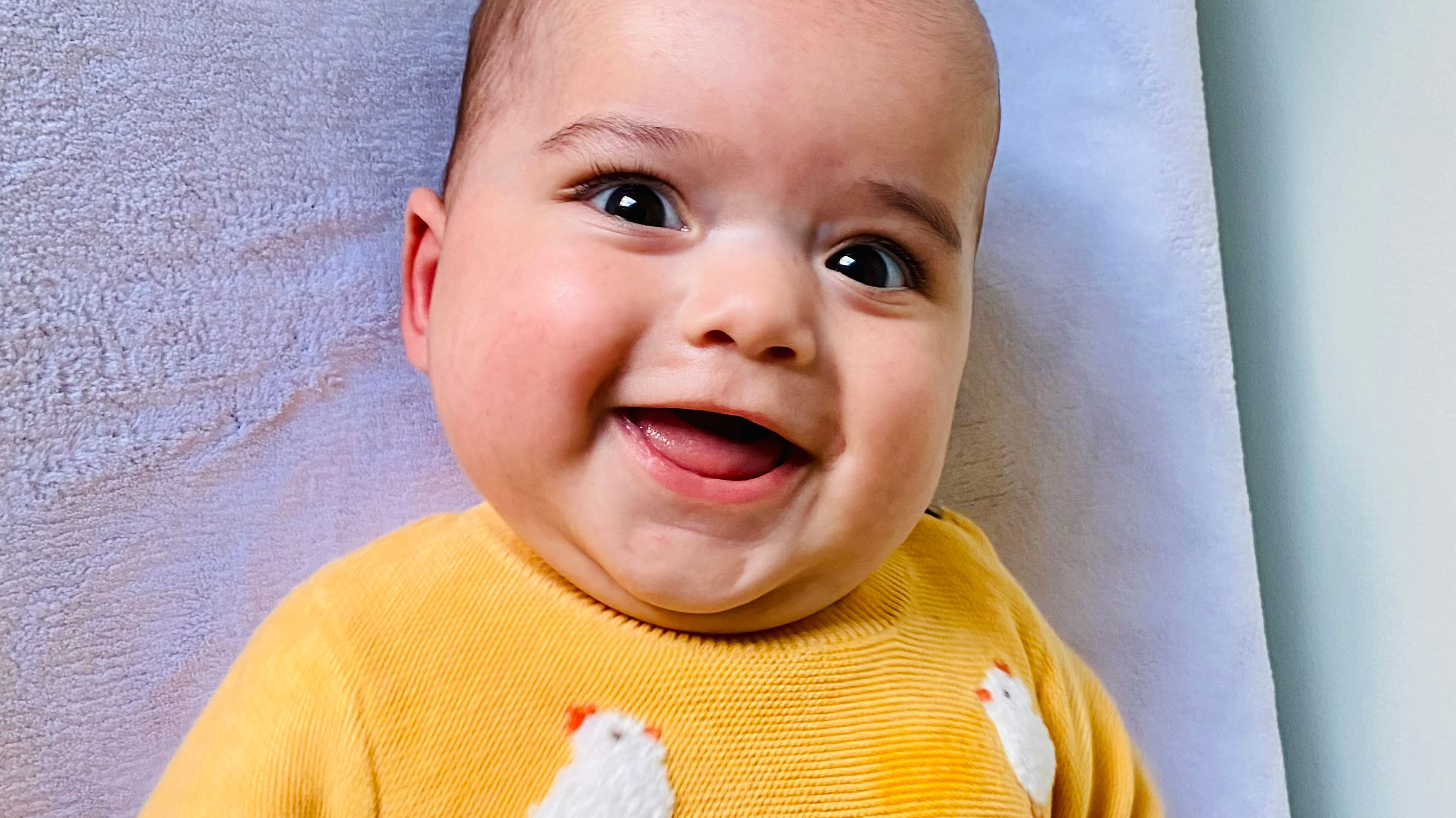
Phillips said she openly tells her story of how Noah was conceived in the hope it will help other women know their options.

"It's usually because they've had some brush with either infertility themselves or they might have someone they know who's been going through fertility struggles that makes them think about it," she said.

Phillips said she wanted anyone thinking of becoming a sperm donor to know they had the power to make people's lives and dreams come true.

"It's no accident that Noah is here. It was a very deliberate, very planned, very longed-for pregnancy and baby," she said.

"It's not a decision that anyone makes lightly to go through IVF on their own and I think that any future children are in very, very good hands."

Contact reporter Emily McPherson at em********@******om.au
Trees, parkland and an underground theatre: Inside Apple's $5b campus

Apple doesn't do things by halves, it doesn't cut corners – anyone who has bought an Apple product knows this.

From the packaging to device design, there is always something special about it.

Four months before his death in 2011, legendary Apple leader Steve Jobs presented his company's plan for a huge new corporate office to the Cupertino City Council.

READ MORE: The first look at the iPhone 14, months earlier than announcement

The corporate office was the brainchild of Steve Jobs.

It was a further two years before the plans were approved, and then in 2017 the building and campus opened to staff.

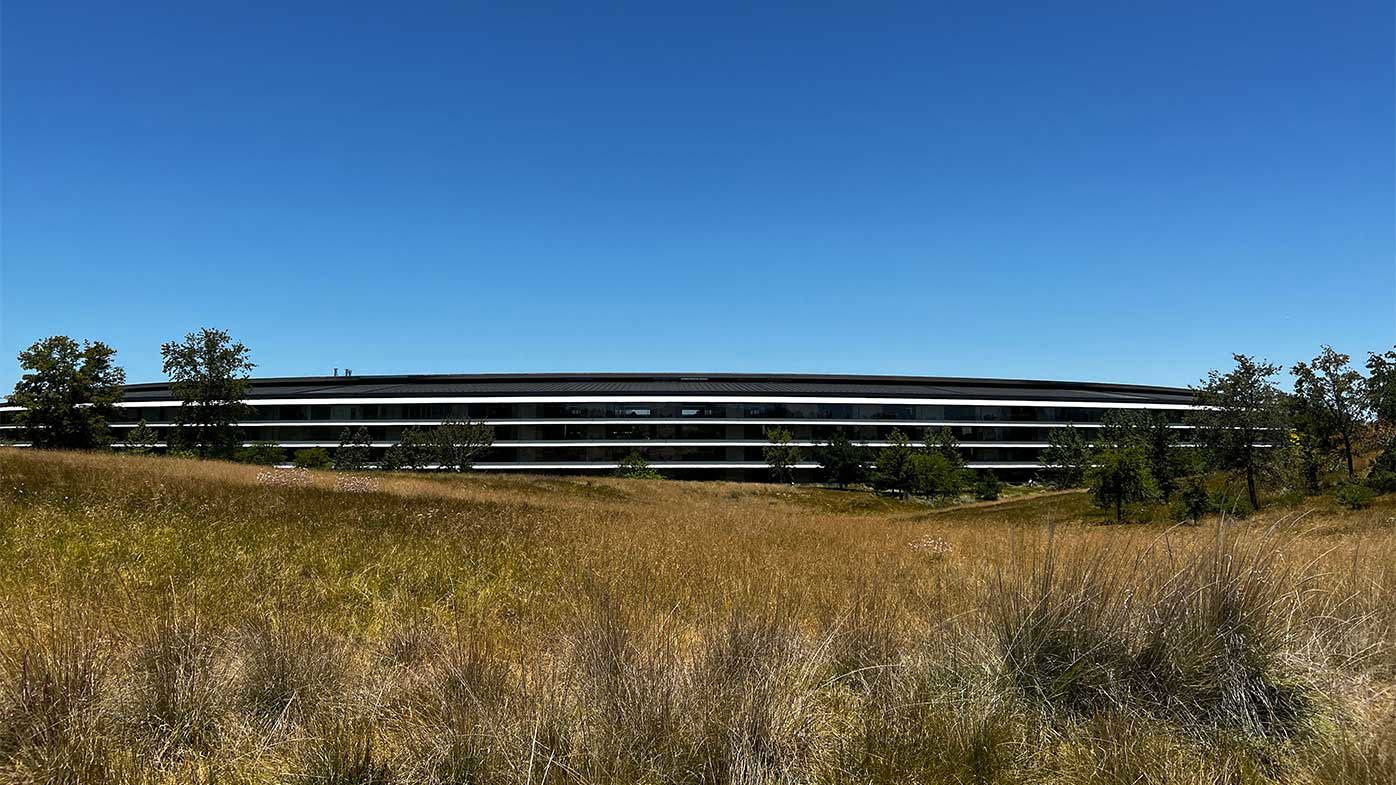
Apple Park, as it's known, is also often described as the "Space Ship" thanks to its huge ring shape which from the air looks like a building in the shape of a donut.

But as someone who has been fortunate to visit Apple Park many times since 2017, this is more than just an office building. Far more.

The "campus" is set on 360 acres, every single inch of it was raised for the construction, and what makes the whole area so amazing is that 80 per cent of the land is green space – landscaping.

And when I say landscaping, I mean every blade of grass was planned and planted.

READ MORE: Five things you missed at Apple's massive launch

Apple's Ring building is one of the most energy efficient buildings in the world.

When I first visited in 2017, you could see the grass plantings, and the young trees – Oak trees, fruit trees (including some apple trees) are among the 9000 trees on the site.

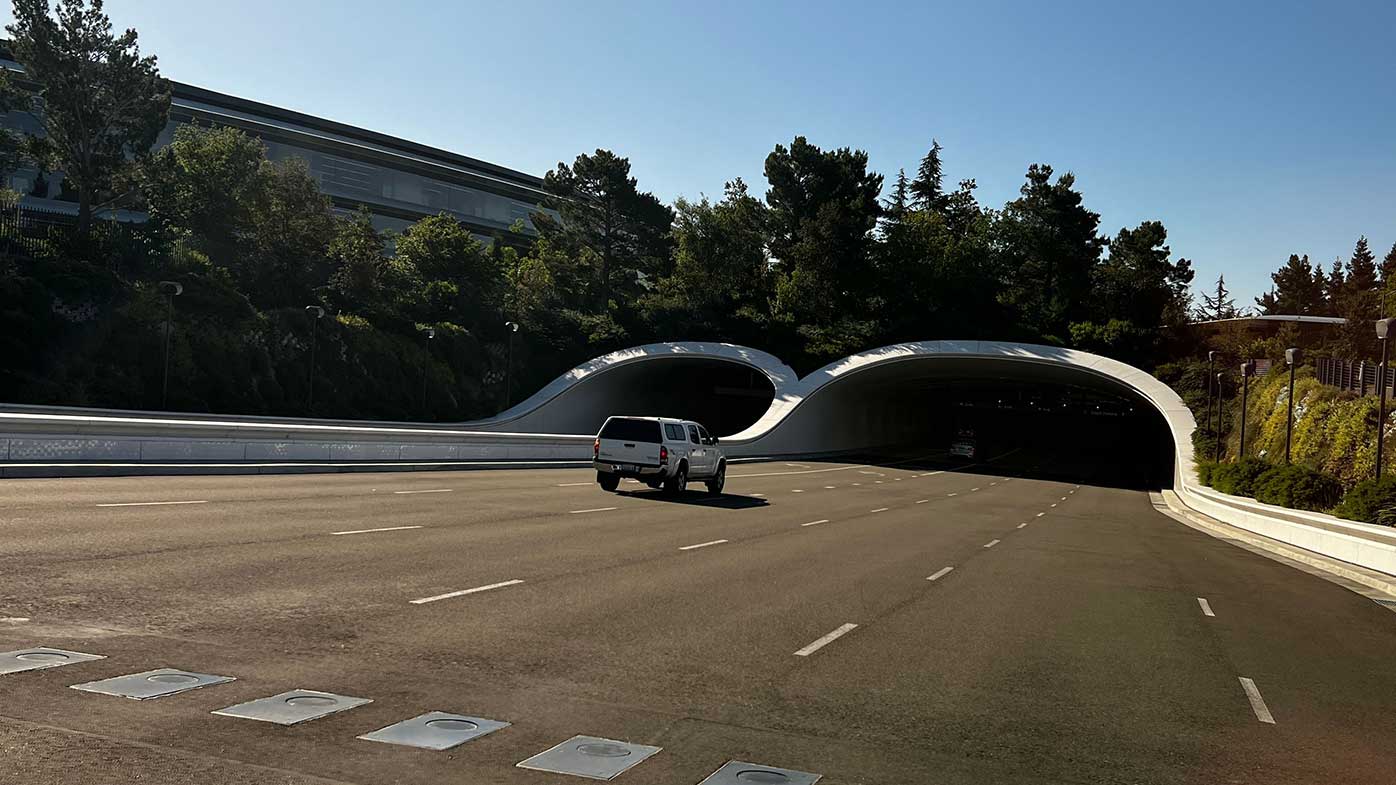
Winding throughout the undulating property are pathways connecting all the different areas of the campus, from the fitness centre, to the parking garages, the main "ring" building and the Steve Jobs Theatre.

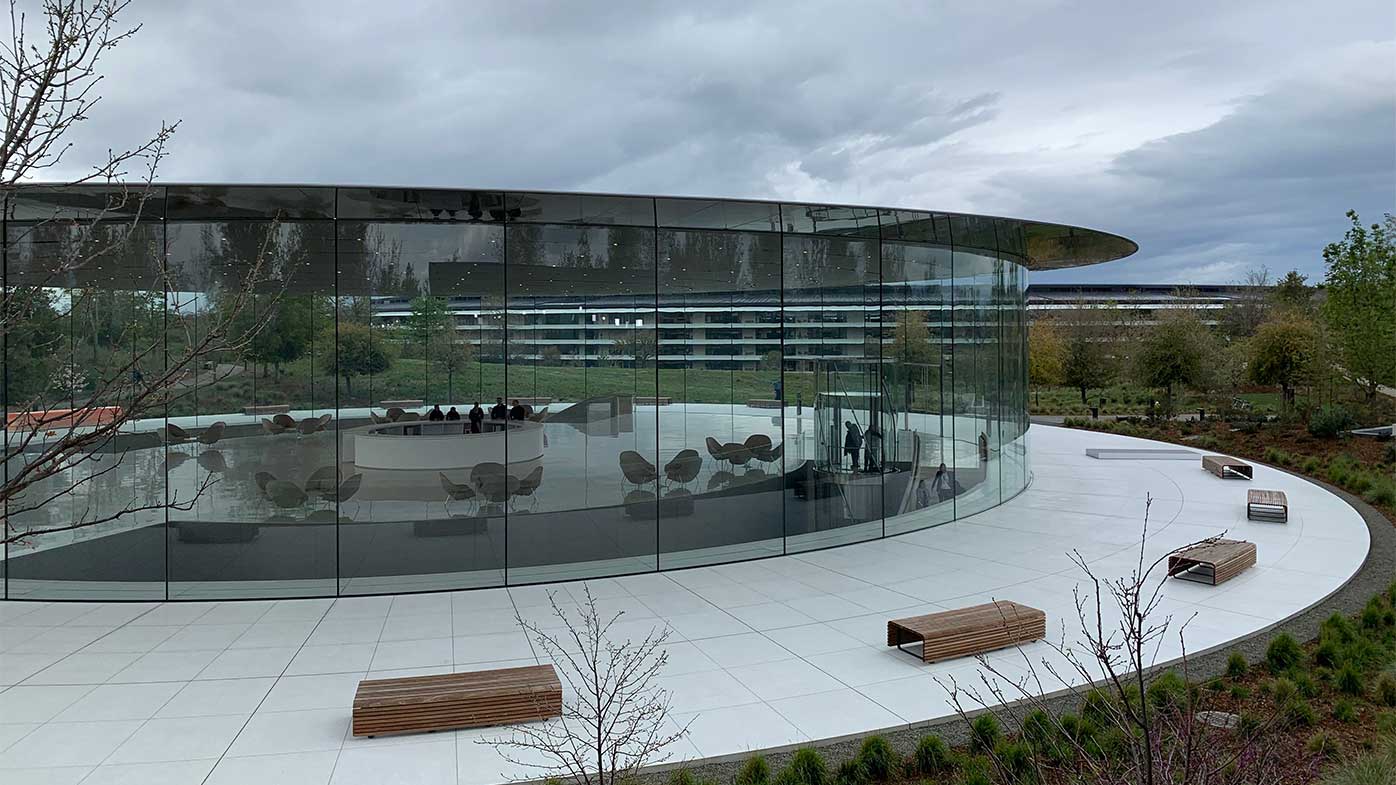
That theatre, which bears the name of the man who dreamt up this property but never got to see it – is in itself a masterpiece.

Dug underground, all that you can see from ground level is a circular roofed building with nothing but glass walls.

READ MORE: A new policy in Europe could mean big changes for your iPhone

Apple's headquarters is a remarkably interesting corporate office.

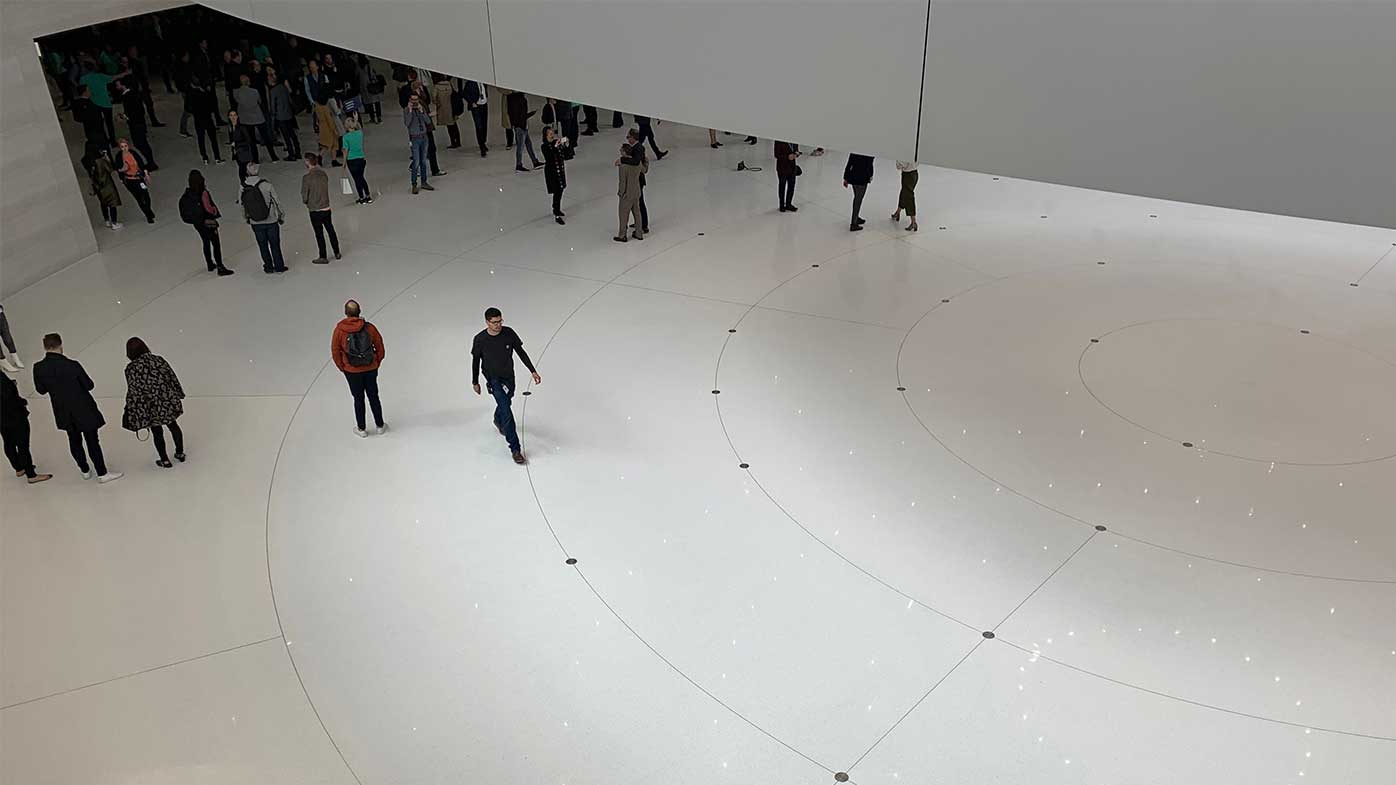
Inside, two stone staircases lead down to a large open space, and behind it the 1500-seat theatre.

Even the glass elevator is unique.

You enter facing into the building but it spins on the way down so you and the doors are facing the right direction to exit into the theatre space.

Within the "ring" building is a huge courtyard with lush grass, trees, a pond and a cafe.

Heck, there are even sports fields out near the fitness centre.

Apple's main ring building is one of the most energy efficient buildings in the world, topped by one of the largest solar roof installations in the world.

https://twitter.com/tim_cook/status/1029903616750977025

Even the doors are spectacular: at the main cafe, the two doors aren't just sliding doors, they are 16 metres high, 28 metres wide and weigh 180 tonnes each.

Curved, the slide open to bring the fresh day air into the employee cafe known as Cafe Macs.

Apple's campus takes up 360 acres of space.

Trees inside, just like many Apple retail stores, and a clean fresh glass meets wood and open space design are key traits of the entire building.

It really is a work of art, a special place to see and visit.

Visitors can see a glimpse of Apple Park from the Apple Park Visitors Centre across the road from the main building.