Tag Archives: oceania

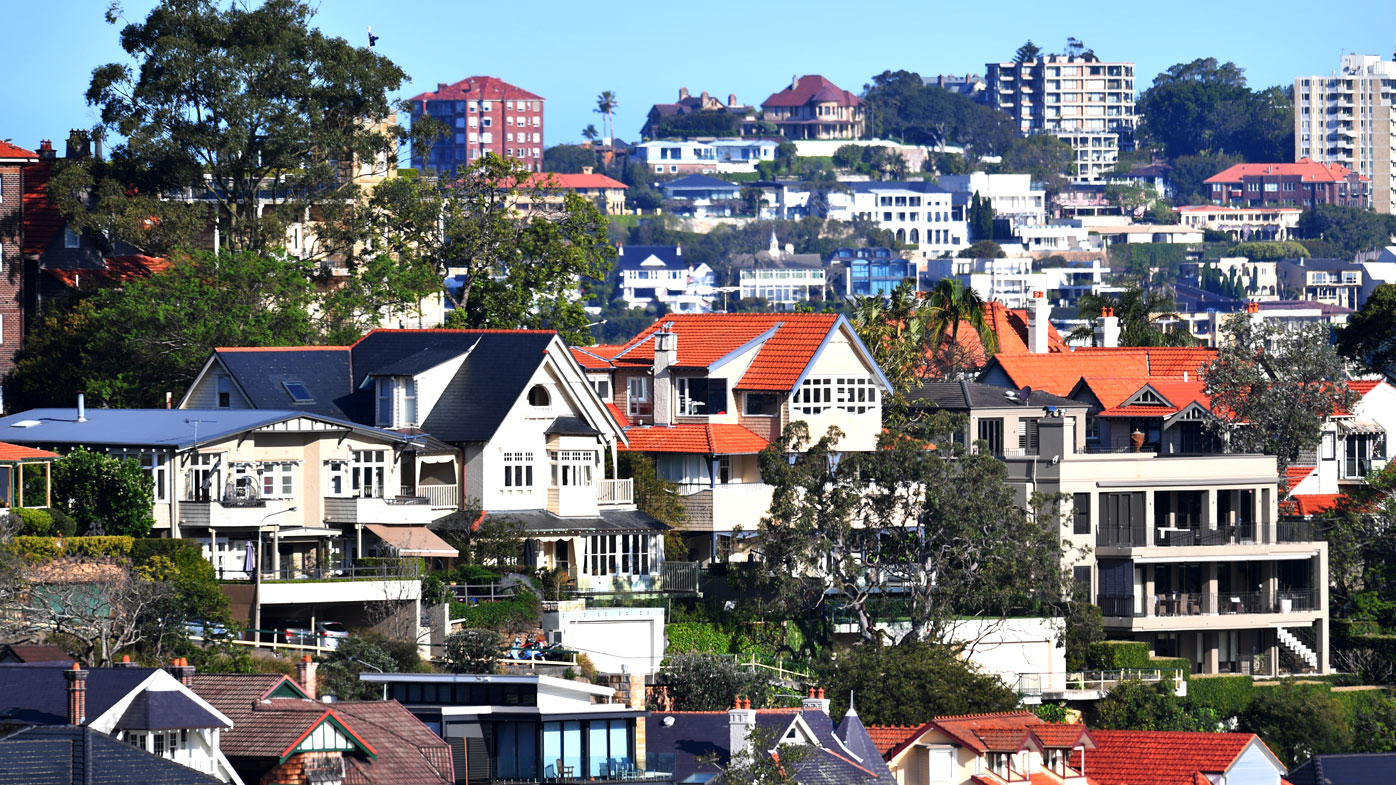
Aussie home prices suffer biggest slowdown in 30 years

After near-record rises during the pandemic, home prices in Australian capital cities are now slowing at their most rapid pace since 1989, according to new data.

The slowdown over the last six months is worse than the stagnation and turbulence which hit the housing market in 2004 and the Global Financial Crisis in 2008.

Just-released PropTrack analysis found the annual rate of home price growth in capital cities had dropped from 24 per cent, in January, to 14 per cent.

The RBA surprised many economists by raising the cash rate by half a percentage point, the biggest hike in more than 20 years, with warnings of more to come.

READ MORE: Why lettuce and other vegetables are so expensive or not on shelves

However, despite cooling in the market, prices are still up 35 per cent since the start of the pandemic.

Prices in Sydney have slowed at the fastest pace since 1989, PropTrack reported, with Melbourne suffering its quickest slowdown since 2010 and Brisbane since 2008.

Property growth in Hobart has fallen away the quickest of any period since 1986, while Adelaide and Perth have also stagnated.

Economist Paul Ryan said the slowdown was perhaps "not surprising" and blamed recent interest rate rises, with further Reserve Bank hikes expected over the remainder of the year.

"Looking ahead, the rapid slowdown in price growth signals the housing market is likely to continue to see slow growth over the rest of 2022," he said.

Buyers will be hesitant because there is now so much uncertainty about how high mortgage repayments could rise, he said.

"Resolving this uncertainty about the path of interest rates will be the key element buyers look for over the rest of the year."

Ryan said it was normal for house prices to come down after periods of sustained growth, but the sudden six-month deceleration was a potential concern.

"Perhaps this is not surprising," he said of current market conditions, pointing to 2021 as the third fastest period of home price growth in Australia's history.

"However, it's not necessarily the case that growth falls rapidly after a run-up.

"In general, the market moves more gradually, indicating there are other factors involved."

READ MORE: One in four Aussies struggling with rising cost of living

The Reserve Bank yesterday lifted the nation's interest rates for the second month in a row, raising it by 0.5 per cent, at the higher end of expectations.

It is the largest monthly rate hike since February 2000 and now takes rates to higher than they were prior to the start of the COVID-19 pandemic.

Little girl 'wrapped in butterfly blanket' and dumped in bin

A little girl whose body was found in a Toronto dumpster last month was likely never reported missing, the head of the city’s homicide squad said Tuesday.

The remains of a Black girl, between four and seven years old, were found in a construction bin outside a Dale Avenue home in Toronto’s wealthy Rosedale neighbourhood on May 2.

Police have gone through numerous tips that came in after they announced the discovery and released images of two items of clothing found with the girl’s remains, said Inspector Hank Idsinga.

READ MORE: New European policy could mean big changes to iPhone

The little girl whose body was found in a Toronto dumpster last month was likely never reported missing.

The force also contacted lead detectives in every single missing children’s case in Canada – all 58 of them.

Idsinga said there is no evidence to link any of those cases to the child found in the dumpster.

“We believe it is unlikely the child located on Dale Avenue has ever been reported missing,” Idsinga said at a news conference.

On Tuesday, the force released two sketches of the girl, completed by an artist with Ontario Provincial Police who works with the coroner’s office.

“We have released composite sketches of the little girl in the hope that someone recognises her,” Idsinga said.

READ MORE: Uvalde teacher says 'there is no excuse' for officers' delay

Police released images of a dark Porshe which was seen in the area around the time the remains were believed to have been dumped.

Idsinga cautioned the colour sketch may not match the true skin tone of the girl, who investigators say is of African or mixed African descent.

“She has all of her teeth and has black curly hair sectioned into ponytails,” Idsinga said.

Investigators are also looking for a dark-colored Porsche Cayenne SUV that “inexplicably” stopped outside the home five days before the girl’s remains were found, Idsinga said.

Toronto police released an image of the Porsche, which stopped by the dumpster on April 28 at 10:26 p.m.

Idsinga said they have been able to track the vehicle to and from the area and are now looking for the public’s help to identify it.

READ MORE: NASA rockets to launch from NT in 'history-making' space moment

The discovery shocked the Toronto neighbourhood of Rosedale, which is one of the wealthiest in Canada.

“That car is literally captured on camera, on Dale Avenue, in the area of the dumpster, right in the timeframe that we believe the body was dumped there and inexplicably stops right by the dumpster for about 21 seconds,” Idsinga said.

“So of course we want to identify this car. Maybe there’s a perfectly innocent explanation as to why it stopped there, but maybe not.”

The girl’s body was found wrapped in a butterfly patterned baby blanket inside a plastic bag, which itself was wrapped in a burgundy and red blanket, investigators said last month.

Investigators believe the body was dumped in the days prior to being discovered, but the girl was dead long before and may have died as far back as last summer.

Idsinga said there is no obvious cause of death and that it will take some time to determine it – or it may remain undetermined.

He said police are awaiting toxicology results from the Centre of Forensic Sciences.

The discovery last month shocked the neighborhood – which is one of the wealthiest in the country – and sent investigators in search of missing children all over Canada and around the world.

Idsinga said eight of the missing 58 children have since been accounted for. Some of the missing have ended up overseas in parental abductions and custody battles, he said.

Local school boards reached out to police and went through their records to try to find anyone who might be missing, Idsinga said.

“The child might have been too young to be in the school system,” Idsinga said.

“Perhaps the child was never in the school system even if they weren’t too young and so all of those angles have been getting worked on.”

Russia claims advances in Ukraine amid fierce fighting

Russia on Tuesday claimed to have taken control of 97 per cent of one of the two provinces that make up Ukraine's Donbas, bringing the Kremlin closer to its goal of fully capturing the eastern industrial heartland of coal mines and factories.

Russian Defense Minister Sergei Shoigu said Moscow’s forces hold nearly all of Luhansk province. And it appears that Russia now occupies roughly half of Donetsk province, according to Ukrainian officials and military analysts.

After abandoning its bungled attempt to storm Kyiv two months ago, Russia declared that taking the entire Donbas is its main objective. Moscow-backed separatists have been battling Ukrainian government forces in the Donbas since 2014, and the region has borne the brunt of the Russian onslaught in recent weeks.

READ MORE: New European policy could mean big changes to iPhone

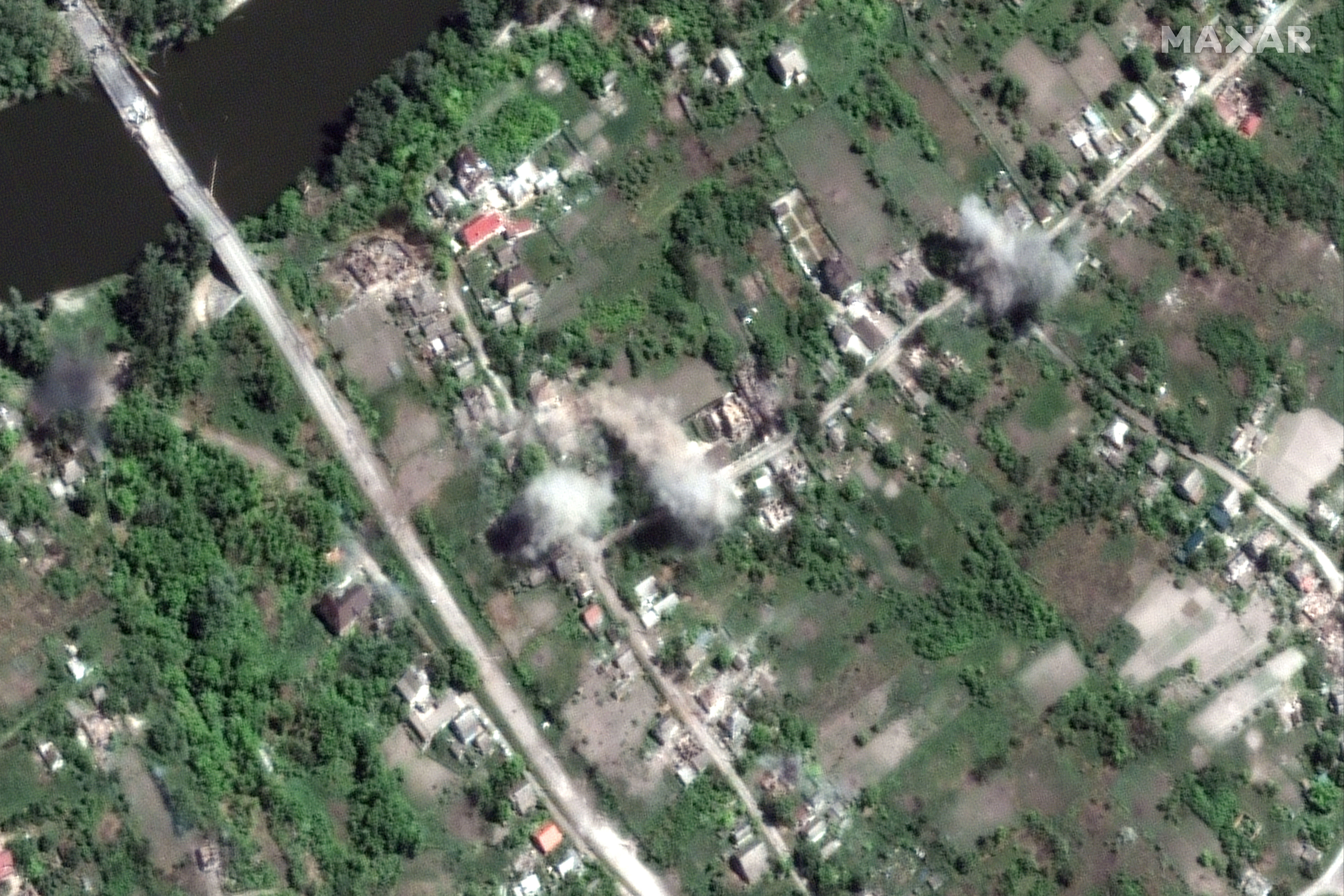
This satellite image provided by Maxar Technologies shows active artillery shelling in the town of Bogorodichne, Ukraine, northwest of Slovyansk, on Monday, June 6, 2022. (Maxar Technologies via AP)

Early in the war, Russian troops also took control of the entire Kherson region and a large part of the Zaporizhzhia region, both in the south.

Russian officials and their local appointees have talked about plans for those regions to either declare their independence or be folded into Russia.

But in what may be the latest instance of anti-Russian sabotage inside Ukraine, Russian state media said Tuesday that an explosion at a cafe in the city of Kherson wounded four people. Tass called the apparent bombing in the Russian-occupied city a “terror act.”

READ MORE: Uvalde teacher says 'there is no excuse' for officers' delay

Before the February 24 invasion, Ukrainian officials said Russia controlled some seven per cent of the country, including the Crimean Peninsula, which Russia annexed in 2014, and areas held by the separatists in Donetsk and Luhansk. Last week, Ukrainian President Volodymyr Zelenskyy said Russian forces hold 20 per cent of the country.

While Russia has superior firepower, the Ukrainian defenders are entrenched and have shown the ability to counterattack.

READ MORE: NASA rockets to launch from NT in 'history-making' space moment

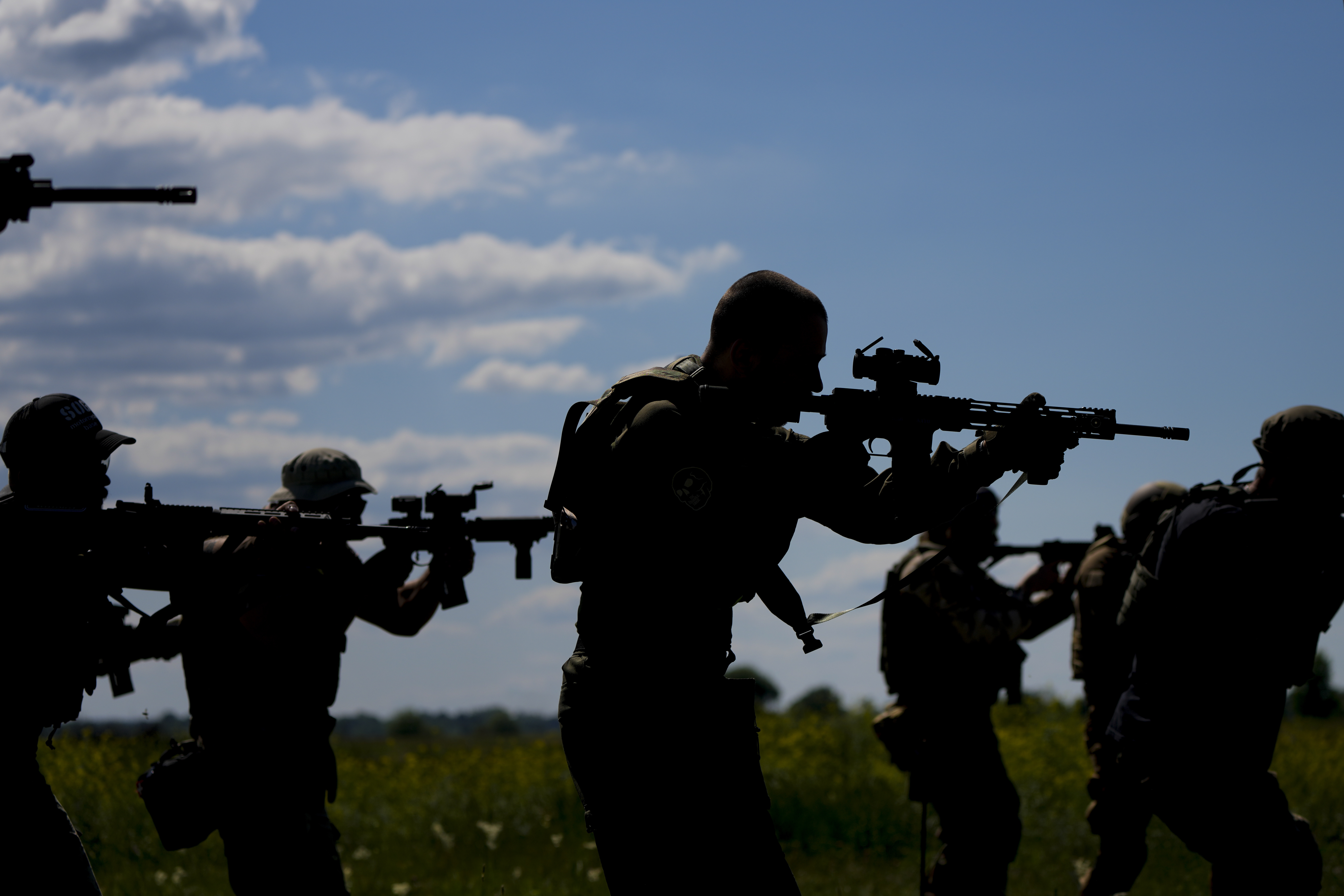
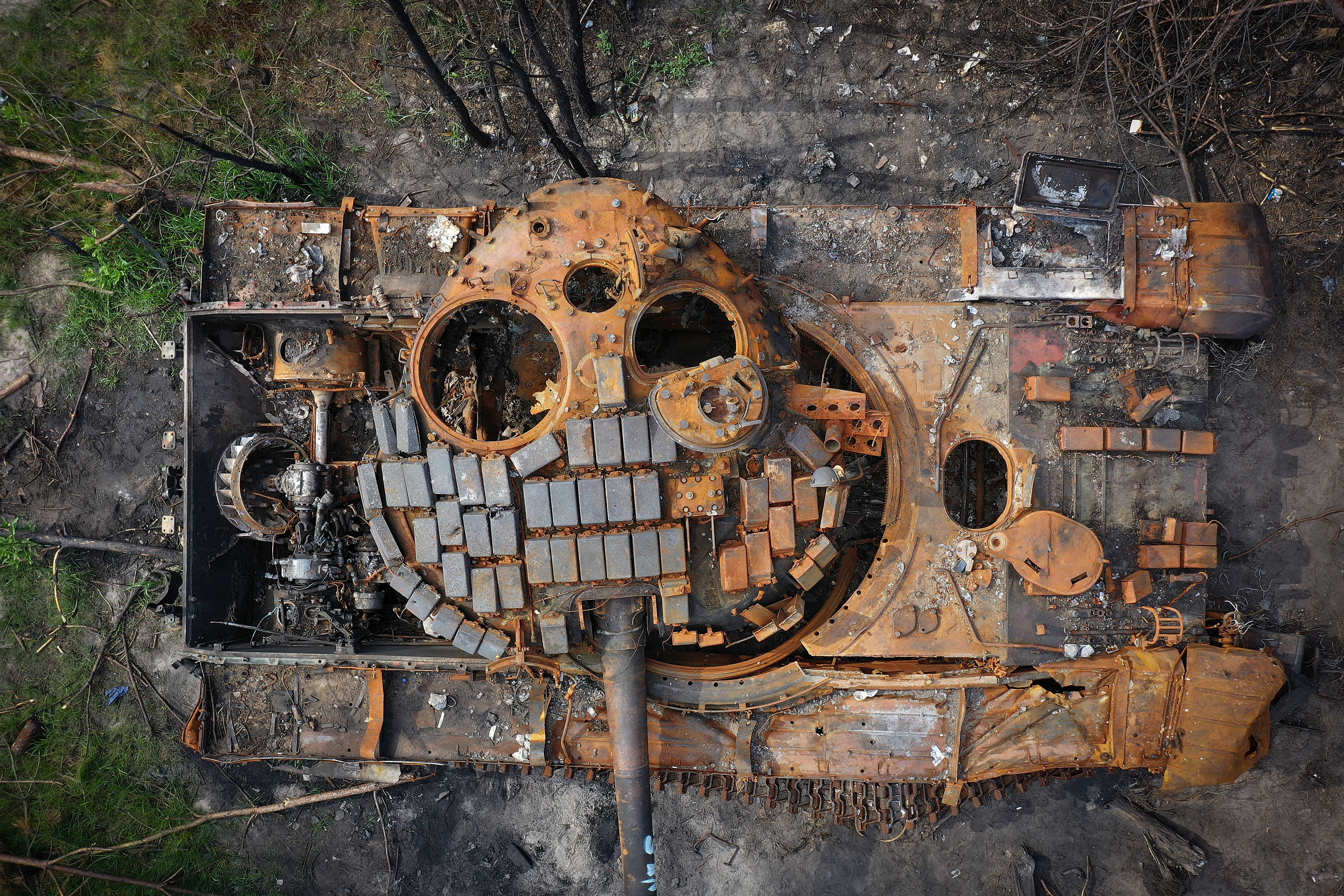
Civilian militia men hold rifles during training at a shooting range in outskirts Kyiv, Ukraine, Tuesday, June 7, 2022. (AP Photo/Natacha Pisarenko)A destroyed Russian tank begins to rust in woodland near Kyiv on June 07, 2022 in Kyiv, Ukraine. A sense of normality has increasingly returned to Kyiv as Russia's assault has focused on the eastern Donbas region. (Photo by Christopher Furlong/Getty Images)

While insisting on Ukraine’s need to defeat Russia on the battlefield, Zelenskyy said at a Financial Times conference Tuesday that he is still open to peace talks with Russian President Vladimir Putin.

But a former senior US intelligence officer said the time isn’t right.

“You’re not going to get to the negotiating table until neither side feels they have an advantage that they could push,” said Andrea Kendall-Taylor of the Washington-based Center for a New American Security.

The Russians “think they will be able to take the whole of the Donbas and then might use that as the opportunity to call for negotiations,” Kendall-Taylor said at an online seminar organised by Columbia and New York universities.

Shoigu, the Russian defense minister, said Moscow's forces have seized the residential quarters of Sievierodonetsk and are fighting to take control of an industrial zone on the city's outskirts and nearby towns.

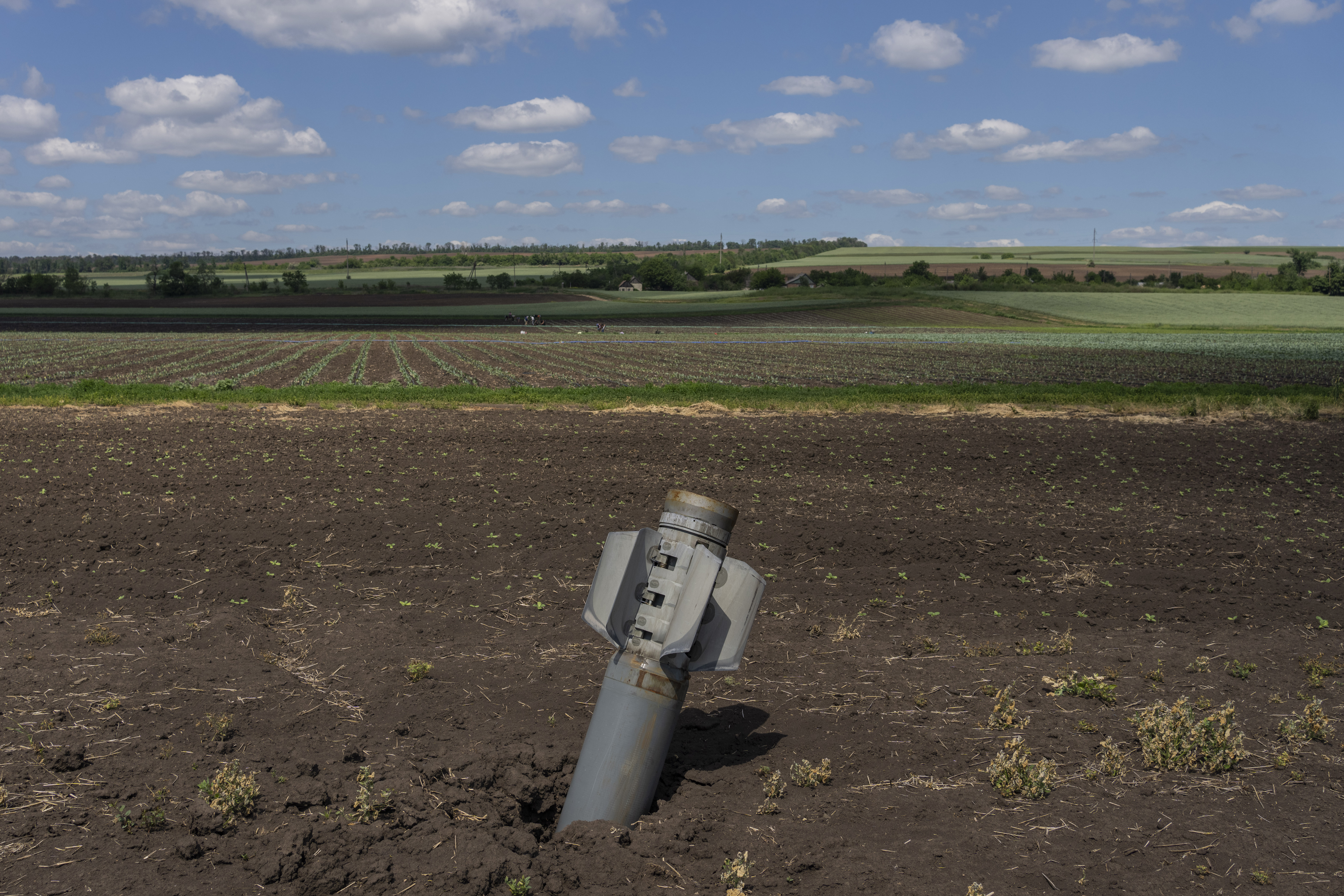
An unexploded Russian rocket lays on a field near Soledar, eastern Ukraine, Monday, June 6, 2022. (AP Photo/Bernat Armangue)

Sievierodonetsk and nearby Lysychansk have seen heavy fighting in recent weeks. They are among a few cities and towns in the Luhansk region still holding out against the Russian invasion, which is being helped by local pro-Kremlin forces.

Shoigu added that Russian troops were pressing their offensive toward the town of Popasna and have taken control of Lyman and Sviatohirsk and 15 other towns in the region.

Ukrainian presidential adviser Mykhailo Podolyak urged his people not to be downhearted about the battlefield reverses.

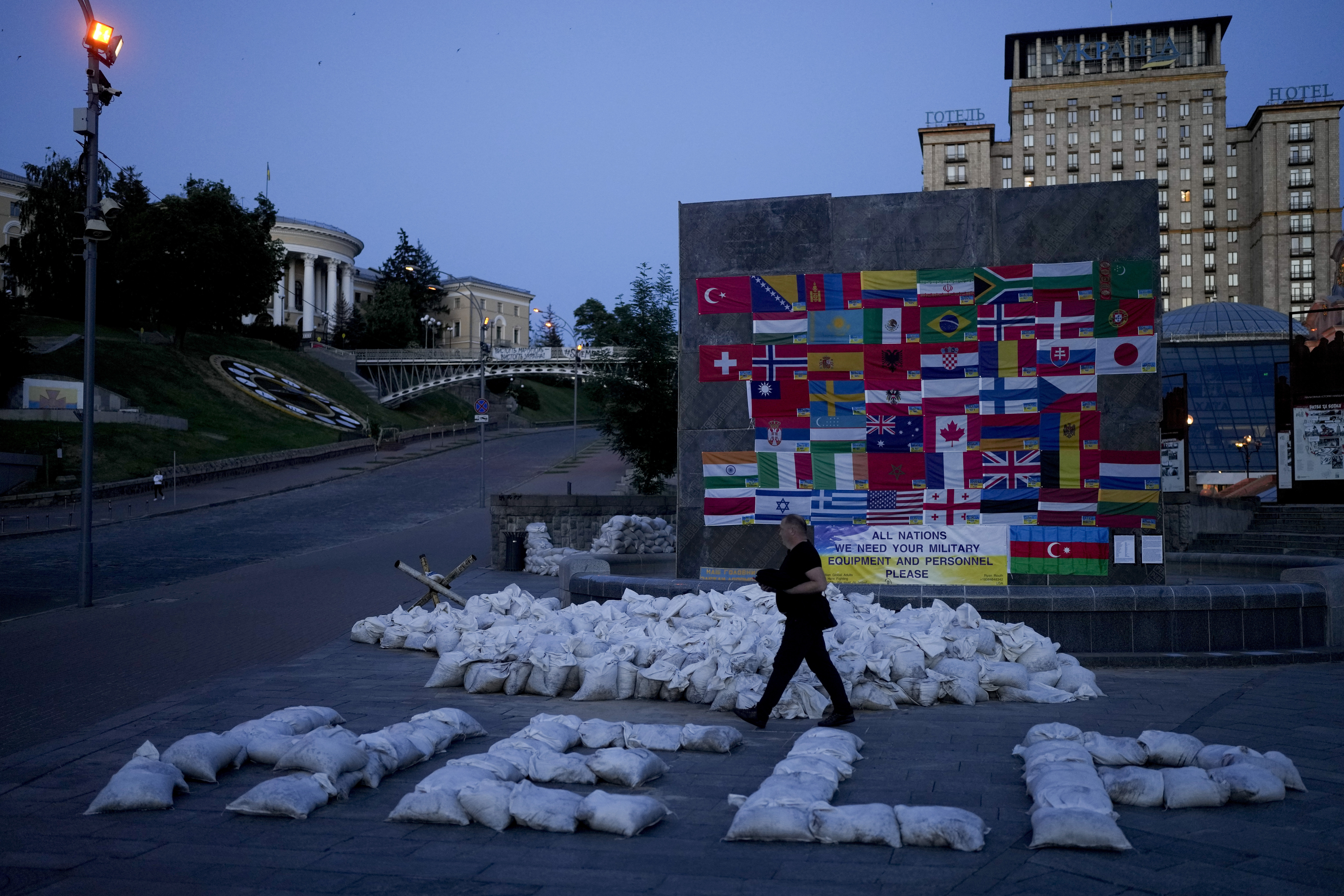
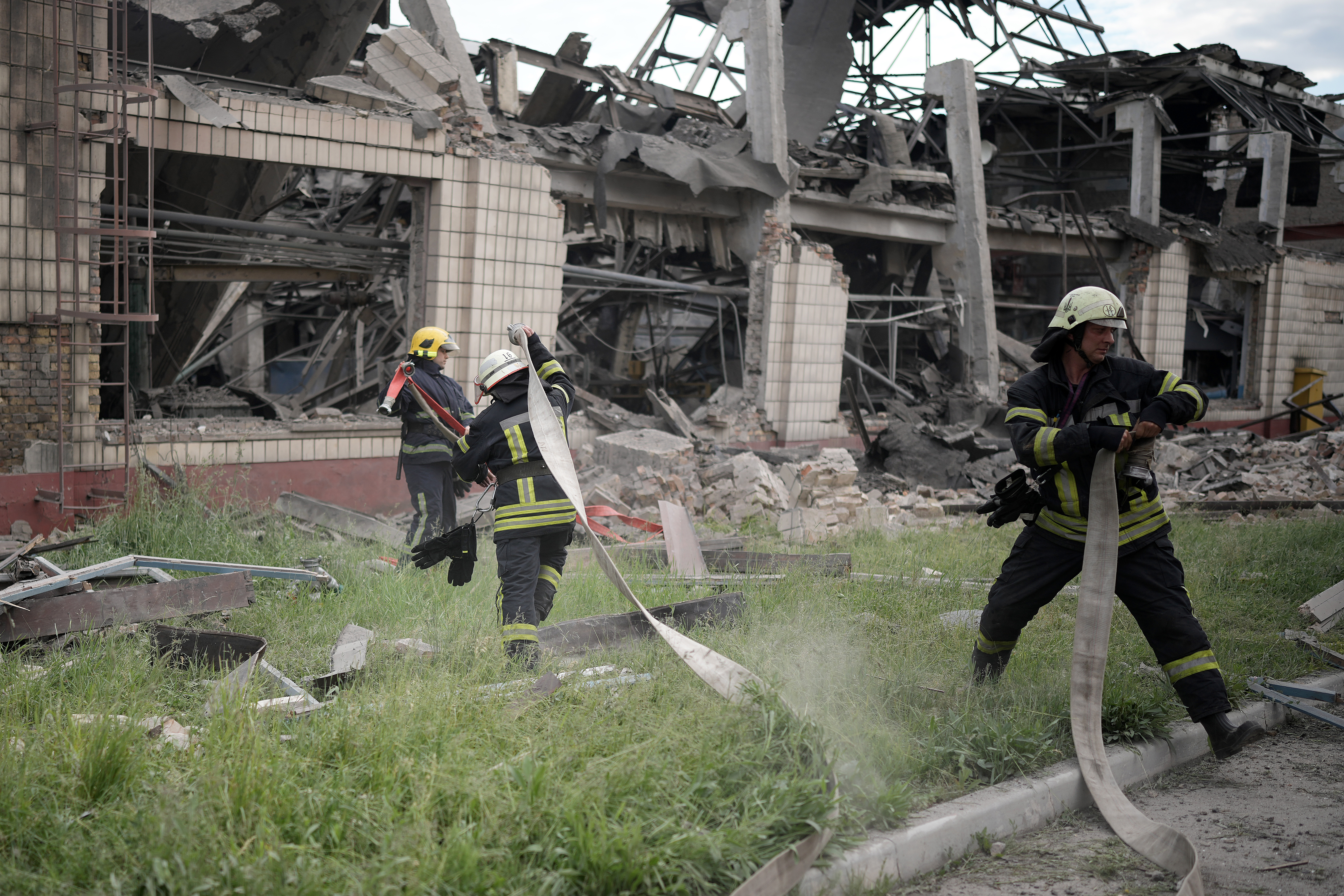
A man walks by sand bags forming the word "Help" at Maidan square in Kyiv, Ukraine, Monday, June 6, 2022. (AP Photo/Natacha Pisarenko)KYIV, UKRAINE - JUNE 05: Firefighters continue to dampen down a rail freight rolling stock repair facility in Darnytsia district after a Russian air strikeon June 05, 2022 in Kyiv, Ukraine. Four Russian air missiles hit the site early this morning with a fifth rocket landing in woodland close by. (Photo by Christopher Furlong/Getty Images)

“Don’t let the news that we’ve ceded something scare you,” he said in a video address. “It is clear that tactical maneuvers are ongoing. We cede something, we take something back."

Luhansk Governor Serhiy Haidai conceded that Russian forces control the industrial outskirts of Sievierodonetsk.

“The toughest street battles continue, with varying degrees of success,” Haidai said. “The situation constantly changes, but the Ukrainians are repelling attacks.”

Moscow’s forces also kept up their artillery barrage of Lysychansk. Haidai said Russian troops shelled a market, a school and a college building, destroying the latter. At least three people were wounded, he said.

“A total destruction of the city is under way. Russian shelling has intensified significantly over the past 24 hours. Russians are using scorched-earth tactics,” Haidai said.

Meanwhile, the US military has begun training Ukrainian forces on the sophisticated multiple rocket launchers that the Biden administration agreed last week to provide. The Pentagon said the training is going on at a base in Germany and elsewhere in Europe.

The High Mobility Artillery Rocket System, or HIMARS, is mounted on a truck and can carry a container with six rockets, which can travel about 70 kilometres. Officials said it would take about three weeks of training before they could go to the battlefront.

The war also brought a standoff Tuesday between the head of the UN nuclear watchdog agency and Ukrainian authorities over the biggest nuclear power plant in Europe.

The director of the International Atomic Energy Agency, Rafael Mariano Grossi, wants to visit the Zaporizhzhia plant to help maintain its safety after it was taken by Russian troops in March.

But Energoatom, the Ukrainian state company overseeing the country’s nuclear plants, said in a blunt statement that Grossi isn’t welcome. It said his planned tour is “yet another attempt to legitimize the occupier’s presence there.”

Amid fears of a global food crisis because of the war, the Kremlin said Ukraine needs to remove sea mines near its Black Sea port of Odesa to allow essential grain exports to resume from there. Ukrainian officials have expressed concern that removing the mines could enable Moscow’s forces to attack.

'Sports rorts' affair, car park saga could be early federal integrity body tests

Exclusive: The so-called 'sports rorts' affair and former government's commuter carpark program could be among the first referrals by the new Albanese government to the National Anti-Corruption Commission.

Speaking to Nine News in his first broadcast interview since being sworn in as Attorney-General, Mark Dreyfus said the "first item of work" for him is setting up the federal integrity body, which the Coalition failed to do in its last term of office.

"We've made a commitment to legislate by the end of 2022 and we're going to keep that commitment," Mr Dreyfus said.

READ MORE: RBA hikes interest rates for second month in a row

Labor argues it plans to establish an independent commission "with teeth", that will hold public hearings, examine past conduct by politicians and public servants and receive referrals not just from government, but any member of the public.

Mr Dreyfus said there is "potential" for the commission to examine the previous government's handling of a 2019 election splurge on commuter car parks, which the Auditor General found was "not merit based", as well as a sports grant scheme that favoured Coalition and marginal seats.

"Some of these discretionary grant programs had no guidelines at all," Mr Dreyfus told Nine News.

"You need to have clear rules, clear guidelines about spending public money. If you don't, you've always got the potential for corruption."

Labor successfully weaponised the Coalition's funding scandals to argue for a federal integrity commission, an issue also championed by independent MPs and candidates in the lead up to the recent election.

READ MORE: China warns Australia of 'serious consequences' after warplane intercept

The new government insists all political parties will be treated "equally" by the independent body.

"This commission is not a political body, it will be equally able to investigate members of any political party be they Labor or Liberal.

"It will enable us to reduce corruption in the government of Australia. It will enable us to restore integrity, to build confidence in our government.

"There is already $100m allocated in the budget to establish and run the commission, but the Attorney-General confirmed he'll be looking at whether more money is needed.

"We will make sure that the Anti-Corruption Commission has sufficient resources," Mr Dreyfus said, clarifying that any extra funding would be allocated in the October budget.

"My hope would be that over the course of 2023, this Anti-Corruption Commission can be up and running… and starting to hold hearings."

Singapore facing dengue emergency

Singapore says it is facing a dengue "emergency" as it grapples with an outbreak of the seasonal disease that has come unusually early this year.

The Southeast Asian city-state has already exceeded 11,000 cases, which is far beyond the 5,258 it reported throughout 2021, and that was before June 1, when its peak dengue season traditionally begins.

Experts are warning that it's a grim figure not only for Singapore, whose tropical climate is a natural breeding ground for the Aedes mosquitoes that carry the virus, but also for the rest of the world. That's because changes in the global climate mean such outbreaks are likely to become more common and widespread in the coming years.

READ MORE: Reserve Bank of Australia lifts interest rates by 50 basis points to 0.85 per cent
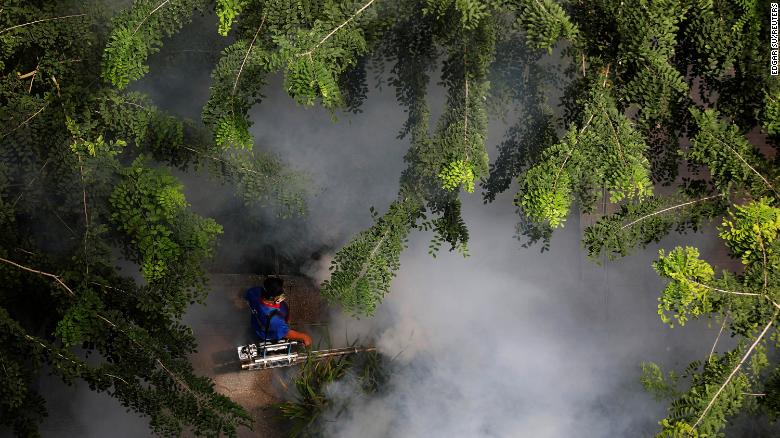
A worker fogs a housing estate for mosquitoes in Singapore on August 27, 2020.

Dengue is not a pleasant disease.

It causes flu-like symptoms such as high fever, severe headaches and body pains. In extreme cases, bleeding, breathing difficulties, organ failure and even death can occur.

"[Cases] are definitely rising faster," said Singapore's minister for home affairs Desmond Tan on the sidelines of a neighbourhood inspection for dengue mosquitoes.

"It's an urgent emergency phase now that we have to deal with."

The outbreak in Singapore has been made worse by recent extreme weather, experts say, and its problem could be a harbinger of what is to come elsewhere as more countries experience prolonged hot weather spells and thundery showers that help to spread both the mosquitoes and the virus they carry.

"The disease is now endemic in more than 100 countries," the World Health Organisation (WHO) said in a global dengue report in January 2022, noting that cases had increased "30 fold in the last 50 years."

"Not only is the number of cases increasing as the disease spreads to new areas but explosive outbreaks are occurring."

In 2019, the world recorded a record 5.2 million cases of dengue, according to the WHO, and outbreaks across Asia that year killed thousands. In the Philippines, hundreds died and millions more were put at risk as the country declared a national dengue epidemic; in Bangladesh, hospitals were overwhelmed; and in Afghanistan, transmission was recorded for the first time ever.

Singapore's worst dengue outbreak in history came the following year, when it recorded 35,315 cases and 28 deaths.

This year, Singapore, where dengue has been endemic for decades, has so far seen just one dengue death but with the rising number of cases authorities are taking no chances.

"As of May 28, 2022, about 11,670 dengue cases had been reported this year [with] about 10 per cent of cases requiring hospitalisation," a spokesperson from Singapore's Ministry of Health told CNN.

Dengue admissions at hospital emergency departments were increasing due to the recent surge, the spokesperson said, but remained at "a manageable level."

But with peak season only just beginning, medical experts and doctors like Clarence Yeo Sze Kin say there's a chance this year could set a record for the number of cases.

"Dengue is a seasonal disease and once it gets hot and dry, I usually start seeing more patients coming in," he said.

Yeo who runs a clinic in downtown Singapore, has been seeing "a sharp rise" in the number of patients with dengue-related ailments.

"Dengue might be endemic but it is still by no means a simple illness to treat," Yeo added.

The ministry spokesperson said most dengue cases did not require hospitalisation or intensive care, "however, some individuals may develop severe dengue that can result in death".

"We remind the medical community of the appropriate clinical management of dengue cases and to maintain a high level of clinical suspicion when seeing patients with fever."

READ MORE: Chinese blogger 'silenced' after displaying 'tank cake' on Tiananmen anniversary
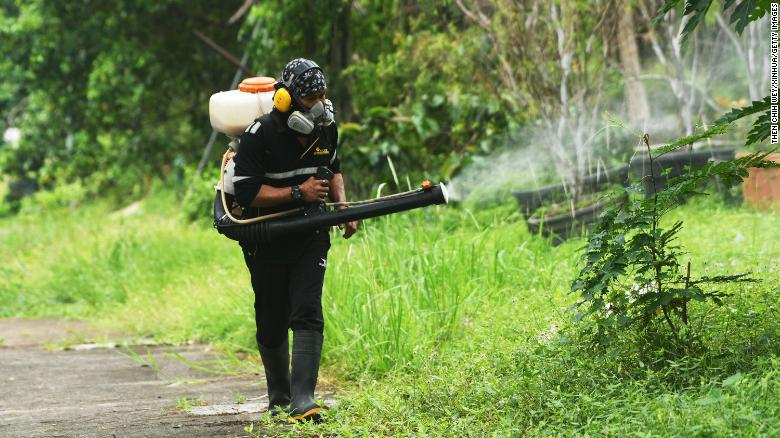
A worker sprays insecticide to fight against dengue fever in Singapore, July 6, 2021.

Hotter days, warmer nights

Singapore's dengue surge is the result of multiple factors like the recent warm, wet weather as well as a new dominant virus strain, said Ruklanthi de Alwis, a senior research fellow at the Duke-NUS Medical School and an expert in emerging infectious diseases.

But climate change, she said, was likely to make things worse.

"Past predictive modeling studies have shown that global warming due to climate change will eventually expand the geographical areas (in which mosquitoes thrive) as well as the length of dengue transmission seasons," de Alwis said.

The Meteorological Service Singapore says that the Southeast Asian country is heating up twice as fast as the rest of the world. Maximum daily temperatures could reach 37C by the year 2100 if carbon emissions continue to rise, its weather scientists have warned.

Temperatures recently hit a record high of 36.7C in May amid sweltering levels of humidity.

And soaring temperatures are expected to become the norm, according to weather and climate scientist Koh Tieh Yong from the Singapore University of Social Sciences.

READ MORE: NSW farmers expecting near-record winter harvest
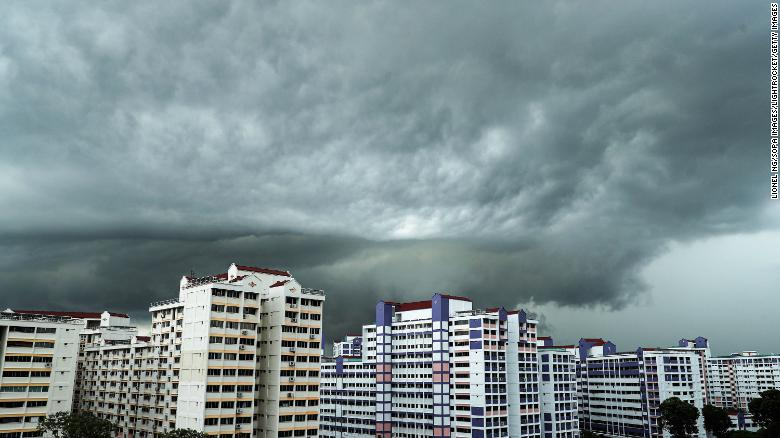
Storm clouds seen in the western part of Singapore.

"The past decade has been very warm. We now experience about 12 more warm days and 12 more warm nights (compared to) 50 years ago."

Koh said Southeast Asia had "much to be concerned about climate change" though he said it was "not possible to scientifically draw the link between local heavy showers with climate change at present."

Other experts said that given the trend of prolonged hot weather and heavier rainfall from sudden torrential monsoons, Singapore's annual dengue problem was only likely to get worse.

"We will not be able to eradicate dengue (because) the constant weather extremes create the perfect breeding conditions for mosquitoes," said climate scientist Winston Chow from the College of Integrative Studies at Singapore Management University.

Chow, who has contracted dengue fever twice, lamented the escalating scale of the problem.

"In terms of adaptation, Singapore has excellent health care infrastructure and countless policies in place to reduce the risks, but there's only so much that it can do," he said.

Despite spending tens of millions of dollars each year trying to keep mosquito populations down through island-wide fogging efforts, public awareness campaigns and even novel experiments using special lab-bred mosquitoes, government agencies in Singapore are continuing to report rises in dengue infections and mosquito clusters.

"Singapore is currently facing a serious dengue situation," its National Environmental Agency told CNN, citing the "recent warm, rainy and humid weather" as a big contributing factor to the surge.

Dengue cases continue to rise sharply and are expected to remain high in the months ahead, the agency added.

READ MORE: Family's search for strangers who leapt onto tracks to save man in wheelchair
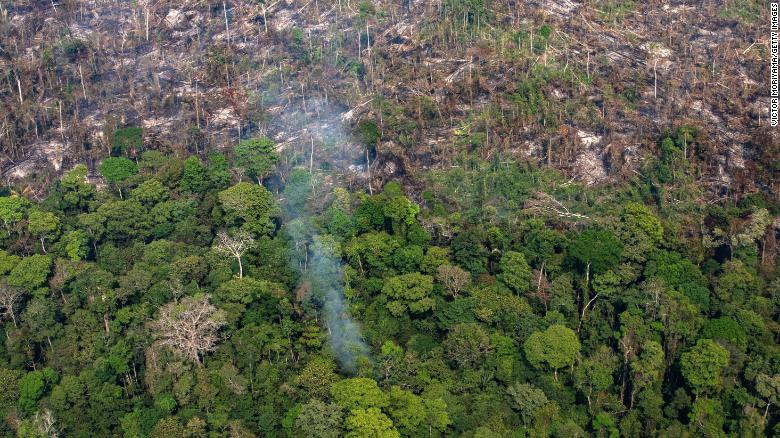
Despite spending tens of millions of dollars each year trying to keep mosquito populations down through island-wide fogging efforts there is still a rise in dengue infections and mosquito clusters.

While the government agency has managed to stamp out large areas of clusters and made extensive efforts to control the mosquito population, it is still seeing "profuse mosquito breeding" in many areas.

"Quick detection and removal of mosquito breeding habitats are crucial in reducing the mosquito vector population," the agency said.

"We urge all residents to stay vigilant, and to check their homes thoroughly at least once a week for any stagnant water."

Here to stay

As climate change worsens and the planet heats up, mosquito-borne diseases like Zika, chikungunya and dengue will likely continue to spread and have an ever greater impact on human health and well being.

The important question now, experts say, is whether politicians and policy-makers the ones who will need to make the changes to slow climate change and prepare for its consequences, will see the impact of mosquito-borne diseases on human health and act.

"Changing environmental conditions are magnifying mosquito breeding rates so unless the climate emergency improves, it will become even more difficult to eliminate the risk of dengue fever altogether," said Chow the climate scientist.

"And it will be a painful battle for Singapore in the long run."
Woman and puppy injured after e-scooter rider struck her in Melbourne

A woman and her pet dog have suffered painful injuries after being hit by an e-scooter in Melbourne last month.

Johanna Hersey and her beloved puppy Bella were walking through Flagstaff Gardens when a person travelling on an e-scooter hit into her.

"Suddenly an e-scooter came at full speed and went between my dog and myself," she said.

READ MORE: Comedian John Oliver offers to buy a controversial banana statue for $10

"It basically threw me on the floor and threw Bella in the air."

Hersey fell on her face and was badly bruised from the incident and Bella, the toy poodle broke her bone in her back paw.

"It was quite traumatic for me and the dog," she said.

Three weeks on from the incident, the pair have recovered and Hersey is now calling for greater action to protect pedestrians in the CBD.

But the problem still persists, despite e-scooters being banned from footpaths.

"That bad behaviour of e-scooter's on the footpath is getting more and more common," Hersey said.

READ MORE: Not going away this long weekend? Here's a guide to what's open this Queen's Birthday holiday

Victoria Walks chief executive Ben Rossiter said e-scooters had the potential to be dangerous if ridden irresponsibly.

"We're seeing a lot of e-scooters being illegally ridden and the authorities have to do a lot more," he said.

It was a privately owned e-scooter that hit into Hersey and Bella.

It is illegal to ride a privately owned e-scooter on roads, footpaths or other public places.

The collision has cost Hersey, not only causing physical pain but financial, costing $1000 to fix Bella's broken paw.

The e-scooter rider stopped in the immediate aftermath of the accident and he even offered to pay the vet bills.

However, he has now gone quiet, and is ignoring all calls.

Man avoids jail time over violent attack with builder's spirit level

A man has avoided jail time after he was convicted over a violent attack involving a builder's spirit level.

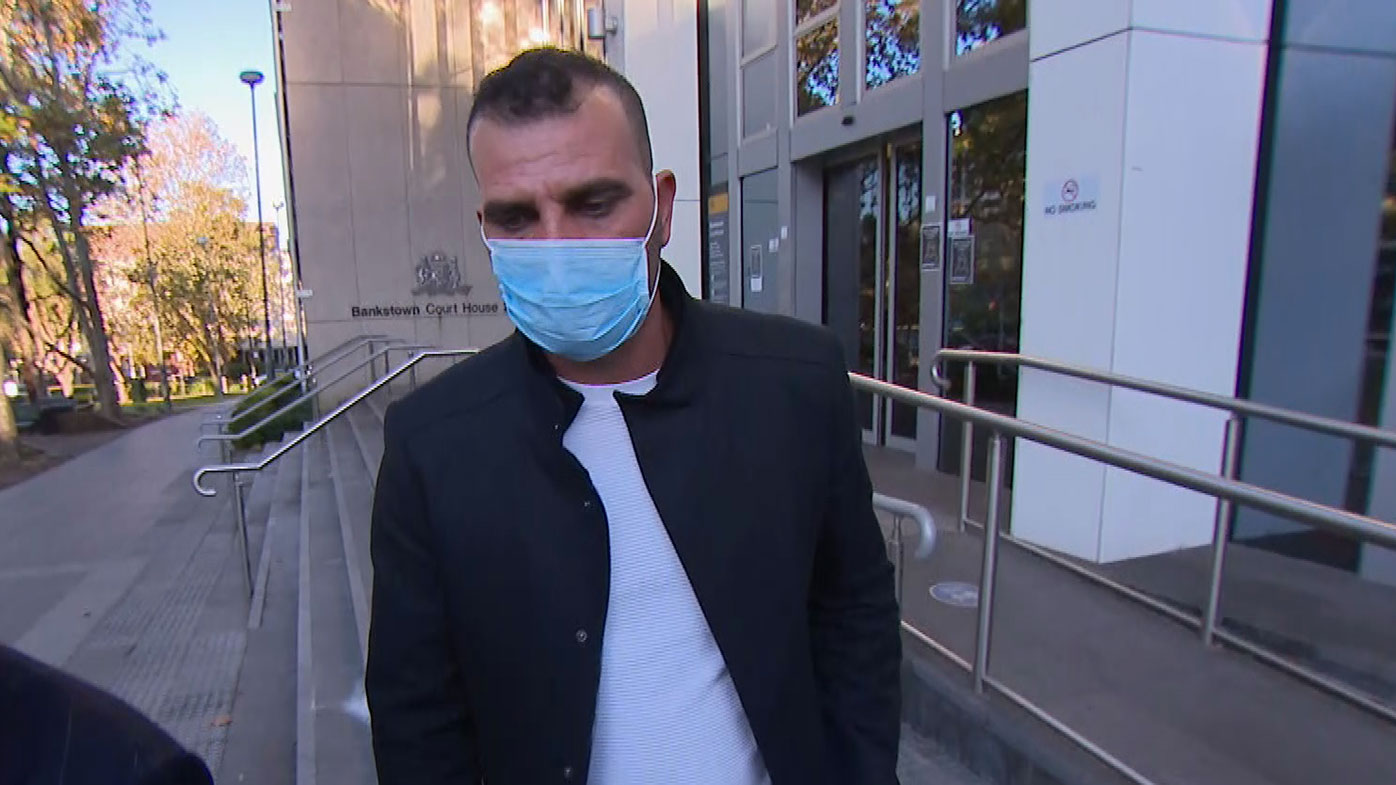
Abdul Assad threatened and beat his neighbours, Qutaiba Mehmood and Ali Ahmed, in their Punchbowl carpark in May last year.

Assad broke Mehmood's arm with the spirit level.

READ MORE: RBA hikes interest rates for second month in a row

"Doctors have recommended me not to lift anything for two years other than a cup of coffee," Mehmood told 9News.

"Whenever I go to that street or that area I get traumatised."

The 44-year-old father pleaded guilty to multiple charges in court today.

READ MORE: China warns Australia of 'serious consequences' after warplane intercept

Abdul Assad was sentenced to a 21-month intensive corrections order.

Assad was sentenced to 21 months and the magistrate has allowed him to serve the time in the community under an intensive corrections order.