New Zealand has joined international partners in calling for accountability for alleged Russian war crimes during its invasion of Ukraine. Ukraine has so far identified more than 10,000 possible war crimes committed by Russia.A…
Tag Archives: oceania
Wild weather storm tragedy: Elderly woman dies after being crushed by tree in Cambridge
“Freakishly high winds” in Cambridge have been blamed for ripping a healthy oak tree from the ground and crushing an elderly woman – who tragically later died from her injuries. The woman was initially critically injured after the…
'Lost world' found in massive sinkhole in southern China
Unknown species could be hiding in a gaping 192-metre-deep sinkhole that's formed a lost world in southern China.
The sinkhole, located in Leye County within the Guangxi Zhuang Autonomous Region, was discovered by spelunkers.
The hole has its own forest living inside it.
READ MORE: Over 1000 arachnids exported from countries like Australia
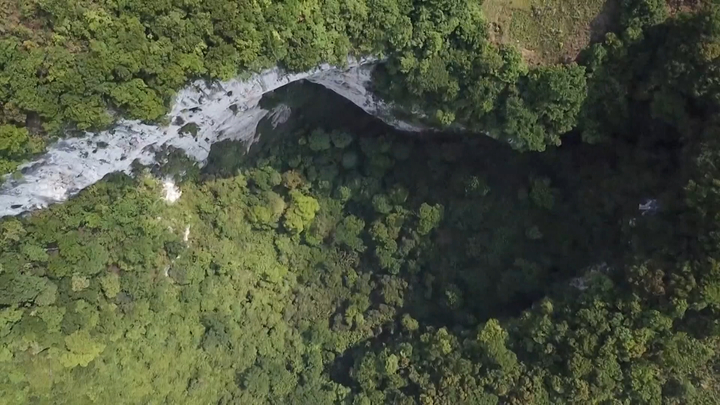
Chen Lixin led a cave expedition team inside the pit on May 6.
The sinkhole's interior is 306 metres long and 150 metres wide. Speleologists also found three cave entrances in the chasm and ancient trees 40 metres tall.
READ MORE: Where to vote and your other election questions answered
"I wouldn't be surprised to know that there are species found in these caves that have never been reported or described by science until now," Lixin told Live Science.
The latest discovery brings the number of sinkholes in Leye County to 30, according to Xinhua news agency.
Weather: Traffic chaos as winds partially close Auckland Harbour Bridge; woman dies after tree topples in gales
WEATHER LATEST* Levin tornado: Up to 50 homes damaged, one person injured by glass * ‘It was devastating’: Witnesses describe horror as woman crushed by tree Heavy winds have swept through the North Island today, toppling a…
Mystery of 100-year-old human skull found in Wellington, Wadestown garden
For years, a mystery has lain buried in the backyard of a suburban Wellington home. Barely a foot deep, close enough to the surface that the unwitting homeowner was able to stumble across it while tending the garden on a quiet April…
Two cars, bus involved in South Dunedin crash, two people injured
Two people have been injured after a crash involving a bus and two cars in South Dunedin.A police spokeswoman said emergency services were responding to the Hillside Rd crash, which was reported to police at about 1.45pm.The crash…
Herald afternoon quiz: May 20
Test your brains with the Herald’s afternoon quiz. Be sure to check back on nzherald.co.nz for the morning quiz tomorrow. To challenge yourself with more quizzes, CLICK HERE.
What is monkeypox and its signs and symptoms?
An extremely rare disease called monkeypox, a cousin of smallpox, has again made its way to the United States, while Australia has also recorded a "probable" case.
A case of monkeypox was reported on Wednesday in a patient hospitalised in Massachusetts who had recently travelled to Canada in private transportation.
On Friday in Australia, NSW Health said it is urgently testing a man in his 40s to confirm if he has the virus.
In 2021, two people travelling from Nigeria to the US were diagnosed with the disease, according to the Centres for Disease Control and Prevention.
READ MORE: First 'probable' case of monkeypox identified in NSW
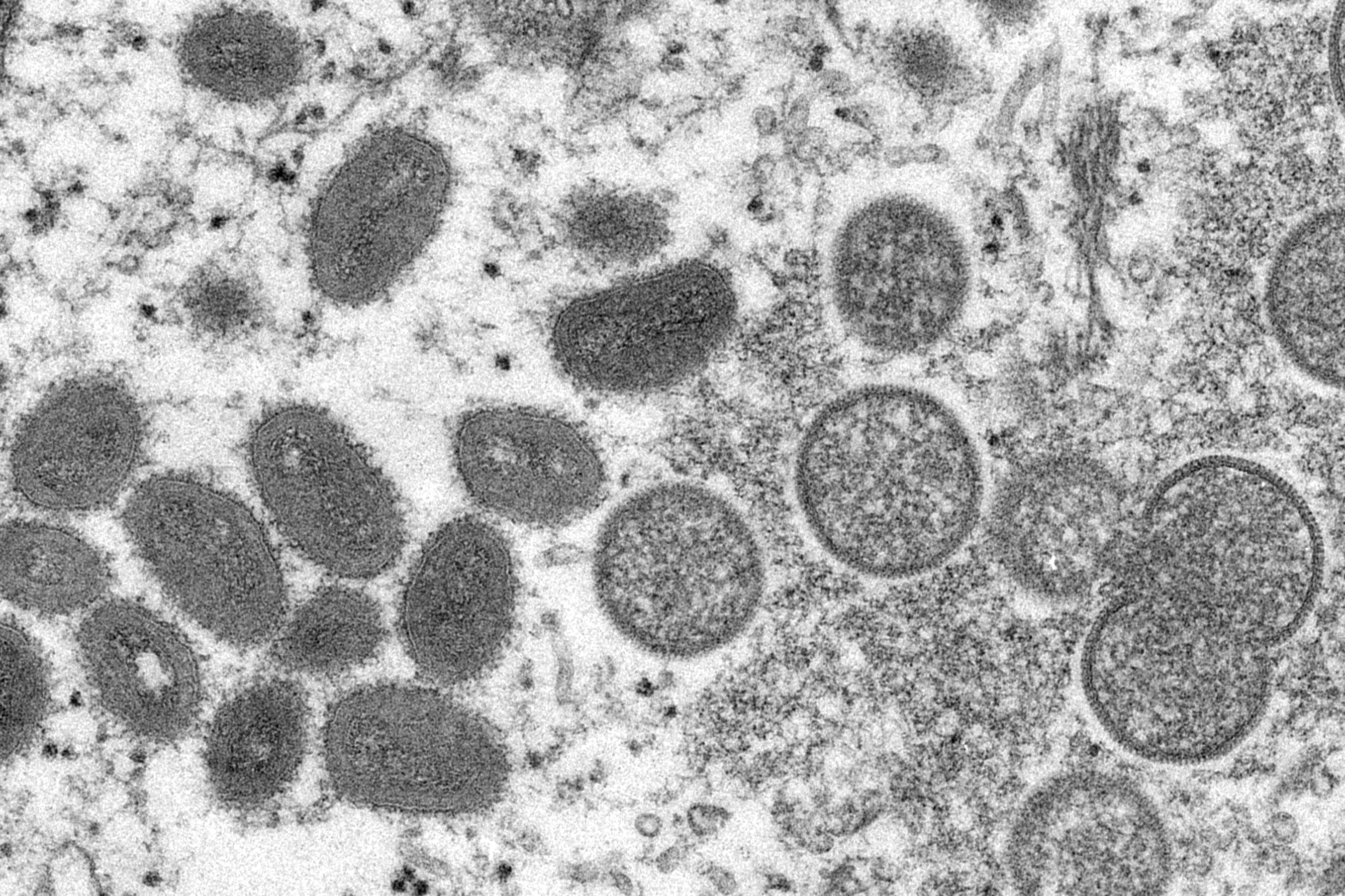
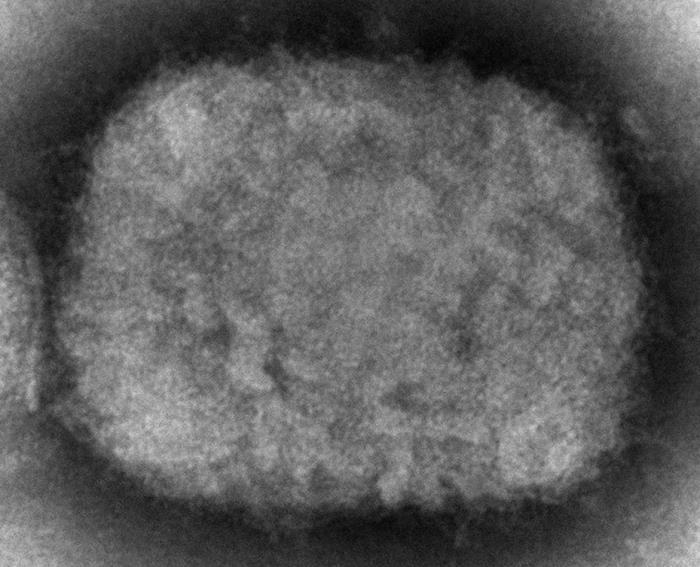
Monkeypox is mostly found in West and Central Africa, but additional cases have been seen in Europe, including the United Kingdom, and other parts of the world in recent years.
Those cases are typically linked to international travel or imported animals infected with the pox, the CDC said.
On Thursday, Spain confirmed seven cases of monkeypox in Madrid and are investigating another 22; Italy confirmed its first case; and Canadian public health officials announced they are investigating 17 suspected cases of monkeypox in Montreal.
Several cases of monkeypox in the UK among people who have no known travel or contact with others with the virus have health officials there and at the CDC concerned, but there is no cause for alarm, US Surgeon General Dr Vivek Murthy said Thursday on CNN's New Day.
READ MORE: Medic's bodycam shows firsthand horror of Mariupol
"At this time, we don't want people to worry," Murthy said.
"These numbers are still small; we want them to be aware of (the) symptoms, and if they have any concerns to reach out to their doctor."
What are the initial symptoms of monkeypox?
There is an incubation period of some seven to 14 days, the CDC said.
Initial symptoms are typically flu-like, such as fever, chills, exhaustion, headache and muscle weakness, followed by swelling in the lymph nodes, which help the body fight infection and disease.
"A feature that distinguishes infection with monkeypox from that of smallpox is the development of swollen lymph nodes," the CDC said.
Next comes a widespread rash on the face and body, including inside the mouth and on the palms of the hands and soles of the feet.
The painful, raised poxes are pearly and fluid-filled, often surrounded by red circles.
The lesions finally scab over and resolve over a period of two to three weeks, the CDC said.
READ MORE: Where to vote and your other election questions answered
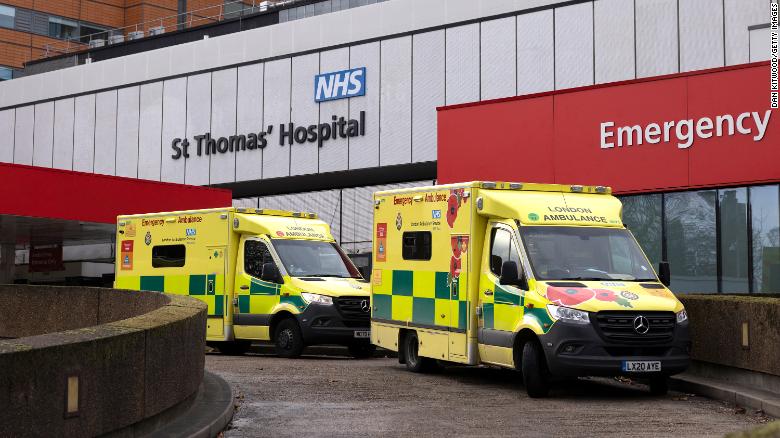
"Treatment is generally supportive as there are no specific drugs available. However, a vaccine is available that can be given to prevent the development of disease," Jimmy Whitworth, professor of international public health at the London School of Hygiene & Tropical Medicine, said in a statement.
How is monkeypox spread?
Close contact with an infected individual is required for the spread of the monkeypox virus, experts say.
Infection can develop after exposure to "broken skin, mucous membranes, respiratory droplets, infected body fluids or even contact with contaminated linen," Neil Mabbott, personal chair in immunopathology at the veterinary school of the University of Edinburgh in Scotland, said in a statement.
"When the lesions have healed, the scabs (which might carry infectious virus) can be shed as dust, which could be inhaled," said Dr Michael Skinner, who is on the faculty of medicine in the department of infectious disease at Imperial College London, in a statement.
Transmission between people occurs primarily through large respiratory droplets, and because such droplets typically travel only a few feet, "prolonged face-to-face contact is required," the CDC said.
"Monkeypox can be a serious infection, with mortality rates from this type of monkeypox virus having been around one per cent in other outbreaks. These are often in lower-income settings with limited access to health care," said Michael Head, senior research fellow in global health at the University of Southampton in the UK.
However, in the developed world, "it would be very unusual to see anything more than a handful of cases in any outbreak, and we won't be seeing (COVID-19)-style levels of transmission," Head said in a statement.
Common household disinfectants can kill the monkeypox virus, according to the CDC.
Where did monkeypox originate?
Monkeypox got its name in 1958 when "two outbreaks of a pox-like disease occurred in colonies of monkeys kept for research," the CDC said.
However, the main disease carrier of monkeypox is still unknown, although "African rodents are suspected to play a part in transmission," the agency said.
The first known case of monkeypox in people was "recorded in 1970 in the Democratic Republic of Congo during a period of intensified effort to eliminate smallpox," the CDC said.
After 40 years with no reported cases, monkeypox reemerged in Nigeria in 2017, the CDC said.
READ MORE: More than 1000 arachnids are being exported from countries like Australia in unmonitored web
Since then, there have been more than 450 reported cases in Nigeria and at least eight known exported cases internationally, the agency said.
An outbreak occurred in the US in 2003 after 47 people in six states – Illinois, Indiana, Kansas, Missouri, Ohio and Wisconsin – became ill due to contact with their pet prairie dogs, the CDC said.
"The pets were infected after being housed near imported small mammals from Ghana," the CDC said.
"This was the first time that human monkeypox was reported outside of Africa."
'A dangerous combination' – Hawke's Bay repeat offender and guns
Earl Stratham Campbell and firearms are a “dangerous combination”, a judge said as she sentenced the repeat offender to two years and six months in prison. Campbell has been in and out of jail for 20 years since first being imprisoned…
Who the country's biggest media outlets are backing for PM
The day before the election, Australia's media landscape appears to reflect the country as a whole.
Few full-throated endorsements of either the Coalition or Labor can be found, and when it came to making a call, the major mastheads were essentially split down the middle.
Endorsements for Labor – still just in front according to the polls but with the Coalition rapidly narrowing that lead – tend to focus on the need for change, for action on climate, and for less division in politics.
READ MORE: Medic's bodycam shows firsthand horror of Mariupol

Mastheads calling it for the Coalition point to the government's actions during the pandemic, and back Prime Minister Scott Morrison's claims about his better economic credentials.
Here's what Australia's big news outlets have to say.
Sydney Morning Herald – Labor
"To return the government to power would be to reward and incentivise inaction at a time when the country has a growing list of problems to tackle."
The Age – Labor
"While we despair at the lack of truth-telling in this campaign, The Age believes a change of government is needed to begin restoring integrity to federal politics and to, finally, face up to the challenge of climate change."
READ MORE: Two mystery winners share $80 million Powerball jackpot
Australian Financial Review – Coalition
"The Morrison government has failed to construct a credible program to ensure Australia's post-pandemic prosperity. But a re-elected Coalition with the authority to govern would still be Australia's best bet."
The Australian – Coalition
"Mr Morrison has endured the worst a world can throw at a national leader and Australia has emerged stronger. Mr Albanese has not proven himself ready to assume the high office he seeks."
Daily Telegraph – Coalition
"Under this government, Australia has either held its ground or made significant economic and global advances during the nation's most fraught and testing time since World War Two."
READ MORE: Where to vote and your other election questions answered
NT News – Labor
"Territorians deserve better than being looked at sideways by the incumbent Coalition government."
Herald Sun – Coalition
"Neither party has outlined a bold vision for Australia's future. But in a contest of competency and trust, the Coalition is a clear winner."
Courier-Mail – Coalition
"Don't vote for a good bloke, vote for a proven leader."
- READ MORE: Where to find your democracy sausage on election day 2022
- EXPLAINED: What is a hung parliament?
- EXPLAINED: What are 'preference deals' and how do they influence my vote?
Canberra Times – Labor
"Consensus builders, not bulldozers, will be needed in the next Australian Parliament."
Guardian – Labor
"The Coalition's siren song of returning to a time of pre-pandemic calm might be enticing, but it's an illusion. Australia cannot afford three more years of Scott Morrison's self-serving spin and negligent inaction."