A recidivist shoplifter has been found not guilty of swinging a skateboard at a Pak’nSave security guard that he’s been in a long-standing feud with. “I admit to shoplifting and yelling and being rude to the gentleman but there…
Tag Archives: oceania
Wet weather caused by La Niña could end by winter, forecasts show
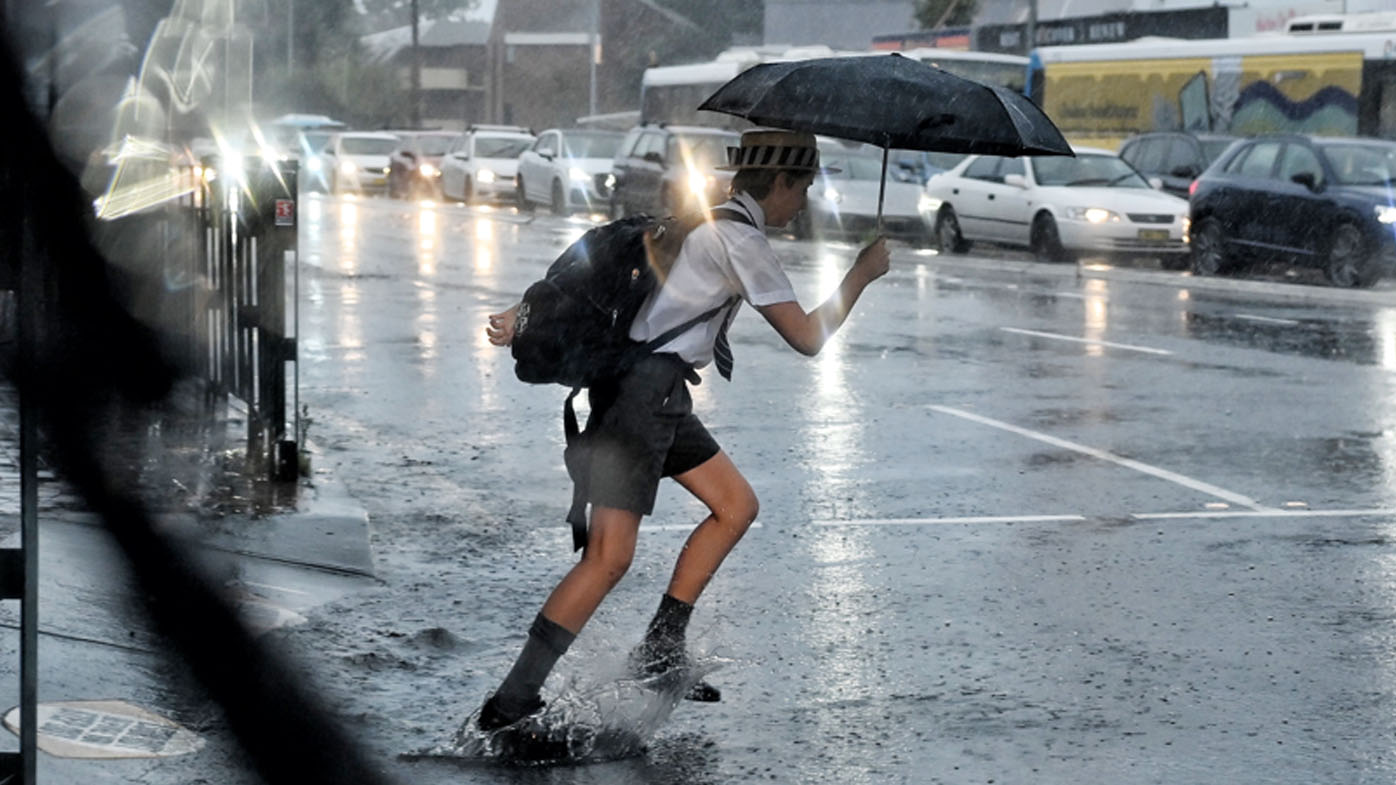
The La Niña weather event which has caused a wet summer across Australia may soon come to an end according to the latest models by the nation's weather forecaster.
The Bureau of Meteorology (BoM) said there has been little change to the conditions over the past few weeks but waters are warming to neutral El Niño – Southern Oscillation (ENSO) levels.
ENSO has little influence on rainfall meaning Australia could soon see an end to the unprecedented downpours by early winter.
READ MORE: Ex-corrections officer dies after 11 days on the run with prison inmate
"Most climate models surveyed by the Bureau indicate a return to neutral El Niño–Southern Oscillation (ENSO) by the early southern hemisphere winter," the bureau said.
"Only one of seven models continues La Niña conditions through the southern winter."
However, in the immediate future, the rainfall is expected to continue with Queensland now in the firing line to be inundated by water and potential flash flooding for a second time this year.
READ MORE: Biden signs World War II-style bill to help Ukraine

La Niña, which is Spanish for The Girl, is a complex weather pattern that pushes warm water towards the western side of the Pacific.
"La Niña events typically begin in the Southern Hemisphere's winter or spring, peak in spring and summer and break down in autumn," Weatherzone's Ben Domensino said.
"This year's La Niña is remaining unusually well-established into the back end of autumn."
READ MORE: Scuba diver 'left for dead' near 50kg of cocaine in NSW river
The La Niña conditions that the nation is experiencing now started in November when it formed over the Pacific Ocean.
It is the second year in a row Australia has experienced the weather event.
National's Christopher Luxon rules out Act's David Seymour as finance minister
By Russell Palmer of RNZ National leader Christopher Luxon has refused to rule in or out Act’s budget proposals if they enter government together, but says Nicola Willis – not David Seymour – would be finance minister.The Act…
Man committed after slayings shows up free in small South Carolina town
The last thing the family of two sisters slain in a tiny South Carolina town had heard about the man who confessed to killing them was that he was headed to a mental hospital in 2012 to be treated for schizophrenia so he could later be tried for murder.
For 10 years, they heard nothing.
Then, a few months ago, friends started to call a son of one of the women with the news that they had seen Joseph Jermaine Brand around Kingstree, family attorney Lori Murray said.
READ MORE: Ex-corrections officer dies after 11 days on the run with prison inmate
Darren Tisdale, a son of the other sister and mayor of the town of 3,100, then began searching for Brand, spotting him just a couple of miles from where police said he confessed to shooting the two women in the head after breaking into their home in October 2010.
Tisdale called prosecutors but got no answers.
"He executed two elderly women," Murray said.
"I can't believe he isn't a danger to the whole town just out walking around."
Murray and the families of Naomi Johnson, 65, and her 74-year-old sister Thelma Haddock, gave the sparse court records they could find and other information to The Associated Press in advance of a news conference.
Then they asked reporters for help.
"We need closure. I don't know about you, but yesterday there was a big hole in my heart when I don't have my mama on Mother's Day," Darren Tisdale said.
At the courthouse, a clerk said there was no record of Brand's arrest or indictments for two counts of murder, armed robbery, first-degree burglary and a weapons charge.
The records could not be found online either, although there were some court records still available in a file where the arrest warrants were kept.
Other public records show Brand, 43, registered to vote from an assisted living home near Columbia in 2016. At one point, he also had a Facebook page.
"We need closure." – Darren Tisdale
That's the only tangible piece of evidence about where Brand was until he showed up in Kingstree again. No one has given the family any explanation for why his charges just disappeared.
A judge's order in 2012 said if Brand's mental competency was restored, he was to be brought back to Williamsburg County and held without bond for his trial.
Under the law, a prosecutor could seek 30 years to life in prison for Brand, with the possibility of a death penalty trial.
Prosecutors have promised to reinstate the charges and said they will ask a grand jury to indict Brand again at the end of the month, Murray said.
READ MORE: Scuba diver 'left for dead' near 50kg of cocaine in NSW river
Solicitor Chip Finney didn't return a phone message or email from the AP.
Neither did the assistant prosecutor who signed off on dropping the charges because of the competency problem or Brand's public defender at the time.
A woman in Kingstree identifying herself as Brand's grandmother hung up on an AP reporter Monday.
No one responded to a message left at a telephone number listed for Brand's mother.
Members of the sisters' family said they had faith in the system, even when a call to Finney to check on the case in 2018 went unanswered.
That was, until they saw Brand walking around free.
"It has been very hard on the whole family having to relive this event all over again," the family said in a statement issued through their attorney.
"We want justice for our mothers.
READ MORE: Biden signs World War II-style bill to help Ukraine
"We want closure for our families, we want Joseph Brand to pay for his crimes and we want answers as to how and why he was released without prosecution."
And Tisdale added Monday "I hope Mr. Finney does what's right."
Brand lived a few doors down from Johnson and Haddock in 2010.
He had moved to Kingstree to live with his father after a stint in a Nevada prison on charges of robbery, drugs and firing a gun out of a vehicle, according to legal records.
Brand came over to the sisters' house and asked to spread pine straw for money.
When they refused, Brand barged into the home, wrested a gun away from one of the sisters and shot them several times, including in the head, Williamsburg County deputies said.
Brand's father found him walking aimlessly in the sisters' front yard, investigators said.
The father saw their door was open and poked his head in to apologise.
That's when he discovered the bodies.
FULL COVERAGE: Federal Election 2022
Brand confessed to the killings, according to arrest warrants.
But the records show that his mental problems kept him from being able to assist his attorney, prompting a judge to order a psychiatric evaluation.
A psychiatrist's report stated that Brand had schizophrenia and his thinking was completely disorganised.
The report indicated that Brand refused to take his medicine and that if he did take it, his competency could be restored.
When asked his age after his arrest, Brand responded, "Seventy-nine in Islam years." Then he said he was 34.
One of the two psychiatrists who examined him corrected him, saying court records listed him as being 33. "And a half!" Brand yelled back, according to the report on his mental state.
When asked how he hoped his case would turn out, Brand, who once lived in Reno, Nevada, said he wanted "to return back to the biggest little city."
"I want to return back to life as a rock star," he said, according to the report.
Brand was first sent for temporary psychiatric treatment, but remained incompetent to stand trial, according to Circuit Judge Clifton Newman, who in November 2012 ordered him to be confined until he was better.
That's where the paperwork trail ends, aside from the record of his registering to vote from the assisted living home in Blythewood in 2016.
No one quite knows how Brand ended up back in Kingstree last year.
Murray said even though the solicitor has promised to bring the case before a grand jury, she is concerned about whether that will actually happen because it isn't clear whether Brand was declared mentally competent.
READ MORE: Queen to miss parliament opening for the first time in decades
She said she still can't get answers from Finney's office.
"The charges are gone. The record is expunged. Mr. Brand is walking around as free as a jaybird," Murray said.
State mental health officials said privacy laws prevent them from releasing any details of Brand's treatment.
But in a statement Monday, the Department of Mental Health said patients charged with crimes who need long-term care are committed by a probate judge and both that judge and prosecutors are informed when the patient no longer needs involuntary treatment.
Finney's office told the family that investigators have been keeping an eye on Brand since they realised he was back in Kingstree, but Murray said that is little comfort. She worries now he may run since he knows a grand jury is going to hear the case again at the end of the month.
"He's still out there," Murray said. "And I think if there wasn't any problem with the case, they could have brought him back in."
Transport Minister Michael Wood hints at fuel tax scrap if congestion charging introduced
There is broad support in Parliament for axing the Auckland Regional Fuel Tax of 10 cents a litre if the Government introduces congestion charging.The Government is expected to announce next Monday that it will introduce congestion…
New programme supports pregnant women to be smoke-free and save babies' lives
Public Interest Journalism funded through NZ On Air Māori health providers are hoping a new pilot programme will be the key to reducing infant deaths.Hāpai Te Hauora, Aotearoa’s largest Māori public health organisation,…
'Historic day': Street-based sex work becomes legal in Victoria
Sex workers are free to operate on streets across Victoria as new laws are introduced to improve industry safety.
The new rules will see street-based sex work legalised with the exception of a few specific circumstances.
The reform is designed to encourage sex workers to seek out support and report crimes made against them.
READ MORE: Police hunt for man who allegedly stole Melbourne charity donations
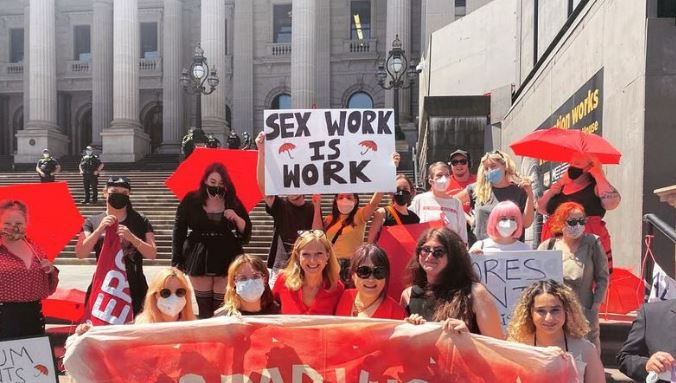
The change falls under the Sex Work Decriminalisation Act 2021.
Under the reforms, people and organisations are also prohibited from discriminating against or refusing someone service on the basis they are a sex worker.
The legislation makes it an offence for sex work to be carried out near schools, care services and places of worship between 6am and 7pm and on holidays.
https://twitter.com/FionaPattenMLC/status/1523845689104793601
Minister for Consumer Affairs Melissa Horne said today was a important milestone for the industry.
"It's an important milestone for sex work decriminalisation in Victoria and another step in ensuring the industry is regulated safely and fairly," she said.
The first phase of decriminalising sex work commenced today and will remove most offences and criminal penalties for individuals participating in consensual sex work.
The second phase is expected to commence in late 2023 and will include the remainder of the reforms, and repeal the sex work licensing system.
Systemic racism in policing, criminal justice must be admitted, Māori Party says
Police don’t have unconscious racial bias – the bias is more overt and systemic racism permeates the whole criminal justice system, the Māori Party says.But the Police Association said the party’s claims of systemic racism…
Employment Court rules Gloriavale members were 'employees' from age 6, undertook 'laborious, often dangerous' work – not 'chores'
The Employment Court has ruled that a group of ex-Gloriavale members were employees at the secretive Christian community – from when they were just 6 years old.Further, the members undertook “strenuous, difficult, and sometimes…
True nature of political 'preference deals' explained
It pops up every election: political parties warn voters to put their opponents last on the ballot paper, because of scary "preference deals" that will see unwanted candidates gain power.
While these preference deals exist, they have no power on how you vote – unless you let them.
From how to vote cards to democracy sausages, here's a crash course on how Australia's voting system works.
READ MORE: The satellite images that cost Aussie homebuyers $25k
Elections are simple, aren't they? The person who gets the most votes wins, right?
Yes, fundamentally elections are simple beasts.
But throw in multiple candidates and multiple counts and suddenly you have enough data to make a statistician dizzy.
Australian federal elections use something called a "preferential voting system".
Under this system, voters are required to mark a preference for every candidate on the green ballot paper (which is the House of Representatives) and mark a certain number of preferences on the white ballot paper (which is the Senate).
To win, a candidate must secure an "absolute majority" or more than 50 per cent of formal votes.
In real terms, an "absolute majority" is essentially support from more than half of voters.
READ MORE: 'Significant flooding' likely in Queensland as BoM issues flood watch
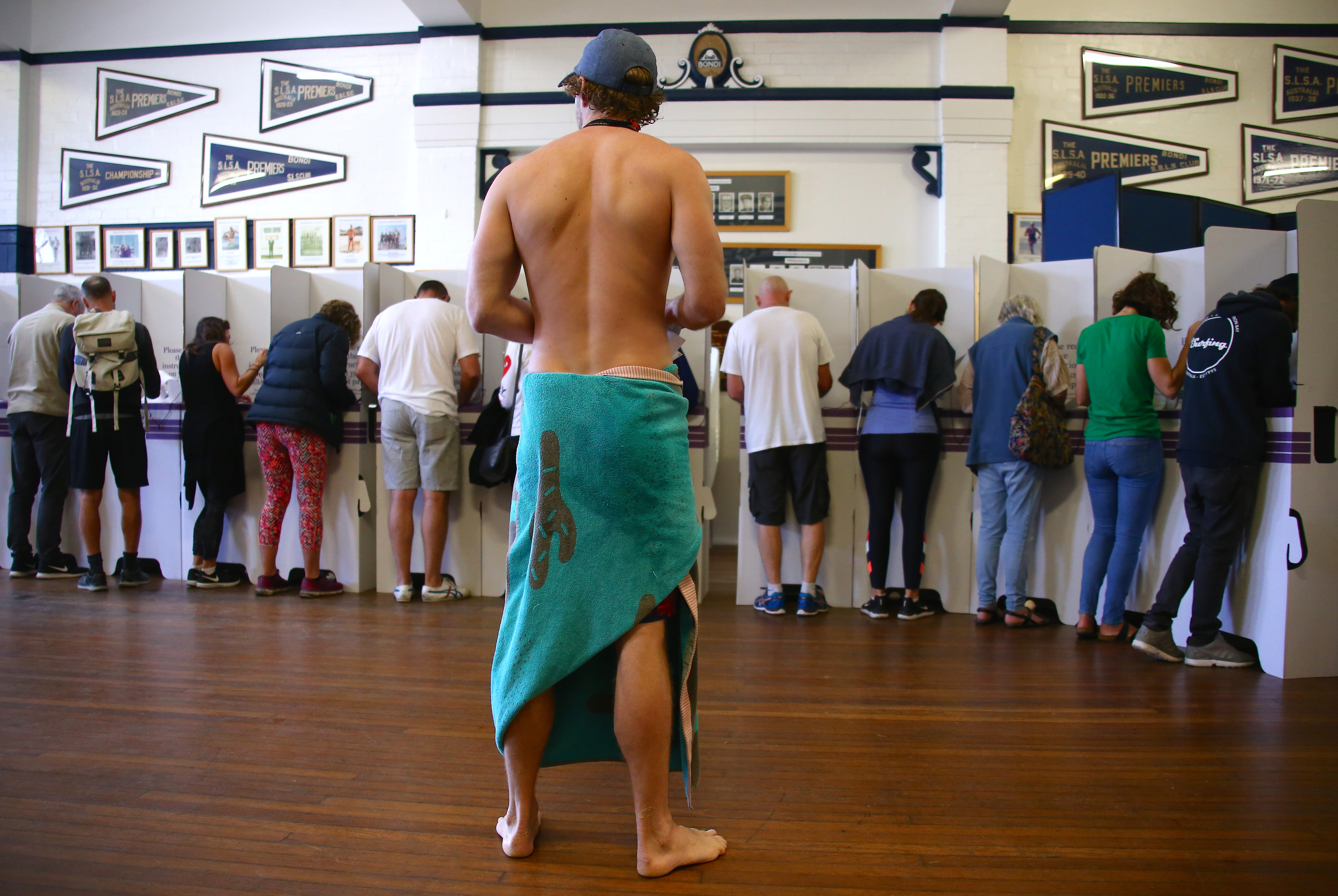
That makes sense. So why can't we just put an X down for the candidate we want, and leave it at that?
Because the result may not show an "absolute majority" of support for one candidate.
At every polling station, officials start by sorting the formal votes by who voters have placed a number one next to.
If one candidate gets more than 50 per cent of formal first preferences (a clear absolute majority) then they are elected, but a full "preference count" is still done.
If no single candidate wins a clear absolute majority on the first count, polling officials then go through several counts where they factor in the order of the numbers you placed next to the candidates.
I know, I know, it sounds very confusing in writing – the Australian Electoral Commission (AEC) has an excellent explainer of how preferential voting works.
READ MORE: Nick Cave's eldest son Jethro Lazenby dies
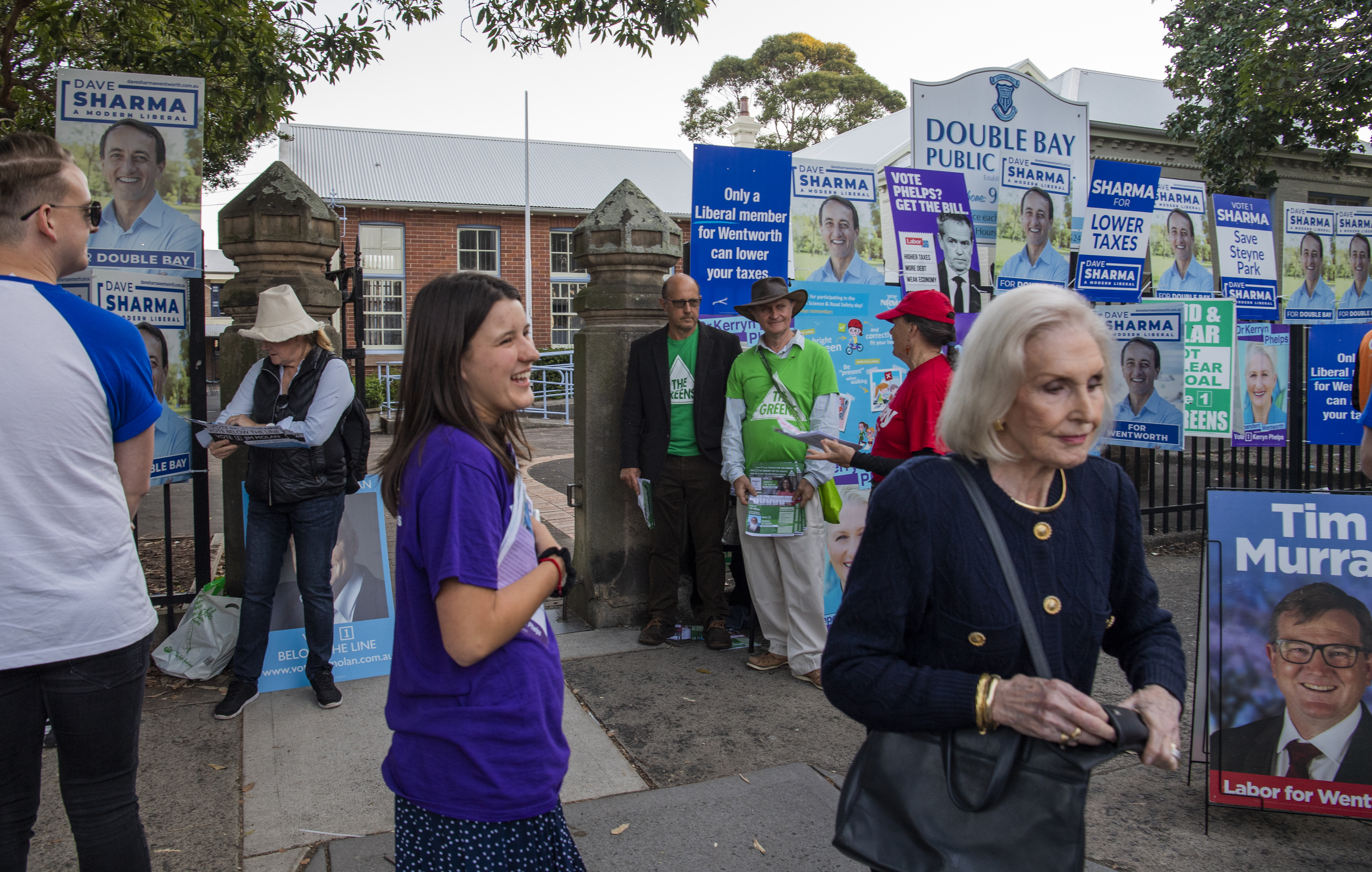
It sounds like you are describing preference deals to me …
Let me be clear.
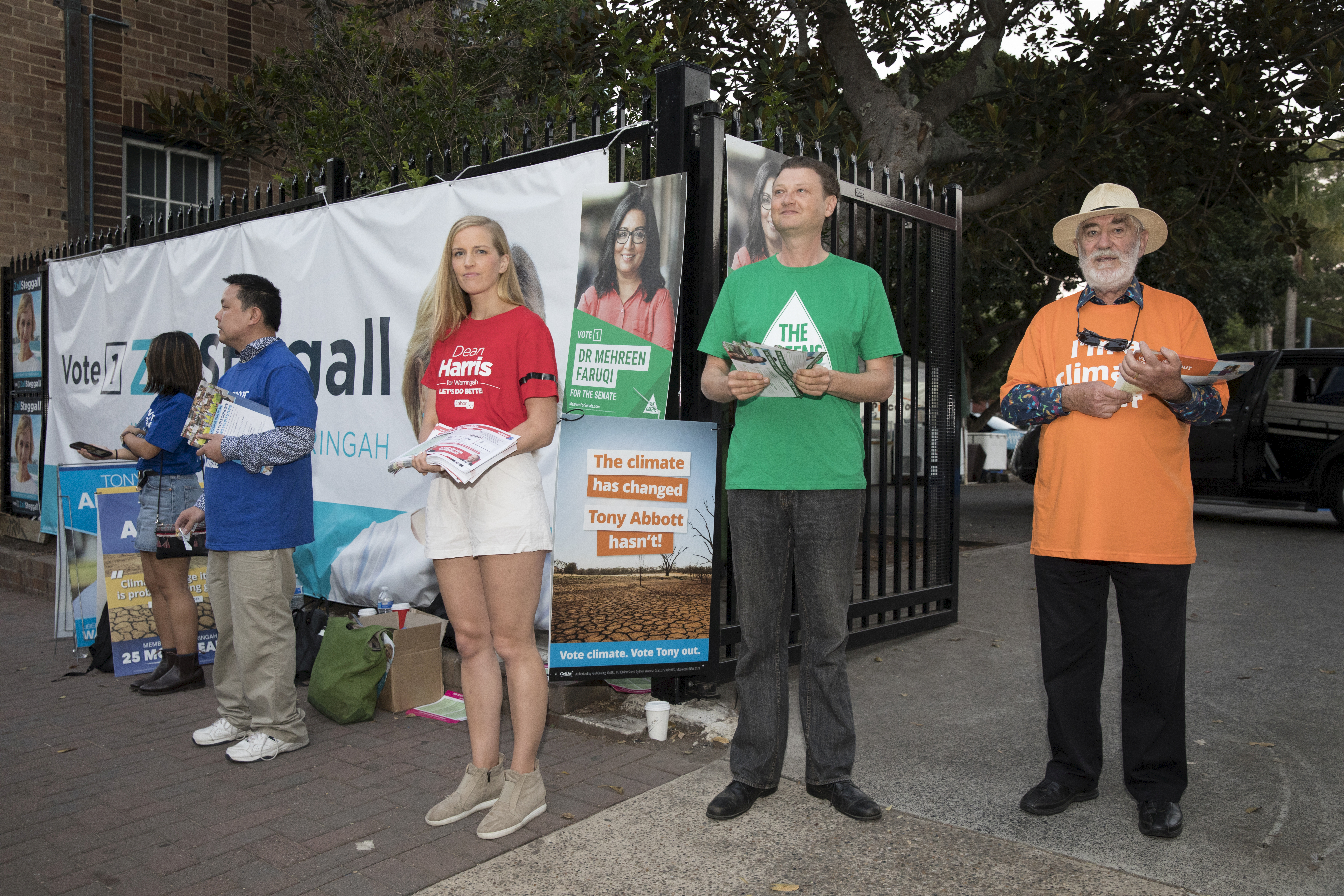
Preference deals – as described by political parties – are only about those "how to vote" cards that party volunteers hand out at polling stations.
Political parties make agreements to have a streamlined message on these "how to vote" cards, where they provide a suggestion to voters on which numbers should go next to which candidates.
You as the voter can preference whoever you like – and in whatever order you like – when you number the boxes.
Voters are not obliged to take any notice of the party-printed "how to vote" cards at all, and preference deals do not impact your vote if you do not follow the "how to vote" cards.
Political parties know that these "how to vote" cards do have an influence, and thus have polling booths well staffed by representatives who hand out materials.
FULL COVERAGE: Federal Election 2022
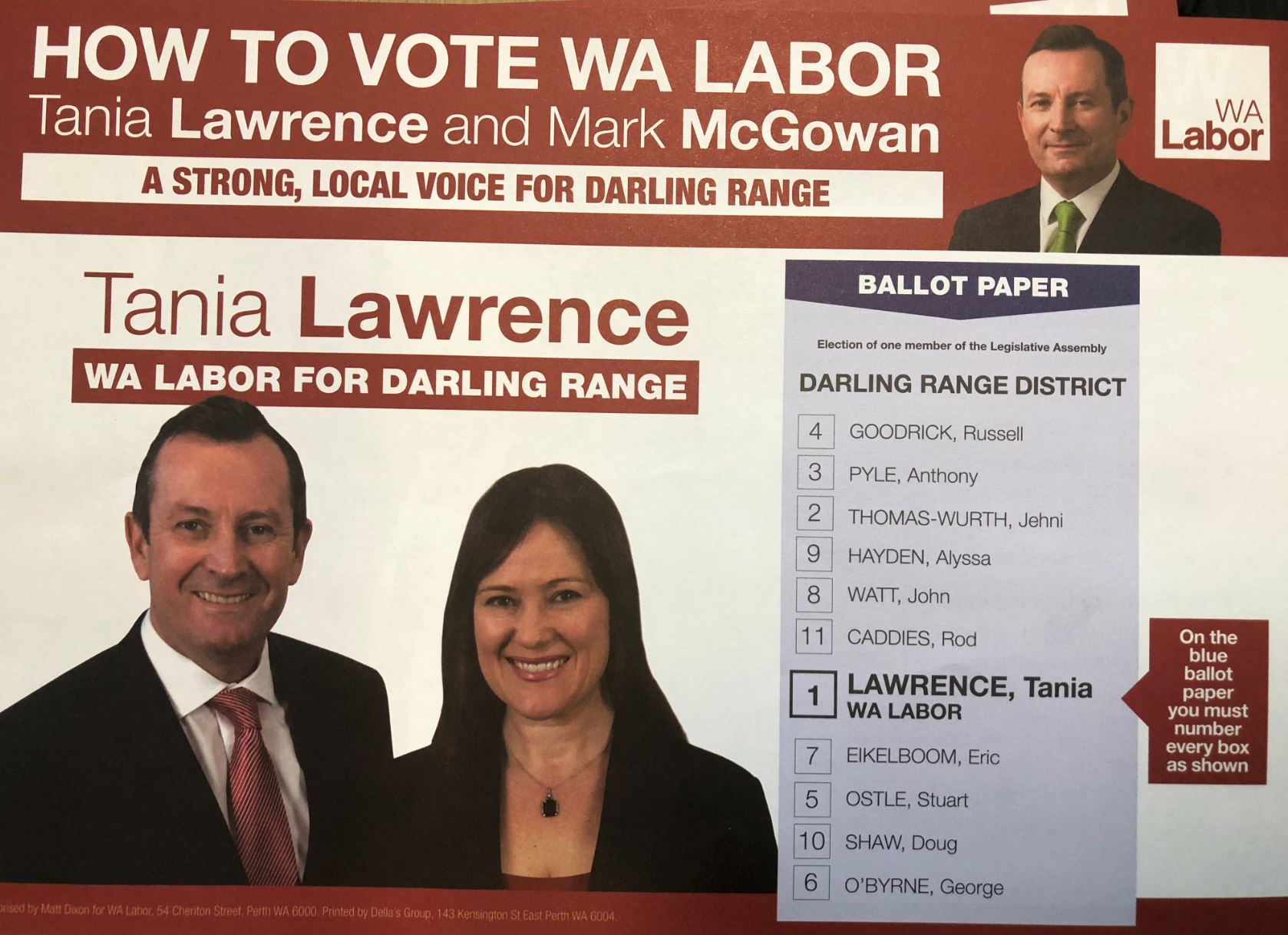
So I should ignore those How to Vote cards that suggest what order I should put the candidates in?
How you vote on polling day is entirely up to you.
You can choose to be influenced by the materials or not.
What's most important is that your vote – whatever that may be – actually counts.
Come May 21, that means you must number every single box on the green ballot paper for the House of Representatives and either every box above the line on the white senate paper, or at least 12 boxes below the line.
Non-political instructions on how to vote will be on the ballot papers themselves.
No dramas if you make a mistake – you can always ask polling booth staff for another ballot paper.