Prime Minister Jacinda Ardern is not well enough to chair Cabinet remotely on Monday or to deliver her speech virtually during the lockup for Monday’s pre-Budget release of the landmark Emissions Reductions Plan.A spokesman said…
Tag Archives: oceania
North Korea's COVID-19 outbreak: What we know
North Korea's first-reported COVID-19 outbreak is the "greatest turmoil" to befall the country since its founding more than 70 years ago, according to its leader Kim Jong Un, as the isolated and impoverished nation scrambles to curb the spread of a highly transmissible virus that risks causing a major humanitarian crisis.
North Korea reported 15 more deaths and 296,180 new "fever cases" between Friday and Saturday evening, according to state media KCNA, though it did not specify how many of the deaths and cases were linked to COVID, likely due to the country's extremely limited testing capacity.
That brought the total death toll to 42, according to KCNA, and the total number of cases to 820,620, with 496,030 fully recovered and 324,550 receiving medical care.
READ MORE: Australian cricket legend Andrew Symonds dead at 46

The climbing death toll and surging "fever cases" come after North Korea said on Thursday it had identified its first ever case of COVID-19 – an alarming development for a country with one of the world's most fragile public health systems and a largely unvaccinated population.
But given the opaque nature of the regime and the country's isolation from the world – a trend that has only exacerbated since the pandemic – it is extremely difficult to assess the real situation on the ground.
Foreign diplomats and aid workers had fled North Korea en masse in 2021 due to shortages of goods and "unprecedented" restrictions on daily life, making it all the more impossible to obtain information from the country other than through official state media.
But North Korean state media reports have been vague, and many important questions remain unanswered, including the country's vaccine coverage and the lockdown's impact on the livelihood of its 25 million people.
Here is what we know, and what we don't know about the outbreak:
How did the outbreak emerge?
North Korean authorities have not announced the cause of the outbreak.

North Korea's borders have been tightly sealed since January 2020 to keep the virus at bay, making the so-called "hermit nation" even more isolated from the world.
It even declined invitations to send teams to compete at the Tokyo and Beijing Olympics, citing the threat of COVID-19.
And as new variants began to emerge, it stepped-up those efforts, cutting off nearly all trade with China – the country's biggest trading partner and economic lifeline for the Kim regime – with imports from Beijing dropping 99 per cent from September to October 2020.
It remains unclear how the virus slipped through the country's tightly-sealed borders.
When KCNA reported on the first identification of COVID-19 in the country on Thursday, it did not even specify how many infections had been defected.
READ MORE: Putin warns Finland over NATO move
It simply said samples collected from a group of people experiencing fevers on May 8 had tested positive for the highly contagious Omicron variant.
By Friday, KCNA was reporting that 18,000 new "fever cases" and six deaths were recorded on Thursday, including one who tested positive for the BA.2 sub-variant of Omicron.
"A fever whose cause couldn't be identified explosively spread nationwide since late April," the newspaper said.
"As of now up to 187,800 people are being isolated."
On Saturday, KCNA said a total of 524,440 people had reported "fever" symptoms between late April and May 13.
Among them, 280,810 people were still being treated in quarantine, while the rest had recovered.
READ MORE: 'White supremacist' gunman charged over US supermarket mass shooting
Can North Korea cope with a large-scale outbreak?
An outbreak of COVID-19 could prove disastrous for North Korea. The country's dilapidated health care infrastructure and lack of testing equipment is unlikely to be up to the task of treating a large number of patients with a highly infectious disease.
North Korea's lack of transparency and unwillingness to share information also poses a challenge.

North Korea has never formally acknowledged how many died during a devastating famine in the 1990s that experts suggest killed as many as 2 million.
Those who fled the country at the time shared horrific stories of death and survival, and a country in chaos.
"North Korea has such a limited supply of basic medicine that public health officials need to focus on preventative medicine. They would be ill-equipped to deal with any kind of epidemic," Jean Lee, director off the Hyundai Motor-Korea Foundation Center for Korean History at the Washington-based Woodrow Wilson Center, told CNN at the outset of the pandemic.
Doctors who have defected in recent years often speak of poor working conditions and shortages of everything from medicine to basic healthcare supplies.
READ MORE: Three things to watch out for in the final week of the election campaign
Choi Jung-hun, a former physician in North Korea who fled the country in 2011, said when he was helping to combat a measles outbreak in 2006 to 2007, North Korea did not have the resources to operate round-the-clock quarantine and isolation facilities.
He recalled that after identifying suspicious cases, manuals for doctors said patients were supposed to be transferred to a hospital or a quarantine facility for monitoring.
"The problem in North Korea is that manuals are not followed. When there wasn't enough food provided for the people at hospitals and quarantine facilities, people escaped to look for food," Choi said during an interview with CNN in 2020.
How is North Korea responding so far?
North Korean state media declared the situation a "major national emergency" upon admitting the first officially reported COVID infection.
On Thursday, Kim placed all cities into lockdown and ordered "people with fever or abnormal symptoms" into quarantine; he also directed the distribution of medical supplies the government had reportedly stocked in case of a COVID emergency, according to KCNA.

Kim later chaired a meeting of the country's powerful politburo, which agreed to implement "maximum" emergency anti-epidemic measures.
The measures include isolating work units and pro-actively conducting medical checkups to find and isolate people with "fever and abnormal symptoms," the KCNA reported on Friday.
"Practical measures are being taken to keep the production going at a high rate in the major sectors of the national economy and to stabilise the life of the people to the maximum," KCNA said.
According to KCNA, the politburo criticized the country's anti-epidemic sector for "carelessness, laxity, irresponsibility and incompetence," saying it "failed to respond sensitively" to increasing COVID-19 cases across the world, including in neighboring regions.
A reporter for Chinese state media CGTN released a rare video from Pyongyang on Friday, recounting his experience on the ground.
"As far as we know, not many people in Pyongyang have been vaccinated, and the medical and epidemic prevention facilities are in short supply," reporter Zang Qing said in a Weibo post.
"Because the capital is in lockdown, the food I have at home is only enough for a week. We are still awaiting what policy the government will announce next."
At a meeting on Saturday, Kim inspected the country's emergency epidemic measures and medical supplies.
He also urged North Korean officials to learn from China's "advanced and rich quarantine results and experience they have already achieved in their fight against the malicious infectious disease," according to KCNA.
What about North Korea's vaccine coverage?
North Korea is not known to have imported any coronavirus vaccines – despite being eligible for the global COVID-19 vaccine sharing program, Covax.
Assuming most North Koreans are unvaccinated, an outbreak in the country – which has limited testing capabilities, inadequate medical infrastructure and which has isolated itself from the outside world – could quickly become deadly.
Calls are mounting on the country's leadership to provide access to vaccines.
"There is no evidence to show that North Korea has access to enough vaccines to protect its population from COVID-19.
Yet, it has rejected millions of doses of AstraZeneca and Sinovac vaccines offered by the WHO-led Covax program," said Amnesty International's East Asia researcher Boram Jang, in a statement.
"With the first official news of a COVID-19 outbreak in the country, continuing on this path could cost many lives and would be an unconscionable dereliction of upholding the right to health."
In February, Covax reportedly scaled back the number of doses allocated to North Korea because the country failed to arrange for any shipments, according to Reuters.
A spokesperson for Gavi, the Vaccine Alliance, said Covax has moved to "needs-based vaccine allocations" and "has currently not committed any volume" for North Korea.
"In case the country decides to start a COVID-19 immunization program, vaccines could be made available based on criteria of Covax objectives and technical considerations to enable the country to catch up with international immunisation targets," the spokesperson said.
'Blown off their feet': Trampers rescued after seven-hour search-and-rescue operation in extreme weather
A couple rescued from Mount Holdsworth in Wairarapa on Saturday night would have likely suffered from hypothermia had they not been found in the dark, police say.The couple had planned a gentle walk from Holdsworth Rd to Atiwhakatu…
Armed man shot dead by police in Queensland
Police have shot and killed a man who was allegedly walking around a suburban Queensland street armed with a gun.
Officers were called to Ernest Street in the Ipswich suburb of One Mile at 11.15am after reports of a 27-year-old man roaming around with a weapon.
Police tried to negotiate with the man, but say he threatened officers who then shot him around 12.30pm.
READ MORE: Former Australian cricket star Andrew Symonds dies in car crash

He was treated at the scene but died.
Acting Commissioner David Cuskelly said the incident warranted the use of force.
"Everyone tries to get through their service without having to use that ultimate use of force, but on occasion, we need to do these sorts of things," Cuskelly said.

An emergency declaration was made to keep residents on Ernest Street and Woodford Street indoors.
The order has since been revoked.
The streets have been declared a crime scene, police said.
This shooting is under investigation by the Ethical Standards Command.
Coalition would allow first home buyers to use super
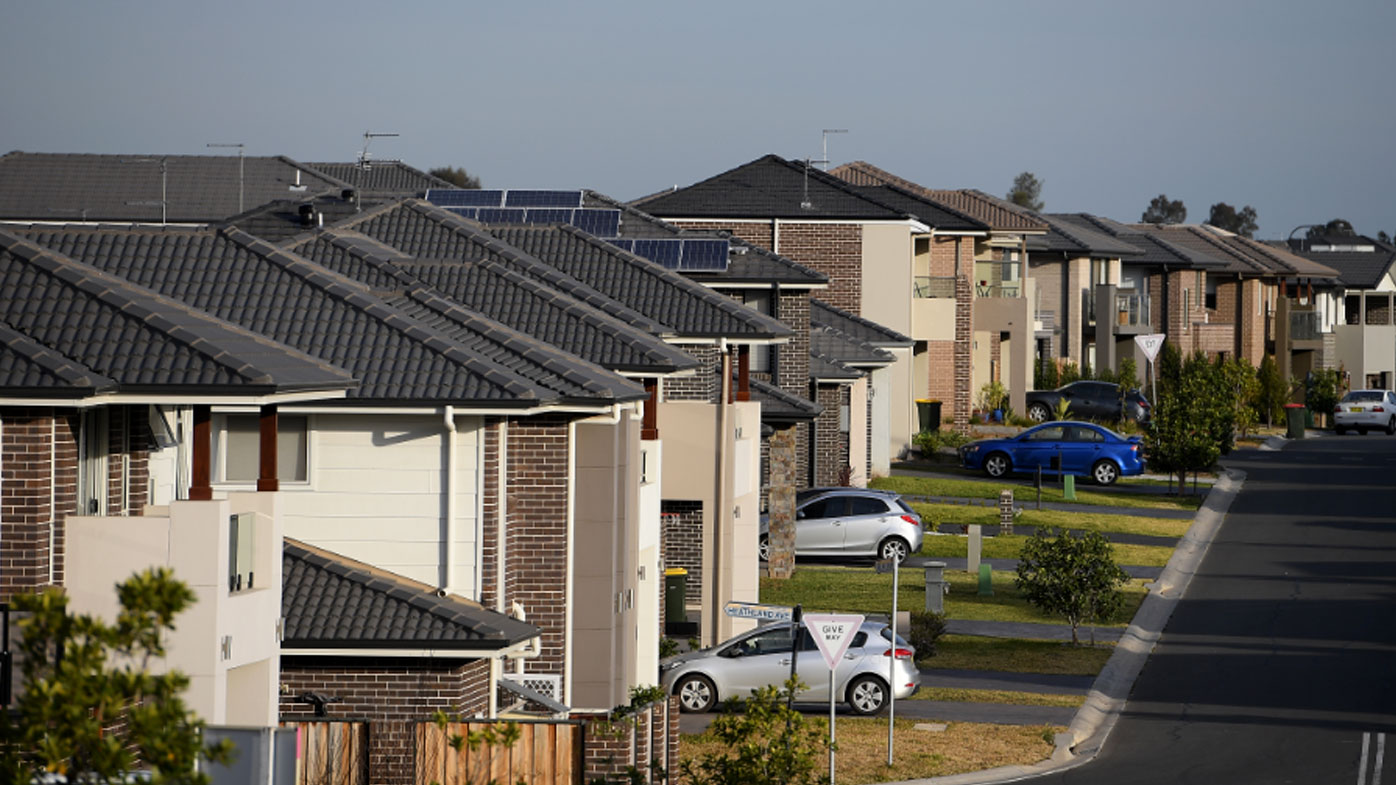
Prime Minister Scott Morrison has announced a new "game-changer" policy aimed at helping more Australians buy their own homes at today's official Liberal campaign launch in Brisbane.
Morrison said first-time buyers would be allowed to invest a "responsible portion" of their superannuation in a new or existing property to help them get on the housing ladder.
"Superannuation is there to help Australians in their retirement," he said.
READ MORE: Former Australian cricket star Andrew Symonds dies in car crash

"The evidence shows that the best thing we can do to help Australians achieve financial security in their retirement is to help them own their own home."
Under the scheme, first home buyers will be able to invest up to 40 per cent of their superannuation, up to a maximum of $50,000, to help with the purchase of their first home.
However Labor blasted the policy, saying it would push property prices even higher.
Morrison insisted it was a responsible policy because home buyers would be required to repay the money to their superannuation accounts.
"This will be a game-changer for thousands of Australian families," he said.
"They sit and look at the money on their balance and go, 'If only I had that to help me now.'"
Shadow Housing Minister Jason Clare condemned the policy, and said it won't help the people who need it.
He said the only people who benefit will be home sellers, who will get more for their property, with property prices being pushed up.
"What we saw today was the last desperate act of a dying government," Clare said.

"It's not going to help the Aussies who really need help to buy a home."
He said 30,000 affordable and social housing properties would be built by Labor in the first five year, if they were elected.
In another new housing policy announcement, Morrison said Australians aged over 55 will be able to sell their homes and invest an extra $300,000 in their superannuation from the proceeds if the Coalition is returned to office after Saturday's federal election.
The scheme already exists for those aged over 65.
The policy is due to change to people over 60 from July 1. Couples can contribute up to $600,000.
READ MORE: Australian cricket legend Andrew Symonds dead at 46
The aim is not only to help people invest their super but to free up housing stock for younger Australians so they can buy a family home.
Morrison stressed the Coalition government's economic record throughout his campaign launch speech attended by former prime ministers John Howard and Tony Abbott.
Morrison said the Coalition had guided Australia through the economic downturn of the coronavirus pandemic and the country was reaping rewards today.
He said despite the hardships, "Australia has prevailed".
"Despite everything thrown at us, Australia has stood tall," Morrison said.
"Our economic growth is higher than any other advanced economy, our AAA credit rating (is) intact, we're one of only nine countries to do that in the world. The biggest budget turnaround … in 70 years.
"More Australians in work than ever before. Unemployment at four per cent, the equal lowest level in 50 years and down from 5.7 per cent when we first came to government.
"Youth unemployment, youth unemployment at 8.3 per cent, down from a peak of more than 16 per cent."
The Coalition rolled out some of their heaviest hitters in the lead-up to Morrison's speech.
Deputy prime minister and Nationals leader Barnaby Joyce renewed his attack on Labor's economic policy, saying the Coalition put the individual ahead of the state.
Joyce rattled off a long list of regional infrastructure projects he claimed were down to Coalition government funding.
"This is a government serving the individual spirit, understanding it's the individual, not the state that provides the wealth and growth of this nation.
"And takes it forward to make you master of your ownership. To make you the boss of your own life."
Joyce also described trade union protesters outside as "raving banshees yelling and screaming".


READ MORE: At least 10 dead in mass shooting at US supermarket
READ MORE: At least 10 dead in mass shooting at US supermarket
Treasurer Josh Frydenberg maintained the Coalition attack on Labor leader Anthony Albanese's economic credentials.
"Over the last 35 days, (Anthony Albanese) has shown himself to be completely out of his depth. Albanese says he's eminently qualified because he was acting prime minister for all of 48 hours," he said.
"I never thought I would ever say it: thank you Kevin Rudd for only making it 48 hours. In an election about jobs, Anthony Albanese does not know the unemployment rate. In an election about cost of living, he doesn't know the cash rate."
Finance Minister Simon Birmingham earlier told 9News political editor Chris Uhlmann on Weekend Today this morning the policy for older Australians would not leave younger people out by targeting the over-55s.
"The fact we have seen such huge growth in employment and have got unemployment down to four per cent, contrast that with previous recessions … where Australia's faced youth employment which had an enormous tail that has stretched out for years, depriving young Australians of the opportunity for a job to get ahead, to be able to save for a house," Birmingham said.
Morrison is trying to regain momentum in the campaign's final week as polls show Labor is on track to win government.
He also admitted he has shown a "bulldozer" leadership style that has often proved unpopular and will need to change if the Coalition is re-elected, as Australia emerges from years of crisis mode.
Birmingham said Morrison's leadership style had suited the critical issued Australians faced during the COVID-19 pandemic.
"The prime minister, like all of us, has to apply different skills and attributes to the job at different times … he's had to push to make sure the country got through well and secure as we have," he said.
Uhlmann said the Coalition is desperate to regain the initiative in the last days of the campaign but has been dogged by Morrison's leadership style and questions about his character.

READ MORE: Putin warns Finland NATO membership would harm relations
"Scott Morrison has to make another come-from-behind win and he's carrying the baggage of himself this time," he said.
"He's wanting to tell people that he can change."
'White supremacist' charged over US supermarket mass shooting
A man who killed 10 people in an allegedly racially motivated mass shooting at a supermarket in Buffalo, New York, has been arraigned in court and charged with first-degree murder.
Payton Gendron, 18, appeared before a judge in a paper medical gown and was arraigned on a murder charge over the shooting at a Tops Friendly Markets store.
He was detained without bail.
READ MORE: Australian cricket legend Andrew Symonds dead at 46

Police said he shot 11 Black and two white victims before surrendering to authorities in a rampage he broadcast live on the streaming platform Twitch.
Investigators are reviewing a purported manifesto posted online in connection with the mass shooting, two federal law enforcement officials told CNN.
"It is my sincere hope that this individual, this white supremacist who just perpetrated a hate crime on an innocent community, will spend the rest of his days behind bars," Governor Kathy Hochul, speaking near the scene of the attack, said.
"And heaven help him in the next world as well.
The shooting is being investigated as a hate crime and the FBI is assisting, said Stephen Belongia, special agent in charge of the FBI Buffalo field office.

Gendron is from Conklin, New York, about 320 kilometres south-east of Buffalo.
It wasn't immediately clear why Gendron had travelled to Buffalo and that particular grocery store.
A clip apparently from his Twitch feed, posted on social media, showed Gendron arriving at the supermarket in his car, heavily armed, wearing tactical gear and had a camera livestreaming what he was doing.
He shot four people in the parking lot of the market, Buffalo Police Commissioner Joseph Gramaglia said.
Three of those individuals died and one survived, Gramaglia added.
READ MORE: Putin warns Finland over NATO move

The killing spree in Buffalo is yet another entry to America's growing list of hate-fuelled mass shootings.
Twitch, the popular live-streaming platform best known for gaming, confirmed that the Buffalo supermarket shooting suspect used its platform to stream a live broadcast during the attack.
"We are devastated to hear about the shooting that took place this afternoon in Buffalo, New York," the company said.
"Our hearts go out to the community impacted by this tragedy.
"Twitch has a zero-tolerance policy against violence of any kind and works swiftly to respond to all incidents."
Twitch said that the user "has been indefinitely suspended from our service, and we are taking all appropriate action, including monitoring for any accounts rebroadcasting this content".
READ MORE: Three things to watch out for in the final week of the election campaign

'This is our worst update'
Gendron walked into the market and began shooting at customers in the store, Gramaglia said.
A supermarket security guard, a retired Buffalo Police officer, "fired multiple shots at the suspect," but the Gendron's tactical gear protected him from the officer's shots, Gramaglia said.
Gendron fatally shot the security officer and continued going through the supermarket, working toward the front of the store, where he encountered Buffalo police officers.
He put his gun to his own neck, at which point two Buffalo officers talked him into dropping his gun and then took off some of his tactical gear and surrendered to police, officials said.
Police arrested Gendron and transported him to Buffalo police headquarters.
"This is the worst nightmare that any community can face, and we are hurting and we are seething right now as a community," Buffalo Mayor Byron Brown said.
"The depth of pain that families are feeling and that all of us are feeling right now cannot even be explained."

The supermarket is in a predominately Black neighbourhood, about 5km north of downtown Buffalo.
The surrounding area is primarily residential, with a Family Dollar store and fire station near the store.
Braedyn Kephart and Shane Hill, both 20, pulled into the parking lot just as the shooter was exiting.
"He was standing there with the gun to his chin. We were like what the heck is going on? Why does this kid have a gun to his face?" Kephart said.
He dropped to his knees.
"He ripped off his helmet, dropped his gun, and was tackled by the police."
Police closed off the block, lined by spectators, and yellow police taped surrounded the full parking lot.
Auckland dairy owner 'shaken up' by daylight robbery, wants Government action
An Auckland dairy owner has been left shaken up after his dairy was robbed by four men on Sunday morning.Police were called to a Levonia St premises in Morningside, Auckland, about 9am after a report of a robbery.The Levonia Store…
US mass shooting: White supremacist manifesto banned in New Zealand
By RNZ The Acting Chief Censor has put a temporary ban on New Zealanders sharing the racist manifesto of a teenager arrested over a mass shooting in New York.Rupert Ablett-Hampson said there are distressing similarities to the…
Tributes flow for former Australian cricket star Andrew Symonds
Former Australian cricket star Andrew Symonds has died in a car crash in Queensland's north.
Police said Symonds was driving on Hervey Range Road, about 50km from Townsville, around 11pm yesterday when his four-wheel drive left the road and rolled.
Emergency services tried to revive the 46-year-old but he died at the scene.
READ MORE: Morrison announces new housing policy in final election pitch

Patrol Inspector Gavin Oates said the cause of the crash was not yet known.
"That's still being investigated at this stage. Forensic Crash Unit officers have attended the scene and are conducting the investigation and they will prepare a report for the coroner," Oates said.
"The accident was actually heard by people nearby, they were the first people on scene and alerted emergency services.
"I believe the driver of the vehicle had been ejected from the vehicle during the crash."

Oates said police officers on the scene weren't immediately aware it was Symonds.
"Police were dealing with the accident side of things at the time and worked to establish the identity of the person later on," he said.
https://twitter.com/njkelly9/status/1525700939067588608
Tributes have flowed in the cricket community and from Australian leaders for Symonds, a charismatic all-rounder and one of the greatest fieldsmen the game has seen.
"Australian cricket is shocked and saddened by the news of Andrew Symonds' passing," Cricket Australia said in a statement.
READ MORE: At least 10 dead in mass shooting at US supermarket

Cricket Australia CEO Nick Hockley said Symonds was a "much loved and admired cricketer".
"He was a prodigious talent from an early age in Queensland with his clean ball-striking ability, shrewd spin bowling and brilliant fielding," he said.
"He will be sadly missed by the Australian cricket community and particularly his very close friends at the Queensland Bulls where he was a popular and much-admired team-mate and friend.
"Our thoughts are with his family and friends at this devastatingly sad time."
Queensland Cricket chair Chris Simpson said the cricket community and world will mourn the loss of Symonds.
"On behalf of Queensland Cricket, we express our deepest sympathies to his family and will do whatever we can to assist them,'' he said.
"It is a shattering loss to those nearest to him, and his wide circle of friends which extend to all corners of the cricketing world."
READ MORE: Putin warns Finland NATO membership would harm relations

NSW Premier Dominic Perrottet said it is "shocking and sad news".
"Such an entertaining player and great character of cricket," Perrottet said.
Queensland Premier Annastacia Palaszczuk also paid tribute to the cricketer.
"Andrew Symonds was an outstanding player – dynamic, entertaining and skilful – who made an unforgettable contribution to Queensland and Australian cricket," she said.
Symonds played 26 Tests for Australia between 2004 and 2008, and 198 one-day internationals, and was a member of two World Cup winning teams in 2003 and 2007.
https://www.instagram.com/p/Cas07KNBJjl/?utm_source=ig_embed&
His death comes just months after the loss of his teammate Shane Warne at just 52 and former wicketkeeper Rod Marsh.
His last post was ourning Warne, saying he was, "hoping it was all a bad dream."
Why NATO military alliance has Russia worried
Since Russia's invasion of Ukraine, Finland and Sweden have moved to apply for membership of the North Atlantic Treaty Organisation (NATO) military alliance, which would mark a major policy shift for the Nordic region.
NATO Secretary-General Jens Stoltenberg has said the countries could join "quickly" and that he was sure arrangements could be found for the interim period.
But Russia has repeatedly warned of "serious consequences" if Finland and Sweden join NATO, saying it would have to strengthen its land, naval and air forces in the Baltic Sea, and raised the possibility of deploying nuclear weapons in the area.
READ MORE: Warning Putin's war could become 'more unpredictable and escalatory'

Britain has pledged to come to the aid of Sweden and Finland, including with military support, if the two Nordic nations came under attack under security deals Prime Minister Boris Johnson signed on Wednesday with his Swedish counterpart in Stockholm and the Finnish president in Helsinki.
Here's what you need to know about the Western military alliance and why it could expand in response to Russia's attack on Ukraine.
What is NATO?
NATO is a European and North American defence alliance set up to promote peace and stability and to safeguard the security of its members. It was created in 1949 as the Cold War escalated and is headquartered in Brussels, Belgium.
Its aim was to provide collective security against the Soviet Union and Eastern Europe's communist-run countries.
Russia reacted by setting up its own military alliance called the Warsaw Pact.
Which countries are in NATO?
Twelve founding countries – the United States, Canada, the United Kingdom, France and eight other European nations – signed the North Atlantic Treaty in 1949, pledging to protect each other by political and military means.
Over the decades since, the alliance has grown to include a total of 30 members.
In alphabetical order, they are: Albania, Belgium, Bulgaria, Canada, Croatia, Czech Republic, Denmark, Estonia, France, Germany, Greece, Hungary, Iceland, Italy, Latvia, Lithuania, Luxemburg, Montenegro, the Netherlands, North Macedonia, Norway, Poland, Portugal, Romania, Slovakia, Slovenia, Spain, Turkey, the UK and the US.
Ukraine is not a member of NATO, but has long hoped to join the alliance. This is a sore point for Russia, which sees NATO as a threat and vehemently opposes the move.
READ MORE: Biden signs World War II-style Ukraine bill, seeks $57 billion aid

How does NATO work?
Members agree to help one and another in the case of an armed attack against any individual member state, a principal known as Article 5.
As the bloc says: "An attack against one Ally is considered as an attack against all Allies."
This is crucial for many of the smaller countries who would be defenceless without its allies. Iceland, for example, has no standing army.
Since the US is the largest and most powerful NATO member, providing the bulk of forces and budget, any state in the alliance is effectively under US protection.
READ MORE: What North Korea learned from Ukraine

Who runs NATO?
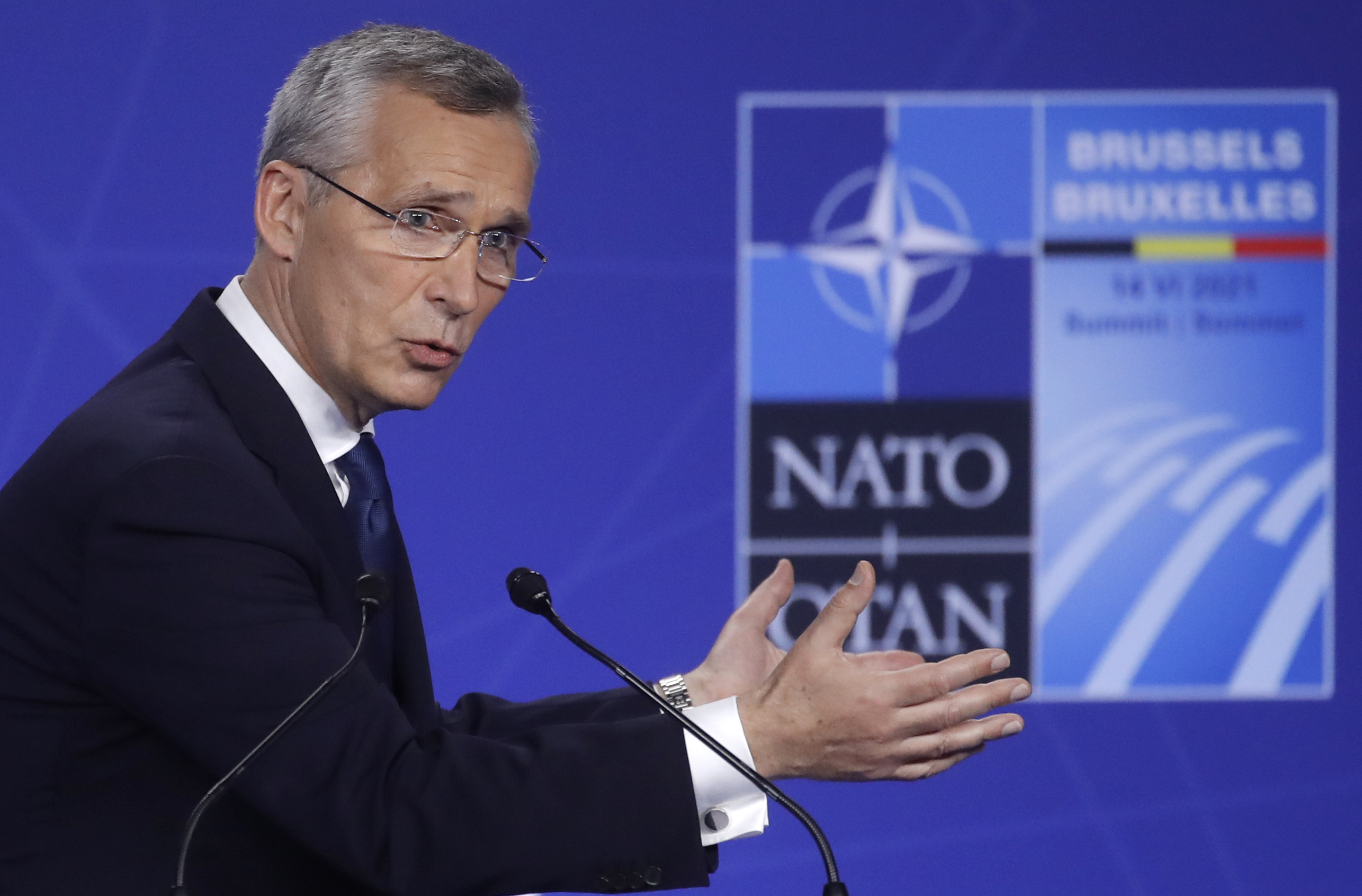
The alliance's meetings — the North Atlantic Council, held at ambassadorial level almost weekly in Brussels, less often at the level of ministers or heads of state and government — are chaired by NATO Secretary-General Jens Stoltenberg, a Norwegian politician.
But the US is without doubt the biggest and most influential member. It spends more on its own military budget than all the others combined. It also pays just over 22 per cent of NATO common funding for infrastructure and collectively owned equipment. So Washington has a big say in how things are run.
In essence, Stoltenberg runs the headquarters located near Brussels.
He doesn't order the allies around. His job is to encourage consensus and speak on their behalf publicly as a single voice representing all 30 members.
READ MORE: The weapons of the Russia-Ukraine conflict
Why does NATO worry Russia?
The stated reason is that a further eastward expansion of NATO would pose a security threat to Russia. Washington and its allies deny this is a valid worry, since no NATO country is threatening to use force against Russia.
More broadly, Putin wants NATO to pull back its existing military presence in Eastern Europe, which includes a regularly rotating series of exercises in Lithuania, Latvia and Estonia, all former Soviet states.
Putin also opposes NATO's missile defence presence in Romania, a former Soviet satellite state, and a similar base under development in Poland, saying they could be converted to offensive weapons capable of threatening Russia.
What does it mean if Sweden and Finland join?
While both countries have small but capable armed forces, geography also plays a major part in Moscow's concerns.
Russia and Finland share a 1300km border; the Kola Peninsula is a "strategic bastion" Moscow considers key for Russia's national security.
It is also the home of the Russian Northern Fleet, and Russia's second-biggest city, St Petersburg, lies some 170km from the border with Finland.
The addition of Finland would be quite a boon for NATO. Despite its relatively small population, Finland is a serious military power that has been unofficially aligned with the West for decades.
Its military has for decades used equipment purchased from the US that is compatible with NATO allies, meaning it could easily join NATO missions should it choose to do so.
How is NATO helping Ukraine?
Since the invasion of Ukraine, the military alliance has deployed forces in countries along NATO'S eastern flank in Estonia, Latvia, Lithuania and Poland.
These units are prepared for combat and are led by Britain, Canada, Germany and the US, respectively.
The alliance has also sent planes and ships to NATO countries in eastern and south-eastern Europe.
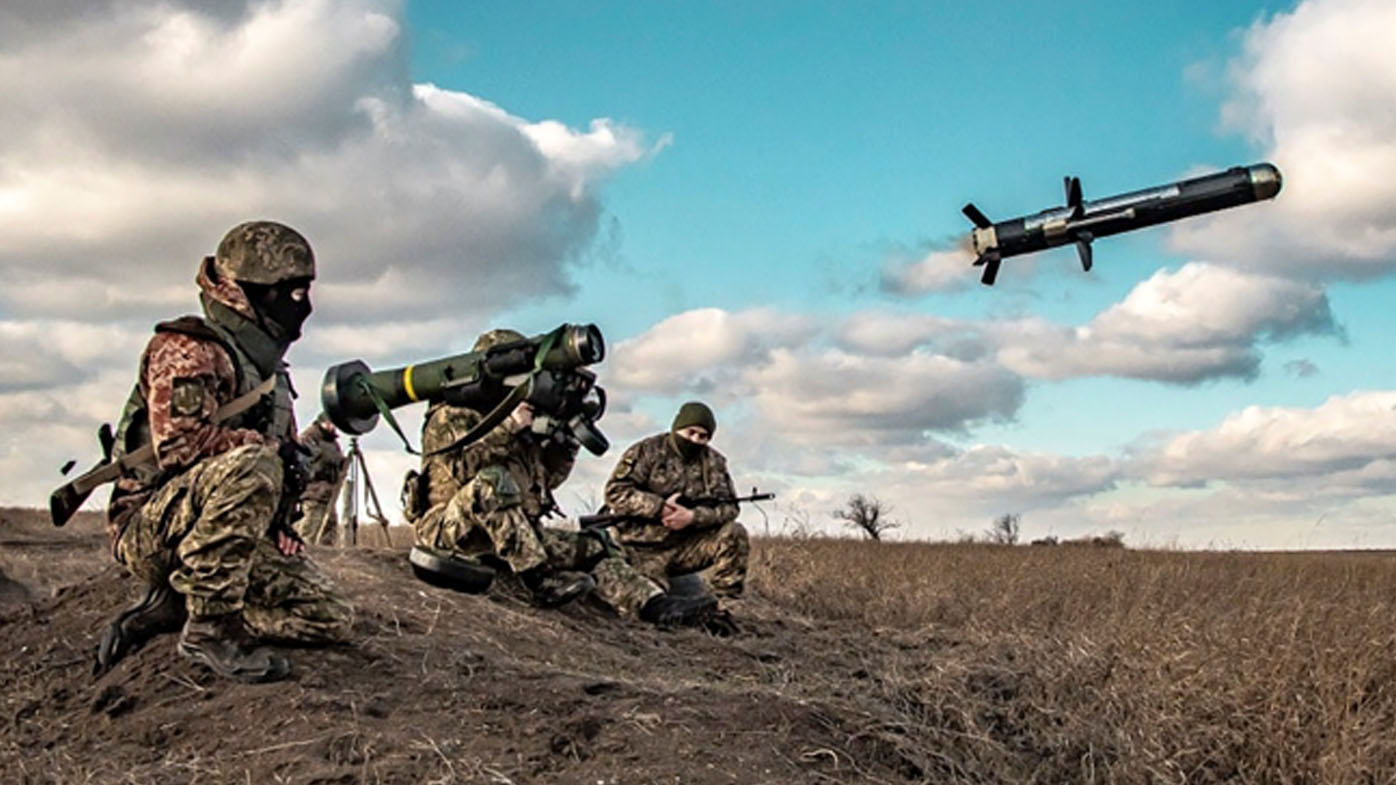
NATO has also been providing large supplies of weapons and equipment to the Ukraine military including anti-tank missiles, armoured vehicles and anti-aircraft weapons.
It s also supplying Ukraine with valuable intelligence reports about Russian troop strengths and deployments.
NATO does not have any troops in Ukraine, and no plans have been announced to send troops from the alliance into the country.
The alliance also ruled out imposing a no-fly zone over Ukraine.
– Reported with CNN, Associated Press