One person is $28 million richer tonight after winning the Lotto Powerball jackpot.The winning ticket was bought from a news agency in Henderson, West Auckland. Tonight’s winning Lotto numbers are: 2, 5, 11, 20, 23, and 25.The…
Tag Archives: oceania
Man dies at Aramoana Beach near Dunedin
A man has died at Aramoana Beach near Dunedin today after getting into trouble in the water.Ambulance and police were called to Aramoana Beach about 2.30pm after reports a person was struggling in the water.”He was brought from…
New rainfall record set this week after heavy rainfall in upper part of the country – Niwa
By RNZ A new record for heavy rainfall has been set by this week’s torrential downpours.Heavy rain hit the upper part of the country overnight on Sunday and then landed in Auckland, reaching the heaviest on Monday morning.Numerous…
COVID-19 case numbers drop in Queensland, NSW and Victoria
New South Wales has recorded 19,843 new COVID-19 cases while Queensland reported 9404 new infections and eight deaths in the past 24 hours.
Four people died with the virus in NSW.
There are 1177 people in hospital and 44 people in ICU.
READ MORE: Australia's cost of living rises due to Russia Ukraine conflict
Case numbers have dropped in comparison to yesterday's 23,702 COVID-19 infections.
Hospitalisations have also dropped from yesterday's 1182 hospital admissions however ICU admissions have risen by one.
Queensland
Queensland has recorded 9404 new COVID-19 cases in the past 24 hours.
Eight people died with the virus.
There are 295 people in hospital with COVID-19 and 19 people in ICU.
The infection numbers mark a drop in comparison to yesterday's 9730.
However, both hospitalisations and ICU admissions have gone up — there were 265 people in hospital with the virus yesterday, including 14 in intensive care.
It comes as cases in the state have nearly doubled in the past week with officials predicting the second wave of Omicron to peak in April.
"We're not sure when this wave is going to peak but we expect some time in April," Health Minister Yvette D'Ath said yesterday.
READ MORE: Sixth severe coral bleaching event confirmed in the Great Barrier Reef
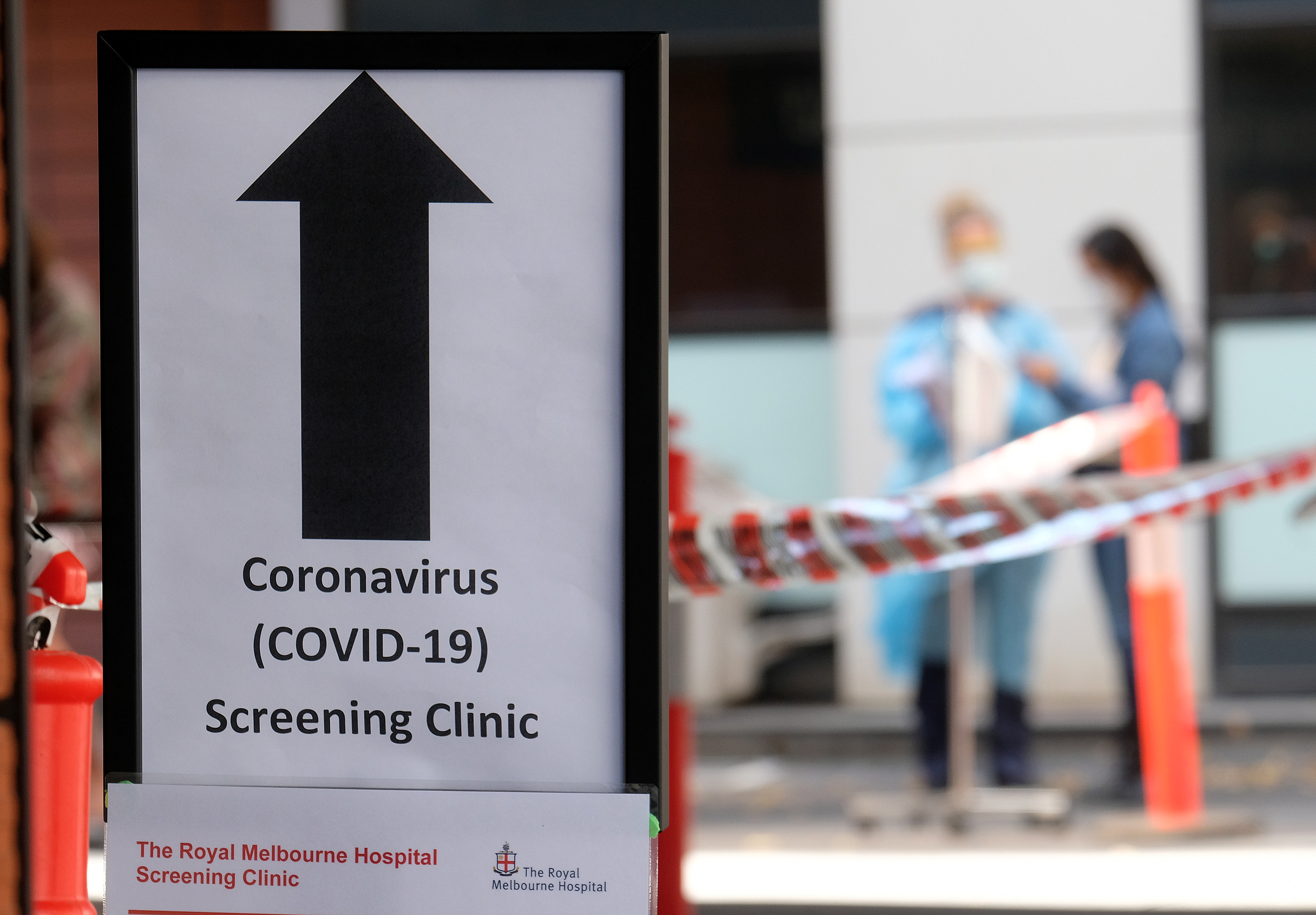
Queensland's Chief Health Officer Dr John Gerrard said one-in-50 school children have tested positive to the virus in the past week.
He also said the BA.2 sub-variant of Omicron is behind the newest wave of the virus in Queensland.
Officials have been quick to reassure Queenslanders restrictions would not be reintroduced every time there was a new wave of the virus.
"We're not going to overreact every time there is another wave of the virus," Dr Gerrard said.
"We're not going to suddenly increase the public health measures because we're seeing an increase in a wave … this is going to continue to happen over time."
Victoria
Victoria has recorded 8349 COVID-19 cases overnight.
Nine people died with the virus.
There are 250 people in hospital with the virus and 18 in ICU.
READ MORE: Pre-flight COVID-19 tests to be scrapped, Greg Hunt announces
Victoria recorded 9244 COVID-19 cases yesterday.
Hospitalisations and ICU numbers have also dropped in Victoria in comparison to yesterday's 253 hospitalisations and 19 ICU admissions.
Western Australia
Western Australia has recorded 7535 new COVID-19 cases and two historical virus-related deaths from previous days.
WA Health says a man in his 90s and a male teenager with pre-existing conditions were the two people who died.
There are 194 people with COVID-19 in hospital in the state, and eight in ICU.
South Australia
South Australia has recorded 3897 new COVID-19 cases and seven deaths.
SA Health confirmed two men in their 70s, one woman in her 70s, two women in their 80s, one woman in her 90s, and one woman aged over 100 had passed away.
There are 151 people with COVID-19 in hospital, with five people in ICU.
Guy Body's cartoons: March 1- 31
Our cartoonist Guy Body shares his view on current events.
PM defends snubbing Chinese ambassador's meeting request
Prime Minister Scott Morrison has defended refusing to meet with China's new ambassador to Australia.
The Sydney Morning Herald reported Xiao Qian had asked for a meeting with Mr Morrison, but was refused.
Mr Xiao met with Foreign Minister Marise Payne instead.
READ MORE: Foo Fighters drummer Taylor Hawkins dies at 50
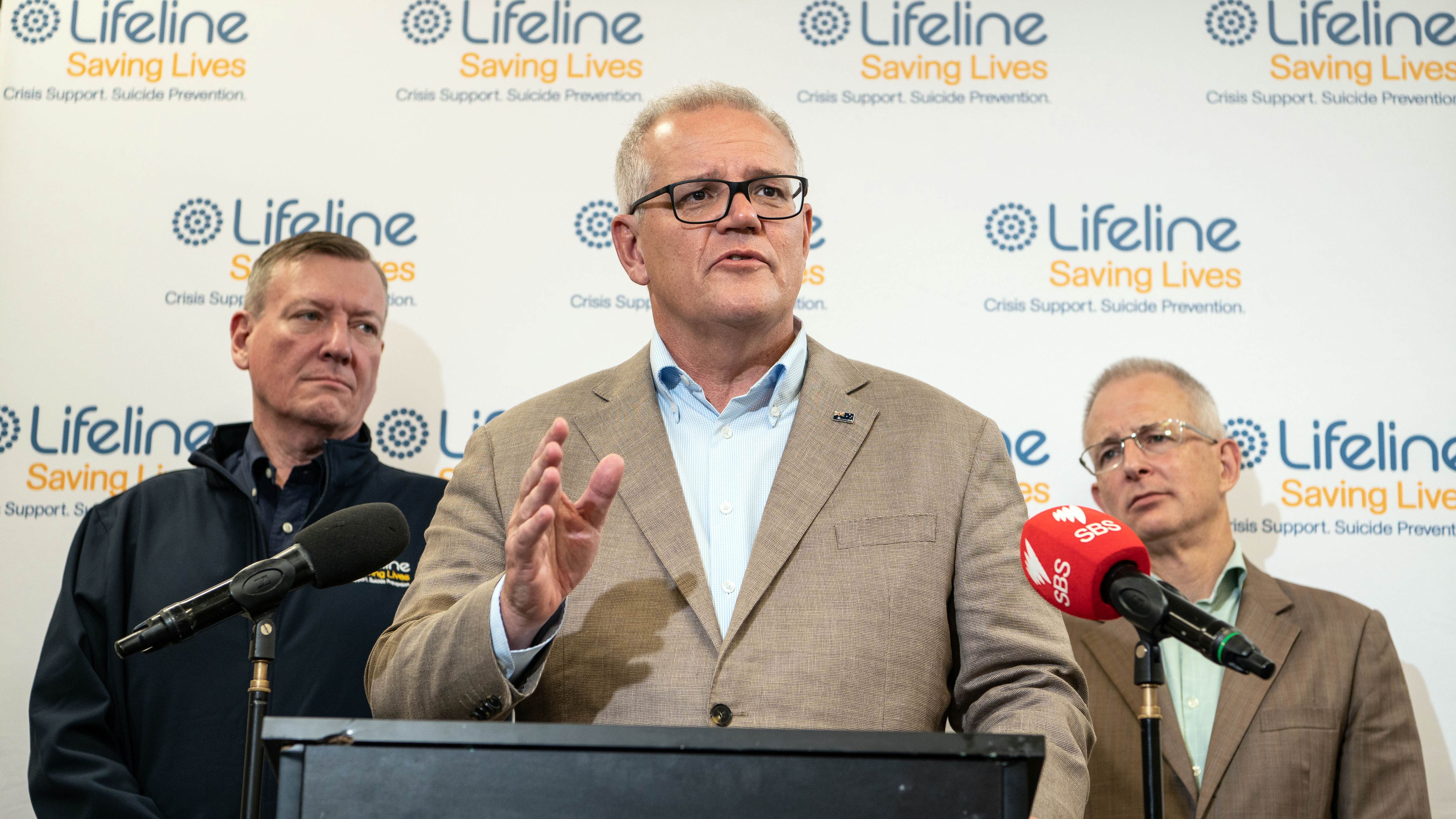
Mr Morrison was asked why he knocked back the request at a press conference today.
"For the same reason that President Xi doesn't meet with our ambassador in China," he said.
"When we have a situation where China has completely blocked any minister-to-minister dialogue, until that block is removed, I think Australians would think it would be very inappropriate for me to engage with that ambassador."
The Prime Minister described the rebuff as "entirely proportional".
Mr Morrison was also questioned about the possibility China will establish a military base in the Solomon Islands.
READ MORE: Wait times blow out in emergency departments and for elective surgeries
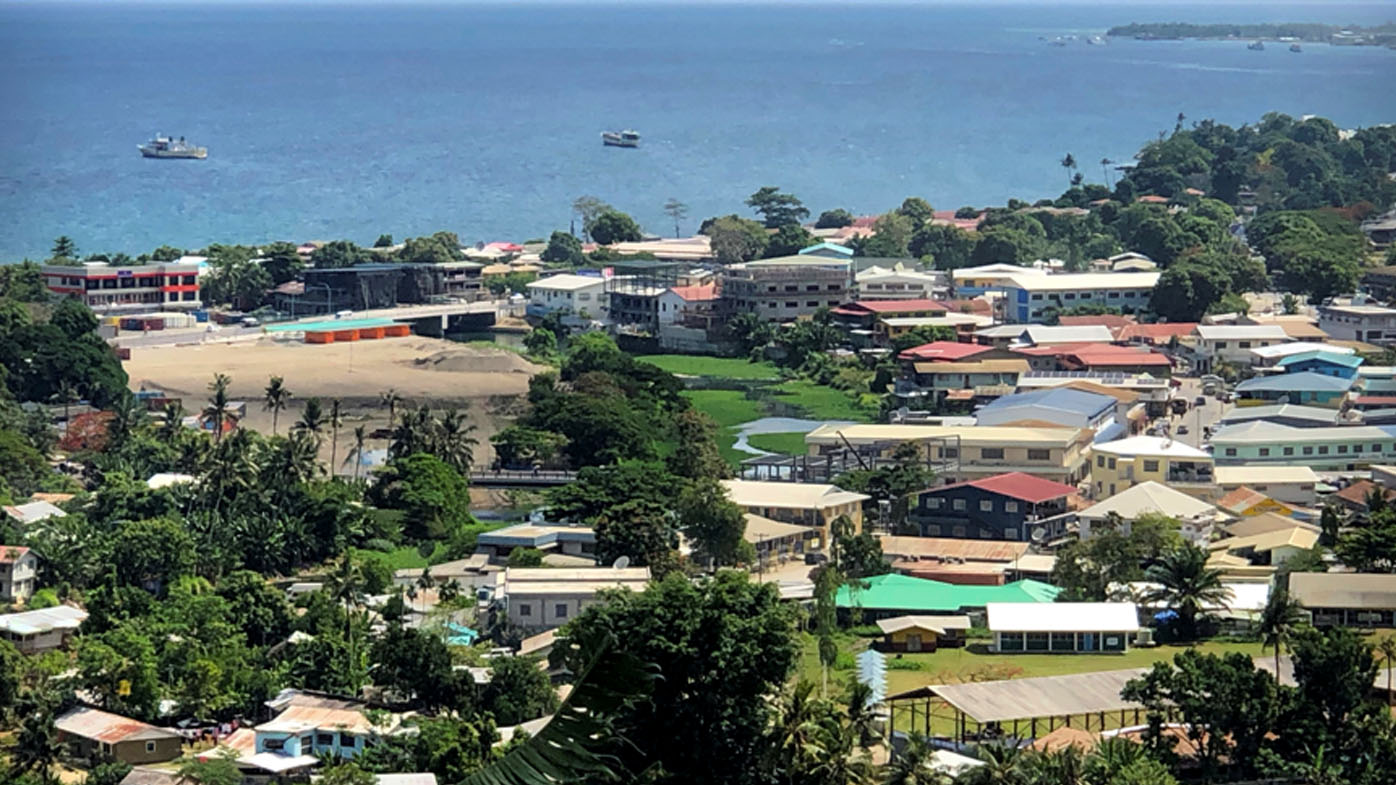
"There is great concern across the Pacific family," he said.
"We stepped up in the face of increasing threats and increasing pressures and we will respond as a family of Pacific nations."
He touted the work his government has been doing in the Solomon Islands in recent years.
"We are the Solomon Islands' single largest development partner. Daylight second, third, fourth," he said.
READ MORE: Mum of missing four-year-old Tasmanian girl grateful to be reunited
"We will be there on the ground, and will continue to be there on the ground to support peace, stability in the Solomon Islands."
Speaking earlier today, Opposition Leader Anthony Albanese said Australia needs to "up our presence in the Pacific".
"We need to recognise that it is in Australia's national interest to have a strong presence in the region," he said.
"We punch above our weight in the region, we play an important leadership role in areas including in the Solomons."
Mr Albanese said he supported the Prime Minister's decision to not meet with the Chinese ambassador.
North Korea warns of 'confrontation' with US after missile test
The United States has called for tougher United Nations sanctions after North Korea said it test-fired its biggest intercontinental ballistic missile to date, with Kim Jong Un vowing to expand his country's "nuclear war deterrent" while preparing for a "long-standing confrontation" with the United States.
North Korean state media reported the North's first long-range test since 2017, and South Korea and Japan said they detected it.
Thursday's launch extended a barrage of weapons demonstrations this year that analysts say are aimed at forcing the United States to accept the idea of North Korea as a nuclear power and remove crippling sanctions against its broken economy.
READ MORE: Russia says first phase of war is over as its advances in Ukraine appear to have stalled
At a UN Security Council meeting on Friday, US Ambassador Linda Thomas-Greenfield said the US would propose a resolution "to update and strengthen" Security Council sanctions. She declined to specify what those new measures might be.
“It is clear that remaining silent, in the hope that the DPRK [North Korea] would similarly show restraint, is a failed strategy,” she said.
The council originally imposed sanctions after the North’s first nuclear test explosion in 2006 and tightened them over the years. But last fall, veto-wielding China and Russia called for lifting various sanctions against their neighbour.
Russian Deputy Ambassador Anna Evstigneeva said on Friday that further sanctions would only harm North Korea’s people, while Chinese Ambassador Zhang Jun urged the council "to consider how to accommodate the DPRK’s justified security concerns".
He suggested the US didn’t do enough to respond to the North’s 2018 self-imposed pause on long-range missile and nuclear tests and needed to "show its goodwill" and "work harder to stabilise the situation" and resume dialogue.
North Korea didn't speak at the council meeting. A message seeking comment was sent to its UN mission.
Meanwhile, the US imposed new sanctions of its own against five entities and individuals in Russia and North Korea over transferring sensitive items to the North’s missile program, State Department spokesperson Ned Price said.
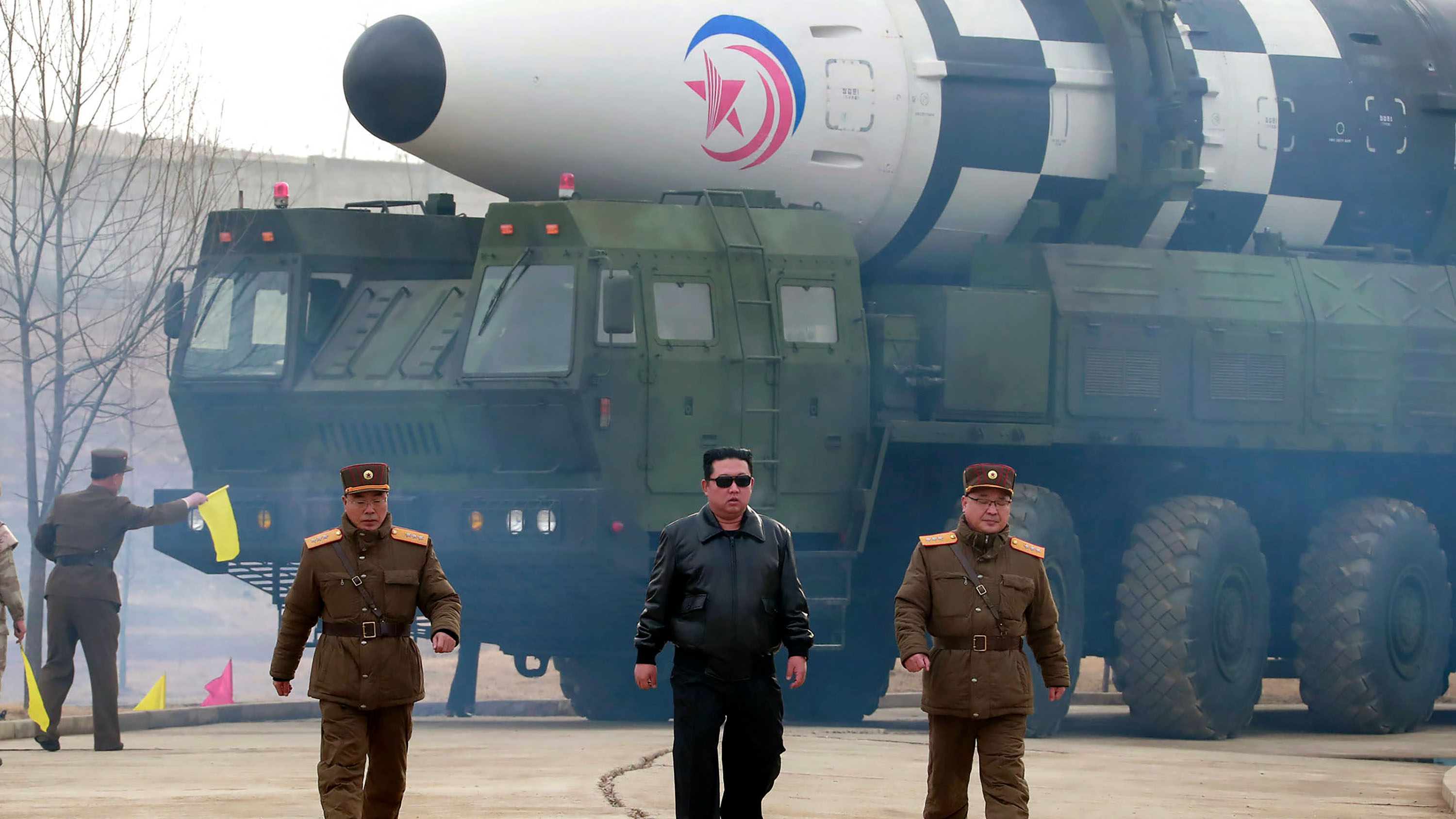
North Korean state TV dramatised the missile testing process like a Hollywood movie, showing Kim walking in slow motion in front of a giant missile in sunglasses and a black leather motorcycle jacket. After a series of quick cuts of Kim and military officials staring at their watches, Kim takes off his shades and nods, and the missile is shown being rolled out of the hangar.
READ MORE: Ukraine says 300 died in theatre attack as hunger grips cities
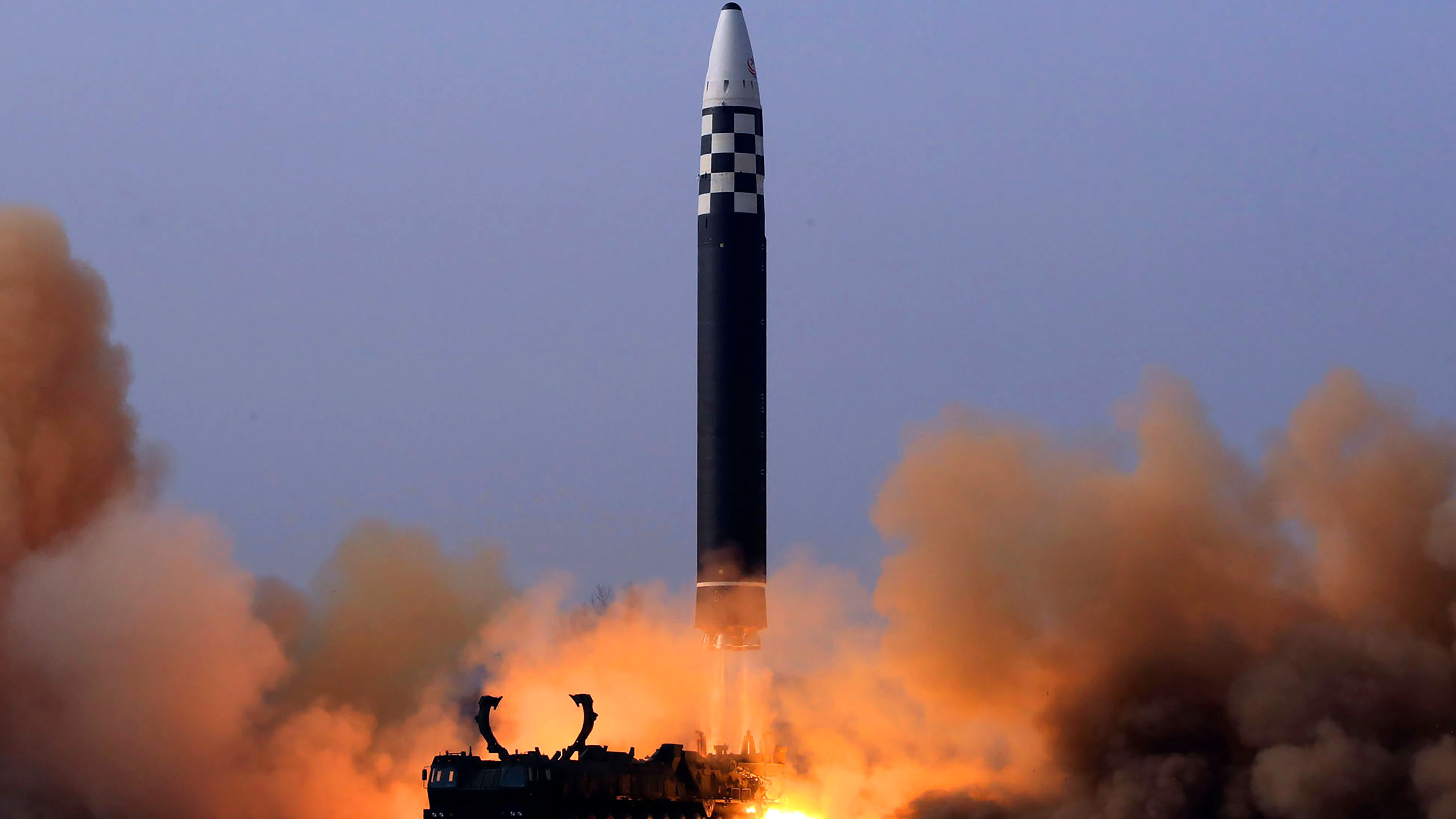
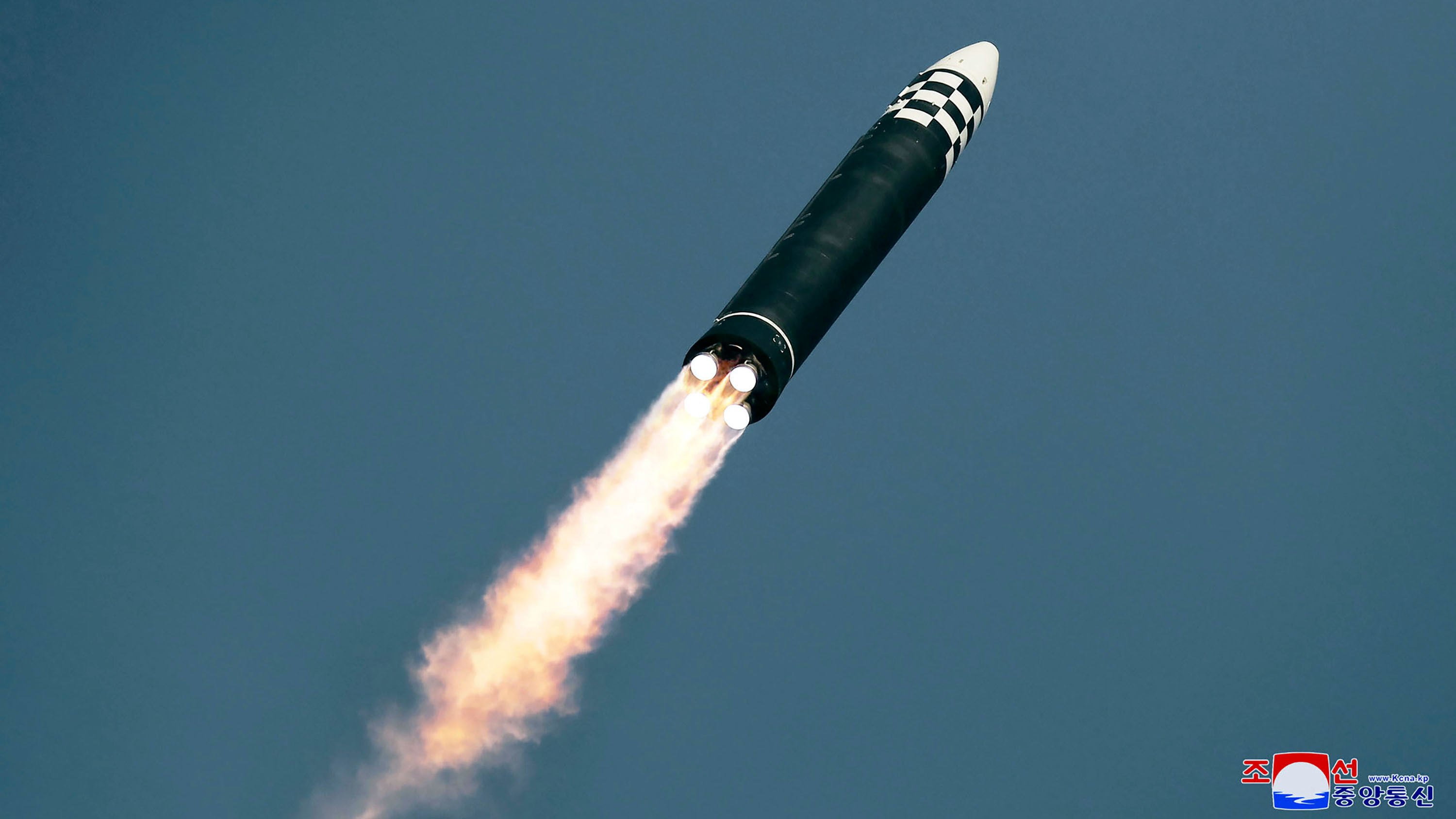
The Hwasong-17, which was fired at a high angle to avoid the territorial waters of neighbours, reached a maximum altitude of 6248 kilometres and travelled 1090 kilometres during a 67-minute flight before landing in waters between North Korea and Japan, Pyongyang’s official Korean Central News Agency said.
KCNA claimed the launch met its technical objectives and proved the ICBM could be operated quickly during wartime conditions.
The South Korean and Japanese militaries had announced similar flight details, which analysts say suggested the missile could reach targets 15,000 kilometres away when fired on a normal trajectory with a warhead weighing less than a tonne. That would place the entire US mainland within striking distance.
Believed to be about 25 metres long, the Hwasong-17 is the North’s longest-range weapon and, by some estimates, the world’s biggest road-mobile ballistic missile system. North Korea revealed the missile in a military parade in October 2020 and Thursday’s launch was its first full-range test.
KCNA paraphrased Kim as saying that the new weapon would make the "whole world clearly aware" of the North’s bolstered nuclear forces. He vowed for his military to acquire "formidable military and technical capabilities unperturbed by any military threat and blackmail and keep themselves fully ready for long-standing confrontation with the U.S. imperialists".
The agency published photos of the missile leaving a trail of orange flames as it soared from a launcher truck on an airport runway near the capital, Pyongyang, and Kim smiling and clapping as he celebrated with military officials from an observation deck.
Other images showed Kim penning a memo ordering the Hwasong-17 test flight and approving the launch. Kim has issued handwritten orders for some of the most significant weapons demonstrations of his rule, including the most recent ICBM test-flight in November 2017, which capped a highly provocative run in nuclear and missile tests that triggered a verbal exchange of war threats with then-President Donald Trump.
South Korea’s military responded to Thursday’s launch with live-fire drills of its own missiles launched from land, a fighter jet and a ship, underscoring a revival of tensions as diplomacy remains frozen. It said it confirmed readiness to execute precision strikes against North Korea’s missile launch points as well as command and support facilities.
READ MORE: US President visits Poland, a complex ally on Ukraine's doorstep
US Secretary of Defense Lloyd J Austin held separate telephone conversations with his counterparts in South Korea and Japan where they discussed response measures to North Korean missile activities and vowed to strengthen defence cooperation, according to US Defense Department statements.
Japanese Foreign Minister Yoshimasa Hayashi said he talked with South Korean counterpart Chung Eui-yong over the phone. Seoul's Unification Ministry, which handles inter-Korean affairs, criticised the North for breaking its self-imposed moratorium on ICBM tests.
“Whatever North Korea’s intent may be, the North must immediately suspend action that creates tensions on the Korean Peninsula and destabilises the regional security situation and return to the table for dialogue and negotiations,” ministry spokesperson Cha Deok-cheol said in a briefing.
Thursday’s test was North Korea’s 12th round of launches this year and the most provocative since U.S. President Joe Biden took office.
The other recent tests included a purported hypersonic weapon, a long-range cruise missile and an intermediate-range missile that could reach Guam, a major US military hub in the Pacific.
The US and South Korean militaries had expected a full-range test of the Hwasong-17 after concluding two of the recent midrange launches included components of the new ICBM.
University of Auckland rape allegations: Second man allowed to keep studying after sexual assault claims
Another man who an Auckland University proctor found had engaged in sexual activity with a fellow student without consent was let off with a written reprimand and allowed to keep studying.The traumatised victim, who had to go to…
Foo Fighters drummer Taylor Hawkins dies at 50
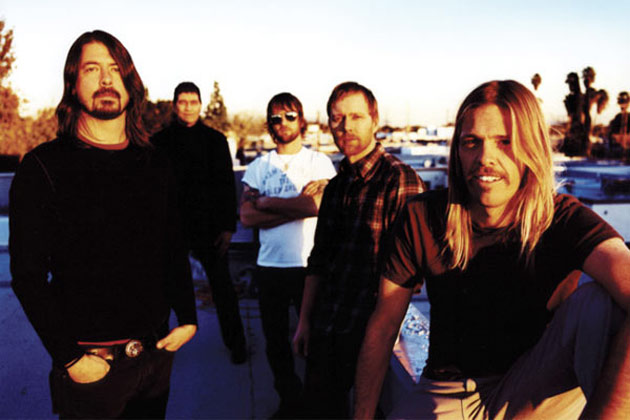
The long-time drummer of iconic rock band The Foo Fighters, Taylor Hawkins, has died.
The 50-year-old's death was announced in a tweet from the band posted at 2pm today (AEDT).
"The Foo Fighters family is devastated by the tragic and untimely loss of our beloved Taylor Hawkins," the statement read.
READ MORE: Tributes pour in for Foo Fighters drummer Taylor Hawkins
"His musical spirit and infectious laughter will live on with all of us forever.
"Our hearts go out to his wife, children and family, and we asked that their privacy be treated with the utmost respect in this unimaginably difficult time."
No cause of death was given in the statement.
The band had been scheduled to perform a show tonight in Bogota, Colombia, as part of a worldwide tour.
The band was set to visit Australia for five shows in December this year.
READ MORE: Russia says first phase of war is over
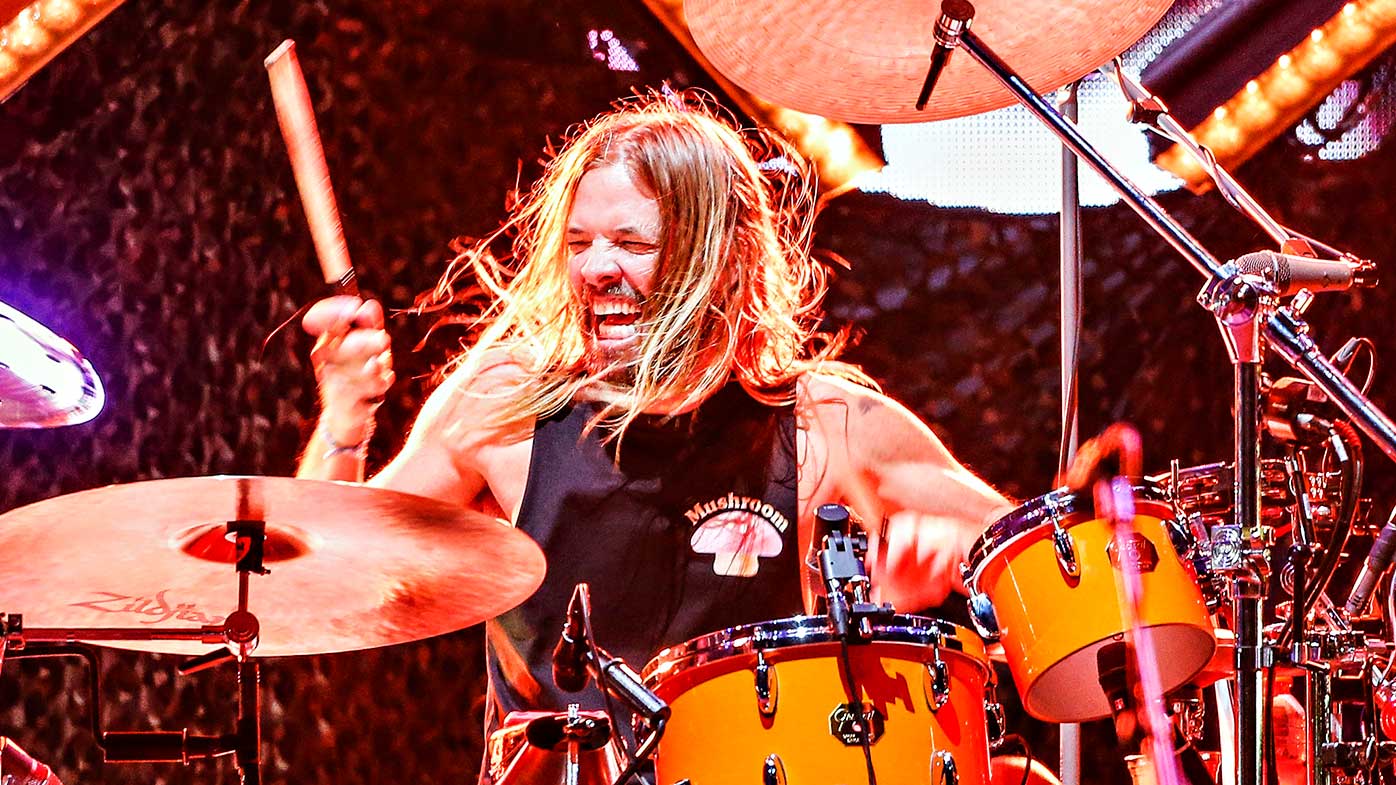
Hawkins joined the band in 1997 and was a stalwart member of the group.
The talented drummer was an energetic and charismatic presence on stage, in interviews and in their video clips.
In 2001 he survived a heroin overdose which left him comatose for two weeks.
Before joining The Foo Fighters he was the touring drummer for Alanis Morissette.
He is survived by his wife and three children.
https://twitter.com/foofighters/status/1507552958988255234
The Foo Fighters were formed by Nirvana star Dave Grohl in the wake of frontman Kurt Cobain's death.
Hawkins joined the band after the recording of their second album, and remained a core member since.
The band was inducted into the Rock and Roll Hall of Fame in 2021, the first year they were eligible.
READ MORE: Ukraine says 300 died in theatre attack as hunger grips cities
Auckland Zoo's male rhino dies after sudden illness
By RNZ Auckland Zoo’s male rhinoceros was euthanised on Wednesday after a sudden untreatable illness.Last weekend, 20-year-old Inkosi suddenly stopped eating and became very lethargic, Auckland Zoo said in a statement. The…