Wairoa mayor Craig Little is considering declaring a local State of Emergency hours before the predicted heavy rainfall of ex-Tropical Cyclone Fili begins to be dumped on the region.And further north, the Gisborne District Council…
Tag Archives: oceania
Volcanic unrest elevated at Mt Ruapehu as scientists monitor tremors
Mt Ruapehu’s volcanic tremors continue to put scientists on alert, with experts saying an eruption is unlikely but possible.Tremor levels earlier increased to be among the highest seen in nine years on April 6 and 7, volcanologists…
Australia slams Russia for reported use of chemical weapons
Australian Foreign Minister Marise Payne has called the reported use of chemical weapons by Russia in Ukraine "a further wholesale breach of international law".
She said the reports were, "a further indication of President (Vladimir) Putin and Russia's absolute violation of every single value and every single rules-based aspect of the rules-based global order".
Ms Payne said Australia will be working to verify the reports.
READ MORE: Austrian leader's 'unfriendly meeting' with Vladimir Putin

After reports emerged today of a possible strike involving chemical substances of some kind in Mariupol, Ukraine's President warned the possibility should be taken seriously, though a Mariupol official said any such attack remained unconfirmed.
In his nightly address on Monday, President Volodymyr Zelenskyy said Russia might be preparing to escalate attacks on the besieged south-eastern city.
"Today, the occupiers issued a new statement, which indicates that they are preparing a new stage of terror against Ukraine and our defenders," Mr Zelenskyy said.
"One of the occupiers' spokesmen said that they could use chemical weapons against the defenders of Mariupol. We take this as seriously as possible."
READ MORE: Teen dies after Sydney Royal Easter Show stabbing
Ivanna Klympush, a Ukrainian MP, tweeted an unknown substance in Mariupol was "most likely" chemical weapons.
The US and British governments said they were working to confirm the reports.
The US Defence Department said it was following the situation in Mariupol.
"We are aware of social media reports which claim Russian forces deployed a potential chemical munition in Mariupol, Ukraine," Pentagon spokesman John Kirby said.
READ MORE: People sleeping at airport, missing flights as travel chaos continues
https://twitter.com/trussliz/status/1513636563405713416?ref_src=twsrc%5Etfw
UK Foreign Secretary Liz Truss tweeted that she was working "urgently with partners" to investigate the reports of a possible chemical attack in Mariupol.
"Reports that Russian forces may have used chemical agents in an attack on the people of Mariupol. We are working urgently with partners to verify details," Ms Truss wrote.
"Any use of such weapons would be a callous escalation in this conflict and we will hold Putin and his regime to account."
– Reported with agencies
Let's Get Wellington Moving consultation shows support for light rail and second tunnel
Let’s Get Wellington Moving (LGWM) consultation reveals more than half of respondents favour light rail as the preferred form of mass rapid transit for the capital city. LGWM is a joint multi-billion transport project between Waka…
In memoriam: The famous people who have died in 2022
Rock stars to politicians, movie icons and sporting legends, here are some of the greats who have died in the past year.
'Highly insensitive and disrespectful': Organisers of Miss Russia NZ pageant urged to cancel or change
A former head judge of Miss Russia NZ wants the event cancelled or be used as a voice for women in Ukraine.Organisers confirmed that the pageant celebrating Russian culture will go ahead as planned at the Alexandra Park Raceway…
Covid-19: The exodus after the borders open – MBIE estimates 50,000 Kiwis will leave
Government officials have estimated 50,000 New Zealanders will leave the country over the next year to head off on an OE or for work as the borders reopen after two years of Covid-19 restricting travel. The estimate was included…
PM says Albanese has 'no idea' about economy after cash rate gaffe
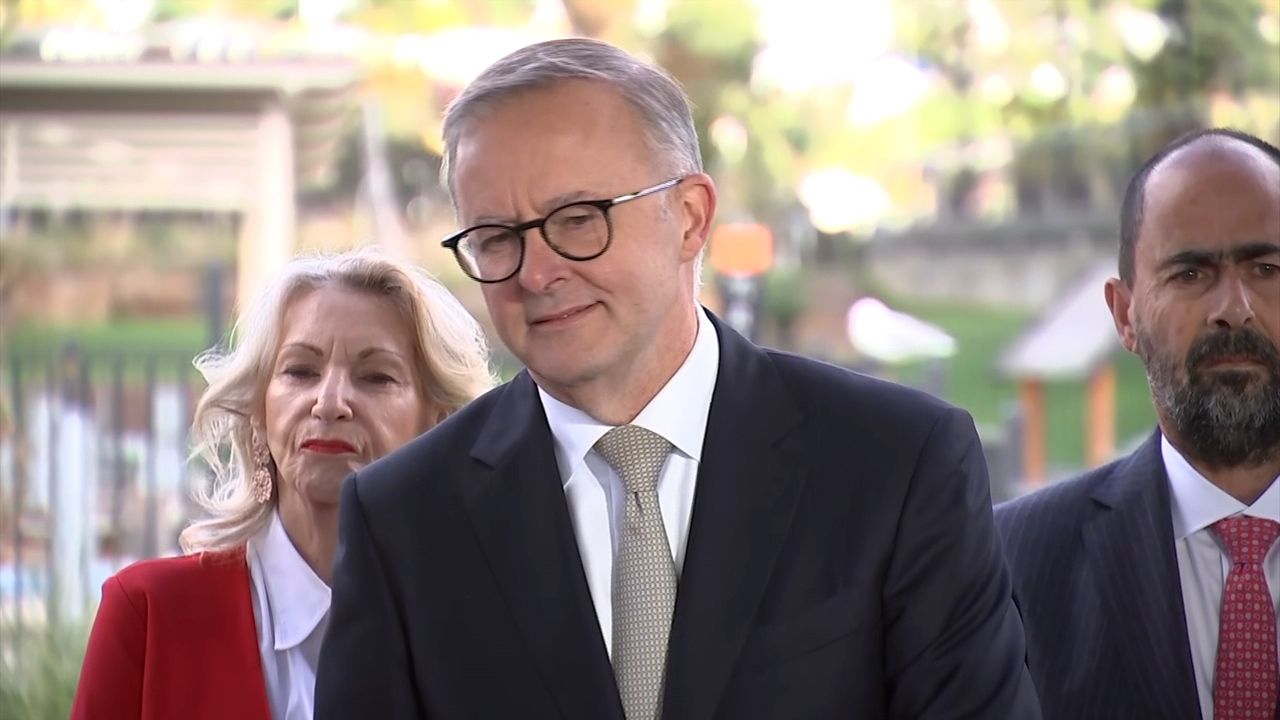
Prime Minister Scott Morrison said Opposition Leader Anthony Albanese's unemployment rate gaffe shows he has "no idea what has happened with Australia's economic recovery".
Mr Albanese was yesterday unable to say what the the current unemployment rate, or the RBA cash rate was when asked at a press conference.
Mr Albanese later addressed the mistake by saying he would always 'own up' to errors, quoting a Taylor Swift lyric by insisting he would 'Shake It Off'.

However, Mr Morrison seized on the mistake.
"Leaders will not get every single figure right," Mr Morrison said today.
ANALYSIS: Albanese makes first gaffe of election campaign and can't afford another

"His fundamental understanding of the economy is wrong. He doesn't know what's happening in the economy," he said.
"The issue is no that there's something Anthony Albanese should be apologising for, it should be that he doesn't have an economic plan."
Mr Morrison later doubled down on his criticism of Mr Albanese after his unemployment numbers gaffe.
"He didn't know the number, but he didn't miss it by that much," he said, using his hands to gesture a small amount.
"He missed it by that much," he said, stretching his arms out.
FULL COVERAGE: Federal Election 2022
https://twitter.com/ElizaEdNews/status/1513679267020029952
He added the Labor leader's criticisms of him over his term were, "not a substitute for having an economic plan".
"He raised as one of his great credentials, as being the acting prime minister in this country," Morrison, said.
"I don't think he got through a total of 48 hours in that job.
"If he thinks filling in for 48 hours is preparation for this job, he's got no idea," the prime minister said.
Mr Albanese sparked immediate back-and-forth yesterday, with people from all sides of politics weighing in.
The moment was reminiscent of a time earlier this year where Prime Minister Scott Morrison was unable to name the price of a loaf of bread or a litre of petrol.
READ MORE: Teen dies after Sydney Royal Easter Show stabbing
But today Mr Albanese brushed off a question about whether forgetting the unemployment and interest rate has hurt his campaign.
Mr Albanese said he was concentrating on something else when he blanked on the numbers.
"There are no consequences for real people as a result for what I said," he said.
"From time to time, if ever I make a mistake, I will own it and I will accept responsibility.
"Here is a Taylor Swift comment for you, my theory is, 'Shake it off'."
He noted he is "usually very good with numbers".
READ MORE: How is Australia's unemployment rate measured and why does it matter?
How is the unemployment rate measured and why does it matter?
Australia's unemployment rate is dominating headlines – and not because it is one of the lowest in the world for a major developed economy.
Yesterday, Labor leader Anthony Albanese failed to name the jobless rate on day one of the 2022 federal election campaign, spawning a thousand think-pieces about why it does or doesn't matter.
For a party campaigning on the basis that it is a good economic manager, it certainly wasn't – to use political speak – good "optics".
But what actually is the unemployment rate and why does it matter?
READ MORE: Austrian leader's 'unfriendly meeting' with Vladimir Putin
What is the unemployment rate?
Australia's current unemployment rate is 4.0 per cent.
It is the lowest rate since August 2008.
In basic terms, the unemployment rate is a single number that indicates the number of Australians who are ready and willing to work but do not have a job.
READ MORE: Teen dies after Sydney Royal Easter Show stabbing

Who measures the unemployment rate? Is it just a political football?
The unemployment rate is measured by the Australian Bureau of Statistics (ABS).
It is a critical – but not perfect – way to measure one aspect of the nation's economic performance.
Presumably the more people who are employed, the better a nation's economy is performing.
Politicians have no influence on how the rate is measured or what it is.
A sitting government may be able to change the unemployment rate with policies that centre on job creation.
As recent headlines have proven, the unemployment rate is often used in political campaigns to prove or disprove a government's economic performance.
The ABS is part of the Australian Government and is accountable to the Parliament and the public, but acts independently and objectively.
READ MORE: People sleeping at airport, missing flights as travel chaos continues

What does the unemployment rate actually measure?
The unemployment rate has been measured in the same way since 1966.
In order to be classified as "unemployed", a person must meet three criteria:
- They must not work more than one hour in the reference week
- They must be actively looking for work
- They must be available to start work in the reference week
By looking at this criteria, you can see that the unemployment rate doesn't measure the total number of Aussies who don't have jobs – but rather only those who are ready and willing.
FULL COVERAGE: Federal Election 2022

So if I work just one hour a week I'm counted as being employed? That's not enough to live off!
Correct.
I'll let the ABS explain this one directly.
"The ABS counts everyone who works for at least one hour in the reference week as employed. While a one hour cut-off point could be argued to be insufficient to sustain a family or person financially, there are several reasons for including everyone who works at least one hour a week as employed," the organisation says on its website.
"From an economic perspective, any time in paid work, no matter how small, contributes to economic production and is therefore included in the national accounts.
"Labour force statistics are economic indicators and need to be coherent with other economic measures."
The one-hour criterion is consistent with numerous established economies around the globe – it's not a weird quirk of the Australian system.

Does that mean the unemployment rate is inaccurate in the 'real world'?
No, not at all.
The unemployment rate measures what it says it measures – the ABS is extremely transparent about its methodologies.
It's important we can measure Australia's economic performance to other countries on international consistent standards.
But, with the one-hour criterion in mind, the ABS also charts "underemployment".
Underemployment is defined as people who work fewer than 35 hours per work but would like to work more and are available to work more hours.
Australia's underemployment rate is 6.6 per cent.
How does the ABS find out if people are working or not?
The ABS conducts a monthly survey of about 26,000 households as well as a selection of hotels, hospitals, boarding schools, colleges, prisons and indigenous communities throughout Australia.
This encapsulates over 50,000 people, which then forms a "representative sample" of the nation's population.
The survey is done via self-guided online questionnaires or trained interviewers.
How often does the unemployment rate change and when is the next release?
Whether the unemployment rate changes is dependent on the data, which is released monthly.
We are due for the March figures in just a few days' time on Thursday at 11.30am.
Neptune just experienced an unexplained temperature shift
The most distant planet in our solar system has presented a new mystery.
Astronomers observing Neptune for the past 17 years with multiple ground-based telescopes tracked a surprising drop in the ice giant's global temperatures, which was then followed by a dramatic warming trend at the planet's south pole.
Neptune, which orbits the sun at a distance of 4.5 billion kilometres, experiences seasons like Earth does — they just last much longer.
READ MORE: Hubble photos show 'intense and violent' formation of planet

One year on Neptune lasts for about 165 Earth years, so a single season can last around 40 years. It's been summer time in Neptune's southern hemisphere since 2005.
Astronomers decided to track the planet's atmospheric temperatures once the southern summer solstice occurred that year.
Nearly 100 thermal images of Neptune taken since then showed that much of Neptune gradually cooled, dropping by eight degrees Celsius between 2003 and 2018.
A study on the phenomenon published Monday in the Planetary Science Journal.
"This change was unexpected," said lead study author Michael Roman, a postdoctoral research associate at the University of Leicester, in a statement.
"Since we have been observing Neptune during its early southern summer, we expected temperatures to be slowly growing warmer, not colder."
Then, a dramatic warming event occurred at Neptune's south pole between 2018 and 2020 and temperatures rose by 11C. This warm polar vortex completely reversed any cooling that occurred before.
READ MORE: Pluto has giant ice volcanoes that could hint at the possibility of life

This kind of polar warming has never been seen on Neptune until now.
"Our data cover less than half of a Neptune season, so no one was expecting to see large and rapid changes," said study co-author Glenn Orton, senior research scientist at NASA's Jet Propulsion Laboratory, in a statement.
Images were taken using the European Southern Observatory's Very Large Telescope and Gemini South telescope in Chile, along with Hawaii's Subaru Telescope, Keck Telescope and the Gemini North telescope, as well as data from NASA's now-retired Spitzer Space Telescope.
The infrared light emitted by Neptune's stratosphere, or the atmospheric band above the active weather layer, helped astronomers detect the temperature fluctuations.
Frosty Neptune has an average of -220C, and astronomers still don't know what caused these temperature shifts.
For now, they have considered that the unexpected changes could be due to a number of factors.
"Temperature variations may be related to seasonal changes in Neptune's atmospheric chemistry, which can alter how effectively the atmosphere cools," Roman said.
"But random variability in weather patterns or even a response to the 11-year solar activity cycle may also have an effect."
READ MORE: There are more than 5000 worlds beyond our solar system

More observations will be needed to truly explore these possibilities. The James Webb Space Telescope will observe Uranus and Neptune later this year.
The space observatory's mid-infrared instrument can map the chemistry and temperatures in Neptune's atmosphere and could identify what caused the shift.
Neptune is more than 30 times as far from the sun as Earth, and it's the only planet in our solar system that isn't visible to the naked eye from Earth. So far, only NASA's Voyager 2 spacecraft has flown by Neptune up close, which occurred in 1989.
"I think Neptune is itself very intriguing to many of us because we still know so little about it," Roman said. "This all points towards a more complicated picture of Neptune's atmosphere and how it changes with time."