Tag Archives: oceania

Why more Australian women are getting breast implants removed

Charlotte Carrabs remembers being 19 years old and sitting in the office of her plastic surgeon as he talked her through the procedure for breast augmentation.

He gave her a bizarre demonstration of just how indestructible the textured implants she was having inserted into her body were.

"He said, 'They're really strong, check this out,' and he grabbed an implant and chucked it in the door and then slammed it," the now 26-year-old recalled.

"He said the pressure of the door wouldn't even break the implant.

"I was a bit shocked."

READ MORE: What we know about the BA.2 'stealth' Omicron variant

Charlotte Carrabs was 19 years old when she got her breast implants. She is pictured here before and after she got them removed in February.

Aside from her surgeon mentioning she may need to replace her implants after a decade or so, Ms Carrabs cannot recollect any discussion during the pre-surgery consult about potential health risks.

"I don't think we ever touched on any associated risks. There was no talk about my body possibly rejecting the implants or that I could have issues later on," she said.

READ MORE: Defiant Russian news worker interrupts state TV

Ms Carrabs would go on to suffer a myriad of debilitating symptoms over the next seven years, none of which she was warned about.

Many of the symptoms Ms Carrabs endured are associated with what has come to be known as Breast Implant Illness (BII).

BII is not a medically-recognised condition but there are growing calls for more research and investigations into its causes and risk factors.

It started with a rash

The first sign that something was wrong came seven months after breast augmentation surgery, although she didn't connect it to her implants at first.

"I got this viral rash that started on my chest, and it kind of spread up to my neck to my ears," Ms Carrabs said.

Initially, Ms Carrabs thought it was an allergic reaction to something she had eaten, but the rash kept on coming back.

The first sign something was wrong was a rash Ms Carrabs noticed on her chest.

Then there were other strange symptoms that developed over the next few years, like chronic fatigue, brain fog and issues with her gut.

Ms Carrabs also started getting sharp pains in her chest.

Eventually, with the help of breast implant illness groups online, and a GP who had treated other women with similar experiences, Ms Carrabs was able to pinpoint her breast implants as the cause of her ill health.

"It's an awful feeling when you kind of connect the dots and go, oh my gosh, I need to get this foreign object out of my body," she said. 

"It's quite frightening because it just felt like a ticking time bomb."

Ms Carrabs had her breast implants removed six weeks ago.

The effect of the surgery was dramatic, she said.

"Immediately after the surgery. I just felt like I could breathe again. I could take a deep breath in and nothing was restricting my breathing," she said.

"I'm no longer experiencing that sharp stabbing pain and my chronic fatigue has lifted.

"My husband said to me, 'you are like a different person, you're just so much brighter, so much more energetic.'"

Breast implant removals soar

According to the Australian Breast Device Registry (ABDR), an estimated 20,000 women undergo breast augmentation surgery every year in Australia – for cosmetic reasons or reconstruction after cancer.

Despite the high numbers, Ms Carrabs is one of a growing number of women in Australia who are choosing to have their breast implants removed. 

Breast implant removals, or explants, have increased more than sixfold over the past decade, Medicare data provided to 9news.com.au by the Federal Health Department shows.

Last year, 4903 women had breast implants removed, up from 1234 in 2016 and 762 in 2011.

Ms Carrabs says her health took a downward turn soon after she got her breast implants.

Sydney-based plastic and reconstructive surgeon Anand Deva believes the figures show the start of a trend towards women becoming more conscious about the health risks of breast implants.

"Breast augmentation still remains the number one cosmetic procedure performed around the world, but – for the first time ever – we've seen a drop in that and a comparative rise in the number of explants," Professor Deva said.

Increasing evidence of breast implant-related cancer had led to a number of textured types of implants being removed from the Australian market in 2019, he said. 

Past scandals over silicone-based implants as well as regular media reports about under–qualified "cosmetic surgeons" had also impacted the industry, he added. 

Meanwhile, the power of social media had been a "gamechanger", Professor Deva said, allowing women to communicate and share experiences for the first time. 

Australian study examines BII

Prof. Deva is now leading Australia's first study into the symptoms of women who believe they have breast implant illness.

The Sydney Macquarie University study is currently tracking the symptoms of 200 women before and after they have the operation.

Prof. Deva said he hoped to expand the study to include 1000 women over the next few years, as the evidence-led research looks at why some women become so sick after implant surgery.

Preliminary findings from the study, based on 45 women six months after surgery – found in 70 to 80 percent of them many symptoms lessen or disappear entirely after their implants were removed, Prof. Deva said.
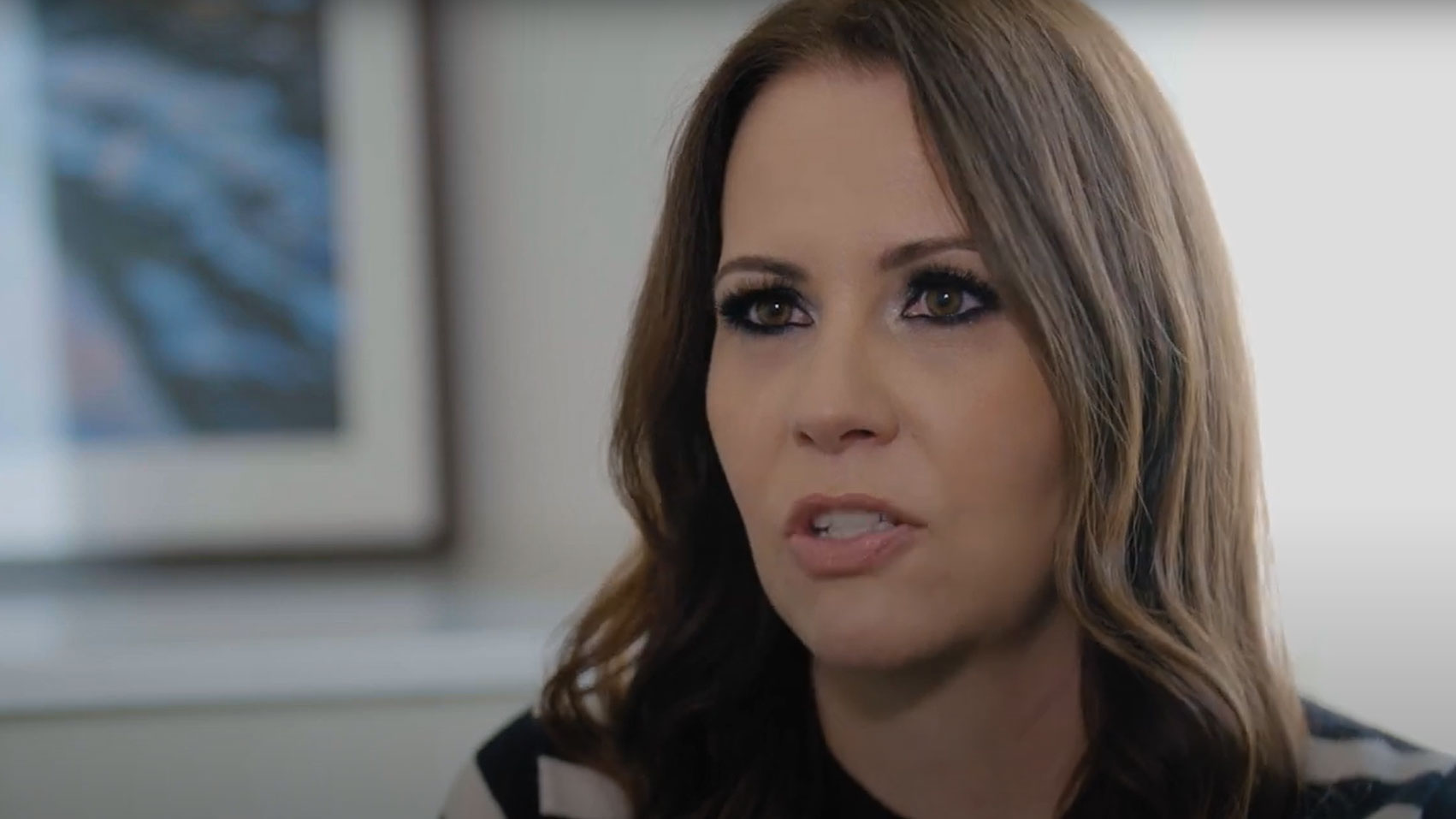
Shelly Rafferty is one of 200 women participating in a Macquarie University study examining breast implant illness.

The findings are in line with published results from a similar study of women with breast implant illness conducted in the US, he said.

As well as monitoring symptoms, researchers will examine and run tests on the implants removed from the women in a bid to find possible causes for their symptoms.

Professor Anand said tests on the first 45 women in the study showed 70 percent of them had bacteria on their implants, but whether it played a role in their illness was still unclear.

While the most common complication of breast implants was a hardening of the breast tissue and associated pain, the symptoms of breast implant illness were as varied as they were debilitating, Professor Deva said.

Possible signs include brain fog, fatigue, anxiety and depression, joint pains, loss of hair and changes to skin rashes, he said.

In 2020, the US Food and Drug Administration ordered manufacturers to inform women of the "serious and life-threatening risks" of breast implants, a so-called "black box" warning similar to what is found on cigarette packets.

In Australia, the Therapeutic Goods Administrator is yet to make such a move, but is considering guidelines for informed consent. 

The Australian Health Practitioner Regulation Agency (AHPRA) is also currently conducting an inquiry into the cosmetic surgery industry.

Professor Deva said reform was desperately needed to make sure women were aware of the risks of implants.

"Ultimately, it's about making sure every woman thinking about an implant is fully informed and educated on the risks. 

"For a lot of the women I see, this was never discussed. And so, when they find themselves really, really sick and struggling for answers, they feel a little bit betrayed. Why didn't the surgeon inform me this could be the case?"

Shelly's hands turn blue-black

Mother-of-three Shelly Rafferty is one of the 200 women participating in the Macquarie University study.

Ms Rafferty said she went from being a healthy, active 34-year-old to someone with multiple chronic health complications after getting her breast implants inserted 10 years ago.

Over a period of almost a decade, she endured two strokes, spontaneous tears in both carotid arteries in her neck, tears in her oesophagus and chronic eye, joint, chest, back and hip pain.

Her hands turned a blue-black colour. 
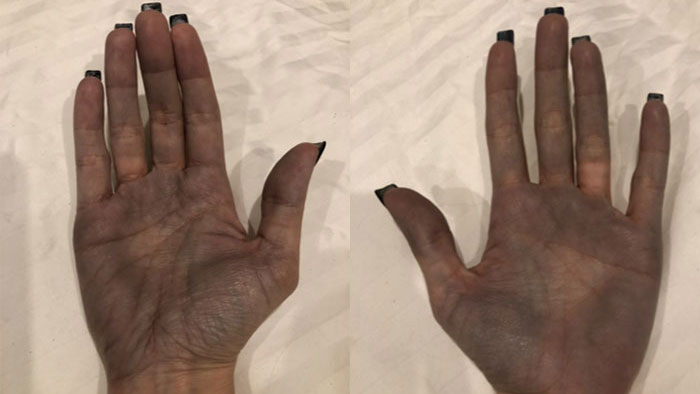
Shelly Rafferty's hands turned blue/black. It was just one of a range of symptoms her doctors could not explain. The unusual colour went away after she had her implants removed.

Every time she boarded a plane, Ms Rafferty had to travel with an oxygen concentrator because of low oxygen saturation and constant shortness of breath. 

In March 2020, Ms Rafferty underwent surgery to remove her breast implants.

The surgery was transformative.

"I feel like I have my life back," she said. 

"I can take my kids to school and dance classes, walk my dog, go out for dinner and not go to bed at 7pm – things most people take for granted. Money can't buy what I've got back."

Professor Deva is seeking more participants for Macquarie University's study. Click here for more information.
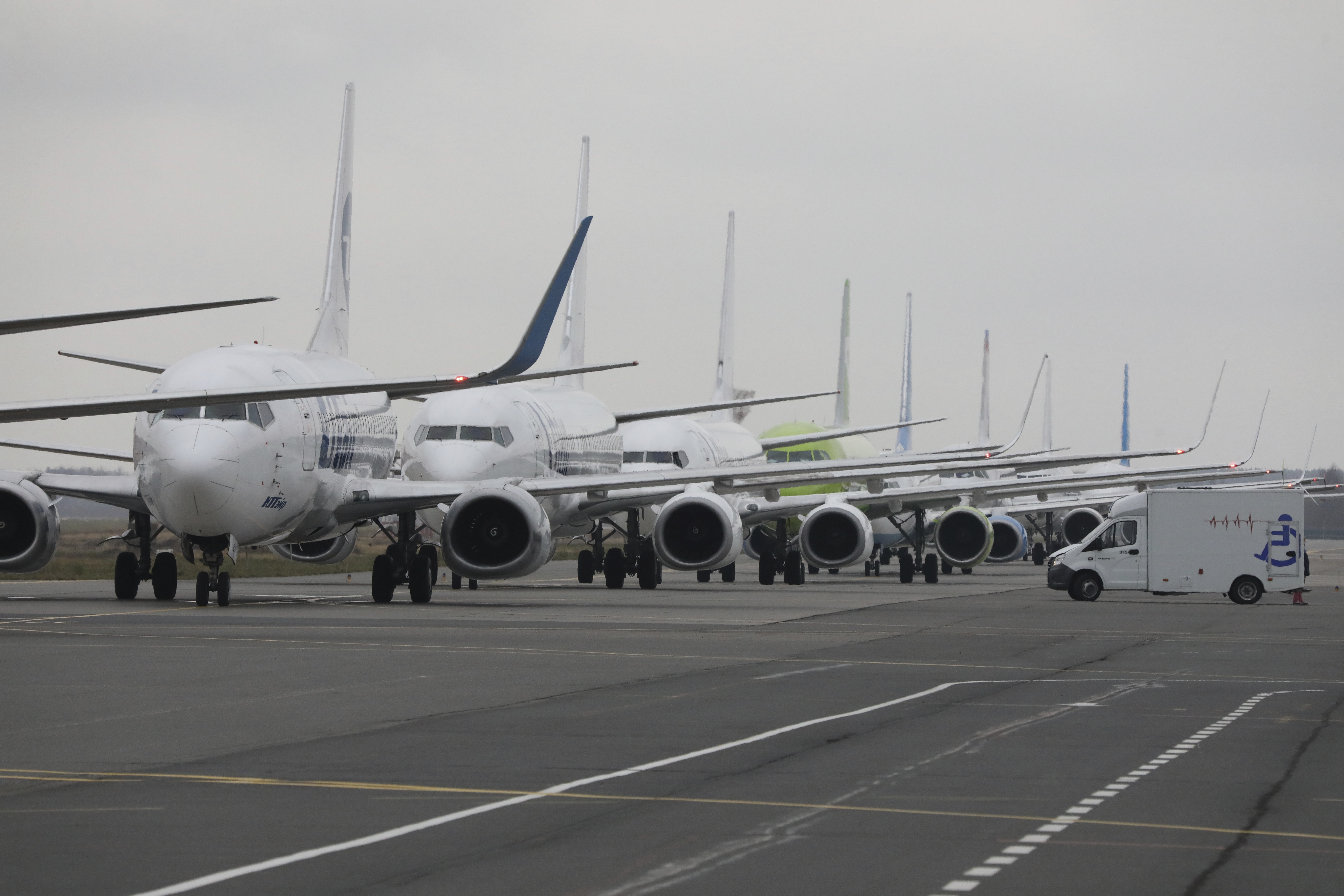
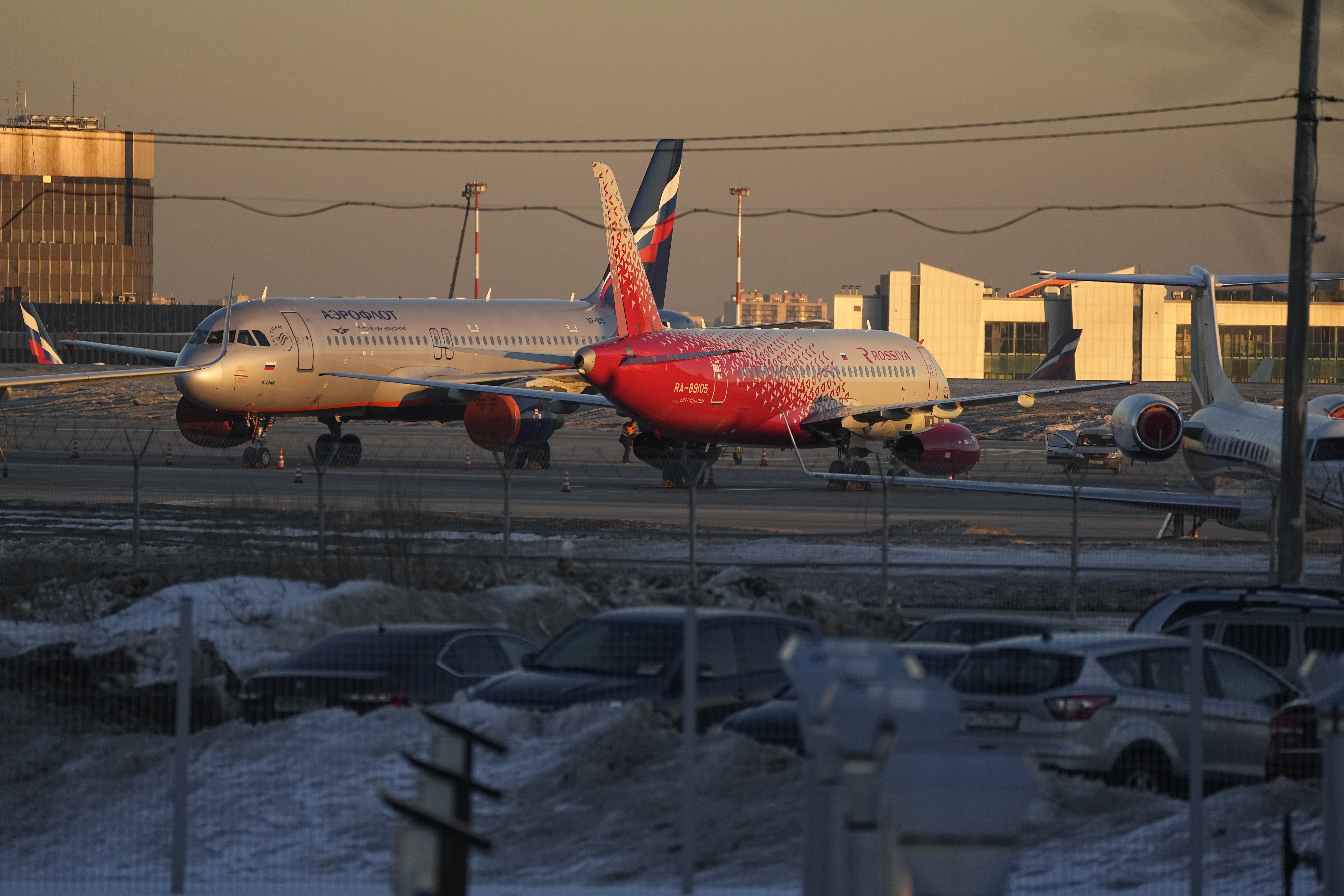
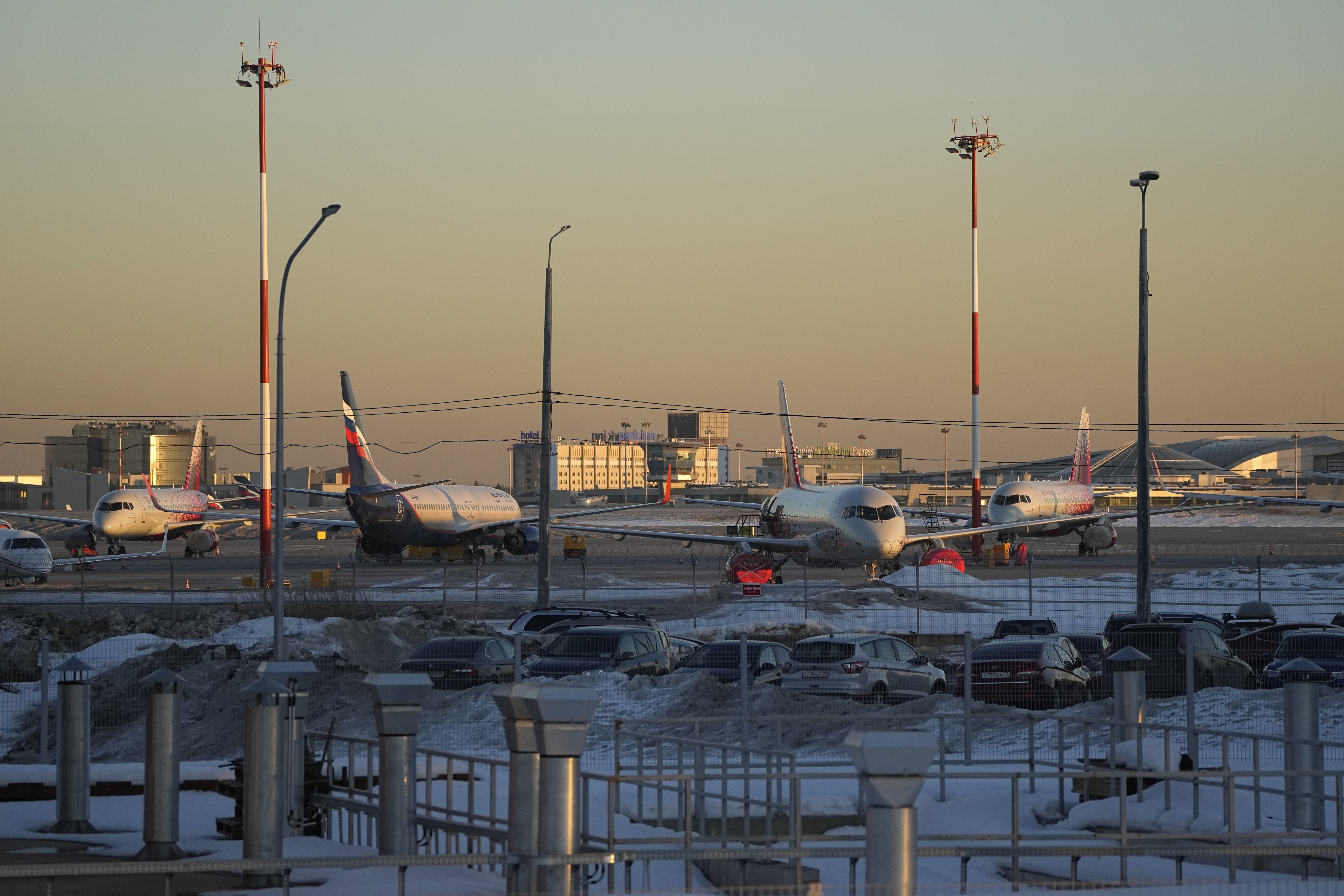
Hundreds of empty planes are trapped on the tarmac in Russia

The fate of hundreds of planes leased by Russian airlines from foreign companies has grown murkier after Russian President Vladimir Putin signed a law letting the airlines register those planes and continue flying them.

Russian state media said the law will let Russian airlines keep their fleets and operate foreign planes on routes within Russia.

Many of the planes used by Russian airlines are leased from foreign companies, including several in Ireland, a member of the European Union.

READ MORE: Putin is 'angry, frustrated and likely to escalate war'

Last month, the EU banned the sale or leasing of planes to Russia as part of sanctions to punish Russia for invading Ukraine.

It gave leasing companies until March 28 to end current contracts in Russia.

Last week, Russia's air-transport agency advised airlines with foreign-registered planes not to take them out of the country because of the risk they could be repossessed.

Separately, sanctions prevent Western companies from providing spare parts and maintenance to Russian airlines, and analysts say it is unclear whether the planes are insured anymore.

Various estimates place the number of foreign-owned planes operated by Russian airlines at around 500 or more, and the vast majority of them were inside Russia when the war started February 24.

Aviation consulting firm Ishka estimates that the foreign-owned planes are worth US$12 billion ($16.67 billion), nearly half of that by Irish-based lessors.

READ MORE: China battles multiple outbreaks, driven by 'stealth Omicron'

"We are in uncharted territory. We don't know if they will see these aircraft again," Helane Becker, an aviation analyst for financial-services firm Cowen, said.

"Our guess is that (Russian carriers) use up whatever parts they have and then start cannibalising (parts) to keep aircraft flying, and when this is over everything gets sorted out."

According to aviation consultant IBA, the company with the most exposure to the war is Dublin-based AerCap, with 152 planes valued at nearly US$2.4 billion ($3.33 billion) that are flying, parked or stored in Russia or Ukraine.

A spokeswoman for AerCap said 5 per cent of its fleet by value is in the hands of Russian carriers.

She referred to a February 28 filing in which the company said it would comply with the wind-down of leasing planes to Russian airlines, and declined to comment further.

A spokesman for another Irish lessor, SMBC Aviation Capital, said the company has 35 planes in Russia — IBA valued them at about US$1.4 billion ($1.95 billion) — and has issued termination notices for all leases with Russian airlines.

The spokesman said the company "is engaged with all relevant authorities," but declined to comment further.

Other companies declined to comment or did not immediately respond.

LIVE UPDATES: Scott Morrison accused of 'schoolyard bullying'

There are more than 100 aircraft-leasing companies, many of them too small to survive if they lose more than one or two planes, according to Vance Hilderman, CEO of AFuzion, an airline consulting firm based in Los Angeles.

"In the old days, Russia would kind of let you in. You'd bring a couple pilots in and you would repossess the aircraft at night, kind of undercover," Mr Hilderman said.

"But this is going to spur a whole new business of cat and mouse.

"The stolen aircraft won't be leaving Russian airspace."

Mr Hilderman said that for the few remaining flights that leave the country — to Turkey and places in the Middle East and Asia — Russian airlines will only use planes that they own or lease from Russian lessors.

Leasing companies have recovered a very small number of planes. Aircastle, a Connecticut-based lessor, recovered a plane while it was stopped in Mexico City.

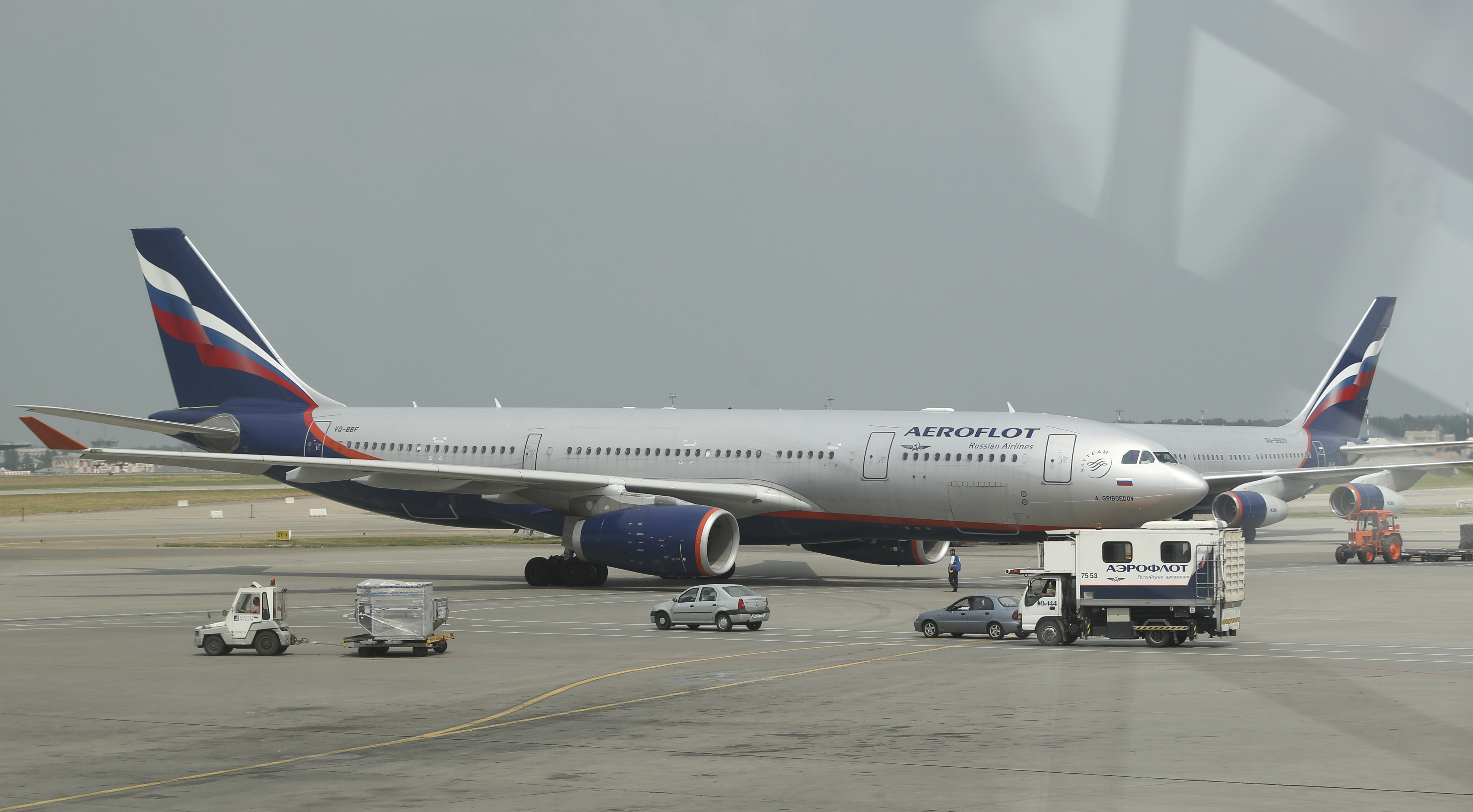
SMBC Aviation Capital tried to repossess an Aeroflot jet in Cairo, but the plane was able return to Moscow, according to The Air Current, an aviation-news site.

Ms Becker, the Cowen analyst, said the law that Mr Putin signed violates a decades-old treaty called the Chicago Convention that allows lessors to cross international borders and take back planes from defaulting customers.

According to IBA, S7 topped all Russian airlines with 101 planes on lease from non-Russian entities as of last week.

Aeroflot was second at 89 aircraft.

The most-often leased planes are Airbus A320 and Boeing 737 jets, both workhorse models used mostly for short and medium-range flights.

Last week, Fitch Ratings warned that debt backed by leases of planes now in Russia faced potential downgrades because of the risk that state-owned airlines might stop making payments "or 'confiscate' (ie theft) aircraft".

Fitch said several lessors moved a few planes out of Russia and Ukraine before sanctions were announced.

Sanctions are also affecting the world's two leading aircraft manufacturers, US-based Boeing and Europe's Airbus.

According to JPMorgan, Boeing has 35 of its 737 Max and 777 cargo planes on order by Russian airlines, including 30 that were scheduled to be delivered this year, and Airbus has orders for 27 planes from Russian airlines, with seven expected to be delivered this year.

'That's bullying': O'Keefe hammers PM on apparent dig at rival

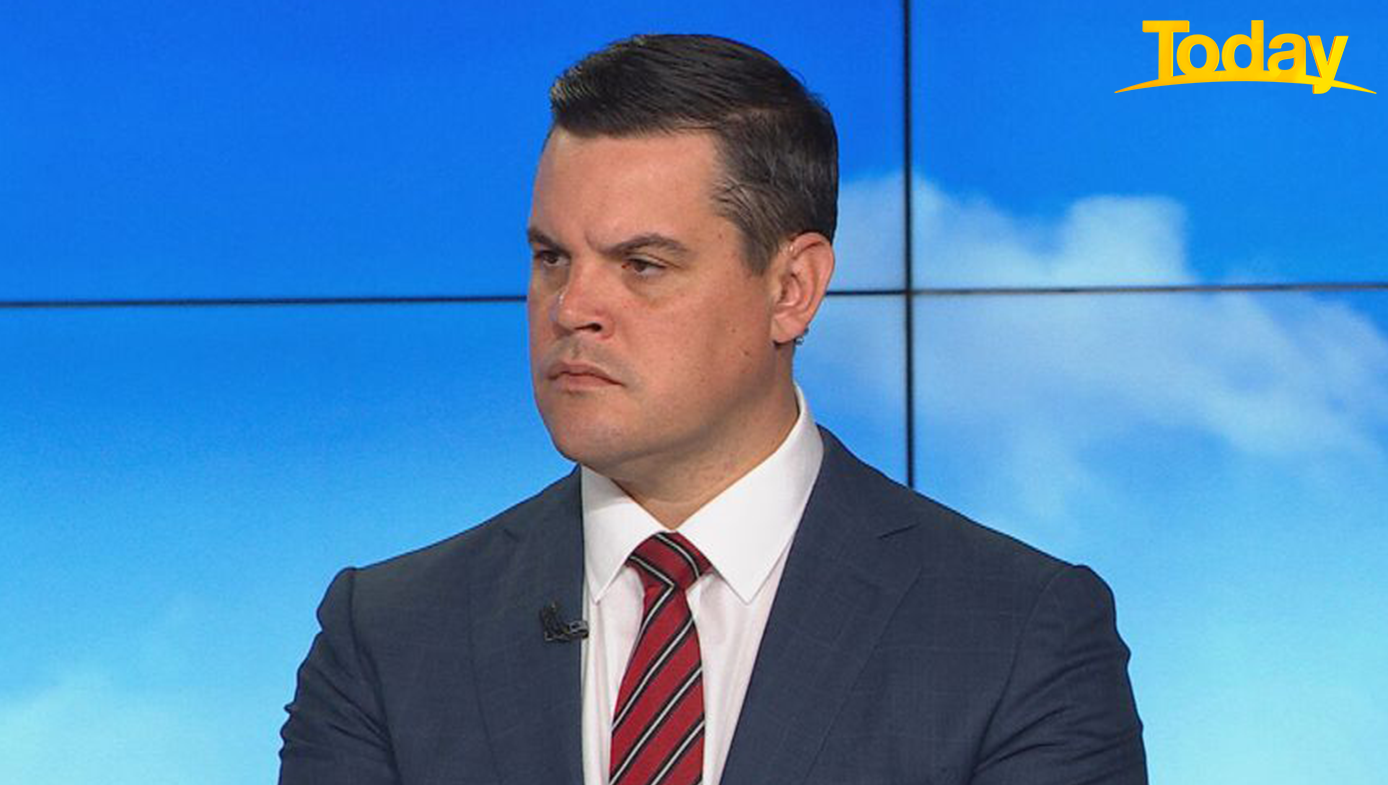
Nine political reporter Chris O'Keefe has accused Prime Minister Scott Morrison of indulging in "schoolyard" tactics after an apparent dig at Labor leader Anthony Albanese.

Appearing on Sky News last night, Mr Morrison said he was "not pretending to be anybody else".

"I'm still wearing the same glasses. And I weigh about the same. And I don't mind a bit of Italian cake either," he said.

LIVE COVERAGE: At least one dead in Sydney house fire

Nine political reporter Chris O'Keefe has accused the Prime Minister of "bullying".

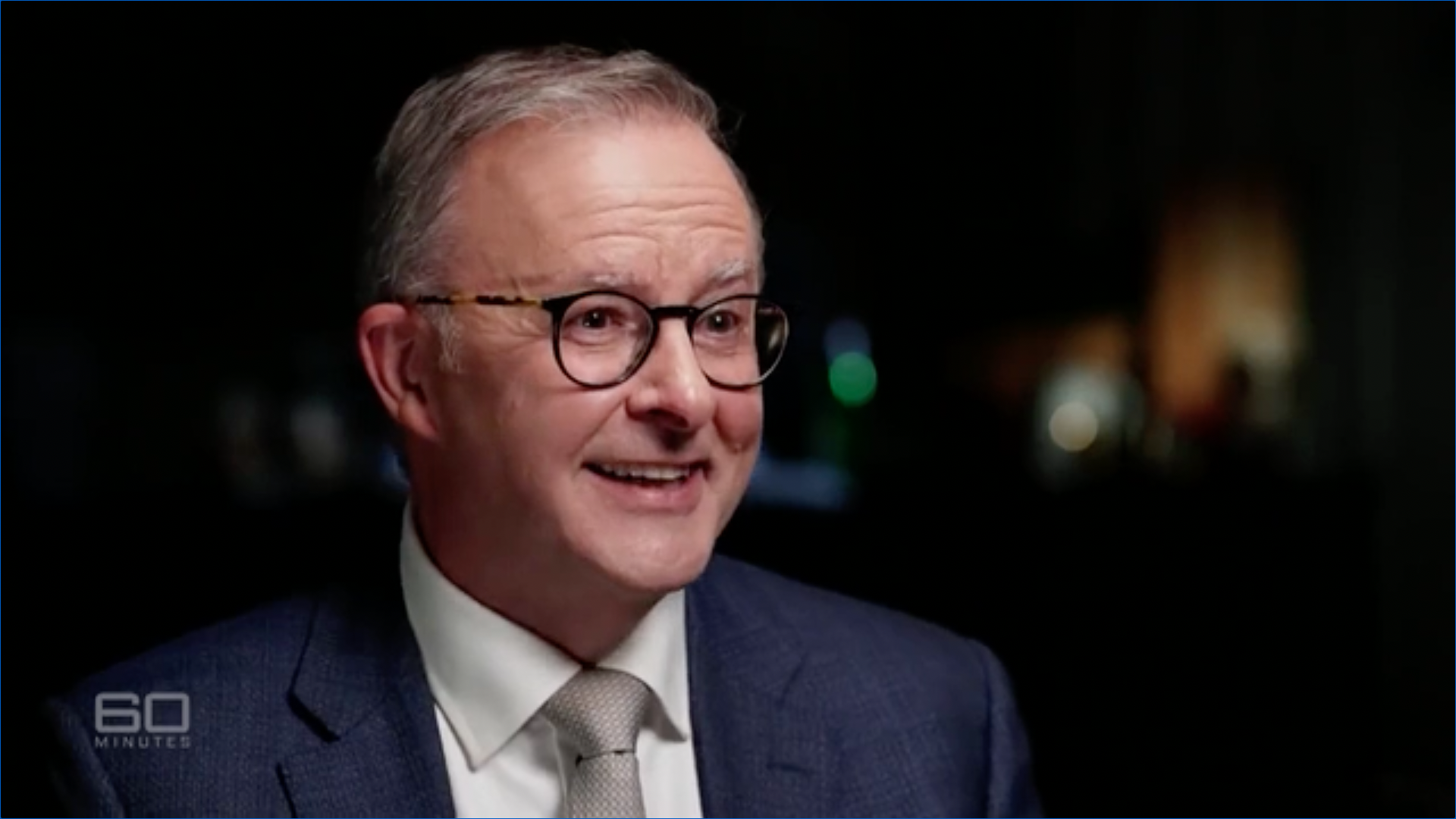
Some have interpreted this as a dig at Mr Albanese, who discussed his weight loss and "glow-up" on 60 Minutes on the weekend.

"That was a low go from the Prime Minister," O'Keefe said on Today.

"Albo has lost 14 kilograms because he went on a health kick. Good luck to him. It's called discipline. Isn't that what you want in a prime minister?"

READ MORE: Showers and storms return to east coast

He said Mr Morrison's comments were "well beneath" his position as leader of Australia.

"If Scott Morrison wants to have a go at Albo, how about we ask what the hell is he going to do for us as Australians if we vote for him, because I still have no idea," O'Keefe said.

He said Mr Morrison's comments amounted to "bullying".

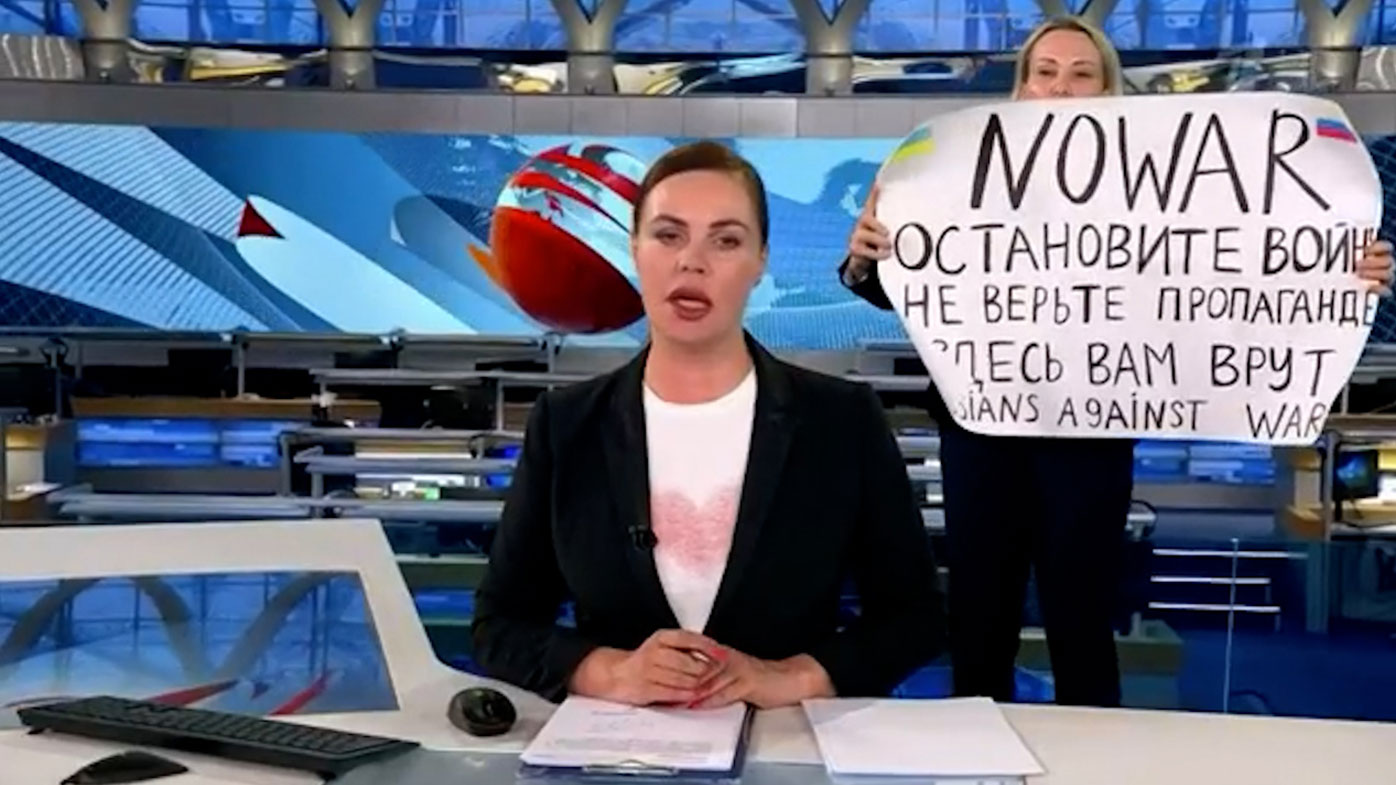
Anti-war protester interrupts Russian state TV news broadcast

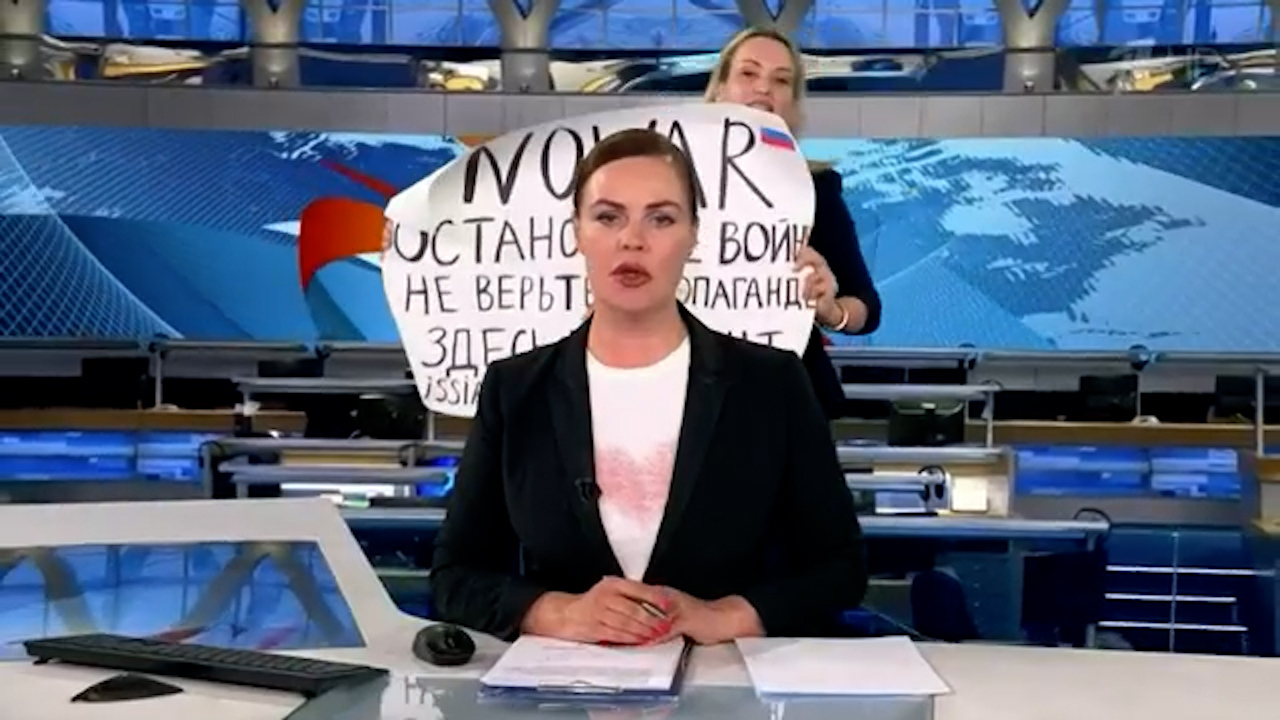
An anti-war protester holding a sign interrupted one of Russia's major state television broadcast news shows.

"NO WAR. Stop the war. Do not believe propaganda they tell you lies here," the sign reads.

"Russians against war," the last line of the sign says in English.

READ MORE: Pregnant woman, baby die after Russia bombed maternity ward

Russia Ukraine War anti war protester live tv

The woman holding the sign is an employee of the channel, according to OVD-Info, an independent human rights protest-monitoring group.

On its Telegram channel, OVD-Info reported that the employee is Maria Ovsyannikova. Friends of Ovsyannikova told OVD-Info that she was currently at the Ostankino Police Department in Moscow.

CNN cannot independently verify that the woman seen interrupting the news broadcast is Ovsyannikova, but photos on social media profiles bearing her name match the woman seen on screen.

Russian state news agency TASS confirmed OVD-Info's reporting, citing a source, and added that she could face prosecution.

OVD-Info also obtained a video purportedly made by Ovsyannikova before she interrupted the news broadcast.

READ MORE: Russia 'asked China for military aid' in Ukraine invasion

Russia - Ukraine war update anti protest

"What is happening now in Ukraine is a crime, and Russia is the aggressor country, and the responsibility for this aggression lies on the conscience of only one person. This man is Vladimir Putin," Ovsyannikova says in the video, noting that her father is Ukrainian, and her mother is Russian.

"Unfortunately, for the past few years, I have been working on Channel One and doing Kremlin propaganda, and now I am very ashamed of it," she says. "It's a shame that I allowed to speak lies from the TV screens, ashamed that I allowed to zombify Russian people."

"We are Russian people, thinking and smart, and it is only in our power to stop all this madness," she says. "Go to the rallies and do not be afraid! They can't transplant us all!"

Videos of the interruption quickly were posted on social media shortly after it aired. CNN obtained the video from a live feed from Russia Channel One VK's profile.

Within minutes, that live feed was removed.

READ MORE: The graphs that show how Russia's invasion has rocked world markets

Wet weather returns to east coast as storms cause havoc in west

Showers and storms have returned to the nation's east coast and the wet weather is not expected to ease its grip until the end of the week.

Meanwhile, in the west, storm activity coupled with a low intensity heatwave has been wreaking havoc.

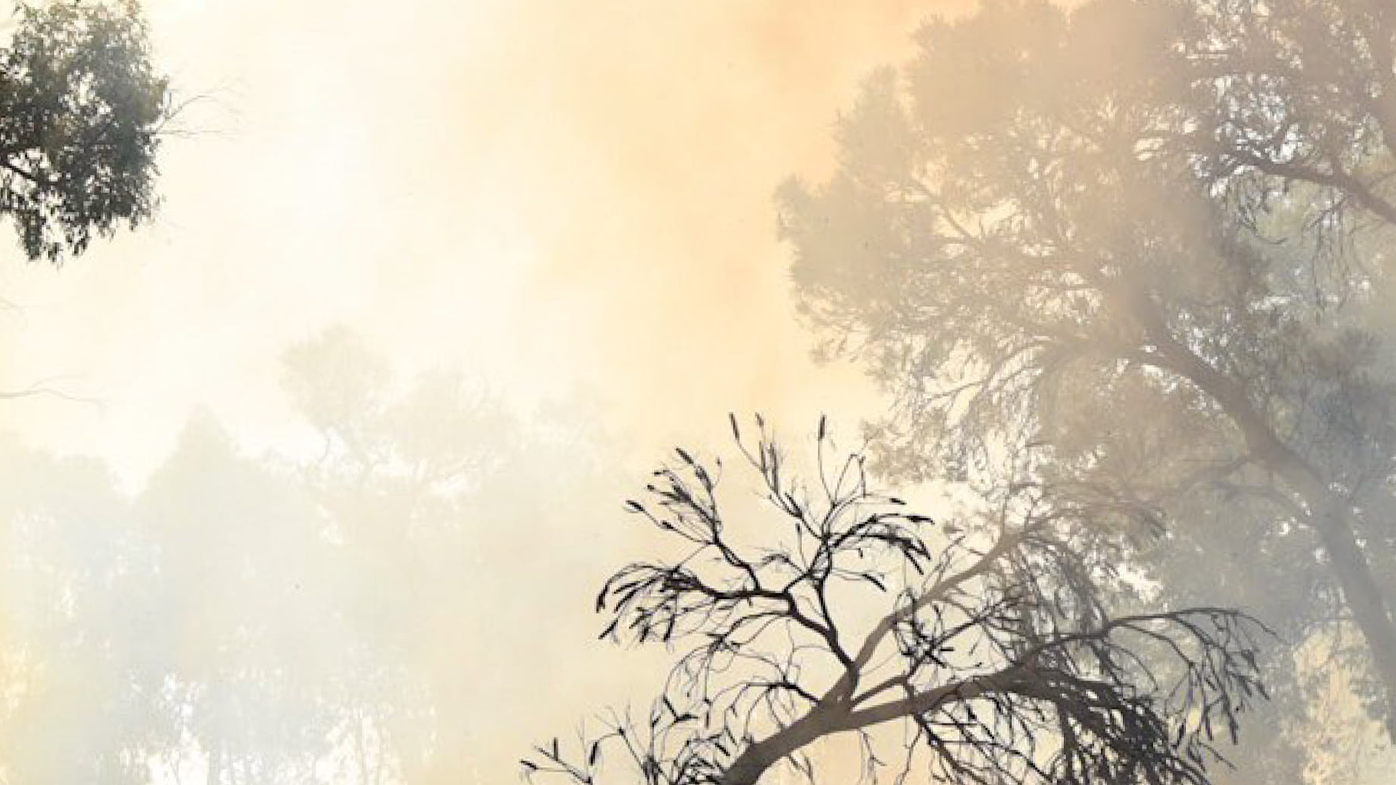
Lightning strikes have started more than 40 fires in south-west Western Australia since Friday, the Bureau and Meteorology (BoM) have confirmed.

READ MORE: Pregnant woman, baby die after Russia bombed maternity ward

Lightning strikes have caused more than 40 bushfires in south west Western Australia since Friday.

Two fires are currently burning at a Watch and Act level.

The shires of Nannup, Manjimup and Collie have been put on alert by the Department of Fire and Emergency Services who said: "There is a possible threat to lives and homes as a fire is approaching in the area and conditions are changing."

Today showers and possible storms will be felt across New South Wales, Queensland, Victoria, South Australia, and Tasmania.

READ MORE: China battles multiple COVID-19 outbreaks, driven by 'stealth Omicron'

https://twitter.com/BOM_au/status/1503212419522433024

The conditions are being caused by a low pressure trough which extends from inland Queensland, through eastern South Australia and western Victoria.

The rain is expected to ease on Thursday.

READ MORE: Spectacular sight as sharks feed off South Australia coast

While no severe storm warnings have been issued, western Queensland and NSW remain on alert after weeks of rain lead to a record-breaking flood crisis.

Let's take a look at what is happening across the nation's capitals today.

Brisbane

The mercury will reach 28C in Brisbane today, which has a slight chance of showers forecast.

This is most likely in the late morning and afternoon mainly about bayside suburbs, BoM said.

Sydney

A maximum temperature of 25C will be felt in Sydney today.

There's a medium chance of showers during the morning and afternoon. The BoM said up to 0.4 mm of rain could fall.

Melbourne

Rain could also be felt in Melbourne, which will reach a maximum temperature of 27C.

The BoM said there's a slight chance of a shower in the morning, increasing to a medium chance in the afternoon and evening. There's also a chance of a thunderstorm.

Hobart

Hobart could see between 10 to 25 mm mm of rain today.

The BoM said there's a very high chance of showers, becoming less likely late this afternoon and evening.

A maximum temperature of 23C will be felt.

Adelaide

It will be a humid and cloudy day in Adelaide with the mercury tipped to reach 33C.

There's a slight chance of a shower during this afternoon and evening. This could form into a thunderstorm.

Canberra

It will be a cloudy 23C day in the nation's capital.

Darwin

It will reach 33C in Darwin. Showers and storms could also unfold.

The BoM said there's a medium chance of showers, most likely during this afternoon and evening and the chance of a thunderstorm, with gusty winds during this afternoon and evening.

Perth

It will be cloudy day in Perth.

There's a slight chance of a light shower or drizzle in the early morning, mainly about the hills, and a slight chance of a shower in the afternoon.

Temperatures will hit 27C.

'Urgent' manhunt underway to find suspect committing 'heinous' crimes

Five shootings targeting homeless men in New York City and Washington, DC, over the past two weeks were carried out by a single suspect who is now the subject of an "urgent" manhunt.

The shootings took place between March 3 and March 12 and left two men dead, the New York Police Department and Washington's Metropolitan Police Department said in a joint statement overnight.

Each shooting happened in the middle of the night and targeted men experiencing homelessness, authorities said.

READ MORE: Russia keeps up attacks in Ukraine as two sides hold talks

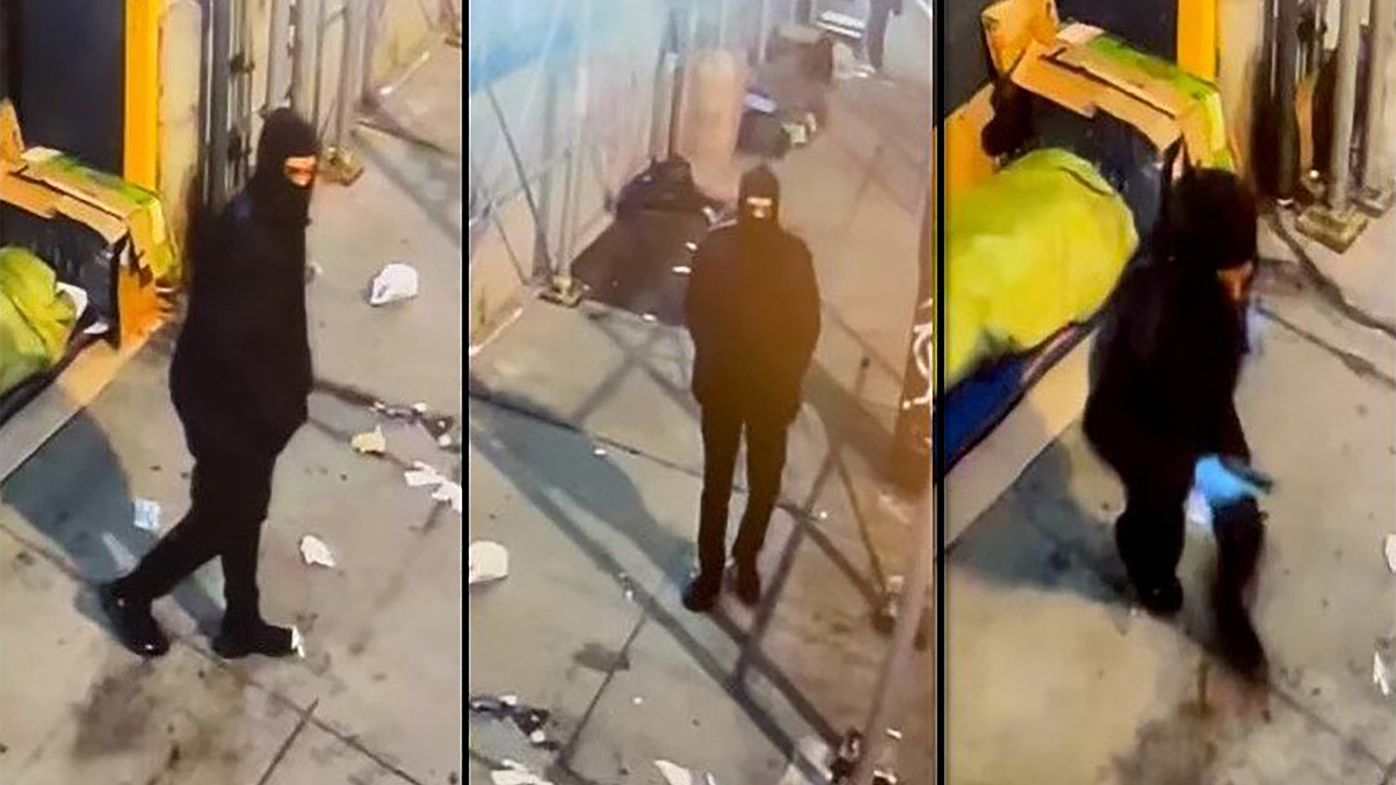
The NYPD released photos of the person they believed targeted homeless men in two shootings March 12.

Three of the shootings were last week in Washington, followed by two more in New York this weekend.

The NYPD and MPD cited similar circumstances and characteristics in each attack, although they did not release specific details. Speaking to Bloomberg on Monday, Washington Mayor Muriel Bowser said a ballistics match helped law enforcement connect the shootings.

The agencies are working with the Bureau of Alcohol, Tobacco, Firearms and Explosives on the investigation and have offered a combined US$55,000 for information leading to the arrest of the suspect.

The mayors of both cities issued a joint statement Sunday saying there was a "cold-blooded killer on the loose".

Agencies also released surveillance photos and video of the suspect.

READ MORE: One confirmed dead after fire tore through Sydney boarding house

The Metropolitan Police Department in Washington, DC, released photos of the suspect they believe targeted homeless men.

"Our homeless population is one of our most vulnerable and an individual preying on them as they sleep is an exceptionally heinous crime," said NYPD Commissioner Keechant Sewell.

"We will use every tool, every technique and every partner to bring the killer to justice."

The NYPD directed its members to do wellness checks on people who appear homeless, according to a memo obtained by CNN sent on Sunday.

Police were instructed to show individuals a flyer with the photo of a man police want to talk to in connection with the shootings.

READ MORE: Pregnant woman, baby die after Russia bombed maternity ward

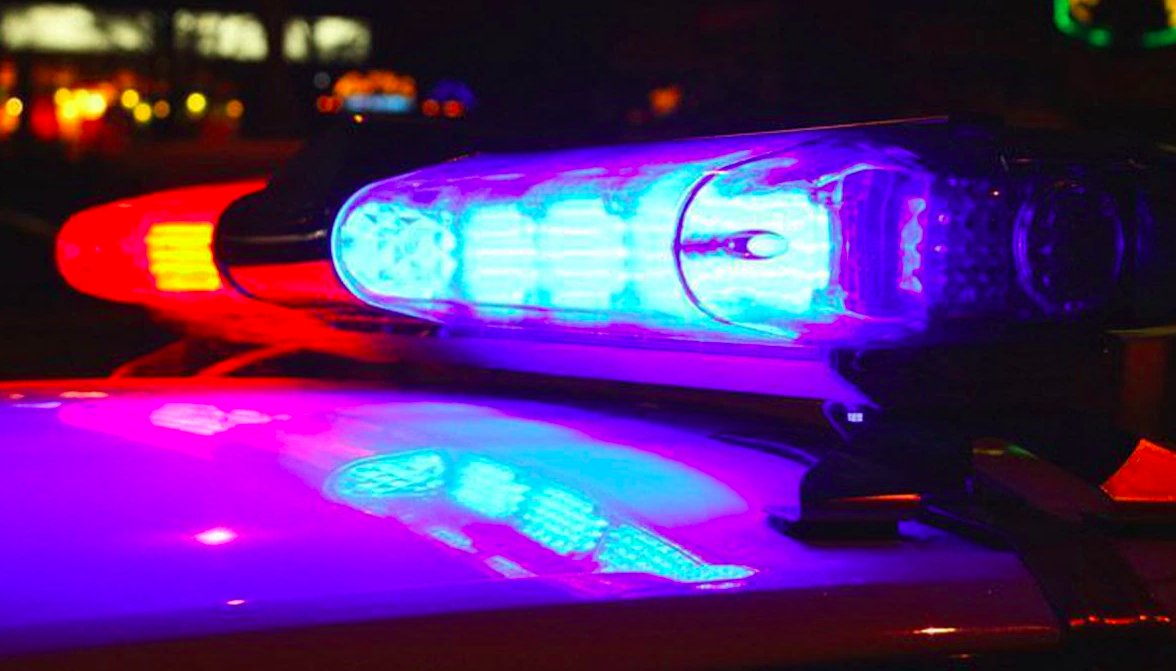
Police lights

The attacks come about a month after New York Mayor Eric Adams unveiled a plan to increase safety and address homelessness on the subway system. The suspects in several recent high-profile subway attacks were described as homeless, including in the death of Michelle Alyssa Go, who was pushed in front of a train in January.

Still, homeless people have long been at a higher risk of experiencing violence than the general population. In a 2014 study by the National Health Care for the Homeless Council, researchers interviewed 516 homeless adults and about half reported that they had been the victim of an attack.

Such violence against the homeless has continued in recent years. In 2019, four homeless men were killed and a fifth was seriously injured in Manhattan's Chinatown neighbourhood when a fellow homeless man struck their heads with a metal object as they slept, police said at the time.

In a statement, the group Coalition for the Homeless linked the mayor's move to clear out subways to the violence.

"Despite the headlines, homeless New Yorkers are far more likely to be victims of violent crime than perpetrators," the group said in a statement Sunday.

"Saturday's tragedy is an urgent reminder that many unsheltered New Yorkers choose to bed down in the subways because that is where they feel the most safe in the absence of housing and low-barrier shelters."

A timeline of the shootings

The first shooting happened around 4am on March 3 in the 1100 block of New York Avenue Northeast, the MPD said in an earlier statement Sunday. Officers responded to a call of shots fired and found a man suffering from apparent gunshot wounds. He was treated at a hospital for non-life-threatening injuries, the statement said.

The second shooting was reported around 1.21 am on March 8 in the 1700 block of H Street Northeast, MPD said. Officers found another man suffering from apparent gunshot wounds and he was taken to the hospital with non-life-threatening injuries.

Then, around 2.54 am on March 9, an MPD member noticed a fire in the 400 block of New York Avenue Northeast and a man's remains were discovered after the flames were extinguished. The cause of death was determined to be multiple stab and gunshot wounds, police said.

The fourth and fifth shootings occurred in New York City early Saturday when the suspect opened fire on two apparently homeless people who were sleeping on the street, killing one and wounding the other, the NYPD said.

The shootings happened about 90 minutes apart in Lower Manhattan and were caught on surveillance cameras, the department said. The NYPD described what the videos showed but did not release them to CNN.

One video shows a man who appeared to be homeless sleeping near the corner of King Street and Varick when an unknown suspect approached and shot him in his forearm, NYPD Deputy Chief Commanding Officer Henry Sautner said during a news conference Saturday. The man woke up and shouted, "What are you doing?" at the shooter, who then ran away, Mr Sautner added.

Police were called to the scene around 4.30 am Saturday and the 38-year-old victim was taken to a hospital for treatment.

In addition, investigators became aware of a second shooting outside 148 Lafayette Street on Saturday. There, officers found a man in a sleeping bag with gunshot wounds to his head and neck, and he was pronounced dead at the scene, Mr Sautner said. Surveillance video shows a suspect approaching the sleeping victim around 6:00 am and discharging a weapon, Sautner said.

Mr Adams described the surveillance videos of the two New York shootings as "chilling".

"This individual approached the two men, one at a time, you see him looking around, making sure no one was around, kicking the homeless person to make sure they were not asleep and just assassinated him," Mr Adams said Sunday.

"It was just something you would not imagine would take place in our city."

Shootings are 'heinous crimes,' mayors say

In their joint statement Sunday, Mr Adams and Mr Bowser called the shootings "heinous crimes" and called on residents to report any information that could help the investigation.

"The work to get this individual off our streets before he hurts or murders another individual is urgent. The rise in gun violence has shaken all of us and it is particularly horrible to know that someone is out there deliberately doing harm to an already vulnerable population," they said.

The mayors also called on residents who are homeless to seek shelter.

"It is heart-breaking and tragic to know that in addition to all the dangers that unsheltered residents face, we now have a cold-blooded killer on the loose, but we are certain that we will get the suspect off the street and into police custody," they said.

The shootings come as the NYPD grapples with upticks across every major crime category in the city. Major crimes spiked nearly 60 per cent in February compared to the same month in 2021, police data showed.

New York City recorded a 41 per cent increase in overall major crime through the first months of 2022 compared to the same period last year, including a nearly 54 per cent increase in robberies, a 56 per cent increase in grand larceny incidents and a 22 per cent increase in rape reports, the data shows.

Murders increased by 10 per cent, while citywide shooting incidents decreased by 1.3 per cent, with 77 incidents in February 2021 and 76 incidents last month, NYPD data shows.

City officials are working to get homeless individuals into shelters, Mr Adams said Sunday.

"We're also mobilising on the streets to notify our homeless to try and get them in shelters, those who want to do so," Mr Adams said.

"Being homeless should not turn into a homicide and I want to catch this guy bad."

Mr Adams unveiled his 'Blueprint to End Gun Violence' in January, which includes long-term goals to grow economic opportunities, improve child education and provide more access to mental health resources while addressing the gun crisis.

Pregnant Ukrainian mum whose photo shocked world dies

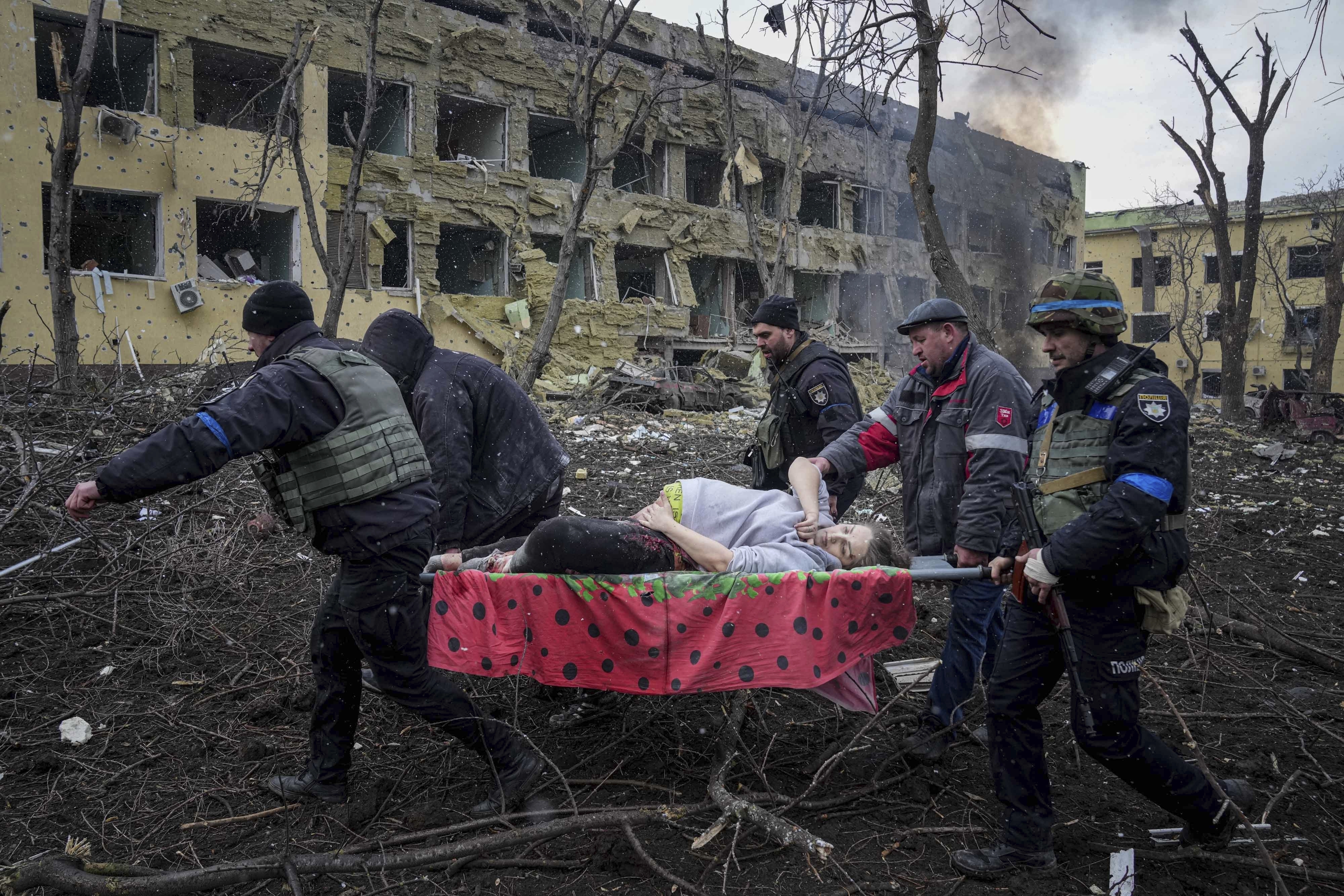
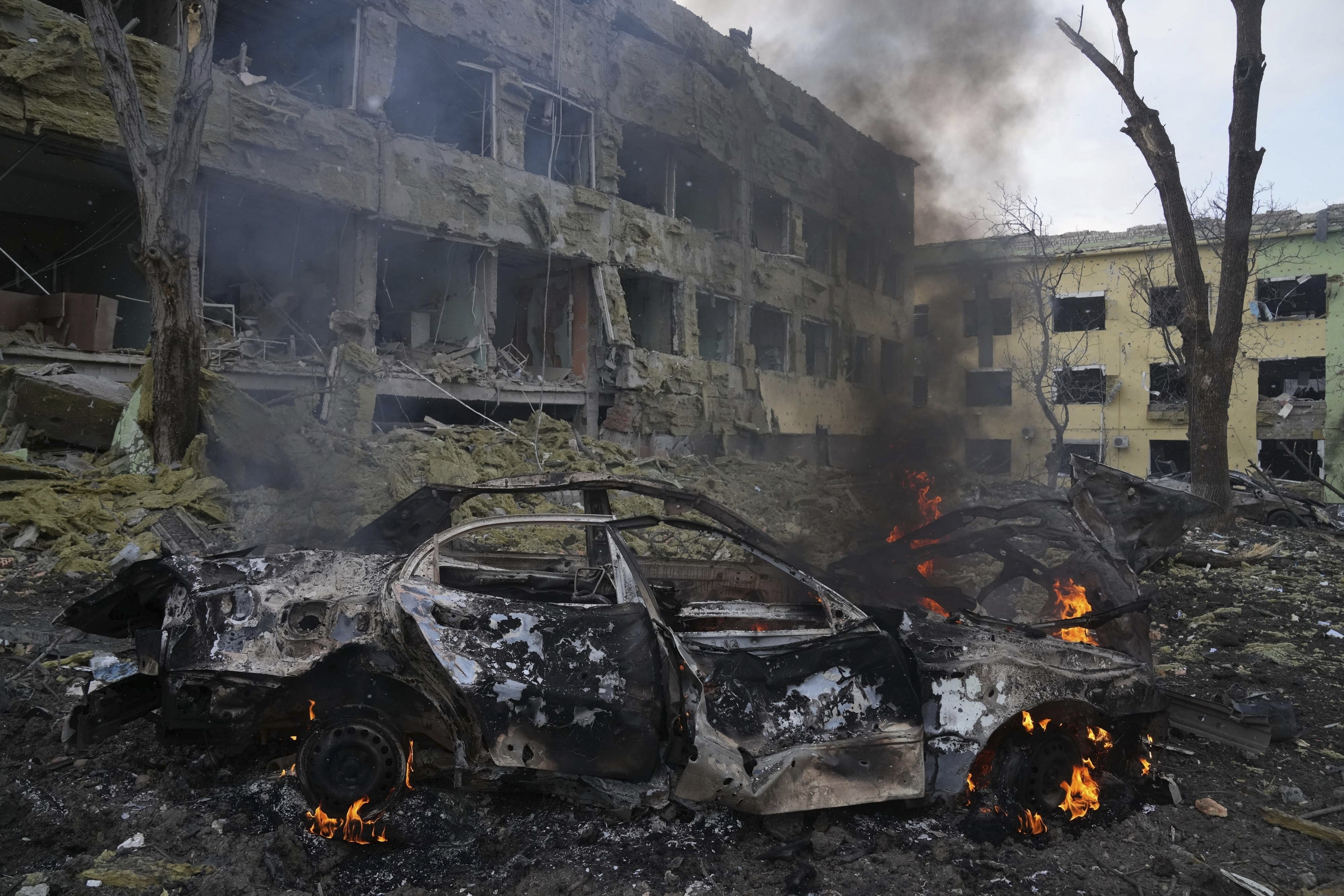
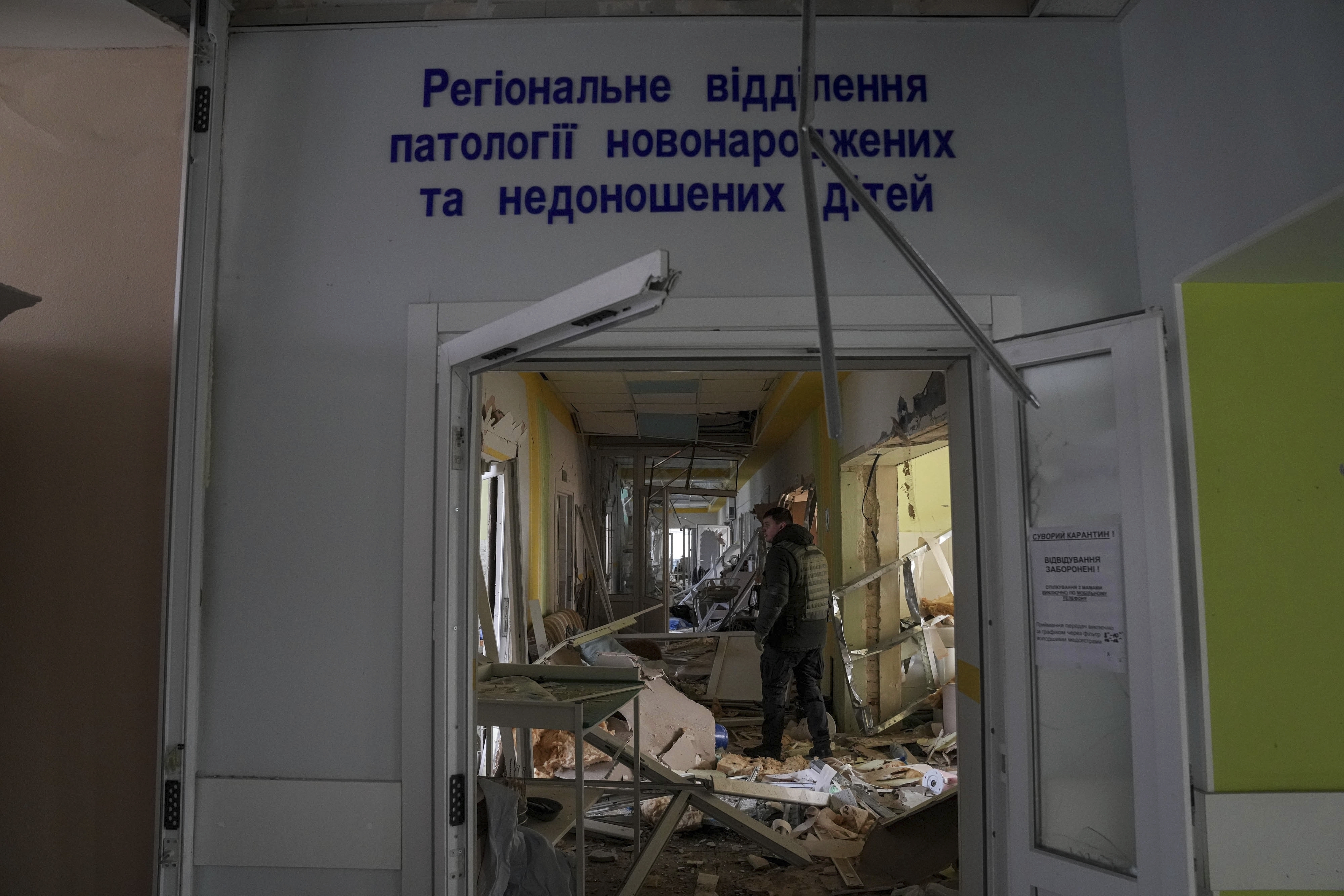
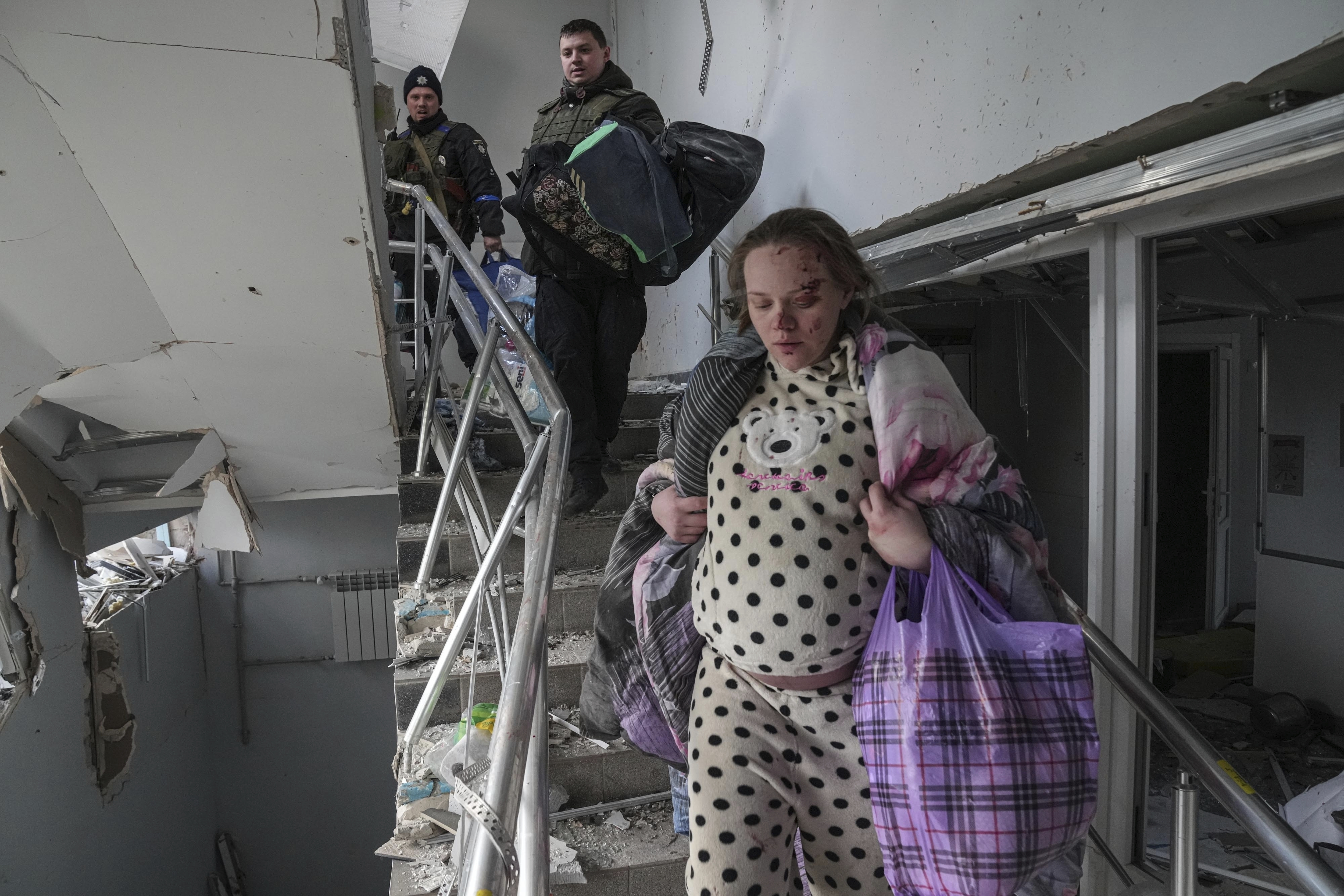
A pregnant woman and her baby have died after Russia bombed the maternity hospital where she was meant to give birth, The Associated Press has learned.

Images of the woman being rushed to an ambulance on a stretcher had circled the world, epitomising the horror of an attack on humanity's most innocent.

In video and photos shot Wednesday by AP journalists after the attack on the hospital, the woman was seen stroking her bloodied lower abdomen as rescuers rushed her through the rubble in the besieged city of Mariupol, her blanched face mirroring her shock at what had just happened.

READ MORE: Dozens killed as Russian forces strike targets in western Ukraine

It was among the most brutal moments so far in Russia's now 19-day-old war on Ukraine.

The woman was rushed to another hospital, yet closer to the frontline, where doctors laboured to keep her alive. Realising she was losing her baby, medics said, she cried out to them, "kill me now!"

Surgeon Timur Marin found the woman's pelvis crushed and hip detached. Medics delivered the baby via cesarean section, but it showed "no signs of life," the surgeon said.

Then, they focused on the mother.

READ MORE: Australia launches legal action against Russia over downing of MH17

"More than 30 minutes of resuscitation of the mother didn't produce results," Dr Marin said Saturday.

"Both died."

In the chaos after Wednesday's airstrike, medics didn't have time to get the woman's name before her husband and father came to take away her body.

At least someone came to retrieve her, they said — so she didn't end up in the mass graves being dug for many of Mariupol's growing number of dead.

Accused of war crimes, Russian officials claimed the maternity hospital had been taken over by Ukrainian extremists to use as a base, and that no patients or medics were left inside.

READ MORE: New Australian sanctions target Russian oligarchs

Russia's ambassador to the UN and the Russian Embassy in London called the images "fake news".

Associated Press journalists, who have been reporting from inside blockaded Mariupol since early in the war, documented the attack and saw the victims and damage firsthand.

They shot video and photos of several bloodstained, pregnant mothers fleeing the blown-out maternity ward, medics shouting, children crying.

The AP team then tracked down the victims on Friday and Saturday in the hospital where they had been transferred, on the outskirts of Mariupol.

In a city that's been without food supplies, water, power or heat for more than a week, electricity from emergency generators is reserved for operating rooms.

As survivors described their ordeal, explosions outside shook the walls. The shelling and shooting in the area is sporadic but relentless.

Emotions are running high, even as doctors and nurses concentrate on their work.

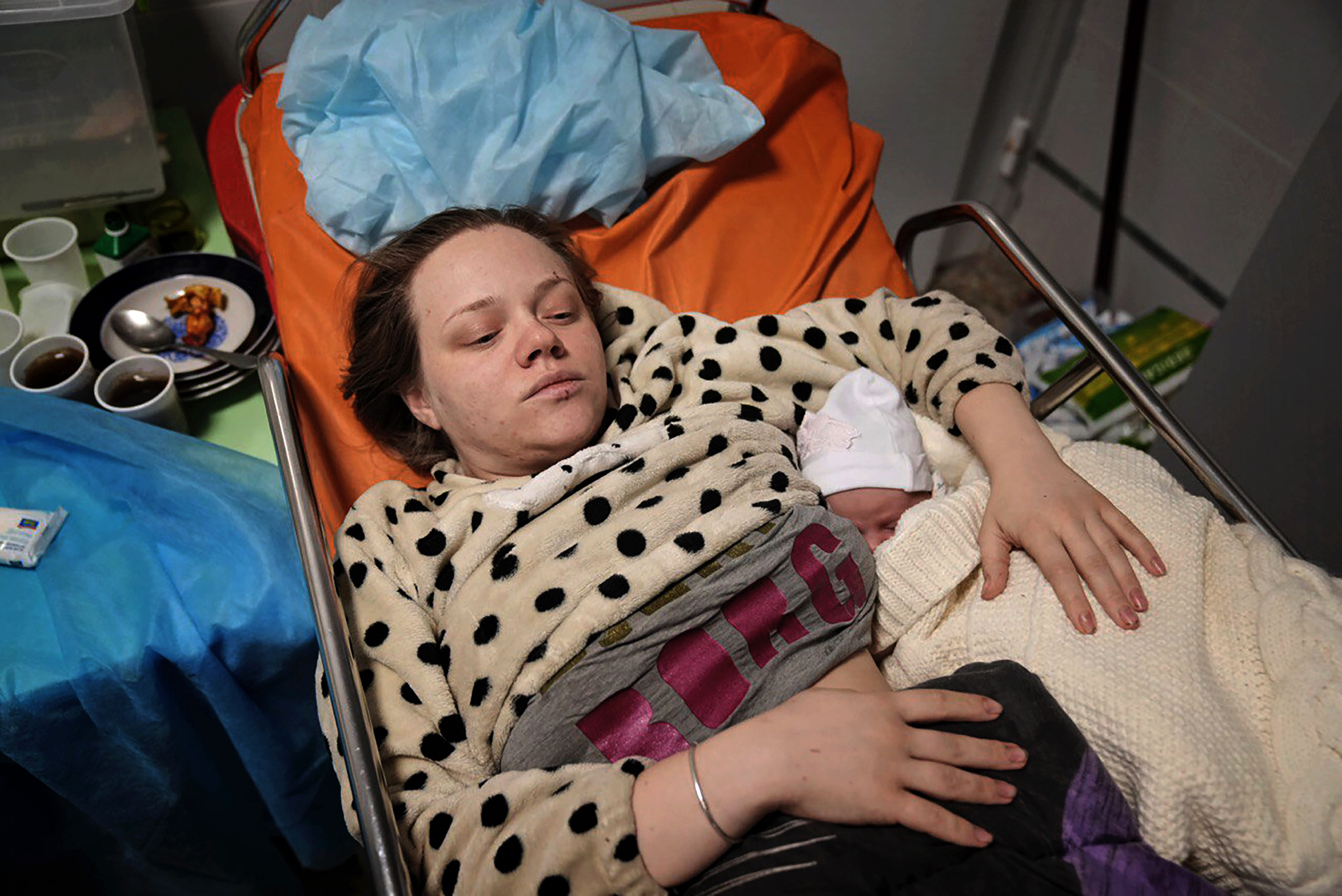
Blogger Mariana Vishegirskaya gave birth to a girl the day after the airstrike, and wrapped her arm around newborn Veronika as she recounted Wednesday's bombing.

After photos and video showed her navigating down debris-strewn stairs and clutching a blanket around her pregnant frame, Russian officials claimed she was an actor in a staged attack.

"It happened on March 9 in Hospital No.3 in Mariupol.

We were laying in wards when glasses, frames, windows and walls flew apart," Ms Vishegirskaya, still wearing the same polka-dot pyjamas as when she fled, told The AP.

"We don't know how it happened. We were in our wards and some had time to cover themselves, some didn't."

Her ordeal was one among many in Mariupol, which has become a symbol of resistance to Russian President Vladimir Putin's drive to crush democratic Ukraine and redraw the world map in his favour.

The failure to subordinate Mariupol has pushed Russian forces to broaden their offensive elsewhere in Ukraine.

The Azov Sea port city of 430,000, key to creating a land bridge from Russia to Russian-annexed Crimea, is slowly starving.

In the makeshift new maternity ward, each approaching childbirth brings new tension.

"All birthing mothers have lived through so much," said nurse Olga Vereshagina.

One of the distraught mothers lost some of her toes in the bombing.

Medics performed a C-section on her Friday, carefully pulling out her daughter and rubbing the newborn vigorously to stimulate signs of life.

After a few breathless seconds, the baby cried.

Cheers of joy resonated through the room. Newborn Alana cried, her mother cried, and medical workers wiped the tears from their eyes.

Qantas first class service resumes with special upgrade

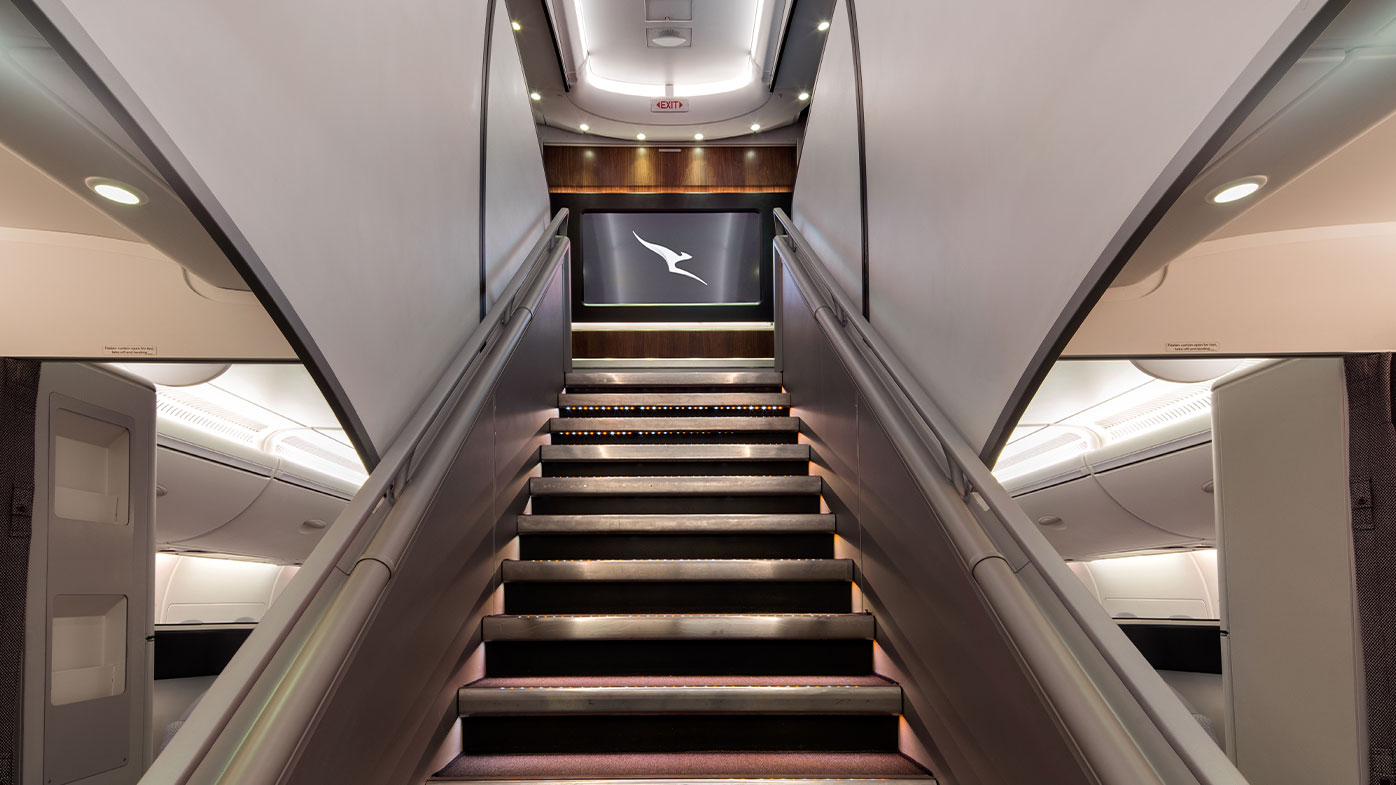
Qantas is resuming its A380 service for the first time in almost two years and it comes with a special upgrade.

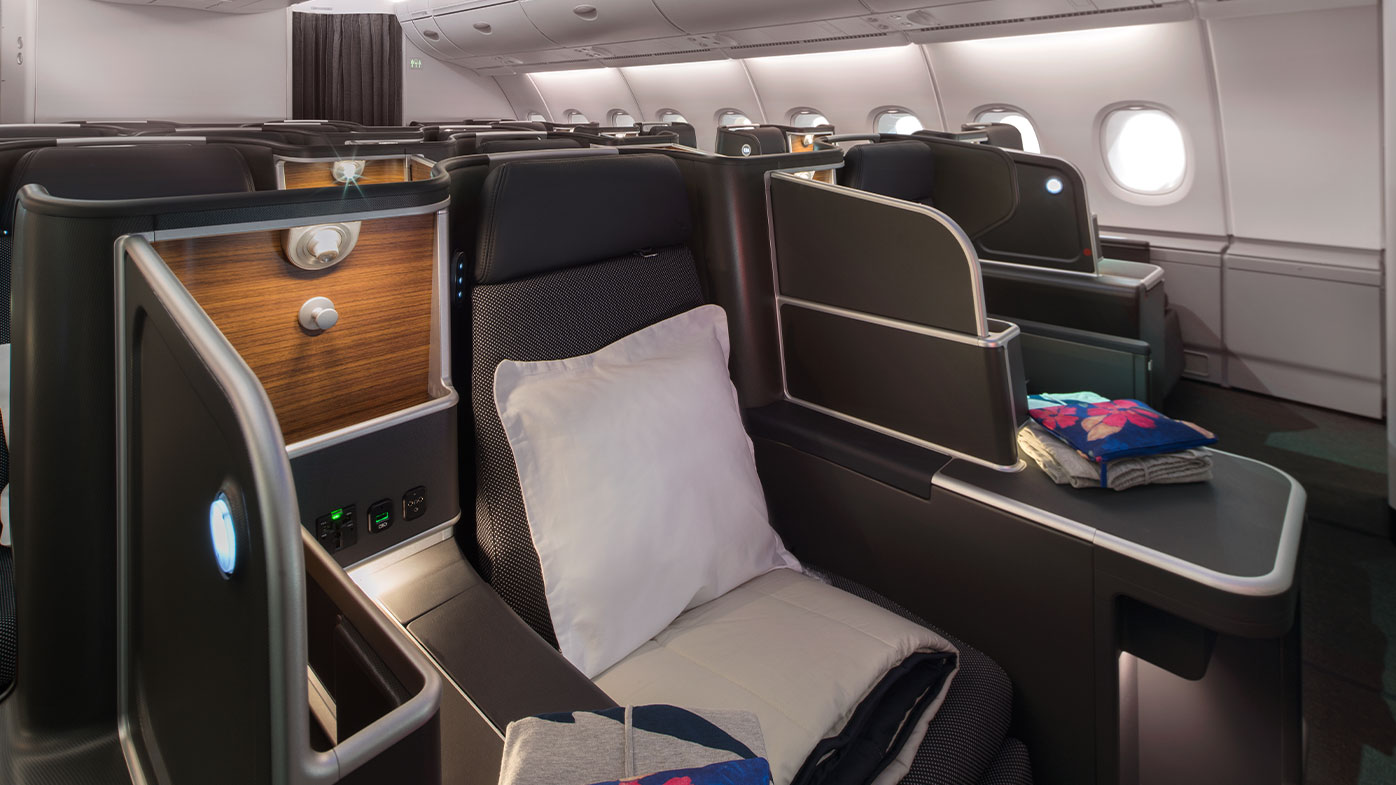
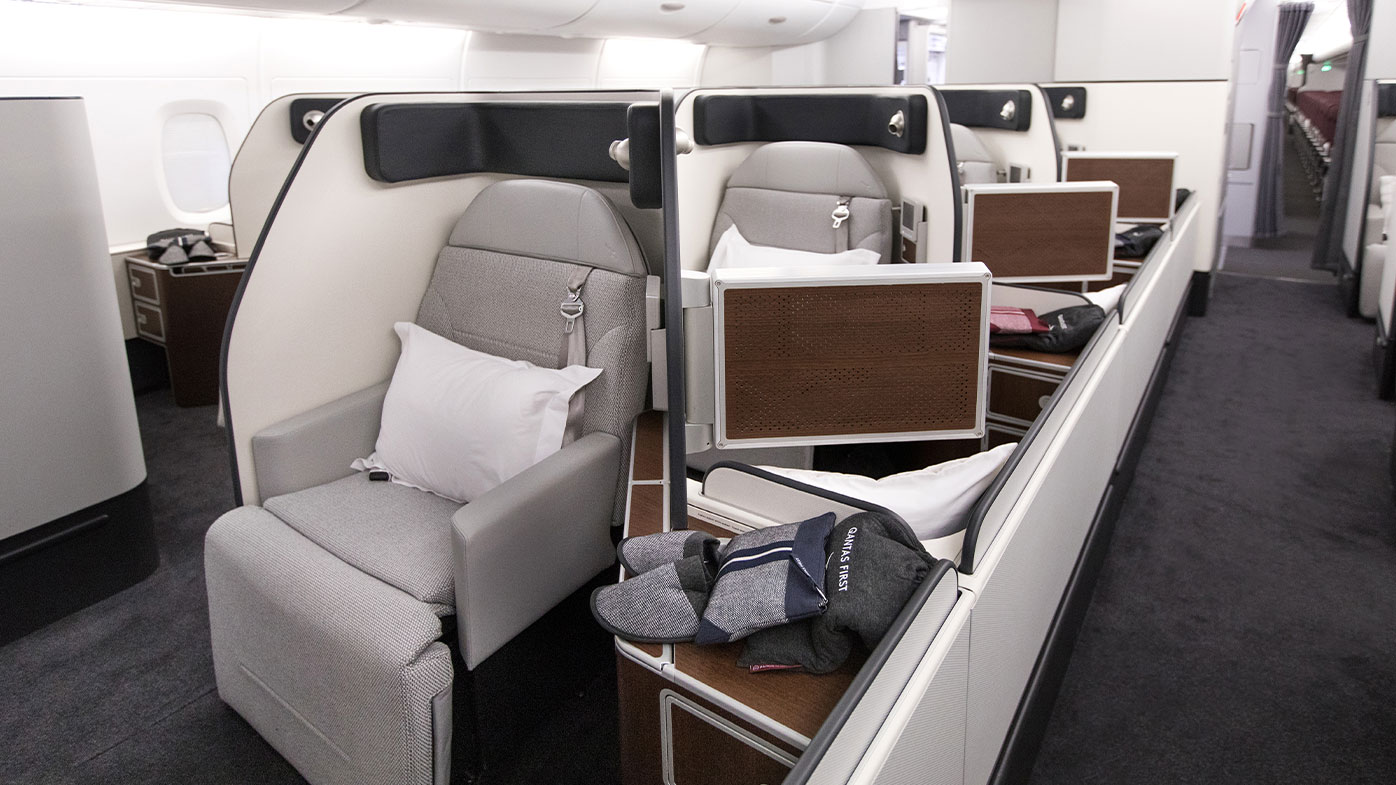
First class is also resuming and it's been revamped with a whole new style: 14 beautifully appointed seats in a secluded haven for the long haul.

"It's really a new first class experience with this refreshed on-board product," Qantas chief customer officer Stephanie Tully told 9News. 

READ MORE: Australia and Netherlands launch legal action against Russia over downing of MH17

qantas first class seats upgrade

"Completely new colour scheme, completely new bedding, you've got a brand new first class menu designed by Neil Perry."

The airline's A380 fleet was mothballed as COVID-19 hit – parked in California's dry desert climate.

Each was checked and maintained daily by a team of engineers to ensure they were in top condition. 

"Many of our aircraft were being redone just as the pandemic started, so most of these seats have not been flown on before because customers never got the chance," Ms Tully said.

"We're so excited to have them back in service to Los Angeles."

Four of the aircraft were flown back to Australia in the past month. 

READ MORE: Flights to Bali return after two-year absence

qantas upgrades first class lounge

9News spoke to first officer David Theiss as he and a small crew prepared to fly an A380 back to Sydney.

Like many of his colleagues, when he couldn't fly he had to find other work.

In his case, driving harvesting machinery in rural Australia. 

"Everyone's managed to keep themselves in some form of employment. To come back is such a relief and a joy for us," he said.

"It's actually quite emotional."

READ MORE: Airfare prices to jump if cost of oil soars: Qantas CEO

As well as the refreshed cabin, first and business class passengers can enjoy a new bar area.

Business class has also been jazzed up with new seats and extra comfort.

The first class lounge has also been reinstated with a new menu and return of its spa, where the pampering can resume with massages and facials.

David Flynn, from executivetraveller.com, says this is an important step as Qantas tries to return to normal operating conditions.

Qantas first class upgrade

"The A380 carries hundreds more passengers, which means it can get more Australians heading overseas and more tourists coming down under," he said.

"Plus, of course, it's a flagship for the airline."

And the response from travellers has been positive.

"Qantas says there have been very strong bookings even in the first class cabin," he said.

"And a lot of frequent flyers have been using their points to make those bookings because they've been earning points for the past two years with nowhere to spend them."

First class tickets to Los Angeles can be booked from March 27.

Until then, a select group of business passengers will be upgraded – enjoying the nicer, roomier seats but not the menu.

The A380 service between Sydney and London via Singapore will also resume in June with its new first class cabin.

Also resuming after almost two years on hold are Jetstar's flights from Melbourne to Bali.

More than 300 passengers took off this morning on the first flight aboard a Boeing 787.

The flights from Melbourne will initially depart only three times a week, with plans to increase that number as demand grows.

Prior to the pandemic, this was Jetstar's most popular route.

Flights to Bali from Sydney and Perth resume early next month, followed in May by Brisbane, Adelaide, Cairns and Darwin.