Tag Archives: oceania

How did cockroaches survive the asteroid that killed the dinosaurs?

By Brian Lovett, West Virginia University

When the rock now known as the Chicxulub impactor plummeted from outer space and slammed into the Earth 66 million years ago, cockroaches were there.

The impact caused a massive earthquake, and scientists think it also triggered volcanic eruptions thousands of miles from the impact site. Three-quarters of plants and animals on Earth died, including all dinosaurs, except for some species that were ancestors of today’s birds.

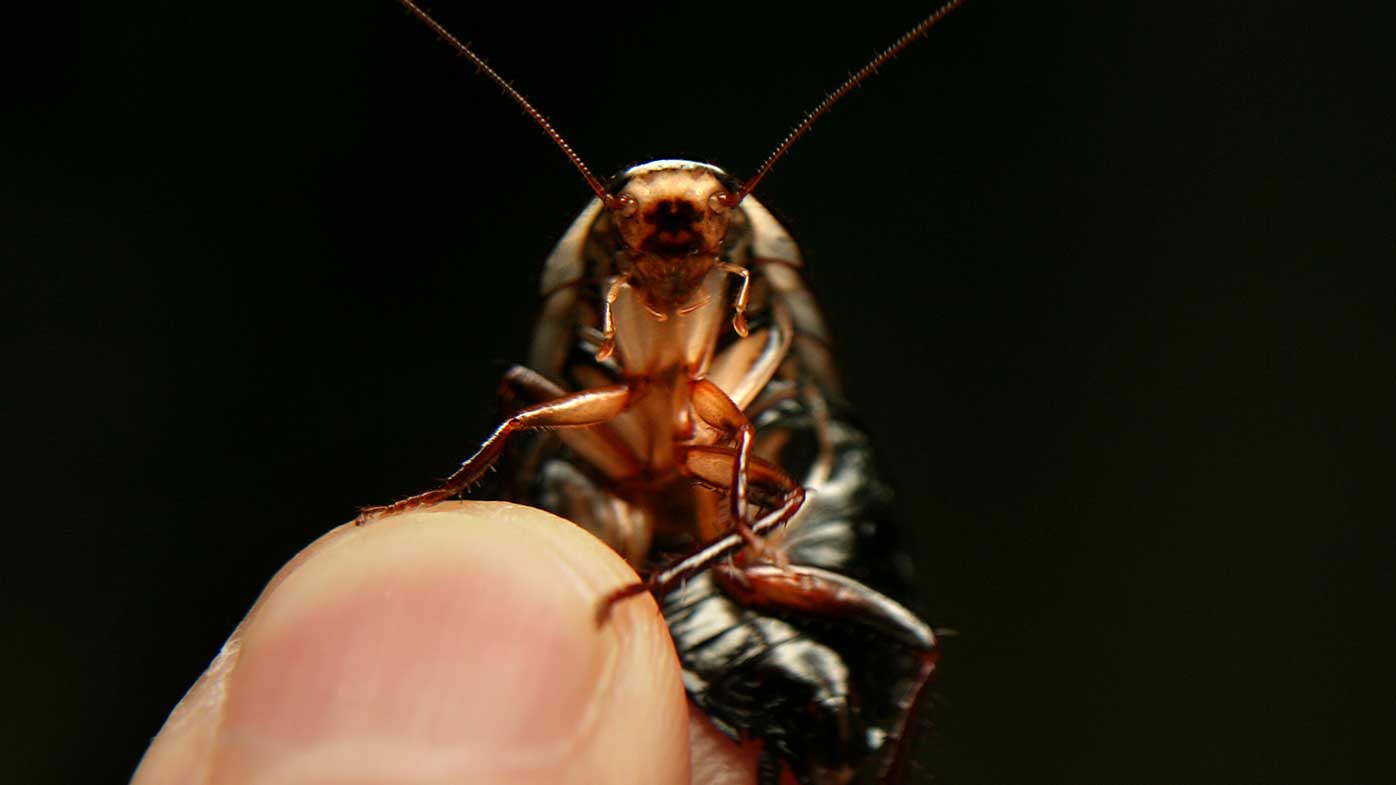
How could roaches a couple of inches long survive when so many powerful animals went extinct? It turns out that they were nicely equipped to live through a meteoric catastrophe.

If you’ve ever seen a cockroach, you’ve probably noticed that their bodies are very flat. This is not an accident. Flatter insects can squeeze themselves into tighter places. This enables them to hide practically anywhere – and it may have helped them survive the Chicxulub impact.

READ MORE: Sex traps can lure thousands of giant hornets to their death

Cockroaches are uniquely qualified to survive a meteor strike.

When the meteor struck, temperatures on Earth’s surface skyrocketed. Many animals had nowhere to flee, but roaches could take shelter in tiny soil crevices, which provide excellent protection from heat.

The meteor’s impact triggered a cascade of effects. It kicked up so much dust that the sky darkened. As the sun dimmed, temperatures plunged and conditions became wintry around the globe. With little sunlight, surviving plants struggled to grow, and many other organisms that relied on those plants went hungry.

Not cockroaches, though. Unlike some insects that prefer to eat one specific plant, cockroaches are omnivorous scavengers. This means they will eat most foods that come from animals or plants as well as cardboard, some kinds of clothing and even poop. Having appetites that aren’t picky has allowed cockroaches to survive lean times since the Chicxulub extinction and other natural disasters.

Another helpful trait is that cockroaches lay their eggs in little protective cases. These egg cartons look like dried beans and are called oothecae, which means “egg cases.” Like phone cases, oothecae are hard and protect their contents from physical damage and other threats, such as flooding and drought. Some cockroaches may have waited out part of the Chicxulub catastrophe from the comfort of their oothecae.

Modern cockroaches are little survivors that can live just about anywhere on land, from the heat of the tropics to some of the coldest parts of the globe. Scientists estimate that there over 4000 cockroach species.

READ MORE: Cockroach removed from New Zealand man's ear after three days

The roaches are going to take over.

A handful of these species like to live with humans and quickly become pests. Once cockroaches become established in a building, it’s hard to rid every little crack of these insects and their oothecae. When large numbers of roaches are present in unsanitary places, they can spread diseases. The biggest threat they pose to human health is from allergens they produce that can trigger asthma attacks and allergic reactions in some people.

Cockroach pests are hard to manage because they can resist many chemical insecticides and because they have the same abilities that helped their ancestors outlive many dinosaurs. Still, cockroaches are much more than a pest to control. Researchers study cockroaches to understand how they move and how their bodies are designed to get ideas for building better robots.

As a scientist, I see all insects as beautiful, six-legged inspirations. Cockroaches have already overcome odds that were too great for dinosaurs. If another meteorite hit the Earth, I’d be more worried for humans than for cockroaches.

READ MORE: Fossil of a giant millipede reveals 'the biggest bug that ever lived'

This article is republished from The Conversation under a Creative Commons license. Read the original article here.

He kidnapped 27 people from a bus and helped bury them alive

After Fred Woods and two accomplices kidnapped dozens of California children from a school bus in 1976 and trapped them underground, they were sentenced to up to 27 life sentences without the possibility of parole.

Fast forward 46 years, and Woods is now on the brink of getting paroled.

Depending on whom you ask, that epilogue to the largest mass kidnapping in US history is either long overdue for a man full of remorse or a source of renewed trauma for victims who were buried alive.

A never-ending nightmare

It doesn't take much to trigger panic attacks for Lynda Carrejo Labendeira: the sight of a white moving van; construction lights; a small room that reminds her of being trapped.

As a fourth-grader at Dairyland Elementary School in Chowchilla, she, 25 other children and their driver were snatched from their school bus by three armed men in a plot to get US $5 million in ransom.

Chowchilla bus kidnapper, Frederick Woods, approved for parole, says department of corrections.

The kids, ages 5 to 14, and their bus driver were driven about 100 miles to a remote quarry near Livermore, California. With only some construction lights illuminating the dark quarry, the kidnappers ordered their 27 victims into what looked like a massive grave – a white moving van buried two metres underground.

One by one, the children climbed down a ladder and into the van, which was covered under several feet of dirt. After the last student entered, the kidnappers removed the ladder.

For 16 hours, the children waited for rescue or death. The younger ones cried helplessly. The older ones tried to comfort them. All of them buried in a "coffin," Labendeira said, with the stench of vomit and filth intensified by the searing California heat.

Labendeira remembers every detail of the horror. In the 46 years since, she's tried to avoid a normal full night of sleep.

The kidnapping victims had to use a box with a hole as a toilet.

"I would not allow myself to go into a deeper sleep because I didn't want to have that dream," said Labendeira, now in her mid-50s.

"So much of my life, people wonder how I ever sleep – if I ever sleep. Well, I've always tried not to go into the deeper REM sleep. Sure, there are times that I have. And I've always tried to wake myself whenever I start a bad dream."

The real-life nightmare ended thanks to the ingenuity of the bus driver, Edward Ray, and some of the students who planned a daring escape while the kidnappers were outside.

The hostages stacked mattresses that were in the moving truck high enough to help them reach a metal plate in the roof. But the plate was covered with a massive truck battery and a pile of dirt.

Ray and several of the older boys struggled to open the top.

"Edward's digging up and out, Mike's digging, Jeff's digging, Robert's digging," Labendeira recalled.

Eventually, they cleared enough space to escape. The children – some climbing up on each other's shoulders – fled while the kidnappers slept. The suspects were all taken into custody within days of the kidnapping.

For the rest of her childhood, Labendeira took a bit of solace thinking the three kidnappers – brothers Richard and James Schoenfeld and Fred Woods – would likely spend the rest of their lives behind bars.

Each was given 27 sentences of seven years to life in prison — without the possibility of parole.

But in 1980, an appeals panel overturned the original sentences, saying the men had caused no serious bodily injury and therefore should have the chance for parole.

Richard Schoenfeld was paroled in 2012. His brother James was released in 2015.

And on March 25, two parole commissioners recommended parole for Woods. The panel's decision is still subject to review by the Board of Parole Hearings' chief counsel, who could refer the case for review and a vote by the full board. A hearing panel member could also refer the case to the full board.

Chowchilla mass kidnapping victims dug their way out while the kidnappers slept.

If neither happens within four months, the decision becomes final, and the governor gets 30 days to review it. In murder cases, the governor can reverse or modify a parole grant. But in cases like the Chowchilla kidnappings, he could only refer a parole grant back to the full board for review.

When Labendeira learned Woods could soon walk free, "I was in a state of shock," she said. "I was not expecting that."

Labendeira said she has attended every parole hearing since Richard Schoenfeld was released – including hearings for James Schoenfeld and Fred Woods.

At Woods' most recent hearing, the 70-year-old said he was deeply remorseful for the terror and trauma he inflicted as a 24-year-old.

But those words don't absolve him from the horror that victims still grapple with decades later, Labendeira said.

"It didn't change the act. It didn't change the outcome. It didn't change the years before," she said. "It didn't change all the memories of what happened. The memories never go away."

'He's not a monster'

Frederick Newhall Woods has been behind bars since he was 24. Now 70, he's missed most life opportunities and lost both of his parents while he was imprisoned.

No one denies his crime was heinous. But "he's not a monster," Woods' attorney Dominique Banos said.

"He is not the same person. He doesn't think the same way that he did when he was 24," she said.

Over the past several decades, Woods has reflected on his crime, worked as a prisoner in pest control and taken classes, including courses on empathy and victim impact, his attorney said.

"He's always felt remorse for what he did," Banos said.

There are a few possible reasons Woods has stayed in prison years longer than his accomplices.

Woods has been perceived as the ringleader of the kidnapping scheme, said Banos, who took on his case in 2017. He's also had some nonviolent infractions while in prison, such as having unauthorized cell phones.

But Woods is no longer a threat to society, his attorney said, and the kidnapping victims need not fear for their safety.

"Rick Schoenfeld was the first to be released (in 2012), and he's led a very quiet life," Banos said. "He hasn't committed any harm to anyone. James Schoenfeld was released in 2015, and it's the same thing."

As for her own client, "there's really not much more you can do to show he's a changed person," Banos said.

"He's spent 46 years in prison … and has not hurt a fly," she said. "It doesn't make any sense for him to be in there any longer."

Labendeira disagrees. She's been serving a life sentence of traumatic memories since she was 10 years old and believes kidnappers should complete life sentences.

"If your child was kidnapped and buried alive, how long is long enough?" she said. "How long is long enough for 26 children on a school bus to be kidnapped and buried alive?"

Two homes on fire in Brisbane's south

Fire crews are tackling a large house fire in Brisbane's South.

Smoke from the fire in Gillan Street, Norman Park can be seen across the city.

A Queensland Fire and Emergency Services spokesperson said another house was also on fire.

READ MORE: Queensland family finds venomous tree snake in radio

Fire crews are tackling a large house fire in Brisbane's South.

"Crews are currently working to bring the fire under control," it said.

"There's one house fully involved and there's a second that's partially involved,"

Fire crews are tackling a large house fire in Brisbane's South.

Queensland Ambulance said they treated a person with minor burns on their hand at 2.10pm.

They didn't need to be taken to hospital.

Fire authorities warned locals to close windows and doors and told drivers to avoid the area.

'These are quite malicious and bitter slurs'

Prime Minister Scott Morrison has rejected claims he was involved in 'racial vilification' against an opponent while seeking preselection in 2007.

Mr Morrison won pre-selection for the Federal seat of Cook in southern Sydney over his rival Michael Towke.

Allegations have been reported in the Sydney Morning Herald that the Prime Minister made negative remarks to party members not to support Mr Towke because he was from a Lebanese background.

https://twitter.com/ElizaEdNews/status/1510435451689377792

When asked if he had ever made remarks about Mr Towke's background, Mr Morrison emphatically denied the allegation.

"It's just simply untrue," he said.

"These are quite malicious and bitter slurs which are deeply offensive and I reject them absolutely.

It comes at an interesting time that these vicious personal attacks come on the eve of an election. I'll let people work out their their own findings on what's motivating these voices

"Bitterness can often produce all sorts of slings and arrows"

Flash flooding forecast for parts of eastern Victoria

A flood watch has been issued for East Gippsland in Victoria as residents in the state's east are being warned to brace themselves for severe rain and potential flash flooding.

The Bureau of Meteorology (BoM) is warning moderate to major flooding is likely across the East Gippsland region from tonight through to Monday.

Watch and Act warnings have also been issued for the Mitchell, Tambo and Nicholson Rivers in the state.

READ MORE: NSW Ambulance service overwhelmed four times in the past fortnight

https://twitter.com/BOM_au/status/1510103628241162241?ref_src=twsrc%5Etfw

Residents living near and around these rivers are being urged Victorian emergency services to move to higher ground to avoid being stuck in potential floodwaters.

Minor flooding is also likely for parts of West Gippsland, set to impact the Avon, Macalister, Thomson and South Gippsland Rivers.

Parts of East Gippsland could also experience rain totals of up to 150mm, with residents being urged to prepare and stay informed about potential risks.

A low-pressure system in the Tasman Sea is forecast to move south-westerly, and deepen and slow down as it approaches waters off the East Gippsland coast, according to the Bureau of Meteorology (BoM).

READ MORE: Thousands of NSW health workers to strike

https://twitter.com/vicemergency/status/1510448349673308160?ref_src=twsrc%5Etfw

Subsequently, the BoM is forecasting heavy rainfall in the area that may result in dangerous flash flooding.

A major flood warning has been issued for the Genoa and Cann Rivers.

Damaging winds are also forecast with peak gusts of 100km/h being predicted.

While most of New South Wales is set to experience sunnier weather today, parts of the state's south-east will also be impacted by the low-pressure system hitting eastern Victoria.

Heavy rainfall is forecast for the town of Eden on the south coast, with at least 100mm expected to fall.

Warnings of damaging surf has also been issued by the BoM for NSW's Illawarra and South Coast.

And people in the affected areas are being advised not to swim, with waves expected to exceed five metres in height.

Putin is making the same mistakes that doomed Hitler: Analysis

Analysis by John Blake: Russian President Vladimir Putin often evokes the Soviet Union's epic defeat of Nazi Germany during World War II to justify his country's invasion of Ukraine.

Yet Putin is committing some of the same blunders that doomed Germany's 1941 invasion of the USSR, while using "Hitler-like tricks and tactics" to justify his brutality, military historians and scholars say.

This is the savage irony behind Putin's decision to invade Ukraine that's become clear as the war enters its second month: the Russian leader, who portrays himself as a student of history, is floundering because he hasn't paid enough attention to the lessons of the "Great Patriotic War" he reveres.

READ MORE: Ukrainian forces retake areas near Kyiv amid fear of traps

Military experts and scholars say Russian President Vladimir Putin is committing some of the same blunders that doomed Germany's 1941 invasion of the USSR.

"I have been trying to make sense of this for a month, because as terrible as Putin is, you could never say he was illogical," says Peter T. DeSimone, an associate professor of Russian and Eastern European history at Utica University in New York.

"All of this is illogical, and that's the scary thing," he says.

"This is not normal for what he's done in the past. This is something that makes no sense on many levels, and not just in regard to World War II."

There are, of course, significant differences between the current war in Ukraine and the clash between Nazi Germany and the Soviet Union.

The Nazi war machine was formidable, agile, and well-trained. The Wehrmacht killed and wounded 150,000 Red Army soldiers in the first week of their invasion in June of 1941. They seized vast swaths of territory, and in one "mega-encirclement" trapped four Soviet armies, capturing 700,000 prisoners of war.

And there is no moral equivalence between Joseph Stalin, the Soviet dictator, and Ukrainian President Volodymyr Zelenskyy.

Stalin was a sociopath (he once reached into a cage and killed a family pet parrot because its chirping annoyed him) who starved millions of Ukrainians to death and routinely murdered political rivals.

Zelenskyy is a democratically elected leader who has rallied Ukrainians and inspired the world with his conspicuous displays of courage and eloquent defence of democracy.

But look closer at Putin's struggles in Ukraine and ironic parallels emerge. Military historians say Putin is following Hitler's ill-fated playbook in at least three areas.

Putin forgot a basic rule of warfare

The tank has long struck dread in enemy troops. When the British introduced the first lumbering tanks during World War I, soldiers fled in terror.

Ukraine, though, has become, according to one recent headline, a "graveyard for Russian tanks." Ukrainian soldiers are using everything from drones to Javelins to destroy tank convoys.

But Russian tanks have been stymied for another surprising reason: lack of fuel. The lack of fuel is part of a bigger problem. The once-vaunted Russian army has become bogged down in Ukraine not just because of fierce resistance but by something more prosaic: logistics.

READ MORE: Ex-ICC prosecutor urges global arrest warrant for Putin

A grave stone showing the portrait of Russian President Vladimir Putin changed to look like Adolf Hitler is seen against a tyre barricade at a Ukrainian army checkpoint.

Putin has struggled to feed, fuel and equip his army. There have been reports of Russian troops looting banks and supermarkets, tanks running out of fuel, and soldiers using substandard forms of military communication – like smartphones – that have contributed to what Ukraine says are the deaths of at least seven Russian generals.

"The evidence suggests that Putin thought he could win a quick victory with the deployment of special forces and airborne units," says Ian Ona Johnson, a professor of military history at the University of Notre Dame.

"So when they were forced to go to a much more traditional war involving essentially most of the Russian army along the Ukrainian border, they weren't prepared for some of the logistics."

Poor logistical planning also played a critical role in Nazi Germany's defeat on the Eastern front, where Hitler expected a quick victory.

The German army failed to set up sufficient supply lines for the vast distances and harsh terrain of the Soviet Union. German tanks ran out of fuel. The consequences of this poor logistical planning would prove fatal when the Russian winter hit.

Hitler didn't equip many of his soldiers with winter clothing because he thought the Soviet army was so inferior. German soldiers were forced to fight in freezing temperatures while still clad in their summer uniforms, with some using newspaper and straw to shield themselves against the cold.

"This proved devastating when a particularly brutal Russian winter set in," Prof. Johnson said.

"Something like 250,000 German soldiers eventually suffered frostbite injuries or died from the cold that winter because of logistical issues."

The German army reached its lowest point at the battle of Stalingrad, considered the turning point of World War II. There ill-equipped German soldiers were forced to eat horses, dogs and rats to survive the winter.

READ MORE: Retreating Russian troops leaving mines behind: Zelenskyy

Ukrainian soldiers patrol next to a destroyed Russian tank in the village of Lukianivka near Kyiv.

The scale of the fighting in Ukraine today doesn't approach the Eastern Front, but the lesson from both wars can be summed up in a military maxim attributed to Gen. Omar Bradley, an American general during World War II:

"Amateurs talk strategy. Professionals talk logistics."

He alienated potential allies

In a war already full of heartbreaking images, one photo may be the worst.

It is a haunting photo of a pregnant Ukrainian woman in torn clothes being carried on a stretcher. The woman is conscious, her hand cradled protectively over her bare womb, which is smeared with blood.

Both she and her baby would later die from her injuries. Ukrainian authorities say she was in a maternity hospital in the besieged city of Mariupol when it was shelled by Russian artillery.

The image underscored what some commentators now say is Putin's standard approach to war: He is indiscriminately killing civilians to break the will of the Ukrainian people.

READ MORE: Former US women's soccer goalkeeper Hope Solo arrested

An image captured of Soviet soldiers fighting in the streets of Stalingrad in October 1942.

Russia's army has been accused of bombing hospitals, shopping malls, apartment buildings and a theatre with the word "children" written in Russian on the exterior of the building. Russia also been accused of trying to starve a Ukrainian city into submission by blocking humanitarian relief.

The Russian army's brutality, though, is having the opposite effect, Maria Varenikova wrote from Lviv, Ukraine, in a recent article for the New York Times.

"If there is one overriding emotion gripping Ukraine right now, it is hate," Ms Varenikova said.

"It is a deep, seething bitterness for President Vladimir V. Putin, his military, and his government."

Brutality can backfire in war.

Putin has potential allies in Ukraine. Russia and Ukraine are two Slavic nations that share religious and cultural ties. Many Ukrainians have relatives in Russia and speak the language. And there has historically been more allegiance to Russia in the eastern part of the country.

But Putin's indiscriminate brutality against civilians is uniting Ukrainians in a way they've never been brought together before. One commentator called hate a "hidden treasure" in war because it can sustain resistance for generations.

Hitler's indiscriminate brutality against Soviet civilians also played a crucial factor in his defeat.

Hitler had many potential allies in the Soviet Union. Many Soviets despised and feared Stalin, who routinely murdered political opponents, executed military leaders and persecuted Soviet citizens. He murdered about four million Ukrainians by starving them during one infamous period known as the Holodomor.

That's why some Soviets initially welcomed Hitler as a liberator, and gave some German troops Christmas presents.

But Hitler's brutal treatment of civilians quickly stiffened Soviet resistance. German troops looted and starved Russian cities into submission. They rounded up Soviet Jews and other minorities, shooting them or poisoning them in mobile gassing vans.

Nazi propaganda taught Germans that Soviets were generically inferior "Mongolized" Slavs who deserved death or enslavement.

READ MORE: Uhlmann interviews Albanese ahead of upcoming election

Smoke rises from a destroyed Russian tank on the side of a road in the Lugansk region of Ukraine.

"The Nazis were not an occupying force; they were an extermination force from the start," says Mr DeSimone, the historian from Utica University.

Stalin was so hated that roughly a million Soviets served in the German army, says Johnson, the Notre Dame historian. Hitler's brutality destroyed any chance he had of picking off Soviet sympathisers and weakening Soviet resistance, Johnson says.

"Instead of taking advantage of large numbers of people who might been sympathetic or at least think the Germans were better than the Soviets," he says, "Hitler rapidly alienated all those groups."

He's using Hitler-like language to justify war

Last summer, Putin published a lengthy essay entitled "On the Historical Unity of Russians and Ukrainians" that sought to explain that there was an artificial division between the two countries and that "true sovereignty of Ukraine is possible only in partnership with Russia."

The language Putin used caused some historians to shudder.

They said he echoed some of the same rhetoric Hitler used in "Mein Kampf," the dictator's autobiography and political manifesto. Hitler's book brimmed with distorted history about Germany's lost greatness, global conspiracies that undercut Germany's power, and justifications for conquest of another group of people.

"Like the Führer, the president of Russia bemoans the tragedy that has befallen his homeland, an erstwhile empire, and he too wants to turn back the clock," wrote Avi Garfinkel, a reporter for Haaretz, an Israeli newspaper, in an article entitled, "How Putin's Ukraine Agenda Evokes Hitler's Mein Kampf."

This may be one of the most disturbing links between Putin and Hitler. Some Putin critics say he is using Nazi language and propaganda techniques to justify the invasion of Ukraine.

They compared the "Z" inscribed on Russian tanks to a symbol used by Nazis in concentration camps. Others compared a recent massive war rally Putin led in a Moscow stadium to scenes of a Hitler speech in an infamous Nazi propaganda film called "Triumph of the Will."

Some of the strongest reaction to Putin's rhetoric stems from his claim that the Russian army is striving for the "de-Nazification" of Ukraine and seeks to protect people who have been "abused by the genocide of the Kyiv regime."

Timothy Snyder, a leading authority on Central European history and the Holocaust, says Putin's claim about "de-Nazification" is "grotesque" because he's trying to justify invading a democratic country – led by a Jewish president who lost relatives in the Holocaust – by claiming he's there to fight Nazis.

Mr Snyder calls Putin's justification a variation of Hitler's Big Lie – a Nazi propaganda technique that insists that if a political leader repeats a colossal untruth enough, people will eventually believe it.

READ MORE: Flash flooding forecast for parts of Victoria

Russian President Vladimir Putin often evokes the Soviet Union's epic defeat of Nazi Germany during World War II to justify his country's invasion of Ukraine, according to historians.

"Adolf Hitler had some public relations advice: Tell a lie so big that people will not believe that you would ever try to deceive them on such a grand scale," Mr Snyder wrote in an essay titled, "Putin's Hitler-like tricks and tactics in Ukraine."

By telling lies that Ukraine is run by Nazis bent on genocide, Putin is making a mockery of people who survived the Holocaust, says Mr Snyder.

Yet Putin's embrace of the Big Lie could also backfire. In a country where many citizens' ancestors perished in the Holocaust, invoking such a historical tragedy to justify war may only make some Ukrainians more determined to defend their homeland.

Perhaps that is why some Ukrainians no longer call Putin the Russian president. They call him "The New Hitler."

What could be the biggest irony of all?

We know the result of Hitler's invasion. The Soviet Union eventually destroyed the Nazi war machine. The Soviets, more than any country, were responsible for the defeat of Nazi Germany. Hitler committed suicide as Russian troops closed in on his Berlin bunker in 1945.

An estimated 26 million Soviets died during World War II. One was Putin's two-year-old brother, Viktor, who died after the German army lay siege to a Russian city, blocking the delivery of food and water.

We don't know how the war in Ukraine will end. Putin could still prevail. He could split the nation and seize the energy-rich resources of Eastern Ukraine and consolidate his hold on the country's coastline, some say.

READ MORE: Thousands of NSW health workers to strike

Demonstrators dance around a burning effigy of the Russian President Vladimir Putin during an anti-war action in Tbilisi, Georgia.

And we know that in war no one side has a monopoly on brutality. A far-right group with a history of neo-Nazi leanings has played a crucial role in Ukrainian resistance. Ukrainian soldiers have been accused of shooting Russian prisoners.

But if Ukraine somehow preserves its independence and its territory, something may happen that could lead to one of the biggest ironies of all.

A Ukrainian victory will be depicted as another Great Patriotic War. Ukrainians will commemorate their country's victory with parades and monuments.

And Putin will no longer be hailed as a shrewd and bold leader who restored Russia's greatness by manipulating chess pieces on a global stage.

He will be seen as a fool whose hubris and brutality drove him into making the same mistakes as the dictator he professed to despise.
Thousands of NSW health workers to strike

Thousands of health care workers in NSW are set to walk off the job on Thursday amid calls for a pay rise.

Workers across the ambulance, allied health, administration, catering, wards, cleaning and security areas will ask for a pay rise of more than 2.5 per cent.

Stop work meetings will take place across metro and regional hospitals, while paramedics will stop work from 7am to 8am to vote on further industrial action.

READ MORE: NSW Ambulance service overwhelmed four times in the past fortnight

NSW workers across the ambulance, allied health, admin, catering, wards, cleaning and security areas will ask for a pay rise of more than 2.5 per cent.

Thursday's planned strike comes on the back of a strike by NSW nurses on March 31, who took to the streets to demand better pay and working conditions.

The Health Services Union (HSU) claims despite trying to start legitimate bargaining for productivity-based pay rises, health and hospital workers have been left with no other option but to strike.

Data from the Australian Bureau of Statistics shows inflation running at 3.5 per cent, with economists predicting it will reach five per cent within months.

Under the NSW wages cap, public sector pay increased cannot legally go beyond 2.5 per cent.

HSU NSW Secretary Gerard Hayes says workers are fed up.

READ MORE: Uhlmann interviews Albanese

"Health and hospital workers are sick of mealy-mouthed rhetoric. We don't need another politician thanking us for being heroes of the pandemic, we need a pay rise," he said.