The first Kiwis returning from Australia without the need for managed isolation has arrived at Auckland Airport – to emotional scenes.As expected there was plenty of tears, hugs and high emotion as passengers arrived on the first…
Tag Archives: oceania
Covid 19 Omicron outbreak: Cabinet Minister David Parker tests positive for Covid 19
Cabinet Minister David Parker has become New Zealand’s first MP known to have tested positive for Covid-19. Parker posted to twitter saying he had tested positive on Sunday and had been isolating at home.He said he had not been…
SH3 South Taranaki near Mokoia blocked following crash
A section of State Highway 3 in the South Taranaki area is currently closed after a single-vehicle crash.The crash occurred on South Rd (SH3) between Mokoia Rd and Whakamara Rd.The road will be blocked for some time while emergency…
Two people stabbed inside Northern Beaches home
An elderly couple have been stabbed inside their Northern Beaches home in Sydney.
Police were called to an address Warriewood just after 11am today where they found a male and a female suffering multiple stab wounds.
Both victims were taken via ambulance to the Royal North Shore Hospital in a serious but stable condition.
LIVE UPDATES: Putin orders strategic nuclear forces to be placed on high alert
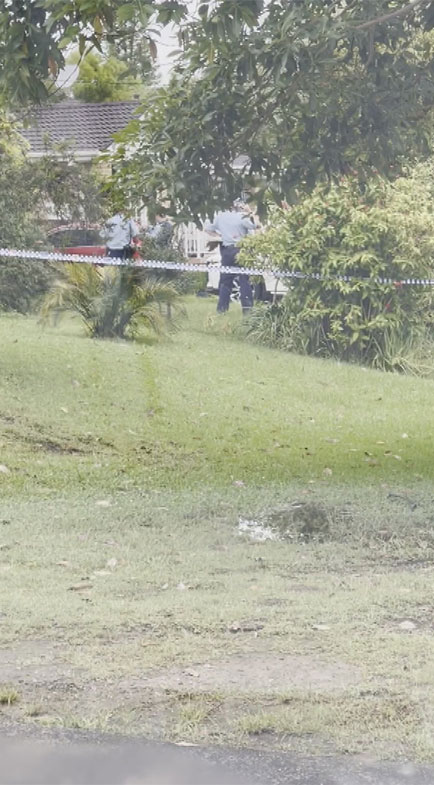
A young woman has been taken into police custody.
Investigations into the incident are ongoing.
Poverty, drugs and violence – Hawke's Bay mobsters' life stories revealed after shooting
One of two Mongrel Mob members jailed for last year’s shooting spree at a crowded Napier bar first went to prison at the age of 14. Temihana Henare, 24, had previously been abused in care and spent the rest of his teenage years…
Today helps rescue flood-stranded family stuck on roof
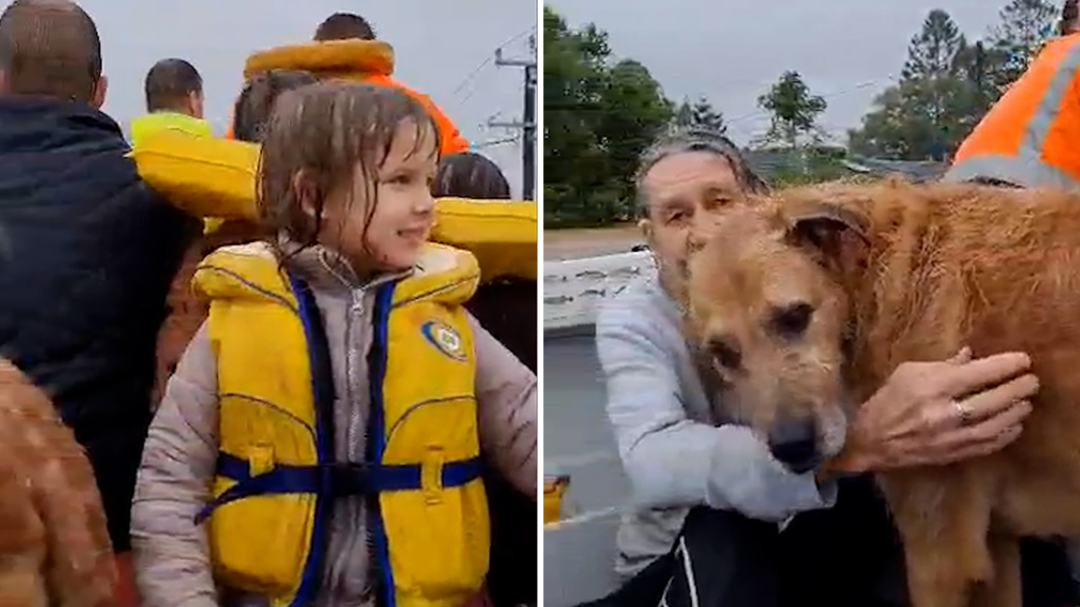
A family stranded on the roof of their home on the NSW Far North Coast overnight has been saved by emergency crews.
Lismore resident Kate Davis appeared on Today this morning, pleading for help for her family and her neighbours as floodwaters continued rising.
Saying she had received no correspondence on what the family should do, Ms Davis and her family tied a tent to their solar panels and hoped help would come before the water reached the roof.
LIVE UPDATES: Residents trapped as floodwaters rise
READ MORE: Seven deaths in Queensland floods as millions told to stay home
"We are not the only one, there is lots of us us," Ms Davis told Today as she showed footage of her neighbours also clinging to their roofs.
"We just grabbed shoes and whatever floatation devices we could find, popped the kids on the roof and called for help – we have been sitting waiting ever since."
Ms Davis said she felt helpless after hearing confronting screams from her neighbours.
"I don't know if you can hear it in the background, but the neighbours that are stuck in their roof next door they are just screaming for help," Ms Davis said earlier.
"It is heartbreaking to listen to them.
"They are just constantly banging on the tin roof and they are screaming for help
"I can't leave the girls to go and help, yeah, I don't know what to do."
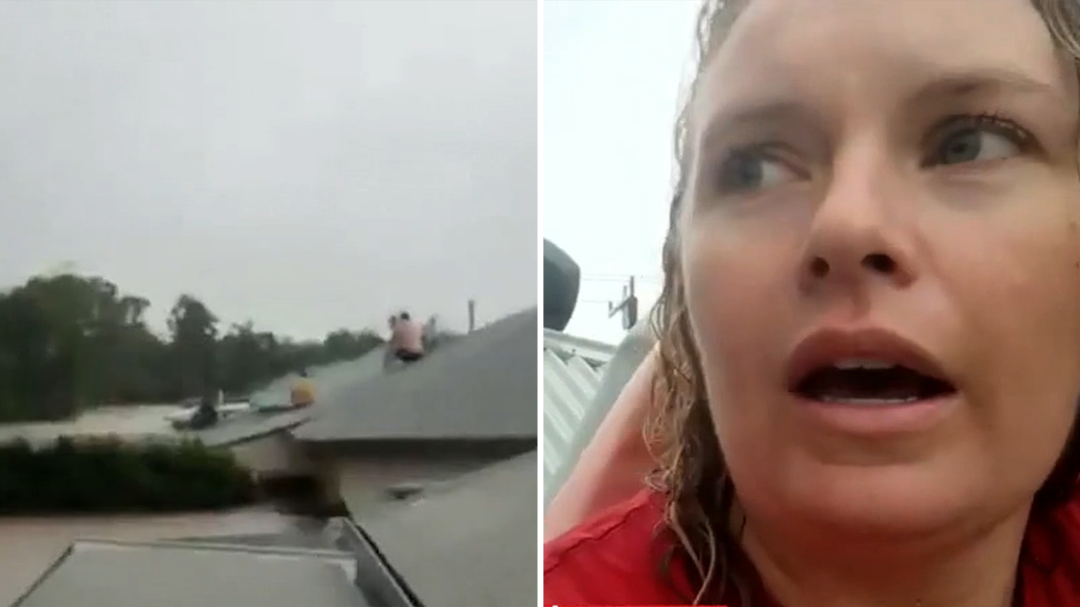
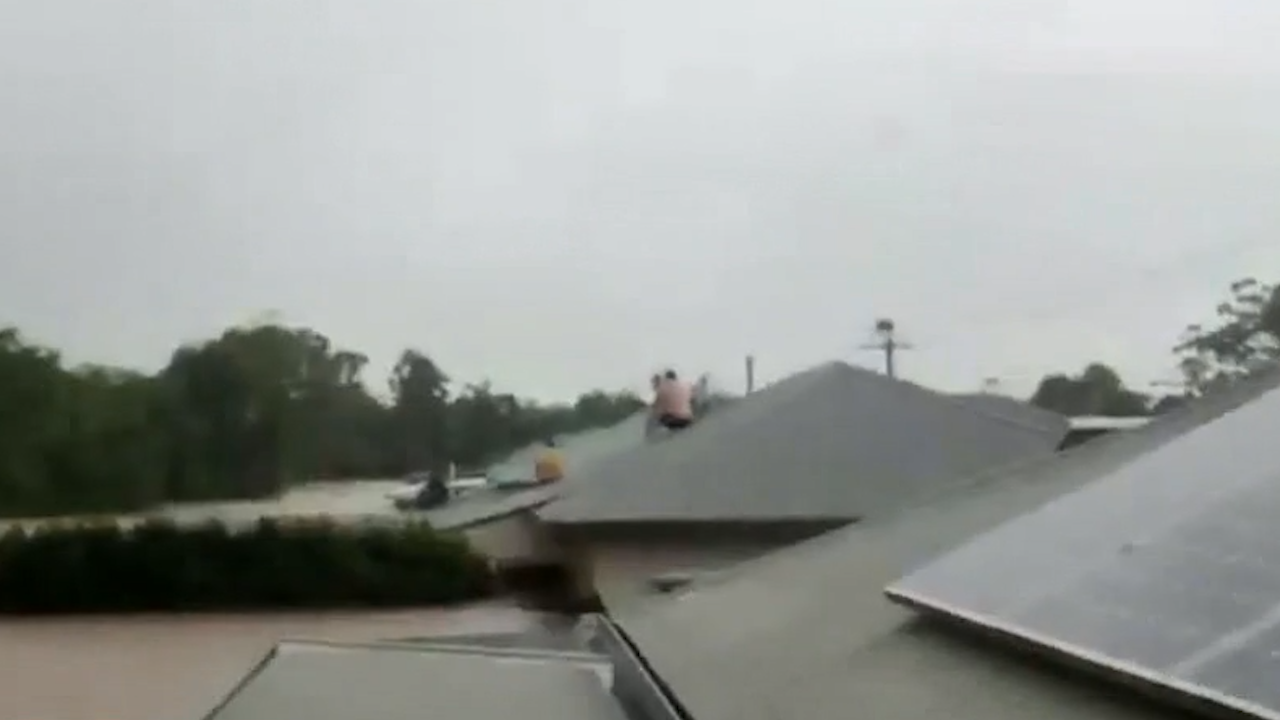
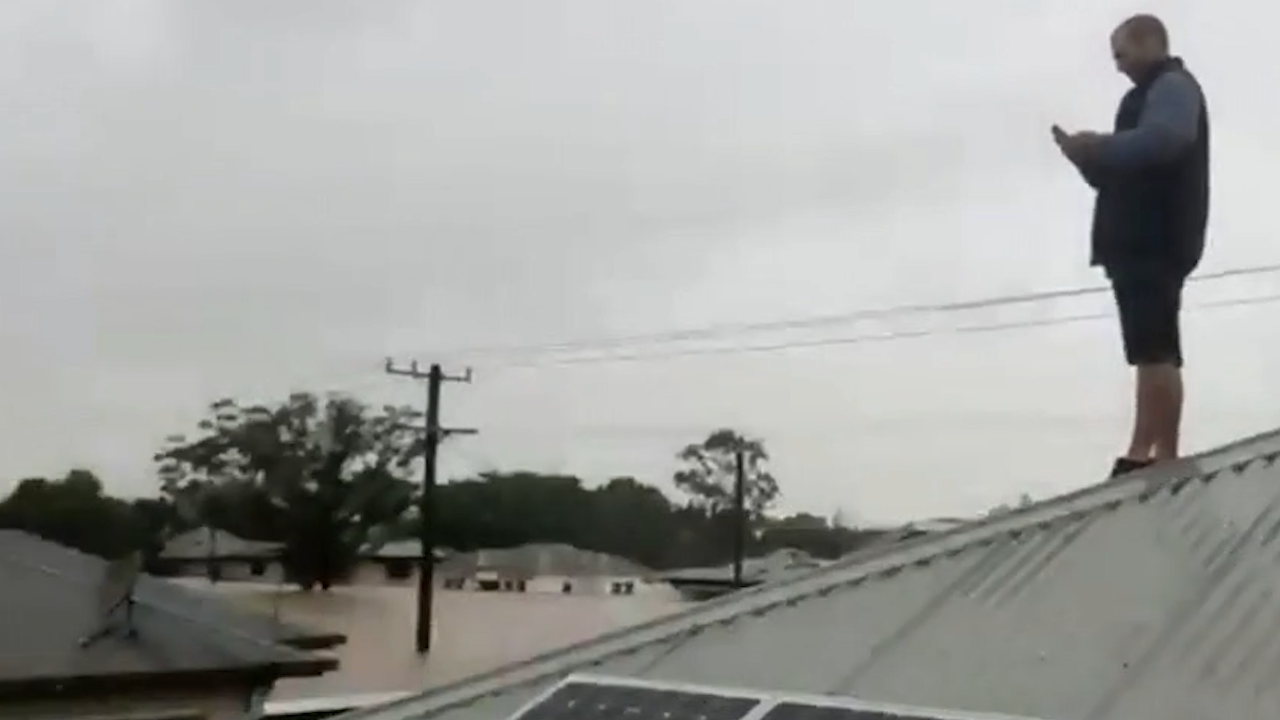
Ms Davis told Today the water was ankle-deep around midnight and by 4.15am it was lapping at the second storey of their home on Casino Street.
While speaking with Ms Davis, Today host Karl Stefanovic said it is unbelievable what she is going through and confirmed Today had managed to get help for her and her neighbours.
"We have managed to track someone down there, they are aware of where you are," Stefanovic said.
"On behalf of all of us you are doing a terrific job, and your family, your beautiful family, hold tight and hopefully that rescue will come really soon."
And just before midday, after the callout by Today, a rescue operation got Ms Davis' family and her neighbours off their roofs safely.
Dozens of families on Australia's southeast coast are still stranded on their roofs as life-threatening floodwaters continue to inundate several communities.
IN PICTURES: Catastrophic flooding hits Queensland and Far North Queensland
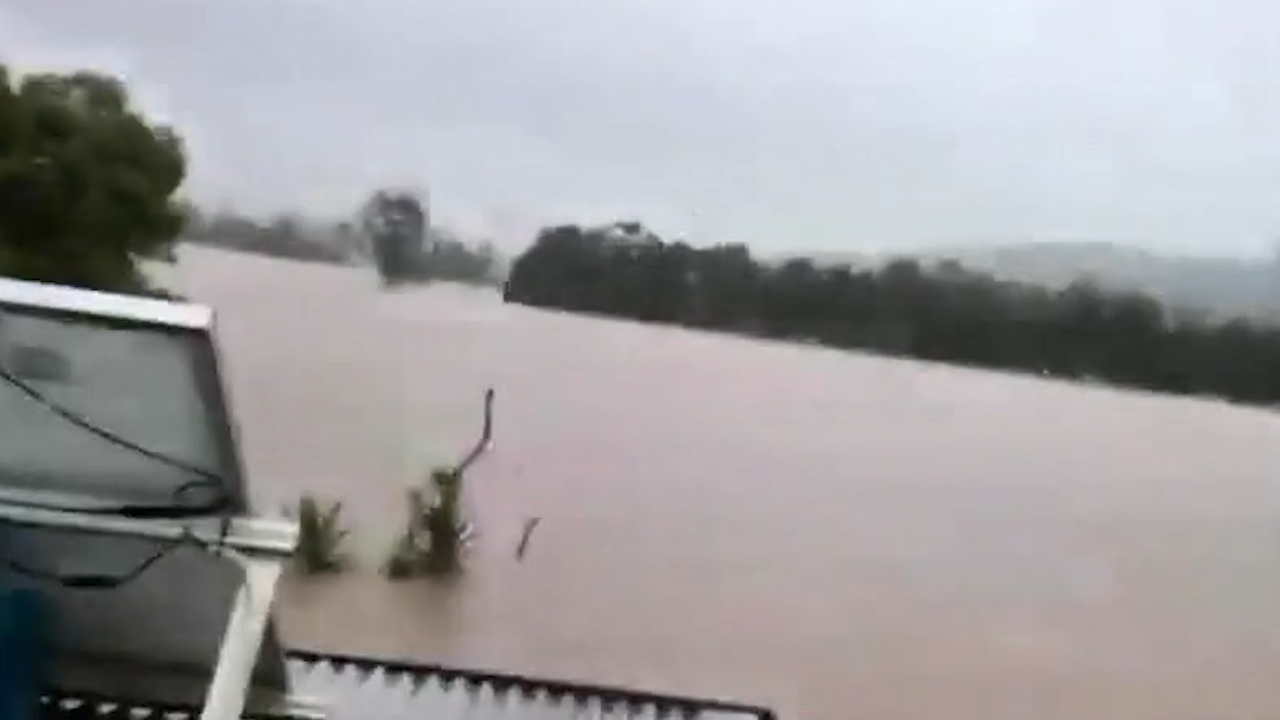
With the weather system causing a logistical nightmare for rescue crews to reach those in need, there are still many stranded like Ms Davis, who had been frustrated by the lack of information being relayed to those in need of help.
"We've had no correspondence with anyone. I have been on social media showing people where we are and what predicament we are in," she said earlier today.
"I have some neighbours next to us who are actually stuck in their roof cavity and they really need help, desperately, but we are still waiting," she said.
Mice, frogs hitch ride on snake to escape floods
A snake has served as a hero to small animals trying to escape rising Queensland floodwaters.
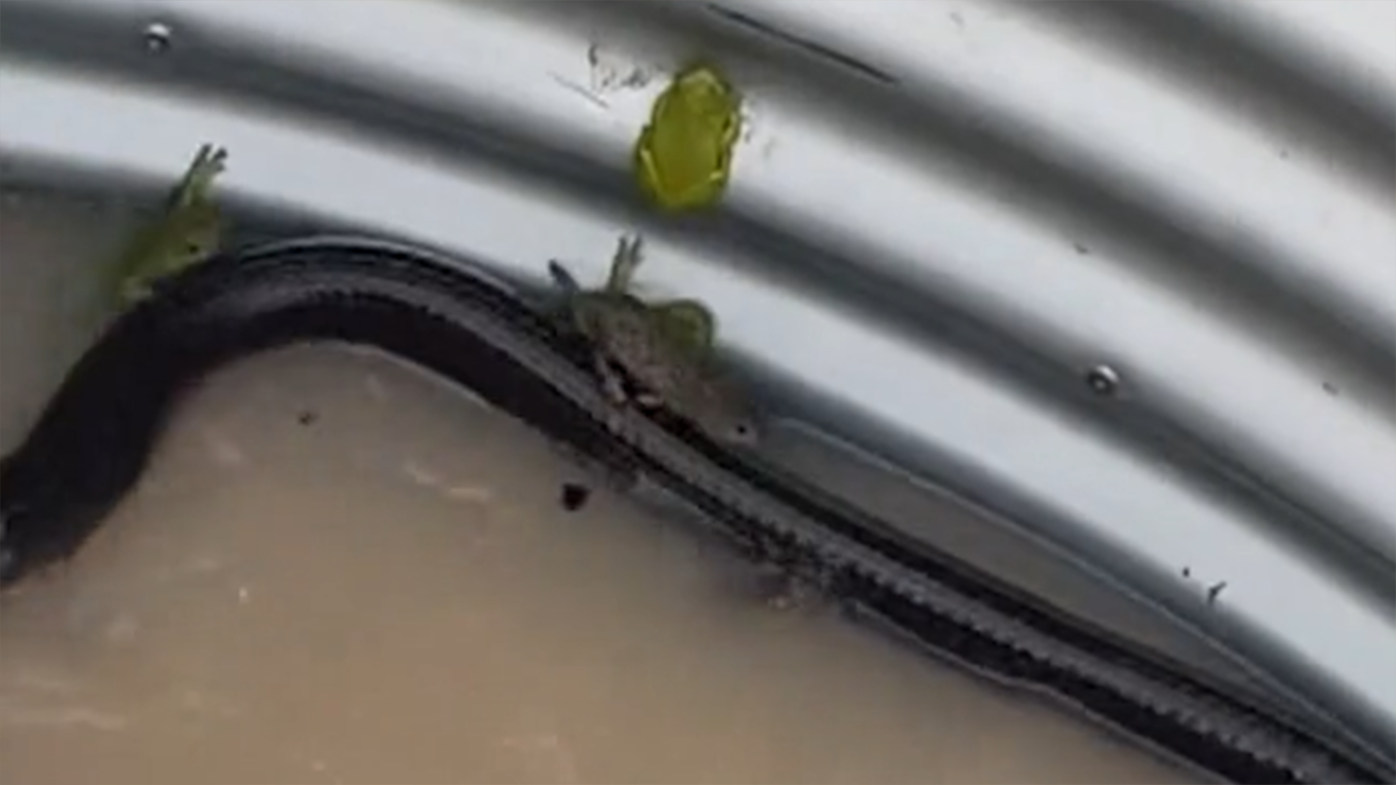
Frogs, mice and beetles were seen riding on the back of a large snake in vision uploaded online.
While the species is unclear the animal appears to be an eastern brown snake, which typically preys on mice and frogs.
LIVE COVERAGE: Woman's appeal to safe brother missing in floodwaters
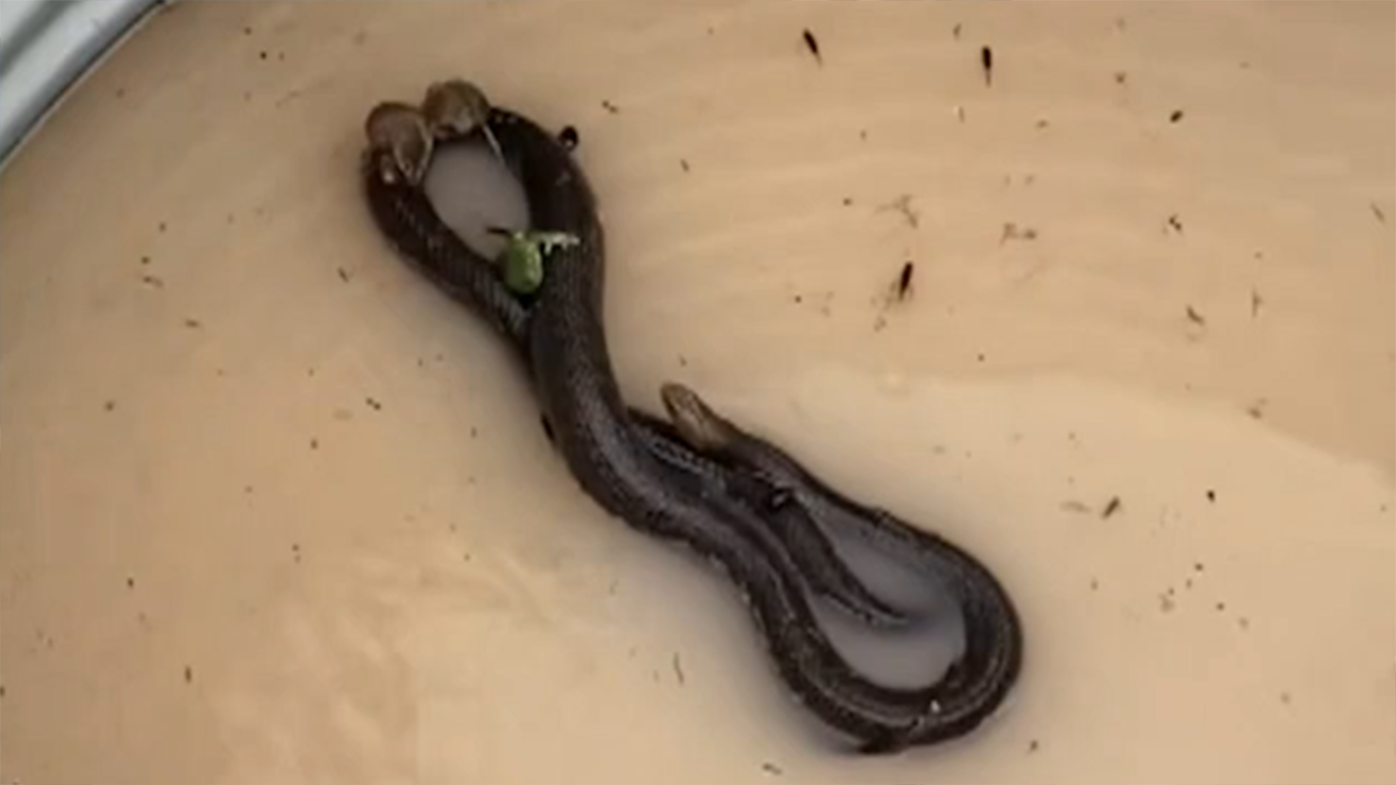
The scene was filmed inside a rain-water tank in Western Queensland after heavy rain hit the state.
Rescuers were seen trying to help the smaller creatures by using a long yellow pole, but this only agitated the water causing the snake to swim laps.
9News understands all animals were rescued from the tank.
Queensland has been lashed with days of heavy rain with 677mm falling in three days across Brisbane, breaking rainfall records
An extremely dangerous flooding situation has developed in southeast Queensland and northeast NSW," Weatherzone wrote.
"In Brisbane, the Brisbane River is expected to peak around 4 metres with the high tide on Monday morning and should see another peak near 3.3 metres with Monday afternoon's high tide."
Why sanctions won't hurt Russia's richest men
The term Russian oligarch conjures images of posh London mansions, gold-plated Bentleys and sleek superyachts in the Mediterranean, their decks draped with partiers dripping in jewels.
But the raft of sanctions on oligarchs announced by President Joe Biden this week in response to the invasion of Ukraine may do little to dim the jet-setting lifestyles of Russia's ultra-rich and infamous – much less force a withdrawal of tanks and troops.
US sanctions target Russian President Vladmir Putin and a handful of individuals believed to be among his closest security advisers, including Foreign Minister Sergey Lavrov.
LIVE UPDATES: UN holds special emergency meeting to decide on course of action over Russian invasion
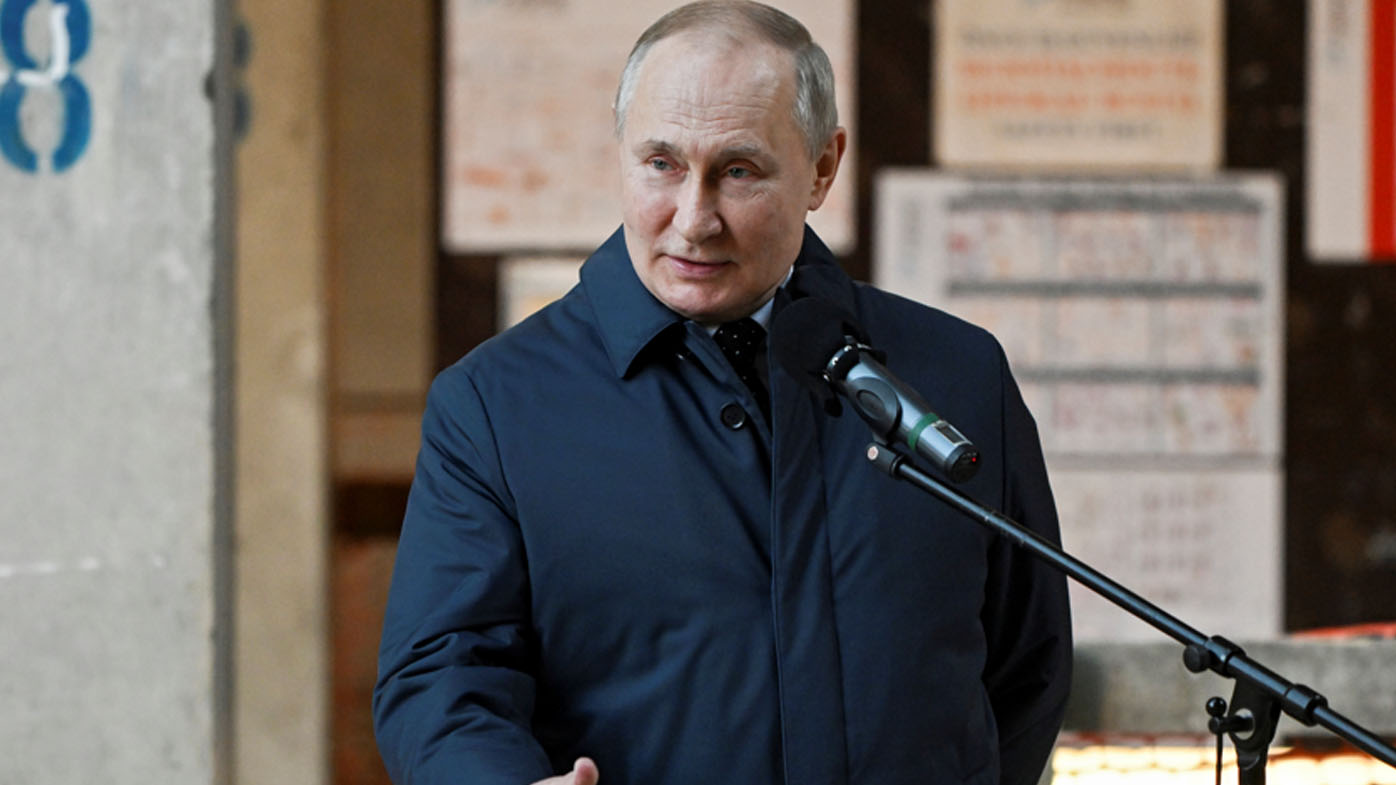
But the list is just as notable for who isn't on it — most of the top names from Forbes' list of the richest Russians whose multi-billion-dollar fortunes are now largely intertwined with the West, from investments in Silicon Valley start-ups to British Premier League soccer teams.
Citing the concerns of European allies, the US also didn't impose what was seen as the harshest punishment at its disposal, banning Russia from SWIFT, the international financial system that banks use to move money around the world.
Biden said Thursday the new US sanctions would nonetheless cripple Russia's financial system and stymie its economic growth by targeting Russia's biggest banks, which the Treasury Department said holds nearly 80 per cent of all the country's banking assets.
"Putin is the aggressor. Putin chose this war. And now he and his country will bear the consequences," Biden said, laying out measures that will "impose severe cost on the Russian economy, both immediately and over time."
READ MORE: West slams Putin after Russian leader puts nuclear forces on alert
But much of the wealth of Russia's richest isn't held in the sanctioned Russian banks.
Putin and the oligarchs aligned with him have had decades to stash assets overseas, much of it hidden in ways specifically designed to avoid sanctions.
Though the Kremlin officially reports Putin's income at US$131,900 annually ($183,744), the Russian president is believed to benefit from many billions in cash and overseas assets held by trusted friends and relatives, many of whom are from his home city of St. Petersburg.
A 2017 study of Russian oligarchs published by the US-based National Economic Bureau estimated that as much as US$800 billion ($1.1 trillion) is held by wealthy Russians in the United Kingdom, Switzerland, Cyprus, and similar offshore banking centres.
That vast fortune, held by a few hundred ultra-rich individuals, is roughly equal to the wealth of the entire rest of the Russian population of 144 million people.
READ MORE: Australian premiers offer to re-home Ukraine refugees
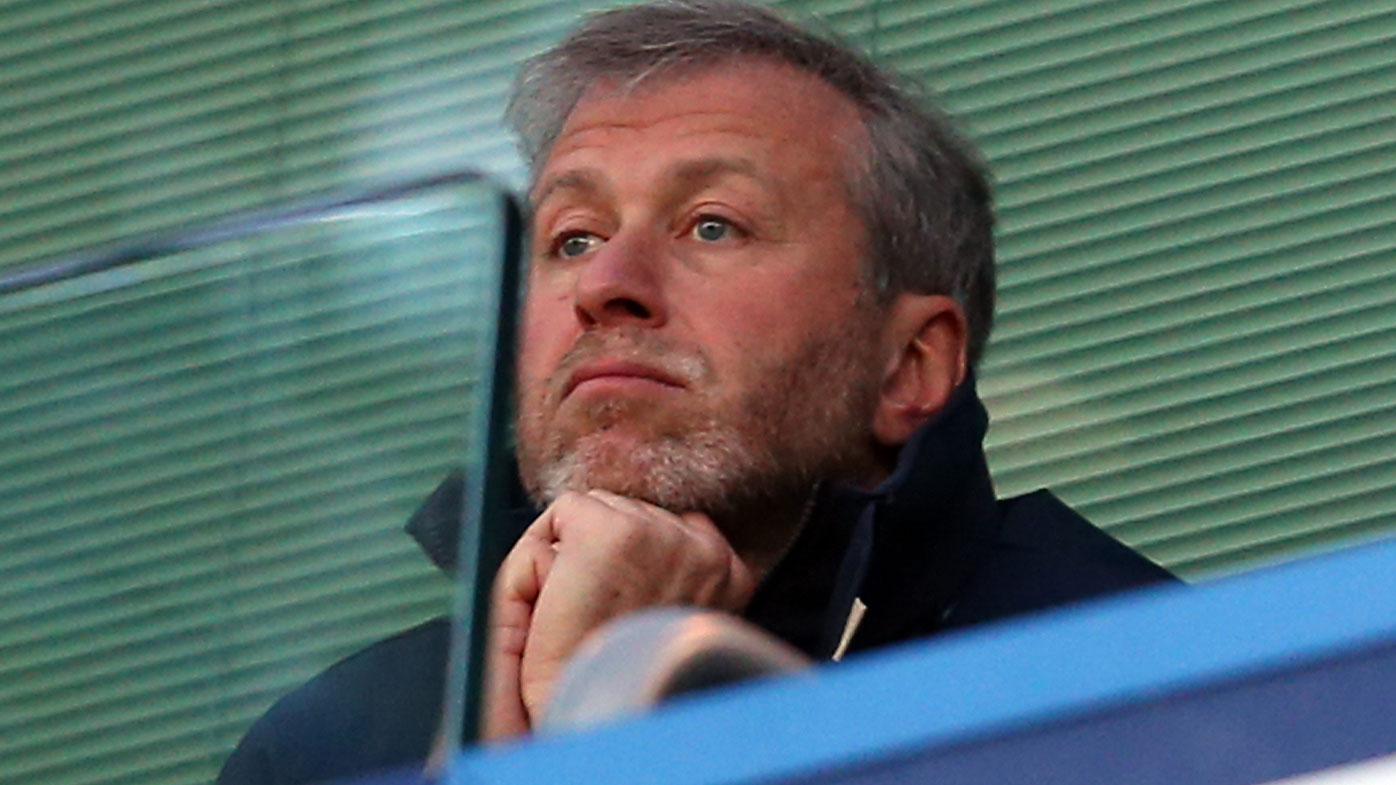
Some oligarchs have also obtained dual citizenship in Britain and other Western countries, adding legal complications to attempts to unilaterally seize their assets.
An example is Roman Abramovich, a former Russian provincial governor and Putin ally who became a steel and metals magnate.
Now a dual Israeli citizen with a net worth estimated at more than US$13 billion ($18 billion), Abramovich has used his fortune to buy the British soccer club Chelsea and homes in London and New York.
He and his now ex-wife frequently socialized with Ivanka Trump and Jared Kushner, the daughter and son-in-law of former President Donald Trump.
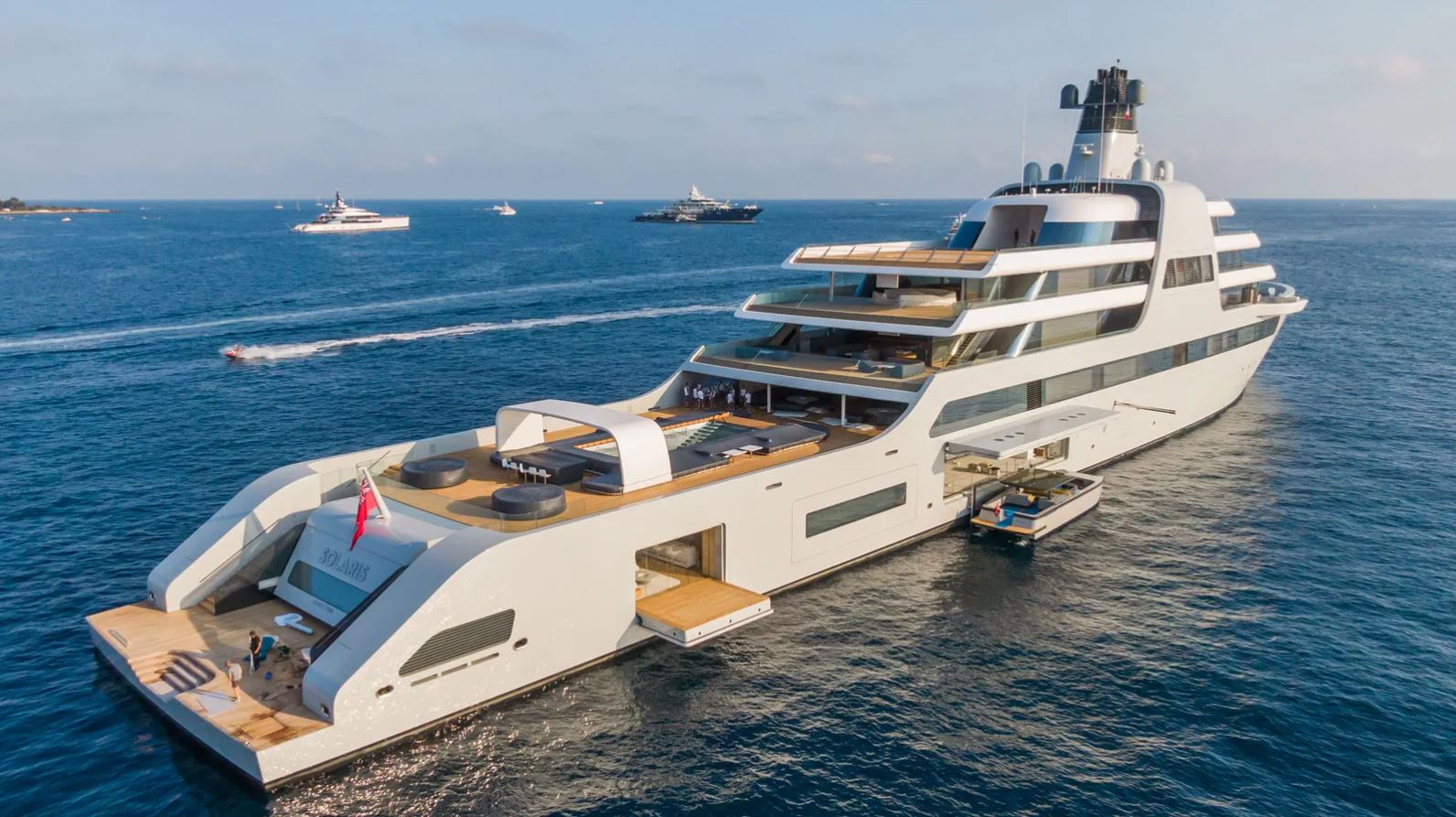
Abramovich also owns what is purported to be the world's most expensive superyacht, the 455-foot-long Solaris, which features a helicopter hanger, tennis court, pool and berths for about 100 guests and crew.
READ MORE: Australia to fund weapons for Ukraine days after pledging 'non-lethal aid'
Also not on the sanctions list is Alisher Usmanov, another Russian metals tycoon who was an early investor in Facebook. His fortune is estimated at more than US$14 billion ($19.5 billion).
Usmanov recently sold his stake in the British soccer club Arsenal for a reported US$700 million ($975 million) and, according to Forbes, owns two sprawling estates in London – the Beechwood House and Sutton Place –worth a combined US$300 million ($417 million).
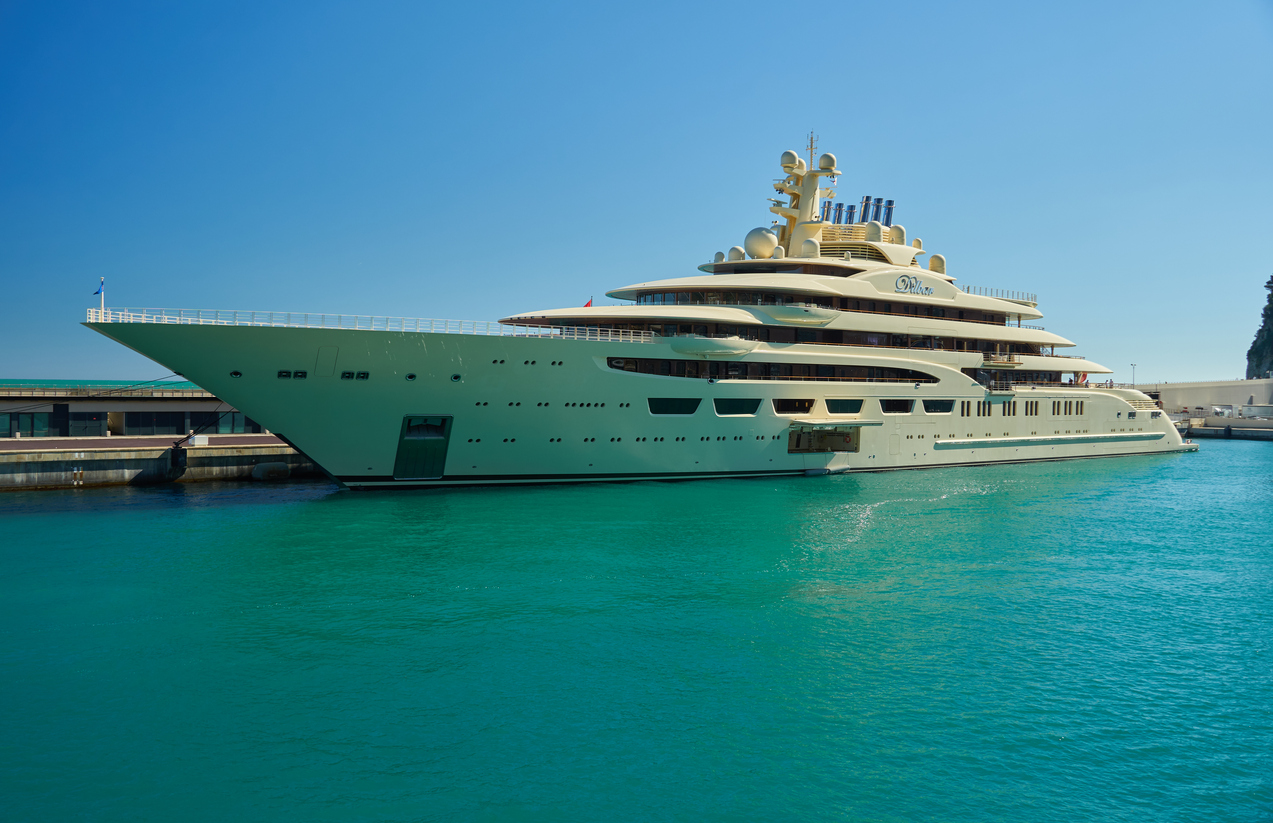
Usmanov's superyacht, Dilbar, measures 512 feet from bow to stern, even longer than Abramovich's.
Daniel Fried, a former US official under both Democratic and Republican administrations who helped craft US sanctions against Moscow in the wake of Putin's 2014 invasion of the Crimean Peninsula, said he was surprised Abramovich and Usmanov weren't on the sanctions list announced Thursday, given their long ties to Putin and visible assets in the West.
But, Fried warned, sanctioning Russian oligarchs would likely have limited impact on persuading Putin to change course in Ukraine.
READ MORE: At least 64 Ukrainian civilians killed since Russia's invasion
"He owns them absolutely. He crushed them and they exist only by his sufferance," said Fried.
"He can jail them, or kill them, and the notion that the oligarchs can assert influence over Putin is foolish."
Still, he said the opinion of wealthy, educated elites carries some intangible weight that Putin defies at his own risk.
While sanctions are unlikely to drive the oligarchs away from Putin, they do raise for them the cost of their continued support.
"They can't stop or vote him out of office. But he's only in total control until he isn't," said Fried, who is now a fellow at the Washington-based Atlantic Council.
READ MORE: Russian banks blocked from vital SWIFT system
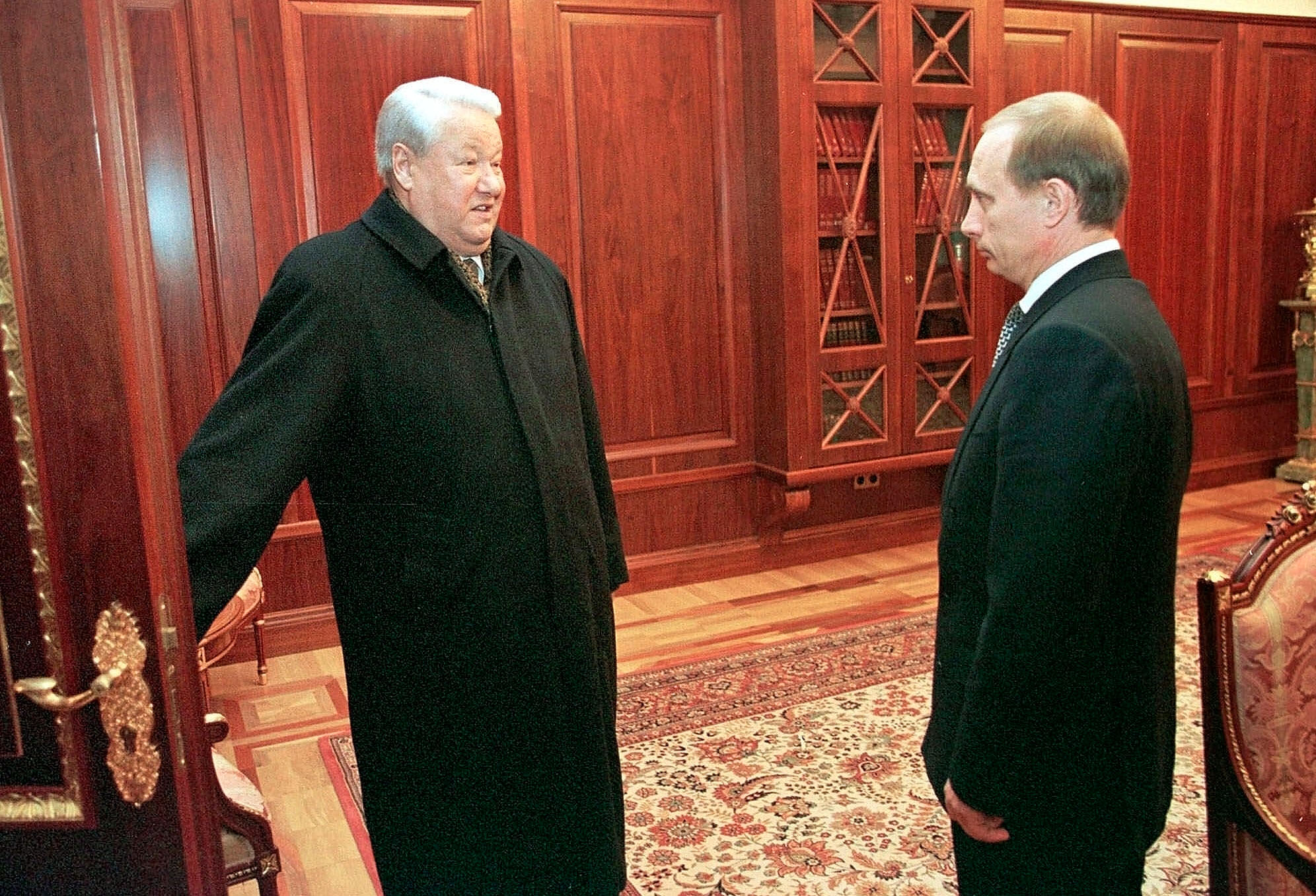
The family fortunes of many in Russia's billionaires date back to the 1990s, the turbulent decade after the fall of the Soviet Union.
Under the notoriously corrupt presidency of Boris Yeltsin, such key state-controlled assets as oil refineries, steel mills, aluminium smelters and tractor factories were gobbled up by the politically influential, often purchased with the aid of government-backed loans.
Then in 1999 Yeltsin unexpectedly resigned and the then-relatively unknown Putin was appointed as acting president.
A former KGB agent, Putin had earlier been appointed by Yeltsin as the head of Russia's FSB, among the country's most powerful spying and security agencies.
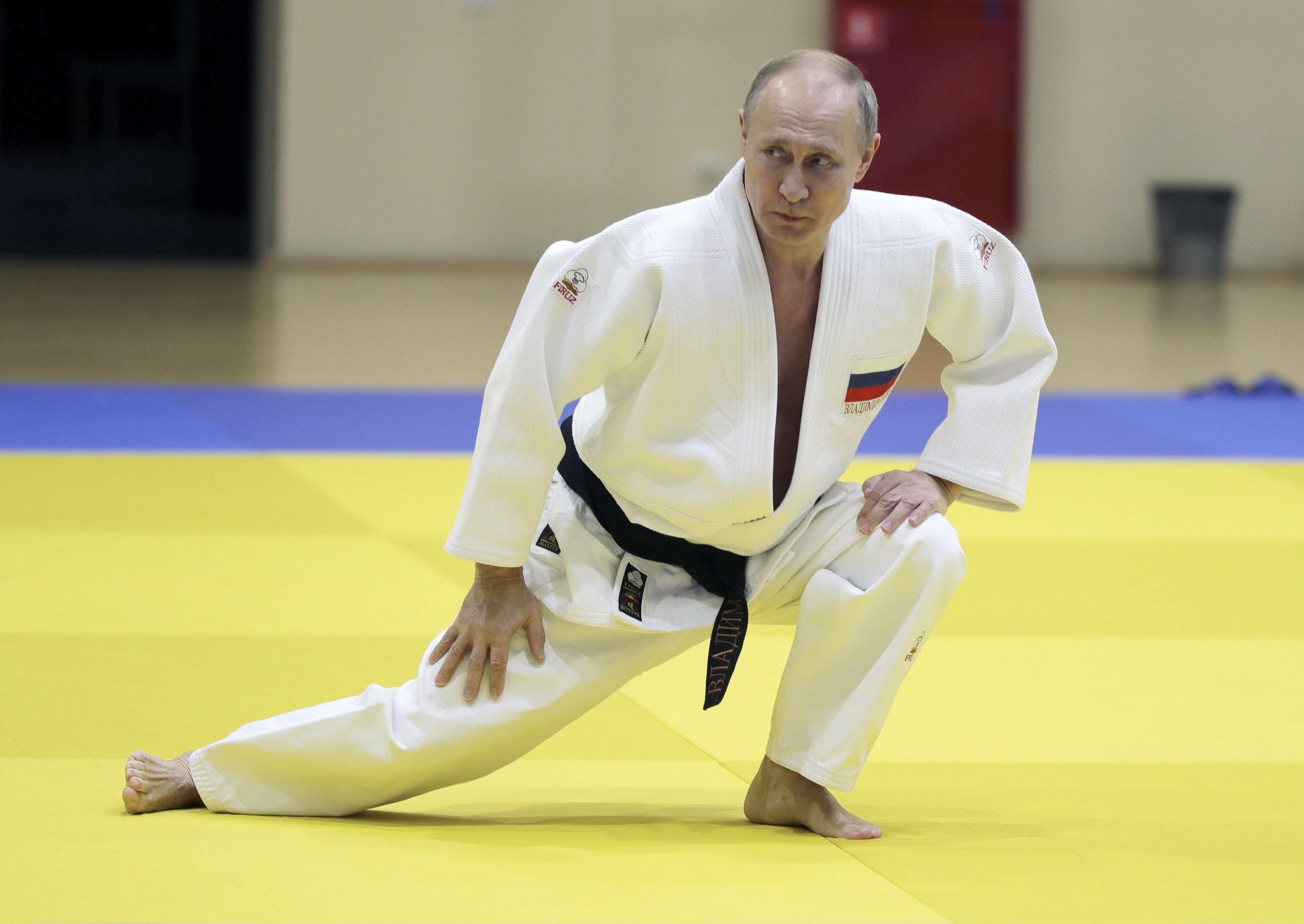
Putin has ruled Russia for the last 22 years, crushing those who have dared challenge him.
Mikhail Khodorkovsky, an oil baron once believed to be the wealthiest man in Russia, ran afoul of Putin when he more fully embraced the free market and began criticizing the vestiges of Soviet central planning. Khodorkovsky was arrested by Russian authorities in 2003 and charged with fraud, money laundering and embezzlement.
READ MORE: Dramatic footage shows Ukrainian man trying to stop Russian tank
After spending a decade in jail, he was released in 2013 and fled to London, where he now leads a foundation, the Dossier Center, dedicated to exposing criminal activity by Kremlin insiders.
Boris Berezovsky, a mathematician turned Mercedes dealer who amassed a fortune by acquiring the country's main television channel at the end of the Soviet era, was tried in absentia on charged of fraud and embezzlement after fleeing to London in 2000.
He was found dead on the bathroom floor of his home in southern England in 2013.
His daughter said he feared he had been poisoned after losing a major court battle against Abramovich, his former business partner. Originally believed to be a suicide, a coroner recorded the cause of death as inconclusive.
"Every oligarch owes the preservation of their wealth to the Kremlin," said Max Bergmann, a senior fellow at the Center for American Progress who also served at the State Department during the Obama administration.
"The oligarch class is an important pillar of the Putin regime and is heavily exposed because their assets are held in the West – in villas in the South of France, condos in Trump properties, and in sports teams."
READ MORE: How social media platforms are responding to Russia's invasion of Ukraine
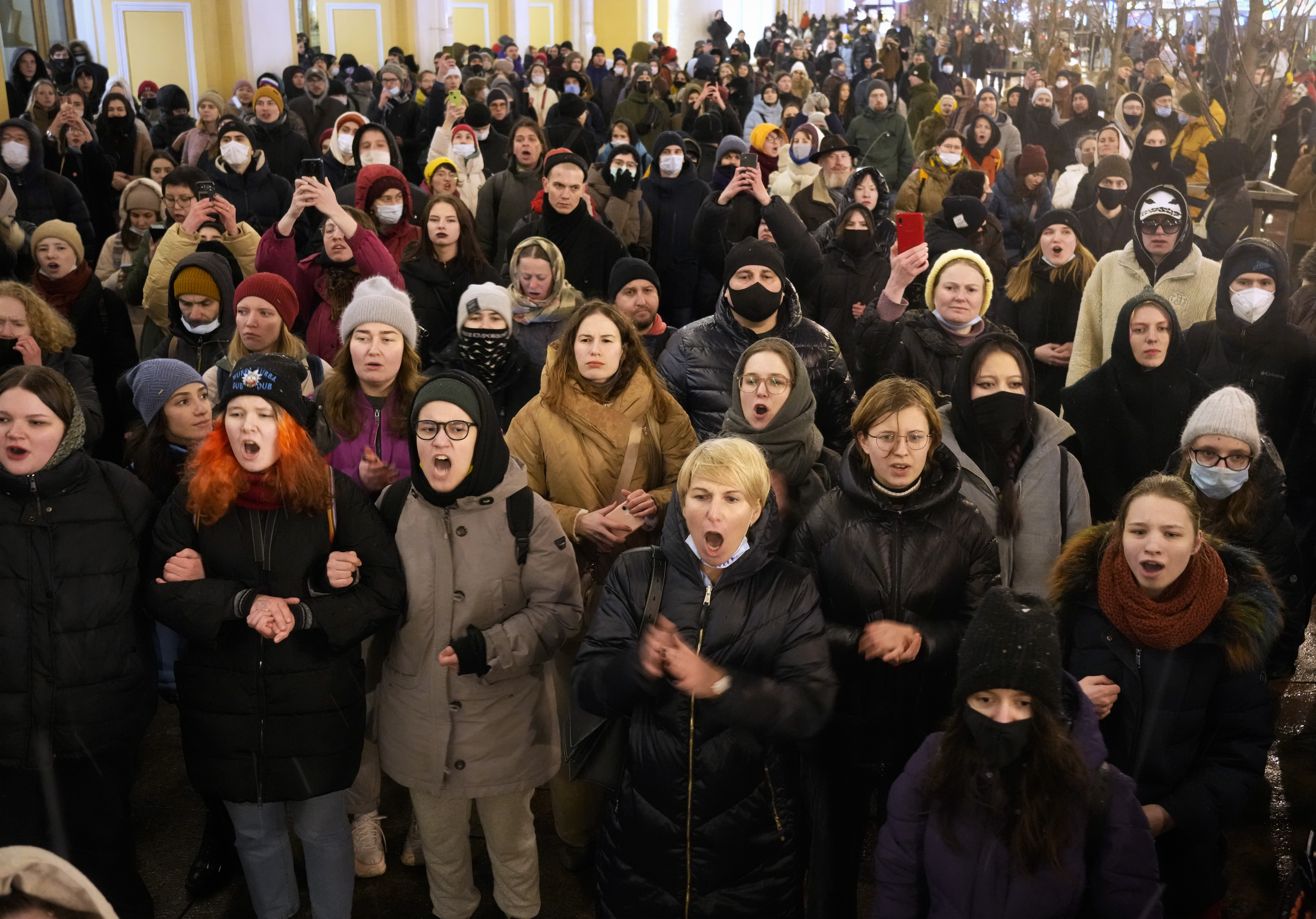
Maria Shagina, a sanctions expert at the Helsinki-based Finnish Institute of International Affairs, said European countries are seeking to insulate their own economic interests from the effects of sanctions, whether that's natural gas piped to Germany, diamonds imported from Siberian mines or Italian luxury cars and designer handbags sold in Moscow or St. Petersburg.
"We see that Europeans don't want to bear any sanctions cost," Shagina said. "It is painful for everyone."
But, the experts said, the sanctions announced this week will cause pain and eventually force the Kremlin to make hard budgetary choices by weakening the Russian economy.
Most Russians are significantly poorer than their Western counterparts.
The Russian Federation ranks 83rd in per capita gross domestic product, at a little under US$11,000 ($15,300) per person, according to 2020 data compiled by The World Bank.
That's less than a third of the average for the European Union and about one-sixth of per-capita GDP for the United States.
"Putin will have to choose between putting money into his military or paying pensioners," Bergmann said. "So sanctions serve to degrade Putin's power and strength over the long term."
READ MORE: Former Ukrainian President returns to streets to fight Russia
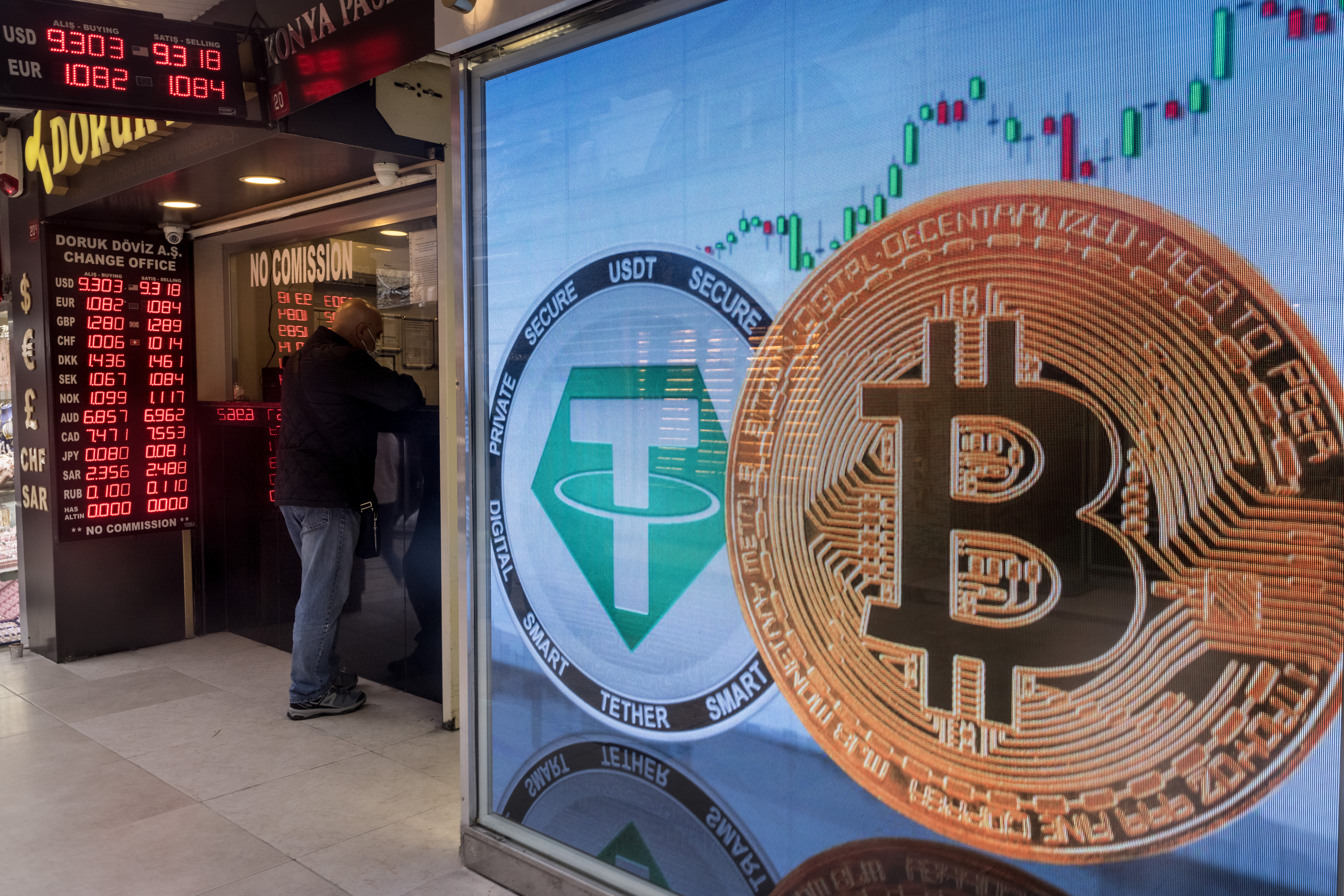
In the meantime, wealthy Russians are investing in cryptocurrencies and using other emerging strategies to protect their fortunes, much like they adapted to an earlier round of US sanctions following Putin's 2014 Crimean invasion.
"Sanctions enforcement is inherently a cat-and-mouse game," said Marhsall Billingslea, who helped set sanctions policy for the Trump administration, "and they've had eight years, ever since Crimea, to set up alternative mechanisms to keep hard currency flowing to the regime."
Edward Fishman, a former State Department official during the Obama administration, said the move to sanction Putin sends a strong signal of support to the Ukrainians who are under fire. But the economic penalties with have no real effect on the Russian leader.
"No sanctions can dramatically decrease Putin's quality of life … Putin treats the Russian economy as his own personal piggy bank," Fishman said.
"President Putin's wealth is derived from the hard-earned wages of Russian taxpayers, as well as Russia's oil exports."
The biggest lottery wins from around the world
Winning the lottery is everyone's dream and here are some lucky people who have scored big around the world.
West slams Putin after Russian leader puts nuclear forces on alert
The US and NATO have responded after Russian President Vladimir Putin put Russia's nuclear forces on high alert as fierce fighting continues in Ukraine.
White House press secretary Jen Psaki said the move was part of a wider pattern of unprovoked escalation and "manufactured threats" from the Kremlin.
"This is really a pattern that we've seen from President Putin through the course of this conflict, which is manufacturing threats that don't exist in order to justify further aggression — and the global community and the American people should look at it through that prism," Psaki told ABC's George Stephanopoulos on 'This Week'.
LIVE BLOG: Follow the latest Ukraine Russia developments here
She added: "This is all a pattern from President Putin and we're going to stand up for it, we have the ability to defend ourselves, but we also need to call out what we're seeing here from President Putin."
When asked about further military aid or sanctions, Ms Psaki said that the US is prepared to send more humanitarian, economic and defensive military supplies.
NATO Secretary-General Jens Stoltenberg told CNN, in reaction to Russia's nuclear alert: "This is dangerous rhetoric. This is a behaviour which is irresponsible."
The practical meaning of Putin's order was not immediately clear. Russia and the United States typically have land- and submarine-based nuclear forces on alert and prepared for combat at all times, but nuclear-capable bombers and other aircraft are not.
In giving the directive, the Russian leader also cited hard-hitting financial sanctions imposed by the West against Russia, including Putin himself.
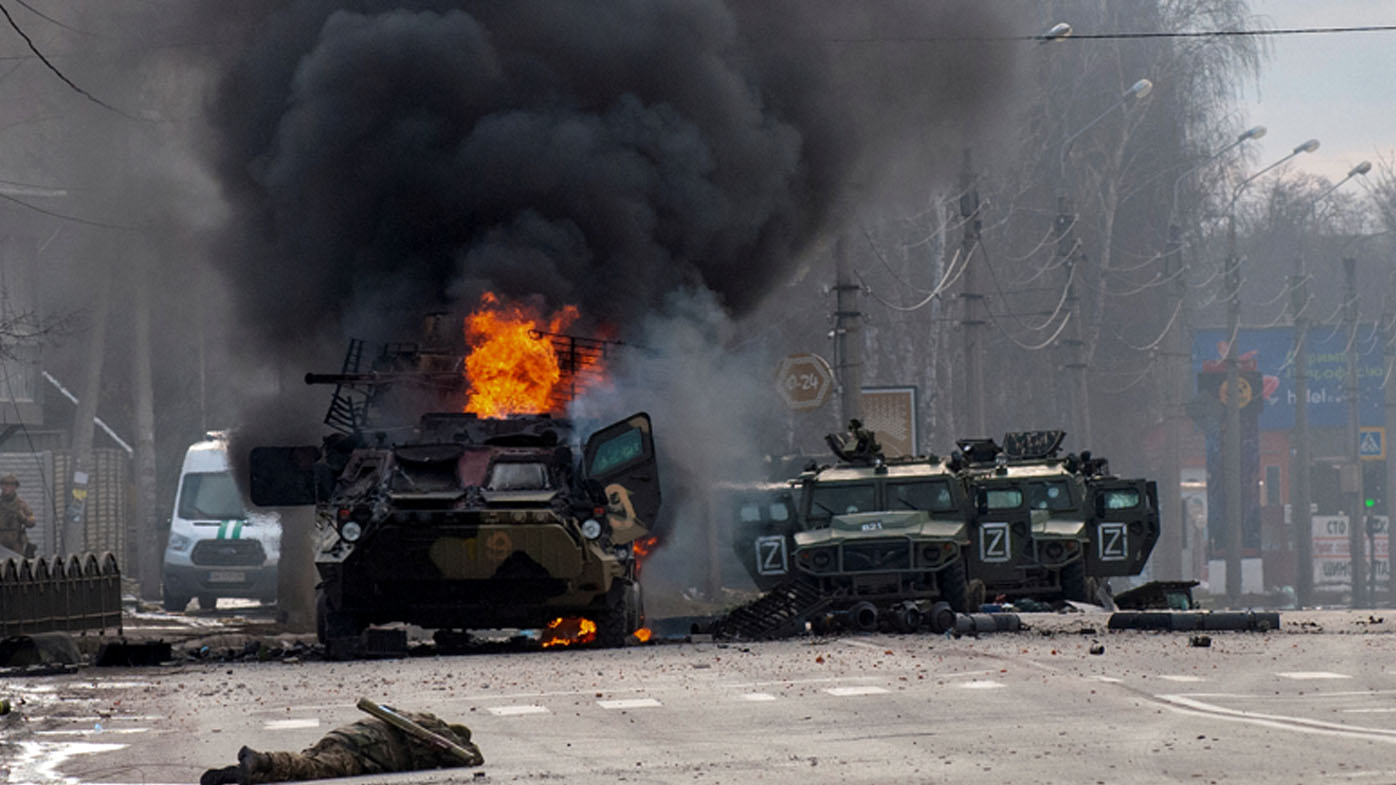
Speaking at a meeting with his top officials, Putin directed the Russian defence minister and the chief of the military's General Staff to put the nuclear deterrent forces in a "special regime of combat duty."
"Western countries aren't only taking unfriendly actions against our country in the economic sphere, but top officials from leading NATO members made aggressive statements regarding our country," Putin said in televised comment.
Peace talks on border
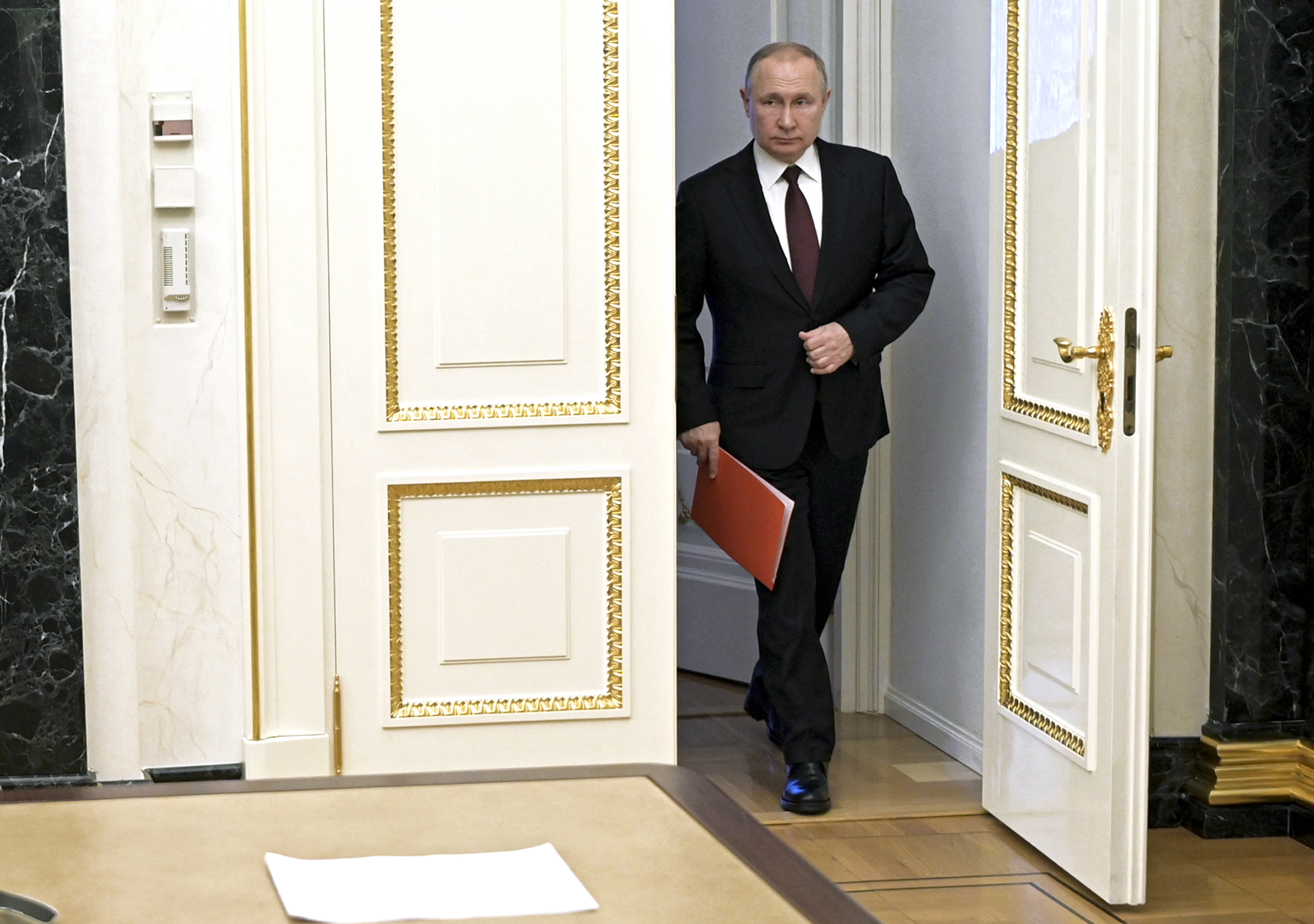
The office of Ukraine's president has confirmed that a delegation will meet with Russian officials as Moscow's troops draw closer to Kyiv.
Ukrainian President Volodymyr Zelenskyy office said on the Telegram messaging app that the two sides would meet at an unspecified location on the Belarusian border and did not give a precise time for the meeting.
The announcement on Sunday came hours after Russia announced that its delegation had flown to Belarus to await talks. Ukrainian officials initially rejected the move, saying any talks should take place elsewhere than Belarus, where Russia placed a large contingent of troops before it invaded Ukraine starting Thursday.
READ MORE: Australian premiers offer to re-home Ukraine refugees
Zelenskyy's office said Belarusian President Alexander Lukashenko, a Putin ally, "has taken responsibility for ensuring that all planes, helicopters and missiles stationed on Belarusian territory remain on the ground during the Ukrainian delegation's travel, talks and return."
The meeting news came shortly after President Vladimir Putin ordered Russian nuclear forces put on high alert in response to what he called "aggressive statements" by leading NATO powers.
READ MORE: At least 64 Ukrainian civilians killed since Russia's invasion
Hope of peace talks comes as Russian forces advanced on Ukraine's second-largest city with street fighting breaking out in Kharkiv and Russian troops squeezed strategic ports in the country's south on Sunday.
The advances appeared to mark a new phase of Russia's invasion, following a wave of attacks on airfields and fuel facilities elsewhere in the country.
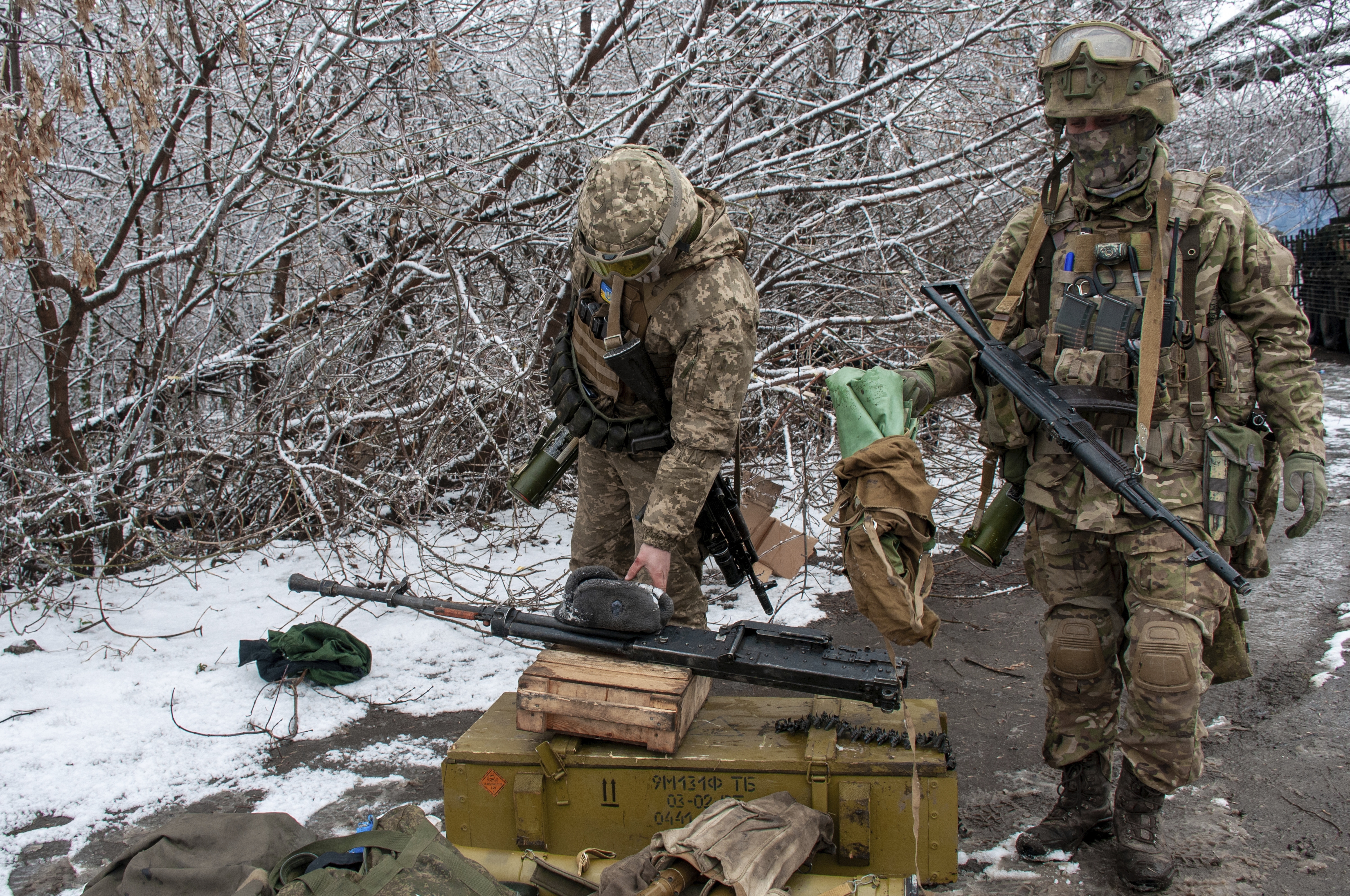
Until Sunday, Russia's troops had remained on the outskirts of Kharkiv, a city of 1.4 million about 20 kilometres south of the border with Russia, while other forces rolled past to press the offensive deeper into Ukraine and Ukrainian fighters put up determined resistance.
Videos posted on Ukrainian media and social networks showed Russian vehicles moving across Kharkiv and Russian troops roaming the city in small groups.
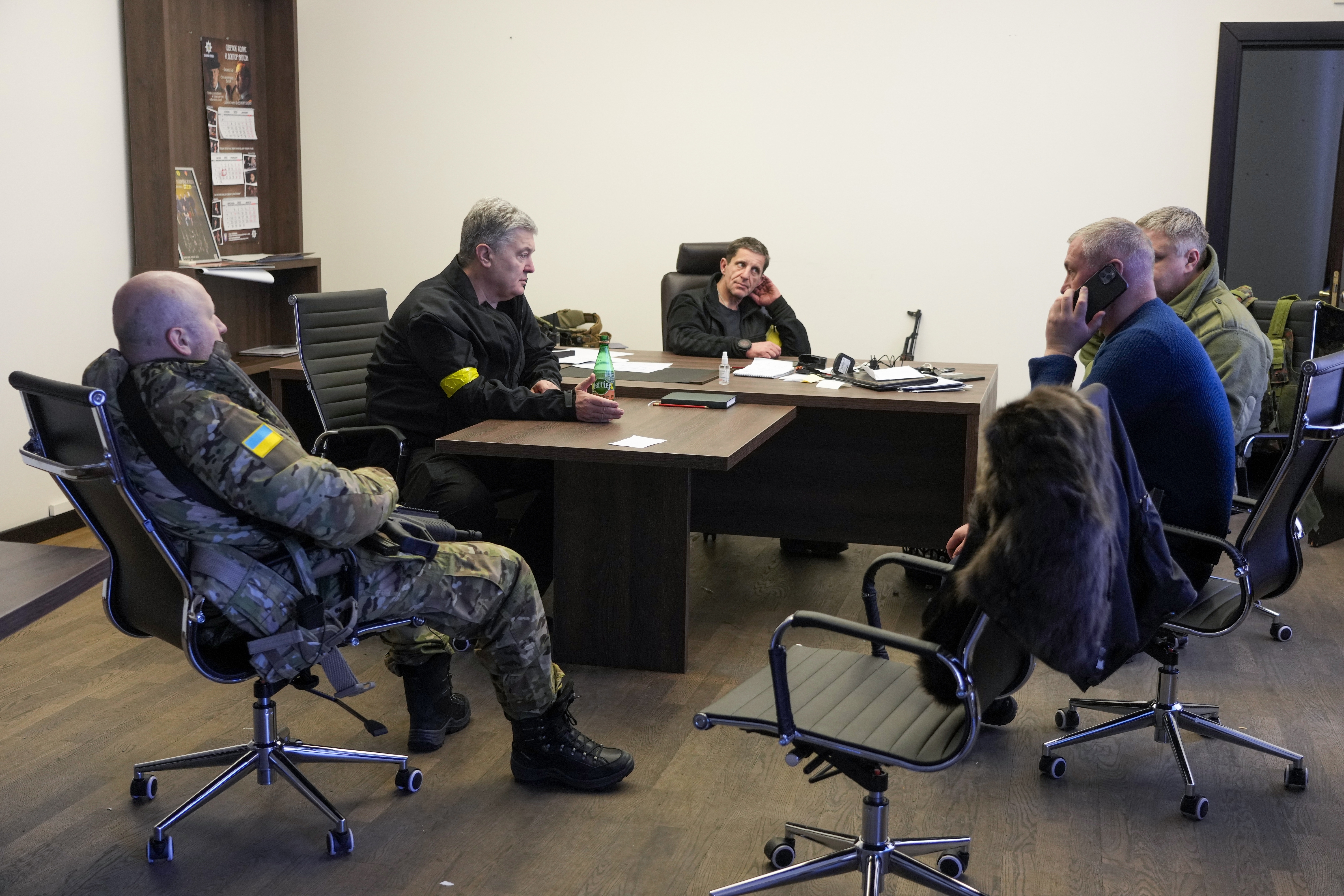
One video showed Ukrainian soldiers inspecting Russian light utility vehicles damaged by shelling and abandoned by Russian troops on a street.
"We are fighting, fighting for our country, fighting for our freedom because we have the right to do that," Ukrainian President Volodymyr Zelenskyy said.
"The past night was tough — more shelling, more bombing of residential areas and civilian infrastructure. There is not a single facility in the country that the occupiers wouldn't consider as admissible targets."
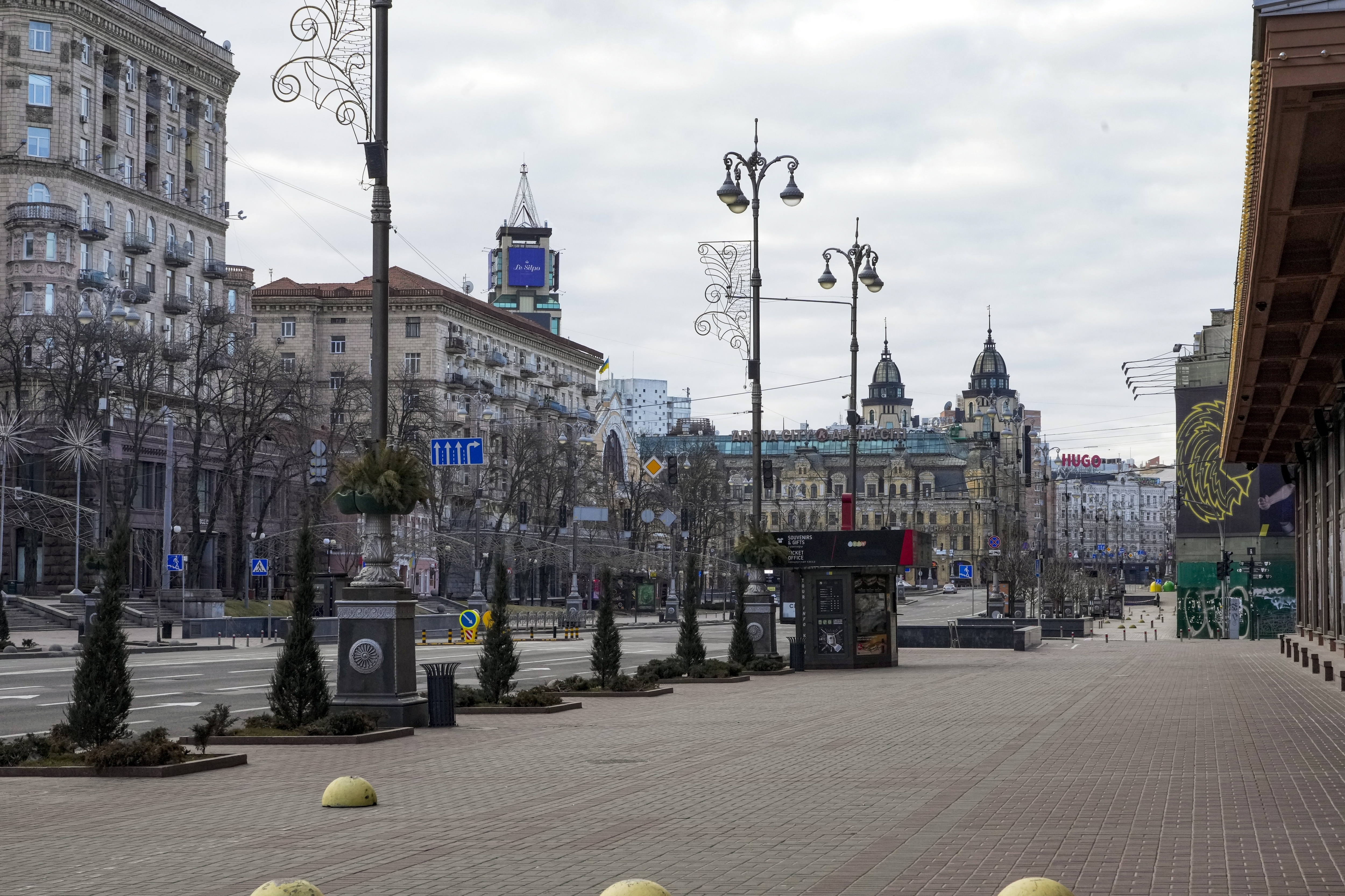
Huge explosions lit up the sky early Sunday near the capital, Kyiv, where terrified residents hunkered down in homes, underground garages and subway stations in anticipation of a full-scale Russian assault.
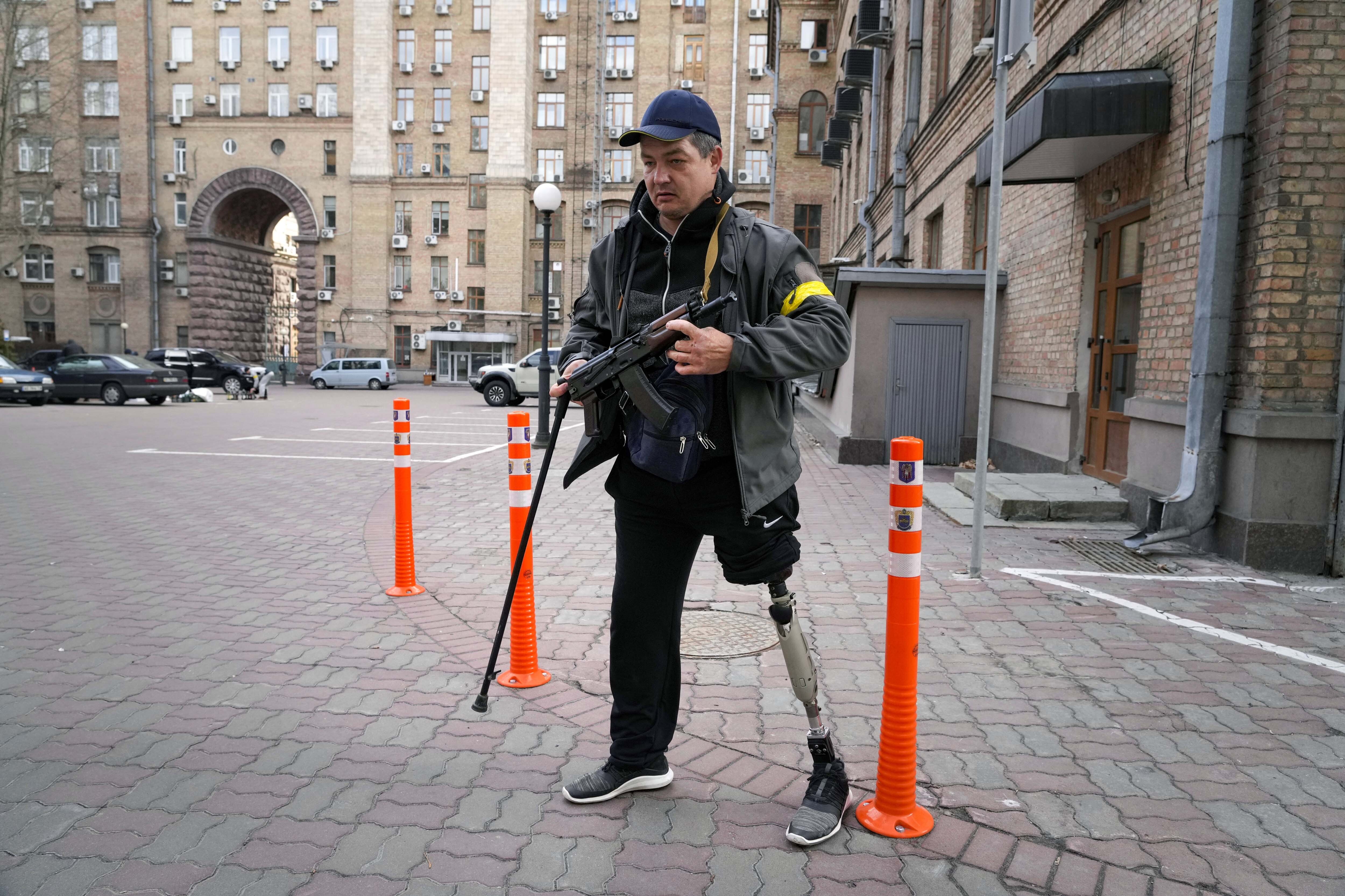
But Ukrainians also volunteered en masse to help defend Kyiv and other cities, taking guns distributed by authorities and preparing firebombs to fight Russian forces.
Zelenskyy denounced Russia's offensive as "state terrorism." He said the attacks on Ukrainian cities should be investigated by an international war crimes tribunal and cost Russia its place as one of the five permanent members of the United Nations Security Council.
"Russia has taken the path of evil, and the world should come to depriving it of its UN Security Council seat," he said.
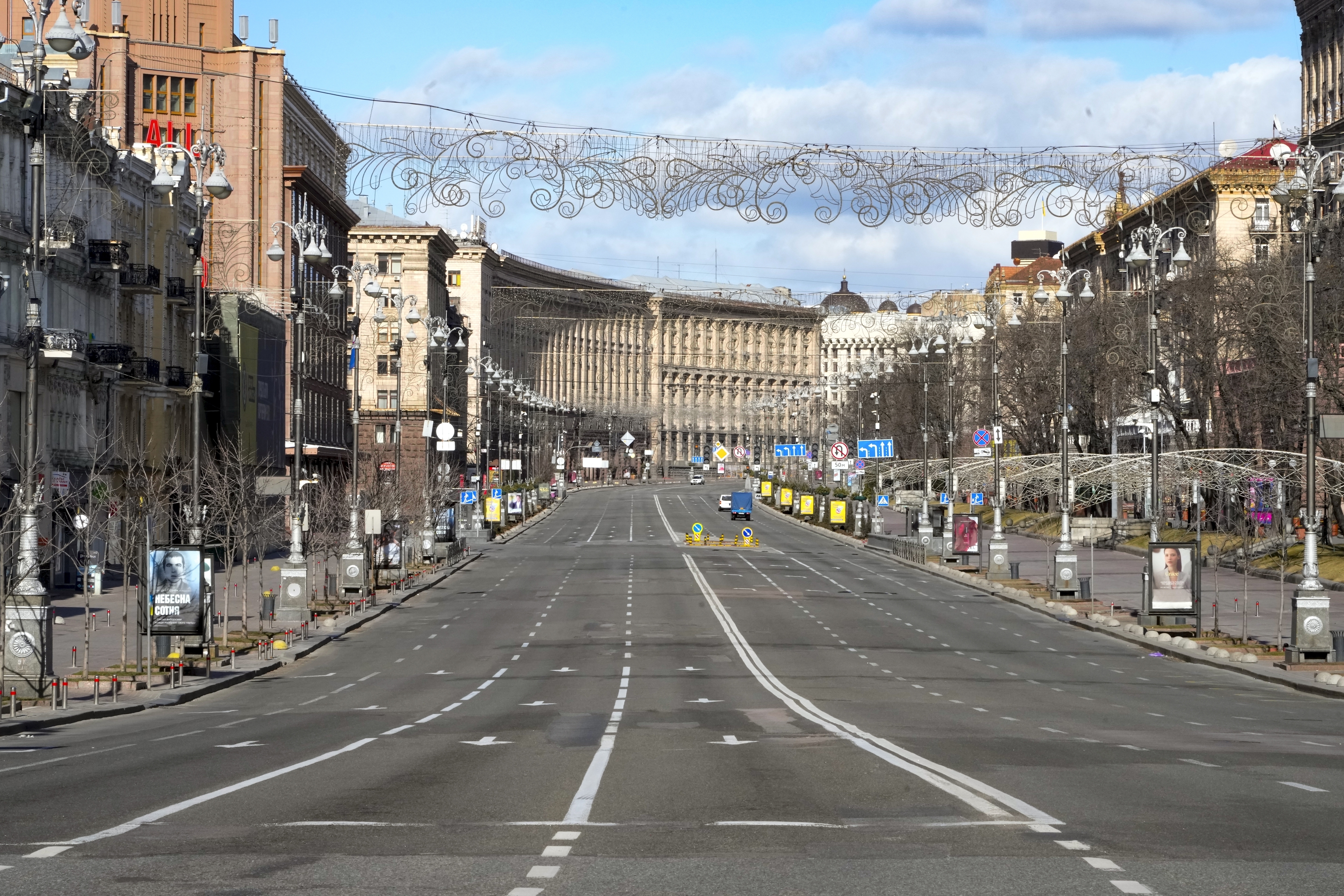
Officials maintained a 39-hour curfew to keep people off the capital's streets until Monday morning, complicating the task of assessing the intensity of the fighting. Zelenskyy's office said explosions were reported at Kyiv International Airport.
Flames billowed from an oil depot near an airbase in Vasylkiv, a city 37 kilometres south of Kyiv where there has been intense fighting, according to the mayor.
Russian forces blew up a gas pipeline to the east in Kharkiv, prompting the government to warn people to cover their windows with damp cloth or gauze as protection from smoke, the president's office said.
Initially, The Kremlin said Sunday that a Russian delegation had arrived in the Belarusian city of Gomel for talks with Ukrainian officials. Kremlin spokesman Dmitry Peskov said the delegation includes military officials and diplomats.
"The Russian delegation is ready for talks, and we are now waiting for the Ukrainians," Peskov said.
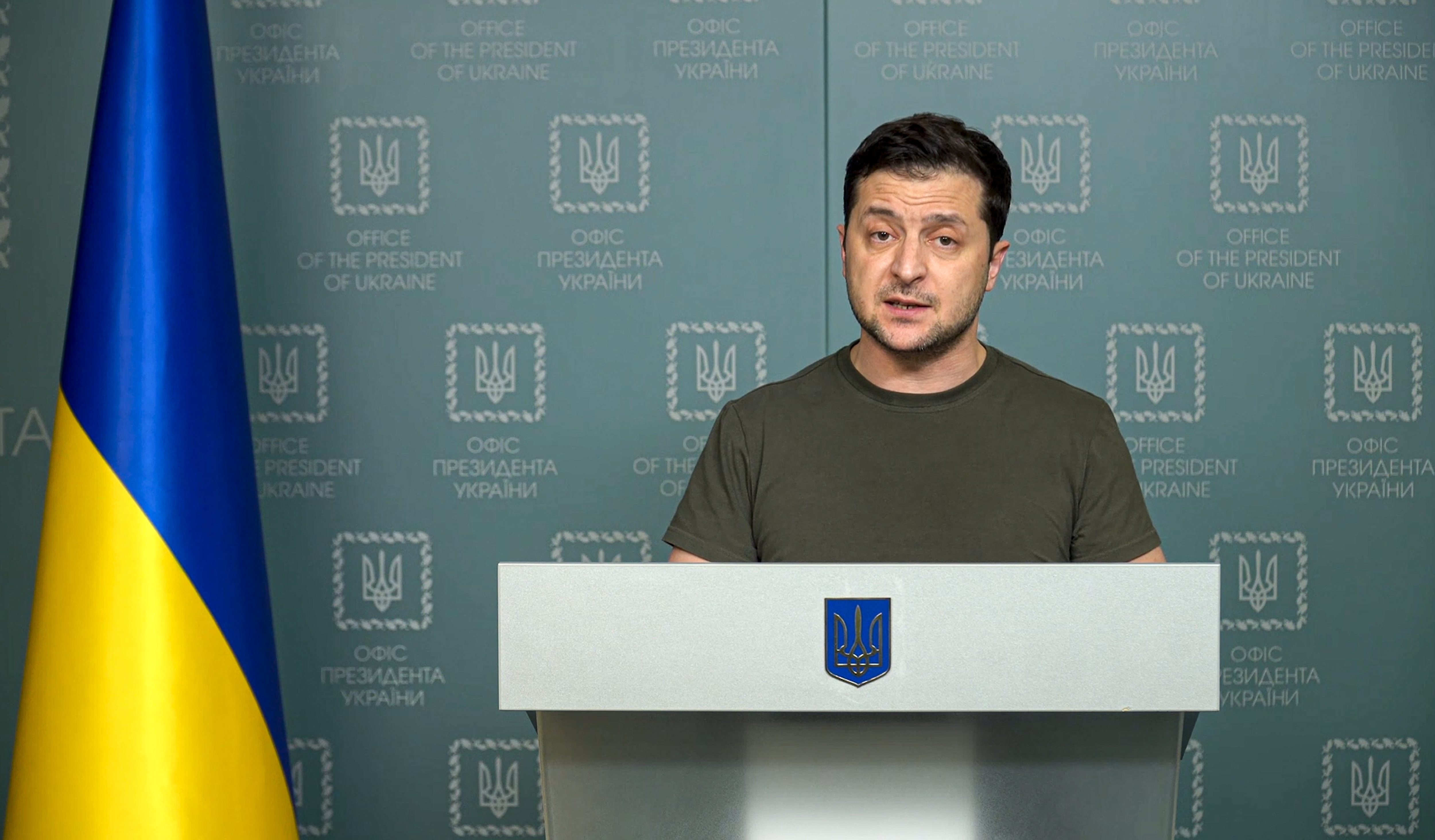
Peskov claimed Ukraine had proposed holding talks in Gomel. He added that the Russian military action was going forward pending the talks start.
Zelenskyy's adviser Mykhailo Podolyak dismissed Moscow's offer as "manipulation," adding that "Russia keeps lying" and emphasising that Ukraine hadn't agreed to talks in the Belarusian city.
Speaking in a video message Sunday, President Volodymyr Zelenskyy named Warsaw, Bratislava, Istanbul, Budapest or Baku as alternative venues.
He said other locations are also possible but made clear that Ukraine doesn't accept Russia's selection of Belarus, given the Russian ally's role in Moscow's 3-day-old invasion.
"Warsaw, Bratislava, Budapest, Istanbul, Baku, we offered all of them to the Russian side and we will accept any other city in a country that hasn't been used for launching missiles," Zelenskyy said.
"Only then the talks could be honest and put an end to the war."
Russia's plans unclear
Russian President Vladimir Putin hasn't disclosed his ultimate plans, but Western officials believe he is determined to overthrow Ukraine's government and replace it with a regime of his own, redrawing the map of Europe and reviving Moscow's Cold War-era influence.
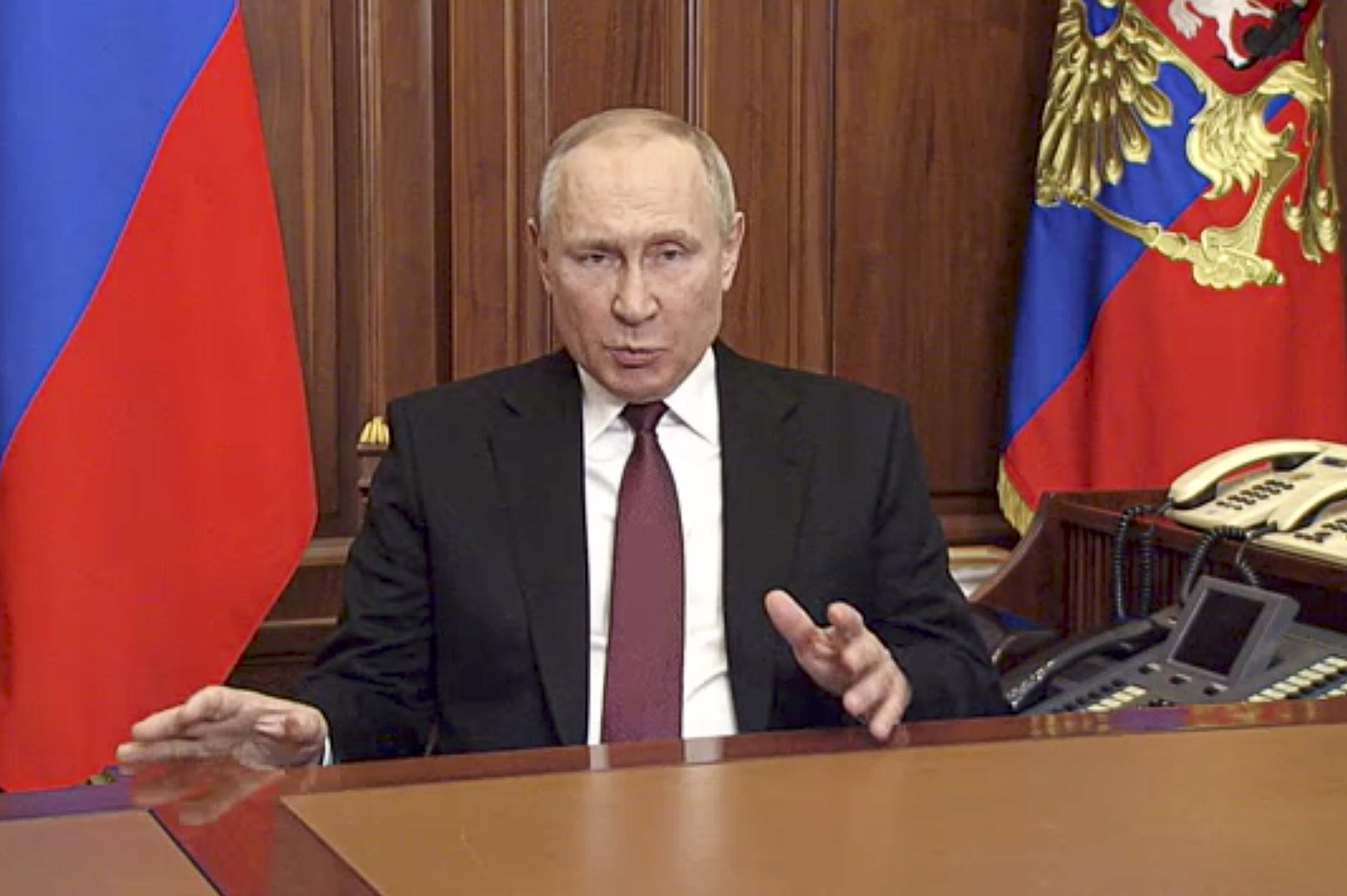
The pressure on strategic ports in the south of Ukraine appeared aimed at seizing control of Ukraine's coastline stretching from the border with Romania in the west to the border with Russia in the east.
A Russian Defence Ministry spokesman, Maj. Gen. Igor Konashenkov, said Russian forces had blocked the cities of Kherson on the Black Sea and the port of Berdyansk on the Azov Sea,
Cutting Ukraine's access to its sea ports that would deal a major blow to the country's economy. It also could allow Moscow to build a land corridor to Crimea, which Moscow annexed in 2014 and until now was connected to Russia by a 19-kilometre bridge, the longest bridge in Europe which opened in 2018.
Russia's military also put increasing pressure on strategic ports in the south of Ukraine, blocking the cities of Kherson on the Black Sea and the port of Berdyansk on the Azov Sea.
He said the Russian forces also took control of an airbase near Kherson and the Azov Sea city of Henichesk Ukrainian authorities also have reported fighting near Odesa, Mykolaiv and other areas.
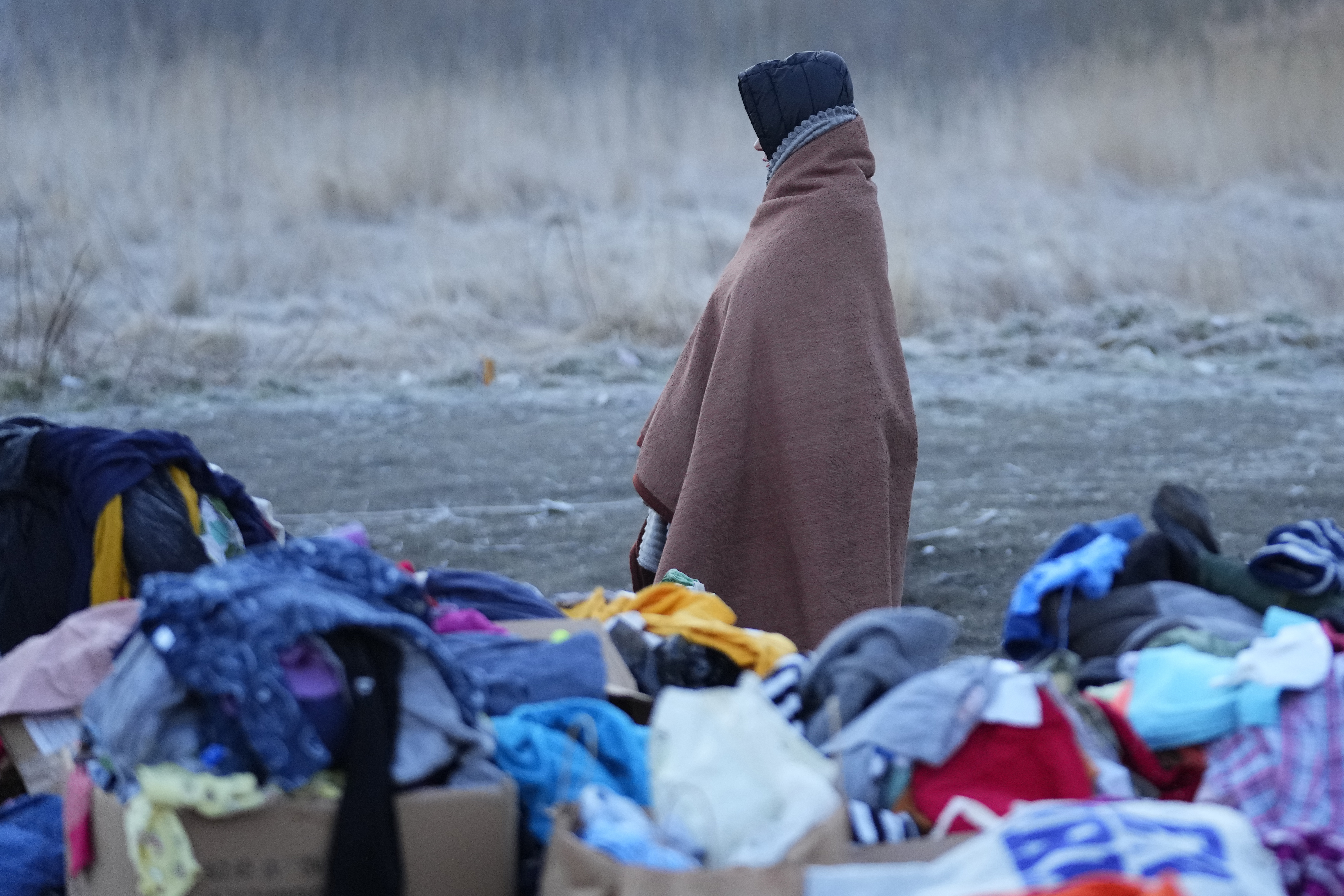
Ukraine's health minister reported Saturday that 198 people, including three children, had been killed and more than 1,000 others wounded during Europe's largest land conflict since World War II. It was unclear whether those figures included both military and civilian casualties.
The United Nations' refugee agency said on Sunday 368,000 Ukrainians have arrived in neighbouring countries since the invasion started Thursday and continues to rise.
The UN has estimated the conflict could produce as many as 4 million refugees, depending how long it continues.
Stronger sanctions from the West
As Russia pushes ahead with its offensive, the West is working to equip the outnumbered Ukrainian forces with weapons and ammunition while punishing Russia with far-reaching sanctions intended to further isolate Moscow.
Japanese Prime Minister Fumio Kishida announced Sunday that Japan has decided to join the US and European nations in cutting key Russian banks from the SWIFT international financial messaging system, to step up sanctions against Russia for its invasion of Ukraine.
Japan will also freeze assets of Russian President Vladimir Putin and other top Russian officials, while sending US$100 million ($138m) in emergency humanitarian aid to Ukraine, Kishida told reporters.
"The Russian invasion of Ukraine is a unilateral attempt to change the status quo and the act shakes the foundation of the international order. It's an outright violation to international law and we strongly denounce the act," Kishida said.
"Japan stands by the Ukrainian people who are fighting hard to defend their sovereignty and territory, their homeland and families."
In a statement welcoming new sanctions from Japan, White House Press Secretary Jen Psaki said the US and its allies "will continue working closely together to impose further severe costs and make Putin's war of choice a strategic failure."
The US, European Union and United Kingdom agreed to block "selected" Russian banks from the SWIFT global financial messaging system, which moves money around more than 11,000 banks and other financial institutions worldwide, on Saturday as part of a new round of sanctions aiming to impose a severe cost on Moscow for the invasion. They also agreed to impose "restrictive measures" on Russia's central bank.
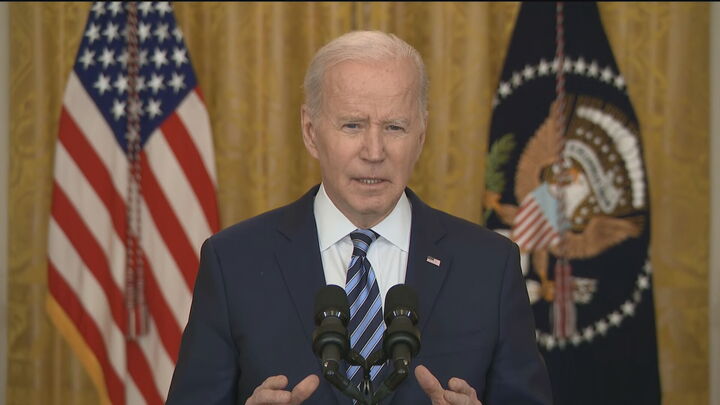
The US pledged an additional US$350 million ($484m) in military assistance to Ukraine, including anti-tank weapons, body armour and small arms.
Germany said it would send missiles and anti-tank weapons to the besieged country and that it would close its airspace to Russian planes.
Canada announced Sunday it would join the many European countries closing its airspace to all Russian aircraft, with Transport Minister Omar Alghabra saying Canada will hold Russia accountable for its unprovoked attacks.
Most European countries have either announced they are closing their airspace or said they intend to do so. So far Spain, Greece, Serbia and Turkey are among the few left that haven't joined in the move against Russia.
Greece is sending ammunition, assault rifles and missile launchers to Ukraine in response to a request by Ukraine's government.
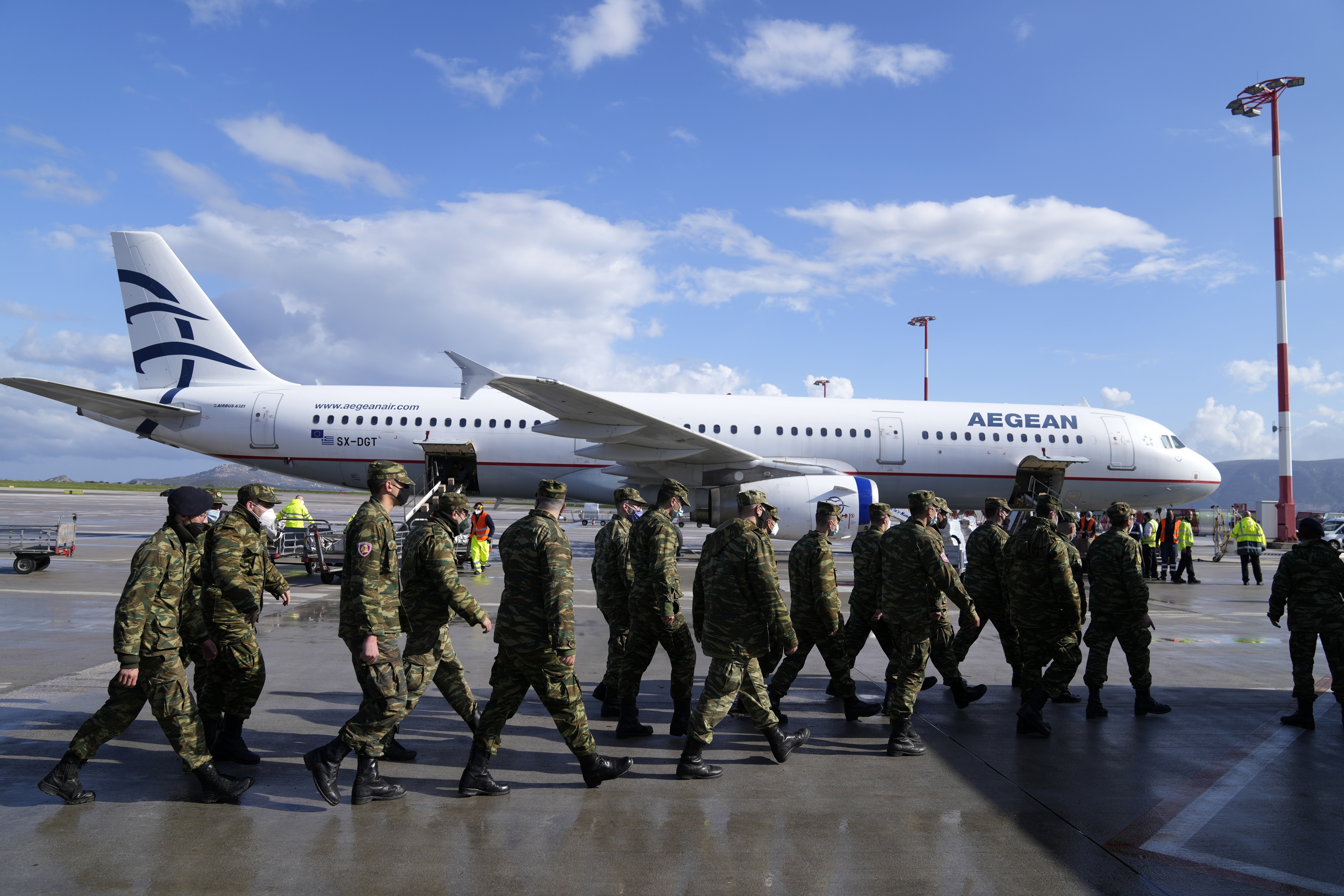
The military aid was decided at a meeting Sunday morning between Prime Minister Kyriakos Mitsotakis and senior defence officials.
A C-130 plane with the equipment has arrived in Poland, and a second one will arrive later, a Defence Ministry official said.
Two more planes carrying humanitarian aid such as blankets and food have also left Athens International Airport for Poland, the spokesman said.
Responding to a request from Ukraine's minister of digital transformation, tech billionaire Elon Musk said on Twitter that his satellite-based internet system Starlink was now active in Ukraine and that there were "more terminals en route."
https://twitter.com/FedorovMykhailo/status/1497543633293266944?ref_src=twsrc%5Etfwhttps://twitter.com/elonmusk/status/1497701484003213317?ref_src=twsrc%5Etfw
Putin sent troops into Ukraine after denying for weeks that he intended to do so, all the while building up a force of almost 200,000 troops along the countries' borders.
He claims the West has failed to take seriously Russia's security concerns about NATO, the Western military alliance that Ukraine aspires to join. But he has also expressed scorn about Ukraine's right to exist as an independent state.
Ukraine's ambassador to the US, Oksana Markarova said Ukraine was gathering evidence of shelling of residential areas, kindergartens and hospitals to submit to an international war crimes court in The Hague as possible crimes against humanity.
The International Criminal Court's prosecutor has said he is monitoring the conflict closely.