A Dunedin woman says an aggressive sign threatening to shoot people’s pets erected at the entrance to a popular Dunedin walking track is unacceptable and left her child anxious.Rochelle Crossman was out for a walk at Whare Flat…
Tag Archives: oceania
Australia imposes further sanctions on Russia
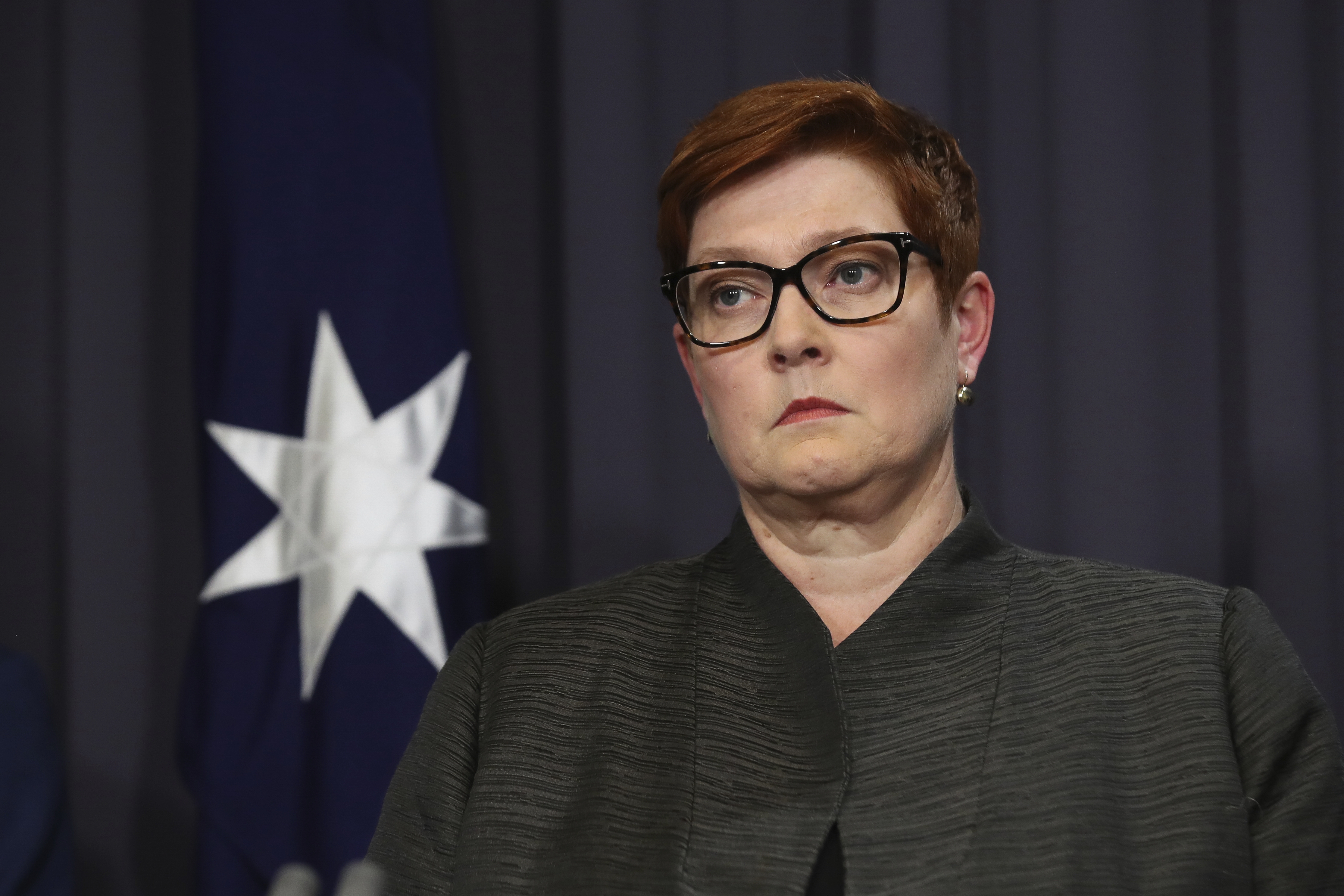
Australia is imposing sanctions against all 339 members of the Russian parliament and is considering sanctions against Russian President Vladimir Putin as well as his Foreign Minister Sergei Lavrov over Russia's invasion of Ukraine.
Australian Foreign Minister Marise Payne also announced sanctions against eight Russian oligarchs close to Mr Putin today.
Australia was also taking steps to imposed sanctions on key figures in the Belarusian government who had aided the Ukraine invasion.
LIVE UPDATES: Explosions in Kyiv as Ukrainians take cover from Russian attack
READ MORE: US President personally sanctions Putin and foreign minister
Payne said she was seeking advice from her department on following western allies' example in sanctioning Putin.
"It is an exceptional step to sanction leaders, but this is an exceptional situation," Ms Payne said.
She defended the use of sanctions against Russia after the Australian government made it clear it would only provide non-lethal support to Ukraine.
"Sanctions have been progressively rolled out, and they take an amount of time to come into effect," she said.
"That is the nature of the mechanism, but they are impactful and significant sanctions."
"They are highly targeted, they are highly focused, and they are coordinated.
READ MORE: Soldiers' defiant last words as Russian warship targets Snake Island
READ MORE: Harrowing footage shows Russian tank run over Ukrainian civilian car
She continued to condemn the actions of Russia and Mr Putin as the attack on Ukraine and its people intensifies.
"We have said clearly that the behaviour of an authoritarian state… breaches completely the sovereignty and territorial integrity of another country," Ms Payne said.
She said the world will not tolerate Russia's actions.
"There can be no doubt, absolutely no doubt about the view of the international community overwhelmingly in relation to this matter, not for anyone," Ms Payne said.
"There is very strong agreement and determination to ensure that Russia faces a high cost for what is a completely unprovoked, an unjustified attack on its neighbour," Ms Payne said.
She is seeking guidance from the Department of Foreign Affairs and Trade about sanctioning the two Russian leaders.
"He [Vladimir Putin] will be personally responsible for the deaths and the suffering of innocent Ukrainians."
Covid 19 Omicron outbreak: 'Rapid advice' incoming on isolation rules for travellers
The isolation rules that apply to people entering New Zealand may soon change following new advice from experts. Prime Minister Jacinda Ardern revealed this morning the Government had requested “rapid advice” from the Strategic…
Protesters turn to tinfoil hats as increasing sickness blamed on Government beaming radiation rays
Those protesting at Parliament are increasingly reporting symptoms of illness and linking it to a conspiracy theory that the Government is making them sick with a radiation weapon.The theory has gained so much traction in the protest…
Covid 19 Omicron outbreak: 'No reason' left for MIQ with community cases outnumbering border ones – group
By RNZ A group representing overseas New Zealanders says it’s “absolutely bonkers” that returning Kiwis have to isolate – some in MIQ – when there are 12,000 daily cases in the community.Nineteen cases were detected at the border…
Harrowing footage shows Russian tank run over Ukrainian civilian car
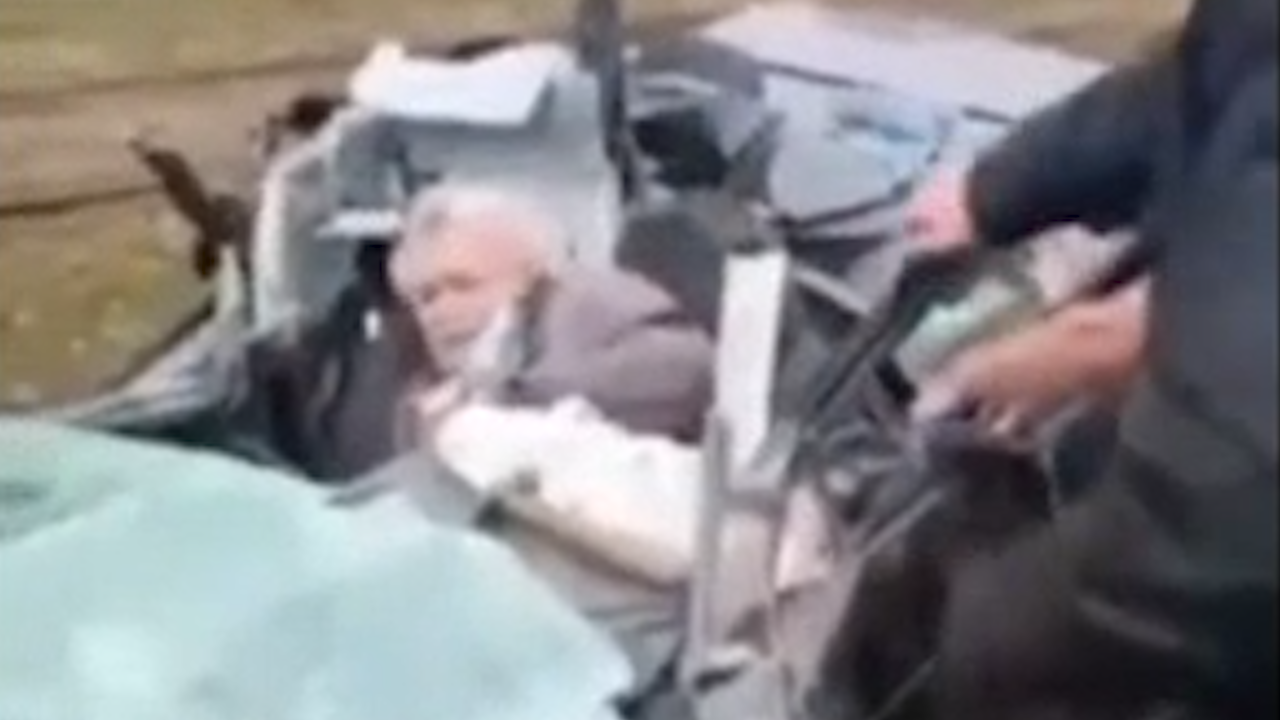
A Ukrainian civilian has miraculously survived after a Russian tank ran over and crushed their car.
The harrowing footage showed the tank swerving to drive over the car then reversing back over it in Kyiv's Obolon district.
Screams from onlookers can be heard in the disturbing video.
LIVE UPDATES: Russian troops near capital
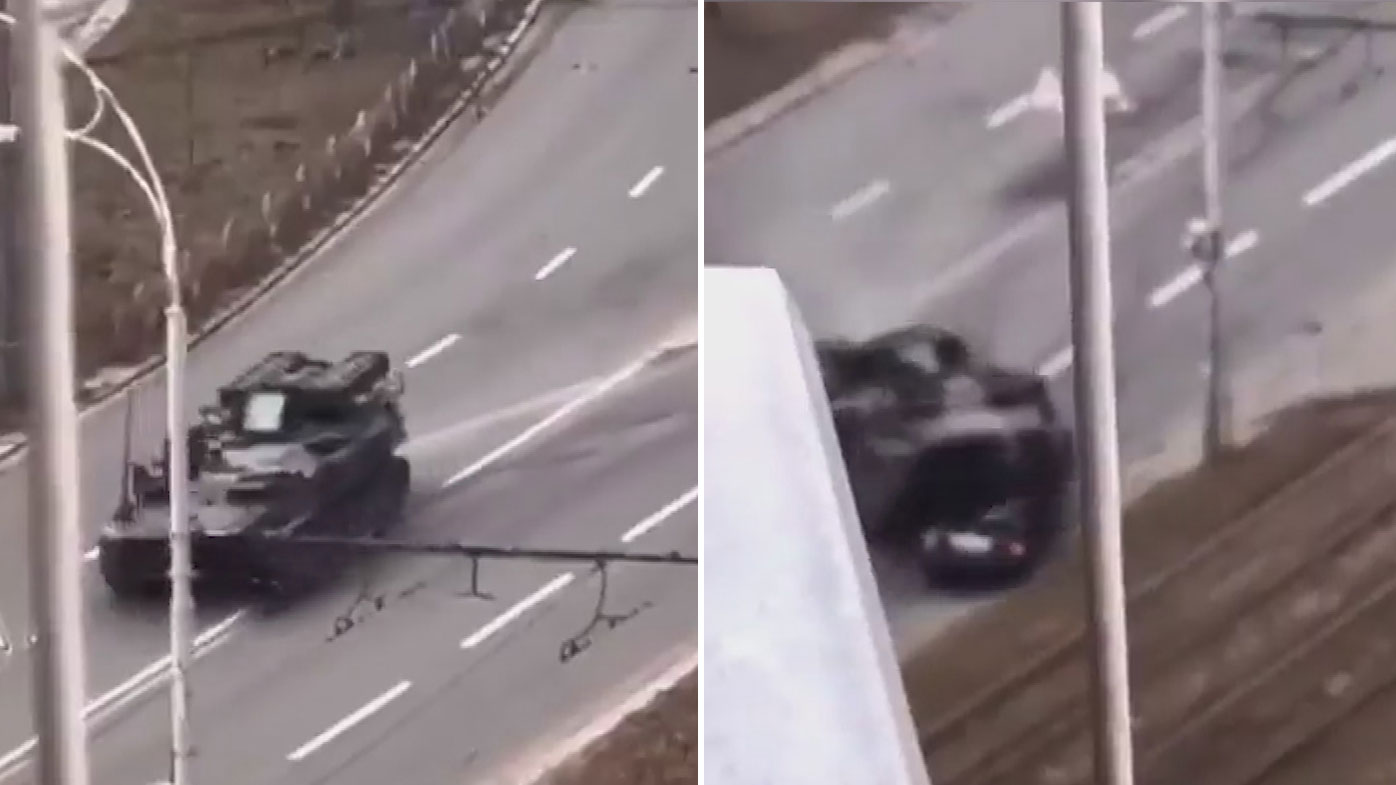
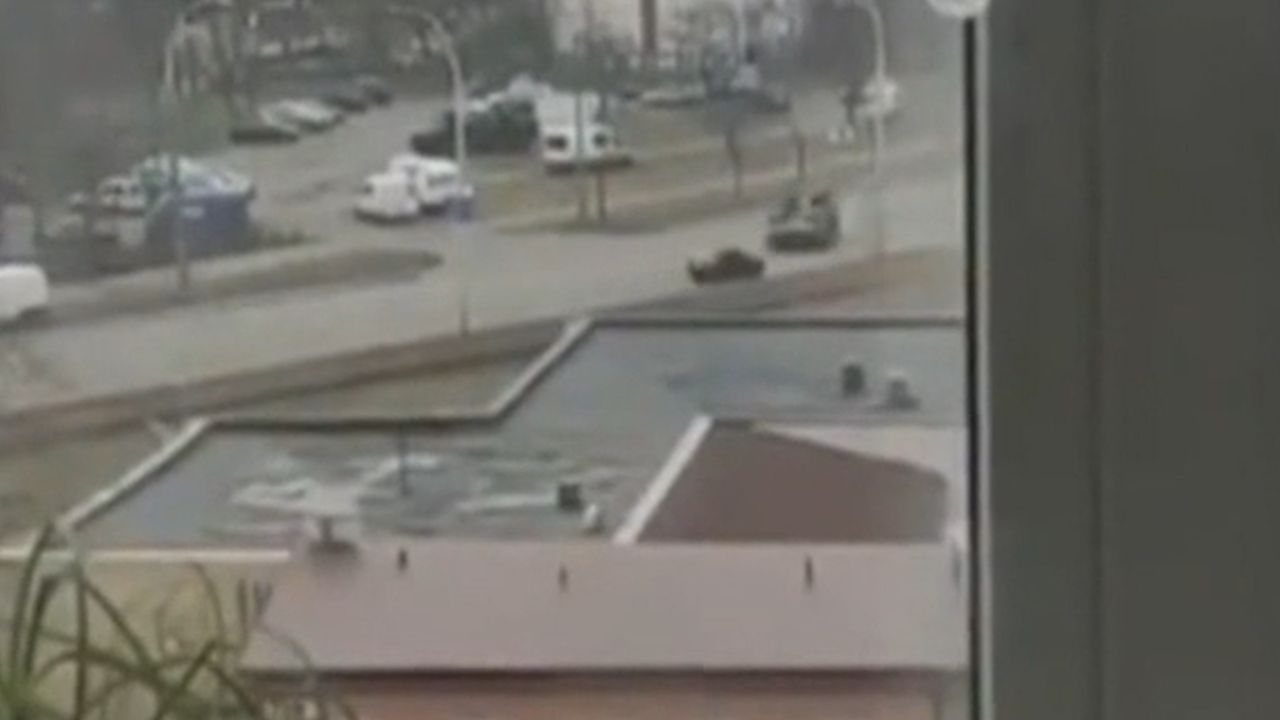
An elderly man had been driving the car and was rescued from the flattened car moments later.
He was pulled from the wreckage by some of his neighbours.
He appeared to be alert in the video but the extent of his injuries are not known.
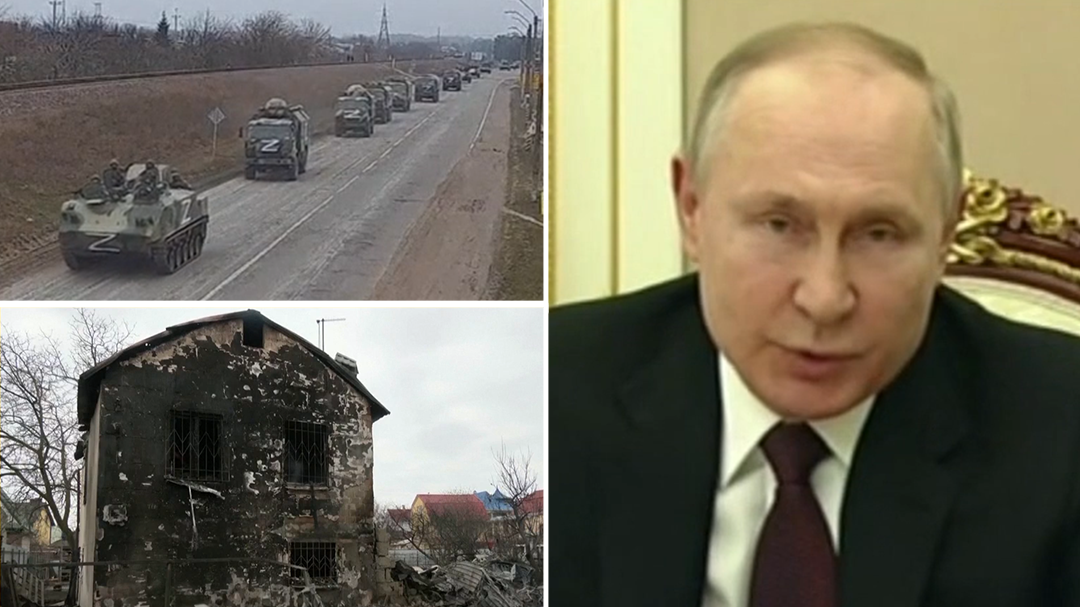
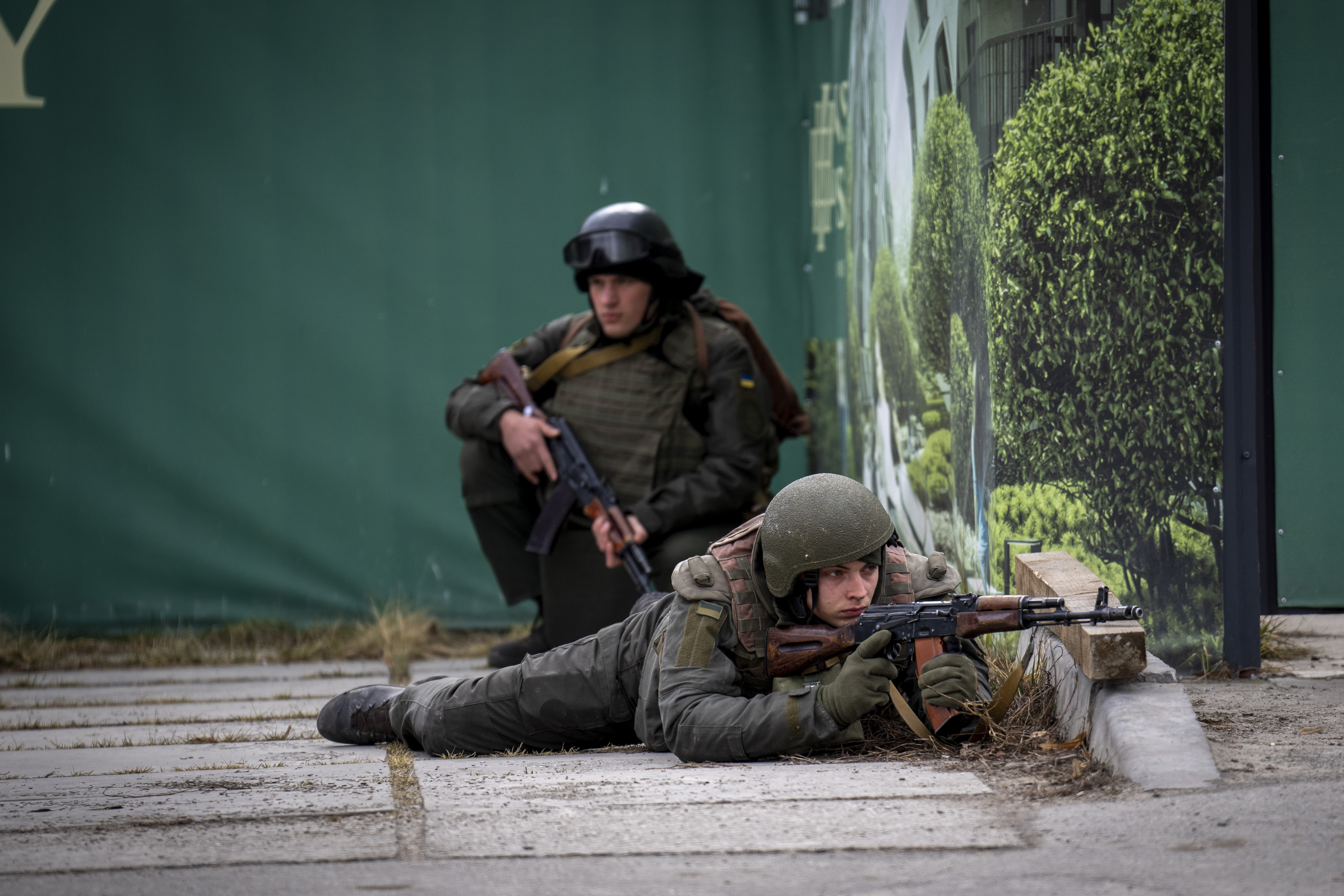
It comes as Russian troops have started to move in on the Ukrainian capital, tanks seen rolling through the northern districts.
READ MORE: Ukraine's capital under threat as Russia presses invasion
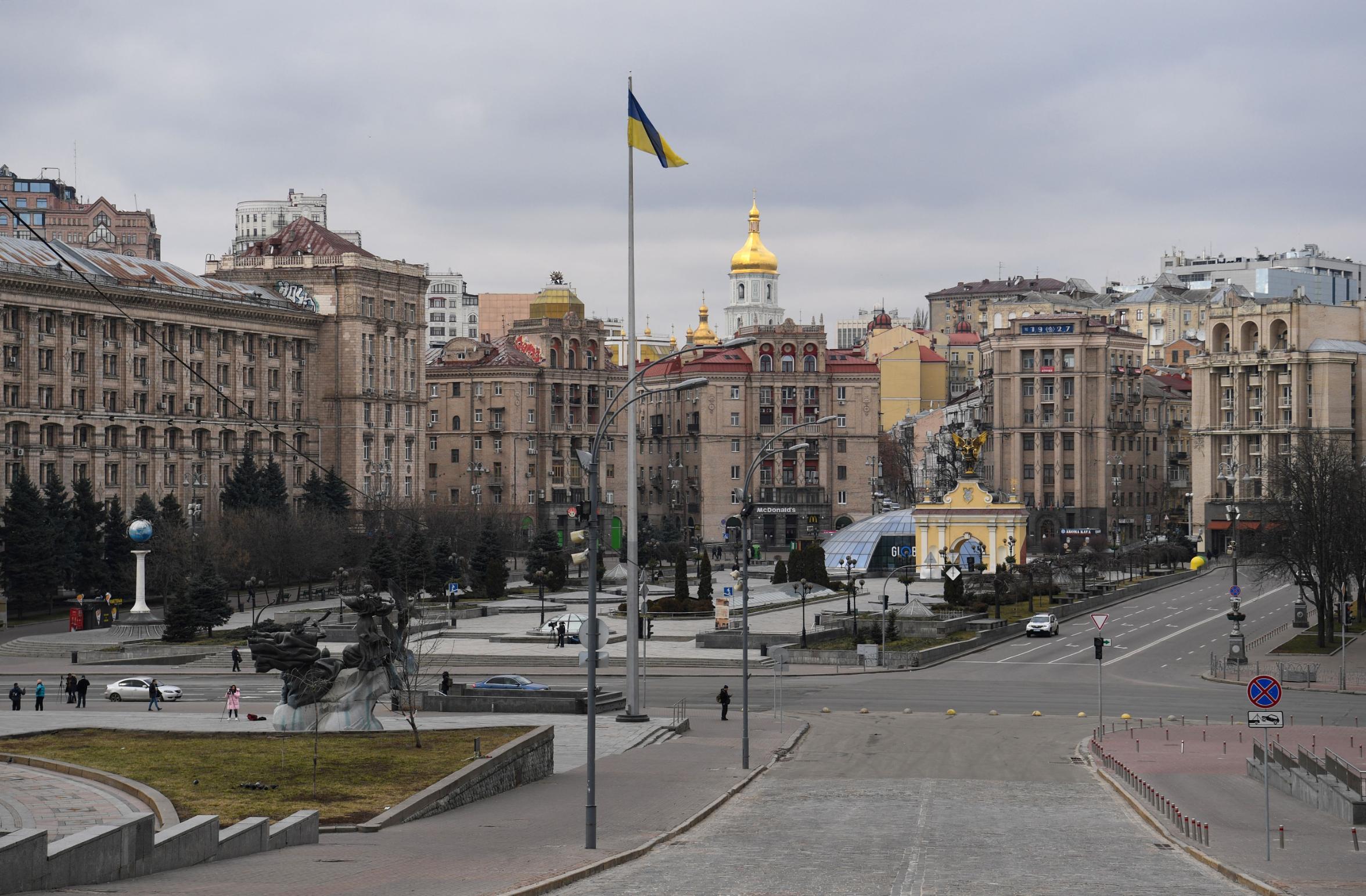
Fresh explosions have been reported in Kyiv.
Mayor Vitaly Klitschko said five explosions hit an area near a major power plant on the city's eastern outskirts.
Russia's military said it had seized a strategic airport outside Kyiv that allows it to quickly build up forces to take the capital.
READ MORE: Ukraine and Russia's militaries are David and Goliath, how they compare
It claimed to have already cut the city off from the west — the direction many of those escaping the invasion are heading in, with lines of cars snaking toward the Polish border.
There are reports of hundreds of casualties from the warfare.
US President personally sanctions Putin and foreign minister
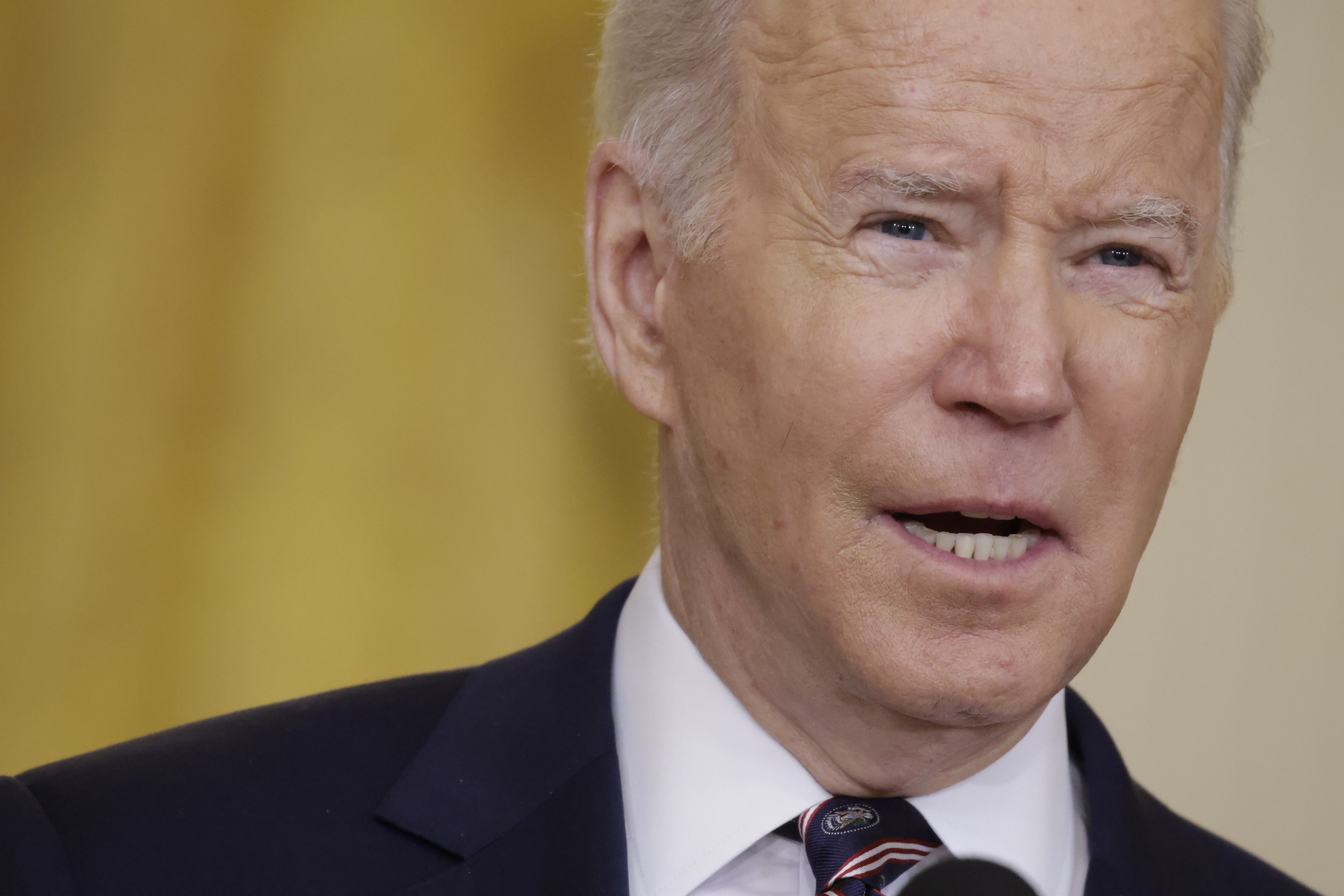
The US President has announced he will personally sanction the Russian president amid a cascade of condemnation from the highest levels over Moscow's invasion of Ukraine.
The Biden administration announced Friday that it will move to freeze the assets of President Vladimir Putin and Foreign Minister Sergey Lavrov, following the European Union (EU) and Britain indirectly sanctioning top Russian leadership.
The Treasury Department announced the sanctions shortly after the EU said it had also approved an asset freeze against Mr Putin and Mr Lavrov as part of a broader package of sanctions against Russia for the invasion of Ukraine.
LIVE UPDATES: Russian forces approach Ukraine's capital
British Prime Minister Boris Johnson also told NATO leaders during a call Friday that Britain would move to impose sanctions against Mr Putin and Mr Lavrov.
It wasn't immediately clear how impactful an asset freeze would be on Mr Putin or Mr Lavrov, but the direct action targeting the Russian president was meant to be seen as a warning to Mr Putin that he could emerge as an international pariah if he doesn't end the invasion of Ukraine.
It comes after the EU's unanimous decision to sanction Mr Putin, which was part of a broader sanctions package, indicated that Western powers are moving toward unprecedented measures to try to force Putin to stop the brutal invasion of Russia's neighbour and from unleashing a major war in Europe.
Latvian Foreign Minister Edgars Rinkevics tweeted that the 27-nation bloc's foreign ministers adopted the sanctions package and "the asset freeze includes President of Russia and its Foreign Minister."
READ MORE: Morrison slams China's stance over Ukraine invasion
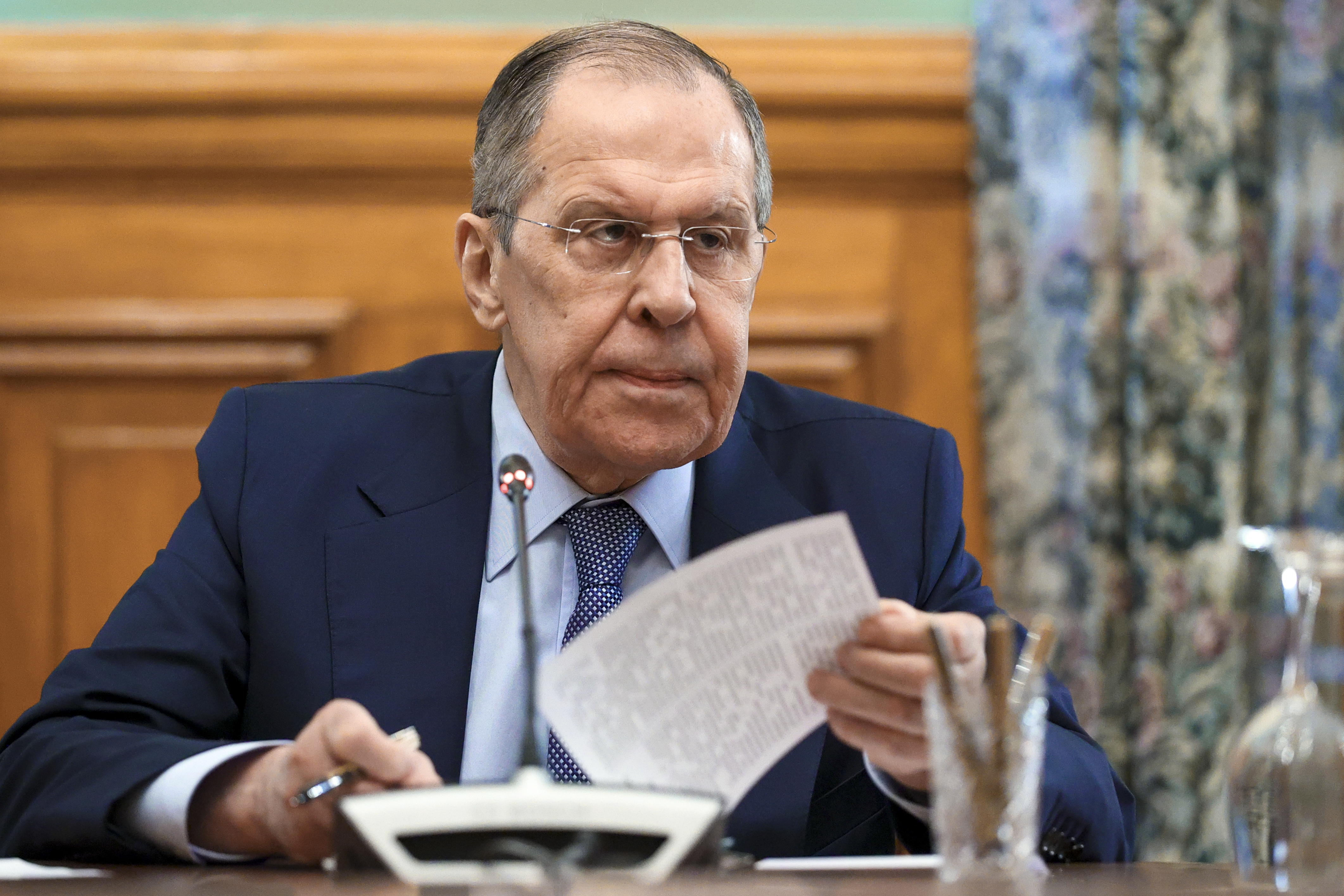
Austrian Foreign Minister Alexander Schallenberg said the move would be "a unique step in history toward a nuclear power, a country that has a permanent seat on the Security Council, but also shows … how united we are."
It was unclear what the practical impact on the two men would be and how important their assets in the EU were.
The UK has also confirmed fresh sanctions on Putin, with Boris Johnson tweeting he "urged NATO leaders to take immediate action against SWIFT to inflict maximum pain."
An equally big move would be to ban Putin and Lavrov from EU travel.
But overnight, EU leaders made it clear that would be off the table for now, if only since it might complicate diplomatic moves once all sides get around the negotiating table.
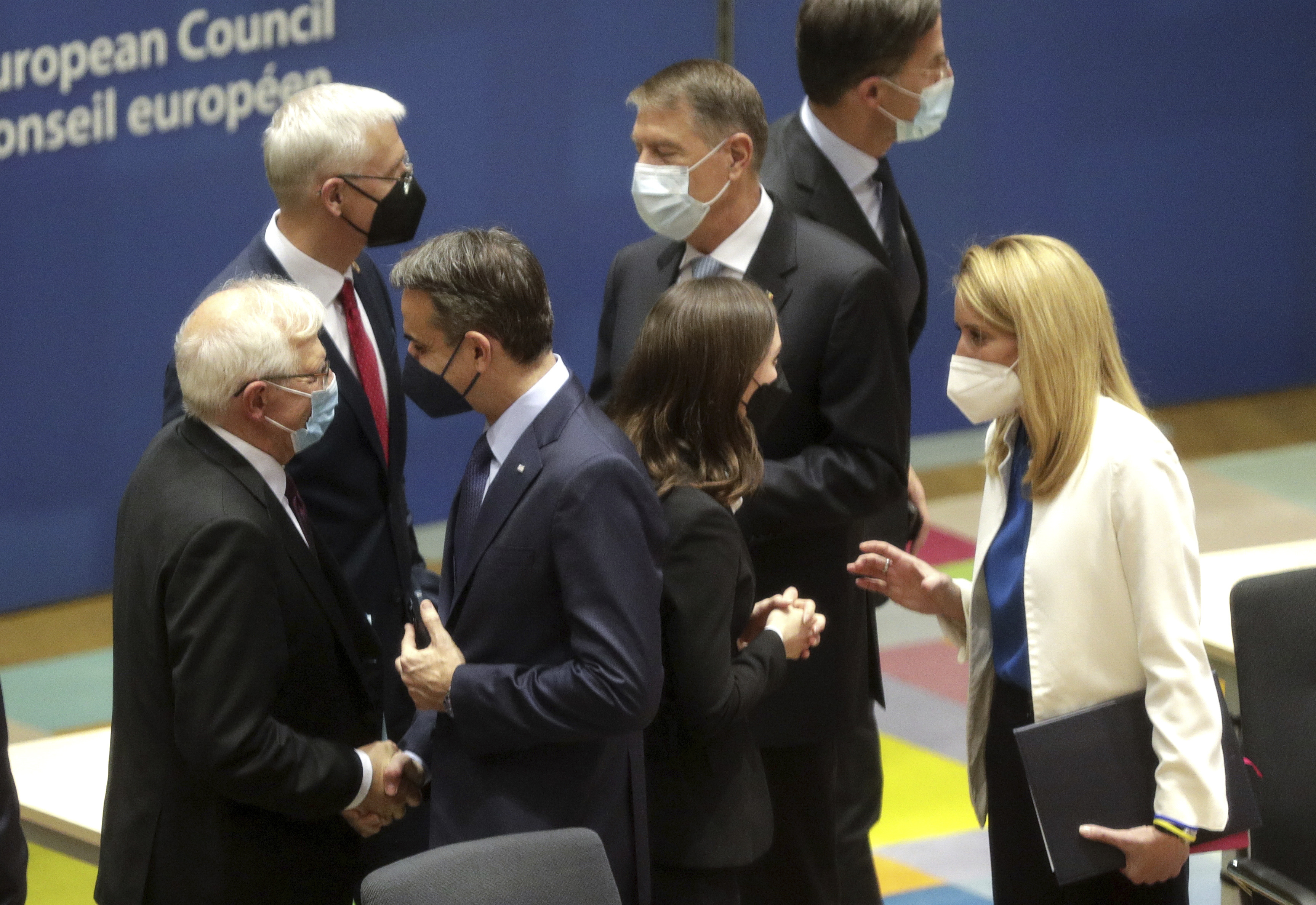
EU ministers have said that even further sanctions were still possible, including booting Russia off SWIFT, the dominant system for global financial transactions.
"The debate about SWIFT is not off the table, it will continue," Luxembourg Foreign Minister Jean Asselborn said.
Admonishing Russia further, the Council of Europe suspended Russia from the continent's foremost human rights organisation. The 47-nation council said Russia remained a member and continued to be bound by the relevant human rights conventions.
Undeterred in the game of punitive sanctions, Russia started its own tit-for-tat measures, banning British flights to and over its territory in retaliation to a similar UK ban on Aeroflot flights.
https://twitter.com/BorisJohnson/status/1497277786704199690https://twitter.com/Arlietas/status/1497268345653104644?ref_src=twsrc%5Etfw
READ MORE: 'It's not a game': Australian photojournalist witnesses Ukraine invasion
Russian authorities also announced the "partial restriction" of access to Facebook after the social media network limited the accounts of several Kremlin-backed media.
Russian state communications watchdog Roskomnadzor said it demanded that Facebook lift the restrictions it placed Thursday on state news agency RIA Novosti, state TV channel Zvezda, and pro-Kremlin news sites Lenta.Ru and Gazeta.Ru.
As Russian bombs and troops pounded Ukraine during the invasion's first full day, world leaders began to fine-tune a response meant to punish the Russian economy and its leaders, including President Putin's inner circle.
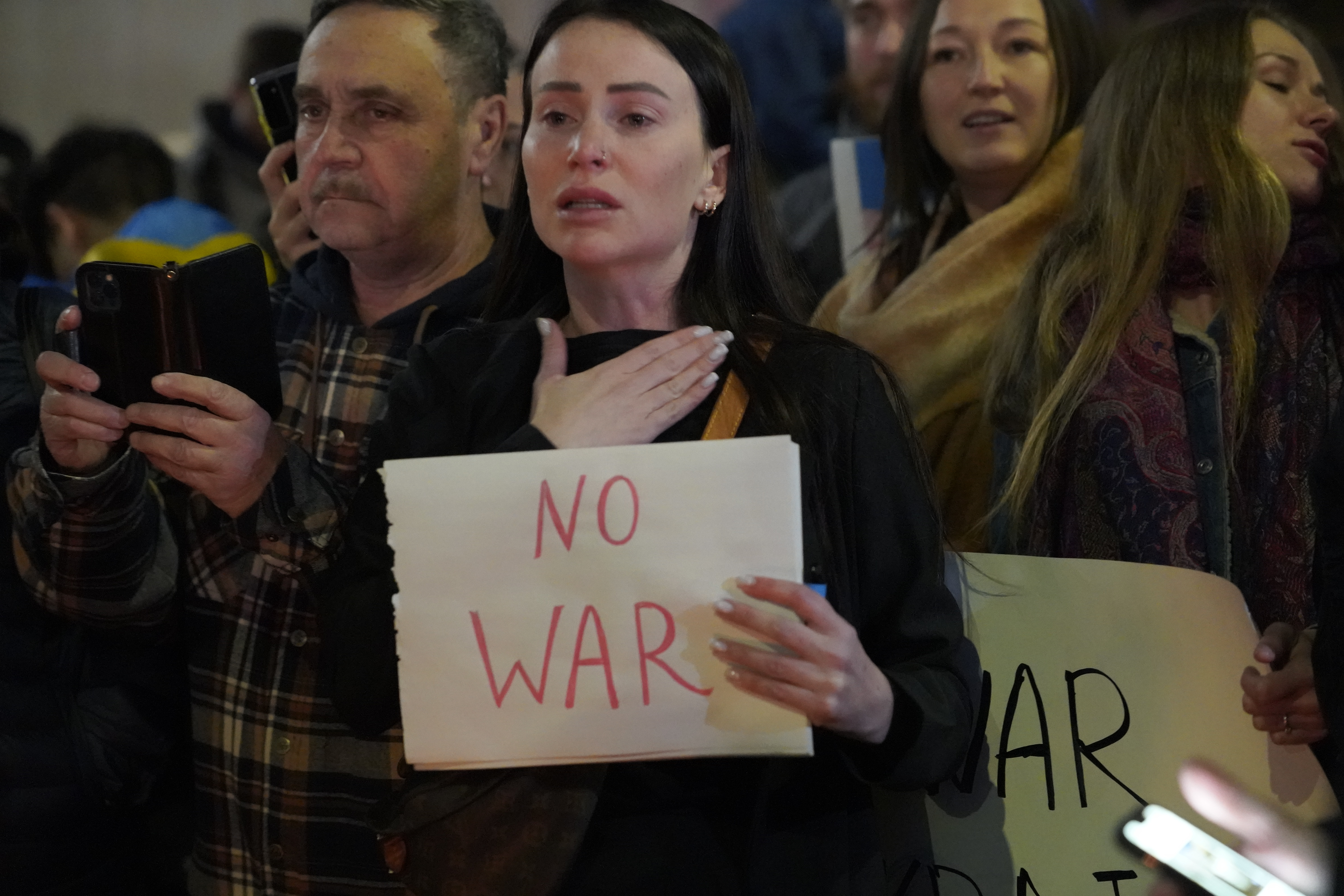
While there's an acute awareness that a military intervention is unlikely, for now, the strength, unity and speed of the financial sanctions — with the striking exception of China, a strong Russian supporter — signal a growing global determination to make Moscow reconsider its attack.
French Finance minister Bruno Le Maire said Friday that France and its European allies are determined to inflict great damage on Russian economy and punish Russia for the "foolish decisions of Vladimir Putin" with "massive and immediate sanctions."
"We want to isolate Russia financially," Le Maire said. "We want to cut all ties between Russia and the global financial system. We will dry up the financing of the Russian economy."
France and its allies have decided to further sanction individuals, as well as impose penalties targeting finance, energy and other sectors, French President Emmanuel Macron said Friday. The legal texts for the sanctions will be finalised and submitted for approval to EU foreign ministers later on Friday.
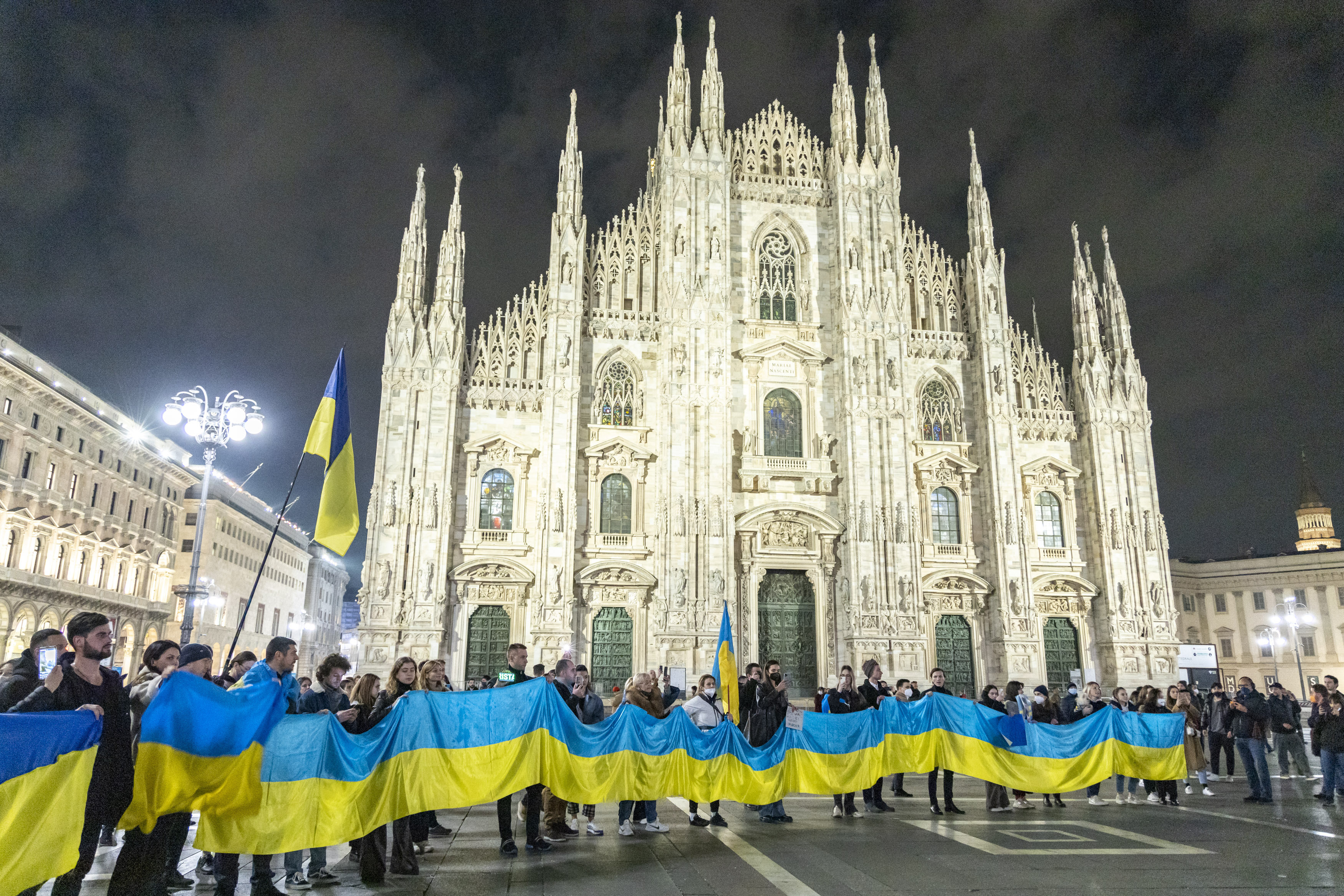
Macron also said that the EU has decided on economic aid for Ukraine in the "unprecedented" amount of €1.5 billion ($2.3b).
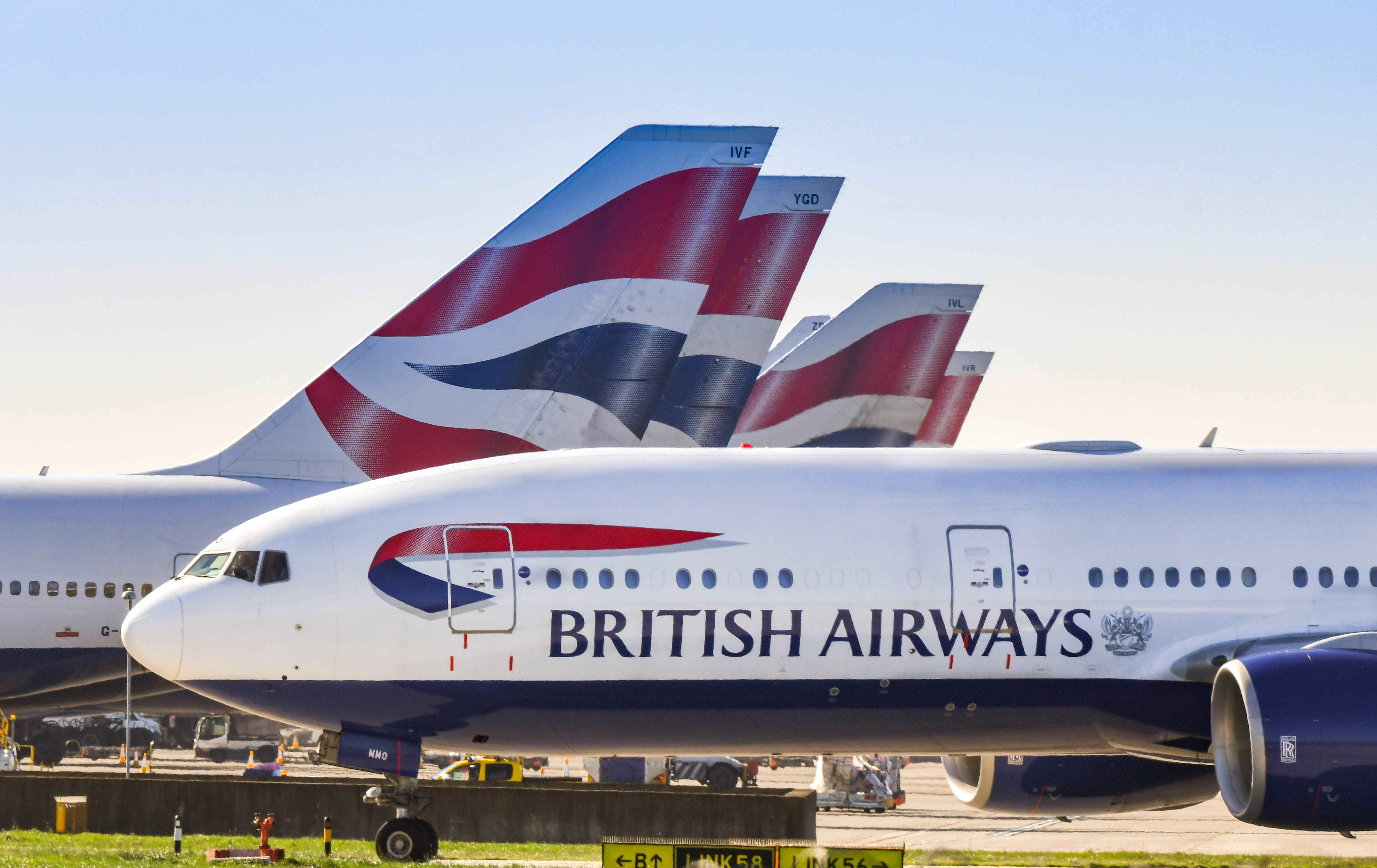
Russia's civil aviation authority has banned UK flights to and over Russia in retaliation to the British ban on Aeroflot flights. Rosaviatsiya said that all flights by UK carriers to Russia as well as transit flights are banned starting Friday.
It said the measure was taken in response to the "unfriendly decisions" by the British authorities who banned flights to the UK by the Russian flag carrier Aeroflot as part of sanctions over Russia's invasion of Ukraine.
Countries in Asia and the Pacific have joined the United States, the 27-nation European Union and others in the West in piling on punitive measures against Russian banks and leading companies. The nations have also set up export controls aimed at starving Russia's industries and military of semiconductors and other high-tech products.
READ MORE: The economic impacts of Russia invading Ukraine on Australia
"Japan must clearly show its position that we will never tolerate any attempt to change the status quo by force," Prime Minister Fumio Kishida told reporters Friday while announcing new punitive measures that included freezing the visas and assets of Russian groups, banks and individuals, and the suspension of shipments of semiconductors and other restricted goods to Russian military-linked organisations.
READ MORE: The economic impacts of Russia invading Ukraine on Australia
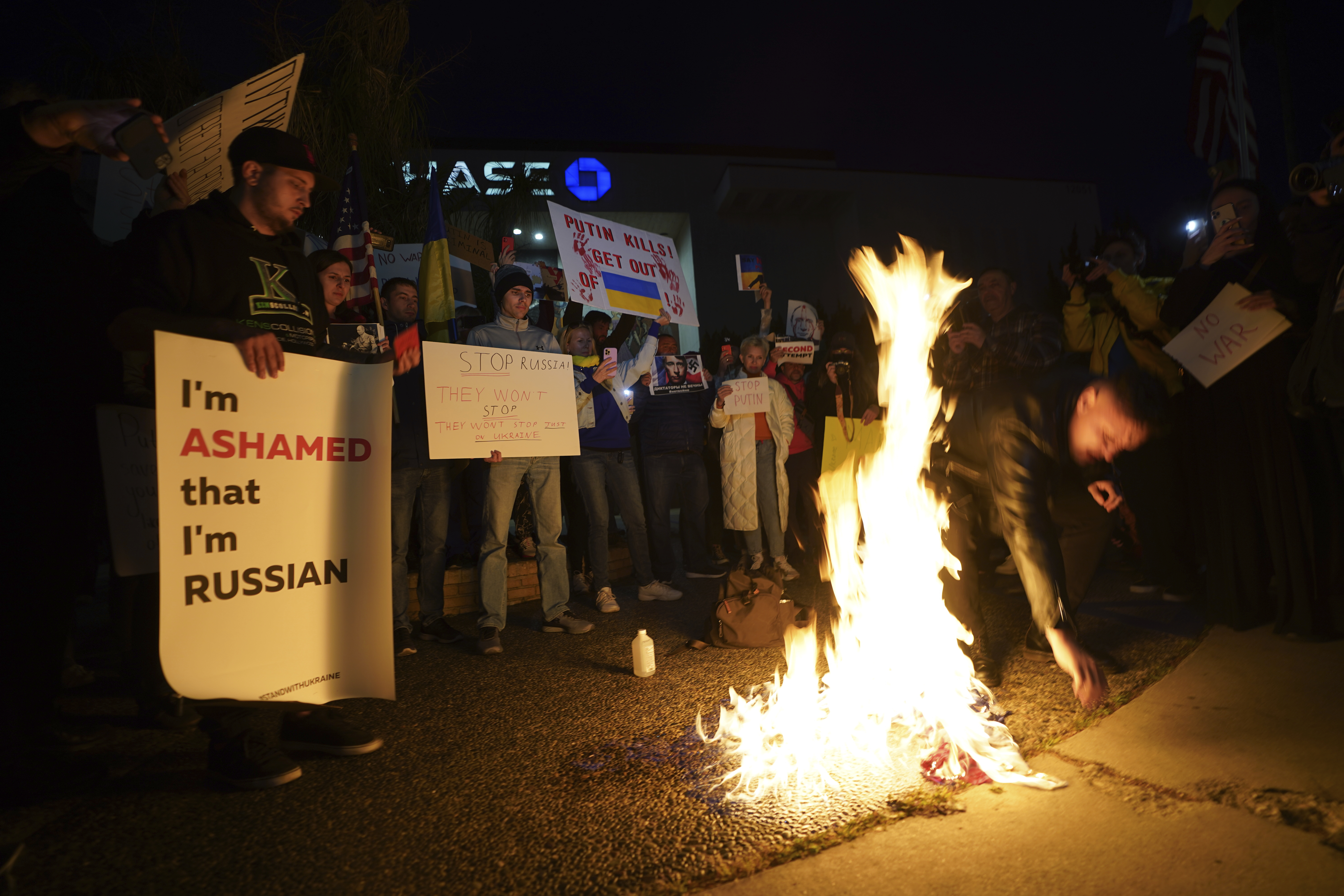
"Russia's invasion of Ukraine is an extremely grave development that affects the international order, not only for Europe but also for Asia," Kishida said.
How two refugees escaped Afghanistan on Australia's evacuation flights
It's been six months since Khalida Dawran and Reza Ranjbar were at Kabul's Hamid Karzai International Airport, fighting for their lives in deadly chaos, to secure a seat on an evacuation flight.
"We could see people being shot, being lashed. Myself, I was lashed by the Taliban and I was beaten by guns in a harsh way," Mr Ranjbar said.
"It was very difficult, it was emotionally hard and physically hard in every sense."
READ MORE: Baby lost in chaos of Afghanistan airlift is found and returned to family
On August 15, 2021, the Taliban returned to power after 20 years by seizing control of Afghanistan's capital of Kabul.
It sparked a race for the US and other western countries to complete a massive evacuation of their citizens and Afghan allies.
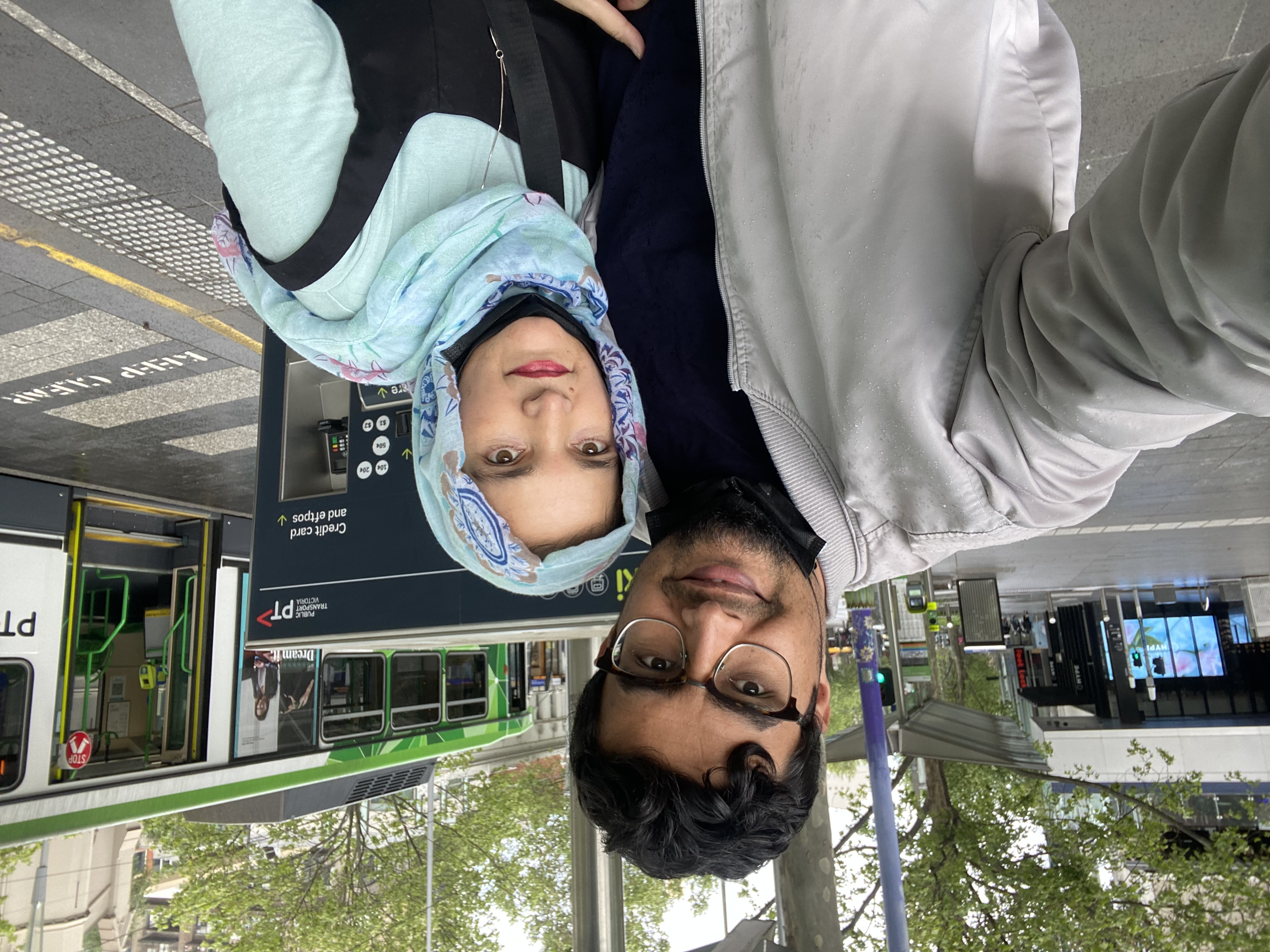
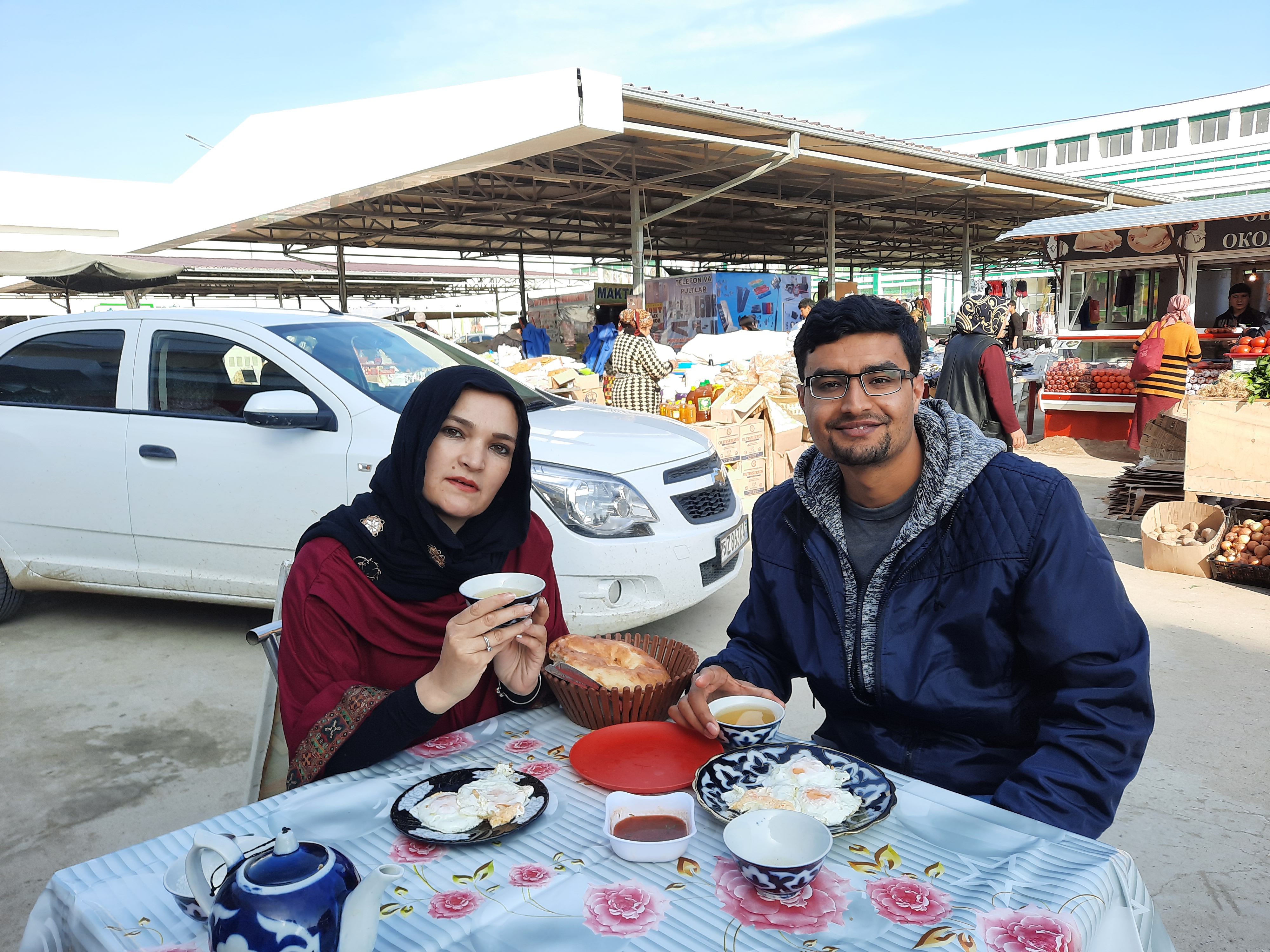
Ms Dawran and Mr Ranjbar are now happily living in Footscray in Melbourne's inner-west, but they hold grave concerns for those who didn't manage to flee and are still hiding from the Taliban.
Khalida and Reza's story
Before the fall of the Afghan government, Ms Dawran says she lived "a normal, happy and calm life" in the city.
She had a job working with an international organisation in peace negotiations, but as a human rights defender and a women's rights activist, Ms Dawran was at risk under the Taliban rule.
READ MORE: Pregnant New Zealand journalist in Afghanistan can go home
Mr Ranjbar first entered Australia in 2018 on a work visa as an engineer.
At the end of 2019, he went back to Kabul for a holiday, with plans to return the following year on a student visa but was not allowed back into the country due to COVID-19.
The Taliban had already killed three of their family members, who worked in security forces for the former government.
They were both aware the situation in Afghanistan was getting worse after US President Joe Biden announced the withdrawal of all troops in April.
It was "very difficult" for the couple to secure all of their important documents in the months leading up to the takeover, as they had to compete with tens of thousands of other residents to get their files.
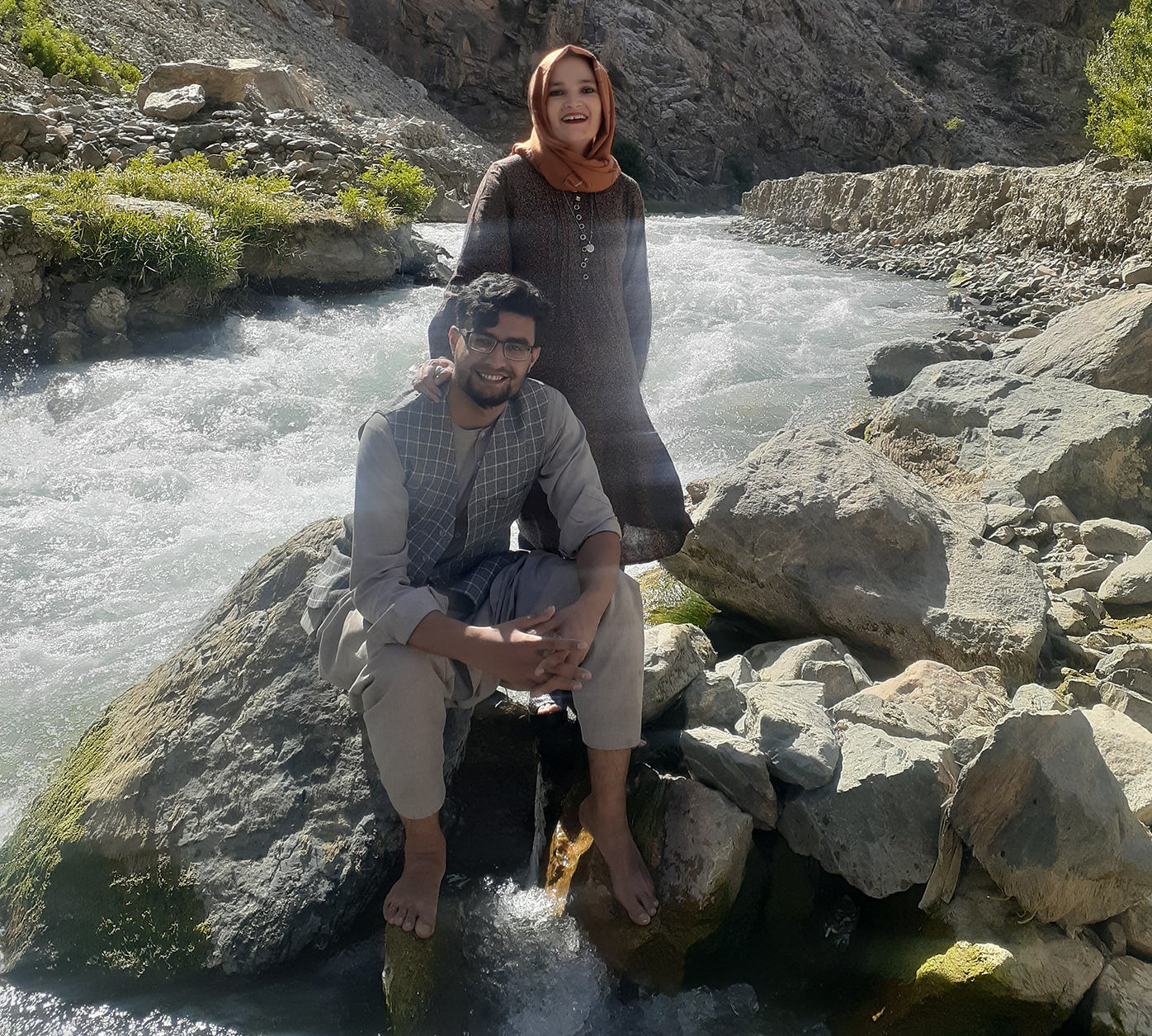
The morning the Taliban took control of Kabul, Ms Dawran and Mr Ranjbar looked outside of their apartment window in shock at the "radical change" that had occurred in the capital city overnight.
"It was as if we slept for a decade or something and when we woke we saw all these changes," Mr Ranjbar said.
Normally the busy city would be filled with people going about their everyday lives, with loud music and police patrolling.
Instead the streets were bare and the music was replaced with sounds of gunfire.
"We could see from our window that no one was going anywhere."
The evacuation
After the Taliban took control, Ms Dawran and Mr Ranjbar stayed inside their apartment, listening to gunfire and explosions all day and night.
"One day, we didn't have water to drink but we didn't dare go outside to get the water because it was not safe," Mr Ranjbar said.
As Mr Ranjbar was an Australian student visa holder, he received an email three days after the takeover from the Department of Foreign Affairs and Trade (DFAT), which allowed him to board an evacuation flight to Australia.
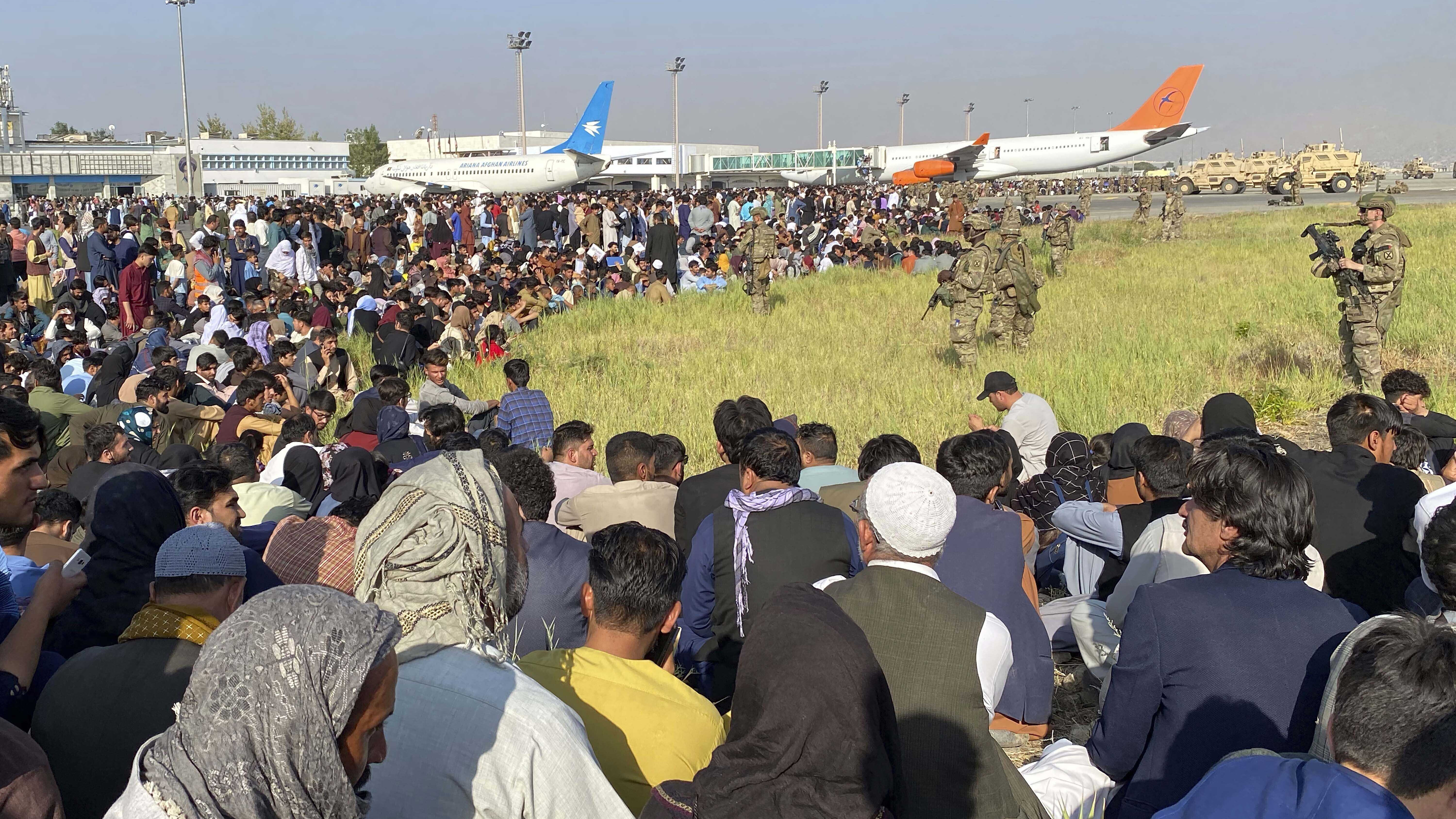
Ms Dawran was also allowed to enter Australia on an emergency visa, due to her marriage to Mr Ranjbar and the threat to her safety due to her work.
"They (DFAT) really cared about the residents who were stuck there… They saved my life," he said.
The chaos unfolding at Kabul's airport meant getting on a flight would be an extremely dangerous task.
"Once we received the news from Australia, we had to make the tough decision to go out," Mr Ranjbar said.
"Either way, our lives were at risk. We said it is better if we take action.
"No one could enter, the Taliban had a lot of checkpoints, every 500 metres.
"They were hitting people with their guns, with lashes, anything."
READ MORE: Aussie skateboarder transforms the lives of Afghan girls
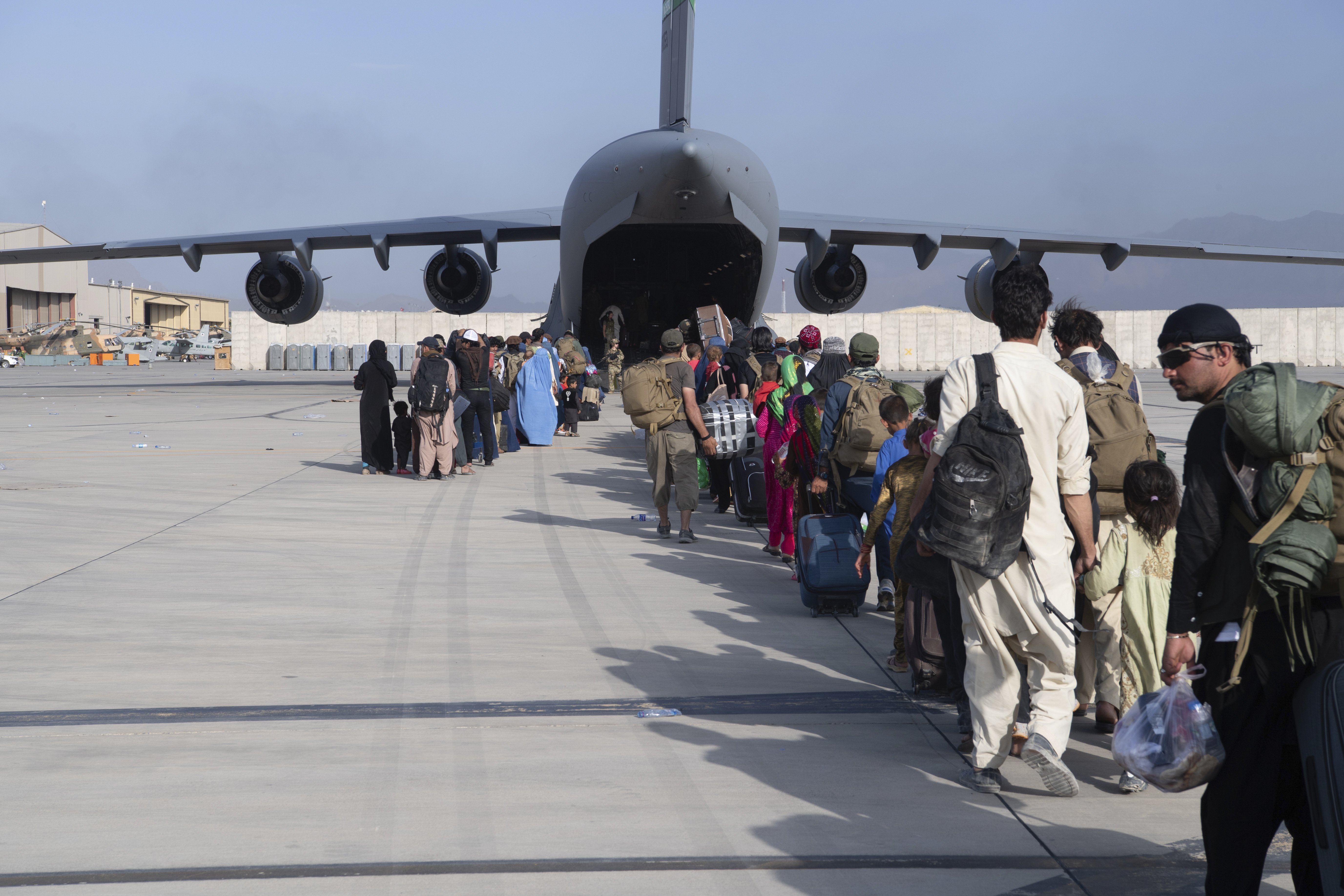
The couple spent two days and nights walking around the "chaotic crowds", trying to find a way in.
Eventually they found an ex-airport employee who was "very strong" and helped them push to the front.
He also knew where they could access the Australian gate and safely delivered them to the Australian Defence Force.
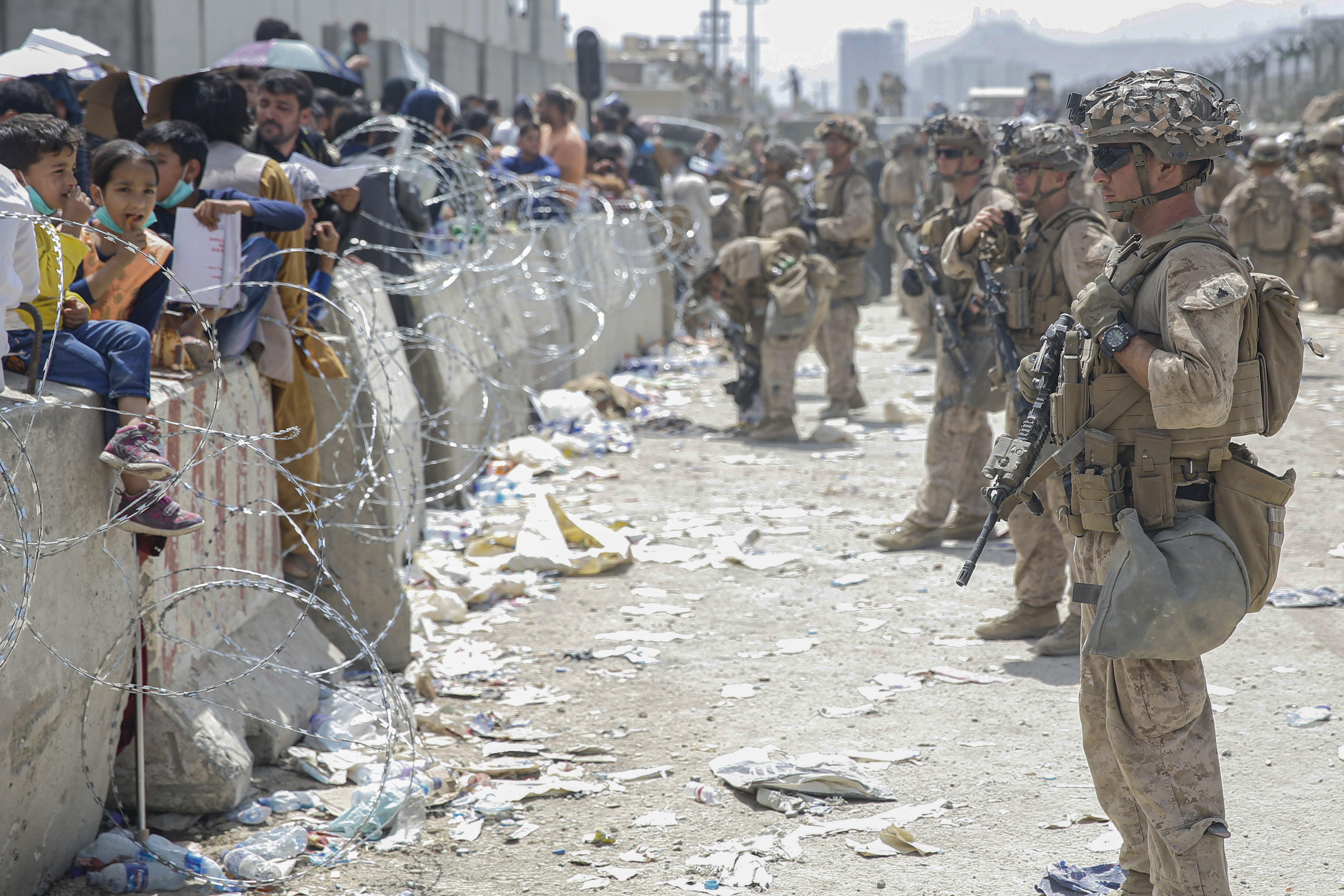
"We could reach the Australian soldiers who were outside in charge of checking the documents. The soldier's name was Taylor, when I saw him, he was very nice," Mr Ranjbar said.
"It was like we were already in Melbourne because it was safe, there was a wall outside and there were no Taliban or other people, just the Australian citizens."
They had to spend another three nights sleeping on sand inside the airport, while Ms Dawran's emergency visa was processed.
"We didn't have any food or water. Sometimes the officials would give us a bottle of their own water," Mr Ranjbar said.
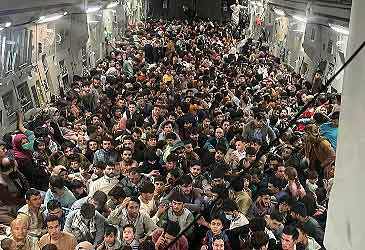
The couple made it on an evacuation flight to Dubai just days before at least 183 people were killed in suicide bombings outside the airport on August 26.
They spent two weeks in a refugee camp in Dubai and then two weeks in hotel quarantine in Sydney before arriving in their home city of Melbourne.
"As soon as we could sleep, we would dream of the chaos we went through, for at least one month."
Refugee support
Since arriving in Melbourne in September, Ms Dawran gained employment working in a school as an interpreter to help other Afghan children and Mr Ranjbar got a job in an engineering company.
"I think we are really lucky that we found a chance to come to Australia, in particular to Melbourne," Ms Dawran said.
The couple say they are now "very happy here" and are thankful for all of their warm and welcoming Australian friends.
"I really found each single Australian very friendly, supportive and kind."
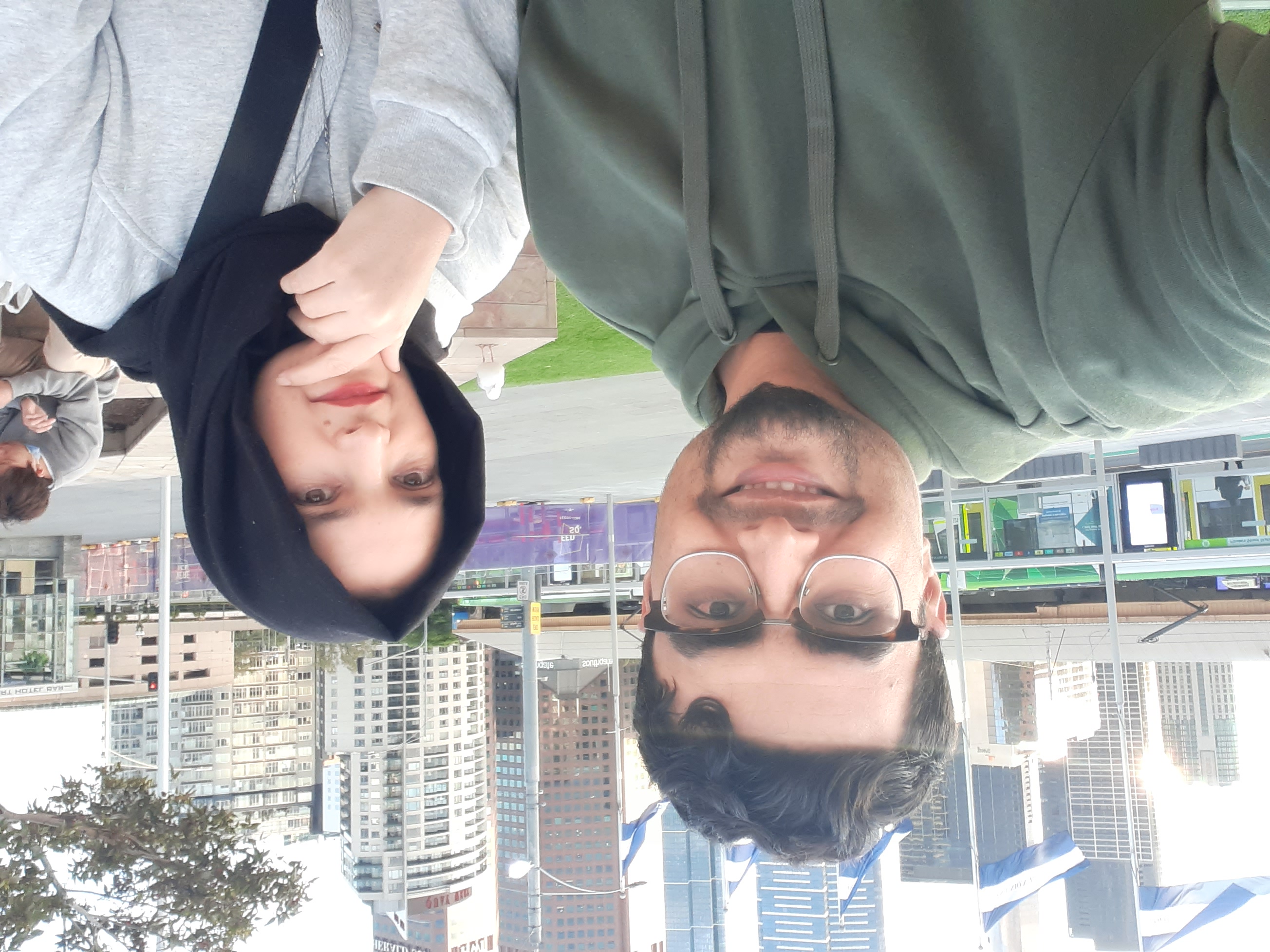
They both started working extra jobs on the weekends to help families in "extreme need" back in Afghanistan as many people are still hiding from the Taliban and cannot work to pay for basic essentials.
"They didn't even have food to feed their children two times a day," Mr Ranjbar said.
"People who are ill, who need medication and don't have support, many people loose their lives from that."
A fundraising page has been set up by the couple, with a goal of raising $100,000.
So far, they've raised nearly $7000.
"We can assure it (donations) will go to the most needy people and not a cent will be wasted."
'That is actually somewhere I used to live'
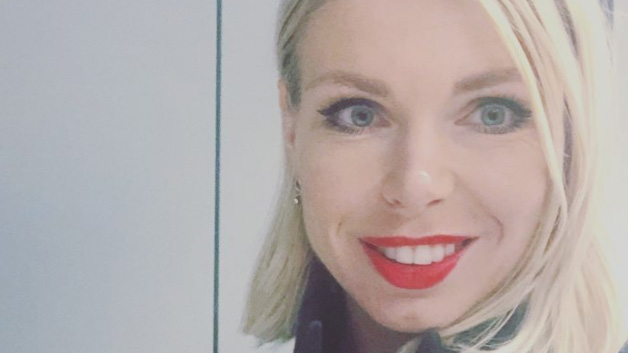
A TV reporter whose family home had been destroyed by Russian bombs overnight in Kyiv, spoke of her shock at the images.
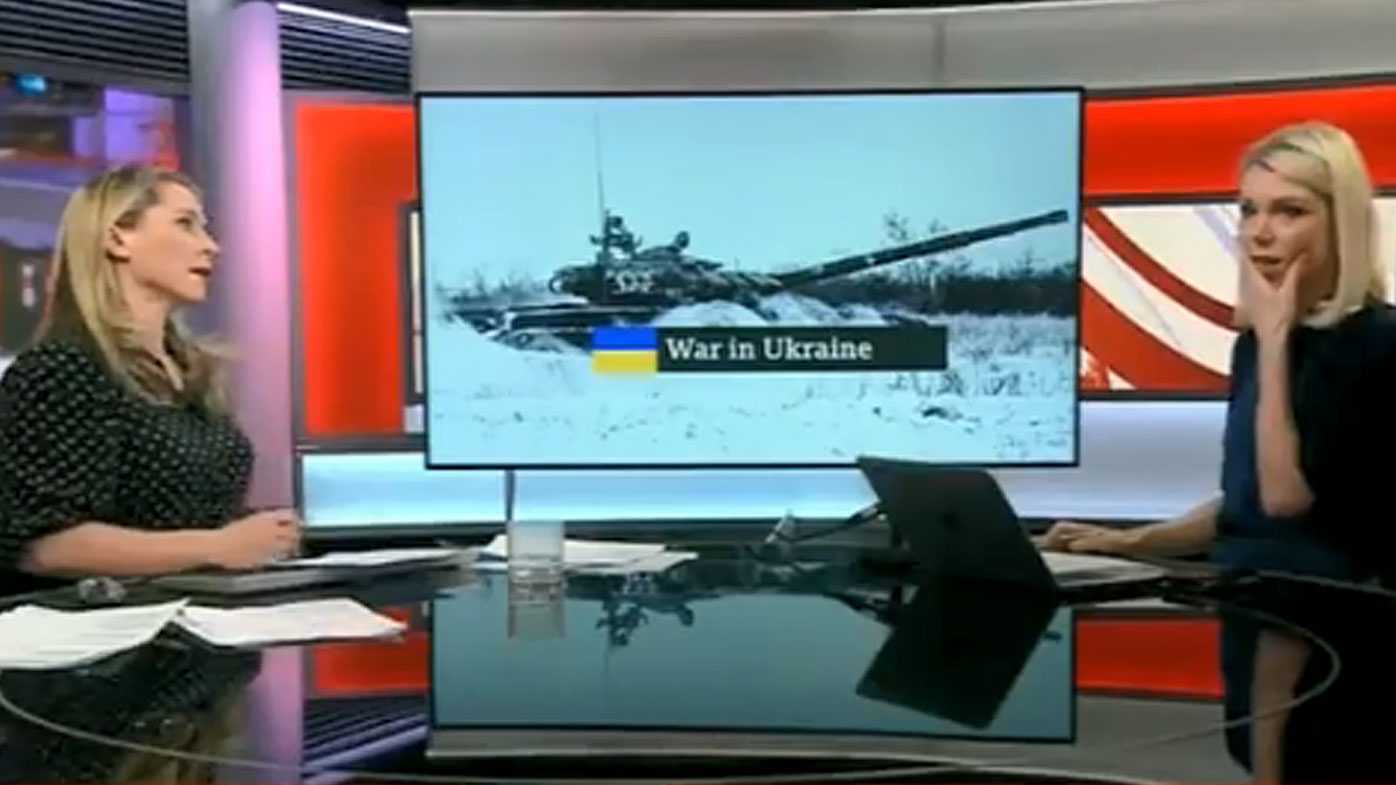
Journalist Olga Malchevska couldn't hide her emotion as she saw pictures of her family's apartment building completely wrecked while live on BBC World News.
Ms Malchevska was being interviewed by Karin Giannone in the UK, about Ukraine.
READ MORE: Russia presses invasion to outskirts of Ukrainian capital
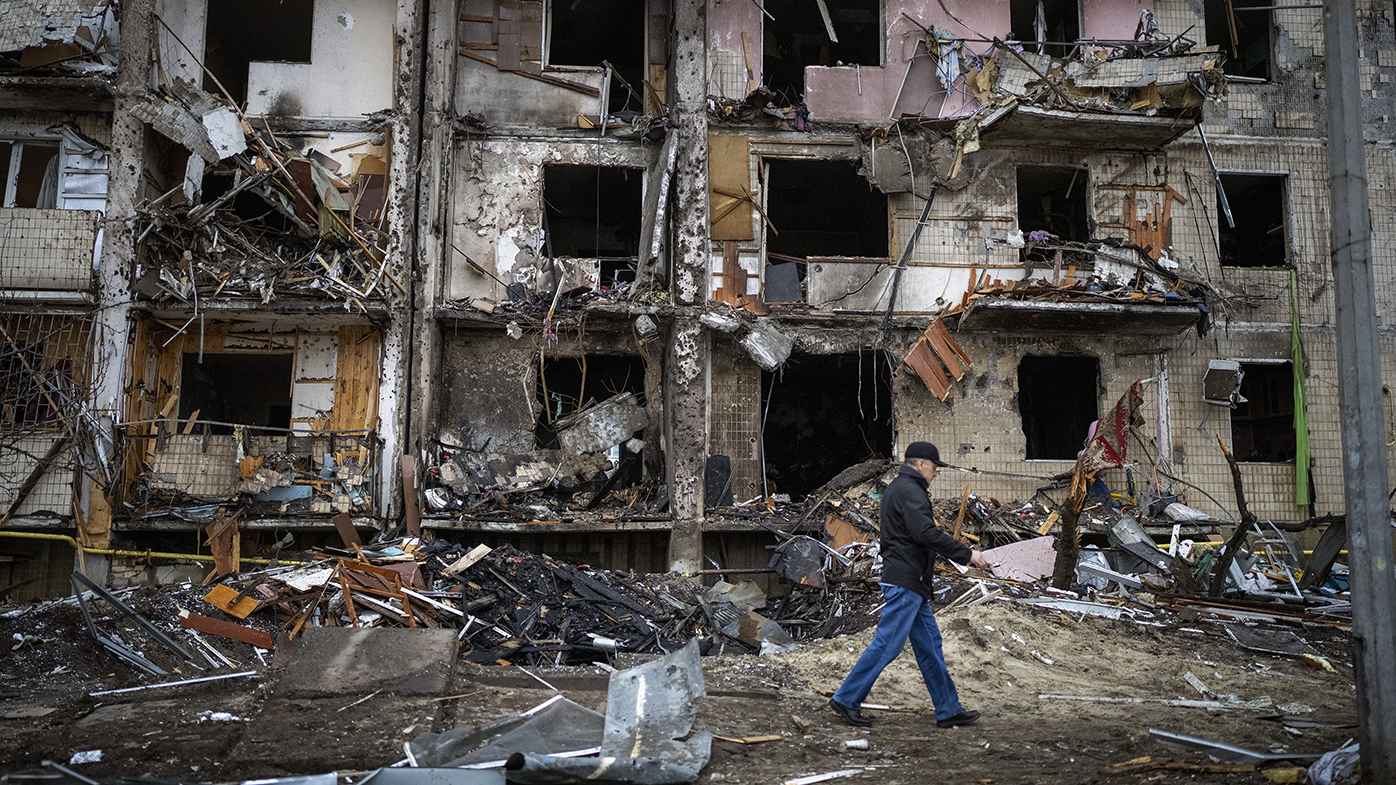
"When we agreed yesterday to come to the studio in the morning, I could not have imagined that at 3am London time I would find out that my home is bombed," Ms Malchevska, said, indicating she knew of the incident before appearing on-air.
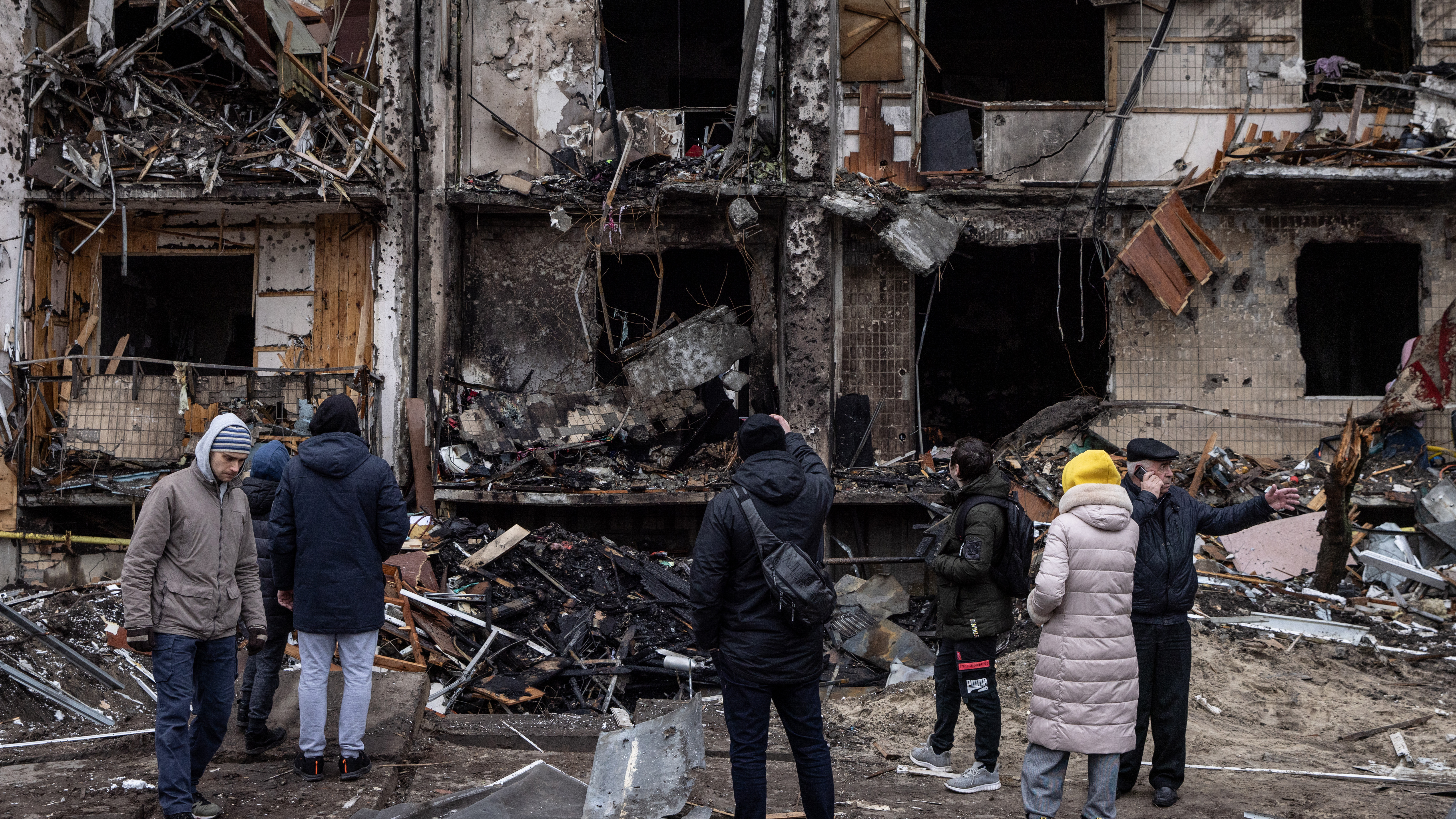
Images of destroyed apartment buildings were shown during the broadcast on Friday morning (Friday night AEDT) – and Ms Malchevska revealed one was her family home.
"That footage that everybody saw is literally my home," she said.
Speaking of her disbelief, Ms Malchevska explained: "I just can't link in my head that what I'm seeing is actually somewhere I used to live."
Ms Malchevska said she used to live on the sixth floor of the 10 story apartment block, which had been turned to rubble.
She said she'd only just heard from her mother, who had been hiding in the basement.
She said other people had evacuated to a school.
"Lucky she was not in the building," Ms Malchevska said.
"Thanks God my family is safe."
Presenter, Ms Giannone said Ms Malchevska could end the interview if she wanted to.
"Olga, I don't want you to be forced to talk about something that is obviously so sudden and so traumatic, this is unimaginable for all of us," she said.
The presenter later tweeted about the extraordinary on-air moment.
"We did not know until that moment it was her actual building that had been hit," she said.
https://twitter.com/KarinBBC/status/1497162333289914368?ref_src=twsrc%5Etfw
"Thankfully Olga's family is safe."
The building was bombed in pre-dawn airstrikes on the Ukrainian capital by Russian forces as they pressed their invasion to the outskirts of the city.
Two large blasts were heard in the early hours of the morning in Kyiv and air raid sirens sounded for several minutes in the nation's capital and Lviv.
How Ukraine and Russia's militaries compare
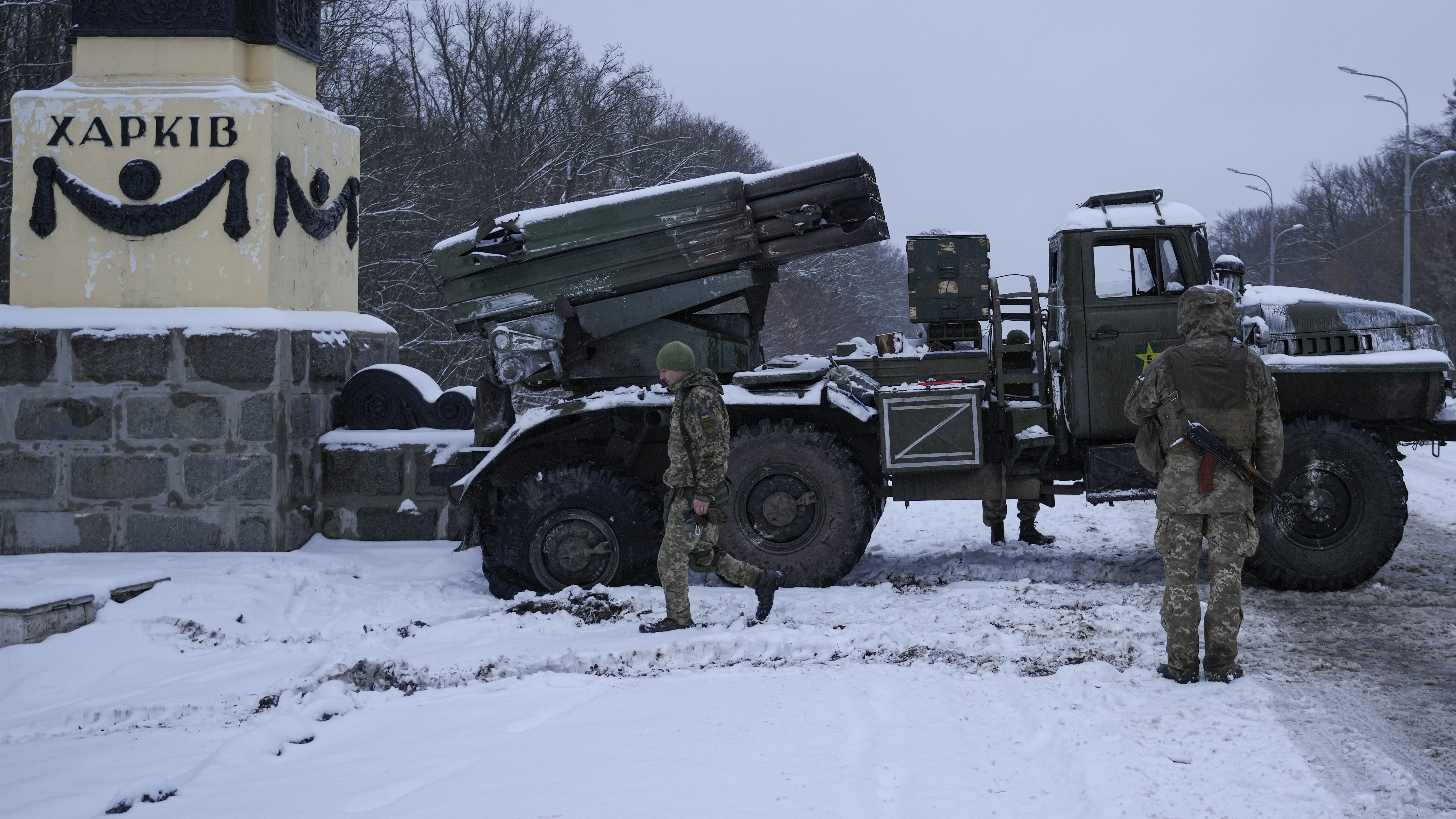
Heavily armed Russian troops are pushing rapidly towards Ukraine's capital of Kyiv, and US officials are warning the city could fall within days.
The military capabilities of these two nations are so imbalanced that Ukraine's defiant president, Volodymyr Zelenskyy, implored his Western allies overnight to do more than impose sanctions to get Russian troops off Ukrainian soil.
Here's how the two country's military capabilities stack up.
LIVE UPDATES: Putin's message to Ukrainian troops
Defence spending
Just a look at the amount of money the two nations spend on defence gives an indication of the gap between the two.
Ukraine spent $6.5 billion in 2021, just over a tenth of nuclear-armed Russia's $63.5 billion, according to "The Military Balance" report by the International Institute for Strategic Studies (IISS), published last week.
While the Russian government launched a drive in 2008 to modernise its military, after a brief war with Georgia laid bare equipment shortfalls, Ukraine's weapons are still largely from the Soviet era.
In its ambitions to join NATO, however, Ukraine has reorganised the structure of its armed forces, and has plans to re-equip its air force with Western combat aircraft by the mid-2030s.
It also plans to improve its naval capability.
READ MORE: Ukraine's capital under threat as Russia presses invasion
Manpower
Where Russia has 900,000 active personnel in its armed forces, and two million in reserve, Ukraine has 196,000 and 900,000 reservists.
Ukraine on Wednesday began conscripting reservists aged 18 to 60, according to IISS.
In land forces alone, Russia has a twofold advantage, with 280,000 troops to Ukraine's 125,600.
And its air force is nearly five times as strong, with 165,00 to Ukraine's 35,000.
READ MORE: World leaders fine-tune punitive measures against Russia
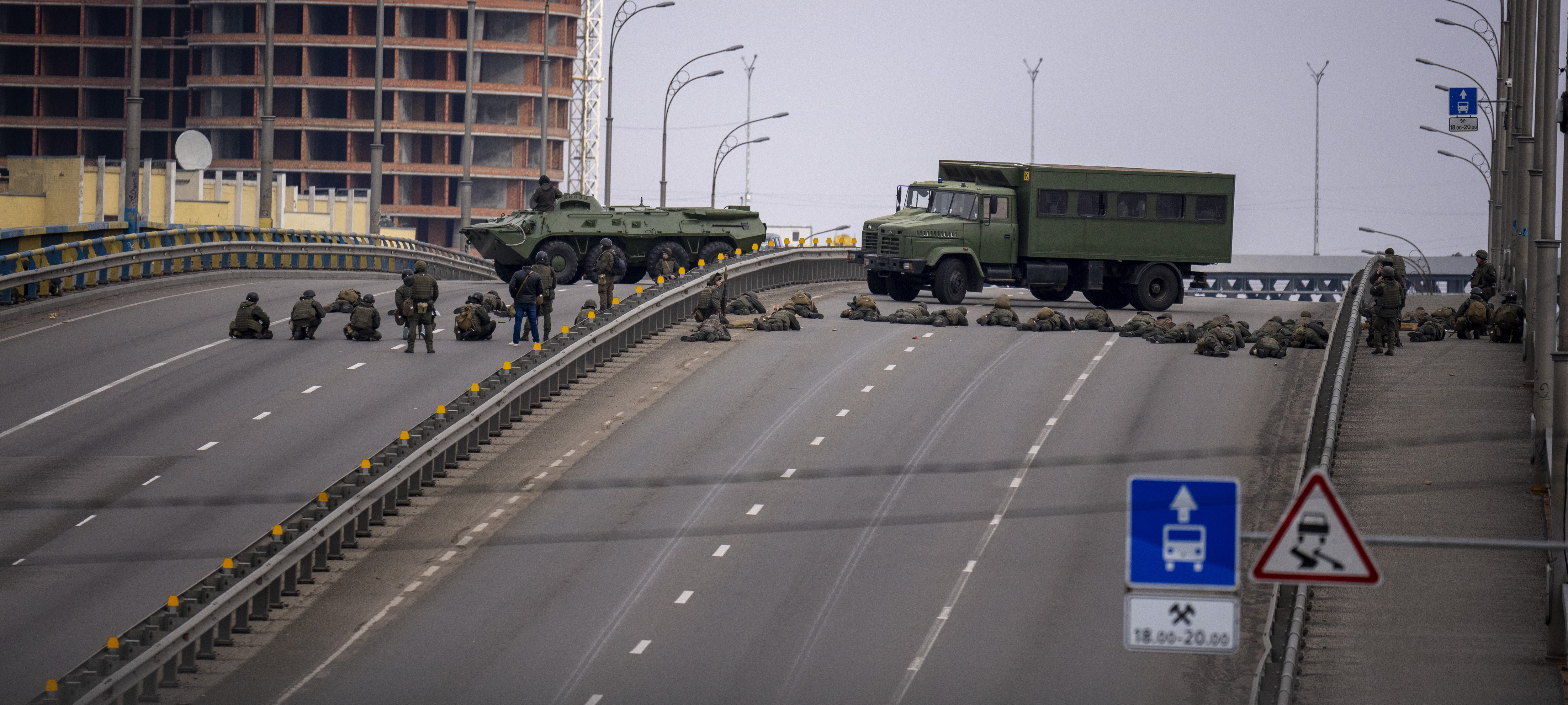
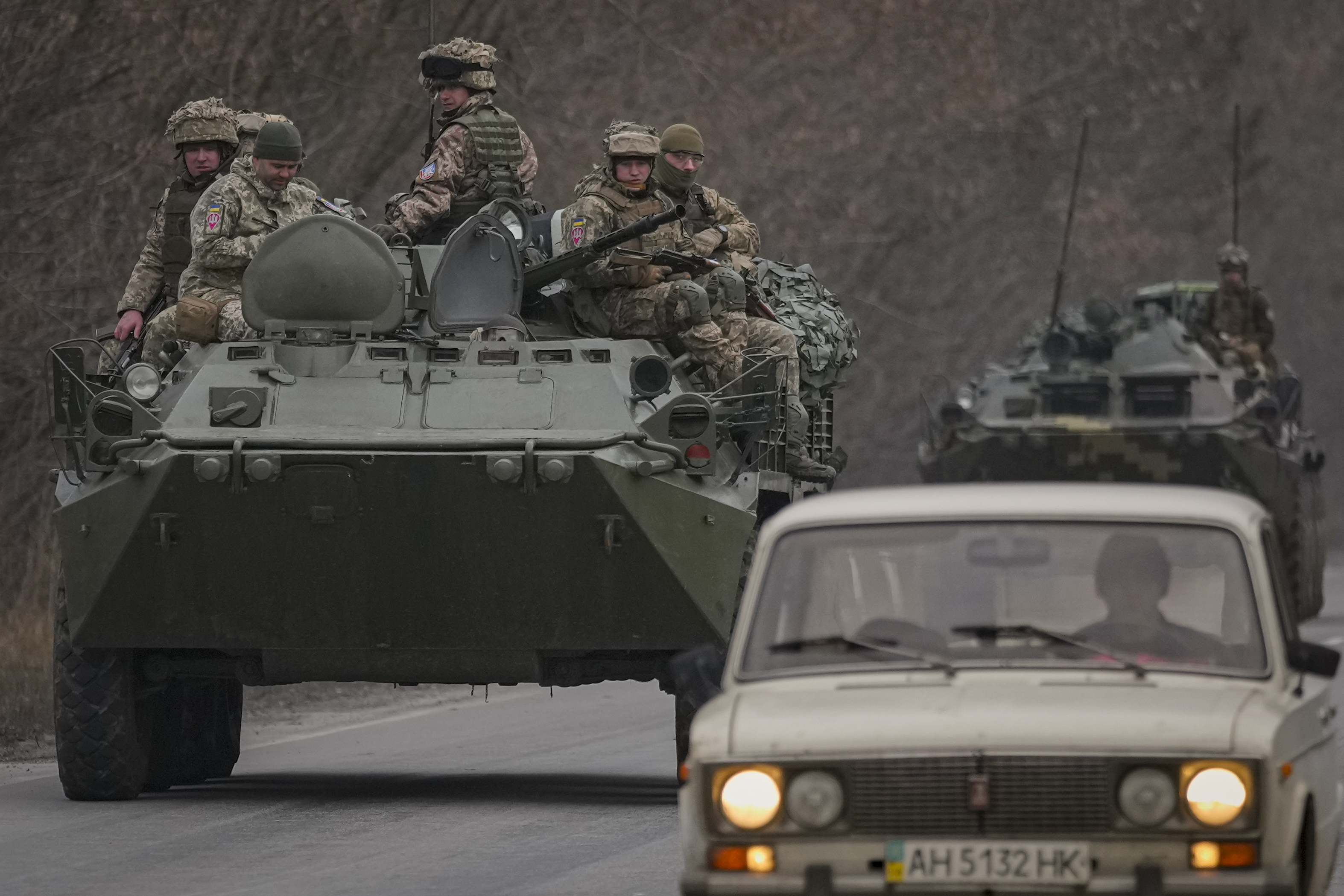
But in terms of how many troops are in this particular operation, Yohann Michel, a research analyst who worked on the IISS report, said Russia had an estimated 200,000 personnel in and around Ukraine.
"That's including around 60 battle groups," Mr Michel said.
The situation is evolving rapidly and that number could change, but it's very large, and that's important. It's one of the largest in eastern Europe that we've seen in years – in my lifetime."
"Ukrainian numbers are more difficult because everything they have is now mobilised and they have called in reservists."
Weaponry and vehicles
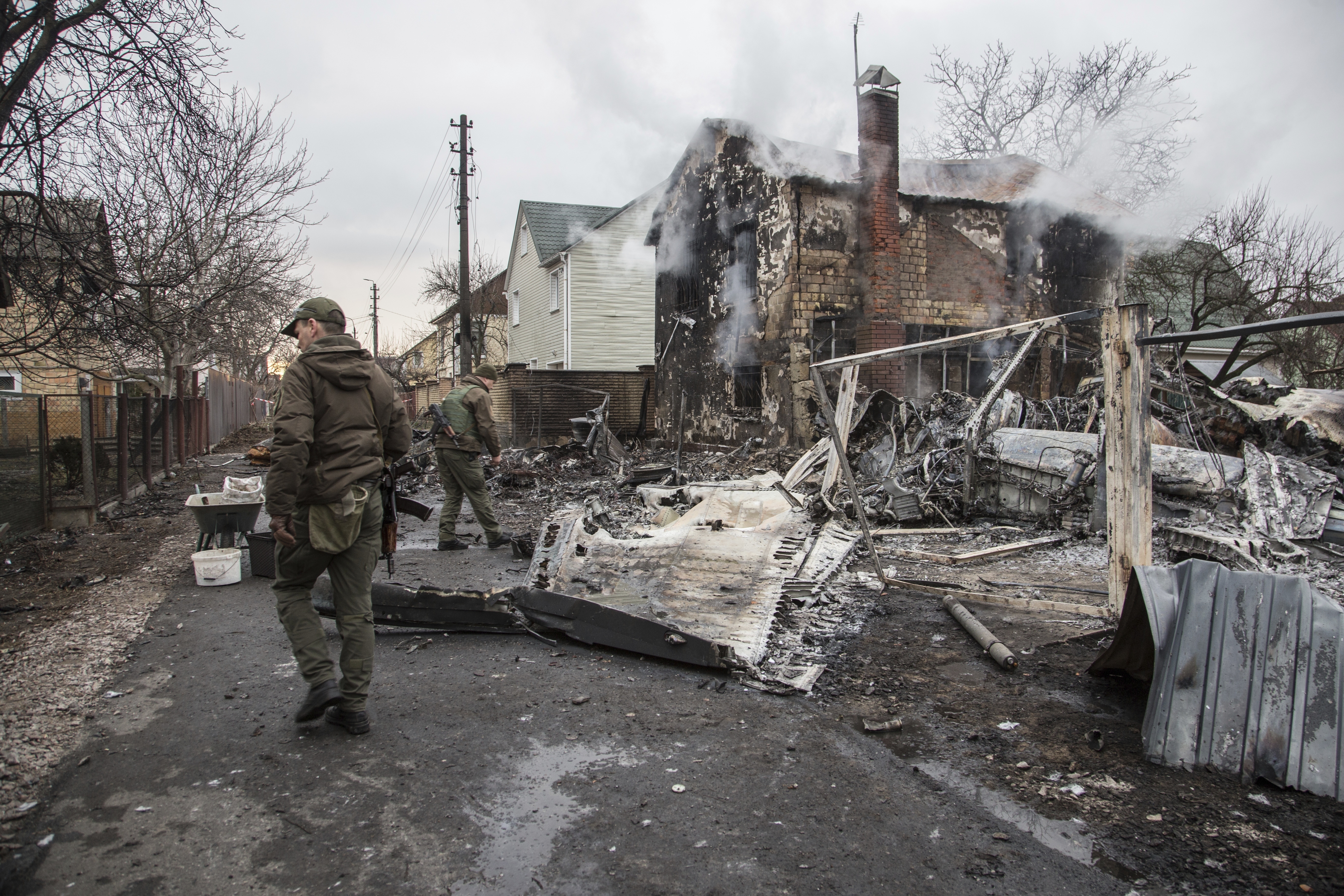
There is a lot to compare here – attack aircraft, armoured vehicles, surface-to-air missiles, but in general, Russia simply has more of everything.
Russia has more than 15,857 armoured fighting vehicles, for example, to Ukraine's 3,309.
It has more than 10 times the aircraft – 1,391 to Ukraine's 128, and 821 helicopters to Ukraine's 55, if you include Navy aircraft.
And where Russia has 49 submarines, Ukraine has none, according to IISS.
"There are big difference between the two forces – Russia has a much more capable air domain, its air defences are stronger," Mr Michel said.
"There is a huge difference on helicopters and planes available at every level – from transport aircraft to fighter aircraft to attack helicopters."
READ MORE: Soldiers' defiant last words as Russian warship targets Snake Island
Combat will
Ukrainian forces have, however, launched some successful counterattacks.
Mr Michel noted that the sheer combat will among Ukrainian troops to fight has been the armed forces' greatest strength.
"I'm really surprised at what I'm seeing. The fact that Ukrainian fighter jets are still flying, they actually took off is impressive."
If Russia takes the capital soon, it will be difficult for Ukraine to fight back.
But if it is unsuccessful, the conflict could become protracted.
That's the scenario where Ukraine's will may prove a powerful weapon, Mr Michel said.
READ MORE: Putin waves nuclear sword in confrontation with the West

Modernisation
But with fighting going on across the country, the number and quality of armoury is a major factor.
Nick Reynolds, a Research Analyst for Land Warfare at the Royal United Services Institute, said that Ukraine's air force was now largely knocked out.
"There have been serious issues with modernisation due to Ukraine's economic problems since 2014, so the military lacks modern air defence and artillery, particularly counter-battery artillery radar and other surveillance equipment to detect enemy artillery and at least stand some chance of suppressing it with their own," Mr Reynolds said.
"These capabilities are critical for Ukraine's army to be able to manoeuvre and resupply itself."