Tag Archives: oceania

Ukraine warns of 'danger areas' in airspace after Russian flight ban

The Ukrainian government is closing airports in eastern Ukraine because of the confrontation with Russia.

Ukrainian aviation authorities also have declared some airspace in the east to be "danger areas" because of attempts by Russian aviation authorities to seize control of the airspace.

Ukraine acted after Russia issued a ban on civilian air traffic in airspace over eastern Ukraine.

READ MORE: Russia declares 'military action' in Ukraine, warns other countries against interfering

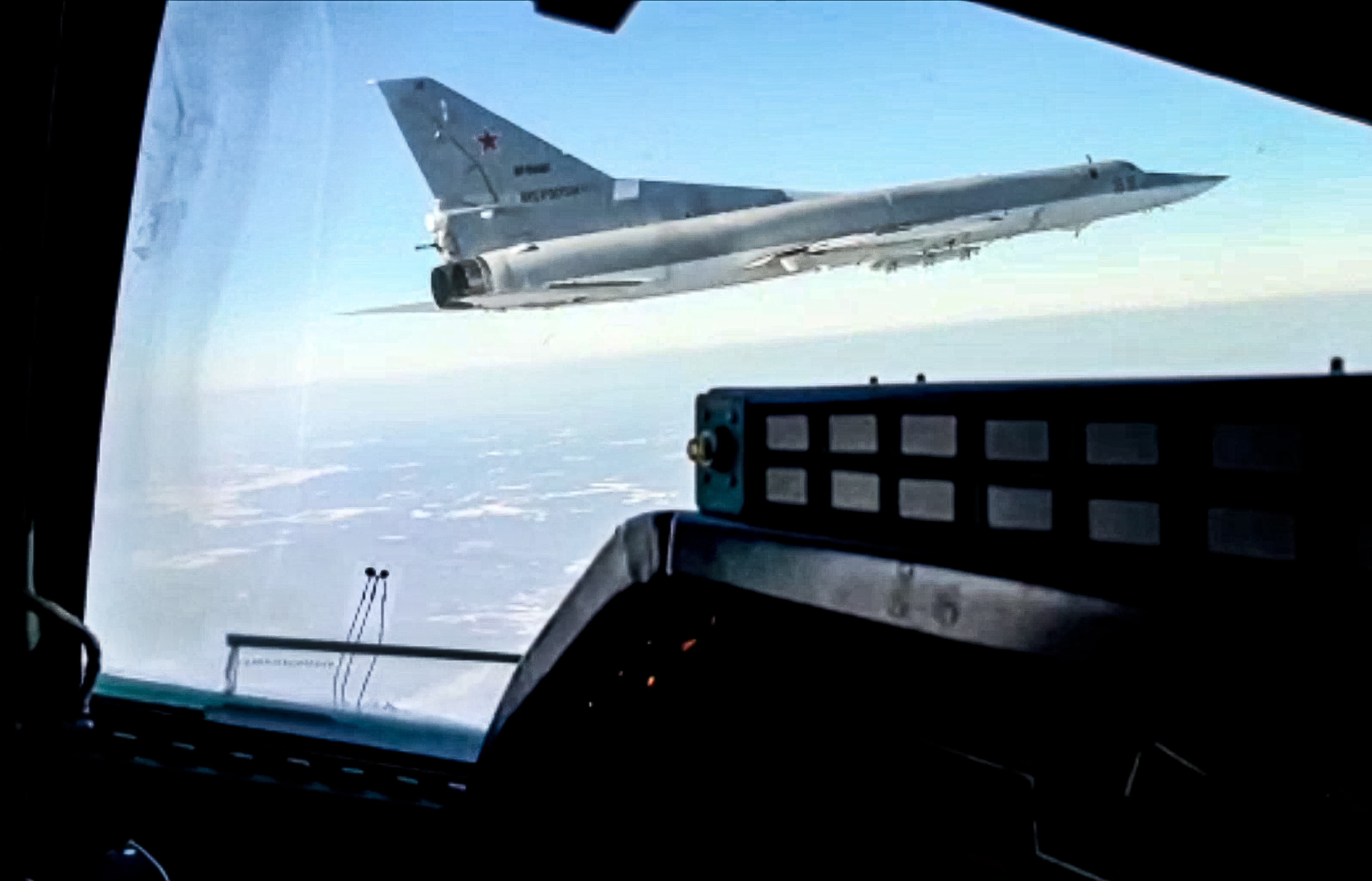
Russia has issued a notice that it is closing flight paths bordering north-eastern Ukraine.

The announcement on Wednesday night (local time) establishes buffer zones for traffic controlled by Ukrainian authorities to avoid coming into potentially hazardous conflict with air traffic controlled by Russian authorities.

Last week, Ukrainian aviation officials warned pilots in the region to be on the lookout for Russian authorities trying to take control of the airspace and to only recognise Ukraine's controllers.

READ MORE: UN Security Council sets second emergency meeting on Ukraine

Russia had earlier issued a notice banning civil aircraft from flight routes bordering north-eastern Ukraine.

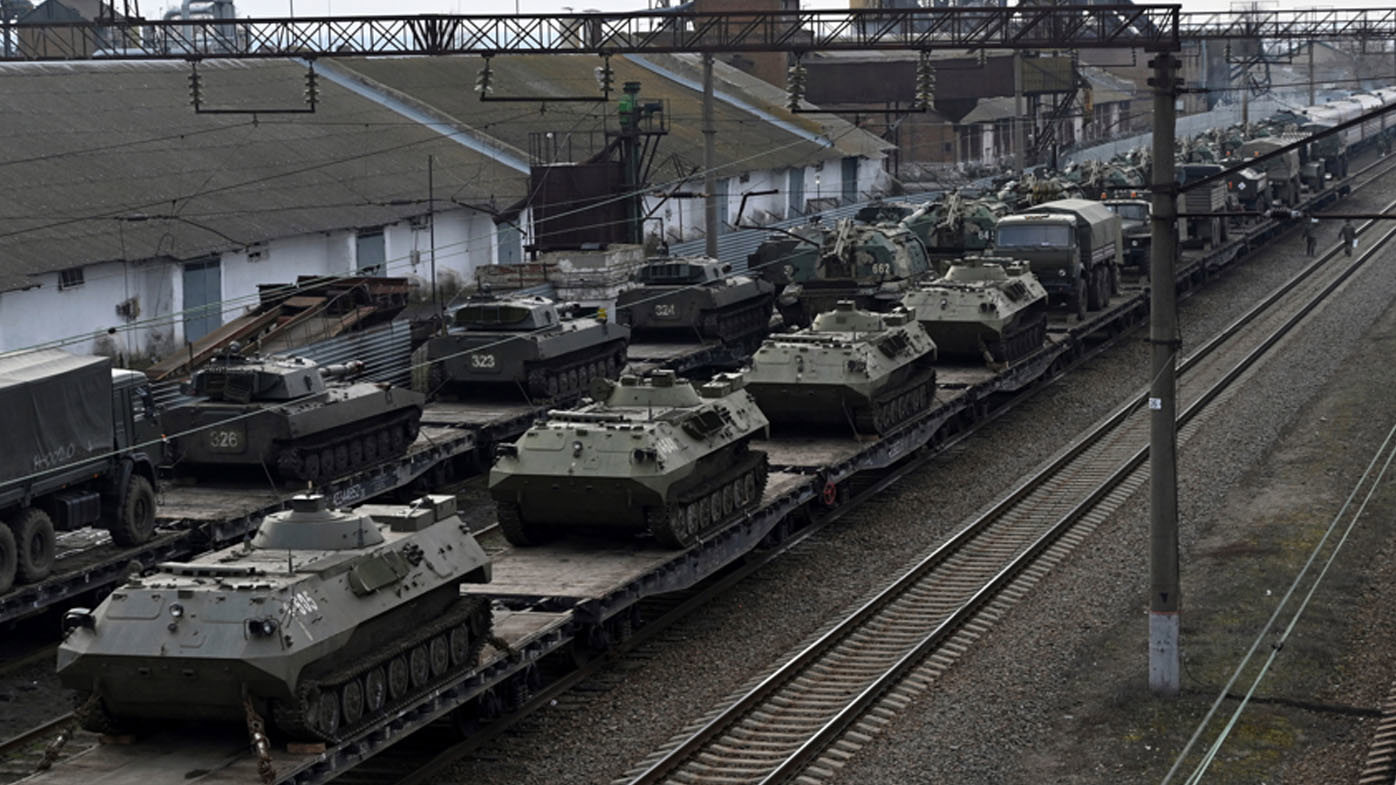
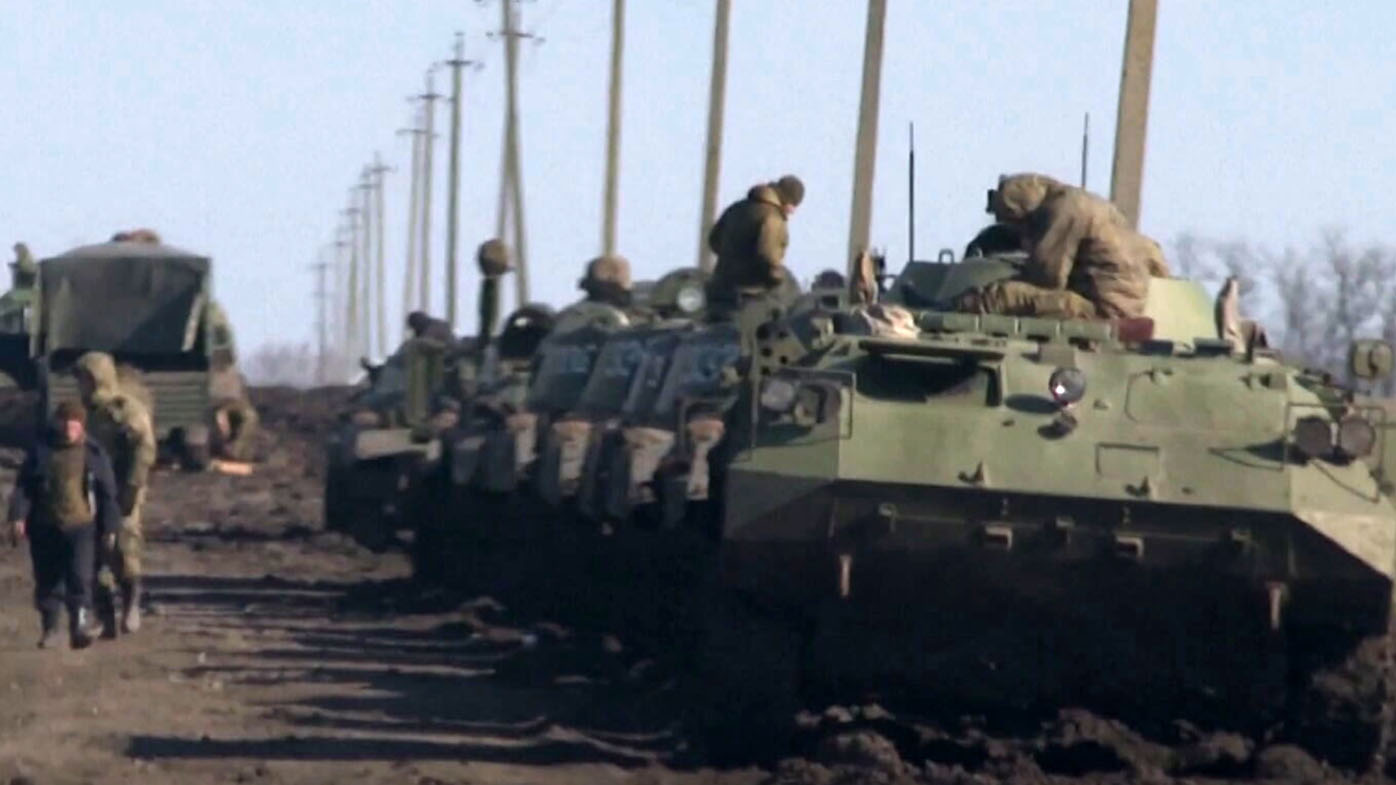
Russia issued a NOTAM (notice to airmen or notice to air missions) that covers a corridor of territory where Russian forces have gathered over the past weeks.

The NOTAM remains in force until May 18.

READ MORE: Ukraine president vows his country will 'fight back'

Travel expert Quentin Long, of Australian Traveller Magazine, told Today the escalating Ukraine crisis could force airlines to re-route and airlines would be monitoring the situation.

He said there is a major flight path through Ukraine, flown by commercial aircraft from Europe to south-east Asia.

"As long as things don't escalate, we will just fly around them and be OK. And then we will watch and wait and see what happens," Mr Long said.

New book sheds light on con-man killer who talked himself free

Edgar Smith was a convicted murderer on death row when he began a slow and subtle process of manipulation, his first target – a conservative news editor.

Smith had been found guilty of the murder of 15-year-old Victoria Zielinski in 1957.

In a new book, “Scoundrel: How a Convicted Murderer Persuaded the Women Who Loved him, the Conservative Establishment, and the Courts to Set Him Free," author Sarah Weinman paints a portrait of Smith as a charming killer who managed to dupe those around him.

READ MORE: Russia likely to hit back at Australia with cyberattacks, PM says

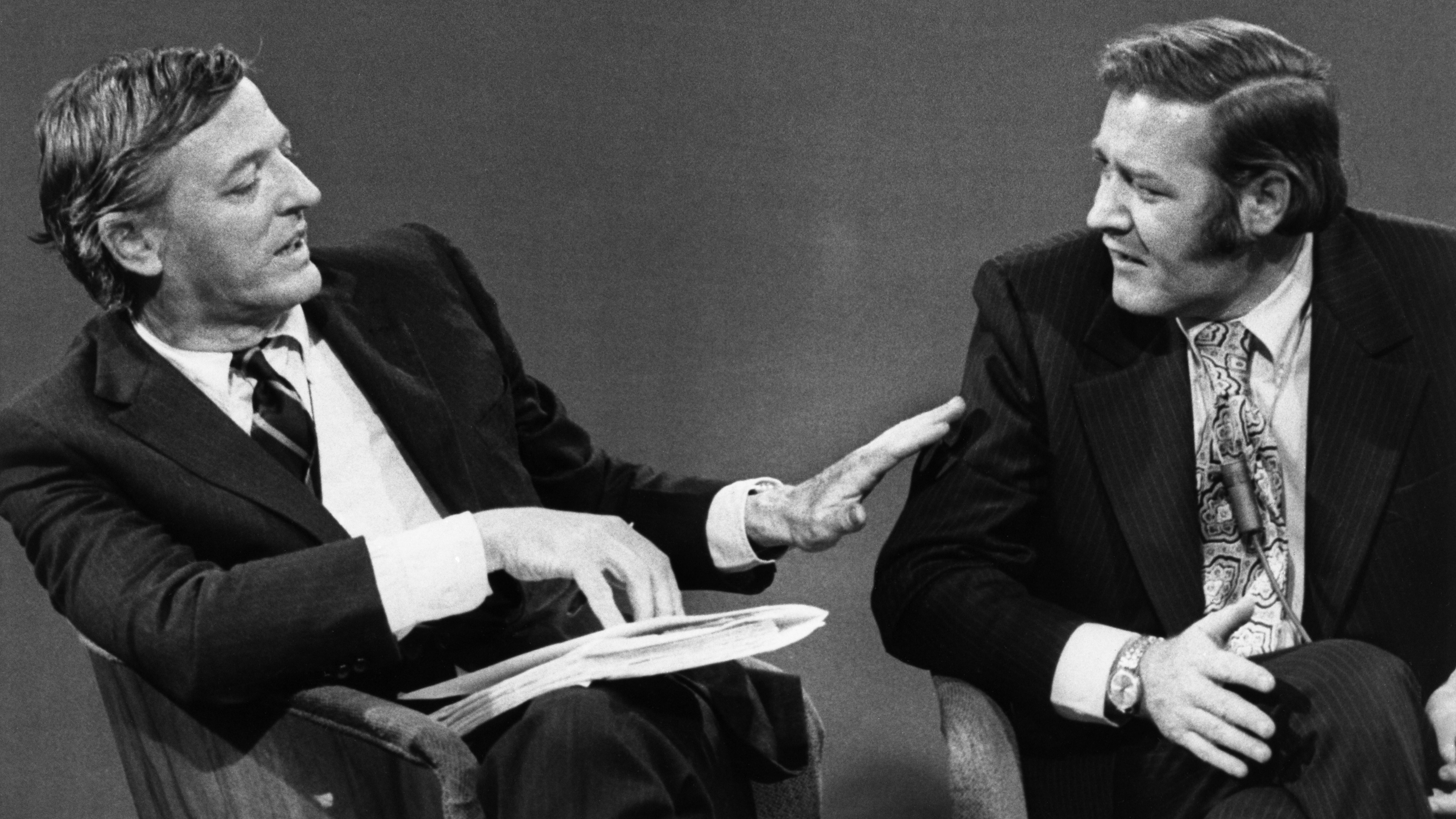
Edgar H. Smith Jr., right, appearing with William F. Buckley on his television program, "Firing Line." Mr. Buckley championed Mr. Smith's release from death row but came to regret it.

Miss Zielinski's body was found in a sand pit in Ramsey, New Jersey after she failed to return home the night before.

The police quickly made an arrest in what seemed like an open-and-shut case: Edgar Smith, who knew Vickie, admitted to giving her a ride that night in a car the police found to be stained with blood.

Smith also disposed of pants that the police later found, which were stained with blood that was Vickie’s blood type. And Smith confessed after lengthy questioning by police.

Smith subsequently claimed he was innocent and put the blame on an acquaintance, but he was tried and convicted of Miss Zielinski’s murder and sentenced to death.

While waiting on death row, Smith caught the attention of conservative intellectual William F Buckley, then the editor of the National Review, after Smith professed his admiration of the publication.

The two began a correspondence, and Smith was able to win over Buckley and convince him of his innocence.

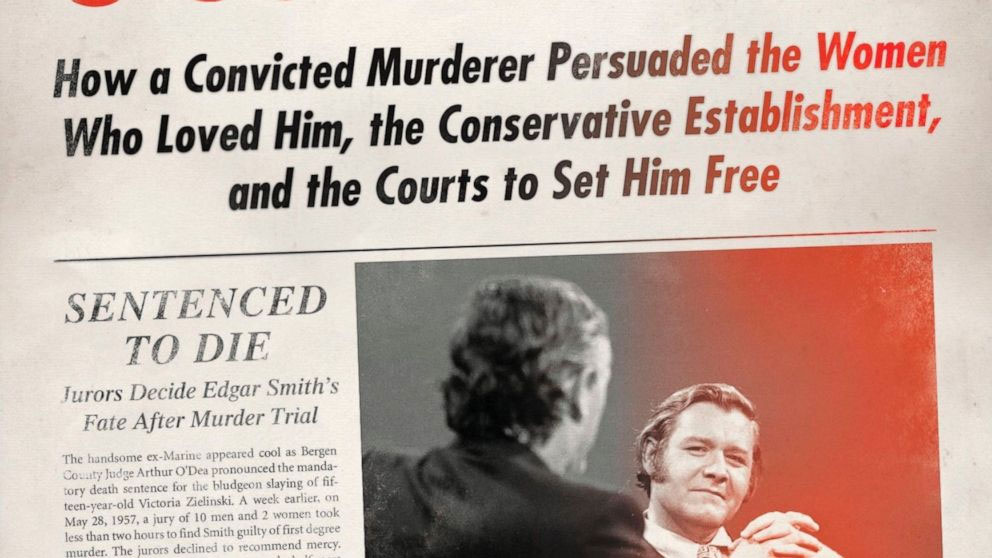
This book cover image of "Scoundrel: How a Convicted Murderer Persuaded the Women Who Loved Him, the Conservative Establishment" by Sarah Weinman. Victoria Zielinski was a 15-year-old high school student when she was killed in 1957.

Author Sarah Weinman digs deep into their letters in “Scoundrel” to show readers how a cunning Smith worked Buckley’s attention to his advantage.

A book deal was arranged, and Smith soon won over his editor, Sophie Wilkins at Knopf, too – so much so that they began a romance of sorts, though only by letters and supervised prison visits.

Meanwhile, Smith’s lawyers, mostly bankrolled by Buckley, kept winning his appeals, and his execution date was pushed back later and later.

Smith’s book, “Brief Against Death,” championed by Buckley, won warm praise from critics when it came out in 1968.

And Smith’s lawyers, who argued Smith confessed under duress, were able to make headway with his appeals, too.

Eventually, after serving 14 years, he was offered a deal in 1971 to plead no contest to second-degree murder in exchange for time served.

A free man, Smith at first made the most of it, appearing at parties in New York and Buckley’s TV show, “Firing Line.”

But after his notoriety died down, writing gigs dried up, and Smith’s darker side resurfaced. Unable or unwilling to hold down a job, he bounced around, eventually settling in San Diego with a new wife.

Then, in 1976, he kidnapped a woman who was walking down the street and stabbed her in his car when she fought against him in a botched robbery attempt.

She was able to fight her way out of the car, however, and survived to name Smith as her attacker.

Smith returned to jail, where he stayed for decades, dying in 2017.

Meticulously researched, “Scoundrel” paints a portrait of a criminal adept at targeting people like Buckley who he could win over — but whose violent instincts eventually led to his downfall.

Two large sharks captured on drumlines after fatal Sydney attack

Two large sharks have been captured on SMART drumlines off Sydney beaches in the week following a dive instructor's fatal mauling, the Department of Primary Industries (DPI) has confirmed.

However neither animal were the "at least three metre" long great white suspected of killing 35-year-old Simon Nellist off Little Bay last Wednesday, the DPI said.

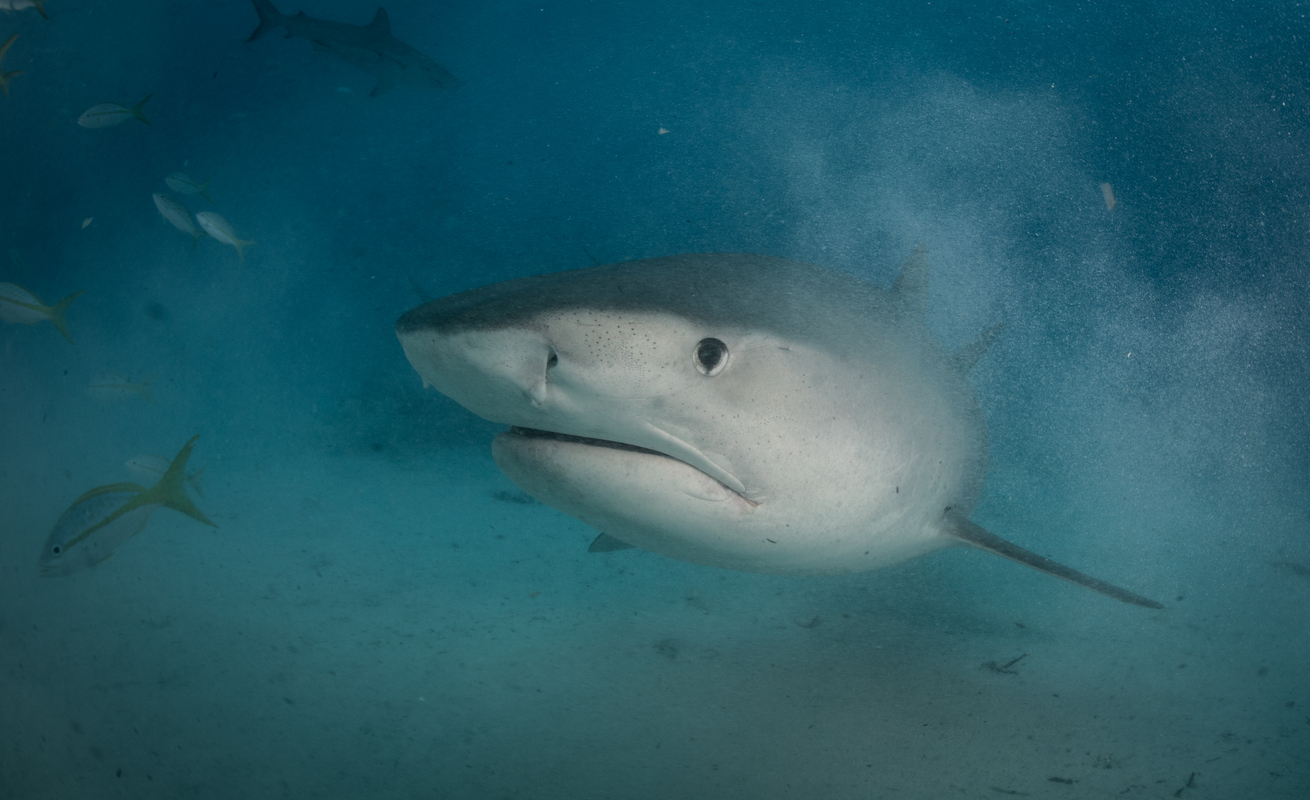
Instead, two tiger sharks ranging from 1.5 to almost two metres were captured, tagged and released.

READ MORE: The sanctions that could really hurt Russia

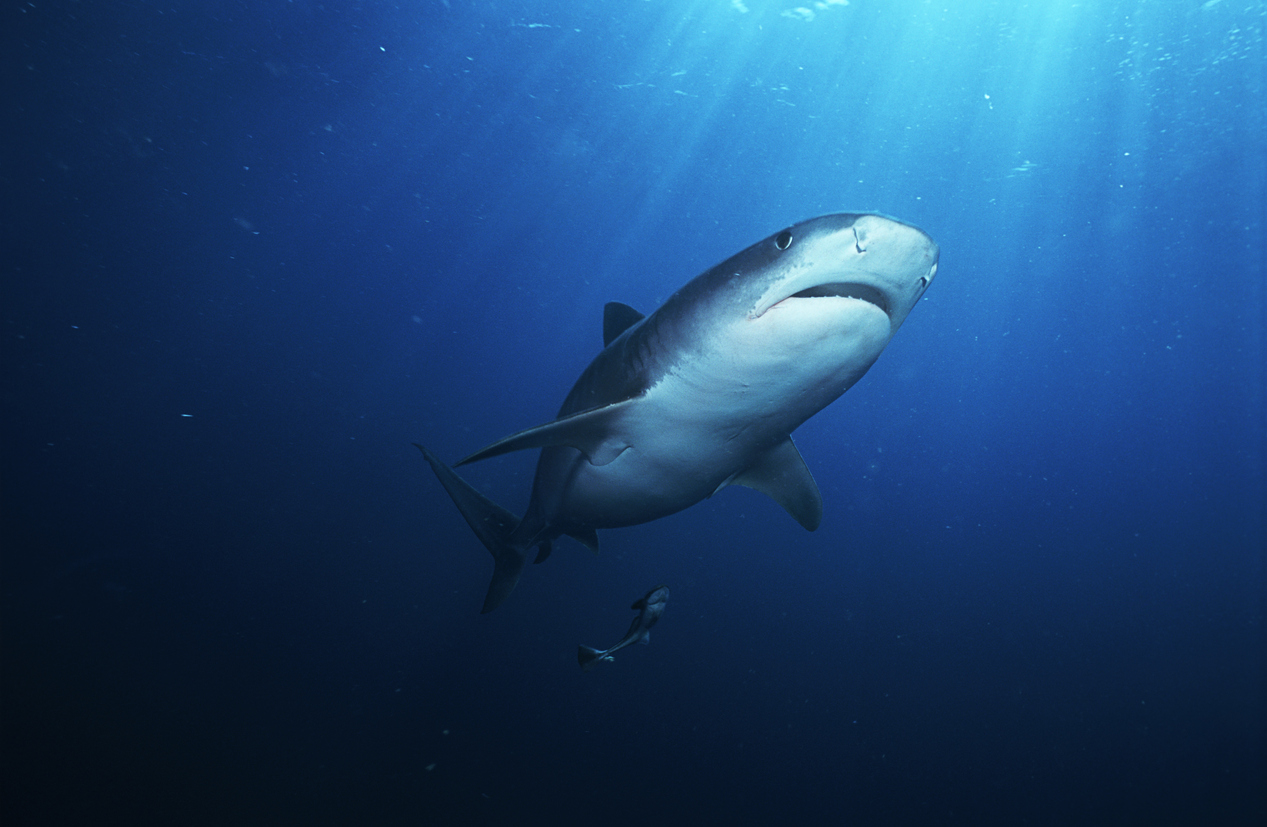
Tiger Shark (galelcerdo cuvieri), underwater viewOne of the most adept predators in the ocean, the tiger shark

"Both animals were tagged and released approximately one kilometre further offshore," the DPI said in a statement supplied to 9news.com.au.

"Neither of these sharks are suspected to have been involved in the tragic Little Bay incident on 16 February."

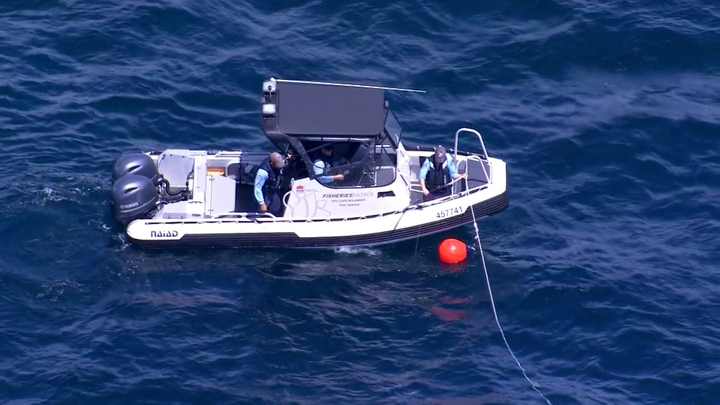
Authorities check SMART drumlines following the fatal shark attack off Little Bay.

The first shark was caught off Clovelly at 1:37pm on 20 February 2022, with the second tagged a day later off Malabar/Long Bay; this is close to where Mr Nellist was attacked.

The death of Mr Nellist sent shockwaves around the city as it is Sydney's first shark related fatality in almost 60 years.

READ MORE: One of our largest construction companies plunged into administration

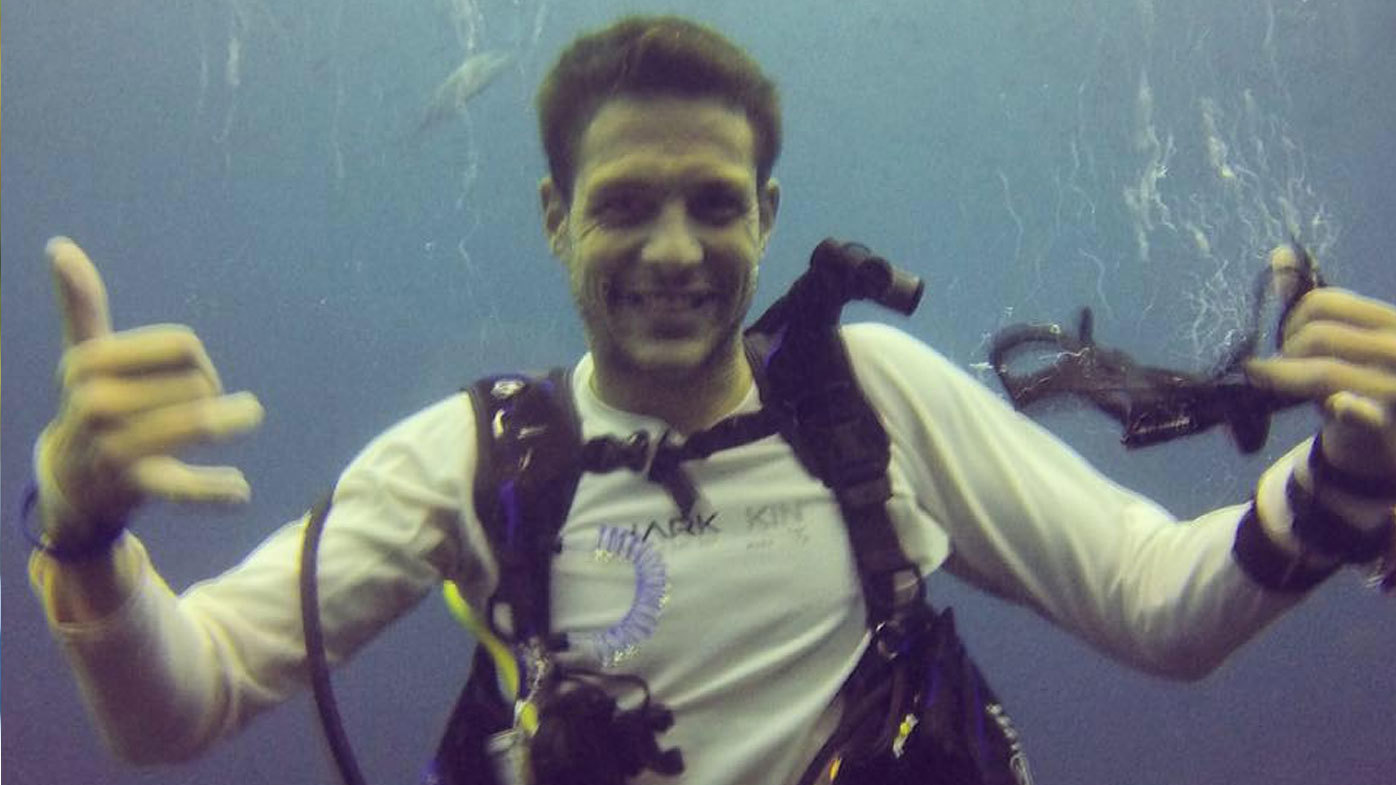
Simon Nellist was killed in a shark attack at the north end of Little Bay beach in Sydney's east.

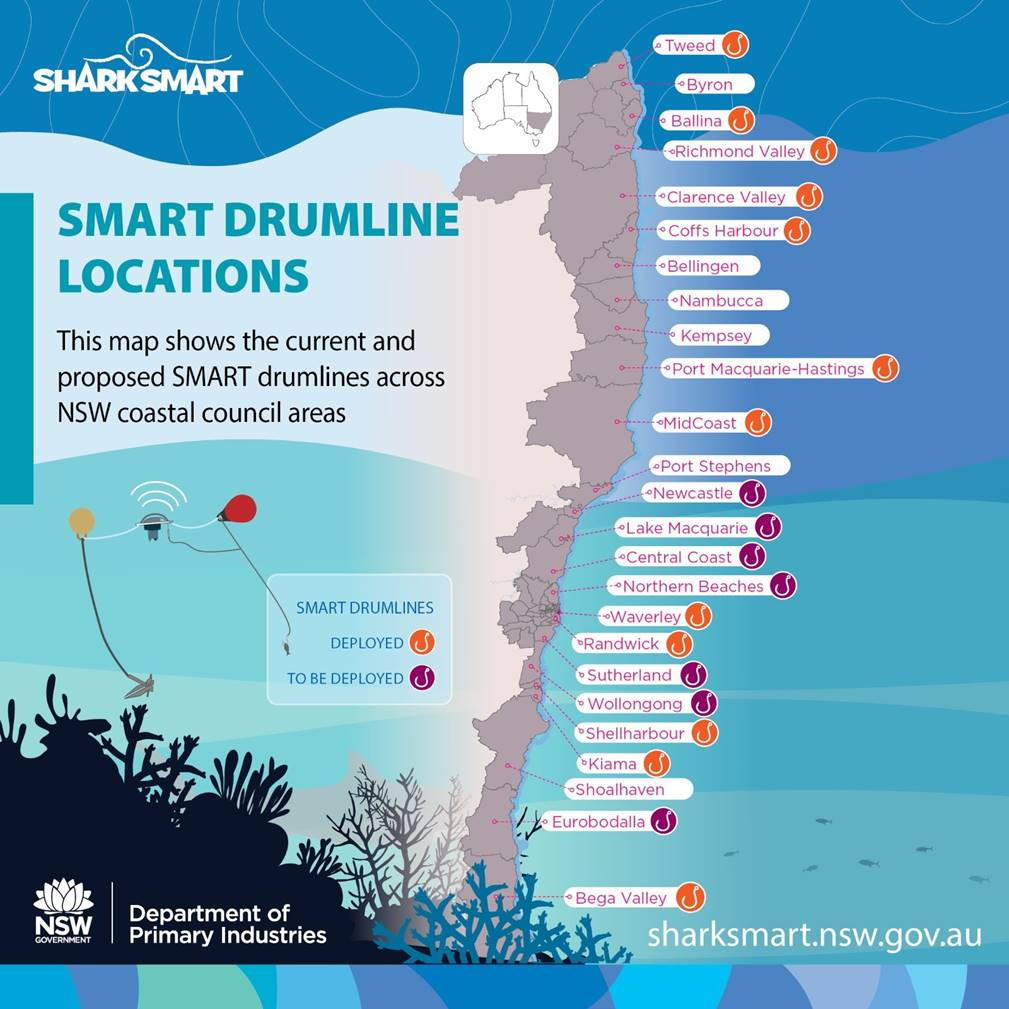
In response, the DPI are installing 15 SMART drumlines along the coast from Little Bay Beach to Bondi daily.

"DPI Fisheries staff have been on the water in the Sydney area since first light Thursday morning 17 February, deploying SMART drumlines, when weather permits," the DPI said.

"SMART drumlines are deployed and retrieved daily, weather permitting, until 30 June under the 2021/22 Shark Management Program."

In addition to SMART drumlines, authorities have conducted a sweeping search for the animal responsible for Mr Nellist's death.

READ MORE: US warns full-scale invasion of Ukraine could be imminent

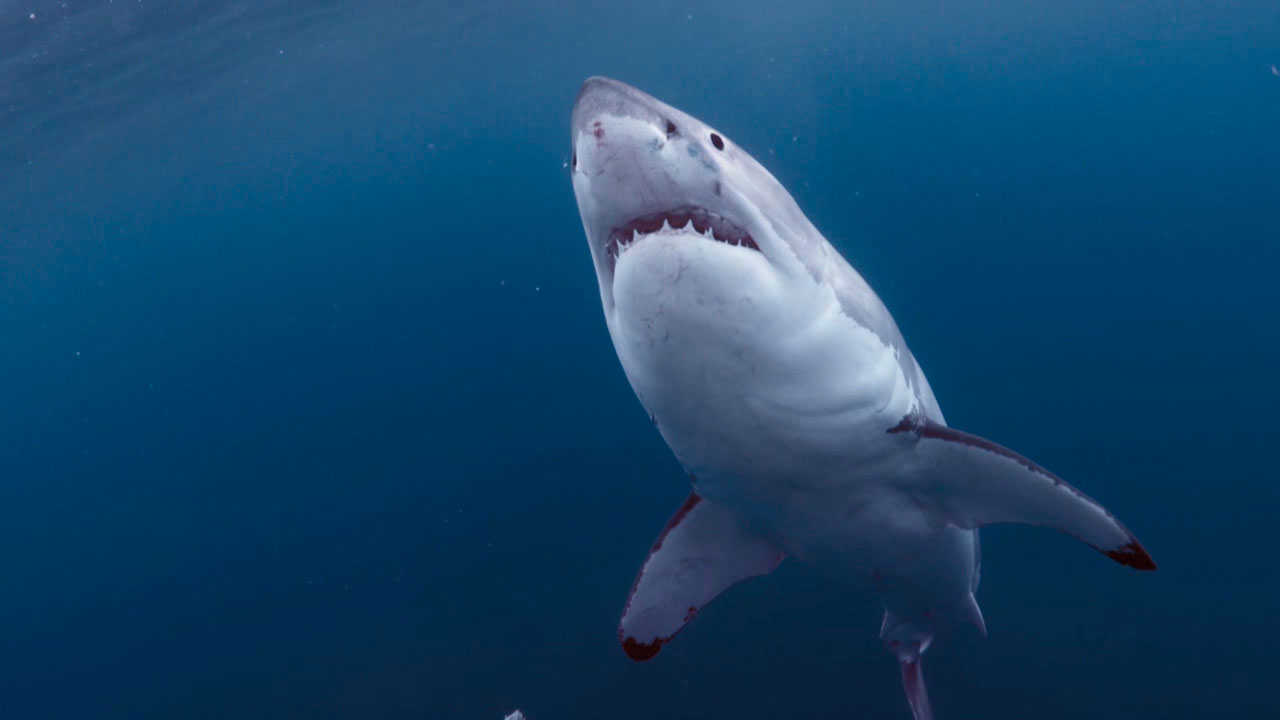
Great White Shark Babies

However, wildlife scientist Dr Vanessa Pirotta thinks its unlikely the animal responsible will ever be found.

"Authorities failed to locate this shark in the waters off Sydney after extensive searching," she wrote in the Sydney Morning Herald.

"This is not surprising as they are not known to be territorial animals."

Great whites are capable of swimming large distances, with some estimates saying they can swim up to 80 kilometres in a day.

READ MORE: What we know about shark attack occurrences off NSW and around Australia

Shark Management Program under the spotlight

The drumlines are just one measure employed by the state government to protect residents on NSW beaches.

Also in use are:

  • 51 shark nets as part of the NSW Shark Meshing Program from Newcastle to Wollongong.
  • Surf Life Saving NSW (SLS) drones at 15 coastal beaches in Greater Sydney Local Government Areas (LGAs) which operate in school holidays or at the discretion of SLS drone pilot availability on weekends outside of school holidays.
  • Tagged shark listening stations at Redhead (Lake Macquarie LGA) and Bondi Beach (Waverly LGA).
  • Shark tagging program (statewide) – tagging White, Tiger and Bull Sharks caught via DPI Fisheries research or as part of the SMART drum-lining program – which are then detected via the tagged shark listening stations along the coast and alerts sent via SharkSmart app).
  • SharkSmart education program statewide.

Where SMART drumlines have, and will be, deployed in NSW.

SMART drumlines have been widely heralded as a non-lethal method of shark control.

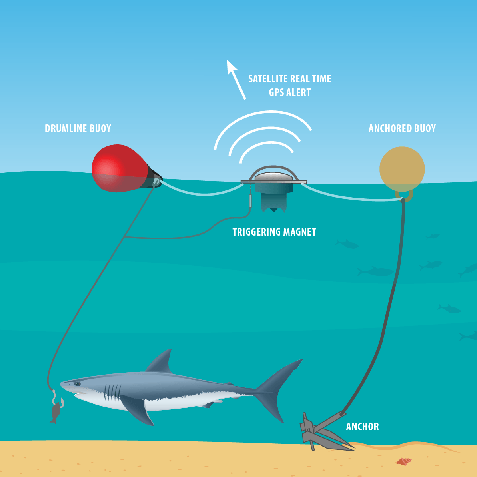
They're anchored to the seafloor and send an alert to officials once an animal is caught on a seperate hook.

SMART drumlines consist of an anchor, two buoys and a satellite-linked GPS communications unit attached to a baited hook.

"The team then responds immediately to the SMART drumline alert to manage the animal," the DPI explained.

"Sharks and any other marine fauna caught on SMART drumlines can be tagged, relocated approximately 1km offshore, and released."

However they are not without controversy, the Animal Justice Party has criticised the large hooks that capture animals.

https://twitter.com/AJPNSW/status/1496376919025405952

Despite this other wildlife advocacy groups welcome the use of SMART drumlines and shark spotting drones, over the use of nets.

Lawrence Chlebeck, marine biologist with Humane Society International said the nets are a death trap to other wildlife and provide a "false sense of security".

"There have been 34 shark bites on NSW netted beaches and they entangle and kill hundreds of harmless dolphins, turtles, rays and sharks", Mr Chlebeck said in a statement.

"One turtle is caught in the shark nets every twenty days and no Sydney-sider wants that for a false sense of security."

Australian sanctions targeting Russia's oligarchs and super-rich

Australia has expanded its sanction powers to better target super-rich Russian elites and oligarchs in Vladimir Putin's inner-circle.

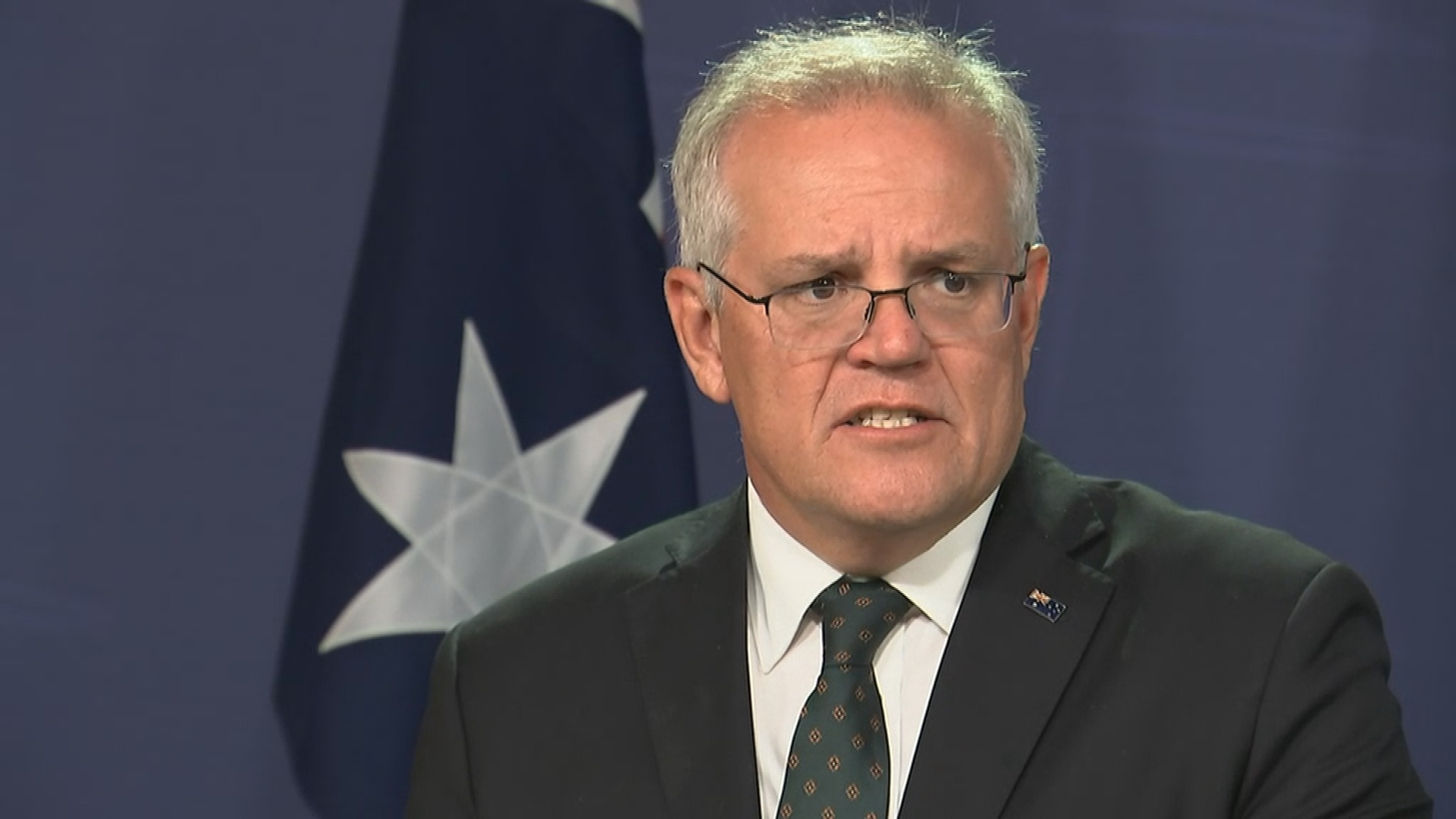
As Canberra ramped up its sanction powers, Prime Minister Scott Morrison refused to criticise the US and NATO for not sending troops into Ukraine to deter a Russian invasion.

He admitted the sanctions would likely not force a backdown from Moscow, but said the targeting of Russia's most powerful people would cause pain to those closest to Mr Putin.

READ MORE: Who are the three Russian oligarchs hit by sanctions?

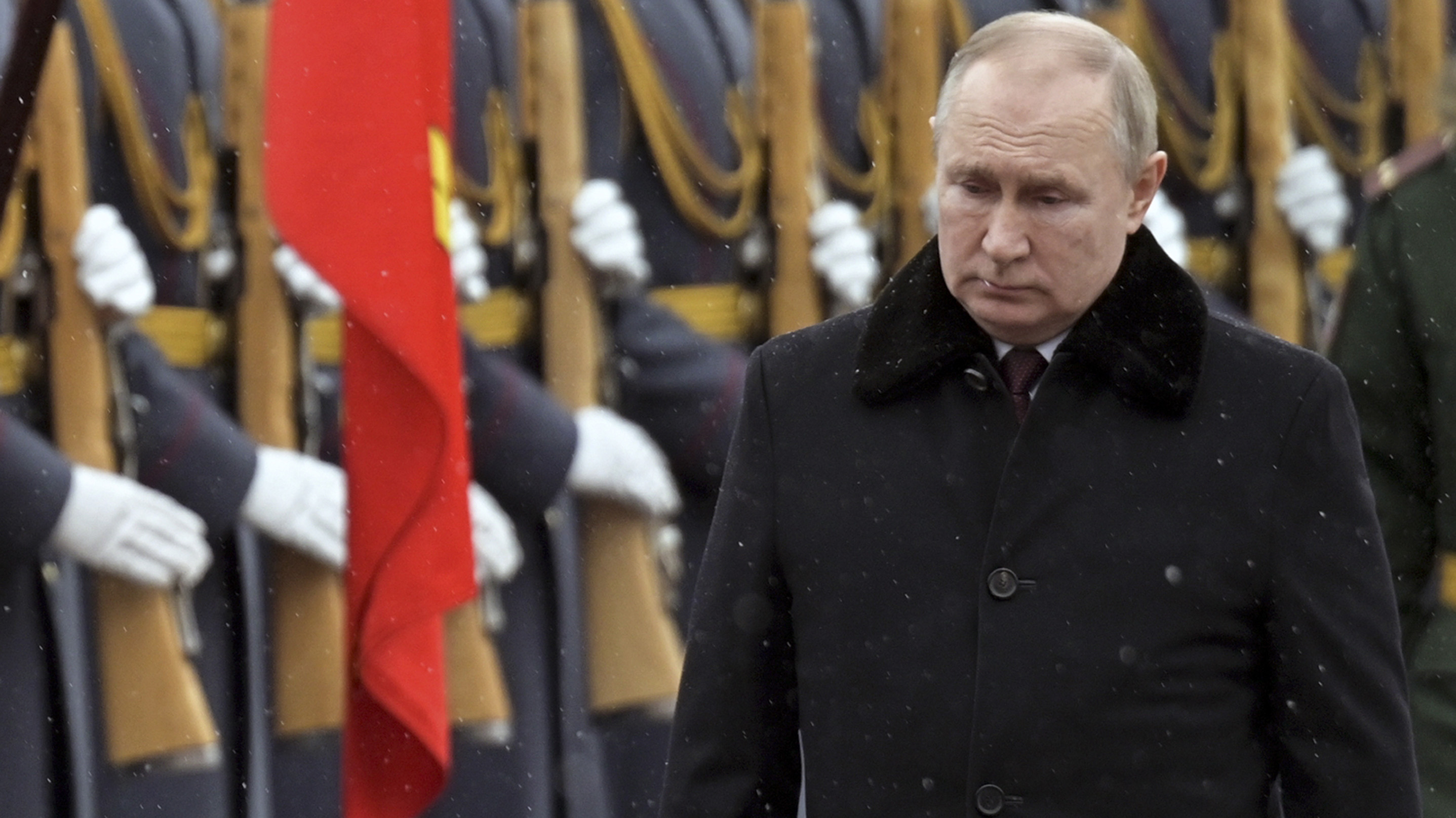
Russian President Vladimir Putin attends a wreath-laying ceremony at the Tomb of the Unknown Soldier, near the Kremlin Wall during the national celebrations of the 'Defender of the Fatherland Day' in Moscow, Russia.

Australian sanctions will come into effect at the end March, Mr Morrison said, which would give Australian businesses time to make alternate arrangements.

"(The sanctions) target their financial interests, it prevents them from travelling, it stops them from moving money around," Mr Morrison said, describing how Russia's elite would be hit.

"It stops them from coming and having holidays in countries such as Australia or going shopping in Harrods or doing the things of that nature and trying to live their lives as if they have nothing to do with the violence and bullying and intimidation that they are supporting from the Russian regime."

Several Russian banks have been included in Australian sanctions.

While some critics questioned why the West was not doing more to stop Russia, Mr Morrison said he understood why Europe was reluctant to put boots on the ground.

"I'm not going to lecture Europe," Mr Morrison said on Today, earlier this morning.

"They're the ones whose own people, were they to have troops deployed in Ukraine, it would have been their people, their soldiers."

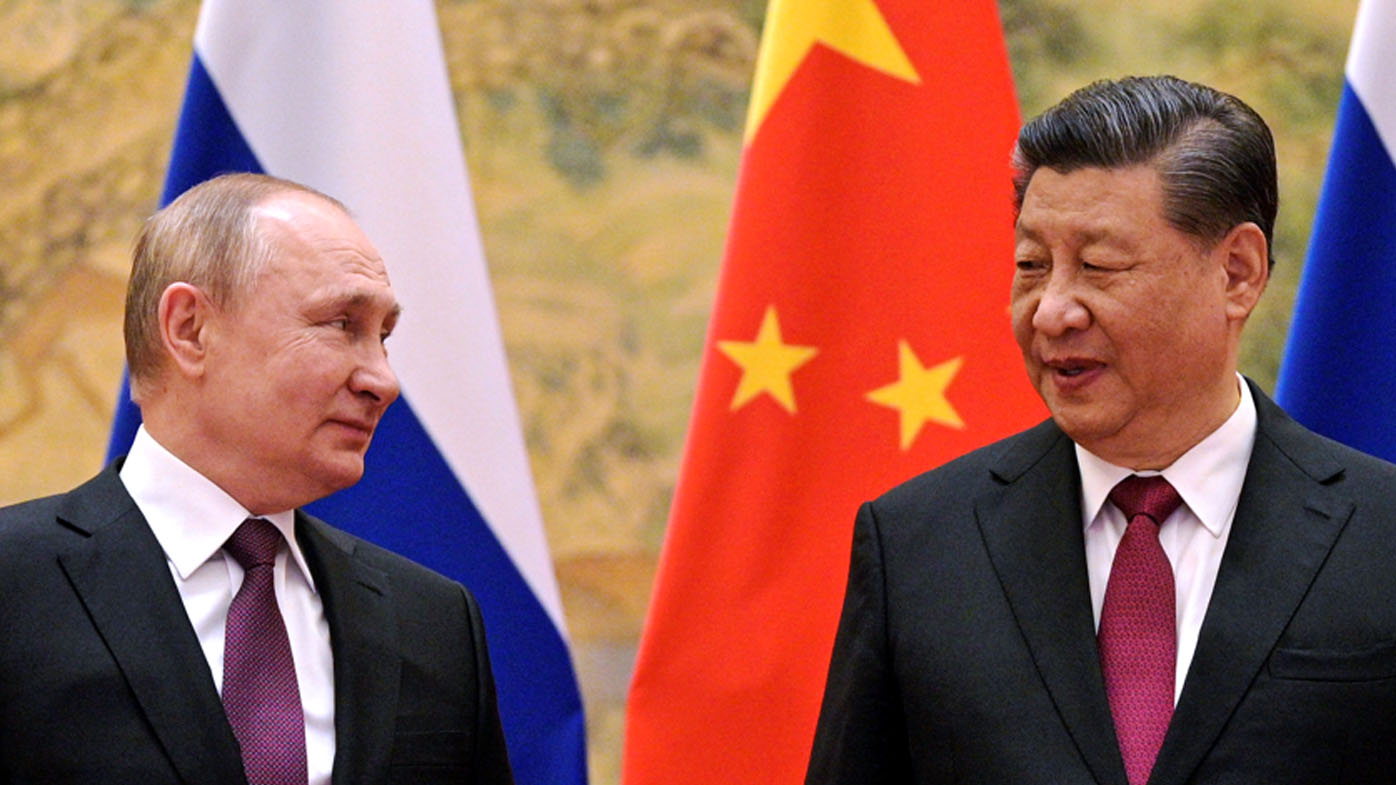
China has yet to sanction Russia, a decision Mr Morrison criticised.

He said Beijing should "fully denounce" its superpower neighbour.

READ MORE: All the ways a Russian invasion could hit your wallet

He denied Taiwan was under any kind of increased threat because of Russian aggression towards Ukraine.

"I'd caution between drawing two different parallels, they are quite different."

Russian cyber attacks on Australia now likely

With global tensions rising, retaliatory cyber attacks out of Russia are now "a real threat", Mr Morrison said

He called on Australian public and private companies to "urgently adopt an enhanced cyber security posture".

"There has been a pattern of cyberattacks against Ukraine and that continues now," Mr Morrison said, explaining Australian intelligence agencies are braced for offensives.

READ MORE: Ukrainian government websites hit by mass cyber attack

"Malicious cyber activity could impact Australian organisations through unintended interruption or unmaintained cyber activities.

"He said Australian intelligence were "not aware" of any current or specific threats against Australian organisations.

Russia has one of the most feared cyber armies in the world.

Moscow also has links to criminal hacking gangs which attack private and public targets in the West.

Key Australia security partner fails to impose sanctions

As many Western allies moved in lock-step over the past day, Mr Morrison refused to criticise India, which is part of the Quad alliance alongside the United States, Japan and Australia, for not imposing sanctions on Russia.

"All countries have different levels of engagement with Russia," he said.

"But my position is very clear … it is important for like-minded countries to take the strongest possible action, because one day it's a country like Russia threatening the border and seeking to invade Ukraine and then next it could be countries in our own region seeking to do the same thing.

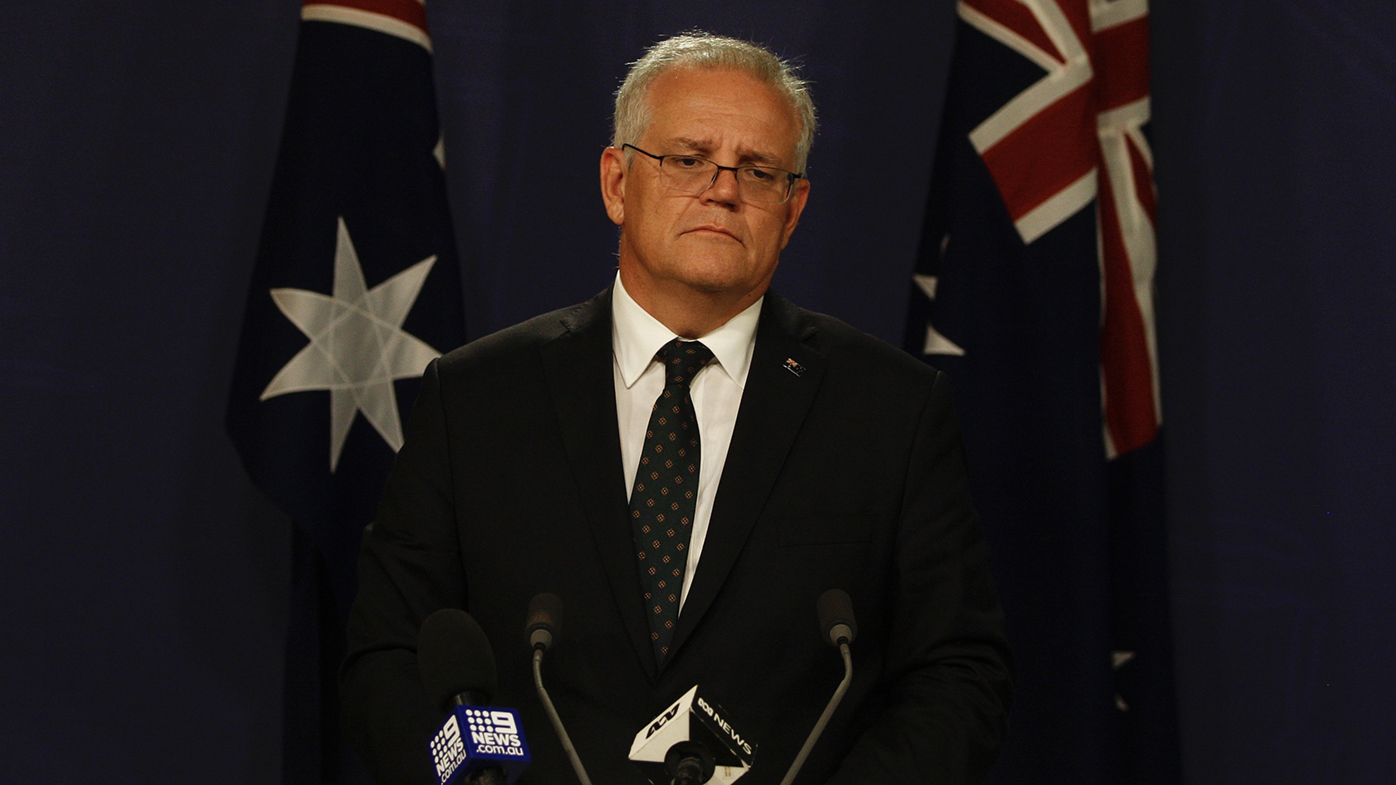
Prime Minister Scott Morrison has announced immediate sanctions on Russia.

Earlier this morning, Russian officials responded to the Federal Government's economic sanctions slapped on Moscow – hitting back at the Mr Morrison's claim that Australia stands up to bullies.

Mr Morrison yesterday announced the sanctions against Moscow in response to Russian troops entering rebel-held areas of eastern Ukraine.

He said Australia would initially impose travel bans and targeted financial sanctions on eight members of the Security Council of the Russian Federation.

READ MORE: Nearly 200,000 Russian troops on border, says Ukraine president after trying to call Putin

https://twitter.com/jekearsley/status/1496567038600302597?ref_src=twsrc%5Etfw

"Australians always stand up to bullies," Mr Morrison said, in announcing the sanctions.

But today Russia's embassy in Canberra has responded, insisting Moscow's actions to recognise independence in the separatist east Ukraine regions of Donetsk and Luhansk "will not be reverted".

In a statement, it also disputed Mr Morrison's comments about Australia "standing up to bullies".

"Australia does not always stand up to bullies. Canberra has been totally indifferent to the discrimination of the Russian speakers by the radical nationalistic regime in Ukraine."

Russian diplomats accused the Australian government of "supporting and encouraging the xenophobic bullies based in Kyiv".

The Australian sanctions will also include entities linked to Moscow, as well as Russian banks, transport, energy, telecommunications, oil, gas and minerals.

Australia will also extend the sanctions currently imposed on Crimea to include Donetsk and Luhansk, the separatist states in eastern Ukraine.

READ MORE: International Space Station 'largely isolated' from tensions over Ukraine

These two women suddenly started speaking in Irish accents

Having a medical episode that causes you to suddenly start speaking in a foreign accent may sound endlessly fascinating, or like a really cool party trick.

But for those rare few it has happened to, it is anything but.

Angie Yen, from Brisbane, and Kate Baggs, from Darwin, are two Australian women who have foreign accent syndrome – and they both say they wouldn't wish it upon anyone.

It has been 10 months since Ms Yen, a dentist, woke up with an Irish accent in April last year.

READ MORE: The Aussie woman who can see 100 million colours
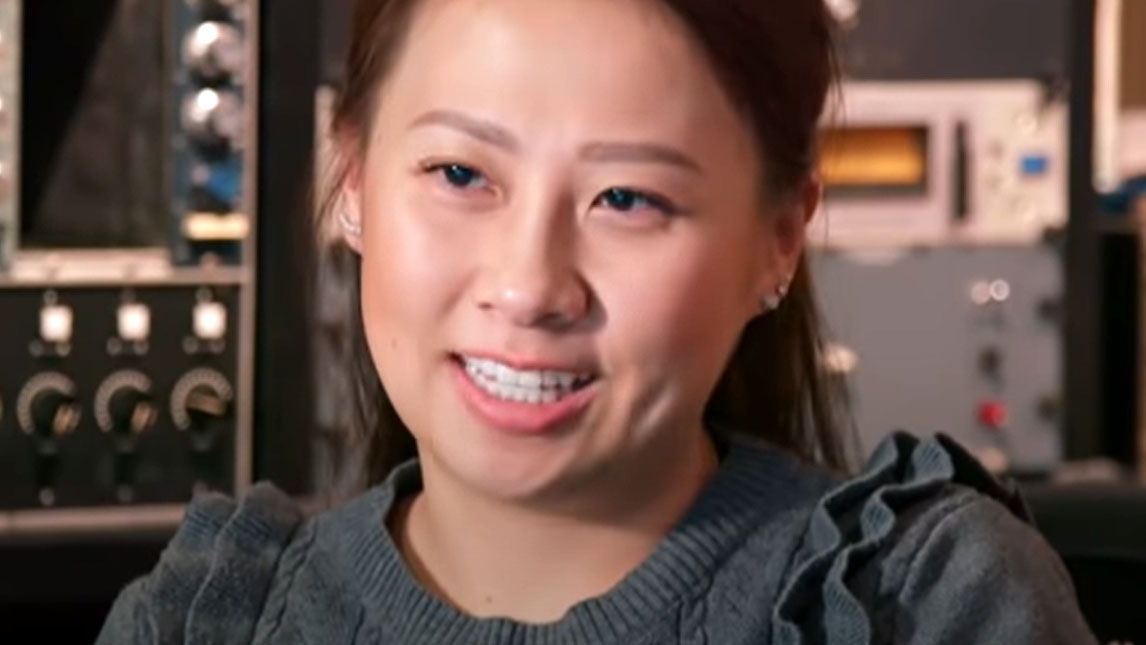
Angie Yen started speaking in an Irish accent after having her tonsils removed.

Singing in the shower that morning, Ms Yen suddenly noticed her voice sounded very different.

She knew immediately something was seriously wrong.

"Initially, I thought I was having a stroke. I was thinking, am I just going to pass out," she told 9news.com.au.

"I didn't know what to expect. Would it be like the movie Freaky Friday, where you switch bodies back?

"Will I wake up tomorrow and turn back into myself again?"

While doctors cannot definitively say what caused Ms Yen to start speaking in the accent, it began 10 days after she had her tonsils removed, pointing to that operation being the most likely trigger.

Accent fades, but triggers remain

Although Ms Yen's accent has softened somewhat from the heavy Irish brogue she woke up with in April last year, she still speaks with a definite lilt.

Stress and tiredness can also play a part, making her accent stronger on some days and not others, she said.
Ms Yen says she would love to have her Irish accent go away.

Adjusting to life with her new accent was tough, particularly in the first six months, Ms Yen said.

"It was really hard because I would be going out and pretty much every second person I was speaking with, they would be trying to make conversation and saying 'Why are you speaking like that, where are you from?'"

Accents at war

For Ms Yen, foreign accent syndrome also came with other speech problems, including a stutter she never had before.

She describes it as like a tug-of-war going on in her head between her old and new accent.

"People have asked me if I sound Irish or Aussie in my head. After the first couple of weeks, I have sounded Irish," she said. 

"Your inside voice is what you hear from your mouth, it's like a feedback loop.
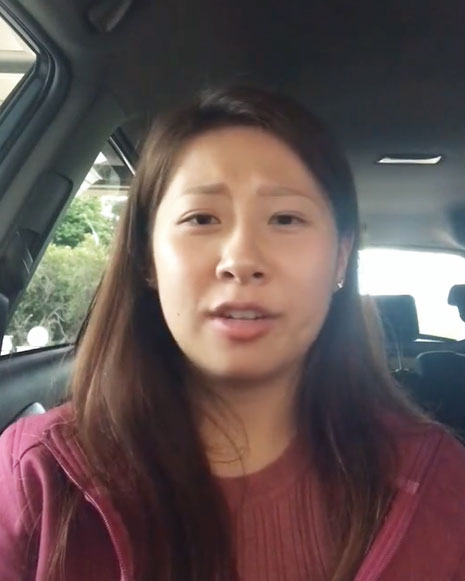
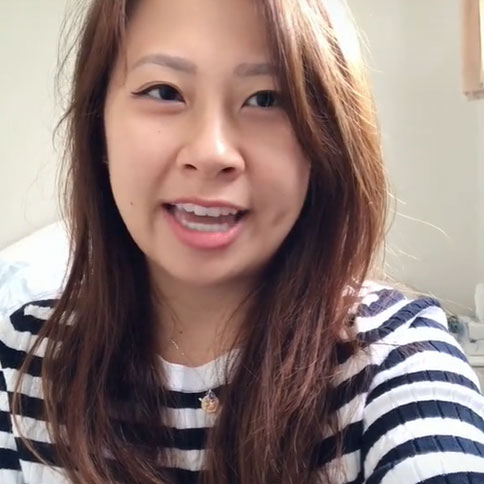
When Angie Yen first found herself speaking in an Irish accent she turned to TikTok to express her confusion.

"I have had an Aussie accent for 20-something years and all of a sudden there is this new one, so sometimes my tongue gets a bit tongue-tied."

Ms Yen said her stutter often came on without warning and it was challenging to deal with at work.

"I might be trying to talk to my patients and I am stuttering my words and I am not making sense," she said. 

"It's embarrassing. I am just sitting there trying to hold myself together and people are like, 'Is she serious?'"

A few months ago, Ms Yen underwent surgery on her nose and chin to help with her sleep apnoea. 

Although there was nothing to suggest the surgery might also make her switch back to speaking with an Australian accent, she was hoping fervently it would.

"When I woke up, the first thing I did was ask everyone what I sounded like," she said. 

The nurses, who did not know her backstory, replied: 'What do you mean? You just sound like you.'"

"I started getting so upset, I was very disappointed," Ms Yen said.

Proof at last

Ms Yen, who has been documenting her journey with videos on social media app TikTok, has also had to deal with trolls and sceptics accusing her of faking her accent since going public with her story.

But Ms Yen can prove she is not making it up. 

In June last year, Ms Yen appeared on 60 Minutes, with the program setting up an appointment for her with Sydney neuroscientist Dr Michael Sughrue. 

After undergoing an MRI, Dr Sughrue was able to use cutting-edge technology to map Ms Yen's neurological activity.

All appeared fine, except for her language system, which showed up several abnormal red markers. 

"That's the problem… there it is," Dr Sughrue said.

"You're the first person we have seen this in, and probably one of the first people in the world. 

"We have objective proof that you're not faking it. There it is," he adds, as Ms Yen breaks down in tears.

'I've had friends stop talking to me'

The 60 Minutes program also featured Kate Baggs, from Darwin, who suddenly developed an Irish accent almost three years ago, in June 2019.

Ms Baggs suffered a severe hemiplegic migraine, similar to a stroke, causing paralysis in her face and body for almost two months. 
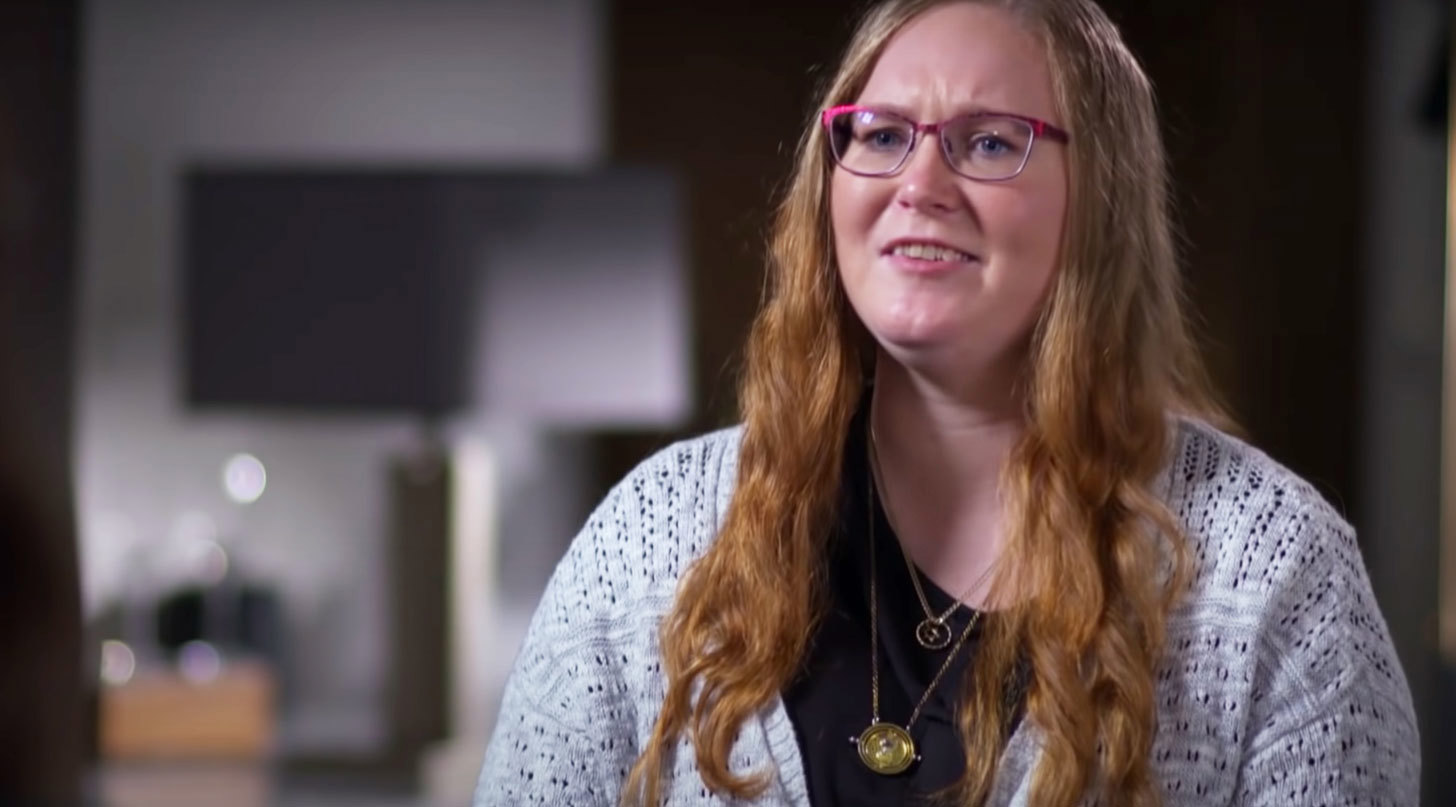
Kate Baggs suddenly found herself speaking in an Irish accent almost three years ago.

Just as she had recovered, Ms Baggs went on holidays and her world turned topsy-turvy again.

"Literally, in the middle of a sentence, my accent changed and it was just so thick," Ms Baggs told 9news.com.au. 

"The timbre of my voice even changed. It went very low and very bass-sounding.

"It was so strange."

Like Ms Yen, Ms Baggs also met with Dr Sughrue, whose test results showed a similar alteration to the neurological activity in the language section of her brain.

Again, it was an emotional moment, for Ms Baggs has also had her fair share of doubters. 

"I've had friends, and some random people that I meet, who say, 'Oh, that can't be real. That's not real,'" she said. 

"Why would I make it up? What would be the benefit of me making this up? 

"I've definitely had friends who stopped talking to me after my accent changed, they couldn't deal with it." 
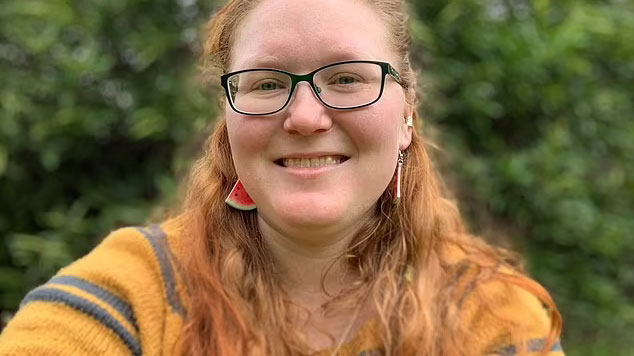
Kate Baggs suffered a hemiplegic migraine before she started speaking with an Irish accent.

Ms Baggs's Irish accent has softened over the years, but it is still very noticeable when 9news.com.au speaks with her over the phone.

"You can hear it, but it's not in-your-face Irish," is how Ms Baggs describes it.

Voice reveals hidden layers

Ms Baggs said her accent also varied a lot, depending on who she was with.

"I have days where, if I'm just at home with my mum or my sister, I actually sound Australian now," she said.

"But if I pick up the phone, or if someone else walks in the house, or I go out to the shops or something, the Irish just comes back.

"It seems almost protective of me, like if I'm not around the people that make me the most comfortable, it's immediately Irish. It's very strange."

Ms Baggs said the change was so noticeable that her brother-in-law jubilantly commented to her sister one day that she was starting to sound Australian around him.

"She told him, 'Oh, that means you've been accepted into the family.'" 

https://www.instagram.com/p/Bzuf5o0HQVQ/?utm_source=ig_embed&amp

Like Ms Yen, Ms Baggs' foreign accent syndrome has also come with other challenges.

Ms Baggs used to be an artist, and would embroider, knit, paint and draw.

But she suddenly found herself unable to express her creativity.

"For me, it came with a creative block. I lost a lot of skills that I haven't been able to re-learn. Others I have worked very hard to get back," she said.

"I lost the ability to do a lot of my drawing and painting and some embroidery skills. 

"I still haven't got my cooking skills back. I used to be able to just throw things together in the kitchen and make a meal and I can't really do that in the same way anymore. 

"It's coming back slowly, but I still find it more like swimming up a river, whereas before it was very easy."

Ms Baggs said, as well as her medical complications, she found the identity issues that came with not sounding like herself extremely difficult to deal with.

"As fun as it sounds to most people, I wouldn't wish it upon anyone.

"It really does affect your personality and your identity a little bit because so much of it is in how you sound.

"I think we don't appreciate that until it changes."

Contact reporter Emily McPherson at em********@******om.au
'Unprovoked and unwarranted': PM backs Ukraine in Russia tensions

Prime Minister Scott Morrison has spoken with his Ukrainian counterpart to offer support after announcing sanctions on Russian businesses and individuals today.

The sanctions are in response to Russian troops entering rebel-held areas of eastern Ukraine, described by Mr Morrison as an "invasion".

He said Australia would initially impose travel bans and targeted financial sanctions on eight members of the Security Council of the Russian Federation.

READ MORE: How a Russian invasion could hit global economy and your wallet

The sanctions will also include entities linked to Moscow, as well as Russian banks, transport, energy, telecommunications, oil, gas and minerals.

Australia will also extend the sanctions currently imposed on Crimea to include Donetsk and Luhansk, the separatist states in eastern Ukraine.

Mr Morrison said the sanctions on individuals and entities would target "the perpetrators and beneficiaries of this violence".

"We will be adding names to the list," he said.

"And we'll be ratcheting it up further to potentially other areas of economic activity."

Mr Morrison would not explicitly name the individuals sanctioned by Australia but said they were the same people blacklisted by the UK and US.

He said the sanctions would "ensure there are severe costs" to Russia's aggression and keep Australia in lock-step with the US and UK.

A spokesperson for Mr Morrison confirmed he had spoken to Ukrainian Prime Minister Denys Shmyhal by phone tonight, pledging support for the eastern European nation.

"Prime Minister Morrison reaffirmed Australia's unwavering commitment to Ukraine's sovereignty and territorial integrity, and denounced Russia's aggressive behaviour towards Ukraine as unacceptable, unprovoked and unwarranted," the spokesperson said.

"The Prime Minister informed Prime Minister Shmyhal of Australia's immediate action to sanction Russian individuals, organisations and banks as part of an international effort to impose a sharp cost on Russia for its actions against Ukraine."

The spokesperson said Mr Morrison was prepared to do more, if necessary, to respond to the country's needs.

Opposition Leader Anthony Albanese said sanctions against Russia were appropriate and necessary.

"It is absolutely vital that all nations which are democratic and that value the importance of national sovereignty being respected take action in support of the people of Ukraine," Mr Albanese said.

Shadow Minister for Foreign Affairs Penny Wong also threw her support behind the decision.

"We do offer bipartisan support on the sanctions announced," Ms Wong said.

Australia's sanctions follow the path of the US, Britain, Canada, Japan and the European Union.

Mr Morrison, like US President Joe Biden, said the Russian invasion of Ukraine had already begun.

"Australians always stand up to bullies," Mr Morrison said.

"And we will be standing up to Russia along with all of our partners.

"These two actions will align us with our key partners the United States and the United Kingdom."

https://twitter.com/jekearsley/status/1496307031895986181

Mr Morrison said there are 1400 Australians currently in Ukraine.

Around 430 visa applications from Ukrainian citizens were currently being assessed by Australian officials.

"They're in Ukraine and they're in the firing line of Russians guns and missiles," Mr Morrison said.

"All nations who want to stand up to bullies should do so now."

Mr Morrison said the situation had now reached "the last stage before a full invasion" and Russia had now built to a "peak of military preparedness".

"They're behaving like thugs and bullies," Mr Morrison said.

"Tragically, the sheer force of that violence of a thug and bully is about to be impacted upon the people of Ukraine," he said.

EXPLAINED: Why Russia-backed rebels are a thorn in Ukraine's side

He said it was "only a matter of time" before they walked away or followed through "and sadly the signs are that they will follow through".

The prime minister said Australia would not be sending troops to Ukraine or its neighbours.

"We're able to assist in the broader efforts … but that doesn't involve people being deployed in the region," Mr Morrison said.

Mr Morrison said intelligence agencies would ramp up counter-espionage efforts.

Suspicious financial transactions would be monitored closely and Australia was preparing for potential cyber-attacks.

Mr Morrison earlier today called an emergency meeting of the National Security Committee of cabinet to discuss Australia's response.

The Federal Government has also held talks with its Five Eyes international intelligence partners.

Home Affairs Minister Karen Andrews said discussions included cyber security.

"We are concerned about protecting Australia's interests and we are concerned about the potential for a cyber attack, particularly on our critical infrastructure in Australia," Ms Andrews said.

Troops have started to move into rebel-held areas of eastern Ukraine, a day after Russian President Vladimir Putin recognised Donetsk and Luhansk independent territories.

READ MORE: Bitcoin plunges on Ukraine invasion fears

Coalition Senator Matt Canavan earlier today said Australia should join the global effort to prevent further aggression from Russia.

"Look, we should join the global effort. There is no doubt about that," Mr Canavan told Today.

"There should be consequences for this type of action, which does not represent the sovereignty of other countries.

"Of course we're a long way from this situation and we don't have extensive trade or investment links with Russia but, yes, we should be part of this effort and do what we can here to prevent further aggression from Russia and/or other countries in our region."

READ MORE: Woman dead, motorcyclist missing in floodwaters

Yesterday the Federal Government confirmed Australia's remaining diplomatic staff in the Ukrainian city of Lviv will leave and move to eastern Poland and Romania.

Mr Morrison described the suggestion that troops were being ordered into the Moscow-backed separatist territories to maintain peace as "nonsense".

"It should unconditionally withdraw back behind its own borders and stop threatening its neighbours," Mr Morrison said.

Dramatic footage shows rescue at Sydney lagoon during wild weather

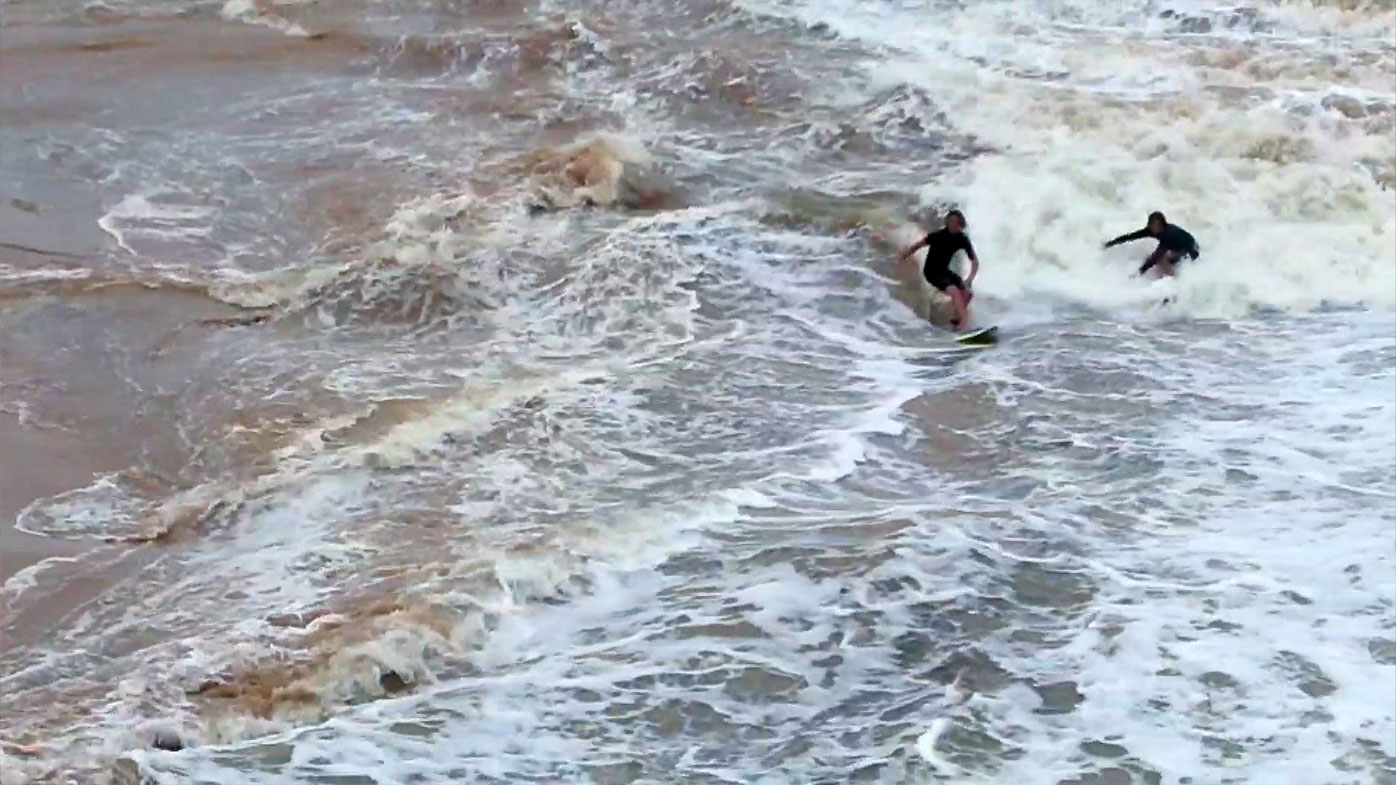
A group of Northern Beaches surfers have been hailed "heroes" after saving a man being swept out to sea during Sydney's wild weather.

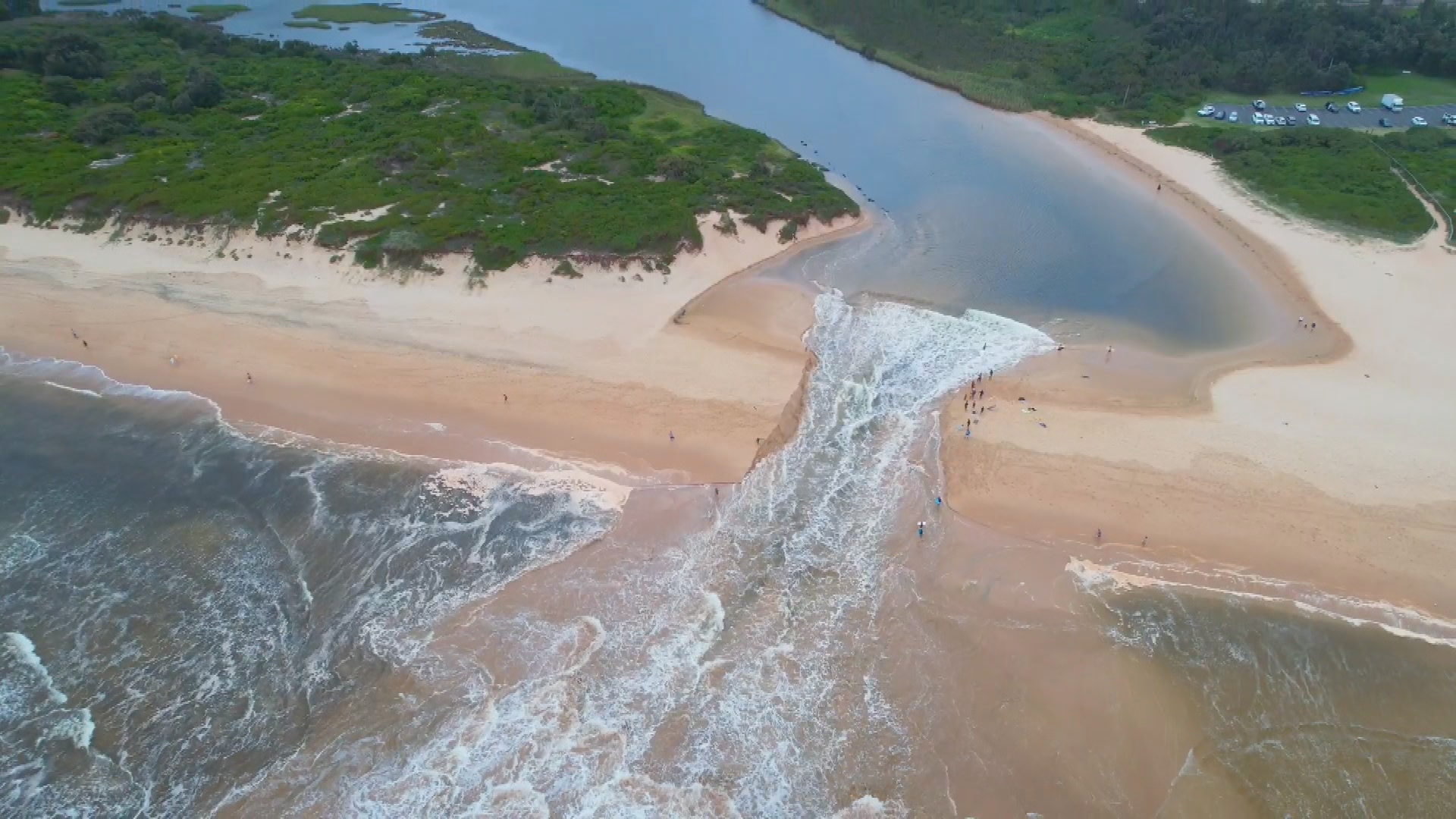
Surfers were enjoying the surging floodwaters being released from Dee Why lagoon into Long Reef Beach on Monday, a common occurrence during periods of heavy rain.

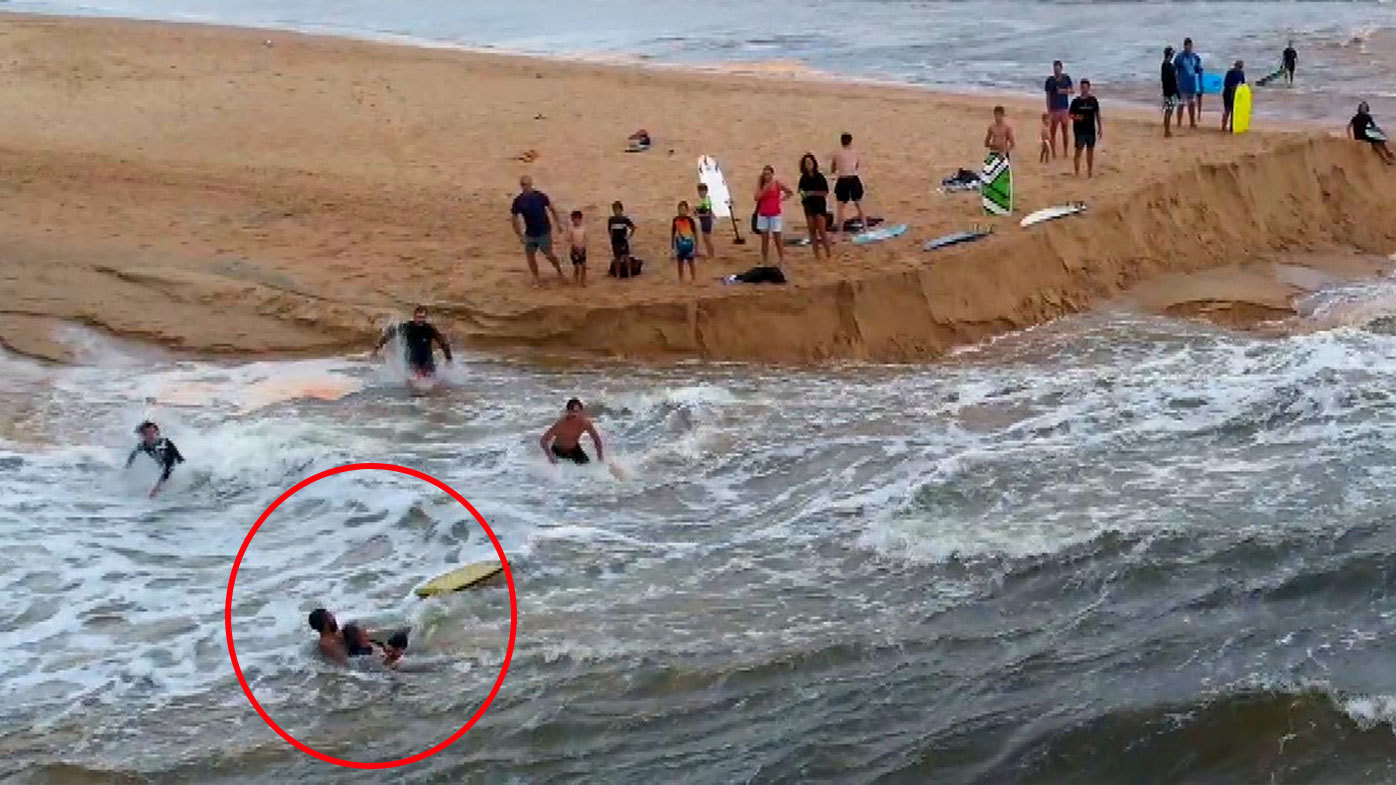
Dramatic footage captured by a local drone surf photographer showed an elderly man being swept out from the lagoon entrance into the ocean.

READ MORE: How a Russian invasion could hit global economy and your wallet

A group of Dee Why surfers have been hailed "heroes" after saving a man being swept out to sea during the city's wild weather.A group of Dee Why surfers have been hailed "heroes" after saving a man being swept out to sea during the city's wild weather.

"Everything happened super quick, we just got a wash out, we tried to keep his head up," Fabio Silvestre, one of the surfers, said.

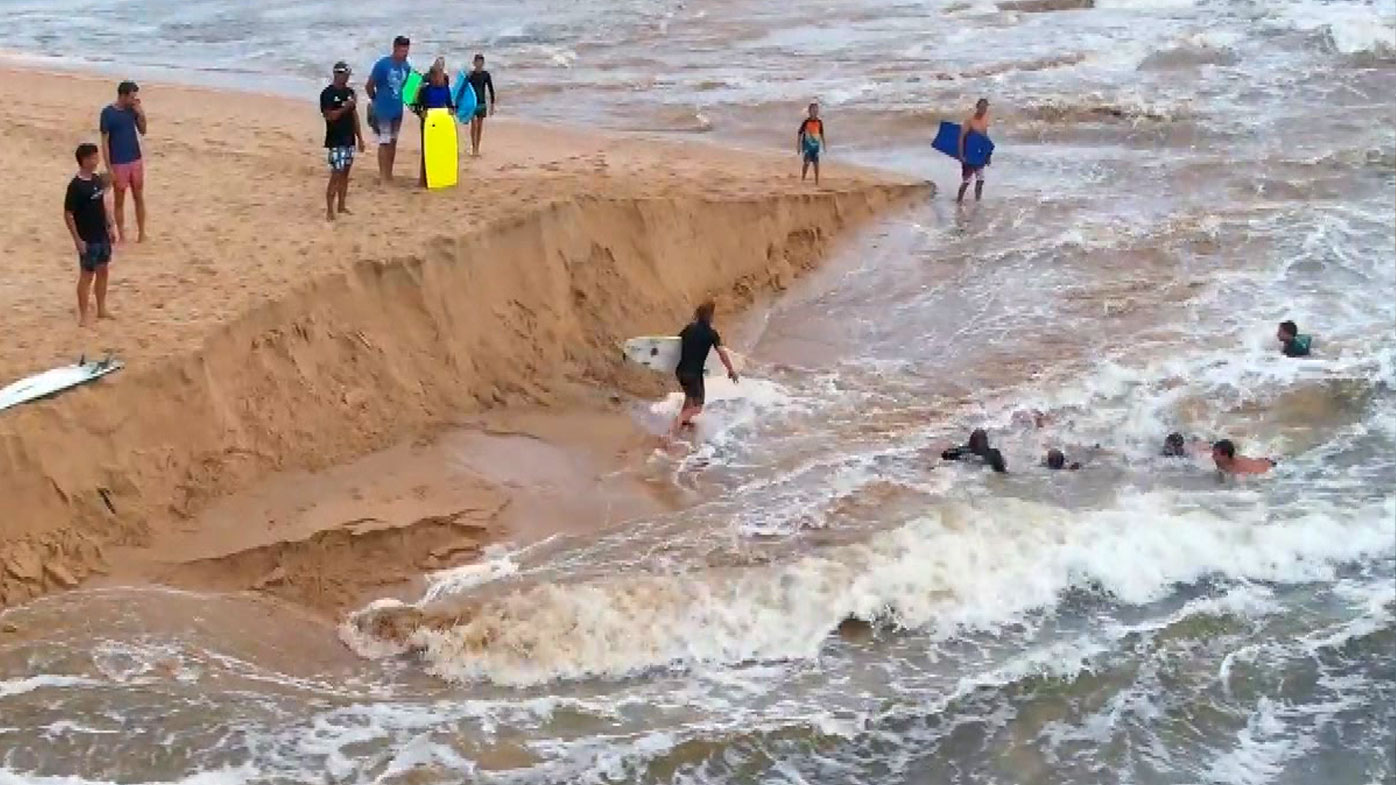
Three surfers came to the man's aid but were no match for the wall of water and were sucked out of the lagoon.

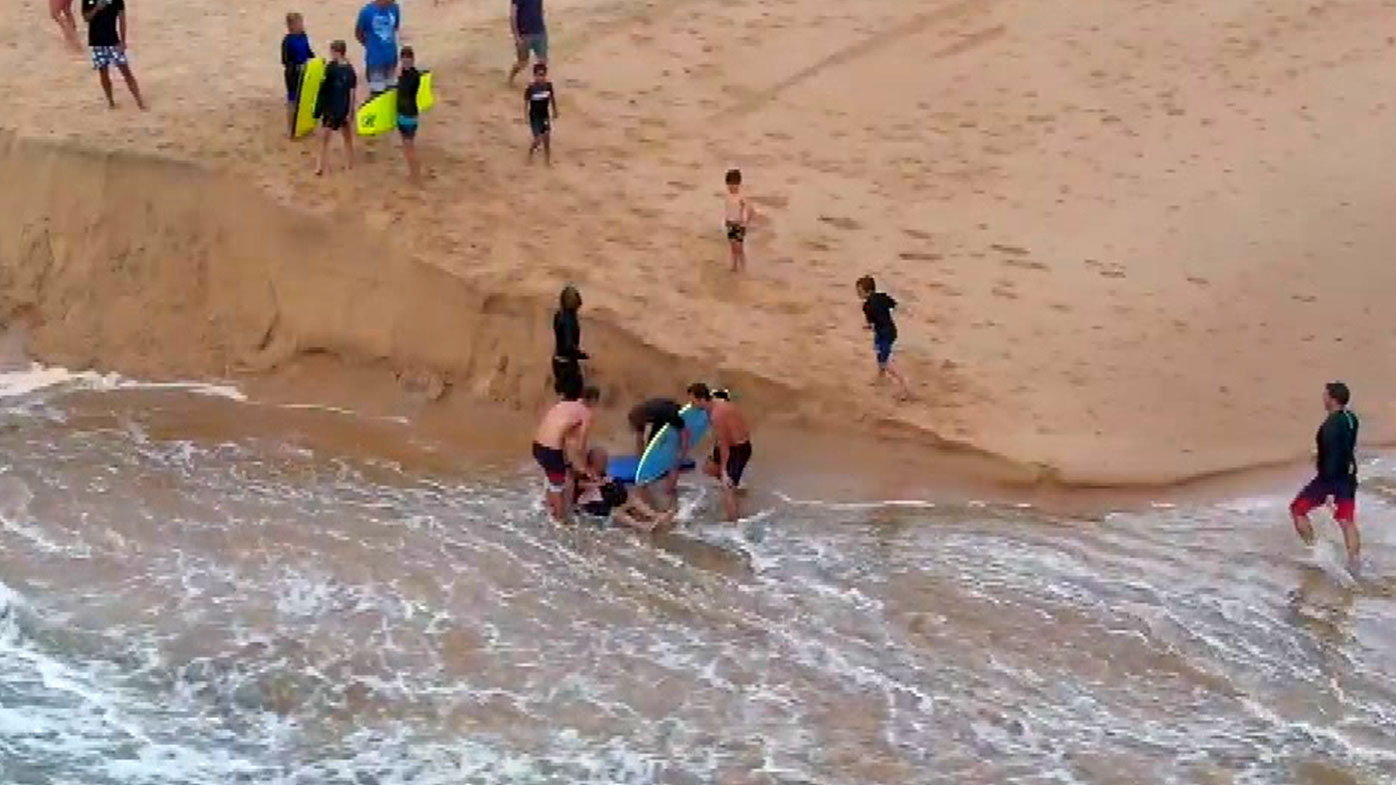
One man on the side of the wall of water managed to offer the elderly man his hand and lift him to safety.

READ MORE: Australia will impose immediate sanctions on Russia

A group of Dee Why surfers have been hailed "heroes" after saving a man being swept out to sea during the city's wild weather.A group of Dee Why surfers have been hailed "heroes" after saving a man being swept out to sea during the city's wild weather.

The three surfers who were sucked out also managed to pull themselves back to the safety of the sand dunes.

"He was in shock, he didn't say much, a bunch of guys asked him if he was okay, did he take in water and he was just shaking his head," Eugene Du Plessis, another surfer, said.

The surfers said the man didn't speak a word but attempted to go back into the water before giving up and heading to the carpark.

"I'm glad we were there, right time, and he went home," Mr Du Plessis said.

READ MORE: States bracing for more rain as two potential cyclones form

A group of Dee Why surfers have been hailed "heroes" after saving a man being swept out to sea during the city's wild weather.

Conditions have eased at Dee Why Lagoon but it is still too deep to cross.

Locals said it is rarely as dangerous as it was on Monday during the city's wild weather.

"The water running out the way it did, I've never seen it like that," Mr Du Plessis said.

Fears major construction firm is about to go into administration

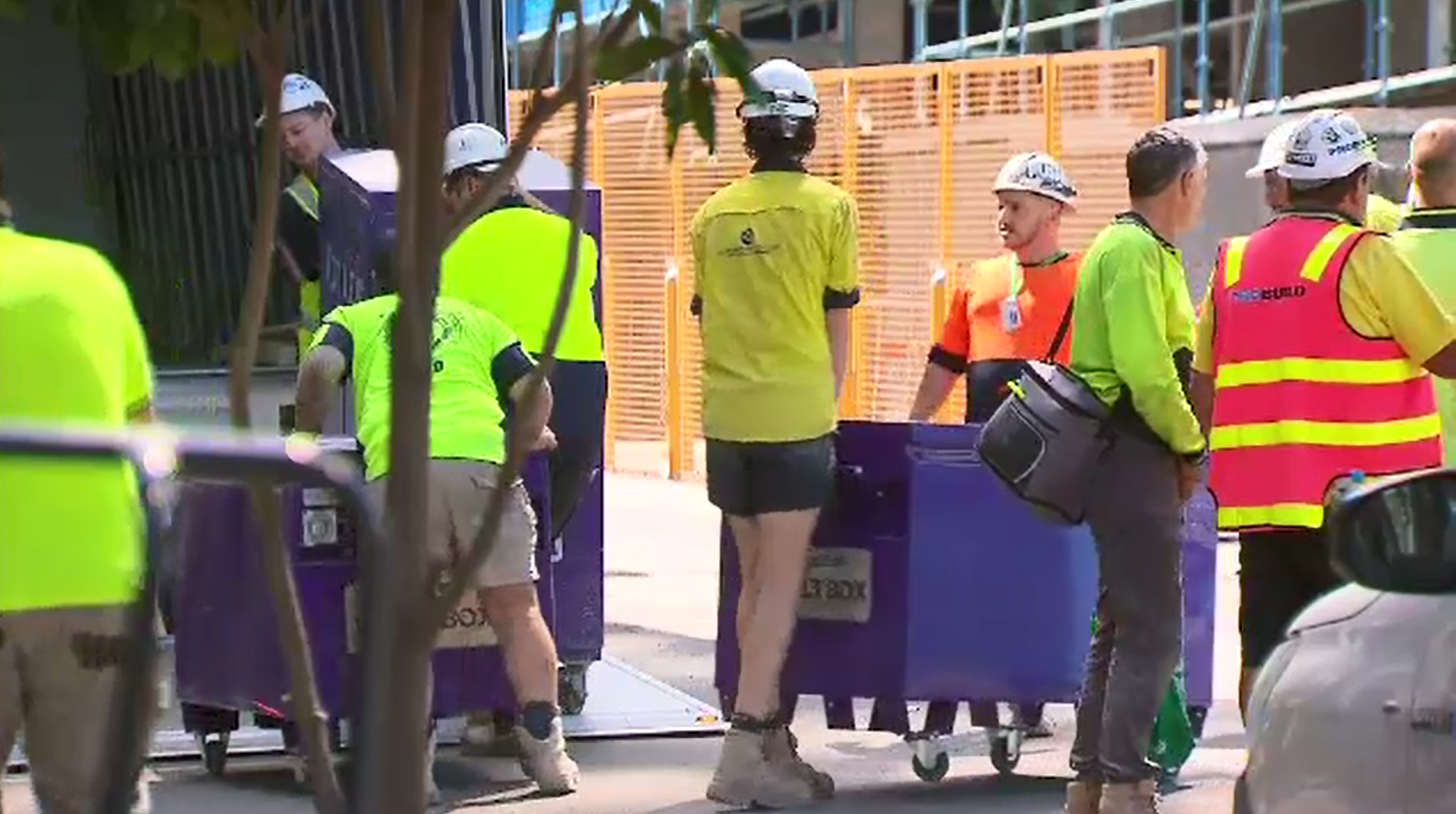
Hundreds of tradies have been booted off worksites across the country over fears construction firm Probuild is on the verge of collapse.

Subcontractors and tradesmen walked off the site this afternoon, including on Melbourne's O'Connell Street, where Probuild is behind a build for biotech giant CSL.

Workers were seen loading large amount of equipment and tools from Probuild building sites.

READ MORE: Potter claims he was 'avoiding being killed' in his 12 years on the run

Probuild's portfolio of ongoing work across Australia estimated to be valued at $5 billion and includes Greenland Centre, Sydney's tallest residential building.

The company is expected to make an announcement about its future tomorrow morning.

Long building delays and company not having enough money to pay its subcontractors are believed to be the factors behind Probuild's expected collapse.

A tradesman who fled one of the building sites told 9News: "All the contractors are owed hundreds of thousands of dollars.

"No one's going to get their money," he said.

More to come.