A man who drove through a Covid-19 border without stopping repeatedly endangered public safety when he led police on a 55km chase, driving at speeds of up to 160km/h before crashing. Police had attempted to stop a vehicle driven…
Tag Archives: oceania
Herald afternoon quiz: February 23
Test your brains with the Herald’s afternoon quiz. Be sure to check back on nzherald.co.nz for the morning quiz tomorrow. To challenge yourself with more quizzes, CLICK HERE.
Recording of dying brain shows we may relive memories before death
Our lives may indeed flash before our eyes in our last moments, the first-ever recording of a dying human brain has revealed.
Scientists have accidentally discovered what goes on inside a human brain just before a person dies after a man with epilepsy died of a heart attack while undergoing a brain scan to detect and treat his seizures.
The subsequent study of the man's brain activity, which has been published in Frontiers in Aging Neuroscience, suggests an explanation for people reporting experiencing vivid life recall in near-death experiences.
READ MORE: Human trials for Elon Musk's brain chip getting ready to launch
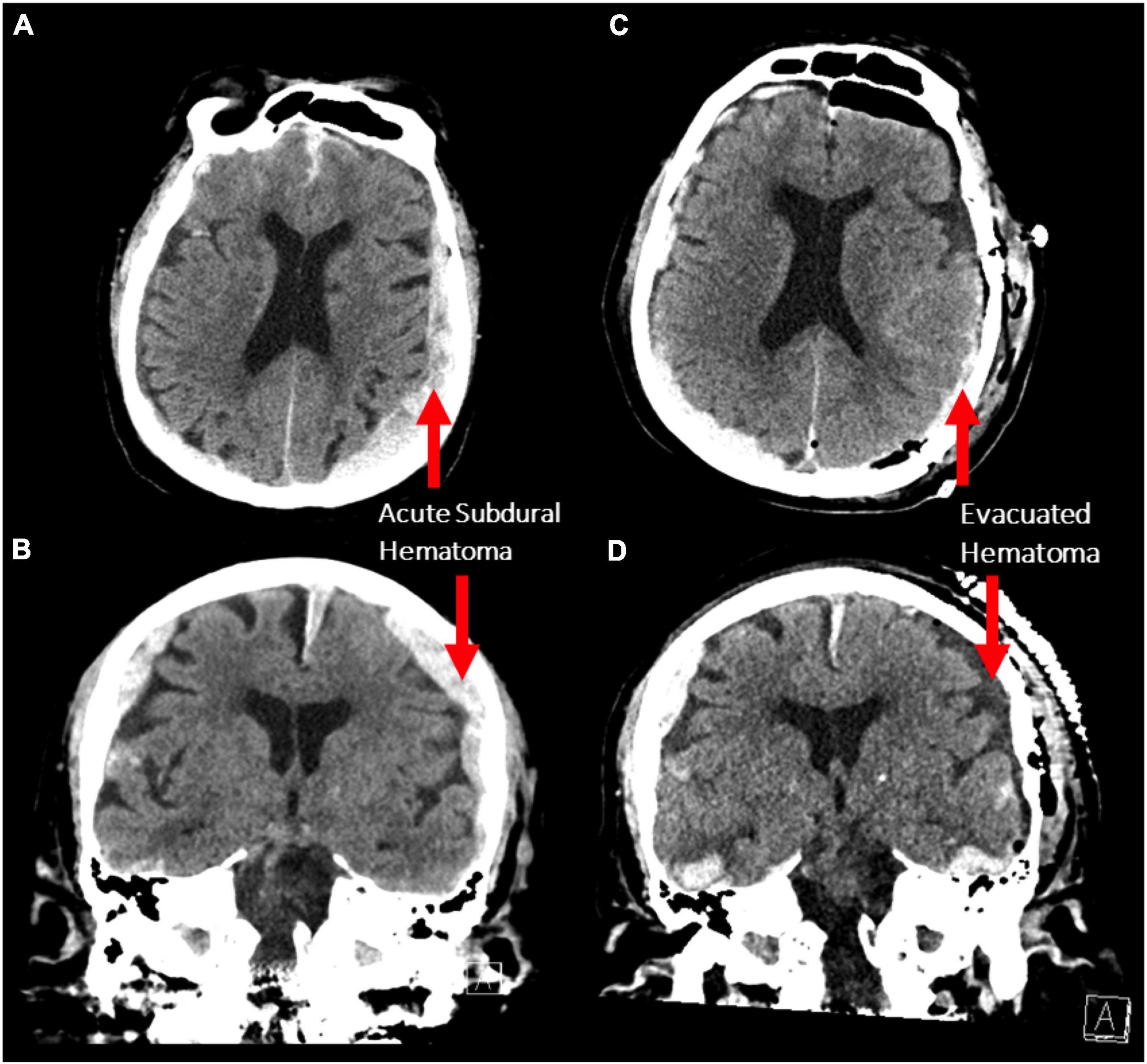
Scientists were using electroencephalography (EEG) to detect and treat seizures in the 87-year-old man when he passed away, leading to the first-ever recording of a brain's activity during death.
Dr Ajmal Zemmar, a neurosurgeon at the University of Louisville, who organised the study of the recording, has said the research shows people may in fact relive their lives in the seconds before they die.
He explained researchers focused on activity in the man's brain in the 30 seconds before and after the heart stopped beating.
"Just before and after the heart stopped working, we saw changes in a specific band of neural oscillations, so-called gamma oscillations, but also in others such as delta, theta, alpha, and beta oscillations," Dr Zemmar said.
https://twitter.com/DrAjmalZemmar/status/1496278523962662912
Brain oscillations, also known as 'brain waves', are patterns of rhythmic brain activity.
The different types of waves, including gamma, are involved in high-cognitive functions, such as concentrating, dreaming, meditation, memory retrieval, information processing, and conscious perception, just like those associated with memory flashbacks.
"Through generating oscillations involved in memory retrieval, the brain may be playing a last recall of important life events just before we die, similar to the ones reported in near-death experiences," Dr Zemmar said.
READ MORE: Dolly the cloned sheep introduced to the world
"Something we may learn from this research is: although our loved ones have their eyes closed and are ready to leave us to rest, their brains may be replaying some of the nicest moments they experienced in their lives."
Studies have previously analysed rats' brains as they died and have found increased activity in their brains in the 30 seconds after cardiac arrest.
Abuse trial: Father admits single incident of violence but denies sexual misconduct
A man on trial for the alleged physical and sexual abuse of his daughter has admitted a single act of violence against her and says it was the “worst decision I ever made in my life”.In court on Wednesday he denied all other physical…
Who are the three Russian oligarchs hit by UK sanctions?
Three super-rich Russian oligarchs with close ties to Vladimir Putin have been blacklisted with punishing UK sanctions.
Prime Minister Boris Johnson identified the trio of "very high net wealth individuals" as Gennady Timchenko, Boris Rotenberg and his nephew Igor Rotenberg.
The men were targeted in a "first barrage" of punitive measures, Mr Johnson said.
READ MORE: All the ways a Russian invasion could hit your wallet
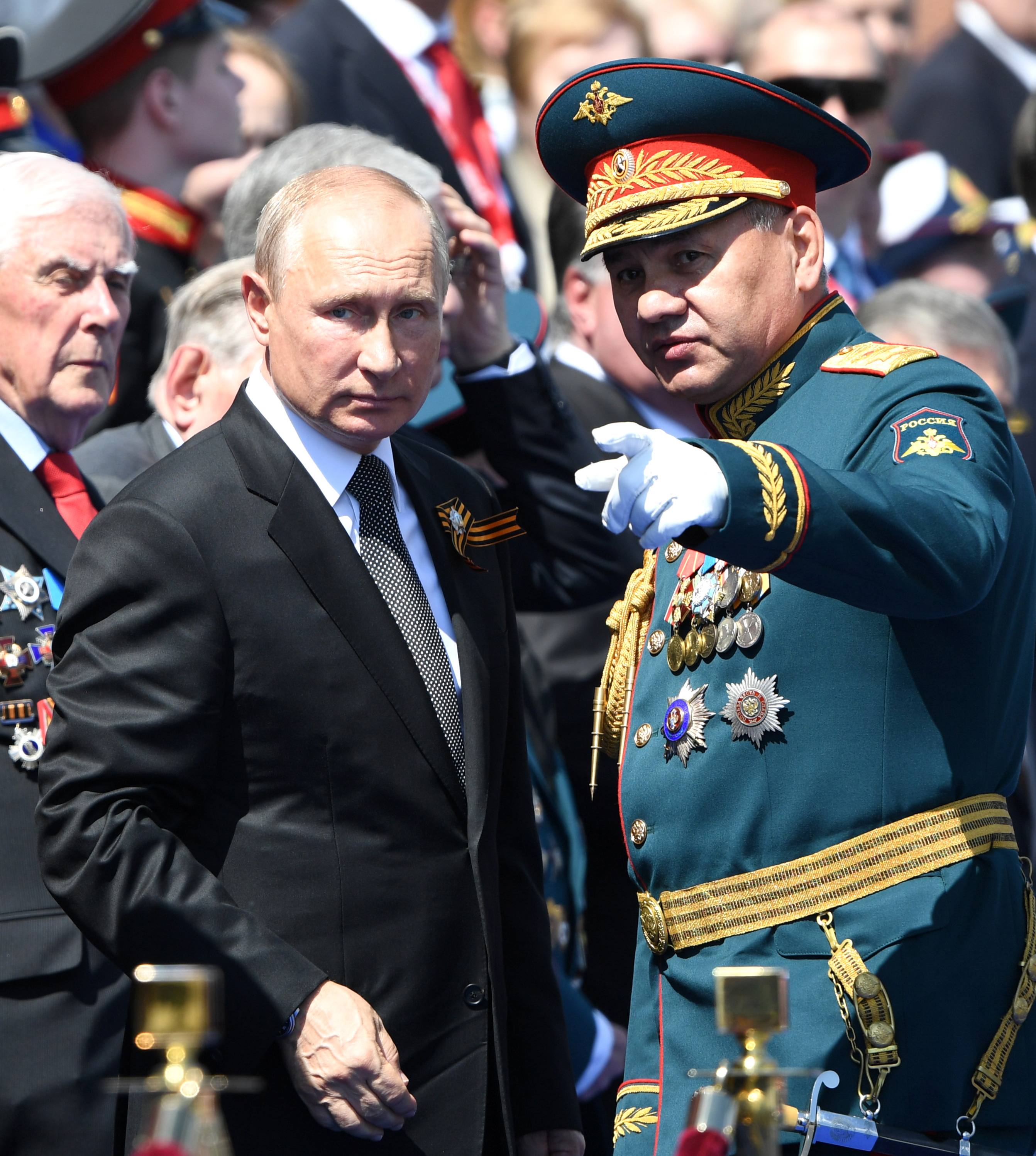
"Any assets they hold in the UK will be frozen, the individuals concerned will be banned from travelling here and we will prohibit all UK individuals and entities from having any dealings with them," he said.
"This the first tranche, the first barrage, of what we are prepared to do and we hold further sanctions at readiness to be deployed."
So who are the three uber-rich, billionaire oligarchs?
Gennady Timchenko
With an estimated net worth of $32.5 billion, Mr Timchenko is one of Russia's most powerful men.
He is involved in a number of Russian businesses, including gas company Novatek and petrochemical producer Sibur Holding.
Mr Timchenko is a major shareholder in Bank Rossiya, one of five Russian banks sanctioned by the UK.
READ MORE: US sanctions against Russian banks and oligarchs

READ MORE: What is Nord Stream 2 pipeline, and why does it make the US anxious?
The UK Foreign Office said Bank Rossiya is a key stakeholder in the National Media Group which supports Russian policy in destabilising Ukraine.
Bank Rossiya was viewed by the British government to be a beneficiary of Russia's annexation of Crimea in 2014.
Mr Timchenko is a close friend and ally of Mr Putin.
Boris Rotenberg
Forbes estimate Mr Rotenberg's net worth at $1.6 billion.
A childhood friend of Mr Putin, Mr Rotenberg is a major shareholder and director of SMP Bank.
He is also a co-owner of SGM, the largest construction company for gas pipelines and electrical power supply lines in Russia.
EXPLAINED: Why Russia-backed rebels are a thorn in Ukraine's side
READ MORE: Ukraine digs in for war with superpower Russia
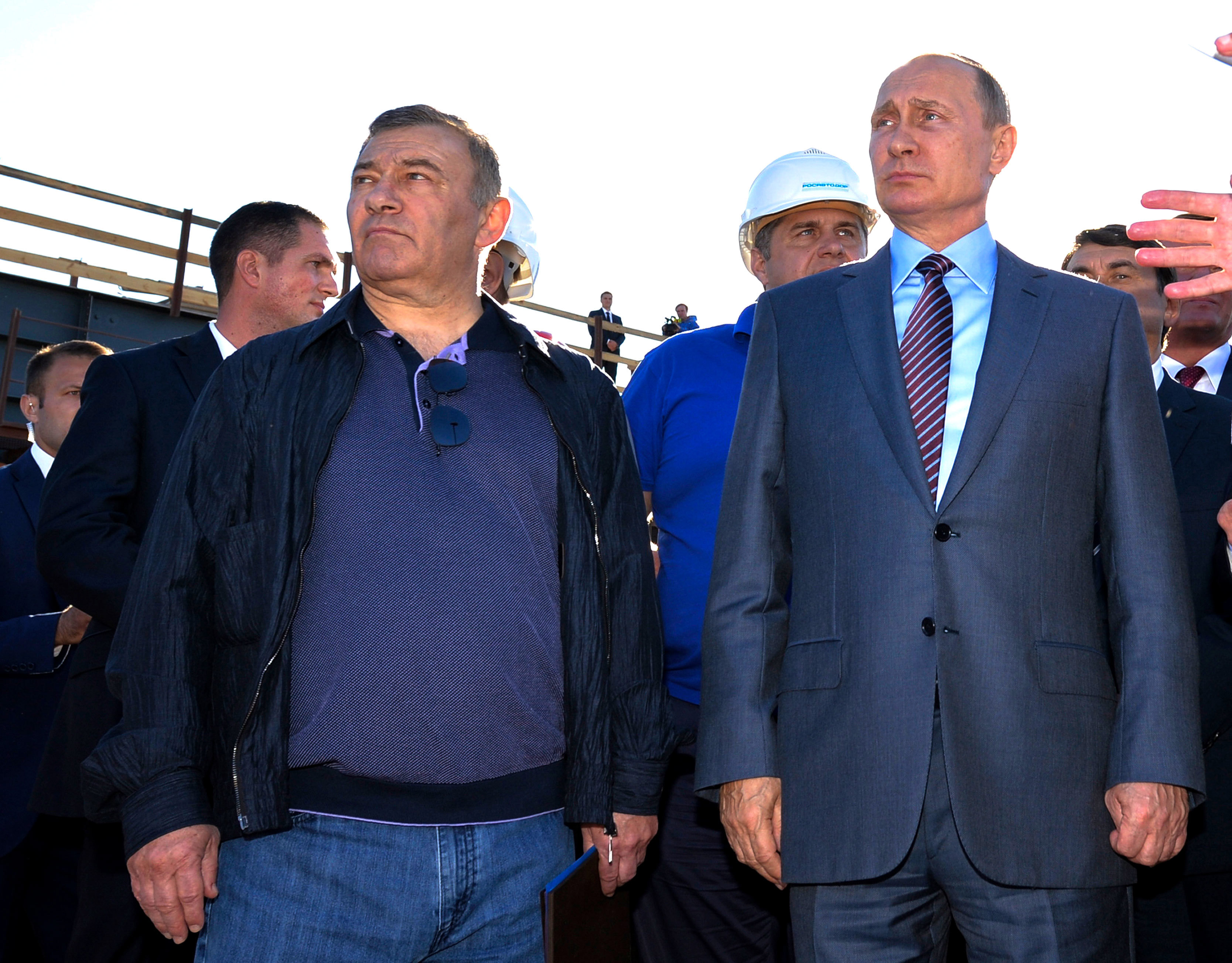
"The Rotenberg brothers have known Putin since they were boys growing up in St Petersburg," the UK Foreign Office said.
"A former professional judo trainer, he was the Russian President's former sparring partner.
"Boris is also a member of the St. Petersburg Connection, a powerful energy lobby under the leadership of Putin."
Igor Rotenberg
The son of billionaire Arkady Rotenberg, Forbes rate Mr Rotenberg's wealth at $1.2 billion.
His father's net worth is estimated to be $4.7 billion.
Mr Rotenberg is the chairman of the board of directors of National Telematic Systems.
He also controls drilling company Gazprom Bureniye.
"The Rotenbergs are closely associated with Vladimir Putin," the UK Home Office said, explaining the rationale behind the sanctions.
READ MORE: Australia will impose immediate sanctions on Russia
All three men have already been sanctioned by the US; Mr Timchenko and Boris Rotenberg in 2014, and Igor Rotenberg in 2018.
The sanctions send a message to people close to Mr Putin, and those in the president's inner-circle, that they could be next if Russia presses further in Ukraine.
It is unclear if Mr Timchenko and the Rotenbergs are included in just-announced Australian sanctions.
But while not explicitly naming individuals, Prime Minister Scott Morrison said those sanctioned by Australia were the same men sanctioned by the US and the UK.
Magpies outwit scientists by helping each other remove tracking devices
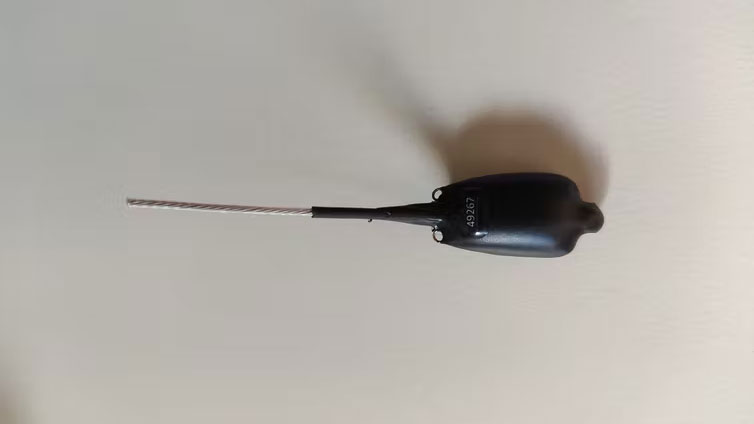
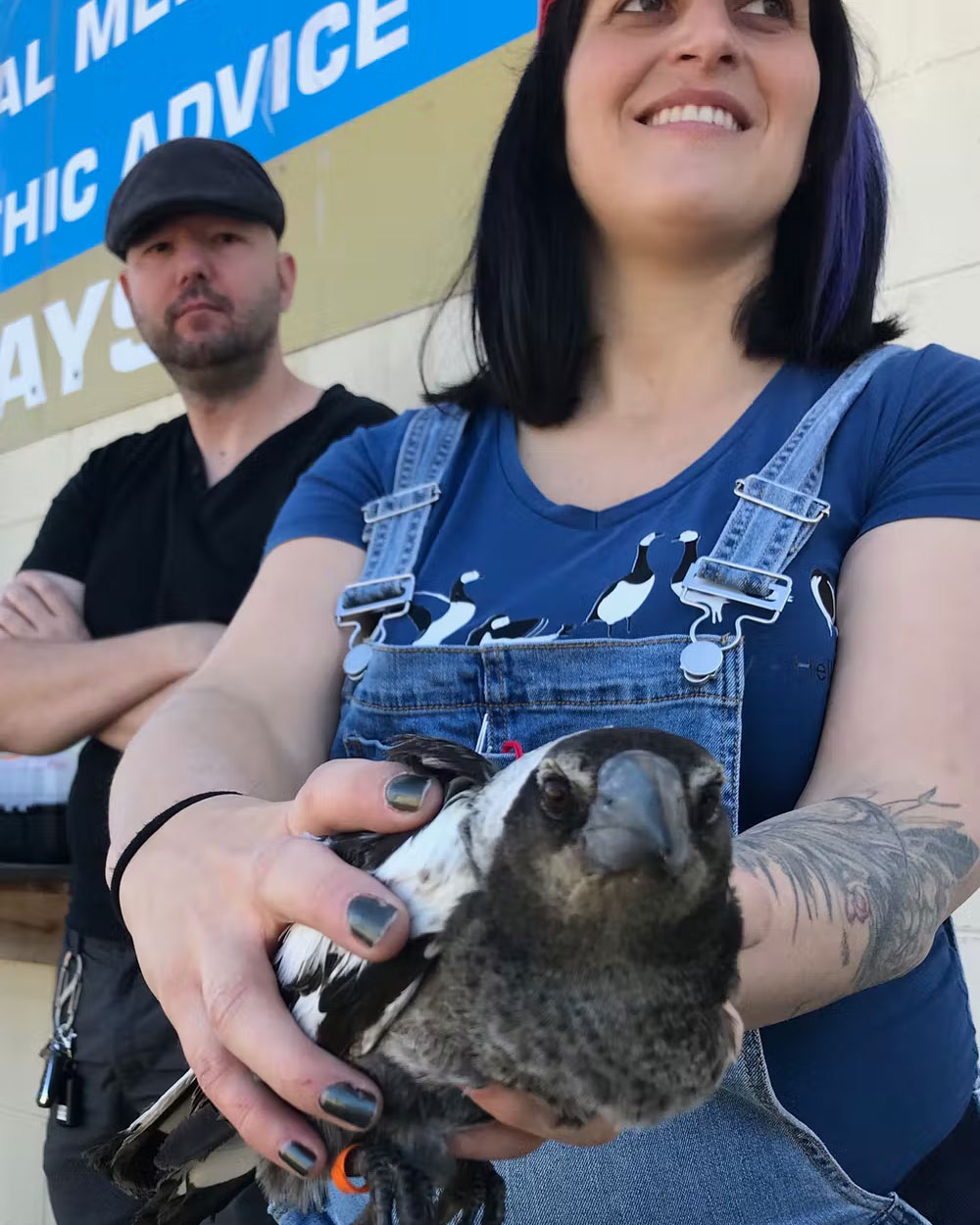
When we attached tiny, backpack-like tracking devices to five Australian magpies for a pilot study, we didn't expect to discover an entirely new social behaviour rarely seen in birds.
Our goal was to learn more about the movement and social dynamics of these highly intelligent birds, and to test these new, durable and reusable devices. Instead, the birds outsmarted us.
As our new research paper explains, the magpies began showing evidence of cooperative "rescue" behaviour to help each other remove the tracker.
READ MORE: Why best thing to do in a magpie attack is to go against your instincts
While we're familiar with magpies being intelligent and social creatures, this was the first instance we knew of that showed this type of seemingly altruistic behaviour: helping another member of the group without getting an immediate, tangible reward.
Testing exciting new devices
As academic scientists, we're accustomed to experiments going awry in one way or another. Expired substances, failing equipment, contaminated samples, an unplanned power outage – these can all set back months (or even years) of carefully planned research.
For those of us who study animals, and especially behaviour, unpredictability is part of the job description. This is the reason we often require pilot studies.
Our pilot study was one of the first of its kind – most trackers are too big to fit on medium to small birds, and those that do tend to have very limited capacity for data storage or battery life. They also tend to be single-use only.
A novel aspect of our research was the design of the harness that held the tracker. We devised a method that didn't require birds to be caught again to download precious data or reuse the small devices.
We trained a group of local magpies to come to an outdoor, ground feeding "station" that could either wirelessly charge the battery of the tracker, download data, or release the tracker and harness by using a magnet.
The harness was tough, with only one weak point where the magnet could function. To remove the harness, one needed that magnet, or some really good scissors. We were excited by the design, as it opened up many possibilities for efficiency and enabled a lot of data to be collected.
We wanted to see if the new design would work as planned, and discover what kind of data we could gather. How far did magpies go? Did they have patterns or schedules throughout the day in terms of movement, and socialising? How did age, sex or dominance rank affect their activities?
All this could be uncovered using the tiny trackers – weighing less than one gram – we successfully fitted five of the magpies with.
All we had to do was wait, and watch, and then lure the birds back to the station to gather the valuable data. It was not to be
Many animals that live in societies cooperate with one another to ensure the health, safety and survival of the group. In fact, cognitive ability and social cooperation has been found to correlate. Animals living in larger groups tend to have an increased capacity for problem solving, such as hyenas, spotted wrasse, and house sparrows.
Australian magpies are no exception. As a generalist species that excels in problem solving, it has adapted well to the extreme changes to their habitat from humans.
Australian magpies generally live in social groups of between two and 12 individuals, cooperatively occupying and defending their territory through song choruses and aggressive behaviours (such as swooping). These birds also breed cooperatively, with older siblings helping to raise young.
During our pilot study, we found out how quickly magpies team up to solve a group problem. Within 10 minutes of fitting the final tracker, we witnessed an adult female without a tracker working with her bill to try and remove the harness off of a younger bird.
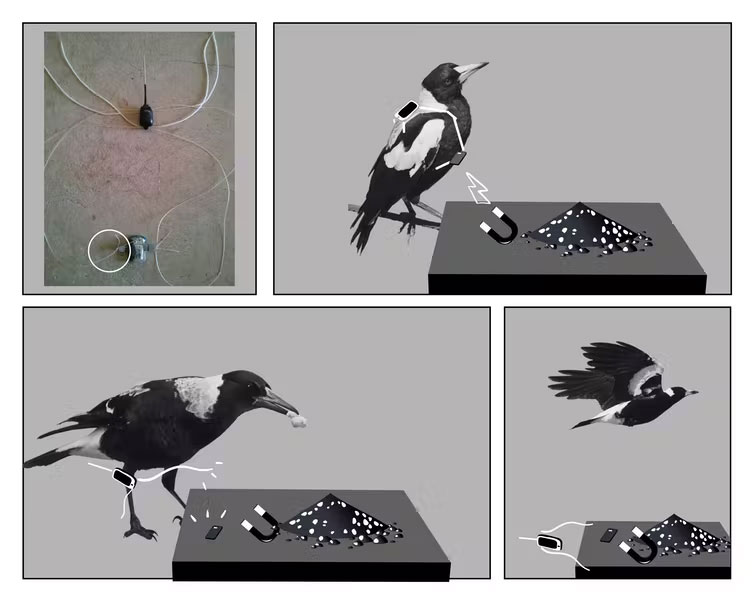
Within hours, most of the other trackers had been removed. By day three, even the dominant male of the group had its tracker successfully dismantled.
We don't know if it was the same individual helping each other or if they shared duties, but we had never read about any other bird cooperating in this way to remove tracking devices.
The birds needed to problem solve, possibly testing at pulling and snipping at different sections of the harness with their bill.
They also needed to willingly help other individuals, and accept help.
The only other similar example of this type of behaviour we could find in the literature was that of Seychelles warblers helping release others in their social group from sticky Pisonia seed clusters. This is a very rare behaviour termed "rescuing".
Saving magpies
So far, most bird species that have been tracked haven't necessarily been very social or considered to be cognitive problem solvers, such as waterfowl and raptors. We never considered the magpies may perceive the tracker as some kind of parasite that requires removal.
Tracking magpies is crucial for conservation efforts, as these birds are vulnerable to the increasing frequency and intensity of heatwaves under climate change.
In a study published this week, Perth researchers showed the survival rate of magpie chicks in heatwaves can be as low as 10 per cent.
Importantly, they also found that higher temperatures resulted in lower cognitive performance for tasks such as foraging. This might mean cooperative behaviours become even more important in a continuously warming climate.
Just like magpies, we scientists are always learning to problem solve. Now we need to go back to the drawing board to find ways of collecting more vital behavioural data to help magpies survive in a changing world.
This article was written by Dominique Potvin, Senior Lecturer in Animal Ecology, University of the Sunshine Coast, for The Conversation.
Young men overrepresented in Australia's coastal drowning toll
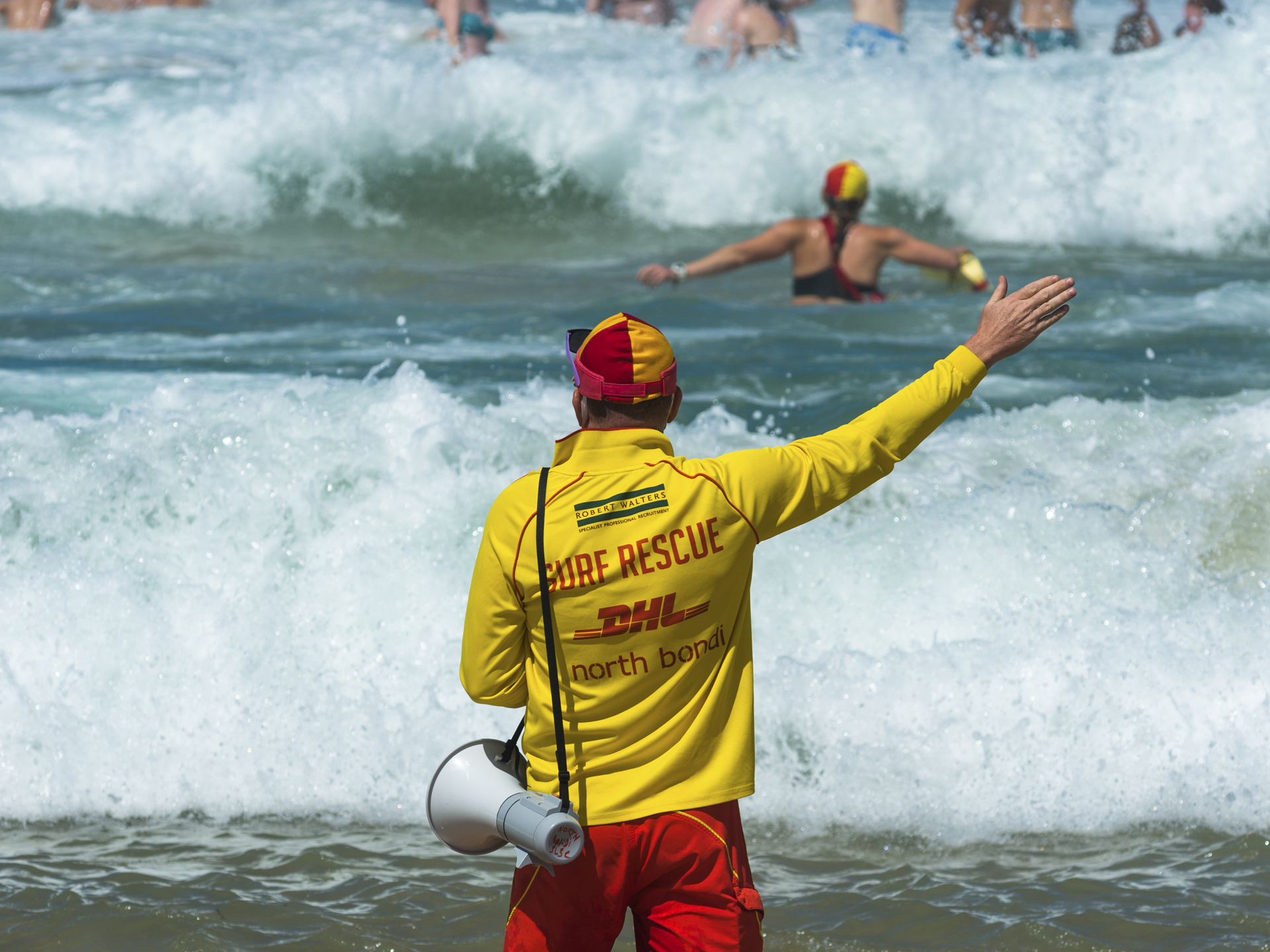
Young men have been overrepresented in Australia's coastal drowning death toll, with surf lifesavers pleading for them to take their safety seriously.
A new report from Surf Life Saving Australia (SLSA) revealed young men accounted for nine out of 10 coastal drowning deaths in 2020-21, with men aged between 15 and 39 most overrepresented in coastal injury and fatalities.
The warning comes as the summer coastal drowning death toll continues to rise above both the 10-year average and the fatalities recorded over the 2020-21 summer period.
LIVE UPDATES: Moderna to be available for kids aged six to 11 from tomorrow
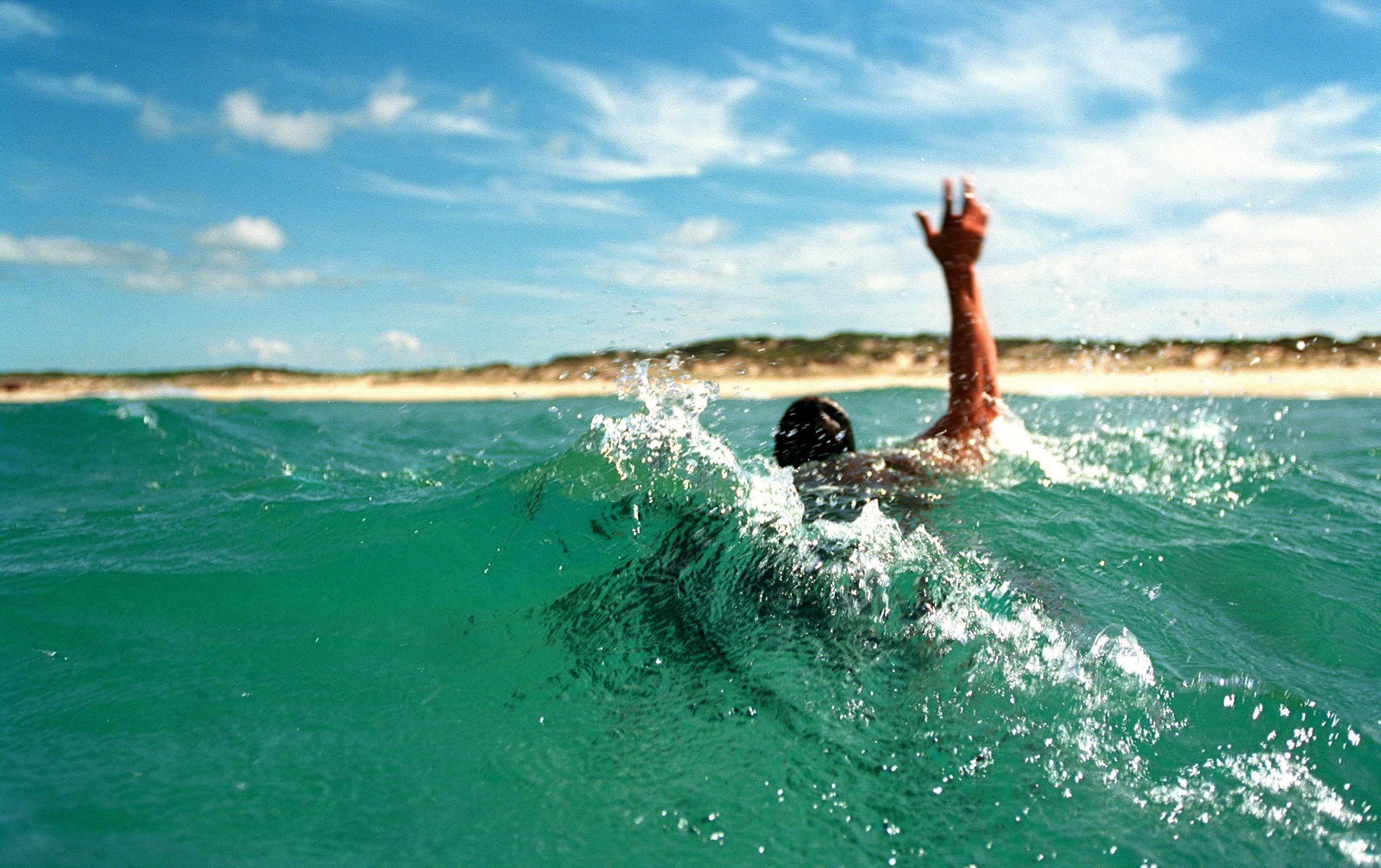
SLSA general manager of coastal safety Shane Daw said 41 coastal drownings had been recorded this summer — between December 1 and January 31 — with 10 being men aged between 15 and 39.
"On average, young men account for a third of fatal incidents recorded along our coast, with the vast majority due to drowning," he said.
"Such a premature loss of life represents a significant cost to society, with both social and economic contributions cut short."
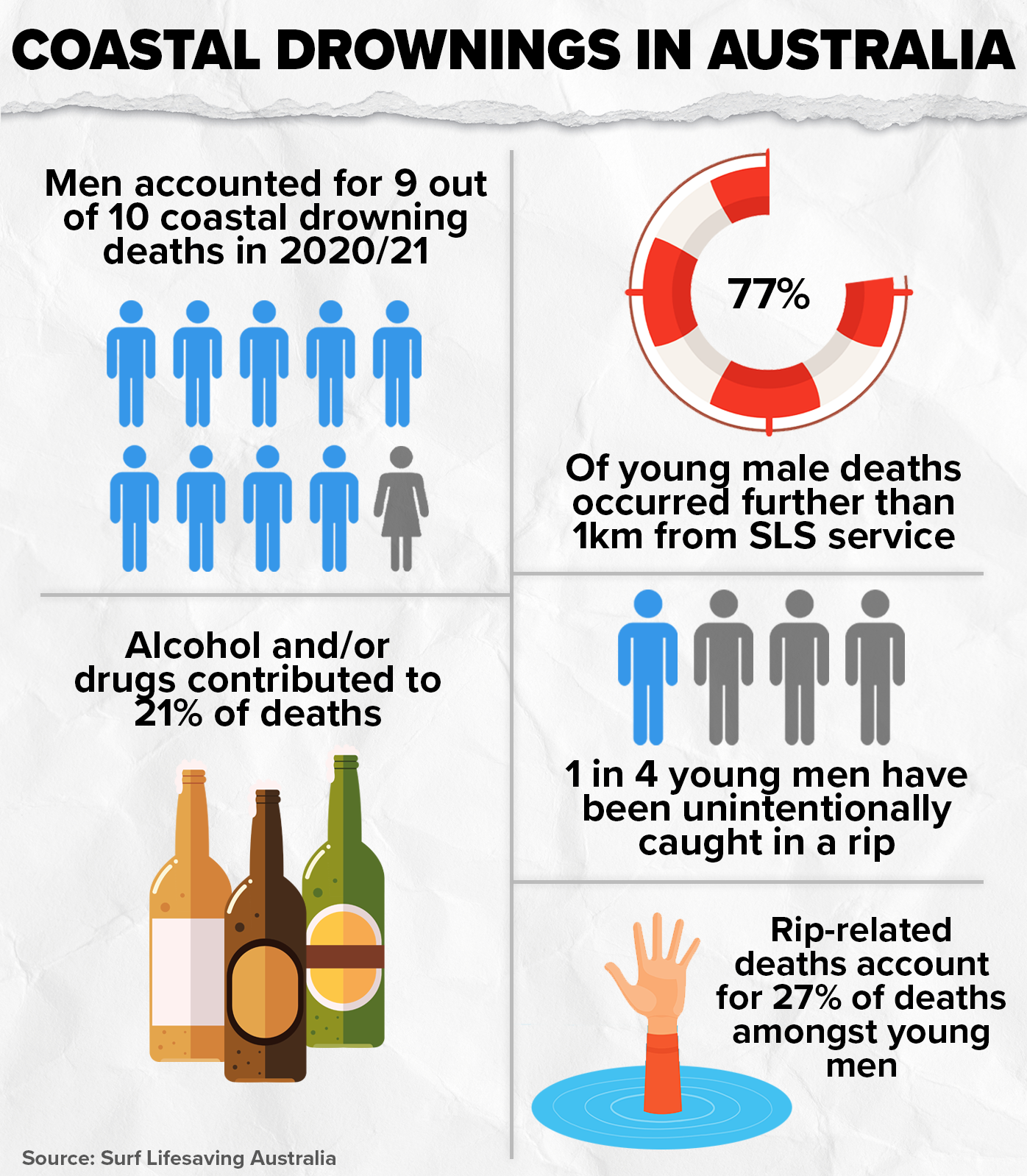
According to the SLSA Coastal Safety Brief, 53 young men die on our coast each year on average, with three out of four due to drowning.
Since 2011, 525 young men have died on Australia's coastline, which equates to a $6.9 billion economic loss to society.
The reasons behind the fatalities include greater coastal visitation and activity participation, as well as inflated confidence levels that do not reflect actual abilities, and social determinants such as peer pressure.
READ MORE: $1m reward to help solve cold case murder of Melbourne mum
Nearly half of coastal deaths happened on a weekend, with the primary activity at the time being swimming and wading.
"In fact, the mortality risk is 2.2 times greater on the weekend for this demographic," Mr Daw said.
Research showed one in four young men have been unintentionally caught in a rip, but only 40 per cent always look for the presence of rip currents before entering the water.
Almost half of young male swimmers are not able to swim 50 metres in the ocean without touching the bottom and one in 10 are unable to swim or float at all.
"Alarmingly, we continue to see young men choosing to swim at unpatrolled locations, away from surf lifesavers and lifeguards," Mr Daw said.
"They continue to overestimate their ability, take unnecessary risks, and not look for the presence of rips before entering the water.
"Our message remains simple, where possible keep safe by swimming at a patrolled beach, between the red and yellow flags."
All the ways Russian invasion could hit world economy and your wallet
If Russia invades Ukraine, the financial shockwaves will reverberate far and wide and inevitably be felt in Australia.
Global stock markets could be in for a rough ride and any Russian invasion of Ukraine could disrupt supplies of oil.
Today oil nudged US $100 a barrel of Brent Crude, a level not seen for seven years, and there are fears oil could quickly jump to $120 if Russia moves in with a full-blown invasion.
READ MORE: Ukraine digs in for war with superpower Russia

We take a look at the financial impact of a Russian invasion, what could happen and why.
More pain at the pump
Oil prices have jumped in recent weeks to levels unseen since 2014 in part because an invasion of Ukraine could derail Russian energy supply.
Stating the obvious, this is bad news. Oil price increases generally trigger rises in inflation and reduces economic growth.
Russia is an energy superpower, producing 9.7 million barrels per day last year, according to Rystad Energy.
That is second only to the United States and amounts to more oil than Iraq and Canada produced — combined.
Global supply is already failing to keep up with demand.
There are three prime concerns: War could damage oil infrastructure, sanctions on Russia could affect global supply and Moscow could weaponise it oil exports.
EXPLAINED: Why Russia-backed rebels are a thorn in Ukraine's side
Investment bank JPMorgan warned that if any Russian oil flows are disrupted by the crisis, oil prices could "easily" jump to $120 a barrel.
In the unlikely event Russian oil exports are halved, crude would surge to $150 a barrel, they added.
For Aussie homes, it comes down to this. Another pop in oil prices would lift prices at the pump across Australia, where we're already paying prices not seen for 14 years.
READ MORE: US sanctions against Russian banks and oligarchs
Trickle down effect
Higher energy prices will make it more expensive to fly.
And road transportation and other supply line costs for businesses will also inevitably track up.
Businesses would most likely pass along at least some of these higher costs to consumers in the form of price hikes.
This will almost certainly include food and other sectors.

Wheat, corn and precious metals
Beyond energy, other commodities may experience price volatility.
Russia is a major producer of metals, including aluminium and palladium.
It is also the world's biggest exporter of wheat.
Ukraine is a significant exporter of both wheat and corn and sends more than 40 per cent of its wheat and corn exports to the Middle East or Africa.
So disruption will have far ranging consequences in those regions.

Market turbulence
Any escalation will spook global markets.
Investors detest uncertainty, so a full-blown invasion of Ukraine may trigger a knee-jerk stock selloff as investors confront the possibility of an oil shock, higher inflation and a confusing sanctions regime.
A prolonged market downturn would wipe out wealth in the stock market and retirement accounts.
Market instability will likely dent business and consumer confidence.
READ MORE: What is Nord Stream 2 pipeline, and why does it make the US anxious?
Cyberattacks on utilities, private businesses
Now sanctions have been imposed against Russian banks and oligarchs, Moscow could lash out against the West with cyberattacks.
The hacking of the Colonial Pipeline last year showed just how disruptive that can be, shutting down one of the most important pipelines in America and sparking panic at gas stations across the southeast.
Last year's cyber attack on global meat processing company JBS Foods caused similar pain, including major supply line disruptions as far away as Australia.
Russian hackers have form for attacking huge electrical grids.
READ MORE: States bracing for more rain as two potential cyclones form off coast
With agencies
Prototype Holden 'survivor car' unearthed
This never-been-started prototype Holden Commodore has been unearthed as a piece of Australian motoring history.
'Exceedingly rare' fossil of giant flying reptile discovered
Winged reptiles known as pterosaurs — plane-size creatures that swooped through the skies as dinosaurs walked the Earth — were the first vertebrate animals to evolve powered flight.
A spectacular three-dimensional fossil of one previously unknown pterosaur has been discovered on the shore of the Isle of Skye, off the west coast of Scotland.
With a wingspan of more than 2.5 metres, it's the biggest pterosaur ever discovered from the Jurassic period and last flapped its wings 170 million years ago.
Its sharp teeth, which would have snapped up fish, still retain their shiny enamel.
READ MORE: Biden hits Russia with sanctions for 'beginning invasion'
In the Cretaceous period, immediately before the asteroid strike that wiped out the dinosaurs 66 million years ago, pterosaurs like Quetzalcoatlus reached the size of fighter jets, with a 12-metre wingspan.
However, this fossil discovery confirms pterosaurs, sometimes popularly known as pterodactyls, were already very large much earlier in their evolutionary history.
EXPLAINED: Why Russia-backed rebels are a thorn in Ukraine's side
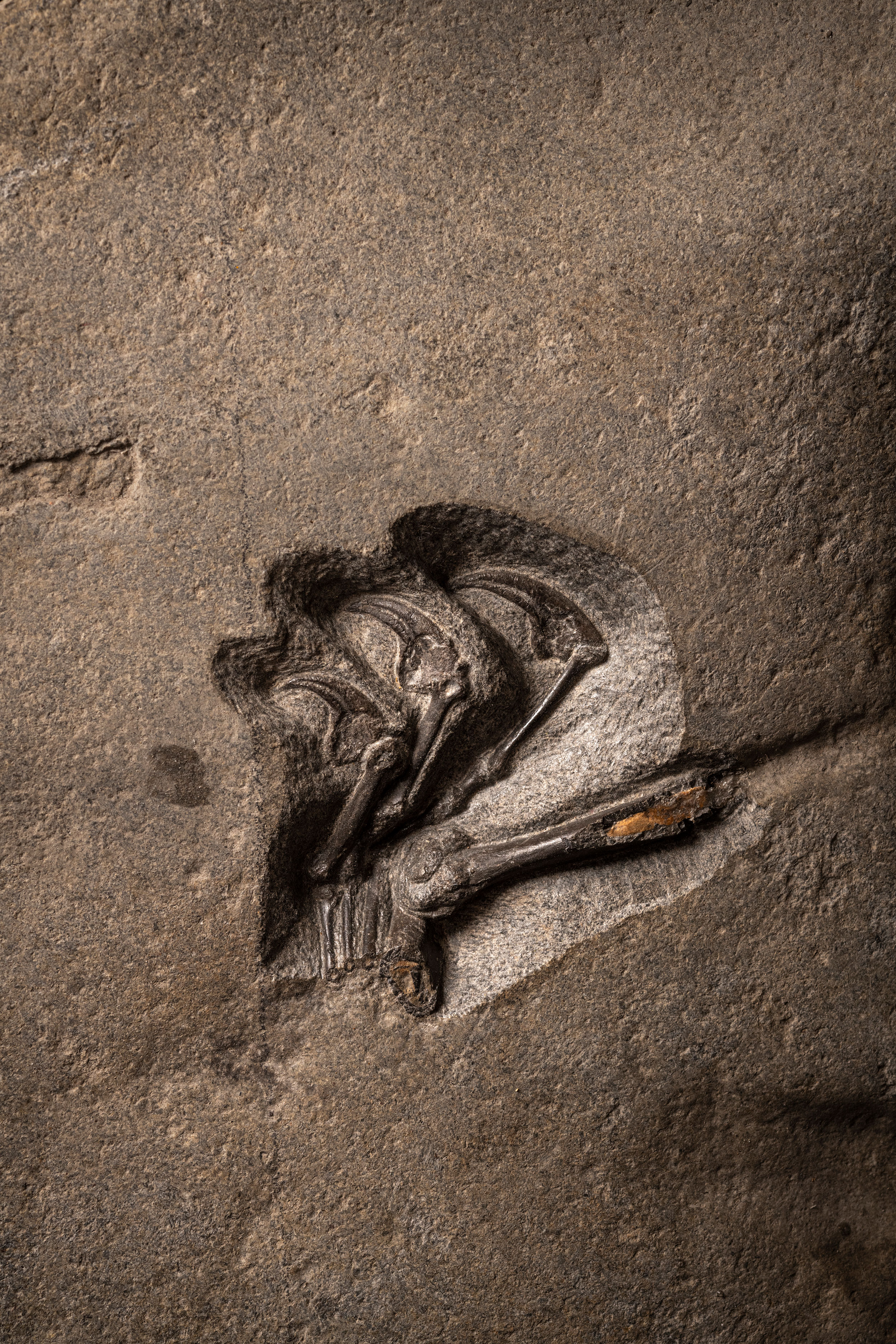
"Pterosaurs preserved in such quality are exceedingly rare and are usually reserved to select rock formations in Brazil and China. And yet, an enormous superbly preserved pterosaur emerged from a tidal platform in Scotland," said Natalia Jagielska, a doctoral student at the University of Edinburgh.
She was the lead author of a paper on the fossil that was published on Tuesday in the journal Current Biology.
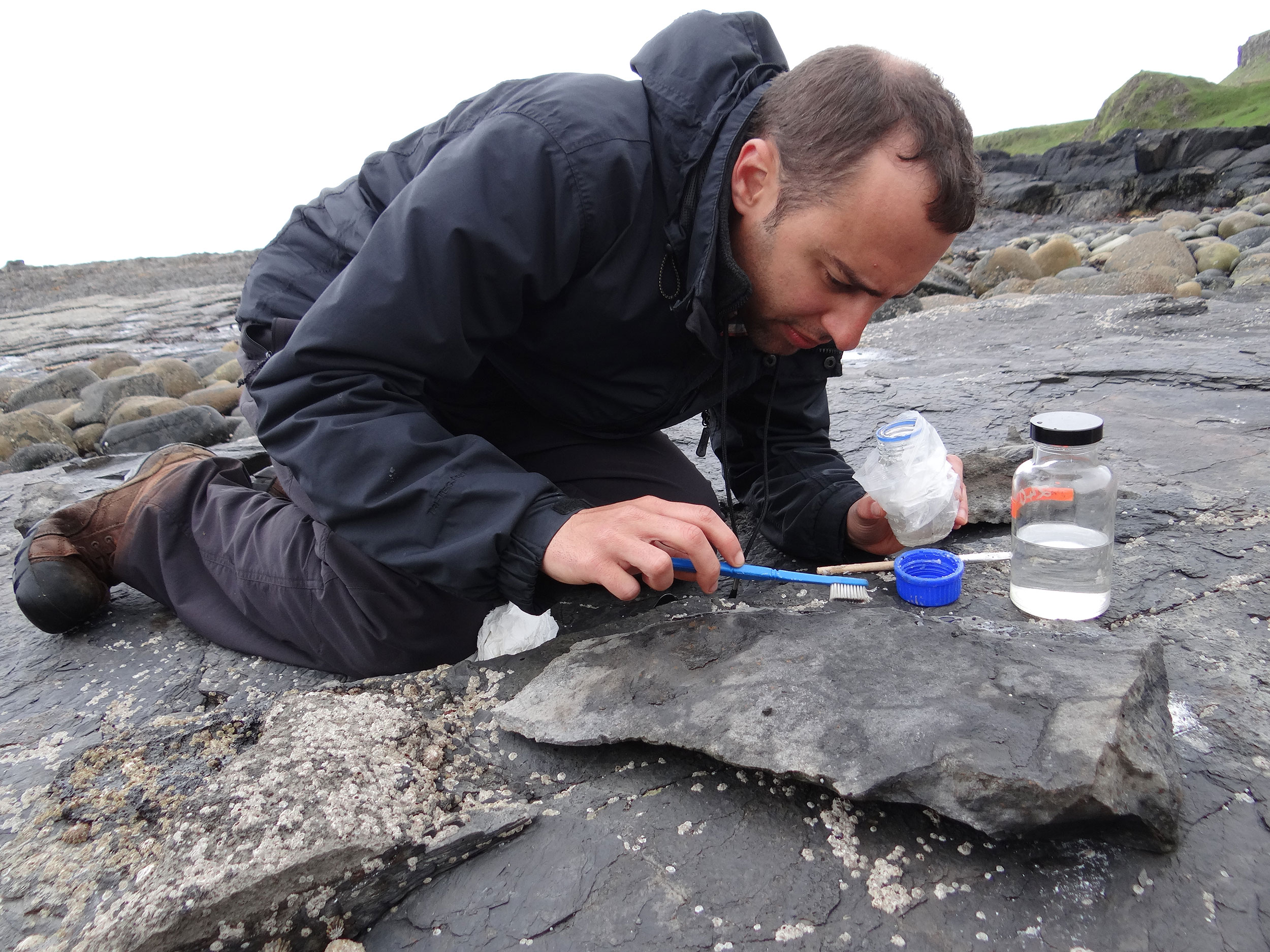
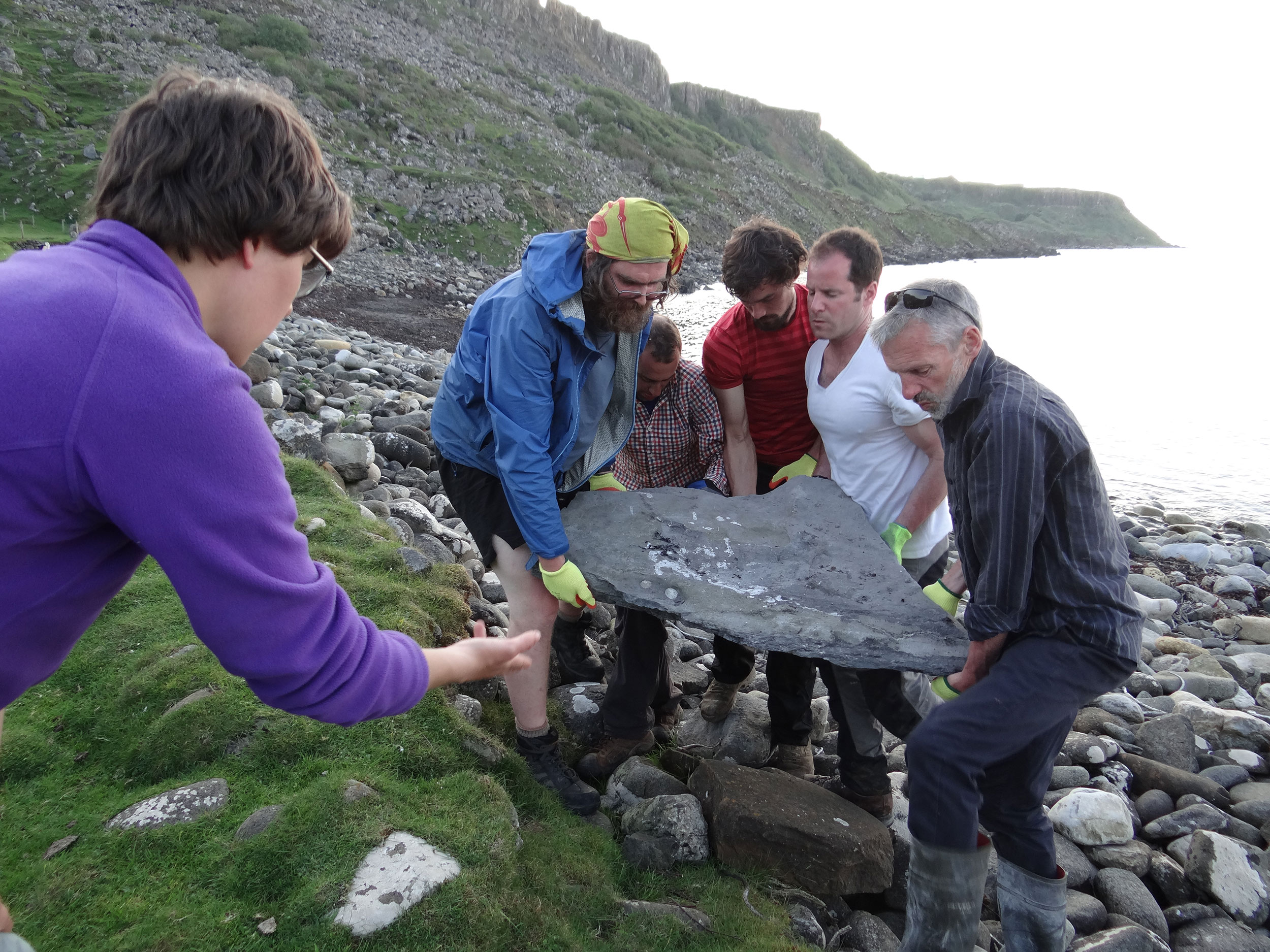
The fossil was discovered during a field trip in 2017, after a University of Edinburgh doctoral student, Amelia Penny, spotted its jaw protruding from the rock at an area of Skye known in Gaelic as Rubha nam Brathairean, or Brothers' Point.
READ MORE: States bracing for more rain as two potential cyclones form off coast
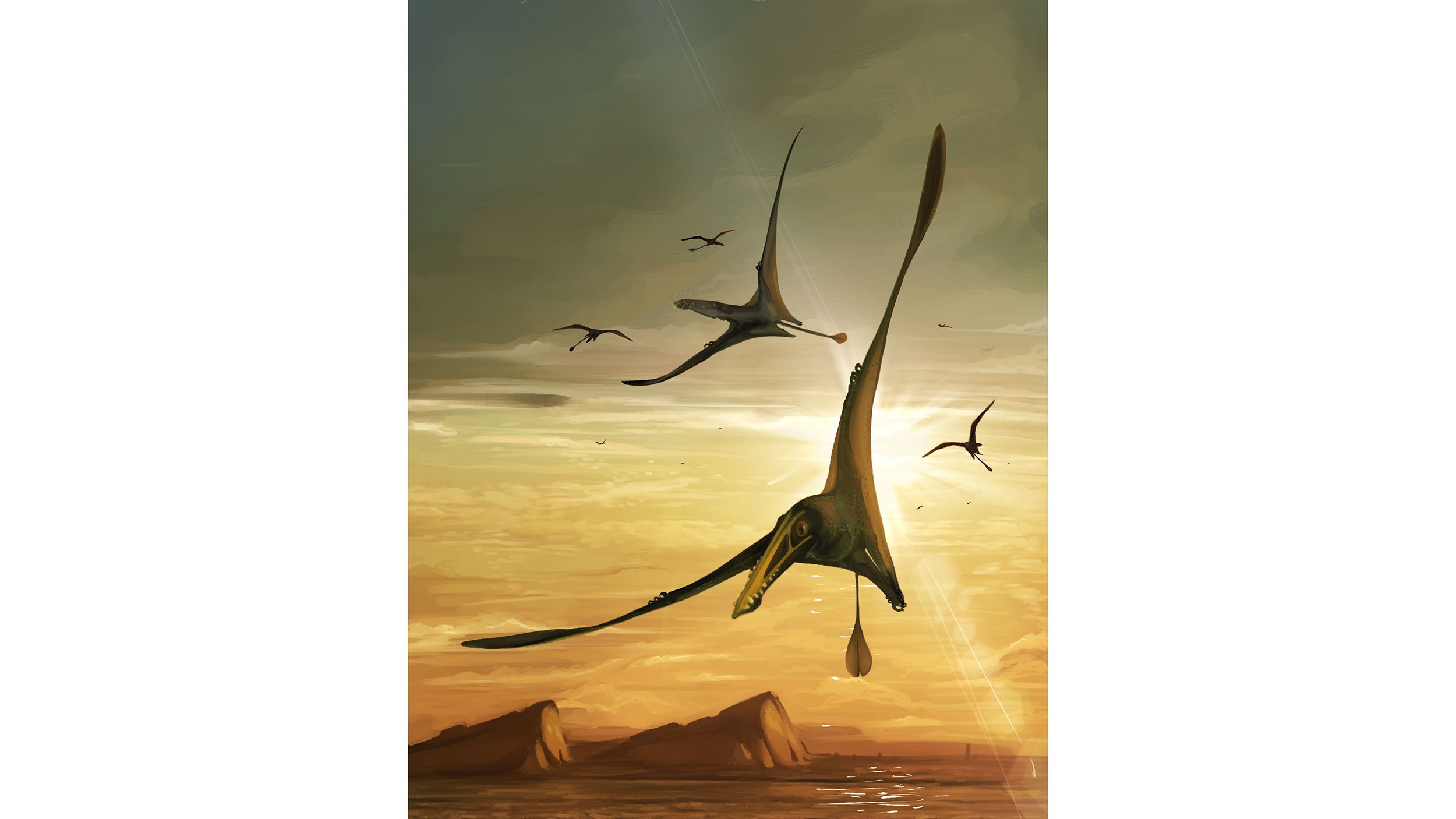
The pterosaur has been given the Gaelic name Dearc sgiathanach (pronounced jark ski-an-ach), which translates to "winged reptile".
"This is a superlative Scottish fossil. The preservation is amazing, far beyond any pterosaur ever found in Scotland and probably the best British skeleton found since the days of Mary Anning in the early 1800s," said Steve Brusatte, professor and Personal Chair of Palaeontology and Evolution in the School of GeoSciences at the University of Edinburgh.
"Dearc is the biggest pterosaur we know from the Jurassic period, and that tells us that pterosaurs got larger much earlier than we thought, long before the Cretaceous period when they were competing with birds, and that's hugely significant.
Anning, an unsung pioneer of paleontology, discovered the three-metre-long Plesiosaurus in Dorset, southern England, in 1823.
The incredible fossil, the first of the species to be found intact with its snakelike neck, wowed the world, setting in motion a dinomania that gripped Victorian England and continues to this day.
A number of astounding discoveries have been made in this area of Skye in recent years, including the footprints of Stegosaurus and other dinosaurs.
Paleontologists believe it was once a subtropical lagoon and home to a thriving community of dinosaurs.
Ms Jagielska will continue to study the skeleton to understand how the ancient creature lived and flew.
"To achieve flight, pterosaurs had hollow bones with thin bone walls, making their remains incredibly fragile and unfit to (preserve) for millions of years," she said.
"And yet our skeleton, 160 million years on since its death, remains in almost pristine condition, articulated and almost complete … as if he were alive mere weeks ago."