The owner of a Waikato-based towing company said the task of shifting 450 vehicles from around Parliament would be “like trying to sell property on the moon”.Police said this morning they had “significantly increased tow capacity”,…
Tag Archives: oceania
What we know about shark attack occurrences around Australia
Great white sharks have been responsible for all fatal New South Wales shark attacks for the past two years, with the state clocking the highest number of attacks in the nation over this period.
A swimmer mauled to death off popular Sydney beach Little Bay on Wednesday, marks the state's latest fatality.
The death of diving instructor Simon Nellist sent shockwaves around the Harbour City as it is Sydney's first fatality in almost 60 years. The attack was confirmed to be by a great white "at least 3 metres in length" by the Department of Primary Industries (DPI).
READ MORE: What happened in Sydney's last fatal shark attack 59 years ago
The DPI states that great whites, along with bull sharks and tiger sharks, are "target sharks".
"They are the three sharks that are most frequently involved in serious shark bites in NSW," it said.
According to the Global Shark Attack File, NSW saw two fatalities in both 2021 and 2020.

All four deaths were due to great white sharks, ranging in 2.5 to 4.5 metres in length.
Over this period, the majority of the state's attacks, both fatal and non-fatal, occurred around the NSW mid-north coast.
Two non-fatal attacks occurred in Port Macquarie, with one on 14 August 2020 confirmed to be a great white shark.
READ MORE: Husband recalls frantic moment he punched away shark to save wife
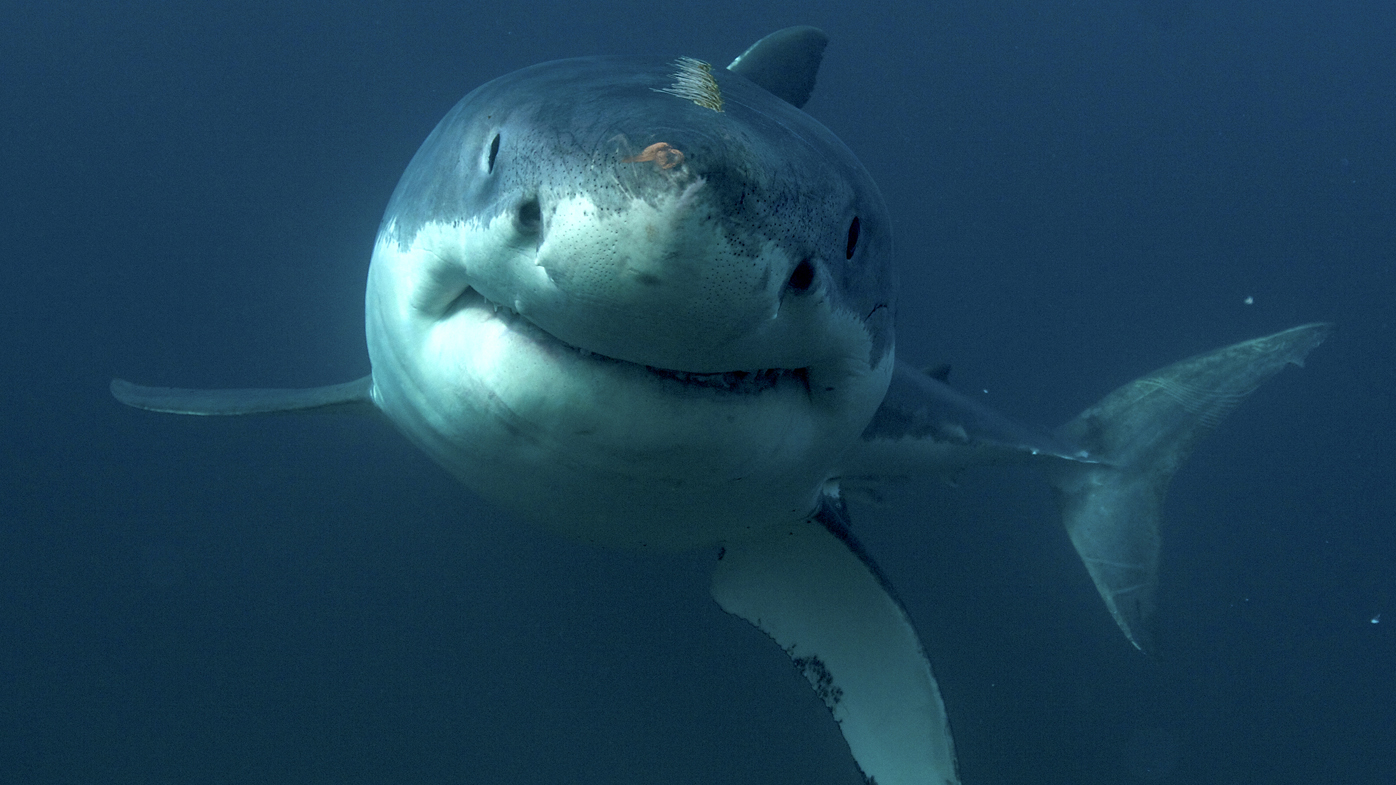
Australia leads world with highest number of shark fatalities
After three years of decline, shark attacks increased in 2021 according to the International Shark Attack File.
Australia recorded the second highest amount of unprovoked bites after the US, but the nation had the most number of fatalities worldwide.
Breaking down the numbers nationwide, NSW clocked the highest number of unprovoked attacks in 2021, with eight in total according to Taronga Zoo's Australian Shark-Incident Database — two of these were fatal.
Three of these unprovoked attacks involved wobbegong sharks.
Six bites occurred in Western Australia, one of which was fatal.
Two attacks occurred in Victoria, a single incident occurred in Queensland. All of these were non-fatal.
In 2020 NSW saw a total of eight unprovoked attacks, Queensland came in second with five.
Great white populations in Australia
CSIRO, Australia's leading scientific research body, has identified two great white populations in Australia; an eastern population and a southern-western population.
"The eastern Australasian population ranges along the entire eastern seaboard from the cold waters as far south as Macquarie Island into tropical waters of Papua New Guinea, and extends eastwards to include New Zealand and tropical islands such as New Caledonia," CSIRO explains.
"The southern-western population ranges from western Victoria to northwest Western Australia."
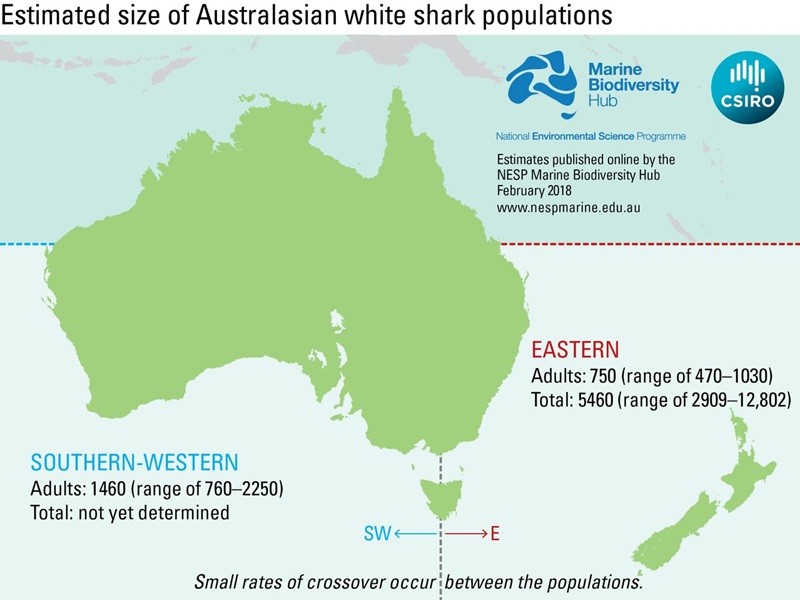
CSIRO has sized the eastern population at 5460, but admitted there could be more than 12,802 great white cruising the waters.
These findings come amid reports of a great white population "boom" in both New Zealand and California.

Shark scientist and Marine Biologist Riley Elliott told 9news.com.au last year a spate of great white shark sightings in New Zealand has lead to the Bowentown area on the North Island being deemed a "hotspot".
Meanwhile two factors have caused numbers along the Californian coastline to skyrocket since 1994, according to Marine Biologist Chris Lowe.
"Great whites became protected and the use of gill nets were banned," Dr Lowe told 9news.com.au.
"Their biggest population growth has been since the 90s."
Hawaii man accused of murdering acupuncturist after affair with wife
A Hawaii man shot and killed the acupuncturist who treated his wife for back pain and fertility issues — and had an affair with her, Honolulu police said.
Police arrested Eric Thompson, 34, on Valentine’s Day on suspicion of murder.
Surveillance footage showed him arriving in his pickup truck at a Waipahu acupuncture office in January, walking inside carrying a shopping bag and leaving 48 seconds later, according to a detective affidavit filed in court.
READ MORE: Swimmers enter closed Sydney beaches after fatal shark attack
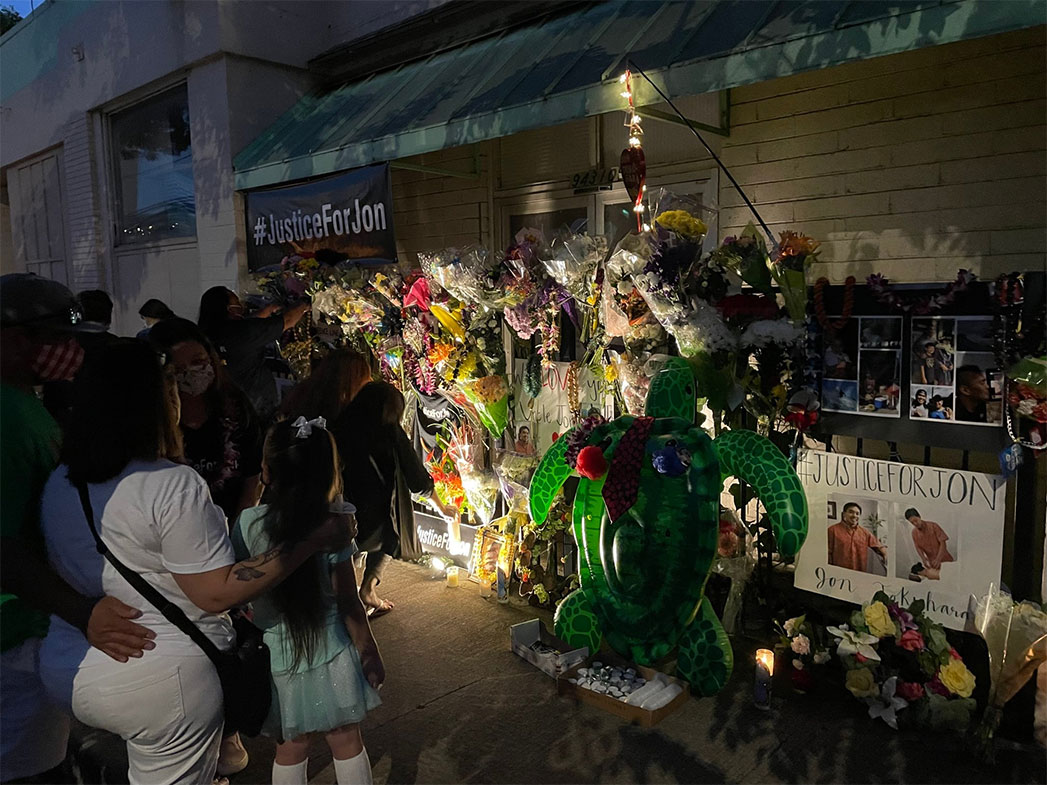
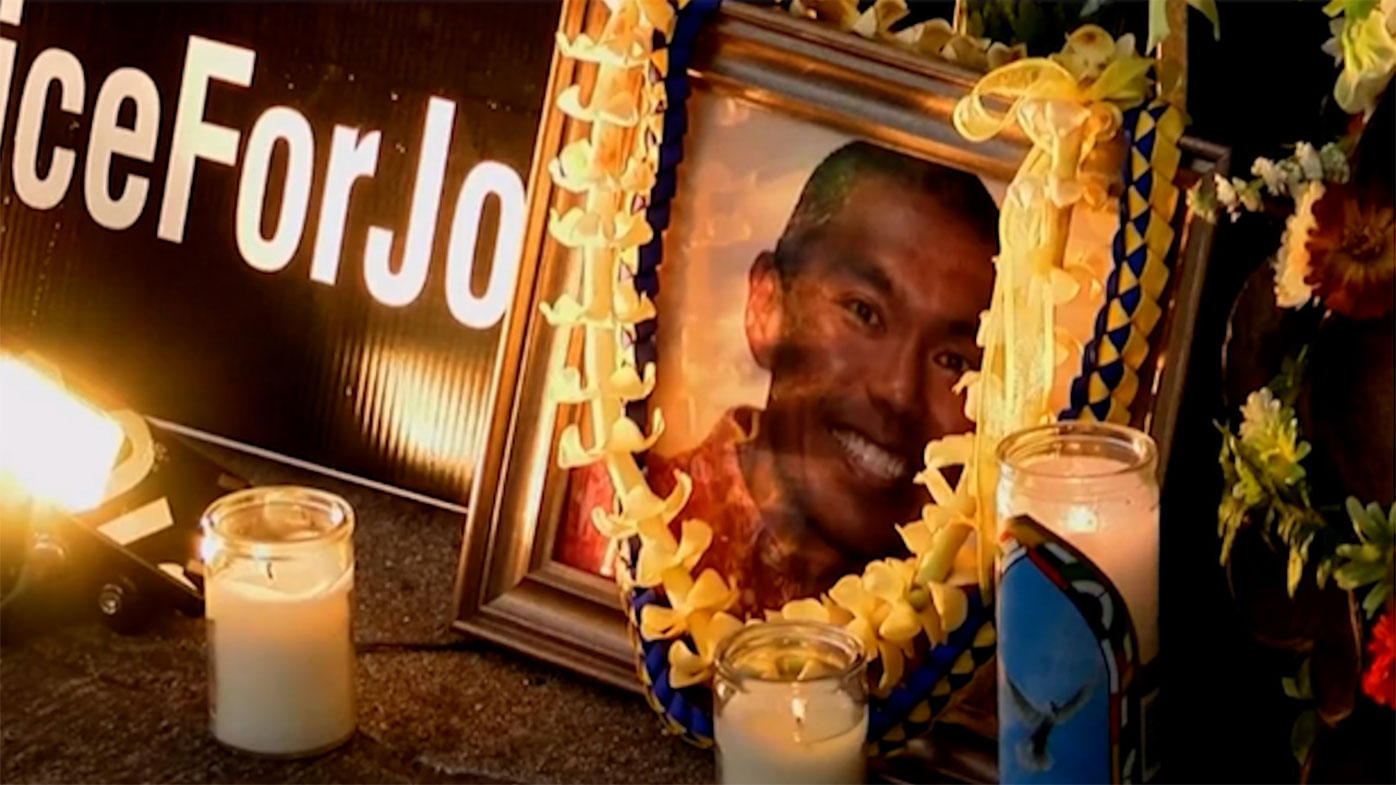
Acupuncturist Jon Tokuhara's mother found him on January 13 laying on the floor of his office with a pool of blood near his head, police said.
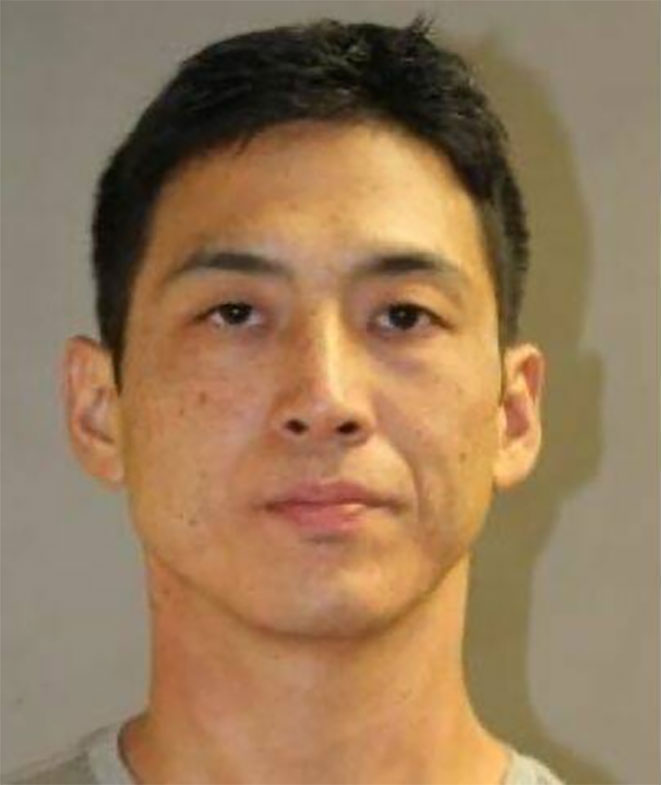
While investigating his death, police learned from a patient of Tokuhara's that she referred Thompson's wife, Joyce, to him for help with back pain and fertility.
The patient was one of the couple's teachers when they were high school sweethearts, the police affidavit said.
Police found Instagram messages between Joyce Thompson and Tokuhara indicating they had an intimate relationship.
READ MORE: Hundreds of Aussie miners set to lose jobs over vaccine mandate
The Instagram messages stopped after they had a conversation about Thompson finding out about the affair, police said.
Thompson, who posted $1 million bond, couldn't immediately be reached for comment Wednesday. He is scheduled to be arraigned Thursday.
READ MORE: Jetstar cancels Perth flights over border uncertainty
David Clark rebuffs National offer to fix lending crisis, saying it would cause delays
Commerce Minister David Clark has rebuffed National’s offer of legislation to address concerns tighter credit rules are stopping people from getting mortgages.He has written to Nicola Willis and Andrew Bayly, the National MPs who…
Inquest into Upper Hutt killing told of a mental health service stretched to its limit
An over-stretched mental health sector and police failings have been at the forefront of the Coronial Inquest into the violent death of Glen Collins. The inquest is taking place this week in front of Coroner Brigitte Windley in…
Science Digest: The science of sexuality and does conversion therapy actually work?
A psychologist and sexuality expert has urged parents who have put their children through conversion therapy to apologise after a new law bans the practice in New Zealand.Dr Rita Csako, who is a senior lecturer in psychology and…
'I am going to starve': Ex-bricklayer's disability pension plea
For almost 30 years, Sydney man Mark Patterson worked as a bricklayer.
Over the decades, the hard, physical labour literally wore his body to the bone.
Five years ago, the pain in his hips started, but he kept working.
"I just took lots of painkillers and kept going," Mr Patterson said.
Then, the pandemic's first lockdown came in 2020 and Mr Patterson was forced to stop work.
It was at that point, the 52-year-old says, that he "crashed and burned" and his body seized up.
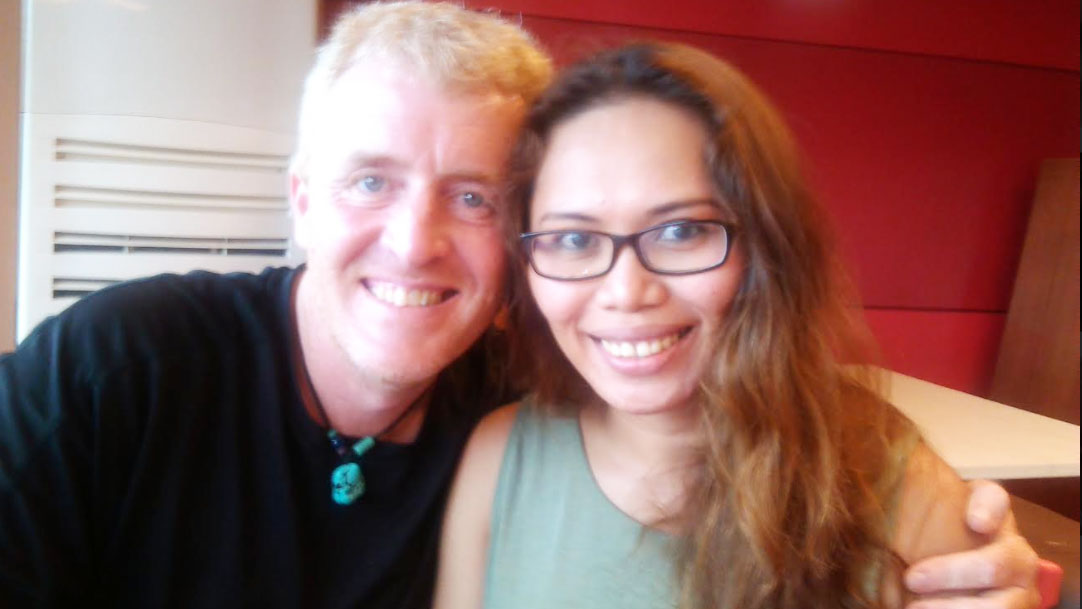
These days, Mr Patterson is unable to walk more than a few metres at a time. He struggles to stand or sit unaided and getting to the shops to buy groceries by himself is near impossible.
Doctors have told Mr Patterson he has severe osteoarthritis and will need a double hip replacement. But Sydney public hospital waiting lists, lengthened during the pandemic, mean he is facing around a two-year wait for his surgeries.
"I can't walk. I have got no cartilage in either hip joint, every time I take a step it's bone-on-bone," Mr Patterson said.
For two years, Mr Patterson has been unable to work, and has been surviving on JobSeeker payments from the government of $350 a week, including rental assistance for his $180 a week Canley Vale property.
Given his physical struggles, Mr Patterson said he was shocked when his application for a disability support pension (DSP) – backed up with doctor's letters – was rejected by Centrelink in October last year because his impairment did not meet the 20 assessment points required.
An appeal by Mr Patterson was also rejected by Centrelink last month.
Mr Patterson said he was struggling to pay for food or basic medicine while he was on the JobSeeker payment.
"It's getting to the stage now where I am going to starve. Something has got to be done, I am physically and emotionally spent."

Adding to Mr Patterson's distress is his separation from his wife of 10 years, Melissa, and their five-year-old daughter, Mckayla, who both live in the Philippines.
Prior to the pandemic, Mr Patterson had been working in Australia, while travelling back and forth to the Philippines to see his family.
With all of the family's savings gone and no money for the airfare, Mr Patterson does not know when he will see his family again.
"I haven't held my daughter in three years, since she was in nappies," Mr Patterson said.
Services Australia General Manager Hank Jongen told 9news.com.au in a statement he appreciated it was a difficult time for Mr Patterson.
"While we can't discuss individual cases, we are in contact with Mr Patterson to ensure he understands the claim outcome and to offer support in regards to payments such as JobSeeker," he said in a statement.
"We recognise medical conditions can have a significant impact on people's lives, however, we do not have any discretion to grant payments outside the criteria set down in legislation.
"We encourage anyone experiencing financial hardship to contact us, we have social workers and specialist staff to assist people in vulnerable or complex circumstances."
'Half a million' disabled Australians on JobSeeker
Mr Patterson is one of 500,000 disabled Australians living on the JobSeeker allowance, according to Antipoverty Centre estimates based on figures from the Australian Bureau of Statistics.
The adequacy of the DSP is currently the subject of a parliamentary Senate inquiry, with the committee due to release its final report on Friday.
"Harrowing" evidence was presented during the inquiry of disabled people living in poverty and being pushed to the brink of suicide, Kristin O'Connell, from the Antipoverty Centre, said.
Statistics from Services Australia show the DSP had the highest claim rejection rate of all Centrelink payments in the 2020/2021 financial year.
About 60 percent of applications for the DSP were rejected, with 57,000 claims knocked back in total.

Ms O'Connell said both Coalition and Labor Governments had made it progressively harder over the years for disabled people to have their applications for the DSP accepted.
Between the 2010-2011 and 2017-2018 financial years, the number of new recipients receiving the DSP dropped dramatically from about 90,000 a year to 31,000, Services Australia statistics show.
People applying for the DSP faced mountains of paperwork and were often forced to fork out thousands to pay for medical reports from specialists to support their case, Ms O'Connell said.
One of the most common dilemmas disabled people faced was choosing whether to go without food or medication, Ms O'Connell said.
"People on JobSeeker currently have an income of half the poverty line," Ms O'Connell said.
"About eight out of 10 people on the payment regularly skip meals. People forgo medication and healthcare and that means over time, if you are disabled, which hundreds of thousands of people on JobSeeker are, your conditions get worse.
"It means you are less employable, it means your healthcare costs go up and over time you are denying yourself more and more treatment that you need."
Ms O'Connell said she hoped the Senate inquiry would lead to meaningful change for people with a disability.
"I think it will be extremely difficult for the committee not to find that the conditions disabled people are being forced to live in, as a result of the way the DSP is designed, are absolutely abhorrent and unacceptable," Ms O'Connell said.
"We think the committee will recognise that it is unfair and harmful and unviable to force disabled people to try and survive on an unemployment payment that isn't even liveable for people who aren't disabled."
Contact reporter Emily McPherson at em********@******om.au.
Exhausted supermarket staff want protesters to wear a mask unless exempt
Supermarket workers at stores flooded with anti-mandate protesters shopping without masks are pleading with them to respect the people who are giving them “access to groceries”.There was a reported influx of people refusing to wear…
Covid-19 Omicron convoy protest: Trevor Mallard outlines terms for MPs to engage with protesters
MPs will not engage with protesters occupying Parliament’s grounds until all illegally parked vehicles are cleared, tents are removed, and the intimidation towards Wellingtonians is stopped. Speaker Trevor Mallard has issued a…
The tip-off that led police to find a missing girl hiding in a staircase
The discovery of a girl who went missing two-and-a-half years ago and was found hiding beneath a wooden staircase shocked the world when it made headlines yesterday – but it can't be said that it surprised local police.
Paislee Joann Shultis was just four years old when she disappeared in 2019, from Cayuga Heights, a village on the outskirts of Ithaca, New York.
Police always suspected Paislee had been abducted by her noncustodial parents, Kimberly Cooper and Kirk Shultis Jr.

During the course of their years' long investigation, they even zeroed in on a house – 250km east of Cayuga Heights and near the town of Saugerties – where they suspected Paislee was being kept.
Investigators had received multiple tip-offs about the home – the same one where she was eventually found – but they never had enough information for a warrant.
Saugerties Police Chief Joseph Sinagra told CNN yesterday that officers had been in the home roughly a dozen times before but were not allowed in the basement or bedroom areas.
On several occasions, investigators were allowed into the home without a warrant, but they were given "limited access" by Kirk Shultis Jr. and Kirk Shultis Sr., the release added.
That changed Monday when police received information the child was being hidden and got a search warrant for the home.
Police executed the warrant a little after 8pm.
The homeowner denied knowing the girl's whereabouts, saying he had not seen her since she was reported missing in 2019.
However, a room in the basement of the house suggested otherwise.
What police found was a bedroom, with Paislee's name on a wall, the police chief said.
The bed appeared to have been slept in.
"Our officers asked, 'Is she here?' … And they denied that anybody was living in that house, in that particular room," the chief said in an interview.
"They said they had set the room up like that in the event that Paislee should ever return."
Something peculiar in a staircase
An hour into the search, one detective noticed the steps leading to the basement were oddly constructed. The detective, Erik Thiele, pointed a flashlight through a crack in the wooden steps and saw what seemed to be a blanket, the release said.
"The child never made a sound. Kimberly never made a sound," Police Chief Sinagra said.
Investigators removed several of the steps, the release added, and "that is when detectives saw a pair of tiny feet."
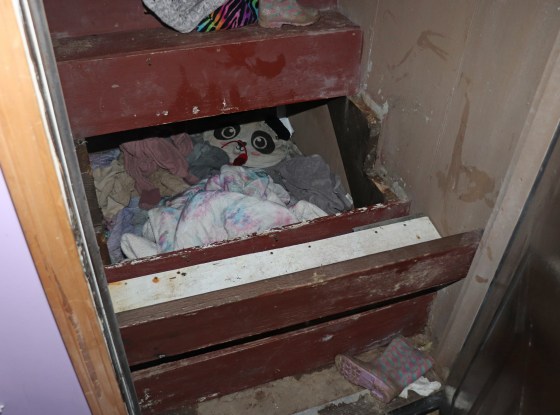
A door in Paislee's basement room led directly to the secret compartment under the stairs – about three to four feet away, police Chief Sinagra said.
"The child and her abductor, Kimberly Cooper were found hiding in the dark and wet enclosure," the police release said. Authorities believe Cooper and the child had been staying at the home since they disappeared in 2019, the chief said, adding the staircase appeared to have been built to hide them both.
"It is our opinion … that, that location was used probably each and every time that we sent an officer to the residence," he said.
Police arrested the child's noncustodial parents as well as Shultis Sr., the release said.
Cooper was charged with two misdemeanors: custodial interference in the second degree and endangering the welfare of a child, and remains in jail because of a prior arrest warrant issued through family court, according to police.
Kirk Shultis Jr. and Kirk Shultis Sr. were each charged with custodial interference in the first degree, a felony, and endangering the welfare of a child, a misdemeanour.
Both were arraigned and released on their own recognisance, police said. All three defendants were ordered by the court to stay away from the child.
CNN was unable to identify attorneys for the defendants or reach the three individuals or family members for comment.
Cooper and the two men were to appear in court later Wednesday, according to Saugerties court clerk Melissa Fisher.
The child was found to be in good health and released to her legal guardian and reunited with her older sister, police said.
On Tuesday, "detectives met with the family that has the child, and she was in very good spirits," the chief said.
One last stop: A McDonald's drive-thru
The young girl was "upset and was concerned" when police first rescued her, Sinagra said.
"That begs the question, what was the child told about the police and, you know, why the police would come and take her," Police chief Sinagra said.
"That's what I'm concerned about. … And I'm sure that when she saw several of our officers, who were heavily armed … that was somewhat traumatising to the child."
Before she was released to her legal guardian, detectives drove the girl to police headquarters, in part so medics could examine her.
As they drove, she saw a McDonald's and recalled having some a long time ago, the chief said.
"So, the detectives turned the car around and went to the drive-through at McDonald's, picked her up a Happy Meal, and brought her back to headquarters. And she was fine after that," the chief added.
An investigation is ongoing.