Three people were taken to Auckland Hospital – one in a critical condition – as the result two Auckland CBD incidents overnight that appear to have happened simultaneously.Despite the timing, the incidents do not appear to be related,…
Tag Archives: oceania
Healing PTSD by horse: 'I'm a changed man now'
By RNZ Warning: This story contains references to sexual and physical abuse and may be upsetting for some readers. There’s a whiff of bacon in the air, lazy flies are circling the horse yard and Terry King is lining up saddles…
Covid-19 Omicron outbreak: New Zealand hits another record for daily Covid cases, with 810 cases on Big Boost Weekend
There has been a huge, and expected, surge in Covid-19 numbers, with a record 810 new cases in the community today.There are 32 people in hospital, the Ministry of Health said this afternoon.Of those who have been hospitalised,…
Australia to evacuate embassy in Ukraine
The remaining staff in Australia's embassy in Ukraine have been instructed to evacuate amid concerns about a looming Russian invasion.
Foreign Minister Marise Payne said the government had temporarily suspended operations at the embassy in the capital Kyiv and ordered staff there to leave.
Australian diplomats will move their operations to a temporary office in Lviv, in western Ukraine.
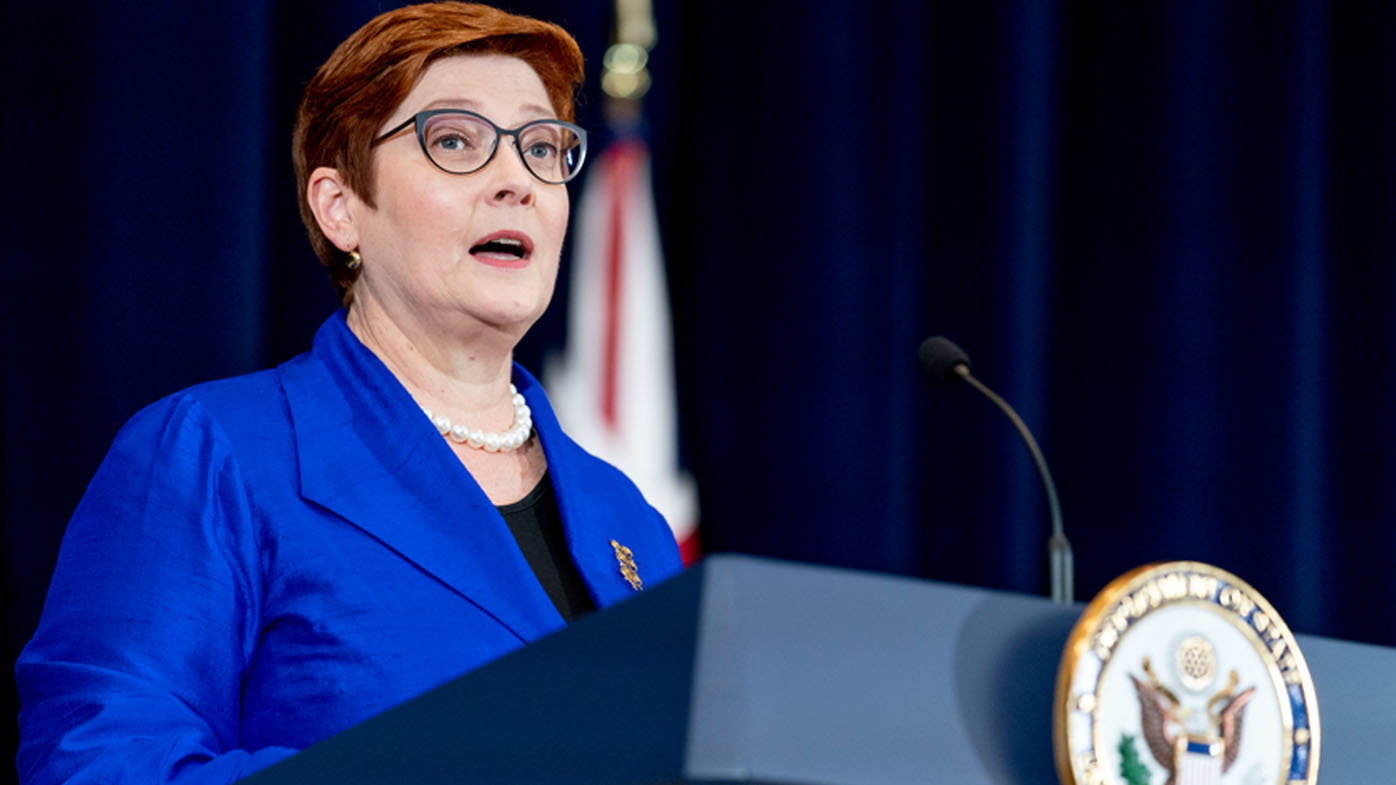
Ms Payne has also repeated calls for Australians in Ukraine to leave immediately, stressing security conditions could change rapidly.
Russia has massed well over 100,000 troops near the Ukraine border and has sent troops to exercises in neighbouring Belarus, but denies that it intends to launch an offensive against Ukraine.
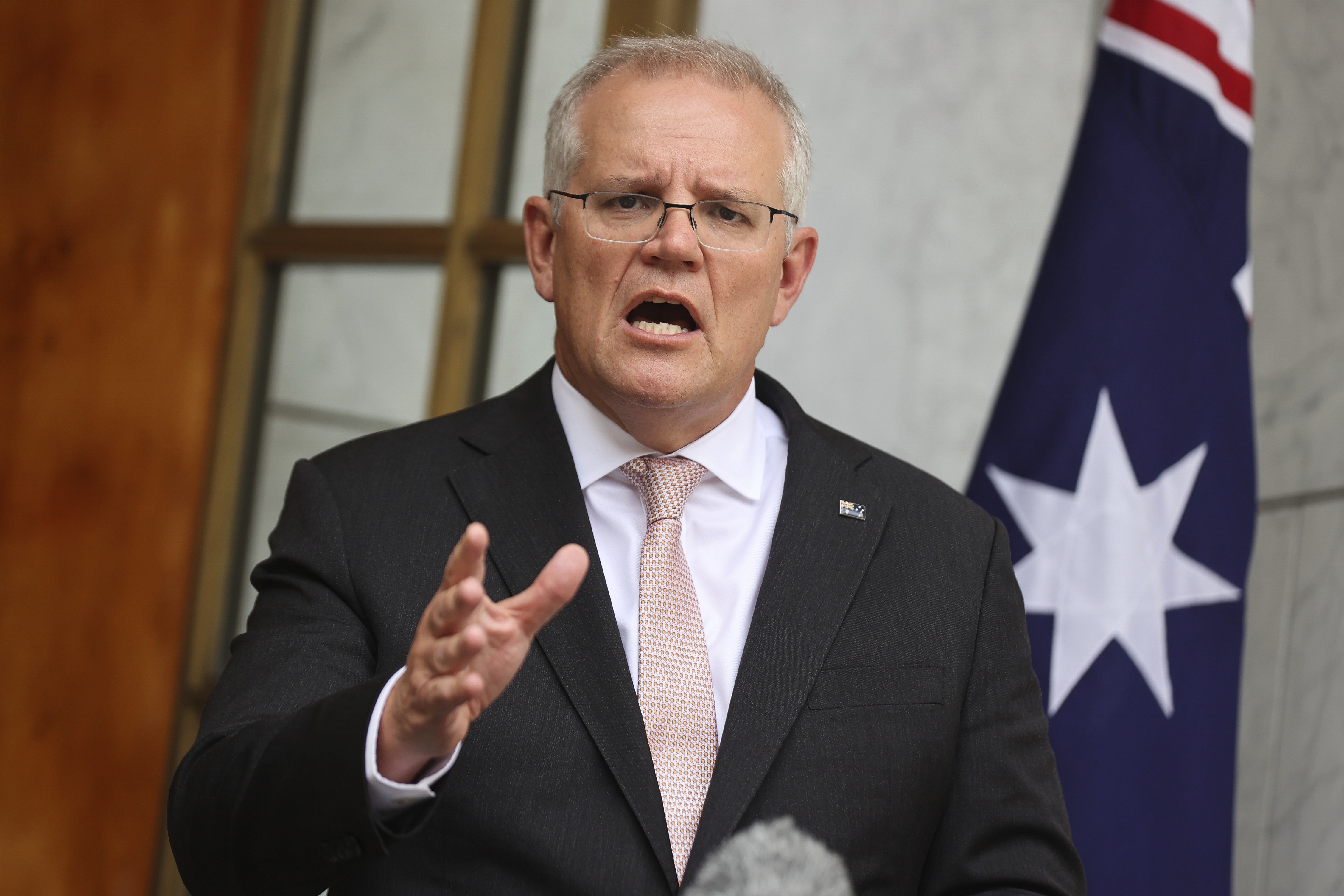
Prime Minister Scott Morrison said there were three remaining Australian-based staff who have been instructed to leave.
"The situation, as you are all hearing, is deteriorating and is reaching a very dangerous stage," Mr Morrison said.
"I want to send a very clear message on behalf of Australia, a liberal democracy who believes in freedom and the sovereignty of states, not just in Europe, but in our own region as well, that the autocratic unilateral actions of Russia to be threatening and bullying Ukraine is something that is completely and utterly unacceptable."
Mr Morrison said his government would not be bullied.
"My government has always stood up to anybody who seeks to bully or coerce Australia, and the bullying and the coercion that we are seeing take place on the borders of Ukraine is an example of that, and it is unacceptable, it is unacceptable there and it is unacceptable anywhere else," the Prime Minister said.
Biden, Putin in high-stakes call
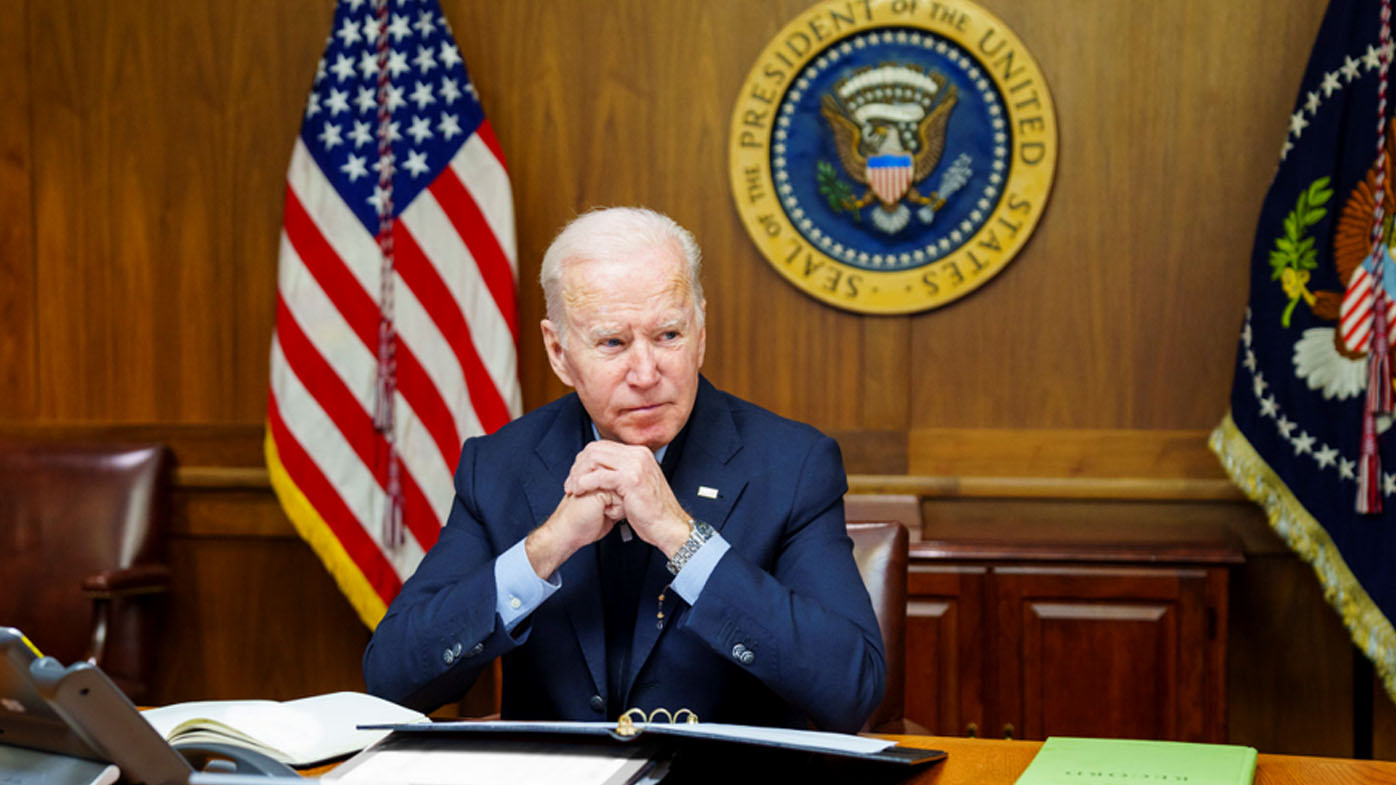
US President Joe Biden has told Russia's Vladimir Putin that invading Ukraine would cause "widespread human suffering" and that the West was committed to diplomacy to end the crisis but "equally prepared for other scenarios," the White House said.
Mr Biden also said on Saturday (US Eastern Time) the US and its allies would respond "decisively and impose swift and severe costs" if the Kremlin attacked its neighbour, according to a White House description of the hour-long call.
"President Biden was clear with President Putin that while the United States remains prepared to engage in diplomacy, in full coordination with our Allies and partners, we are equally prepared for other scenarios," the White House statement said.
READ MORE: Australian health experts issue warning over COVID-19 reinfection
The two presidents spoke a day after Biden's national security adviser, Jake Sullivan, warned that US intelligence shows that a Russian invasion could begin within days and before the Winter Olympics ends in Beijing on February 20.
The call produced "no fundamental change in the dynamic that has been unfolding now for several weeks," according to a senior administration official who briefed reporters following the call.
The official, who discussed the call on condition of anonymity, added that it remains unclear whether Putin has made a final decision to move forward with military action.
READ MORE: NSW by-elections early results indicate large swing against coalition state government
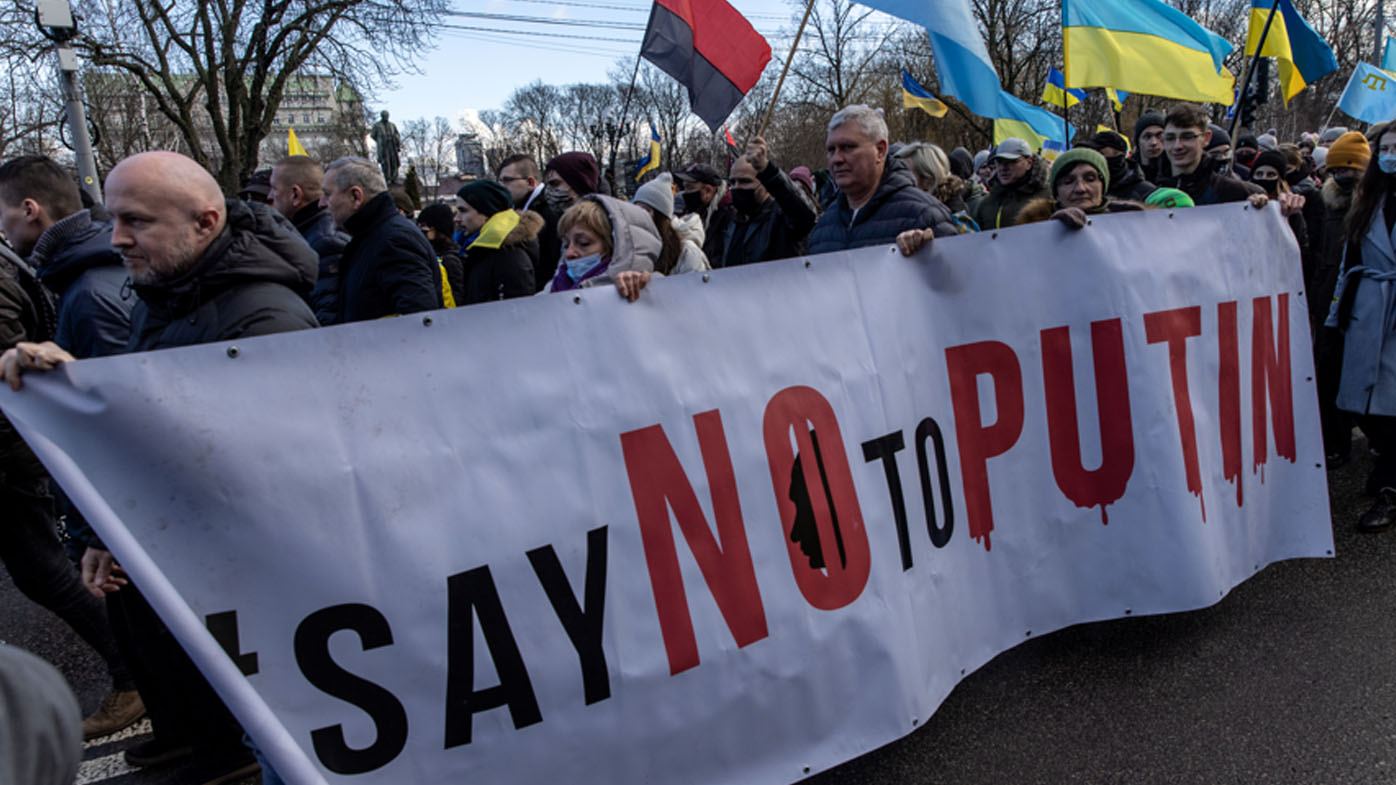
The Biden administration has been warning for weeks that Russia could invade Ukraine soon, but US officials had previously said the Kremlin would likely wait until after the Games ended so as not to antagonise China.
Mr Sullivan told reporters on Friday that US intelligence shows that Russia could take military action during the Olympics.
Before talking to Mr Biden, Mr Putin had a telephone call with French President Emmanuel Macron, who met with him in Moscow earlier in the week to try to resolve the biggest security crisis between Russia and the West since the Cold War. A Kremlin summary of the call suggested that little progress was made toward cooling down the tensions.
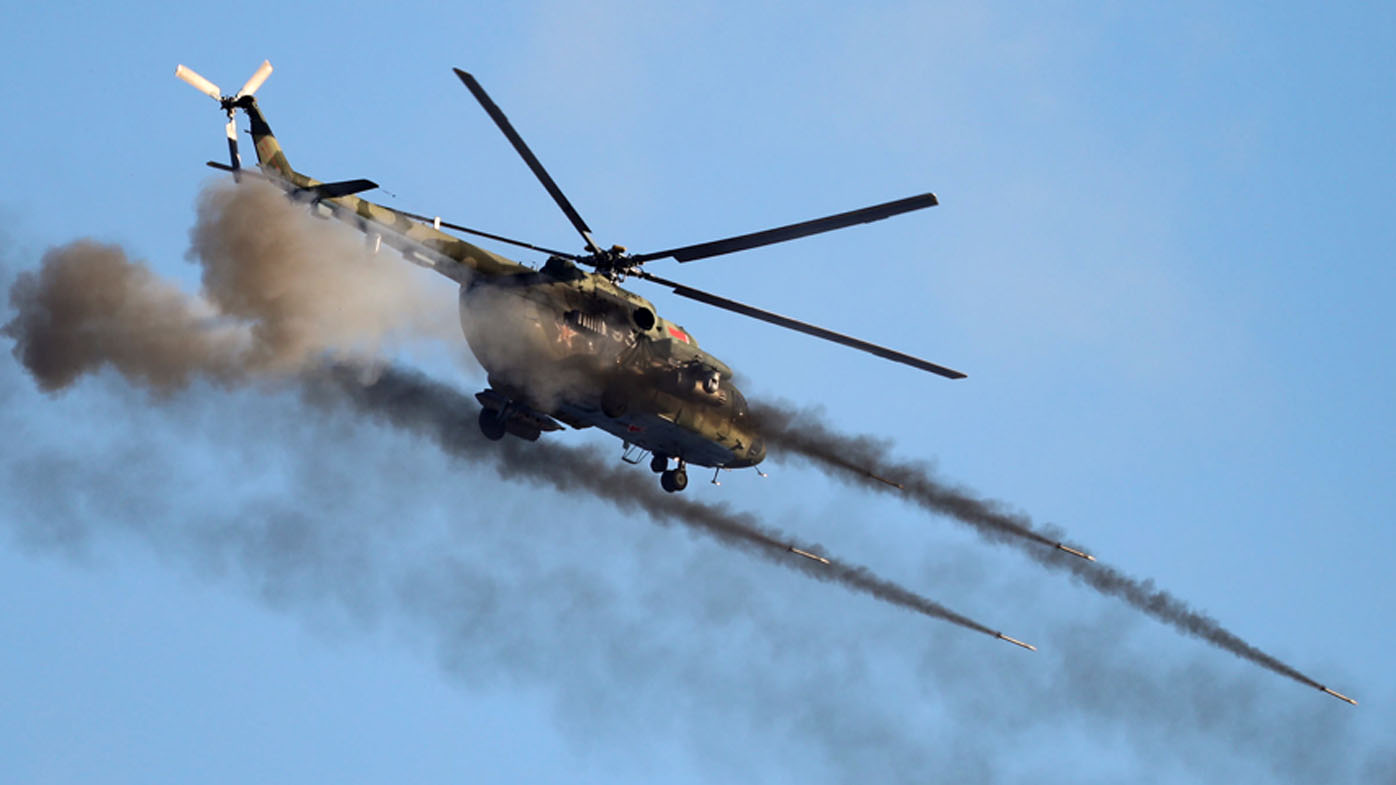
In a sign that American officials are getting ready for a worst-case scenario, the US announced plans to evacuate its embassy in the Ukrainian capital. Australia and Britain joined European nations in urging its citizens to leave Ukraine.
Victoria to lift 'Code Brown' hospital alert tomorrow
Victoria today recorded 7,223 new COVID-19 cases and 18 deaths as the state prepares to ease its Code Brown alert in hospitals from tomorrow.
There are now 465 people in hospital with coronavirus in Victoria, with 17 requiring ventilators and 181 in intensive care wards.
New South Wales has recorded a distinct drop in daily COVID-19 cases, reporting 6,686 new infections overnight.
READ MORE: Biden warns Putin about 'severe costs' of Ukraine invasion
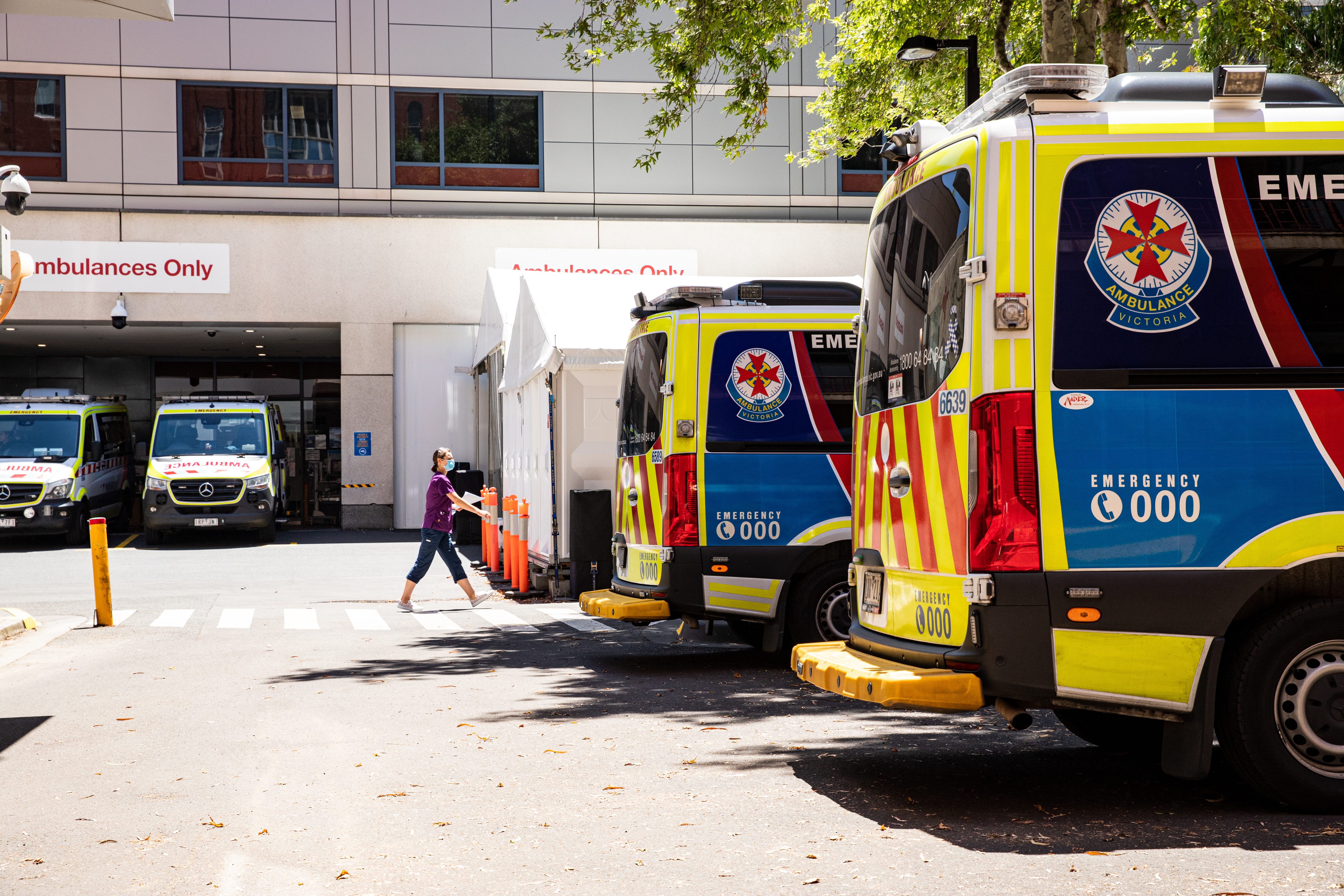
From tomorrow in Victoria, restrictions on elective surgery will also be eased, enabling operations to restart at the state's private and public hospitals.
Victorian Health Minister Foley announced the changes last Friday as Victoria's daily COVID-19 case numbers and hospitalisation rates appear to have "plateaued".
The state's Code Brown has been active across the state's hospital system since January 19, but its easing from tomorrow means hospitals will largely return to normal functioning.
Mr Foley said there were no plans to bring the Code Brown back in the state and its removal would allow all maternal and child health care checks to resume.
From tomorrow, private hospitals will be able to perform up to 50 per cent of all elective surgery in metropolitan Melbourne and up to 75 per cent of all elective surgery in regional areas.
Public hospitals in regional Victoria will be able to resume all category two elective surgery, dependent on workforce availability.
READ MORE: What is the metaverse, and what are the key issues around it?
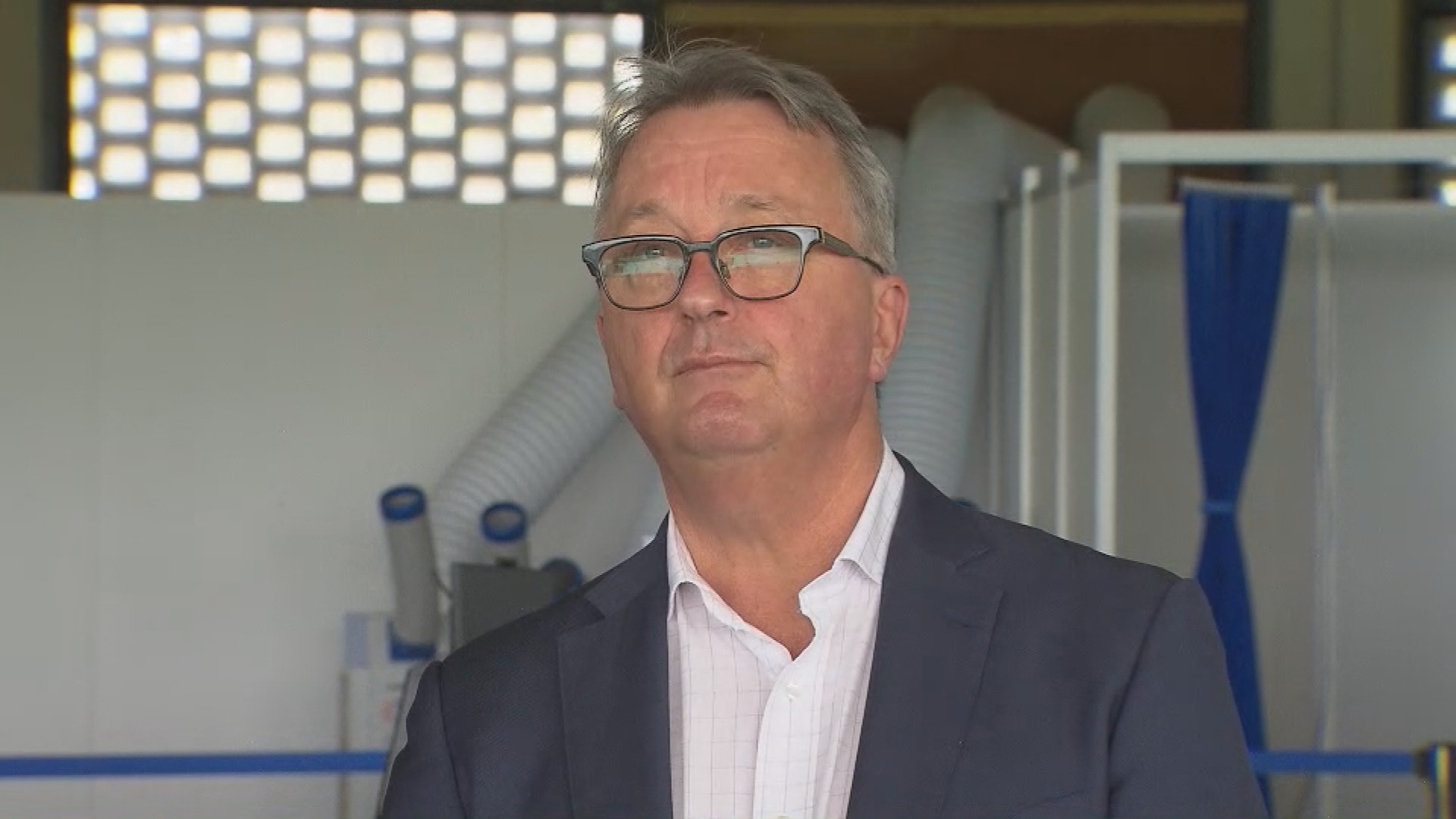
Mr Foley said the changes to the health system were able to occur because Victoria was now seeing a "plauteauing" of case numbers, hospitalisation rates and cases of acute illness.
Victoria currently has about 500 coronavirus patients in hospital and if that number continues to fall, the state government has flagged the easing of more restrictions on the health system.
New South Wales records 6,686 new cases, 22 new deaths
New South Wales has recorded a distinct drop in daily COVID-19 cases, reporting 6,686 new infections overnight.
Yesterday the state recorded more than 8,100 new COVID-19 infections.
Despite the drop in infections a further 22 lost their lives with COVID-19 and more than 1,600 people were admitted to hospital with the virus.
There are currently 93 patients being treated in NSW intensive care units.
Live: Cyclone Dovi leaves thousands without power; fallen tree damages house in Kauri
Cyclone Dovi has caused havoc across the region leaving thousands without power. Northland’s two lines companies, Northpower and Top Energy say it will take some time to reinstate power customers as strong winds make repair work…
Cyclone Dovi: Wellington's second wettest day on record; evacuations, slips, flooding
Wellington has just experienced its second wettest day on record as Cyclone Dovi brings torrential downpours and gale-force winds to the capital.Police are urging those in the lower North Island to stay home unless they absolutely…
How World War II military disaster transformed Australia
Eighty years ago Australia suffered a catastrophic military defeat when 15,000 of its soldiers – part of a vast British-led army fighting for Singapore – surrendered to Japanese forces.
Britain's World War II leader, Winston Churchill, called the fall of Singapore "the worst disaster and the greatest capitulation in British history".
But for the Diggers and their comrades who made up a 120,000-strong British Empire force there was worse to come after the formal surrender on February 15, 1942.
READ MORE: The World War II sea disaster that saw nearly 10,000 people die
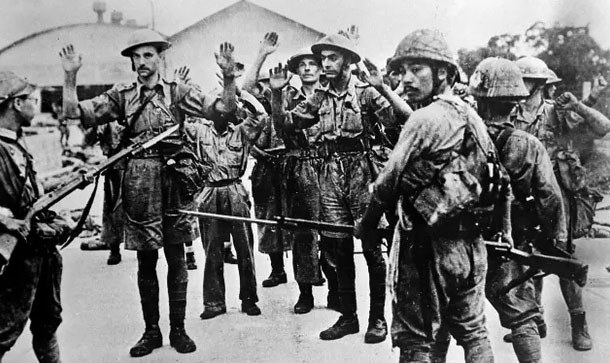
The defeat of Singapore also marked a turning point in Australia's history, with the bitter episode marking the origins of a long standing alliance with the US.
And it will be marked on Tuesday by commemoration services across Australia attended by the dwindling number of veterans who fought in Singapore and Malaysia 80 years ago.
Why did Singapore fall?
The genesis of Japan's victory came in December 1941 when its forces decided to attack Singapore from Malaysia and not the sea on the same day they launched their attack on the US naval base Pearl Harbor in Hawaii.
While British and Australian commanders prepared for the Japanese to attack Singapore's northeast, the Japanese forces came in from northwest, where the British, Australian, Chinese and Malays had few defences.
On February 8, 1942, Japanese forces advanced in to Singapore across the narrow Straits of Jahore.
READ MORE: The Japanese soldier who hid in the jungle for 28 years after World War II
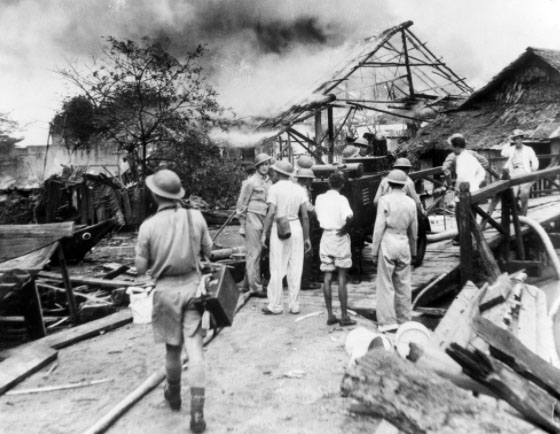
The Allied army under British Lieutenant-General Arthur Percival became short on ammunition, food and water.
At 9.45am on February 15, 1942, General Percival decided to surrender the British Empire's forces, numbering more than 120,000 in Malaysia and Singapore, to the Japanese, whose troops numbered under half that.
What happened to the captured soldiers?
The prisoners of war (POW) captured by Japan went on to endure years of brutality and starvation.
In the days following the Singapore surrender, the POWs were marched to the Changi camp.
Later, after enduring hunger and sickness, the POWs were sent to labour camps across Asia, including the notorious Thai-Burma railway, also known as the 'Death Railway'.
The POWs and about 250,000 Asian labourers endured harsh working conditions and brutal treatment at the hands of their Japanese captors.
POWs also faced constant outbreaks of tropical disease, such as beriberi, malaria and cholera, for which they had few medicines to treat.
More than 2800 Australians perished, while some 75,000 Asian labourers died.
READ MORE: Letter from American soldier reaches his family 76 years after he sent it
How did the fall of Singapore change Australia?
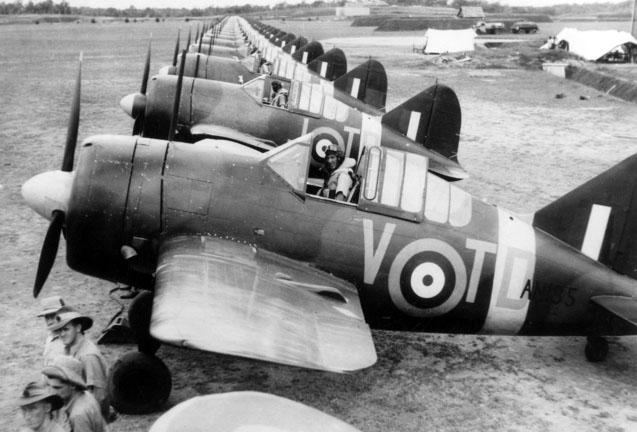
The humiliating defeat was regarded as a turning point in Australia's relationship with its colonial relationship with Britain.
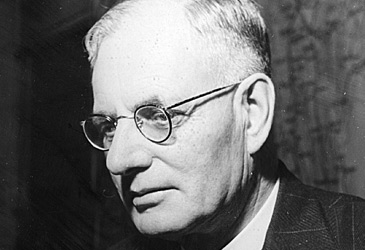
From 1942, the Australian government under Prime Minister John Curtin looked increasingly towards the US for its future protection.
Mr Curtin had signalled the change in a new year radio address to Australians weeks before Singapore fell.
"Without any inhibitions of any kind, I make it clear that Australia looks to America, free of any pangs to our traditional links or kinship with the United Kingdom," he said.
READ MORE: Cold case team shines new light on betrayal of Anne Frank
The need for American support became more urgent when Japanese warplanes devastated Darwin on February 19, 1942.
By the end of World War II in 1945, the US had started to become Australia's major security partner, supplanting Britain.
It was a partnership that has continued to this day, throughout the Korean War, the Vietnam War, the Cold War, the 9/11 War on Terror and the west's response to a powerful China.
– Reported with CNN, Australian War Memorial
What is the metaverse, and what are the key issues around it?
The term "metaverse" is the latest buzzword to capture the tech industry's imagination.
Facebook recently changed its name to Meta Platforms, Nike has bought a virtual shoe company to help it expand to the metaverse, and other retail giants like Gucci and Ralph Lauren have been considering the future of fashion with digital personas.
But what is the metaverse, and what does it all mean? Can it be a space for optimism and collaboration or will it instead amplify some of the major issues currently surrounding social media and society?
EXPLAINED: What happens when sand is struck by lightning?
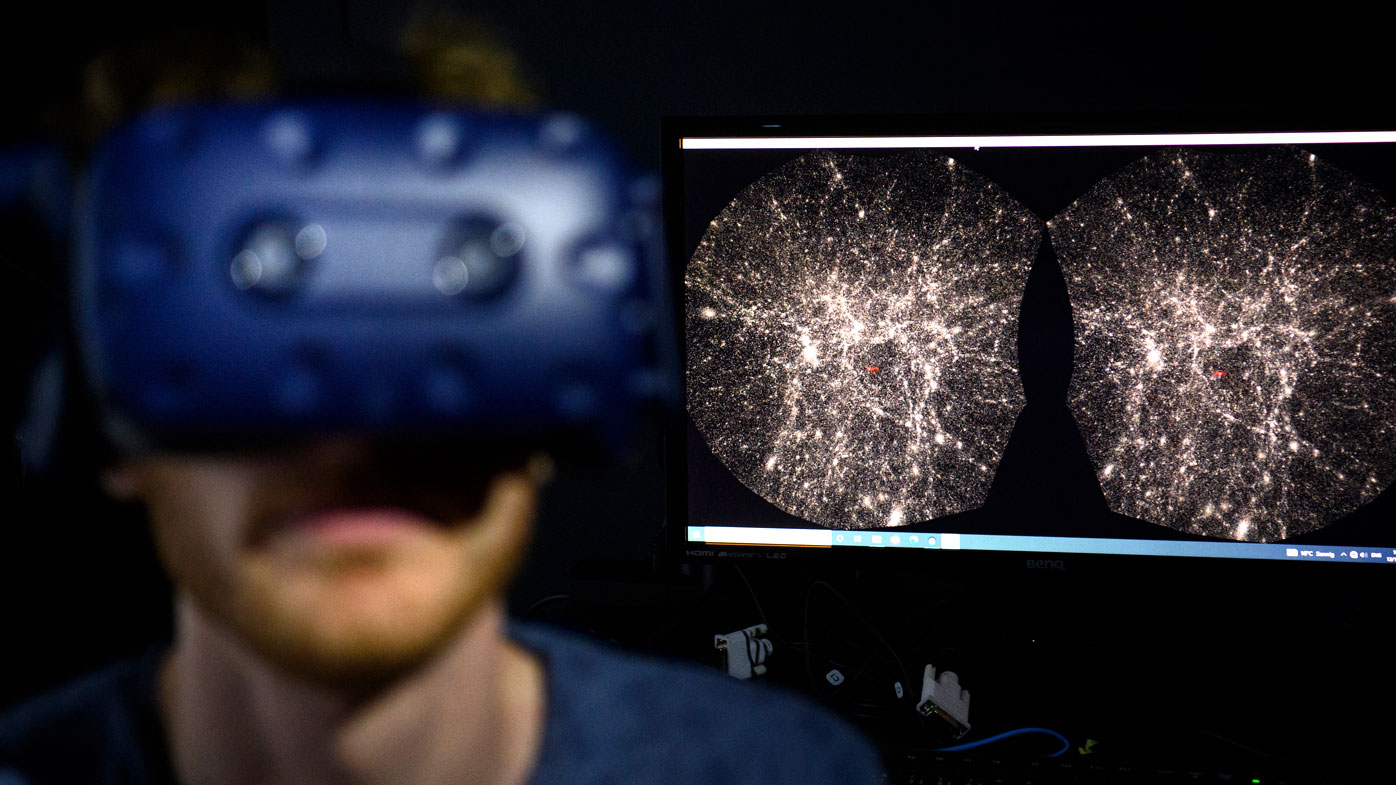
With the help of Dr Eric Lim, a professor in information systems and technology management at UNSW Business School, we take a look at the issues around the metaverse.
What is the metaverse?
Okay, this is tricky, but imagine the virtual world and the real world intertwine and merge under a single reality
This is about bringing the internet brought to life, if you will, or at least rendering it in 3D, a kind of virtual environment you can go inside of — instead of just looking at it on a screen.
Essentially, it's a world of endless, interconnected virtual communities where people can meet, work and play, using virtual reality headsets, augmented reality glasses, smartphone apps or other devices.
The metaverse is web 3.0, Dr Lim says, the next evolutionary step on from web 1.0 and the current 2.0. It is not a new internet, he says, but a new way of interacting with the internet.
"A lot of people think of the metaverse as a place, but I see the metaverse as more of a time that is coming."
In the metaverse, Dr Lim believes we will live our virtual life the same way we live our physical life.
EXPLAINED: What is SWIFT and why it might be the weapon Russia fears most

Okay, so what does all this look like?
"It's not an easy concept to understand because a lot of people just kind of see a virtual reality world," Dr Lim says.
Once the metaverse infrastructure is in place – with things like proliferation of AR glasses and headsets and interconnected platforms and everyday objects – it is about layering digital and meta data on top of the physical reality around us.
"In the metaverse, once we have this platform and infrastructure, I can see you, and then I can see meta data on top of you," he says, describing a kind of view and informational perspective which gamers will easily understand.
"I can see your name when I glance at you using AR glasses," Dr Lim says.
"I can see your job title and other things you want people to view."
EXPLAINED: What are 'bomb cyclones' and what makes them different?
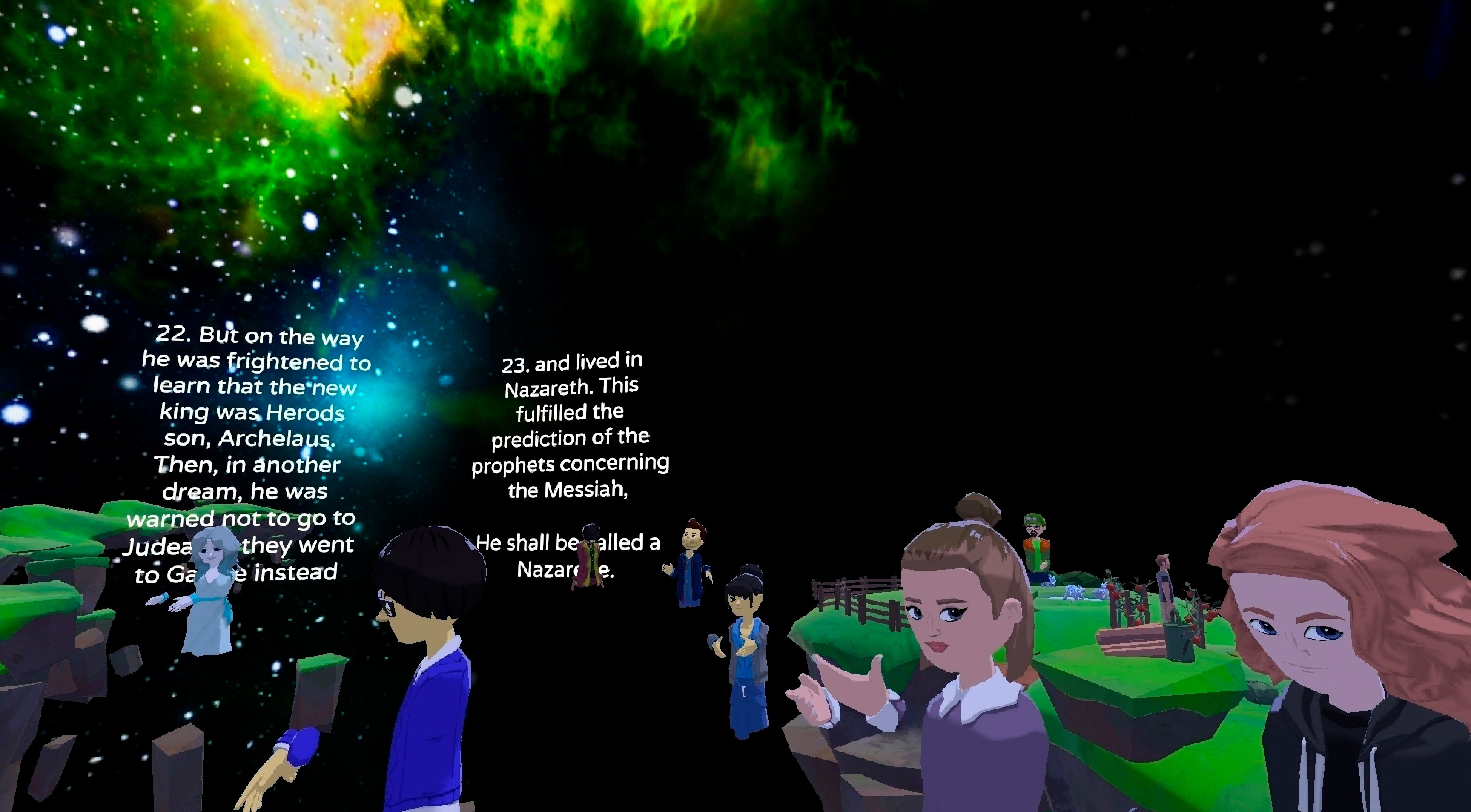
What will I be able to do in the metaverse?
Well, you can go to a virtual concert, take a trip online, and buy and try on digital clothing.
The idea is to create a space similar to the internet, but one that users (via digital avatars) can walk around inside of and where they can interact with one another in real time.
Dr Lim says people will begin to buy and build "assets" that will only exist in the metaverse and have real monetary value.
These assets could be land, art, clothing and other items, and when you get your head around that then it could help you to understand the rise of the NFT, which you can read more about here.
Blockchain technology, the foundation of cryptocurrencies such as Bitcoin, mean the ownership of digital assets can be proven in the metaverse.
Digital currencies will be needed to pay for things in the metaverse.
"The metaverse is a concept where people spaces, assets and information and objects are all linked together and mesh," Dr Lim says.
Tech companies still have to figure out how to connect their online platforms to each other, but these efforts are already underway. Billions of dollars are being invested into this space.
EXPLAINED: What countries produce the most greenhouse gas emissions?
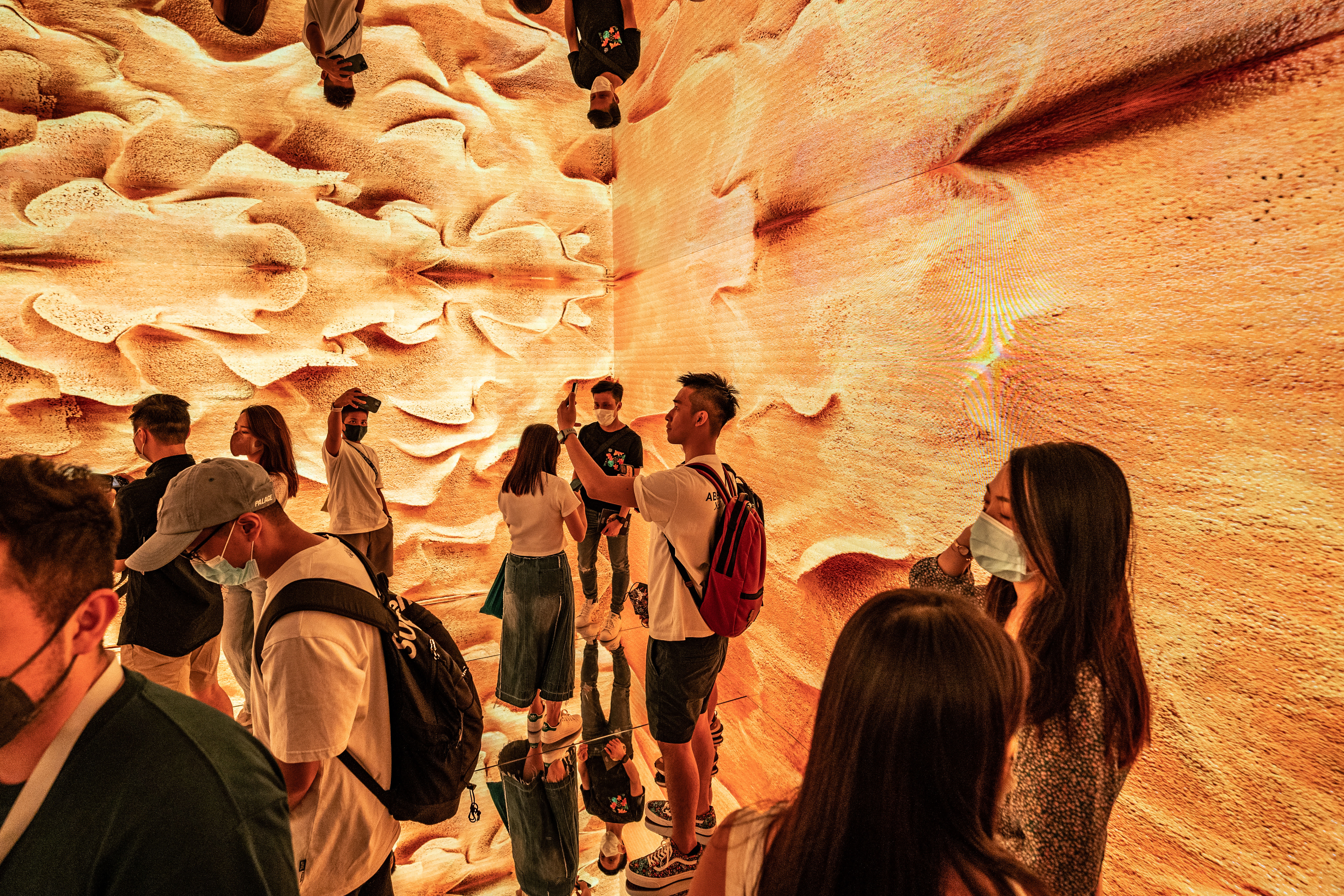
So when will the metaverse happen?
The key metaverse ingredients and building blocks – blockchains, cryptocurrencies, open source, Artificial Intelligence and smart contracts – already exist, Dr Lim says.
"There will be a huge spike in adoption of technologies and the creation of the metaverse," he explains.
Dr Lim predicts the metaverse will hit a "huge inflection" point which becomes "exponential", much like the way people suddenly adopted other transformational technologies like the iPhone.
"The metaverse will be realised once that happens," he says.
By 2030, a large proportion of people will be in the metaverse in some way, Melanie Subin from The Future Today Institute predicts.
Is metaverse just a Facebook project?
Absolutely not.
Facebook renaming itself to Meta was a sign of where things are going and trying to shake off its increasingly poor public image.
But Facebook is just one of many tech giants trying to become a dominant player in the next big internet leap forward.
Who are the major players in the metaverse space?
Some names you'd expect and maybe others you're not so familiar with; Microsoft, Unisys, Amazon, Snap Inc, Google, Nvidia and HTC.
Then you have a group of major gaming companies, like Epic Games, Unity, Tencent and Roblox, who have all made serious strides in the metaverse space.

Should I be worried?
You could be forgiven for thinking humanity is heading for some kind of twisted Black Mirror hell.
Facebook and other big tech companies have long been accused of willfully crossing lines of privacy and data harvesting, as well as creating toxic environments for bullying, misogyny and sexual harassment.
Naturally, some wonder if the metaverse will give rise to the same.
Dr Lim thinks the metaverse is now at a crossroads. He believes we should rightly be wary of Silicon Valley and the tech giants controlling and monopolising the metaverse, without any restraint.
A centralised version of the metaverse where the tech companies are the "middlemen of necessity", just as they are in this web 2.0 world, would be a bad thing, Dr Lim believes.
"Is it too late? No, I don't think it's too late," he says, pointing to the rise of the opensource blockchain and its decentralisation philosophies as a reason to be optimistic about how the metaverse could unfold and be built without the heavy-handed influence of Mark Zuckerberg and the other tech kingpins.

Tim Berners-Lee, the inventor of the world wide web's inventor, has also publically stressed his desire to wrestle power away from the clutches of big tech.
"When individuals are given the means – the open and inclusive infrastructure upon which they can create things of value – you can see there is vast amount of energy and excitement in that space," Dr Lim says.
He and Mr Berners-Lee both believe people should have much better control over their personal data, a war that has been lost in web 2.0.
Barry Manilow hit blasted to disperse protesters
Some countries might send in a riot squad to disperse trespassing protesters. In New Zealand, authorities turned on the sprinklers and Barry Manilow.
Initial moves to try and flush out several hundred protesters who have been camped on Parliament's grassy grounds since Tuesday had little effect.
The protesters, who have been voicing their opposition to coronavirus vaccine mandates, responded to the soaking from the sprinklers by digging trenches and installing makeshift drainpipes to divert the water.
READ MORE: NSW by-elections early results indicate large swing against coalition state government
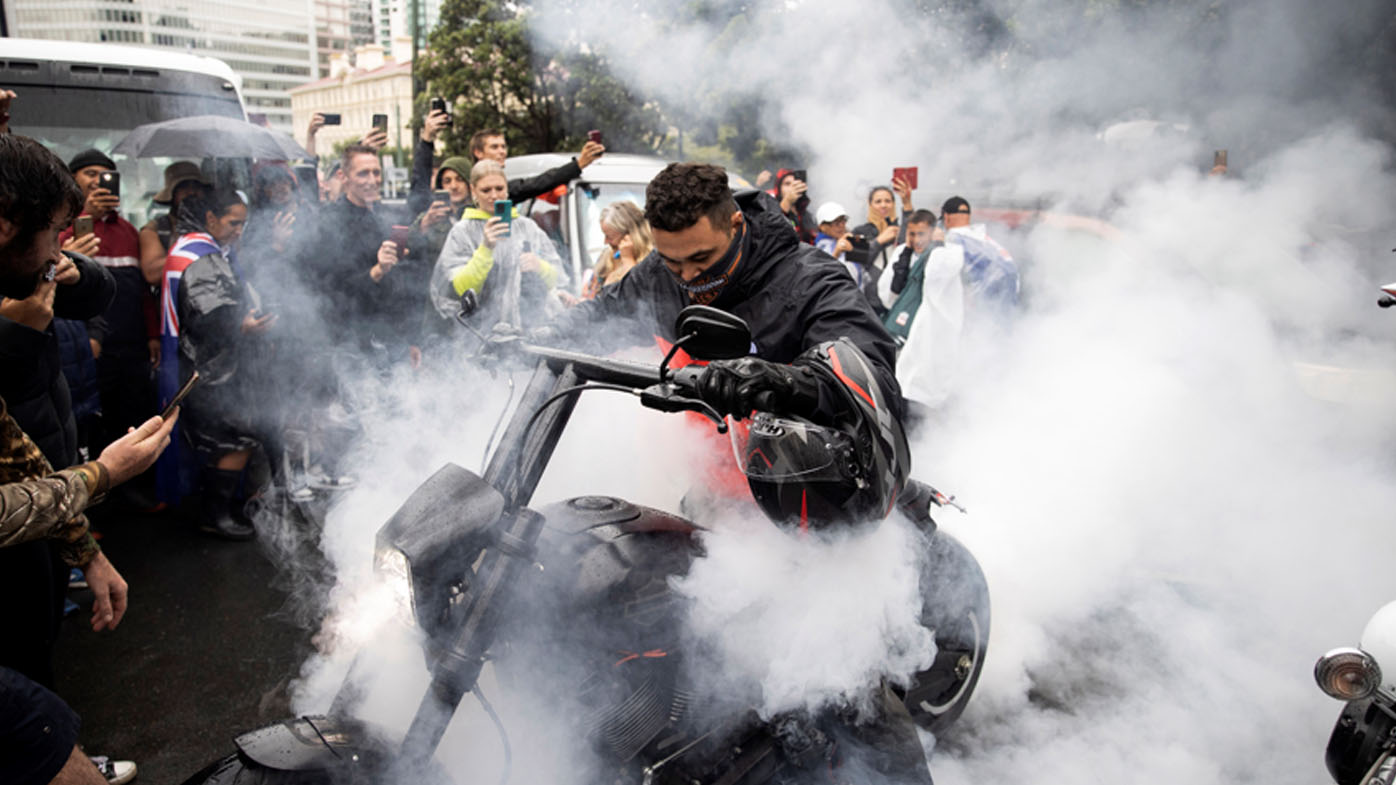
When a downpour hit on Saturday, their numbers only grew. Protesters brought in bales of straw, which they scattered on the increasingly sodden grounds at Parliament. Some shouted, others danced and one group performed an Indigenous Maori haka.
By evening, Parliament Speaker Trevor Mallard had come up with a new plan to make the protesters uncomfortable: using a sound system to blast out vaccine messages, decades-old Barry Manilow songs and the 1990s earworm hit 'Macarena' on a repeat loop.
Protesters responded by playing their own tunes, including Twister Sister's 'We're Not Gonna Take It'.
The protest began when a convoy of trucks and cars drove to Parliament from around the nation, inspired by protests in Canada. At first there were more than 1000 protesters but that number dwindled as the week wore on before growing again on Saturday.
Police have been taking a more hands-off approach since Thursday, when they arrested 122 people and charged many of them with trespassing or obstruction. Police, who have been wearing protective vests but haven't been using riot gear or carrying guns, had tried to slowly advance on the protesters.
READ MORE: Australians to travel to New Zealand by July as reopening plan announced
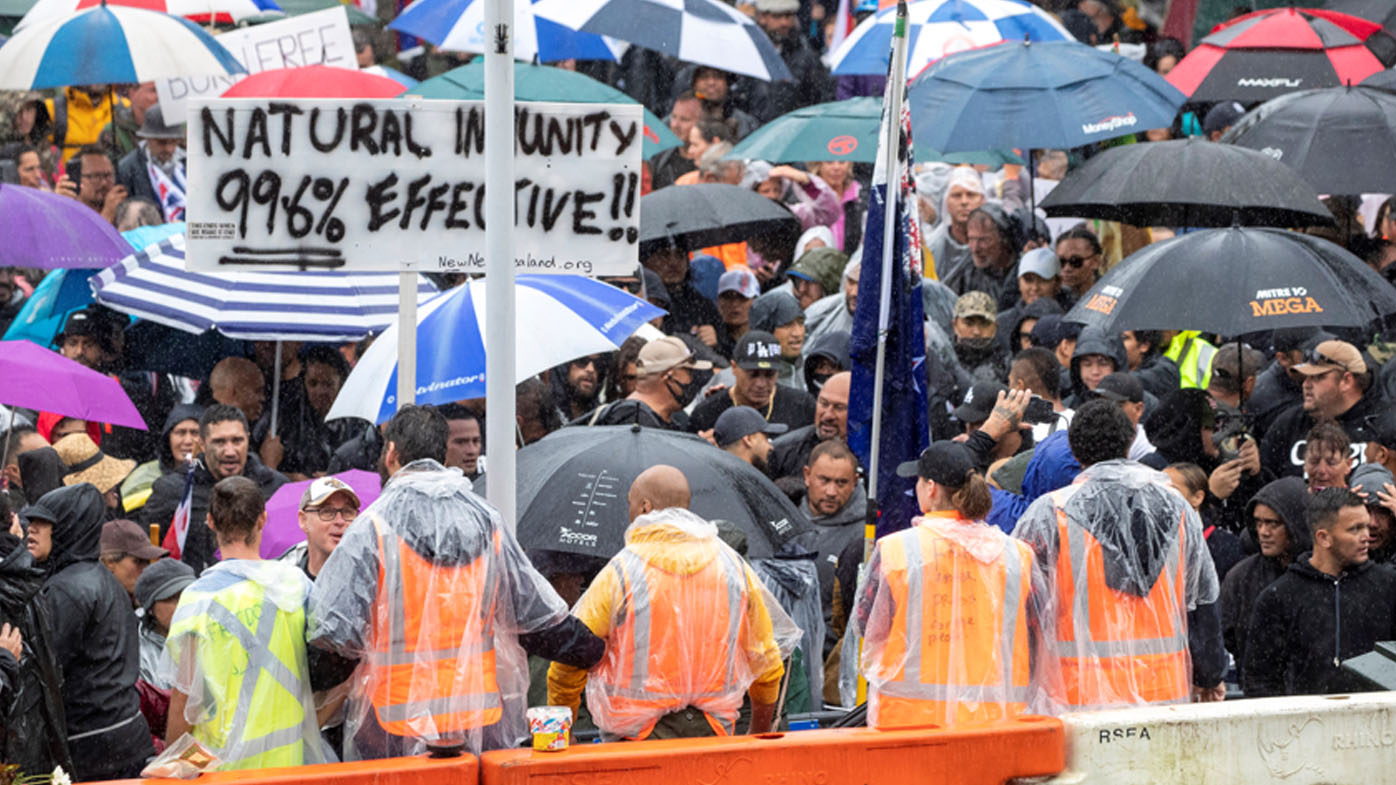
But that resulted in a number of physical confrontations. A video of two female officers briefly dragging a naked woman by her hair from amid a scuffle went viral.
In a response to questions from The Associated Press, New Zealand police said they did not remove the woman's clothing as some people had claimed online, and that she had been naked for "some time" before her arrest.
Police also said the images and videos didn't provide the full context of the protest activity or the situation that police faced.
Still, the scuffles seemed to prompt a strategic rethink by police, who appeared more content to wait it out as the week wore on. But by Friday, Mallard, the Parliament speaker, had seen enough, and told staff to turn on the sprinklers overnight.
"No one who is here is here legally, and if they're getting wet from below as well as above, they're likely to be a little bit less comfortable and more likely to go home," Mallard said, according to news organisation Stuff.