As Auckland holiday-makers escape the city for the long weekend, traffic has already begun to clog State Highway 1. Waka Kotahi New Zealand Transport Agency (NZTA) warned drivers leaving Auckland southbound on SH1to plan ahead as…
Tag Archives: oceania
Woman hit by car in Taupō shoe shop grateful to helpers
Tuesday, January 11 is a day Sue Watkins will not forget in a hurry.The Hutt Valley local, who owns a house in Taupō, was browsing shoes at Merchant 1948 Footwear on Te Heuheu St when a car crashed through the front of the…
Auckland $15b light rail project will largely be paid for by Government and built by 2033, say ministers
The Government will pay the “lion’s share” for a $15 billion light rail line from the city centre to the airport in Auckland and is confident of having it built by 2033.Finance Minister Grant Robertson and Transport Minister Michael…
Covid 19 Omicron outbreak: 15 cases of new variant, 105 total community cases
The Omicron cluster has grown by 15 new cases today, with the Ministry of Health revealing a string of new locations of interest connected to cases of the variant.A total of 105 new community cases of Covid-19 were reported, which…
Particles from first seconds of the universe discovered
Phycisists have discovered mystery particles from the dawn of time forming in the Large Hadron Collider.
In the first millionths of a second after the Big Bang, the universe was filled with elementary particles such as quarks and gluons, which formed countless combinations before cooling and settling into more stable configurations to make the neutrons and protons of ordinary matter.
Before cooling, a fraction of these quarks and gluons collided randomly to form short-lived "X" particles, so named for their mysterious, unknown structures.
READ MORE: First records of killer whales hunting largest animals on Earth
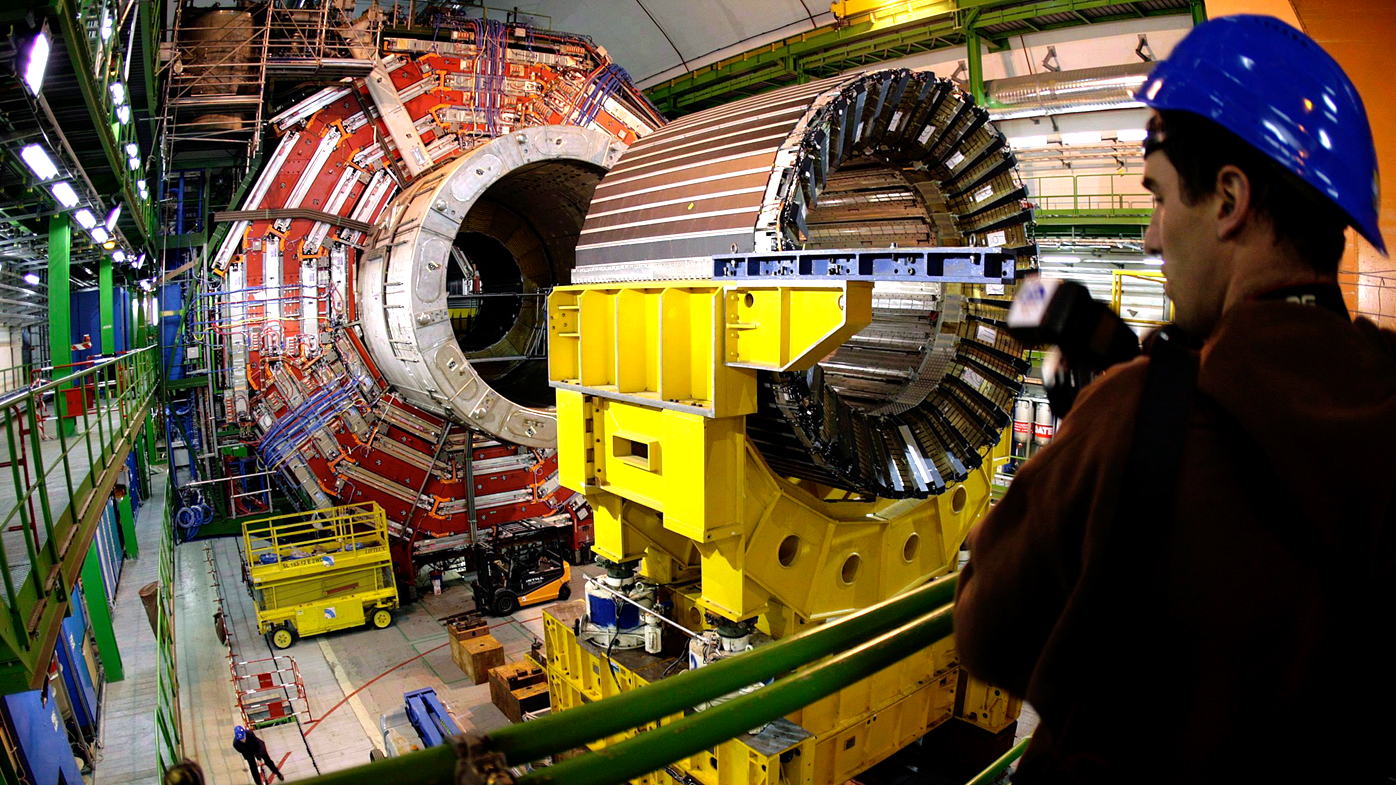
Today, X particles are extremely rare, though physicists have theorised they may be created in particle accelerators – such as the LHC – through quark coalescence, where high-energy collisions can generate similar flashes of quark-gluon plasma.
Now, physicists have found evidence of the mysterious particles.
The team used machine-learning techniques to sift through more than 13 billion heavy ion collisions, each of which produced tens of thousands of charged particles.
Amid this ultradense, high-energy particle soup, the researchers were able to tease out about 100 X particles.
The results, published this week in Physical Review Letters, mark the first time researchers have detected X particles in quark-gluon plasma — an environment that they hope will illuminate the particles' as-yet unknown structure.
READ MORE: US Navy wants to get crashed stealth fighter back – before China can

"This is just the start of the story," says lead author Associate Professor Yen-Jie Lee from the Massachusetts Institute of Technology said in a statement.
"We've shown we can find a signal. In the next few years we want to use the quark-gluon plasma to probe the X particle's internal structure, which could change our view of what kind of material the universe should produce."
The study's co-authors are members of the CMS Collaboration, an international team of scientists that operates and collects data from the Compact Muon Solenoid, one of the LHC's particle detectors.
Particles in the plasma
The basic building blocks of matter are the neutron and the proton, each of which are made from three tightly bound quarks.
"For years we had thought that for some reason, nature had chosen to produce particles made only from two or three quarks," Associate Professor Lee said.
Only recently have physicists begun to see signs of exotic "tetraquarks" — particles made from a rare combination of four quarks.
READ MORE: What we know about BA.2 variant, the 'stealth' version of Omicron
Scientists suspect that the recently-observed X particle — dubbed X (3872) — is either a compact tetraquark or an entirely new kind of molecule made from not atoms but two loosely-bound mesons — subatomic particles that themselves are made from two quarks.
In the next year or two, the researchers plan to gather much more data, which should help to elucidate the X particle's structure. If the particle is a tightly bound tetraquark, it should decay more slowly than if it were a loosely bound molecule.
Now that the team has shown X particles can be detected in quark-gluon plasma, they plan to probe this particle with quark-gluon plasma in more detail, to pin down the X particle's structure.
"Currently our data is consistent with both because we don't have enough statistics yet. In next few years we'll take much more data so we can separate these two scenarios," Associate Professor Lee said.
"That will broaden our view of the kinds of particles that were produced abundantly in the early universe."
'I haven't raised any issues': PM addresses Grace Tame photos
Prime Minister Scott Morrison has addressed the controversy around the images taken of him alongside 2021 Australian of the Year Grace Tame in Canberra this week.
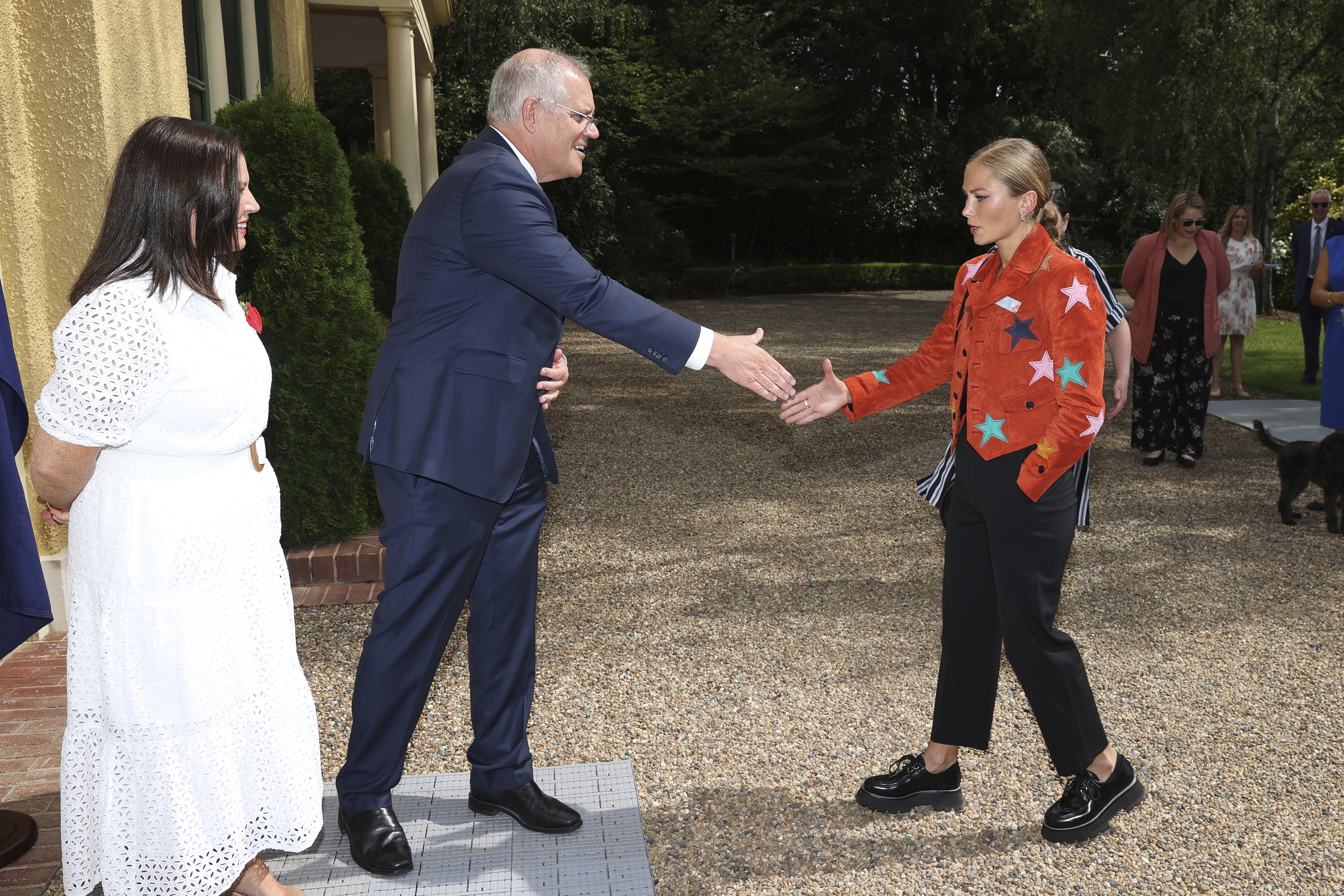
Ms Tame, who was at times critical of Mr Morrison and the federal government during her tenure as Australian of the Year, was photographed at an Australia Day event shaking the prime minister's hand without appearing to look at him.
She was then snapped standing next to him during the event, maintaining a stern gaze.
LIVE UPDATES: Pfizer booster shot for children aged 16 and 17 gets green light
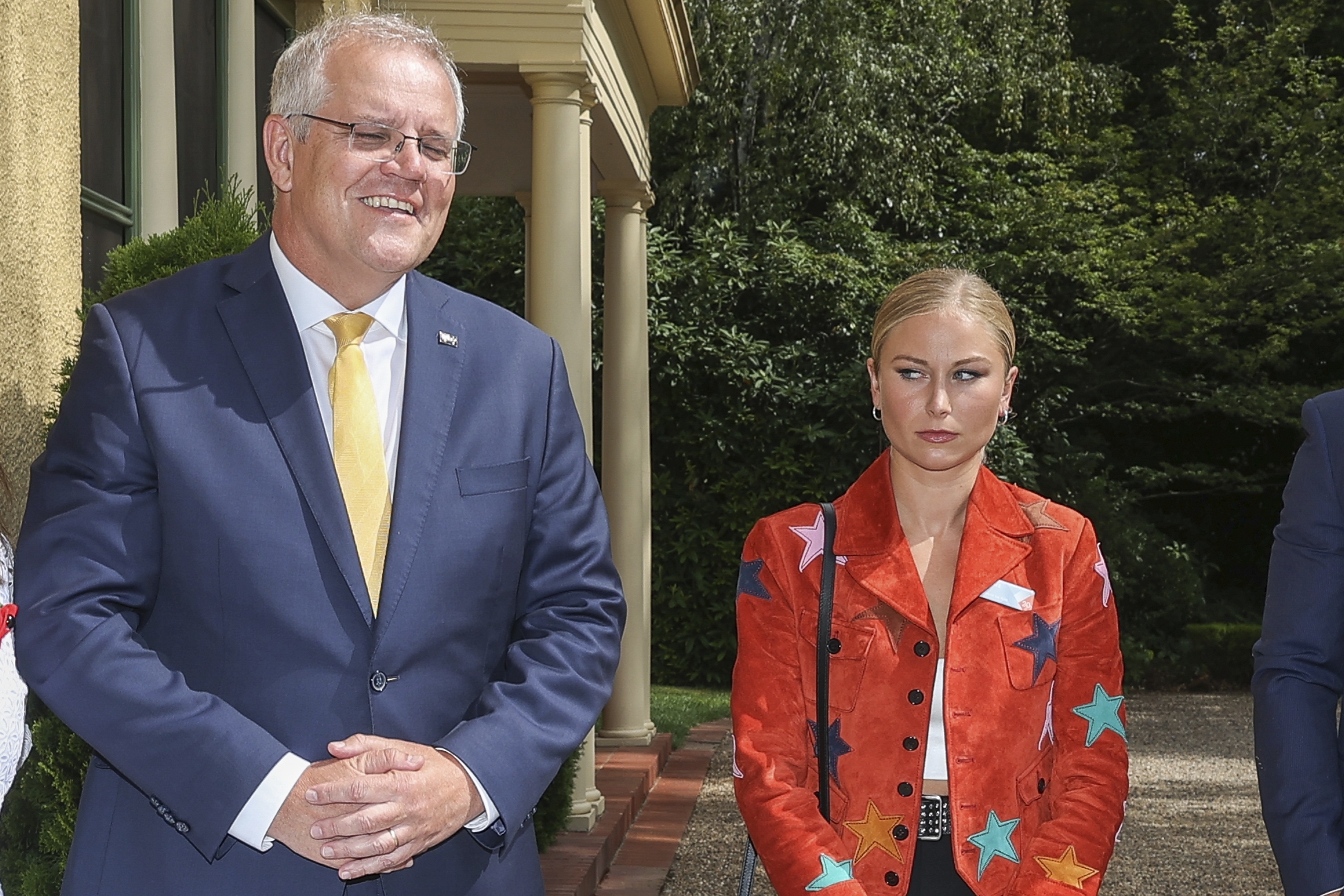
Some commentators criticised Ms Tame's demeanour, but many others have applauded her courage and ongoing outspokenness and said Ms Tame was right not to stand there and pretend to smile when she may have felt otherwise.
Mr Morrison was today asked about the photos on Queensland radio station 4BC.
He said when anybody came to his and wife Jenny's home, they "greet them with a smile".
READ MORE: Deb Knight opinion – Grace Tame embodies a new generation of fearless females
"That day was actually about all the (Australian of the Year) finalists that came to celebrate. That day was all about them," he said.
"I haven't raised any issues about this. All I am saying is we were there that day to celebrate those who have done an incredible job for our country, and Jenny and I wanted to welcome them into our home and wish them all the best."
He said Ms Tame was a "passionate person" who had raised "important issues".

"I know a lot of Australians, me included, support her efforts to ensure that these issues can be raised and addressed," he said.
"So I thank her for her time as Australian of the Year and, as I say, if people come to our house Jenny and I always greet them with a smile."
Ms Tame was made Australian of the Year in 2021 for her advocacy on behalf of sexual assault victims.
She was herself groomed and assaulted by a teacher when she was 15.
Readers seeking support can contact Lifeline on 13 11 14 or beyond blue on 1300 22 4636.
Flash flooding hits parts of North Queensland pelted by severe rain
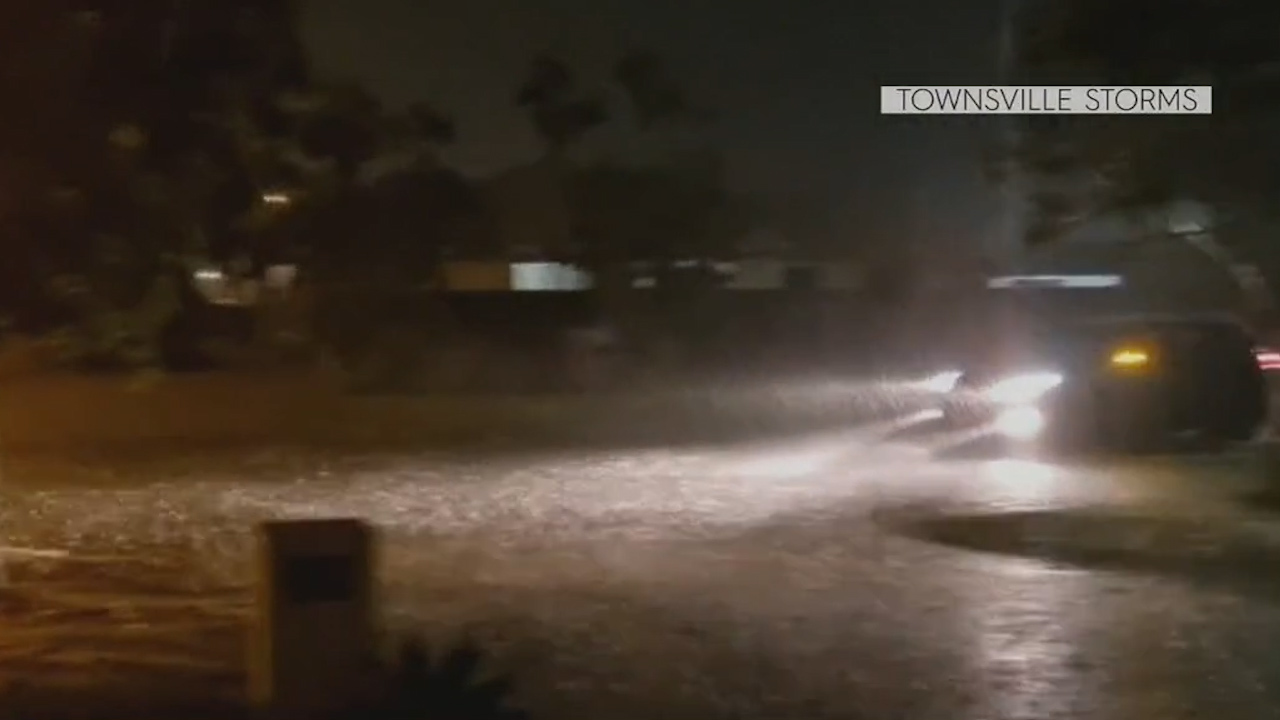
Several North Queensland residents awoke to flooded streets this morning, as more than a third of the Townsville region's yearly rainfall dumped down in one day.
The onslaught prompted severe weather warnings from the Bureau of Meteorology, as parts of the region copped 381mm of rain in 24 hours — 277mm of that in just three hours.
Parts of the town were inundated by flash flooding not seen since the 2019 floods.
READ MORE: Prince Andrew demands trial by jury in US sex assault case
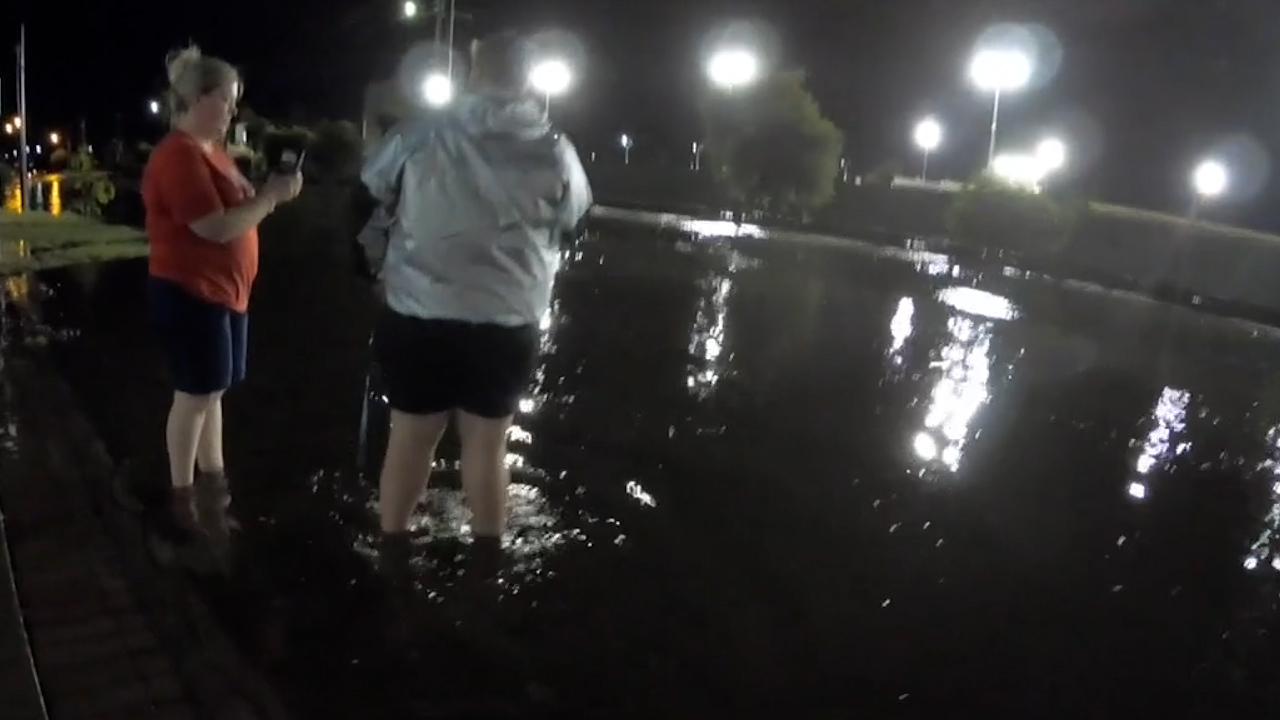
The region's SES volunteers received 30 calls for help overnight, with one family requiring rescue from their car in Deeragun, north of Townsville, after being swept into floodwaters.
They attended several calls for flooded homes and leaking roofs providing sandbags to those who needed them.
"We are expecting more rain tonight so it's better to be prepared," SES volunteer Amanda Mcrae said.
READ MORE: 'Once per century' weather event smashes Victoria

Areas between Charters Towers, Longreach and Winton were all drenched.
Grazier Samara Carrington from Molesworth Station said the rain was a welcome change.
"With this extra 121mm things will be starting to look up thankfully. We almost had to destock our cattle due to a lack of feed so this is a great sight to see," she said.
READ MORE: What is SWIFT and why it might be the weapon Russia fears most
The rain is expected to continue for the next three days, elevating risks of flash flooding in the region.
Overnight, the bureau had warned of "life-threatening flash flooding".
Slow moving thunderstorms dumped 362mm on Stony Creek, south-west of Townsville, on Wednesday, according to the Bureau of Meteorology.
READ MORE: Australia's capital city median house price smashes $1 million mark
An incredible 131mm of that fell in just one hour from 8pm-9pm and Mona Mona, north of Cairns, copped 67mm in an hour earlier in the night.
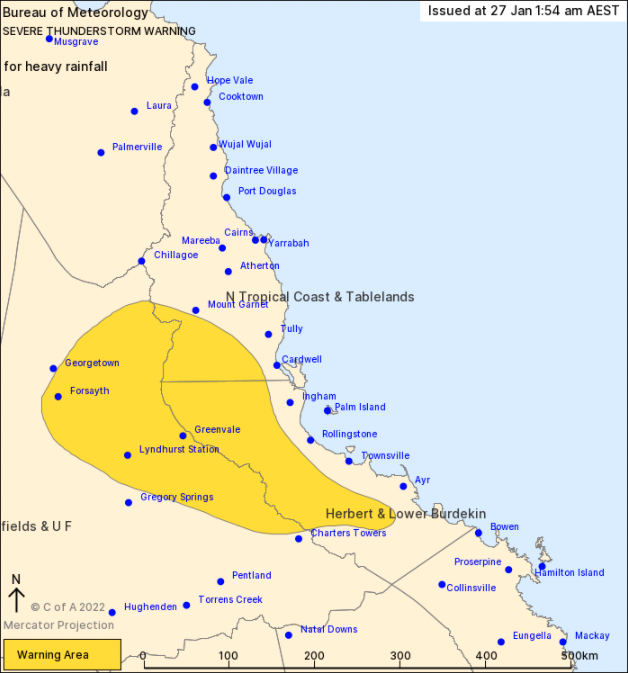
"Severe thunderstorms are likely to produce intense rainfall that may lead to dangerous and life-threatening flash flooding and damaging winds over the next several hours in parts of the North Tropical Coast and Tablelands, Northern Goldfields and Upper Flinders and Herbert and Lower Burdekin districts," the Bureau of Meteorology warned just before midnight.
https://twitter.com/BOM_Qld/status/1486341785538469892
Forecasts blamed the "strong, slow moving tropical thunderstorms" on a warm and "very heavy" air mass above the area, inland from Ayr Townsville and Tully.
Along the coast, forecasters were expecting widespread six-hourly rainfall totals of 140-180mm, with as much as 250mm in some areas.
By 2.40am, the risk to life had eased but the bureau was still warning of likely flash flooding through to morning in Forsayth, Woodstock, Lyndhurst Station, Abergowrie, Clare and Greenvale.
New chlamydia vaccine could save koalas from extinction
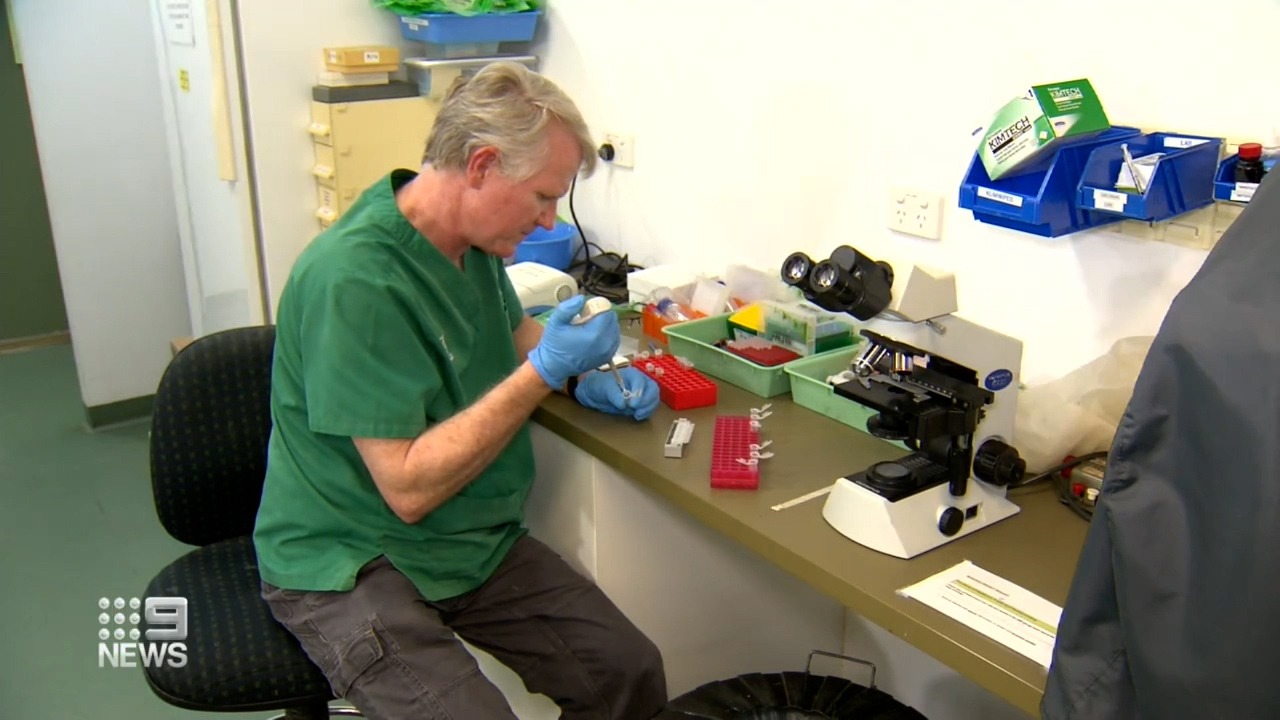
A new vaccine could help curb one of the country's biggest koala killers, with experts hoping the injection could protect the species from future extinction.
Experts estimate over half of New South Wales and Queensland's koala populations are sick with chlamydia, and researchers have worked for over a decade to create a vaccine.
Dr Michael Pyne from Currumbin Wildlife Hospital said of 500 koalas admitted to the Gold Coast hospital last year, 60 per cent had the disease.
READ MORE: Prince Andrew demands trial by jury in US sex assault case
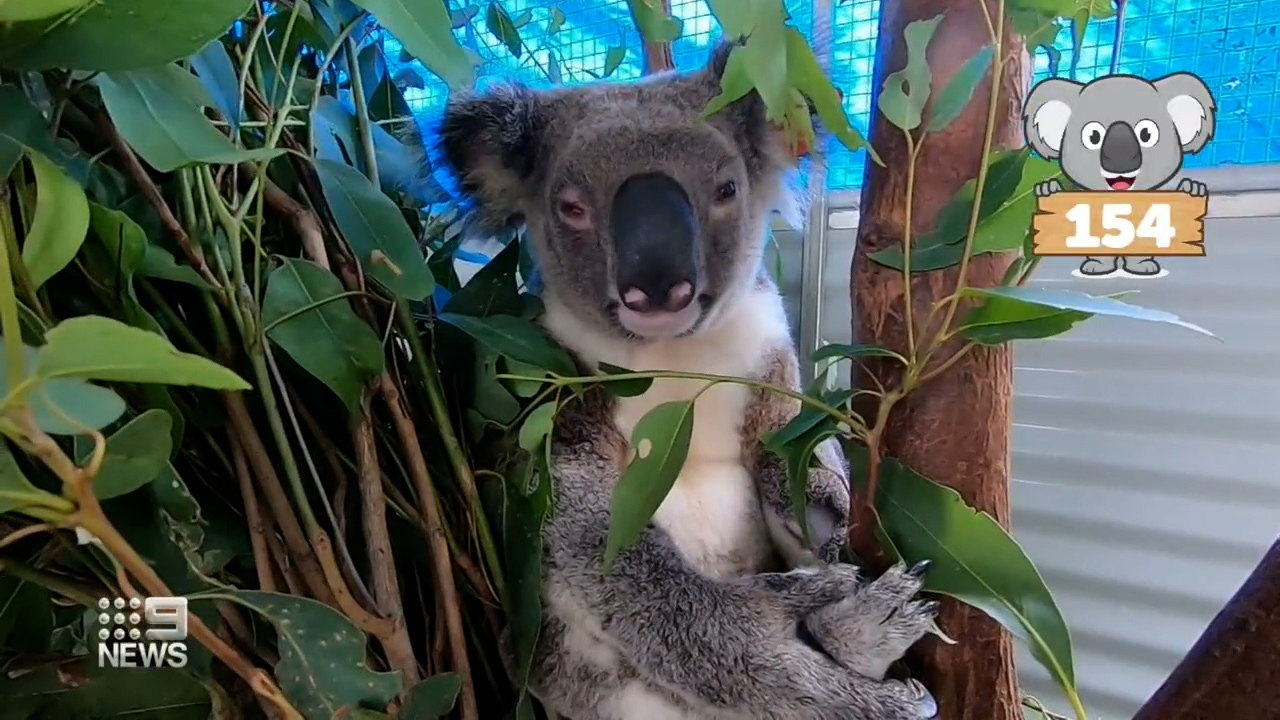
"I really do fear if we don't find a way to manage chlamydia disease there will certainly be a loss of a number of koalas," he said.
Clinical trials for the vaccine initiated by the University of the Sunshine Coast began in October last year.
At the Currumbin Wildlife Hospital, 155 koalas have received their jab.
One koala patient named Kassidy is now healthy and nursing a joey.
READ MORE: 'Once per century' weather event smashes Victoria
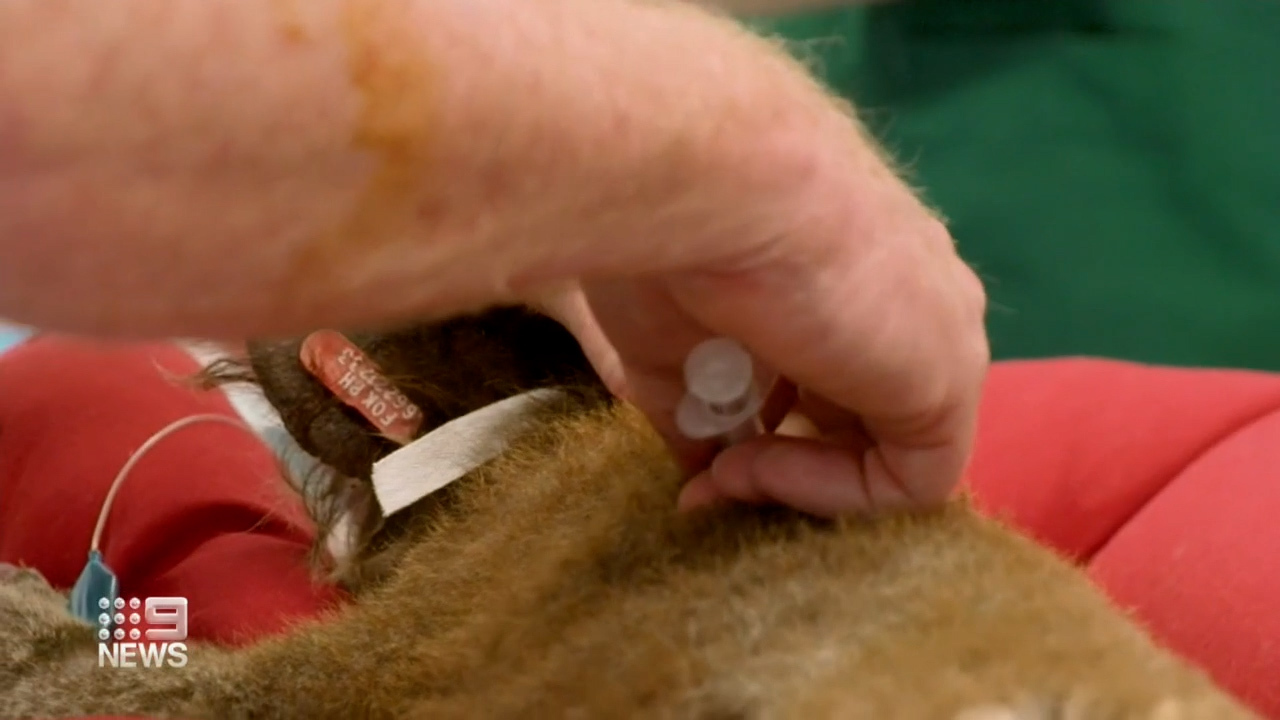
"We actually suspected that the boys were very interested in her so we've been following her closely and we re-caught her recently and she had a little two-month-old joey in the pouch," Dr Pyne said.
The hospital is currently monitoring eleven of its released koalas closely, and all have remained chlamydia-free.
The hope is that the vaccine can be administered on a larger scale, protecting koalas from the infection.
"The hope is that this can be rolled out in a much bigger way," Dr Pyne said.
READ MORE: What is SWIFT and why it might be the weapon Russia fears most
"The goal is exactly finding out where that threshold is of how many koalas do we need to vaccinate to stabilise things and get the reproductive rates creeping back up."
Shallow 6.2 quake rocks Tonga, Fiji region
Tonga and the surrounding Pacific region has been rocked by a magnitude 6.2 earthquake this evening.The United States Geological Survey says the quake was just 14km deep, and its epicentre located 250km Northwest of Nuku’alofa….
Covid 19 Omicron outbreak: New Zealand turning into 'hermit kingdom', David Seymour writes in Daily Mail column
Act leader David Seymour says that, while the world is opening up, New Zealand is becoming a “hermit kingdom”.Writing a column for the Daily Mail, Seymour described a photograph he was sent of the Newmarket train station as “completely…