The Wellington region will today reach 90 per cent fully vaccinated for its eligible Māori population, the first DHB in the country to hit this milestone. Capital and Coast District Health Board (CCDHB) confirmed the 90 per…
Tag Archives: oceania
Android earthquake alert system praised for accuracy after large quake strikes near Taranaki
In the minutes before a long rumbling earthquake struck Aotearoa just before midnight last night, hundreds of New Zealanders got the chance to prepare thanks to an “amazing” alert system pinging their cellphones. The 5.8 magnitude…
Covid 19 Delta outbreak: New locations of interest – Auckland's G.A.Y night club 'high risk'
Auckland’s G.A.Y Nightclub has been revealed as the latest high-risk location linked to the Delta outbreak. The club, located on Karangahape Rd in central Auckland, was visited by an infected person between 1.45am and 3am on Saturday…
Giant dying star explodes as scientists watch in real time
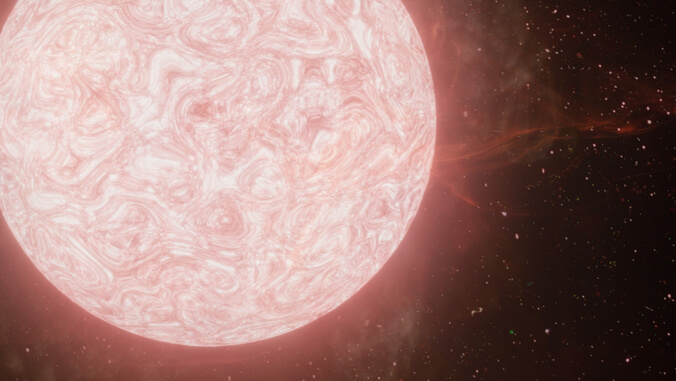
The death of a star is one of the most dramatic and violent events in space – and astronomers had an unprecedented front-row seat to the explosive end of a stellar giant.
Ground-based telescopes provided the first real-time look at the death throes of a red supergiant star.
While these aren't the brightest or most massive stars, they are the largest in terms of volume.
LIVE UPDATES: NSW records backlog of 78,000 positive RAT results
READ MORE: Axe-wielding hatchback driver filmed swerving at car
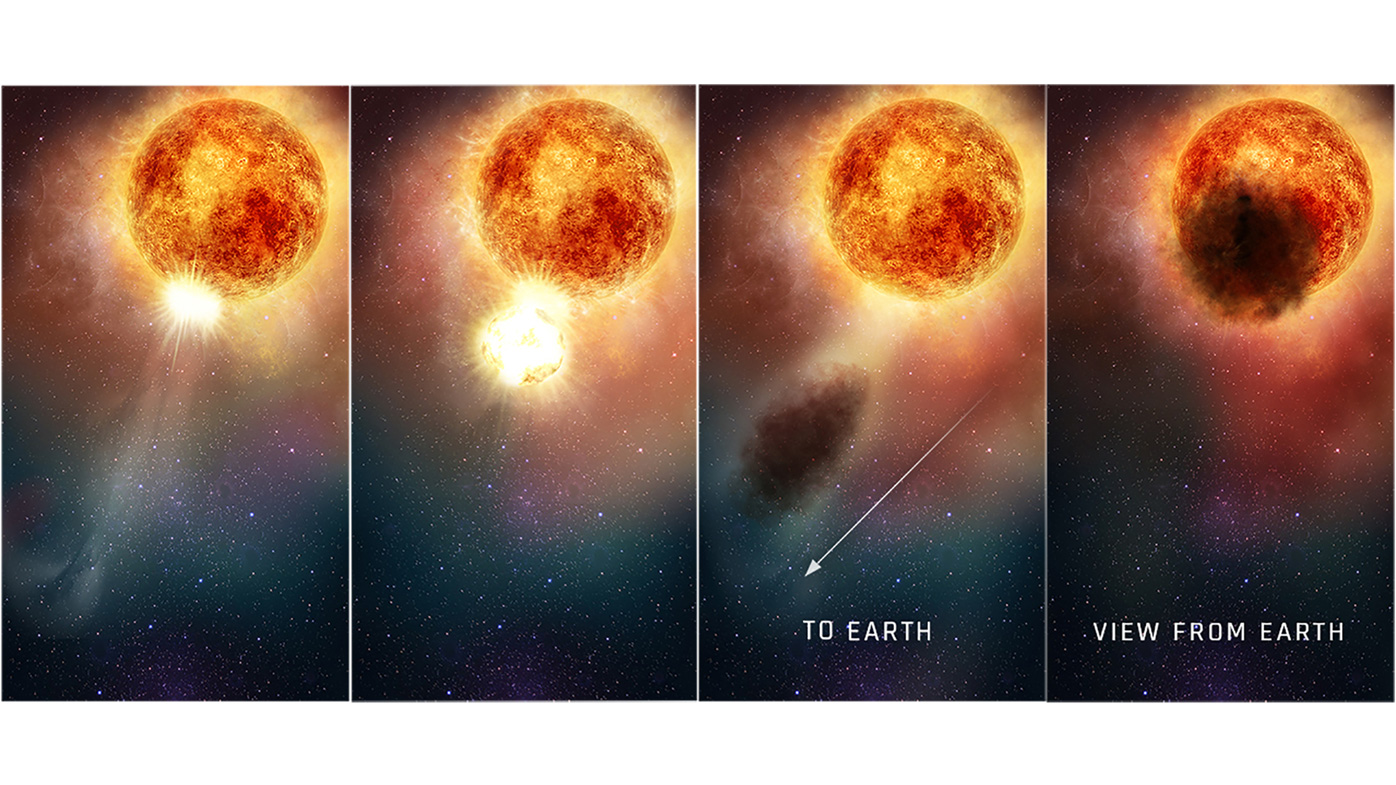
One popular red supergiant star is Betelgeuse, which has captured interest due to its irregular dimming.
While it was predicted that Betelgeuse may go supernova, it's still around.
However, the star at the heart of this new research, located in the NGC 5731 galaxy about 120 million light-years away from Earth, was 10 times more massive than the sun before it exploded.
Before they go out in a blaze of glory, some stars experience violent eruptions or release glowing hot layers of gas.
Until astronomers witnessed this event, they believed that red supergiants were relatively quiet before exploding into a supernova or collapsing into a dense neutron star.
Instead, scientists watched the star self-destruct in dramatic fashion before collapsing in a type II supernova.
This star death is the rapid collapse and violent explosion of a massive star after it has burned through the hydrogen, helium and other elements in its core.
READ MORE: The $1b tower slowly sinking into the ground
All that remains is the star's iron, but iron can't fuse so the star will run out of energy.
When that happens, the iron collapses and causes the supernova.
A study detailing these findings published today in The Astrophysical Journal.
"This is a breakthrough in our understanding of what massive stars do moments before they die," lead study author Wynn Jacobson-Galán, a National Science Foundation Graduate Research Fellow at University of California, Berkeley, said in a statement.
"Direct detection of pre-supernova activity in a red supergiant star has never been observed before in an ordinary type II supernova.
"For the first time, we watched a red supergiant star explode."
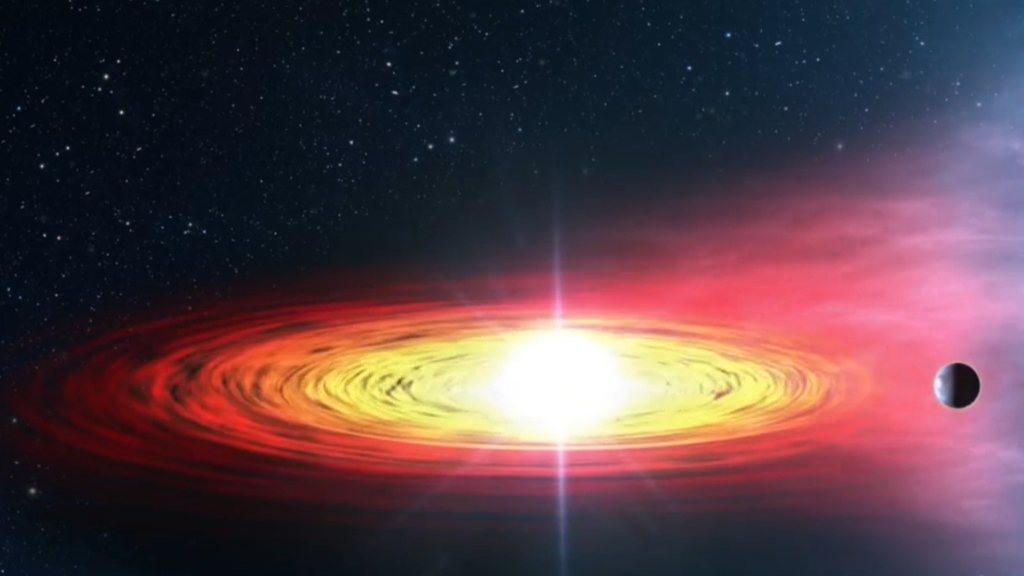
The final moments of stellar death
Astronomers were first alerted to the star's unusual activity 130 days before it went supernova.
Bright radiation was detected in the summer of 2020 by the University of Hawaiʻi Institute for Astronomy Pan-STARRS telescope on Maui's Haleakalā.
Then, in the fall of that year, the researchers witnessed a supernova in the same spot. They observed it using the W.M. Keck Observatory's Low Resolution Imaging Spectrometer on Maunakea, Hawai'i, and named the supernova 2020 tlf.
Their observations revealed that there was material around the star when it exploded – the bright gas that the star violently kicked away from itself over the summer.
"It's like watching a ticking time bomb," senior study author Raffaella Margutti, an associate professor of astronomy and astrophysics at UC Berkeley, said in a statement.
"We've never confirmed such violent activity in a dying red supergiant star where we see it produce such a luminous emission, then collapse and combust, until now."
Some of these massive stars likely experience consequential internal changes that cause the tumultuous release of gas before they die, the finding has shown.
READ MORE: COVID-19 restrictions return in Victoria
The work was conducted while Professor Jacobson-Galán and Professor Margutti were still at Northwestern University.
They had remote access to the Keck Observatory's telescopes in Hawai'i, which was "instrumental in providing direct evidence of a massive star transitioning into a supernova explosion," Professor Margutti said.
"I am most excited by all of the new 'unknowns' that have been unlocked by this discovery," Professor Jacobson-Galán said.
"Detecting more events like SN 2020 tlf will dramatically impact how we define the final months of stellar evolution, uniting observers and theorists in the quest to solve the mystery on how massive stars spend the final moments of their lives."
Alleged Sydney crime syndicate centre of major cash and drug bust
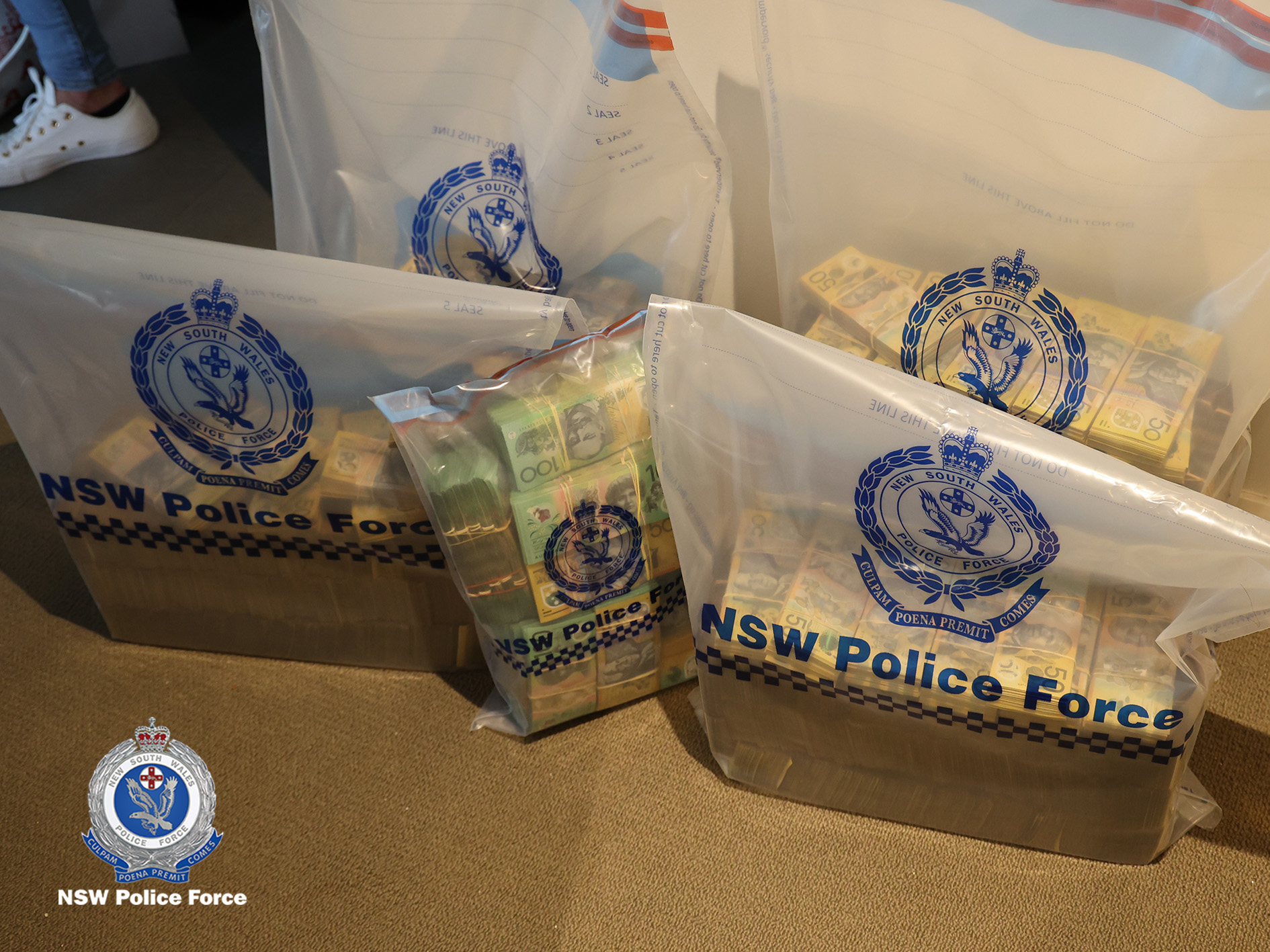
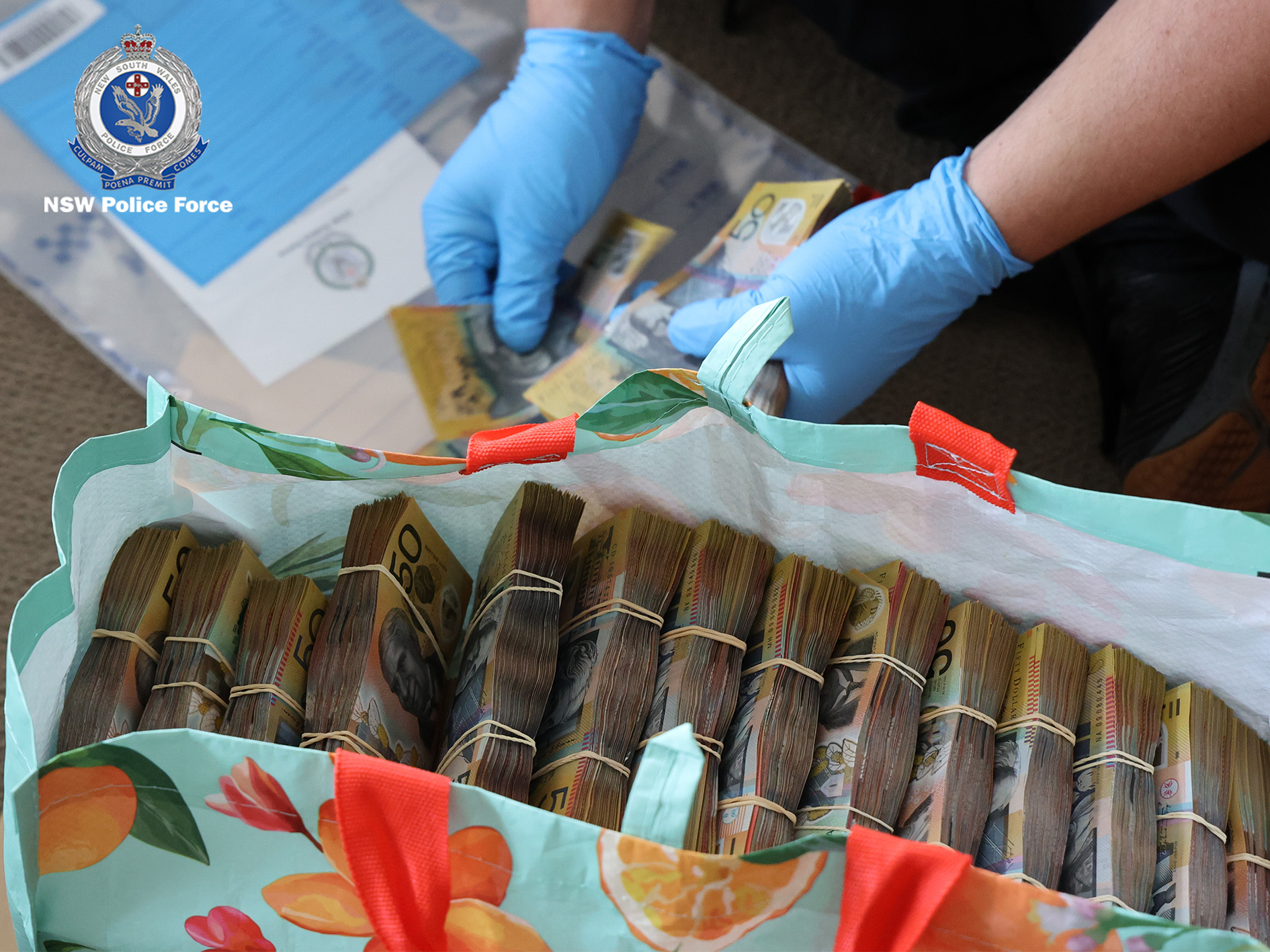
Police have charged four people and seized more than $8 million in cash in a major bust of a Sydney syndicate allegedly importing drugs and laundering money through a casino.
Assistant Commissioner Stuart Smith said it was a "fairly sophisticated operation" and added the group has links to Asian organised crime.
"We will allege that four people were part of a syndicate," he said.
READ MORE: Prince Andrew fails in bid to have sexual assault lawsuit dropped

"At least two members of the syndicate are linked to Hong Kong syndicates, at least one member with organised Asian gangs in Sydney."
"This was a fairly sophisticated operation and what we are alleging is that this group was managing the laundering of paper money."
Detectives from the Strike Force Trobriand spoke to a 32-year-old man in Lidcombe about 11pm last Thursday, serving him with a Firearm Prohibition Order and then searching a Campsie address a short later.
Police found a stash of methylamphetamine and MDMA, as well as $260,000 in cash, which were seized for further forensic analysis.
Extensive inquiries were conducted which led to police raiding properties in Burwood, Campsie and Rhodes from 7am yesterday.
A man and a woman, aged 27 and 30, were arrested at separate units on Belmore Street at Burwood.
Police searched both units and found more than $60,000 in cash.
READ MORE: Djokovic tipped to bounce back as he sweats on Minister's call
The pair were taken to Burwood Police Station.
Investigators later found more than $3.1 million in cash while searching a unit at Rhodes a short time later, with a further $4.78 million seized from the boot of a vehicle inside a secure car park below the unit complex.
The cash seized is one of the biggest on record for the strike force.
"In terms of organized crime we have obviously set a new record for a singular seizure of $7.8 million, so the previous one was $4.8 million in 2009," Assistant Commissioner Smith said.
Additional amounts of cash, a prohibited extendable baton and documentation were also seized from a Sixth Avenue address at Campsie.

A 32-year-old man was arrested at the Campsie address and taken to Campsie Police Station and a 48-year-old woman was arrested at the Rhodes unit and taken to Burwood Police Station.
"The investigation itself centred on a 32-year-old man from Campsie who we believe is the controller of the group," Assistant Commissioner Smith said.
"His attendance at the casino although he is banned from the casino, he has been charged with two offences in relation to returning to the casino, obviously a lot of the money is laundered in that method."
The four people have been charged with an array of offences, including knowingly dealing with proceeds of crime.
They were refused bail to appear in court today.
Police will investigate whether the money seized was headed to the casino to be laundered.
Covid Tracer App technical issue delays exposure notification by a day for some
By RNZ The Covid Tracer App notifications for some people who were at a location of interest have recently been delayed by a day.In a statement, the Ministry of Health said it was due to an “intermittent technical issue”.It…
Waitematā Harbour tragedy: No police charges laid over charter boat death
No one has been charged over the death of a young chef and mother of two, following a police investigation into a boat charter that ended in tragedy.Danielle Tamarua fell overboard near Rangitoto Island during a staff party on board…
Concerns for person's safety after kayak found overturned near Auckland's Motuihe Island
Police are concerned for the safety of a person after a kayak was located overturned in the water near a Hauraki Gulf island and they are appealing to the public to help identify the owner. There were fishing rods and bait in the…
Covid 19 Delta outbreak: Six new cases in lower North Island, people urged to check locations of interest
The lower North Island has six new cases of Covid-19 – four in south Wairarapa and two in Lower Hutt. The Ministry of Health reported the new cases on Thursday, saying all four of the Wairarapa cases are isolating in the same house…
New deep-sea coral species discovered in Scotland
A new species of coral has been discovered in waters off the coast of Scotland, with scientists predicting it could be a gamechanger for deep-sea biodiversity.
Scientists from the Scottish Government teamed up with researchers from the University of Seville, Spain, for an almost decade-long assignment to learn more about the murky, rarely-traversed deeper depths of the ocean off the Scottish coast.
The team collected multiple specimens from the continental slopes and plains of the Rockall Trough, off the west coast, travelling to depths of 2000 metres.
LIVE UPDATES: NSW records backlog of 78,000 positive RAT results

READ MORE: Axe-wielding hatchback driver filmed swerving at car
Among the samples collected were sea pens, a type of coral with a long flexible skeletal shaft with numerous branches fanning out of the sides.
The Scottish scientists worked with University of Seville coral expert, Dr Pablo Lopez-Gonzalez, combining traditional collection methods with cutting-edge genetic analysis.
One of the samples was at first thought to be part of the Umbellula family, but genetic results along with microscopic study of the sample's fine skeletal structure led scientists to discover this is a new species of sea pen never before found in the science world.
Officials have formally named the new species Pseudumbellula scotiae – in part due to the physical similarities to Umbellula, but also in honour of the Scottish Government's Marine Research Vessel Scotia and its major contributions to science and conservation in the surrounding waters.
READ MORE: The $1b tower slowly sinking into the ground

READ MORE: COVID-19 restrictions return in Victoria
Scottish Environment and Land Reform Minister Mairi McAllan said the find was an important and exciting discovery showing just how diverse the underwater environment is around Scotland.
"Scotland has some of the most beautiful and diverse marine ecosystems on the planet and we are committed to protecting and safeguarding them for future generations," Ms McAllan said in a statement.
"Marine Protected Area (MPA) status is an important way to ensure protection of some of the most vulnerable species and habitats. Our MPA network includes sites for the protection of biodiversity and demonstrates sustainable management and covers around 37 per cent of our seas – exceeding the new global target of 30 per cent by 2030".