Tag Archives: oceania

Hundreds forced to isolate after WA records five COVID-19 cases

Western Australia has recorded five new local cases of COVID-19, while venues have been restricted to only seated service, as authorities race to contain a COVID-19 outbreak.

Hundreds of people who went to a music event have been directed to go into isolation until January 3 after a positive case attended on Sunday morning.

Premier Mark McGowan yesterday announced new restrictions which will be in effect until at least 6am on Tuesday, December 28.

READ MORE: Mask rules return in NSW and Victoria
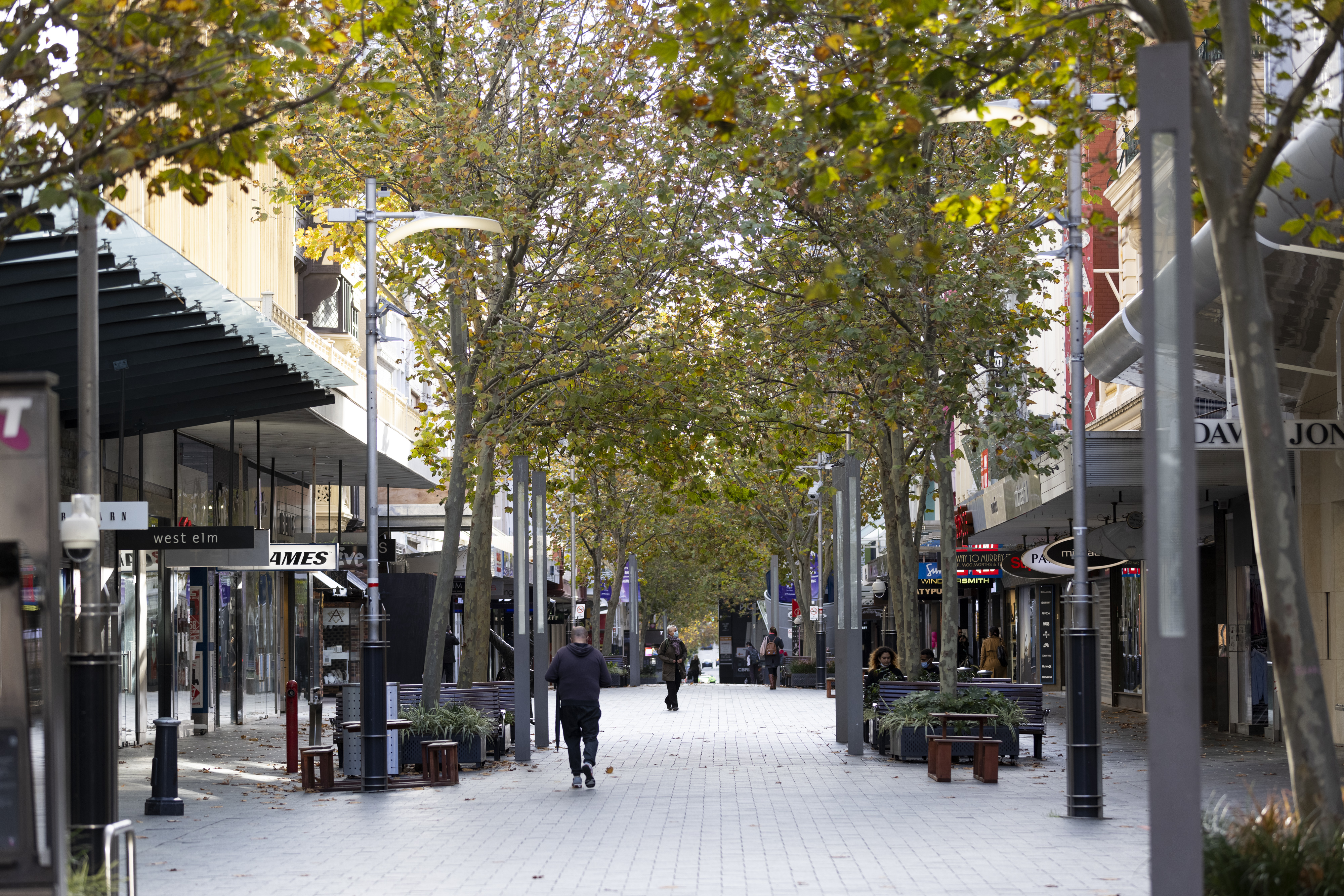
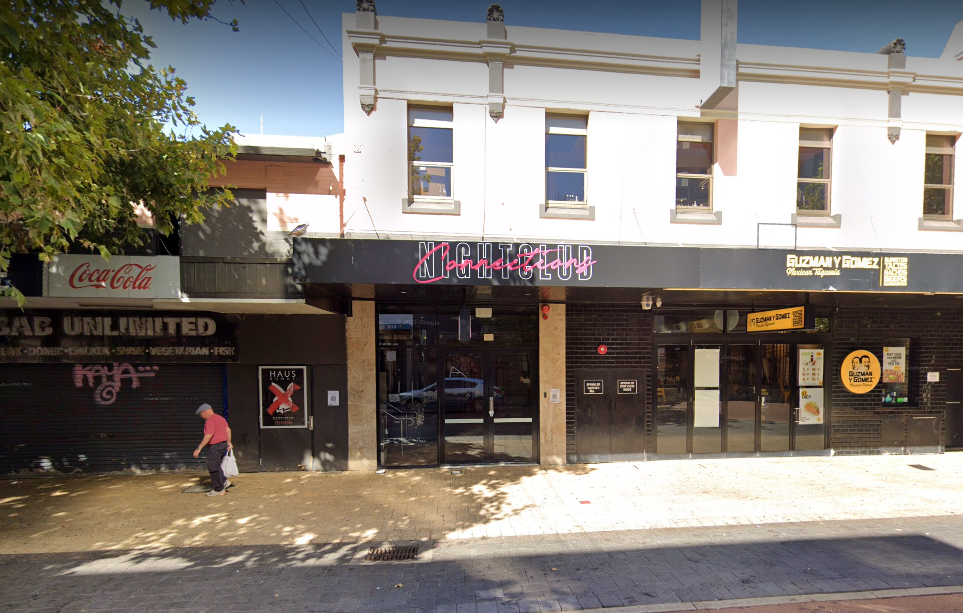
Some people in Perth are isolating after a potential COVID-19 exposure in Northbridge.

All nightclubs were ordered to close and masks were mandated indoors in Western Australia from 6pm yesterday.

Mr McGowan has today announced all licensed hospitality venues will only be allowed to provide seated service.

He said the restriction would allow Christmas lunches and dinners, but would impact service at pubs and bars.

The case which sparked the outbreak was an unvaccinated 25-year-old backpacker who travelled into the state from Queensland 12 days ago, and is originally from France.

Mr McGowan said advice from the Australian Border Force was that the man arrived in Australia before the onset of the pandemic, on January 7, 2020.
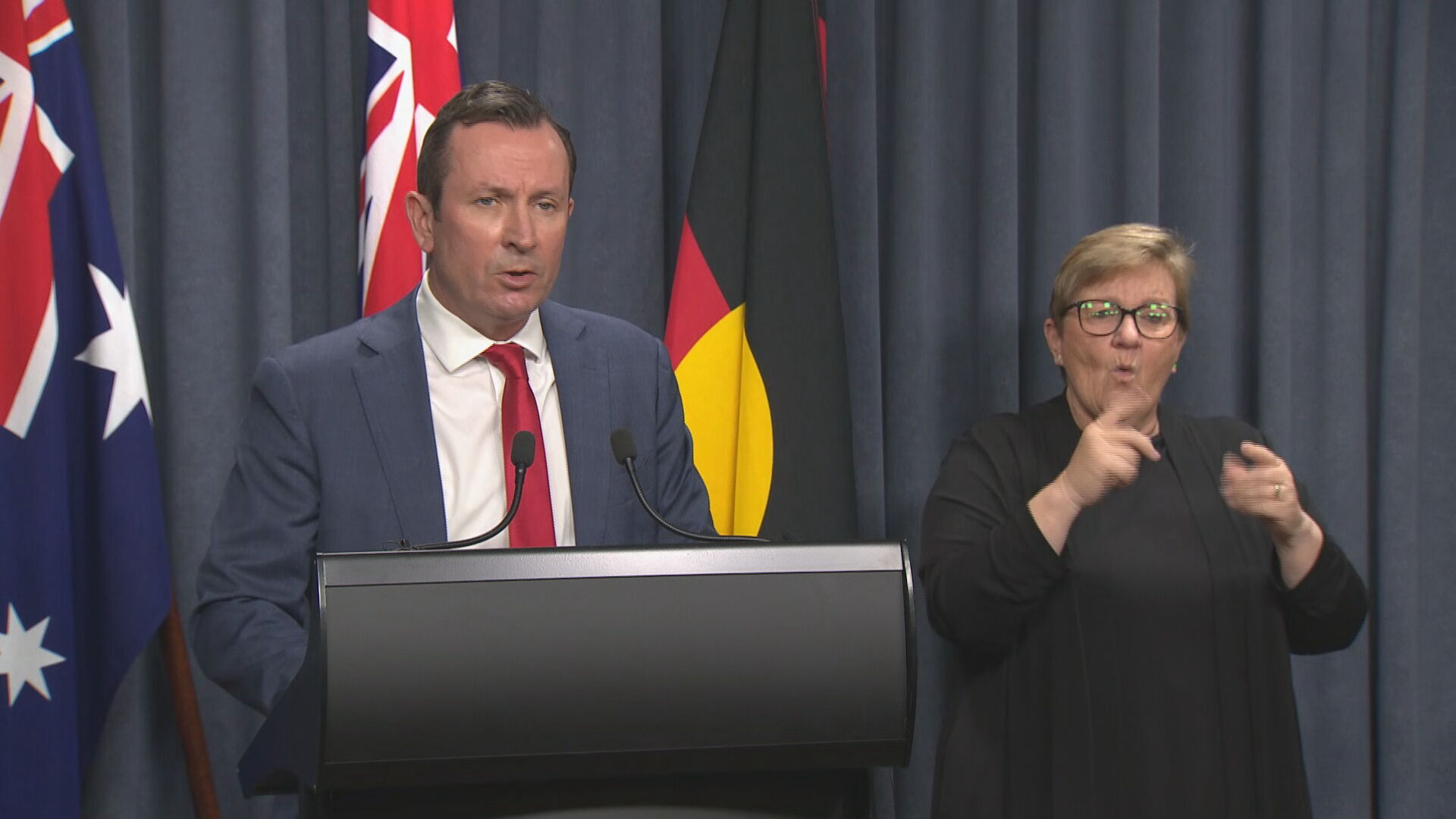
Mr McGowan said the man entered WA on December 12, before it was mandatory to be fully vaccinated against COVID-19 to enter the state.

"At the time, Queensland was set as a very low-risk jurisdiction as they had virtually no COVID in that state which meant people entering WA from Queensland were not required to be vaccinated at that point in time."

Mr McGowan said the five new cases today, of which at least two were not vaccinated, had been recorded as of 9am after 10,267 tests were taken yesterday.

He said more positives cases were expected to be discovered.

The new cases include a close contact of the backpacker, who also attended the Mess Hall event on Sunday, December 19.

The other three cases are casual contacts of backpacker who also attended the event and did not know the backpacker.
The fifth was announce mid-way through the premier's COVID-19 update and no other details are known.

Mr McGowan said anyone who attended the event had to get tested and self-quarantine until January 3.

WA Police have locked down the Fremantle Old Fire Station Hostel, where about 100 of 400 attendees at the event have been staying.

Mr McGowan said the hostel was not suitable to quarantine in so the attendees would all be provided with more suitable accommodation.

A number of new exposure sites across Perth have been published on WA.gov.au.

WA changes its classifications for entry from Queensland and South Australia

Mr McGowan has this afternoon announced that Queensland and South Australia will be declared 'high risk' zones as of 12.01am on Christmas Day due to their escalating COVID-19 situations.

https://twitter.com/MarkMcGowanMP/status/1474257185089622017

Under the 'high risk' setting, travel to WA from Queensland or SA will be limited to approved travellers only.

He has taken to social media to urge all Western Australians in Queensland or SA to "come home now".
Plans ruined as flights cancelled, COVID-19 test results not returned

Many Christmas plans have been ruined or are in limbo after a number of flights were cancelled due to crew members being forced into COVID-19 isolation.

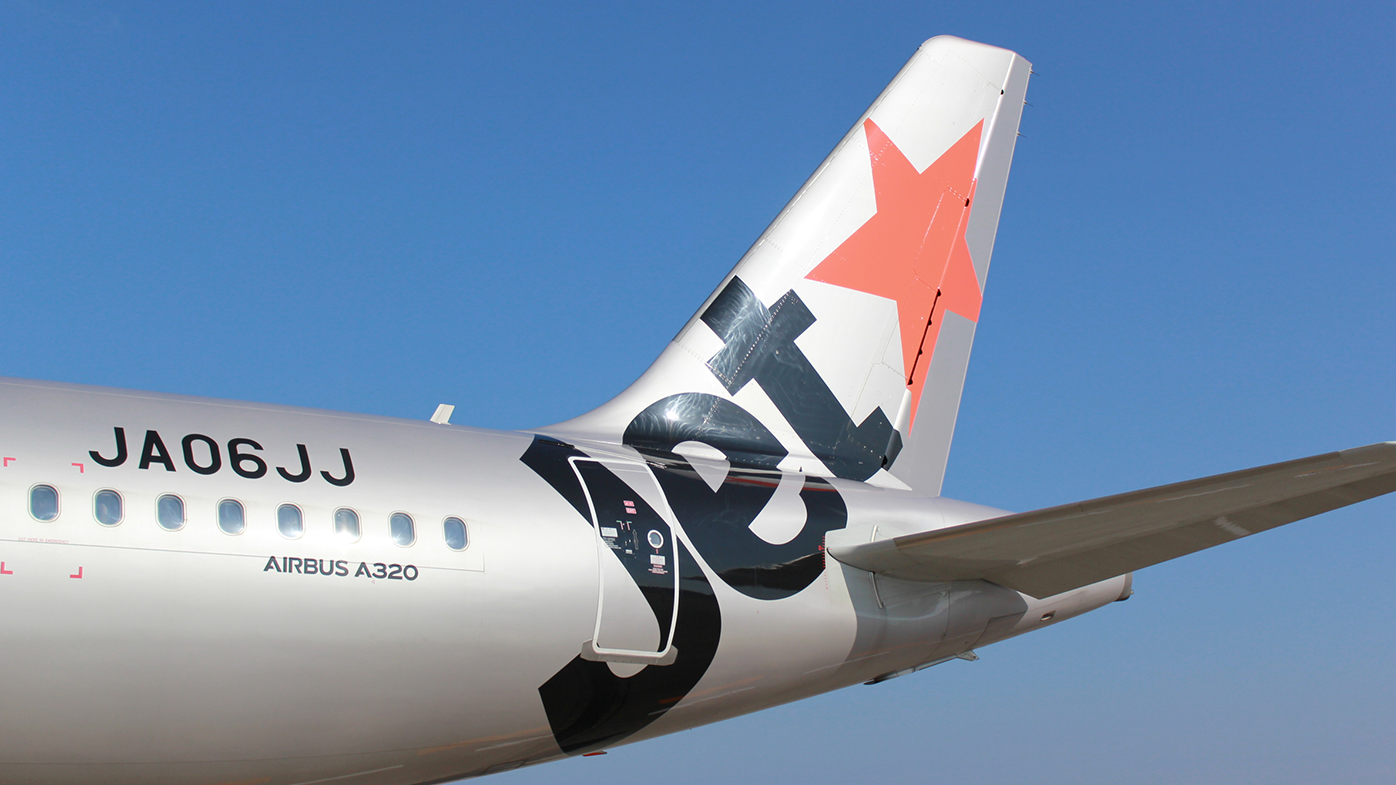
The Melbourne and Sydney route has been worst hit, with around a dozen Virgin flights and around 10 Jetstar flights cancelled.

Around 20 planned flights to Queensland, South Australia and Tasmania have also not taken off.

READ MORE: Booster shots to be brought forward following ATAGI advice

Jetstar A320

Passengers took to social media to lash out at the airlines, claiming they had been left in the dark.

"I feel like screaming," one Twitter user wrote.

"Daughter in Sydney did all the right things. Double vacc, boostered, PCR test, Qld border pass. Jetstar just cancelled her flight to Bris. No explanation."

In a statement, Jetstar said a "large number" of their frontline workers were having to test and isolate as COVID-19 close contacts in Sydney and Melbourne, forcing some "late adjustments".

"We appreciate the frustration this causes, especially as customers are travelling for Christmas, and sincerely apologise for the impact these changes are having on travel plans," the statement read.

READ MORE: NSW records 5612 COVID-19 cases, one death, as masks return

"We are working to minimise any delays and re-accommodating passengers on flights as close as possible to their original departure times across both Jetstar and Qantas services."

Virgin Australia is also reported to have made some changes to its schedule.

Both airlines told 9News that they contacted all passengers yesterday and last night at the latest, and they are getting them on free replacement flights today.

Qantas has cancelled a small number of flights, but it is understood this was due to lack of demand.

Other travellers have been left stranded at the airport after failing to get their COVID-19 tests returned in time.

A woman has told 9News she had been tested on Wednesday morning but was left without results and unable to board her flight today.

Discovery of giant marine reptile skull reveals new evolution theories

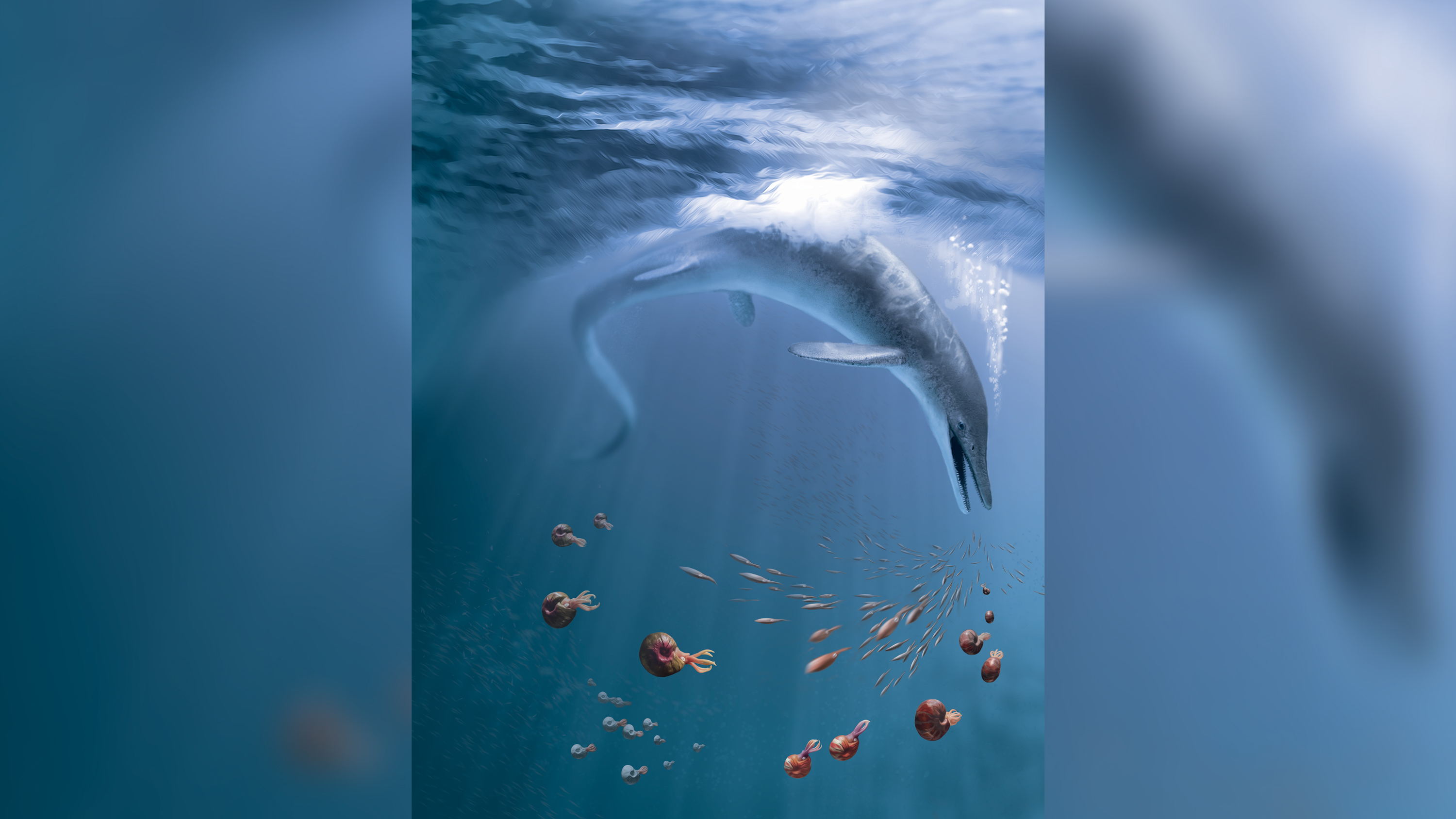
The discovery of a giant marine reptile skull in the United States has revealed new theories about the speed of evolution and how quickly the process can produce diversity.

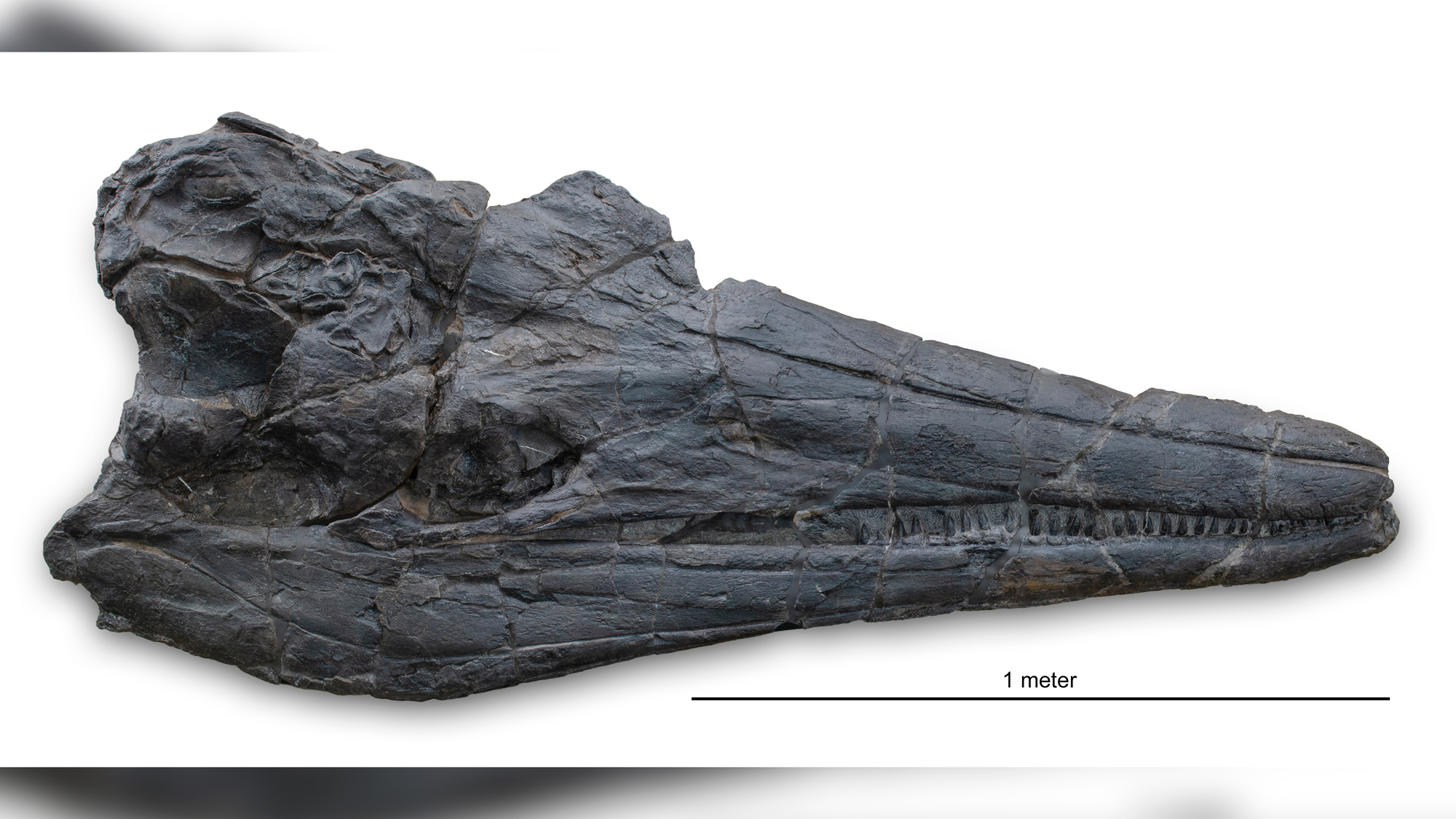
The giant ichthyosaur fossil, with a skull measuring almost two metres in length, an estimated body length of more than 17 metres and a weight 45 tonnes, was found in Nevada.

READ MORE: What you need to know about the COVID-19 booster roll-out

Ichthyosaurs are large extinct marine reptiles that dominated the sea more than 200 million years ago. Analysis of the skull of this particular ichthyosaur fossil has revealed a new species, the Cymbospondylus youngorum.

The skull analysis was part of a larger research effort undertaken by an international team in order to understand how quickly body size evolved in ichthyosaurs when compared to the body size evolution of whales – another group of originally four-legged land vertebrates that returned to life in the sea, just like the ichthyosaur.

"Ichthyosaurs attained giant body size in a very short amount of time, evolutionarily speaking, just about 3 million years. In comparison, whales took about 45 million years to reach their largest body sizes," Lars Schmitz, an associate professor of biology at the W.M. Keck Science Department said in a press release.

READ MORE: State by state guide to Australia's latest vaccination rates and COVID-19 case numbers

Schmitz is part of the team that have been researching the fossil.

"What this fossil discovery shows is that, if ecological conditions are just right and there's a certain amount of environmental stability, evolution can proceed remarkably quickly."

Schmitz worked with a team of international researchers to analyse the fossil, identify the ichthyosaur as a new species, create a phylogenetic tree- a diagram which shows the evolutionary relationships among various biological species – and then led a computational analysis comparing the speed and type of the evolution of body size in ichthyosaurs to that of whales.

Cymbospondylus youngorum was part of a group of reptiles that returned to the ocean during the Triassic Period – the beginning of the age of the dinosaurs, and totally adapted to marine life. Schmitz describes it as a "fish lizard."

The ichthyosaur fossil found in Nevada – which includes a preserved skull, shoulder and an arm similar to a flipper -was discovered in rocks that have preserved a cross section of fauna that existed approximately five million years after "the Great Dying." That happened around 252 million years ago, when 81 per cent of the world's marine life went extinct.

READ MORE: What the weather will be like on Christmas Day

When the skull was discovered, the research team was initially unsure as to how an animal as large as this one could have evolved and survived so soon after the most severe extinction event on Earth.

"The oceans of that period were extremely different from our modern oceans," Schmitz explained. "The modern marine ecosystems that feed today's whales consist of very large-body plankton, which didn't exist when Cymbospondylus youngorum was around. We found a gigantic ichthyosaur that had lived in an era when oceans were considered unable to sustain that size of animal."

The finding has provided Schmitz and the research team with a new insight into just how quickly evolution can take place and lead to variety.

"This fossil is an example of how fast evolution can produce diversity," Schmitz said. "You can go from zero to 100 in a few million years, which is very fast in evolutionary terms."

The research was published in the journal Science on Thursday.

Two batches of select Huggies Thick Baby Wipes recalled

Batches of Huggies baby wipes are being recalled due to the presence of a harmful bacteria.

Two batches of the Huggies Thick Baby Wipes Fragrance Free Limited Edition Tropical that had a Little Mermaid design are being taken off shelves.

The wipes were exclusively sold at Woolworths across Australia.

READ MORE: Australian recall issued for dry shampoos and conditioners after 'unexpected' traces of cancer-causing chemical found

A bacterium called burkholderia cepacian was identified in two batches after testing.

The reason for the recall is that a bacterium called burkholderia cepacian was identified after testing.

Huggies said while the bacteria poses "little medical risk to healthy people" it may cause serious infections or other health issues in people who have a weakened immune system.

Huggies also added that the bacteria was only found in the select batches of the limited edition wipes and not in any other wipes.

Anyone who has bought these wipes that has a batch code of B21072004 or D21072005 printed on the side of the pack is advised to stop using them immediately and contact Huggies.

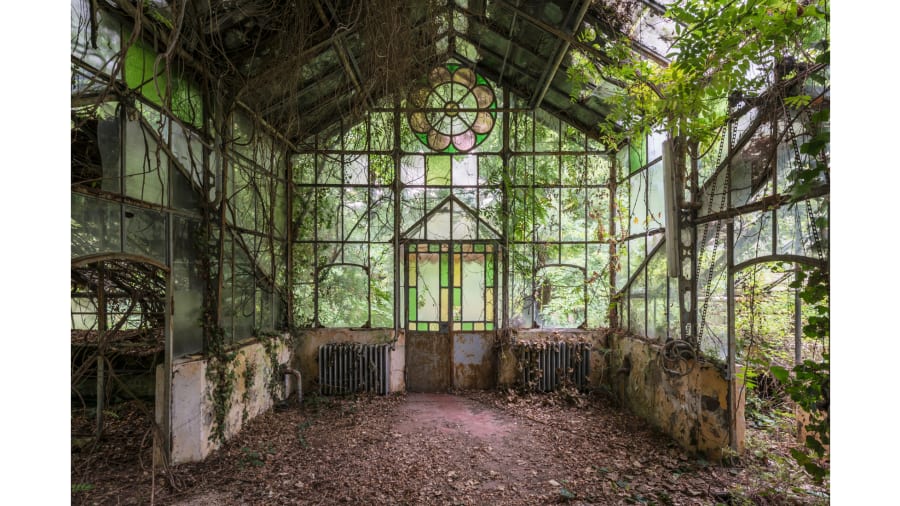
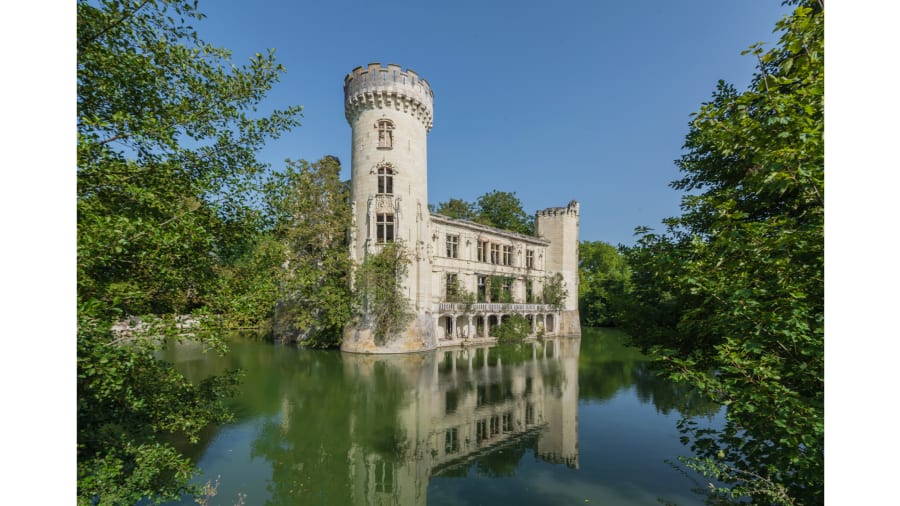
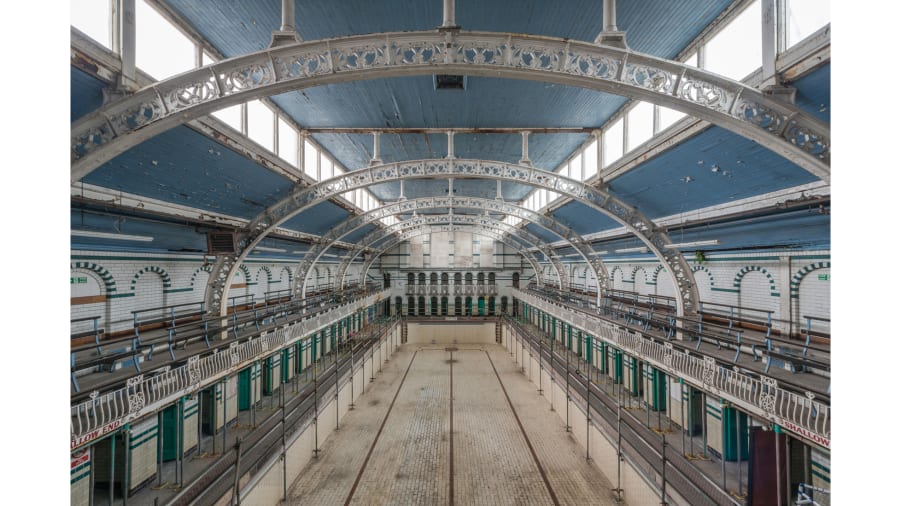
'The World Without Us': The abandoned sites overrun by nature

The notion of what the world would look like if humans were to vanish has been explored extensively by scientists, as well as many post-apocalyptic movies.

However, French photographer Romain Veillon is making it his mission to capture in pictures the potential result of a planet without people.

The 38-year-old has spent years photographing abandoned places around the world that have been overtaken by nature, with eerily beautiful results.

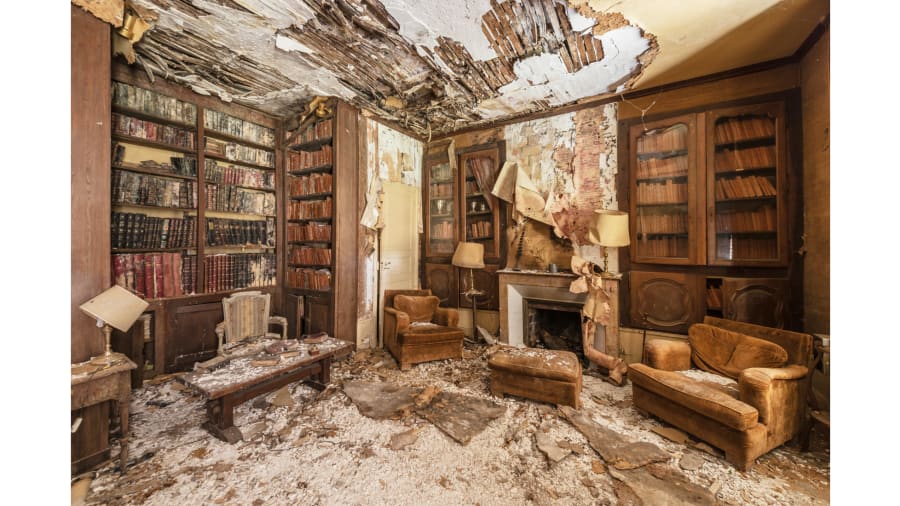
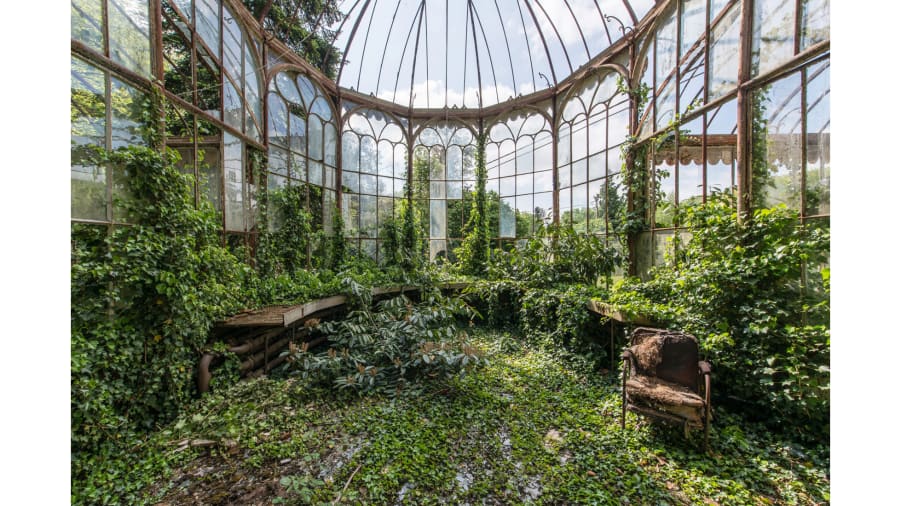
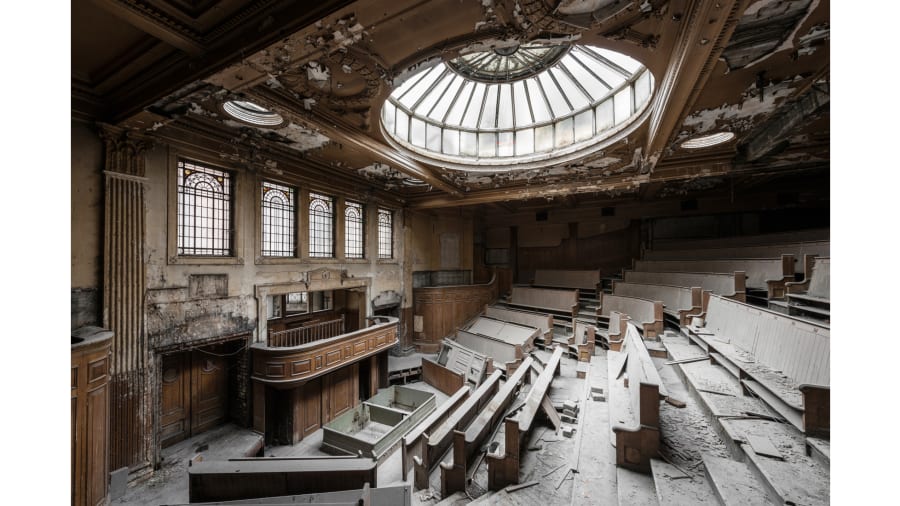
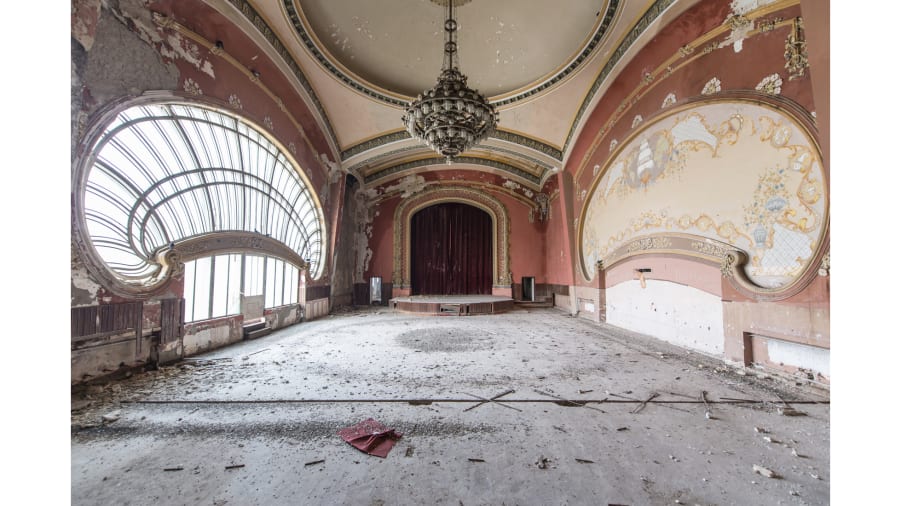
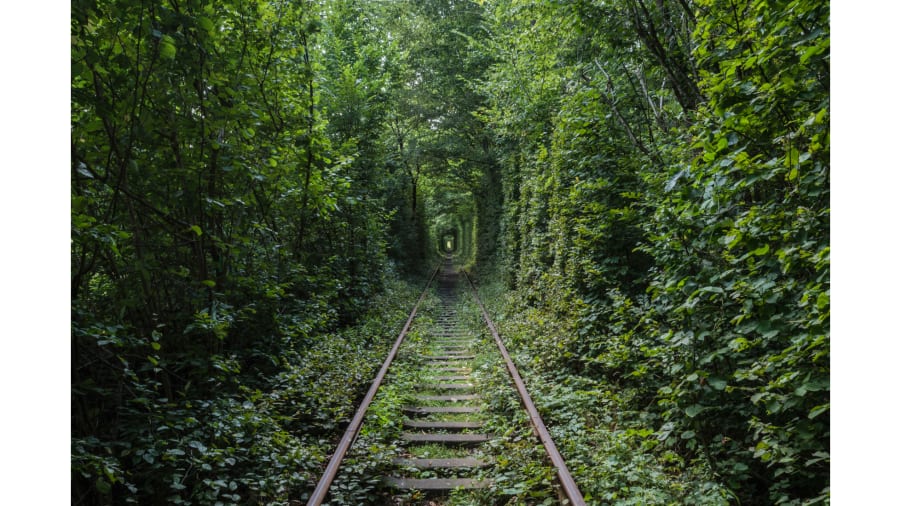
For his latest book, Green Urbex: The World Without Us, Mr Veillon shot a series of deserted and/or forgotten spots, including a ghost town in Namibia, an abandoned cinema in Brussels, a dilapidated Tuscan villa and a disused railway track in Ukraine.

READ MORE: COVID-19 isolation rules force airlines to cancel Christmas Eve flights

He hopes the haunting images will serve as a reminder of the "necessity to live in harmony with our habitat", as well as highlight the importance of working with, rather than against, nature.

"We are all fascinated by this post-apocalyptic vision," he said.

"Maybe we need to be the witness of that to enjoy what we have and the time in front of us."

The book, which is only available in French at present, is divided into three different sections. The first showcases deserted places that remain relatively well preserved and the second focuses on dilapidated sites in a far worse state.

Finally, the third section is made of images of long-forgotten places that have been completely overrun by vegetation.

"The photographs were all shot during the last 10 years," Mr Veillon said to CNN.

"It's really a mix of all the places I have been documenting since I started."

His fascination with abandoned places began at an early age, when he discovered a deserted truck factory near Paris.

Although the book, which contains over 200 images, provides some historical background to a number of the sites, the photographer says he tries to offer as little detail as possible so that people can "make up their own answers" to any questions they may have.

"Each story will be different from the other, and that's what I love," he adds.

However, capturing deserted spots in so many different, and often remote, corners of the world is far more complicated than just picking up a camera and hitting the road.

Mr Veillon sometimes spends months researching lesser-known sites and pinpointing their exact location, not to mention applying for authorisation to photograph some of them.

"I spend hours searching for historical clues that can help me locate the location I want to photograph," he explains.

"There's a huge amount of time [spent] on Google Maps trying to see if some buildings might be buried under vegetation. And just driving around when you're in a new area can also bring some nice surprises."

Having friends all over the world has also proved useful to the photographer, who often receives tips from other travellers, and sometimes his social media followers, on potential sites to include in his work.

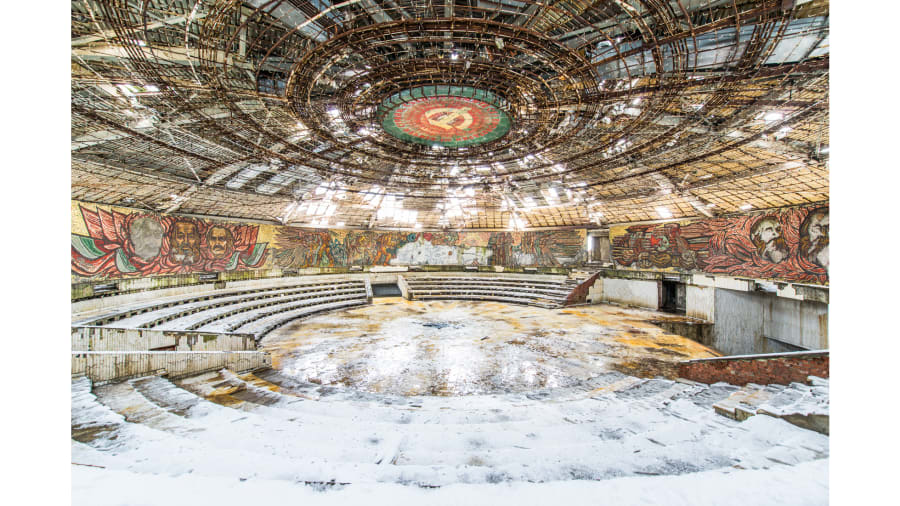
One of the highlights from the book is an image of Buzludzha, an abandoned Soviet monument in Bulgaria, which Mr Veillon says was one of his favourite places to photograph.

"Buzludzha is for sure the most extraordinary and unique place I have ever been to," he says of the former Bulgarian Communist Party headquarters built atop a mountain.

"From the outside, it looks like a UFO, and inside, you find the most beautiful mosaics."

Romania's defunct Constanța Casino, which has been designated as a historic monument by the Romanian Ministry of Culture and National Patrimony, also left a lasting impression.

"I was so surprised to see the remains of the old casino stage, the wonderful chandeliers or the ornaments of the grand staircase," he said.

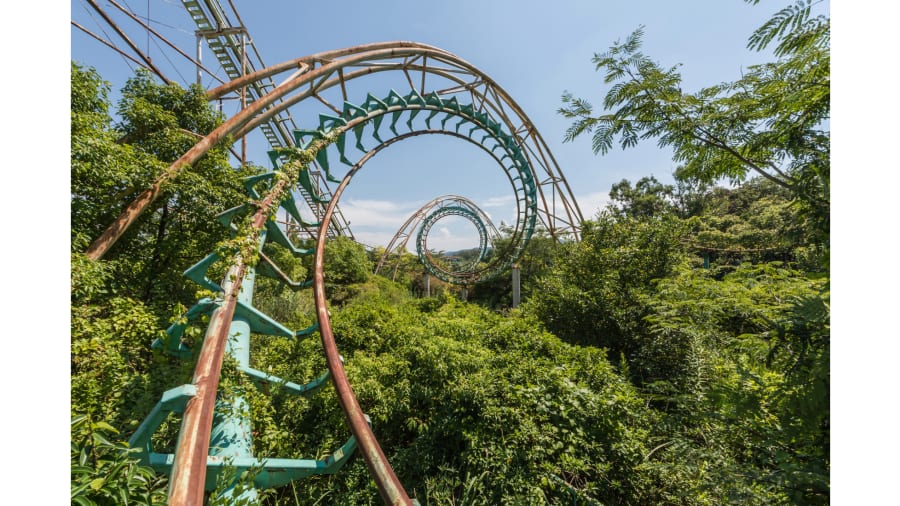
Mr Veillon's haunting images of Japan's Nara Dreamland, taken around a decade after the theme park closed in 2006, have garnered the most attention.

"This is a perfect example of what I want to show when we say 'nature is taking over," he said.

"You can see ivy slowly covering the roller coaster like it is getting eaten by it. The park was destroyed [between 2016 and 2017] not long after my visit, so it makes the photograph even more iconic I think."

While the travel restrictions brought about by the pandemic have meant Mr Veillon's travels have been few and far between of late, he hopes to visit ghost town Akarmara, a former coal-mining village in Abkhazia, Georgia that's been overtaken by trees, in the near future.

"It [Akarmara] is the one journey I should have done a long time ago," he said.