Tag Archives: oceania

Anti-vaxxers vandalise Melbourne cafe for enforcing vaccine rule

Anti-vaxxers have vandalised a cafe in Melbourne's west for enforcing COVID-19 rules that prevent unvaccinated Victorians from dining in restaurants and cafes.

The vandals graffitied the phrase "Discrimination is not ok" in orange paint across the shopfront wall of Blacksheep cafe in South Kingsville.

Staff turned up to work this morning shocked to find the exterior vandalised.

READ MORE: Victoria's COVID-19 cases drop to 1461

Under the state's public health directions, unvaccinated patrons are not permitted to dine at hospitality venues and can only get takeaway.

The cafe has been checking patrons' vaccine certificates as required since lockdown ended on Friday.

https://omny.fm/shows/the-9news-lunch-podcast/oct-25-a-coronavirus-patients-attempted-hospital-e/embed?style=cover

READ MORE: Victoria's 80 per cent freedoms explained

Blacksheep voiced its frustration on social media this morning.

"Happy Monday morning all," the post read.

"So this is what we get for following government guidelines and just doing our jobs."

The cafe said they were grateful for the support, but declined to comment further when contacted by nine.com.au this morning.

When asked about anti-vaxxers targeting businesses that followed health directions, Health Minister Martin Foley said: "Graffiti doesn't work against this virus".

Mammoths and other extinct Ice Age giants clung on longer than previously thought

Mammoths and other giant creatures of the Ice Age such as woolly rhinos survived longer than scientists thought, coexisting with humans for tens of thousands years before they vanished for good.

That's according to the results of an ambitious 10-year research project that analysed DNA from hundreds of soil samples across the Arctic.

The scientists involved in the project collected 535 samples of permafrost and sediment from frozen lakes, often in extremely cold locations from across Siberia, Alaska, Canada and Scandinavia, in 73 locations where the remains of mammoths have been found.
Analysis of DNA contained in the soil showed that mammoths were living in mainland Siberia 3900 years ago - after the Great Pyramid of Giza was built in Egypt and the megaliths of Stonehenge were erected.

READ MORE: Scientists want to resurrect the woolly mammoth

Analysis of DNA contained in the soil showed that mammoths were living in mainland Siberia 3900 years ago – after the Great Pyramid of Giza was built in Egypt and the megaliths of Stonehenge were erected.

Most woolly mammoths were previously thought to have died off about 10,000 years ago, except for a very tiny population that survived on remote islands off Siberia.

Woolly rhinos, the researchers said, were still roaming around the Arctic 9800 years ago.

Earlier studies said they went extinct about 14,000 years ago.

Instead, extinction came when the last areas of Mammoth Steppe – a unique ecosystem in the Arctic that doesn't exist today – gave way to peatland as the climate became warmer and wetter.

"The authors present several dates for mammoth, woolly rhino, horse and steppe bison that are also substantially younger than the fossil record indicates, which builds a stronger case for late survival across the Arctic than has been made previously," Tori Herridge, an evolutionary biologist and mammoth specialist at the Natural History Museum in London, said.

"I am very excited to see how this work develops, and what new data might arise to support or refute this. I am sure it will come under intense scrutiny."

Ms Herridge was not involved in the research.

Most ancient DNA is typically taken from bones or teeth (the oldest DNA ever sequenced was from a mammoth tooth and was more than 1 million years old), but new techniques mean that genetic material preserved in soil can now be analysed, dated and sequenced.

All animals, including humans, constantly shed genetic material when they pee, poop and bleed, lose hair and slough off dead skin cells.

This genetic material leaches into the soil, where it can remain for tens, if not hundreds, of thousands of years when the conditions are right – such as in frozen ground.

"An individual animal continuously spreads DNA throughout its lifetime in its dung, urine, epidermal cells, and hair, containing millions of DNA segments as it wandered across its full geographic range, but only left one skeleton upon its death, which is far less likely to have been preserved, recovered and dated," one of the study's authors, Yucheng Wang, a research associate in the Department of Zoology at the University of Cambridge, said.

"By sequencing only a few of these DNA molecules preserved in the environment, we can identify its existence and range. It is therefore not surprising that sedimentary DNA could produce a later and more accurate extinction estimate."

Known as environmental or eDNA, the technique has been used by archaeologists to shed light on ancient humans, and the same method has also been used during the pandemic to test the sewage of human populations to detect and track COVID-19.

READ MORE: Hundreds of ancient mammoth skeletons found at a Mexican construction site
Why large, grazing animals such as the mammoth went extinct has been debated for more than 100 years

Megafauna mystery

The study, which is published in the journal Nature, also detailed the Arctic ecosystem for the past 50,000 years.

The environment in which mammoths lived, known as the Mammoth Steppe, was cold, dry and regionally complex, with a distinct community of vegetation composed of grasses, sedges (a grass-like plant), flowering plants and shrubs.

As part of the research, the team sequenced the DNA of 1500 Arctic plants for the very first time.

Why large, grazing animals such as the mammoth went extinct has been debated for more than a 100 years, Mr Wang said.

There are two main theories: Mammoths were hunted to death within centuries of their first contact with humans, or they weren't able to adapt quickly enough to a rapidly changing climate at the end of the Ice Age.

Mr Wang said their research supported the theory that climate change at the end of the last Ice Age 12,000 years ago played the major role.

The longer overlap between humans and mammoths in the Arctic region, together with a detailed understanding of the Mammoth Steppe ecosystem and how quickly it changed, strengthened the case against the idea that humans were the main driver of mammoth's extinction, Wang explained.

"When the climate got wetter and the ice began to melt, it led to the formation of lakes, rivers, and marshes. The ecosystem changed and the biomass of the vegetation reduced and would not have been able to sustain the herds of mammoths," Mr Wang said.

"We have shown that climate change, specifically precipitation, directly drives the change in the vegetation – humans had no impact on them at all based on our models."

READ MORE: Scientists 'two years away' from creating woolly mammoth hybrid
The tusks of what is believed to be a 23,000 year old woolly mammoth are carried on a reindeer sled. (AAP)

True dynamics?

Ms Herridge at the Natural History Museum said more work needs to be done on the human presence in the Mammoth Steppe if any human role in the disappearance of mammoths is to be ruled out.

In the models used in this paper, she said, researchers used the scarce presence of human remains in the archaeological record and the existence of a climate suitable for humankind as a proxy, not DNA.

Much finer data is needed to understand whether and when humans and mammoths actually overlapped in these regions.

"Environmental DNA studies like this have a lot of potential for directly testing for the presence through time of humans across the Arctic, in much the same way as they have done here for mammoths – this is the sort of high resolution data we need to tease apart the true dynamics of the extinction of the woolly mammoth," she said.

"Overlap data alone won't cut it, as it isn't the last mammoth that matters, it's working out what drove mammoth numbers down so low that they were reduced to just few isolated and vulnerable populations."

Sheep replace cars as they cross Madrid en route to winter pastures

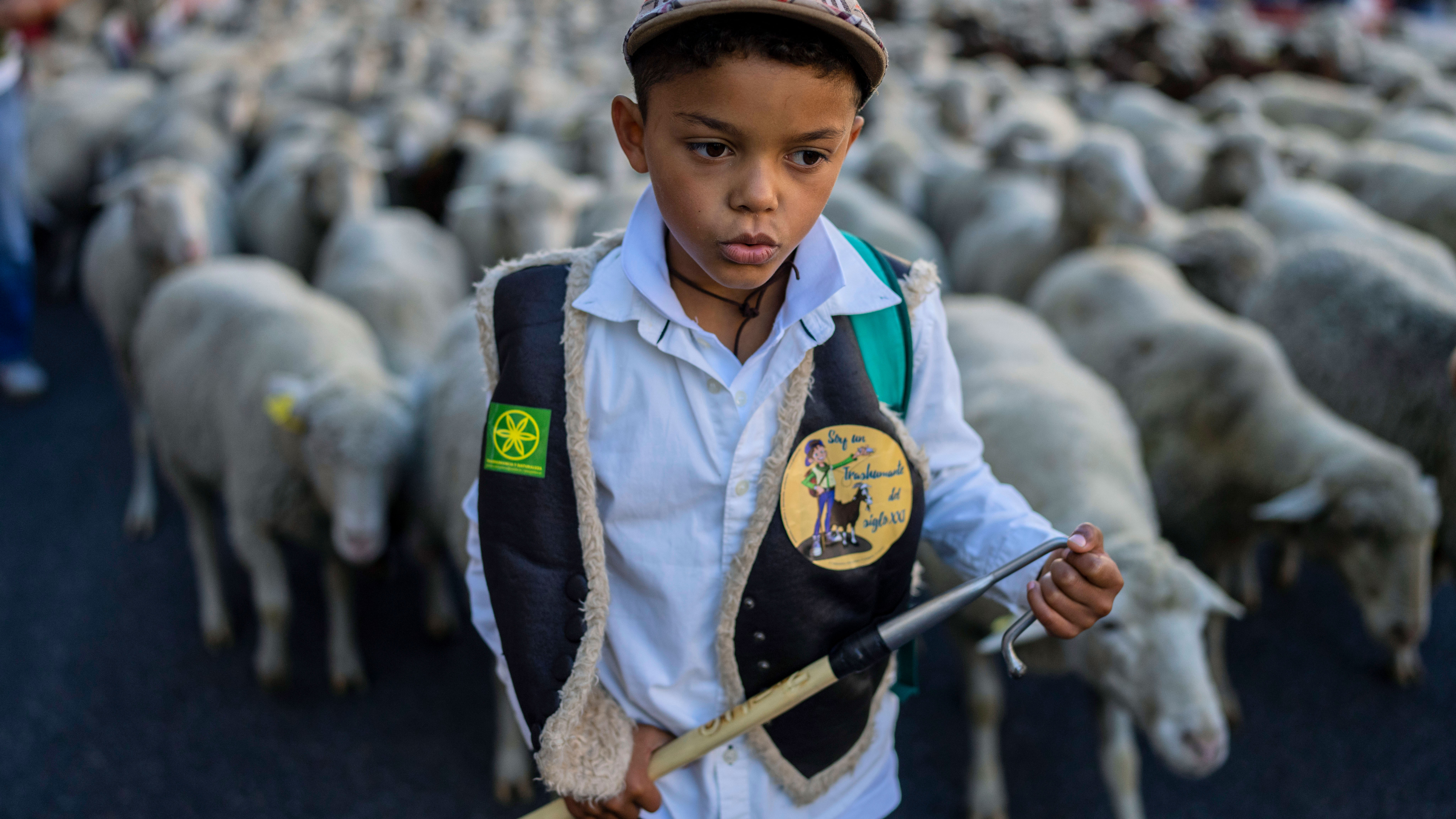
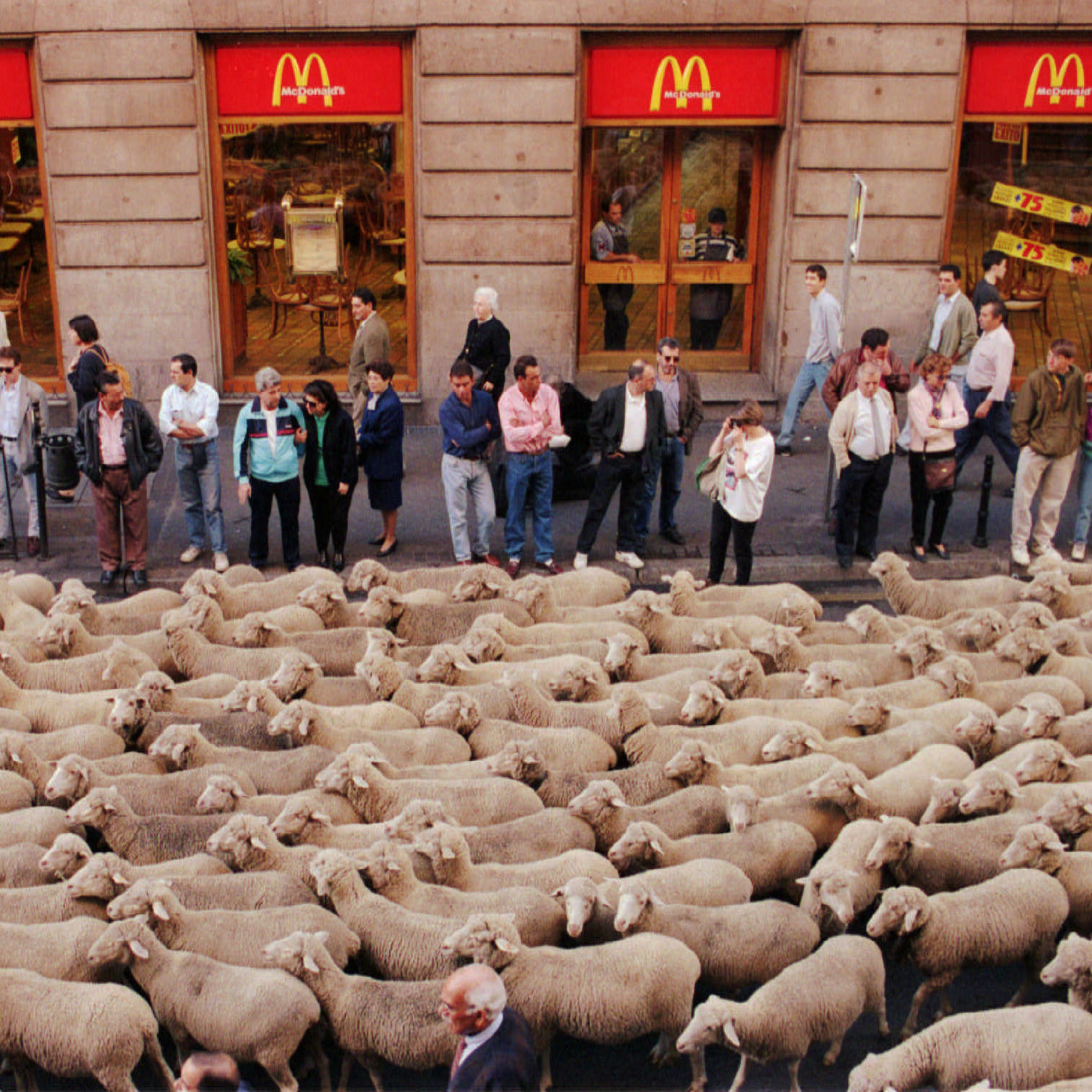
The streets of Madrid were filled with sheep and the clanking of bells as shepherds guided their flocks through the heart of the Spanish capital yesterday, following ancient seasonal herding routes.

Locals lined the route to welcome back the spectacle, which was cancelled last year because of the COVID-19 pandemic.

The annual event, which started in 1994, allows shepherds to exercise their right to use traditional routes to herd their livestock from northern Spain to more southerly pastures for winter grazing.

READ MORE: Breakthrough sighting at the time Cleo vanished

A herd of sheep are guided through central Madrid. The annual event allows shepherds to exercise their ancient grazing and migration rights.A young shepherd herds a flock of sheep through central Madrid, Spain.

The route would have taken them through quiet countryside a few centuries ago, but today sees them traverse the busy city.

"It's marvellous. I come every year and this is the first year I've brought the children so it's amazing," said Graciela Gonzalez, 39.

READ MORE: $60 million Powerball ticket won by mystery Melbourne person

A herd of sheep file past a McDonald's restaurant during their journey through Madrid.

The sheep walked to the sound of their jangling neck bells. Shepherds dressed in traditional dress accompanied their flocks with folk music and dancing.

Children more used to seeing traffic jams on the city streets enjoyed the opportunity to get up close to the animals.

"We can sometimes touch them," said Carmen Iglesias, eight, who was watching with her father and younger sister Noa, six.

Man who handed Baldwin deadly prop gun subject of safety complaints

An assistant director on the film set of "Rust" in the US was the subject of complaints over safety and his behavior on set during two productions in 2019, two people who worked closely with him tell CNN.

The complaints against assistant director Dave Halls include a disregard for safety protocols for weapons and pyrotechnics use, blocked fire lanes and exits, and instances of inappropriately sexual behavior in the workplace.

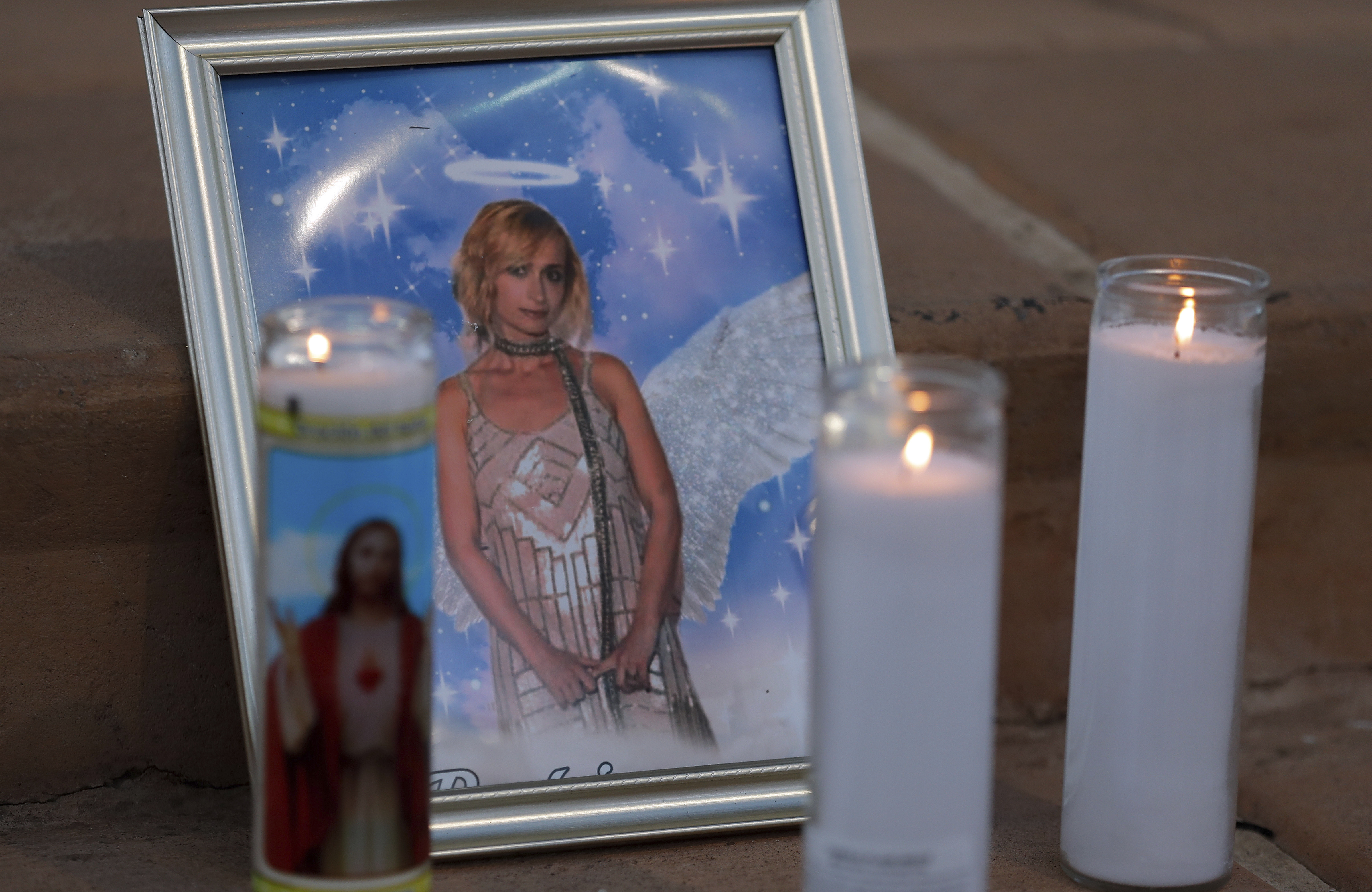
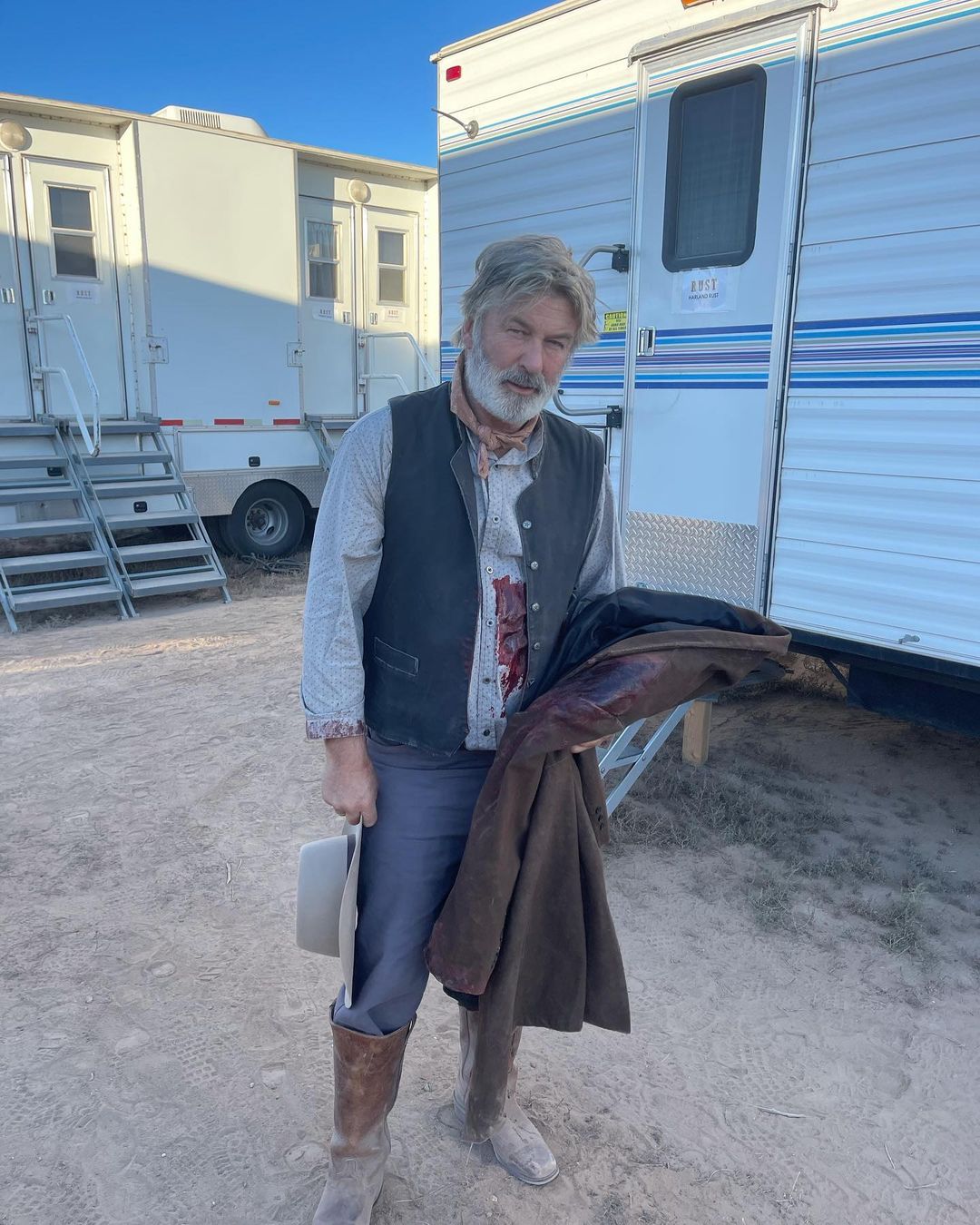
Mr Halls was identified in court documents as the assistant director who handed actor Alec Baldwin a prop firearm, which when fired struck cinematographer Halyna Hutchins with a live round. Ms Hutchins was later pronounced dead at a New Mexico hospital.

READ MORE: Filmmaker mourned as investigation into film set shooting continues

Maggie Goll, an IATSE Local 44 prop maker and licensed pyrotechnician, said in a statement to CNN that while working on Hulu's "Into the Dark" Anthology Series in February and May of 2019, Mr Halls neglected to hold safety meetings and consistently failed to announce the presence of a firearm on set to the crew, as is protocol.

"The only reason the crew was made aware of a weapon's presence was because the assistant prop master demanded Dave acknowledge and announce the situation each day," Ms Goll's statement reads.

She adds that the prop master would "announce each day when a gun would be required on camera, the disposition of that weapon – whether it was a rubber/plastic replica, a non-firing option, or a 'cold' functional, but unloaded option, allowing anyone to inspect said weapon prior to bringing it to set and presenting it to the talent. (…) The Prop Master frequently admonished Dave for dismissing the talent without returning props, weapon included, or failing to make safety announcements."

Alec Baldwin, Rust

Ms Goll's statement also describes an instance where a licensed pyrotechnician had a medical emergency on set and Mr Halls asked her to continue with the shoot.

"I told him they are free to film whatever they want, but that there would be no fire or sparks, etc, until the medic, fire safety officer, and all of my crewmates were safely back on set," Ms Goll details.

Mr Halls did not respond to CNN's request for comment Saturday night about Ms Goll's allegations against him.

READ MORE: How are prop guns dangerous? Alec Baldwin incident raises concerns

A crew member who also worked in the productions but requested to not be named for fear of retaliation corroborated Ms Goll's accounts, saying that when Mr Halls did hold safety meetings, they were short and he was dismissive, saying the guns used would be the same as the production always uses, and questioning why they'd have to hold the meetings in the first place.

The crew member also said Mr Halls complained about having a gun "cleared" (inspected by a licensed professional on set, such as an armorer) for a scene where an actress would aim the gun to her own head and pull the trigger.

Halyna Hutchins was killed on a film set in the USA.

Ms Goll and the other crew member told CNN of another instance where Mr Halls insisted on continuing filming on location while a storm hit, where electrical lights were touching mud, wires were exposed to the rain, and crew members feared for their safety.

READ MORE: Crew member yelled 'cold gun' as he handed Baldwin prop weapon

Ms Goll said at the time she called a production safety line and complained internally to Blumhouse Productions executive producers in person. She also said she informed the Directors Guild of America (DGA) regarding unsafe persons.

"To my knowledge nothing was done after my complaints," her statement reads.

CNN is reaching out to Blumhouse Productions and the DGA for comment.